Skip to content
  • Home
  • Subscribe / donate
  • Events calendar
  • News
    • Local
    • National
    • Israel
    • World
    • עניין בחדשות
      A roundup of news in Canada and further afield, in Hebrew.
  • Opinion
    • From the JI
    • Op-Ed
  • Arts & Culture
    • Performing Arts
    • Music
    • Books
    • Visual Arts
    • TV & Film
  • Life
    • Celebrating the Holidays
    • Travel
    • The Daily Snooze
      Cartoons by Jacob Samuel
    • Mystery Photo
      Help the JI and JMABC fill in the gaps in our archives.
  • Community Links
    • Organizations, Etc.
    • Other News Sources & Blogs
    • Business Directory
  • FAQ
  • JI Chai Celebration
  • JI@88! video

Recent Posts

  • האלימות בישראל מורגשת בהרבה מגזרים
  • טראמפ עוזר דווקא לנושא הפלסטיני
  • New rabbi settles into post
  • A light for the nations
  • Killed for being Jewish 
  • The complexities of identity
  • Jews in time of trauma
  • What should governments do?
  • Annie will warm your heart
  • Best of the film fest online
  • Guitar Night at Massey
  • Partners in the telling of stories
  • Four Peretz pillars honoured
  • History as a foundation
  • Music can comfort us
  • New chapter for JFS
  • The value(s) of Jewish camp
  • Chance led to great decision
  • From the JI archives … camp
  • עשרים ואחת שנים להגעתי לונקובר
  • Eby touts government record
  • Keep lighting candles
  • Facing a complex situation
  • Unique interview show a hit
  • See Annie at Gateway
  • Explorations of light
  • Help with the legal aspects
  • Stories create impact
  • Different faiths gather
  • Advocating for girls’ rights
  • An oral song tradition
  • Genealogy tools and tips
  • Jew-hatred is centuries old
  • Aiding medical research
  • Connecting Jews to Judaism
  • Beacon of light in heart of city

Archives

Follow @JewishIndie
image - The CJN - Visit Us Banner - 300x600 - 101625

Tag: continuity

The future of Jewish learning

The future of Jewish learning

A picture from Smart Money, a study intended to help the Jewish community navigate the high-tech world. (photo by Lewis Kassel courtesy of Moishe House)

By day, Liora Brosbe is the family engagement officer for the Jewish Federation of the East Bay in Berkeley, Calif., where she reaches out to the community with a menu of opportunities for “connecting to Jewish life and each other.” But when she’s not at work, Brosbe’s main job is raising three kids, ages 2, 6 and 8. Their home? A laboratory for Jewish learning strategies.

“Yes, they’re little Petri dishes,” their mom, who is also a psychotherapist, said with a laugh. “Like most families, screen time is a huge issue at our house, both for time and content, but I tell families it’s also an amazing opportunity for low-barrier Jewish engagement.”

With the avalanche of new technologies – many of them being tapped for Jewish learning – educators, funders and parents are often befuddled about where to invest their money and their kids’ or students’ time. A recent report on the implications of the wave of educational technology and digital engagement is designed to guide the Jewish community through this complex space.

Sponsored by the Jim Joseph Foundation and the William Davidson Foundation, Smart Money: Recommendations for an Educational Technology and Digital Engagement Investment Strategy examines many of these innovations and provides suggestions for navigating the high-tech world. The study’s recommendations include using virtual and augmented reality (a user could, for example, experience the splitting of the Red Sea); creating games based on alternative scenarios for “Jewish futures,” such as rebuilding Jewish life after the Roman destruction of the Second Temple; offering opportunities for students to learn coding and other technological skills, which can foster connectedness among Jewish youths and introduce them to Israeli high-tech companies; and increasingly using video, music, podcasting and other platforms.

The report is garnering far more attention than expected, according to the sponsors.

“We did not originally intend for this to be a public report,” said Barry Finestone, president and chief executive officer of the Jim Joseph Foundation, “but the substance of the findings and recommendations really challenge us, as funders, to think strategically, creatively and collaboratively about how we can utilize educational technology and digital engagement to advance our Jewish educational missions.”

For the report, Lewis J. Bernstein and Associates interviewed 50 experts, investors and educators from both the Jewish and non-Jewish worlds to create the recommendations.

“It’s a huge media marketplace out there and most Jews are exposed to the same information as the rest of the world,” said Lewis J. Bernstein, a former producer of Sesame Street and the report’s lead researcher. “Parents and educators have difficult choices to make, and Jewish learning and wisdom compete with the secular world.”

Read more at jns.org.

Format ImagePosted on August 18, 2017August 16, 2017Author Deborah Fineblum JNS.orgCategories WorldTags continuity, education, Jim Joseph Foundation, Judaism, technology
Grodzka Gate Lublin reunion

Grodzka Gate Lublin reunion

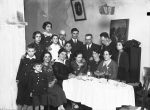
A photo from Lublin: Faces of a Nonexistent City, likely taken by taken by Abram Zylberberg. (photo from Grodzka Gate – NN Theatre Centre)

From July 3-7, the Grodzka Gate – NN Theatre Centre in Lublin (Osrodek Brama Grodzka – Teatr NN), Poland, will host the Lubliner Reunion – the first international meeting of Jewish inhabitants of the city and their descendants in 70 years.

Grodzka Gate – NN Theatre Centre is an organization run by non-Jews dedicated to preserving Jewish memory. It has been actively pursuing this mission for 25 years, and its program includes meetings, discussions, sightseeing tours, commemorations and artistic events. The reunion will constitute an important element of the celebrations, which mark 700 years since the founding of the city of Lublin, and is designed to emphasize the significance of the Jewish community for the history of the city.

The history of Jews has been intertwined with that of Lublin for several hundred years, and has helped shape its identity. The story of Lublin has been enriched with, among other things, the presence of a well-known yeshivah (Yeshivat Chachmei Lublin), the meetings of the Council of Four Lands (Vaad Arba Aratzot), the activities of local rabbis and social organizations and the work of writer and Nobel-laureate Isaac Bashevis Singer.

Just before the Second World War broke out, the 43,000 Jewish citizens of Lublin constituted one-third of the city’s population. The majority of Lublin’s Jewish inhabitants were murdered during the Holocaust and one of the German death camps, Majdanek, was located on the outskirts of Lublin. The story of Lublin cannot be told without the stories of its Jewish inhabitants, which is why, during the festivities organized to celebrate the 700-year-long history of the city in 2017, the presence of their descendants is vital and symbolic.

“The Lubliner Reunion is a way to build a bridge across time,” said Tomasz Pietrasiewicz, founder and director of Grodzka Gate. “It’s meant as a meeting in which both the people and their stories are important. Grodzka Gate is engaged in protecting the ‘memory of the place.’ We want to preserve what is left of Lublin’s Jewish community. The Lubliner Reunion will allow us to share knowledge and fill the blank spaces in the stories about Lublin and its inhabitants.”

photo - Grodzka Gate in Lublin, Poland
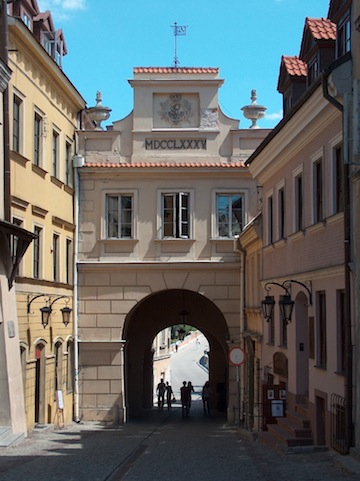
Grodzka Gate in Lublin, Poland. (photo from Grodzka Gate – NN Theatre Centre )

The program of the reunion covers meetings devoted to the history and culture of Jewish Lublin, workshops in genealogy, walks along tourist trails, commemorations and a variety of artistic events. One of the central features of the reunion will be presentations of Lubliner family stories. Guests will have a chance to get to know both historical and contemporary Lublin, visit the former Jewish district and meet non-Jews working to preserve the memory of the Jews of Lublin for generations to come.

Apart from sightseeing within Lublin, Grodzka Gate is also planning tours of the region – Zamosc, Kazimierz Dolny, Belzec and Wlodawa, among other places. Apart from these excursions, all events are free of charge for participants. The inauguration of the reunion will take place on July 3 in the Museum at the Lublin Castle.

“We want to get in touch with and invite all those whose families come from Lublin,” underlined reunion coordinator Monika Tarajko. “We already have participants coming from Israel, the United States, France, Belgium and Great Britain. However, we are still striving to reach as many prospective participants as possible and inform them about the reunion. We are expecting more than 100 people to visit Lublin as part of this special event. Feel welcome to join us!”

For reunion registration and information, visit lubliners2017.teatrnn.pl or contact Tarajko (48-606-687-367, [email protected]) or the American ambassador to Grodzka Gate, Leora Tec (1-781-862-4976, [email protected]).

Grodzka Gate’s other projects include Lublin: Memory of the Holocaust, a trail commemorating the Jewish inhabitants of Lublin who perished in the Holocaust; The Mysteries of Memory, an artistic happening involving a piece of the city with its specific topography, history and technical infrastructure; and Henio Zytomirski: The “Letters to Henio” Project, where, on April 19 (Holocaust Remembrance Day in Poland) every year, citizens of Lublin send letters to Henio Zytomirski, a Jewish boy who was born in 1933 in Lublin and was murdered by the Nazis in a gas chamber, probably in November 1942.

Grodzka Gate’s Lublin: Memory of the Place Exhibition is dedicated to Lublin before the war. A considerable part of the former Jewish district today has been covered with concrete, under which the foundations of Jewish buildings and the memory of those who once lived there are buried. Over the years, Grodzka Gate has become a place where old photographs, documents and testimonies can be preserved for posterity.

As well, there is Lublin: Faces of a Nonexistent City. In May 2012, Grodzka Gate received a collection of 2,700 glass plate negatives found in the attic of the house at Rynek 4 by workmen doing repairs. The photographs were taken between 1914 and 1939 and were, based on Grodzka Gate’s research and recent findings, taken by Abram Zylberberg.

Grodzka Gate’s website is teatrnn.pl/en.

Format ImagePosted on June 9, 2017June 7, 2017Author Grodzka Gate – NN TheatreCategories WorldTags continuity, Grodzka Gate, Holocaust, Lublin, memory, Poland
Mixing of cultures, religions

Mixing of cultures, religions

Helen Kim and Noah Leavitt, authors of JewAsian, will be at the Jewish Book Festival on Nov. 28. (photo by Matthew Zimmerman Banderas)

The recently published book JewAsian: Race, Religion and Identity for America’s Newest Jews by Helen Kim and Noah Leavitt was crafted out of a seven-year study of 39 mixed couples, as well as their own successful marriage. The couple will be in Vancouver later this month to share their findings at the Cherie Smith JCC Jewish Book Festival.

For Kim, who was born a few years after her parents moved from Korea to the San Francisco Bay Area in the late 1960s, finding a Korean guy to date was a virtual mission impossible, so looking outside the community was accepted.

“My mother was totally fine with it, in large part because she’d thrown away her expectations that I marry somebody Korean a long, long time ago,” said Kim of her marriage with Leavitt. “I think, in part, because I grew up in a community that was predominantly white with very few people of color, I think she quickly realized that, demographically speaking, it was probably going to be unlikely I’d meet, date and eventually marry someone of the same ethnic background as me.”

Leavitt, who is of American Jewish origin, said, “My mom was super-excited about the fact I had met somebody I was so smitten with. She and Helen, early on, established a great rapport that has continued ever since. I think my mom just had an expectation that I’d settle down with somebody I really loved, who I was challenged and inspired by, and saw that in Helen … so she was excited.”

Leavitt grew up in a household that was somewhere between the Reform and Conservative denominations. He went to a Jewish community Sunday school growing up that was housed at Cornell University and he had his bar mitzvah at Ithaca College through their Hillel.

Kim and Leavitt met in 1997 and both were drawn to the complexity of their Jewish-Asian mix, an interest that increased with the births of their children.

“This was the era where, I think, we started to see a lot of interracial pairings, dating and marriages,” said Kim. “And it was also right before the U.S. census gave multiracial individuals the option of choosing more than one race on the census … really, an interesting time, demographically speaking, where the context around us was contributing to our thinking about how common are pairings like ours and maybe other interracial or Jewish-not Jewish pairings.”

Leavitt and Kim contacted a number of universities that were repositories of large-scale demographic studies. They were aware that the study of intermarriage to that time had been focused on interfaith marriage, but had not delved into how interracial marriage factored into the larger picture.

The couple reached out to the Institute for Jewish and Community Research. Through this connection, they were able to do an initial recruiting of couples with whom to speak for their book. In the end, their study included 39 couples from the San Francisco Bay Area, Los Angeles and Orange County, and from the New York and Philadelphia metropolitan areas.
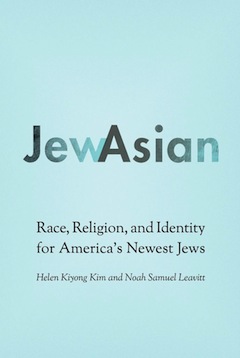
book cover - JewAsian“We focused there, in part, because of the high percentages of individuals who identified as Jewish and Asian,” said Kim. “Then, there was the likelihood and demographic reality that interracial marriages are taking place predominantly in those areas … with the West Coast having, by far, the highest rates of interracial marriages.”

“We had a lot of people volunteer to be part of the survey and what we made a decision to do was to try to find the most expansive look at Jewish-Asian combination that we could,” said Leavitt.

Within the 39 couples, one was gay and three were lesbian, with the remainder being heterosexual. The study also included a second set of interviewees who were young adults that were children of Jewish-Asian households.

“The first thing by far that I think was quite surprising that we found was that, for the couples as well as the adult kids, they are definitely Jewish – not just in terms of the self-identification perspective, but in terms of some strikingly traditional religious practices,” said Kim. “So, the couples we interviewed were in the midst of or had created homes where there was a lot of traditional Jewish religious practice – everything from observing Shabbat consistently, to consistent synagogue attendance, to kids becoming bar or bat mitzvah, to children going to Jewish day schools.

“Then, for the adult kids we interviewed, they affirmatively claimed they were Jewish. But, they also talked about having been raised in traditionally religious households and communities that, to a great extent, mirrored what we were finding with the couples we interviewed.”

While only six of the racially Asian individuals had converted to Judaism, the overwhelming majority of couples celebrated Jewish religious events and cultural tradition alongside Asian ethnic traditions.

“There was neither a conflict of religion nor a blending of religions,” said Kim. “It was more of a cultural hybrid, but steeped in Judaism as the religion of the household.”

“I would go broader and say that, for the most part … we didn’t really hear too many stories about conflicts related to religion overall,” added Leavitt. “There were a few examples where the non-Jewish partner had a religious or spiritual practice that they adhered to, but it was something they did on their own and didn’t bring into the household.”

Both Kim and Leavitt said the findings were representative of their own Jewish-Asian mix. “Judaism, for me, is a religion and a cultural tradition that is easier for me to instil in my family,” said Kim. “I, as a second-generation child of an immigrant family, did not grow up with a lot of Korean ethnic and cultural traditions.

“Through the adult kids [in the study], it was reinforced repeatedly that you have to expose [them to the culture], no matter what your comfort level as a parent, no matter your knowledge as a parent. The kids really appreciated when the parents went all out in terms of trying to expose them to a particular culture or ethnicity, though they themselves as parents were afraid they might not do it right.

“So, I think just hearing from the kids and imagining my own kids in 10 to 15 years was kind of affirming to me, [that I just need to] try as much as I possibly can. The kids will end up picking up things here and there and will then, on their own, become curious and want to learn on their own. That was reassuring for me.”

“I had a lot of the same reactions,” said Leavitt. “For me, when Helen and I decided to make a commitment to this project, it was fairly close in time to when we were also starting to think about having our own family. When we got this investigation underway, our son Ari arrived. As a first-time parent, I had a lot of worry and anxiety about a household that seemed to combine so many different kinds of traditions, cultural heritage markers and, to some extent, religious differences. I think I had a lot of worry about the ability of all those things to be in a household together … in part, because I didn’t have an upbringing where there were lots of differences within the household. So, I had a lot of fear about that.

“One of the things I’ve been liberated by, in working on this project and having two children arrive, is there is a lot of flexibility and resilience in households. Where even something may seem like a long list of differences, the people inside that household are able to find ways where things can come from different directions, but meet at the same point.”

Kim is excited about coming to Vancouver, especially to have the opportunity to speak with a non-American audience, “to understand how it is that they think about these different dimensions of identity, tradition, culture and religion, as a way of getting out of our predominantly U.S.-focused lens. I’m really looking forward to that comparative perspective.”

Leavitt said, “I think the chance to be in as diverse, global and multicultural a city as Vancouver … maybe there are lots of households coming together with this mix of Jewish-Asian backgrounds in Vancouver. I think this may propel us to continue researching more in this international comparative way.

“Helen and I feel very fortunate to have been working on this project at a time in the U.S. when the exploration about the diversity of the Jewish community in our country is really something that is front of mind for so many congregations, synagogues. We aren’t the same people we were years ago.”

“If we are acknowledging that this is what American Judaism looks like,” added Kim, “what then is the responsibility we have in regards to action based on the changes in the demographic and how do we act based on how we’ve changed?”

Kim and Leavitt are on a panel with Daniel Kalla on Nov. 28, 6 p.m., at the Jewish Community Centre of Greater Vancouver. For more information, visit jccgv.com/content/jewish-book-fest.

Rebeca Kuropatwa is a Winnipeg freelance writer.

Format ImagePosted on November 11, 2016November 11, 2016Author Rebeca KuropatwaCategories BooksTags continuity, culture, intermarriage, interracial marriage, JewAsian, Judaism, religion

Determination key to continuity

“The power above is set in motion by the impulse from below, even as vapor ascends to form the cloud. If the community of Israel did not first give the impulse, the One above would not move to meet her, for yearning below makes completion above.” – Zohar, Genesis 35a

I have always believed the secret of Jewish survival is exemplified in the life of my grandmother, of blessed memory, who I never met. She died when my mother – the second youngest of 11 children – was only 7 years old. Young as she was, my mother, Sarah Rebecca Opas, never forgot her mother, or the spirit of Yiddishkeit she left behind.

My grandmother’s name was Mila and she was betrothed to my grandfather David from the age of 3, when her parents in Plotsk, Poland, called her in from playing to tell her that, when she grew up, she was to marry the little boy next door. This was back in the early 1800s when betrothals were arranged by parents as a matter of course.

It was the time of pogroms in Europe and, when he reached the age of 17, David informed his parents he was leaving for the New World and had secured a job on a ship. “What about Mila?” he was asked. “I will send for her when I get settled,” he assured them. “No you won’t, you’ll take her with you.” So, Mila, then 16, and David were married by the rabbi before sailing to the New World, which David believed to be America, but was in fact Australia.

The ship took six months to reach Port Adelaide in Australia. David was hired to be a handy man on the vessel, and his first job was to look after the food. As there was no refrigeration then, the whole supply of meat was lowered on cables into the ocean, where the salt water would preserve it. However, he failed to secure it properly, and it all sank to the bottom of the sea – no meat for the crew for the entire trip. His next job on board was to sew any sails that had been torn in the strong winds. He had no idea how to sew, so his young wife did it for him, as well as keeping the captain and crew’s clothing repaired.

Before they reached Australian shores, Mila was already expecting her first child.

Both having come from Orthodox homes, it was a terrible shock to them when they landed. No synagogues, no kosher butchers, no established Jewish communities. They settled in a little country town, Bombala, near the border between Victoria and New South Wales. David opened a store to provide fodder and dry goods to the farmers in the surrounding districts and, gradually, as they learned English, the business prospered enough to give the family a comfortable lifestyle.

But Mila’s heart was always sad, because she did not know how to keep her family Jewish, as there were no other Jews for them to meet and marry. So, she made a plan.

Mila had heard that there was a small Jewish community in the city of Sydney. As each of her older children turned 18, she would travel to Sydney and stay there until she found a Jewish boy or girl willing to go back with her to Bombala and marry one of her children, sight unseen. Her love of her Jewish heritage was such that achieving this became the most important part of her life, and she was amazingly successful. Of the 11 children, only one of them married a non-Jew; there were no divorces. Sadly, Mila died of scarlet fever still relatively young, before the penicillin was invented that would have saved her life.

My mother and her little brother were raised by their older sisters, who by then were all married. They never let her forget her mother and the importance of remaining Jewish even in near-impossible situations where Jewish rituals are almost nonexistent.

In retelling my grandmother’s story to me so many years later, my mother always stressed that the Jewish soul is unquenchable. No matter how far one strays from observance, the spark remains and it is something precious that must be cherished and passed on from generation to generation. By making my home in Israel, becoming an observant Jewish woman, and being blessed with 18 Israeli grandchildren and 16 great-grandchildren here, I hope my mother and grandmother can be at rest.

Dvora Waysman is a Jerusalem-based author. She can be contacted at [email protected] or through her blog dvorawaysman.com.

Posted on October 28, 2016October 27, 2016Author Dvora WaysmanCategories Op-EdTags continuity, Israel, Judaism
Hebrew school in Okanagan

Hebrew school in Okanagan

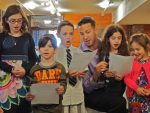
Left to right, reciting the Four Questions at the Okanagan Jewish community’s Passover celebration: Adarah Challmie, Ben Levitan, Jordan Spevakow, David Spevakow, Samara Levitan, and Kate Spevakow. (photo by Misty Smith)

Kelowna’s Jewish community may be small, but it’s poised for growth. The latest development: an expansion of its Hebrew school’s curriculum.

Led by the family of David and Natalie Spevakow, who moved to Kelowna from Calgary some 13 years ago, Hebrew classes were first provided last year. Now, more Jewish content will be added to the lessons, as well.

At the moment, the Spevakows are spearheading this task. Parents lead classes every Monday after school, with kindergarten to Grade 3 first, followed by grades 4-to-7. The parents rotate each week, teaching the kids about Jewish traditions and the Hebrew language, prayers and blessings. Currently, there are 14 students in total (two of whom are Spevakows).

“Trying to have a Jewish life in a small community can be a challenge,” said Natalie Spevakow. “I would say our congregation at the Okanagan Jewish Community Centre is about 100 members, but only 25 to 30 are active members.

“We have a visiting rabbi who comes once a month, Rabbi [Shaul] Osadchey from Beth Tzedec congregation in Calgary. We set this up to bridge the gap with our communities, and that’s been wonderful. With us having young families, we’ve all decided that it’s important that we get together, and we wanted to build a Jewish community for ourselves and our kids.”

The Spevakows are looking to hire a part-time teacher to start in September and work through June. They are searching for a creative, energetic person knowledgeable in Hebrew and the Jewish traditions to teach children ages 4 to 14. The position involves two hours of teaching a week, plus preparation time, and the teaching material is provided. In addition to an hourly wage, the teacher would receive a free annual family membership to the Okanagan JCC. (Interested readers should call Anne at the OJCC, 250-862-2305.)

“All of our parents just want our kids to be with other Jewish children and get a sense of what it is to be Jewish,” said Spevakow.

“We also try to get together with our Hebrew school every few months for a potluck,” she added. “When we have the visiting rabbi come, we do a potluck with the rabbi and do services with our children and our families as well. We make that a time to get together and bring the community together.”

photo in Jewish Independent - Dressed for Purim, left to right: in the front row, Bria Tizel, Anderson Parnes, Kate Spevakow, Ryder Golbey, Skyla Golbey and Chase Golbey; in the back, Jordan Spevakow, Abbey Parnes and a friend, and Adarah Challmie
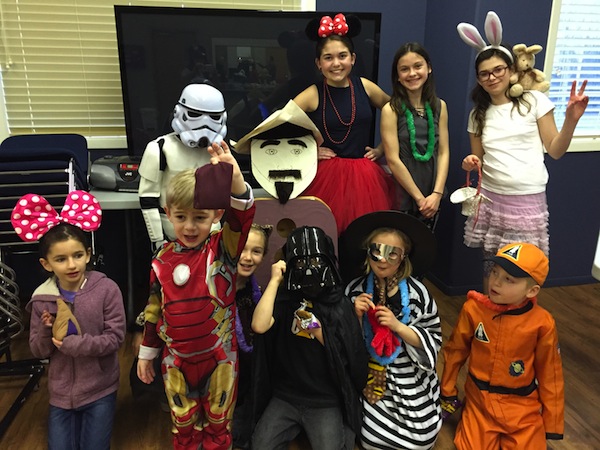
Dressed for Purim, left to right: in the front row, Bria Tizel, Anderson Parnes, Kate Spevakow, Ryder Golbey, Skyla Golbey and Chase Golbey; in the back, Jordan Spevakow, Abbey Parnes and a friend, and Adarah Challmie. (photo by Natalie Spevakow)

As of now, all the children involved in the school are Canadian-born, but there are Israeli-born children who will be joining classes when they come of age. The class curriculum is a combination of programs that the Spevakows sourced online with guidance from Osadchey. Parents are encouraged to take material home to practise during the week.

“The learning works better if they do take stuff home,” said Natalie Spevakow. “I know, for the little guys, they’re just learning the Hebrew letters and can repeat the words they learned…. We try to make it hands-on and more fun for them.”

Looking ahead, Spevakow feels that the Jewish community is growing, anticipating that one day it will be big enough to warrant more frequent visits from Osadchey.

“But, right now, with our smaller numbers, it’s very difficult for us to finance having a rabbi here all the time,” she said. “As is, we’re making it work, getting our kids educated and getting the resources we can.”

The older students are learning to lead Friday night services, with the goal of having them lead a service by May 2017, and then again, have them lead a service with Osadchey.

“We’re not on our own, trying to make things up on our own,” she said. “It’s just a matter of people making time for their kids, so the program works. I think all the parents recognize they want this for our kids and are willing to put in their time.

“We used to do it on weekends, but, with so many of us really big into skiing, it wasn’t working out. So, weekdays are definitely working better for us.”

They also recognize there may be some older members of the community who may be interested in helping with classes, so they hope to bridge the gap and find ways to bring them in, too.

“There’s something to be said about a small community, in that you really get to know all your members,” said Spevakow. “They truly do become an extension of your family. You realize that anything you’d like to see happen, things that, in a larger community you might have taken for granted because it’s available, in a small community may not exist yet…. Connecting on a deeper level with the people in our community, figuring out the assets that each can bring to the table, has really benefited our community. Knowing everyone’s faces really helps.”

Rebeca Kuropatwa is a Winnipeg freelance writer.
Format ImagePosted on August 19, 2016August 18, 2016Author Rebeca KuropatwaCategories LocalTags continuity, education, Hebrew, Judaism, OJC, Okanagan
Camp groundbreaking

Camp groundbreaking

From left to right: Andy Kaplowitz, Camp Solomon Schechter vice-president/president elect; Sam Perlin, camp executive director; Sarah Kahn Glass, camp president; Jerry Cohen of the Samis Foundation; and Jay Holzman, leadership donor. (photo from CSS)

On July 10, Camp Solomon Schechter hosted a formal groundbreaking ceremony to commemorate the start of major construction at their facility. From 60 to 120: The Campaign to Build Jewish Continuity is a $12 million multi-year project, beginning this fall, to refurbish the camp’s facilities over the coming years.

But this campaign is about so much more than buildings. “Camp is kids,” said CSS executive director Sam Perlin, but “Schechter is also about adults. That’s because it’s not just a summer experience or a school-years’ experience. As we have found, it’s a lifelong experience.”

The facilities currently host more than 500 campers and staff each summer and are used during the year by the Osprey Camp program, which primarily works with distressed school districts in southwest Washington to provide students with an application of science concepts as they live and learn in the outdoors. It also provides a rental venue for a range of organizations and individuals.

Speakers at the groundbreaking included Sarah Glass, CSS board president; Andy Kaplowitz, CSS board vice-president; representatives of major donors, including Jerry Cohen for the Samis Foundation and Jay Holzman for the Holzman family; Tumwater Mayor Pete Kmet; and two CSS campers. Several local officials were in attendance.

Format ImagePosted on July 22, 2016July 19, 2016Author Camp Solomon SchechterCategories LocalTags Camp Solomon Schechter, continuity, groundbreaking, summer camp
The pitfalls of Jewish dating apps

The pitfalls of Jewish dating apps

It’s rare to find a Jew who hasn’t heard of JDate. Responsible for bringing countless members of the community together in matrimony, a whole generation of young people has grown up taking photos for upload to its hallowed webpages. But 20-something Jews, permanently attached to their cellphones as are most millennials, have many other options now for finding “the one.” Aside from actually meeting people face-to-face (G-d forbid), phone apps are being touted as the way forward.

The apps attempt to connect an array of Jewish singletons – if you both “like” each other, then you can chat. The market leaders, more established JSwipe and new kid on the block Jfiix, promise to connect you with “cool, young and mobile Jewish singles.” As someone who fits these criteria (it’s cool to label yourself cool, right?), I’m here to explain why I don’t believe they’ll achieve their aim. Having lived in London, Toronto and Vancouver, I’ll do this with the help of both personal insight and that of various Jewish young professionals in all three cities.

First, there’s the geography aspect – Jewish dating apps all aim to introduce you to other Jews. Thanks smartphones, but that’s not actually a problem we have. Anyone can tell you how Jews (and other ethnic groups) cluster together in most cities. Simply check out the suburb of Thornhill in Toronto or Golders Green in London if you don’t believe me. In Vancouver, with a Jewish community that a good friend comments is “half a block” wide, it’s not difficult to find members of the tribe. We do, after all, have a shared interest in hobbies such as eating and gossiping – where we find out that supposed strangers are often third or fourth cousins.

This closeness is usually a positive: even if you’re unfamiliar with the specific community or country, Jews, in my experience, excel at inclusivity and making newbies feel welcome. But when it comes to dating apps, it leads to a problem that’s twofold. If you do live in a Jewish area, chances are that you’ll already know other Jews from synagogue, Hebrew school, Birthright or friends of friends. In response to my questioning, a friend in London summed up the issue: “Jewish dating apps are great to keep your parents and grandparents happy, but you end up just swiping left to everyone, as you know them or they’re your best friend’s ex.” So, when you live in densely saturated Jewish areas, mobile apps are needless. And, when you don’t, they aren’t helpful either. One Vancouverite I spoke to, who goes to university in Halifax, remarked, “In my limited East Coast experience, there’s no one on Jewish dating apps. Everyone who shows up is from the States.” It’s little surprise that he set up a profile with Tinder, a similar app but one that’s open to all religions.

This leads me to the second problem with Jewish dating apps: the apps themselves. Certainly, critiques can be leveled at any and all such platforms. One Ontario-based law student refuses to download dating apps, full stop, arguing that people’s profiles are so “planned” and “calculated.” True, the information you put about yourself on dating apps is mostly limited to a line-long bio and several photos, and everyone tries to look their most cultured, well-traveled self in photos. Not only does everyone start to look like clone-like serial vacationers, but it means images, not personality, inevitably end up being the deciding factor in choosing dates.

Jewish apps have somewhat tried to sideline this prioritization of looks with “Jewish preference” tools. JSwipe, for instance, lets you select preferred options for being matched up: you can choose between kosher or not, as well as denominations from Orthodox to Reform to “willing to convert.” This is a pretty rudimentary way of sifting through Jewish singles when you compare it with the fact that people used to put some actual thought into matchmaking those who might work well as a couple. A graduate in Toronto lamented that “everyone’s stopped trying to set up other friends with mutual friends because swipe-based dating apps have become the new thing.” The new thing they are, but a new thing that’s being adopted reluctantly.

Why? I attribute this, in part, to an image problem. The apps aren’t appealingly designed and are more than a little cringe-worthy. Unlike other dating apps with more casual connotations (Tinder) or novel niches (Coffee Meets Bagel), Jewish ones are severely lacking the trendy factor. In my experience, this was because they didn’t seem fun or relaxed, and they certainly didn’t seem like they’d lead to the exciting adventure that dating surely should be. In short: they seemed to be full of people who felt like they “had to” find a Jew. And, depressingly enough, it was difficult to distinguish between whether this hint of dutiful desperation could be attributed to themselves, their parents or even their grandparents.

This is why, for many, the apps are a good idea in theory, but less so in practice. The focus on Judaism implies that if two people’s religious beliefs match up, then they’re clearly compatible. This neglects vital questions such as, “Is this person actually nice?” and “Do we have anything in common bar religion?” And I’d go so far as to say that sticking steadfastly to dating Jews means sticking to your comfort zone, as you’ll likely be from a similar background. But what are your 20s for if not to date people from other walks of life? At worst, dating vastly different people can highlight what you don’t want in a relationship. At best, you’ll gain life experience and learn a ton about different cultures. I say this as someone with a dating history that includes Christians and Muslims, but who, at the end of the day, would love to settle down with someone Jewish.

What doesn’t help in this regard is being warned before a first date with a non-Jew, “You can’t marry him” (thanks, Dad). Any young person will tell you that the more a rule is enforced, the more you want to rebel against it. It’s no different when it comes to dating. Ask pretty much any young Jew and they’ll attest to the pressure we feel from family and community to settle down with a Jewish spouse. It’s easy to joke about, but the joke’s on them when the pressure pushes us away. The burden is too much, too soon. But, Dad, and other parents, just because we experiment in our 20s doesn’t mean we don’t want a Jewish household. I’m sure I will have one eventually – well, we can pray, for my dad’s sake. And you know the guy in Halifax who traded a Jewish app for Tinder? He noted, “My bio has Hebrew in it, so I guess there’s a subconscious hope that it’ll attract Jews?”

Parents, have faith that we’ll come around and maybe, just maybe, we’ll do it without having to resort to mildly dire religion-specific dating apps.

Rebecca Shapiro is a freelance journalist, amateur photographer and blogger at thethoughtfultraveller.com. A recent politics graduate, she manages to maintain bases in London, Vancouver and Toronto, while focusing a disproportionate amount of time planning new adventures. She has been published in the Times (U.K.), Huffington Post (U.K.), That’s Shanghai (China) and ELLE Canada.

Format ImagePosted on June 10, 2016June 8, 2016Author Rebecca ShapiroCategories Op-EdTags apps, continuity, dating, JFiix, JSwipe

Posts pagination

Previous page Page 1 Page 2
Proudly powered by WordPress