

OneTable dinners – a platform for young professionals to meet on Shabbat – are occurring in 700 cities, including Toronto, but not yet Vancouver. (photo from OneTable)
My son moved to Florida in August, choosing the Sunshine State for its large Jewish community, great weather and the many outdoor recreational possibilities it offers when Vancouver is soaked with rain. He quickly found opportunities to engage with young Jewish professionals like himself, through a synagogue, but also through OneTable Shabbat dinners.
“I had an amazing Shabbat experience,” he told me, as he explained how it works.
Someone agrees to host a Shabbat dinner for a certain number of people, who each bring an item to help with the meal. OneTable reimburses the host $10 per person, which doesn’t cover the costs, but it helps, particularly if the host is feeling cash-strapped.
In my son’s case, the meal was take-out sushi, which was completely fine with the 20-somethings gathered around that Florida table. They talked, laughed and ate together, kindling new friendships and inspiring my son to play host at a OneTable Shabbat soon.
My curiosity piqued, I started making inquiries about OneTable. What a great fit this would be for Vancouver, I thought, given how difficult it is to make new Jewish friends here. That’s especially true for young Vancouverites looking for Jewish partners in a city with an intermarriage rate of 43%, according to a 2011 study and intermarriage rates in Canada have increased, according to another study that came out this year, so likely Vancouver’s has, too.
But it’s also a challenge for Gen Xers like me. What an incredible idea, to surround yourself with potentially new Jewish friends at a home table defined by challah and shared food! Alas, OneTable is not offered here.
Irit Gross, chief advancement officer at OneTable, described how the organization began in 2014, when two philanthropists united to address the epidemic of loneliness that was occurring. Young Jewish adults were focusing heavily on their mobile phones, and disassociating themselves from the traditional Jewish institutions where their parents and grandparents had socialized.
OneTable sent out a survey, asking young people what it would take to get them to choose Shabbat on a Friday night, rather than another option.
“People were socializing online, so we knew we needed to meet them in a virtual space,” Gross said. “We began investing in a platform similar to Airbnb, where, as a host, you could go online and post your dinner and, as a guest, you could join one. That’s the essence of how we started, with the goal of people going online to be offline.”
The $10 per person remuneration was added when OneTable realized money was a barrier to millennials wanting to host five to 10 people in their homes. The reimbursement allows the host to elevate their offering; for example, by buying better wine, or a nicer tablecloth for the event.
That first year, OneTable began in the Jewish heartbeat of North America – New York City. As the organization fundraised and collaborated with local federations in other cities, it quickly expanded to Chicago, Los Angeles, Boston and Miami.
“We knew where the young adults were and went to set up shop in those locations,” said Gross. Today, OneTable dinners are occurring in 700 cities, including Toronto, and 49 states, as well as Washington, DC.
The organization has engaged 320,000 unique individuals, with many returning for more. “Those 320,000 people have come back and either guested or hosted two or three times. That engagement rate shows that our goal and mission of creating a Shabbat ritual is coming to fruition and happening in the community,” she said.
Prior to Oct. 7, 2023, OneTable was engaging 40,000 unique individuals annually. “After Oct. 7, that jumped to 82,000 unique people, meaning we doubled in 2023 and sustained that increase in 2024,” Gross noted. “It’s been a marker for our organization, catapulting us to really think not just about how we’re addressing millennials, but, also, bringing Gen Zs together.”
After reading reports about how Jews across many different age groups were looking for ways to find community, OneTable expanded its offerings, though its core audience remains the 20-to-30-something demographic, which accounts for 95% of its time and budget.
The organization’s research is far from over. “We’re still trying to figure out how to stay relevant and continue to be the number one choice for young adults in their 20s and 30s, so they can create their own Shabbat rituals,” said Gross.
Five years ago, the UJA Federation of Greater Toronto requested collaboration with OneTable, beginning a conversation that would take two years before the program launched. OneTable began operating in Toronto in 2023 with a three-year funding grant, and Gross said Toronto has been one of its most successful communities.
OneTable is not in Vancouver, and there seems to be no conversations about it coming here. Prior to Oct. 7, the Ronald S. Roadburg Foundation reached out to OneTable.
“I think it’s a great organization, but we’re not funding in the space of young adult engagement,” said Mark Gurvis, the foundation’s chief executive officer. “If we were funding young adult engagement, we’d fund this for sure. Federation’s involvement is the key for this, and whether we’ll step in with Federation remains to be seen.”
I asked the Jewish Federation of Greater Vancouver about the possibility.
“While Vancouver doesn’t have OneTable, we’re fortunate to have many organizations that host meaningful Shabbat dinners and gatherings that bring people together throughout the community,” said Caryl Dolinko, Federation’s communications and marketing director.
“We are continuing to develop a family-connector model to strengthen engagement. We’re also happy to explore other initiatives and opportunities that are out there in the community, as we would love to do with OneTable.”
She continued, “Our focus remains on supporting the many partner organizations and community initiatives that already create opportunities for meaningful Shabbat experiences and peer connection.”
Dolinko gave the example of Axis, a Federation initiative for Jews in their 20s and 30s. “Last year, Axis held 15 events for 682 unique participants, with 345 attending multiple events,” she told the Independent. The network connected 32 volunteers to community organizations and maintains active WhatsApp and Instagram engagement, she said.
“We are restructuring our PJ program to prioritize mixed-heritage families and have expanded PJ Library access into public school libraries, pediatrician offices and other community spaces,” she added.
With an intermarriage rate like ours in Vancouver, I’d argue that the current model is not working. But no one is asking me.
I moved to this city to start my family, in 2000. Now, a quarter-century later, three of my children have left for other cities and countries, where their odds of meeting Jewish partners are much better. My youngest will follow in two years. I miss them desperately, but I want them to spread their wings – and I want them to marry someone Jewish.
Gross understands all too well that funding dollars need to go to other worthy initiatives.
“There are a lot of people out there fighting against hate,” she noted. “I don’t know if there are enough people fighting for the joy of Jewishness, the special rituals that remind us why we love our traditions.”
For more information, visit onetable.org.
Lauren Kramer, an award-winning writer and editor, lives in Richmond.
Editor’s note: This article has been updated from the print version to better reflect Jewish Federation of Greater Vancouver’s commitment to youth engagement in the community.


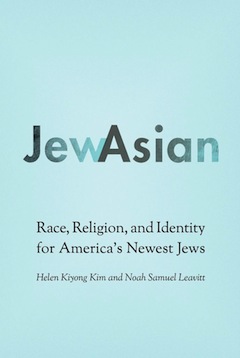 “We focused there, in part, because of the high percentages of individuals who identified as Jewish and Asian,” said Kim. “Then, there was the likelihood and demographic reality that interracial marriages are taking place predominantly in those areas … with the West Coast having, by far, the highest rates of interracial marriages.”