Skip to content
  • Home
  • Subscribe / donate
  • Events calendar
  • News
    • Local
    • National
    • Israel
    • World
    • עניין בחדשות
      A roundup of news in Canada and further afield, in Hebrew.
  • Opinion
    • From the JI
    • Op-Ed
  • Arts & Culture
    • Performing Arts
    • Music
    • Books
    • Visual Arts
    • TV & Film
  • Life
    • Celebrating the Holidays
    • Travel
    • The Daily Snooze
      Cartoons by Jacob Samuel
    • Mystery Photo
      Help the JI and JMABC fill in the gaps in our archives.
  • Community Links
    • Organizations, Etc.
    • Other News Sources & Blogs
    • Business Directory
  • FAQ
  • JI Chai Celebration
  • JI@88! video

Recent Posts

  • Sharing her testimony
  • Fall fight takes leap forward
  • The balancing of rights
  • Multiple Tony n’ Tina roles
  • Stories of trauma, resilience
  • Celebrate our culture
  • A responsibility to help
  • What wellness means at JCC
  • Together in mourning
  • Downhill after Trump?
  • Birth control even easier now
  • Eco-Sisters mentorship
  • Unexpected discoveries
  • Study’s results hopeful
  • Bad behaviour affects us all
  • Thankful for the police
  • UBC needs a wake-up call
  • Recalling a shining star
  • Sleep well …
  • BGU fosters startup culture
  • Photography and glass
  • Is it the end of an era?
  • Taking life a step at a time
  • Nakba exhibit biased
  • Film festival starts next week
  • Musical with heart and soul
  • Rabbi marks 13 years
  • Keeper of VTT’s history
  • Gala fêtes Infeld’s 20th
  • Building JWest together
  • Challah Mom comes to Vancouver
  • What to do about media bias
  • Education offers hope
  • Remembrance – a moral act
  • What makes us human
  • המלחמות של נתניהו וטראמפ

Archives

Follow @JewishIndie
image - The CJN - Visit Us Banner - 300x600 - 101625

Tag: BDS

Pledge reflects motives

In June, the Spanish government passed a law granting descendants of Sephardi Jews forced from that country in the 15th century the right to dual Spanish citizenship.

Only someone unfamiliar with the toing and froing of Jewish migrations and expulsions could be blind to the magnificence with which this move dovetails with history. For millennia, princes and fiefs, kings and counts expelled the Jews from their realms in one generation and then enticed them back in successive ones, when their perceived value rebounded or when the duchy or kingdom was in financial peril. Sometimes it took a generation, sometimes it took 600 years, as in the case of Spain, which, it should be noted, is now just a few notches above Greece on the financial solvency scale.

But Jews who consider taking up Spain’s generous offer will be taking a sober second look after recent events. OK, the events were a relatively small-scale tempest – a reggae festival in Valencia – but the lessons are wide-ranging and deeply telling.

Matisyahu, the once Chassidic, now just Jewish, reggae rapper, was disinvited from the Rototom Sunsplash Festival after he refused to sign a pledge in support of a Palestinian state. The boycott, divestment and sanctions movement had convinced the festival organizers that participants should be forced to commit to the Palestinian cause.

The quality of the performers or the wishes of the audience were secondary to the political positions of the musicians, apparently. Why this obscure music festival should become a flashpoint for a kerfuffle over the Middle East may seem baffling, but the strategy of the movement has been to demand loyalty oaths from anyone at any time in any place. Canadian film festivals, including the Toronto International Film Festival and the Vancouver Queer Film Festival, have been roiled over the topic in the past. These efforts at a “cultural boycott” are atrocious enough, but the worst tactics of the movement promote an academic boycott, which is as close as we can come to literal book-burning.

Is it additionally appalling that Matisyahu is not Israeli, but American? Sort of. The boycotters have attacked Israelis for the most part, but now they are turning their cannons on anyone who might think that Israel has a right to exist alongside a Palestinian state. (Note that the oath did not address a two-state solution. Coexistence is not top of the agenda for BDSers.)

Not all Jews are Zionists and, indeed, some Jews support the BDS movement. However, if you believe in the right of self-determination for the Palestinian people, but not for the Jewish people, then you are at the least a hypocrite.

The BDS movement, while a relatively new phenomenon, has its historical antecedents in the people who would paint Stars of David on Jewish shop windows. It is a mob of bullies for the most part, which calls itself pro-Palestinian, but exhibits nothing positive, only hatred and vilification of Israel.

Although a reggae festival might seem an odd place to start, the BDSers and the larger “pro-Palestinian” contingent could buy themselves some legitimacy by taking an oath themselves: to work together with all people to find a peaceful resolution so that two peoples can live in coexistence in Jewish and Palestinian states. It’s a pledge the Jewish people accepted in 1947-48 and have reiterated throughout the ensuing seven decades. The Matisyahu brouhaha is an example of the answer the Jewish people have received to that olive branch.

Posted on August 21, 2015August 19, 2015Author The Editorial BoardCategories From the JITags antisemitism, BDS, boycott, Israeli-Palestinian conflict, Matisyahu, Rototom Sunsplash Festival, Sephardi, Spain, two-state solution
Trudeau talks with the JI

Trudeau talks with the JI

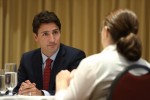
Liberal Party of Canada leader Justin Trudeau in an interview with Cynthia Ramsay of the Jewish Independent. (photo by Adam Scotti)

Justin Trudeau said he is cautiously optimistic about the Iran nuclear deal, insisted he is committed to fighting ISIS and reiterated his commitment to the environment and social fairness in an exclusive interview with the Jewish Independent.

The federal Liberal leader, who hopes to be prime minister after the Oct. 19 federal election, acknowledged the implications of Iran’s agreement with Western powers over its nuclear program, which the Tehran regime maintains is for energy purposes only.

“We all start from the same place on this – a nuclear-armed Iran is a threat not just to Israel, not just to the region, but to the entire world, and we have to make sure that Iran doesn’t achieve that,” Trudeau said.

There are only two ways to reach this objective, he said: direct military intervention on the ground against the Iranian regime or a diplomatic agreement. “We don’t have such a great record of military intervention in that part of the world,” he noted, stressing that the agreement is “not based on trust but on verification.”

“We are cautiously optimistic about the deal,” he said. “We’re not saying we should drop the sanctions today. Obviously, there are a lot of milestones to be addressed, but I think anything [is positive] that sets us down the path of both delaying the ability significantly of Iran to get the nuclear bomb and increases the ability of the Iranian people to put pressure on their regime to change – because we all know we can make a tremendous distinction between the Iranian citizens and their government that doesn’t represent them particularly well.”

Trudeau also advocated reopening diplomatic relations with Iran eventually. “I do feel that it would be very nice to hope to reopen that embassy at one point because you don’t have embassies with just your friends, you have your embassies with the people you disagree with,” he said. “However, on top of addressing the nuclear concerns, Iran has to do an awful lot to demonstrate that it’s no longer going to be a state sponsor of terrorism in the region, around the world, and they have to do an awful lot around human rights and repression of their own citizens and dissent within Iran before they can rejoin the community of nations. But I think we’re on a path that should be cause for at least a level of comfort that perhaps we’re in a positive direction now.”

In speaking with the JI after a speech to the Richmond Chamber of Commerce last Friday, Trudeau, in his second exclusive with the paper, clarified his stance around confronting ISIS.

“This is a great opportunity for me to spell out our position on this,” he said. “The Liberal party feels it is extremely important that Canada be a significant part in the effort against ISIS. We are absolutely supportive of being part of that coalition and, indeed, we feel there is a military role for Canada in the fight against ISIS that can make a very big difference. We disagree that bombing is the best way for Canada to do that. That’s why we voted against the mission and voted against the expansion of the mission into Syria, because it has a likely side effect of strengthening Bashar al-Assad’s grip on power and that we don’t necessarily want.”

“We are absolutely supportive of being part of that coalition and, indeed, we feel there is a military role for Canada in the fight against ISIS that can make a very big difference. We disagree that bombing is the best way for Canada to do that.”

What Trudeau would prefer, he said, is for Canada to provide more humanitarian aid, for example, and for this country’s military to provide the kind of role it does in Afghanistan. “We’ve developed tremendous expertise,” he said, “which is training the local troops to be able to take the fight more efficiently to ISIS. That would happen far from the frontlines because we don’t want Canadian troops to be involved [there] but also because we know that it is the local troops that are going to be effective at taking back their homes, their communities, and dropping in Western soldiers doesn’t make the situation better as, unfortunately, the Americans understood in Iraq awhile ago.”

He sees an opportunity for Canada to make an impact without being directly involved in the conflict. “We feel there’s a role for Canada to be a significant resource in training the local military, not in a direct combat role that Mr. Harper is proposing with the bombings,” he said.

Trudeau welcomed the opportunity to explain his support, with caveats, for the federal government’s anti-terrorism bill, C-51. “The Liberal party has always understood that we need to protect Canadian security and uphold our rights and freedoms – and you do them both together,” he said. “To our mind, Bill C-51, even though it has clear elements in it that increase the safety for Canadians – which is why we supported it – it doesn’t go far enough to uphold our rights and freedoms, which is why we’re committed to bringing in oversight, putting in a sunset and review clause onto our anti-terror legislation, and also narrowing and tightening some of the rules around what behavior CSIS [Canadian Security Intelligence Service] can have – warrantless searches and all those sorts of things.”

His political opponents, he said, go too far in each direction. “Mr. Harper thinks, ‘No, no, we don’t have to do anything more around rights and freedoms, we have enough, we’re just giving more power to our police,’” Trudeau said. “I think that’s a problem.

“Mr. Mulcair says, ‘No, we don’t need to do anything more on security. Even those things in C-51, we don’t need them, we’re fine the way it is.’” That is also a problem, according to Trudeau. “We have to do more,” he said. “But we have to do more on both sides.”

On other topics, the Liberal leader expressed support for increased trade with Israel. “We obviously support the latest announcement around Canada-Israel free trade,” he said. “I know it was a lot of agricultural stuff in this round, but it’s a very good thing. This was a deal that was signed by [Liberal prime minister] Jean Chrétien back in ’97 and the Liberal party believes in trade. We believe in free trade, and we’re happy to continue trade with Israel.”

Trudeau took the opportunity to reiterate his opposition to the movement to boycott, divest from and sanction (BDS) Israel.

“You can have all sorts of debates over positions, but when you’re engaged in demonization, delegitimization and double standards, that’s just not what we are as a country.”

“I think the BDS and anti-apartheid movement, as I’ve said many times, runs counter to Canadian values,” he said. “You can have all sorts of debates over positions, but when you’re engaged in demonization, delegitimization and double standards, that’s just not what we are as a country.”

The Independent also asked Trudeau about the Liberals’ approach to climate issues and social equality.

“At a very basic level, we get it, as Canadians, particularly here in B.C., that you cannot separate what’s good for the environment and what’s good for the economy anymore,” Trudeau said. “You have to do them both together, and you can’t get one without the other.

“You still have people saying, ‘Oh no, we have to work on the economy, so let’s forget about environmental oversight,’ or ‘We need to protect the environment, so, no, we can’t create jobs.’ Canadians know we need them both together,” he said. “One of the problems is we’ve had 10 years of such a lack of leadership on the environmental level that it’s hurting our economy. We need to get our resources to market in responsible, sustainable ways. We’re not able to do that right now because nobody trusts Mr. Harper to do it right. Restoring that sense of public trust, [so] that people know, we need jobs, we need economic growth … in a way that understands that it’s not just about governments granting permits, but about communities granting permission, as well.

“One of the things we’ve put forward in our environmental plan is that, in the 10 years of lack of leadership on the federal side, the provinces have moved forward,” Trudeau continued. “B.C. has a very successful carbon tax, Alberta put in a carbon levy-style tax, Ontario and Quebec are doing a cap-and-trade. What that means is that 86% of our economy has already put in a mechanism to put a price on carbon, so the federal government can’t suddenly say, ‘OK, we’re doing cap-and-trade. Sorry, B.C., you’re going to have to change your system,’ which would make no sense; or vice versa, ‘We’re doing a carbon tax.

Sorry, Ontario, you can’t do it.’ What we have to do is recognize that different jurisdictions will have different ways of reducing their emissions – the federal government has to be a partner, a supporter, an investor in our capacity to do that across the country, in order for us to reduce our emissions and be responsible about the environment.”

Trudeau acknowledged the solutions won’t be immediate. “We need to move beyond fossil fuels, but it’s not going to happen tomorrow,” he said. “Right now, a lot of people who are blocking and opposed to pipelines aren’t realizing that the alternative is a lot more oil by rail, which is really problematic – more expensive, more dangerous.” Under the circumstances, he said, people are just saying no: “No to everything, because we don’t trust the government in place.”

He said he hopes to form a government that addresses climate change, invests in clean technology, renewable resources and the kinds of jobs that advance beyond a fossil fuel economy. For now, “we have to make sure that our oil sands are developed going forward in a responsible, efficient way that doesn’t give us the black eye on the world stage and with our trading partners,” he said.

“The Liberal party believes in evidence-based policy and we believe in harm reduction. My own hometown, Montreal, is pushing hard to set up an Insite-type clinic. The Liberal party supports that. The Supreme Court supports that. This government, for ideological reasons, is pushing against it. I think that’s just wrong, and we’re happy to say that. ”

Vancouver has been the testing ground for new ways of dealing with addiction, particularly the Insite supervised drug injection clinic. “The Liberal party believes in evidence-based policy and we believe in harm reduction,” Trudeau said. “My own hometown, Montreal, is pushing hard to set up an Insite-type clinic. The Liberal party supports that. The Supreme Court supports that. This government, for ideological reasons, is pushing against it. I think that’s just wrong, and we’re happy to say that.”

In the same week that Canadian parents were receiving Universal Child Care Benefit [UCCB] cheques in the mail calibrated to the number of children in their home, Trudeau was promoting his party’s “fairness plan.”

“Mr. Harper’s child benefit, for example, goes to every family regardless of how wealthy they might be,” Trudeau said. “We, instead, decided, let’s make it means-tested so that people who need the help the most will get the best help. For a low-income family, it means up to $533 a month, tax-free, and then it grades down until someone making over $200,000 doesn’t get any child-care benefit at all. And the benefits that will go to the nine out of 10 Canadians will be tax-free, so the money you get is actually money you get to spend.”

The plan also proposes to lower the middle-class income bracket from 22 to 20.5, which will result in about $3 billion in lost revenue. “In order to get that $3 billion,” said Trudeau, “we’re bringing in a new tax bracket on the wealthiest Canadians, people who make over $200,000, to even things out. And it’s not just about redistribution, it’s also about growing the economy because we know, when middle-class families and the working poor have money in their pockets to spend, to grow, it stimulates the economy.

“Interestingly enough, the NDP is lined up with the Conservatives on those positions,” he added. “They support the Conservatives’ UCCB that gives big cheques, and they’re opposed to us bringing in a higher tax bracket for the wealthiest Canadians, which I don’t understand. They have their reasons for it but, for me, the NDP is supposed to be a party that stands up for the most vulnerable.”

Format ImagePosted on July 31, 2015July 28, 2015Author Pat Johnson and Cynthia RamsayCategories NationalTags BDS, Bill C-2, Bill C-51, CIFTA, CSIS, fairness plan, federal election, Insite, Iran, ISIS, Israel, Justin Trudeau, Liberal Party of Canada, nuclear deal, terrorism

Choosing the side of hope

When focusing on Israeli-Palestinian relations, as I do for a living, it’s nice to have a good news story to relay once in awhile. On June 22, the annual Victor J. Goldberg Prize for Peace in the Middle East (run by the New York-based Institute of International Education) was awarded to Yehuda Stolov and Salah Aladdin, two leaders of the Interfaith Encounter Association (IEA). To many outsiders, inter-ethnic encounter experiences seem a no-brainer when it comes to grassroots, peace-building efforts. But not everyone is so convinced, particularly the “anti-normalization” faction of the Palestine solidarity movement.

The Goldberg Prize recognizes “outstanding work being conducted jointly by two individuals, one Arab and one Israeli, working together to advance the cause of peace in the Middle East … [by] bringing people together and breaking down the barriers of hatred toward ‘the other.’” It comes with $10,000 US.

IEA brings together Israelis and West Bank Palestinians to engage with one another in an “interactive, interfaith encounter” context. The organization has run 1,900 programs over 13 years, with 4,000 individuals participating in 2014 alone. Stolov is executive director of IEA, and Aladdin has taken on various leadership roles in the organization, most recently as assistant director.

The so-called “anti-normalization” movement is amplified by elements of the Palestine solidarity movement who associate with BDS (boycott, divestment and sanctions). For example, the Palestinian Campaign for the Academic and Cultural Boycott of Israel guidelines urge that Israeli-Palestinian encounter-type initiatives be boycotted under the rubric of “anti-normalization.” The guidelines go on to suggest that “events, projects, publications, films or exhibitions that are designed to bring together Palestinians/Arabs and Israelis so they can present their respective narratives or perspectives, or to work toward reconciliation, ‘overcoming barriers,’ etc., without addressing the root causes of injustice and the requirements of justice” be boycotted.

The anti-normalization tendency may be understandable as a philosophical commitment, particularly if one believes – as those BDS activists do – that justice points to the amelioration of only one side’s lot. But even if one believes that the only justice to be served is that of the Palestinians, the anti-normalization tendency is a misguided way to hope to achieve it.

Psychologists have long shown the importance of the “contact hypothesis” for reducing intergroup prejudice. Recent studies have even shown that even “imagining a positive interaction” with an outgroup member can be just as powerful in reducing prejudice as face-to-face encounters can be. And the first step in getting Israelis to realize the power their country wields over Palestinian life and dignity is to render the Palestinian experience visible.

Stolov agrees. The only way to end the occupation, Stolov explained when I reached him by phone in Israel, is to increase the sense of human connection between Israelis and Palestinians. Aware of the anti-normalization pressures some participants may feel, participation in IEA is kept “under the radar,” press access is restricted and meeting spots are chosen so the events can appear as inconspicuous as possible.

As the lead Palestinian drafter of the 2003 Geneva initiative, which sought to lay out a two-state plan for Israeli-Palestinian peace, Ghaith al-Omari has every reason to be jaded. And having advised the Palestinian negotiating team from 1999 to 2001, al-Omari knows firsthand how little has emerged from the halting peace process. Still, he has recently declared his opposition to the anti-normalization movement in a moving essay in Fikra Forum, reprinted on the Third Narrative website (thirdnarrative.org/israel-palestine-articles/ills-of-anti-normalization), where I serve as co-director of its scholars for Israel and Palestine affiliate group. People like al-Omari and the founders of IEA and even the Goldberg peace prize visionaries realize the possibilities inherent in hope rather than cynicism. And if you have to choose among them – as it seems you do these days – I’d rather be on the side of hope.

Mira Sucharov is an associate professor of political science at Carleton University. She blogs at Haaretz and the Jewish Daily Forward. This article was originally published in the Canadian Jewish News.

Posted on July 3, 2015July 3, 2015Author Mira SucharovCategories Op-EdTags anti-normalization, BDS, Ghaith al-Omari, Goldberg Prize, Israeli-Palestinian conflict, peace, Salah Aladdin, Yehuda Stolov1 Comment on Choosing the side of hope
Hang out, learn or engage

Hang out, learn or engage

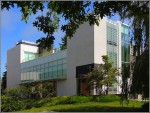
Hillel BC’s home on the University of British Columbia campus, the Diamond Foundation Centre for Jewish Campus Life. (photo by ThosGee via panoramio.com)

It’s been a tumultuous year on the University of British Columbia campus for Hillel BC, one filled with victories, but also with some disappointments. The Jewish Independent interviewed Hillel BC’s executive director, Rabbi Philip Bregman, on the challenges his organization has faced to date and on what is yet to come.

JI: What has the past year been like at Hillel?

PB: We’re seeing a resurgence of antisemitism the likes of which have not been seen for many years, and we’re seeing it right across the board of the 550 Hillels across North America. It has come primarily as a result of the boycott, divestment and sanctions movement against Israel. While incidents in the past would come and go, this one is a much more organized attack against Jews and Israelis on campus. And it’s not about boycotting products. The BDS movement is about three Ds: the demonization of Israel, the delegitimization of Israel, and the double standard that’s used with regard to Israel and the rest of the world. In this regard, the BDS movement has been fairly successful. On campuses in particular it’s created a real angst, a real discomfort for Jews, for Israelis. That’s its purpose.

JI: Can you talk about the recent referendum on campus, wherein the SPHR (Students for Palestinian Human Rights) asked students to vote on whether or not they supported their student union in instituting BDS on campus?

PB: Again, it wasn’t about boycotting products. They didn’t even let the students know what products needed to be boycotted. It was just a blanket statement that was absolutely absurd. When SPHR did mention a couple of products, it became obvious that it was absurd that any of those would go forward. For example, SPHR said they were going to boycott Caterpillar, because its machinery has destroyed Palestinian homes. I pointed out to them that the new Student Union Building at UBC was excavated with Caterpillar machinery. Should that then be boycotted? They didn’t answer. The second product they said they wanted to boycott was Motorola Solutions. I pointed out that this company is responsible for the operating systems of all Androids, and asked, “Are you telling the student body and AMS [Alma Mater Society, the student union] that no one on campus can use anything but iPhones?” The third product was Sabra Hummus. I told them that, in 2000, the Strauss Dipping Co., which owned Sabra Hummus, sold 50% of its shares to Pepsi Cola, and that over 60% of the vending machines in the Student Union Building are Pepsi products. Again, they didn’t answer.

Initially, before it was circulated, we appealed the referendum on the grounds that it was creating toxicity on campus. The AMS ombudsperson agreed with us that it was a terrible resolution, but the AMS board didn’t even comment on her report, which was tremendously disappointing. So, the referendum went out to the student body, and there was a lot of intimidation with regard to signing it. Later, the AMS found a number of signatures on the ballots were illegal….

At the end of the day, the SPHR fell short of the quorum they needed to pass the referendum. They needed 4,100 signatures, which represents eight percent of the eligible voters at UBC. They got about 3,500 votes. However the anti-BDS movement got 2,700 votes, which was more than double the number of votes in the rest of Canada, voting against BDS.

This BDS movement that we’ve had to deal with this past year was all-consuming. I have a magnificent staff and some magnificent student leaders who really were in the trenches day in and day out. I was in constant contact with the UBC administration about this, letting them know that the BDS movement is not an issue of free speech but one of hate speech.

JI: What kind of relationship does Hillel UBC have with Muslims on campus?

PB: When I first introduced myself to the representative from SPHR and suggested we start a dialogue, she told me, “We have a no dialogue policy with you people. If we talk to you, we will be condoning your murderous and genocidal ways.” We have been successful in reaching out to other Muslim groups on campus, however, including the Muslim Students Association and the Pakistani Students Association. We’ve had all sorts of collaborative programs, some light and some heavy. The idea is dialogue, not agreement.

JI: How are Jewish students at UBC responding to the BDS movement?

PB: At Hillels across North America, probably no more than five percent of the Jewish students on any campus really get into this fight. But we have a Jewish student population of about 1,200 and half of those voted against the BDS referendum.

JI: Going forward, who are you most likely to reach out to on campus?

PB: In fighting this resolution, we quickly realized where we should spend our limited time, energy and manpower: with graduate students, science students, law and medicine. Most of the statements in favor of BDS were coming from students in liberal arts backgrounds, and we were not going to win their hearts and minds. We were looking for people who would look at this referendum critically and understand what it was really about – the demonization and elimination of the state of Israel.

In general, the greatest group of students on campuses today tends to be those that are apathetic. I believe in a vote there would absolutely be more people opposed to us than supporting us. But I think that because we were out tabling every day, sharing and distributing information, we got some of those people who thought of voting yes, but voted no. And most of it was respectful dialogue.

JI: What kind of place is Hillel at UBC today?

PB: Hillel is a big tent, a place where individuals come in and just hang out. Some want to learn and engage in other types of conversation, and there’s a vast array of opportunity no matter where you are on the spectrum of Jewish life. It’s also a place of fantastic food, so people come for our Wednesday hot lunches, known to be the best meal on campus. You don’t have to be engaged in any type of politics to be involved at Hillel, although last year that was very much a part of what we were doing. Hillel is also the place of dialogue with other groups, such as the UBC chaplaincy, which holds meetings in our facility every second week for ministers, priests, rabbis, imams and Buddhists. And we encourage other clubs to come and program with us.

JI: What are your fears going into the next academic year?

PB: My fear is that this issue will continue to come back. Birthright is only getting a fraction of the younger Jewish generation in their 20s and 30s to Israel. In various reports that have come out, when they’ve asked Jewish university students if it mattered to them if Israel did not exist, 50% said no, it did not matter. This group is buying into what they see about Israel in the media and what they hear on campuses from fellow students and professors.

So, I wonder, what’s the responsibility we have as parents, teachers, mentors to a younger generation? To allow something like BDS to run its course when you know it’s not in the best interest of student life, because it’s under the rubric of “free speech”? Where is the limit, the line? This is not about trying to shut down criticism of the state of Israel.

Still, I’m hopeful. Our tent at Hillel is big, we have phenomenal student leadership and we’re there to hear all sorts of opinions as long as they don’t endanger individuals on one side, or call for the eradication of the state of Israel. There’s a huge area in between. Our task is to continue to attempt to raise Jewishly proud, courageous, knowledgeable mensches.

Lauren Kramer, an award-winning writer and editor, lives in Richmond, B.C. To read her work online, visit laurenkramer.net.

Format ImagePosted on June 19, 2015June 17, 2015Author Lauren KramerCategories LocalTags antisemitism, BDS, boycott, Hillel BC, Philip Bregman, UBC, University of British Columbia

Bad journalists, very bad!

Rolling Stone magazine recently completely retracted a story purporting to delve into an incident of gang-rape on the campus of the University of Virginia. The story was so devoid of basic journalistic processes and fact-checking that it is destined to go down as an object lesson in journalism schools for years to come.

Other incidents, less egregious but still dubious, popped up in the last few days.

Social media was ablaze last week over news that the federal government was preparing to criminalize critics of Israel, specifically by applying Canada’s hate laws against supporters of BDS, the movement to boycott, divest from and sanction Israel.

Advocates of free speech were up in arms – and rightly so. BDS is a movement that seeks the destruction of the state of Israel, in the guise of a one-state solution, and is discriminatory in its targeting of products, people and ideas based on their national origin. It is the contemporary equivalent of book-burning. It is deserving of scorn and contempt. But it is not deserving of legal prohibition in a country that respects free expression.

As it turns out, the very idea that Canada was about to criminalize the BDS movement and its supporters was fabricated almost from full cloth by CBC reporter Neil Macdonald. Macdonald, who has been the subject of years of complaints for anti-Israel bias for his reporting from the Middle East and Washington, had a brief (and somewhat snarky) email exchange with a spokesperson for Canada’s department of public safety.

The exchange began because Public Safety Minister Stephen Blaney, in a speech to the United Nations, promised to take a “zero tolerance” approach to those who boycott Israel. Macdonald demanded clarification of what “zero tolerance” meant.

In the email exchange, the spokesperson cites hate speech legislation, as well as laws around mischief involving religious buildings, and she noted the security infrastructure program that funds communities, such as the Jewish community, to improve security in communal buildings.

The response from the government was probably inadequate and Macdonald should have gotten a comment directly from the minister explaining what he meant by “zero tolerance,” and not used boilerplate from a civil servant (something he himself acknowledged in his exchange). Instead, he went ahead with an inflammatory story that was more conjecture than news, but which had the effect of rousing the reliably tetchy anti-Israel crowds.

This, too, could be an object lesson for future (and current) journalists. As could a story more visible than either of these: the story that Pope Francis declared Palestinian President Mahmoud Abbas an “angel of peace.”

The story of the old terrorist being dubbed an “angel of peace” by the head of Roman Catholicism alarmed those of us who have been impressed with Francis’ approach to world affairs. However, the fault did not lie with the pontiff but with the media.

What Francis said was that Abbas could be an angel of peace – if he made peace with Israel. What the Pope said to Abbas – “May you be an angel of peace” – is a far different thing than what was reported. It was a wish, not a declaration. And it is a wish we could not more heartily share.

Journalism struggles today in the changing landscape of media, tighter budgets, fewer staff doing more tasks – we understand all this. But when some of this country’s and the world’s leading voices of reporting get things so wrong, the institution of journalism suffers even more.

In a world where information (and misinformation) has never been so plentiful, what readers really need are the critical tools to discern fact from fiction and half-truths. In a world of 140-character attention spans, though, do we hope for too much?

Posted on May 22, 2015May 21, 2015Author The Editorial BoardCategories From the JITags BDS, CBC, Mahmoud Abbas, Neil Macdonald, Pope Francis, Stephen Blaney

Antisemitism so engrained

“If I am not for myself, who will be for me? If I am not for others, what am I? And if not now, when?” – Rabbi Hillel

I was more than incensed when a teacher at our public elementary school in Southern California decided to have her second grade students color paper Easter eggs and hang them in the hallway outside the classroom. The large sign that was attached read, “Happy Easter.” How appropriate this would be in a private religious school, but not in a setting where everyone does not celebrate Easter. I was so tempted to have my students paint matzos and hang them in the hallway with a sign that read, “Happy Passover.” I was even more tempted to ask her what kind of curricular connection she was making. How did this fare at our school site? Nobody even batted an eyelash. People walked up and down that hallway for weeks and it seemed like her display was commonplace to most. Of course, I would not classify this as an act of antisemitism just an act of insensitivity.

This is the world we live in as public school educators in the United States. We are to treat all holidays equally and not focus on one at the expense of another. We must always consider “separation of church and state.” But this is a huge misnomer! It is 2015 and, during my last 16 years of teaching in the district, meetings have consistently been scheduled during Rosh Hashanah, Yom Kippur and Passover. Am I to believe that this is just a simple mistake? After so many mistakes, I don’t think so. My only other Jewish colleague on campus suggested we not acknowledge this issue. According to her, it would “open up a big can of worms.” I said, “ It is indeed time to let the worms run wild!”

I think of all the public schools, colleges and universities that have recently been confronted by some terrible acts of antisemitism. Perhaps it’s naiveté on my part, perhaps I’m thinking that Jews and non-Jews have forged harmonious relationships with one another over the years, perhaps I am entirely wrong.

I am given shocking reminders of what it was like growing up in the mid-sixties and seventies. I was frequently called a “dirty Jew,” knowing full well that I had bathed before coming to school that day. During Yom Kippur, the administration at school did not acknowledge that this was a significant holiday and wanted to count it as a sick day. My mother fought a good fight but to no avail. Furthermore, tests were given during the High Holidays when the Jewish students were not there to take them.

I was a member of the speaker’s bureau in college. It was our job to bring to campus a good cross-section of individuals with varying viewpoints. To think that Yitzhak Rabin could not even speak that day over the chanting, booing and epithets being thrown his way by some students. It took an inordinate amount of security to stop this from getting really ugly. That incident is still engrained in my mind. I thought that something like this could never have happened on our campus. I was indeed wrong.

Some 50 years later, and I literally feel sick to my stomach knowing how Rachel Beyda, a student at the University of California, Los Angeles, running for a seat on the judicial council, was treated or, shall we say, mistreated. To think that her Jewish background would have been considered a “conflict of interest.” Is this a return to Nazi Germany, where Jews can be interrogated? Poor Rachel Beyda had to endure at least four hours’ worth. No matter the response from the chancellor’s office or the public and private apologies, a fellow Jew had been mistreated in the worst way.

I didn’t believe things could get worse until I recently visited my parents in Vancouver. Alas, a referendum vote at the University of British Columbia among the student population: “Do you support your student union (AMS) in boycotting products and divesting from companies that support Israeli war crimes, illegal occupation and the oppression of Palestinians?” What an absolutely frightening proposition. How fortunate the majority of students had the decency and intelligence to not vote for this most disturbing proposal.

When antisemitism hits your backyard, it’s time to bring in all the “heavy hitters” you possibly can and appeal to the members of one’s community. Unfortunately, this antisemitism is so deeply entrenched it may never go away. What a frightening phenomenon.

Linda Raphael Young was born and raised in Vancouver. She lives in Pasadena with her husband, Mel, a retired educator, and their 5-year-old Havanese, Dudley.

Posted on April 17, 2015April 17, 2015Author Linda Raphael YoungCategories Op-EdTags antisemitism, BDS

Campus, church extremism

Last week, students at the University of British Columbia rejected a referendum question that would have urged the student society to boycott Israeli businesses and products.

But the news was by no means all good when the results came in last Friday night. In fact, more students voted yes in support of BDS (boycotts, divestment, sanctions) than voted no. The question was defeated effectively on a technicality, with the number of students voting yes failing to reach quorum. Therefore the question failed.

Students were asked: “Do you support your student union (AMS) in boycotting products and divesting from companies that support Israeli war crimes, illegal occupation and the oppression of Palestinians?” The yes side received 3,493 votes, 2,223 students voted no and 435 registered their abstentions. To pass, the vote required 4,130 yeses, representing eight percent of eligible students.

In this, too, there is good news and bad news. The low turnout indicates that students at the university have better things on their mind than the conflict between Israel and its neighbors. It has become increasingly clear in recent years that the anti-Israel movement on college campuses in North America is comparatively small. Yet the damage this narrow group of extremists can do to the comfort and security of Jewish and Zionist students – and to the broader objective of an inclusive, welcoming environment – has been serious and detrimental.

The BDS movement has had few tangible successes and plenty of failures, if measured by their effectiveness at actually boycotting, divesting from or sanctioning anything. What they have been wildly successful at is spreading messages that single out Israel as the fountainhead of all things evil.

Also mixed news is the fact that, while campaigns like BDS are finding it difficult to rustle up serious numbers of equally agitated fellow travelers, Jewish students, too, are challenged in finding substantial numbers of allies when confronted with a campaign of targeted aggression against the Jewish homeland. There might be only a few thousand out of more than 50,000 students who succumb to anti-Israel messaging, but there are even fewer who observe that messaging and are moved to come to the aid of Israel – and/or Jewish students – when it is attacked in this fashion.

Which raises another issue facing our Vancouver community.

Later this month, Canadian Friends of Sabeel will hold a conference on “overcoming Christian Zionism.” Sabeel describes itself as an “ecumenical Palestinian liberation theology centre” that is “working for justice, peace and reconciliation in Palestine-Israel.” In reality, it is a group that promotes a misrepresentation of events in the Middle East. The conference slated for Vancouver is explicitly aimed at undermining Israel among its North American Christian supporters.

Conservative Christians have been among Israel’s most reliable bloc of friends in troubled times. Like any bedfellows, the Zionist-Christian alliance brings with it complexities. While some Christians use Zionism as a back door to evangelizing or view Christianity as a “successor” religion to Judaism, for example, there are also many in the Christian Zionist movement who respect the integrity of Judaism.

The upcoming conference is co-sponsored by three Christian churches.

The United Church of Canada, for decades but especially in recent years, has adopted a heavily anti-Israel approach to global affairs. Their sponsorship of this event is not surprising. The Presbyterian Church in Canada is also supporting this event, though this, too, is not shocking, given that the American branch of the Presbyterian Church has been beset by anti-Israel agitation and last year voted to divest itself of some Israeli holdings.

What is surprising – and worrisome – is the role of the Anglican Church of Canada as co-sponsor of this conference. Two years ago, the church passed a resolution that made some attempts at balance but was marred by typical anti-Israel boilerplate. With their co-sponsorship of this Sabeel event, the Anglican church has thrown itself unequivocally off the fence.

There are parallels between these two developments – the UBC vote and the involvement of erstwhile moderate Christian groups in a blatantly anti-Israel conference. The fact is, probably most active Anglicans, Presbyterians and United churchgoers have no idea what their national bodies are up to. Of the millions of Canadians represented by these three denominations, the vast majority probably do not have an opinion on – or do not agree with – the approach of this month’s conference. As we saw at UBC, the anti-Israel movement tends to be a small group of zealots who get involved in a legitimate body and turn it into a platform, a rabidly anti-Israel tail wagging an otherwise amicable dog.

Like the impact of anti-Israel extremism on campus, the involvement of mainline Christian groups in this anti-Israel conference shows how a small group of dedicated individuals can create nasty, lasting divisions in a multicultural community.

Posted on April 3, 2015April 1, 2015Author The Editorial BoardCategories From the JITags Anglican Church, anti-Israel, antisemitism, BDS, Presbyterian Church, referendum, Sabeel, UBC, United Church of Canada3 Comments on Campus, church extremism

Posts pagination

Previous page Page 1 … Page 4 Page 5
Proudly powered by WordPress