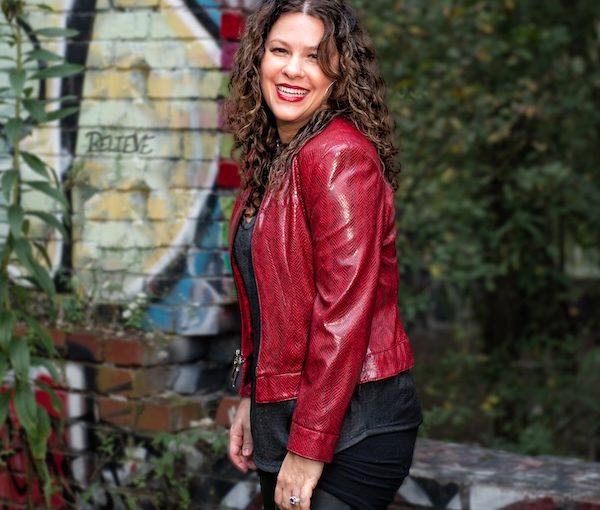
Neshama Carlebach comes to Vancouver for Selichot at Congregation Beth Israel on Sept. 13. (photo by Michael Albany)
After more than two decades, Neshama Carlebach returns to Vancouver. But not for a concert.
The award-winning singer-songwriter will lead, with her band, a musical service at Congregation Beth Israel for Selichot, the night of Sept. 13. The holiday – whose name translates as forgiveness, or pardon – marks the beginning of a period of penitential prayers that runs through Simchat Torah. In addition to participating in the service, Carlebach will speak with Rabbi Jonathan Infeld about her father, the late Rabbi Shlomo Carlebach, his spiritual and musical legacy, and also the pain caused by the sexual misconduct of which he was posthumously accused.
In January 2018, Carlebach wrote a blog on the Times of Israel that addressed the allegations against her father, who died in 1994. She also shared that she had been sexually abused as a child by one of her father’s friends. Writing that blog, she told the Jewish Independent, “was one of the most painful and soul-wrenching things I have ever done. I was standing at the edge of a precipice, holding the truth of my own pain, the pain of others, and the love I still carry for my father, who was no longer alive to respond. The world was shifting in the wake of the #MeToo movement, and I felt an overwhelming need to finally speak and honour the voices of those who had been hurt and silenced – including my own.
“Simultaneously, my career was, in many ways, canceled. Doors closed. Invitations disappeared. People I loved and trusted turned away from me in anger, some even accusing me of betraying my father and his legacy. Perhaps just as painful was watching my family’s music – music that has brought meaning to so many – be rejected and erased.
“Acknowledging my father’s transgressions broke my heart,” said Carlebach, “but it was time for me to speak out – to stand with those who were hurt and to be a part of the possibility of healing, and for the belief that we must be honest to be whole. We must hold space for truth, even when it shatters the fabric of the life we once clung to.”
From the age of 5, Carlebach’s father invited her to share Chassidic stories for his audiences and, by age 15, she was performing alongside him. Since her first album in 1996, she has released 10 records and, worldwide, is one of the bestselling Jewish artists. She is also an advocate for religious pluralism and human rights, as well as being a community leader in other respects. Living in New York with husband Rabbi Menachem Creditor and their five children, she is in the midst of writing a memoir, as well as studying to become a rabbi at the Academy for Jewish Religion.
In 2026, a documentary about Carlebach’s family will be released, with the support of Jewish Story Partners. The blurb on JSP’s website reads: “Rabbi Shlomo Carlebach, ‘the Singing Rabbi,’ ignited the spiritual landscape for legions of Jews in a post-Holocaust world. Soon after his death, he is accused of sexual abuse. Thirty years later, with intimate access to his family, inner circle, and his victims, Carlebach Project Untitled grapples with a complicated legacy and how – or whether – to separate the art from the artist.”
“I was just 20 when my father died and, in many ways, I was still a child,” Carlebach told the Independent. “He wasn’t just my father; he was my rabbi and my closest friend. Losing him was like losing my grounding in the world. And when, years later, I began to fully confront the complexities of his life and the pain that others experienced because of him, the grief became more complicated. My career crumbled. I lost community. I lost friends.
“I think what helped me to continue was the music and my connection to God. Even when I wasn’t able to sing professionally, within my own heart I sang and I prayed.
“I still carry and honour my father because I am his daughter and because I believe that love and accountability are not opposites,” she said. “Music has a life of its own, it has always been bigger than the entity which creates it. The legacy I hope I’m building now with my sons is one rooted in truth, in justice, in faith and in love. I choose to believe these are the things he wanted for me, and for the world.”
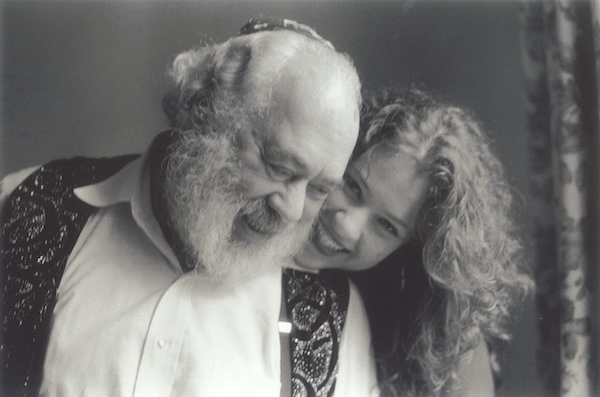
It was after the Hamas terror attacks on Oct. 7, 2023, that Carlebach began creating music with her sons, Rafael and Micah.
“To share the sacred legacy of our family with them, and to witness their light, their depth and their gifts has been one of the greatest blessings of my lifetime,” she said. “My Rafael sadly can’t be with us in Vancouver, as he is starting college, but my Micah will be! We will also be joined by my longtime musical collaborators, pianist and musical director Seth Farber, bass player Brian Glassman and drummer Joe Nero.”
The video Carlebach created with her sons – Invincible Spirit (In Solidarity with Israel), an interpretation of the song “Am Yisrael Chai” – is on YouTube.
“Originally written in support of the Soviet Jewry Movement, ‘Am Yisrael Chai’ has been an anthem of the Jewish people for over 50 years,” Carlebach wrote in a Times of Israel blog last year. “The melody and words have brought energy, sustenance and unity whenever it’s been sung, often in response to hardships facing the Jewish world. In times of need, it is simultaneously a call to action and a prayer, a defiant cry and a message of reassurance. The words, translated as ‘The People of Israel Live,’ were set to music by my father in the 1960s and embraced as part of the Jewish canon. Today, since the horrors of Oct. 7, they have once again become a constant refrain in the Jewish community.”
In another blog, Carlebach, who was born on Simchat Torah, explains why she decided to become a rabbi. “After Oct. 7, Simchat Torah, my heart, my essence and my birthday changed forever,” she wrote. “My Jewish identity and desire to learn have never been stronger. I feel a greater sense of urgency to do my part and bring meaning and holiness to our communities, both in the diaspora and Israel.”
She shared with the Independent the importance of participating in the event at Beth Israel.
“Selichot is the beginning of the High Holy Day season, our holiest time of year,” she said. “It is when we begin to turn inward and ask ourselves the hardest questions: Who have I been? Where have I fallen short? What do I need to repair – in myself, in my relationships, in the world? It’s a time of vulnerability, of accountability and of profound possibility.
“I’ve always envisioned that, on Selichot, the Great Gates of Teshuvah – of Return – first begin to creak open, but slowly, almost in a whisper. Selichot is softer than Rosh Hashanah, more intimate than Yom Kippur. We gather, often late at night, to begin to open our hearts as a community – with prayer, with song, with tears. It’s a time for truth and tenderness.
“It will be incredibly meaningful to gather with the Vancouver community in prayer and in conversation this Selichot. This is the kind of gathering I love most!” she said, commending Rabbi Infeld and the Beth Israel community for being “open and brave enough to engage in this complicated topic.”
“Every year, we work hard to make sure that our Selichot service and program makes a difference in people’s lives,” said Infeld. “The topics are often not easy to discuss, but, every year, people leave the synagogue looking at a situation from a different perspective and as better human beings because they came. We love when people discuss the content of what they heard at the synagogue after Selichot. We believe that this year that will happen as well. Shlomo Carlebach is extremely well known, but the underbelly of the person and his personality are extremely important for us all to discuss – and there is no one better in this world to do that than his daughter, who is also extremely musically talented.”
To invite Carlebach was “a natural choice,” he said, given that the event will honour Harley Rothstein.
“Since we had decided to honour Harley for his many years of service this year, I decided I wanted to do something very special from a musical perspective,” said the rabbi.
“Harley is one of the most humble and generous people I know. He is a constant supporter of our synagogue in many ways. We have been honoured to have him lead services over the years. He has a fabulous voice with great kavanah [intention/devotion],” explained Infeld. “He has a magical ability to engage people in congregational singing and to help engender a warm feeling among all the participants. Harley has gone above and beyond by helping to teach the next generation of service leaders. One of his most important aspects of leadership each year has been the Selichot service with our ba’alat tefillah [prayer leader], Debby Fenson.”
On Sept. 5, during the synagogue’s Shabbat with a Difference Kabbalat Shabbat service, the congregation will honour Fenson on her 20th anniversary with Beth Israel. On Sept. 13, she and Rothstein will lead Havdalah.
The Selichot event with Neshama Carlebach is open to the entire community. To attend, RSVP via bethisrael.ca.