Skip to content
  • Home
  • Subscribe / donate
  • Events calendar
  • News
    • Local
    • National
    • Israel
    • World
    • עניין בחדשות
      A roundup of news in Canada and further afield, in Hebrew.
  • Opinion
    • From the JI
    • Op-Ed
  • Arts & Culture
    • Performing Arts
    • Music
    • Books
    • Visual Arts
    • TV & Film
  • Life
    • Celebrating the Holidays
    • Travel
    • The Daily Snooze
      Cartoons by Jacob Samuel
    • Mystery Photo
      Help the JI and JMABC fill in the gaps in our archives.
  • Community Links
    • Organizations, Etc.
    • Other News Sources & Blogs
    • Business Directory
  • FAQ
  • JI Chai Celebration
  • JI@88! video

Recent Posts

  • המלחמות של נתניהו וטראמפ
  • Zionism wins big in Vegas
  • Different but connected
  • Survival not passive
  • Musical celebration of Israel
  • Shoppe celebrates 25 years
  • Human “book” event
  • Reclaiming Jewish stories
  • Bema presents Perseverance
  • CSS honours Bellas z”l
  • Sheba Promise here May 7
  • Reflections from Be’eri
  • New law a desecration
  • Resilient joy in tough times
  • Rescue dog brings joy
  • Art chosen for new museum
  • Reminder of hope, resilience
  • The national food of Israel?
  • Story of Israel’s north
  • Sheltering in train stations
  • Teach critical thinking
  • Learning to bridge divides
  • Supporting Iranian community
  • Art dismantles systems
  • Beth Tikvah celebrates 50th
  • What is Jewish music?
  • Celebrate joy of music
  • Women share experiences 
  • Raising funds for Survivors
  • Call for digital literacy
  • The hidden hand of hate
  • Tarot as spiritual ritual
  • Students create fancy meal
  • Encouraging young voices
  • Rose’s Angels delivers
  • Living life to its fullest

Archives

Follow @JewishIndie
image - The CJN - Visit Us Banner - 300x600 - 101625

Tag: Jewish holidays

A complicated family legacy

A complicated family legacy

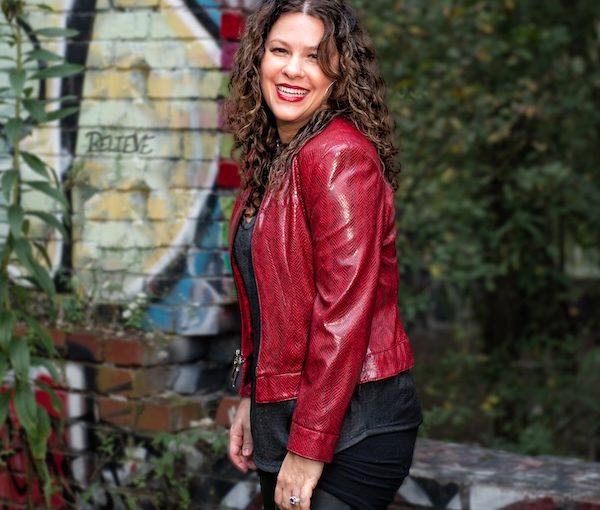
Neshama Carlebach comes to Vancouver for Selichot at Congregation Beth Israel on Sept. 13. (photo by Michael Albany)

After more than two decades, Neshama Carlebach returns to Vancouver. But not for a concert.

The award-winning singer-songwriter will lead, with her band, a musical service at Congregation Beth Israel for Selichot, the night of Sept. 13. The holiday – whose name translates as forgiveness, or pardon – marks the beginning of a period of penitential prayers that runs through Simchat Torah. In addition to participating in the service, Carlebach will speak with Rabbi Jonathan Infeld about her father, the late Rabbi Shlomo Carlebach, his spiritual and musical legacy, and also the pain caused by the sexual misconduct of which he was posthumously accused.

In January 2018, Carlebach wrote a blog on the Times of Israel that addressed the allegations against her father, who died in 1994. She also shared that she had been sexually abused as a child by one of her father’s friends. Writing that blog, she told the Jewish Independent, “was one of the most painful and soul-wrenching things I have ever done. I was standing at the edge of a precipice, holding the truth of my own pain, the pain of others, and the love I still carry for my father, who was no longer alive to respond. The world was shifting in the wake of the #MeToo movement, and I felt an overwhelming need to finally speak and honour the voices of those who had been hurt and silenced – including my own.

“Simultaneously, my career was, in many ways, canceled. Doors closed. Invitations disappeared. People I loved and trusted turned away from me in anger, some even accusing me of betraying my father and his legacy. Perhaps just as painful was watching my family’s music – music that has brought meaning to so many – be rejected and erased. 

“Acknowledging my father’s transgressions broke my heart,” said Carlebach, “but it was time for me to speak out – to stand with those who were hurt and to be a part of the possibility of healing, and for the belief that we must be honest to be whole. We must hold space for truth, even when it shatters the fabric of the life we once clung to.”

From the age of 5, Carlebach’s father invited her to share Chassidic stories for his audiences and, by age 15, she was performing alongside him. Since her first album in 1996, she has released 10 records and, worldwide, is one of the bestselling Jewish artists. She is also an advocate for religious pluralism and human rights, as well as being a community leader in other respects. Living in New York with husband Rabbi Menachem Creditor and their five children, she is in the midst of writing a memoir, as well as studying to become a rabbi at the Academy for Jewish Religion.

In 2026, a documentary about Carlebach’s family will be released, with the support of Jewish Story Partners. The blurb on JSP’s website reads: “Rabbi Shlomo Carlebach, ‘the Singing Rabbi,’ ignited the spiritual landscape for legions of Jews in a post-Holocaust world. Soon after his death, he is accused of sexual abuse. Thirty years later, with intimate access to his family, inner circle, and his victims, Carlebach Project Untitled grapples with a complicated legacy and how – or whether – to separate the art from the artist.”

“I was just 20 when my father died and, in many ways, I was still a child,” Carlebach told the Independent. “He wasn’t just my father; he was my rabbi and my closest friend. Losing him was like losing my grounding in the world. And when, years later, I began to fully confront the complexities of his life and the pain that others experienced because of him, the grief became more complicated. My career crumbled. I lost community. I lost friends. 

“I think what helped me to continue was the music and my connection to God. Even when I wasn’t able to sing professionally, within my own heart I sang and I prayed. 

“I still carry and honour my father because I am his daughter and because I believe that love and accountability are not opposites,” she said. “Music has a life of its own, it has always been bigger than the entity which creates it. The legacy I hope I’m building now with my sons is one rooted in truth, in justice, in faith and in love. I choose to believe these are the things he wanted for me, and for the world.”
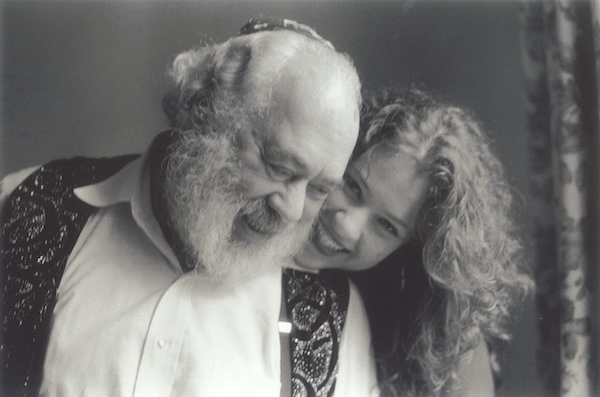
photo - On Selichot, Sept. 13, Neshama Carlebach will speak with Rabbi Jonathan Infeld about her father, the late Rabbi Shlomo Carlebach, his spiritual and musical legacy, and also the pain caused by the sexual misconduct of which he was posthumously accused
On Selichot, Sept. 13, Neshama Carlebach will speak with Rabbi Jonathan Infeld about her father, the late Rabbi Shlomo Carlebach, his spiritual and musical legacy, and also the pain caused by the sexual misconduct of which he was posthumously accused. (photo by Joan Roth)

It was after the Hamas terror attacks on Oct. 7, 2023, that Carlebach began creating music with her sons, Rafael and Micah.

“To share the sacred legacy of our family with them, and to witness their light, their depth and their gifts has been one of the greatest blessings of my lifetime,” she said. “My Rafael sadly can’t be with us in Vancouver, as he is starting college, but my Micah will be! We will also be joined by my longtime musical collaborators, pianist and musical director Seth Farber, bass player Brian Glassman and drummer Joe Nero.”

The video Carlebach created with her sons – Invincible Spirit (In Solidarity with Israel), an interpretation of the song “Am Yisrael Chai” – is on YouTube.

“Originally written in support of the Soviet Jewry Movement, ‘Am Yisrael Chai’ has been an anthem of the Jewish people for over 50 years,” Carlebach wrote in a Times of Israel blog last year. “The melody and words have brought energy, sustenance and unity whenever it’s been sung, often in response to hardships facing the Jewish world. In times of need, it is simultaneously a call to action and a prayer, a defiant cry and a message of reassurance. The words, translated as ‘The People of Israel Live,’ were set to music by my father in the 1960s and embraced as part of the Jewish canon. Today, since the horrors of Oct. 7, they have once again become a constant refrain in the Jewish community.”

In another blog, Carlebach, who was born on Simchat Torah, explains why she decided to become a rabbi. “After Oct. 7, Simchat Torah, my heart, my essence and my birthday changed forever,” she wrote. “My Jewish identity and desire to learn have never been stronger. I feel a greater sense of urgency to do my part and bring meaning and holiness to our communities, both in the diaspora and Israel.”

She shared with the Independent the importance of participating in the event at Beth Israel.

“Selichot is the beginning of the High Holy Day season, our holiest time of year,” she said. “It is when we begin to turn inward and ask ourselves the hardest questions: Who have I been? Where have I fallen short? What do I need to repair – in myself, in my relationships, in the world? It’s a time of vulnerability, of accountability and of profound possibility.

“I’ve always envisioned that, on Selichot, the Great Gates of Teshuvah – of Return – first begin to creak open, but slowly, almost in a whisper. Selichot is softer than Rosh Hashanah, more intimate than Yom Kippur. We gather, often late at night, to begin to open our hearts as a community – with prayer, with song, with tears. It’s a time for truth and tenderness.

“It will be incredibly meaningful to gather with the Vancouver community in prayer and in conversation this Selichot. This is the kind of gathering I love most!” she said, commending Rabbi Infeld and the Beth Israel community for being “open and brave enough to engage in this complicated topic.”

“Every year, we work hard to make sure that our Selichot service and program makes a difference in people’s lives,” said Infeld. “The topics are often not easy to discuss, but, every year, people leave the synagogue looking at a situation from a different perspective and as better human beings because they came. We love when people discuss the content of what they heard at the synagogue after Selichot. We believe that this year that will happen as well. Shlomo Carlebach is extremely well known, but the underbelly of the person and his personality are extremely important for us all to discuss – and there is no one better in this world to do that than his daughter, who is also extremely musically talented.”

To invite Carlebach was “a natural choice,” he said, given that the event will honour Harley Rothstein.

“Since we had decided to honour Harley for his many years of service this year, I decided I wanted to do something very special from a musical perspective,” said the rabbi. 

“Harley is one of the most humble and generous people I know. He is a constant supporter of our synagogue in many ways. We have been honoured to have him lead services over the years. He has a fabulous voice with great kavanah [intention/devotion],” explained Infeld. “He has a magical ability to engage people in congregational singing and to help engender a warm feeling among all the participants. Harley has gone above and beyond by helping to teach the next generation of service leaders. One of his most important aspects of leadership each year has been the Selichot service with our ba’alat tefillah [prayer leader], Debby Fenson.”

On Sept. 5, during the synagogue’s Shabbat with a Difference Kabbalat Shabbat service, the congregation will honour Fenson on her 20th anniversary with Beth Israel. On Sept. 13, she and Rothstein will lead Havdalah.

The Selichot event with Neshama Carlebach is open to the entire community. To attend, RSVP via bethisrael.ca. 

Format ImagePosted on August 22, 2025August 25, 2025Author Cynthia RamsayCategories Celebrating the HolidaysTags forgiveness, Jewish holidays, Jonathaon Infeld, music, Neshama Carlebach, Selichot, sexual assault, Shlomo Carlebach
Costumed counting fun

Costumed counting fun

Ten Purim Bears: A Counting Book for Purim introduces kids to Purim, numbers 1-10.

Fans of Once a Bear: A Counting Book by Ron Atlas (words) and Zach Horvath (illustrations) will be happy to find that their bear friends have returned – this time, in Ten Purim Bears: A Counting Book for Purim. Both 24-page board books are published by the Collective Book Studio, which has produced several well-written and -designed books reviewed by the Independent.

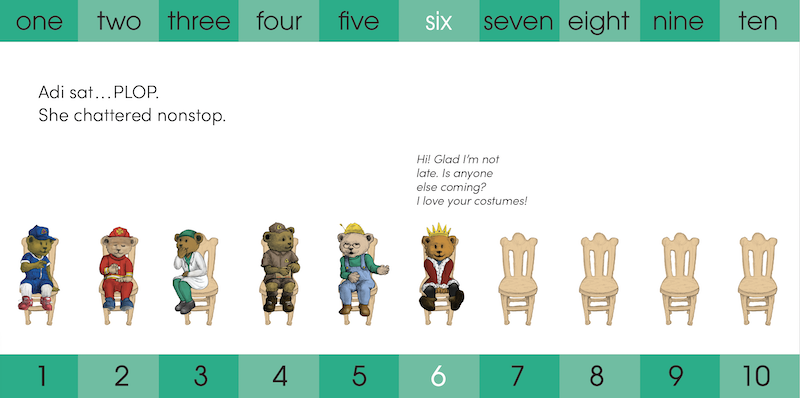
Ten Purim Bears features all the same adorable bear characters as the first book, and follows the same format. Each scene spreads over two pages, with the numbers one through 10 written out on top and appearing numerically on the bottom, as borders. In the middle are 10 chairs, the first scene with mostly empty chairs, except for the one on the far left, where sits a baseball-costumed bear wondering, “Where is everyone?” As we progress through the story, we get more bear bums on seats, each dressed in a different costume. As each new bear enters, the new number of bears is highlighted in white on both the top and bottom borders.

image - Adi, bear #6, takes her seat in Ten Purim Bears: A Counting Book for Purim by Ron Atlas (words) and Zach Horvath (illustrations), published by the Collective Book Studio
Adi, bear #6, takes her seat in Ten Purim Bears: A Counting Book for Purim by Ron Atlas (words) and Zach Horvath (illustrations), published by the Collective Book Studio.

Directed to readers up to 6 years old, their reader-helpers will enjoy a laugh or two, as well. For example, Flor, “who lives next door,” sits down and says, “I’m saving a seat for my friend.” Turning the page, Pete, “from down the street,” has sat next to Flor, saying: “I’m the friend.” I hear him doing it in a deadpan voice and it makes me chuckle every time.

There are two short narratives for each scene – one introducing the next bear and the bears talking among themselves. It’s a nice touch, kind of like having a parent narrator and then the kids’ views on things. As we are told by the narrator that Adi’s sister, Mandy, “brought some sweets – lots and lots of Purim treats,” we see Mandy handing them out: “There’s some for everyone,” she says. “Thank you,” says her sister. The hamantaschen that Amari Bear baked to share with his friends are his favourite, he says, while Adi agrees, “Yum!”

Kids learns not only how to count, but a bit about Purim and its traditions. Sharing, politeness and a sense of community are encouraged. As is a sense of fun, with the various costumes. And the arts! The bears have all gathered to watch a Purim spiel, of course. And we get to see a scene of the play, with quadruple-threat performers – acting, dancing, singing and playing instruments – looking like they are having a good time. The 10-bear audience certainly is.

Ten Purim Bears and Once a Bear can be purchased at thecollectivebook.studio. Check out the publisher’s website further when you’re there, as there will no doubt be another book or two you’ll want to add to your collection. 

Format ImagePosted on February 28, 2025March 6, 2025Author Cynthia RamsayCategories Books, Celebrating the HolidaysTags children, Collective Book Studio, education, Jewish holidays, parenting, Purim, Ron Atlas, Ten Purim Bears, Zach Horvath
The first of many Shabbats

The first of many Shabbats

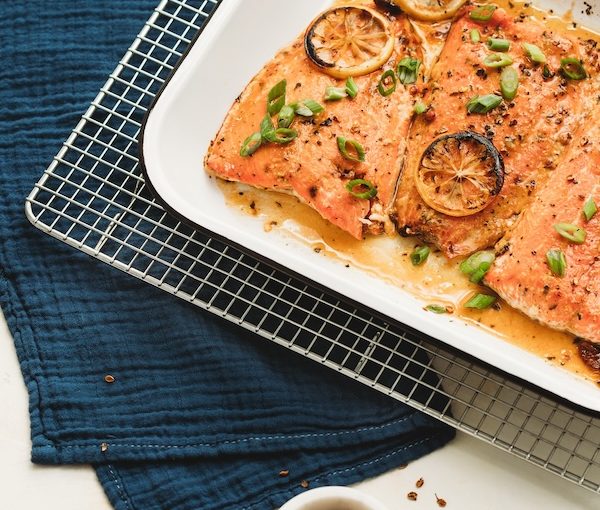
Faith Kramer’s Roasted Salmon with Citrus-honey Sauce. (photo by Clara Rice)

Somehow, I missed the cookbook 52 Shabbats: Friday Night Dinners Inspired by a Global Jewish Kitchen by Faith Kramer when it was published by the Collective Book Studio in 2021. Well, I now have a copy and, in an ideal world, my next year of 52 Shabbat dinners would all be cooked à la Kramer. Instead, it’ll probably take me several years to make all the special meals in this informative, well-laid-out, easy-to-follow cookbook – but at least I’ve gotten a head start.

In this last month of the Jewish year 5784, I made two of Kramer’s main dishes, a salad dressing and a dessert. Each recipe is prefaced with a blurb containing more information about the dish. Many recipes have suggestions of what to serve together (starter, main, dessert, etc.) to elevate the meal for Shabbat, as well as suggested variations and what can be made in advance. Kramer also provides explanations of lesser-known ingredients.

52 Shabbats begins with some discussion of different Jewish traditions around Shabbat and various Jewish communities’ ways of cooking food and the ingredients they use. Kramer gives a brief overview of Jewish dietary laws and shares her preferences for the common ingredients she uses throughout. The book is divided into the four seasons, plus chapters on side dishes and accompaniments, desserts, and fundamentals (sauces, etc.). There are additional resources listed near the end, as well as measurement conversions.

I chose the recipes to make from the fall section, focusing on Rosh Hashanah. I made a carrot and lentil main because, as Kramer writes: “Carrots are symbolic in Judaism of asking for prosperity and for our blessings to multiply. Combined with the sweetness of silan [date syrup] … or honey, they make an edible wish for a Happy New Year at Rosh Hashanah.” I also made a fish main, because fish is another symbol of Rosh Hashanah, with the hope that we be the head and not the tail, ie. a leader rather than a follower.

Kramer recommended mini cheesecakes as the dessert for both of these mains, so I made those as well. I also made the Lemon, Za’atar and Garlic Dressing for a green salad, but much preferred the dressing as a marinade for blanched green beans. For space reasons, I’ve not included the recipe intros or the “make it in advance” suggestions, nor have I included the dressing recipe. The three recipes here will hopefully inspire you to get a copy of the cookbook, and perhaps start some new Shabbat traditions this year.

SWEET-AND-TART SILAN-ROASTED CARROTS WITH LENTILS
(serves 4 as a main, 8 as a side)

for the lentils:
1 cup green or brown lentils
3 cups vegetable broth
1/4 tsp ground black pepper
1/4 tsp ground cumin
1/4 tsp paprika
1/2 cup chopped fennel or celery
1/2 cup chopped onion
1 tsp minced garlic
1 tsp minced jalapeño, optional
1/4 tsp salt, plus more if desired 

for the carrots:
2 tbsp olive oil, plus more for baking sheet
1 cup silan, honey or agave syrup
1/4 cup water
2 tbsp fresh lemon juice
1/4 tsp ground cumin
1/4 tsp ground cardamom
1/4 tsp cayenne pepper or paprika
1/8 tsp ground cloves
1 lb multicoloured carrots, peeled (cut large carrots into thirds)
1 tsp coarse sea salt
2 tbsp tahini
2 tbsp chopped fresh mint or flat-leaf parsley

In a large saucepan, stir together the lentils, vegetable broth, black pepper, cumin and paprika and bring to a simmer over medium heat. Stir in the fennel, onion, garlic and jalapeño (if using) and return to a simmer. Cover and cook, lowering the heat as needed to maintain a gentle simmer, until the lentils are tender and the liquid is absorbed, 15 to 20 minutes. Add the salt and stir well. Taste and adjust the seasoning, if desired. Remove from the heat, drain any excess liquid, and set aside while you make the carrots. 

Preheat the oven to 450°F. Line a rimmed baking sheet with parchment paper or aluminum foil. Grease the parchment paper with olive oil. 

In a wide, flat dish, whisk together the silan, water, olive oil, lemon juice, cumin, cardamom, cayenne and cloves. Add the carrots and toss until evenly coated.

Place the carrots in a single layer on the prepared baking sheet. Set aside any left-over silan mixture. 

Lower the oven temperature to 400°F. Roast the carrots for 40 to 50 minutes, or until tender and browned, tossing in the pan juices every 10 to 15 minutes.

Reheat the lentils, if desired, or keep them at room temperature. Add any leftover silan mixture to the lentils and stir to combine. Transfer the lentils to a large serving dish and top with the roasted carrots. Sprinkle with the coarse salt, drizzle with the tahini and garnish with the fresh mint.

ROAST SALMON WITH CITRUS-HONEY SAUCE
(serves 4-6 as a main, 8-10 as a starter)

1/3 cup fresh orange juice
1/2 cup light-coloured honey
1/2 tsp dried mint
1/4 tsp salt
1/4 tsp cayenne pepper or paprika
1/4 tsp ground black pepper
1/2 to 1 tsp Sichuan peppercorns, lightly crushed, optional
vegetable oil for baking sheet
1 1/2 to 2 lbs salmon fillet
6 tbsp thinly sliced green onions

In a small bowl, mix together the orange juice, honey, mint, salt, cayenne, black pepper and crushed Sichuan peppercorns (if using) to make a marinade. Set aside half of the marinade to use later for the sauce.

photo - Faith Kramer’s Roasted Salmon with Citrus-honey Sauce
(photo by Clara Rice)

Grease a rimmed baking sheet with oil. Place the salmon, skin side down, in the pan and brush the top of the salmon with some of the marinade. Let sit for at least 30 minutes or up to 60 minutes, brushing often with the marinade. 

Preheat the oven to 350°F. 

While the fish is marinating, pour the reserved marinade into a small saucepan over medium heat and bring to a boil. Lower the heat to low and simmer, uncovered, stirring occasionally, until the liquid is reduced by two-thirds, 15 to 20 minutes. Taste, and adjust the salt and other seasonings, if desired. Set the sauce aside.

Brush or spoon the remaining marinade over the salmon. Roast for 15 to 20 minutes, basting with the pan juices after 10 minutes, until the salmon is cooked to the desired doneness. For fully cooked fish, it should read 145°F when an instant-read thermometer is placed in the thickest part of the fillet. The flesh should be opaque all the way through but still be very moist. 

Transfer the salmon to a platter and spoon the sauce over the fish. Sprinkle with green onions and serve warm, at room temperature, or chilled.

MANGO AND CARDAMOM MINI CHEESECAKES
(makes 24 individual cheesecakes)

24 ginger snaps, lemon snaps or wafers, or vanilla wafers
1 1/2 cup fresh or defrosted frozen mango chunks, divided
3 (8-ounce) packages regular or light cream cheese, at room temperature
3 large eggs, beaten
1 cup sugar
1/2 tsp ground cardamom
1/4 tsp salt
1/4 tsp ground ginger
1 1/2 tsp vanilla extract
1 tsp fresh lemon juice

Preheat the oven to 375°F. Line two 12-cup cupcake pans with paper or foil liners. (If you don’t have enough tins, use foil cupcake liners on a baking sheet.)

Put a cookie in the bottom of each liner. Break cookies to fit and cover the bottom of the liner, if necessary.

In a blender, purée 3/4 cup of mango chunks until smooth. Set aside.

Cut the cream cheese into 1-inch chunks. In a large bowl, combine the eggs, sugar, cardamom, salt, ginger, vanilla extract and lemon juice and beat with an electric hand or stand mixer until light and lemony in colour, 1 to 2 minutes. Add the cream cheese chunks in 3 batches, incorporating each batch before adding the next. Beat on medium-high speed until totally smooth, 3 to 4 minutes. 

Fill each cupcake liner two-thirds full. Place 1 teaspoon of the mango purée in the centre of each cake. Using a knife, swirl the purée through the batter to create a marbleized look. 

Bake for 20 minutes, or until the centres of the cheesecakes are a bit loose and jiggly, puffed up and pale in colour. Turn off the oven, open the oven door and leave the cheesecakes there for 30 minutes. Transfer the cheesecakes to a wire rack and let cool. (The tops of the cakes will collapse.) Place the cheesecakes in the refrigerator until chilled. 

To serve, remove the cheesecakes from the liners, if desired. Chop the remaining 3/4 cup of mango and spoon it onto the cheesecakes. Serve cold or cool. 

Format ImagePosted on September 20, 2024September 18, 2024Author Cynthia RamsayCategories Books, Celebrating the HolidaysTags 52 Shabbats, baking, carrots, cheesecake, cooking, Faith Kramer, Jewish holidays, Rosh Hashanah, salmon
Ideas for your holiday meals

Ideas for your holiday meals

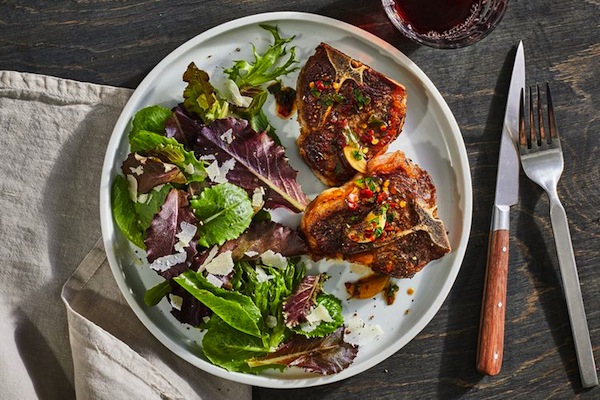
Lamb Chops Sizzled with Garlic by Janet Mendel. Photo by Jennifer Causey, food styling by Emily Nabors Hall, prop styling by Claire Spollen.

When Hanukkah arrives, there will be more family and friends to feed. Or, maybe just the “excuse” (not that we need one) to make a special meal for ourselves! However you celebrate, here are a few main dishes – meatballs, lamb chops and a vegetarian gratin – and a couple of vegetarian side options.

TOMATO MEATBALLS
(makes 18)

1 lb ground beef
1/3 cup bread crumbs
1 egg
1 finely grated medium onion
salt and pepper to taste
2 tbsp olive oil
2 crushed garlic cloves
16-ounce can crushed tomatoes
6-ounce can tomato paste
1 cup water
1 1/2 tsp dry basil

  1. In a bowl, mix together ground beef, breadcrumbs, egg, onion, salt and pepper. Shape into 18 meatballs.
  2. Heat oil in a frying pan. Brown meatballs and remove.
  3. Add tomatoes, tomato paste, water and basil to pan. Bring to a boil, reduce heat and simmer, stirring when necessary.
  4. Add meatballs and continue simmering 10-15 minutes.
  5. Serve on their own, in a bun or on noodles, rice or any other base of your choice.

SWEET AND SOUR MEATBALLS
(This came from a Heinz ad, and I’ve made it kosher. It makes 40 balls.)

1 lb ground beef
1 cup breadcrumbs
1 egg
2 tbsp minced fresh onion
2 tbsp pareve non-dairy creamer
1 minced garlic clove
salt and pepper to taste
1 tbsp vegetable oil
2/3 cup chili sauce
2/3 cup currant jelly

  1. Combine beef, breadcrumbs, egg, onion, non-dairy creamer, garlic, salt and pepper. Form into 40 bite-size meatballs (about one teaspoon each).
  2. Heat oil in a frying pan. Place meatballs in pan, cover and brown lightly for 10 minutes.
  3. Combine chili sauce and jelly and pour over meatballs. Heat on low heat 10-12 minutes, until sauce has thickened, basting occasionally.

GRILLED HERBED LAMB CHOPS
(6 servings)

1/2 cup olive oil
1 cup white wine
1/2 cup minced fresh parsley
1/2 tsp marjoram
1/2 tsp oregano
1/2 tsp basil
1 tbsp minced shallots or white onion
1 minced garlic cloves
6 lamb chops

  1. In a bowl, combine olive oil, wine, parsley, marjoram, oregano, basil, shallots or white onion and garlic. Add chops and coat well. Marinate two to three hours, turning chops often.
  2. Grill chops five to six inches from heat, five minutes per side or until medium rare.

LAMB CHOPS SIZZLED WITH GARLIC
(Janet Mendel is an American-born journalist who has lived in Spain for many years. Las Pedroneras is considered the garlic capital of Spain and this recipe on Food & Wine’s website is Mendel’s “homage to the village.” It makes 4 servings.)

8 lamb chops
salt and pepper to taste
thyme
3 tbsp olive oil
10 halved garlic cloves
3 tbsp water
2 tbsp fresh lemon juice
2 tbsp fresh minced parsley

  1. Season lamb chops with salt, pepper and thyme. Heat olive oil in a large frying pan.
  2. Add lamb chops and garlic and cook over high heat for three minutes. Turn over chops and garlic and cook two minutes longer. Transfer to a plate.
  3. Add water, lemon juice and parsley, scrape bottom of pan and cook for one minute.
  4. Pour pan sauce over lamb chops and serve immediately.

OMBRÉ POTATO AND ROOT VEGETABLE GRATIN
(This is a recipe by TV personality and chef Carla Hall, with my changes to make it kosher. You can find the original on Food & Wine’s website. Both make 12 servings.)

unsalted pareve margarine
2 cups non-dairy creamer
3 minced garlic cloves
1 small minced shallot
1/2 tsp nutmeg
salt and pepper to taste
1 pound peeled beets, sliced 1/16-inch thick
1 pound peeled sweet potatoes, sliced 1/16-inch thick
1 pound peeled small white potatoes, sliced 1/16-inch thick
1 pound peeled turnips, sliced 1/16-inch thick

  1. Preheat oven to 375°F. Grease a rectangular baking dish.
  2. In a bowl, whisk non-dairy creamer with garlic, shallot, nutmeg, salt and pepper.
  3. In a large bowl, toss beets with a quarter of the cream mixture. Arrange beets in baking dish, overlapping them slightly. Scrape any remaining cream from the bowl over the beets.
  4. Repeat the process with the sweet potatoes, potatoes and turnips, using a quarter of the cream mixture for each vegetable. Then cover dish with foil.
  5. Bake for about one hour and 45 minutes. Let cool 15 minutes.

Note: If pareve grated cheese is available, measure one cup and stir it into the whisked cream mixture. After baking, add another 3/4 cup of the grated cheese to the top.

SPAGHETTI SQUASH WITH PEPPER SAUCE
(6 servings)

1 approx 3-pound spaghetti squash
1/4 cup olive oil
1 onion, slivered
2 red peppers, cut into 1/2-inch lengthwise strips
2 yellow peppers, cut into 1/2-inch lengthwise strips
2 chopped tomatoes
1/2 tsp sugar
1/4 cup fresh basil leaves, coarsely torn
salt and pepper to taste

  1. Preheat oven to 375°F. Place pierced squash in a baking pan. Bake for 40 minutes. Turn over and bake another 15-30 minutes, until tender. Turn off oven and let squash remain.
  2. Heat olive oil in a pot. Add onion and cook 10 minutes.
  3. Add peppers, season with salt and pepper. Cover and cook 20 minutes.
  4. Add tomatoes, sugar and basil. Cook uncovered 20 minutes.
  5. Cut the squash in half and discard seeds. Pull apart strands with a fork. Place in a bowl and add pepper sauce.

QUINOA SALAD WITH SWEET POTATOES AND APPLES
(This is a Food & Wine recipe by food stylist and author Grace Parisi. It makes 10-12 servings.)

8 tbsp olive oil
1 1/2 cups quinoa
salt and pepper to taste
1 1/2 pounds peeled sweet potatoes, cut into 3/4-inch cubes
1/4 cup apple cider vinegar
2 apples, cut into 1/2-inch cubes
1/2 cup chopped parsley
8 cups packed baby greens, such as arugula and kale

  1. Preheat oven to 400°F.
  2. Heat one tablespoon of oil in a saucepan. Add quinoa and cook two minutes. Add three cups water, season with salt and bring to a boil. Cover and simmer 16 minutes. Remove from heat and let stand 10 minutes. Fluff quinoa, spread on baking sheet and refrigerate 20 minutes.
  3. On another baking sheet, toss sweet potatoes with one tablespoon of oil, salt and pepper. Toast in oven 25 minutes, stirring once. Let cool.
  4. In a large salad bowl, whisk six tablespoons of oil with vinegar. Season with salt and pepper. Add quinoa, sweet potatoes, apples, parsley and greens and toss. Serve right away.

Sybil Kaplan is a journalist, lecturer, book reviewer and food writer in Jerusalem. She created and leads the weekly English-language Shuk Walks in Machane Yehuda, she has compiled and edited nine kosher cookbooks, and is the author of Witness to History: Ten Years as a Woman Journalist in Israel.

Format ImagePosted on December 9, 2022December 8, 2022Author Sybil KaplanCategories Celebrating the HolidaysTags Chanukah, cooking, Hanukkah, Jewish holidays, recipes
Making the best of a mess

Making the best of a mess

Two picture books recently released by Kalaniot Books exemplify the publisher’s mission “to help young children and their families explore the diverse mosaic of Jewish culture and history.”

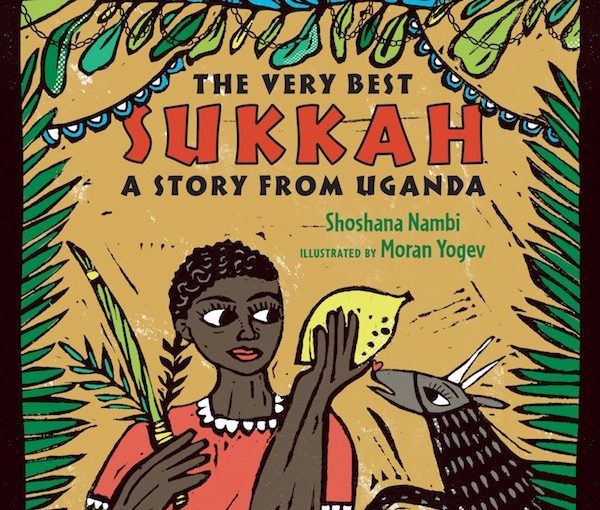
On the face of it, The Very Best Sukkah: A Story From Uganda by Shoshana Nambi and illustrator Moran Yogev may not seem to have much in common with Mendel’s Hanukkah Mess Up by Chana and Larry Stiefel and illustrator Daphna Awadish. But both charming publications explore the themes of inclusion via the experiences of their youthful protagonists.

The Very Best Sukkah centres around Shoshi, who likes to win any challenge, even when there’s none put forward. For example, despite her brother Avram’s plea for her to wait up, she makes sure to beat the other children to school – again. Shoshi shares, “My grandmother is always reminding me that life is not a competition. ‘Jajja,’ I tell her, ‘it’s not like I always have to win the race. I just like being at the front. The view is better there!’”

Shoshi and her brothers live with their “grandparents in a little house surrounded by coffee trees in the Abayudaya Jewish community of Uganda.” Shoshi races home on Friday nights to help her jajja make the holiday meal, in particular the kalo bread – it’s her job to mix the cassava and millet flour for the dough. The family then walks to synagogue, where the rabbi reminds the kids that their favourite holiday is coming up: Sukkot. The siblings start planning how they will make the best sukkah in the village.

Every family’s sukkah is different, “and each one reflects its builder’s special skills and talents.” For the most part, the differences are respected, but there is jealousy that Daudi, who sells samosas in the village, has enough money saved to buy “fancy battery-operated lights and elegant crochet trim in the big town of Mbale to decorate his sukkah.”

Life has a way of making playing fields level, however, and unfortunate weather one night causes mayhem, even for Daudi and his daughter, especially for Daudi, whose sukkah is destroyed. But the villagers rally around him and, in the end, the most beautiful sukkah is the one to which everyone contributes. A wonderful message, well delivered and boldly and colourfully drawn.

The Very Best Sukkah has a page about the Abayudaya, a glossary of terms and the lyrics of “Hinei Ma Tov” in Hebrew, Luganda and English: “See how good and pleasant it is for brothers and sisters to sit down together.”

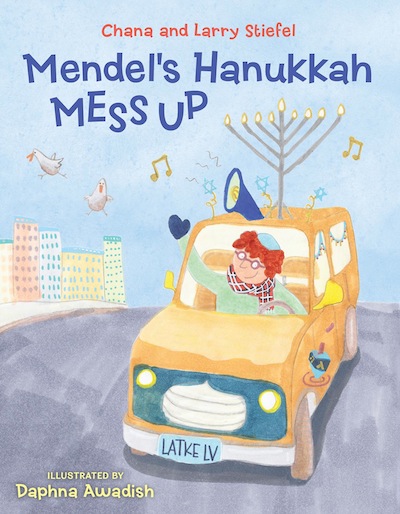
image - Mendel’s Hanukkah Mess Up book coverMendel’s Hanukkah Mess Up also features something getting wrecked. In this story, it’s a crashed-up Mitzvah Mobile rather than windblown sukkot. And, whereas it’s nature that destroys Daudi’s sukkah, it’s Mendel who doesn’t notice the bridge that’s so low as to crumple the large chanukiyah on the Mitzvah Mobile’s roof.

Anyone who knew Mendel could have predicted such an outcome when the rabbi asked him to drive the vehicle, as Mendel has a long history of mishaps, including having accidentally left a tray of jelly doughnuts on the rabbi’s chair. “Splat! ‘Oy, Mendel.’”

The unique nature of the vehicle and the accident draw a TV news team to the scene.

“‘What’s the story here?’ asked Rachel, the reporter.

“‘Um, well…’ Mendel’s words mushed like applesauce. ‘I blew it again,’ he sighed.

“Then Mendel thought of the lessons Rabbi Klein taught him. He stood up taller, like the shamash – the special Hanukkah candle that lights all of the others.

“As Mendel faced the camera, his words began to flow like silky sour cream.

“‘Hanukkah shows us the power of every person to make a difference. To rise up like the Jewish soldier Judah Maccabee fighting the mighty Greeks,’” he told Rachel. ‘If a tiny flask of oil can light up a menorah for eight days, we each have a spark to light up the world.’”

Mendel manages to turn his mistake into a win – spreading the story and joy of Hanukkah. It’s a fun story, with illustrations that are imaginative, engaging and detailed.

Mendel’s Hanukkah Mess Up ends with the story of Hanukkah and a glossary, instructions on how to play dreidel, the words to “Oh, Hanukkah” and a recipe for potato latkes, meant to be used by the young readers and their chosen adult.

For more information on these and other books, visit kalaniotbooks.com.

Format ImagePosted on September 16, 2022September 14, 2022Author Cynthia RamsayCategories BooksTags Abayudaya, Chana and Larry Stiefel, Chanukah, children's books, Daphna Awadish, Hanukkah, Jewish holidays, Kalaniot Books, Moran Yogev, Shoshana Nambi, Sukkot
Proudly powered by WordPress