
Skip to content
  • Home
  • Subscribe / donate
  • Events calendar
  • Business Directory
  • FAQ
  • News
    • Local
    • National
    • Israel
    • World
    • עניין בחדשות
      A roundup of news in Canada and further afield, in Hebrew.
  • Opinion
    • From the JI
    • Op-Ed
  • Arts & Culture
    • Performing Arts
    • Music
    • Books
    • Visual Arts
    • TV & Film
  • Life
    • Celebrating the Holidays
    • Travel
    • The Daily Snooze
      Cartoons by Jacob Samuel
    • Mystery Photo
      Help the JI and JMABC fill in the gaps in our archives.
  • Community Links
    • Organizations, Etc.
    • Other News Sources & Blogs
  • JI Chai Celebration
  • JI@88! video

Recent Posts

  • SFU honours Gloria Gutman
  • Lifting people’s spirits
  • Wedding a ray of light
  • Indigeneity and Zionism
  • Rule of law broken: councilor
  • Football and its roles
  • The burden of defence
  • Fish Café returns after fire
  • All right in what goes wrong
  • Nuns & mermaids at TUTS
  • Camp offers holiday retreat
  • Students and mentors inspire
  • Once-in-a-lifetime trip
  • 100 dancers, one heart
  • Money for the sciences
  • What “Jewish food” means
  • Have a cookie, schnitzel too
  • Federation now across BC
  • Israel fighting for its existence
  • Deal strengthens Iran
  • Patriotic belonging diminishes
  • A campaign to engage
  • Upstanders’ first live event
  • Responding to Carney
  • Having your own home
  • Music a family tradition
  • Musical to warm heart
  • Community milestones … June 2026
  • Sharing her passion for Israel
  • Or Shalom reopens its doors
  • JFS from past to future
  • Need holistic approach
  • Sharing stories, advice
  • Journalist shares fears
  • Skills to live together
  • Road to independence

Archives

Follow @JewishIndie
image - CJN box ad Rockowers 2026

Tag: Marsha Lederman

Danger in remaining silent

Danger in remaining silent

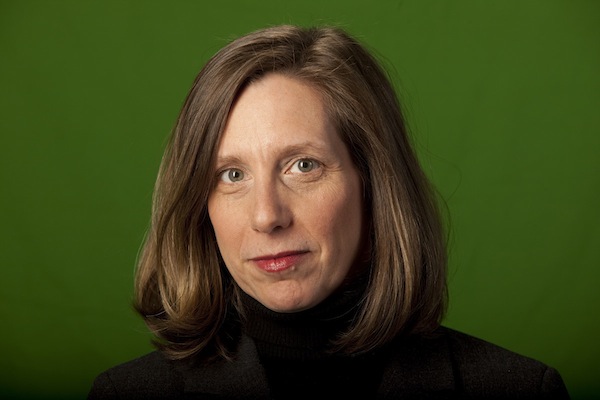
Marsha Lederman (photo by John Lehmann/Globe and Mail)

A few years ago, Marsha Lederman went with her mother, two sisters and a cousin on the adult portion of the March of the Living, which included a walk between the two main camps of the Auschwitz-Birkenau complex.

“The march from Auschwitz to Birkenau was somber and sorrowful, but it was also so empowering,” she recalled at the annual High Holidays Cemetery Service at Schara Tzedeck Cemetery in New Westminster Oct. 6. “We were marching with a statement to the world and a comforting message to the souls whose lives had ended so brutally on those grounds: ‘We are here, we are still living, we are multiplying, we remember you.’”

The family group proceeded to Radom, the town outside Warsaw where Lederman’s mother had grown up. The man who lived in the apartment where she had lived allowed them in and Lederman’s mother recounted her family’s years there.

“It was joyous,” Lederman said. “We were still on a high when we visited the memorial for the Radom Jews killed in the Holocaust. As I recall, it was in a fairly large square and seemed a little neglected. We were looking at this lonely memorial, the five of us women, when a group of, I would say, teenage boys began chanting something nearby. I don’t speak Polish, so I couldn’t understand what they were saying. But I did understand one thing: ‘Auschwitz-Birkenau.’ I don’t think they were offering their condolences.”

She reflected on the way she responded in that moment.

“We hurried away and said nothing. It was a safe thing to do, for sure. But, if that happened to me today, I would not walk away. I am done with walking away. Would I have put us in danger if I had turned around and confronted those boys? Maybe. But I know now that the real danger is in remaining silent.”

Lederman is the Vancouver-based Western arts correspondent for the Globe and Mail. Her father was born in Lodz, Poland, on erev Yom Kippur 1919. Her mother was born in Radom, Poland, in 1925. All four of their parents were killed in gas chambers at Auschwitz and Treblinka, as was Lederman’s father’s sister and little brother, and her mother’s little brother.

Lederman’s parents met in Germany after liberation and had one daughter there before moving to Canada, where they had two more daughters.

Lederman reflected on recent antisemitic incidents in North America and Europe, as well as her own encounters with antisemitism and racism, including a harrowing verbal attack on an Asian woman on the Skytrain at rush-hour, an incident in which Lederman was the only person to intervene.

“We have a duty to speak up,” she said. “We have a responsibility. This is our inheritance. I never had a bubbe or zadie to hug me or spoil me on my birthday or cook chicken soup for me. There’s nothing in my home that was theirs. I did not receive a single heirloom. But I did receive an inheritance – a duty to protect others from hate…. That is my inheritance and that is their legacy. Enough. Never again.”

She recalled being stunned during an interview with famed Vancouver photographer Fred Herzog, who died last month. Chatting after the main interview, Lederman asked the German-Canadian if he had experienced anti-German sentiment when he arrived here after the war. He launched into a discourse on the “so-called Holocaust” and said Jews died in the camps mostly because of lice and because Allied bombings prevented food from getting to them. Lederman agonized over whether to expose the admired photographer, eventually writing the story, for which she has been subjected to a range of criticism.

“Well, I have had enough,” she said. “And I’m going to fight to tell those stories and expose antisemitism and Holocaust denial and racism. I am not going to be quiet anymore. I think of all that was lost in the gas chambers; all the lives, of course, but also all the potential. With those millions of lives extinguished, what was lost with them? Poems were never written, beautiful artworks that were never painted, the cure for cancer, for Parkinson’s, the answer to the climate crisis?

“It was not just the people who were murdered that the world lost. It was all of their descendants and all of their descendants and all of that potential.… I talk about this because of what this leaves on our shoulders. I interviewed a Nisga’a poet, Jordan Abel, and he used a term to describe himself that I have adopted. He calls himself an intergenerational survivor of residential schools, which makes me an intergenerational survivor of Auschwitz. I do not take this lightly. With my parents’ survival came a hefty responsibility on me and on all of us who are descendants.”

At the service, Jack Micner, who led the ceremony and is also a member of the second generation, outlined a litany of antisemitic incidents and comments in Europe and North America in recent weeks.

“I suspect that those of our parents resting here in this cemetery would be furious to see what’s going on across the world,” he said. “We have to continue doing the type of work that VHEC [Vancouver Holocaust Education Centre] is doing in as many ways as we can think … it falls on us, because nobody’s going to do it for us.”

Rabbi Shlomo Estrin reflected on the loss of Chassidic communities during the Holocaust. Cantor Yaacov Orzech chanted El Maleh Rachamim.

Names were read of community members who have passed since the last High Holidays and a moment of silence was observed for the six million.

The Mourner’s Kaddish was recited by Jeremy Berger, a grandson of a Holocaust survivor. After the service ended, the Mourner’s Kaddish was also recited at the Holocaust Memorial in the cemetery.

The annual event is presented by the Vancouver Holocaust Education Centre with Congregation Schara Tzedeck and the Jewish War Veterans, and with support from the Jewish Community Foundation of Greater Vancouver.
Format ImagePosted on October 25, 2019October 23, 2019Author Pat JohnsonCategories LocalTags Holocaust, Kristallnacht, Marsha Lederman, memoir, racism, second generation, survivor, VHEC
JCC Book Fest awards given

JCC Book Fest awards given

Western Canada Jewish Book Award 2018 winners, left to right: Roger Frie, Deborah Willis, Kathryn Shoemaker and Irene Watts. Missing: Tilar Mazzeo. (photo by Cynthia Ramsay)

Deborah Willis became a writer, in part, because it is a way “to learn about the things that you’re curious about.” Irene N. Watts and Kathryn E. Shoemaker were motivated to reimagine a decade’s-old story in light of its relevance to pressing issues of today. And, in his latest work, Roger Frie found a way to discuss a past for which, previously, “the words were missing for how to speak about it.”

The Western Canada Jewish Book Awards, presented by the Cherie Smith JCC Jewish Book Festival, took place on April 26. Self-proclaimed book lover Daniella Givon, who is part of the JBF committee and was chair of the awards committee, introduced the evening.

“As I looked for ways to enhance the Jewish Book Festival,” she said, “I had a vision that book awards would marry the goals of the festival with the celebration of, and support the achievements of, local Jewish writers from Western Canada and showcase the winning authors. Since then, we’ve already gone through the process of bringing the ideas to fruition with the help of a subcommittee and the first round of awards … a beautiful ceremony was held here two years ago, recognizing five best-deserving authors.”

This year, four awards were presented, as chosen by the selection committee of former librarian Linda Bonder (Victoria); author and librarian Elisabeth Kushner (Vancouver); author and poet Dave Margoshes (near Saskatoon); writer, teacher and critic Norman Ravvin (Montreal); and Judith Saltman, professor emerita at the University of British Columbia School of Library, Archival and Information Studies. The winners were Calgary-based Willis for The Dark and Other Love Stories (Diamond Foundation Prize for fiction); Tilar J. Mazzeo, who divides her time between Maine, New York and Vancouver Island, for Irena’s Children (Pinsky Givon Family Prize for non-fiction); Vancouver’s Watts and Shoemaker for Seeking Refuge (Jonathan and Heather Berkowitz Prize for children and youth literature); and Frie, professor of education at Simon Fraser University and affiliate professor of psychiatry at UBC, for Not in My Family: German Memory and Responsibility after the Holocaust (Kahn Family Foundation Prize for writing on the Holocaust).

At the awards ceremony, each of the donors, or their representative, announced the winner of their sponsored award, which included a cash component. The winners – except for Mazzeo, who could not attend – read excerpts from their books and were interviewed briefly by Marsha Lederman, Western arts correspondent for the Globe and Mail.

Frie, who seven years ago discovered his maternal grandfather’s involvement with the Nazis, told Lederman, “This was a past no one had spoken about and, as I soon learned to understand, I think the words were missing for how to speak about it.” About the war in general, he said, his parents – who immigrated in the 1950s to Canada (Frie was born here) – talked about Germany’s responsibility for the Holocaust, however they did not speak about what his grandparents believed or what their involvement was in the war. He has found, in his research, that this “is a common dynamic amongst Germans in the postwar period.” He said that, while Germany has faced its past, “the emphasis on collective memory and collective understanding and collective responsibility has, in some way, allowed individual families to avoid confronting the past, and this book [Not in My Family] is very much a representation of that.”

Lederman described Mazzeo’s book as “astonishing.”

“I knew nothing about Irena Sendler before I picked up this book, so this has been a gift,” she said. “Irena Sendler was a Polish woman who saved … thousands of Jewish children during the Holocaust with amazing feats of courage, often in the Warsaw Ghetto. Her story is incredible, this book is incredible, and I can only hope that Steven Spielberg gets his hands on a copy.”

Shoemaker gave a brief presentation on the creative process she and Watts went through to create the graphic novel Seeking Refuge, which is based on Watts’ book Remember Me (first published in 2000). And Watts spoke of the challenge of cutting 27 chapters down to nine. “What I had to keep in mind,” said Watts, “is you can get so carried away by cutting and changing the language to make it more dynamic that you lose the story a little bit, and I had to watch that I didn’t diminish the characters.”

About the cover of the graphic novel, which features a girl sitting on a suitcase looking forlorn, Watts said Shoemaker “told the story in that one image.” Later, in response to a question from Lederman, Watts said the current refugee crisis was “the major reason to bring this book back in a different format.”

As for Willis, she spoke with Lederman about her winning collection of short fiction. “I was writing the stories for about five years, and I actually started noticing that the word ‘love’ was coming up over and over again. I was at first a little dismayed by that because I was thinking, oh, love stories, that’s been done. But then I embraced it and I wanted to try and explore that theme in a way that was true to my esthetic, or my goals as a story writer. I set it almost as a challenge.”

After an open Q&A with the authors, JCC Jewish Book Festival director Dana Camil Hewitt wound up the event with thanks to the sponsors, judges, awards committee and audience.

For an interview with Watts and Shoemaker, visit jewishindependent.ca/meet-award-winning-artists and, for a review of Not in My Family, visit jewishindependent.ca/a-grandfathers-sins.

Format ImagePosted on May 4, 2018May 2, 2018Author Cynthia RamsayCategories BooksTags children, Daniella Givon, Deborah Willis, fiction, Holocaust, Irene Watts, Jewish Book Festival, Kathryn Shoemaker, Marsha Lederman, memoir, Roger Frie, Tilar Mazzeo
Conversation continues

Conversation continues

Author Nathan Englander with the Globe and Mail’s Marsha Lederman at an Oct. 22 event held by the Cherie Smith Jewish Book Festival, which runs Nov. 25-30. Englander was in Vancouver as part of a North American tour of his latest novel, Dinner at the Center of the Earth. For an interview with Englander, visit jewishindependent.ca/a-novel-born-of-heartbreak. (photo by Cynthia Ramsay)

Format ImagePosted on November 3, 2017November 2, 2017Author Cynthia RamsayCategories BooksTags Cherie Smith JCC Jewish Book Festival, Marsha Lederman, Nathan Englander

Posts pagination

Previous page Page 1 Page 2
Proudly powered by WordPress