Skip to content
  • Home
  • Subscribe / donate
  • Events calendar
  • News
    • Local
    • National
    • Israel
    • World
    • עניין בחדשות
      A roundup of news in Canada and further afield, in Hebrew.
  • Opinion
    • From the JI
    • Op-Ed
  • Arts & Culture
    • Performing Arts
    • Music
    • Books
    • Visual Arts
    • TV & Film
  • Life
    • Celebrating the Holidays
    • Travel
    • The Daily Snooze
      Cartoons by Jacob Samuel
    • Mystery Photo
      Help the JI and JMABC fill in the gaps in our archives.
  • Community Links
    • Organizations, Etc.
    • Other News Sources & Blogs
    • Business Directory
  • FAQ
  • JI Chai Celebration
  • JI@88! video

Recent Posts

  • האלימות בישראל מורגשת בהרבה מגזרים
  • טראמפ עוזר דווקא לנושא הפלסטיני
  • New rabbi settles into post
  • A light for the nations
  • Killed for being Jewish 
  • The complexities of identity
  • Jews in time of trauma
  • What should governments do?
  • Annie will warm your heart
  • Best of the film fest online
  • Guitar Night at Massey
  • Partners in the telling of stories
  • Four Peretz pillars honoured
  • History as a foundation
  • Music can comfort us
  • New chapter for JFS
  • The value(s) of Jewish camp
  • Chance led to great decision
  • From the JI archives … camp
  • עשרים ואחת שנים להגעתי לונקובר
  • Eby touts government record
  • Keep lighting candles
  • Facing a complex situation
  • Unique interview show a hit
  • See Annie at Gateway
  • Explorations of light
  • Help with the legal aspects
  • Stories create impact
  • Different faiths gather
  • Advocating for girls’ rights
  • An oral song tradition
  • Genealogy tools and tips
  • Jew-hatred is centuries old
  • Aiding medical research
  • Connecting Jews to Judaism
  • Beacon of light in heart of city

Archives

Follow @JewishIndie
image - The CJN - Visit Us Banner - 300x600 - 101625

Tag: Israel-Hamas war

Second round of funds to Israel

Jewish Federation of Greater Vancouver has raised $16.3 million to address the crisis in Israel and is currently distributing $2.8 million to support the needs of survivors and evacuees. This distribution is in addition to the $2.1 million already hard at work on the ground in Israel.

As Israel transitions from “emergency mode” to “emergency routine,” citizens nationwide are bracing for what is likely to be a long and challenging period. More than 300,000 Israelis have been displaced from their homes and communities, their lives turned upside down, physically and emotionally. Their needs range from mental health support to temporary burial service (in unbearable numbers) to educational activities to daily necessities and more.

This second release of funds has gone to the following organizations in Israel.

  • Bring Them Back Home: psychological support for the families of those missing and held hostage.
  • Beit Issie Shapiro: treatment and respite for evacuees and survivors with disabilities.
  • Ramat Negev Regional Council: kitchen centres for evacuated communities and mobile shelters for Bedouin schools.
  • Shaar Hanegev Regional Council: respite and treatment for young adults and terror attack survivors.
  • Tel-Hai College: supporting students and alumni through stress and trauma teams and art centres.
  • Mashabim Community Stress Prevention Centre: mental health care for the northern communities.
  • Galila: medical kits for communities of the Eastern Galilee Cluster.

Federation thanks everyone who has contributed to the Israel Emergency Campaign for making these vital and urgent supports possible. If you have not yet had an opportunity to donate, visit jewishvancouver.com/israel-fund.

– Courtesy Jewish Federation of Greater Vancouver

Posted on November 24, 2023November 23, 2023Author Jewish Federation of Greater VancouverCategories LocalTags fundraising, Israel-Hamas war, Jewish Federation, philanthropy
Tidbits about life now

Tidbits about life now

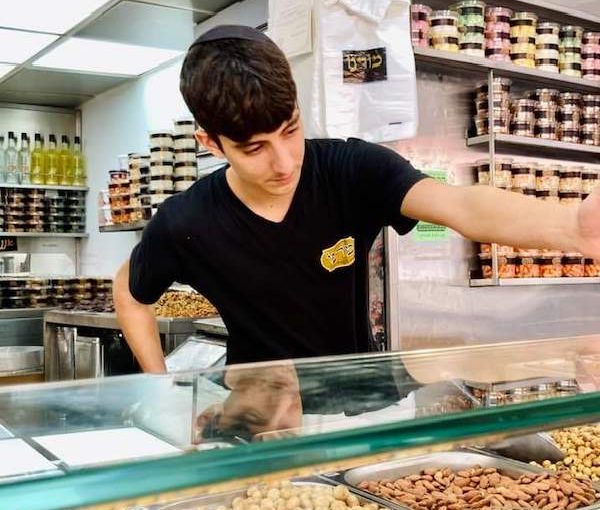
Teenagers are filling in for drafted reservists at Jerusalem’s Machane Yehuda market. (photo by Gil Zohar)

With the horrors of Oct. 7 embedded in our minds, in our hearts and in our souls, Israel has come together in so many ways, including for war. The effects are so broad and deep. Here is a bird’s-eye view from my narrow perch.

  • All the booms in the air, coming from far-off (and not-so-far-off) mid-air missile collisions – bravo Iron Dome! The swoosh of our fighter jets overhead – bravo Israeli Air Force! And all those customized Red Alert apps buzzing away on everyone’s cellphones – bravo Elad Nava, tech entrepreneur extraordinaire! It’s starting to sound like an orchestra out there.
  • Social media was calling for Israelis to sing, to go out on our patios at 9 p.m. and belt out Hatikvah. We did. And it felt great! So darn cathartic. What a sense of solidarity. As it turns out, on this particular evening, Hamas warned Tel Aviv of a missile barrage at 9 p.m. Guess our singing acted as type of musical Iron Dome, as no barrage arrived. Which is not to say Tel Aviv hasn’t had its share of missiles, just not at this particular time.
  • Driving to work, traffic slowed down considerably due to some “jackass” up ahead. Turned out to be a convoy of military jeeps carrying weapons and personnel to our north. As I passed them – 12 vehicles – I slowed down (in the left lane), gave a friendly honk and a thumbs up to each. Twelve times. Cars behind me did the same.
  • With 75 seconds to reach our safe room and with missile attacks being random with no real pattern, the stress and uncertainty prevents me from enjoying my private bathroom time, sitting down with a newspaper or book or my smartphone. But not under current circumstances. Just want to get in and out of there as quickly as I can..
  • Same for showering. No more basking under a warm spray of fresh water. No more humming a few showtunes while lathering up. Nope. Just a quick soaping and get out of there. For shaving, I’m getting use to a three-day growth cycle.
  • And, getting really personal … in the bedroom with the wife, I am now suffering reverse performance anxiety. I just get it done and move on. Don’t want to get caught with my pants down when the sirens sound.
  • Bravo to McDonald’s – giving McHappy meals free of charge to our soldiers. The restaurant stepped up, and many businesses are doing the same. From banks, to other restaurants, to retailers, providing goods or services at discounted prices to relieve some of the burden weighing on the country. Wonderful to see this coming together.
  • I miss my exercise routine. Was swimming a couple time a week. Now, not. The pool closed due to homeland security restrictions limiting gatherings at places of leisure. Who would categorize exercise as leisure? Anyway, I don’t think I’d hear the missile alert with my head bobbing in and out of the water while doing the breaststroke or front crawl. More so, there’s no running along the poolside, so would not make the saferoom in time.
  • We are not immune to panic buying. A few nights into the war, based on some rumour or other, I went grocery shopping to stock up on water, canned goods, candles, matches, toilet paper…. Didn’t get out of there until almost 11 p.m. The checkout line snaked all the way to the meat section. It was long, the joke being that, by the time we reach the checkout counter, Netanyahu will have negotiated a hudna (truce in Arabic). Ha.
  • I keep saying I’ll do it. Need to put more than just a half dozen bottled waters and a few inhalers in our safe room. Should stock it with canned goods, more medicine, flashlight, battery-powered radio and other survival aids. Maybe tomorrow.
  • If someone forgets their house key and knocks at our now always-locked door, they need to say a password before we’ll open the door. The theory being, if a Hamas terrorist is holding a gun to their head, they won’t say the password. Talk about paranoid. Probably run-of-the-mill war-related stress.
  • Joe Biden. His Oct. 11 “Don’t” speech was amazing! Talk about geopolitical alliances, commitments, pacts, and the such – I won’t. I’ll simply say I fell in love that evening.
  • Joe Biden. His Oct. 18 “We’ve got your back” speech was TREMENDOUS! I fell in love with him. Again. With a lightning visit to Israel, he kind of reminded me of Clint Eastwood in his glory days. He had that “make my day” squint in his eyes. Might have been him struggling to read the monitor, but he came across as a Dirty Harry kind of guy.
  • There are still a handful of Israelis – OK, maybe more than a handful – who just don’t get it. Now is not the time for divisiveness and finger pointing. There was utter failure. But the hard questions and difficult answers will come later. Now is the time for unity!
  • My wife and daughter volunteered at a high-end event (my wife works in the industry) to help arrange 1,000+ meals for our soldiers. There will be some very satiated soldiers enjoying gourmet meals in cardboard boxes and with disposable utensils.
  • And the sweet smell of my wife’s chocolate chip cookies and brownies baking in the kitchen. She slaps my hand as I go for a cookie: “Not for you! For our soldiers.” It’s that spirit of coming together.
  • My daughter left the house early the other morning and returned about an hour later with a huge orange garbage bag full of…. “What’s that?” I inquired. “Laundry. From a family in the south who was evacuated to some hotel. Mom volunteered.” As much as we get preoccupied with the war, with survival, sometimes it’s the mundane that really makes a difference.
  • Ouch. Our currency at its weakest since 2015. Pretty painful when you are sending US dollar instalments to your son studying in the States.
  • I know the diaspora is busy raising money for Israel at speeds and amounts like never before. But don’t stop once you give. Give more. This war will cost Israel billions. If you have given, please give again. Sderot is Israel’s front line. Israel is the diaspora’s front line.

Bruce Brown is a Canadian and an Israeli. He made aliyah … a long time ago. He works in Israel’s high-tech sector by day and, in spurts, is a somewhat inspired writer by night. Brown is the winner of the 2019 AJPA Rockower Award for excellence in writing, and wrote the 1998 satire An Israeli is…. Brown reflects on life in Israel – political, social, economic and personal.

Format ImagePosted on November 10, 2023November 9, 2023Author Bruce BrownCategories IsraelTags civil society, Israel-Hamas war, Oct. 7, volunteering

Civil society has been crucial

The Institute for the Study of Civil Society and Philanthropy in Israel at Hebrew University of Jerusalem recently released a report called Civil Society Engagement in Israel During the Iron Swords War: Emerging Trends and Preliminary Insights. Written by Prof. Michal Almog-Bar, Ronit Bar, Ron Barkai and Hila Marmus, it offers an analysis of the exceptional civil engagement and volunteerism witnessed in Israel during the first two weeks of the Israel-Hamas war.

Operation Iron Swords was triggered by a heinous terrorist attack on Israeli civilians, launching a massive mobilization effort aimed at bolstering the nation. In response, civil society rallied under the banner of “Defending Our Home,” setting aside preexisting social divisions. The collaborative report, authored by experts at Hebrew University, examines the remarkable civil initiatives, volunteerism and philanthropic contributions that played a pivotal role in addressing urgent needs and challenges during this critical period.

During the first two weeks of the war, civil initiatives demonstrated their ability to address the urgent needs and pressing challenges that arose within Israeli society. These initiatives played a pivotal role in executing crucial tasks such as rescue operations, evacuations, temporary shelter provision, and the distribution of vital food and medical supplies. Additionally, they provided invaluable psychological support to those affected, emphasizing the power of grassroots efforts in times of crisis.

Here are the key highlights of the institute’s report.

Diverse Civil Initiatives: the report highlights over 1,000 civil initiatives that emerged across Israel, encompassing a wide range of activities. These initiatives included the rescue and evacuation of civilians and animals, and provision of essential supplies, as well as support for bereaved families and those who went missing during the conflict.

Local and Affiliated Groups: local and affiliated groups played a significant role in addressing the specific needs of their communities, providing temporary accommodation to evacuees and extending their support beyond their local borders.

Volunteerism: 48.6% of the Israeli population engaged in volunteering during the war, a notable increase from the rate observed during the COVID-19 crisis (33%). Notably, volunteerism cut across all age groups, genders and religious affiliations. In particular, the rate of volunteerism among the Arab-Israeli population during the war reached 29%, a rise from the 19% recorded during COVID.

Spontaneous Volunteers: a substantial majority of volunteers (28%) during the war were newcomers to volunteering, underscoring the widespread participation of citizens who had not volunteered before the conflict. These newcomers were predominantly secular and had above-average incomes.

Primary Volunteer Activities: the most prominent volunteer activities included collecting, packing and distributing food and equipment, transportation of people, food and equipment, assisting security forces, participating in outreach activities through social networks, and offering essential aid to evacuees.

Volunteers and Donations: many volunteers integrated their efforts with financial contributions, participating in voluntary initiatives and crowdfunding campaigns, highlighting the synergy between volunteerism and philanthropy.

Inclusivity: unlike the predominantly youth-driven volunteering seen during the COVID crisis, individuals of all age groups participated actively. Notably, 46% of those aged 18-35, 52% of those aged 35-55 and 52% of those 55+ engaged in volunteering. Volunteerism transcended gender and religious boundaries. The use of technology for digital volunteering extended the reach to remote and mobility-limited populations, underscoring the adaptability and inclusivity of these volunteer efforts.

Financial Mobilization: Israel witnessed a swift and substantial mobilization of financial resources, surpassing levels observed during prior military operations. Support poured in from North American Jewry and Jewish federations, with donations estimated to be in the hundreds of millions of dollars.

The report underscores the importance of effective coordination between civil organizations and government bodies to ensure a unified response to pressing needs. It also suggests that civil organizations can evolve into a valuable support force for government activities during ongoing combat operations.

The study was a collaborative effort between the Institute for the Study of Civil Society and Philanthropy in Israel at Hebrew University, the Israeli Council for Volunteering, Civic Leadership (the umbrella organization of Israeli nonprofit organizations) and the Forum of Foundations in Israel. It included several surveys. The survey of volunteering during the first two weeks of the war was administered by the company Geocartographia and included 1,000 participants, constituting a representative sample of the adult population of Israel aged 18 and over.

– Courtesy Hebrew University of Jerusalem

Posted on November 10, 2023November 9, 2023Author Hebrew University of JerusalemCategories IsraelTags civil society, Institute for the Study of Civil Society and Philanthropy in Israel, Israel-Hamas war, Operation Iron Swords, volunteering
A call for toughness

A call for toughness

Rabbi Dr. Michael Berenbaum spoke at Congregation Schara Tzedeck on Nov. 5. He said: “We can’t raise a generation that is scared of being Jewish.” (photo from kolotmanagement.com)

The mood at Congregation Schara Tzedeck was solemn Sunday night, Nov. 5, when parents, grandparents and students from the Jewish community gathered to listen to Rabbi Dr. Michael Berenbaum, an American professor who is considered one of the world’s preeminent Holocaust scholars. Berenbaum came to discuss the importance of campus conversations, and specifically how to handle the critics of Israel who are voicing their support of Palestinians vociferously on college campuses throughout Canada and the United States.

Until the Oct. 7 terror attacks, Berenbaum said, our children had never known serious difficulty as Jews. “They’ve had the privilege of living in the greatest time to be Jewish, maybe in the history of the Jewish people,” he said. “Now, we’re asking our kids to toughen up, because they’re now going to face difficulty, pain, anguish and danger – physical or intellectual – for being Jews. This is our test of the hour, and it comes with the shattering of easily held assumptions about Jewish life.”

The Oct. 7 pogrom, he said, was worse than the 1906 Kishinev pogrom and worse than Kristallnacht in 1938 in terms of the number of Jews killed and the vehemence with which they were killed. “We believed Israel was founded to protect its people from these pogroms, and yet we were not safe.”

Berenbaum said it is crucial for Jewish students to be armed with accurate knowledge so they can counter the anti-Israel rhetoric they hear on campus. That means refuting claims that Israel is committing genocide. “Understand that this is war, and it has both direct and collateral consequences,” he said. “You cannot deal with war at this point without significant civilian casualties. While Israel is taking significant steps to avoid that, it’s unavoidable.” He noted that, since March 2011, the conflict in Syria has claimed the lives of 500,000 people – “and the rest of the world has heard nothing about this.”

On the claim that Israel is “occupying Gaza,” he clarified that Israel left Gaza in 2005, displacing 8,000 settlers so that Gazans would take control of their lives. “Israel is the only country in the world who has sacrificed land for normalization. We gave up Sinai for normalization with Egypt, and the reason the invasion happened now was because it appeared Saudi Arabia would establish a certain kind of peace with Israel,” he said. “Normalization represented a danger to the lateral forces in the region and that’s why this broke out now.”

On the claim that “Jews are colonizers,” he noted that Jews have never forsaken their connection to the land of Israel, and that there have been five cities with a permanent Jewish settlement in Israel. “When they came to Israel, they settled and worked the land, which is the opposite of colonization,” he said. “They didn’t take its resources and export it elsewhere.”

He noted that Palestinians were offered a state in 2000 and again in 2006, and they turned both opportunities down. “The Palestinians have never lost an opportunity to lose an opportunity, because their leadership is weak and corrupt,” he said.

There are a few things we can do now to ensure we are strong, he continued. One is to educate ourselves on the history of the state of Israel and Zionism. Another is to ensure we have solidarity by reaching out to one another.

 “These are not easy times and we need Jewish toughness and resilience,” said Berenbaum. “We can’t raise a generation that is scared of being Jewish. I want our Jewish students to be proud, tough and confident enough to accept the animus that will come their way, but to have the human capacity to respond to it.”

He ended his talk by calling Jews the “canary in the coalmine. You want to know if a society is healthy? See how it treats its Jews. We’re living in a world that’s fundamentally unhealthy, but it’s important to remember that we have many friends, we are not alone. We have to cultivate and respect those friendships, and not take them for granted.”

The events of Oct. 7 precipitated an earthquake, he added, “and the ground won’t settle for awhile. But earthquakes give the opportunity to build in a different way. We are in for a tough and difficult time, which will demand the best of us. But I fundamentally believe we have it in us to rise to the occasion.”

Lauren Kramer, an award-winning writer and editor, lives in Richmond.

Format ImagePosted on November 10, 2023November 9, 2023Author Lauren KramerCategories LocalTags antisemitism, education, history, Israel, Israel-Hamas war, Michael Berenbaum, Oct. 7, parenting, terrorism, university campuses

Under the bed, in the closet

If you’ve ever seen the movie Monsters, Inc. or its sequels, you may have an immediate visual image of what the craziest monsters look like when kids imagine what’s under the bed or in the closet. A few weeks ago, I started approaching this when we essentially moved. To clarify, we moved into our “new” house, built in 1913, more than a year ago. However, we’d all camped out in temporary spaces on the third floor while there were renovations done to the first and second floors.

We weren’t making cosmetic updates, these were basic needs like bathrooms that worked, a kitchen with heat, and other essentials. Turns out that, after more than 100 years and some poorly done, decades-old renovation choices along the way, it’s a good idea to have things fixed and updated – insulation and asbestos removal, new plumbing and safe wiring, too. We had scheduled our big “move” to the renovated second floor bedrooms for the Simchat Torah/Thanksgiving weekend. We would have had three days to manage the chaos. Little did we know that Hamas scheduled its horrific Israeli invasion and massacre for the same weekend.

Fueled by anxiety and a looming school and work deadline, we moved all four of us and dog beds downstairs. We set up kids’ clothes areas and adults’ nightstands, while we parents furtively looked at increasingly upsetting news online. I’ll probably always remember this moment in our Canadian character home renovation as when this massacre and the war against Hamas started.

We cleaned up the nearly vacated third floor, then set it up sufficiently to host another family who was visiting town the very next weekend. During the visit, we walked them over to see the Manitoba Legislature grounds while monitoring when each pro-Palestinian/anti-Israel rally might occur. There have been several now in Winnipeg, complete with pro-Israel counter-protests, with conflicts that required police intervention. We kept plowing forward amid the nightmare of the news.

Like many other places, Winnipeg has experienced acts of antisemitism. Some of it hit us personally. There was graffiti that my kids reported at middle school, and some of the bigger incidents have happened nearby or to people we know.

Like many other people have experienced, there are times when I have felt paralyzed and isolated by the overwhelming nature of the conflict. I am miserable about the loss of life, the impossibility of Israel’s situation, the fear for the hostages amid the knowledge that Hamas broke a ceasefire when it attacked Oct. 7, and that a ceasefire alone will not resolve this situation. I cannot bear the news. I also cannot look away.

The hardest task of this latest move has been the one where we open any closet door. I am still cleaning up boxes of belongings we have stored for more than a year. Things fall on me and surprise me. The worst part is the fear, the moment when the unknown jumps out at us and causes panic. Even if the box is labeled or the animated monster is in a movie, our startle instincts still cause fear when the unexpected and awful occurs.

When my kids told me about the hateful words on the test-taking dividers in math class, I didn’t feel afraid, but purposeful and angry. I wrote the teachers to report the situation and acted promptly. Within a few hours, the physical issue was addressed. The graffiti may be gone, but out there, some kid is still capable of writing more hate or worse.

Making lists, doing constructive activities – whether they are our daily obligations, additional volunteer efforts, or taking on new mitzvot (commandments) or prayers – may make us feel stronger. Also, in Mr. Rogers’ words, we can “look for the helpers.” We can ask for support from friends, neighbours, teachers, and others. We stay alert to the dangers and also strengthen ourselves with steps to make change during an incredibly difficult time.

There are lists on social media of how to protect our mental health and warnings for how to be proactive about protecting ourselves further. While this feels like new territory for us, it is, in fact, an ancient path. The prayer we use is the most compassionate call to free captives, and it begins with “Acheinu,”  “our brothers.” Old-fashioned translations call it our “brethren.” We pray for Israel, for those in captivity, and for the soldiers, too. For those who feel this leaves something out, remember that our tradition is one of shalom, peace. We pray for peace at every turn in our religious services. We’re not praying for any innocent person’s death.

I can’t say we’re all tidied up at our house and that everything has found its proper place. Daily, I discover items that we put away and then lost during this renovation and life transition. The metaphor extends to this difficult period as Jews in Israel and the diaspora. We’re not in a good place. We need to manage a truly dangerous situation. We’re losing things. Scary things surprise us. The unknown at the back of the closet is terrifying and is a living nightmare for many.

Let’s pray, if you’re the praying sort – or hope, if you’re not – for peace, for safety, for the return of captives and for the strength of those who fight on our behalf, in Israel and elsewhere in the world. Also, make yourself a list. Figure out how you’re going to get through this time. Try and focus on the light. I’m going to keep emptying moving boxes, too.

Joanne Seiff has written regularly for CBC Manitoba and various Jewish publications. She is the author of three books, including From the Outside In: Jewish Post Columns 2015-2016, a collection of essays available for digital download or as a paperback from Amazon. Check her out on Instagram @yrnspinner or at joanneseiff.blogspot.com.

Posted on November 10, 2023November 9, 2023Author Joanne SeiffCategories Op-EdTags antisemitism, Israel-Hamas war, Oct. 7, terrorism

Posts pagination

Previous page Page 1 … Page 7 Page 8
Proudly powered by WordPress