Skip to content
  • Home
  • Subscribe / donate
  • Events calendar
  • News
    • Local
    • National
    • Israel
    • World
    • עניין בחדשות
      A roundup of news in Canada and further afield, in Hebrew.
  • Opinion
    • From the JI
    • Op-Ed
  • Arts & Culture
    • Performing Arts
    • Music
    • Books
    • Visual Arts
    • TV & Film
  • Life
    • Celebrating the Holidays
    • Travel
    • The Daily Snooze
      Cartoons by Jacob Samuel
    • Mystery Photo
      Help the JI and JMABC fill in the gaps in our archives.
  • Community Links
    • Organizations, Etc.
    • Other News Sources & Blogs
    • Business Directory
  • FAQ
  • JI Chai Celebration
  • JI@88! video

Recent Posts

  • Eby touts government record
  • Keep lighting candles
  • Facing a complex situation
  • Unique interview show a hit
  • See Annie at Gateway
  • Explorations of light
  • Help with the legal aspects
  • Stories create impact
  • Different faiths gather
  • Advocating for girls’ rights
  • An oral song tradition
  • Genealogy tools and tips
  • Jew-hatred is centuries old
  • Aiding medical research
  • Connecting Jews to Judaism
  • Beacon of light in heart of city
  • Drag & Dreidel: A Queer Jewish Hanukkah Celebration
  • An emotional reunion
  • Post-tumble, lights still shine
  • Visit to cradle of Ashkenaz
  • Unique, memorable travels
  • Family memoir a work of art
  • A little holiday romance
  • The Maccabees, old and new
  • My Hanukkah miracle
  • After the rededication … a Hanukkah cartoon
  • Improving the holiday table
  • Vive la différence!
  • Fresh, healthy comfort foods
  • From the archives … Hanukkah
  • תגובתי לכתבה על ישראלים שרצו להגר לקנדה ולא קיבלו אותם עם שטיח אדום
  • Lessons in Mamdani’s win
  • West Van Story at the York
  • Words hold much power
  • Plenty of hopefulness
  • Lessons from past for today

Archives

Follow @JewishIndie
image - The CJN - Visit Us Banner - 300x600 - 101625

Tag: IDF

IDF veterans visit Vancouver

IDF veterans visit Vancouver

The eight visiting Israel Defence Forces veterans at Stanley Park. (photo by David Schwartz)

Eight Israel Defence Forces war veterans, all of them part of the rehabilitation program at Beit Halochem, visited Vancouver earlier this month for eight days. They were guests of Temple Sholom and each of them was hosted by a family here.

Temple Sholom president David Schwartz was one of those hosts. “It’s the fifth visit we’ve had, ever since we joined the Beit Halochem program 10 years ago, and each visit brings us, as a community, to new heights of emotional inspiration,” he said. “Our congregation’s response to this program was amazing and we had some members on the waiting list for the next time. Unfortunately, our group included only eight veterans – if we had more, there would have been no problem to find them a suitable accommodation. It is such a great privilege to host these brave people who sacrificed … for the state of Israel. Each one of them has an amazing story of personal heroism; it is just feels so honorable to have them among us even for a short while.”

Infantry Col. Eitan Matmon, who was injured three times during his military career, the last time on Lebanese soil during the 2006 war, was the highest rank officer among the visitors. It was Matmon’s second visit to Canada, but the first to the West Coast, and the warm weather matched the community’s hospitality. “From the first moment we landed in Vancouver,” he said, “our hosts took care of us and greeted us with the biggest hearts and smiles we could wish for.

“Our guys are struggling every single day to recover, both physically and mentally, from the horrible effects of war,” he continued. “For them to come here and enjoy this amazing scenery, to meet the local Jewish community and to relax and enjoy such a visit is just priceless. We are so thankful to our hosts from Temple Sholom, King David High School, Rabbi [Philip] Bregman from Hillel and everybody else who contributed to this successful visit. We can’t wait to show our friends and family at home what kind of warm support we have found here, on the other side of the planet.”

The group landed in Vancouver on Tuesday, May 5, and visited King David on Thursday, Hillel at the University of British Columbia on Friday, then joined Temple Sholom for Shabbat dinner. They toured Stanley Park and Granville Island, went shopping at Pacific Centre, attended a Vancouver Whitecaps game and traveled to Whistler and Bowen Island before leaving on May 14 for Calgary for five days. Separately, Matmon was among a group of about 50 people who joined a Jewish Museum and Archives of British Columbia tour of historical Jewish sites in Strathcona and Gastown on Sunday, which was when he had a chance to talk with the Jewish Independent.

The first connection between Beit Halochem and Temple Sholom was made by Bregman 10 years ago. Since then, five delegations have visited Vancouver, and Bregman is still excited by the special event. “For us, as North American educators,” he said, “this connection provides such a great opportunity to show our young generation something they have never seen before: personal sacrifice. Our country doesn’t ask for anything from local high school grads, right? You went to school, you graduated, you say thank you and move on with your life. In Israel, they say, ‘No, now you’re going to give us back three years of your life.’ And the young people of Israel keep on doing their mandatory service in such a devotion that can only be admired by our local youth. I’m so glad and proud that this connection has turned into a tradition. The IDF veterans’ visit at the Hillel centre has left our students with a powerful and inspiring message of hope and courage that can only come from one place in the world: Israel.”

For more details on Beit Halochem in Canada, visit beithalochem.ca.

Shahar Ben Halevi is a writer and filmmaker living in Vancouver.

Format ImagePosted on May 22, 2015May 21, 2015Author Shahar Ben HaleviCategories LocalTags Beit Halochem, David Schwartz, Eitan Matmon, IDF, Israel Defence Forces, Philip Bregman, Temple Sholom
JDC delivers aid, relief

JDC delivers aid, relief

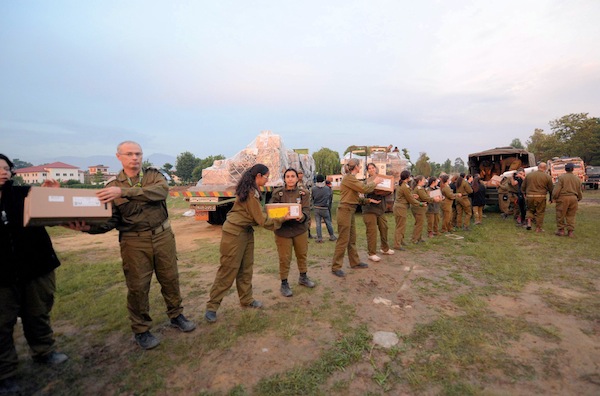
Israel is contributing to efforts to aid and assist the Nepalese government to reach, rescue and treat injured victims of the recent earthquake. The IDF has set up a comprehensive field hospital and also has flown out emergency rations and tents. (photos by IDF via Ashernet)

After Nepal was hit by the biggest earthquake in 80 years, the American Jewish Joint Distribution Committee (JDC) is aiding thousands of survivors through its relief efforts with partners on the ground, and is dispatching its disaster relief team from Kathmandu to remote villages to deliver aid and assess emerging needs in hard-hit areas. The team is assisting in the delivery of first-aid and shelter supplies, hygiene items, oral re-hydration solution, food packages and other supplies to 1,400 families over the coming days.

“Even while we’re helping survivors to heal throughout Nepal, we know more must be done and urge the public to continue its generous support of critically needed relief in this devastated country,” said Mandie Winston, director of JDC’s International Development Program. “Millions of Nepalese are facing harrowing conditions and the need for their immediate care, recovery and reconstruction efforts is required to secure Nepal’s future. Our efforts are focused on that path and to ensure the dignity of every human life along the way.”

photo - JDC disaster response team delivers aid in NepalTo date, JDC has operated on three fronts in Nepal: the deployment of its expert disaster relief team on the ground; the support of locally based partners to ensure medical care and relief supplies within days of the quake; and the packing and shipping of medical and humanitarian supplies from the United States. These efforts have ensured life-saving medical treatment, food, clean water and shelter for Nepalese victims still reeling from the disaster. It has also enabled the assessment of needs and delivery of aid in real time, in tandem with changes on the ground, and the coordination of JDC’s network of local and international non-governmental partners working in Nepal.

These partners include the IDF Field Hospital, Tevel b’Tzedek, UNICEF, the Afya Foundation, the All India Disaster Mitigation Institute, Sarvodaya – Teach for Nepal, Heart to Heart International and Magen David Adom.

JDC has provided immediate relief and long-term assistance to victims of natural and man-made disasters around the globe, including the Philippines, Haiti, Japan and South Asia after the Indian Ocean tsunami, and continues to operate programs designed to rebuild infrastructure and community life in disaster-stricken regions.

JDC’s disaster relief programs are funded by special appeals of the Jewish Federations of North America and tens of thousands of individual donors to JDC. JDC coordinates its relief activities with the U.S. Department of State, USAID, Interaction, the Israeli Foreign Ministry, Israeli agencies and the UN coordination mechanism OCHA.

To contribute to the Nepal relief efforts, contact Jewish Federation of Greater Vancouver at 604-257-5100 or visit jewishvancouver.com/nepal-relief-fund.


Format ImagePosted on May 15, 2015May 14, 2015Author American Jewish Joint Distribution CommitteeCategories WorldTags earthquake, IDF, Israel, Israel Defence Forces, JDC, Jewish Federation of Greater Vancouver, Nepal
Hebrew U marking 90 years

Hebrew U marking 90 years

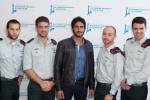
Duvdevan elite unit veterans who visited Vancouver on the weekend are, left to right, Gilad Waldman, Daniel Kolver, noted singer and actor Tzahi Halevi, who sang at the event, Ariel Rubin and Boaz Faschler. (photo by Robert Albanese Photography)

The historical, contemporary and future impacts of the Hebrew University of Jerusalem were celebrated Sunday night at Congregation Beth Israel.

Several hundred members of the community gathered to mark the 90th anniversary of what has become one of the world’s great academic institutions.

Founded in 1925 by some of the greatest thinkers of the 20th century, including Martin Buber, Chaim Weizmann, Chaim Nahman Bialik and Albert Einstein, the university has produced seven Nobel laureates and is routinely recognized as one of the 100 best universities in the world.

The culmination of the evening focused on four young Israeli soldier-students and a scholarship project intended to both reward dedication to the state of Israel and to ensure that individuals who have demonstrated that they are among the foremost citizens of that country will continue to contribute productively throughout their lives.

The young men who addressed the audience are recent veterans of Duvdevan, an elite anti-terror undercover unit of the Israel Defence Forces.

Daniel Kolver was motivated to strive to become a member of the elite unit after being a teenage eyewitness to the Passover massacre at the Park Hotel in Netanya, in 2002, at which 30 Israelis were murdered by a terrorist at a seder.

He explained that Duvdevan members often operate as “Trojan horses,” charged with locating and arresting – or killing – the most dangerous terrorists, those “ticking bombs” who are minutes or hours away from executing attacks.

Each year, about 15,000 17-year-old Israelis apply to serve in Duvdevan and 150 are accepted. After some of the most intensive military training in the world, these soldiers are entrusted with hostage rescues, capturing terrorists in extremely dangerous urban warfare situations and delicate counter-terrorism operations.

Last year alone, the unit participated in more than 400 missions – each one of which involved at least one suspect. Kolver screened dramatic video of an operation in which his unit had two minutes to get through a labyrinthine neighborhood, detonate an explosive to blow the door off the home of a terrorist, identify the man hiding behind his wife and extricate the target and the unit from the premises within 10 seconds.

Another speaker, Ariel Rubin, admitted that he initially sought acceptance to Duvdevan to show off that he got into the elite unit. But the excruciatingly tough training eliminated all ego and superfluous motives.

“You disconnect your head from the physicality and you say, I’m doing this for my country … to protect Israel, to protect the Jewish people, because if we’re not there, nobody’s going to do it for us,” he said.

Fellow unit veterans, Boaz Faschler and Gilad Waldman, spoke of the difficult transition from being in one of the most secretive military units to assimilating into everyday life.

Among the purposes of the presentation was to raise support for the scholarship fund at Hebrew U, which awards 50 scholarships annually to soldiers from Duvdevan after their years of service.

The evening event, organized by the Vancouver chapter of Canadian Friends of the Hebrew University, featured two other presentations.

Ambassador Ido Aharoni, consul general of Israel in New York, acknowledged that Israel is not winning the global war for public opinion. Significant to the problem Israel faces is that a huge proportion – 40% of North Americans and Europeans and 30% of much of the developing world – can be defined as “infosumers,” a tech-savvy group of individualists who seek out their own information and share specific traits. Among the characteristics of this growing demographic is that they see themselves as part of an expanding global identity whose national identities are eroding. They are also significantly unfavorable toward force, whether by the military or police. Aharoni’s thesis was reinforced by the fact that riots had been taking place for days in the United States over police brutality and murders of African-American civilians.

Screening a photograph of a presumably Palestinian youth throwing a rock at a tank, Aharoni noted that this is the global image most associated with the Israeli-Palestinian conflict. But he also noted that polls indicate that in both Europe and North America, small numbers of people identify with either side in that conflict, most falling in the middle. Israel’s contradictory message of being both victim and victor, he said, is difficult to comprehend. And images of tanks versus stone-throwers, however unrepresentative this might be of the genuine power dynamic or context in the Israeli-Arab conflict, is not being successfully countered.

A more successful approach, he said, would be to appeal not to those who identify as opposed to the Israeli narrative, but to the large majority who subscribe to neither narrative. He called for greater emphasis on Israel’s contributions in fields of medicine, science, culture and other areas that benefit humankind.

Following the ambassador’s presentation, Prof. Noam Shoval of Hebrew U’s department of geography, spoke about the geographic realities of the city of Jerusalem.

Using a range of GPS and technological tools, researchers have studied the movement of Jerusalem’s residents and visitors, day and night, over time, to discover that the perception of Jerusalem as a culturally divided city is not accurate. There is an enormous amount of interaction by Jewish, Muslim and other residents of Jerusalem throughout and across areas of the city that are otherwise generally acknowledged as Jewish or Arab.

Shoval acknowledged that he would like to see Jerusalem remain united under Israeli jurisdiction, but he acknowledged that others might see a unified Jerusalem jointly administered by Israel and a future Palestinian state, or unified under some sort of international governance as was proposed in 1947. He concluded that dividing the city is not an ideal resolution.

“A division of the city is an outcome of war – not of peace,” he said.

Pat Johnson is a Vancouver writer and principal in PRsuasiveMedia.com.

Format ImagePosted on May 8, 2015May 6, 2015Author Pat JohnsonCategories IsraelTags CFHU, Duvdevan, Hebrew University, HU, IDF, Ido Aharoni, Israel Defence Forces, Noam Shoval
IDF command change

IDF command change

At a ceremony in Tel Aviv, Gadi Eizenkot, second from left, succeeds Benny Gantz, far right, as IDF chief of staff. (photo from Flash90 from JNS.org)

The four-year term of Israel Defence Forces Chief of Staff Lt. Gen. Benny Gantz officially ended earlier this week, with Gantz handing command of the military over to his deputy, Maj. Gen. Gadi Eizenkot, during a ceremony at Rabin Base in Tel Aviv on Feb. 16.

While serving as Gantz’s deputy, Eizenkot was part of major decisions on military reforms. He assumes command of the IDF during a time marked by tension in all sectors: the potential for further escalations in Gaza, concern over the growing unrest among Palestinians in Judea and Samaria, the volatile situation on Israel’s borders with Syria and Lebanon, and the erosion of Israel’s deterrence against Hezbollah.

Eizenkot acknowledged that he is taking over “in the midst of a tense and challenging period.” He said, “The Middle East is changing and it has become very volatile. Under my command, the IDF will prioritize its readiness, its operational skills and its ethical fortitude, so we may wield whatever force necessary in the defence of the Israeli public. I pledge to lead the Israel Defence Forces with determination and wisdom, and with the utmost commitment to Israel’s security and the public’s safety.”

Gantz said that during his time as IDF chief, “we have fortified our borders, we have adapted our response in all sectors and we have ensured our readiness to any scenario. We have taken forceful action when necessary, and our readiness has proven itself time and again,” he said. “It is important that we look at the challenges in the horizon, and it is equally important that we know how to reach out to our allies, to create spheres in which we can promote our interests and solutions.”

Gantz told Eizenkot, “The IDF is yours to lead now. Make your mark on it with the love we know you have for this military and the responsibility required of the position. The public is lucky to have you as the leader of its defence forces.”

At a defence establishment farewell event for Gantz, Israeli President Reuven Rivlin said the outgoing military leader was “everyone’s chief of staff, in true service of the public.”

“You have shown the utmost, unbiased dedication,” Rivlin told Gantz. “Over the past four years, you have led the IDF toward many achievements. You have bolstered the public’s faith in the military. You may be taking off your uniform, but I believe it will not be for long. We have called on you once, and maybe we will call on you again before too long. The people need you.”

Israeli Prime Minister Binyamin Netanyahu said, “If I had to describe Benny in two words, they would be ‘warrior’ and ‘humane.’ I have seen you deal with so many challenging situations, and what always came through was your humanity. I believe that behind the tough warrior exterior there’s more than just a sensitive soul – I think it is the soul of a poet.”

Read more at jns.org.

Format ImagePosted on February 20, 2015February 19, 2015Author Lilach Shoval ISRAEL HAYOM/JNS.ORGCategories IsraelTags Benny Gantz, Gadi Eizenkot, IDF, Israel Defence Forces
Great in Uniform sees potential

Great in Uniform sees potential

Cpl. Ben Levi is a participant in the Great in Uniform program. (photo from Israel Defence Forces)

The program Great in Uniform aims to integrate young Israelis with special needs into the Israel Defence Forces. To date, some 200 youths have been successfully integrated through the program into administrative and logistical positions in the IDF’s air force and home-front command.

The program was founded by Lt. Col. (Res.) Ariel Almog, who became disabled while serving in the IDF when responding to a terror attack. Eventually, he began looking for a way he could return to the army. He then realized that he would like to help make this a reality for others with disabilities, too.

Typically, Israeli teens with special needs are granted an exemption from obligatory military service. By opening a window and creating a support system for those wanting to volunteer to join the army, the IDF is making it possible for these young Israelis to be integrated into the army with their peers. The teens begin as volunteers, serving in various roles. In some cases, they can get advanced training and even become officers.

This has been the case with Ben Levi. Levi was diagnosed with cerebral palsy (CP) when he was born. He has learned to live with his disability and the 21-year-old longed to join the army and follow in the path that many in his family have taken: he wanted to serve in a fighting unit.

Levi said he currently works “in the storage room, which is part of the logistics force in the home command. When I have trouble, people help me, but I don’t feel I’m a volunteer. I feel I am a solider for all intents and purposes. I try to do what I can. I am disabled and it’s not obvious at all that I would have gotten as far in the army as I have.

“I can tell you a secret,” he added. “I’m actually interested in going for the officer’s course.

“I’m really happy I got to draft and that I get to serve the country,” he said.

Levi said he feels like a soldier just like any other, and has many friends on the base. When he runs into difficulty, he knows he has his family’s support. In fact, Levi’s family has gotten involved in the IDF program.

“It’s fantastic to wake up every morning and know that I am serving my country, have a job and a way to contribute – it proves to me that CP can’t limit me,” said Levi. “You come into the army as a child and you come out as a full grown person.”

Levi’s commander, Ariana Goldsmith, 18, is originally from Long Island, N.Y. She has been living in Ra’anana for the past seven years after making aliyah with her family.

Goldsmith’s becoming a commander of special soldiers was her own “dream come true,” she said.

“I’ve been volunteering for many years with people with special needs [with] Yachad. My cousin is special needs, I grew up with him, and I’ve been volunteering since I was younger for different organizations.”

Although Goldsmith only joined the IDF four months ago, she was given the title of commander to allow her to do her job – escorting special needs soldiers on base.

“Since I heard about this program, this job has been my dream,” said Goldsmith. “There’s no other job I want to do. So, I ended up getting in contact with the head of the program … it took a long time, about a year and a half, and a lot of working it out with the army, but it ended up working out.

“This is an unbelievable program – to see these kids … they just want to do it so bad. There are so many soldiers in the army who aren’t that into [serving]. You know, everyone has to [serve].” Those with disabilities, however, “don’t have to do the army,” she continued. “They want to, to give back, and they are unbelievable.”

Goldsmith is the only escort in the program at the moment, but that is not stopping her from blazing a trail for future escorts. “With my experience, I can give back to the program and make it more of an official job … so that, after me, more people can go into the army and become a commander for this program.”

Goldsmith feels most units in the army would benefit tremendously from incorporating special needs soldiers, and that the benefits of the program are greater for able-bodied soldiers than they are for special needs soldiers. “I think the base and soldiers get so much out of seeing these [special needs] soldiers being volunteers, and that all they want to do is work. They gain so much from seeing them, they learn a life lesson. Some of these soldiers have never seen special needs people before…. By seeing them and working with them, they gain so much patience and they make connections with them…. This really raises the morale on base in general.”

Rebeca Kuropatwa is a Winnipeg freelance writer.

Format ImagePosted on February 20, 2015February 19, 2015Author Rebeca KuropatwaCategories IsraelTags Ariana Goldsmith, Ben Levi, Great in Uniform, IDF, inclusion, Israel Defence Forces
On being a Sar-el volunteer

On being a Sar-el volunteer

Gerald Lecovin on the production line at Matzrap Army Camp this past October. (photo from Gerald Lecovin)

Matzrap Army Camp, October 2014: It’s 8:15, time to work. Breakfast and flag raising are over. The Henna Hannahs are already on the job. This is the name I have given to the seven or eight elderly ladies who have been bused in from a senior citizens home, the color of their hair belying the rest of their bodies. They sit at a table, shmoozing while they place various combinations of medical supplies in small plastic bags, which are then sealed and placed in containers going out to the troops. They work steadily till lunch, which they are given before being bused back to their home. This is their – and our – contribution to Israel’s welfare.

We are 30 Sar-elniks, mostly Canadian, whose job it is to open containers, packs and medical vests coming back from the front. We empty them out, remove items that are no longer useable, replace the items and then repack everything. Containers are then sealed in plastic bags, put on pallets and shipped out. While they are replaced by more containers and the process repeats itself, there is a feeling of accomplishment every time a pallet leaves.

On this tour of duty, we were helped by groups of young solders training to be medics. There were 18-year-old women and, later, men who were from an elite Seal unit. The women were a reflection of Israeli society; Ashkenazim, Sephardim, Russians. Each with the ubiquitous cellphone. One day, one of the soldiers played songs for us by her favorite singers: Satchmo and Tony Bennett. Go figure! Comparing them to our kids of similar age was edifying.

Lunch is from 11:45 to 1:15. This is the big meal of the day. Salads, choice of hot meat entrée or vegetarian. By this time, the camp is jumping and we are eating with soldiers and staff. We return to work till 3 or 4 p.m., depending on the workload. Supper is at 5:45, and sometimes we have a lecture in the evening. This is our routine. Once a week, they plan an outing and we are bused to some site of interest.

Sar-el, which is an acronym for “service to Israel,” was conceived by General Aharon Davidi in 1983 when there was a need for laborers to bring in the crops as the soldiers were away fighting. Through his contacts in the United States, he managed to get 600 volunteers. Since that time, more than 50,000 people, of which 35 percent are Christian and 65 percent Jewish, have volunteered. About 3,500 from 60 countries come each year.

Originally, the age limits were 18 to 65, but when the general himself reached 65, he removed the upper limit. The oldest of our group was 92. People come for an average of two to three weeks; some for months. Of our group, only two were first timers. One was returning for his 100th time. I was a relative neophyte: this was my third time.

The feeling of being able to contribute to Israel in a meaningful way, and not just financially, is a strong magnet. I know this because I interview those volunteers that come from the West Coast and many of them contact me upon their return to share their thoughts.

For more information about Sar-el, visit sarelcanada.org.

Gerald Lecovin is a longtime resident of Vancouver, and has been active in community affairs. For the last 10 years, he has been Sar-el’s representative on the West Coast.

Format ImagePosted on November 28, 2014November 27, 2014Author Gerald LecovinCategories IsraelTags IDF, Israel, Israel Defence Forces, Matzrap, Sar-el
IDF soldier shares his story

IDF soldier shares his story

Jewish National Fund Pacific Region brought in IDF veteran Ari Zecher to speak. The talk, moderated by Geoffrey Druker, left, talked to a group at the Jewish Community Centre on Sept. 22. (photo from JNF-PR)

This Rosh Hashanah, the Vancouver Jewish community was visited by Ari Zecher, who served in the Israel Defence Forces Maglan special forces unit during Operation Protective Edge in Gaza this past summer.

Part of the Jewish National Fund’s High Holiday appeal to help build mobile bomb shelters in Israel, Zecher was invited to share his experience as a soldier and as a young Israeli during this tumultuous time. Speaking at the Jewish Community Centre of Greater Vancouver and at various synagogues, Zecher thanked the local Jewish community for its unfailing and ongoing support, and highlighted the need for young and fresh ideas to move Israel forward towards a peaceful future for future generations.

Ilan Pilo, Jerusalem emissary and executive director of JNF Pacific Region, said: “We are grateful to Ari for taking the time to interact with over 1,000 members across our community and for speaking candidly about Israel’s challenges and hopes. As in the past, this year, JNF will continue to dedicate its work to enhancing the invaluable bond between Israel and the Canadian Jewish community in general, and our Vancouver community in particular. JNF salutes everyone who has made, or will make, a donation towards the important cause of keeping children in Israel safe during such difficult and uncertain times.”

For more information on the JNF’s bomb shelter campaign, call 604-257-5155 or visit vancouver.jnf.ca.

Format ImagePosted on October 17, 2014October 17, 2014Author Jewish National Fund Pacific RegionCategories LocalTags Ari Zecher, Gaza, IDF, Ilan Pilo, Israel, Israel Defence Forces, Operation Protective Edge

“Temporary” occupation

It’s a question that defines the debate over Israel’s policies and the state’s grand strategy: do Israeli human rights organizations monitoring the occupation merely serve as a fig leaf, adding an ethical patina to what is a fundamentally immoral situation?

Four months into his new position as head of B’Tselem, having come from the Association for Civil Rights in Israel, Hagai El-Ad and I spoke by phone recently about this and other issues. [To read the JI’s interview with El-Ad, click here.]

Given that the Israeli occupation of the West Bank and Gaza was supposed to be “temporary,” El-Ad is well aware that “at some point the term loses its meaning.” So, as he took the helm of B’Tselem last May, the organization issued a position paper provocatively named 47 Years of Temporary Occupation. As El-Ad put it, B’Tselem is shifting its focus from “fighting against human rights violations under occupation to a strategy [emphasizing] that the occupation will forever violate the human rights of Palestinians.” To this end, B’Tselem is now trying to end the occupation – not just help manage it.

It’s a laudable goal. But how achievable is it?

B’Tselem is starting with some concrete steps, however limited. For one, they have recently announced that they will not cooperate with Israel Defence Forces military investigations around Operation Protective Edge. Calling it “theatre of the absurd,” El-Ad believes that the military investigation system is one intended to “always result in impunity.” And this protected military violence is a necessary “lifeline of the occupation.” Hence, the need to squelch it.

As far as the bigger picture goes, El-Ad was cautiously optimistic: probably a necessary blend for anyone in human rights work in the Israel/Palestine morass. He takes comfort from what he sees as B’Tselem’s mission being fundamentally buttressed by the very human rights discourse extant in Israel. That the concept of human rights is a “relevant currency” in Israeli politics gives the organization an important starting point by which to leverage societal consensus. Though without the clout or mandate to engage in electoral lobbying efforts, working to end the occupation must be done very much at arm’s length from the policy sphere. Still, it’s a start.

El-Ad adds that he invites others to see what they can do “in their own communities” to disrupt the idea of the occupation as “business as usual.”

OK, so most of us can agree that the occupation is an undesirable situation, but what about the argument, issued frequently by Israel’s most strident defenders, that the status quo is a security imperative? If Hamas didn’t launch rockets, the thinking goes, the war in Gaza wouldn’t have been necessary. And, if West Bank Palestinians didn’t seek to blow up Israelis, the checkpoints and night raids and (the various) separate roads could be dismantled. And we all know about the apartheid, uh, separation, ahem, security wall.

Trading off between security on one hand, and human rights and ending occupation on the other, is a false dichotomy, El-Ad explained. In Gaza, “we’ve encountered time and again the theory that using more and more force will provide the desired outcome. But that’s not really working.” When it comes to day-to-day military policing in the West Bank to ensure the safety of Israeli citizens, we all know the chicken-egg argument: the internal checkpoints would be unnecessary were there not settlements (illegal under international law) to protect, hence, B’Tselem’s claim, in its 47 Years of Temporary Occupation document, that settlements are “the heart of the matter.”

Now that the fighting in Gaza has died down, B’Tselem is reflecting on its work compiling data on casualties, monitoring international humanitarian law violations – including by Hamas – and collecting first-person testimonies, attempting to put a face to the Palestinians in Gaza. El-Ad is quick to note that the media coverage in Israel tended to be one-sided, with little coverage of the war experience for Gazans. As an antidote, B’Tselem relied heavily on social media and web coverage to get additional information disseminated, despite a hacking attempt that left their website site crippled for a few days.

After talking to El-Ad, I’m left with a strange combination of hope and cynicism. As someone who cares deeply about seeing an end to the occupation, I’m buoyed by the fact that the head of Israel’s most important human rights organization has this broader goal top of mind. At the same time, absent the apparent political will in the top echelons of the Israeli government, I can’t escape the belief that intelligent, passionate and committed Israeli change-makers like El-Ad are too often left clapping with one hand.

Mira Sucharov is an associate professor of political science at Carleton University. She blogs at Haaretz and the Jewish Daily Forward. A version of this article was originally published on haartez.com.

Posted on October 17, 2014October 17, 2014Author Mira SucharovCategories Op-EdTags B’Tselem, Gaza, Hagai El-Ad, IDF, Israel, Israel Defence Forces, Palestinians, West Bank
… צה”ל קורא לך

… צה”ל קורא לך

ראש ממשלת קנדה סטיבן הרפר וראש ממשלת ישראל בנימין נתניהו, בנמל התעופה בן גוריון בחודש ינואר 
(Ashernet :צילום)
1. IDF military representative will provide information2. Canada joined the international campaign against ISIS3. Jewelry store in Calgary call ISIS4. Conference of hundred companies that grew the most in B.C.

Format ImagePosted on October 7, 2014October 28, 2014Author Roni RachmaniCategories עניין בחדשותTags IDF, ISIS, Stephen Harper, איסיס, סטיבן הרפר, צה"ל
Tunnels pose serious threat

Tunnels pose serious threat

Weapons recovered from a Hamas tunnel. (photo from IDF/FLICKR)

“One hundred Israeli schoolchildren killed in Hamas attack.” Israelis say this would have been just one of many similar headlines announcing untold loss of civilian life had Operation Protective Edge not been launched last month. The goal of the operation was to silence the seemingly endless barrages of Gaza rockets aimed at Israeli cities and towns, and to detect and destroy the vast network of underground tunnels dug beneath Gaza and into Israel by the Islamist Hamas terror organization.

As details of the tunnel system became public, Israelis were at once fascinated and infuriated to learn specifics of the intricate Trojan-horse-like network lurking beneath their communities; an engineering feat so potentially lethal that the national discussion is rife with unsubstantiated worries about terrorist plans for the execution of “an Israeli 9/11.”

Frequently heard were comments like, “Surely the high-tech nation should have the ability to detect tunnels!” while others ask how such an elaborate feat of engineering and construction could have proceeded right under the noses of the military in a security-savvy country with vast counter-terrorism experience.

In October 2013, Israeli army intelligence located entrances to one such tunnel just a couple of hundred metres from the entrance to Kibbutz Ein Hashlosha, a collective community in southern Israel near the border with Gaza.

On a tour of that network, standing at ground level, one can see the tunnel split in the middle, its branches extending deep into the earth, with one entrance/exit nearly a mile away – through Israeli territory and into the Gaza Strip – and the other a mere 600 metres (almost 2,000 feet) to the right: exiting into Israeli territory.

Moving closer required man- oeuvring through a steep downward 46-foot trek, assisted by the steadying hand of an IDF officer to navigate the distance from the surface to the underground passageway itself. Crawling through the deceptively small opening and out of the desert’s summer heat into the coolness of the subterranean concrete-encased structure, it was surprising to find myself standing upright, able to see far enough to sense the vast distance it covers. Though visibility was limited by the dearth of ambient light, helped only slightly by the lighting unit attached to our camera, the immense dimension of the tunnel was perceptible, the elaborate nature of the structure striking. From the sophisticated construction to the array of cables, conduits, finished ceilings, communication lines and pulley systems, it made sense that each tunnel was estimated to have required several years and millions of dollars to build – mostly by hand, with jackhammers and shovels.

Also discovered in many of the recently destroyed tunnels was a variety of weapons, army uniforms, motorcycles, chloroform and handcuffs: macabre “kidnapping kits.”

Read more at themedialine.org.

Format ImagePosted on August 22, 2014August 27, 2014Author Felice Friedson TMLCategories IsraelTags Hamas, IDF, Israel, Israel Defence Forces, terrorism, tunnels

Posts pagination

Previous page Page 1 … Page 5 Page 6 Page 7 Next page
Proudly powered by WordPress