Skip to content
  • Home
  • Subscribe / donate
  • Events calendar
  • News
    • Local
    • National
    • Israel
    • World
    • עניין בחדשות
      A roundup of news in Canada and further afield, in Hebrew.
  • Opinion
    • From the JI
    • Op-Ed
  • Arts & Culture
    • Performing Arts
    • Music
    • Books
    • Visual Arts
    • TV & Film
  • Life
    • Celebrating the Holidays
    • Travel
    • The Daily Snooze
      Cartoons by Jacob Samuel
    • Mystery Photo
      Help the JI and JMABC fill in the gaps in our archives.
  • Community Links
    • Organizations, Etc.
    • Other News Sources & Blogs
    • Business Directory
  • FAQ
  • JI Chai Celebration
  • JI@88! video

Recent Posts

  • האלימות בישראל מורגשת בהרבה מגזרים
  • טראמפ עוזר דווקא לנושא הפלסטיני
  • New rabbi settles into post
  • A light for the nations
  • Killed for being Jewish 
  • The complexities of identity
  • Jews in time of trauma
  • What should governments do?
  • Annie will warm your heart
  • Best of the film fest online
  • Guitar Night at Massey
  • Partners in the telling of stories
  • Four Peretz pillars honoured
  • History as a foundation
  • Music can comfort us
  • New chapter for JFS
  • The value(s) of Jewish camp
  • Chance led to great decision
  • From the JI archives … camp
  • עשרים ואחת שנים להגעתי לונקובר
  • Eby touts government record
  • Keep lighting candles
  • Facing a complex situation
  • Unique interview show a hit
  • See Annie at Gateway
  • Explorations of light
  • Help with the legal aspects
  • Stories create impact
  • Different faiths gather
  • Advocating for girls’ rights
  • An oral song tradition
  • Genealogy tools and tips
  • Jew-hatred is centuries old
  • Aiding medical research
  • Connecting Jews to Judaism
  • Beacon of light in heart of city

Archives

Follow @JewishIndie
image - The CJN - Visit Us Banner - 300x600 - 101625

Tag: IDF

Making a life in Israel

Making a life in Israel

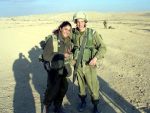
Emily Rose and Aviv Eisenstat in the Israel Defence Forces’ officer’s training school in 2008. (photo from Emily Rose)

When Emily Rose, 28, moved to Israel almost 10 years ago, her plan was to serve in the Israel Defence Forces and then return to Winnipeg. It didn’t happen quite as planned.

Rose was born in Odessa, Tex., and grew up in Winnipeg. Taking a similar road as many Jewish kids in the city, Rose studied at Gray Academy of Jewish Education (GAJE).

“The Winnipeg Jewish community is truly saturated with role models for social justice and it had a major impact on me growing up,” said Rose. “I grew up watching my aunt, Faye Rosenberg, who works for our Jewish community, help bring hundreds of Jews to Winnipeg from Argentina, where they suffered from antisemitism, and watching my best friend’s dad work tirelessly in court to help victims of residential schools receive compensation from the government.

“Winnipeg is an incredibly Zionist and supportive community,” she added. “The longer I am away, the more I appreciate what a wonderful community it really is.”

When Rose was 14, she went to Israel on a Jewish Federation of Winnipeg Partnership 2000 (or Gesher Chai) trip, which sent 10 high school students from GAJE to their sister school, Danziger, in Kiryat Shmona.

She fell in love with the city and the people. “My host family had three sisters and I was thrilled because, up until then, I only had big brothers. And, I remember writing to my mom, ‘Now I have three sisters!’ on the first night. I realized at that point that all my new friends in Israel would be going to the army soon and I remember thinking I had the responsibility to do that as well.”

This is what led Rose to move to Israel at the age of 18, starting with a mechina (a pre-military program) in her first year there.

She lived in Sde Boker in southern Israel and volunteered as an English teacher’s aide in an unrecognized Bedouin village. “Can you think of anything more polar opposite to a very cold Winnipeg, Man., than the middle of the Negev Desert?” she quipped.

“Your first year in Israel is always the most challenging, I think. There were a lot of tears. I was the only foreigner in the program, so I had to learn Hebrew very quickly. But, the program itself was also very intense, because we had classes every day and political tours and hikes every month.”

Something Rose was especially thrilled about in Israel was getting to sleep outside. As a child, she eagerly anticipated going to summer camp for canoe trips and sleeping under the stars.

“When you see the stars in the Negev, you really think it’s got to be the best seat in the house,” said Rose. “And, that first year, my roommate used to wonder why I’d always drag my sleeping bag out of our room to sleep outside.”

The next year, Rose joined the IDF as a lone soldier and served as a combat fitness officer. She recalled that some of her trainees used to call her “M&M,” as she was “hard on the outside, but sweet on the inside (and very small).”

She added, “My first job was training infantry soldiers on a combat training base where I worked with a unique battalion of Druze soldiers. The soldiers I worked with spoke Arabic. This really sparked my interest in the language, which is why I studied Modern Standard Arabic (MSA) in school.”

Today, Rose serves in reserve duty in Jerusalem’s Homefront Command. Her job is to communicate with the civilian population in Jerusalem during times of emergency.

A few years after her IDF service, Rose volunteered at the Michael Levin Centre for Lone Soldiers, which helps soldiers before, during and after their service. At the centre, the first thing she was asked to do was to tell those thinking about joining the IDF “don’t.”

Rose explained, “If we couldn’t convince them not to, then we’d help them as much as we possibly could. Nobody told me not to join the IDF, but also no one would have been able to convince me not to. And, the day I joined, I remember I wasn’t nervous – I just knew it was the right decision.

“I also didn’t plan on staying. I thought I’d serve for two years and then return to Canada. Here I am, almost 10 years later.”

After the army, Rose took Middle Eastern studies (along with MSA) at Hebrew University of Jerusalem. She still lives in Jerusalem, where she recently started writing for the Times of Israel.

Just prior to that, she was an editor at Israel National News, where, she said, she mostly wrote the breaking news but also covered longer form stories. “A few weeks ago,” she said, “I broke a story with exclusive footage of a former Australian minister who got caught in a firefight clash between Kurdish forces and ISIS in Iraq.

“The plight of the Kurdish people is an issue that is very close to my heart. I jumped at the chance to write about it. I’m also so proud to say I come from Winnipeg, [as] our Jewish community sponsors Operation Ezra, bringing Yazidi refugees safely to Canada.”

When on leave from the army a few years back, Rose returned to GAJE to speak to the students. When she visited Winnipeg this past summer, some community women stopped to say hello to her and her mom. “One of them told me that her grandson was going to be a lone solider, an IDF paratrooper, this fall … and she said that I’d spoken to him when he was in high school,” said Rose. “That was very nice, like coming full circle.”

Currently, Rose is working on a short story collection, a novel and three plays.

Her first play was presented at the JCC Berney Theatre in Winnipeg in 2006, the year she graduated high school. Called Radyo, it is about a group of high school kids in Kiryat Shmona who run their local high school radio station during the Second Intifada.

“The second play is a children’s musical I wrote called Don’t Touch the Glutch, which was performed as a part of the Next Wave of Musicals Festival in Montreal and then at the Centaur Theatre children’s series in 2013. It’s about a boy who gets lost in the zoo on a school field trip and discovers that the zoo has a whole host of strange creatures that only come out at night. My brother wrote the music and lyrics and I wrote the book. The show has an anti-bullying theme, because it’s a topic we both feel very strongly about.”

When asked about her feelings about Israel, Rose quoted Rabbi Abraham Isaac Kook: “The truly righteous do not complain about evil, but rather add justice; they do not complain about heresy, but rather add faith; they do not complain about ignorance, but rather add wisdom.”

She added, “Israel is in everything I write, in some form or another, and, though I may not always succeed, I try my best to contribute justice, faith and wisdom with my words.

“For now, I love reporting the news as it happens. Israelis, and those who care about Israel, want to stay informed and I feel privileged to be working with a team that is very committed to keeping our readers updated at all times.”

Rebeca Kuropatwa is a Winnipeg freelance writer.

Format ImagePosted on November 11, 2016November 11, 2016Author Rebeca KuropatwaCategories IsraelTags aliyah, IDF, Israel, journalism, Winnipeg
Serving Israel with their life

Serving Israel with their life

From left to right: Murray Palay, Canadian Friends of the Hebrew University national chair; Israel Defence Forces Unit 669 reserve combat soldiers Leehou Porat and Gai Ben Dor; Prof. Yaacov Nahmias, director of the Alexander Grass Centre for Bioengineering at Hebrew U; 669 reserve combat soldiers Bar Reuven and Dotan Braun; CFHU Vancouver chapter president Randy Milner; and CFHU national vice-chair Phil Switzer. (photo from CFHU Vancouver)

Dina Wachtel, executive director of Canadian Friends of the Hebrew University’s Western region, describes the recent fundraising event that attracted more than 300 people to Congregation Beth Israel on July 17 as “a wonderful success.”

The sold-out event raised scholarship funds for outstanding student-soldiers. These individuals are pursuing degrees at the Hebrew University of Jerusalem, as well as performing their miluim, or reserve duty, in the Israel Defence Forces’ elite airborne rescue and evacuation unit known as “669.” The Vancouver event drew a diverse and engaged crowd from the community and included academics and members of local search and rescue groups.

Prof. Yaakov Nahmias, director of the Alexander Grass Centre for Bioengineering at the Hebrew University, kicked off the formal part of the evening’s program with an overview of Hebrew U’s history and accomplishments. Founded in 1918 – 30 years before the establishment of the state of Israel – by illustrious historical figures, such as Albert Einstein, Sigmund Freud and Chaim Weizmann, Hebrew U ranks as one of the world’s leading universities and boasts seven Nobel Prize laureates. According to Nahmias, “when Hebrew U calls, you answer!”

The Grass Centre was established in 2010. Nahmias, who was at Harvard University before returning to Israel, has won several academic awards for his work in liver research and he is particularly proud of the centre’s successes in “educat[ing] a new generation of multidisciplinary innovators and entrepreneurs at the cutting edge of biotechnology and medical science.” He noted that the centre’s 44 affiliated faculty members undertake research that winds up in the world’s leading scientific journals; interest-catching pursuits such as building a liver outside of a body, predicting in vitro fertilization pregnancy rates, and determining “idiosyncratic drug toxicity” (hitherto unexpected adverse reactions to drugs).

Nahmias also outlined the “startup” element of the centre’s work – an aspect that appeals to students with academic ambitions, as well as giving them market experience and engendering an entrepreneurial spirit. The Israeli government has invested $20 million US in BioJerusalem, or “Silicon Wadi,” to support technological innovation. The outcome? Israel is a global leader in medical devices and pharmaceuticals, he said, and this attracts intellectually curious science students who are also seeking opportunities in business, medicine and engineering. The biodesign program feeds directly into Israel’s economic success and reputation as a technological powerhouse. Remarkable and revolutionary projects to date, he said, include the creation of a specialized infrared gun to facilitate intravenous insertions; digitally made dentures that are inexpensive and quick to produce; and a new 60-second life-saving procedure that improves stabbing victims’ chances of survival by preventing suffocation caused by collapsed lungs.

Nahmias concluded his presentation by highlighting bioengineering as “one of the most fascinating areas, especially for the future of Jerusalem as a city and Hebrew University as the leading university in Israel.” He announced that plans are underway to build a large, new institute on the Givat Ram campus to house the biodesign program.

photo in Jewish Independent - Event emcee and Hebrew University alumna Nava Rosenberg
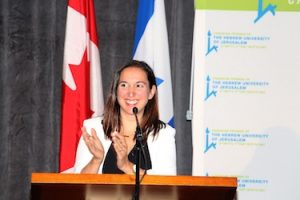
Event emcee and Hebrew University alumna Nava Rosenberg. (photo from CFHU Vancouver)

The evening’s lecture was punctuated with a musical interlude from Vancouver-based Israeli composer and guitarist Itamar Erez. Recipient of the Landau Prize in 2014, as well as the ACUM Prize for special achievement in jazz, Erez’s musical talents blend jazz, flamenco and the sounds of the Middle East.

Following Erez’s performance, four extraordinary young Israelis took centre stage. They detailed their personal experiences serving in the IDF’s 669 and how the service has impacted their lives.

The unit, which accepts only 50 recruits each year out of 10,000 applicants, was established in 1974 following the Yom Kippur War. It is referred to as the “guardian angel of the Jewish people” because it rescues soldiers and civilians alike, both within and beyond Israel’s borders. The unit’s motto is, “Thou didst call in trouble and I rescued thee” and, in the last 40 years, the unit has rescued more than 10,000 injured and saved thousands of lives. Rescue operations are generally extremely difficult and dangerous.

Bar Reuven, Leehou Porat, Dotan Braun and Gai Ben Dor impressed upon the crowd the unique and challenging lifestyle of a Unit 669 reservist, who is “on-call 24/7” and serves an average of 30 to 45 days a year “in peacetime.” When summoned, a civilian university student is instantly transformed into an elite reservist on a mission that can be anywhere in the world. All personal commitments are immediately set aside.

According to Reuven, 27, who served as an officer in 669 and founded an alumni association designed to provide much-needed support to discharged soldiers from 669 transitioning to civilian life, you “can go from eating shakshuka [in Tel Aviv] to Gaza in 30 minutes.”

Thirty-year-old Braun, a fifth-year medical student at Hebrew U and a reserve combat soldier and paramedic in 669, recounted walking to class in July 2012, when he received a command to present himself on base within the next 30 minutes. He soon learned that he would be traveling to Burgas, Bulgaria, to treat and evacuate some 42 Israeli tourists who had been targeted in a bus bombing. (Tragically, five Israelis and a Bulgarian bus driver were murdered in that terror attack.)

Serving in the 669 instils Braun with a profound sense of pride in Israel, as “there is no other country that cares about the security of all its citizens and at all times,” he said. He – like others in 669 – is also called upon to come to the aid of non-citizens in life-threatening situations, including rescuing sailors in the Mediterranean or treating casualties of natural disasters in far-flung corners of the world.

Braun emphasized that life for 669 reservists, in particular, “is never routine.” Porat, 28, who is both a reserve combat soldier in Unit 669 and a student at Hebrew U, underscored this fact by recounting – with the aid of select video footage – a harrowing evening of back-to-back rescue missions that included evacuating an Israeli soldier from Gaza who had been gravely wounded in an axe attack; responding to a serious car accident that caused seven fatalities; assisting a pregnant Bedouin woman in the advanced stages of labor and whose house had just been washed away by floods; and rescuing a number of individuals trapped in or on cars swirling in raging floodwaters and high winds.

Despite the challenges of balancing the responsibilities of school, work, family, volunteerism and reserve duty, Reuven, Porat, Braun and Ben Dor were all steadfast in their commitment to their unit, and to serving their country and fellow citizens in times of crisis.

It was evident that these four speakers have indeed internalized the core values of the unit, described by Reuven as assisting those in need, social responsibility, and helping make Israel and her people stronger. He engages these values to guide him in managing his Cat 669 Alumni Association, a group that provides emotional, psychological and financial guidance, career mentoring and other material support to fellow unit members transitioning – sometimes with great difficulty – to civilian life. This group also draws upon its superior skill set to “pay it forward” in local communities by, for example, teaching emergency first aid.

Thirty-two-year-old Ben Dor is an accountant and lawyer at KPMG in Israel. As part of 669, he is another example of the positive contributions that 669 reservists make to Israeli society. An avid long-distance runner in his teens, Ben Dor responded to an online ad seeking “a runner with soul.” Beza, a blind Ethiopian immigrant wanted to take up running, and Ben Dor (and his father, also a runner) coached Beza over the next several years. Beza competed in a number of international marathons, and ultimately qualified to compete at the Beijing Paralympics, representingIsrael. Ben Dor, his father and Beza have since climbed to Everest Base Camp together and Ben Dor has established an Israeli not-for-profit organization called 180 Degrees, which hosts running groups for people with physical or cognitive disabilities.

Listening to these four young Israelis who are serving their country in truly meaningful ways and learning about the cutting-edge research taking place at the Hebrew University, it is not surprising that the evening’s fundraising event – to support the reserve soldiers in Unit 669 studying at Hebrew U by relieving them of financial worries – was a “wonderful success.”

Format ImagePosted on August 19, 2016August 18, 2016Author Alexis PavlichCategories LocalTags CFHU, fundraising, Hebrew University, IDF, Israel Defence Forces, medicine, R&D, soldier-student
Humanitarian delivery

Humanitarian delivery

Humanitarian goods from Turkey arrive at the Kerem Shalom crossing point into the Gaza Strip; it was the first such shipment to arrive in Israel from Turkey since the reestablishment of ties between the two countries at the end of last month. (photo from Ashernet)

The families of Israel Defence Forces soldiers Oren Shaul and Hadar Goldin – both of whom were killed two years ago in Operation Protective Edge and whose bodies are still held by Hamas – were dissatisfied with the reconciliation agreement between the two countries, as it did not include the return of their sons’ bodies or the return of two Israeli citizens, Avraham Mengistu and Hisham al-Sayyad, imprisoned in the Gaza Strip. Many also objected at the apology by Israel to the Turkish government, together with a $20 million compensation package, over the May 2010 IDF raid on the Gaza-bound Turkish ship Mavi Marmara, which resulted in the deaths of 10 Turkish citizens after the activists on board attacked the IDF soldiers; it was this event that caused the break in Turkish-Israeli relations.

Format ImagePosted on July 8, 2016July 6, 2016Author Edgar AsherCategories IsraelTags Gaza, humanitarian aid, IDF, Israel, Turkey
Yisrael Beitenu in coalition

Yisrael Beitenu in coalition

Avigdor Lieberman takes his seat in the Knesset on the afternoon of May 30 in his new role as defence minister. (photo from Ashernet)

For some time now Prime Minister Binyamin Netanyahu has been trying to enlarge his right-wing coalition government. Apart from holding several important portfolios, including foreign affairs and economy, it was becoming increasingly difficult for the government to carry out its policies with a majority of only one seat in the 120-seat Knesset. As well, within the coalition there was pressure over issues that were of special interest to particular factions.

A Knesset vote of 55-43 approved Avigdor Lieberman’s Yisrael Beitenu (Israel Our Home) party to join the coalition and gives Netanyahu 66 seats. Lieberman was appointed minister of defence. In the Israel Defence Forces, he attained the rank of corporal.

Lieberman’s predecessor was Moshe Ya’alon, a former IDF chief of staff, who had warned of the rising tide of extremism in the Likud and resigned from the party and the Knesset on May 20.

Format ImagePosted on May 31, 2016Author Edgar AsherCategories IsraelTags coalition, IDF, Israel, Lieberman, Netanyahu
Recalling the Six Day War

Recalling the Six Day War

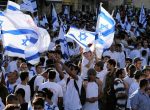
Jerusalem Day celebrations in Israel (photo by Ashernet)

This Jerusalem Day – 28 Iyar (June 5) – marks 49 years since the city split in two by Jordanian occupation became reunited. Nowadays, the names of battle sites are just part of our everyday language – French Hill, Ammunition Hill, Government House – but back in 1967, these were the places where armies were pitted against each other in battle.

We didn’t have Ramat Eshkol then; the hilltops of Gilo were barren and windswept. The Israeli army fought to win territory to the north and the south, until only the walled Old City was still in Jordanian hands.

The war, not of our making, was sparked on April 7, 1967, when the Syrians opened fire on Israeli tractors working near Kibbutz Ha’On, east of the Kinneret. The Israel Defence Forces returned fire, so the Syrians began shelling settlements. Israel Air Force jets were sent to destroy Syria’s artillery batteries. Then Syrian MiGs were sent to intercept them, resulting in dogfights above Kibbutz Shamir. Eventually, six Syrian planes were downed and Syria demanded that Egypt issue a response, which posed a dilemma for president Gamal Abdel Nasser. To prod him, Syria said Israel was amassing forces on the northern border, which was untrue, but Nasser sent massive forces to Sinai on May 14 and 15.

Israel had to call up its reserves, as all United Nations troops had left the Sinai and Gaza. Volunteers swarmed to help with transportation, distributing food and preparing bomb shelters, helping in factories and kibbutzim. Thousands of our soldiers were deployed along the Egyptian border waiting for cabinet to make a decision.

There were frequent meetings between prime minister Levi Eshkol and chief-of-staff Yitzhak Rabin, who said that the IDF was strong and could repel any Arab attack. There were messages from U.S. president Lyndon Johnson calling – as is always the case! – for Israel to show restraint. Egypt also was asked not to escalate the situation.

Eshkol announced that Israel did not seek war, but to no avail. The Egyptians closed the Tiran Straits. On June 5, the war began. Two hundred IAF jets destroyed the entire air forces of Egypt, Syria and Jordan: 374 planes were destroyed on the ground and the rest in dogfights. Israel had complete aerial supremacy during the six days of battle.

On the ground, the IDF entered Sinai in three columns. Jordan started shelling Jerusalem, firing day and night, resulting in many casualties, while Syrian jets raided Haifa Bay and northern settlements.

On June 6, our paratroopers surrounded the Old City and, at 10 a.m. on June 7, they broke through the Lions’ Gate, liberating the Western Wall and the Temple Mount. Lt.-Gen. Motta Gur stood near the Wall, and announced on the radio: “The Temple Mount is in our hands!”

After hours of fierce battles, the paratroopers burst into tears. According to Mordechai Rechschafner, a volunteer from Australia, “There was no sense of jubilation. We had lost too many friends. We had paid for our victory with blood and sacrifice.” When Maj.-Gen. Shlomo Goren, the chief military rabbi, arrived at the Kotel, he blew the shofar and said a prayer: “This is the day we have been yearning for. Let us rejoice in it!”

The Six Day War ended two days later, after the Israel Navy conquered the Tiran Straits and seized Egyptian army bases and airfields in Sinai, and Israel captured the Syrian fortified posts. When the Golan Heights was conquered, the war ended.

There was both great euphoria and terrible sadness. Jerusalem was the focus of the greatest celebration, but a great toll had been exacted. All day the radio played Naomi Shemer’s “Jerusalem of Gold” – it became a victory anthem.

It was three years later that I arrived with my husband and four children in Jerusalem. Forty-six years have passed, and my love for the city has deepened every day. There have been hard times and there was heartache when each of our children served in the army. When our son was a paratrooper in Lebanon, we questioned whether we had made the right decision in bringing them from the safety of their birthplace Australia. Now, most of their children have served in the army or are soon to be inducted, but none of them has ever felt we made a wrong decision. They grew up in Jerusalem and know as we do that it is special. Our feet walk over the stones that King David danced on. We pray at the Western Wall where the Holy Presence, the Shekhinah, still lingers. We travel roads on which kings, soldiers, priests and other holy men have traveled for thousands of years, century after century. Every day, we bathe in the unique quality of golden light that artists have striven to capture.

Each neighborhood in Jerusalem is different. Quiet alleyways that meander, bustling markets filled with the color and spicy smells of the Middle East, walled courtyards softened with a glimpse of greenery. Holy sites where prayers are whispered and blessings invoked. Quiet hills silhouetted with pine trees. Graveyards for the old and military cemeteries for the young. Parks where children laugh and dimpled babies are wheeled in prams. So ancient, and yet also a modern metropolis where people work, play, shop, drive, argue and love.

This Jerusalem Day, as I have for more than four decades, I will thank G-d for the privilege of living here and pray for the peace of Jerusalem forevermore.

Dvora Waysman is a Jerusalem-based author. She can be contacted at [email protected] or via her blog, dvorawaysman.com.

Format ImagePosted on May 27, 2016May 25, 2016Author Dvora WaysmanCategories Op-EdTags IDF, Israel, Jerusalem Day, Six Day War

The story of Miriam Peretz

Those of us who live and work in Israel as journalists and book reviewers for international publications often have to wait until an Israeli bestseller is translated from Hebrew into English. I, for one, am very excited when this occurs, and especially for a biography like Miriam’s Song: The Story of Miriam Peretz (Gefen Publishing House, 2016) by Smadar Shir.

book cover - Miriam’s SongShirat Miriam was published in Israel in 2011 and became a bestseller, with more than 20,000 copies sold. It is Peretz’s story, as recounted to Shir, who is a prolific author and composer, as well as a senior journalist at the newspaper Yedioth Ahronoth.

Peretz was born in Casablanca, where her family lived until she was 10 years old. In 1963, they immigrated to Israel, initially living in an immigrant camp in Beersheva. After graduating high school, Peretz went to Ben-Gurion University and became a teacher.

When she was 21, she met Eliezer Peretz, who was 31, also Moroccan. They married, and he returned to his work in Sharm el-Sheikh. She eventually joined him there, until the city was evacuated. Meanwhile, she began teaching, and they started their family, ultimately having six children.

In November 1998, Uriel, their 22-year-old son, a Golani (special forces) officer was killed in Lebanon, while in the army. Peretz kept going.

“My husband was overcome with sadness and wouldn’t go to work, but I had no choice but to continue functioning,” she says.

Peretz got a master’s degree in educational administration. Her second son joined the army, while she and her husband continued processing their grief for Uriel. She began visiting schools and military bases to talk about her son.

In 2005, her husband died – only 56 years old. And then, in March 2010, her son, Eliraz, married with four children, was killed while in the army.

In December 2010, then-Israel Defence Forces Chief of General Staff Lt.-Col. Gabi Ashkenazi awarded her a medal of appreciation. He said: “Miriam’s ability to continue to express her deep pain and channel it into a contribution to the education and formation of future generations, serves as an example and model of inspiration for us all.”

The next chapters of Miriam’s Song are told by each of Peretz’s four surviving children.

Miriam left her principal position after 27 years to become a Jerusalem district supervisor with the education ministry. After Miriam’s Song was published in Hebrew, Peretz began to travel to the United States for the organization Friends of the Israel Defence Forces. In 2014, she was a torchbearer on Israel Independence Day.

For a feature on International Women’s Day this year in the Jerusalem Post, Peretz was interviewed and photographed along with two other mothers who had each lost a son. Journalist Tal Ariel Amir writes, “these three courageous women have risen from the ashes of their despair.”

People ask what it is like to live in Israel. Although Miriam’s Song is replete with courage, faith and commitment, it is also about tragedy and sacrifice. It is a book to read to understand what it means to be a woman, a wife, a mother in Israel today.

Sybil Kaplan is a journalist, foreign correspondent, lecturer, food writer and book reviewer who lives in Jerusalem. She also does the restaurant features for janglo.net and leads weekly walks in English in Jerusalem’s market.

Posted on May 6, 2016May 5, 2016Author Sybil KaplanCategories BooksTags army, conflict, IDF, Israel, Miriam's Song, Mother’s Day, Peretz, Smadar Shir
Anti-tunnel technology

Anti-tunnel technology

(screenshot of IDF Twitter page via israel21c.org)

Smugglers of drugs and illegal migrants using tunnels along the U.S.-Mexico border may want to keep an eye on Israel. The American government, after all, is co-sponsoring the tunnel-detection technology now being developed by Israeli engineers.

Described by the Hebrew media as the underground equivalent of Iron Dome anti-missile defence system, this latest innovation made world headlines upon the announcement that the Israel Defence Forces (IDF) uncovered a two-kilometre-long, concrete-lined tunnel on Israel’s Gaza border.

While the Israeli government has been funding its development for five years, few details about the new system have been reported until now. News reports say that up to 100 companies – including Iron Dome’s developers, Elbit Systems and Rafael Advanced Defence Systems – are involved in assembling the detection system. Military units, Shin Bet security agency officers, civilian engineering, infrastructure contractors and tunnel construction experts are also credited with helping.

“The search for tunnels is at the top of our priority list … and we will not spare any efforts,” said Defence Minister Moshe Ya’alon, following the IDF announcement that it found a tunnel extending from southern Gaza into Israeli territory.

The fine details about how the anti-tunnel technology works are still under wraps but, according to Yedioth Ahronoth, dozens of Israeli-developed sensors gather information from the field and transmit it to a control system for analysis using advanced algorithms. The system, says the report, can identify the length of the tunnel and its exact location without false alarms.

“We do whatever we can to find a technological solution,” Maj. Gen. Nitsan Alon, head of the IDF operations directorate, said at a briefing. “Dealing with the phenomenon of tunnels is very complex, and the state of Israel is a world leader in this field. This battle demands from us persistence, creativity, and also responsibility and good judgment.”

According to a report in Defence News, Israel’s Ministry of Defence has invested more than $60 million in anti-tunnel technologies. In February of this year, the Financial Times reported that the United States will provide $120 million over the next three years to help develop complementary technologies.

An Israel Today report says Israel is building a counter-tunnel barrier along its Gaza border that “will also feature a state-of-the-art fence, complete with sensors, observation balloons, see-shoot systems and intelligence gathering measures, as well as an underground wall.”

A video of the IDF discovering a Hamas tunnel in southern Israel can be found at youtube.com/watch?v=yETrQXh2FZU.

Israel21C is a nonprofit educational foundation with a mission to focus media and public attention on the 21st-century Israel that exists beyond the conflict. For more, or to donate, visit israel21c.org.

Format ImagePosted on May 6, 2016May 5, 2016Author Viva Sarah Press ISRAEL21CCategories WorldTags defence, IDF, Israel, security, smuggling, technology, tunnels

Our sons, daughters

What happened last month in Hebron is heartbreaking. A young soldier is being vilified for killing a terrorist who had come for the sole purpose of murdering Jews. He is now facing charges of manslaughter.

One of the most difficult things about our decision to make aliyah was knowing our four children would have to serve in the Israel Defence Forces. After all, it was our decision, not theirs, to leave the safety, security and comfort of their birthplace, Australia, to make a new life in Israel.

That was in 1971, two years before the Yom Kippur War erupted. But we stayed, and they grew up here knowing that it was a duty, even a privilege, to set aside their ambitions temporarily and devote a few years to serving their country. They became Israeli gradually and, by the time they were 18, regarded army service as a natural rite of passage.

Nevertheless, as a mother, I found it hard. I will never forget the trauma of standing on the beach at Palmachim (near Ashkelon) with the other parents and watching our younger son make his first parachute jump. Forty young paratroopers jumped that day. Because of the altitude of the planes, it was impossible to see our sons’ faces until they almost landed. We watched breathlessly to see the parachutes open, one by one. I thought each one was my son and, finally came to the realization that they were all my sons.

The years passed. Our sons and daughters enlisted, with one son fighting in Lebanon. They went to university, married, had children of their own. It was lovely to be grandparents of babies, toddlers and then young children. But now, most of them are grown up and following in their parents’ footsteps. Some have completed army service, some are currently serving and some will soon reach that significant age of 18.

We have attended numerous ceremonies where we have watched hundreds of boys take an oath of allegiance. We sang “Hatikvah” with that catch in the throat one gets at moments of high emotion. We laughed as they threw their caps in the air, signaling the end of the formal proceedings. We were so proud of them, and so afraid of what they might be called to do, what decisions they would have to make.

Just like the young soldier in Hebron.

To every parent whose children have served in the IDF, how can our hearts not go out to this young soldier’s family?

Every soldier is our son, our daughter.

Dvora Waysman is a Jerusalem-based author. She can be contacted at [email protected] or through her blog dvorawaysman.com.


Posted on April 8, 2016April 6, 2016Author Dvora WaysmanCategories IsraelTags Hebron, IDF, Israel, soldier, terrorism
Responding to emergencies

Responding to emergencies

Israeli field hospital personnel look after those injured in the earthquake in Nepal. (photo by Sam Amiel)

Cardiac surgeon Lt.-Col. (res.) Dr. Ofer Merin is deputy director general of Shaare Zedek Medical Centre and lectures at the Hebrew University in Jerusalem. He heads the Israel Defence Forces Home Front Command’s field hospital, and was part of the IDF’s relief efforts in Haiti after the 2010 earthquake, in Japan after the 2011 tsunami, in the Philippines after the 2013 typhoon and in Nepal after the earthquake in April this year. With various colleagues, he has written about these experiences, as well as about the provision of trauma care at Shaare Zedek.

From the New England Journal of Medicine, March 2010: Within two days of the earthquake in Haiti in January 2010, Israel had sent “a military task force consisting of 230 people” who “landed in Port-au-Prince 15 hours after leaving Tel Aviv and began to deploy immediately…. In its 10 days of operation, the field hospital treated more than 1,100 patients.”

From the Journal of the American Medical Association, July 2015: After the earthquake in Nepal in April 2015, the IDF sent a medical team of 126, and the field hospital was “deployed as a stand-alone facility 82 hours after the earthquake.” Over 11 days, “we treated 1,668 patients, performed 85 operations and delivered eight babies.”

From the Lancet, April 2015: “There were 11 terror attacks in Jerusalem, Israel, between October–December 2014 alone. Two of the injured terrorists arrived at our institution and, following standing triage protocol, we prioritized one terrorist to undergo surgery first since his medical condition was more critical than that of the victims.”

photo - Temple Sholom Rabbi Dan Moskovitz with Dr. Ofer Merin when Merin was in Vancouver in August
Temple Sholom Rabbi Dan Moskovitz with Dr. Ofer Merin when Merin was in Vancouver in August. (photo by Karen James)

These are but a few examples of the work Merin and his colleagues do, and the challenges they face. When Merin was in Vancouver recently, he shared some of his experiences and discussed the ethical issues surrounding trauma care. He spoke to the Jewish community on Aug. 20 and to physicians in the trauma unit at Vancouver General Hospital the day prior.

Dr. Rick Schreiber – professor of pediatrics at the University of British Columbia, director of the B.C. Pediatric Liver Transplant Program and president-elect of the Canadian Association for the Study of the Liver – was the catalyst for Merin’s visit. Yet his connection to Merin was not, as it first might appear, through his work as a fellow medical professional, but through Merin’s wife, Ora.

Schreiber was on an adult March of the Living mission earlier this year that was organized by the Montreal Jewish community.

“I’m originally from Montreal. I’ve been out here about 20 years,” said Schreiber, who is very involved with Jewish causes in Israel, overseas and elsewhere, including here with the Jewish Federation of Greater Vancouver. On this recent mission, he explained in a phone interview with the Independent, all of the tours and activities in Israel were organized by Ora Merin and her company,

Giant Leaps. “I was very impressed with how the program was laid out for the Israel aspects of the mission and the level of the people [we met] and the things that we did. We got to places that most people wouldn’t get to….”

Ofer Merin attended the mission’s closing dinner with his wife. With medicine in common, he and Schreiber started talking, and Merin’s involvement with the Israel Defences Forces disaster response team came up.

The next day, as Schreiber was leaving Israel, he saw Ora Merin again. She told Schreiber that her husband had left for Nepal, which had just experienced an earthquake. “I got to tell you,” said Schreiber, “within six hours, they had up and going a launch – and they bring everything.… It’s amazing what the Israelis do to be first responders, and they are recognized around the world as being the best. They get there very quickly and they set up all the units, like an intensive care and operating tents and all this kind of stuff, and triage, and get rescue things going long before other countries are even getting their finances together.”

“It’s amazing what the Israelis do to be first responders, and they are recognized around the world as being the best. They get there very quickly and they set up all the units, like an intensive care and operating tents … long before other countries are even getting their finances together.”

During that conversation, Ora mentioned that their family (she and Ofer have four adult children) was going to be in the United States – Ofer has a brother in Seattle – in the summer, and Schreiber suggested they think about coming up to Vancouver on that trip. He said that it would be good for her, because of her travel agency, to meet with Federation, which runs missions to Israel, and maybe her husband could give a talk on his work. “So, that’s how that all started, back in Israel, back last May,” he said.

In addition to the community meetings and talk, Schreiber also organized for Ofer Merin to speak at VGH. “There is a big group of trauma people at VGH, and they jumped on this because they had heard of him and they knew of him, and we organized for him to give rounds…. There was very good attendance at that rounds, and he talked about what he does. But he didn’t talk about all the people they deal with and how they set up, he talked about a lot of ethical things, like how do you decide to save this person versus that person – you only have limited space to save people.”

Merin spoke at VGH about treating such large numbers of injured after a natural disaster, and about handling the stress of that, said Schreiber. “The next thing he talked about, the ethics. You’re not able to provide the same level of care as you’re accustomed to, like we supply for trauma people in Vancouver, we can’t give the same level of care … you’ve got to treat people and turn them over quickly, so you can treat the next person.”

Merin also discussed how, at Shaare Zedek Hospital in Jerusalem, they have to treat victims of terror attacks, including, at times, the terrorist. Of the victims and the perpetrator(s), who do you take care of first? At Shaare Zedek, Merin said, such decisions are made on the basis of triage, who is the most badly injured.

The Independent caught up with Merin by email after his Vancouver visit.

JI: What interested you in cardiac medicine/surgery versus other specialties? Did you always want to be in medicine?

OM: My decision to go into medicine was relatively late, in my early 20s, not something I was born with. My decision to go into cardiac surgery, I guess, was based first on my “nature” to choose something surgical – more adrenalin, very quick results. Cardiac surgery in specific is a great combination of both surgery and the need of good clinical and physiology understanding.

JI: The burnout rate for doctors in general is quite high. It must be higher for trauma physicians. How do you (and/or your colleagues) manage the stress?

OM: I would divide [my response]. There are things done on the group level – discussions, sharing, etc. Especially these days in Jerusalem, there is an extra challenge – dealing with treatment of terror victims, and many times treatment of the terrorists themselves…. We have a psychologist who is doing some group work especially with the ER people and the intensive care unit. And, on the personal level, everyone has to find his ways to vent. I jog almost every day. For me, it’s a good way to relax. In missions abroad, I write every day. Also a great way to vent.

JI: The enormity of being part of a disaster-response team is almost beyond comprehension for anyone who has not had the experience. If it’s possible to outline a general order of events, from the time a natural disaster hits to when the Israeli unit is on the ground in another country providing care, could you please share the main points?

OM: One of the important things is to work in parallel. We bring in the team way before there is a full understanding of the scale of the disaster, so we are prepared before there is a governmental decision to send a team. Once a decision is taken, we are prepared to leave. We send immediately a small forward team, which can report back, and prepare whatever is needed for deployment. We drill every year, so we maintain a high level of preparedness.

JI: In a couple of articles, you mention collaboration/integration with local facilities in a disaster-response situation. What types of factors enter the decision of where the Israeli unit fits into the overall aid effort?

OM: To be honest, in the last natural disasters around the globe, Israel is almost always the largest and first to be on ground. Therefore, we communicate with the local health providers and make a mutual decision where it is best to deploy.

The decision if to deploy as a self-sufficient unit or to operate (like in the Philippines) as an integrated unit is based mainly on the question if the local services are still functional. If they are, it is many times better to assist them and not “compete” with them, as we are arriving for a short term.

Format ImagePosted on September 11, 2015September 9, 2015Author Cynthia RamsayCategories WorldTags disaster relief, IDF, Israel Defence Forces, Ofer Merin, Rick Schreiber, Shaare Zedek
Fighter returns to Israel

Fighter returns to Israel

Former British Columbian Gill Rosenberg spent nine months fighting the Islamic State in Iraq and Syria. (photo from Gill Rosenberg)

Gill Rosenberg returned to Israel a month ago, after spending nine months fighting the Islamic State in Iraq and Syria (ISIS).

Born in Surrey, Rosenberg, 31, grew up in White Rock and graduated from King David High School before continuing her studies at B.C. Institute of Technology, finishing a program in airport operations management. She moved to Israel in 2006 to serve in the Israel Defence Forces, volunteering through a program called Mahal (the overseas volunteer IDF program). During the course of her service, she made aliya. She now lives in Jerusalem.

“I served as a search and rescue NCO (non-commissioned officer) and as an instructor at the Search, Rescue and Civil Defence School,” Rosenberg told the Independent. “It was a great experience.”

She also spent time training the Kenyan Armed Forces and helped them establish a disaster response unit in their country.

Growing up in British Columbia taught Rosenberg “to respect the diversity of culture, beliefs and religion,” she said. “As well, being raised Jewish, I had a strong education on the Shoah and participated in the March of the Living, visiting the concentration camps in Poland.”

After that experience, Rosenberg was invited to speak at the B.C. Legislature on behalf of Jewish youth when the government voted to enact Holocaust Memorial Day legislation, when Ujjal Dosanjh was premier.

Intolerance and totalitarianism are two things that she has vowed to never tolerate. “I fully believe that when we say ‘Never again,’ we don’t mean just for us Jews,” she said. “We can’t stand by and stay silent to any genocide taking place – and that’s what I saw happening to the Yazidi population on Sinjar Mountain. The Christians and Yazidis in Iraq have lost the most in this war.”

Rosenberg fought in Syria with the YPG/YPJ (Kurdish militia groups) for three months and then headed to Iraq for six months, fighting with the Assyrian Christian militia, Dwekh Nawsha.

“In Syria, I was in Serekaniye and it was a pretty static front over the winter months,” she said. “It was bitterly cold, always raining, muddy, and darkness like I’ve never experienced anywhere else.

“There’d be a firefight at least once a day, but it was mostly from a distance of over one kilometre. My first day on the frontline, a suicide bomber blew himself up about 50 feet from our checkpoint. He intended to get closer, but because of the deep mud, his vehicle got stuck and, thank God, he was the only casualty that day.

“In Iraq,” she continued, “I was at a frontline 25 kilometres from the city centre of Mosul. They were in Baqofa and Telskuf, and the next town over, called Batnay, was already Daesh-occupied.

“The Daesh [ISIS] are hitting that position with mortars, Katyusha rockets and heavy machine gun fire daily and especially at night. They attempt to ambush, but both Dwekh Nawsha and the Peshmerga at that frontline have prevented any advancement of ISIS forces.”

Rosenberg said she was treated with the utmost respect and not any differently than other fighters. “They feel like the world has forgotten them, so for an Israeli Jewish woman to pick up a weapon and stand with them on the frontlines meant a lot to them,” she said. “I still keep in touch with the leader there and he tells me I’ll be a part of them forever, that we’re family.”

As she was fighting, Rosenberg wore the Canadian flag on her uniform proudly. “I feel that Canada is one of few countries that still stands tall and supports democracy and freedom, and it isn’t afraid to condemn those committing evil in this world. And that’s something to be very proud of.”

Earlier in the interview, she noted, “Stephen Harper is the only world leader condemning the nuclear deal with Iran and speaking out against the evils of this world and standing with our best allies.”

Since returning to Israel, Rosenberg has met with several members of the Knesset and shared with them some of her experiences. She also has been approached by several nongovernmental organizations working in Syria and Iraq for her help with their efforts.

“I want to continue helping women and children in Syria and Iraq,” she said, “so I have to determine where my experience and abilities can be best put to use. As far as returning to the frontline, I have no plans to return at this stage.”

Rosenberg was very clear that she does not see herself as a recruiter. “I very adamantly would advise against anyone traveling to the region to fight,” she said. “There are many ways to help, including a Montreal Jewish foundation called CYCI (the Liberation of Christian and Yazidi Children of Iraq), which are buying and liberating the children that are sold like sheep in the market in ISIS-controlled areas.

“Pikuach nefesh [to save a life] is an obligation we have as Jews, and the Talmud even requires us to spend money to save a life if we have that ability,” she said. “This organization [CYCI] gives us that ability.”

Another Canadian organization, also coming from the Jewish community, is Rape Is No Joke (RINJ). This group provides medical care to women and children who have been victims of rape and other brutality in Syria and Iraq.

From what Rosenberg has been hearing, the dynamics on the battlefield have changed in recent weeks, with the Iranians making gains in Iraq against ISIS. However, she was quick to add, “They might be fighting ISIS just as I was, but, ultimately, they’re not a friend and I believe they’re a much greater threat than is ISIS.”

Reiterating her discouragement of anyone traveling to the region to fight, Rosenberg said, “I believe that if we don’t stop ISIS now, they’ll be at our doorstep before we know it. ISIS are geniuses at social media and media and know how to look strong and strike fear in the hearts of the West.

“I can tell you, from my personal experience on the ground, that they fight in a very cowardly manner and often run away when challenged. This is especially true when it’s the women of the YPJ. Their beliefs are such that they think if they’re killed by a woman, they will go to hell. So, my only question is this, What happens to them when that woman is also Jewish and Israeli?”

Rebeca Kuropatwa is a Winnipeg freelance writer.

Format ImagePosted on August 21, 2015August 19, 2015Author Rebeca KuropatwaCategories WorldTags Gill Rosenberg, IDF, ISIS, Islamic State, Israel, Middle East, terrorism

Posts pagination

Previous page Page 1 … Page 4 Page 5 Page 6 Page 7 Next page
Proudly powered by WordPress