Skip to content
  • Home
  • Subscribe / donate
  • Events calendar
  • News
    • Local
    • National
    • Israel
    • World
    • עניין בחדשות
      A roundup of news in Canada and further afield, in Hebrew.
  • Opinion
    • From the JI
    • Op-Ed
  • Arts & Culture
    • Performing Arts
    • Music
    • Books
    • Visual Arts
    • TV & Film
  • Life
    • Celebrating the Holidays
    • Travel
    • The Daily Snooze
      Cartoons by Jacob Samuel
    • Mystery Photo
      Help the JI and JMABC fill in the gaps in our archives.
  • Community Links
    • Organizations, Etc.
    • Other News Sources & Blogs
    • Business Directory
  • FAQ
  • JI Chai Celebration
  • JI@88! video

Recent Posts

  • האלימות בישראל מורגשת בהרבה מגזרים
  • טראמפ עוזר דווקא לנושא הפלסטיני
  • New rabbi settles into post
  • A light for the nations
  • Killed for being Jewish 
  • The complexities of identity
  • Jews in time of trauma
  • What should governments do?
  • Annie will warm your heart
  • Best of the film fest online
  • Guitar Night at Massey
  • Partners in the telling of stories
  • Four Peretz pillars honoured
  • History as a foundation
  • Music can comfort us
  • New chapter for JFS
  • The value(s) of Jewish camp
  • Chance led to great decision
  • From the JI archives … camp
  • עשרים ואחת שנים להגעתי לונקובר
  • Eby touts government record
  • Keep lighting candles
  • Facing a complex situation
  • Unique interview show a hit
  • See Annie at Gateway
  • Explorations of light
  • Help with the legal aspects
  • Stories create impact
  • Different faiths gather
  • Advocating for girls’ rights
  • An oral song tradition
  • Genealogy tools and tips
  • Jew-hatred is centuries old
  • Aiding medical research
  • Connecting Jews to Judaism
  • Beacon of light in heart of city

Archives

Follow @JewishIndie
image - The CJN - Visit Us Banner - 300x600 - 101625

Tag: Ofer Merin

How hostages survive

How hostages survive

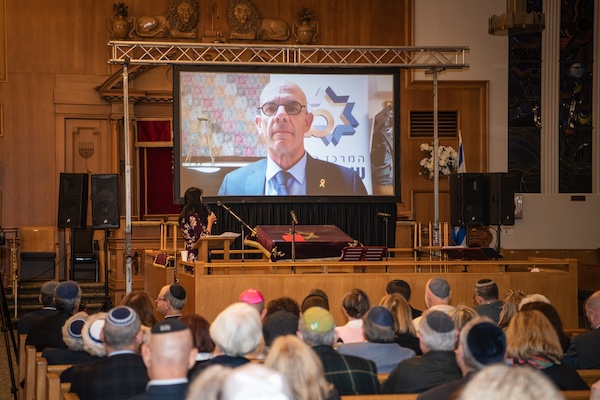
Dr. Ofer Merin, director general of Shaare Zedek Hospital, spoke at the event via video. He was expected to be in Vancouver in person but stayed in Jerusalem due to intelligence that Iran might strike Israel during the time he was scheduled to be away. (Adele Lewin Photography)

A top Mossad psychologist who has interviewed hostages released from captivity in Gaza explained to a Vancouver audience this month the traits that allow some people to survive and overcome unimaginable conditions.

Dr. Glenn Cohen, who made aliyah in 1982 after growing up in New York, served seven years in the Israeli Air Force as a pilot, then 25 years in the Mossad. His reserve duty has been in the hostage negotiation unit. He spoke at Schara Tzedeck Synagogue Nov. 10 as part of a national tour titled Voices of Resilience. The Vancouver event marked the inauguration of the Canadian Shaare Zedek Hospital Foundation Western region. The hospital’s director general, Dr. Ofer Merin, spoke via video from Jerusalem.

The first hostages to be released after Oct. 7 were vital to intelligence-gathering for Israel’s military, but Cohen quickly realized that the psychological well-being of the former hostages presented challenges to obtaining the information that could help locate and free others.

“We have two goals here,” said Cohen. “One is to get lifesaving, critical intelligence about the other hostages. But, at the same time, these people came out of captivity. We have to give them a soft landing and tender loving care.”

Cohen wrote a protocol to receive civilians from situations like these.

When more than 100 hostages were released through an agreement last November, Cohen and his team of 30 psychologists met each one and debriefed them. 

“The first thing we asked them was, who did you see?” Cohen said. “What condition physically, mentally? And,  with this information, we brought a sign of life for some people who had no idea if their loved one was alive or not.”

Some news was good, while other reports confirmed the worst fears of some families.

Cohen has trained soldiers for the potential of being held hostage and he was surprised that, without this sort of training, human instinct told some of the hostages how to respond.

A core trait among those who successfully survive such scenarios, he said, is hopeful certainty that they will be released. Too much optimism, though, can lead to crushing depression when hopes are not met. Those who are certain of imminent release or rescue may succumb to heartbreak and even give up on life as days and weeks tick by, he said.

It is necessary, Cohen said, to balance hope with realistic expectations.

A 16-year-old boy who was among the released hostages remembered the story of Gilad Shalit. The boy told himself: “How long was he in captivity? Five years. I’m in for five years. A day less is a bonus.”

“A 16-year-old kid,” said Cohen. “Wow. What type of resilience is that? He didn’t go through any POW training. He was just a 16-year-old Israeli boy and he’s got that in his DNA.”

Maintaining any sense of control or normalcy is a small victory. Some hostages counted the days and weeks by listening to the muezzin, the Muslim call to prayer, which is different on Fridays. A seven-year-old boy was given three dates to eat each day, and he kept the seeds to measure how many days he had been in captivity. Others made fun of their captors, secretly referring to them by disparaging names.

Generally speaking, Cohen explained, it is psychologically better for a hostage to be held with other captives, even if underground without natural light, than to be held above ground alone.

Also advantageous, Cohen said, is recognizing the captors as human beings.

“There is another person on the other side,” he said. “Even though we call Hamas animals or … monsters or whatever, the point is, they are human beings who can be influenced. When you realize that, that this is an interpersonal situation, that gives you power.”

Cohen shared one story of hostages who told their captors, “Put your gun down, you’re scaring the children,” and they did.

In another instance, a woman with a cardiac condition asked to get some exercise by walking down the tunnel she was held in. She came across two other hostages and asked why they couldn’t be brought together. They were.

“A lot of the hostages actually managed to bond with their captors and because of that bond they survived better,” said Cohen. 

News of such incidents has led to unfortunate events, he said.

“I heard not too long ago that hostages were cursed on the streets of Israel because they talked about their relationship with the hostages and didn’t call them animals,” Cohen said. “I feel like I have a mission now to educate people to realize that if people are speaking like that, as a hostage, it means it’s a healthy survival mechanism and God forbid we be critical of any of them.”
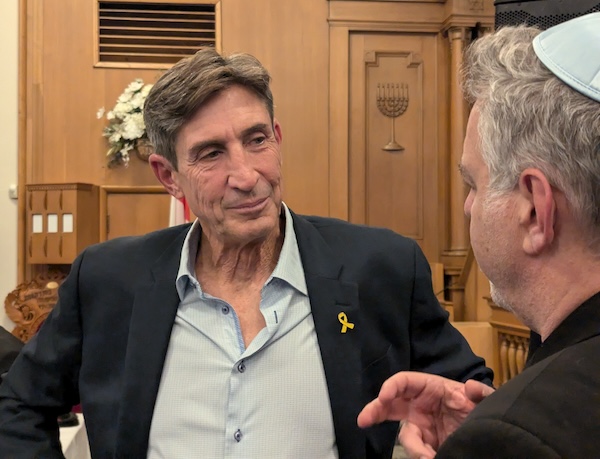
photo - Dr. Glenn Cohen speaks with an audience member at Schara Tzedeck Synagogue Nov. 10. He was in Vancouver as part of a national tour titled Voices of Resilience
Dr. Glenn Cohen speaks with an audience member at Schara Tzedeck Synagogue Nov. 10. He was in Vancouver as part of a national tour titled Voices of Resilience. (photo by Pat Johnson)

Merin, the director general of Shaare Zedek Hospital, was expected to be present in Vancouver but remained in Jerusalem due to intelligence that Iran might strike Israel during the time he was scheduled to be away. Merin also serves as head of the medical intelligence committee involved with the current hostage situation in Gaza.

“The day after the war started, we opened a designated emergency room just to treat the many, many hundreds of patients who came in the first week in need of mental health support,” he said, estimating that tens of thousands of Israelis will be diagnosed with some form of post-traumatic stress disorder in the coming months.

Amid the extreme physical and mental health demands, the hospital has also faced human resources challenges, with hundreds of staff members called up for duty and 15 experiencing the deaths of immediate family members during the war. The anxiety of having family on the frontlines adds to the stress for everyone, said Merin. The multicultural nature of the staff, which roughly mirrors the demographic makeup of Jerusalem, is also a factor. 

“How do we preserve the cohesion between these people?” he asked. “This is a major daily challenge in times of normal emotions among staff people, how to keep this amazing cohesion of people who are working for years, for decades, shoulder to shoulder together. How to keep it during times of war is a major challenge.”

Hinda Silber, national president, and Rafi Yablonsky, national executive director, of the Canadian Shaare Zedek Hospital Foundation, traveled from Toronto for the event, which was co-chaired by Dr. Marla Gordon and Dr. Arthur Dodek. The evening was presented by Canadian Shaare Zedek Hospital Foundation Western region, in partnership with Congregation Schara Tzedeck. The Jewish Medical Association of BC was the educational sponsor, with King David High School and Hillel BC participating in the program. Schara Tzedeck’s Rabbi Andrew Rosenblatt welcomed the audience. 

“Since Oct. 7, the mental health landscape in Israel has been profoundly affected,” said Ilan Pilo, Western region director of the organization. “The nation is navigating an unprecedented surge in psychological distress as individuals and communities cope with the aftermath of trauma and uncertainty.”

Proceeds from the evening will support a new mental health facility. 

Format ImagePosted on November 29, 2024November 28, 2024Author Pat JohnsonCategories LocalTags Canadian Shaare Zedek Hospital Foundation, fundraising, Gaza, Glenn Cohen, hostages, Israel, Israel-Hamas war, mental health, Oct. 7, Ofer Merin, Schara Tzedeck, Shaare Zedek Hospital

Evening of resilience, hope

In Vancouver, on the evening of Nov. 10, the Canadian Shaare Zedek Hospital Foundation will present Voices of Resilience, featuring Prof. Ofer Merin, director general of Shaare Zedek Medical Centre, and Glenn Cohen, former Mossad psychologist and hostage negotiator. Part of a national tour, the event aims to shed light on the experiences and insights following the tragic events of Oct. 7, 2023.

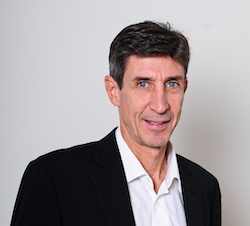
photo - Prof. Ofer Merin, director general of Shaare Zedek Medical Centre
Prof. Ofer Merin, director general of Shaare Zedek Medical Centre. (photo from CSZHF)

Merin completed his fellowship in adult cardiac surgery at Sunnybrook Hospital in Toronto. Upon returning to Israel, he became a pivotal member of the Shaare Zedek team, where he now serves as director general. A colonel in the Israel Defence Forces, Merin has led numerous humanitarian efforts and, as of Oct. 7, 2023, has headed a medical intelligence committee that plays a role in assessing the hostage situation in Gaza.

photo - Glenn Cohen, former Mossad psychologist and hostage negotiator
Glenn Cohen, former Mossad psychologist and hostage negotiator. (photo from CSZHF)

Cohen has served as an air force pilot, Mossad officer, hostage negotiator and special forces psychologist for more than 30 years. Retiring with the rank of colonel and chief of psychology in Mossad, he now trains organizations worldwide using a methodology he developed. During the war that followed Oct. 7, Cohen has served more than 100 days to date in reserve duty, providing critical debriefing for the released hostages.

All proceeds from Voices of Resilience will go to the Healing Minds Campaign, which focuses on extending the mental health support available at Shaare Zedek Medical Centre. This initiative provides specialized training in therapy, post-traumatic stress disorder counseling, psychotherapy and other services for those affected by the Oct. 7 attacks. The centre hopes to increase their mental health team from 14 to 42 professionals to meet the overwhelming demand, an increase that would require $1.6 million Cdn for medical and para-medical training, as well as ongoing staffing costs.

To date, Shaare Zedek has treated more than 700 individuals, primarily IDF soldiers, with injuries ranging from minor to life-threatening. Nearly every patient presents signs of mental trauma, whether immediately or in the weeks following hospitalization. Many young patients have been exposed to traumatic battlefield conditions and the loss of life. Even those who initially report limited emotional impact often show symptoms later. To address this, Shaare Zedek has created a comprehensive emotional trauma care service. Every patient admitted for war-related injuries is evaluated by the psychiatry team, they are monitored throughout their stay and receive counseling prior to discharge, with follow-up care recommendations.

To attend Voices of Resilience in Vancouver on Nov. 10, 7 p.m., visit linktr.ee/voicesofresilience2024. Tickets are $18 ($72 for the VIP meet-and-greet). The location will be provided to registrants closer to the event date. 

– Courtesy Canadian Shaare Zedek Hospital Foundation

Posted on October 25, 2024October 24, 2024Author Canadian Shaare Zedek Hospital FoundationCategories LocalTags fundraiser, Glenn Cohen, Healing Minds Campaign, Israel, mental health, Oct. 7, Ofer Merin, resilience, Shaare Zedek Hospital
Responding to emergencies

Responding to emergencies

Israeli field hospital personnel look after those injured in the earthquake in Nepal. (photo by Sam Amiel)

Cardiac surgeon Lt.-Col. (res.) Dr. Ofer Merin is deputy director general of Shaare Zedek Medical Centre and lectures at the Hebrew University in Jerusalem. He heads the Israel Defence Forces Home Front Command’s field hospital, and was part of the IDF’s relief efforts in Haiti after the 2010 earthquake, in Japan after the 2011 tsunami, in the Philippines after the 2013 typhoon and in Nepal after the earthquake in April this year. With various colleagues, he has written about these experiences, as well as about the provision of trauma care at Shaare Zedek.

From the New England Journal of Medicine, March 2010: Within two days of the earthquake in Haiti in January 2010, Israel had sent “a military task force consisting of 230 people” who “landed in Port-au-Prince 15 hours after leaving Tel Aviv and began to deploy immediately…. In its 10 days of operation, the field hospital treated more than 1,100 patients.”

From the Journal of the American Medical Association, July 2015: After the earthquake in Nepal in April 2015, the IDF sent a medical team of 126, and the field hospital was “deployed as a stand-alone facility 82 hours after the earthquake.” Over 11 days, “we treated 1,668 patients, performed 85 operations and delivered eight babies.”

From the Lancet, April 2015: “There were 11 terror attacks in Jerusalem, Israel, between October–December 2014 alone. Two of the injured terrorists arrived at our institution and, following standing triage protocol, we prioritized one terrorist to undergo surgery first since his medical condition was more critical than that of the victims.”

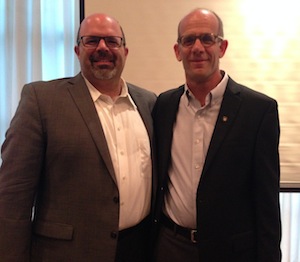
photo - Temple Sholom Rabbi Dan Moskovitz with Dr. Ofer Merin when Merin was in Vancouver in August
Temple Sholom Rabbi Dan Moskovitz with Dr. Ofer Merin when Merin was in Vancouver in August. (photo by Karen James)

These are but a few examples of the work Merin and his colleagues do, and the challenges they face. When Merin was in Vancouver recently, he shared some of his experiences and discussed the ethical issues surrounding trauma care. He spoke to the Jewish community on Aug. 20 and to physicians in the trauma unit at Vancouver General Hospital the day prior.

Dr. Rick Schreiber – professor of pediatrics at the University of British Columbia, director of the B.C. Pediatric Liver Transplant Program and president-elect of the Canadian Association for the Study of the Liver – was the catalyst for Merin’s visit. Yet his connection to Merin was not, as it first might appear, through his work as a fellow medical professional, but through Merin’s wife, Ora.

Schreiber was on an adult March of the Living mission earlier this year that was organized by the Montreal Jewish community.

“I’m originally from Montreal. I’ve been out here about 20 years,” said Schreiber, who is very involved with Jewish causes in Israel, overseas and elsewhere, including here with the Jewish Federation of Greater Vancouver. On this recent mission, he explained in a phone interview with the Independent, all of the tours and activities in Israel were organized by Ora Merin and her company,

Giant Leaps. “I was very impressed with how the program was laid out for the Israel aspects of the mission and the level of the people [we met] and the things that we did. We got to places that most people wouldn’t get to….”

Ofer Merin attended the mission’s closing dinner with his wife. With medicine in common, he and Schreiber started talking, and Merin’s involvement with the Israel Defences Forces disaster response team came up.

The next day, as Schreiber was leaving Israel, he saw Ora Merin again. She told Schreiber that her husband had left for Nepal, which had just experienced an earthquake. “I got to tell you,” said Schreiber, “within six hours, they had up and going a launch – and they bring everything.… It’s amazing what the Israelis do to be first responders, and they are recognized around the world as being the best. They get there very quickly and they set up all the units, like an intensive care and operating tents and all this kind of stuff, and triage, and get rescue things going long before other countries are even getting their finances together.”

“It’s amazing what the Israelis do to be first responders, and they are recognized around the world as being the best. They get there very quickly and they set up all the units, like an intensive care and operating tents … long before other countries are even getting their finances together.”

During that conversation, Ora mentioned that their family (she and Ofer have four adult children) was going to be in the United States – Ofer has a brother in Seattle – in the summer, and Schreiber suggested they think about coming up to Vancouver on that trip. He said that it would be good for her, because of her travel agency, to meet with Federation, which runs missions to Israel, and maybe her husband could give a talk on his work. “So, that’s how that all started, back in Israel, back last May,” he said.

In addition to the community meetings and talk, Schreiber also organized for Ofer Merin to speak at VGH. “There is a big group of trauma people at VGH, and they jumped on this because they had heard of him and they knew of him, and we organized for him to give rounds…. There was very good attendance at that rounds, and he talked about what he does. But he didn’t talk about all the people they deal with and how they set up, he talked about a lot of ethical things, like how do you decide to save this person versus that person – you only have limited space to save people.”

Merin spoke at VGH about treating such large numbers of injured after a natural disaster, and about handling the stress of that, said Schreiber. “The next thing he talked about, the ethics. You’re not able to provide the same level of care as you’re accustomed to, like we supply for trauma people in Vancouver, we can’t give the same level of care … you’ve got to treat people and turn them over quickly, so you can treat the next person.”

Merin also discussed how, at Shaare Zedek Hospital in Jerusalem, they have to treat victims of terror attacks, including, at times, the terrorist. Of the victims and the perpetrator(s), who do you take care of first? At Shaare Zedek, Merin said, such decisions are made on the basis of triage, who is the most badly injured.

The Independent caught up with Merin by email after his Vancouver visit.

JI: What interested you in cardiac medicine/surgery versus other specialties? Did you always want to be in medicine?

OM: My decision to go into medicine was relatively late, in my early 20s, not something I was born with. My decision to go into cardiac surgery, I guess, was based first on my “nature” to choose something surgical – more adrenalin, very quick results. Cardiac surgery in specific is a great combination of both surgery and the need of good clinical and physiology understanding.

JI: The burnout rate for doctors in general is quite high. It must be higher for trauma physicians. How do you (and/or your colleagues) manage the stress?

OM: I would divide [my response]. There are things done on the group level – discussions, sharing, etc. Especially these days in Jerusalem, there is an extra challenge – dealing with treatment of terror victims, and many times treatment of the terrorists themselves…. We have a psychologist who is doing some group work especially with the ER people and the intensive care unit. And, on the personal level, everyone has to find his ways to vent. I jog almost every day. For me, it’s a good way to relax. In missions abroad, I write every day. Also a great way to vent.

JI: The enormity of being part of a disaster-response team is almost beyond comprehension for anyone who has not had the experience. If it’s possible to outline a general order of events, from the time a natural disaster hits to when the Israeli unit is on the ground in another country providing care, could you please share the main points?

OM: One of the important things is to work in parallel. We bring in the team way before there is a full understanding of the scale of the disaster, so we are prepared before there is a governmental decision to send a team. Once a decision is taken, we are prepared to leave. We send immediately a small forward team, which can report back, and prepare whatever is needed for deployment. We drill every year, so we maintain a high level of preparedness.

JI: In a couple of articles, you mention collaboration/integration with local facilities in a disaster-response situation. What types of factors enter the decision of where the Israeli unit fits into the overall aid effort?

OM: To be honest, in the last natural disasters around the globe, Israel is almost always the largest and first to be on ground. Therefore, we communicate with the local health providers and make a mutual decision where it is best to deploy.

The decision if to deploy as a self-sufficient unit or to operate (like in the Philippines) as an integrated unit is based mainly on the question if the local services are still functional. If they are, it is many times better to assist them and not “compete” with them, as we are arriving for a short term.

Format ImagePosted on September 11, 2015September 9, 2015Author Cynthia RamsayCategories WorldTags disaster relief, IDF, Israel Defence Forces, Ofer Merin, Rick Schreiber, Shaare Zedek
Proudly powered by WordPress