Skip to content

  • Home
  • Subscribe / donate
  • Events calendar
  • News
    • Local
    • National
    • Israel
    • World
    • עניין בחדשות
      A roundup of news in Canada and further afield, in Hebrew.
  • Opinion
    • From the JI
    • Op-Ed
  • Arts & Culture
    • Performing Arts
    • Music
    • Books
    • Visual Arts
    • TV & Film
  • Life
    • Celebrating the Holidays
    • Travel
    • The Daily Snooze
      Cartoons by Jacob Samuel
    • Mystery Photo
      Help the JI and JMABC fill in the gaps in our archives.
  • Community Links
    • Organizations, Etc.
    • Other News Sources & Blogs
    • Business Directory
  • FAQ
  • JI Chai Celebration
  • JI@88! video
image - Weizmann Canada Physics Tournament 2025
image - The CJN - Visit Us Banner - 300x600 - 101625

Recent Posts

  • Vrba monument is unveiled
  • Music to build bridges
  • A better future possible
  • Anne Frank exhibit on now
  • Human rights in sport
  • Telling the story of an icon
  • Crawl bigger than ever
  • JCC Maccabi in Toronto
  • A way to meet fellow Jews
  • Time to include
  • Add Jewish joy to the mix
  • Reminder of humanity’s light
  • From the archives … editorials
  • Year-round holiday recipes
  • מדוע עזבתי את ישראל ואינני חושב לחזור ארצה
  • OJC hosts Oct. 7 memorial
  • A journey beyond self
  • Antisemitism a problem
  • Young man is missed
  • Orr action sparks complaint
  • Prison sentence for hate
  • Etgar Keret comes to Vancouver
  • New fall lecture series
  • Series explores music
  • Doc on Zapiro screens Nov. 6
  • Joy of shared existence
  • Community milestones … October 2025
  • MAID vs Jewish values
  • Cheshvan a great month, too
  • Bull, bear or bubble?
  • From the archives … a coin, etc.
  • מדוע האנטישמיות הולכת וגואה בעולם
  • New bio gives Vrba his due
  • Joy brighter than ever
  • When approaches differ
  • New leadership at the JCCV

Archives

Follow @JewishIndie

Tag: Alexis Fletcher

Searching for hope in future

Searching for hope in future

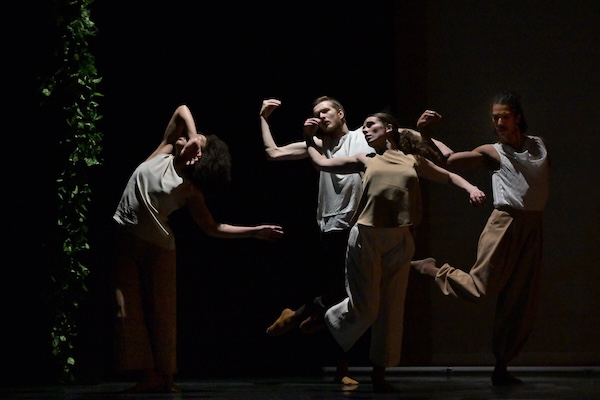
Belle Spirale’s dance double-bill, Universus, is at the Vancouver Playhouse March 21-22, as part of the Chutzpah! Plus Spring Edition. (photo © Michael Slobodian)

“As I think many of us are right now, I am feeling sense of trepidation, endangerment and uncertainty about the future that I have honestly never felt before in this way. My faith in the future and humanity’s ability to call in a future that I want (for myself and also for future generations) has been shaken to the core,” Alexis Fletcher told the Independent. “And yet, my spirit knows that hope, togetherness, connection – they are all necessary. Indeed, they are what propel the world, evolution, the cosmos and each other forward. Everything and Nothing asks what hope and resiliency mean to me – as a woman, as an artist, as a citizen – at this moment in history.”

Fletcher is co-director with Sylvain Senez of Belle Spirale Dance Projects. Their March 21-22, 8 p.m., Chutzpah! Festival dance double-bill at the Vancouver Playhouse, called Universus, also features Fernando Hernando Magadan’s Statera.

The title of Belle Spirale’s Everything and Nothing comes from a poem Fletcher wrote several years ago, “exploring the idea that we are at once both the entire universe and a tiny speck of almost nothingness within the vastness of that universe. That we are both ‘everything and nothing in the same split-instant,’” she said.

Acknowledging that this was a broad place from which to start, she and the dancers asked themselves, “Who are the leaders of the future that we actually want? How can we create an imagination-based, artistic response to these important questions and feelings? I see so many qualities of this leadership in each and every person who is making Universus with us,” said Fletcher. “I have been curious about what the archetypes, or the energetic qualities, these future leaders would embody, and how could they usher the world forward into a new and more hopeful paradigm.”

To explore these questions, Fletcher came to the studio with “movement phrases,” she said. “The dancers then took these movements and made new sequences which combined the original phrases with their own responses to the text, images and perceptions about the subject matter.

“We also use structured improvisation to explore different states of being and allow those to inform the choreography,” she added. “Then, everything gets layered together and composed into different sections, working with the music, the design aspects, and how that all relates in space and time to where the audience will be. It is a truly collaborative process, with each artist contributing hugely to the final outcome.”

This includes “the images of the natural world and the cosmos that Sylvain has so exquisitely crafted with his visual design,” said Fletcher. “These images, to me, represent our shared origin point in the cosmos, reminding us that our journey is mystical as well as concrete or tangible. While this is all explored in an abstract way very open to interpretation, we hope to evoke a sense of possibility, of awe and wonder with this work.”

Another important collaborator is Marisa Gold, who Fletcher and Senez met some time ago. “Immediately, I was compelled by her stage presence and the insightful, kind, courageous way she conducts herself in the world,” said Fletcher, noting that Gold has been part of Everything and Nothing from its beginnings in 2023. As the piece has developed, Fletcher felt that a live, spoken-word element “could act as a counterpoint to the inherently more abstract and image-driven metaphor of the dancing body and the choreography.

“Inside of this desire for text, I had a gut feeling that it wasn’t supposed to be my voice or my writing,” said Fletcher. “I needed to bring a different voice into the mix, with different lived experience and perceptions than my own. What came out of this was expanding and amplifying Marisa’s role within the work by commissioning her to create and perform original poetry and spoken word throughout Everything and Nothing. And … she still does a phenomenal amount of dancing, and she is incredible in that too! I can’t wait for everyone to share in her journey. What Marisa has created is truly special – profound and insightful. I gain something new from the text every day.”

For Gold, Everything and Nothing has a powerful message.

“Personally,” she said, “the subject matter and poetry of Everything and Nothing align very closely to my interests as an artist and human being in a volatile world. As a collective humanity, the depth of our connection to Earth is reflected in our ability to deeply connect with ourselves and each other. This work addresses not only our inner/personal world, it also drives home the mirroring effect and metaphor which surrounds us in nature. From my perspective, these images are incredibly supportive to the healing so needed on our planet today.”

The scope of the work wouldn’t have been possible, said Fletcher, if she and Senez weren’t artists in residence at the Chutzpah! Festival.

“We have been fortunate to receive residency, creation and presentation support from the Chutzpah! Festival since 2019,” she said. “Each of these years provided us with stage creation time, financial contributions to our projects and the opportunity to premiere new works; this relationship has been instrumental to our artistic practice. 

“Theatre and studio residencies are critical to artists collaborating and developing their craft. In addition, 

having a presenter invest in a project from research to presentation creates an environment grounded in solidity and consistency,” she said.

“I really cannot over-emphasize not only how rare, but also how needed and important it is, what Chutzpah! is doing with their residency program.”

This season, Belle Spirale had a couple weeks on stage to rehearse and create, then a two-week, full time technical residency, where the visual and lighting design for the performance was created, so the company could mount the show at the Playhouse.

“The art we make together is a way of life for us, and inseparable from our relationship,” said Fletcher about husband and fellow artist in residence Senez. “While we have different strengths that make us a great team, we also share a profound kinship with regards to our artistic sensibilities and reverence for this art form.”

The two were with Ballet BC for many years, and started creating and producing work together in 2015. 

“As a couple – both in our personal story of coming together and in our creative partnership – we have always made each other brave, right from the start, dreaming big and diving into creative ventures without fully realizing the scale they would eventually take,” said Fletcher.

“Tackling meaningful subjects and focusing on the humanity that touches us all, we initially began with quite intimate work,” she said. But, as their exploration continued, so did their desire to integrate other creative voices alongside their own. Formally bringing Belle Spirale into being “became a necessary next step,” and the company was launched in July 2023. The not-for-profit structure allows them to create community networks and garner the support they need. “This comes in the form of our board of directors, and our partnerships with like-minded creative spirits such as our sister company Dance//Novella,” said Fletcher.

“Most importantly,” she said, “Belle Spirale was born from our desire to expand our ability to support a range of artistic voices through commissioning new work, creating our own work, fostering and celebrating Vancouver’s exceptional freelance artists, and presenting/producing both our own, and others’, creations…. We truly believe in the power of the live performing arts to bring people together, to create community and a lifeline for the spirit – a space to contemplate, reflect and be moved – during these complex times we live in.”
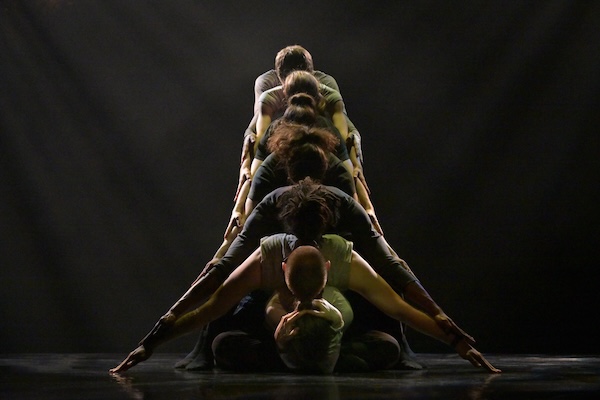
photo - Belle Spirale performs at the Playhouse March 21-2
Belle Spirale performs at the Playhouse March 21-22. (photo © Michael Slobodian)

One of the aspects Fletcher and Senez like most about cross-disciplinary work is the ability “to reach a broader demographic of audience members,” said Fletcher. “Every person feels connected, or has their heart opened, in different ways by different things. Human beings are layered and complex, and we use different mediums, such as film, set design, text and lighting design, to reflect this complexity in our stage environments. 

“We love to create textured, visually impactful and theatrical settings which are completely immersive for the dancers,” she continued. “Everything is crafted to highlight the humanity, athleticism and journey of the dancing body – this human instrument is always the focus of our work…. In my pieces, I work co-creatively with the dancers, with Sylvain as visual/set/film designer and with Belle Spirale’s lighting designer Victoria Hunter Bell.”

In Universus, Fletcher also has gotten to work with Magadan – she co-created and dances in Statera.

“Sylvain and I both met Fernando in 2014, when he created White Act for Ballet BC,” Fletcher explained. “I was an original cast member of this work and Sylvain was his rehearsal director, as well as assisted with some of the visual design. We all just clicked … and it has always been a dream of ours to work with Fernando again. When we commission work at Belle Spirale, I am fortunate to get to be one of the performers we bring together.”

Universus would not exist, said Fletcher, without Belle Spirale’s partnership with Chutzpah! She also noted that, thanks to the company’s partnership with Vancouver International Dance Festival, they are able to offer general admission and sliding scale ticket prices, which start at $25. Visit chutzpahfestival.com. 

Format ImagePosted on March 14, 2025March 13, 2025Author Cynthia RamsayCategories Performing ArtsTags Alexis Fletcher, Belle Spirale, Chutzpah!Plus, dance, Marisa Gold, poetry, Sylvain Senez, Universus
Explore Persian culture

Explore Persian culture

Arash Khakpour and Alexis Fletcher première All my being is a dark verse (working title) Nov. 9-10 at the Rothstein Theatre. (photo by Peter Smida)

This year’s Chutzpah! Festival, which takes place Nov. 3-24, highlights Persian culture. The decision to feature Persian artists and stories – which was made well before the protests that erupted in Iran after the death of 22-year-old Mahsa Amini in the custody of the country’s morality police last month – seems even more important and relevant now.

“When the festival was offered the opportunity to support the creation of a new dance work by Alexis Fletcher in collaboration with Arash Khakpour, two Vancouver artists I admire and enjoy working with, I began to explore the resonances between Persian artists and stories of both Jewish and Muslim background,” Jessica Gutteridge, Chutzpah! artistic managing director, told the Independent. “These communities are culturally rich and have been intertwined for a very long time, while at the same time in lesser and greater political tension over the course of history. The festival’s mandate includes exploring what Jewish culture has in common with non-Jewish communities, and bringing artists of different backgrounds into conversation, so I thought it would be interesting to pull on this thread and bring Jewish and non-Jewish artists and culture into a themed programming thread.”

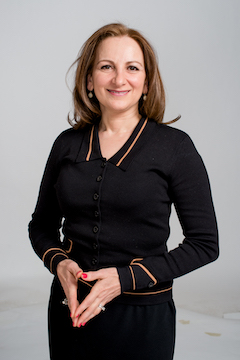
photo - On Nov. 14, Jacqueline Saper, author of From Miniskirt to Hijab: A Girl in Revolutionary Iran, will speak and answer questions about Jewish life in Iran pre- and post-Revolution
On Nov. 14, Jacqueline Saper, author of From Miniskirt to Hijab: A Girl in Revolutionary Iran, will speak and answer questions about Jewish life in Iran pre- and post-Revolution. (photo by Beking Joassain)

The two main programs of the thread are the Nov. 9-10 world première of Fletcher and Khakpour’s All my being is a dark verse (working title), which was developed through an artistic residency at the Norman and Annette Rothstein Theatre, and the Nov. 23 concert by Israeli singer, songwriter and actress Liraz Charhi.

Two digitally streamed programs round out the offerings. On Nov. 14, Jacqueline Saper, author of From Miniskirt to Hijab: A Girl in Revolutionary Iran, will speak and answer questions about Jewish life in Iran pre- and post-Revolution. And, on Nov. 21, Israeli chef Ayelet Latovich will present “a menu drawn from the Persian Jewish heritage of her mother’s family, which includes her grandmother, Kohrshid Hoshmand, a well-known and beloved figure in the Iranian community in Tel Aviv.”

“The festival has always provided public outreach opportunities, ranging from master classes to workshops to public conversations with artists,” said Gutteridge about these events. In addition to the Persian-themed outreach, Chutzpah! is partnering with rice & beans theatre’s DBLSPK program to offer a public workshop of Tamara Micner’s new Yiddish panto-in-progress, Yankl & Der Beanstalk.

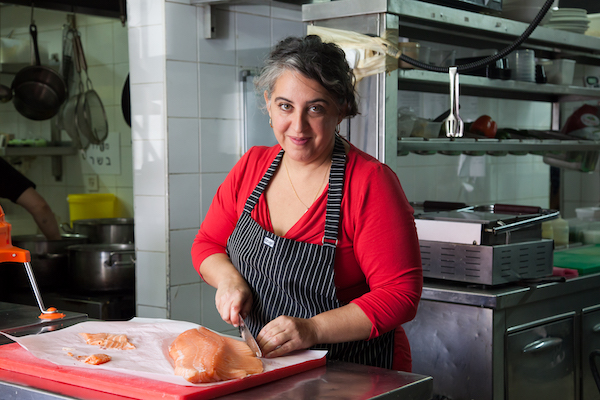
photo - On Nov. 21, Israeli chef Ayelet Latovich will present a menu drawn from the Persian Jewish heritage of her mother’s family
On Nov. 21, Israeli chef Ayelet Latovich will present a menu drawn from the Persian Jewish heritage of her mother’s family. (photo by Sarit Goffen)

“We have a broad array of workshops to choose from as well,” Gutteridge continued. “David Buchbinder, Mark Rubin and Michael Ward-Bergeman will lead a creative workshop focused on making intercultural connections. Edith Tankus will bring clowning techniques for self-expression in a workshop tailored to parents and caregivers. Liz Glazer will lead a workshop on how to tap into your funny side and create comedy for the stage. And Maya Ciarrocchi will lead a series of workshops sharing the practice of Yizkor books as a means of remembering and mourning the lost people and places of our lives, that will lead into the final performance of the Site: Yizkor project.”

Life, love, longing, death

All my being is a dark verse is inspired by the poems of Forugh Farrokhzad (1934-1967), whose poetry was controversial enough in its expression of personal freedom to have been banned for almost a decade after the establishment of the Islamic republic in 1979. The project combines Farrokhzad’s poetry, the work of local artist Nargess Jalali Delia and the dance choreographed and performed by Fletcher and Khakpour. The shows will include a program of Persian storytelling curated by the Flame.

“I discovered Forugh’s poetry through Nargess, when I was helping her prepare for a visual art exhibit in 2020,” said Fletcher. “Nargess had a painting that captivated me, which I learned was inspired by Forugh’s beautiful poem, ‘Inaugurating the Garden.’ When I read the poem for the first time, I was moved to tears and felt so much of my own life inside Forugh’s words. From there, I started to research the work of this poet and felt viscerally connected to her work. When I began dreaming of creating a response through movement, I approached Arash – an artist I greatly admire and have always wanted to work with. We decided to create and perform together, and to bring together a mix of Persian and non-Persian artists to complete our team, including costume design, original music composition, lighting design, and translation work between Farsi and English.

“Both Arash and Nargess have welcomed me into their culture, language and their very personal connection with Forugh in the most generous of ways,” said Fletcher.

“I am excited to connect with an artist who comes from a completely different movement background from my own, and yet who shares so many of the same interests and curiosities about the place that dance holds in the world, what it can offer and how it can bring people together in unique ways,” said Khakpour.

“Growing up in Iran,” he continued, “I was reading Forugh’s poems at the young age of 11, even though I knew I wasn’t supposed to because her open-minded and dark-natured poems were not seen as ‘appropriate,’ and this experience had a profound effect on me. Forugh’s words were a revelation to read, something that someone wrote so many years ago and yet which seemed to speak directly to my fears and desires as if the words were both coming from me, and as if they were meant only for me.

“After moving to Canada at the age of 15,” he said, “I lost that connection to Forugh’s poetry, but now I am at a place that I feel the need to reconnect to her work again and integrate my love for her work, the knowledge and the sentiment it awakens in my dance practice.”

Currently, the pair are working with four of Farrokhzad’s poems: “The Wall,” “Reborn,” “Inaugurating the Garden” and “Window.”

“Forugh’s work is full of life, love and longing, yet full of death,” explained Khakpour. “I know from growing up in Iran that many people around me talked about her work as a forbidden reality, too forward, or too much – and the ways in which we should be talking, and the ways in which we should not be talking, as men and women. Forugh defied all of these binaries and all of this drew me to her magical poetry and body of work.

“As I was growing up, I have felt that similar feeling of defying the norms about myself, in terms of pursuing a dance career at all, as a man, which has many stigmas attached to it in my culture. I feel the same now as an artist at times.

“Forugh awakens the courage in us to be courageous,” he added. “This has always drawn me to Forugh’s work; her rigorous, rebellious nature has inspired many generations of artists since her death. Her writing, although being specific, is also timeless, transcends across cultures, and is full of humanity and love that goes beyond borders and ideologies. She longed for a world that could address and heal humanity’s pain.

“I think Alexis and I are drawn to Forugh and her work for these unapologetic tendencies and yet her humble nature of being, writing and expressing on the page. We strive for the same things in dance and choreography and long for a world that can address and heal its pain.”

“We both see dance as poetry in motion; a universal way of channeling poetry into the body and sharing that with the audience,” said Fletcher. “We believe this universality, along with the multidisciplinary and cross-cultural nature of this project, is a fertile ground that can draw new audiences to dance and connect different audiences to each other.”

Fletcher quoted from Rosanna Warren’s The Art of Translation: “The psychic health of an individual resides in the capacity to recognize and welcome the ‘Other.’” She explained that she and Khakpour “will use the act of translation as a practice of empathy; a way for artists and audiences to come together and lift the multiple veils of language, culture and ways of being that can obscure ‘the other,’ revealing the universality of our shared human experience, with language, visual art, dance and live performance as ways of ‘lifting the veil.’

“Expanding on the above,” she said, “we are curious about how we can use the practice of duet, including our partnership as performers, as a vehicle of exploration of ‘self’ and ‘other,’ and how this project can be a platform for this resonant conversation. This sparks our interest because, to execute duet skilfully and on an emotional level, one must delve into the other’s perspective more deeply…. We have the unique privilege of sharing this type of intimacy and connection with others as dancers because our bodies, especially in duet, are our physical and literal instruments: we must literally soften and yield our bodies and minds to give or receive the weight of another. We must take time to look into each other’s eyes and allow the other’s body to enter our private, personal space, learning what the impulses, dynamics, instincts and thought processes of that other person are. We must give each other patience and care for the relationship and choreography to work. We must acknowledge different subjective opinions and points of view. We feel that duet is a direct practice platform through which to investigate the myriad ways one can be in an empathic relationship with another.”

A dream come true

“Music in my life is the most important thing,” Charhi told the Independent. “When I started to create, to sing and to songwrite in Farsi, I knew that I had a message to be a little voice for the Iranian muted women. I knew that would be a continuation to the women from my family who are muted themselves. It wasn’t a question that I would do that. It’s not about me – I deeply feel I’m the pipe to tell a story.”

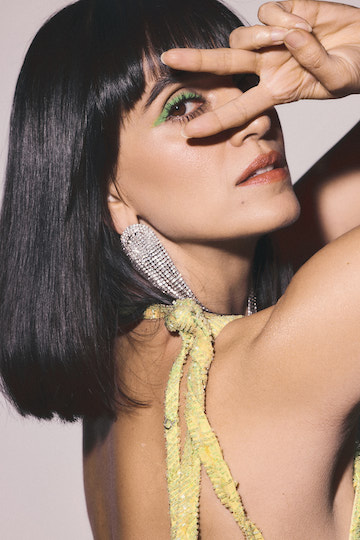
photo - Liraz Charhi gives a special concert on Nov. 23 at the Rothstein Theatre
Liraz Charhi gives a special concert on Nov. 23 at the Rothstein Theatre. (photo by Shai Franco)

On Oct. 7, Charhi releases her third album in Farsi. Called Roya – a vision, a fantasy, a dream – she recorded it with Iranian musicians in Istanbul. “It was an extremely emotional journey I cannot even express with words,” she said, “but we made a wonderful album with wonderful meaning and we all share the same dreams together.”

Charhi collaborated secretly with several Iranian artists – singers, writers, instrumentalists – on her second album in Farsi. Secrecy was necessary because of the political situation.

“Recording my album Zan (woman in Farsi) and collaborating with Iranian musicians was a dream come true,” she said. “I felt that I can give and be artistically freed, especially because I felt that we needed to meet and to create together. [That] we love each other with no boundaries is a fact we wanted to spread to the world. There are bridges we can build despite this crazy situation and we have the power to make a change.”

Charhi chose the name Zan for that album, she said, “because it’s all about women’s freedom I sing about. Struggling and, on the other hand, rejoicing, singing and dancing, making little by little resolution, which is very, very relevant to what’s going on today in Iran.”

Charhi’s first Iranian album was Naz, which, she said means “coquettish manners.” It has been described as a “rebellious soundtrack.”

“It’s about being a good Iranian woman, using all her charm and politeness to get what she wants from her man and still stay determined,” she explained.

Charhi’s parents emigrated to Israel in the 1970s, before the Islamic Revolution, and Israel is where Charhi was born, in Ramla, in 1978.

“My music is built out of layers of my heritage, Israeli and Iranian,” she said, “and so I knew always I wanted to use traditional Iranian instruments and to mix them with my psychedelic music that I love so much [from] the Iranian ’70s.”

She also has released two albums in Hebrew, one self-titled, the other Rak Lecha Mutar (Only You’re Allowed).

As an actress, Charhi garnered a nomination for best actress from the Israeli Film Academy for her role in the 2004 Israeli film Turn Left at the End of the World. She has acted in theatre, television and film, including playing the love interest of Phillip Seymour Hoffman in the movie A Late Quartet (2012), the role of Frida Kahlo in a production by the national theatre of Israel (2017) and an Israeli Mossad agent in the Israeli TV series Tehran (2020).

For the full Chutzpah! schedule and tickets, visit chutzpahfestival.com or call 604-257-5145.

Format ImagePosted on October 7, 2022October 5, 2022Author Cynthia RamsayCategories Performing ArtsTags Alexis Fletcher, Arash Khakpour, arts, Chutzpah!, culture, dance, Iran, Jessica Gutteridge, Liraz Charhi, music, poetry
Proudly powered by WordPress