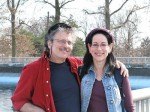
Rabbi Hannah Dresner wants “to come to know my congregation and the culture of Jewish Vancouver, to understand what the needs are and draw from our great tradition.” (photo from Rabbi Hannah Dresner)
Vancouver’s Congregation Or Shalom welcomed Rabbi Hannah Dresner as its spiritual leader this summer, recruiting her from Berkeley, Calif., where she was working part-time for Congregation Netivot Shalom, teaching niggun and meditation, and traveling broadly to hold spiritual retreats.
Dresner, a mother of three who grew up in Springfield, Mass., was ordained in January 2014 and worked previously as a visual artist and professor of fine arts. At Northwestern University, she taught painting and visual aspects of directing for graduate students in theatre direction.
“My artwork has always had a spiritual content, but I felt I needed further enrichment in developing the content of my work,” she said of her decision to seek ordination in the Jewish Renewal movement. “I began to study, got caught up in the study of Chassidic texts and became very enchanted with the imagery and worldview. I see the resultant shift of my professional energy to the rabbinate as another aspect of being an artist. I’m building my life as a work of art, and this is just another way of reaching people in a more direct manner.”
Her spiritual leadership at Or Shalom comes at an important time, she added, because it follows the recent death of Zalman Schachter-Shalomi, the founder of Jewish Renewal. Dresner has tremendous respect for the congregation’s founding rabbis, Daniel Siegel and Hanna Tiferet Siegel, and for Laura Duhan Kaplan, the rabbi who stepped back just over a year ago. “I consider them to be visionary people and I feel like, because of its strong rabbinical leadership in the past, Or Shalom is a community that’s primed and ripe for learning – head, heart, body and spirit,” said Dresner, who took over the congregation’s spiritual leadership from Louis Sutker, rabbi during the transition period.
Dresner grew up the child of a Frankfurt-born mother with an Orthodox background, and a father from the American Midwest, from a highly assimilated family. “Ours was a hybrid family that embraced an observant culture and engaged in a lot of social activism,” she noted.
She plans to develop Or Shalom’s musical davening program and Shabbat observance, to strengthen its b’nai mitzvah program, and to present varied adult education programs “that reach out not just to enrichment of our intellects but also offer points of entry that are more heart-centred.”
This fall, there is a midrash program on women in the Bible, beginning with the character of Tamar. Another new program is on spiritual eldering. “It will begin with a life review and talk about an evaluation of our lives, looking to the end of life with the perspective of wanting to live into our very fullest selves,” she said.
Dresner is also planning a davening laboratory where congregants can learn parts of the liturgy and practise their davening skills.
“As a rabbi, I think about Judaism as a treasure chest that speaks to all our human concerns,” she reflected. “I want to come to know my congregation and the culture of Jewish Vancouver, to understand what the needs are and draw from our great tradition – halachic, agadic, liturgical and Chassidic – in answering our real, current, human questions and concerns. I think these are very deep wells of wisdom that remain alive if we keep them alive.”
Lauren Kramer, an award-winning writer and editor, lives in Richmond, B.C. To read her work online, visit laurenkramer.net.
Change is hard. Ending one thing and beginning another can cause stress, and can even end up feeling like a poignant loss. It’s no different in the realm of synagogue life. When a long-serving rabbi leaves his or her position, the congregation may feel as though they exist in a vacuum and may need to go through a sort of grieving process before moving on.
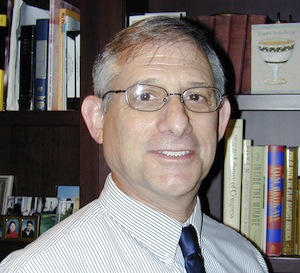
Rabbi Howard Siegel (photo from Rabbi Siegel)
The local community is in the unique situation of having had two rabbis of well-established congregations leave their pulpits in the course of one year. Both Beth Tikvah Congregation, Richmond’s Conservative synagogue, and the Renewal synagogue in Vancouver, Or Shalom, are in the process of adjusting to life after the leadership of rabbis who had been with them for nearly a decade.
Beth Tikvah’s Rabbi Claudio Kaiser-Blueth has retired from synagogue leadership, serving over the years as a congregational rabbi in both South and North America. Or Shalom’s Rabbi Laura Duhan Kaplan, who got smicha (rabbinical ordination) after a career as a university philosophy professor, has returned to academia; she is now interim director of Iona Pacific Inter-Religious Centre at the Vancouver School of Theology at the University of British Columbia.
The vacuum left by the departure of two such well-loved rabbis is not easy to fill. Both congregations have taken the course recommended by their movements for rabbi replacement: hire an interim rabbi to assist with the transition.
According to Rabbi Howard Siegel, Beth Tikvah’s interim rabbi, the position of interim rabbi is now a career choice, even for young rabbis starting out.
“The Reform movement has a very sophisticated course for interim rabbi training,” he told the Independent. “There is a seminar the Conservative movement provides to specialize in this area, as well.” Siegel has acted as interim rabbi for a number of congregations over the course of his career and mentioned that he could lead the seminar with the experience he has accumulated.
Prior to becoming a rabbi, Siegel earned a bachelor of science from the University of Minnesota, a bachelor of Hebrew literature from the University of Judaism in Los Angeles and a master of arts in Judaica from the Jewish Theological Seminary, where he also received his smicha in 1978.
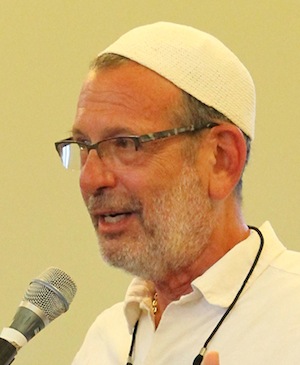
Rabbi Louis Sutker (photo from Rabbi Sutker)
Or Shalom’s interim rabbi also has unique qualifications for helping congregants deal with the transition to a new permanent spiritual leader. Rabbi Louis Sutker recently retired from practising psychology. Prior to working in private practice, he was a professor of psychology at the University of Victoria. Sutker came into his smicha later in life, training at the same time as Duhan Kaplan, and he has experience as acting spiritual leader of Victoria’s Congregation Emanu-El before they found their current permanent rabbi.
“Being a psychologist is good preparation for being a rabbi, and thinking like a rabbi is good for being a psychologist,” said Sutker when asked about his decision to do formal rabbinic studies. He said he is enjoying the experience of working with congregants in a variety of ways, and towards helping them choose their next rabbi.
“Being an interim rabbi is a great experience,” he explained. “The expectations are clear. I’m here to help with the transition, to act as a place-marker, and encourage the possibility of doing things differently.”
Siegel agreed that congregations become set in their ways and need to redefine their goals when choosing a new rabbi. “The search for a new rabbi is a process. They first need to redefine their mission and purpose … they need to know their goals and find a rabbi to meet the objectives of the community.”
Unlike Sutker, who knows his term will end in June 2015, Siegel said that he’s happy to stick around for a couple of years. He feels it’s his role to slow the congregation down so they don’t hire the wrong person. Or Shalom, however, is farther along in the process; they will be soon hosting candidates at the shul.
One bonus of being an interim rabbi, said Sutker, is that he or she has the opportunity for change, as well, while helping a congregation transition.
Siegel, who hopes to retire with his wife to Austin, Tex., once Beth Tikvah fills the permanent position, sees it another way, too. He is thrilled to be in his position, not only because one of his four children lives in Richmond but also because he can be especially forthright as an interim rabbi. “If I’m not happy, I can be open and I don’t have to worry that my contract won’t be renewed!” he joked.
Michelle Dodekis a freelance writer and community volunteer living in Vancouver.
Kibbutz Magen member Shunit Dekel speaks via Skype to the almost 800 people who came out to Temple Sholom to show support for Israel. Dina Wachtel, executive director, Western Region, Canadian Friends of the Hebrew University, is at the podium. (photo from JFGV)
Close to 800 people gathered at Temple Sholom the night of July 27 to show solidarity between Canadians and the state of Israel.
Temple Sholom Rabbi Dan Moskovitz started the evening by leading the crowd in “Am Yisrael Chai,” and Jewish Federation of Greater Vancouver chair Diane Switzer read aloud a letter of support from Premier Christy Clark who wrote, “The current conflict in Israel and Gaza is of great concern to anyone who believes in democracy and human rights…. At this difficult time, let us remember the values we share with Israel: a vibrant, culturally rich, democratic nation committed to maintaining the rights of its citizens, regardless of gender or religion. Israel is an example not only to the region, but the world.”
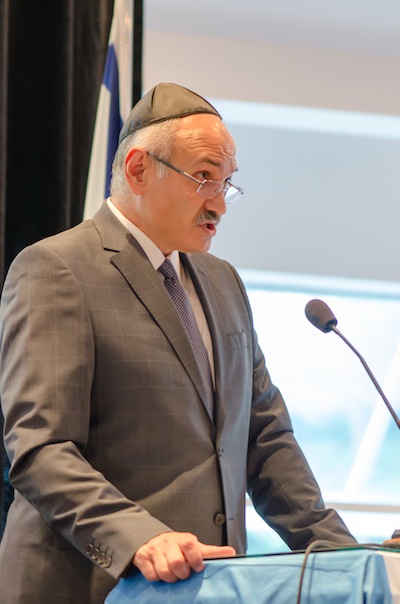
Farid Rohani, a businessman, social activist and a board member of the Laurier Institution, speaks to those gathered at Temple Sholom. (photo from JFGV)
The event featured a number of guest speakers, including Shunit Dekel, a member of Kibbutz Magen, and Farid Rohani, a businessman, social activist and a board member of the Laurier Institution. Dekel spoke via Skype from her home 4.3 kilometres outside of Gaza. Her kibbutz was forced into lockdown three times last week, because of the danger posed by the underground tunnels connecting it with Gaza. Rohani addressed the issue of antisemitism in recent social media. Through his own analysis of Twitter, he concluded that the coverage is remarkably lopsided and that “remaining quiet is a disservice not only to the values that we share as Canadians, but to order and what is right.”
The event was a collaborative effort between several local organizations: Canadian Friends of Ben Gurion University, Canadian Friends of Hebrew University, Canadian Jewish Political Affairs Committee, Magen David Adom, Congregation Beit Hamidrash, Congregation Beth Israel, Congregation Temple Sholom, Congregation Schara Tzedeck, Hillel BC, Jewish Community Centre of Greater Vancouver, Jewish National Fund, Or Shalom, State of Israel Bonds and the Centre for Israel and Jewish Affairs, Pacific Region.
At the end of the night, community member Bill Levine remarked, “The tone of the evening was respectful, and stressed our desire for a peaceful resolution. It was good to see the community react in the spirit of coming together.”
Dr. Charles Kaplan and Rabbi Laura Duhan Kaplan. (photo from Rabbi Laura Duhan Kaplan)
The small group meeting to pray and learn in living-rooms in the late 1970s and early 1980s couldn’t have known for certain that their community would survive to grow into a 200-family congregation, but they did know that they’d helped start something special. That much was apparent from the start.
This year, Or Shalom, the outgrowth of that small group, celebrates 36 years, but will also say goodbye to its current spiritual leader, Rabbi Laura Duhan Kaplan. She and her husband, Charles Kaplan, arrived in Vancouver in 2005, encountering a vibrant and energetic Jewish Renewal congregation, with a permanent home on East 10th at Fraser Street – and an already storied history.
Rabbi Daniel Siegel who co-founded Or Shalom with his wife and partner, Hanna Tiferet Siegel, was in 1974 the first person to receive smicha (rabbinic ordination) from Rabbi Zalman Schachter-Shalomi, founder of the Jewish Renewal movement. Today, Siegel is director of spiritual resources for ALEPH: Alliance for Jewish Renewal, where he also serves as associate dean of the ordination programs, chair of the rabbinic texts department and rabbinic director of ALEPH Canada. From his Gulf Island home, Siegel described the congregation’s early evolution, and what makes Renewal’s approach resonate today.
“We consciously chose Vancouver, Hanna and I, as a place to move to because we wanted to start a congregation and we wanted to see whether the things that made us newly excited about our Judaism were things that other people would respond to, other people who were also disenchanted or disconnected, so we were looking for a place to do that.”
About a year after arriving here, the Siegels’ vision took root. “We started the second year that we lived in Richmond, in 1978. We started what was then called the Hillel Minyan, and we would meet once a month on Friday night and the following Shabbos morning,” he said.
With help from friends, the Siegels were able to put a down payment on a home on West 22nd Avenue and started leading Shabbat morning services in their living-room. The name was changed to Havurat Sim Shalom. Over the next several years, services were held in participants’ living-rooms, rented homes and on the University of British Columbia campus. The Siegels worked in partnership, Daniel taking leadership of more traditional aspects, he recalled, and Hanna Tiferet on the creative expressions. In that way, there were various access points for participants.
“The intention was that we wanted to create something that gave ownership to people very quickly,” he explained. “So, Torah discussions, which could be done in English, and pesukei d’zimrah, which could basically be some melodies bridged by reading … were open to almost anybody as soon as they wanted to try it. And then there was leading shacharit and reading Torah, which required traditional skills, which meant that people had to decide to improve their Hebrew or whatever they needed to do. I think that was always intentional…. The motto of Havurat Sim Shalom was ‘traditional, egalitarian, creative,’ that’s what we called it.”
Harley Rothstein was a member of the young community. In an essay he wrote in 2000 about the history of Or Shalom, he shared some of those experiences. “I attended the minyan for the first time in January 1980. Entering the Siegels’ house on 22nd Avenue I was instantly struck by the enthusiastic participation. I enjoyed the meditative quality of the service in which some prayers were highlighted and certain lines repeated. I noticed a number of beautiful and unfamiliar melodies. I appreciated the depth of thought and extent of participation in the Torah discussion. I was surprised by the leadership shown by the women (I learned later that I had walked into a special women’s Shabbat). The physical layout was fascinating. Almost all participants were sitting on the floor, crowded into a limited space (Hanna’s enormous loom took up about one third of the living-room). I was delighted by the potluck lunch afterwards with the kind of vegetarian and whole foods that I had eaten for years. I was impressed by the energy and spirit of this small group and immediately became a regular participant.”
“The early days of Or Shalom were an adventure for those who were involved. Many of us were discovering a Judaism [that] we didn’t imagine could be so rich and meaningful. We were young and these were, for the most part, uncharted waters.”
Later he wrote, “The early days of Or Shalom were an adventure for those who were involved. Many of us were discovering a Judaism [that] we didn’t imagine could be so rich and meaningful. We were young and these were, for the most part, uncharted waters. We were drawn together as friends and held together by inspired leadership. What made it work was that we honored the centuries-old wisdom of the Jewish tradition while at the same time honoring our own creativity and insight, as well as our commitment to deeply held political values, such as gender equality, social justice and peace.”
By the time the Siegels left for Hanover, N.H., in 1987, Or Shalom was already on firm footing and, though it was still small and mostly consisting of friends, its early success encouraged mainstream congregations to reconsider some of what they wanted to offer. “I think Or Shalom served the function of being a kind of presence that encouraged a bit of ferment in the community, which I think was good because supposedly people cared about the fact that so many young people were not connecting … and they wanted them to connect,” Siegel said. “When we actually got them to connect, I think people had mixed feelings about that success.”
The tension between tradition and creativity was the defining feature. “The most important thing in my mind about what Hanna and I were trying to set up was a community that would be experimental and traditional at the same time,” he explained. “What Zalman called ‘backwards compatibility.’ The creativity that we do is compatible with what we inherited. That still is a very important thing to me. That’s why I do halachic thinking…. In my mind, what was really innovative about Or Shalom as we envisioned it was that combination of a creativity [that] was backwards compatibility, which was loyal to the tradition … both in the sense that we respected what we inherited and we also respected that we inherited a tradition of creativity…. I would say that was the challenge that we faced when we started it, and it would be the challenge that I would hope Or Shalom would look to finding ways to face and play with over the next 36 years.”
“Renewal does not seek to be a denomination. And that’s a big difference. We’re more like an association of like-minded people whose primary relationship to Judaism is through an unfolding relationship with the Divine. And so we don’t have creedal or halachic requirements for belonging, we don’t have any exclusionary clauses – like if you belong to us you can’t belong to something else – so that our clergy association has in it rabbis from all across the Jewish spectrum.”
Today, Renewal communities have sprung up all over North America – and beyond, Siegel said. “We have strong connections in Brazil, we have some people in Costa Rica now, we have a small hevre in Germany and in Amsterdam and in Stockholm, less so in England. And in Israel.” This growth can be attributed to the fact that “Renewal does not seek to be a denomination. And that’s a big difference. We’re more like an association of like-minded people whose primary relationship to Judaism is through an unfolding relationship with the Divine. And so we don’t have creedal or halachic requirements for belonging, we don’t have any exclusionary clauses – like if you belong to us you can’t belong to something else – so that our clergy association has in it rabbis from all across the Jewish spectrum.”
Duhan Kaplan, who has now been Or Shalom’s spiritual leader for nearly a decade, warmly described her first days with Or Shalom and her plans to continue participating in the congregation and wider Jewish community. “When Charles and I first came to Vancouver, we fell utterly, totally in love with Or Shalom – and East Vancouver. None of that has changed; if anything, it has intensified. Every week day, I appreciate Vancouver’s combination of natural beauty, access to urban services and perpetually green foliage. I especially love the winter mist and fresh air. With every Shabbat gathering at Or Shalom, I get cumulatively more relaxed. I worry less about logistics, and appreciate more deeply the way that singing, studying, shmoozing and celebrating life events together creates spiritual community. Leading the service has become a spiritual high for me; I take note of who is there, try to connect with them in thought and feeling, and help uplift the group with words and music.”
Growing up in New York, Duhan Kaplan said her “childhood experiences of Judaism were all positive: a large social circle, Orthodox synagogue, Conservative Jewish day school and Hebrew-speaking summer camp.” A self-described book addict, she graduated from university with plans to be an educator.
“My own education is ongoing; I’m in love with school,” she said. “I have a BA in philosophy from Brandeis, an MEd in adult education from Cambridge College Institute of Open Education, a two-year certificate in ayurvedic yoga from the New Life Centre, a PhD in philosophy and education from Claremont Graduate University, rabbinic ordination from ALEPH … a graduate certificate in spiritual direction from Vancouver School of Theology; and I’m currently taking graduate courses in depth psychology at Pacifica Graduate Institute. Honestly, I’m pretty tired: for 33 years, I’ve been working full time, going to school and raising children – without nannies or extended family, but with a great marital partnership and an organized household.”
After spending several years as a philosophy professor, Duhan Kaplan said she was looking for something new. “My leadership role in our local havurah and my powerful dreams and conversations with God led me to deeper Jewish study. I found [ALEPH]’s ordination program, a hybrid distance-learning/residential program, with an emphasis on kabbalah, just right for a philosopher juggling work, family and school. In 2005, I received smicha, moved to Vancouver and started to work at Or Shalom.”
She is inspired by and proud of her accomplishments during her tenure, including the year-long Exploring Judaism course, her experiences working closely with bar and bat mitzvah students and the more “personal moments in pastoral care, where I witness people’s reserves of strength and courage. I may be exhausted a lot of the time, but I never, ever feel my work lacks meaning.”
“Our founder, Rabbi Zalman Schachter-Shalomi, was a master at using creative techniques to disrupt routine thinking and engage the whole person in discovery. He urges us to respond to changing social questions using traditional Jewish resources, recognizing how diverse and evolutionary Judaism has always been. As a teacher, he has empowered Jewish intellectuals, artists, environmental activists and more; his influence can be felt across all Jewish movements.”
Renewal’s orientation towards Judaism and life provides a vehicle to chart a satisfying course, she noted. “Renewal is spiritual and socially liberal. Following the early Chassidic teachers, we explore the inner spiritual journey of Jewish life. We take seriously life’s existential questions and we fully expect Judaism to help us answer them. To stimulate our souls, we study, sing, make art and have fun. Our founder, Rabbi Zalman Schachter-Shalomi, was a master at using creative techniques to disrupt routine thinking and engage the whole person in discovery. He urges us to respond to changing social questions using traditional Jewish resources, recognizing how diverse and evolutionary Judaism has always been. As a teacher, he has empowered Jewish intellectuals, artists, environmental activists and more; his influence can be felt across all Jewish movements.”
Judaism’s evolutionary character resonates with those who haven’t fit into more mainstream Jewish life. “Or Shalom is really a community of seekers. Our members are deeply committed to Judaism, but they don’t participate out of a sense of obligation,” she explained. “Each person is genuinely and self-consciously on a path of spiritual and moral growth. Of course, we are all at different places on our path. But this self-awareness really makes working relationships easier; people reflect, reach out across conflict, and grow the community.”
Though the time has come to move on from synagogue leadership, Duhan Kaplan doesn’t plan to stop being a teacher. “Charles keeps reminding me to take some down time, but my normal way of living is to be working, going to school and volunteering. Next year, I’ll be working part time, teaching three graduate courses each at the ALEPH seminary and the Vancouver School of Theology. I’ll continue to take courses in Jungian psychology at Pacifica Graduate Institute and I have agreed to a big volunteer project for Ohalah: Association of Rabbis for Jewish Renewal. I hope to do some cat transportation for VOKRA, Vancouver Orphan Kitten Rescue. Yes, I’ll still be blogging! And I hope to put the finishing touches on the animal book.
“Of all the roles I play, educator still resonates most deeply,” she continued. “When I’m teaching, I can be scholar, deep listener and interpersonal facilitator all at once. I have to be well prepared and flexible at the same time. And I get to play with different learning modalities, as we explore really deep ideas in ways that work for the learners.
“Or Shalom is a wonderfully musical community and the congregational singing (without musical instruments) on Shabbos morning is utterly awe inspiring! It has been a joy to introduce new melodies to this community because they will join in with enthusiasm in singing absolutely anything, even adding beautiful harmonies.”
A Pittsburgh native who grew up in “a relatively non-observant, culturally Jewish-identified home,” Charles Kaplan said that he “began to rediscover and explore my Jewish (religious) roots in my 30s and this accelerated exponentially after Laura and I met.” A multi-instrumentalist, he and his wife have continued the tradition of making music a large part of the service. “Or Shalom is a wonderfully musical community and the congregational singing (without musical instruments) on Shabbos morning is utterly awe inspiring! It has been a joy to introduce new melodies to this community because they will join in with enthusiasm in singing absolutely anything, even adding beautiful harmonies,” he said.
And though he often gets asked by others about being the rabbi’s husband, he said “Or Shalomniks are far too comfortable with egalitarianism to even think the question! Usually, it’s asked with a clever smile, ‘You know the wife of the rabbi is the rebbetzin. What do they call the husband of the rabbi?’ My standard answer is ‘Around here they call me “the hubbetzen!”’ In all seriousness, supporting the rabbi’s work as a spouse is a challenging responsibility regardless of gender.” Among other contributions, “I’ve gotten myself involved in davening, musical events, ritual committee and even building maintenance! All with ‘ivdu et Hashem b’simcha!’”
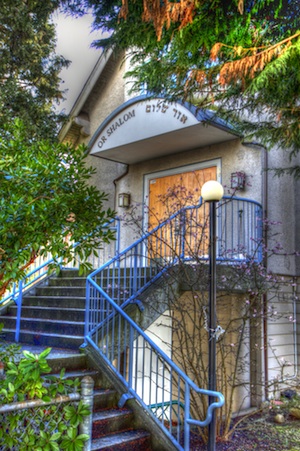
Or Shalom has had its home on East 10th Avenue at Fraser Street since 1993. (photo by David Kauffman)
Pat Gill and David Kauffman are co-chairs of the board of directors, and spoke to the JI about reaching the double-chai milestone. Or Shalom “occupies a unique place in Vancouver Jewish life,” said Kauffman, who first discovered the congregation in 1985. “Firmly committed to inclusiveness, we make efforts to invite and engage everyone who wants to explore, or return to Jewish life and Jewish community, regardless of their background…. As a participatory shul, most Shabbat services are different each week, portions of davening and reading Torah and Haftorah by a significant percentage of the congregation.”
Gill said she heard about Or Shalom “20 years ago when my husband and I were planning to move here from Seattle. A friend said we should check it out; we’d like it. She was so right. Our first event was High Holidays, 1994, and we were hooked!”
Both agree that Duhan Kaplan has “set the bar high” for the next rabbi. “Reb Laura has brought to Or Shalom a high level of insight, analysis of text, and ability to teach,” said Gill. “As well, her davening and leyning are exceptionally musical and beautiful…. I believe Reb Laura was the first female congregational rabbi in B.C. Her knowledge, intellect and desire to work with the greater Jewish community in Vancouver have earned respect for her and, I believe, for female rabbis in general, as women become more accepted in the role of pulpit rabbi.”
Kauffman seconded that praise. “Reb Laura has brought the aspects of Jewish life that Or Shalom dreamed of in a rabbi. Teaching that draws from rabbinic tradition and modern philosophy, davening that reflects musical influences both traditional and more recent, such as those taught by Reb Shlomo Carlebach and others. For the greater Vancouver Jewish community, Reb Laura is known for her courses all around the Lower Mainland, including Talmud Torah, Vancouver School of Theology, Melton Institute and the most recent Limmud Vancouver. We expect that Reb Laura will continue to teach in her many ways in and around Vancouver even after she leaves the role of Or Shalom’s full-time spiritual leader.”
For now, the search for an interim rabbi continues. “We’ve embarked on a rabbi search mission, one based on the thorough process that gave us such excellent results 10 years ago,” said Kauffman. “We’re looking for an interim rabbi for about a year, and posting a larger search for a full-time rabbi to start in the summer of 2015. Our process will eventually bring the committee’s three top choices to Vancouver for Shabbaton-like interviews, after which a community process will help us find the best match.”
Or Shalom’s 36th anniversary celebration features entertainment by Tzimmes and Grand Trine, on March 1, 7:30 p.m., at VanDusen Botanical Garden. Tickets at 604-872-1614 or office@orshalom.ca.