Skip to content
  • Home
  • Subscribe / donate
  • Events calendar
  • News
    • Local
    • National
    • Israel
    • World
    • עניין בחדשות
      A roundup of news in Canada and further afield, in Hebrew.
  • Opinion
    • From the JI
    • Op-Ed
  • Arts & Culture
    • Performing Arts
    • Music
    • Books
    • Visual Arts
    • TV & Film
  • Life
    • Celebrating the Holidays
    • Travel
    • The Daily Snooze
      Cartoons by Jacob Samuel
    • Mystery Photo
      Help the JI and JMABC fill in the gaps in our archives.
  • Community Links
    • Organizations, Etc.
    • Other News Sources & Blogs
    • Business Directory
  • FAQ
  • JI Chai Celebration
  • JI@88! video

Recent Posts

  • Zionism wins big in Vegas
  • Different but connected
  • Survival not passive
  • Musical celebration of Israel
  • Shoppe celebrates 25 years
  • Human “book” event
  • Reclaiming Jewish stories
  • Bema presents Perseverance
  • CSS honours Bellas z”l
  • Sheba Promise here May 7
  • Reflections from Be’eri
  • New law a desecration
  • Resilient joy in tough times
  • Rescue dog brings joy
  • Art chosen for new museum
  • Reminder of hope, resilience
  • The national food of Israel?
  • Story of Israel’s north
  • Sheltering in train stations
  • Teach critical thinking
  • Learning to bridge divides
  • Supporting Iranian community
  • Art dismantles systems
  • Beth Tikvah celebrates 50th
  • What is Jewish music?
  • Celebrate joy of music
  • Women share experiences 
  • Raising funds for Survivors
  • Call for digital literacy
  • The hidden hand of hate
  • Tarot as spiritual ritual
  • Students create fancy meal
  • Encouraging young voices
  • Rose’s Angels delivers
  • Living life to its fullest
  • Drawing on his roots

Archives

Follow @JewishIndie
image - The CJN - Visit Us Banner - 300x600 - 101625

Tag: Or Shalom

Or Shalom cemetery

Vancouver City Council has voted in favour of an agreement giving Congregation Or Shalom the right to develop a section of Mountain View Cemetery for use by the synagogue’s members. This follows three-and-a-half years of discussion and negotiations with the city, which owns and operates the historic cemetery.

The agreement will provide 64 burial plots (128 if shared) for purchase by Or Shalom members. The section is located along the west side of Fraser Street, extending south from 33rd Avenue, slightly north of the original Jewish section managed by Congregation Schara Tzedeck.

The Or Shalom cemetery committee is now focusing on the layout and landscaping of the site, developing policies for rights of purchase, and planning for a formal dedication of the section.

On April 19, Rabbi Hannah Dresner and Rabbi Susan Shamash will present a teaching on halachic issues that will help the congregation shape its burial practices. A community information and feedback meeting is planned for May 11, with the dedication ceremony tentatively scheduled for June 11. Policies relating to the cemetery will be available for comment before the community meeting.

The creation of a cemetery marks a major milestone for Or Shalom, giving it, for the first time, the opportunity to provide “cradle-to-grave” services for members. All purchases will be made directly with Mountain View after being authorized by Or Shalom.

Mountain View Cemetery dates back to the early days of Vancouver. Land was set aside for the cemetery in 1886, the same year as the city’s incorporation. The second mayor of Vancouver, David Oppenheimer, secured a portion of Mountain View for Vancouver’s Jewish community.

Mountain View remains the only cemetery within the city limits of Vancouver. A visit to the grounds, open to the public, gives a view of the past 130 years, with graves dating from the Gold Rush era, through two world wars and other military conflicts and various epidemics. It provides a glimpse at the ongoing growth of diversity in the city’s population.

The idea for an Or Shalom section of Mountain View came about somewhat coincidentally, when, in October 2013, several Or Shalom members – including Dodie Katzenstein, Marty Puterman, Pat Gill and John Fuerst – attended a walking tour of the cemetery sponsored by Schara Tzedeck and the Jewish Museum and Archives of British Columbia. This ad-hoc planning committee, with the board’s consent, began to explore the possibility of finding space for the Or Shalom community. Working with the cemetery’s manager, Glen Hodges, the committee was able to negotiate a legal contract with the City of Vancouver, which City Council approved on Feb. 8.

The cemetery committee, in addition to its four original members, now includes Dresner and Shamash, with input from Dave Kauffman. Catherine Berris, an Or Shalom member and an experienced landscape architect with a special interest in cemeteries, has volunteered her assistance in planning the site.

More information will be provided as the project proceeds.

Posted on March 10, 2017March 8, 2017Author Or Shalom cemetery committeeCategories LocalTags burial, death, Mountain View Cemetery, Or Shalom

Chatting with my father’s G-d

I am 69 years old and I have been living with multiple sclerosis for the last 29 years. During that time, my disability has affected my spirituality, and vice versa.

I grew up with Orthodox Jewish maternal grandparents in the same house as my less-than-Orthodox parents. Spirituality is about love if it is about anything, and my earliest memories of spiritual experience are all tied up with my love for my grandfather and his for me.

I was very close to my grandfather, Shmuel (Samuel) Silberberg. He died when I was 12, but until then, for as long as I can remember, I sat with him in the synagogue in the rows closest to the ark. There was a sense of belonging – those old guys were connected. Looking back, it is funny that I had a strong sense of belonging where I definitely did not belong. Young girls were not wanted there. But my grandfather belonged, and it was clear to all that he thought I belonged with him. He was not argued with. Even my father, Moishe (Morris) Novik, sat with the other 50 regular guys in the middle toward the back. He sat where he belonged, which was not up front with me and the old guys.

After my grandfather died, there was no more sitting with the old guys in the synagogue. I got sent upstairs to sit with my mother and the rest of the women. It just wasn’t the same. There was one row of old women who had that aura of belonging, but the other women were chatting or moving around. My connection to Judaism drifted away.

Around 1978, I went to visit my parents in New York. To my chagrin, I realized that my children, ages 8 and 6, knew nothing about being Jewish and knew plenty about Christianity. Oops. If I didn’t give them a sense of being Jewish, our dominant Christian culture would move in. When I returned to Vancouver, I searched for a place our family would fit. For a single, lesbian, politically active welfare mother, this wasn’t easy. But the children and I persevered, and we found the Peretz Shul (officially the Peretz Centre), a progressive secular Jewish place of education and culture. Our Jewish identity was saved – we had an anchor. I came to see spirituality as the sense of belonging that I remembered and that I needed for my children. Every Sunday I took them to the Jewish school and, once a month, there was a potluck lunch following. The kids had secular bar and b’nai mitzvah, and all was well.

By 1988, the woods and physical movement were my spirituality. My son had moved out on his own and my daughter was staying with family in California, so I hiked, cross-country skied, and spent time in British Columbia’s backcountry. The woods and mountains were my holy places, my grounding and my anchor. I found it impossible to wander in the beauty and not feel in every fibre of my body that I was part of something so much bigger than I.

Enter primary progressive multiple sclerosis. In this type of MS, disability gets steadily worse, without pause or remission. And my world was – and is – turned upside down. In the midst of this chaos and uncertainty, where was my anchor now?

In 1989, I took a medical leave from the travel agency I owned and moved to an A-frame home on friends’ property in Mission, B.C. No electricity, no running water. I chopped lots of wood. My MS moved slowly. I could happily live in the bush while trying to sort out what it all meant. I was blessed to find a weekly aboriginal healing circle, through the Mission Indian Friendship Centre, that warmly welcomed and grounded me.

Back on the farm, I walked with the dogs to the waterfall and talked to G-d, the G-d who was and is very much my father’s G-d. He had a personal relationship with G-d and, as a kid, I learned from watching him. When we went to the cemetery, he chatted with his dad and mom. He would stand by their graves and have long, friendly conversations, and I would watch with awe how the talks were never solemn, just friendly and intimate. When he was done, he would always ask if I had anything to add. I would shake my head and he would smile. There was never any pressure that I should talk.

The important lesson I learned was that it is OK to talk to dead people. And they will listen – they are interested. I spoke about this lesson at my father’s funeral. When one of my children or I had a problem, some people would say, “I’ll pray for you.” My dad would say, “I’ll talk to my friend upstairs for you.” He was just a regular guy who spoke about his friend upstairs in the way he would talk about any neighbour. For me, as a child and even now, this relationship is soothing and comforting.

With the chaos that MS brings to my life, sometimes a breakthrough comes when I can step back from the insurmountable roadblocks and see them instead as stepping stones on my path. This is difficult for me. My first impulse is to kick, scream and deny every new loss. Yet it is crucial to see the stepping stones so I can move forward. I remember that from hiking.

In 1990, I was back on my porch in Vancouver and missing the aboriginal healing circle. I thought, “Wait, I have my own ritual.” Around this time, my son, who had just become a father, said, “Mom, it’s time to go to synagogue.” And I said, “I know where to go.” We went to Or Shalom, where I found much grounding and a sense of community. I told a friend at Or Shalom that I hadn’t been to synagogue in 30 years. She just said, “Welcome home.” And home it was to me, my son and my granddaughter. Over the years, people have asked, “How did you manage to get your son to come to synagogue?” And I tell them it was his idea.

A few years later, in 1994, I wanted a way back to the woods. I had heard of therapeutic horseback riding, and I thought that, with the horses, I could get there. My first lesson, just 10 minutes of riding, felt great. I was convinced that this was going to sort out my hip joints, legs and back. That happened, and the surprise was that my soul and psyche were also woken up. I always felt like I had just done something grand. I, who don’t often feel proud of myself, suddenly felt quite proud for getting on this obstinate horse, Brew. He was an elderly, beautiful chestnut gelding. But strong-willed, like me. Before I got on a horse, I would always have a minute where I thought, I am insane to climb all the way up there. But, as soon as I got up there, I felt wonderfully alive. The day I rode Visteria, a big 16-hand chestnut mare with an amazingly smooth walk, it was like gliding along on top of the world. My hips unlocked and I felt my spirit rising.

For a few years, those horses were my anchor, my connection and my strength. Riding gave me back the joy of moving. I began to realize again how much my sense of spirituality was connected to physical movement. Hiking, long walks, swimming and horseback riding put me in a place where I could be connected to G-d, where I could feel myself part of a larger whole. But, with MS, there was one loss after another. I went through several aids: cane, then walker, then scooter, then horses.

Before the MS diagnosis and the losses in mobility, did I talk to G-d? Not much. The first conversations I remember happened in my year in Mission, during my daily hikes to the waterfall, with G-d and the dogs my daily company.

Now, with my mobility much more compromised, I still find G-d time where I can. The conversations now centre on “meaning.” What does this new life mean? What am I supposed to be doing? And so often G-d answers, “Go write.” I complain about the endless health maintenance that leaves so short a day, and G-d answers, as she always has, “Go write.”

Can I say exactly where spirituality is in my life and what it means for me? I am still a tad confused. Primary progressive MS slowly and persistently takes stuff away, so, in the 29 years of the illness, I have reinvented myself over and over and over again. The long hikes are just a memory, and I don’t often get out of my house to my synagogue anymore. Now that my physical movement is so limited, will I find a way to grow more spiritually?

Still, when I need spiritual guidance, I ask my father to talk to his friend upstairs. My father smiles and says, “You can talk yourself now, you know.” We both know that I do have my own conversations. But I still like using him as my go-between.

Ellen Frank was a writer, activist, mother, grandmother and retired travel agent, author of Sticks and Wheels: A Guide to Accessible Travel on the Lower Sunshine Coast (Ouzel Publishing, 2006), Taking the Reins (Kindle, 2011) and several articles published in anthologies and in periodicals, including the Jewish Independent. She lived with primary progressive multiple sclerosis from 1988 to her death in January 2017.

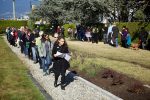
Posted on February 17, 2017February 15, 2017Author Ellen FrankCategories Op-EdTags death, Judaism, Or Shalom, Peretz Centre, spirituality

Meditating mindfully

Or Shalom is hosting one of the leading innovators in the field of Jewish meditation next weekend – Rabbi Jeff Roth of the Awakened Heart Project will lead a half-day retreat at the synagogue on Dec. 4.

Roth, who has been practising and teaching meditation for decades, teaches his own synthesis of Eastern techniques with a Jewish heart, which he calls Jewish mindfulness meditation.

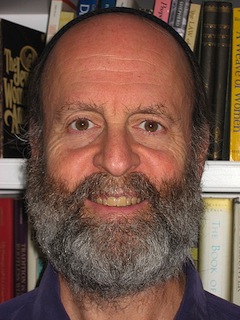
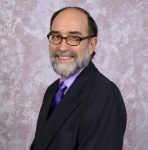
photo - Rabbi Jeff Roth of the Awakened Heart Project will lead a half-day retreat at Or Shalom on Dec. 4
Rabbi Jeff Roth of the Awakened Heart Project will lead a half-day retreat at Or Shalom on Dec. 4. (photo from Jeff Roth)

“I was already a rabbi when I started studying Asian meditation,” he explained. “Everything I learned, I learned through a Jewish lens. I never took on a practice without altering it slightly.”

When asked if anyone has objected to his synthesis of Jewish spirituality with Asian contemplative techniques, the rabbi said, “What I integrate is the truth of the nature of mind and no one has any objection to that. I ask questions like, What is the influence of conceptual thinking on the mind? What are the effects of different thoughts?”

Roth teaches a type of meditation that involves experiencing the mind and body with a healing, nonjudgmental awareness. It is rooted in the mindfulness movement first brought to North America in the 1970s, which has steadily grown in popularity, even finding a significant place in new medical treatments and corporate environments. And Jews have played a large role in the movement, demonstrated by leading teachers like Jack Kornfield, Joseph Goldstein, Sharon Salzberg, Jon Kabat-Zinn and others.

Drawn to the mystical teachings of Judaism as a young rabbi, Roth said they remained “intellectual” for him until he began practising meditation. “In the quiet, in the silence, I became a mystic,” he said. “It became a direct experiential realization.”

Among his students now are many rabbis. “I teach rabbis they need to come to the silence, the witnessing, to have a deeper spiritual experience,” said Roth, referring to the practice of “just witnessing” that characterizes mindfulness meditation. By just witnessing thoughts, feelings and sensations, say its exponents, mindfulness meditation calms the body and mind and allows deeper, non-conceptual awareness of experience. “From a Jewish perspective, ‘just witnessing’ is not enough, however,” he said. “You need to be the compassionate witness.”

Roth said he draws his central inspirations from the teachings of the Chassidic masters, especially the Baal Shem Tov – Rabbi Israel ben Eliezer, 1698-1760, founder of the Chassidic movement.

“The Baal Shem Tov said ‘everything is God and nothing but God,’” Roth explained. “The whole thing to do is to align ourselves with the truth of being, which in the Torah is expressed as ‘ein od milvado’ (‘there is nothing else besides God’).”

A turning point in Roth’s development came in 1981 when he received teachings from Reb Zalman Schachter-Shalomi, the founder of the Jewish Renewal movement, which became the scaffolding of his theology of contemplation.

“Reb Zalman taught me about the four worlds, or levels of manifestation, that occur within the Holy One of Being,” said Roth. The contemplation of how the four levels of manifestation happen in our minds and bodies can guide our mindful exploration of experience, he said. “The four worlds have become a central metaphor in my teaching. I have been working out that teaching for the last 35 years.”

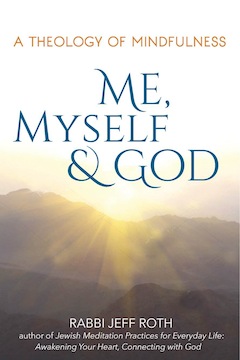
book cover - Me, Myself and GodRoth’s latest iteration of that “working out” can be seen in his recent book, Me, Myself and God: A Jewish Theology of Mindfulness (Jewish Lights, 2016), from which he will be presenting practices and Torah teachings at the Dec. 4 session.
“We’re trying to understand the fundamental forces that alienate us in our experience of life, in order that we might live more from a place of awakened heart, which is connected to all experience and allows us to manifest with more love and compassion in our daily lives,” said Roth. “I want to emphasize that acting with love and compassion – that’s where we’re going with the whole thing.”

For more information on the retreat, which will take place from 2:30-5:45 p.m., and be followed by a potluck meal, visit orshalom.ca.

Matthew Gindin is a freelance journalist, writer and lecturer. He writes regularly for the Forward and All That Is Interesting, and has been published in Religion Dispatches, Situate Magazine, Tikkun and elsewhere. He can be found on Medium and Twitter.

Posted on November 25, 2016November 23, 2016Author Matthew GindinCategories BooksTags Judaism, meditation, Or Shalom, spirituality, theology
Jewish view of afterlife

Jewish view of afterlife

Rabbinic Pastor Simcha Raphael will be a scholar-in-residence at Congregation Or Shalom for a Shabbaton Nov. 25-26. (photo from Simcha Raphael)

Later this month, Congregation Or Shalom is hosting a Shabbaton featuring Rabbinic Pastor Simcha Raphael, a bereavement counselor and expert in Jewish beliefs and sacred practices around death and the afterlife.

Founding director of Da’at Institute for Death Awareness, Advocacy and Training, Raphael also has a psychology practice specializing in grief counseling and bereavement support, and is an adjunct assistant professor in the Jewish studies department of Temple University in Philadelphia. While in Vancouver, he will participate in various educational activities at Or Shalom, sharing observations from his decades-long study of related Jewish wisdom and customs.

Raphael’s interest in the afterlife began in personal experience. When he was 4 years old, his Bubby Mina died. As was common for children at the time, he did not attend the funeral or shivah, but he was told that she had “gone to heaven.” In his young mind, this meant she was still alive and accessible and, for years afterward, he found comfort in talking to her.

Years later, when the rabbi was 22, a good friend died in a car accident. Heartbroken, Raphael found that he had a continued sense of his friend’s presence. This experience, together with his childhood memories of talking to his grandmother, came together as both a question and an inspiration. Raphael was already studying psychology and world religions – he turned his focus on what Judaism says about the afterlife.

Then, as now, many Jews and non-Jews wrongly believed that Judaism does not have anything to say about the afterlife. But, as Raphael investigated the textual tradition, he found that the Torah, Talmud, kabbalistic writings and Jewish folklore all painted a very different picture.

“In the world of the Chassidim, the world of the Ashkenazi shtetl, there was no question about the reality of the spiritual realms and their interaction with this world,” Raphael told the Independent.

As many Jews eagerly embraced modernity, these traditions were suppressed or forgotten. With the encouragement of his mentor, Reb Zalman Shachter-Shalomi, Raphael undertook to unveil these traditions for modern Jewry. In his now-classic Jewish Views of the Afterlife, published in 1994, Raphael provided a comprehensive discussion on these issues for a popular audience. A 25th anniversary edition of the work with a foreword by Arthur Green is expected in 2019.

Raphael has found that traditional rituals and beliefs around death can have therapeutic value, whether those dealing with these transitions believe in a tangible afterlife or not. “For example,” he said, “traditionally it is believed that the soul stays behind for seven days after death, preparing to leave. Mourners can be encouraged to take this time to say things they wished to say to their loved one, whether they literally believe their words are heard or not. I have found that this practice has great value for people.”

At the upcoming Shabbaton, Raphael will share rituals like this one, as well as explore the rich traditional lore Judaism possesses around death and the afterlife.

Raphael’s teaching program at Or Shalom runs Nov. 25-26 and is called Judaism and the Mysteries of Life, Death and the World Beyond. He will address what the Hebrew Bible, Jewish custom and the kabbalah can tell us about death and dying. On the Saturday, at 7 p.m., he will offer a community talk called Twilight Between the Worlds: Jewish Ghost Stories, which will take place at Celebration Hall at Mountain View Cemetery.

For more information about and registration for the Shabbaton weekend, visit orshalom.ca/shabbaton2016. Admission to the Saturday night cemetery event is free but seating is limited, so an RSVP is requested to orshalom.ca/jewishghoststories.

Matthew Gindin is a freelance journalist, writer and lecturer. He writes regularly for the Forward and All That Is Interesting, and has been published in Religion Dispatches, Situate Magazine, Tikkun and elsewhere. He can be found on Medium and Twitter.

Format ImagePosted on November 18, 2016November 15, 2016Author Matthew GindinCategories LocalTags afterlife, death, ghosts, Judaism, Or Shalom
Or Shalom hosts ALEPH tour

Or Shalom hosts ALEPH tour

The Or Shalom board of directors with Rabbi Hannah Dresner, second from the left in the front row. (photo by David Kauffman)

Most Jews would agree that usually rabbis do the bulk of the talking and congregants the listening. That’s been reversed for the Listening Tour currently underway among rabbis of ALEPH: Alliance for Jewish Renewal. The tour is making 13 stops in North America, as well as listening via video and Skype to Renewal communities all around the world. On March 25, the tour stopped in Vancouver, where it was hosted by Or Shalom.

Rabbis Rachel Barenblat and David Markus, ALEPH co-chairs, have embarked on the tour to hear from the breadth and depth of the community, including those not technically affiliated with the Renewal community but “aligned in method, intention and heart.”

“Every stop on the ALEPH: Jewish Renewal Listening Tour is different, and every one has been amazing in its own way. But I suspect that our weekend in Vancouver may stand out in memory as one of the most memorable experiences in a year-plus of remarkable experiences,” wrote Barenblat on her blog, the Velveteen Rabbi.

“Maybe that’s in part because we traveled such a very long way to be there. Maybe it’s in part because we were visiting such a storied community, one of the largest and longest-standing Jewish Renewal communities in the world. Maybe that’s in part because the people at Or Shalom welcomed us with such open hearts.”

“When ALEPH decided to go on a listening tour, it initially was to take the pulse of the Jewish Renewal movement, but it has come to mean for us and for stakeholders in the broader renewing of Jewish life so much more than that,” said Markus. “There is a yearning in Jewish life today that reaches through all the denominations … we are seeing a global consciousness arise about the need to reconnect Jews with the heart and soul of tradition, to experience the riches of spiritual life, and to address emerging social and ecological challenges.”

photo - Rabbis David Evan Markus and Rachel Barenblat, co-chairs of ALEPH: Alliance for Jewish Renewal
Rabbis David Evan Markus and Rachel Barenblat, co-chairs of ALEPH: Alliance for Jewish Renewal. (photo by David Kauffman)

Markus explained that Jewish Renewal has grown organically, and was not created on the basis of strategy or design. “The time has come,” he said, “to introduce an element of design.” How should the Renewal movement take its rightful place in ecosystem of Jewish life? What does Jewish life need now? How to meet the needs of millennials? Summing up, Markus said, “How are we relevant for the 21st century and beyond?”

Speaking of the tour in a recent Or Shalom newsletter, the congregation’s spiritual leader, Rabbi Hannah Dresner, wrote, “They were here to gather information for their own discernment as they shape the next iteration of the ALEPH: Alliance for Jewish Renewal. But we had a bit of our own agenda, and that was to speak and hear the stories, challenges and hopes of Or Shalomniks for the flourishing of our home community and for our collective and personal senses of belonging, contentment and inspiration…. I listened very carefully, and my heart ached with the poignancy and beauty of the nostalgia, the hurts, the longings and the aspiration I heard spoken.”

On the Friday evening, the visit commenced with davening, followed by dinner, after which those gathered heard some of the origin stories and histories from Or Shalom’s almost 40 years of existence, starting with the early years as a chavurah in Rabbi Daniel Siegel and Rebbetzin Hanna Tiferet Siegel’s living room.

On the Shabbat, there were diverse sessions of listening at which different segments of the community were invited to speak and be heard. Younger members of the community expressed their desire for open, free dialogue, deep ecumenicism and freedom from xenophobia; members of the community who felt marginalized had a chance to tell their stories; elder members spoke of their desire to keep the best of Or Shalom alive and their anxiety to pass the torch to the next generation. Many other voices were heard, and the rabbis listened. “By being listened to,” Markus told the Independent, “people feel empowered to do the work that this era demands.”

Dresner was particularly moved around finding solutions for those who feel marginalized. “What can we do to optimize a young mother’s spiritual experience when she comes to shul with very small children?” she asked. “And how can we create a cohort for her? How can we offer community to individuals who remain single as couples form and begin to have babies? What will it take to go beyond friendliness in developing a deeper queer consciousness?”

The weekend unfolded over what Barenblat called “meetings and meals and meetings over meals,” including a trip on Sunday to the Vancouver vegetarian institution that is the Naam restaurant.

The Vancouver leg of the tour wound down Sunday evening, and so came to an end the ninth stop the rabbis have made so far. “It’s an honor and a privilege,” wrote Barenblat on her blog, “to get to sit with people and hear their yearnings and hopes for what ALEPH and Jewish Renewal might become.”

Matthew Gindin is a Vancouver freelance writer and journalist. He blogs on spirituality and social justice at seeking her voice (hashkata.com) and has been published in the Forward, Tikkun, Elephant Journal and elsewhere.

Format ImagePosted on April 22, 2016April 25, 2016Author Matthew GindinCategories LocalTags ALEPH, Jewish Renewal, listening, Or Shalom
Ready to welcome refugees

Ready to welcome refugees

As of Nov. 24, the Government of Canada was processing 4,511 applications for privately sponsored Syrian refugees (not including Quebec, which has its own procedure). The map shows communities where private sponsors have submitted an application. (image from cic.gc.ca/english/refugees/welcome)

Vancouver’s Jewish community is mobilizing to welcome refugees from Syria. The federal government has announced that 25,000 Syrian refugees will come to Canada before the end of February. While most of those will be government-sponsored, groups of Canadians, including many in the Jewish community, are leaping at the opportunity to be a part of the resettlement project.

The Jewish Federation of Greater Vancouver has signed a memorandum of understanding with the Anglican church to streamline the process. The federal government has a number of sponsorship agreement holders, which are established, experienced groups that are engaged in aiding refugees on an ongoing basis. To expedite the process, the Jewish community is primarily working through the partnership with the Anglican Church of Canada so that synagogues and other Jewish groups that may want to sponsor can do so efficiently.

“The Anglican diocese, rather than setting up a separate relationship with each of the synagogues, proposed that there be one memorandum of understanding with the Jewish community,” said Shelley Rivkin, Federation’s vice-president for planning, allocations and community affairs. “We will be the holder of the memorandum of understanding so the synagogues will raise the funds and issue a tax receipt. The funds will then come to us and be in a restricted account and, as those funds are distributed, they will go directly through us so that the diocese is not having to deal with multiple parties.”

Or Shalom Synagogue has already raised two-thirds of the funds necessary to sponsor three families. Natalie Grunberg, a member of the Or Shalom Syrian Refugees Initiative, said they are expecting their sponsored refugees as early as January. The group has launched a series of events, including a concert of Syrian music, to raise awareness and money for the project. The federal government estimates the cost of sponsoring a refugee family for a year to be about $30,000, but Vancouverites involved in the process are working on an assumption of about $40,000, based on housing costs here.

Or Shalom is working through existing partnerships they have built over the years. Rather than going through the Anglican church, they are working with the United Church of Canada. Grunberg acknowledged that some in the Jewish community have differences with the United Church’s stand toward Israel, but the priority was to expedite the refugee sponsorship process and they believed working through existing relationships would be most effective.

Grunberg is noticeably proud of her congregation’s efforts so far.

“We’re a very small synagogue and we’re sponsoring three families,” she said.

Through existing relationships with the Syrian community here, Or Shalom will focus their sponsorship efforts on reunifying families that already have some members in Metro Vancouver and also on members of the LGBT community.

Temple Sholom is also rallying for refugees. Almost immediately after announcing the idea during the High Holidays, the synagogue raised enough money to sponsor one family.

“We’ve now decided to sponsor a second family,” said Rabbi Dan Moskovitz.

He acknowledges that there have been some anxieties among his congregation about bringing Syrian refugees here.

“I met with every person that voiced that concern to me,” he said. “I met with them personally. We talked about it. We talked about the people that we are bringing in – they were concerned about terrorists coming across – we talked about the difference between private sponsorship, as we are doing, and what we’ve been seeing in Europe with refugees flooding across borders … that we were sponsoring families with young children, that our sponsorships were family reunification, so they would have real roots here in B.C., particularly in Vancouver. We acknowledge the fears but at the same time we also recognize that this is a crisis and that the Jewish tradition teaches us quite clearly to love the stranger. Israel is doing things for refugees on the Syrian border right now with their hospitals and we had to do our part.”

Moskovitz cites Torah as the basis for his enthusiasm.

“Thirty-six times in the Torah, in the Bible, it says to love the stranger because you were once strangers in the land,” he said. “The Jews were once refugees ourselves and this goes all the way back to the land of Egypt and the slavery of the Israelites under Pharaoh, where we were running for our lives; in that case from the famine, according to the biblical story, and the Egyptian people welcomed the Jewish people, welcomed us in and gave us food and shelter and we lived there for 435 years, according to the Bible. From that and so many other times in the Bible, the most often-repeated commandment in all of Jewish tradition is to love the stranger, to love the immigrant; love the stranger, because that was you once.”

More modern Jewish history is also a factor, he added.

“We are largely still here even though throughout our history people have tried to destroy us because at critical times in our history some people took us in,” said Moskovitz. “We like to think we did it all by ourselves and there is no doubt that there is a tremendous resiliency of the Jewish people but, at the same time, we have been the beneficiary of others sheltering us at times of mortal danger.”

Congregation Beth Israel has created a task force to look into possibly sponsoring a Kurdish Syrian refugee family. Executive director Shannon Etkin said the group will analyze the resources available within the congregation community to provide for a family beyond the minimum requirements set out by the federal government.

Other synagogues, organizations and individuals who may not have the resources to directly sponsor a refugee or family are being encouraged to support on-the-ground efforts by the Joint Distribution Committee, which is aiding refugees in Turkey and Hungary. This support is being organized by the Jewish Federation of Greater Vancouver.

“They’re doing a lot of direct aid for women and children and also doing some work with frontline responders,” Rivkin said.

Format ImagePosted on December 11, 2015December 9, 2015Author Pat JohnsonCategories LocalTags Anglican Church, Beth Israel, Dan Moskovitz, Jewish Federation of Greater Vancouver, Natalie Grunberg, Or Shalom, refugees, Shannon Etkin, Shelley Rivkin, Syria, Temple Sholom, United Church of Canada

Comparing refugee response

While American political discourse around whether to accept Syrian refugees smolders under the embers of xenophobia, Canadians have been opening their hearts and their wallets to bring in Syrian refugees.

Canada is one of the only countries with a private sponsorship option, which means that groups of ordinary citizens can provide funds and demonstrate their intention to provide emotional and logistical support to refugee families for one year, thus enabling the absorption of refugees whom the government might not otherwise have been able to afford.

Like many faith and neighborhood communities, Jewish communities, especially through synagogues, are on the frontlines of this effort.

It’s not often that a rabbi’s sermon gets reprinted in the daily newspaper of a major city, but such was the case for Rabbi Lisa Grushcow of Montreal’s Temple Emanu-El-Beth Sholom. “For too long, we have thought of religion in passive terms, counting how many people are sitting in the pews or paying dues,” she wrote. “All this is necessary but not sufficient. I want us to count how many lives we change, how many people we help, how many hearts we touch.” Her synagogue is sponsoring at least one refugee family.

Meanwhile, a sermon delivered on Kol Nidre this year by Rabbi Dan Moskovitz of Temple Sholom in Vancouver helped capture the hearts and minds of his congregants. “Tonight, I want to ask you to do something great. I want to ask you to save a life, the life of a stranger – because we were once strangers in the land, because we are human beings and that is the only similarity that we really need.” It didn’t take long for the congregation to come up with the $40,000 necessary to sponsor a refugee family. They are now fundraising to bring a second. Other synagogues across the city – including the Jewish Renewal Or Shalom, which is sponsoring three families – have followed suit. (See story, page 1.)

In Toronto, Jewish Immigrant Aid Services, one of nearly 100 organizations across the country that enjoys sponsorship agreement holder rights, has been flooded with sponsoring requests.

I spoke to Ryan Friedman of Darchei Noam and to Pippa Feinstein of First Narayever Congregation, two Toronto-based synagogues that are sponsoring refugees. Feinstein in particular noted that, while wanting to “ensure a safe place for any refugee family who is looking to come to Canada,” her congregation is aiming to launch “parallel awareness-raising activities” around the plight of persecuted minorities in the region.

Among those minorities are the Yazidi people of Iraq, who are being faced with a genocide – in the words of the United Nations High Commissioner for Human Rights – at the hands of ISIS. In collaboration with other faith groups, Winnipeg’s Jewish community has spearheaded an effort to sponsor multiple Yazidi refugees. As Belle Jarniewski described it, “When I saw the article about the mass grave [of the Yazidis], I really responded to it viscerally. It reminded me that we keep talking every year “never again” and, as Jews, we talk about this all the time, how important it is … and what are we doing about it?”

In my own city of Ottawa, Lori Rosove and Dara Lithwick of Temple Israel launched a community-wide effort to sponsor a refugee family. As Rosove explained it, “It’s the human thing to do.”

I, too, have helped launch a cross-denominational grassroots sponsoring effort, working through both Jewish Family Services of Ottawa and the United Church of Canada. Since a handful of us gathered in a neighbor’s living room in early September, we now number 250 participants and have raised $150,000 so far, enabling us to sponsor six families. So as to provide the suggested “soft-landing” that settlement agencies advise, each family will live with a neighborhood host for the first couple of months.

And what of pushback from community members? Moskovitz explained that, while 95% of his congregants have been enthusiastic, a few were not. “I met with each individual or group who registered a concern,” explaining the “rigorous UN screening and the Canadian screening [process].”

For their part, American Jewish groups have been doing what they can. There was the statement of moral clarity issued by 10 Jewish organizations. And there is a rabbis’ letter drafted by HIAS, urging their elected officials to “welcome the stranger.” In addition to lobbying Congress to accept refugees and supporting local resettlement agencies in their efforts, the U.S.-based Religious Action Centre of Reform Judaism has taken the initiative to help American congregations partner with Canadian ones in order to support their neighbors’ efforts. As RAC head Rabbi Jonah Pesner told me: “To sit at our [Passover] seder tables every year and [tell] the story, [starting with] ‘my father was a wandering Aramean,’ and to live through 5,000 years as a community of refugees, not to model for the world what it means to welcome the stranger would be an abdication of our legacy.”

So, while the U.S. Congress wrings its hands over whether to accept a meagre 10,000 souls, Canada (one-tenth the population) has pledged to receive 25,000 Syrian refugees by February, of which 10,000 are expected to be sponsored privately. When private citizens are empowered to help people from across the globe, the bluster and rhetoric can be bypassed while the real work of saving lives and opening hearts can take place.

Mira Sucharov is an associate professor of political science at Carleton University. She blogs at Haaretz and the Jewish Daily Forward. A version of this article was originally published on haartez.com.

Posted on December 11, 2015December 9, 2015Author Mira SucharovCategories Op-EdTags Dan Moskovitz, Or Shalom, refugees, Syria, Temple Sholom

Spreading the lights of Chanukah

The Jewish Renewal synagogue in East Vancouver, Or Shalom, is marking the eight nights of Chanukah by honoring eight “lights” of life on the city’s east side.

“I had this idea that it would be really special to open ourselves out to our community and to really focus on the notion of Chanukah being a celebration of light emitting from darkness, or the notion of Chanukah as being about light that seems unlikely to continue to shine but miraculously does persevere,” explained Rabbi Hannah Dresner, spiritual leader of the shul. “I would really like our community to focus on what it means to be a human being that is a light in the community.”

The synagogue will have a celebration this Saturday night that recognizes the contributions of eight individuals and organizations that add light to the east side community.

Among the honorees are John Jardine of Vancouver’s Native Education College; firefighters from the hall nearest Or Shalom; a group within the Or Shalom congregation devoted to aiding refugees; Kim Leary, executive director of the Homework Club associated with Britannia Secondary School; members of the Habonim-Dror youth movement; Angela Marie MacDougal, the director of Battered Women’s Support Services; Mount Pleasant Neighborhood House; and Rev. Sally McShane of First United Church, which runs programs in the Downtown Eastside.

“Our miracle story is that, when the Temple in Jerusalem was desecrated, they came in afterwards and wanted to relight the candelabra that was kept lit all the time but there wasn’t enough oil, so they lit it anyway and the miracle that’s celebrated is that that oil was sufficient to keep the lamp lit until olives could be harvested and oil could be pressed and brought forward to the Temple,” Dresner said. “So the notion is that if you light the light and tend it, that there is an element of trust and faith that, if we do our work, then the divine energy will join us in uplifting our world.”

Eight Leading Lights takes place Saturday, Dec. 12, at Or Shalom, 710 East 10th Ave., with a potato bar supper at 5:30 p.m. and communal singing and candlelighting at 7 p.m.

Posted on December 11, 2015December 9, 2015Author Pat JohnsonCategories Celebrating the HolidaysTags Chanukah, Hannah Dresner, Or Shalom
Welcoming new rabbi

Welcoming new rabbi

Rabbi Hannah Dresner wants “to come to know my congregation and the culture of Jewish Vancouver, to understand what the needs are and draw from our great tradition.” (photo from Rabbi Hannah Dresner)

Vancouver’s Congregation Or Shalom welcomed Rabbi Hannah Dresner as its spiritual leader this summer, recruiting her from Berkeley, Calif., where she was working part-time for Congregation Netivot Shalom, teaching niggun and meditation, and traveling broadly to hold spiritual retreats.

Dresner, a mother of three who grew up in Springfield, Mass., was ordained in January 2014 and worked previously as a visual artist and professor of fine arts. At Northwestern University, she taught painting and visual aspects of directing for graduate students in theatre direction.

“My artwork has always had a spiritual content, but I felt I needed further enrichment in developing the content of my work,” she said of her decision to seek ordination in the Jewish Renewal movement. “I began to study, got caught up in the study of Chassidic texts and became very enchanted with the imagery and worldview. I see the resultant shift of my professional energy to the rabbinate as another aspect of being an artist. I’m building my life as a work of art, and this is just another way of reaching people in a more direct manner.”

Her spiritual leadership at Or Shalom comes at an important time, she added, because it follows the recent death of Zalman Schachter-Shalomi, the founder of Jewish Renewal. Dresner has tremendous respect for the congregation’s founding rabbis, Daniel Siegel and Hanna Tiferet Siegel, and for Laura Duhan Kaplan, the rabbi who stepped back just over a year ago. “I consider them to be visionary people and I feel like, because of its strong rabbinical leadership in the past, Or Shalom is a community that’s primed and ripe for learning – head, heart, body and spirit,” said Dresner, who took over the congregation’s spiritual leadership from Louis Sutker, rabbi during the transition period.

Dresner grew up the child of a Frankfurt-born mother with an Orthodox background, and a father from the American Midwest, from a highly assimilated family. “Ours was a hybrid family that embraced an observant culture and engaged in a lot of social activism,” she noted.

She plans to develop Or Shalom’s musical davening program and Shabbat observance, to strengthen its b’nai mitzvah program, and to present varied adult education programs “that reach out not just to enrichment of our intellects but also offer points of entry that are more heart-centred.”

This fall, there is a midrash program on women in the Bible, beginning with the character of Tamar. Another new program is on spiritual eldering. “It will begin with a life review and talk about an evaluation of our lives, looking to the end of life with the perspective of wanting to live into our very fullest selves,” she said.

Dresner is also planning a davening laboratory where congregants can learn parts of the liturgy and practise their davening skills.

“As a rabbi, I think about Judaism as a treasure chest that speaks to all our human concerns,” she reflected. “I want to come to know my congregation and the culture of Jewish Vancouver, to understand what the needs are and draw from our great tradition – halachic, agadic, liturgical and Chassidic – in answering our real, current, human questions and concerns. I think these are very deep wells of wisdom that remain alive if we keep them alive.”

Lauren Kramer, an award-winning writer and editor, lives in Richmond, B.C. To read her work online, visit laurenkramer.net.

Format ImagePosted on November 6, 2015November 4, 2015Author Lauren KramerCategories LocalTags Hannah Dresner, Jewish Renewal, Judaism, Or Shalom

Easing leadership transition

Change is hard. Ending one thing and beginning another can cause stress, and can even end up feeling like a poignant loss. It’s no different in the realm of synagogue life. When a long-serving rabbi leaves his or her position, the congregation may feel as though they exist in a vacuum and may need to go through a sort of grieving process before moving on.

photo - Rabbi Howard Siegel
Rabbi Howard Siegel (photo from Rabbi Siegel)

The local community is in the unique situation of having had two rabbis of well-established congregations leave their pulpits in the course of one year. Both Beth Tikvah Congregation, Richmond’s Conservative synagogue, and the Renewal synagogue in Vancouver, Or Shalom, are in the process of adjusting to life after the leadership of rabbis who had been with them for nearly a decade.

Beth Tikvah’s Rabbi Claudio Kaiser-Blueth has retired from synagogue leadership, serving over the years as a congregational rabbi in both South and North America. Or Shalom’s Rabbi Laura Duhan Kaplan, who got smicha (rabbinical ordination) after a career as a university philosophy professor, has returned to academia; she is now interim director of Iona Pacific Inter-Religious Centre at the Vancouver School of Theology at the University of British Columbia.

The vacuum left by the departure of two such well-loved rabbis is not easy to fill. Both congregations have taken the course recommended by their movements for rabbi replacement: hire an interim rabbi to assist with the transition.

According to Rabbi Howard Siegel, Beth Tikvah’s interim rabbi, the position of interim rabbi is now a career choice, even for young rabbis starting out.

“The Reform movement has a very sophisticated course for interim rabbi training,” he told the Independent. “There is a seminar the Conservative movement provides to specialize in this area, as well.” Siegel has acted as interim rabbi for a number of congregations over the course of his career and mentioned that he could lead the seminar with the experience he has accumulated.

Prior to becoming a rabbi, Siegel earned a bachelor of science from the University of Minnesota, a bachelor of Hebrew literature from the University of Judaism in Los Angeles and a master of arts in Judaica from the Jewish Theological Seminary, where he also received his smicha in 1978.

photo - Rabbi Louis Sutker
Rabbi Louis Sutker (photo from Rabbi Sutker)

Or Shalom’s interim rabbi also has unique qualifications for helping congregants deal with the transition to a new permanent spiritual leader. Rabbi Louis Sutker recently retired from practising psychology. Prior to working in private practice, he was a professor of psychology at the University of Victoria. Sutker came into his smicha later in life, training at the same time as Duhan Kaplan, and he has experience as acting spiritual leader of Victoria’s Congregation Emanu-El before they found their current permanent rabbi.

“Being a psychologist is good preparation for being a rabbi, and thinking like a rabbi is good for being a psychologist,” said Sutker when asked about his decision to do formal rabbinic studies. He said he is enjoying the experience of working with congregants in a variety of ways, and towards helping them choose their next rabbi.

“Being an interim rabbi is a great experience,” he explained. “The expectations are clear. I’m here to help with the transition, to act as a place-marker, and encourage the possibility of doing things differently.”

Siegel agreed that congregations become set in their ways and need to redefine their goals when choosing a new rabbi. “The search for a new rabbi is a process. They first need to redefine their mission and purpose … they need to know their goals and find a rabbi to meet the objectives of the community.”

Unlike Sutker, who knows his term will end in June 2015, Siegel said that he’s happy to stick around for a couple of years. He feels it’s his role to slow the congregation down so they don’t hire the wrong person. Or Shalom, however, is farther along in the process; they will be soon hosting candidates at the shul.

One bonus of being an interim rabbi, said Sutker, is that he or she has the opportunity for change, as well, while helping a congregation transition.

Siegel, who hopes to retire with his wife to Austin, Tex., once Beth Tikvah fills the permanent position, sees it another way, too. He is thrilled to be in his position, not only because one of his four children lives in Richmond but also because he can be especially forthright as an interim rabbi. “If I’m not happy, I can be open and I don’t have to worry that my contract won’t be renewed!” he joked.

Michelle Dodek is a freelance writer and community volunteer living in Vancouver.

Posted on November 14, 2014November 13, 2014Author Michelle DodekCategories LocalTags Beth Tikvah, Howard Siegel, Louis Sutker, Or Shalom

Posts pagination

Previous page Page 1 Page 2 Page 3 Page 4 Next page
Proudly powered by WordPress