The wisdom of an oxymoron

Shabbat, Nov. 23
Chayei Sarah, Genesis 23:1-25:18
Haftarah, I Kings 1:1-31

I am an American citizen living in Vancouver, B.C., and serving a Reform congregation for the past six years. This juxtaposition of two increasingly disparate identities has given me a unique perspective on this week’s parashah, Chayei Sarah, and its introduction of the term ger toshav, resident alien.

In Chayei Sarah, we read the rather peculiar line, “Ger v’toshav anochi imachem” – “I am a resident alien [foreigner] living for a time among you; sell me a gravesite among you, that I may bury my dead here.” (Genesis 23:4) This is what Abraham says as he petitions the owner of a field for the right to purchase land for a gravesite for his wife Sarah.

To both the student of Torah and the student of the English language, this phrase, ger v’toshav, resident alien, piques interest and draws attention. It is an example of one of those delightful and often poignant turns of a phrase in any language, an oxymoron – the bringing together of two seemingly incompatible and opposite terms, like sweet sorrow, recorded live, act naturally, good grief, passive aggressive and, though not kosher, but still illustrative, jumbo shrimp.

I have always enjoyed how this literary device can be used to construct biting commentary on the incongruity of frequently paired things. That commentary can have a powerful effect, causing a moment of silence to hover over a room as we contemplate the phrase’s meaning. We recognize this when we dwell on the underlining message of ger v’toshav, resident alien. The oxymoron challenges us to see compatibility – even harmony – in seemingly incompatible things.

So, what is a ger v’toshav, a resident alien? In our Torah portion, and in Jewish legal texts that have followed, a ger v’toshav was an individual of special status in the community, one who lived permanently among the citizens of a place but did not have the status of a citizen. A ger toshav enjoyed all the protections a society offered its citizens but was exempt by virtue of his (it was not gender inclusive back then) special status from many of the requirements of citizenship. A ger toshav was a protected visitor and honoured guest in a society. Central to this was the public obligation for the health and welfare of a ger toshav. This was the sacred responsibility of each citizen in that society and of the society as a whole.

Jewish law is emphatic about our responsibility to the stranger who lives within our midst. Thirty-six times in Torah we are commanded to “love the stranger.” Every year at Passover, this theme serves as the narrative thread of the seder. At the very centre of the Torah, in the Holiness Code, we read, “The strangers who reside with you shall be to you as your citizens; you shall love each one as yourself, for you were strangers in the land of Egypt.” (Leviticus 19:34)

In this week’s parashah, Abraham, the emissary of Judaism to the world, the individual whose merit and relationship with God, above all others, is the reason we were given the Torah, is presented not as a powerful, wealthy businessman or as a man who regularly talks with God. Instead, he is presented as a helpless stranger in a land that he now calls home, seeking aid and assistance from its citizenship.

The text is both graphic and poignant. His dead wife literally lays at his feet, he owns nothing in this land and he asks to purchase a place so he may bury her. He does not seek a handout; he is willing to pay a fair price for the land, but wants permission to do so. And the Hittites who owned the land sell him a burial plot, breaking with their tradition, breaking the law against allowing aliens, even resident aliens, from owning land. (See Manfred R. Lehmann, “Abraham’s Purchase of Machpelah and Hittite Law,” Bulletin of the American Schools of Oriental Research, February 1953.) They sell him the land because they see themselves in his shoes; they imagine their own dead lying at their feet and they make a new law – and they help.

We hear the echo of this story in our own times, at borders north and south, east and west of wherever we are. How do we treat the strangers who show up in our land? Are they to be feared, incarcerated and ostracized? Or are they to be allowed some comfort, as our forefather Abraham was in his hour of great sorrow and despair?

When we are reminded of the kindness shown to our ancestors, when we are reminded that it was also a kindness shown to us, because we too were once strangers in the land, then the solution Judaism demands of us is obvious no matter the challenges. We must care for those who cross freeways, deserts, oceans and mountain ranges to get here, just as (or better than) our nations cared for our parents and grandparents as they were running for their lives. We must reach out to the strangers in our midst, to the resident aliens who live and work here, but for whom economic, social, medical and educational systems have no place. Torah commands us to make a place.

As is our tradition, when Abraham buried Sarah, he placed a stone on her grave as a sign to all who would see it: a sign with its own double meaning, like an oxymoron. The stone signified that beneath this ground lay Sarah, the wife of Abraham, the mother of Isaac. But it also said that this ground, this portion, belonged to Abraham, a resident alien in the land of the Hittites, who purchased this land though he had no legal claim to it. The stone is a sign for all times, a symbol of the kindness and sense of responsibility shown by the Hittites to the ger toshav, the resident alien, the stranger in their land, and a symbol of the universality of human life.

We all mourn our dead. Every person’s life has meaning, even if he or she speaks a different language than ours, comes from a different country, is a member of a different tribe. When we fail to act to heed this mitzvah, our Torah is clearly misunderstood.

Rabbi Dan Moskovitz is senior rabbi at Temple Sholom and author of The Men’s Seder (MRJ Publishing). He is also chair of the Reform Rabbis of Canada. His writing and perspective on Judaism appear in major print and digital media internationally. This article originally appeared on reformjudaism.org.
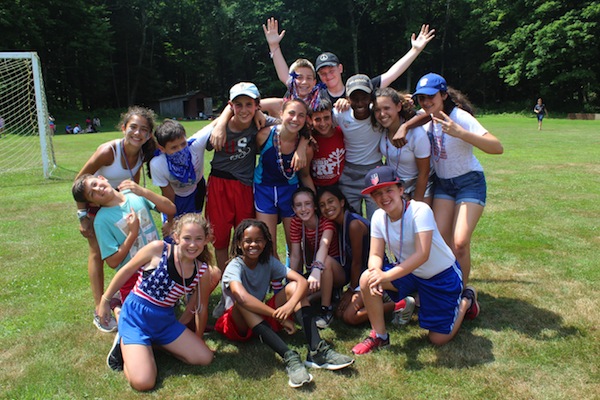

Safe, healthy and respectful

Campers at Pennsylvania’s Camp Havaya. (photo from Camp Havaya)

In Pirkei Avot (Ethics of Our Fathers), Ben Zoma says, “Who is honourable? One who honours others.” The Foundation for Jewish Camp’s Shmira Initiative “aims to make camps safe, healthy and respectful model communities. Shmira, in Hebrew and in the vernacular of Jewish summer camp, means guard duty, embodying the social and individual responsibility every community member has to ensure a safe environment.”

For some camps, the initiative provides practical training that has been needed for some time. But, at Camp Havaya in Pennsylvania, camp director Sheira Director-Nowack told the Independent that they have been operating on the initiative’s principles for many years.

“We have people who go by ‘he,’ by ‘she’ and by ‘they,’ as rabbis, teachers, students, educators, campers and staff,” said Director-Nowack of the camp, which is part of the Reconstructionist movement. “So, for us, the sexual harassment piece is something we’ve always discussed, have always had a policy for. I used to work at a camp that did not have that defined as clearly and they had some real challenges. We don’t have some of those challenges here, because it’s very up front and very clear – how you treat all people, not just insofar as gender, but in all areas of inclusion.”

At Camp Havaya, respect is constantly discussed.

“The name of our camp mascot is Howie Bee,” said Director-Nowack. “We talk about ‘how we be,’ using that as a fairly common statement to talk about how we should treat each other with respect, kindness … better than you’d want to treat yourself, you’d want to treat the other person … and, not just as a Jewish phenomena, but as a human phenomena.”

While Director-Nowack acknowledged that, every so often, they run into power conflicts in a relationship, they try to ensure it never gets near the point of harassment.

At Camp Havaya, she said, flirtation is discouraged. For example, there are strict rules as to what clothing is acceptable. Everyone must wear shirts at all times and clothing should be loose fitting. They also have no boys against girls competitions. Instead, all sports are open to everyone and, while everyone swims together, there are rules about appropriate swimwear.

Language and attitude is another area that is closely monitored at the camp. “We don’t use the word ‘broad’ or ‘chick,’ we don’t use a lot of derogatory terms,” said Director-Nowack. “We don’t make jokes at other people’s expense.

“We want everyone to treat each other how they would treat their own family or themselves…. There’s not a constant need for romance or underlying things that go into that modern love thought and, because of that, we don’t see certain behaviours that other places might see.”

The concepts of the #MeToo movement are discussed at camp, as are other relevant topics, like Black Lives Matter and the Israeli-Palestinian conflict.

“Our constituency is made up of people who are interested in these things … also, things like respect for people with special needs, inclusivity, race, culture and minorities,” said Director-Nowack. “We don’t talk about these things because they’re hot topics. We were talking about them before they were considered cool to talk about.

“We also give the credit to younger people, because it is them who are changing the verbiage, changing ideas. They are bringing them to us and we are bringing them to camp, because, if camp is a microcosm of society, then we want to be part of that.”

If and when the topic of sex comes up, Director-Nowack said she teaches her staff to turn the conversation back to the camper and ask why he or she is wondering about it.

Camp Havaya has a no-sex policy. If inappropriate behaviour is observed, Director-Nowack said, ‘We don’t punish people for behaviour, but I may or may not ask them if camp is the appropriate place for it. I don’t feel like there’s any place at camp where you could be sexual appropriately, and that’s what we talk about.

“We don’t hook up in the middle of the woods – that’s just not what we do. And, we really don’t have a lot of that. I don’t think I’d kick someone out of camp just because they kissed someone. But, I’d say something like, ‘I just walked passed you kissing … not what I want to see, not OK, not cool.’ If it got further than that, it would depend on the kid, the parent, the discussion and the situation. We’re dealing with human beings and we have an environment that’s not constant.”

Still, staff members do talk with campers about consent, in an effort to ensure all of them are comfortable in their own space at all times.

“Our goal is to create young leaders in the Jewish community who are thoughtful and intelligent, and who are, therefore, going to go out and lead a Jewish life and know themselves,” said Director-Nowack. “We love that some people find their love and their relationships at camp. But, I also love that people find their independence at camp … or that they want to lead a more productive Jewish life without a partner…. We want our kids and staff to leave camp as people who are going to make decisions guided by some basic values.”

For more information on the Shmira Initiative, visit jewishcamp.org/shmirainitiative.

Rebeca Kuropatwa is a Winnipeg freelance writer.

We do more than lift our feet

In Rachel Kadish’s book The Weight of Ink (Mariner Books, 2017), the fictional Rabbi Moseh HaCoen Mendes, living in London, England, in the year 1657, writes a letter to Rabbi Manasseh ben Israel in Amsterdam (who was a real person), using the phrase “we lift our feet.”

In the time the novel was set, the Inquisition in Spain and Portugal was still raging but Holland had opened its doors to refugees. Ben Israel traveled to England to try and persuade Oliver Cromwell to allow Jews back into the country, from which they had been expelled in 1290. His argument was that Jews had to be present in every country if the Messiah was to arrive in 1666. While he didn’t manage to open up England to Jewish immigration, Cromwell did permit the 20 Jewish families then living in London in hiding, pretending to be Christians, to live openly as Jews. It proved in the end to be the thin edge of the wedge.

In this letter of consolation to ben Israel, Kadish has Mendes write the following passage: “Our life is a walk in the night, we know not how great the distance to the dawn that awaits us. And the path is strewn with stumbling blocks and our bodies are grown tyrannous with weeping, yet we lift our feet. We lift our feet.”

I was struck by the fatalism of Kadish’s rabbi. He was expressing a common outlook of religious people in the era – that our lives on earth are lived in a vale of tears, and that our hopes must centre on the beyond. And yet, the Jewish philosophy of life has always been that we must live the life we have here on earth to the fullest. Different from some other views, we deny that our lives should be lived solely in the hope of some future reward.

It is true that, come what may, our role is to “lift our feet” and keep on going. This is a staple of Jewish thinking. We keep on going. We keep on trying. We are the nation of try. If we surrender to the obstacles we face, we are beaten before we start. There is so much around all of us, whatever our background, that can be discouraging, but we can’t allow it to get us down.

Persistence in the pursuit of the goals we seek is a hallmark of Jewish life, and of successful people of every persuasion. We are not easily deterred. Our parents, like many others of immigrant origins, worked their whole lives to try and ensure that their children would get an education and a better start in their lives than was the case for them. Many Jews have gravitated to the research fields, where years of effort are required to achieve results.

Many large enterprises that mark the commercial landscape were once small businesses initiated by Jewish entrepreneurs. From banking, to groceries, from the shmatte (rag) business, to high fashion, it is difficult to find an area of economic activity where Jews have not shown their hand. Remember Bugsy Siegel and Murder Inc.?

Our seeming job in this life is to keep on keeping on. But many of us continue to search for a rationale for human existence. We know that the struggle for survival is in the nature of all living things. That is nature’s imperative. As thinking humans, though, many of us seek other reasons for our being, explanations beyond mere survival. We do not know how long our trip will be before we see the “dawn,” but, in the meantime, many of us are not satisfied that just reproducing ourselves is enough to justify the existence of the universe we are experiencing.

For Jews, the business of survival over the years has been an interminable task accompanied by incalculable losses. But, though few in number, we have survived and, where we have had the tools of defence, we have prevailed. Our religious say we are here to celebrate the glory of G-d, in whose image we have been created. Oh yes, and we are also supposed to provide a model so that all peoples will come to recognize His Oneness and supremacy. It has been a painful task, and not many of us are ready to own up to that particular role.

In these days, when religious speculation about life’s purposes is far from the central issue of our time, it is still important in the lives of millions of people. Even for those of us who are not among them, many of us would like to believe there is some purpose in our lives beyond mere existence.

Many people devote a good part of their thinking and their actions to improving the lives of others beyond their immediate circle, and they draw some sustenance and psychic reward from those efforts. Some people believe that certain issues are more important than even their own lives and, indeed, they stand ready to lay down their lives, if need be, in defence of these ideas.

Helping others and a willingness to die for our beliefs both point to things that we value beyond mere existence. Yes, we go on “lifting our feet,” but with principles that guide us until we reach the “dawn.”

Max Roytenberg is a Vancouver-based poet, writer and blogger. His book Hero in My Own Eyes: Tripping a Life Fantastic is available from Amazon and other online booksellers.

Editor’s Note: This article has been edited to make clear that Rabbi Moseh HaCoen Mendes is a fictional character.

Talks on animals, ethics

Jeffrey Cohan of Jewish Veg speaks at a few local venues next week. (photo from Or Shalom)

There is no disputing the notion that God intended for us to eat a vegetarian diet, though eating meat out of necessity is permitted, according to Jeffrey Cohan, executive director of Jewish Veg, who will be in Vancouver next week for three presentations on animals and ethics.

Cohan’s father passed away at the age of 52 from a heart attack, when Cohan was 12 years old. “That’s always been in the back of my mind – what I can do to avoid the same fate,” Cohan told the Independent. “But, for the first 40 years of my life, I was a passionate meat eater and, although I was in good shape, I knew I needed a dietary change, as my cholesterol was up to 100 and I was approaching the age where my dad experienced heart disease.”

Cohan recalled a Simchat Torah when he was in his early 40s. The Torah reader came to a verse wherein God says to eat only plants and, for the first time, the possibility of being a vegetarian resonated with Cohan, and he and his wife immediately changed their diet. That was about 11 years ago.

“Then, I started researching intensively what the rest of the Torah and other Jewish texts said about this issue,” said Cohan. “I found out about an organization called Jewish Vegetarians of North America (JVNA). I was very excited. It was getting word out that this is what the Torah and our tradition actually says. At the time, I was working at the Jewish Federation of Greater Pittsburgh.”

Looking further into JVNA, Cohan learned, to his dismay, that it was run by only two volunteers, had an outdated website and no real relationships with the institutional Jewish community. This spurred him to go to New York to meet with these volunteers and a few others who were involved. He gave a presentation about what they could do to build up the organization. They asked him to become JVNA’s executive director – and Cohan said yes.

Since then, JVNA, which is now called Jewish Veg, has gone on to form relationships with some of the biggest Jewish organizations, said Cohan, including “those that deal with the demographic group most receptive to our message – young adults – partnering with Hillel.

“We created the first-ever vegan Birthright trips,” he added. “It’s been very gratifying. We are heading to Vancouver next, which is pretty exciting, being the first time we’ll give presentations in Canada…. Judaism, even when we were living in ghettos in Europe, does not exist in isolation. It is affected by external society to a great extent. Especially in America and especially in the 20th and 21st centuries in America and Canada, it’s been a two-way relationship.

“If you look at every social justice movement that has achieved success in the U.S. in the last 120 years – women’s rights, organized labour, the civil right movement, the LBGTQ movement – every one of these movements has had Jews involved in the leadership,” he said. “And this movement cannot be the exception. It goes back to the very raison d’être (reason for being) in Judaism, which is that we weren’t just given the Seven Laws [of Noah]. We were given a much higher bar to live up to. And, therefore, it is incumbent on the Jewish community, on this movement, to be at the forefront as we have been in other social justice movements. That’s exactly why Jewish Veg’s work is so important, because we’re mobilizing the Jewish community.”

According to Cohan, the work Jewish Veg is doing is inspiring the Christian community to follow suit. As an example, he said he was told by a longtime member of the Unity Church that they are creating a movement within their faith called Unity Veg.

Israel has become one of the most the most vegan-friendly countries in the world, said Cohan. “We actually … point towards Israel as an example for Canadian and American Jews to follow,” he said. “Jews speak on college campuses here [in the United States] about what’s going on in Israel and why they should be following its lead.”

While Cohan’s trip to Vancouver is the first for Jewish Veg in Canada, he is planning to soon speak in Toronto, Montreal, Winnipeg, Calgary and Edmonton.

Cohan hopes all people will become vegetarian one day, but his current aim is to meet people where they are. “We have something called our Veg Pledge program, which you can see on our website, which helps people transition to plant-based diets,” he said. “We don’t just come in, love them and leave them. We give them an opportunity to use our free resources to transition to plant-based diets at the pace that works for them.

“The way it’s structured,” he explained, “is that you start with a pledge, which can either be sticking your toe in the water or diving in head first, based on your comfort level. We really believe that helping people with the how is just as important as the why.”

During his visit here, Cohan will make three presentations: one hosted by the Vancouver Humane Society on Oct. 16, 7 p.m., in the Alma Vandusen and Peter Kaye rooms at Library Square Conference Centre; one at Or Shalom Synagogue on Oct. 18, 7:30 p.m.; and one at the University of British Columbia on Oct. 19, 1:30 p.m., hosted by Hillel BC at a Schmooze & Schmear gathering.

“I think a question you’ll hear many Jewish people ask is, ‘How does the Torah apply to our modern lives?’” said Shelley Stein-Wotten, program coordinator at Or Shalom. “We found it fascinating that Jeffrey’s own path to going vegan stemmed from his study of Torah and we wanted to provide an opportunity for him to share his story and create a space to have an open dialogue around if, as individuals and as a community, we can establish a Jewish framework to address climate change and make healthful food choices, which have inherent connections.”

Rebeca Kuropatwa is a Winnipeg freelance writer.

The ethics of cloning

Prof. Arthur Schafer, head of the Centre for Professional and Applied Ethics at the University of Manitoba. (photo from Arthur Schafer)

After a few Chinese researchers recently released a report about their successful cloning of monkeys, the ethics debate about both cloning and the use of monkeys for research reignited.

“It’s not the first time primates have been cloned,” University of Manitoba philosophy professor Arthur Schafer told the Independent, “but it is the first time it has been done by this method.”

A primate is a zoological classification for mammals such as humans, apes and monkeys that are distinguished by, among other things, higher intelligence than other animals.

“The method previously used for cloning primates was called ‘embryo splitting.’ That’s what happens when a mother has identical twins,” explained Schafer, who heads the Center for Professional and Applied Ethics at the U of M and lectures on the ethics of cloning. “The method they used [in China] is called ‘the Dolly Method,’ named after the famous cloning of Dolly the Sheep. Dolly the Sheep was cloned from the breast tissue of the animal being cloned. (Dolly was named after Dolly Parton.) They used an adult cell.”

An advantage of this method over the cell-splitting technique is that you have the potential of getting many more clones, said Schafer. With cell-splitting, you can only get two.

With respect to the ethics of cloning and of using monkeys for research, Schafer said, “The first point is that the success rate is very low – two out of 60. They produced a number of additional embryos that didn’t result in live births or healthy animals.

“With Dolly the Sheep, the success rate was even lower…. Well over 200 clones of Dolly were produced to get one successful live birth of a healthy Dolly clone.”

Another important question is whether or not this research will make human cloning more likely. At present, a major reason why creating a human clone would be unethical is because the chances of the baby being born severely impaired physically or mentally are very high. “No ethical physician would want to use this as reproductive technology or would participate in it, because the chances of getting a healthy baby would be small,” said Schafer.

He said, “The technology will get better and better and could, eventually, maybe in the not-too-distant future, be safe and effective. And, at that point, it might become a viable way for a couple to have a baby. So, if you think this reproductive technology is ethically objectionable for humans, then you’d be opposed to primate experimentation on those grounds.”

For those whose primary objection to human cloning “is that it’s ineffective and unsafe” and “that you have a lot of stillborn babies and that those born alive would have a high chance of being severely impaired,” improvements of the technology could be a reason for primate testing.

Schafer said that human reproductive cloning could become as effective as in vitro fertilization (IVF).

“People got very irate in 1978 when a baby was born by IVF,” he said. “They thought this was a method that was morally wrong – a crime against the baby, against society. But somehow, it is turning out to be not so unsafe, not significantly less safe than natural childbirth. And it can enable, maybe a couple million couples, to have babies who wouldn’t otherwise be able to.”

Schafer postulated that, just as IVF is no longer on the current ethics chopping block, so too cloning may someday reach the point of being considered safe enough to be an acceptable reproduction method.

“The whole debate is about if it is unethical and, if yes, why?” said Schafer. “I think everyone agrees that safety and effectiveness is critical. But, once we get beyond that, some feel it is a case of playing God.”

Currently, human cloning research will land you in prison. But, animal cloning research is allowed in some countries on the grounds that it is for the purpose of making higher-producing animals – a chicken that can lay more eggs, for example, or a cow that can produce more milk or is better at putting on meat. Cloning research for such purposes has been allowed and has been given large financial resources.

“So, where it’s permitted, the rationale is that this technology will enable us to do medical research and to advance scientific knowledge in a way that will improve the quality of lives,” said Schafer. “It’s a matter of weighing and balancing your hope for benefit against your fear of repercussions.

“In discussions I’ve had with Jewish authorities, who although are divided amongst themselves, the predominant strand stresses that one value trumps all others – that being human life. So, you could use that as the basis for an argument that any technology that would hold promise of saving human lives would be favoured by Judaism.”

There is still the concern about conducting research on monkeys.

“Many people, and not just animal rights advocates, regard primates as the last animals, eligible animals, for experimentation,” said Schafer. “They are the most intelligent, the most like us. They have highly developed brains and nervous systems. They are, in many ways, more intelligent than human beings who are impaired or adults who have dementia or are in a vegetative state. We don’t allow medical research on severely cognitively impaired human beings, so how could it be ethical to do research on these closest relatives in the animal world, primates?”

Schafer said there has been a drastic decline in the amount of research done on primates in general, and monkeys in particular.

“You can’t justify the risks of severe harm on primates,” said Schafer. “Either they shouldn’t be used at all or, a compromise position, they should only be used as a last recourse for medical research – only used when incredibly necessary and for a supremely important goal.”

It is on these lines that scientists justify some of the research being done on Alzheimer’s and Parkinson’s.

“They believe this technology will allow them to produce animal models that will facilitate research on diseases such as Alzheimer’s and Parkinson’s,” said Schafer. “So, do we need to do this research? Are there other better alternatives? Is the moral [price of] experimenting on primates too high to justify the medical benefits it hopes to achieve? These are all issues that are critical to the debate.”

Rebeca Kuropatwa is a Winnipeg freelance writer.