Skip to content
  • Home
  • Subscribe / donate
  • Events calendar
  • News
    • Local
    • National
    • Israel
    • World
    • עניין בחדשות
      A roundup of news in Canada and further afield, in Hebrew.
  • Opinion
    • From the JI
    • Op-Ed
  • Arts & Culture
    • Performing Arts
    • Music
    • Books
    • Visual Arts
    • TV & Film
  • Life
    • Celebrating the Holidays
    • Travel
    • The Daily Snooze
      Cartoons by Jacob Samuel
    • Mystery Photo
      Help the JI and JMABC fill in the gaps in our archives.
  • Community Links
    • Organizations, Etc.
    • Other News Sources & Blogs
    • Business Directory
  • FAQ
  • JI Chai Celebration
  • JI@88! video

Recent Posts

  • Eby touts government record
  • Keep lighting candles
  • Facing a complex situation
  • Unique interview show a hit
  • See Annie at Gateway
  • Explorations of light
  • Help with the legal aspects
  • Stories create impact
  • Different faiths gather
  • Advocating for girls’ rights
  • An oral song tradition
  • Genealogy tools and tips
  • Jew-hatred is centuries old
  • Aiding medical research
  • Connecting Jews to Judaism
  • Beacon of light in heart of city
  • Drag & Dreidel: A Queer Jewish Hanukkah Celebration
  • An emotional reunion
  • Post-tumble, lights still shine
  • Visit to cradle of Ashkenaz
  • Unique, memorable travels
  • Family memoir a work of art
  • A little holiday romance
  • The Maccabees, old and new
  • My Hanukkah miracle
  • After the rededication … a Hanukkah cartoon
  • Improving the holiday table
  • Vive la différence!
  • Fresh, healthy comfort foods
  • From the archives … Hanukkah
  • תגובתי לכתבה על ישראלים שרצו להגר לקנדה ולא קיבלו אותם עם שטיח אדום
  • Lessons in Mamdani’s win
  • West Van Story at the York
  • Words hold much power
  • Plenty of hopefulness
  • Lessons from past for today

Archives

Follow @JewishIndie
image - The CJN - Visit Us Banner - 300x600 - 101625

Tag: Beethoven

Milestone performance

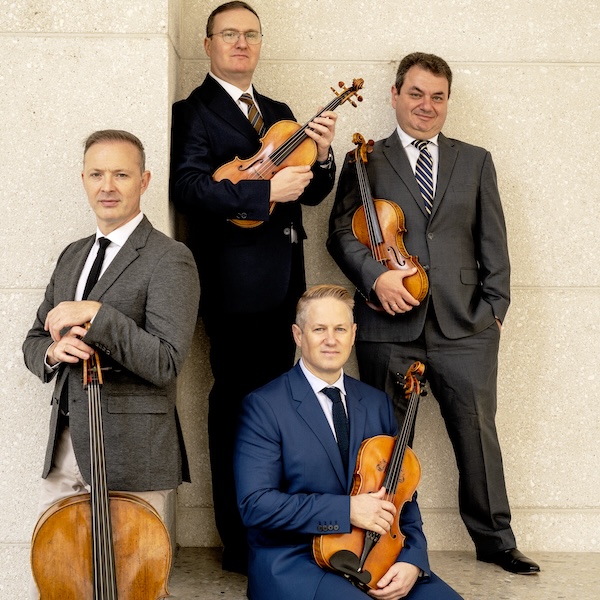
photo - The Jerusalem Quartet, left to right: Kyril Zlotnikov, Alexander Pavlovsky, Ori Kam and Sergei Bresler
The Jerusalem Quartet, left to right: Kyril Zlotnikov, Alexander Pavlovsky, Ori Kam and Sergei Bresler. (photo © Felix Broede)

The Vancouver Recital Society welcomes the multiple-award-winning Jerusalem Quartet back to the city for a concert at the Vancouver Playhouse Oct. 19. The program features works from Hadyn, Janácek and Beethoven.

This year marks the 30th anniversary of the establishment of the Jerusalem Quartet. Since their first appearance for the VRS in 2001, the ensemble has become a regular and beloved presence on the world’s concert stages. They have appeared many times in Vancouver, and a highlight in the annals of the VRS was their five-concert performance of all the Shostakovich string quartets in the Telus Theatre at the Chan Centre in 2006. They are returning to Vancouver to perform the same program they played in their Wigmore Hall debut 25 years ago, an appearance that launched them to international fame. It features Hadyn’s Quartet in B-flat major, Op. 76, No. 4 (“Sunrise”); Janácek’s Quartet No. 1 (“Kreutzer Sonata”); and Beethoven’s Quartet in B-flat major, Op. 130, with the Grosse Fugue finale, Op. 133.

The Jerusalem Quartet is Alexander Pavlovsky (first violin), Sergei Bresler (second violin), Kyril Zlotnikov (cello) and Ori Kam (viola). Both individually and as the quartet, the musicians have performed around the world, garnering numerous accolades.

Born in Ukraine, Pavlovsky immigrated with his family to Israel in 1991, and is a graduate of the Jerusalem Academy of Music and Dance.

Bresler was also born in Ukraine. He started to play violin in age of 5 and, at the age of 12, gave his first recital. He immigrated to Israel in 1991, where he studied at the Rubin Academy of Music and Dance in Jerusalem.

Zlotnikov also studied at the Rubin Academy, having begun his studies at the Belarusian State Music Academy, and Kam, who was born to Israeli parents in La Jolla, Calif., grew up in Israel and studied there, as well as in the United States and Germany. Kam started his musical education at the age of 6, began playing the viola at 15 and had his debut at age 16. 

The Jerusalem Quartet has found its core in a warm, full, human sound and an egalitarian balance between high and low voices. This approach allows them to maintain a healthy relationship between individual expression and a transparent and respectful presentation of the composer’s work. It is also the drive and motivation for the continuing refinement of their interpretations of the classical repertoire, as well as exploration of new epochs.

In 2019, the quartet released an album exploring Jewish music in Central Europe between the wars and its far-reaching influence, featuring a collection of Yiddish cabaret songs from 1920s Warsaw, as well as works by Schulhoff and Korngold. The second instalment of their Bartok quartet recording was released in 2020. Starting this year, the quartet began recording exclusively for BIS records, with their first release featuring three quartets by Shostakovich: Nos. 2, 7 and 10.

Although the Quartet No. 2 was composed in 1944, it makes no direct reference to the war; yet, this is a substantive work, dark, powerful and, at times, dissonant. Quartet No. 7, consisting of three short movements played without interruption, is an enigmatic and deeply personal work dedicated to the memory of the composer’s wife. For all its questioning and complex inner references, Quartet No. 10 is among the most immediately appealing of Shostakovich’s later works. By this stage in his life, his music tended to speak in a quieter voice and to a more intimate audience.

The Jerusalem Quartet’s performance at the Playhouse on Oct. 19 starts at 3 p.m., but there is also a pre-concert talk, at 2:15 p.m. For tickets, visit vanrecital.com. 

– from vanrecital.com and jerusalem-quartet.com
Format ImagePosted on September 26, 2025September 24, 2025Author & Jerusalem Quartet, Vancouver Recital SocietyCategories MusicTags anniversaries, Beethoven, classical music, Hadyn, Janácek, Jerusalem Quartet, milestones, Shostakovich
Lanyi’s live Canadian debut

Lanyi’s live Canadian debut

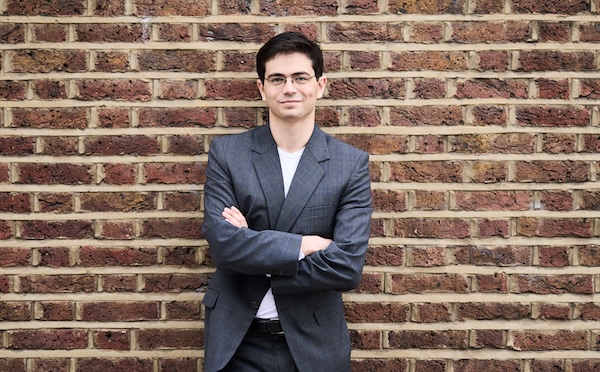
The Vancouver Recital Society hosts London, England-based pianist Ariel Lanyi on March 3. (photo © Kaupo Kikkas)

“Art is there to remind us that there is something bigger and greater than the present moment, something that will remain long after we are gone, which is worthy of our devotion and commitment,” pianist Ariel Lanyi told the Independent in a recent interview. Lanyi will perform an afternoon concert at Vancouver Playhouse March 3.

Hosted by the Vancouver Recital Society, Lanyi will play works by Ludwig van Beethoven (1770-1827), Frédéric Chopin (1810-1849) and Max Reger (1883-1916). In a Facebook post, the London, England-based pianist noted his pleasure at working on Reger’s Variations and Fugue on a Theme by Bach, calling it an “underrated masterpiece of the late-Romantic era” that he couldn’t wait to bring to the stage in 2024.

“Max Reger had a problem: writing fugues was too easy for him. He could jot down fugues with the same ease that Picasso could scribble drawings. Hence, his music sometimes falls into a trap of gratuitous polyphony. However, when he put his heart and soul into a work, as he did with the Bach Variations (which he considered to be his finest work), the result is worthwhile,” Lanyi explained to the Independent. “We hear a multitude of styles in this work – at times, we hear the world of Brahms and his traditional harmonic language; at times, we enter the post-Wagnerian sphere, and we even get a glimpse of more decadent music that was yet to be written. Still, it hangs together organically, and comes to a rousing ending, as all threads convene and the piano truly emulates the sound of the organ. 

“The reason this work is underrated and underplayed is quite obvious,” he added. “People tend to avoid Reger, and it takes a Herculean effort to learn this work. However, I earnestly believe that it is a masterpiece of piano literature.”

Last spring, Lanyi was awarded the Prix Serdang, which is given to young pianists at the beginning of their careers who excel in musicianship and artistic vision. The head of the selection panel, Austrian pianist Rudolf Buchbinder, said of Lanyi: “His playing is precise, nuanced and virtuosic, but he is no superficial virtuoso. What sets him apart is his ability to delve deeply into the music and to establish a connection with it. He doesn’t simply play the notes, he lives the music, seeks to capture its essence, and reflects it with extraordinary intensity, sensibility and expressive maturity.”

If one reads Lanyi’s posts and blogs, one gets a hint of the research that he puts into his performances, which have garnered critical acclaim. In addition to the Prix Serdang, Lanyi won third prize at the 2021 Leeds International Piano Competition. Also in 2021, he was a prize winner in the inaugural Young Classical Artists Trust (London, England) and Concert Artists Guild (New York) International Auditions, as well as being a finalist in the Arthur Rubinstein International Piano Master Competition. Other honours for the 26-year-old pianist include first prize at the 2018 Grand Prix Animato Competition in Paris and first prize in the 2017 Dudley International Piano Competition in the United Kingdom.

Born in Jerusalem, Lanyi studied piano at the Conservatory of the Jerusalem Academy of Music and Dance and moved to London in 2015 to study at the Royal Academy of Music. He remained in the city after graduating in 2021. Last month, he was among those selected by the Royal Academy for a 2023-2024 associate honour, which will be conferred in April: the award recognizes former students who have made “significant contributions to the musical landscape.”

Lanyi has performed around the world, both as a soloist on his own and with orchestras, and as a chamber musician. When he plays concertos or chamber music, he said of his preparation, “I always make sure to study the full score, in order to grasp the music from all points of view, not just through the prism of my individual part. When playing alone, obviously, this doesn’t apply.”

Among the highlights listed on Lanyi’s website for this season is the VRS concert next month. In 2021, during COVID, the recital society shared Lanyi’s Virtually VRS recorded performance on its YouTube channel. The March concert will be his live debut in Canada. In addition to the Reger composition, it will feature Beethhoven’s Sonata No. 30 in E Major, Op. 109; Chopin’s Mazurkas, Op. 59; and Chopin’s Polonaise-Fantaisie in A-flat major, Op. 61.

“Beethoven’s Sonata Op. 109 is a work that has been in my repertoire for quite awhile,” Lanyi told the Independent. “It was the first of the late Beethoven sonatas I worked on as a teenager, so coming back to it now feels enormously gratifying, as my idea of it has evolved in the years since. (It is also, if I remember correctly, the first work for piano to have ever moved me to tears.) The first two movements are concise and contrasting – from the relative serenity of the first movement to the fearful obsessiveness of the second. The third movement begins and ends with a hymn of gratitude and, in between, we are taken on a comprehensive journey through six distinct variations, each inhabiting its own world, deviating from the theme in the most fascinating ways while retaining the same epicentral connection to it.

“The two Chopin works in this program – the Op. 59 Mazurkas and the Polonaise-Fantaisie, Op. 61 – both stem from the composer’s late period, which is characterized by harmonic and structural exploration we seldom find in his earlier works. The mazurkas are elegant and poignant at the same time – in the midst of mellifluous music, Chopin finds ways to express intense distress with bold, dissonant harmonies, often left exposed. The Polonaise-Fantaisie is among his most symphonic works, I find. He never wrote any symphonies and, in my view, some of the late works make up for that by using the piano orchestrally. In the slow middle section of the Polonaise-Fantaisie, we almost hear a foretelling of Bruckner in the long, interwoven lines, which lead to the most unexpected places.”

Lanyi said he doesn’t have any specific formula for choosing performance repertoire.

“Usually, I have an idea of one or two central works I want to include in a program, and look for works which will complement them in a balanced way,” he said. “In the case of this program, the Reger has been on my mind for many years, so I was looking to combine it with works which aren’t as heavy.”

Lanyi’s March 3 performance takes place at 3 p.m. and is followed by a talkback. For tickets, visit vanrecital.com/concert/ariel-lanyi-2. 

Format ImagePosted on February 9, 2024February 8, 2024Author Cynthia RamsayCategories MusicTags Ariel Lanyi, Beethoven, Chopin, piano, Reger, Vancouver Recital Society, VRS
Dancing to Beethoven

Dancing to Beethoven

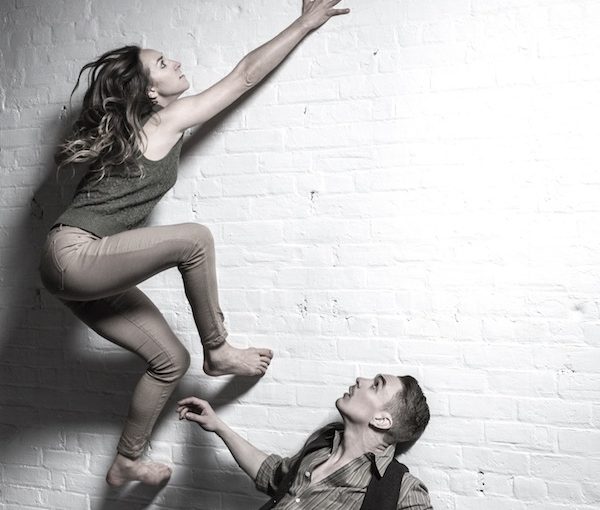
ProArteDanza’s The 9th will première in Vancouver before heading home to Toronto. (photo by Alexander Antonijevic)

Ten years after its conception, ProArteDanza’s The 9th, a full-length contemporary dance performance, will have its world première in Vancouver at the Chutzpah! Festival Oct. 26-28.

“We were originally planning to première it in Toronto for November,” Roberto Campanella, co-artistic director of ProArteDanza, told the Independent in a phone interview. “We’re opening in Toronto Nov. 6, which is a week-and-a-half after Chutzpah! And then Mary-Louise [Albert] called and said, ‘How do you feel about bringing The 9th here?’ And I said, ‘Well, it would not be a bad idea for everybody involved to have that opportunity…. We love being at Chutzpah! We’ve been before, we have a longtime relationship with Mary-Louise.” (Albert is artistic managing director of Chutzpah!)

Campanella created The 9th with ProArteDanza co-artistic director Robert Glumbek in collaboration with the dancers. Inspired by Beethoven’s Ninth Symphony and performed to the score, the show has four movements and is about 70 minutes long, with no intermission.

Each dance movement was created and mounted on its own: the first, then the third, the second and, finally, the fourth, which the company performed this past June in Trois-Rivières, Que., for the festival called Dansencore. Regarding the full-length work, Campanella said “it’s one thing to put on one movement at a time separately, and we’re realizing it’s a completely different beast because we have to also layer [each movement] with the concept of a wall or, in this case, the symbol of the Berlin Wall, so it’s taking almost a different life for me and for Robert…. And it’s only eight dancers and it’s going to be incredibly physical and athletic and intense, so we also have to distribute our dancers in a way that we don’t kill them in the first movement.”

Ten years ago, Dansencore commissioned Campanella and Glumbek to create the first movement. At the time, the festival was celebrating its 15th anniversary, as well as the establishment of Trois-Rivières, with Beethoven’s Ninth, said Campanella. “The idea was that there were different choreographers allocated for the four different movements … and we put the whole thing together probably in one day or two with the live orchestra and the live choir, so it was a mega-super-project. It all came together then.

“What we decided to do, with the permission, of course, of the festival, we said, ‘Can we present out first movement only for our company, ProArteDanza?’ We were granted permission and we presented just the movement itself as part of a mixed program the year after, or the same year, here in Toronto. Then we looked at each other, Robert and I, and said, ‘Why don’t we do a long version of it? Why don’t we continue? But let’s take our time. Why don’t we continue on the same path we’re doing, a movement at a time, we present it, we look at it and see what comes out of it?’

“And then, in 2010, I was in Berlin shooting a movie and I had a few days off,” continued Campanella. “I went to the Berlin Wall, which is essentially rubble, it’s just bricks, there isn’t much, but there are these audio-visual stations, where you can put headphones on and have a look at old footage of when they were building it; it’s pretty much the history of the wall. And there was one image that still, I would say, hit the spot, which was these two families on [opposite] sides of the wall waving at each other, probably they were related to each other … and the waving at each other was different from one side of the wall and the other. And then I thought, could it be that this [image] is actually our Ninth Symphony concept? So, I talked to Robert and I said, ‘Can we explore that and see where it goes?’ And that’s when the ball started rolling for us, but always maintaining the idea that we were not going to present the whole thing until we had all the four movements done and presented.”

The timing of The 9th’s completion comes with a few coincidences, said Campanella. Most notably, the final concert date, in Toronto, is Nov. 9 and, he said, “Nov. 9, 1989, is the actual day of the fall of the Berlin Wall,” so the show will occur exactly 30 years after the wall’s fall. He also noted that ProArteDanza’s show, which is called The 9th, ends on the ninth and that, at the 1989 celebration of the fall of the Berlin Wall, Leonard Bernstein conducted the Ninth Symphony.

For Campanella, the fall of the Berlin Wall is “about freedom, it’s about brotherhood, it’s about unity and diversity, celebrating all of that.”

In addition to the challenges of portraying these concepts, Campanella said it’s been fascinating to reimagine the movements that were created in the early years.

“We look at what we did 10 years ago and we cringe,” he said. When he and Glumbek watched videos of the piece, “you should have heard us, we were thinking, ‘Who choreographed that?’”

The pair have broken through many artistic walls since then in their respective careers, said Campanella, that they decided “this is not us anymore and so we are going to revisit it, reassess it, reevaluate what we’ve done and why.”

He pointed out that the original first movement was also created by a different cast. “There is only, I think, one [dancer] left who’s done everything. So, there are things that are born with a certain cast but there is a turnover of cast, [so] it will inevitably take a different direction naturally, as well as us being different now than 10 years ago.”

Part of what’s great about dance, he said, “is that you have the ability to remount things. A painting, once it’s done, it’s done. You’re going to hang it somewhere and you’ll look at it; it’s done, it’s over. For us, we have that ability to remount and re-look at it and say, ‘Who am I now that’s going to be in this current version of it?’ So, it’s been a very fascinating process.”

Campanella said, in creating The 9th, he and Glumbek “took our time because we really wanted to respect first and foremost the score of this magnificent piece of artwork,” referring to Beethoven’s composition.

In The 9th, more than one version of the symphony is used. Of those that were not chosen, Campanella said, “some of the versions are what we think are excruciatingly slow for us. Maybe they are amazing versions for musicians, for the experts, [but] they’re not conducive to the physical movement part of it.”

For tickets to The 9th, visit chutzpahfestival.com.

Format ImagePosted on October 11, 2019October 10, 2019Author Cynthia RamsayCategories Performing ArtsTags Beethoven, Berlin Wall, choreography, Chutzpah!, classical music, dance, ProArteDanza, Roberto Campanella, Rothstein Theatre
Proudly powered by WordPress