Skip to content
  • Home
  • Subscribe / donate
  • Events calendar
  • News
    • Local
    • National
    • Israel
    • World
    • עניין בחדשות
      A roundup of news in Canada and further afield, in Hebrew.
  • Opinion
    • From the JI
    • Op-Ed
  • Arts & Culture
    • Performing Arts
    • Music
    • Books
    • Visual Arts
    • TV & Film
  • Life
    • Celebrating the Holidays
    • Travel
    • The Daily Snooze
      Cartoons by Jacob Samuel
    • Mystery Photo
      Help the JI and JMABC fill in the gaps in our archives.
  • Community Links
    • Organizations, Etc.
    • Other News Sources & Blogs
    • Business Directory
  • FAQ
  • JI Chai Celebration
  • JI@88! video

Recent Posts

  • המלחמות של נתניהו וטראמפ
  • Zionism wins big in Vegas
  • Different but connected
  • Survival not passive
  • Musical celebration of Israel
  • Shoppe celebrates 25 years
  • Human “book” event
  • Reclaiming Jewish stories
  • Bema presents Perseverance
  • CSS honours Bellas z”l
  • Sheba Promise here May 7
  • Reflections from Be’eri
  • New law a desecration
  • Resilient joy in tough times
  • Rescue dog brings joy
  • Art chosen for new museum
  • Reminder of hope, resilience
  • The national food of Israel?
  • Story of Israel’s north
  • Sheltering in train stations
  • Teach critical thinking
  • Learning to bridge divides
  • Supporting Iranian community
  • Art dismantles systems
  • Beth Tikvah celebrates 50th
  • What is Jewish music?
  • Celebrate joy of music
  • Women share experiences 
  • Raising funds for Survivors
  • Call for digital literacy
  • The hidden hand of hate
  • Tarot as spiritual ritual
  • Students create fancy meal
  • Encouraging young voices
  • Rose’s Angels delivers
  • Living life to its fullest

Archives

Follow @JewishIndie
image - The CJN - Visit Us Banner - 300x600 - 101625

Tag: Russia

An opportunity lost

Mykhailo Chomiak edited a Ukrainian-language Nazi newspaper in occupied Poland. It happens that Chomiak was the maternal grandfather of Chrystia Freeland, Canada’s foreign minister.

This fact is a matter of historical record, but apparently Russian operatives were shopping the story around as if it were fresh – and as if they believe Canadians will hold Freeland, and perhaps by extension the Liberal government, responsible for Chomiak’s past.

A writer on the Canadian online media outlet rabble.ca went so far as to accuse Freeland of a cover-up, which is nonsense, since she was acknowledged for her help editing an article on the subject that was written 20 years ago by her uncle, John-Paul Himka, an historian.

Freeland called it “public knowledge that there have been efforts, as U.S. intelligence forces have said, by Russia to destabilize the U.S. political system.… I think that Canadians, and indeed other Western countries, should be prepared for similar efforts to be directed at us.” She is absolutely correct. Russia almost certainly was involved in the U.S. presidential election and may indeed be responsible for the fact that Donald Trump is now in the White House.

Nevertheless, it seemed like a missed opportunity for Freeland not to use the chance to acknowledge some of the complexities and complicities around her grandfather’s history.

Let’s step back for a moment and realize that Canadians are relatively fortunate that, whatever enormous sacrifices Canadian families made during the Second World War, the war itself never reached our shores. For families in Europe at the time, many of whose descendants are, through immigration, now Canadians, the war impacted every aspect of civilian life. Possibly millions of people are responsible for acts of heroism or betrayal that are lost to history. Had it not been for the writings of a member of her own family, Freeland’s grandfather’s story might have been another largely forgotten piece of that war’s far-encompassing awfulness.

Who can estimate how many Canadians have ancestors who engaged in complicity (or worse) with Hitler’s regime, or with Stalin’s, or with any number of less-renowned tyrants and bad ideologies worldwide? We do not rest from seeking redress for the worst crimes during history’s worst times, but behaviours that do not constitute war crimes have rarely received the full attention of the media and public that Chomiak’s case has garnered in the past days. And we certainly do not – and should not – place any blame at the feet of grandchildren for events that took place before they were born. Freeland has done absolutely nothing wrong.

Still … she could have done something better. She could have (and perhaps by the time you read this, she will have) turned this into a teaching moment for Canadians.

The parents or grandparents of some Canadians may have chosen to, or been forced to, engage in actions we see as abhorrent. We cannot change the past. But we can potentially make a better future by acknowledging it, openly identifying wrongs and committing ourselves to better actions than that exhibited by some of our forebears. As examples, present-day Canadians have begun a process of reconciliation around the genocide perpetrated against indigenous Canadians, and Canadian governments have apologized for actions against Japanese-Canadians and the passengers of the Komagata Maru and the MS St. Louis.

In Freeland’s case, she is right to warn Canadians that Russia is attempting to undermine the credibility of our country’s foreign minister. But she should go further and insist that no Canadian – whether the country’s top diplomat or a new Canadian who was sworn in as a citizen yesterday – is guilty of acts undertaken by their grandparents. A few words about the complexity of historical memory could also be helpful. And it would be valuable for the federal government to make a firm public declaration that blackmailing or smearing a Canadian based on the acts of an ancestor will fail in its mission.

Posted on March 17, 2017November 20, 2018Author The Editorial BoardCategories From the JITags Canada, Chrystia Freeland, history, Nazis, reconciliation, Russia
Understanding Onegin

Understanding Onegin

Lauren Jackson as Olga Larin and Josh Epstein as Vladimir Lensky in Arts Club’s Onegin. (photo by David Cooper)

Generally, I don’t think background research is something that should be required in order to fully enjoy a performance; but every now and then a play really needs context, and the viewer becomes lost without it.

So, I would suggest – even to those with extensive Russian literature under your belts – if you have not read Alexander Pushkin’s dramatic poem, “Eugene Onegin,” start there before you see the musical Onegin. The poem contains descriptions of the characters, homes and countryside that add depth of interest that could simply not be communicated on stage.

That’s not to say that Onegin (pronounced “Onyegin”), the musical interpretation of the poem, can’t stand on its own. The singular creation by Veda Hille and Amiel Gladstone, combining the poetry of Pushkin and the opera of Tchaikovsky, is highly entertaining from start to finish.

The supremely talented group of seven performers, including the Jewish community’s own Josh Epstein, executes so many complex harmonies and moving solos, I certainly wasn’t walking out at intermission.

Set in 1819 St. Petersburg, the poem centres on four main characters: a self-proclaimed rakish womanizer, Eugene Onegin; Vladimir Lensky, a romantic poet; Vladimir’s love interest, Olga; and Tatyana, Olga’s sister, who’s in love with Onegin.

At first, Onegin rejects Tatyana, breaking her heart, and turns his attention to Olga, incurring Vladimir’s jealousy and bringing about a duel. Years later, after extensive traveling, Onegin returns to St. Petersburg and wants to be with Tatyana. But, by then, she’s already married, and Onegin realizes he’s wasted his life chasing women he doesn’t care about.

Taking place primarily in rural vacation homes, these well-to-do look for anything to “deal with the boredom of long winters” and come up with hunting, dancing, dueling and falling in and out of love.

The script includes quite a bit of play-by-play, where explanations of who’s who and what’s going on are interspersed with the action on stage. One by one, we’re introduced, in song, to the characters, with tongue-in-cheek descriptions. At one point, even the details of an impending pistol duel are sung to audience – just in case we were a little rough on the regulations.

These “asides” help with the background and also offer some great comedic breaks, often picking up on the satire that winds its way through Pushkin’s original work.

As an added bonus, guests are encouraged to bring their alcoholic drinks into the theatre and raise a glass for a sip every time someone says lebov (love in Russian). This is even facilitated by the cast handing out cups of vodka during the performance.

But there are also some bizarre non-sequiturs, such as when a singer in what looks like a boudoir is given a mic and electric guitar to continue her performance. Though it provided a chuckle, the reason for that choice went over my head.

While the script tries to provide the context I mentioned, it simply can’t make up for what’s lost from the poem, and I couldn’t help feeling “left out” of the framework.

For example, according to one translation of the poem, Onegin’s house is described: “All of the rooms were wide and lofty/ Silk wall paper embellished the drawing room/ And portraits of czars hung on the walls / The stoves were bright with ceramic tiles / There was no need for these things at all / Because he would yawn with equal distraction / At an ancient pile or a modern mansion.”

This paints such a great picture of the lifestyle and ennui of the main character, but not one that I caught onto in the musical.

Besides detailed description of scenery, the poem delves extensively into philosophical discussions, particularly about love, that would come across far better on stage as verbal jousting rather than a sing-song.

Onegin runs until April 10 at BMO Theatre Centre. Visit artsclub.com.

Baila Lazarus is a freelance writer and media trainer in Vancouver. Her consulting work can be seen at phase2coaching.com.

Format ImagePosted on April 1, 2016March 31, 2016Author Baila LazarusCategories Performing ArtsTags Amiel Gladstone, Josh Epstein, Onegin, Pushkin, Russia, Veda Hille
The state of Jewry in Russia

The state of Jewry in Russia

A scene from filmmaker Reuven Brodsky’s documentary Home Movie. (photo by Yevgeny Spivak)

In 1989, the USSR’s emigration gates opened. Responsible for prying them open was a small group of tremendously courageous and patient Soviet Jews (called refusenikim for their denied exit permits) who had fought long and hard for their religious and cultural freedom, with thousands of Western Jews and non-Jewish people of conscience. The Soviet Jewry movement, which began in the United States in the 1960s and spread from there to other countries, including Canada, eventually witnessed 1.6 million Jews and their non-Jewish relations leave for Israel and the West. A thrilling climax, but then what happened?

While it is hard to say how many Jews live in Russia today, estimates are between 400,000-700,000, approximately 0.27%-0.48% of the total Russian population. Since the early 1990s, efforts to revitalize Jewish life in Russia and other former Soviet Union (FSU) countries have been ongoing.

After the dissolution of the USSR, different denominations within world Jewry started operating openly in Russia. Of all the different Jewish religious groups on the scene today, Chabad has probably worked the hardest to bring Jewish awareness to the unaffiliated. It sends its emissaries (usually a couple consisting of a male rabbi and his teacher wife) to Russia and numerous other FSU centres.

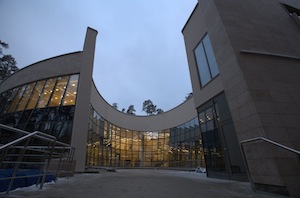
After so many years of not being able to publicly run Jewish institutions, Russian Jewish communities now have 17 day schools, 11 preschools and 81 supplementary schools with about 7,000 students. There are also four Jewish universities. The major towns have a Jewish presence, with synagogues and rabbis. In the past few years, a state-of-the-art Jewish museum even opened in Moscow and a deluxe Jewish community centre containing a small movie theatre, synagogue, mikvah, kosher gourmet restaurant and guest rooms for Sabbath observers was inaugurated in December 2015 in Zhukovka, near Moscow.

photo - The Zhukovka Jewish Community Centre was inaugurated in December 2015
The Zhukovka Jewish Community Centre was inaugurated in December 2015. (photo from Federation of Jewish Communities of Russia via jta.org)

Yet the picture is far from rosy. In an introductory essay to An Anthology of Jewish-Russian Literature: Two Centuries of Dual Identity in Prose and Poetry (2007), book editor Maxim Shrayer critically views Jewish cultural life in post-Soviet Russia: “… my preliminary conclusion is that Jewish-Russian writers whose careers were formed during the Soviet years continue to address Jewish topics in their work, some due to a renewed personal interest as well as the freedom to write about it, others out of cultural inertia. At the same time, younger authors of Jewish origin in today’s Russia have tended to be assimilated and Russianized, resulting in a dearth of Jewish consciousness in their writing.

“Jewish-Russian literature in the former USSR might have found a temporary domain in the pages of such periodicals as the Moscow-based magazine Lekhaim … [one of the] attempts to consolidate, perhaps artificially, a critical mass of writers and readers even as Jewish-Russian culture itself spirals toward disappearance.”

In Jewish Life After the USSR (Indiana University Press, 2003), Prof. Zvi Gitelman claims that, following the breakup, Russian Jews have become increasingly less concerned about intermarriage. Ethnic identity as such seems to be based on antisemitism – even if it is unofficial, popular antisemitism rather than state-sanctioned antisemitism.

Looking to the future, the offspring of these intermarriages are likely to feel less tied to Judaism. Speculatively, they are likely to remain so unless Russian-based Jewish institutions are willing to “reach out” to people who, according to the strict reading of Jewish law, are not considered members of the “tribe,” he argues.

Since 2000, immigration to Israel and/or to the West has slowed down. But, based on past experience, immigration – provided the doors to Israel and/or the West remain open – will likely pick up if antisemitism flares up, if the Russian economy takes a real and prolonged nose-dive or if political-military strife developed in Russia as it has in the Ukraine. As Lee Yaron recently reported in Haaretz, the situation is already changing: in 2015, “15,000 immigrants … came from the former Soviet Union … an increase of over 20% from last year’s figure.”

In the post-USSR age, Jewish culture in Israel and Russia mix in unexpected ways. Gone is my grandparents’ generation who, once out of Russia, never again saw “left behind” family members. Today, many former Russian Jews living in Israel (and vice versa) frequently fly four hours to visit relatives who did not leave. According to the Israeli Ministry of Tourism, there were 60 weekly flights from Russia to Israel, as of the end of December 2015.

But the exchange is beyond familial ties. Here are four examples – two from the arts and two from the sciences.

Israeli filmmakers who left the USSR as children have begun making at least part of their films in Russia. Seven Days in St. Petersburg, written, directed and produced by Reuven Brodsky, is one case in point. Significantly, the protagonists speak both Hebrew and Russian. A few years earlier, Brodsky made the documentary Home Movie, described as, “The final chapter in the breakdown of the director’s family – one of many who did not survive the trials of immigration.”

Also in the film world, just a few months ago, Vladi Antonevicz released Credit for Murder, a documentary dealing with the topic of Russia’s neo-Nazis. As if the subject in and of itself is not dangerous enough to undertake, Antonevicz’s film apparently exposes a connection between the Russian administration and these hate groups. Antonevicz claims that certain Russian politicians are manipulating neo-Nazi activity to further their own political needs. To make this film, Antonevicz infiltrated Russian neo-Nazi groups, secretly investigating an unsolved double murder. He succeeded, but some say his small film crew has had to lay low after completing the film.

Former Russian Jews in Israel (and in the West) have likewise forged profitable positions in the start-up world. Moscow-born Prof. Eugene Kandel, outgoing head of Israel’s National Economic Council, analyzes this phenomenon. In a July 29, 2015, Forbes blog by Scott Tobin, the professor is quoted as saying, “Many Russian-born techies now working in Israel are especially innovative because the Soviet state traditionally under-invested in computer hardware and other technology, even as the state was scrambling to develop weapons and related technology to win the Cold War. That left engineers to fend for themselves and develop creative workarounds in many businesses.”

Finally, medical tourism from Russia has blossomed. Many well-to-do Russians come to Israel to be treated by Russian- and Hebrew-speaking doctors, nurses, technicians and medical secretaries (see imta.co.il).

A cause for hope and promise? Stay tuned.

Deborah Rubin Fields is an Israel-based features writer. She is also the author of Take a Peek Inside: A Child’s Guide to Radiology Exams, published in English, Hebrew and Arabic.

Format ImagePosted on February 12, 2016February 11, 2016Author Deborah Rubin FieldsCategories WorldTags Diaspora, former Soviet Union, FSU, Israel, Russia, USSR, world Jewry
Family’s tale of immigration

Family’s tale of immigration

New Home, New Hope edutains on aliya and the Soviet Union.

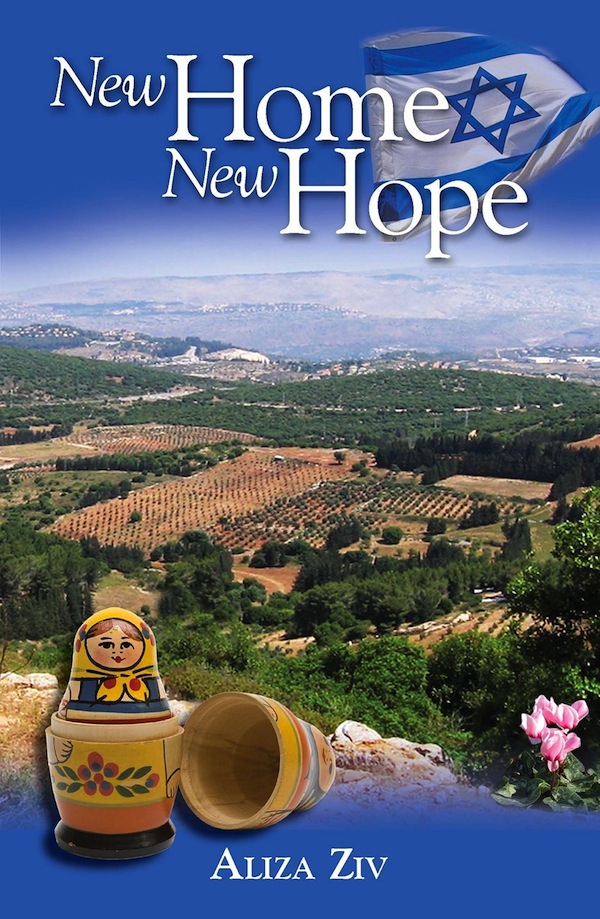
With the themes of Passover still reverberating, I read Aliza Ziv’s book New Home, New Hope (Contento de Semrik, 2014). About a single mother making aliya from the Soviet Union with her two young children, the book is about freedom, being strangers in a new land, becoming part of a community, respecting the past while trying to create a more promising future.

book cover - New Home New HopeThe story centres on Marina, Boris, 9, and Tanya, 4, and their experiences integrating into Israel from 1985 through 1995. It is both a specific and universal tale about immigration, and the challenges and opportunities new immigrants face anywhere in the world. However, the specificity is what most intrigued me. Ziv writes with authority and in detail about both the absorption process in Israel at the time and the political situation there and in Russia during that decade.

“This book was written on the basis of my vast experience teaching new immigrants who came to Israel (olim hadashim),” wrote Ziv in an email to the Independent. “These immigrants had to face a new culture, language, values, and had to adapt themselves to their new homeland.”

Ziv explained that she first published the novel in Hebrew in 2002 with the title Difficulty Beyond Words. “Later on, my husband Joe and I decided to translate it into English. It was published in October 2014, with a new name, New Home, New Hope.”

“The book is also based on what we had to face when we and our three children made our aliya in 1967,” added her husband in a separate email. “Aliza was a shlicha, sent to teach modern Hebrew using the ulpan method. She taught in Halifax, Toronto and, finally, in Vancouver at the Talmud Torah.”

While Aliza was born in Jerusalem, Joe grew up in Vancouver, went to VTT and King Edward High School, and graduated from the University of Alberta. “I was active in Young Judaea, one of the first organizers of Habonim, and one of the founders of Camp Miriam,” he said of his local connections.

The Zivs’ personal experience with immigration comes through in Aliza’s writing. She doesn’t sugarcoat the difficulties of leaving an established life, family and longtime friends and integrating into a new country, having to learn another language, find a home, (re)start a career, build relationships, etc., etc., all the while worrying about those you’ve left behind. And your new fellow citizens must also get used to your presence in their country – immigrants seem threatening to some people, to their job security, their traditional way of life, and Ziv also tackles these issues in her novel.

One particularly interesting scene is a party on a moshav at which the more established Israelis are playing old Russian songs, wondering why the new immigrants aren’t joining in. One of the Israelis explains how the chalutzim (pioneers) “came to build the Jewish homeland, and within them was an integration of socialist and even communist values and concepts. And so they established cooperatives, kibbutzim and moshavim…. We grew up with lots of love of the Russian culture, its music and especially its songs. It is really in our blood.” The new immigrants are not convinced, and one points out that many of these songs “not only have a romantic base but also have an antisemitic and militaristic, murderous one. About Bogdan Khmelnsiky, Simon Petliura, have you heard of them?” The debate continues, and it is these parts of New Home, New Hope that I found the most compelling. (I have since looked up both of these men online.)

From a literary perspective, New Home, New Hope is not one of the best books I’ve ever read, and the formatting and editing is not as clean as it would be if it had been put out by a conventional publishing house, but it is one of the more interesting books I have ever read. Ziv is a good writer and she is a fount of knowledge on topics that many readers would profit from – and enjoy – learning about.

New Home, New Hope is available in both digital (Kindle) and printed formats through Amazon.

Format ImagePosted on April 17, 2015April 16, 2015Author Cynthia RamsayCategories BooksTags aliya, Aliza Ziv, Israel, Russia

Posts pagination

Previous page Page 1 Page 2 Page 3
Proudly powered by WordPress