
Skip to content
  • Home
  • Subscribe / donate
  • Events calendar
  • News
    • Local
    • National
    • Israel
    • World
    • עניין בחדשות
      A roundup of news in Canada and further afield, in Hebrew.
  • Opinion
    • From the JI
    • Op-Ed
  • Arts & Culture
    • Performing Arts
    • Music
    • Books
    • Visual Arts
    • TV & Film
  • Life
    • Celebrating the Holidays
    • Travel
    • The Daily Snooze
      Cartoons by Jacob Samuel
    • Mystery Photo
      Help the JI and JMABC fill in the gaps in our archives.
  • Community Links
    • Organizations, Etc.
    • Other News Sources & Blogs
    • Business Directory
  • FAQ
  • JI Chai Celebration
  • JI@88! video

Recent Posts

  • טראמפ עוזר דווקא לנושא הפלסטיני
  • New rabbi settles into post
  • A light for the nations
  • Killed for being Jewish 
  • The complexities of identity
  • Jews in time of trauma
  • What should governments do?
  • Annie will warm your heart
  • Best of the film fest online
  • Guitar Night at Massey
  • Partners in the telling of stories
  • Four Peretz pillars honoured
  • History as a foundation
  • Music can comfort us
  • New chapter for JFS
  • The value(s) of Jewish camp
  • Chance led to great decision
  • From the JI archives … camp
  • עשרים ואחת שנים להגעתי לונקובר
  • Eby touts government record
  • Keep lighting candles
  • Facing a complex situation
  • Unique interview show a hit
  • See Annie at Gateway
  • Explorations of light
  • Help with the legal aspects
  • Stories create impact
  • Different faiths gather
  • Advocating for girls’ rights
  • An oral song tradition
  • Genealogy tools and tips
  • Jew-hatred is centuries old
  • Aiding medical research
  • Connecting Jews to Judaism
  • Beacon of light in heart of city
  • Drag & Dreidel: A Queer Jewish Hanukkah Celebration

Archives

Follow @JewishIndie
image - The CJN - Visit Us Banner - 300x600 - 101625

Tag: government policy

Eby touts government record

More than 18 months ago, Charlotte Kates, who is identified as the international coordinator of Samidoun Palestinian Prisoner Solidarity Network, made inflammatory remarks at a rally in Vancouver. She celebrated the 10/7 terror attacks by Hamas against Israel, calling them “heroic and brave” and led the audience in chants of “Long live Oct. 7.” She referred to terrorist organizations as “resistance fighters” and “heroes.” 

After an investigation, the Vancouver Police Department recommended charges against Kates based on Criminal Code provisions against incitement of hatred. Later last year, the federal government designated Samidoun a terrorist entity.

A year-and-a-half after the police sent its report to Crown counsel, no charges have been laid. In a year-end interview with BC Premier David Eby, the Independent asked why the attorney general has not acted to either bring charges or to explain why charges are not warranted. The premier assured the paper that he would check with the office of Attorney General Niki Sharma but his office did not respond by press time. The Independent will continue to press the government on the matter.
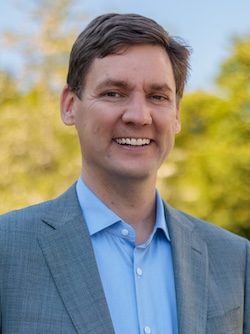
photo - BC Premier David Eby
BC Premier David Eby told the Independent: “We really have tried to be a government that takes on hate and racism from all angles.” (photo from BC NDP)

“It’s a really troubling case and it’s incredibly problematic,” said Eby, adding that he is “reluctant to weigh in too much until I know the exact status of the case.”

Speaking more broadly, Eby acknowledged the message hate crime charges send to the community.

“We believe strongly that an example is set to the broader community when someone is arrested and prosecuted for a hate crime,” he said. “We have seen some very high-profile incidents that have not met the kind of outcomes that I expect and that our government expects through the justice system. So, we’ve been working with Crown and the federal government to be able to come to better results through the criminal justice system.”

Eby touted his government’s range of antiracism initiatives.

In November, he said, the government announced a set of grants for groups targeted by hate and violence, including the Jewish community. 

“While the Jewish community has been disproportionately impacted by rising hate, they’re not the only community that has been impacted by some of the international problems we’ve seen [and] a rise in racism here in British Columbia,” he said. 

The government has committed to so-called “bubble zone” legislation, which would limit the ability of protesters to access space within a designated distance around religious and cultural institutions. Eby said the legislation is being spearheaded by Sunita Dhir, member of the legislature for Vancouver-Langara and parliamentary secretary for international credentials. 

The bubble zone concept is also in the mandate letter for Nina Krieger, the minister of public safety and solicitor general, as well as that of Sharma. A mandate letter is the direction a minister receives on appointment to cabinet outlining what the premier and the government expect them to accomplish.

“They are working on it and we hope to be able to bring forward legislation soon,” the premier said. “I know it’s important for the community. It will not be this session, though.”

In addition to security grants that address negative outcomes, Eby stressed proactive measures that confront underlying hatred and racism.

“We really have tried to be a government that takes on hate and racism from all angles,” he said, citing the introduction of mandatory Holocaust education in the Grade 10 curriculum.

It is early in the process, so Eby could not comment on responses to the new curriculum, but acknowledged that many students had already been learning about the subject even before it was mandated. The fact that he has not heard of any negative outcomes around the rollout of the curriculum suggests to him that all is going to plan.

Anti-bullying programs across the school system are also aimed at inculcating inclusive values in society.

“We have our anti-bullying initiatives that we continue to support within schools, that educate students about the importance of understanding both the differences and strengths that come from our differences in this province,” he said. “Unfortunately, Pink Shirt Day has somehow become controversial with the Conservatives, but not for us.”

Eby was referring to internal Conservative Party discord around the anti-bullying day, with at least one Conservative MLA accusing “the left” of using the day to “bully” people into wearing pink shirts. Another MLA, Elenore Sturko, who was elected as a Conservative and is a lesbian, claims she was forced out of the Conservative caucus in part because of her support for Pink Shirt Day. 

“We continue to support the idea that kids should be educated about bullying at an early age because that turns into adults who are more welcoming and understand the strength that our province draws from our diversity,” said Eby.

The government has also set up an antiracism hotline, partly because some people may be reluctant to go to police. 

“That hotline connects to community groups that are able to reach out and support people that have faced racism in the community and [are] able to respond to it,” said Eby. “This provides us with information about where these problems are happening and allows us to support community groups with outreach, to be more proactive where there are hotspots of racist activity.”

There is no single solution, the premier said.

“There really is a wide array of initiatives related to this work and, unfortunately, there has been a rise in racism and it has disproportionately impacted the Jewish community,” he said. “We’ve been working to make sure that we’re not taking just one approach, but several approaches to deal with it.”

Eby expressed greetings to the Jewish community at Hanukkah, acknowledging the challenges of this year and optimism for the future. It has been, he said, “a very challenging year for the Jewish community and for all British Columbians who believe in a hate-free province and believe in the strength that comes from our diversity.

“I am certain that 2026 and forward will be better and I sincerely hope and expect that our shared work together, between government and the Jewish community, will lead to the kind of outcomes we’re looking for, which is a safe, prosperous and welcoming province for everybody.” 
Posted on December 5, 2025December 3, 2025Author Pat JohnsonCategories LocalTags anti-bullying, antiracism, antisemitism, Charlotte Kates, criminal justice system, David Eby, government policy, Hanukkah

Surveying Canadian Jews

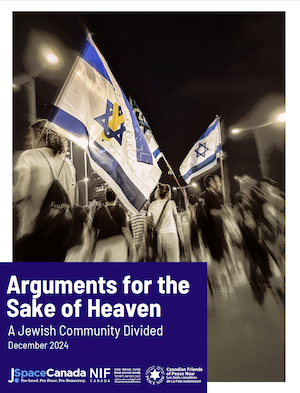
“Canada’s Jewish community is divided over Israeli and domestic Canadian politics, even though rising antisemitism and war seem to have increased the emotional attachment of Canada’s Jews to Israel,” writes sociologist Robert Brym in the executive summary of Arguments for the Sake of Heaven: A Jewish Community Divided. The report imparts the results of a poll sponsored by the New Israel Fund of Canada, JSpaceCanada, and Canadian Friends of Peace Now.

From Aug. 28 to Sept. 16, 2024, the polling firm Leger surveyed 588 Canadian Jews. The sample “was drawn from a large online panel of Canadian adults. It was weighted by characteristics of the Canadian Jewish population based on the 2021 Census of Canada and the 2018 Survey of Jews in Canada,” which was prepared by Brym, Keith Neuman and Rhonda Lenton for the Environics Institute, University of Toronto, and York University. The composition of the sample “is believed to be broadly representative of Canadian Jewry.”

“We undertook this survey in response to conservative establishment Jewish institutions and anti-Zionist Jewish groups co-creating a polarized, black-and-white public debate that didn’t reflect the diverse, nuanced Jewish community we know and love,” write Maytal Kowalski, JSpaceCanada executive director, Gabriella Goliger, national chair of Canadian Friends of Peace Now, and Ben Murane, executive director of NIF Canada, in the introduction to the report, which was released last month.

“Our research confirms that there is no such thing as ‘the Jewish community’s opinion’ as a monolith, nor can any segment of the community (or any institution) claim to speak for all others. In many cases, we see no majority opinion as well as high levels of uncertainty. Therefore, not only are claims of monolithic support misrepresentations of Canadian Jewish diversity, they also erase the spirited nature of Jewish life in Canada.”

image - Arguments for the Sake of Heaven coverExplaining the report’s title, they note: “One of the noblest ideals in Judaism is ‘arguments for the sake of heaven’ – that disagreement and debate are in fact coveted and celebrated as long as the disagreement is ‘for the sake of heaven,’ meaning an argument that seeks to uncover truth.”

They call upon “Jewish communal leaders to uphold and support the variety of opinions and ideas held by Canadian Jews – and to foster arguments for the sake of heaven,” and warn that “Canadian political leaders must engage all of Canada’s Jewish communities and not stereotype us based on a false monolith.”

Brym lists the poll’s highlights, which include that “Canadian Jews express stronger emotional attachment to Israel than in four previous surveys dating back to 2018. Specifically, 84% of Canada’s Jews say they are ‘very’ or ‘somewhat’ emotionally attached to Israel [compared to 79% in 2018]. Ninety-four percent support the existence of Israel as a Jewish state.”

Brym notes, “Just 3% say Israel lacks that right, while another 3% say they don’t know or don’t answer the question. Belief in Israel’s right to exist does not vary significantly by gender, educational attainment, income or denomination. It does vary significantly by age and political party support. Ninety-eight percent of those over the age of 34 say Israel has the right to exist as a Jewish state, compared to 81% of those under the age of 35. Ninety-seven percent of Conservative and Liberal party supporters say that Israel has the right to exist as a Jewish state. Some 79% of NDP supporters concur, although the number of NDP supporters in the sample is too small to provide a highly reliable estimate.”

When asked “Do you consider yourself a Zionist?” however, 51% of respondents said yes, 15% claimed ambivalence, 27% said no and 7% said they didn’t know, or didn’t answer the question.

“Given their strong emotional attachment to Israel and their nearly universal belief that Israel has the right to exist as a Jewish state, one might be tempted to speculate that more Canadian Jews do not consider themselves Zionists because they confuse Zionism with certain policies of the Netanyahu government that they find objectionable,” writes Brym. “Future research needs to probe this issue.”

When asked whether continued building of Jewish settlements in the West Bank helped, harmed or didn’t make a difference to the security of Israel, 34% of respondents said it hurts Israel’s security while 27% said it helps, 22% thought it made no difference and 18% didn’t know or didn’t answer.

Half of respondents favoured a two-state solution, while 25% wanted an Israeli state (the annexation of West Bank and Gaza), while 8% believe that “the best resolution to the conflict is a single, secular, binational state that favours equal rights for Jews and Palestinians.”

“When asked whether Canadian politicians should increase pressure on Israel and the Palestinians to engage in a meaningful peace process, 55% of Canadian Jews agree and 23% disagree,” summarizes Brym. “When asked whether politicians should sanction Jewish West Bank settlers who engage in acts of vigilante violence against Palestinian civilians, 35% of Canadian Jews agree and 41% disagree. When asked whether politicians should recognize a Palestinian state in the near future, 21% of Canadian Jews agree and 53% disagree. When asked whether Canadian politicians should impose an embargo on the arms trade with Israel, 69% of Canadian Jews say no and 10% say yes.”

The survey also asked respondents to rank, in view of an upcoming federal election, their priorities among 11 different issues. From most to least important were cost of living, antisemitism, health care, housing, Israel-Palestine conflict, climate change and environment, crime and public safety, immigration, threats posed by China and Russia, discrimination against Indigenous people, and Islamophobia.

The question was asked, “Which political party did you vote for in the last (2021) federal election?” and also “If a Canadian federal election were held tomorrow, which party, if any, would you vote for?”

“Among decided voters, support for the New Democratic Party remained steady at about 9% between 2021 and 2024,” writes Brym. “Support for the Liberal party fell from 39% to 26%. And support for the Conservative party increased from 36% to 55%. These trends are similar to those in the general population, but the decline in Liberal support and increase in Conservative support is more pronounced among Jews.”

The whole report can be found at jspacecanada.ca/arguments_sake_of_heaven. It includes much more data – including more analysis of responses according to age, gender, level of education, household income, denominational identification and political party support – as well as commentary and recommendations from the survey’s three sponsoring organizations. 

Posted on January 17, 2025January 14, 2025Author Cynthia RamsayCategories NationalTags Canada, Canadian Friends of Peace Now, Canadian Jews, government policy, Israel, JSpaceCanada, Judaism, New Israel Fund of Canada, opinion polls, politics
Proudly powered by WordPress