

More than a teaching position

Sara Barahan, a former Israel Connect student, continues to meet with her mentor from the program, and has started helping others improve their English, too. (photo from Chabad Richmond)

Israel Connect pairs a mentor with an Israeli teen student who is wanting to improve their English reading, vocabulary and language skills. Mentors dedicate time every week to a video meeting with their student, using Israel Connect’s “Tour of Israel” curriculum. The goal is that, by the end of the school year, students have the skills and confidence they need to succeed in Israel’s national university entrance exam.

I have been blessed with the opportunity of being part of the Israel Connect program as a volunteer tutor/mentor. Having done this for a few years, I’m keenly aware of the benefits for both students and tutors.

A year-and-a-half ago, I was matched up with Sara Barahan, 23, who is older than the average student we work with and is in college. When we were first matched up, she was in her first year, studying to be an English and special needs teacher. It was pure joy from the moment we met. Her enthusiasm, motivation and single-minded pursuit for learning English was palpable, and her commitment and memory extraordinary.

We were tutor and student for a full school year and, once it finished, Sara asked if we could continue to meet via WhatsApp video, independently, and, of course, I agreed. I think I enjoy our meetings even more than Sara does! Even though I have a new Israel Connect student I tutor once a week, Sara and I continue to talk weekly, often for an hour or more. I’ve met many of her family members, virtually, and we’ve shared a lot about our lives in our many conversations.

For one of her college assignments, Sara was asked to write about the people and things that have influenced her on her journey to learn English. This is what she wrote:

“The Israel Connect Program was sponsored by Chabad. This program involves senior volunteer tutors from all over North America, who are fluent English-speakers, connect online, one-on-one via Zoom, for 30 minutes once a week with Israeli high school students who want to improve their English conversation and reading skills. The organizers know that good English skills will give Israeli students an advantage in accessing post-secondary education, and getting better jobs.

“English proficiency is crucial to Israeli students, since it makes up a third of their entrance exam marks for university. Students and tutors make great connections and it often goes beyond simply tutoring the curriculum, and turns into friendship. The program is something concrete and meaningful that helps Israeli students improve their lives. Building relationships is a highly satisfying and core part of this program, for both the students and the tutors.

“I joined the Israel Connect Program when I was in my first year in college,” said Barahan. “The lecturer offered this program (although it was meant to be for teenagers) and I saw it as an opportunity to improve my English, so I decided to participate in it. And this is how I got to know my tutor, Shelley from Vancouver, Canada, who until today is still in touch with me.

“This program is very important and meaningful to me because it is through this program that I got to meet the person who has influenced me, and a person that I enjoy talking to about different topics. This relationship has become very close and it’s not just a virtual meeting about a set curriculum; our conversations are about topics far beyond the studies. Thanks to the Israel Connect program I have gotten the chance to practise my English speaking, reading, writing and listening skills and expand my vocabulary.”

What greater accolade could Israel Connect get than this firsthand testimonial from a graduate of the program? I use the word graduate because Sara participated as an older student and has continued with her English studies.

Sara and I are fast friends, despite our 41-year age difference. We talk about school, her social life, our families, her aspirations, her frustrations, and everything in between. She confides in me and we have become very close. I would say that Sara seems like a daughter to me, except for the fact that I’m old enough to be her safta (grandmother). The age disparity isn’t an issue though; in fact, I like to think that she sees me as a kind of hip grandmother.

Sara often asks for my help proofreading her essays for school, and I love helping her learn. I see remarkable progress in her English language fluency and conversation skills. She says that I’m the only person she can speak English with, and really appreciates practising with me. What better way to learn a language than to converse at length about all sorts of topics? And Sara has gone on to tutor English to her neighbour’s 9-year-old daughter. Now, if that’s not a success story, I don’t know what is!

Other Israel Connect mentors have also expressed how gratifying it is to help these young Israeli students, and most mentors say that they’re certain they enjoy the experience at least as much as their students. They’ve described the mentoring experience as refreshing, fun, fulfilling and, at times, challenging – but always rewarding. Their students all sincerely appreciate the chance to practise their English conversation, vocabulary and reading skills with someone who is friendly and nonjudgmental. Some kids said they are embarrassed to try speaking English in class, or in front of their family, so the Israel Connect program gives them the confidence to speak. More importantly, it gives them the incentive to continue learning English, which they know will help them as they enter university and seek out good jobs.

Israel Connect always welcomes new volunteer mentors. For more information about the program and how to volunteer, go to tinyurl.com/yd6y4jrq.

Shelley Civkin is a happily retired librarian and communications officer. For 17 years, she wrote a weekly book review column for the Richmond Review. She’s currently a freelance writer and volunteer. She wrote this article for Chabad Richmond.

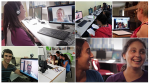
Help out Israeli teens

Want to make a difference in the lives of Israeli teens? Consider joining Israel Connect, a program where local volunteers connect online, one-on-one, via Zoom (a video conferencing app), with Israeli high school students who want to improve their English conversation and reading skills. The program starts at the end of October and is sponsored by Chabad Richmond. It entails a half-hour per week commitment.

“We’re looking for volunteer retirees, seniors or adults with flexible schedules. No previous tutoring experience is necessary and the curriculum is provided,” said Shelley Civkin, local coordinator of the program.

“We’re looking for Jewish adults who are fluent English speakers, have basic computer skills and own a computer with a camera,” said Civkin. Volunteers can do this from home and technical support is available if needed. Time preferences of volunteers will be coordinated beforehand and sessions take place in the morning between 7 and 11 a.m. any day from Sunday to Thursday. Volunteers will be trained in how to download and use Zoom.

“It’s a very meaningful, practical way for community members to support Israel,” said Rabbi Yechiel Baitelman of Chabad Richmond. “You’ll be doing a mitzvah, while investing in Israel and its young people. Plus, good English skills will give them an advantage in accessing post-secondary education and getting better jobs.

“English proficiency is crucial to Israeli students, since it accounts for a third of their entrance exam marks for university,” he added. “Partnering with the Israeli Ministry of Education, the Israel Connect program targets teens from disadvantaged neighbourhoods in Israel. The tutoring sessions are vital to students’ upward mobility in terms of education and jobs, which is why this program is so vital.”

“Most volunteers really enjoy helping their Israeli students and make great connections with them. It often goes beyond simply tutoring the curriculum and turns into friendship and mentorship,” said Civkin. “This kind of one-on-one tutoring makes a significant difference in their lives, both educationally and personally. It’s hard to estimate the impact of this tutoring on Israeli youth, but we know it’s significant. And it’s incredibly satisfying to know that you’re doing something concrete to help Israeli students improve their lives. Several tutors have visited their students on trips to Israel, and keep in touch beyond just the school year. Building relationships is an integral and highly satisfying part of this program.”

For more information, contact Civkin at 604-789-5806 or civie1956@gmail.com.


Mezuzah at legislature

Selina Robinson, B.C. minister of municipal affairs and housing, admires the new mezuzah on her office door, while Rabbi Yechiel Baitelman looks on. (photo from Chabad Richmond)

Born and raised in Montreal before moving to British Columbia, Selina Robinson first lived in Richmond, then relocated to Coquitlam. She was elected as the member of the Legislative Assembly of British Columbia for Coquitlam-Maillardville in 2013 and again in 2017. Robinson is a member of the B.C. NDP.

When I learned that Rabbi Yechiel Baitelman of Chabad Richmond recently helped Robinson affix a mezuzah to her office door at the legislature, I was surprised. I called to ask her how she came to invite Baitelman to help her. “I didn’t,” she replied. “He just showed up with it!”

As it happens, Baitelman was in Victoria to fix a Torah scroll. While there, he reached out to Robinson, a longtime family friend, to see if they could meet briefly. She invited him to her office, where they talked about her portfolio and how they could work together to improve housing in Richmond. Never one to miss an opportunity, Baitelman asked Robinson whether she would like to put up a mezuzah. She loved the idea, but told the rabbi she didn’t have a hammer. Without skipping a beat, he said, “That’s OK, you don’t need one. This mezuzah has adhesive on the back.”

I guess that falls into the category of “I just happen to have a mezuzah on me.” I mean, don’t all rabbis carry them around?

Robinson has known the Baitelman family for decades, through her mother’s work at Chabad Lubavitch in Vancouver years ago. She told me that the Baitelman kids used to call her mother “Bubbe Rhoda.”

While she was a university student in the 1980s, Robinson helped run Camp Gan Israel of British Columbia day camp for two years. Later on, when she was living in Coquitlam, she helped build the Burquest Jewish Community Association. She also used to work at Jewish Family Services.

Robinson’s commitment to the ideals of Jewish life and culture is resolute, and she proudly refers to herself as a “Habonimer.” Yet, her affinity for Chabad is strong, especially their dedication to helping Jews at all levels of observance.

Robinson regularly shows her new mezuzah to colleagues, and takes the time to explain what it means.

Shelley Civkin is a happily retired librarian and communications officer. For 17 years, she wrote a weekly book review column for the Richmond Review, and currently writes a bi-weekly column about retirement for the Richmond News.


Purpose is to help others

“It’s not for me.” “I’m too busy.” “I’ll volunteer when I’m retired.” All of these responses (excuses?) are familiar to me. Because, at one time or another, I hid behind each one of them.

I never felt I was good at time management, so how could I possibly take on volunteering when I was working full-time? Sure, I could multitask at work, because I had to. But did I enjoy working that way? Not even a little.

To me, time management meant working eight hours a day, worrying about work for the next eight hours, sleeping and dreaming about work for the following six hours, spending the next two hours showering, eating breakfast and reading the newspaper, then repeating the process. For decades, I functioned – notice I didn’t say lived – this way. I had tunnel vision of the worst variety.

Then I retired.

The novelty of not having to rise at a particular hour is intoxicating. Not that I indulge myself very often. After all, I had 34 years of 6 a.m. alarm clock reminders that had trained my body to get up with the sun. I confess that now, after two years of retirement, I occasionally sleep till 8:30 or even 9 a.m. But then, of course, I feel guilty. I’m Jewish after all.

Not long after I retired, I got an email from Rabbi Yechiel Baitelman of Chabad Richmond notifying me about an upcoming six-week Jewish Learning Institute course. I think it was called The Jewish Course of Why. Since I’m an inveterate question-asker and perpetually curious, I took the bait. And I was hooked.

Somewhere between the questions and the answers, the good rabbi saw an opportunity to recruit me for some volunteering. I may have casually mentioned that I’d just taught myself to bake challah using YouTube. Next thing I know, I get a call from Grace Jampolsky (“the Challah Whisperer,” as I call her), asking if I’d like to help bake challah for the bi-weekly Light of Shabbat meals that Chabad Richmond delivers to the elderly in Richmond. Sounded like a good thing to do. And who doesn’t love the smell of freshly baked bread?

From there, I volunteered to help pack the Light of Shabbat boxes and occasionally deliver them. This gave me the opportunity to visit and shmooze with some seniors, some of whom I already knew through my parents. We talked about family and books, everything and anything. It was a blessing for both of us.

About six months into retirement, I realized I still had way too much free time on my hands, and needed to do something useful. Something outside myself. So, I contacted B.C. Children’s Hospital, hoping to volunteer as a “baby cuddler,” not realizing that there’s a long waitlist to do that. But, as soon as the hospital’s volunteer coordinator saw my resumé, she offered me a volunteer position in the Family Support and Resource Centre. After all, what else would a librarian want to do in retirement, but jump right back into working in a library! Naively, I didn’t think to mention in my interview that I’d like anything but a library position. Nevertheless, I gave them the year’s commitment that they asked for and then resigned. Being an infrequently used part of the hospital, the centre didn’t provide the stimulation I was hoping for. I wanted to make more of an impact in my volunteering.

Soon after, Rabbi Baitelman asked if I’d be interested in volunteering with Chabad Richmond’s Israel Connect program, in which local retirees tutor Israeli high school students in English once a week, via Skype. It sounded like fun, so naturally I said yes. If memory serves me correctly, it was about two-and-a-half minutes later that he asked me if I would consider coordinating the Israel Connect program in Richmond. He had me at “Would you be interested….”

The rabbi knows that I have a background in writing and editing, so it wasn’t long before he asked for my help writing press releases and marketing pieces for Chabad Richmond. Writing is my happy place, so I was delighted to pitch in. It has only snowballed since then, and I’m thrilled to report that I love my volunteer activities, and I’m always open to considering new ones.

All of this is to say that there is life after retirement – volunteering has been enormously rewarding.

At its essence, volunteering is about saying yes to what you want to do, and saying no to the rest. And the yes, well, it’s just so darn sweet! Knowing that Jewish seniors are enjoying the challah I bake, and that the short visits we have might be the only human interaction they encounter in a week – that’s why my heart is drawn to do these things. Believe me, as a volunteer, working with people, you get way more than you give.

And Israel Connect? It’s the best spent 30 to 45 minutes of my week. Helping an Israeli teen improve their English so they can get into university or pursue a career that requires English proficiency – that makes my heart sing. And, we have fun. With each different student (all girls, so far), I’ve managed to make a connection and form a bond. After each week’s official tutoring is finished, we talk: about their hobbies, plans for the future, our families, travel, everything. From week to week, I notice not only improvements in their English, but a relaxation that comes from forming a real intergenerational friendship. I hope to visit my students when we travel to Israel soon.

I’d be remiss if I didn’t include the bits and pieces of volunteering I did while I was still working full-time as a librarian and communications officer at Richmond Public Library. I did manage to squeeze in some fundraising and communications work to help promote the Crohn’s and Colitis Foundation of Canada’s annual Gutsy Walk fundraiser.

In a much more humbling capacity, I was also part of a program about eight years ago, called Feed the Hungry, in which a bunch of volunteers from Ahavat Olam made and served lunch to Downtown Eastside (DTES) residents on a regular basis. And, for several years, I volunteered, along with my husband, brother-in-law and/or friends, serving Christmas lunch at the Salvation Army Harbour Light Mission in the DTES.

For a couple of years, I was a volunteer board member with the Isaac Waldman Jewish Public Library, as well as being the B.C. Library Association representative for the West Coast Book Award Prize Society. All of them together were growing and learning experiences of the highest order.

We guard our free time so rabidly, we forget that part of why we’re put on this earth is to help others. The satisfaction and joy that comes from doing something outside ourselves, something for a higher purpose, is indescribable. Believing is seeing. But don’t just take my word for it.

Shelley Civkin is a happily retired librarian and communications officer. For 17 years, she wrote a weekly book review column for the Richmond Review, and currently writes a bi-weekly column about retirement for the Richmond News.

Volunteer to tutor students

Chabad Richmond is looking for seniors to teach English to Israelis. (photo from chabadrichmond.com)

Want to make a difference in the lives of Israeli teens? Consider Israel Connect, a volunteer program where Vancouver retirees engage via Zoom (it’s like Skype) with Israeli high school students who want to sharpen their English conversation and reading skills. The program, which starts after the High Holidays, is sponsored by Chabad Richmond.

“We are looking for retirees, seniors or adults with time available for volunteering. Volunteers do not have to be teachers, and the curriculum will be provided,” said Vancouver coordinator Shelley Civkin. “We’re looking for Jewish adults who are fluent English speakers, have basic computer skills and own a computer with a camera.” Volunteers can tutor from home – it will entail a half hour per week – and technical support will be available if needed. Volunteers will be trained in how to download and use Zoom.

“This is a meaningful way for community members to support Israel in a practical way,” said Rabbi Yechiel Baitelman of Chabad Richmond. “You’ll be doing a mitzvah, while investing in Israel and its young people.”

Time preferences of volunteers will be coordinated beforehand, but sessions will likely take place in the morning between 8 and 10 a.m. The Chabad Richmond Israel Connect program is asking for a one-year commitment from volunteers.

“English proficiency is crucial to Israeli students, since it accounts for a third of their entrance exam marks for university,” said Baitelman. “Partnering with the Israeli Ministry of Education, the Israel Connect program targets teens from the most disadvantaged neighbourhoods in Israel. The tutoring sessions are vital to students’ upward mobility in terms of education and jobs, which is why this program is so important.”

“Past volunteers really enjoyed helping their Israeli students, and made great connections with them. The students’ marks on their English exams prove that this kind of one-on-one tutoring makes a significant difference in their lives,” said Civkin.

For more information, contact Civkin at 604-732-6330 or civie1956@gmail.com.