
Money for the sciences

At the Weizmann Canada gala in Montreal on May 26, guests heard from Weizmann Institute professors Asaph Aharoni, left, and Ron Milo. Former CBC broadcaster Heather Hiscox hosted the event. (photo from Weizmann Canada)

On May 26, Weizmann Canada held a sold-out national gala in Montreal that raised $9 million net of expenses for scientific research on environmental sustainability. 

Seeding Hope: The National Gala to Empower a Sustainable Tomorrow, presented by the Dr. Joseph Lebovic and Dr. Wolf Lebovic foundations, brought more than 300 Weizmann Canada supporters together from across the country. Held at Windsor Station, it was a celebration of research focused on climate change, alternative energy, food security and nutrition.

Speaking at the gala, Weizmann Canada chief executive officer Susan Stern expressed gratitude for the science and those who support it. This fundraising effort comes at a time when the climate crisis is accelerating, from extreme weather and biodiversity loss, to rising pollution and global food insecurity. The Weizmann Institute of Science has made environmental sustainability one of its priority areas of research.

The focus on environmental science at Weizmann began through the leadership of Canadians. Decades ago, Canadians funded early solar energy research that has now expanded into a multidisciplinary powerhouse of more than 60 labs dedicated to sustainability.

At the gala, guests were treated to an immersive, multi-sensory event in which the science took centre stage. They heard from professors Asaph Aharoni and Ron Milo.

In his lab, Milo has been able to genetically engineer bacteria that feed off carbon dioxide rather than sugar. He described how he is now developing new ways to use solar energy to fuel the fermentation process that pulls carbon dioxide out of the air, with the goal of improving the efficiency of food and fuel production.

Aharoni is focused on engineering plants and microbes to fight world hunger and malnutrition. His work looks for ways to improve crop nutrition and resistance to disease, drought and other harsh conditions. His discoveries have also led to environmentally sustainable alternatives to the harmful chemicals in food, textiles and other materials.

“This is just the tip of the iceberg,” said Aharoni. “We are doing all kinds of stuff that will make our world more sustainable, healthy and environmentally friendly.”

Former CBC broadcaster Heather Hiscox hosted the event and recognized Canadian visionaries whose generosity has had a global impact. There was a special tribute to the legacy of Tom and Mary Beck and their early support of environmental research at the Weizmann Institute.

Other honourees were Nathalie and Laurent Amar; Rochelle Rubinstein, representing the families of H&R; Darlene Switzer-Foster and Bill Foster, honouring the memory of Sam Switzer; and Linda Cherry Soudack, honouring the legacy of Sigmund (Siggy) Soudack. Danielle Bitton received the Marvelle Koffler Award for Women of Distinction in recognition of her exceptional dedication to community leadership and philanthropy.

Several West Coasters were in attendance, including Weizmann Canada’s Vancouver chapter president Moira Stillwell; Telus chief executive officer Victor Dodig; and former Vancouverites Cheryl Brownstein and Rick Schweiber. 

– Courtesy Weizmann Canada
A responsibility to help

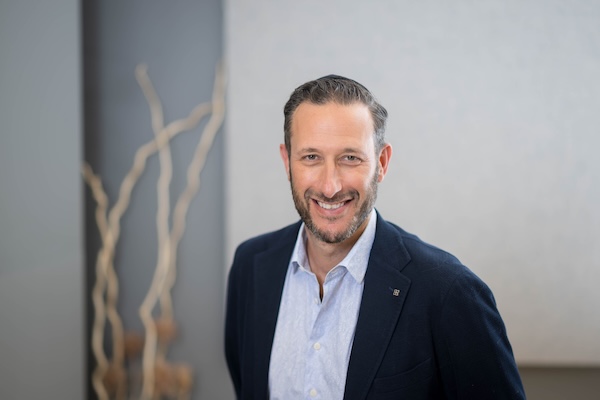
Dr. Jonathon Leipsic will be honoured by Schara Tzedeck at MOSAIC on June 16. (photo from Schara Tzedeck)

At its annual MOSAIC event on June 16, Congregation Schara Tzedeck will honour Dr. Jonathon Leipsic. 

“It would be hard to find someone more worthy,” Rabbi Andrew Rosenblatt told the Independent. “In addition to the countless hours that Jonathon gives toward advancing the synagogue goals, one cannot miss the fact that Jonathon loves Schara Tzedeck with his full heart. He attends, classes, services, programs regularly – which he is clearly fitting in between clinical, research and family responsibilities. Jonathon provides leadership in practice and in personal example and his commitment to personal growth, learning, community and helping others is almost without peer.”

Leipsic is professor and chair of radiology and professor of cardiology at the University of British Columbia, as well as a Canada Research Chair in Advanced Cardiopulmonary Imaging. He has more than 800 published peer-reviewed manuscripts and more than 300 scientific abstracts – he has been one of the top 1% most impactful scientists globally for multiple years, according to the Web of Science citation database.

In addition to his professional roles, Leipsic has been significantly involved in the Jewish community, notably with Schara Tzedeck, King David High School, Vancouver Talmud Torah and the Jewish Federation of Greater Vancouver.

Schara Tzedeck executive director Shelley Rivkin, who is also an active community leader, recently becoming board chair of Jewish Family Services and having worked with the Jewish Federation for 17 years, called Leipsic “a pillar of our community.”

“His impact extends far beyond the boardroom or the walls of our shul,” she said. “His leadership is defined not by title, but by character. As immediate past president of Schara Tzedeck, Jonathon led the board with steadiness, compassion and a deep sense of responsibility to klal Yisrael.

“During the heartbreak of Oct. 7 and the resilience required in its aftermath, his voice as a tireless advocate for our shul and wider community – and his clarity of heart – were the anchor that held us together over challenging times. Jonathon is a man of many talents and accomplishments: community engagement, Torah study and medicine. We are celebrating all of these facets at the gala.”

The evening will feature Shulem, one of Leipsic’s favourite performers, said Rivkin. There will be tributes, followed by dinner and another performance by Shulem, who blends traditional cantorial melodies with classical crossover.

“I am honoured to even be a part of the Schara Tzedeck community,” said Leipsic about his being 

recognized by the congregation. “The shul has played a foundational role in my spiritual growth and in infusing ahavat Torah and ahavat Yisroel in my family and amongst so many. I am humbled to have served the shul as a board member and as president.”

Schara Tzedeck has been the spiritual home of Leipsic and his wife, Karly Bogner, since they met. Bogner’s grandparents were members of the synagogue, said Leipsic. “I feel privileged to daven, to celebrate simchas and to join for moments of reflection and learning at Schara Tzedeck,” he said.

“I try to live my life in accordance with the talmudic principle of ‘Klal Yisroel arevim zeh lah zeh’ [‘All of Israel is responsible for one another’]. Karly and I feel deeply grateful to be part of klal Yisroel and to have the privilege to enjoy all that Jewish Vancouver has to offer – a community and institutions that we did not build but that we feel deeply responsible to help strengthen and build,” said Leipsic.

“As we enter our 119th year, longevity is finding the right balance between the responsibilities that the halachah demands and flexibility to meet our congregants’ needs on a contemporary basis,” said Rosenblatt. “We must have that backbone of daily service attendance and regular Torah study, reliable kashrut and Shabbat observance. At the same time, we have to be relevant to the contemporary generation, we have to provide opportunities for them to give back and to leverage Jewish wisdom in their own growth and in answering the questions and challenges they face today.”

This year, MOSAIC’s fundraising focus is the Clergy Sustainability Fund.

“Vancouver is a great distance from the large Orthodox centres, where we primarily recruit our clergy,” said Rivkin. “To attract additional clergy, we need to be able to support the real conditions that make long-term leadership possible: housing, family connection during the holidays, and professional growth. This fund 

will enable us to address these concerns and help ensure that Schara Tzedeck can continue to attract outstanding young rabbis to our community and give them the foundation to stay and lead.”

To attend MOSAIC, visit scharatzedeck.com.

Music’s healing power

The annual Music Heals gala raises funds and awareness of the therapeutic use of music. This year’s event takes place Oct. 23 at the Commodore Ballroom. (photo from David Barnett)

Vancouver’s business and entertainment communities are combining their philanthropic forces at the Commodore Ballroom Oct. 23 for a gala to support Music Heals, the charitable foundation that raises awareness and funds for the therapeutic use of music in physical and mental health processes.

photo - David Barnett founded Music Heals in 2012
David Barnett founded Music Heals in 2012. (photo from David Barnett)

David Barnett, who founded Music Heals in 2012 and currently serves as board president, said tickets will be available after Labour Day and are expected to sell out quickly. Still, the event, which is already fully booked from an artist standpoint, always has room for sponsorship opportunities, according to Barnett.

“It is a great group at Music Heals,” he said. “We bring in all types of artists from all over, including Grammy Award winners, and produce a fun variety show. We don’t reveal any of the artists. We keep everything a surprise.

“It is a super-fun event to produce and it brings the downtown business community and the music industry together for one night to celebrate the power of music.”

Since its beginning, Music Heals has distributed more than $5 million to help vulnerable Canadians gain access to music therapy. That translates to more than 65,000 funded music therapy hours in 85 different facilities, from children’s hospitals to senior centres to burn units, to hospices and rehabilitation centres. The funds have gone towards helping at-risk youth, cancer patients, those needing bereavement support and many others.

The 2024 gala raised more than $450,000, with sponsors such as RBC, BMO, ZLC Financial, Colliers International and Westbridge Capital, among numerous other organizations. DJ All Good, bbno$, CeeLo Green, Jack Thomas, Bif Naked and the Delta Police Pipe Band were some of the performers that appeared. 

photo - “We always try to bring in something eclectic. The event itself is a little bit rowdy, and we try to keep the volume up,” says Music Heals founder and board president David Barnett about the organization’s annual gala
“We always try to bring in something eclectic. The event itself is a little bit rowdy, and we try to keep the volume up,” says Music Heals founder and board president David Barnett about the organization’s annual gala. (photo from David Barnett)

As for the upcoming event, Barnett, who calls Music Heals one of his “passion projects,” said, “We always try to bring in something eclectic. The event itself is a little bit rowdy, and we try to keep the volume up.  We feature a story that is happening in the community and have a video of how we spent the money in the previous year.

“It is an opportunity for us to build a community of friends, business associates and music industry people to have some fun and raise some money for a very cool kind of cause to support facilities that use music as medicine in their healing for mental and physical health.”

In 2025, Music Heals gave more than $520,000 to 45 music therapy programs that included Ronald McDonald House BC and Yukon, Canuck Place Children’s Hospice, BC Cancer Foundation and the Pacific Autism Family Centre.

Countless studies have been conducted on the healing power of music. The overwhelming conclusion is that listening to or playing music has a beneficial effect on overall human health and can mitigate various physical and mental ailments. Music, various research has shown, can lower stress, lift moods, bolster energy and lower pain levels.

Music therapy can benefit people in all age groups, from children with developmental disabilities to older adults with Alzheimer’s. For young people, music can help improve their cognitive and social development, allowing for better communication and emotional expression. For adults, music therapy can be a means of managing stress, anxiety and depression while boosting self-esteem. 

For seniors, music therapy can have positive implications for recollection and cognitive function. The Louis Brier Home and Hospital, for example, offers one-on-one individualized and small-to-large group music therapy programs that are supported by Music Heals.  

Among the types of music used at the Brier are beat boxing, drum circles and movement to music, as well as the singing of the Brier Choir. Louis Brier states on its website that music therapy for individuals in long-term care can maintain memory recall and reminiscing, fine motor coordination and range of motion, and increase creative expression.

On the power of music, the late Rock and Roll Hall of Fame musician David Crosby said in an interview done with Music Heals in 2017, “Music is a lifting force in the universe. Just as war drags the human race down and draws out the worst in people, music is a lifting force. It brings out the best in us; it lifts us up. Any time you can do music, it lifts the human race.”

In March, around the time of International Women’s Day, Music Heals hosts Let Her Sing, an annual event meant to provide women with access to music therapy programs in support of their physical and mental health. This year’s event raised $120,000.

Philanthropic causes, whether through Music Heals or other charitable ventures, have played an important role for Barnett throughout his life. 

“I grew up in a family that gives back to the community and giving back was a large part of my upbringing,” said Barnett, whose business ventures have included music venues in the city.

“As I was getting older and found myself having kids and trying to get out of the music industry and nightclub space,” he said, “we were looking for an opportunity to get back and give back, and fell into the music therapy world.”

For more information, visit musicheals.ca. 

Sam Margolis has written for the Globe and Mail, the National Post, UPI and MSNBC.