
Camp offers holiday retreat

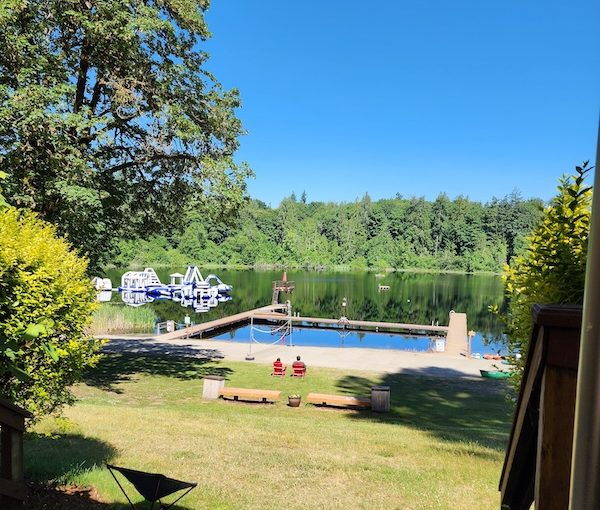
Camp Solomon Schechter hosts a first-of-its-kind mahjong retreat Sept. 4-7. Canadians get a discount! (photo from Camp Solomon Schechter)

Mahjong enthusiasts and curious beginners alike are invited to experience a unique Labour Day weekend getaway at Mahj & More, taking place Sept. 4-7 at Camp Solomon Schechter’s Stampfer Retreat Centre in Tumwater, Wash.

Designed for adults ages 18 and older, the weekend welcomes players of all backgrounds and skill levels. There will be guided mahjong instruction for beginners, open play and organized games, as well as strategy sessions for experienced players.

Guests will enjoy kosher meals, evening entertainment and social gatherings. Other activities available include boating, arts and crafts, sports, nature walks and more, as well as welcoming Shabbat together and having time to relax.

“Mahjong is about so much more than the tiles,” said Melissa Bloom, retreats and events manager at Camp Solomon Schechter. “It’s about friendship, laughter, learning and community. Mahj & More brings all of these elements together in a beautiful retreat setting where people can disconnect from everyday stress and reconnect with themselves and others.”

The retreat is being led by a volunteer committee of mahjong enthusiasts from across the Pacific Northwest, including co-chairs Lisa Altow (Vancouver), Marilyn Corets (Seattle), Jane Rosenstein (Seattle) and Melissa Matterazzo (Portland). Together, they have helped shape a weekend designed to bring people together through a shared love of mahj, friendship and fun.

The weekend features a special partnership with Portland-based Malka Diamonds, which recently launched its mahjong-inspired jewelry collection. A portion of proceeds from select purchases supports Camp Solomon Schechter and its mission of creating transformative Jewish experiences for people of all ages. Malka ships to Canada (malkadiamonds.com).

Unlike a traditional tournament, Mahj & More focuses on multiple aspects. Participants can spend as much – or as little – time playing mahjong as they wish, balancing gameplay with camp activities, relaxation and social opportunities.

Registration for the weekend is now open, with early-bird pricing available through July 10. Canadians get 20% off automatically to help with the exchange rate. For more information and registration details, visit campschechter.org/mahj. 

– Courtesy Camp Solomon Schechter

Hope for a good year

We begin the cycle of a new year in the coming days. We are all reflecting on our lives, our actions and our place in the world at this time of year. Perhaps, in the past two years, we are doing this more than ever before, even without the catalyst of the month of Elul or the impending holy days as motivation.

One of the things many of us are certainly pondering is how we move through life, and whether we approach the world with the balance tilted towards wonder and hope or towards cynicism and pessimism. These choices are challenging no matter where or under what conditions you live. For Jews in Israel and the diaspora right now, they are especially poignant.

A strength of Jewish life and practice is the capacity to hold sadness and joy in the same moments – life is rarely all one or the other. We mourn that there are still people being held hostage, the deaths in Israel and Gaza and in other conflicts, loved ones facing illness and confronting mortality, natural disasters, climate change, creeping 

authoritarianism in many countries, and all the big and small sadnesses of being human, but these are, above all, a part of being alive. In Judaism, it is a mitzvah to choose life through our actions and choices. This commandment appears in a Torah portion we read prior to Rosh Hashanah, reminding us that we can choose hope over despair, that we can choose a different reality.  

This duality will be on full display in the coming days as we move through the holy days, including navigating the joys and now sorrows of Simchat Torah, which will forever be equated in our memories with the atrocities of 10/7. 

Along with holding joy and sadness in the same moment is holding more than one truth, that being strong is being able to experience things that sadden or madden us and not permit their presence to destroy what happiness or equanimity we have.

Pirkei Avot asks and answers: “Who is mighty? One who conquers his impulse.” 

If our impulse is to be angry, vengeful, depressed or miserable, we might conclude that we have no control over these responses. We do. It’s not easy, but it is within our capability.

Without minimizing the challenges, neither should we dwell on them exclusively.

In the context of Jewish history, victory of a sort in our era comes from being physically safe, with the opportunity to live a contented, meaningful life.

As you hopefully gather as a community in prayer spaces and around holiday tables in the coming days, may you find a greater sense of ease in the balancing of the sweet and the sorrowful, and may you grant yourself and those you love the consent to live well, with hope for a truly good year.