Skip to content
  • Home
  • Subscribe / donate
  • Events calendar
  • News
    • Local
    • National
    • Israel
    • World
    • עניין בחדשות
      A roundup of news in Canada and further afield, in Hebrew.
  • Opinion
    • From the JI
    • Op-Ed
  • Arts & Culture
    • Performing Arts
    • Music
    • Books
    • Visual Arts
    • TV & Film
  • Life
    • Celebrating the Holidays
    • Travel
    • The Daily Snooze
      Cartoons by Jacob Samuel
    • Mystery Photo
      Help the JI and JMABC fill in the gaps in our archives.
  • Community Links
    • Organizations, Etc.
    • Other News Sources & Blogs
    • Business Directory
  • FAQ
  • JI Chai Celebration
  • JI@88! video

Recent Posts

  • עשרים ואחת שנים בוונקובר
  • Supporting the Iranian people
  • The power of photography
  • A good place to start
  • When boundaries have shifted
  • Guitar virtuosos play
  • Different concepts of home
  • Broadway’s Jewish storylines
  • Sesame’s breadth and depth
  • Dylan Akira Adler part of JFL festival
  • Mortality learning series
  • A new strategy to brighten up BC
  • Sharing latkes and light
  • Johnson awarded for human rights work
  • Cherished tradition ensured … Silber Family Agam Menorah
  • Nothing as lovely as a tree
  • Camp welcomes new director
  • Popular family camp expands
  • A life-changing experience
  • Benefits of being a counselor
  • Camper to counselor
  • האלימות בישראל מורגשת בהרבה מגזרים
  • טראמפ עוזר דווקא לנושא הפלסטיני
  • New rabbi settles into post
  • A light for the nations
  • Killed for being Jewish 
  • The complexities of identity
  • Jews in time of trauma
  • What should governments do?
  • Annie will warm your heart
  • Best of the film fest online
  • Guitar Night at Massey
  • Partners in the telling of stories
  • Four Peretz pillars honoured
  • History as a foundation
  • Music can comfort us

Archives

Follow @JewishIndie
image - The CJN - Visit Us Banner - 300x600 - 101625

Tag: Ben-Gurion

Film festival underway – Ben-Gurion & Pinsky

Film festival underway – Ben-Gurion & Pinsky

Five years before the end of his life, Israel’s first prime minister, David Ben-Gurion, gave six hours of interviews to an American who had recently made aliyah and moved near to Ben-Gurion’s Negev kibbutz retirement home in Sde Boker. The 1968 video footage sat undisturbed in the Steven Spielberg Jewish Film Archive in Jerusalem until it was rediscovered, but the audio was missing. Eventually, it too was found – in the Ben-Gurion archives at Sde Boker. Reunited, the six hours were whittled down by director Yariv Mozer to the one-hour film Ben-Gurion, Epilogue, which is part of this year’s Vancouver Jewish Film Festival.

Mere months after the death of his wife, Paula, Ben-Gurion reflected on his personal and public life. His Zionism was born in his Polish childhood, when the larger-than-life visionary Theodor Herzl traveled the Pale of Settlement. “When Herzl arrived in our little towns, they said, ‘Messiah’s come!’ And I believed it,” Ben-Gurion shared.

Ben-Gurion created a new life at least twice, first making aliyah and bringing to life the Jewish state, then, again, in retirement, when he retreated to the life of a simple kibbutznik in the Negev. His fascination with the desert was sparked in 1954, he said, when he was driving from Eilat back to central Israel and saw a cluster of rudimentary homes by the side of the road. He asked what they were doing there. “We were fighting in the War of Independence in this place,” the pioneers told him. “I decided to join them, to start building up, in the desert, where there is no soil, no water, no grass, no rain.”

The human side of the Ben-Gurion couple is on display through interspersed earlier footage of David and Paula together. In an interview with the BBC’s Malcolm Muggeridge, Paula says she was opposed to David’s retirement from politics. “Because he could not exist without politics,” she says.

“I can exist without politics,” he replies, without looking up.

“No you can’t,” she says. “It’s born in you.”

Likewise, when David gives a ponderous explanation of why he no longer defines himself as a Zionist, Paula deadpans, “I married a Zionist and you are not a Zionist?”

The interviewer draws Ben-Gurion into reflections on his tumultuous time in politics, including the riots that emerged in response to his decision to accept reparation payments, arms and military training from the West German government. But if the viewer is anticipating any earth-shattering revelations, Ben-Gurion is largely glib. Israel needed support and West Germany was offering.

As the Jewish people have a special role in the world, Ben-Gurion says, so does the Jewish state: to reflect the virtues set out by the Prophets. “To be just, truthful, helping all those who need help, and love other men like yourself,” the statesman says. “These are the virtues.”

“Do you think Israel is carrying out that mission?” asks the interviewer.

“Not yet,” Ben-Gurion replies instantly.

Ben-Gurion, Epilogue screens Nov. 6 and 11.

– Pat Johnson

***

In the American film Pinsky, the main character, Sophia Pinsky, has a good life: a job, a girlfriend, an apartment. But then her girlfriend leaves without saying goodbye and Sophia’s life unravels. She moves back home, to join her father, grandmother and brother, all still living together (what a miserable prospect), and the cheerless family dynamics are the focus of the movie.

The family are Russian Jews, and they are all unhappy for various reasons. Sophia works at a Russian grocery store. She feels alone, underappreciated and vulnerable. Nobody understands her. Her grandma tries to set her up with a nice Russian Jewish boy. “You’re too pretty to be a lesbian,” grandma declares, which drives Sophia bonkers.

She misses her girlfriend, she is searching for something big and beautiful, but, unfortunately, nothing even remotely resembling her dreams enters her drab life.

Depression seems to run in the family. Sophia’s brother is an alcoholic. Her father isn’t dealing well with aging. The grandmother, the only colourful character in the movie, is meddlesome and tactless, bossing around everyone in the family.

Everyone is lonely. Nobody understands one another. But, the truth is: none of them even tries to understand anyone else. Everyone concentrates on their own melancholy, hides inside their own bubbles of misery.

This movie reminded me of Chekhov’s plays: everyone is whining and nobody does anything positive. Unlike Chekhov though, this is a fragmented series of moments in the lives of different family members over a few days. The entire dysfunctional family comes under the director’s scrutiny, and all are found wanting.

Pinsky screens Nov. 9. The festival runs until Nov. 12. For the full schedule, visit vjff.org.

– Olga Livshin
Format ImagePosted on November 3, 2017November 1, 2017Author Pat Johnson and Olga LivshinCategories TV & FilmTags Ben-Gurion, Pinsky, Vancouver Jewish Film Festival
Recalling our history

Recalling our history

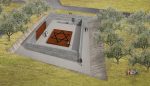
An architectural rendering of the proposed Jewish Legion Centennial Pavilion to be built in Windsor, N.S. (image from MacKay-Lyons Sweetapple Architects Ltd.)

David Ben-Gurion and Yitzhak Ben-Zvi will be among more than 1,000 men remembered when the 100th anniversary of the Jewish Legion is commemorated next year in Windsor, N.S.

These two prominent Jewish community leaders, who became the first prime minister and second president of the state of Israel, respectively, were part of the legion, which was approved by the British War Office as a Jewish military contingent for active duty during the First World War. Ben-Gurion and Ben-Zvi, as members of the training squad, earned 50 cents a day and slept in a bell tent on Nova Scotia earth.

photo - David Ben-Gurion, taken in Windsor, N.S., in 1918
David Ben-Gurion, taken in Windsor, N.S., in 1918. (photo from West Hants Historical Society)

Jewish recruits from across Canada and the United States assembled at the Imperial Recruits Depot, located at Windsor’s Fort Edward, in 1918. Fort Edward served as a basic training centre and point of departure for all North American recruits of the Jewish Legion. Once their training was complete, they went to England, where they joined other Jewish battalions for the last phases of the campaign against the Ottoman Turks. This Jewish fighting force, which included the 38th, 39th, 40th and 42nd battalions of the Royal Fusiliers, would become known as the Jewish Legion.

In a letter to Windsor’s mayor in 1966, Ben-Gurion wrote, “In Windsor, one of the great dreams of my life, to serve as a soldier in a Jewish unit to fight for the liberation of Israel, became a reality. I will never forget Windsor, where I received my first training as a soldier and where I became a corporal.”

The Jewish Legion Centennial Society, chaired by former Atlantic Jewish Council executive director Jon Goldberg and guided by Sara Beanlands, principal of Boreas Heritage Consulting Inc., is commemorating the centennial of the training of the Jewish Legion in Windsor. In conjunction with the town of Windsor, West Hants Historical Society and the Atlantic Jewish Council, events are planned for the town in May and September of 2018. As well, a distinct earthworks Centennial Pavilion will be built, with considerable private funding, near Fort Edward. Names of the more than 1,000 North American Jewish trainees will be listed on a Wall of Honour at the pavilion.

To donate to the Centennial Pavilion or for further information, contact Goldberg at [email protected] or 1-902-221-2174. For historical information or to include a name of a Jewish Legion soldier, contact Sara Beanlands at [email protected] or 1-902-483-7999.

Format ImagePosted on September 1, 2017August 30, 2017Author Jewish LegionCategories NationalTags Ben-Gurion, Ben-Zvi, Canada, history, Israel, Jewish Legion

Ben-Gurion the leader

The story is told that the idea of building a modern city in Beersheva came from David Ben-Gurion, Israel’s first prime minister. He appointed a committee of experts to examine the idea. The committee reported back that it could not be done. When Ben-Gurion was asked how he wanted to respond to the report, he replied, “Appoint a new committee.”

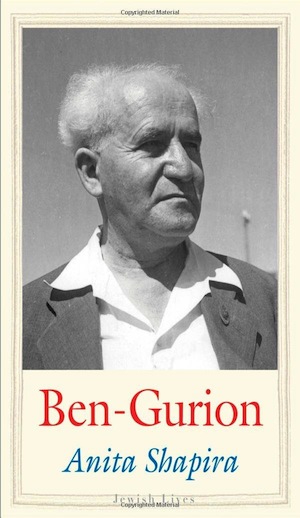
image - David Ben-Gurion, Father of Modern Israel by Anita Shapira book coverAccomplished Israeli historian Anita Shapira recounts the apocryphal anecdote in David Ben-Gurion, Father of Modern Israel (Yale University Press). Shapira, whose book Israel: A History won the National Jewish Book Award in 2012, presents Ben-Gurion as the person who did more than anyone else to establish the state. He inspired a nation of idealists and wartorn refugees to achieve the impossible. But does your overcrowded bookshelf need another Ben-Gurion biography? I can think of three strong reasons to recommend Shapira’s book.

Although not the definitive biography, Shapira offers a fresh perspective on Ben-Gurion’s life based on newly available files of the Israel Defence Forces and extensive work in the archives at kibbutz Sde Boker, where Ben-Gurion lived. She sets out his considerable accomplishments through colorful anecdotes and well-crafted prose.

As well, despite the passage of years, Ben-Gurion remains a central figure in contemporary debates, a touchstone for politicians from all parties. He is invariably quoted during heated arguments over Israel’s relations with Germany, its borders with its neighbors and its treatment of the Palestinians. He is often cited for his work in forging a partnership with the religious communities in the 1930s. Shapira offers solid scholarship for those who wish to reflect on his work.

And, for those with big ambitions, the new biography offers a vivid portrayal of how he scaled the heights of domestic and international politics. His biography may not be a roadmap to glory but aspiring leaders could pick up a few tips.

Shapira writes in detail about the years after the state was declared in 1948, and especially about Ben-Gurion’s role leading up to the Sinai campaign. However, the most engrossing part of this book is about his unlikely development as a leader. With a knack for telling stories, Shapira effectively tracks how the unexceptional youngster, not particularly well liked by his peers, developed pragmatic organizational skills, sharp elbows and incisive political instincts that propelled him into the forefront of the Zionist movement.

Ben-Gurion, born in 1886, grew up in Plonsk, a backwater shtetl three hours outside of Warsaw. Shapira found nothing in his birthplace, his lineage or his education that hinted at his future role in history. She sees no notable qualities in his personality that foreshadowed his destiny.

His mother died in childbirth when Ben-Gurion was 11. He quit school after his bar mitzvah, although he had a lifelong love of learning.

By 14 years old, he had embraced the Zionism of his father, who had been swept up in Theodor Herzl’s dream of a Jewish homeland in Palestine. However, Ben-Gurion was not in a rush to make aliya. At 18, he moved to Warsaw with the intention of becoming an engineer. The engineering schools rejected his applications.

Here is where destiny steps in. He happened to be in the city at a crucial moment in history. He was swept up in the heady events of the days before the Russian Revolution.

He joined Poalei Zion (Workers of Zion), a party that combined his newfound enthusiasm for Marxist socialism with Zionism.

Although his grasp of Marxism was considered shallow, he rose to a leadership position, recognized as a strong debater and speaker.

He finally immigrated to Palestine in 1906, but his early years in Palestine were not particularly auspicious. He often said one thing and did another.

He firmly believed that Jews would reclaim Palestine only by working the land. He said the land would belong to the Jews only when the majority of its workers and guards were Jewish.

He worked in the fields at Petach Tikva and then in the Galilee but he was frequently sick and, when he was healthy enough to work, he was miserable, Shapira writes. Throughout the following decades, he described himself as an agricultural worker while, in reality, he was doing other work in and outside of Palestine.

He had a strained relationship with his father and, according to Shapira, a distant relationship with his wife, who was the mother of his three children. He was excluded from clandestine groups and collectives in Palestine that were forming in those years.

Also, he misunderstood political realities. He was convinced that the Turks would remain in control of Palestine, never anticipating the British Mandate.

Ben-Gurion’s rise to prominence began slowly after the First World War. He expanded the Histadrut, the national federation of trade unions, into one of the most powerful institutions in the country. Elected leader of the World Zionist Organization and the Jewish Agency in 1935, he became the recognized leader of the Jewish community in Palestine. By the mid-1940s, he was exactly the type of leader that was required for the state of Israel to be born. Shapira shows that, from these ambiguous beginnings, a giant of history was formed.

The book has little to say about the lasting significance of some of his initiatives. She writes about his authorization of the forced expulsion of some Arabs, his reluctance to define Israel’s borders and, despite his secular lifestyle, his partnership with the religious community, but does not mention the social and political tensions arising from these initiatives. Shapira does not hold him accountable for creating conditions that led, although unintentionally, to many of the difficulties now confronting the country.

Regardless, Ben-Gurion’s accomplishments overshadow everything else. He transformed armed militias that were focused on fighting the British into a military force that could stand up to the armies of neighboring Arab countries. He ensured that tanks, artillery and aircraft were available to defend the land and its people. He hammered together a provisional government from the fiercely competing factions among the Jewish people in Palestine.

In sharp contrast to prominent Zionists of his era, Ben-Gurion advocated for a Zionism of practical achievements and put little faith in diplomacy and international proclamations. He demanded that Hebrew names be given to every aspect of government-related activity. He ensured that the religious community became partners in this ambitious nation-building project. He also had a hand in shaping the cultural, religious and intellectual character of the new country right from the start.

Shapira says that Ben-Gurion liked to argue that history was made by the masses, not individuals. She shows that, beyond a doubt, his role was decisive.

Robert Matas, a Vancouver-based writer, is a former journalist with the Globe and Mail. This review was originally published on the Isaac Waldman Jewish Public Library website and is reprinted here with permission. To reserve this book or any other, call 604-257-5181 or email [email protected]. To view the catalogue, visit jccgv.com and click on Isaac Waldman library.

Posted on July 10, 2015October 27, 2015Author Robert MatasCategories BooksTags Ben-Gurion, Israel, Zionism
Proudly powered by WordPress