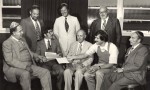
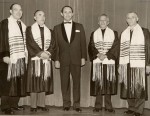
Mystery photo … Oct. 17/14

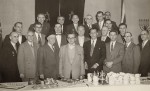
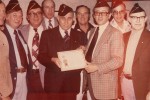
Group of men, Royal Canadian Legion, Shalom Branch No. 178, 1954. (photo from JWB FONDS; JMABC, L.14240)

If you know someone in this photo, please help the JI fill the gaps of its predecessor’s (the Jewish Western Bulletin’s) collection at the Jewish Museum and Archives of B.C. by contacting archives@jewishmuseum.ca.

Mystery photo … Sept. 26/14

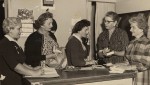
Women with thrift sale goods, National Council of Jewish Women, 1960. (photo from JWB fonds; JMABC L.13961)

If you know someone in this photo, please help the JI fill the gaps of its predecessor’s (the Jewish Western Bulletin’s) collection at the Jewish Museum and Archives of B.C. by contacting archives@jewishmuseum.ca.

Schiffer photograph on display for first time since 1999

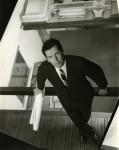
Arthur Erickson, circa 1970, Vancouver. (photo by Fred Schiffer; JMABC)

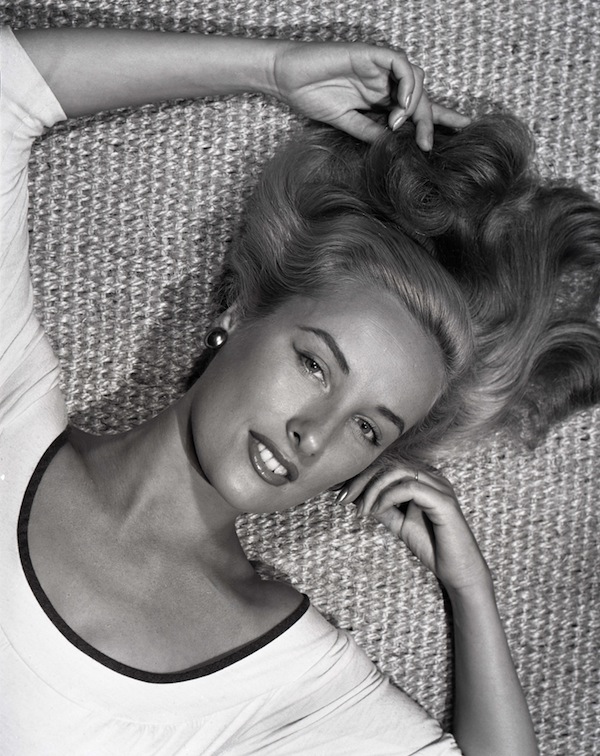
photo - Mirtha Legrand, circa 1953, Argentina. Legrand was the stage name of Rosa María Juana Martínez Suárez
Mirtha Legrand, circa 1953, Argentina. Legrand was the stage name of Rosa María Juana Martínez Suárez. (photo by Fred Schiffer; JMABC L.23933)

Thanks to the B.C. History Digitization Program and the Young Canada Works program, the Jewish Museum and Archives of British Columbia (JMABC) now has more than 1,700 photographs from the Fred Schiffer Photography collection available for viewing on the Yosef Wosk Online Photo Library (flickr.com/photos/jewishmuseum). This is only the first of many phases in the processing and digitization of this collection. The JMABC is also in the beginning stages of developing both a physical and online exhibit of Schiffer’s work.

The Fred Schiffer Photography collection (circa 1940s-1999) contains approximately 80,000 photographs and four metres of textual records and artifacts. Most of the digitized material is from the Vancouver series (1958-1999), which documents family groups, weddings, news celebrities, judiciary, film, stage and music personalities, and many more. Portraits digitized include Vancouver citizens of all walks of life juxtaposed with prominent B.C. personalities (both Jewish and non-Jewish). A smaller portion of the digitized photographs represent his work from when he lived in Buenos Aires.

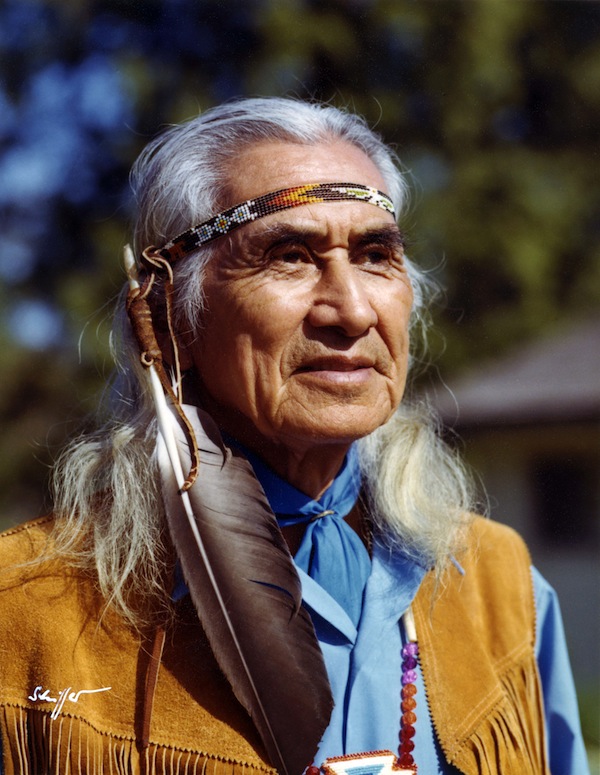
photo - Chief Dan George, May 3, 1971, Vancouver
Chief Dan George, May 3, 1971, Vancouver. (photo by Fred Schiffer; JMABC L.24421)

Fred Siegfried Schiffer was born in Vienna on April 1, 1917. A law student at the University of Vienna until 1938, he reached England as a refugee shortly before war broke out. He was the sole survivor of his family of five, all of whom perished in the Holocaust. In England, he met his wife Olive, whom he married in 1942, and began his distinguished career as a photographer. Olive and Fred had two children, Jennifer and Roger.

In 1948, the family set off to Argentina. In Buenos Aires, Schiffer became a respected artistic and commercial photographer. In 1958, when political unrest in Argentina became unbearable, the Schiffer family moved to Vancouver. Schiffer opened his studio on Seymour Street, where he quickly became Vancouver’s top portrait photographer.

Schiffer had an impeccable eye and a gift for revealing portraiture, as is evidenced in these selections from his collection.

More Than Just Mrs. exhibit online

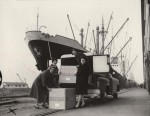
NCJW members unload boxes of toys headed for Israel as part of the Ship a Box to Israel program launched by NCJW Tikvah branch, Vancouver Harbor, 1947. (photo from JMABC L.11998)

Much of the work of Jewish women in Vancouver has occurred, both historically and still today, behind the scenes. The Jewish Museum and Archives of British Columbia is trying to change that with its online exhibit, More Than Just Mrs. Accessible at morethanjustmrs.wordpress.com, the exhibit discusses the history of the National Council of Jewish Women, Hadassah-WIZO (CHW) and Na’amat, the three predominant Jewish women’s organizations mid-century. It includes audio clips from local women who worked for these organizations and focuses exclusively on the work of the B.C. chapters.

“We’re trying to raise awareness of the Jewish community in B.C. and its history,” said Michael Schwartz, coordinator of development and public programs at JMABC, located in the Peretz Centre for Secular Jewish Culture in Vancouver. “When it came to these chapters of the organizations, I knew a few of the stories but wanted to fill in the gaps and learn more. I thought we should look at the organizations in greater detail, at the differences in their philosophies and the influential women who worked for them.”

The website has an introduction and then individual sections on each of NCJW, Hadassah and Na’amat, each one containing letters, certificates and other historical material relevant to the work the organizations performed. There are a total of six audio clips online but those who want to hear entire interviews may visit the Jewish museum offices to listen to them.

The exhibit offers a fascinating glimpse into Jewish life in Vancouver in the 1940s and ’50s: its fashions, the organizations’ priorities and their fundraising strategies. These women were professional volunteers, individuals who were not content to be “just Mrs.,” and insisted on devoting their time and talents to improving and meeting the needs of their local communities and communities in Israel and elsewhere. The name for the exhibit was drawn from an interview with one of the volunteers some 20 to 30 years ago, wherein she mentioned the phrase, “More than just Mrs.,” adding that, for her, doing this volunteer work was an opportunity to step out of her husband’s shadow.

NCJW supported an orphanage in Holland, for example, sending regular shipments of food and clothing to the aid of the 220 destitute war orphans being cared for in Bergstichting. The exhibit includes a letter from the orphanage dated April 1947, describing the difficult conditions at the orphanage. “The physical condition of our pupils being still rather week [sic], we had to fight with a scarlatina [scarlet fever] epidemic during five months,” wrote the director. “Sixty of our people were taken with this illness. But fortunately, your valuable gifts reached us just in those distressful months.”

The online exhibit was launched in September 2013 and some 2,500 people have visited the site since it was launched. Schwartz estimates it takes 60 to 90 minutes to read the material, which was produced by Annika Friedman last summer with the aid of Young Canada Works, a granting program subsidized by the federal government. Schwartz said another online exhibit is being produced this summer under the same program. Called Oakridge: The Final Frontier, it will chart the rise and decline of the Jewish community in the neighborhood. Elana Wenner, a master’s candidate in Jewish studies at Concordia University, will be interviewing community members and gathering photographs, videos and other relevant materials for the new exhibit. To contribute and for more information, Wenner can be reached at elana.wenner@gmail.com.

Lauren Kramer, an award-winning writer and editor, lives in Richmond, B.C. To read her work online, visit laurenkramer.net.

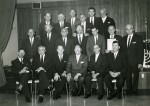
About this year’s Summer Celebration cover

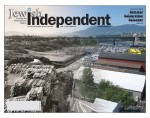
This year’s Summer Celebration cover is a collaborative effort between Jewish Independent production manager Josie Tonio McCarthy, JI publisher Cynthia Ramsay and archivist Jennifer Yuhasz of the Jewish Museum and Archives of British Columbia, which granted the JI permission to use the circa 1950 Leonard Frank photo that appears on the left of the cover and blends into the current-day photo taken on the Granville Street Bridge of False Creek, with the Burrard Bridge and North Shore mountains in background.

Frank was a well-known professional photographer in British Columbia, active between 1910-1944. He was born in Germany and first moved to San Francisco, before traveling to Port Alberni, B.C., to work in the mining industry. He began his photography interest there. In 1916, he moved to Vancouver and began to work as a photographer. He traveled throughout the province, taking a wide array of photographs, thereby preserving a detailed record of life here. Frank was interested in photographing city scenes (buildings, bridges, waterfront), industry (logging, construction, shipping) as well as scenic views (mountains, lakes, woods). In 1946, two years after Frank died, Otto F. Landauer purchased the Leonard Frank Photos Studio, which he owned and operated until his death in 1980.

The JMABC has approximately 39,000 photographs in the Leonard Frank-Otto Landauer Photos Studio collection – the largest collection of Frank photos in existence. Of these, the JMABC has digitized almost 7,000 photographs and made them available for viewing on its website. You can search them using the JMABC’s Yosef Wosk Online Photo Library: jewishmuseum.ca/archives.

To learn how to fade one photo into another in a minute, click here for a video.

Mystery photo … May 30/14

Branch #1, Jewish war veterans, Vancouver, B.C., 1976. (JWB fonds, JMABC L.146244)

If you know someone in this photo, please help the JI fill the gaps of its predecessor’s (the Jewish Western Bulletin’s) collection at the Jewish Museum and Archives of B.C. by contacting archives@jewishmuseum.ca.

Mystery photo … April 25/14

Group of men with documents, State of Israel Bonds, Vancouver, B.C., 1970. (JWB fonds, JMABC L.14607)

If you know someone in this photo, please help the JI fill the gaps of its predecessor’s (the Jewish Western Bulletin’s) collection at the Jewish Museum and Archives of B.C. by contacting archives@jewishmuseum.ca.

Mystery photo … March 28/14

Cantor Herskovits and Schara Tzedeck Choir, Vancouver, 1955. (JWB fonds, JMABC L.14274)

If you know someone in this photo, please help the JI fill the gaps of its predecessor’s (the Jewish Western Bulletin’s) collection at the Jewish Museum and Archives of B.C. by contacting archives@jewishmuseum.ca.