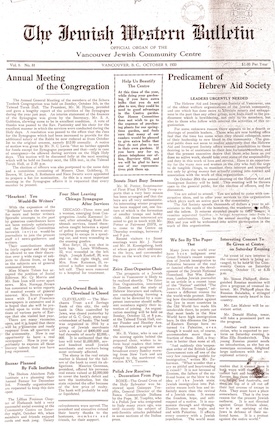
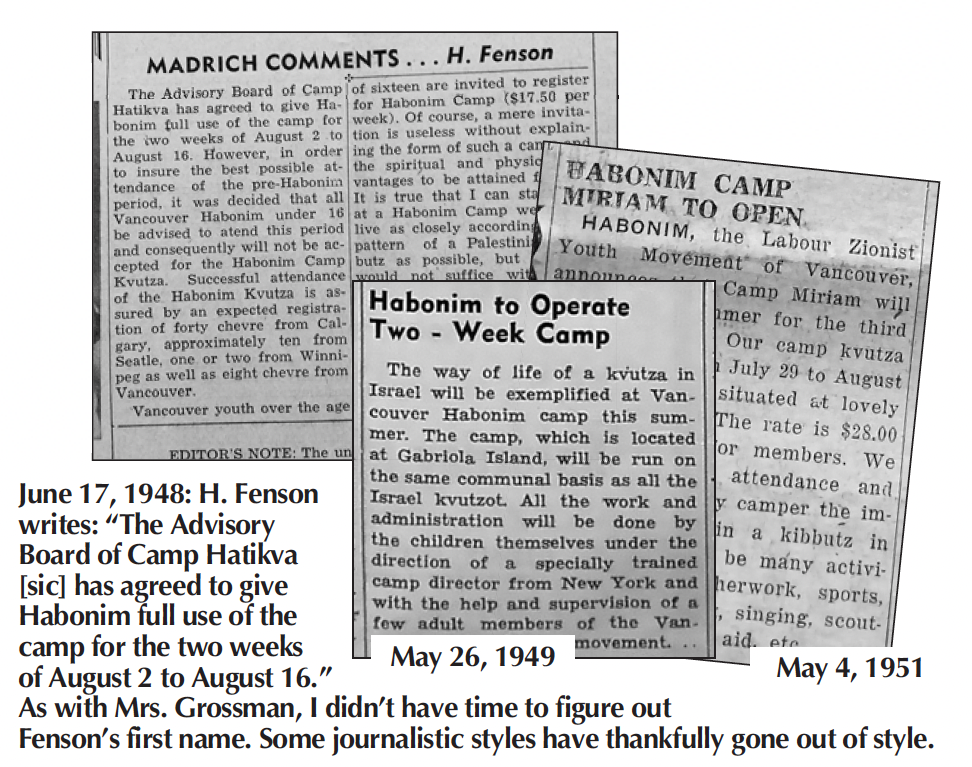
Sept. 3, 1937: “It is practically impossible in the space of a short article to fully describe the happy holiday enjoyed by eighty-five children at the Council of Jewish Women Camp at Crescent Beach this summer,” begins this article by Mrs. M. M. Grossman. I know the first “M” refers to Max, but I couldn’t find his wife’s name before we went to press.
What strikes me every time the Jewish Independent does a Camp Guide issue is the staying power of our Jewish summer camps.
Camp Hatikvah was started in 1937 at Crescent Beach by the National Council of Jewish Women. It was run under their auspices until 1944, when, according to the camp’s website, “members of the Young Judaea youth organization arranged to first rent, and then later acquire, the property to create Camp Hatikvah.” The camp is located on Lake Kalamalka in the Okanagan Valley.
The site quotes the Independent’s predecessor, the Jewish Western Bulletin, noting that a 1949 article in the JWB stated that “Camp Hatikvah provided early participants with a ‘place where they could live and express themselves as Jews, unhampered with fear of others and free from the out-of-place feeling that is so often a part of North American Jewishness.’ Developed in the aftermath of the Holocaust, Hatikvah existed to ‘produce proud, happy Jewish youth who were earnest and sincere in their beliefs’ and committed to the re-building of the Jewish people.”
April 22, 1955: Camp BB Riback comes into existence.
And the camp wasn’t territorial, it appears. According to a 1948 article in the JWB, Camp Hatikvah allowed Habonim Machaneh (Camp) to use its facilities for two weeks. By 1949, Habonim was renting a camp on Gabriola Island and, by 1951, Habonim Camp Miriam was in its third year, but, it seems, its first with the name Camp Miriam.
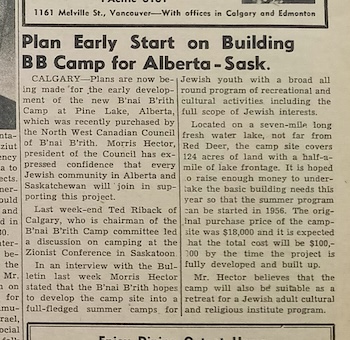
Camp BB Riback, in Pine Lake, Alta., was founded in 1955, led by Ted Riback of Calgary, who was chair of the B’nai B’rith Camp committee. There were two articles in the April 22, 1955, JWB about it, one about the camp and one about the upcoming B’nai B’rith convention, the highlight of which was anticipated to be a discussion about the camp.
July 13, 1956: Kids from Vancouver have always attended Camp Solomon Schechter in Washington state.
While Camp Solomon Schechter was established by rabbis Joshua Stampfer and Joseph Wagner in 1954, the first mention I could find of it in the JWB was in 1956. The week-long camp at Echo Lake, Wash., was also under the supervision of Rabbi Bert Woythaler of Vancouver’s Congregation Beth Israel and the Pacific Northwest Region of the United Synagogue sponsored it. The camp has been located near Olympia, Wash., since 1968.
Dec. 29, 2006: Even before Camp Kalsman had a summer session, they were part of the Jewish Western Bulletin’s Camp Guide.
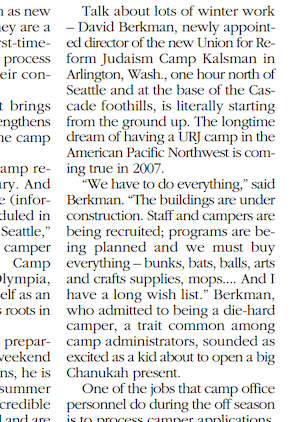
Relative newcomer Camp Kalsman started in 2007, and the JWB has followed it since its beginnings, as well. In 2006, the camp ran an ad looking for a director and, in our Dec. 29, 2006, Camp Guide, David Berkman, the newly appointed director, spoke to the paper about the Union for Reform Judaism camp, in Arlington, Wash. “The buildings are under construction. Staff and campers are being recruited; programs are being planned and we must buy everything – bunks, bats, balls, arts and crafts supplies, mops…. I have a long wish list,” he said.
As that 2006 article by Pearl Salkin noted, “The camps might not have big brass bands, but the excitement is already building. If you want your children to join in the fun, sign them up now, before the parade passes by.”
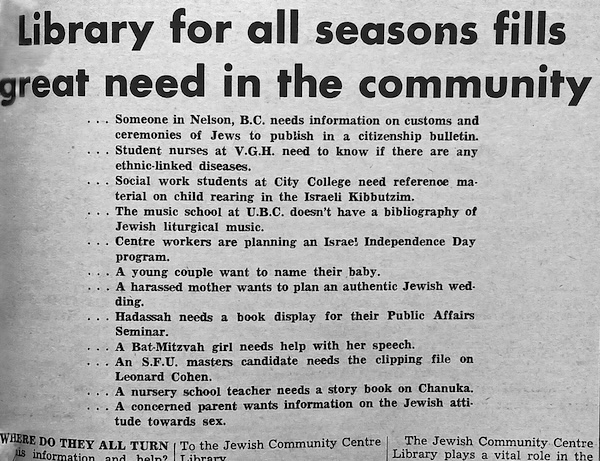
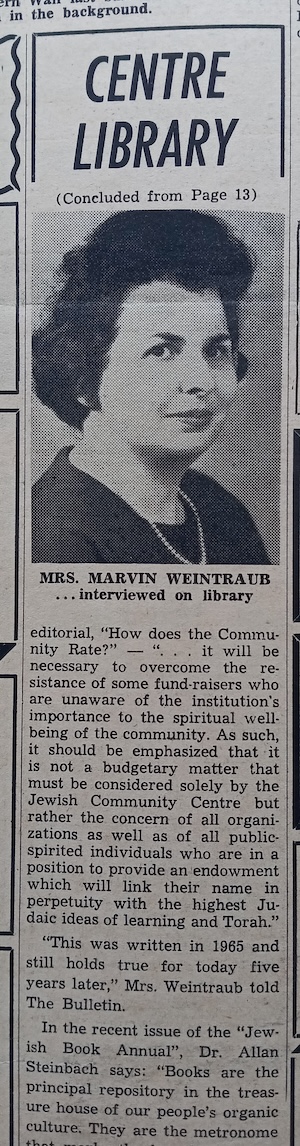
In honour of Jewish Book Month, which runs Nov. 13 to Dec. 13, I’m highlighting a short article that appeared in the Independent’s predecessor, the Jewish Western Bulletin, on Dec. 18, 1970.
The focus on the Jewish Community Centre Library, now called the Isaac Waldman Jewish Public Library, stressed the “vital role” the library plays “in the life of the Vancouver Jewish community” and how it serves “the community at large in a very meaningful and important way. At any time, one can pass by and see it being used for recreational reading, browsing or study.”
The article notes how a visiting professor who stopped in at the library remarked “how thoroughly cross-referenced it was.”
“Mrs. Marvin Weintraub, hardworking and dedicated volunteer librarian,” aka Rita Weintraub, is interviewed for the story. Many in our community will have known Rita, who died in 2020. The library she was instrumental in building was a lifelong passion. In the article, she refers to the library as important for “the spiritual well-bring of the community.” As such, she said, it should be “the concern of all organizations as well as of all public-spirited individuals who are in a position to provide an endowment which will link their name in perpetuity with the highest Judaic ideas of learning and Torah.”
Almost every year that the Jewish Independent has entered the American Jewish Press Association’s Simon Rockower Awards for Excellence in Jewish Journalism competition, the paper has been recognized for its editorials. We have won for other articles, too, in several different categories, but have taken away the most honours for our editorials. This year, for instance, we took first and second place! (See jewishindependent.ca/ji-editorials-win-twice.)
The JI’s editorial board, Pat Johnson, Basya Laye and I, don’t always agree initially on what the editorial’s stance will be. Our back-and-forths, exchanging our different views and coming to a consensus, is one of my favourite parts of running the paper. It’s a key reason, I believe, that the editorials have been so award-winning.
Another reason is that the three of us have read and worked on the Jewish Independent for so many years, and we’ve been part of this community for so many years. We are grateful for those on whose shoulders we stand. The wisdom of previous generations, and that of our own generation, inspires how we look at what’s happening here and elsewhere in the world.
As I looked through the JI archives, I came across the first editorial I wrote for the paper, when it was still called the Jewish Western Bulletin, and before Pat, Basya and I became a team. I also clipped out just some of the thousands of editorials that have been written over the years. There are so many recurring themes, including communal and democratic responsibilities and the importance of free speech. The editorials variously try to calm, cajole, educate or empower readers.
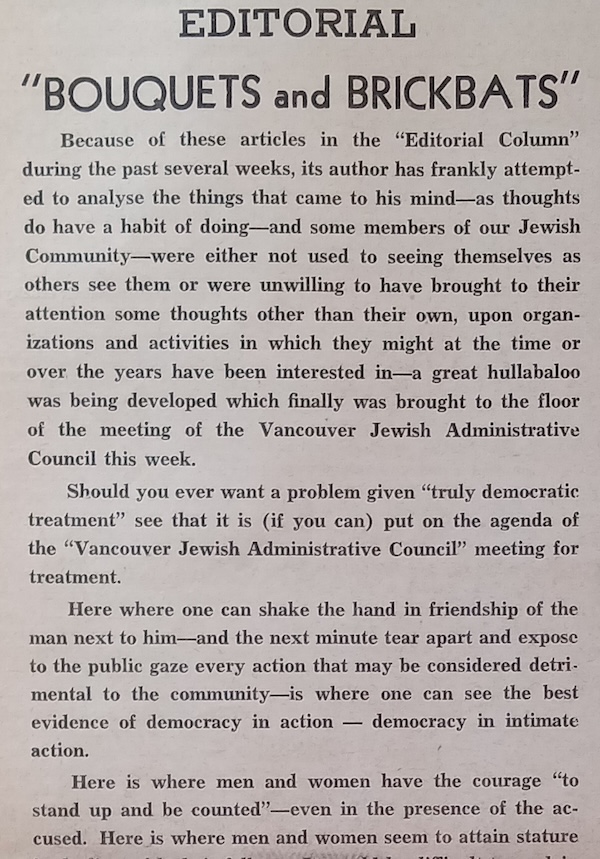
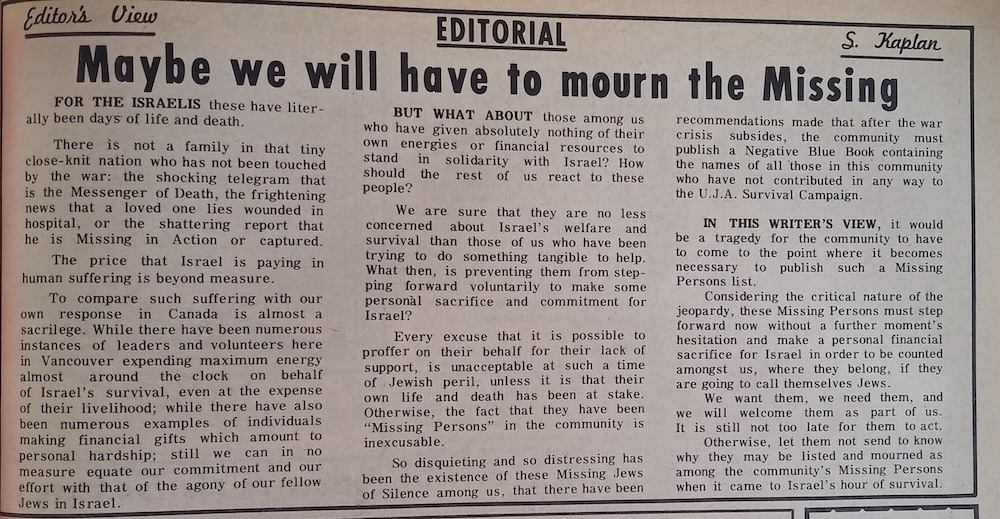
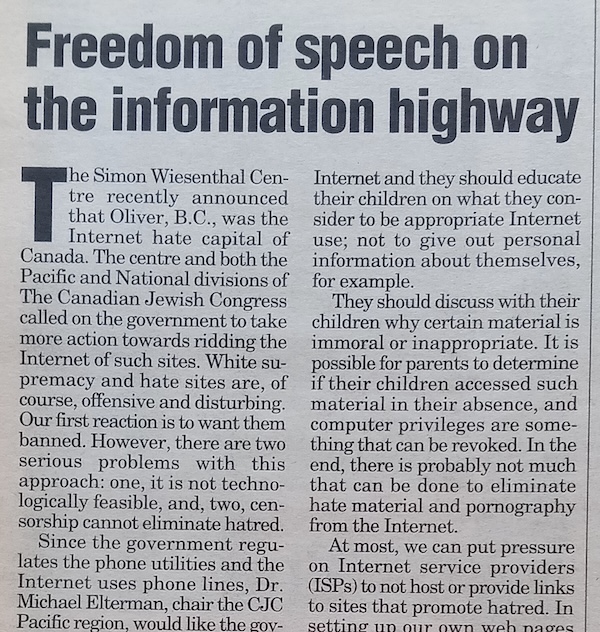
April 13, 1945: The paper’s editorials were brought under community review. Associate editor Goodman Florence describes the meeting that took place and comes to the conclusion that, “He who aspires to express himself must expect to receive both ‘bouquets and brick-bats’ – and if he is intelligent he will use them both.”Oct. 26, 1973: Jewish Western Bulletin editor Sam Kaplan calls out community members who’ve not contributed funds to Israel in the wake of the Yom Kippur War. The editorial floats the idea of publishing a list of these “Missing Jews of Silence.”Feb. 6, 1998: My first editorial for the paper argued for limited regulation of the internet, concluding that state censorship is more dangerous than free speech, including hate speech.
The JI editorial board’s first place Rockower Award winners from 2024 – and our many other missives – can be read at jewishindependent.ca.
My latest trip down a rabbit hole was inspired by this issue’s theme of Finance & Law. One of the first news items that caught my eye was “Model for U.S. Coin Revealed as a Jewess at Marriage.” The two-paragraph story appeared in the July 24, 1930, copy of one of the Jewish Independent’s predecessors, the Jewish Centre News.
“Through her marriage it was revealed that Miss Doris Doscher, whose face adorns the new twenty-five cent pieces issued by the National Treasury, is a Jewess. She was married yesterday to Dr. H. William Baum at the Jewish Institute of Religion,” reads the article.
“Miss Doscher was selected several years ago by the government representatives as the model for the new twenty-five cent pieces because she characterized ‘the highest type of American Womanhood.’”
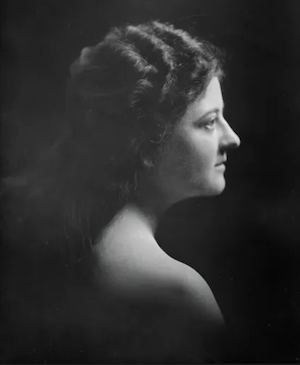
Doscher, who lived from 1882 to 1970, was an actress (in silent films!) and model. Her main claim to fame movie-wise seems to have been the role of Eve in 1918’s The Birth of a Race. Her most famous modeling ventures were for the Standing Liberty Quarter (in circulation 1916-1930), designed by Hermon Atkins MacNeil, and for the Pulitzer Fountain of Abundance by Karl Bitter (and Thomas Hastings, according to nycgovparks.org), which was dedicated in 2016, having been completed by Isidore Konti and Karl Gruppe after Bitter died in 1915. The fountain is located at Grand Army Plaza in Manhattan.
From the late 1920s, Doscher worked as a newspaper columnist and radio broadcaster, even having her own health and beauty column for a time; she also lectured on the topic. But, back to the Standing Liberty Quarter, which was controversial for a couple of reasons.
A 1918 print of Doris Doscher, horizontally flipped for comparison to the Standing Liberty Quarter, for which she may have been the model. (photo from mediastorehouse.com)
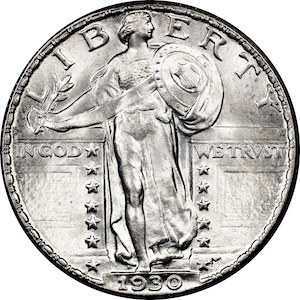
The Standing Liberty Quarter, 1930.
The first iteration of Liberty was quite risqué, with her right breast exposed, which apparently appalled the women’s movement of the day, as well as clergy and others. According to edmontoncoinclub.com, “The initial production run of 52,000 pieces had made their way through the Treasury system by January 1917; by then, the production of the ‘Type 1’ 1917 issue was already in full-swing … but by early 1917 clearly something had to be done. Hermon MacNeil was obliged to modify his design, which he strenuously objected to [an article on uscoinnews.com asserts that MacNeil never authorized the design change], and the reasons that were given to him by the mint were everything from poor striking characteristics, relief problems, die wear, coin wear, anything else but that exposed breast. The dies were modified in time for the 1918 strike (known as ‘Type 2’), and it featured a now ‘clad-to-the-neck’ in chain-mail Liberty.” Other changes were made for that casting and there were later revisions.
“The last run of the Standing Liberty Quarter took place in 1930, with only Philadelphia and San Francisco minting them. None were made in 1931 or 1932, possibly reflecting an oversupply because of the Great Depression, which had decimated the world economy in 1929,” notes the article on edmontoncoinclub.com.
The second controversy – which is still unresolved – arose after Doscher died. In 1972, another actress and model, Irene MacDowell, claimed to have been MacNeil’s model. According to various reports, her husband was friends with MacNeil and would not have approved of her modeling for the sculptor, hence, the secrecy. Another rumour is that MacNeil’s wife considered MacDowell a threat to her marriage, and so the sculptor kept her identity hidden.
It may never be known whether MacDowell or Doscher was the real model for the Standing Liberty Quarter, but Doscher was publicly credited, becoming known as known as “the girl on the Quarter.” And the moniker stuck. As noted on a memorial site for MacNeil (hermonatkinsmacneil.com), “100 years after the birth of Hermon MacNeil and fifty years after the Standing Liberty Quarter was minted, Doris Doscher Baum appeared on the TV quiz show I’ve Got a Secret on April 4, 1966.” The video is on YouTube.
There’s even more on this whole topic – including the reason the Standing Liberty coin was made. According to a blog on greatamericancoincompany.com, “When Robert W. Woolley took office as Mint director in April 1915, he asked [Philadelphia Mint superintendent Adam] Joyce to have [Mint chief engraver Charles] Barber submit some new designs for the dime, quarter and half dollar. It seems Woolley misinterpreted a memo from the assistant treasury secretary stating that coin designs could be changed after 25 years. Woolley took it to mean they must be changed and set the redesign wheels in motion.”
Barber’s suggested designs did not impress, and so a few sculptors were asked to make a submission, and MacNeil’s won. In the end, the blog notes, more than 214 million MacNeil quarters were made.
I could have spent as many hours exploring the other clippings I picked for this issue’s theme. I settled on a group that, to me, shows the paper’s diversity, as well as how technology and societal attitudes change over the years.
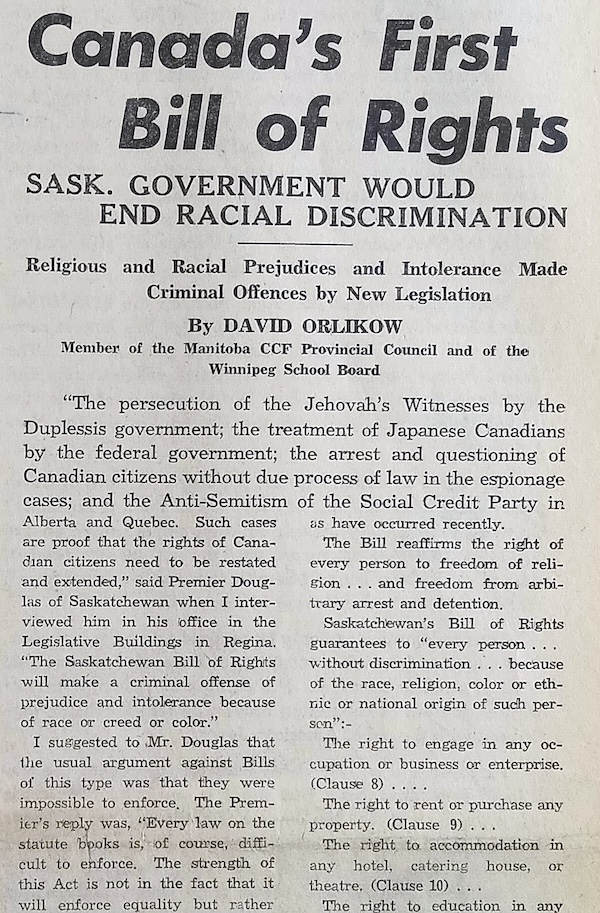
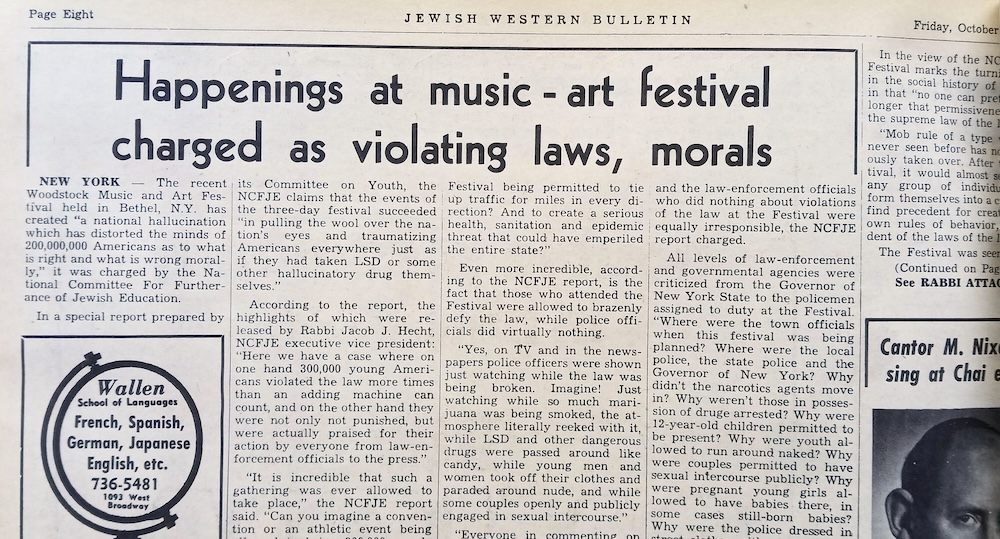
April 4, 1947: In an article by Winnipeg Jewish community member David Orlikow, Saskatchewan’s then-premier Tommy Douglas talks about the Bill of Rights his province was introducing – the first such bill in Canada. Orlikow would have a 43-year political career, including 26 years as an MP (1962-1988).Oct. 17, 1969: An organization called the National Committee for Furtherance of Jewish Education was appalled, to say the least, by the goings-on at the Woodstock Music and Arts Festival, which, it contended, created “a national hallucination which has distorted the minds of 200,000,000 Americans as to what is wrong morally.”
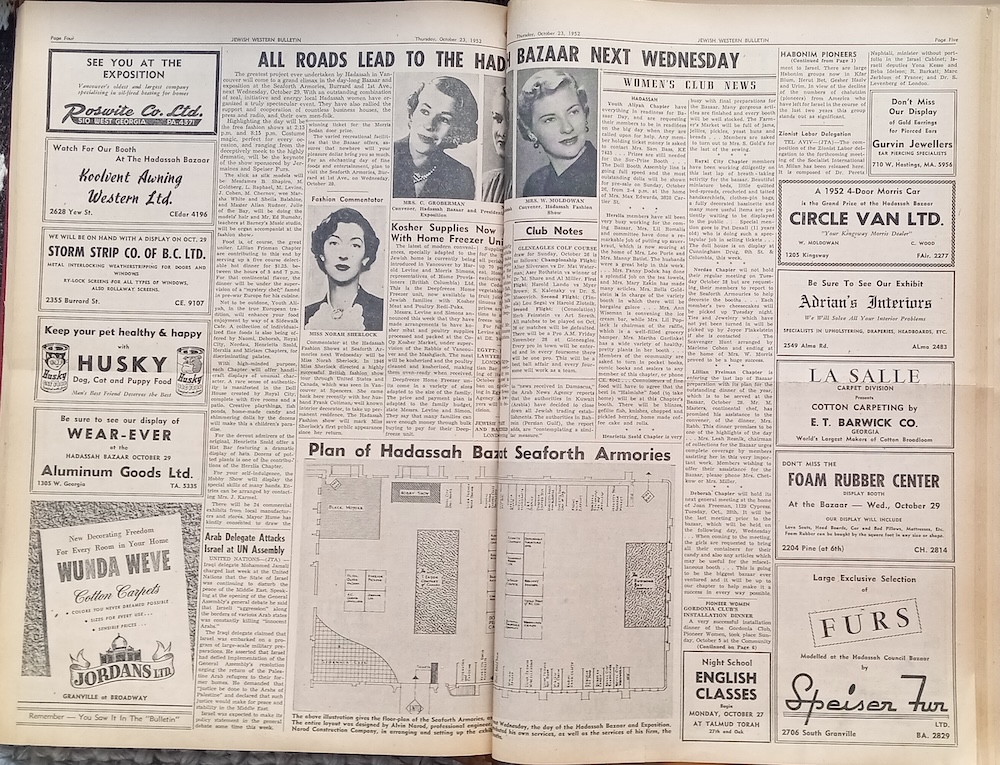
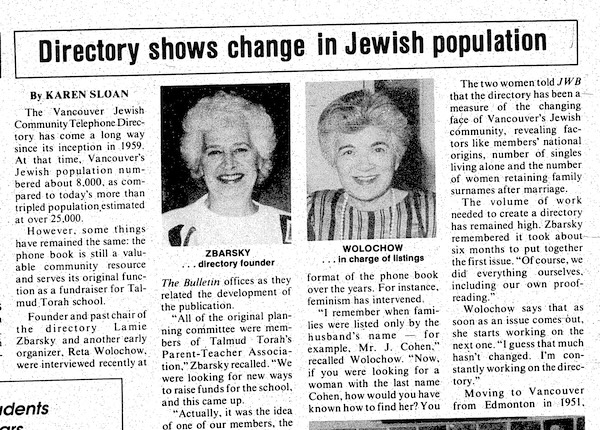
Community organizations need to fundraise, of course. A couple of the longest-running initiatives were the Hadassah Bazaar, which may have started in 1933 as a small affair at the JCC that graduated to Seaforth Armories in 1952, though the 1952 bazaar is generally counted as the first one and the 2007 event at the Hellenic Community Centre as the last; and the community phone directory, a fundraiser for Vancouver Talmud Torah that ran from 1959 to 2013-14.
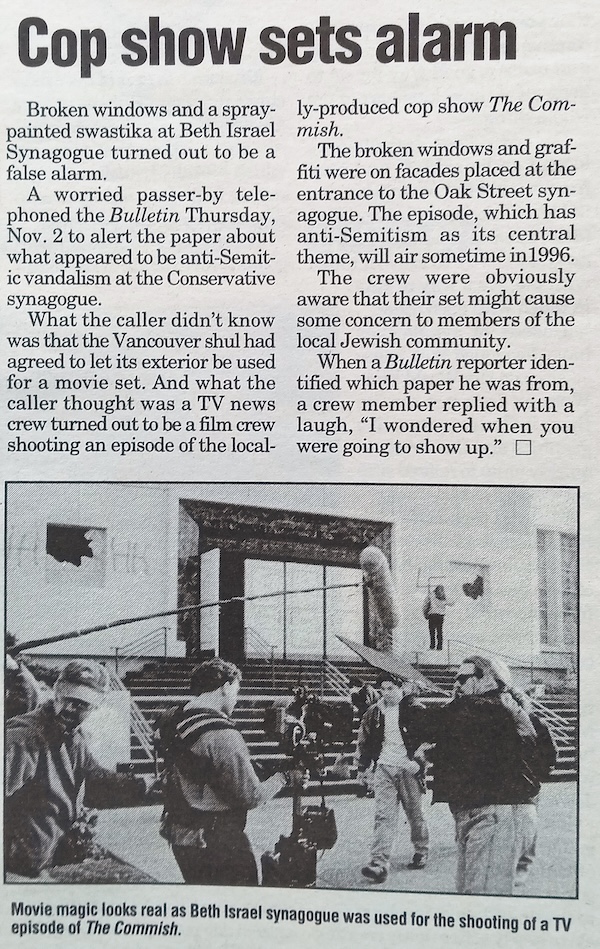
Nov. 17, 1995: Antisemitic graffiti on Beth Israel Synagogue concerned a passerby, but it was a “false alarm.” BI had agreed for its exterior to be used for “an episode of the locally-produced cop show The Commish.”
“At a time when we are all wishing each other a Happy New Year we may well pause to consider what we mean by happiness and what we shall do to attain it. There is one thing that holds true of all of us: there is nothing that we think so much about, care so much for, aim so much at, as somehow to be happy. Yet happiness remains one of the most elusive objects in the world, and even when we stop chasing it long enough to think about it, we find ourselves confused as to what we mean by being happy, anyway.”
“Let us talk friendly with ourselves as we face the New Year,” continues Rabbi Samuel Cass, spiritual leader of Congregation Beth Israel from 1933 to 1941, writing in the Jewish Western Bulletin’s Sept. 26, 1935, Rosh Hashanah edition. “What is it that we’re trying to overcome? Why does that call of renewal of vitality come as a refreshing sound to our ears?”
Cass contends that “many of us” in that day and age were in a “state of boredom,” despite the “manyavenues of excitement that modern civilization has to offer to us for the enjoyment of our leisure hours.” Hours that “ancient man” – who, “when he did not toil, he slept” – did not have.
“Modern man, thanks to a machine civilization with its labor-saving device, enjoys a greater amount of leisure than man had ever enjoyed before, aside from the enforced leisure of unemployment. Yet our leisure hours are the most boring we enjoy. Just an endless round of movies, cards, games.”
Cass goes on to recount a display at the World’s Fair a couple of summers earlier: “the electric marvel of our age, Captain Televox, the mechanical man. This electrical mechanism, when addressed in the proper pitch, gives correct information, and executes various commands. It can start a vacuum cleaner, turn on the electric lights, sets the radio at the proper station.”
The engineer who created “Mr. Televox” predicted “the day when housewives will be able to be away from the house all day and manage the household duties in absentia, by merely calling up the mechanical man and giving it orders.”
Cass laments that life in the 1930s was “reduced to a mechanical existence” with alarm clocks, radios, cars – even newspapers! “Our music comes from the radio, our dramatic entertainment from the motion picture, our philosophy from newspapers,” he writes.
His solution for happiness?
“Find an ideal somewhere and let it life [sic] you above the mechanics of living, let it give you true freedom and stir within you new fountains of personality. We need not seek very far for it. We are living in a world teething with problems, teething with causes that demand to be taken up!”
He asks readers to “embrace some great human ideal in the New Year, and in it experience the blessedness of a Happy New Year.”
This Rosh Hashanah message – and most of those throughout the JWB/Jewish Independent’s 95-year history – hold up remarkably to the test of time. The language differs, of course, but the problems are variants on sadly consistent themes: war, economics, technology, assimilation, antisemitism, etc. And the “solutions” are also relatively consistent over the years: the need for Jewish education, a renewed embrace ofJudaism’s ideals, unity, engagement, financial and physical support of community institutions, self-reflection. This year’s missive contains some of these same ideas.
In addition to holiday-related articles and editorials, Rosh Hashanah papers over the years have featured local and Israel year roundups, games and puzzles for kids, crosswords, recipes, reflective pieces, and more. The front covers generally gave some indication that the New Year’s issue would be special in some way – another tradition we continue to uphold.
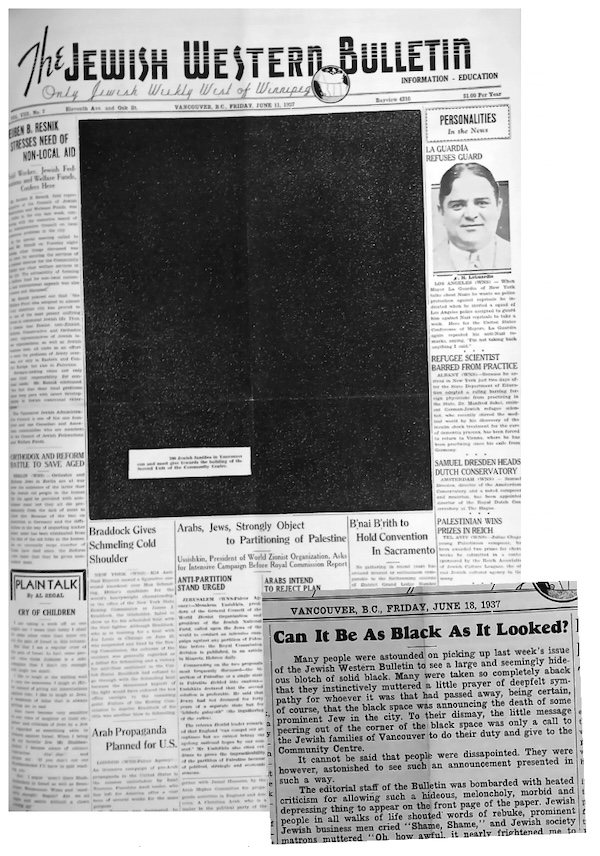
It was the big black square on the cover of the June 11, 1937, Jewish Western Bulletin that caught my attention initially. Then, as I flipped backwards and forwards through the archived papers, it was the weekly drama – that kind of left me hanging – and the sheer bluntness of tactics that drew me in to the JWB’s coverage of the 1937 campaign to raise funds for a second unit of the Jewish Community Centre, then located at Oak and 11th. (The building still exists, the home of the BC Lung Association for a long time now.)
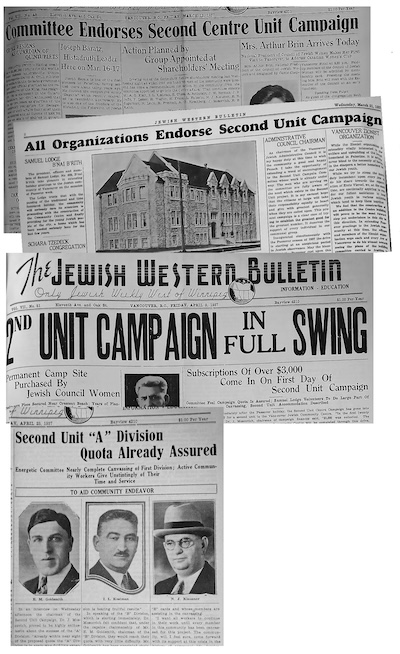
The campaign action plan came out of a shareholders’ meeting in March of that year, at “which over one hundred men of the community were present,” according to the March 12, 1937, JWB, the JI ’s predecessor. I’ve no idea who the shareholders of the centre were. Nor if any women were at that planning meeting, but Lillian Freiman Hadassah, Council of Jewish Women and the Schara Tzedeck Auxiliary were among the organizations that helped solicit and collect pledges.
The appointed campaign committee set a quota of $12,500 (or $271,217 in today’s dollars) and collections were divided into three divisions: donors of $100-$250 (Group A), $25-$100 (Group B) and up to $25 (Group C). The “keynote” of the campaign was “that each give according to his ability,” and every organization on the committee committed “its intention of getting whole-heartedly behind the task ahead.” Meanwhile, “The proposal submitted to shareholders by Schara Tzedeck Congregation of taking over the building has been tabled for a period of three weeks.”
While that proposal obviously fizzled out, I couldn’t find any later mention of it. As I’ve often found when looking through the paper’s archives, it’s easy to find when things start, but harder to find out how they ended up. What is clear is that there was a hard push to raise the $12,500, and, while the March 12 article noted that, “possibly, for the first time in community history, there is no division of opinion concerning the necessity of and the urgent need for doing constructive work for [the] community Centre,” the JWB did feature some disparate views as soon as the next issue.
Rabbi J.L. Zlotnik summed up those concerns in a March 19 article: the quota was too much, given other community concerns and organizations that also needed financial support; and the quota was too little, given that actual building costs are almost always larger than planned, and the community would, therefore, become even more indebted as a result.
“After a period of ten years, twenty thousand dollars are still to be paid before this building can truly be called our own,” wrote Rabbi Samuel Cass in the March 31 issue, about the existing centre, while also pointing to the need for a second unit. He observed, “First, we must not repeat the mistakes of the past,” so the second unit should “be paid for in cash to the very last penny, before the first sod is turned. Second, the campaign must go beyond the amount necessary to erect the contemplated addition.” Lastly, he said, the whole community must agree that the debt on the first unit be paid off “even speedily, and at a near time.”
The advice seems to have gone unheeded. In the same March 31 paper as Cass’s article, the page 2 headline read, “All Organizations Endorse Second Unit Campaign.”
The next edition’s cover blared, “2ND UNIT CAMPAIGN IN FULL SWING,” with the news that more than $3,000 had come in on the campaign’s first day, “collected from twenty men.” The building plans were also outlined in the April 9 paper: a two-storey building with a balcony was envisioned. The lower floor would be a gymnasium and banquet room, with “kitchen, showers, wash room, steam rooms, cloak-room, etc.” The upper floor would house an “Auditorium and Ball Room, cloak-room and lounge.” The balcony would be divided into small meeting rooms. “This present building is 33 feet 11 inches on 11th Ave. The addition would be 47 feet 9 inches or more than 40% larger,” the article stated.
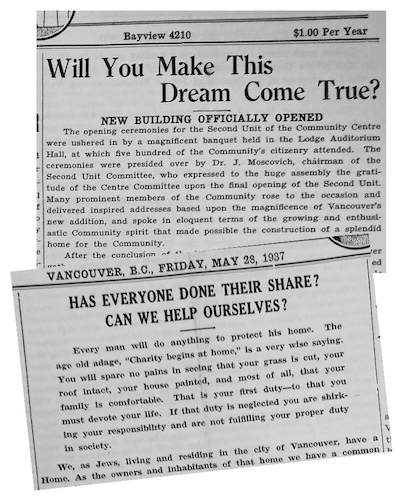
By the April 23 issue, the A Division quota was “already assured.” A couple of weeks later, in the May 7 paper, a completely fictional piece was published on the cover, titled “Will You Make This Dream Come True?” It was written as if the second unit of the centre had opened, with a banquet, a highlight of which was the announcement of a $5,000 gift from an anonymous donor to pay for all the unit’s furnishings and appliances. The article imagined what meetings and other banquets were already being held in the new building and the great number of athletics classes available now that “the use of the gymnasium was available to all persons in the Community.”
By the end of May, though, the JWB was asking whether everyone had “done their share.” By June, the optimism hit a wall.
The cover of the June 11 issue featured the large black square that caught my eye. The label-sized caption with a white background read: “700 Jewish families in Vancouver can and must give towards the building of the Second Unit of the Community Centre.”
The dramatic editorial choice was explained in the June 18 paper:
“The editorial staff of the Bulletin was bombarded with heated criticism for allowing such a hideous, melancholy, morbid and depressing thing to appear on the front page of the paper. Jewish people in all walks of life shouted words of rebuke, prominent Jewish business men cried ‘Shame, Shame,’ and Jewish society matrons muttered ‘Oh, how awful, it nearly frightened me to death.’
“No one, however, said ‘That little message in white, standing so pure, apart from that black hideousness was TRUE. Every body should give to the Centre – How we need that second unit – How essential it is to our Youth to have a proper meeting place.
“What our Community needs is more players, and less bench criticisizers. More workers, and less kickers.”
It concluded: “If you have a conscience, if you have the true community spirit – come through and show it. If you haven’t already given your contribution to the Second Unit – Mail it in to the Centre – tell them this article made you feel your responsibility. If you have given your donation, send in notification to the Centre to have it doubled. No matter what you give, make it as much as you can afford. Don’t let us be criticisers – LET’S BE BUILDERS.”
Over the summer, a couple of meetings were held about the centre. There was a large notice on the cover of the July 2 paper about a July 5 meeting, but I couldn’t find a report in the paper about what transpired. Nor could I find out how the Sept. 22 “mass meeting” on “the Future of Vancouver Jewry” went – its Sept. 14 front-page notice declaring that “By your attendance … YOU SHALL BE JUDGED!”
There are no August or October 1937 papers in the bound archival collection I have, and I don’t know if they were lost to history or never published. Until June 1937, the reporting had been detailed and consistent, but the next mention of a campaign, in the Nov. 12 paper, is “the Recent Centre Drive” – not the second unit drive. In this campaign, there were seven grades, ranging from Grade A ($500 and up) to Grade G ($1 to $49). The Grade A donors were listed by name in that paper, the Grade Bs in the next issue, the Cs in the next, through to the Gs in the Dec. 24 issue, wherein the committee was congratulated for its work and the community for its “whole-hearted support to the campaign.”
Since there is no useable digital archive of the paper, sadly, my time-limited flipping came across no more mention of a second unit. The editorial two years after that campaign, on June 23, 1939, started, “Much water has gone under the bridge since our Centre Building has been re-financed. Inside and outside improvements on the building, in addition to the Amortization Plan itself has gone forward.
“Never have local Jewish efforts been more active, and the response greater, nor has the attendance within the building itself been so large. Much of the success is due to the liberal atmosphere of the Centre itself, which means the use of this building for any and all worthy Jewish efforts with but one thought – helping others to help themselves. One shudders to think of what might have happened to Jewish efforts in our city had not our fellow-Jews responded to the call for funds when it was made.”
The editorial also noted: “Some, however, have through oversight or neglect failed to send their payments in as yet.” It was hoped that “the pledgors in arrears will … see that their respective remittances are made … upon receipt of the notices.”
As far as I know, the second unit of the Oak and 11th JCC never materialized. It would be more than two decades later that a new centre would be built, at Oak and 41st, opening in 1962.
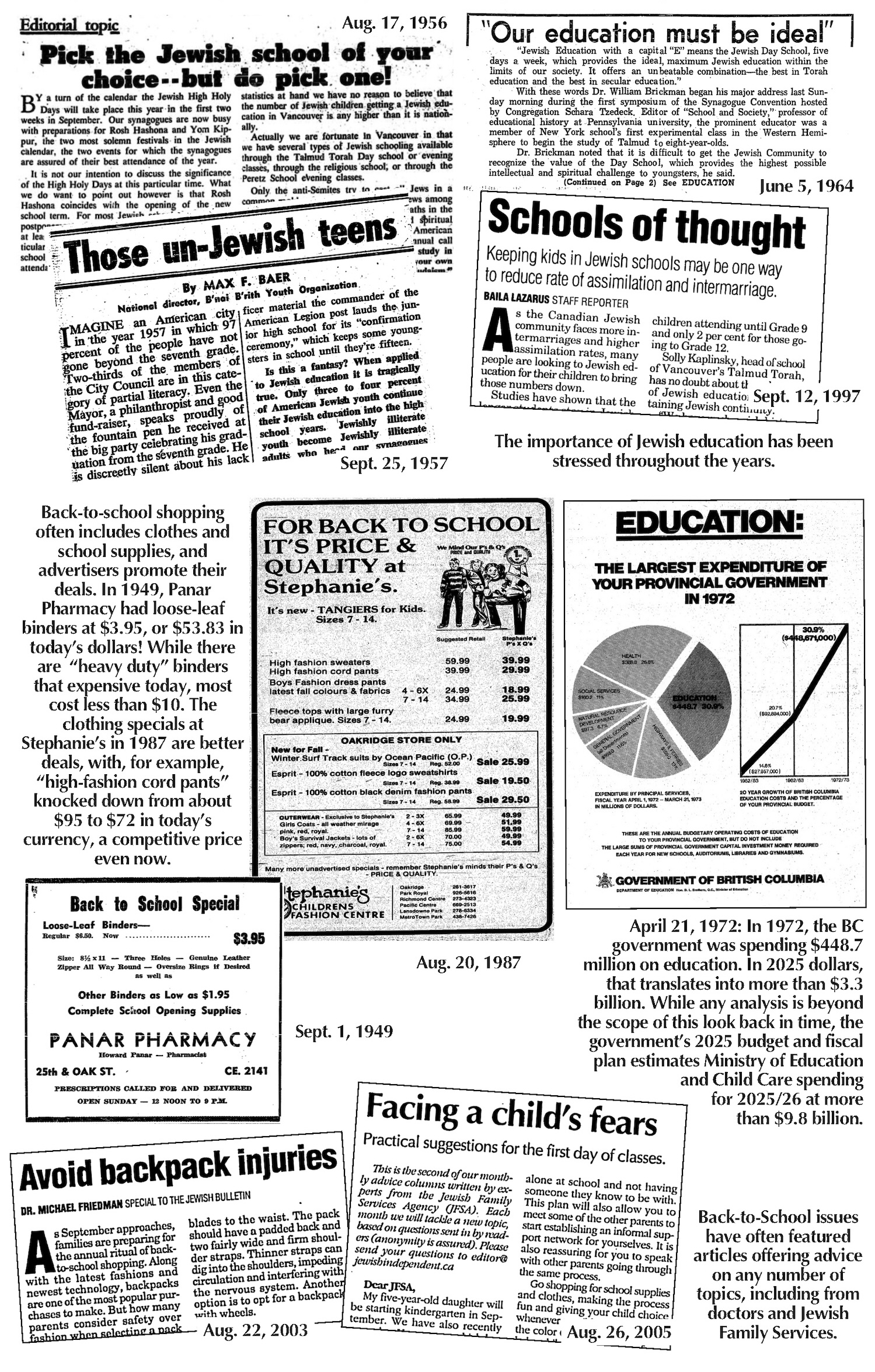
Not surprisingly – “People of the Book,” and all – education is an always-relevant topic that has been covered in the Jewish Independent / Jewish Western Bulletin. The paper seems to have steered clear of editorially supporting any particular Jewish school or type of Jewish schooling, but rather consistently stressed the need for Jewish education, especially for children, but also for youth and adults.
A 1956 editorial noted that “an estimated 50 percent of Jewish children in Canada do not get any Jewish education whatsoever.” While admitting that there were no data to suggest Vancouver fared better than other Canadian cities in this regard, it noted that there were several types of schooling available here, day school, evening classes, religious and secular options. “Only the anti-Semites try to cast all Jews in a common mold, a hateful mold,” it noted. “But the Jews among themselves have always followed diverse paths in the perpetuation of their history, ideals and spiritual heritage.” So, it concluded, “Register your child in the Jewish school of your choice. And, if your child is already enrolled, remind your friend or neighbor about enrolling his child.”
It is sometimes hard to look back over the pages of the Jewish Independent and its predecessor, the Jewish Western Bulletin, knowing what has happened since the articles were published. From the 1933 optimism that there was hope for German Jewry, to the enthusiastic welcome of a seemingly short-lived El Al office in Vancouver, to colleagues who have passed away.
While the odd recipe or food-related article can be found in the Jewish Western Bulletin even before it became the Bulletin, regular food columns or special sections seemed to have become a part of the paper under Sam and Mona Kaplan, who owned the paper from 1960 to 1999. The Independent has carried on the tradition, with its annual Food & Drink issue, which you hold in your hand, and with the inclusion of recipes in our three holiday issues, Rosh Hashanah, Hanukkah and Passover. One thing that becomes apparent in flipping through the archives is that tastes change, and not every recipe, or recipe name, withstands the test of time.