

Smartphones, even if you hug them, won’t hug back. It’s not revelatory, but an effective allegory to understand what’s missing with screen interactions.
Though screens replaced direct, in-person human interactions during the pandemic, by necessity, it only worsened a problem that still exists: the less real the contact, the worse the depression and loneliness.
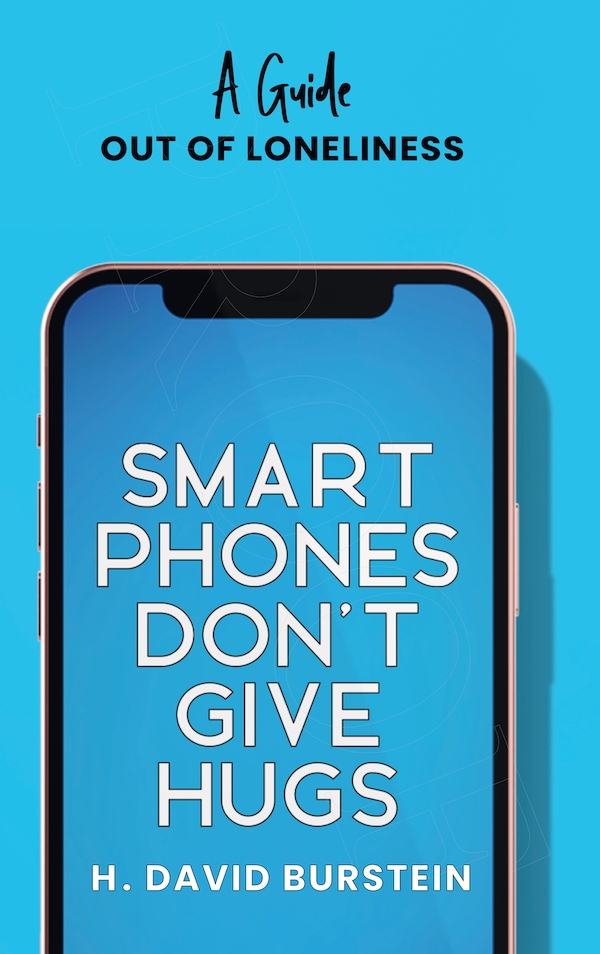
Toronto author Dr. H. David Burstein draws this correlation in his first book, Smart Phones Don’t Give Hugs: A Guide Out of Loneliness (Talk+Tell, 2022). The book takes an in-depth look at loneliness and depression, its modern causes and how it might be alleviated.
“Humans are social creatures who have a need to connect and cooperate with others, with the purpose of being part of something bigger than themselves,” said Burstein. “We want to be needed and to know we are loved.”
More than two years of gathering socially via a screen have led people to lose the ability to really connect with one another in an organic off-the-web way, he said.
“Maybe we are so enchanted by the social aspect of technology that we have forgotten what it was like to shake hands or bump fists, as opposed to like, comment and subscribe. We have forgotten how to foster lasting human connections,” he said. This, he believes, has contributed to the general worsening of people’s mental health.
A Statistics Canada survey on mental health over the course of the pandemic, which was released in September 2021, found that one in four Canadians reported depression, up over the previous year from one in five. Toronto’s Centre for Addiction and Mental Health (CAMH) showed in surveys last year that loneliness and depression spiked during the pandemic and continue to be a growing problem.
In addition to his own findings, Burstein corrals some of the wisdom available from various Jewish sources, including Dennis Prager, author of The Rational Bible; Rabbi David Wolpe of Temple Sinai in Los Angeles; Abraham Isaac Kook, former chief rabbi of Israel; Rabbi Noah Weinberg, Aish HaTorah founder; and Rabbi Harold Kushner, author of When Bad Things Happen to Good People, who died only recently, on April 27.
One of Burstein’s tips is to pay attention to the signs your body is giving you.
“Just like when we’re thirsty, we drink; when we’re hungry, we eat; our emotions are not to be ignored. If we’re lonely, we need to be with people,” he said.
But an obstacle for many people is understanding that there’s a problem.
“It is difficult for people to admit being lonely because they think it means that they feel like a loser,” he said. “But I have also learned that when we are challenged, there are three ways we can react. One is to confront, second to retreat, third to ignore. My tendency had been to respond instinctively with the last two, but this time I decided to lean into the subject. It is a heavy subject requiring a lot of self-reflection, so I had to pace myself. I wrote the book for my own clarity, and to help others as well.”
Included in those “others” are his three teenage children. He is increasingly worried about their well-being, given the amount of time they spend on screens. Though quick to point out that there are benefits to screen time, moderation is key, said Burstein, and the quality of consumption is important, too.
Through the process of writing, Burstein became more aware of what, in his own life, needed work.
“I take my personal relationships more seriously,” he said. “I still worry about what tech is doing to us.”
Jonathan Wasserlauf is a freelance writer, and a political science major and law student based in Montreal.