
Attack on Jewish kids

Fresh red lines have been crossed by anti-Israel agitators in Canada. These developments should alarm everyone who cares about civil society, diversity and safe spaces for children.

A coalition of antizionist groups is pressuring provincial camping associations to strip accreditation from Jewish summer camps on the basis that the camps integrate Zionism into their programming.

These opponents accuse the camps of politicizing Jewish summer camps, but the irony here is that it is the activists who are doing the politicizing. The land and the state of Israel are integral to Jewish identity. They deserve to be part of a holistic Jewish experience – camping, or any other cultural undertaking – for Jews of any age.

A primary complaint, it seems, is that Jewish camps often employ young Israelis, including (as almost all Israelis are) veterans of the Israel Defence Forces. They take it a step further, though – and this is a lesson about the insidious strategy behind the “genocide” libel. 

The term genocide, we should not need to note, carries a strict definition under international law and no competent international court has made such a finding against Israel. While the term is thrown about with abandon, including by erstwhile legitimate nongovernmental organizations, this is, at best, a contested area of discourse. 

It might have seemed that the widespread use of the term “genocide” was a means to undermine the legitimacy of the Jewish state. It is much more than that.

Having planted the flag of “genocide,” antizionist groups are now moving from this presumed “fact” to employing it as a weapon on new fronts to attack Jewish identity, culture and security worldwide – the first, apparently, being Jewish kids’ summer camp experiences.

The activists targeting Jewish camps are accusing them of endorsing “genocide.” The campaign is part of a broader effort to cast Jewish institutions as unacceptable in public life if they are connected, even tangentially, to anything associated with Israel.

Jewish summer camps have nothing to do with military strategy in Gaza or legislative decisions in Jerusalem. They have everything to do with building community, preserving language and tradition, fostering positive identity and belongingness, and providing childhood experiences that many Canadian Jews cherish and remember fondly for decades. They are also sources of relationships – dating and marriages included – for many in the Jewish world.

And that, of course, may be the point.

The anti-Israel activists know the centrality of Israel to Jewish identity. To undermine Israel, they seem to have concluded, it is necessary to attack the foundations of Jewish identity in Canada and around the world. Starting with kids.

The attempt to weaponize accreditation – a marker of safety, quality and regulatory compliance – threatens to blur the boundary between political disputes and Canada’s multicultural harmony. Provincial camping associations are rightly focused on ensuring that camps meet health, safety and staffing standards. They are not forums for arbitrating geopolitical grievances. 

What is most disturbing about this campaign is not merely its target, but its implications. If any cultural institution can be penalized because it maintains a connection to a nation or narrative that some (rightly or wrongly) find objectionable, then no group is safe from the imposition of political litmus tests in civic life. Imagine if every cultural organization that used Russian, Hausa, Arabic, Urdu or Mandarin were accused of endorsing every foreign government’s actions. The corrosive effect on Canadian pluralism would be profound.

To their credit, camping associations in Ontario and Manitoba have responded appropriately. We await similar expressions from the BC Camps Association.

Jewish camp leaders, Jewish federations and others have rightly pushed back, calling the campaign discriminatory and cautioning that it risks undermining the welfare and safety of Jewish children. Their voices deserve amplification. Protecting our children’s right to participate in enriching experiences free from political and antisemitic harassment is not a partisan concern. It is a foundational element of a just, inclusive society.

In defending Jewish summer camps, we are defending more than campfires and games. We are defending a principle: that identity – religious, cultural or ethnic – must not be a basis for discrimination in Canada. 

To suggest that Jewish camps should lose their accreditation because they use Hebrew words around a campfire, celebrate Jewish holidays or employ staff who have served in the Israeli military is to redefine discrimination as activism. 

Targeting Jewish summer camps for their cultural identity is an assault on the very foundations of multicultural community life. 
Tackling antizionism head on

Adam Louis-Klein was deep in the Amazon on Oct. 7, 2023 – three months into fieldwork with an Indigenous community, living without any internet or phone contact. Two days later, in a local town, he reconnected with the outside world and saw the news. Then he saw something else: how people in his professional orbit were responding to the atrocities perpetrated against Israelis.

“I spoke up and said I stood in solidarity with Israelis, and spoke up against the bigotry I was already seeing, and I was quickly, basically purged,” he told the Independent.

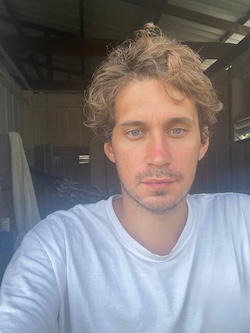
photo - Adam Louis-Klein
Adam Louis-Klein (photo by Adam Louis-Klein)

Louis-Klein, a McGill University PhD candidate who now lives in New York state, describes a swift loss of “all my social and professional contacts.” But that didn’t stop him from expressing his views. He felt an obligation, he said, to offer a Jewish voice that speaks the same language as the academy and the left, especially in response to antizionism.

“As I wrote more about it, I think my understanding of antizionism got sharper and sharper,” he said. “I got more focused on antizionism itself as an ideology, not just antisemitism.”

That shift – treating antizionism as something that should be named and confronted directly, rather than in the context of its relationship with antisemitism – has become central to his work. In his view, focusing on antisemitism as the lens can become a rhetorical trap, positioning antizionism as a respectable political position.

His ideas went viral. 

“I was posting on Facebook and people kind of liked the little mini-essays I wrote,” he said. He launched a blog at the Times of Israel, then began writing for other outlets. “One thing led to another.”

The visibility has accelerated in recent months, he said. Movement Against Antizionism (MAAZ), the organization he founded and leads, has also caught on rapidly. 

People found his Times of Israel blog and were on the lookout for voices explicitly naming and confronting antizionism, he said. The people he works with have helped refine his language. Looking back at his writing over a short span, he said, “I already see a kind of progression whereby I get sharper at naming antizionism and making that the focus.”

The backlash was instantaneous.

“People tried to shut me down,” he said. “There were fake complaints against me … they would call my advisor, they would call the anthropology department to try and get me expelled.” He said he was removed from WhatsApp groups, a book club he organized collapsed, a presentation he organized on the Soviet roots of antizionist rhetoric was canceled without explanation.

He described a hardened ideological environment.

“I was told that no one would discuss with me whether it’s a genocide,” he said. “The genocide libel was not something that could be discussed.”

While the university environment may be a hotbed of antizionism generally, anthropology is particularly hostile, he said.

Early anthropology was connected to colonial infrastructures and later efforts to reckon with that legacy have put “settler-colonialism” at the centre of the discipline, Louis-Klein said. In his telling, the field has “swallowed wholesale” a narrative in which “Israelis are these evil white settlers.” He no longer sees a future in the discipline. “It’s not a field that Jews who do not profess loyalty to the antizionist movement … can exist in at this point,” he said.

Louis-Klein, who grew up mostly in Seattle and who spent time in Whistler growing up, holds a bachelor’s degree in philosophy from Yale University, a master’s in philosophy from the New School, a master’s in anthropology from the University of Chicago, and is nearing completion of his PhD at McGill.

With academic doors closing in front of him, he sees a new possibility: the creation of a serious intellectual space for the study of antizionism itself. 

“There is now a movement to try and create an academic space for critical studies of antizionism,” he said, adding that he wants to “provide an intellectual framework for treating antizionism as an objective study, as something that we can critically understand, break down, trace its genealogy, understand how it functions in the present as its own phenomenon.”

In his view, the public conversation must change for practical reasons, not just academic ones.

“We cannot fight anti-Jewish violence today without naming and opposing antizionism,” he said. “The vast majority of anti-Jewish violence is directly motivated by antizionism.” 

Even attacks rooted in “more classical” right-wing antisemitism now unfold within “the overall hysteria that has been created by antizionism since Oct. 7 and the genocide libel,” he said. Besides, he argued, as a strategy, equating antizionism and antisemitism is failing.

“Calling antizionism antisemitism is also not working,” he said. “We’re assuming that if we just say it’s antisemitic, a number of institutional levers will set into place Holocaust memory, and it’ll shut it down.”

But that’s not happening, he said, “because antizionism doesn’t look like classical antisemitism.”

Instead, he thinks people need to be taught what antizionism is. 

“You can’t just say it’s antisemitic,” he said. “You have to explain to people what antizionism is as an ideology, and you have to stop treating it as political critique.”

He draws a distinction between debating Zionism and describing antizionism as a social phenomenon. 

“Talking about antizionism also doesn’t mean … explaining how Zionism is actually good. It goes far beyond that. It means explaining how antizionism is a hate movement,” he said.

“It’s a mob movement,” he added. “There are lynch mobs … people who hunt down Zionists and try and shame and humiliate them.… They vandalize buildings, they smash windows.”

MAAZ delivers training in different sectors, including education, business, arts and journalism, designed to help people understand antizionism and “to fight back and to give people a language.”

“We really think naming and labeling is the way to defeat it,” he said.

Louis-Klein described teaching people to “maintain boundaries,” and to label recurring accusations – “colonizer libel, apartheid libel, genocide libel” – as antizionist so that Jews and allies stop feeling obligated to defend their legitimacy and instead “hold antizionism to account.”

The organization also includes legal thinking, with scholar Rona Kaufman developing a legal concept of antizionist discrimination.

Beyond training, MAAZ emphasizes public education. Louis-Klein encourages people to explore the organization’s website (movementagainstantizionism.org), which he describes as “kind of like a museum … a curation where you enter inside of the whole history of antizionism and its different forms and the different libels.” 

He emphasized a point he sees as essential for long-term success: expanding beyond the Jewish community. 

“Having non-Jewish people who can get behind that … will just be the key,” he said. “That will be the thing that catapults it to the next stage.”