Skip to content
  • Home
  • Subscribe / donate
  • Events calendar
  • Business Directory
  • FAQ
  • News
    • Local
    • National
    • Israel
    • World
    • עניין בחדשות
      A roundup of news in Canada and further afield, in Hebrew.
  • Opinion
    • From the JI
    • Op-Ed
  • Arts & Culture
    • Performing Arts
    • Music
    • Books
    • Visual Arts
    • TV & Film
  • Life
    • Celebrating the Holidays
    • Travel
    • The Daily Snooze
      Cartoons by Jacob Samuel
    • Mystery Photo
      Help the JI and JMABC fill in the gaps in our archives.
  • Community Links
    • Organizations, Etc.
    • Other News Sources & Blogs
  • JI Chai Celebration
  • JI@88! video

Recent Posts

  • Legal help for students
  • Revisiting myth of Lilith
  • Wrong person rebuked
  • Canada’s mixed messages
  • Questions for museum
  • Symposium on antizionism
  • Making soccer political
  • CJPAC lauds Pulver’s impact
  • City recognizes Vrba’s legacy  
  • Organ donation saves lives
  • Theodore’s March premiere
  • A healing Shabbaton
  • Supplying healthy food
  • A chime of metal tags
  • Yellowknife seder a first
  • Ishai energizes, unifies
  • A Lag b’Omer to remember
  • Expanding the healing
  • Hannah Senesh – a unique hero
  • Community milestones … May 2026
  • Sharing her testimony
  • Fall fight takes leap forward
  • The balancing of rights
  • Multiple Tony n’ Tina roles
  • Stories of trauma, resilience
  • Celebrate our culture
  • A responsibility to help
  • What wellness means at JCC
  • Together in mourning
  • Downhill after Trump?
  • Birth control even easier now
  • Eco-Sisters mentorship
  • Unexpected discoveries
  • Study’s results hopeful
  • Bad behaviour affects us all
  • Thankful for the police

Archives

Follow @JewishIndie
image - The CJN - Visit Us Banner - 300x600 - 101625

Tag: Jewish Federation

COVID’s impacts on mental health

COVID’s impacts on mental health

(image from bastamanography)

Purim 2020, which took place in early March, brought with it added significance. For some, it represented the last time they gathered in a Jewish setting in person, outside the home. For others, it was the first “live” service to be canceled as a result of SARS-CoV-2. In the days that ensued, lives changed as the perils of the coronavirus became apparent. School, work and religious services all moved online; personal contact with friends and family became exceedingly limited; travel, for most people, ceased.

Among the societal issues compounded by the pandemic have been increased isolation, drug dependence, and food and job insecurity. Underlying these problems has been COVID-19’s effect on mental health, including within the local Jewish community. As a result, numerous groups have stepped up their efforts to help the most vulnerable, and all those who have been impacted by the pandemic. During the past weeks, as the first anniversary of COVID-19 came and went, the Jewish Independent spoke with several people at the forefront of handling the Greater Vancouver Jewish community’s response.

At Jewish Family Services (jfsvancouver.ca), efforts to tackle mental health issues have widened, as more people have been seeking the agency’s support. Early on, JFS opened a crisis line that runs seven days a week, from 9 a.m. to 9 p.m. (604-588-5719 or [email protected], with the promise to respond within 24 hours).

“People are struggling, without a concrete end to the restrictions, and so demand for emotional support and learning different coping skills has surged. Our crisis line is always there for people who need immediate help and, for many community members, this is the easy way to connect with a counselor. If someone wants to remain anonymous, that is absolutely an option, we do not require a caller to identify themselves,” JFS chief executive officer Tanja Demajo told the Independent.

From its launch at the start of the pandemic to August 2020, the JFS Community Crisis Line received 955 calls, serving 494 individuals. Case workers spent 2,052 hours on the line. Additionally, 166 individuals accessed free programs offered by the JFS mental health and wellness team via telehealth and video conference – a 40% increase compared to pre-COVID times.

“Many are struggling with the added role of being a caregiver in the pandemic context, as well as dealing with their own emotions, so our workshops and support groups provide a community where people are able to vent, talk and support one another. We also connect people with friendly callers. These services have been a lifeline for many of our clients,” Demajo said.

A report released by the JFS client advisory committee last summer highlighted many ongoing concerns. One alarming quote from a client cited in the report reads, “COVID-19 has been depressing and frightening for me. My anxiety has been through the roof and I’ve had an increased number of panic attacks and migraines. My chronic health conditions have increased in severity and I have new ones. My nightmares and terrors have also increased.”

Prior to the pandemic, some JFS clients were already battling with mental health issues, often severe, which have been aggravated by the need to now cope with unaccustomed fears and anxieties. Some people, according to JFS, have refused to go outside, whether it be to the grocery store or outside for a walk. This problem is often felt by seniors, who, like everyone, need exercise and who confront serious health conditions such as heart disease, diabetes and high blood pressure.

Many housebound JFS clients depended on family and friends visiting for social and emotional connection before COVID hit and have been feeling deeply alone since the pandemic began. Irritability and anger are rising. Senior clients who were used to spending significant time with their grandchildren are missing them desperately. “I miss hugging my grandchildren,” is a common refrain.

Since mid-May of last year, there have been weekly depression and anxiety support group meetings with JFS’s mental health outreach therapist, Kevin Campbell. Run on Zoom, the 90-minute sessions teach coping skills and allow a safe place to talk and share. The group focuses on cognitive behavioural therapy and mindfulness techniques. JFS also has an active seniors caregivers support group led by Lily Shalev.

Not all COVID-19 developments in connection to mental health are grim, JFS notes. Due to technological developments, some of those experiencing isolation are able to access telehealth, work from home, get home deliveries and view a variety of educational and cultural offerings online, including many synagogue activities.

Jewish Addiction Community Services Vancouver (jacsvancouver.com), an organization that helps community members navigate the troubles of various substance abuse issues, has held one-on-one meetings on Zoom ever since COVID started.

“Clients seem to like this kind of individual counseling better, as it allows for greater intimacy, even though it is on Zoom,” said Shelley Karrel, manager of counseling and community education at JACS. “What people liked most about the group meeting was the getting together physically.”

To help those who would prefer to meet in person, Karrel has arranged for one-on-one socially distant coffee meetings. “What JACS has done is to make ourselves more available to someone when they want to talk, and to be able to schedule a meeting fairly quickly. As a registered clinical counselor, I am able to offer clients tools and exercises for managing their symptoms and for exploring the root causes when the issues of anxiety and depression are evident. Some of my clients are finding AA meetings helpful online. And, like with our clients, some are not using that medium for the same reason – it’s not personal enough.”

For ongoing support, JACS has a monthly email that lists many resources for people, if they want to reach out for specific help. JACS is also beginning a new program, Sustaining Recovery, that offers additional support in the form of a structured plan to help someone develop goals and be able to keep track of their progress. This plan, JACS finds, is very useful in creating accountability and support.

Inclusion services at the Jewish Community Centre of Greater Vancouver (jccgv.com/inclusion) continues to provide a number of targeted social and recreational programs intended to engage, educate and provide meaningful lifelong learning opportunities, as well as engage individuals with diverse needs. The programs are rooted in Jewish values and the principles of social connection, community building and belonging.

“Social isolation is a prevalent issue for individuals with diverse abilities [and] this reality was exacerbated by the COVID-19 shutdown,” explained Leamore Cohen, coordinator of inclusion services. “These communities have been particularly impacted by the loneliness, uncertainty and economic hardships caused by the global pandemic, leaving these individuals at higher risk for numerous health challenges. The work we do in the inclusion services department creates the needed awareness of the individuals we support. But, now more than ever, community members are looking to us for routine and engagement at a time when they are most vulnerable.”

As people have settled into life with COVID-19, “these individuals continue to be shut in and vulnerable to mental health challenges,” she added. “In response, we offer a hybrid of virtual and in-person programming throughout the week that is both accessible and safe. In-person programs adhere to best COVID practices, and our virtual offerings allow for those who are unable to attend in person to access programming and community virtually.”

The Bagel Social Club, for example, met weekly in pre-COVID times as a means to increase avenues for integration, self-reliance and wellness. The program has shifted to weekly social clubs over Zoom and a weekly Relax and Just Breathe class, which includes gentle stretching, breathing exercises and visualizations.

As the lockdown took effect last year, Jewish Federation of Greater Vancouver (jewishvancouver.com) began convening multiple stakeholder groups to determine the pandemic’s impact on many aspects of Jewish communal life. A common thread during these discussions involved concerns about the impacts of increased social isolation on seniors, families and youth. Federation also hosted several webinars on mental health for community members, related to the impacts of COVID-19.

“Through this work, we were able to identify a number of key initiatives that we could support both financially and organizationally,” said Shelley Rivkin, vice-president of global and local engagement at Federation. “These include over $170,000 in emergency funds to Jewish Family Services, part of which was used to support the emergency care line; funds for Jewish Seniors Alliance to expand their peer support program; and the organization of several webinars with community psychologists directed toward young adults, families and teens.

“The Jewish Community Foundation, Federation’s endowment program, has also supported a number of projects to enable community agencies to undertake mental health initiatives,” she added. “Support for mental health issues for both agency employees and leaders was also identified as a priority for the community recovery task force when they launched their first grant round. It will continue to be highlighted as we move into the next grant round.”

Last December, youth workers voiced concern about the mental well-being of youth and young adults. Consequently, Federation hosted a roundtable with key leaders to ascertain how community members in this age range are faring, especially when faced with so many disappointments and cancellations over the past year. Based on these conversations and others, Federation will be collaborating with these agencies to develop a community mental health strategy for children and youth.

Sam Margolis has written for the Globe and Mail, the National Post, UPI and MSNBC.

Format ImagePosted on April 23, 2021April 22, 2021Author Sam MargolisCategories LocalTags addiction, coronavirus, COVID-19, inclusion, JACS Vancouver, JCC, Jewish Community Foundation, Jewish Family Services, Jewish Federation, JFS, Leamore Cohen, mental health, Shelley Karrel, Shelley Rivkin, Tanja Demajo, youth

Community milestones … Pulver, Wolak, Broca & Moskovitz

photo - Lana Pulver
Lana Pulver (photo from Twitter)

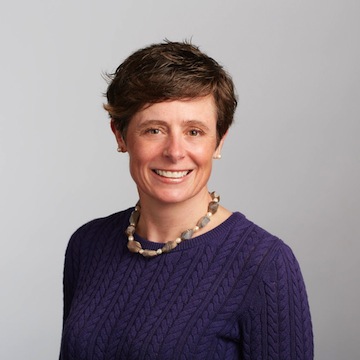
Lana Pulver has agreed to lead the Jewish Federation of Greater Vancouver’s 2021 annual campaign. She comes to this role with vast volunteer experience. She has served the past two years as the campaign’s major gifts chair and served as both chair and vice-chair of women’s philanthropy. She served on Federation’s board of directors for five years, including on the executive committee. And, she served on the board of governors of the Jewish Community Foundation for 12 years, during which time she chaired both the professional advisory and development committees – not to mention the numerous roles she’s held with other organizations and her professional accomplishments.

* * *

Family physician Dr. Anna Wolak, medical director at King Edward Medical Centre in Vancouver, has been appointed the associate head of the department of family medicine at Providence Health Care.

* * *

Artist Lilian Broca was invited to contribute to Letters from the Pandemic: A 30th Anniversary Commemorative Public Writing Project of the Graduate Liberal Studies Program of Simon Fraser University. The project is hosted by The Ormsby Review and her letter, which was published in February, can be found at ormsbyreview.com/2021/02/14/broca-pandemic-magdalene. She addresses the letter to Mary Magdalene, the subject of her latest mosaics series.

* * *

On March 11, Rabbi Dan Moskovitz of Temple Sholom and his family took the Oath of Canadian Citizenship, making them now both Canadian and American citizens.

Posted on April 23, 2021April 22, 2021Author Community members/organizationsCategories LocalTags Anna Wolak, annual campaign, Dan Moskovitz, Jewish Federation, Lana Pulver, Lilian Broca, milestones
Local Yom Ha’atzmaut

Local Yom Ha’atzmaut

Hagit Yaso, who was part of Metro Vancouver’s celebration of Yom Ha’atzmaut in 2014, is among the Israeli performers who will be joining the online event this year. (photo from hagityaso.com/en/home)

The Jewish Federation of Greater Vancouver and its 46 community partners, which includes the Jewish Independent, will be marking Israel’s 73rd birthday with a virtual celebration April 14 at 7:30 p.m. This year’s special hour-long event will include performances by both Israeli and local artists, as well as some surprises.

For the past 17 years, Federation has joined forces with Eti Lam, a Tel Aviv producer who specializes in bringing Israeli artists to Jewish communities around the world.

“Producing an event like Israel’s Independence Day requires lots of work and long-term collaboration between the community and myself,” Lam told the Independent. “It usually starts with searching for the right artist that is happy to come to Vancouver on this special date, building a suitable show, rehearsing it back in Israel, and many more activities. And, as with everything, the price should be right to the budget.”

This can take time, she confessed. “Some years, it took the Federation team and me a whole year to find and deliver the right show.”

With the pandemic, things are even more challenging, but the situation also offers a unique opportunity.

“Considering the COVID-19 limitations, we couldn’t meet in the concert hall,” said Lam. “Still, the show must go on. We approached multiple artists that performed in Vancouver in the past and the responses were amazing, so we’ll get to celebrate together this year, too. The performance will be broadcast online, without compromising the uniqueness and festivity of Israel’s Independence Day.”

Lam lauded the Vancouver audience, calling it “truly one of a kind, special and unique.”

“Every year,” she said, “1,200 people gathered together to celebrate Israel’s Independence Day with an Israeli artist. Being able to produce this event year over year for the last 17 years has been a great privilege. It’s been successful thanks to the close relationship with the incredible people in the Federation and in the community. Whenever I arrived in Vancouver, I felt that I had returned to celebrate with a close group of my friends, part of a warm and loving community. I’d like to take this opportunity to thank all the Federation and community members for their help, support and partnership over the years.”

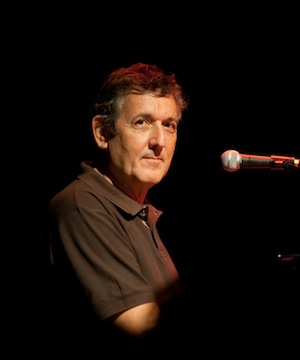
Yoni Rechter was part of Metro Vancouver’s 2019 celebration of Yom Ha’atzmaut, and he will be part of this year’s online event, as well
Yoni Rechter was part of Metro Vancouver’s 2019 celebration of Yom Ha’atzmaut, and he will be part of this year’s online event, as well. (photo by Gilad Avidan)

The evening lineup is set to include various dance groups and artists, as well as students from Richmond Jewish Day School (RJDS) and Vancouver Talmud Torah singing the Canadian and Israeli national anthems. Local talents Orr Chadash, Orr Atid, Duo Orr and Grade 6 dancers from RJDS will join Israeli artists Yoni Rechter, Nurit Galron, Hagit Yaso, Micha Bitton and Shlomit Aharon for the broadcast. This year’s event will also feature a community Koolulam-style video, a version of “Bashana Haba’ah” in which different members of the community sing a line, a verse or the chorus.

Yom Ha’atzmaut celebrations go back a long way in Vancouver, though prior to 2002 they were done at a slightly smaller scale, with the exception of Israel’s 50th anniversary in 1998 at the Orpheum. This year, because a plethora of virtual (and worldwide) programs, events and webinars have led to “Zoom fatigue,” Federation decided to “go local” and highlight community talents.

To even localize the Israeli component, Federation invited the Israeli artists, who have performed here before in person on Yom Ha’atzmaut, to dedicate a song to the community. Additionally, organizers have promised a surprise that they feel confident will go down well with the community.

Emceeing this year’s event will be JCC sports coordinator Kyle Berger, who also is a stand-up comedian, and King David High School counselor Lu Winters.

“Once we realized COVID restrictions weren’t going to allow Seth Rogen and Sarah Silverman to do it, we were hoping we’d be asked,” said Berger. “The fact that it’ll be on Zoom means they’ll be able to make us look fitter and younger than we actually are, which is another awesome perk.”

Berger and Winters, along with a handful of staff and crew, will be filming and streaming the show from a production studio in Burnaby. “But, when we close our eyes, we will be live from Israel,” said Berger.

“Thankfully, we will both be there doing the show together and will be able to feed off of each other’s energy and nerves. Of course, we will still be 6.13 feet apart while filming,” assured Berger, who has worked with Winters before, as co-delegation heads for the JCC Maccabi Games.

He vowed that “everyone should expect an incredibly fun evening celebrating our community’s special connection with Israel, especially our unique relationship with our partnership region in the Galilee Panhandle. Think Dick Clark’s New Year’s Rockin’ Eve meets the Academy Awards – produced by the same number of Jews, but with less famous hosts.”

Nava, Omnitsky and the Perfect Bite are all offering special Yom Ha’atzmaut menus for April 14. Register at jewishvancouver.com/yh2021 to join the celebration.

Also on April 14, the Jewish Federation of Victoria and Vancouver Island will be hosting a small program via Zoom with an Israeli-themed picnic. Registrants will be able to pick up their meal (drive-through) and enjoy it while participating in the Zoom program. To register, send an email to [email protected].

Sam Margolis has written for the Globe and Mail, the National Post, UPI and MSNBC.
Format ImagePosted on April 2, 2021March 31, 2021Author Sam MargolisCategories LocalTags dance, entertainment, Eti Lam, Israel, Jewish Federation, Kyle Berger, Lu Winters, music, Victoria, Yom Ha'atzmaut
Shalhevet annual gala

Shalhevet annual gala

Shalhevet Girls High School will honour Shelley Rivkin at its gala on April 11. (photo from Shalhevet)

On April 11, at its annual gala, Shalhevet Girls High School will honour Shelley Rivkin as a Guardian of the Flame.

“Every year, we honour a Jewish woman who is passionate and dedicated to the Jewish community,” Vivian Claman, president of the Shalhevet board, told the Independent. “Shelley personifies the kind of woman we inspire our students to become – independent thinkers and leaders in their communities. Shelley not only works hard for the Jewish community but for the Vancouver community, as well.

Rivkin is the third woman to be so honoured by Shalhevet. Anita Silber was the first, in 2019, and Sarah Berger was recognized last year.

Rivkin is vice-president of planning, allocations and community affairs for the Jewish Federation of Greater Vancouver. She is an adjunct professor of social work at the University of British Columbia and at Langara College, and she is a member of British Columbia’s Multicultural Advisory Committee.

“My parents were a significant influence,” said Rivkin about her choice of career and her participation in community. “My mother was a social activist and early feminist who introduced me to many of the ideas that contributed to my decision to go into social work, while my father was deeply connected to Jewish values and traditions. Both believed in the value of volunteer work and had me volunteering for a variety of causes from an early age.

“My Jewish education at Schara Tzedeck and involvement in both NCSY and BBYO also provided me with a deeper understanding of Judaism and Jewish life that I have carried with me throughout my career.

“There have also been some amazing women who have inspired me along the way,” she noted. “The late Rosemary Brown, who I had the privilege of meeting when I was in university, really opened my eyes to the barriers and obstacles that many women were facing and continue to face in our society.”

Rivkin’s specific areas of responsibility at Jewish Federation include community planning, local grants distribution, Jewish education, partner agency relations and community security. While she was hired in 2007, she had volunteered with the organization for a couple of years before that.

“In 2005, I was asked to chair the poverty coalition,” she explained. “This connection brought me closer to the work of Jewish Federation and, as I took on more volunteer responsibilities, I became more intrigued by the work that Federation did on a daily basis. In 2007, Federation went through a restructuring process to move toward a closer alignment between central planning and financial resource development. A new senior position was created, and [then-Federation head] Mark Gurvis asked me to apply. This was an opportunity to connect my Jewish values to my day-to-day work.

“The most rewarding aspects of the job are when you can move from project inception to project completion,” she said. “The most recent example was the establishment of the Food Security Task Force in 2017. I was responsible for staffing the task force. The task force released their report in late 2018. The report had an important impact in raising awareness about the depth of food insecurity in our community. Through the hard work of Jewish Family Services and many generous donors, we have seen the implementation of one of the key recommendations of that report, the establishment of an integrated food hub. This has been very rewarding.”

Rivkin feels strongly about the benefits of a Jewish education.

“I am setting up an endowment with the Jewish Community Foundation that I hope that Shalhevet supporters will contribute to,” she said. “Over time, the interest earned on the capital can enable Shalhevet to support special projects that are not covered through their general operations.

“I am setting this up because I believe strongly that young Jewish women should have full access to quality general studies and Judaics education. As an Orthodox woman myself, I am committed to ensuring that young Orthodox women living in Vancouver have the best educational opportunities available.”

Currently, Shalhevet has 14 students enrolled for the 2020-2021 school year, and they anticipate around the same number of students for the next year, Meira Federgrun, head of school, told the Independent. “What we lack in student numbers, we definitely make up in enthusiasm and involvement,” she said.

About how the school has been coping with COVID-19, Federgrun shared, “As with all schools in B.C., Shalhevet had to craft a safe return-to-school document that was approved by the Ministry of Education before the start of the school year last September; we have been doing full-time, in-person learning since then. We have sanitizing products available throughout the school and high-touch surfaces, as well as equipment, are sanitized several times a day. Our staff and students wear masks in all areas of the school, including the main room and classrooms, and remove them to eat or drink.

“Because Shalhevet is a small school,” she said, “our entire staff and student body is considered one cohort, so we are fortunate in that we don’t have to worry about a lot of the restrictions and traffic flow that larger schools with multiple cohorts have. As a result, we’ve been able to provide our students with as ‘normal’ a daily school experience as possible.”

The annual gala is the only way the school raises money. “It’s our once-a-year fundraiser,” said Claman. “It’s also a way to bring awareness of Shalhevet’s great contribution to the community and its importance in maintaining a thriving Orthodox community.”

Part of the virtual celebration will be a piece performed by the Israel Philharmonic Orchestra, which was organized by Danielle Ames Spivak, chief executive officer of the Friends of the Israel Philharmonic Orchestra.

It will include “an introduction from [Irit Rub] the director of KeyNote, the musical education department of Israel Philharmonic, talking about the relevance of education and music,” said Claman. “Every year, we offer some form of entertainment, like comedians, a magician, etc., but we had to find something that would be conducive to online entertainment.”

Also part of this year’s gala, said Claman, “For the first time ever, we will be showing a video taking an inside look at Shalhevet.”

For her part, Rivkin said, “I am so grateful to the Shalhevet community to be honoured this way. It has been so uplifting for me to know about this honour, especially following such a challenging year.”

Format ImagePosted on April 2, 2021March 31, 2021Author Cynthia RamsayCategories LocalTags coronavirus, COVID-19, education, fundraiser, gala, Guardian of the Flame, Jewish Federation, Meira Federgrun, Orthodox, philanthropy, Shalhevet, Shelley Rivkin, Vivian Claman, volunteerism
Mourning, then celebration

Mourning, then celebration

Pam Wolfman is chair of the Yom Ha’atzmaut committee and Geoffrey Druker leads the Yom Hazikaron committee. (photos from Jewish Federation)

For many years, Vancouver has been home to North America’s largest celebration on erev Yom Ha’atzmaut. While Israel’s Independence Day is marked in many cities around the world, Vancouver is unusual in that it marks the occasion on the day it occurs – many bigger communities celebrate on an adjacent weekend or later in the spring. The event is usually the largest Jewish community gathering of the year in British Columbia, which is a statement about the connection between Vancouver’s Jewish community and the state of Israel, say organizers.

Last year, with the pandemic declared mere weeks before Israel’s anniversary, the tough decision was made to cancel the local event and join an international celebration convened virtually by Jewish Federations of North America.

While Pamela Wolfman, chair of the Yom Ha’atzmaut committee of the Jewish Federation of Greater Vancouver, wishes the community could come together in person, being online does have a silver lining – it allows the program to be more expansive. Every Yom Ha’atzmaut features an Israeli musical performer or group. This year, the committee has arranged for five performers who have joined the Vancouver celebrations in years past to return in a virtual “best of” concert.

“We decided to bring back five of the favourite artists from recent years who performed here already, so they already had a connection with Vancouver, they’d already visited us and gotten to know us and vice versa,” said Wolfman, who has chaired the event since 2014.

She credits Stephen Gaerber, who preceded her as event chair, and his brothers and father, as the impetus for the focus on Israeli talent at the annual get-together.

“Our community really responds to that,” said Wolfman. “A majority of our community really does feel connected to Israel, wants to celebrate all the positive things about Israel. We want to take a break from the news and we want to celebrate Israel, the miracle of Israel – Israeli art, Israeli culture, Israeli music – and to do that together is just really fun for everybody, really positive.”

Wolfman herself became involved via an earlier involvement with Festival Ha’Rikud, the Jewish Community Centre of Greater Vancouver’s festival of Israeli dance for young people. Since the festival began 18 years ago, the kids have participated in Yom Ha’atzmaut celebrations every year.

“This year, especially, there’s a lot to celebrate, with everything positive that’s going on with Israel … with the Abraham Accords, with the vaccine rollout, it’s a really good year to get together and celebrate – and lots and lots of great music has come out of Israel this year, too.”

In addition to the “five favourites,” Wolfman promises “cute kids and a few surprises.” Lu Winters and Kyle Berger will emcee, and keep an eye out, as well, for many other familiar faces, as scores of community members have come together virtually for a community song – the iconic 1970 Israeli ballad “Bashana Haba’ah” (“Next Year”).

Since the community event always sells out, this year’s virtual version will turn no one away – plus, it’s free. (Donations are welcome during registration at jewishvancouver.com. Food can also be ordered online via links at the same time.)

There can be no Yom Ha’atzmaut without Yom Hazikaron. Israel’s Independence Day is celebrated the day after Israel’s national day of remembrance for those lost defending the country or killed in terror attacks. This year’s commemoration of Yom Hazikaron will also be online, but the committee, led by Geoffrey Druker, has experience at a virtual version of the solemn commemoration – they delivered a virtual commemoration last year.

Like Yom Ha’atzmaut, Yom Hazikaron holds a special place in Vancouver’s Jewish community. Many other cities in North America mark the occasion, but ours is somewhat unusual, said Druker. Gaby Peled, an Israeli-Canadian who passed away in 2019, was pivotal in structuring our commemoration along the lines of the Yom Hazikaron he knew on his kibbutz, Givat Haim.

When Druker, also from Israel, arrived here in 1988, he was surprised to discover how many members of the Vancouver Jewish community had lost loved ones – family and friends – in Israel’s various conflagrations. A slide show every year remembers the individuals who are connected to British Columbians – and, every year, more faces are added. Often, local people have not shared their stories of loss, and so, as they come forward with their experiences with bereavement, their people are added to the ceremony. Druker invites anyone to contact Federation to add a loved one to be acknowledged and mourned communally.

This year’s gathering will share the story of, among others, Shaul Gilboa, a pilot shot down in 1969 and a cousin of Vancouverite Dvori Balshine. Shimi Cohen will remember his brother, Shlomo Cohen, by reciting Yizkor.

“The ceremony itself is for the bereaved families,” Druker said. “That’s how I see it. We want to remember their loved ones and we want to give them a community hug to recognize their loss and their pain. Everything is geared toward that.”

The event has grown significantly over the years, partly because the Israeli population in Metro Vancouver has grown significantly. Many or most of the participants in the annual Yom Hazikaron commemoration have Israeli ties and it is a hugely significant day in Israel.

The virtual format does not allow the person-to-person interaction that a regular gathering does, where people can share condolences and commiserate, said Druker. But virtual is absolutely preferable to no commemoration at all.

“It’s a significant date for many,” he said, “so that’s why we have to keep going.”

To join the ceremonies, visit jewishvancouver.com.

Format ImagePosted on March 19, 2021March 18, 2021Author Pat JohnsonCategories LocalTags entertainment, Geoffrey Druker, Israel, Jewish Federation, mourning, Pam Wolfman, terrorism, war, Yom Ha'atzmaut, Yom Hazikaron

Community milestones … Philipp, Solomon, Sachs & Zwarych

On March 2, Lianna Philipp and Michael Solomon were recognized with the Jewish Federation of Greater Vancouver’s 2020 Young Leadership Awards, for their commitment and dedication to the Jewish community and the value of tikkun olam.

photo - Lianna Philipp
Lianna Philipp

Philipp chaired Jewish Federation’s Axis steering committee from 2018 to 2020. Her outstanding leadership and devotion to the community have contributed to Axis’s many successes, and the implementation of programs that support Jewish Federation’s strategic priority of engaging the next generation. Philipp continues her leadership with Jewish Federation as a member of the board of directors, the Axis steering committee and the Ben-Gurion Society donor group. She also serves on the boards of Temple Sholom Synagogue and the Jewish Museum and Archives of British Columbia.

photo - Michael Solomon
Michael Solomon

Solomon has been a driving force in the community as a dedicated volunteer with Jewish Family Services (JFS). In that capacity, he has made a tremendous contribution to several of JFS’s most vital initiatives, especially during COVID, such as their food security program. Solomon serves as an ambassador for the Jewish community, bringing his positivity and organizational talents to staff and his fellow volunteers.

* * *

photo - Michael Sachs
Michael Sachs

The Jewish National Fund, Pacific Region, has hired Michael Sachs to serve as its executive director, effective April 5. The volunteers on the recruitment and selection committee were Bonnie Belzberg, Harvey Dales and Jonathon Leipsic.

Sachs brings a great deal of experience as a community lay leader, most recently serving as the president of the Bayit and volunteering with the Jewish Federation of Greater Vancouver, Centre for Israel and Jewish Affairs, Tikva Housing Society, Kehila Society of Richmond, and others. He was recognized with the Jewish Federation’s Young Leadership Award in 2017, as well as the Jewish Independent’s 18 under 36 Award. Moreover, he brings a wealth of experience from the business sector, as he served as the vice-president of sales and operations for ERL Diamonds.

* * *

photo - Janelle Zwarych
Janelle Zwarych

Janelle Zwarych is Jewish Family Services’ new director of food security. Zwarych has a background in psychology and mental health. Most recently, she was the director of resource development and communications at the KidSafe Project. There, she was instrumental in creating a COVID emergency-response food program for Vancouver’s most vulnerable children and youth, while also raising operational and emergency funds.


Posted on March 19, 2021March 18, 2021Author Community members/organizationsCategories LocalTags Axis Vancouver, Janelle Zwarych, Jewish Family Services, Jewish Federation, Jewish National Fund, JNF Pacific Region, Lianna Philipp, Michael Solomon, Mike Sachs
Celebrating good deeds – JMABC @ 50

Celebrating good deeds – JMABC @ 50

Then-Vancouver mayor Mike Harcourt and members of National Council of Jewish Women in front of the first Mobile Hearing Clinic, outside Vancouver City Hall on June 11, 1984. After raising the funds to build and operate the clinic on a trial basis, NCJW sold it to the provincial health department for the nominal price of $1. They did the same with a second mobile clinic in 1986. (photo from JMABC L.16459)

Passover is one of the foundational stories of Jewish tradition. Around the seder table each year, we learn from our elders the guiding principles of Jewish life: how to be a good person, think of others and pursue justice in the face of persecution.

These same themes can be found in the history of our community locally. The families who laid the foundations of our community, and those who continue to build its future, arrived here from all corners of the world. Mutual aid societies like the Hebrew Free Loan Association (HFLA) and the Jewish Federation of Greater Vancouver (preceded by the Jewish Community Chest and the Jewish Fund and Council) have helped welcome and support new arrivals.

The HFLA was established in 1915 by Solomon Weaver and, while it folded in 1936, it was revived in 1979 by the Jewish Family Service Agency under the leadership of Shirley Barnett. Going at first by the name of the Hebrew Assistance Association, the organization was established to aid a new wave of Jewish immigrants arriving from Russia. With initial capital provided by Joe Segal, Jack Diamond, Morris Wosk and Leon Kahn, the association began issuing loans of up to $3,000. To date, the HFLA has granted more than 2,000 loans, giving people “a hand up, not a hand-out.”

Passover also teaches us that we should apply these principles beyond our own community. As it is written in Exodus: “You shall not oppress a stranger, for you know the feelings of a stranger, having yourselves been strangers in the land of Egypt.” This philosophy can be seen as a guiding principle for community groups such as the Vancouver Holocaust Education Centre and National Council of Jewish Women (NCJW).

Founded in 1983 by local survivors of the Holocaust, the Vancouver Holocaust Centre Society for Education and Remembrance was formed with the goal of establishing an anti-racism education centre. This goal was realized in 1994 in the form of the Vancouver Holocaust Education Centre (VHEC). Education is central to the mandate of the VHEC and, each year, the centre reaches more than 25,000 students and teachers through exhibits, school programs, teaching materials and professional development initiatives for educators.

Since 1924, the Vancouver section of the NCJW of Canada has been dedicated to social action and human rights. For close to a century, its social justice efforts have taken diverse forms, from pioneering a provincial mobile hearing screening program for preschoolers to championing the cause of Nasrin Sotoudeh – illegally imprisoned in Iran – to recent fundraising and awareness initiatives against human trafficking.

These are just a few of the many organizations and individuals who make real the lessons of Passover each day. It has been inspiring to learn more about these and other people and groups as we at the Jewish Museum and Archives of British Columbia collect stories for our upcoming celebration book marking our 50th anniversary.

We invite you to share your story with us and be a part of this milestone publication. Share your family story, recognize someone notable, or sponsor this project. Full information is available at jewishmuseum.ca/fifty-years.

Format ImagePosted on March 19, 2021March 18, 2021Author Jewish Museum and Archives of British ColumbiaCategories LocalTags Hebrew Free Loan Association, HFLA, history, Jewish Federation, National Council of Jewish Women, NCJW, Solomon Weaver, tikkun olam, Vancouver Holocaust Education Centre, VHEC, women
COVID relief delivered

COVID relief delivered

Alex Cristall, Jewish Federation of Greater Vancouver board chair, arrived early at the Jewish Community Centre of Greater Vancouver on Jan. 26 to sign community recovery cheques for grant recipients. (photo by Rob Trendiak)

On Jan. 26, the Jewish Federation of Greater Vancouver released the first round of community recovery funding to address the urgent needs arising from the pandemic’s impacts. A total of $416,000 in grants was distributed among 21 partner agencies and community organizations.

“When COVID first hit, we immediately developed a comprehensive strategic approach to address its impact,” Ezra Shanken, chief executive officer of Jewish Federation, told the Independent. “We met with our partner agencies to learn firsthand about how they were coping, and we released $505,000 in emergency funding just days into the initial lockdown.

“We then worked closely with major donors to launch the Community Recovery Fund, which became a key focus of the annual campaign. We also established the Community Recovery Task Force, comprised of well-respected and experienced community leaders, to work with us to respond effectively to the immediate and long-term consequences of COVID that are affecting our community agencies. During the annual campaign, we asked donors to make an additional gift to support community recovery, if they could.

“We have always been fortunate to have an extremely generous community, and the depth of giving this year has been extraordinary,” he said. “Community members have responded to the call to help in unparalleled ways, however they can. They understand the breadth and scope of need, the immense challenges facing organizations, individuals and families, and that recovery will take some time. Most of all, they appreciate that we are all partners in recovery, and have really stepped up to play their part.”

The initial relief grants were distributed to 19 of Jewish Federation’s partner agencies, as well as to the Louis Brier Home and Hospital and the Hebrew Free Loan Association.

“For the first round of grants, all Jewish community organizations were invited to apply for up to $25,000, regardless of their size,” explained Risa Levine, chair of the Community Recovery Task Force. “Our priority was to meet organizations’ urgent needs resulting from the pandemic, and to ensure they could continue to deliver their programs and services. In the next few weeks, as part of this initial round of funding, we will be recommending grants for synagogues and other places of worship. These grants will be awarded in late February.

“The task force expects the two rounds of funding after that will focus on longer-term needs,” she said. “For example, are there organizational changes that would substantially increase an agency’s capacity to deliver their programs? We also recognize that the pandemic has gone on longer than anyone anticipated, and that the uncertainty of what lies ahead continues. New needs may emerge and COVID-related government subsidies, which have helped a lot of our agencies, may end. So, ensuring organizations’ ongoing sustainability in the face of pressures created by the pandemic will continue to be a priority.”

When the task force met with community organizations last summer and fall, the focus was on understanding how the pandemic had affected the programs and services they offer. While the details differed, said Levine, “they all had been impacted by COVID in similar ways.

“Based on this information, the task force identified six themes, which ultimately became funding categories for the recovery grant application: technology upgrades; critical social services; COVID-related expenses; revenue and rental losses; mental health support for staff and community members; and organizational capacity. Community organizations were invited to apply for a grant to meet urgent, COVID-related needs in two of these six categories.”

The recovery grants comprise but one of three funding streams being distributed in the next couple of months. Other financial assistance will come from the Jewish Community Foundation’s Unrestricted Grant Program, and allocations from the Federation’s annual campaign.

“The Jewish Community Foundation’s Unrestricted Grant Program is designed to complement Jewish Federation’s annual campaign allocations by providing charitable organizations with seed money to support new, innovative programs and services,” explained Shanken.

Grants awarded through the program “give charitable organizations the opportunity to pilot initiatives that address the community’s evolving needs, or to launch startup and capital projects,” he said. “Once the programs demonstrate success over several years, they may then qualify for ongoing funding through Jewish Federation’s allocations.

“This year,” he added, “the foundation adapted some conditions of the program to be as responsive as possible to organizations challenged to deliver their programs and services in new and innovative ways. In this way, the Unrestricted Grant Program is complementing the work of Jewish Federation’s Community Recovery Task Force, which has identified areas of critical need through its consultation process with community organizations.”

The Unrestricted Grant Program funds for 2021 will be awarded in mid-February.

“Jewish Federation has always been proactive and strategic about preparing for crises, so that we can lead a coordinated community response,” said Shanken. “And, while this is unlike anything the community has ever been through, we are in a strong position to respond. We have in place the infrastructure, the community planning expertise, and the staff and team of experienced leaders needed to respond swiftly and effectively to the enormity and ongoing uncertainty of COVID’s impact.

“We know how vital it is to get funds working in the community, and this involves so much more than fundraising,” he noted. “As the pandemic evolves, we will continue to adapt our strategic approach so that we are well-positioned for today and tomorrow, and to convene with all of our stakeholders so that we have our finger on the pulse of the community and can problem-solve together. We’re also collaborating with Jewish federations across North America to leverage their collective knowledge and capacity.”

Levine acknowledged the board and staff of our local Jewish Federation “for their vision and professionalism in organizing the task force and leading the recovery process, as well as the many generous donors who have supported this crucial work.”

She said, “I have been inspired and buoyed by the commitment and passion of everyone involved in the task force’s work to ensure that our community continues to function effectively: by the task force members for their dedication to the work, and by the community organizations for their candour and resilience in adapting their operations to meet the needs of community members.

“The biggest challenge,” she said, “has been to focus and refine our work to be able to respond effectively to the needs we learned about. Hearing firsthand about the challenges that organizations faced revealed the enormity of COVID’s impact through a sharper, more personal lens that added another layer of urgency to our work.”

Despite the challenges, Shanken said, “I remain positive because of the tremendous fortitude and the outpouring of compassion and generosity that I see every day. I am incredibly proud of how this community has pulled together to tackle the road to recovery, and am convinced that we will emerge stronger.”

For more information, visit jewishvancouver.com.

Format ImagePosted on February 12, 2021February 12, 2021Author Cynthia RamsayCategories LocalTags coronavirus, COVID-19, economy, Ezra Shanken, Jewish Federation, philanthropy, Risa Levine, tikkun olam
Welcome, newcomers

Welcome, newcomers

A screenshot of the recent BeyachadBC welcome event’s main room.

The types of immigration that Vancouver’s Jewish community is experiencing right now differ from those of 10 or 20 years ago. Community leaders recognized that these different demographics call for changed approaches in the way the community welcomes and integrates newcomers.

On Jan. 20, a virtual event took place, representing the launch of a new community partnership called BeyachadBC – beyachad means “together” in Hebrew. No fewer than 80 devices tuned in to join the event, many with more than one participant.

BeyachadBC is really an evolution of Shalom BC, Gesher Welcoming Services and other initiatives over the years meeting the needs of new community members, said Ayelet Cohen Weil, who, as associate director, community engagement, at the Jewish Federation of Greater Vancouver, spearheaded development of the group. (On Feb. 1, Cohen Weil began a new role, as executive director at the Louis Brier Jewish Aged Foundation.) Operating under the auspices of Federation, BeyachadBC was created with the Jewish Community Centre of Greater Vancouver, Jewish Family Services (JFS), Aleph in the Tri-Cities, Mamatefet and Women’s Empowerment (WE). The latter two groups are organizations primarily of Israeli-Canadian women, WE to network for career opportunities and Mamatefet to support mothers, especially of newborns.

Cohen Weil undertook consultations, including roundtables with community professionals who work with newcomers and with people who have experienced what newcomers face.

For many years, Vancouver has been one of North America’s fastest-growing Jewish communities. Breakout rooms at the virtual event included sessions in Spanish, Portuguese, Hebrew and English. The largest group was of Israelis, followed by those from Spanish-speaking Latin America. About equal numbers of participants joined the English and Portuguese breakout rooms. A couple of decades ago saw waves of immigrants from the former Soviet Union and, while there are still a number of new Canadians who originated in the FSU, almost all of those are now arriving via Israel, having spent years there. They communicate primarily in Hebrew, making Russian-language services less necessary than they were a few years ago.

Another noticeable change from the past is that many of the newcomers are arriving with work at the ready, not landing here in hopes of finding a career path. A sizeable number of immigrants from Israel and elsewhere have been drawn here by jobs at Amazon’s Vancouver hub, for example.

The different character of newcomers means that, rather than requiring some of the basic needs that earlier migrants required – housing assistance, social services – many are now seeking professional networking and connections for their families. (New arrivals who do require those additional services are, of course, served by various organizations, including Federation and JFS.)

When the pandemic is over, in-person social gatherings will take place with opportunities for mingling in each participant’s preferred language. Meanwhile, those who want it can be paired with a longer-established family based on criteria they determine, such as the ages of kids in the family or the professional track of the parents.

Of course, there is no one at the airport directing Jewish newcomers to BeyachadBC. Identifying Jewish immigrants is a matter mostly of word-of-mouth. This was aided by the fact that Cohen Weil’s portfolio at Federation also included regional community development. Given the cost of housing in Vancouver, many Jews are settling in the Tri-Cities or other suburban areas of Metro Vancouver. While geographic diffusion is a challenge long addressed by Federation, BeyachadBC plays an added role in reducing isolation and encouraging inclusion by explicitly targeting newcomer families outside the traditional “Jewish neighbourhoods” of the city.

BeyachadBC is envisioned as a service for those who have arrived in the past three years. “But I can tell from the faces that I saw, they were from the last year mostly,” Cohen Weil said. “They had to be newcomers during COVID, which created another layer of difficulty and challenges.”

Another fact struck Cohen Weil – there were young couples, families with kids, single young adults, seniors and middle-aged participants on the Zoom event.

She knows herself what it is like to live in different places. Cohen Weil arrived in 2005 as a student at the University of Victoria, having grown up in Mexico and having served as a volunteer in the Israel Defence Forces. She worked at Hillel in Victoria beginning in 2008 and returned to Israel in 2012 to continue her education before returning to Vancouver in 2017. Returning with a husband and a 10-month-old daughter was an entirely different experience that came with many challenges, even though she had connections and friendships from the past.

A more typical experience might be that of Yael Mayer, an individual and family therapist and a postdoctoral research fellow in the faculty of medicine at the University of British Columbia. She came to Vancouver five years ago, after her husband, an engineer, took a job here. Having left an established counseling career in Israel, Mayer was in a new country, at home, with two kids, including a 6-month-old baby.

“It’s very lonely and very hard to start everything again, to build a career again, to find a network,” she said. She set about cofounding Mamatefet and then founding WE because she realized that many women were in a similar boat. “Like me, there were many, many Israeli women who come here with academic backgrounds, with a lot of experience, and they struggle to rebuild their life here.”

If BeyachadBC had existed just five years ago, she said, her landing here might have been softer. “I think it could have been really different because BeyachadBC will provide a platform to easily connect and find information about different topics, about education, about synagogues, about activities, about social life,” she said. “It is all centred in one place, in one resource.”

Mayer was inspired by the initial BeyachadBC event, an enthusiasm she believes was shared by many based on the fact that everyone who signed up to attend actually showed up – and then stayed for the entire event. Registrations were coming in even after the event began.

“The beautiful thing about it is it really answers a need in our community and I think it is a very special project,” she said. “It identifies the common needs of the Jewish community but, at the same time, it also allows people to maintain some of their culture and their language so, in this way, it connects but it also makes everybody feel like they belong there. That’s the beautiful way that this project is built.”

The central clearinghouse for resources is beyachadbc.com and, Mayer added, while the site is intended for newcomers, longtime residents are also encouraged to explore it because assistance and social connections are welcome among the entire community, new arrivals and B.C.-born alike.

Format ImagePosted on February 12, 2021February 11, 2021Author Pat JohnsonCategories LocalTags Ayelet Cohen Weil, Beyachad, immigration, Jewish Federation, newcomers, Yael Mayer

A childhood spent in hiding

Alex Buckman, a child survivor of the Holocaust, shared the story of his harrowing childhood years during a moving online event Jan. 27. The program, marking International Holocaust Remembrance Day, was the second annual such event organized by the Bayit in Richmond.

Buckman is the president of the Vancouver Child Survivors Group and has shared his experiences with thousands of students as a Vancouver Holocaust Education Centre (VHEC) survivor speaker.

“I was born on Oct. 31, 1939, in Brussels, Belgium,” he told more than 100 people who attended virtually. “My family was Jewish. I was 7 months old when Nazi Germany invaded Belgium on May 10, 1940. Everything changed for Jewish people in Belgium.”

He recalled how, at the age of 4, he was escorted by a strange woman, as they traveled through the night, sleeping in forests and foraging for food. After days of walking, they arrived at an orphanage. He would only discover years later that his parents were sent to Auschwitz.

At the orphanage, he met up with his cousin Annie but was told that they were to refer to each other as siblings.

When Nazis would come for inspections, Jewish boys were hastily sent into a cellar. “They told us again to be very quiet, then they shut the two wooden doors, replaced the carpet and furniture,” he said. “In the cellar, we were very cold and scared and we peed our pants. We saw large things running around us. They told us later that they were rats. The first time this happened I was 4 years old…. It seemed like we were in that cellar for a very long time. Soon, we heard every footstep over our heads. We heard men screaming loudly in a language that we did not understand. We were scared. We did not know what was going on. They told us that we should not cry but we were scared children so we cried.

“Suddenly, we heard the pushing of the furniture and they opened two wooden doors and we saw the light,” he continued. “They asked us to come out but we did not want to go out. We told them that we had peed our pants [so] they promised that they would give us a warm bath. This happened too many times from the age of 4 to 6-and-a-half.”

Annie’s mother, Alex’s Aunt Becky, was sent to the women’s concentration camp Ravensbrück. When each new train of prisoners would arrive, Becky would run through the crowds of arriving women calling the name of her sister, Devora.

“A young girl came close to Becky and said, I knew Devora but she is dead,” Buckman recounted. “Becky asked her: how did you know Devora? The young girl replied, I am from Belgium and I used to babysit her son, Alex. Becky thanked her and cried. Becky looked at the sky and prayed. She said, if I survive this, one day, and find Alex, I will raise him as my son.”

When liberation finally did come, it took time for the surviving family to find one another. Alex and Annie waited in the orphanage as one child after another was claimed by family. Alex tried to reassure his cousin, whom he believed to be his sister.

“I would tell her that our parents would come soon,” he said, “but, like Annie, I did not know what happened to our parents and why they were not coming for us. The orphanage kept all the children for another six months, hoping that our parents would come and pick us up. But no one came for us.”

The remaining children were transferred to a Red Cross facility in Brussels. Eventually, they were reunited with Annie’s parents, who Alex assumed were also his own. It was another cousin who, in an act of revenge for a childhood spat, blurted out the truth to Alex that his parents were dead.

Buckman went on to share his experience in April 2010 as a survivor-participant in the March of the Living, a program that brings Jewish youth to Poland and then on to Israel to explore firsthand the history of the Holocaust and its survivors who helped build Israel.

“It is almost impossible to describe the feeling I felt entering that camp, Auschwitz,” Buckman said. “On both sides of the camp there were shoes. As I passed the shoes, I caressed the little pair of shoes. The students were crying, but we had to continue.… We saw a mountain of glasses all tangled together.

“We finally walked in a shower room and I closed my eyes,” he said. “I was thinking of my mother and her sister.… We were told that the women panicked when they did not see the water come down from the showers. They ran toward the walls and scratched them with their fingernails. When I heard this, I turned and caressed the wall, feeling the scratches made by Jewish women prisoners. I wondered, were those scratches made by my mother? I would never know.

“In that room, I finally said, au revoir, Maman.”

At the commemoration, Richmond Mayor Malcolm Brodie, accompanied by four city councilors, spoke and read a proclamation.

All four Richmond MLAs were present, with Kelley Greene, MLA for Richmond-Steveston, reading a proclamation from the premier. Finance Minister Selina Robinson also addressed the event, as did Steveston-Richmond East Member of Parliament Kenny Chiu, who spoke of his own visit to Auschwitz.

The Bayit’s Rabbi Levi Varnai noted that this year’s event, which represents the 76th anniversary of the liberation of Auschwitz-Birkenau, also fell on erev Tu b’Shevat, the new year of the trees.

“The marriage of these two days is chilling,” said the rabbi. “Man is compared to the trees of the field, our tradition tells us. The six million souls murdered in the Holocaust were like individual human trees, each had the potential to grow, to flourish, and to bear fruit of the generations. They were obliterated, but one thing remained that can never be destroyed: their roots.

“The roots of the Jews who perished in the Holocaust goes back 3,300 years to Mount Sinai. What gives Holocaust survivors the sustenance to keep going? What motivates future generations of Jews to double down on life? It’s not just the memory of those who passed away, it’s also the memories of hundreds of generations who came before them, the generations who struggled and prevailed against all odds…. As we remember today the six million souls who left us, we can also remember the millions of souls who came before them and the millions who will come after.

“Today, we mourn. Tomorrow, we plant and renew,” said Varnai.

The Bayit’s International Holocaust Remembrance Day program was co-presented with partners including the Centre for Israel and Jewish Affairs, the VHEC, the Kehila Society of Richmond and the Jewish Federation of Greater Vancouver. The program was emceed by Bayit president Keith Liedtke.

Earlier in the day, a national virtual commemoration took place, organized by the Friends of the Simon Wiesenthal Centre in partnership with the VHEC and other groups across Canada. Survivors, including Vancouver’s Serge Haber, lit memorial candles. Heather Dune Macadam, author of the book 999: The Extraordinary Young Women of the First Official Jewish Transport to Auschwitz, spoke with Michael Berenbaum, a writer and professor and director of the Sigi Ziering Institute: Exploring the Ethical and Religious Implications of the Holocaust.

Posted on February 12, 2021February 11, 2021Author Pat JohnsonCategories LocalTags Alex Buckman, child survivor, CIJA, Holocaust, IHRD, International Holocaust Remembrance Day, Jewish Federation, Kehila Society, Serge Haber, VHEC

Posts pagination

Previous page Page 1 … Page 6 Page 7 Page 8 … Page 14 Next page
Proudly powered by WordPress