Community milestones … Philipp, Solomon, Sachs & Zwarych

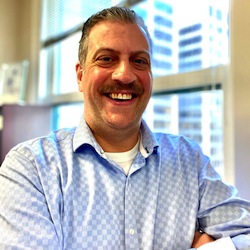
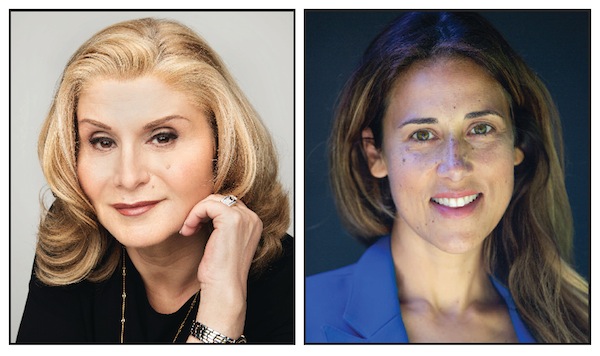
On March 2, Lianna Philipp and Michael Solomon were recognized with the Jewish Federation of Greater Vancouver’s 2020 Young Leadership Awards, for their commitment and dedication to the Jewish community and the value of tikkun olam.

photo - Lianna Philipp
Lianna Philipp

Philipp chaired Jewish Federation’s Axis steering committee from 2018 to 2020. Her outstanding leadership and devotion to the community have contributed to Axis’s many successes, and the implementation of programs that support Jewish Federation’s strategic priority of engaging the next generation. Philipp continues her leadership with Jewish Federation as a member of the board of directors, the Axis steering committee and the Ben-Gurion Society donor group. She also serves on the boards of Temple Sholom Synagogue and the Jewish Museum and Archives of British Columbia.

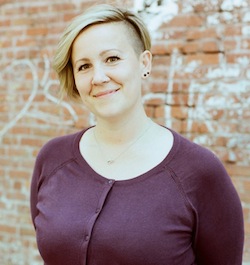
photo - Michael Solomon
Michael Solomon

Solomon has been a driving force in the community as a dedicated volunteer with Jewish Family Services (JFS). In that capacity, he has made a tremendous contribution to several of JFS’s most vital initiatives, especially during COVID, such as their food security program. Solomon serves as an ambassador for the Jewish community, bringing his positivity and organizational talents to staff and his fellow volunteers.

* * *

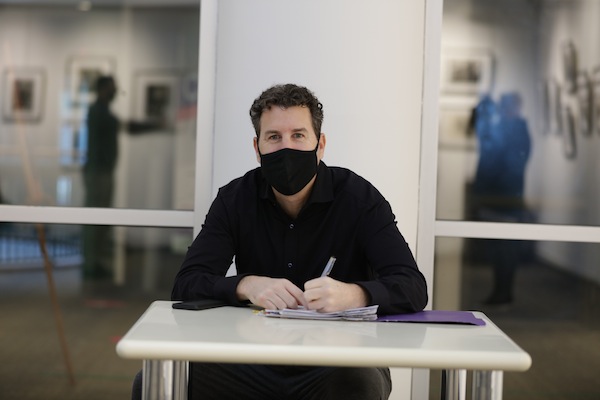
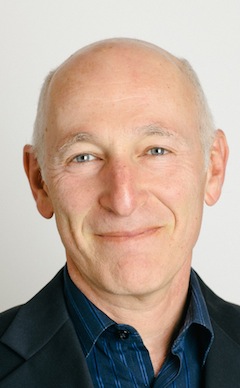
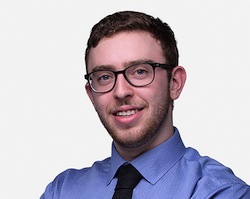
photo - Michael Sachs
Michael Sachs

The Jewish National Fund, Pacific Region, has hired Michael Sachs to serve as its executive director, effective April 5. The volunteers on the recruitment and selection committee were Bonnie Belzberg, Harvey Dales and Jonathon Leipsic.

Sachs brings a great deal of experience as a community lay leader, most recently serving as the president of the Bayit and volunteering with the Jewish Federation of Greater Vancouver, Centre for Israel and Jewish Affairs, Tikva Housing Society, Kehila Society of Richmond, and others. He was recognized with the Jewish Federation’s Young Leadership Award in 2017, as well as the Jewish Independent’s 18 under 36 Award. Moreover, he brings a wealth of experience from the business sector, as he served as the vice-president of sales and operations for ERL Diamonds.

* * *

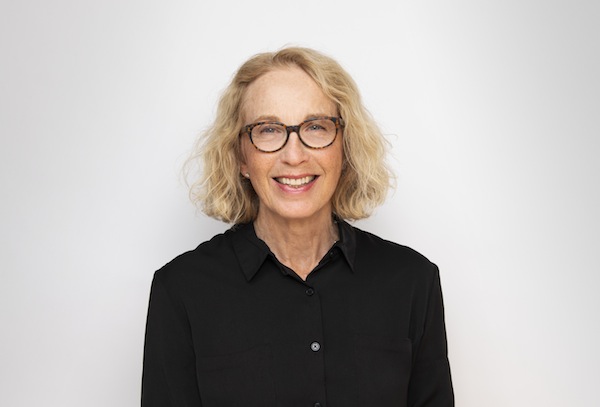
photo - Janelle Zwarych
Janelle Zwarych

Janelle Zwarych is Jewish Family Services’ new director of food security. Zwarych has a background in psychology and mental health. Most recently, she was the director of resource development and communications at the KidSafe Project. There, she was instrumental in creating a COVID emergency-response food program for Vancouver’s most vulnerable children and youth, while also raising operational and emergency funds.


Celebrating good deeds – JMABC @ 50

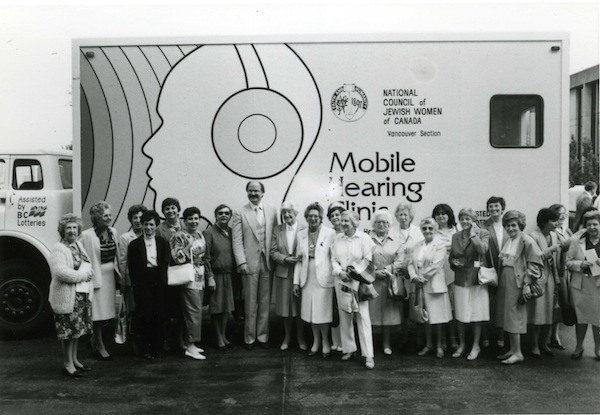
Then-Vancouver mayor Mike Harcourt and members of National Council of Jewish Women in front of the first Mobile Hearing Clinic, outside Vancouver City Hall on June 11, 1984. After raising the funds to build and operate the clinic on a trial basis, NCJW sold it to the provincial health department for the nominal price of $1. They did the same with a second mobile clinic in 1986. (photo from JMABC L.16459)

Passover is one of the foundational stories of Jewish tradition. Around the seder table each year, we learn from our elders the guiding principles of Jewish life: how to be a good person, think of others and pursue justice in the face of persecution.

These same themes can be found in the history of our community locally. The families who laid the foundations of our community, and those who continue to build its future, arrived here from all corners of the world. Mutual aid societies like the Hebrew Free Loan Association (HFLA) and the Jewish Federation of Greater Vancouver (preceded by the Jewish Community Chest and the Jewish Fund and Council) have helped welcome and support new arrivals.

The HFLA was established in 1915 by Solomon Weaver and, while it folded in 1936, it was revived in 1979 by the Jewish Family Service Agency under the leadership of Shirley Barnett. Going at first by the name of the Hebrew Assistance Association, the organization was established to aid a new wave of Jewish immigrants arriving from Russia. With initial capital provided by Joe Segal, Jack Diamond, Morris Wosk and Leon Kahn, the association began issuing loans of up to $3,000. To date, the HFLA has granted more than 2,000 loans, giving people “a hand up, not a hand-out.”

Passover also teaches us that we should apply these principles beyond our own community. As it is written in Exodus: “You shall not oppress a stranger, for you know the feelings of a stranger, having yourselves been strangers in the land of Egypt.” This philosophy can be seen as a guiding principle for community groups such as the Vancouver Holocaust Education Centre and National Council of Jewish Women (NCJW).

Founded in 1983 by local survivors of the Holocaust, the Vancouver Holocaust Centre Society for Education and Remembrance was formed with the goal of establishing an anti-racism education centre. This goal was realized in 1994 in the form of the Vancouver Holocaust Education Centre (VHEC). Education is central to the mandate of the VHEC and, each year, the centre reaches more than 25,000 students and teachers through exhibits, school programs, teaching materials and professional development initiatives for educators.

Since 1924, the Vancouver section of the NCJW of Canada has been dedicated to social action and human rights. For close to a century, its social justice efforts have taken diverse forms, from pioneering a provincial mobile hearing screening program for preschoolers to championing the cause of Nasrin Sotoudeh – illegally imprisoned in Iran – to recent fundraising and awareness initiatives against human trafficking.

These are just a few of the many organizations and individuals who make real the lessons of Passover each day. It has been inspiring to learn more about these and other people and groups as we at the Jewish Museum and Archives of British Columbia collect stories for our upcoming celebration book marking our 50th anniversary.

We invite you to share your story with us and be a part of this milestone publication. Share your family story, recognize someone notable, or sponsor this project. Full information is available at jewishmuseum.ca/fifty-years.

COVID relief delivered

Alex Cristall, Jewish Federation of Greater Vancouver board chair, arrived early at the Jewish Community Centre of Greater Vancouver on Jan. 26 to sign community recovery cheques for grant recipients. (photo by Rob Trendiak)

On Jan. 26, the Jewish Federation of Greater Vancouver released the first round of community recovery funding to address the urgent needs arising from the pandemic’s impacts. A total of $416,000 in grants was distributed among 21 partner agencies and community organizations.

“When COVID first hit, we immediately developed a comprehensive strategic approach to address its impact,” Ezra Shanken, chief executive officer of Jewish Federation, told the Independent. “We met with our partner agencies to learn firsthand about how they were coping, and we released $505,000 in emergency funding just days into the initial lockdown.

“We then worked closely with major donors to launch the Community Recovery Fund, which became a key focus of the annual campaign. We also established the Community Recovery Task Force, comprised of well-respected and experienced community leaders, to work with us to respond effectively to the immediate and long-term consequences of COVID that are affecting our community agencies. During the annual campaign, we asked donors to make an additional gift to support community recovery, if they could.

“We have always been fortunate to have an extremely generous community, and the depth of giving this year has been extraordinary,” he said. “Community members have responded to the call to help in unparalleled ways, however they can. They understand the breadth and scope of need, the immense challenges facing organizations, individuals and families, and that recovery will take some time. Most of all, they appreciate that we are all partners in recovery, and have really stepped up to play their part.”

The initial relief grants were distributed to 19 of Jewish Federation’s partner agencies, as well as to the Louis Brier Home and Hospital and the Hebrew Free Loan Association.

“For the first round of grants, all Jewish community organizations were invited to apply for up to $25,000, regardless of their size,” explained Risa Levine, chair of the Community Recovery Task Force. “Our priority was to meet organizations’ urgent needs resulting from the pandemic, and to ensure they could continue to deliver their programs and services. In the next few weeks, as part of this initial round of funding, we will be recommending grants for synagogues and other places of worship. These grants will be awarded in late February.

“The task force expects the two rounds of funding after that will focus on longer-term needs,” she said. “For example, are there organizational changes that would substantially increase an agency’s capacity to deliver their programs? We also recognize that the pandemic has gone on longer than anyone anticipated, and that the uncertainty of what lies ahead continues. New needs may emerge and COVID-related government subsidies, which have helped a lot of our agencies, may end. So, ensuring organizations’ ongoing sustainability in the face of pressures created by the pandemic will continue to be a priority.”

When the task force met with community organizations last summer and fall, the focus was on understanding how the pandemic had affected the programs and services they offer. While the details differed, said Levine, “they all had been impacted by COVID in similar ways.

“Based on this information, the task force identified six themes, which ultimately became funding categories for the recovery grant application: technology upgrades; critical social services; COVID-related expenses; revenue and rental losses; mental health support for staff and community members; and organizational capacity. Community organizations were invited to apply for a grant to meet urgent, COVID-related needs in two of these six categories.”

The recovery grants comprise but one of three funding streams being distributed in the next couple of months. Other financial assistance will come from the Jewish Community Foundation’s Unrestricted Grant Program, and allocations from the Federation’s annual campaign.

“The Jewish Community Foundation’s Unrestricted Grant Program is designed to complement Jewish Federation’s annual campaign allocations by providing charitable organizations with seed money to support new, innovative programs and services,” explained Shanken.

Grants awarded through the program “give charitable organizations the opportunity to pilot initiatives that address the community’s evolving needs, or to launch startup and capital projects,” he said. “Once the programs demonstrate success over several years, they may then qualify for ongoing funding through Jewish Federation’s allocations.

“This year,” he added, “the foundation adapted some conditions of the program to be as responsive as possible to organizations challenged to deliver their programs and services in new and innovative ways. In this way, the Unrestricted Grant Program is complementing the work of Jewish Federation’s Community Recovery Task Force, which has identified areas of critical need through its consultation process with community organizations.”

The Unrestricted Grant Program funds for 2021 will be awarded in mid-February.

“Jewish Federation has always been proactive and strategic about preparing for crises, so that we can lead a coordinated community response,” said Shanken. “And, while this is unlike anything the community has ever been through, we are in a strong position to respond. We have in place the infrastructure, the community planning expertise, and the staff and team of experienced leaders needed to respond swiftly and effectively to the enormity and ongoing uncertainty of COVID’s impact.

“We know how vital it is to get funds working in the community, and this involves so much more than fundraising,” he noted. “As the pandemic evolves, we will continue to adapt our strategic approach so that we are well-positioned for today and tomorrow, and to convene with all of our stakeholders so that we have our finger on the pulse of the community and can problem-solve together. We’re also collaborating with Jewish federations across North America to leverage their collective knowledge and capacity.”

Levine acknowledged the board and staff of our local Jewish Federation “for their vision and professionalism in organizing the task force and leading the recovery process, as well as the many generous donors who have supported this crucial work.”

She said, “I have been inspired and buoyed by the commitment and passion of everyone involved in the task force’s work to ensure that our community continues to function effectively: by the task force members for their dedication to the work, and by the community organizations for their candour and resilience in adapting their operations to meet the needs of community members.

“The biggest challenge,” she said, “has been to focus and refine our work to be able to respond effectively to the needs we learned about. Hearing firsthand about the challenges that organizations faced revealed the enormity of COVID’s impact through a sharper, more personal lens that added another layer of urgency to our work.”

Despite the challenges, Shanken said, “I remain positive because of the tremendous fortitude and the outpouring of compassion and generosity that I see every day. I am incredibly proud of how this community has pulled together to tackle the road to recovery, and am convinced that we will emerge stronger.”

For more information, visit jewishvancouver.com.

Welcome, newcomers

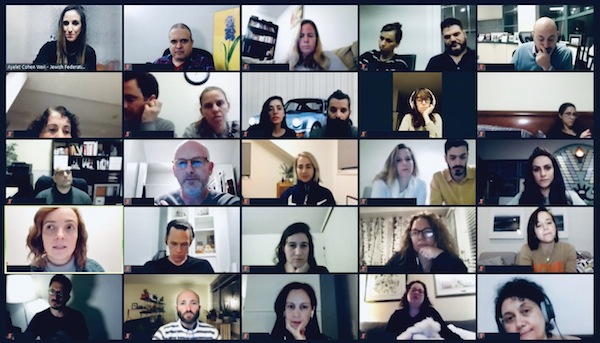
A screenshot of the recent BeyachadBC welcome event’s main room.

The types of immigration that Vancouver’s Jewish community is experiencing right now differ from those of 10 or 20 years ago. Community leaders recognized that these different demographics call for changed approaches in the way the community welcomes and integrates newcomers.

On Jan. 20, a virtual event took place, representing the launch of a new community partnership called BeyachadBC – beyachad means “together” in Hebrew. No fewer than 80 devices tuned in to join the event, many with more than one participant.

BeyachadBC is really an evolution of Shalom BC, Gesher Welcoming Services and other initiatives over the years meeting the needs of new community members, said Ayelet Cohen Weil, who, as associate director, community engagement, at the Jewish Federation of Greater Vancouver, spearheaded development of the group. (On Feb. 1, Cohen Weil began a new role, as executive director at the Louis Brier Jewish Aged Foundation.) Operating under the auspices of Federation, BeyachadBC was created with the Jewish Community Centre of Greater Vancouver, Jewish Family Services (JFS), Aleph in the Tri-Cities, Mamatefet and Women’s Empowerment (WE). The latter two groups are organizations primarily of Israeli-Canadian women, WE to network for career opportunities and Mamatefet to support mothers, especially of newborns.

Cohen Weil undertook consultations, including roundtables with community professionals who work with newcomers and with people who have experienced what newcomers face.

For many years, Vancouver has been one of North America’s fastest-growing Jewish communities. Breakout rooms at the virtual event included sessions in Spanish, Portuguese, Hebrew and English. The largest group was of Israelis, followed by those from Spanish-speaking Latin America. About equal numbers of participants joined the English and Portuguese breakout rooms. A couple of decades ago saw waves of immigrants from the former Soviet Union and, while there are still a number of new Canadians who originated in the FSU, almost all of those are now arriving via Israel, having spent years there. They communicate primarily in Hebrew, making Russian-language services less necessary than they were a few years ago.

Another noticeable change from the past is that many of the newcomers are arriving with work at the ready, not landing here in hopes of finding a career path. A sizeable number of immigrants from Israel and elsewhere have been drawn here by jobs at Amazon’s Vancouver hub, for example.

The different character of newcomers means that, rather than requiring some of the basic needs that earlier migrants required – housing assistance, social services – many are now seeking professional networking and connections for their families. (New arrivals who do require those additional services are, of course, served by various organizations, including Federation and JFS.)

When the pandemic is over, in-person social gatherings will take place with opportunities for mingling in each participant’s preferred language. Meanwhile, those who want it can be paired with a longer-established family based on criteria they determine, such as the ages of kids in the family or the professional track of the parents.

Of course, there is no one at the airport directing Jewish newcomers to BeyachadBC. Identifying Jewish immigrants is a matter mostly of word-of-mouth. This was aided by the fact that Cohen Weil’s portfolio at Federation also included regional community development. Given the cost of housing in Vancouver, many Jews are settling in the Tri-Cities or other suburban areas of Metro Vancouver. While geographic diffusion is a challenge long addressed by Federation, BeyachadBC plays an added role in reducing isolation and encouraging inclusion by explicitly targeting newcomer families outside the traditional “Jewish neighbourhoods” of the city.

BeyachadBC is envisioned as a service for those who have arrived in the past three years. “But I can tell from the faces that I saw, they were from the last year mostly,” Cohen Weil said. “They had to be newcomers during COVID, which created another layer of difficulty and challenges.”

Another fact struck Cohen Weil – there were young couples, families with kids, single young adults, seniors and middle-aged participants on the Zoom event.

She knows herself what it is like to live in different places. Cohen Weil arrived in 2005 as a student at the University of Victoria, having grown up in Mexico and having served as a volunteer in the Israel Defence Forces. She worked at Hillel in Victoria beginning in 2008 and returned to Israel in 2012 to continue her education before returning to Vancouver in 2017. Returning with a husband and a 10-month-old daughter was an entirely different experience that came with many challenges, even though she had connections and friendships from the past.

A more typical experience might be that of Yael Mayer, an individual and family therapist and a postdoctoral research fellow in the faculty of medicine at the University of British Columbia. She came to Vancouver five years ago, after her husband, an engineer, took a job here. Having left an established counseling career in Israel, Mayer was in a new country, at home, with two kids, including a 6-month-old baby.

“It’s very lonely and very hard to start everything again, to build a career again, to find a network,” she said. She set about cofounding Mamatefet and then founding WE because she realized that many women were in a similar boat. “Like me, there were many, many Israeli women who come here with academic backgrounds, with a lot of experience, and they struggle to rebuild their life here.”

If BeyachadBC had existed just five years ago, she said, her landing here might have been softer. “I think it could have been really different because BeyachadBC will provide a platform to easily connect and find information about different topics, about education, about synagogues, about activities, about social life,” she said. “It is all centred in one place, in one resource.”

Mayer was inspired by the initial BeyachadBC event, an enthusiasm she believes was shared by many based on the fact that everyone who signed up to attend actually showed up – and then stayed for the entire event. Registrations were coming in even after the event began.

“The beautiful thing about it is it really answers a need in our community and I think it is a very special project,” she said. “It identifies the common needs of the Jewish community but, at the same time, it also allows people to maintain some of their culture and their language so, in this way, it connects but it also makes everybody feel like they belong there. That’s the beautiful way that this project is built.”

The central clearinghouse for resources is beyachadbc.com and, Mayer added, while the site is intended for newcomers, longtime residents are also encouraged to explore it because assistance and social connections are welcome among the entire community, new arrivals and B.C.-born alike.

A childhood spent in hiding

Alex Buckman, a child survivor of the Holocaust, shared the story of his harrowing childhood years during a moving online event Jan. 27. The program, marking International Holocaust Remembrance Day, was the second annual such event organized by the Bayit in Richmond.

Buckman is the president of the Vancouver Child Survivors Group and has shared his experiences with thousands of students as a Vancouver Holocaust Education Centre (VHEC) survivor speaker.

“I was born on Oct. 31, 1939, in Brussels, Belgium,” he told more than 100 people who attended virtually. “My family was Jewish. I was 7 months old when Nazi Germany invaded Belgium on May 10, 1940. Everything changed for Jewish people in Belgium.”

He recalled how, at the age of 4, he was escorted by a strange woman, as they traveled through the night, sleeping in forests and foraging for food. After days of walking, they arrived at an orphanage. He would only discover years later that his parents were sent to Auschwitz.

At the orphanage, he met up with his cousin Annie but was told that they were to refer to each other as siblings.

When Nazis would come for inspections, Jewish boys were hastily sent into a cellar. “They told us again to be very quiet, then they shut the two wooden doors, replaced the carpet and furniture,” he said. “In the cellar, we were very cold and scared and we peed our pants. We saw large things running around us. They told us later that they were rats. The first time this happened I was 4 years old…. It seemed like we were in that cellar for a very long time. Soon, we heard every footstep over our heads. We heard men screaming loudly in a language that we did not understand. We were scared. We did not know what was going on. They told us that we should not cry but we were scared children so we cried.

“Suddenly, we heard the pushing of the furniture and they opened two wooden doors and we saw the light,” he continued. “They asked us to come out but we did not want to go out. We told them that we had peed our pants [so] they promised that they would give us a warm bath. This happened too many times from the age of 4 to 6-and-a-half.”

Annie’s mother, Alex’s Aunt Becky, was sent to the women’s concentration camp Ravensbrück. When each new train of prisoners would arrive, Becky would run through the crowds of arriving women calling the name of her sister, Devora.

“A young girl came close to Becky and said, I knew Devora but she is dead,” Buckman recounted. “Becky asked her: how did you know Devora? The young girl replied, I am from Belgium and I used to babysit her son, Alex. Becky thanked her and cried. Becky looked at the sky and prayed. She said, if I survive this, one day, and find Alex, I will raise him as my son.”

When liberation finally did come, it took time for the surviving family to find one another. Alex and Annie waited in the orphanage as one child after another was claimed by family. Alex tried to reassure his cousin, whom he believed to be his sister.

“I would tell her that our parents would come soon,” he said, “but, like Annie, I did not know what happened to our parents and why they were not coming for us. The orphanage kept all the children for another six months, hoping that our parents would come and pick us up. But no one came for us.”

The remaining children were transferred to a Red Cross facility in Brussels. Eventually, they were reunited with Annie’s parents, who Alex assumed were also his own. It was another cousin who, in an act of revenge for a childhood spat, blurted out the truth to Alex that his parents were dead.

Buckman went on to share his experience in April 2010 as a survivor-participant in the March of the Living, a program that brings Jewish youth to Poland and then on to Israel to explore firsthand the history of the Holocaust and its survivors who helped build Israel.

“It is almost impossible to describe the feeling I felt entering that camp, Auschwitz,” Buckman said. “On both sides of the camp there were shoes. As I passed the shoes, I caressed the little pair of shoes. The students were crying, but we had to continue.… We saw a mountain of glasses all tangled together.

“We finally walked in a shower room and I closed my eyes,” he said. “I was thinking of my mother and her sister.… We were told that the women panicked when they did not see the water come down from the showers. They ran toward the walls and scratched them with their fingernails. When I heard this, I turned and caressed the wall, feeling the scratches made by Jewish women prisoners. I wondered, were those scratches made by my mother? I would never know.

“In that room, I finally said, au revoir, Maman.”

At the commemoration, Richmond Mayor Malcolm Brodie, accompanied by four city councilors, spoke and read a proclamation.

All four Richmond MLAs were present, with Kelley Greene, MLA for Richmond-Steveston, reading a proclamation from the premier. Finance Minister Selina Robinson also addressed the event, as did Steveston-Richmond East Member of Parliament Kenny Chiu, who spoke of his own visit to Auschwitz.

The Bayit’s Rabbi Levi Varnai noted that this year’s event, which represents the 76th anniversary of the liberation of Auschwitz-Birkenau, also fell on erev Tu b’Shevat, the new year of the trees.

“The marriage of these two days is chilling,” said the rabbi. “Man is compared to the trees of the field, our tradition tells us. The six million souls murdered in the Holocaust were like individual human trees, each had the potential to grow, to flourish, and to bear fruit of the generations. They were obliterated, but one thing remained that can never be destroyed: their roots.

“The roots of the Jews who perished in the Holocaust goes back 3,300 years to Mount Sinai. What gives Holocaust survivors the sustenance to keep going? What motivates future generations of Jews to double down on life? It’s not just the memory of those who passed away, it’s also the memories of hundreds of generations who came before them, the generations who struggled and prevailed against all odds…. As we remember today the six million souls who left us, we can also remember the millions of souls who came before them and the millions who will come after.

“Today, we mourn. Tomorrow, we plant and renew,” said Varnai.

The Bayit’s International Holocaust Remembrance Day program was co-presented with partners including the Centre for Israel and Jewish Affairs, the VHEC, the Kehila Society of Richmond and the Jewish Federation of Greater Vancouver. The program was emceed by Bayit president Keith Liedtke.

Earlier in the day, a national virtual commemoration took place, organized by the Friends of the Simon Wiesenthal Centre in partnership with the VHEC and other groups across Canada. Survivors, including Vancouver’s Serge Haber, lit memorial candles. Heather Dune Macadam, author of the book 999: The Extraordinary Young Women of the First Official Jewish Transport to Auschwitz, spoke with Michael Berenbaum, a writer and professor and director of the Sigi Ziering Institute: Exploring the Ethical and Religious Implications of the Holocaust.

Trying to protect cyberspace

As the use of the internet has grown, so has the need to protect data stored online, as well as prevent an organization’s website or social media platforms from being hacked. Since COVID-19 has hit, that need has increased manifold, as businesses, communal agencies, schools and synagogues have moved most of their activities online.

Cybersecurity, and security in general, is an area on which the Jewish Federation of Greater Vancouver has focused attention and resources for years. In 2015, it formed a security advisory committee, headed on a volunteer basis by Vancouver lawyer Bernard Pinsky.

photo - Bernard Pinsky, head of Jewish Federation of Greater Vancouver’s security advisory committee
Bernard Pinsky, head of Jewish Federation of Greater Vancouver’s security advisory committee. (photo from Jewish Federation)

Pinsky, who was born and raised in Winnipeg, has been involved in the local Jewish community in various ways since he and his wife, Daniella Givon, an Israeli, moved here in 1981.

“Since the first war in Lebanon, I got involved in the Jewish community in a very big way … because I was concerned that the Jewish community in Vancouver was way too reluctant to get involved and raise their head and fight anti-Israel sentiment, both in Vancouver and across Canada,” said Pinsky.

Pinsky has volunteered with and supported many charitable organizations, both in the Jewish and general communities, and his efforts were recognized with a Queen Elizabeth II Diamond Jubilee Medal in 2012.

Over three years ago, the Jewish Community Centre of Greater Vancouver was one of almost 150 North American Jewish institutions that received a bomb threat. All of these threats ended up being traced to an Israeli teen and no one was hurt, but the potential harm raised concerns higher than they’d been in the past.

“In 2015, the Jewish Federation of Greater Vancouver decided we need to start a security committee, which was focused on physical security,” said Pinsky. “They asked me to be the committee chair.

“We started a physical security committee, which would train some volunteers, send people to events and help some of the synagogues train their people in security – not to carry weapons or actually try to take down terrorists, but to be extra eyes and ears before police are necessary … and to know how to defuse situations, if possible.”

The idea was to work with an overarching communal view and pool resources, rather than having each organization have to take on their own security initiatives. Jewish Federation annual campaign funds have since helped with security-related equipment, policies and programs. In 2017, Daniel Heydenrich was hired by Federation as director of security and he has coordinated efforts, trained volunteers and staff, worked with community members and law enforcement, as well as helped procure federal government Security Infrastructure Program grants.

About a year ago, when cyber-attacks on companies and institutions worldwide started involving ransom demands after systems were hacked, it became obvious that, in addition to physical security, cybersecurity was also an issue that needed to be addressed. And, in 2019, a cybersecurity and information protection subcommittee was created.

“We spent the first few months determining what our mandates were, who we were going to be helping, how we’d help, and how much would be as volunteer work and how much would be referring people out,” said Pinsky. “Then, COVID-19 hit. Very quickly after, we started making all of these decisions. With COVID-19, everybody had to be working from home, all of a sudden … people weren’t going to work in the office. So, the fact that you had office cybersecurity protocols … from home, this could be completely different – your own personal computer could be hacked.

“We realized that what we really needed to do was to offer to go into organizations and help them determine how well-protected they were. One committee volunteer decided to create an assessment tool, where we’d go through a series of questions with the organization and could tell them how weak or strong they were in different areas of cybersecurity and information protection.”

After making that assessment, the committee would then provide a list of recommendations to bridge any security gaps.

The mandate of the subcommittee, wrote Pinsky in Federation chief executive officer Ezra Shanken’s Sept. 25 Shabbat message, “is to recommend and communicate to Jewish community agencies information about specific cyberthreats and guidance that is published by recognized authoritative sources regarding cybersecurity (e.g., best practices, assessment tools, educational/training materials and policies/procedures); to provide training sessions; and to help Jewish community agencies work together to procure and implement cybersecurity services from commercial providers, where available. A key aspect of the subcommittee’s work is to help our partner agencies understand their level of exposure to cybercrime and to make recommendations on how to reduce the risk.”

So far, the cybersecurity experts on the committee have conducted six or seven assessments. Not wanting these volunteers to be overtaxed in the long run, Pinsky said, “We’re starting to train some additional people now. Hopefully, we’ll have some people qualified to do [assessments] within a month or so.”


Rebeca Kuropatwa is a Winnipeg freelance writer.

Father-son campaign leaders

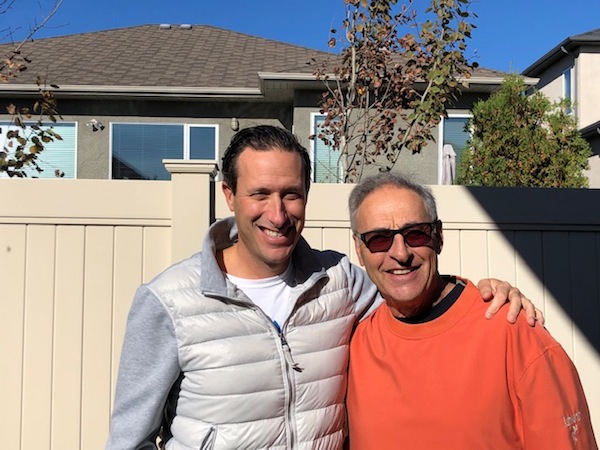
Jonathon Leipsic is chair of the Jewish Federation of Greater Vancouver’s annual campaign, and his father, Peter Leipsic, is co-chair of the annual campaign of the Jewish Federation of Winnipeg. (photo from Leipsics)

Father and son, Peter Leipsic and Jonathon Leipsic, are chairing the Jewish Federation annual campaigns in their respective hometowns. Peter is co-chair, with Neil Duboff, of the Winnipeg fundraising effort, while Jonathon is in his third consecutive year of leading the fundraising here in Vancouver.

For Peter, “growing up, helping others was something that just got ingrained in you. You see somebody in trouble, you reach down and help them. My father served in Europe and following in his steps I went to Israel as a volunteer, in the ’67 war. It was just an automatic.

“I remember being at our synagogue and … on the cover of Time Magazine, I guess May of ’67 … there was a picture of 800 Syrian tanks, 600 Egyptian and Iraqi…. It made Israel look like they were going to be toast. At the synagogue, they were asking for money from all the members and I remember the cheques being torn up and being returned to people … saying, that, ‘No, we’re not interested in this. We’re interested in a cheque that hurts. Don’t give us your $1,000…. We want $10,000.’

“When I saw that,” said Peter, “I was probably 21. I think that just sort of instilled in me how to look out for the underdog. People would make fun of me for handing out money to people on the street and I’d say to them, ‘Where are you sleeping tonight? Are you having a shower or not?’”

Peter has been raising money for the Combined Jewish Appeal (CJA) for more than 50 years now, and he has learned that, with some people, giving is automatic, one doesn’t even need to ask. “In the end, we all end up in the same place. Eventually, I don’t know where the cemeteries are in Vancouver, but, in Winnipeg, they’re in the North End – we’re all going to end up there, and you ain’t taking it with you!”

The Leipsics do their best to help out beyond the Jewish community, as well. Peter established a scholarship program at Winnipeg’s Gordon Bell High School, where applicants are judged, not according to scholastic achievements, but on how much of a mensch they are. This past year, there were nine recipients – the highest number yet. “They sent the bios on these people, and, they were just gut-wrenching,” said Peter. “After reading the bios, I said, ‘OK. Can I add another $1,000?’ And, of course, I sent [the list] to Jonathon, too. Well, I raised it to $6,000 and Jonathon doubled it, up to, I think, $11,000. So, instead of them getting $400 per person, they each were given $1,018. And Jonathon, of course, explained to them the significance of 18 in Jewish life. To me, I’m tickled … to actually be able to see somebody’s face, and how I changed that face – taking a massive weight off of them.”

While both Peter and Jonathon are calling on people to help, they each have their own unique styles, with Peter being more direct and Jonathon having a more diplomatic approach.

“I probably burned a couple of bridges,” said Peter of his method. “When you know that somebody has the ability and you tried to explain to them the need, yet they back off and they back off … and, at some point, they say, ‘Do you want me to hang up on you now?’ Some people just don’t get it.”

Even in times such as these, some people, like the Leipsics, are downplaying the negative aspects and focusing on the needed work at hand.

“I mentioned in my campaign opening address that we, the Jewish people, certainly have known challenges greater than COVID,” said Jonathon. “While the challenges are profound, I always like to remind people that, even though, in the last 1,000 years, the challenges were seemingly insurmountable, we overcame and moved from strength to strength by never forgetting our call from Sinai and the centrality of community and Klal Yisroel. I think that COVID has been an eye-opener for people of my generation and younger. It has to start at home, I think.”

Jonathon said that he has really learned from his father’s commitment and that it has set the tone. “We’re taught in our homes and taught through Torah … we have to make community a priority, and my father has always done that,” said Jonathon. “Whether he does it by giving more, giving his time and whatever we were in the position to be able to do, he made those decisions up front – not after all our spending was done, rather at the beginning. ‘First things first,’ as they say. He showed me the way to a life of tzedakah, commitment and meaning…. To be in the same position with him, I think, is actually really, really special.”

Having had the benefit of helping fundraise in Winnipeg, Jonathon understands the different challenges that exist in Vancouver. “We have a bigger community, but it’s spread out,” he noted. “And, as a result, the binding of the community is less tight than it was when our community was more closely tied to Oak Street [in the past, and in] the North End of Winnipeg.”

Learning from both campaigns, Jonathon said, “We work together and do what we can. At the end of the day, food security and access to safe housing is becoming more and more challenging. And then, the isolation with COVID, obviously, is really profound with the elderly and those who can’t get out…. I can imagine, when it’s raining all winter or cold, the social isolation will become even more profound … the potential [effects] it can have on them, but also, their sense of community. I think, more than ever, these sorts of community initiatives are essential.”

“If you want Jewish life to continue,” Peter added, “you must reach down and support the people that are in need. You never know who the next leaders of your community are going to be. A lot of people that have received help had nowhere else to turn, and they may turn out to be your future leaders.”

As far as both Leipsics are concerned, Judaism is defined by the talmudic words, Klal Yisroel areivim zeh bah zeh (all of Israel is a guarantor for one another).

Rebeca Kuropatwa is a Winnipeg freelance writer.

Celebrating community

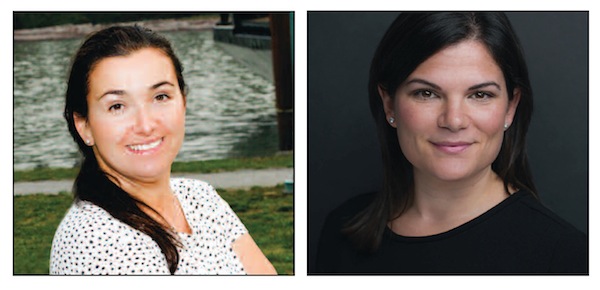
Featured speakers at this year’s Choices are Hannah Amar, left, and Michelle Hirsch. (photo from Jewish Federation)

Hannah Amar wants people to keep in mind two words when they listen to her story: resilience and connection.

Toronto-born Amar was 10 years old when she and her parents were hit by a drunk driver in a catastrophic car accident. She was the sole survivor. She went to live with an aunt and uncle, in a home with little to no Jewish identity. Her quest to regain her Jewish identity and the difference it made at the most difficult moment of her adult life is a story she will share next month at Choices.

Choices is an annual celebration of the Jewish Federation of Greater Vancouver. (Click here for an interview with Federation’s women’s philanthropy co-chairs.) It brings together hundreds of Jewish women who have made a choice to support the community through volunteerism, professional work, engagement or a financial gift. This year’s event takes place virtually on Nov. 8, and will recognize the power of women’s individual and collective contributions. The keynote speaker this year is Michelle Hirsch, a Cleveland woman who mobilized her circle to support the Jewish community of Houston after Hurricane Harvey wreaked havoc on that city in 2017. Amar is the community speaker.

When Amar came to the University of British Columbia, she sought out Hillel, the Jewish student organization, in an effort to reconnect with her Jewishness. This was her initial foray into the community.

After university, she was working in a corporate office and met a man with whom she had two sons, 16 months apart. That relationship ended and he largely disappeared. With two kids and no child support, Amar struggled to make ends meet.

With no family to fall back on, Amar put her belongings in storage and spent the better part of a year with no fixed address. She had some savings intended for her kids’ education, which was all that kept the three of them off the streets or in a homeless shelter. At one point, she was living in a room above a Starbucks, reached through a long set of steep stairs – she was eight months pregnant and had a 1-year-old.

Earlier, though, when she was still at her office job, Amar passed by the Ohel Ya’akov Community Kollel, on West Broadway. Since leaving university, and Hillel, she had not been in close contact with the Jewish community. Coming from a kickboxing class, dressed in her hot pink hoodie, she stopped outside the Kollel and was wondering whether to go in when a rabbi came down the stairs with a lollipop in his mouth.

“I thought, I can totally approach this rabbi because he’s eating a lollipop,” she recalled.

Rabbi Levi Feigelstock invited her to services on Shabbat and, the following week, she was at his family’s Shabbat table. It was the beginning of a solid connection. Both of her sons had their bris at the Kollel.

As her relationship collapsed and her housing situation became critical, it was that connection with community that provided a safety net.

A few weeks ago, Amar and her kids – Sam, 7, and Judah, who is almost 6 – moved into a three-bedroom townhome at the Ben and Esther Dayson Residences in the River District of South Vancouver. The Dayson Residences are a project of Tikva Housing, a nonprofit society that provides access to affordable housing, primarily for Jewish low- to moderate-income adults and families. The neighbourhood, which opened in 2019, consists of 32 townhomes.

“My kids are so happy, I’m so happy,” said Amar. “It’s a life-changer. It really is.”

Around Sukkot, Chabad visited with their mobile sukkah and all the kids in the residences came out. Amar loves walking around and seeing Shabbat candles in windows.

“The sense of community here – it is remarkable,” she said. “Going from no fixed address and only being the three of us for so many years to finally reaching out and dipping our toes in community and now having that.… Reaching out to the Jewish community helped me.”

The kids have already made best friends in the neighbourhood and Amar is enjoying having neighbourhood kids dogpiling on her living room floor.

“The amount of stress that’s left my body is unbelievable,” she said. “I had pain every day. Just yesterday, I woke up and I had none, so that’s pretty remarkable. I feel it leaving my body.”

Two generations ago, when Amar’s grandparents arrived in Toronto from Morocco, they, too, were aided by the Jewish community organizations that were there to help.

“It just really goes to show you how the connection in the Jewish community is amazing and how the help there is also amazing,” she said.

The keynote speaker for the Choices event, Hirsch, will share the story of how a small act of tzedakah snowballed into a huge relief effort for the Jewish community of Houston.

Hirsch is senior vice-president of her family’s business, an insurance brokerage.

“We joke that our family’s business is not just insurance for people but it’s also in our blood to ensure the future of the Jewish community,” she said. Growing up in Akron, south of Cleveland, Hirsch saw the model her grandparents and parents set in that city’s relatively small Jewish community.

“Everyone was involved because everyone was involved,” she said. “Every Jew knew every Jew and that’s just how it was.”

Hirsch became active locally and internationally, with the Jewish Federations of North America’s Young Leadership Cabinet and, more recently, with the National Women’s Philanthropy Board. She also serves on the board of the Jewish Agency for Israel North America and as chair of Cleveland’s Women in Philanthropy.

When Hurricane Harvey hit, her Young Leadership Cabinet colleagues in Houston were posting photos of the disaster on the group’s social media page. “Everyone was asking what can we do to help,” Hirsch recalled. “Some of the people in Houston were saying, we need things: people need diapers, we need cleaning supplies, none of the stores are open, the roads are blocked. We can’t just go to the store or order something to get delivered.”

Courier companies and Amazon were not delivering in Houston, but private vehicles were permitted to enter the city. Hirsch connected with colleagues in Dallas and asked if it would be possible to corral supplies there and transport them to Houston. One of the donors to the Dallas Federation owns a shipping company, so they obtained a cargo truck.

Hirsch made a preliminary Amazon wish list – toiletries, cleaning supplies, toothbrushes, other necessities – and posted on her personal social media, asking colleagues from Young Leadership Cabinet and other connections to share it. She went to bed and, eight hours later, awoke to find more than 1,000 items had been purchased and were on their way to the Dallas JCC.

“We kept adding additional items and, a few days went by, and then the Amazon trucks just started rolling in,” she said. The cargo truck made its way from Dallas to Houston well before couriers resumed services. The Houston JCC became their warehouse and volunteers came, opened the boxes, sorted the items and prepared them for community members to collect what they needed.

A couple of weeks later, some of the organizers made the trip themselves, including Hirsch. They helped out on the ground, rummaging through the flooded JCC preschool to see what toys and other items could be salvaged.

“It sounds like a sad story,” Hirsch said, “but really it’s an inspiring story, not of just mobilizing but the idea of a community that was facing such destruction that just rose up together to really come together and put back the pieces. It’s just a beautiful story of people coming together.”

More of both these women’s stories will be shared at the Choices event. For information and to register, visit jewishvancouver.com/choices-form.

Choices event will inspire via Zoom

Jewish Federation of Greater Vancouver women’s philanthropy co-chairs Sue Hector, left, and Shawna Merkur. (photos from Jewish Federation)

There’s good news and bad news for the annual Choices gala, which celebrates Jewish women’s philanthropy in Metro Vancouver. The good news is Choices will be held this year, despite COVID-19. The bad news is it will be held exclusively on Zoom, as there is no alternative safe way to convene a large gathering during the pandemic.

The 16-year-old event raises tens of thousands of dollars each year for Jewish Federation of Greater Vancouver’s annual campaign. Last year, 240 donors raised $52,302. Average attendance is 500 and has been as high as 620 some years.

“Every year, the amount raised varies, based on the different expenses of the event and the amounts raised through games, raffles and silent auctions,” said Sue Hector, who co-chairs Federation’s women’s philanthropy with Shawna Merkur.

“Choices is, at its essence, an event that inspires women of all ages to give to the Jewish community or to get involved in our community,” Merkur said. “It’s all generations in the room, all coming together for Jewish Federation to help our community. It’s really quite a beautiful thing.”

In fact, Choices has been so successful over the years that there have been complaints from the men’s campaign because they have no event like it, Hector said.

When the event is in person, the cost per person is $54, which covers the expenses of the actual event, while the Federation fundraising component comes from raffles, silent auctions and games held during the event. However, women need to make their Federation annual donation when they register for Choices and the minimum donation is $136. That said, no one is turned away based on their inability to afford that donation.

This year, because there will be no food served and no physical venue required, there’s no cost to the event. Instead, organizers are asking women to make an optional $54 donation to Federation’s COVID relief fund.

“That fund is being used to help agencies in the Jewish community manage the stress of the pandemic, from the Jewish schools to the Jewish food bank,” Hector said. “A task force has come together to work on this, interview the different agencies to find out what their needs are and determine how they’ll distribute the funds raised.” (See jewishindependent.ca/the-road-to-recovery.)

The virtual event Nov. 8 at 5 p.m. will feature a community speaker, Hannah Amar, a young single mother who benefited from Tikva Housing’s programs. She will share her journey from near-homelessness to a new home at the Ben and Esther Dayson Residences. “I think her story will really speak to the women watching,” Merkur said.

A main event speaker, Michelle Hirsch, will deliver her talk from Cleveland, Ohio. A member of Jewish Federations of North America’s national women’s philanthropy board and the Jewish Agency for Israel North America, Hirsch organized the Amazon Prime initiative on behalf of the National Youth Leadership Council in response to Hurricane Harvey. (For more on both speakers, click here.)

“In some ways it’s easier this year because we don’t have a lot to organize – no raffle, no caterer or venue and no silent auction,” Hector said. “But, we still wanted everyone to come together in some fashion, and Zoom is the only way. In such crazy, uncertain times, it’s nice to have something familiar and, hopefully, this virtual event will uplift people and give them courage and hope to face what we still have to face.”

To register for Choices – chaired this year by Courtney Cohen, Leanne Hazon and Sherri Wise – visit jewishvancouver.com/choices-form.
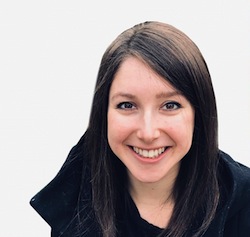
Lauren Kramer, an award-winning writer and editor, lives in Richmond. To read her work online, visit laurenkramer.net.

The road to recovery

Risa Levine, chair of Jewish Federation of Greater Vancouver’s Community Recovery Task Force. (photo from Jewish Federation)

The Jewish community and its agencies have been dramatically affected by the COVID pandemic and its economic implications. But not a single agency has folded – and not a single employee has lost their job – in part because of the coordinated efforts of the Jewish Federation of Greater Vancouver.

That is the assessment of Risa Levine, who is chairing Federation’s Community Recovery Task Force. Levine, a retired justice who served on the Supreme Court of British Columbia and the B.C. Court of Appeal, was chosen to lead the major initiative, which will address the impacts of the pandemic on community agencies and help guide a possible rethinking of how programs and services might be delivered more efficiently or effectively in future.

The resilience of Jewish agencies stands in stark contrast to a much bleaker climate for nonprofit agencies in the general community. Among the many individuals and agencies the task force has heard from is Alison Brewin, executive director of Vantage Point, a resource agency for nonprofits in the province. “Alison told us that they expect about 25% of the nonprofits in British Columbia not to make it, to shut down,” said Levine. “Some already have and they expect that many of them won’t continue to operate.”

One of the things that Federation did almost immediately at the beginning of the emergency was intervene with a disbursement of emergency funds – $505,000, plus additional tranches released by individuals and families through their respective funds at the community foundation. In addition to this season’s annual campaign, canvassers are asking donors, if they are able, to make an additional contribution to the COVID emergency fund.

Levine was asked by Alex Cristall, chair of the board of the Jewish Federation of Greater Vancouver, to head the task force.

“I was on the allocations committee for Federation for 10 years, so that’s really directly related to what I’m doing now,” she said. “I had time and I think it’s crucial work to be done for our community, so I was honoured to be asked.”

Other task force members are Andrew Altow, Jill Diamond, Michelle Gerber, Hodie Kahn, Candace Kwinter, Shawn Lewis, David Porte, Justin L. Segal and Isaac Thau.

As well as confronting immediate needs of agencies, the task force presents an opportunity to consider the future more comprehensively, said Levine.

“The task force is taking a longer-term, holistic, strategic approach to look at how the community might look or how we think it should look coming out of this,” she said. The team is uniquely qualified to confront the challenges because of the diverse identities and experiences of the people on the task force, she said.

Task force members, collaborating with staff members Marcie Flom, executive director of the Jewish Community Foundation of Greater Vancouver, and Shelley Rivkin, Federation’s vice-president, planning, allocations and community affairs, are reaching out to all community partner agencies.

The crucial initial step is to determine how each agency has been impacted by COVID, what their immediate needs are, and what their requirements are likely to be for them to survive and continue their work.

“It’s just amazing and very impressive how resilient and responsive the agencies have been,” Levine said. “They are affected in different ways, depending on what their function is in the community and what they are doing.”

Jewish Family Services is on the very frontline, she said, addressing food security and housing for the most vulnerable in the community. They have expanded beyond their food bank to provision of meals, and providing delivery, which they did not do before.

“They are providing financial support for people, mental health support and so on,” said Levine. “Their client load has doubled, at least, since March and they’ve had to add to their staff and they are all working remotely. It’s been huge. And they’ve been amazing in terms of what they have been able to do.”

Synagogues have also stepped up in preparing and delivering meals to congregants, especially seniors and others who are particularly vulnerable and lack mobility because of transportation challenges and the reduced accessibility to routine services, she said.

She cited the Jewish Community Centre of Greater Vancouver’s nearly instant transition to online delivery of services. Smaller agencies, however, face greater challenges because they may not have the hardware, software and institutional capacity to make that kind of technological shift. Helping those agencies adapt to the technological and parallel needs was one of the priorities addressed at the outset, Levine said.

As the emergency campaign unfolds, the task force will continue assessing the situation.

“Ultimately,” said Levine, “the task force will be making recommendations for distribution of those monies, the Community Recovery Fund, and that will be based on the information we are gathering now about what the needs are and our assessment of how those funds can be strategically distributed to meet the needs of the community as they have changed and evolved through this crisis.”