Skip to content
  • Home
  • Subscribe / donate
  • Events calendar
  • Business Directory
  • FAQ
  • News
    • Local
    • National
    • Israel
    • World
    • עניין בחדשות
      A roundup of news in Canada and further afield, in Hebrew.
  • Opinion
    • From the JI
    • Op-Ed
  • Arts & Culture
    • Performing Arts
    • Music
    • Books
    • Visual Arts
    • TV & Film
  • Life
    • Celebrating the Holidays
    • Travel
    • The Daily Snooze
      Cartoons by Jacob Samuel
    • Mystery Photo
      Help the JI and JMABC fill in the gaps in our archives.
  • Community Links
    • Organizations, Etc.
    • Other News Sources & Blogs
  • JI Chai Celebration
  • JI@88! video

Recent Posts

  • Federation now across BC
  • Israel fighting for its existence
  • Deal strengthens Iran
  • Patriotic belonging diminishes
  • A campaign to engage
  • Upstanders’ first live event
  • Responding to Carney
  • Having your own home
  • Music a family tradition
  • Musical to warm heart
  • Community milestones … June 2026
  • Sharing her passion for Israel
  • Or Shalom reopens its doors
  • JFS from past to future
  • Need holistic approach
  • Sharing stories, advice
  • Journalist shares fears
  • Skills to live together
  • Road to independence
  • Cutting grass with scissors
  • Zionism as a solution
  • Deceit, desire & the divine
  • Reclaiming sacredness
  • Creative project ideas
  • Summer squares and cobbler
  • Thou shalt … summer commandments
  • Legal help for students
  • Revisiting myth of Lilith
  • Wrong person rebuked
  • Canada’s mixed messages
  • Questions for museum
  • Symposium on antizionism
  • Making soccer political
  • CJPAC lauds Pulver’s impact
  • City recognizes Vrba’s legacy  
  • Organ donation saves lives

Archives

Follow @JewishIndie
image - CJN box ad Rockowers 2026

Tag: JCC

Parties back JCC plan

The leading federal political parties have pledged their support to the redevelopment of the Jewish Community Centre of Greater Vancouver. Kailin Che, the Conservative Candidate for Vancouver Granville, issued a release Sept. 1, saying that a Conservative government would commit to the redevelopment of the facility. The Conservative campaign did not commit to a dollar amount.

The federal Liberals also made a commitment. Taleeb Noormohamad, the Liberal candidate in Vancouver Granville, announced the next day that a reelected Liberal government would contribute $25 million to the project – the same contribution that the province has committed to and the amount JCC officials requested.

The entire project is budgeted at $427 million, including $155 for a new community centre, childcare spaces and seniors care and $272 million to construct 500 to 600 units of mixed-use rental housing. The new centre is estimated for completion in late 2024 and the housing component is anticipated in 2027-28.

Posted on September 10, 2021September 9, 2021Author Pat JohnsonCategories LocalTags Canada, elections, JCC, Jewish Community Centre, politics, redevelopment

Next step in JCC project

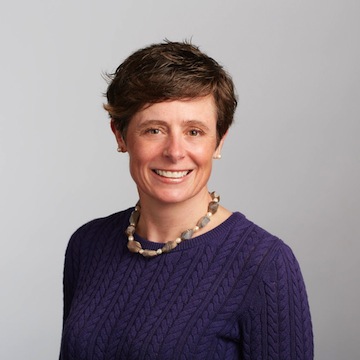
Emily Pritchard has been appointed as director of the upcoming capital campaign for the Jewish Community Centre of Greater Vancouver redevelopment project. She brings close to a decade of experience to the role and has led successful capital fundraising campaigns throughout her career.

“We are delighted to welcome Emily on board,” said Alvin Wasserman, president of the JCC. “Her appointment is an indication of the growing strength and immense potential of this enormous undertaking.”

The redevelopment will be the single biggest project in the history of the local Jewish community and will bring diverse groups of people from across the region together around a central community hub.

photo - Emily Pritchard
Emily Pritchard (photo from Jewish Federation)

“I am thrilled to be working on this project. Not only is this one of the most ambitious capital campaigns in the city, it is an excellent example of how a capital project can pull a community together,” said Pritchard. In previous roles, Pritchard has led successful campaigns for Christ Church Cathedral and Covenant House Vancouver.

Over the past few years, the JCC, Jewish Federation of Greater Vancouver and King David High School have engaged in a strategic process with stakeholders regarding the proposed redevelopment of the JCC site. As part of that process, the organizations agreed to collaborate on fundraising.

“The creation of the capital campaign director role is part of our commitment to building an experienced team of professionals,” explained Alex Cristall, Jewish Federation’s board chair. “The proposed redevelopment of the JCC site is a complex, long-term project that will take commitments from across the community, government and beyond to realize. Ensuring we have Emily in place at this early stage will enable us to be fully prepared when the time comes to launch the capital campaign.”

KDHS co-president Neville Israel said Pritchard is “a critical part of our cross-organizational team.”

“As the redevelopment starts to gather steam,” added school co-president Jackie Cristall Morris, “I am confident that she will help bring to life the exciting opportunities ahead of us.”

Proposed redevelopment

The current 60-year-old JCC facility serves 40,000 people a year, comprising more than 300,000 visits annually. In April 2021, the B.C. government announced $25 million to support the first phase of the redevelopment. This followed Vancouver City Council’s unanimous approval of the rezoning and redevelopment plan for the site. Previously, the provincial government and private donors provided support for the planning stages of the project, which is expected to be completed in two phases.

The first phase will result in a renewed 200,000-square-foot multigenerational community centre on what is currently the JCC parking lot. It will include expanded childcare, seniors’ services, arts and cultural spaces, and amenities for all Vancouver residents. More than 15 not-for-profit organizations are expected to call the centre home, and plans include expanded space for the Vancouver Holocaust Education Centre, a new theatre, and more.

Once that is completed, the redevelopment’s second phase will begin on what is currently the site of the existing JCC building. Central to this is a mixed-use rental housing project, with units expected to be offered at or below market value and be open to everyone. In this phase, with support from private donors and supporters of the school, KDHS will move to a new facility that will give the school ample space to provide academic, athletic and extra-curricular programming.

– Courtesy Jewish Federation of Greater Vancouver

Posted on June 25, 2021June 25, 2021Author Jewish Federation of Greater VancouverCategories LocalTags capital campaign, Emily Pritchard, fundraising, JCC, Jewish Community Centre, Jewish Federation, KDHS, King David High School, redevelopment
B.C. puts $25 million to JCC

B.C. puts $25 million to JCC

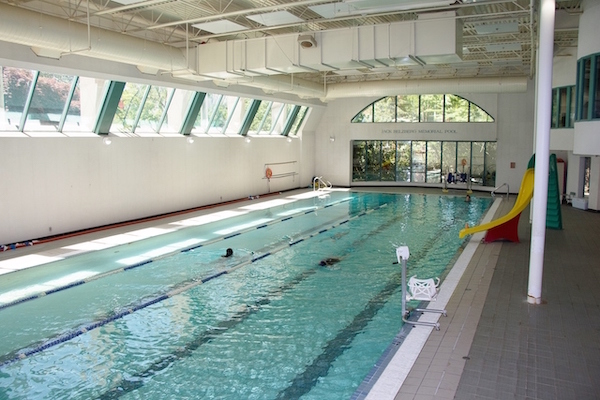
One of the reasons the Jewish Community Centre of Greater Vancouver is being redeveloped is that its amenities, like the gymnasium and swimming pool, are aging. (photo from miss604.com)

The government of British Columbia has announced $25 million to support the redevelopment of the Jewish Community Centre of Greater Vancouver.

At a virtual event April 28, three cabinet ministers and Alvin Wasserman, president of the board of the JCC, publicly shared the major contribution to the $155 million project.

The first phase of the redevelopment, which is what the grant supports, will contribute to the construction of the new, 200,000-square-foot community centre. This will be built on the current JCC parking lot. The new facility will allow the JCC to expand childcare, seniors services, arts and cultural spaces and amenities for all. The centre, when opened, will also be home to about 15 not-for-profit organizations, with expanded space for the Vancouver Holocaust Education Centre, a new theatre, and other facilities. That component is anticipated to be completed in late 2024.

A second phase of the project, which is the largest capital project in the history of British Columbia’s Jewish community, will see the existing JCC replaced with mixed-use rental housing, including units at or below market value. In this phase, King David High School, which is currently located to the east of the JCC, across Willow Street, is expected to move to new, larger premises in the second phase to accommodate growing student enrolment. This phase, expected to be completed in 2027 or 2028, will cost about $272 million.

The redevelopment initiative includes the transfer of the property from the JCC into a community trust, with rent and other revenues being reinvested into the Jewish community in perpetuity.

Melanie Mark, B.C. minister of tourism, art, culture and sport, made the funding official in an enthusiastic announcement.

photo - JCC gymnasium
The JCC gymnasium (photo from miss604.com)

“The Jewish Community Centre of Greater Vancouver is an integral part of our social and cultural fabric, it’s a vibrant, intergenerational community centre,” she said. “But it was built more than 60 years ago and the facility is in desperate need of replacement. Its amenities, like the swimming pool and gymnasium, are aging. Meanwhile, the community of Oakridge has exploded around it.”

Mark added: “We hope this grant will assist the centre to secure other sources of funding for this project. The redevelopment of the centre is a massive undertaking, leaving a legacy for generations to come, which is why I’m encouraging other levels of government to join us in funding this important project. Specifically, I hope the federal government will step up and match our funding commitment. I hope they see the value in meeting the needs of this growing, diverse community.”

The new JCC’s capacity for increased childcare and the residential components of the second phase dovetail, Mark said, with the government’s commitments to affordable housing and childcare.

David Eby, the province’s minister responsible for housing, emceed the event. The JCC’s aim of 500 units of affordable housing is an example of how the province is “going to get to our very ambitious target of 114,000 units of affordable housing across the province,” Eby said.

Also on hand was George Heyman, minister of environment and climate change strategy, who recalled his teenage years hanging out at the centre. He echoed Mark’s call for the federal government to join the province in supporting the project.

“The Jewish Community Centre is a centre not just for Oakridge and the Cambie Corridor but for all of Metro Vancouver, and has been for years,” said Heyman. “Visitors come from all around the region and from a wide variety of ethnic, cultural and religious backgrounds.”

On behalf of the JCC, Wasserman thanked the provincial officials, all three of whom represent Vancouver ridings in the legislature.

“The centre is in desperate need of replacement,” said Wasserman. “Community needs have hugely outgrown it and, fortunately, we are blessed with options. The centre is in the heart of Vancouver, on land worth more than $325 million. Our community pioneers knew this land would be important for our future needs and that future is arriving…. Thanks to the funding from the province of B.C., we are able to move forward with the plan that will bring benefits to many for many generations to come.”

Format ImagePosted on May 7, 2021May 6, 2021Author Pat JohnsonCategories LocalTags Alvin Wasserman, British Columbia, David Eby, George Heyman, government, JCC, Jewish Community Centre, Oakridge, redevelopment
COVID’s impacts on mental health

COVID’s impacts on mental health

(image from bastamanography)

Purim 2020, which took place in early March, brought with it added significance. For some, it represented the last time they gathered in a Jewish setting in person, outside the home. For others, it was the first “live” service to be canceled as a result of SARS-CoV-2. In the days that ensued, lives changed as the perils of the coronavirus became apparent. School, work and religious services all moved online; personal contact with friends and family became exceedingly limited; travel, for most people, ceased.

Among the societal issues compounded by the pandemic have been increased isolation, drug dependence, and food and job insecurity. Underlying these problems has been COVID-19’s effect on mental health, including within the local Jewish community. As a result, numerous groups have stepped up their efforts to help the most vulnerable, and all those who have been impacted by the pandemic. During the past weeks, as the first anniversary of COVID-19 came and went, the Jewish Independent spoke with several people at the forefront of handling the Greater Vancouver Jewish community’s response.

At Jewish Family Services (jfsvancouver.ca), efforts to tackle mental health issues have widened, as more people have been seeking the agency’s support. Early on, JFS opened a crisis line that runs seven days a week, from 9 a.m. to 9 p.m. (604-588-5719 or [email protected], with the promise to respond within 24 hours).

“People are struggling, without a concrete end to the restrictions, and so demand for emotional support and learning different coping skills has surged. Our crisis line is always there for people who need immediate help and, for many community members, this is the easy way to connect with a counselor. If someone wants to remain anonymous, that is absolutely an option, we do not require a caller to identify themselves,” JFS chief executive officer Tanja Demajo told the Independent.

From its launch at the start of the pandemic to August 2020, the JFS Community Crisis Line received 955 calls, serving 494 individuals. Case workers spent 2,052 hours on the line. Additionally, 166 individuals accessed free programs offered by the JFS mental health and wellness team via telehealth and video conference – a 40% increase compared to pre-COVID times.

“Many are struggling with the added role of being a caregiver in the pandemic context, as well as dealing with their own emotions, so our workshops and support groups provide a community where people are able to vent, talk and support one another. We also connect people with friendly callers. These services have been a lifeline for many of our clients,” Demajo said.

A report released by the JFS client advisory committee last summer highlighted many ongoing concerns. One alarming quote from a client cited in the report reads, “COVID-19 has been depressing and frightening for me. My anxiety has been through the roof and I’ve had an increased number of panic attacks and migraines. My chronic health conditions have increased in severity and I have new ones. My nightmares and terrors have also increased.”

Prior to the pandemic, some JFS clients were already battling with mental health issues, often severe, which have been aggravated by the need to now cope with unaccustomed fears and anxieties. Some people, according to JFS, have refused to go outside, whether it be to the grocery store or outside for a walk. This problem is often felt by seniors, who, like everyone, need exercise and who confront serious health conditions such as heart disease, diabetes and high blood pressure.

Many housebound JFS clients depended on family and friends visiting for social and emotional connection before COVID hit and have been feeling deeply alone since the pandemic began. Irritability and anger are rising. Senior clients who were used to spending significant time with their grandchildren are missing them desperately. “I miss hugging my grandchildren,” is a common refrain.

Since mid-May of last year, there have been weekly depression and anxiety support group meetings with JFS’s mental health outreach therapist, Kevin Campbell. Run on Zoom, the 90-minute sessions teach coping skills and allow a safe place to talk and share. The group focuses on cognitive behavioural therapy and mindfulness techniques. JFS also has an active seniors caregivers support group led by Lily Shalev.

Not all COVID-19 developments in connection to mental health are grim, JFS notes. Due to technological developments, some of those experiencing isolation are able to access telehealth, work from home, get home deliveries and view a variety of educational and cultural offerings online, including many synagogue activities.

Jewish Addiction Community Services Vancouver (jacsvancouver.com), an organization that helps community members navigate the troubles of various substance abuse issues, has held one-on-one meetings on Zoom ever since COVID started.

“Clients seem to like this kind of individual counseling better, as it allows for greater intimacy, even though it is on Zoom,” said Shelley Karrel, manager of counseling and community education at JACS. “What people liked most about the group meeting was the getting together physically.”

To help those who would prefer to meet in person, Karrel has arranged for one-on-one socially distant coffee meetings. “What JACS has done is to make ourselves more available to someone when they want to talk, and to be able to schedule a meeting fairly quickly. As a registered clinical counselor, I am able to offer clients tools and exercises for managing their symptoms and for exploring the root causes when the issues of anxiety and depression are evident. Some of my clients are finding AA meetings helpful online. And, like with our clients, some are not using that medium for the same reason – it’s not personal enough.”

For ongoing support, JACS has a monthly email that lists many resources for people, if they want to reach out for specific help. JACS is also beginning a new program, Sustaining Recovery, that offers additional support in the form of a structured plan to help someone develop goals and be able to keep track of their progress. This plan, JACS finds, is very useful in creating accountability and support.

Inclusion services at the Jewish Community Centre of Greater Vancouver (jccgv.com/inclusion) continues to provide a number of targeted social and recreational programs intended to engage, educate and provide meaningful lifelong learning opportunities, as well as engage individuals with diverse needs. The programs are rooted in Jewish values and the principles of social connection, community building and belonging.

“Social isolation is a prevalent issue for individuals with diverse abilities [and] this reality was exacerbated by the COVID-19 shutdown,” explained Leamore Cohen, coordinator of inclusion services. “These communities have been particularly impacted by the loneliness, uncertainty and economic hardships caused by the global pandemic, leaving these individuals at higher risk for numerous health challenges. The work we do in the inclusion services department creates the needed awareness of the individuals we support. But, now more than ever, community members are looking to us for routine and engagement at a time when they are most vulnerable.”

As people have settled into life with COVID-19, “these individuals continue to be shut in and vulnerable to mental health challenges,” she added. “In response, we offer a hybrid of virtual and in-person programming throughout the week that is both accessible and safe. In-person programs adhere to best COVID practices, and our virtual offerings allow for those who are unable to attend in person to access programming and community virtually.”

The Bagel Social Club, for example, met weekly in pre-COVID times as a means to increase avenues for integration, self-reliance and wellness. The program has shifted to weekly social clubs over Zoom and a weekly Relax and Just Breathe class, which includes gentle stretching, breathing exercises and visualizations.

As the lockdown took effect last year, Jewish Federation of Greater Vancouver (jewishvancouver.com) began convening multiple stakeholder groups to determine the pandemic’s impact on many aspects of Jewish communal life. A common thread during these discussions involved concerns about the impacts of increased social isolation on seniors, families and youth. Federation also hosted several webinars on mental health for community members, related to the impacts of COVID-19.

“Through this work, we were able to identify a number of key initiatives that we could support both financially and organizationally,” said Shelley Rivkin, vice-president of global and local engagement at Federation. “These include over $170,000 in emergency funds to Jewish Family Services, part of which was used to support the emergency care line; funds for Jewish Seniors Alliance to expand their peer support program; and the organization of several webinars with community psychologists directed toward young adults, families and teens.

“The Jewish Community Foundation, Federation’s endowment program, has also supported a number of projects to enable community agencies to undertake mental health initiatives,” she added. “Support for mental health issues for both agency employees and leaders was also identified as a priority for the community recovery task force when they launched their first grant round. It will continue to be highlighted as we move into the next grant round.”

Last December, youth workers voiced concern about the mental well-being of youth and young adults. Consequently, Federation hosted a roundtable with key leaders to ascertain how community members in this age range are faring, especially when faced with so many disappointments and cancellations over the past year. Based on these conversations and others, Federation will be collaborating with these agencies to develop a community mental health strategy for children and youth.

Sam Margolis has written for the Globe and Mail, the National Post, UPI and MSNBC.

Format ImagePosted on April 23, 2021April 22, 2021Author Sam MargolisCategories LocalTags addiction, coronavirus, COVID-19, inclusion, JACS Vancouver, JCC, Jewish Community Foundation, Jewish Family Services, Jewish Federation, JFS, Leamore Cohen, mental health, Shelley Karrel, Shelley Rivkin, Tanja Demajo, youth
Artists rise to challenge

Artists rise to challenge

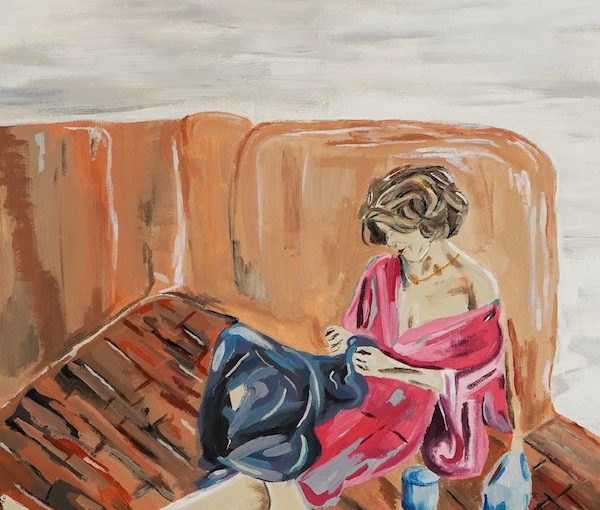
“Sometimes Being Human … Can Be Hard” by August Bramhoff.

The Jewish Community Centre of Greater Vancouver’s inclusion services’ third annual art exhibit at the Zack Gallery is on display this month. And people can meet the artists at a March 23 virtual reception.

“For the last two years, the JCC has celebrated Jewish Disability Awareness and Inclusion Month through an art exhibit that interrogated and explored themes of community longing and belonging,” Leamore Cohen, inclusion services coordinator, told the Independent. “We asked artists of mixed ability: How do we make meaning of the concept of community, the real and the imagined spaces we inhabit? What does community longing look like and what are the possibilities for belonging in an ever-changing world?”

This past year, the world has changed almost beyond recognition. “In Vancouver, we are nearing a year since the COVID pandemic shut down our city and transformed all aspects of our social world,” acknowledged Cohen. “However, while we were isolated, we also saw our creativity flourish.”

In the two previous exhibits, artists responded enthusiastically to inclusion services’ challenge, unfolding a fascinating slice of society through their art, and both shows were successful, well-attended cultural events. Unfortunately, the pandemic has moved most of our interactions online, and so it is with this new show, though it is also available to view in-person by appointment.

The participating artists are of differing abilities and artistic levels, so the artforms vary. There are paintings and multimedia collages, figurative and abstract imagery, landscapes and still life. Some pictures are disturbing in their naked emotional pain. Others are quietly sad, or funny, or absurd. One thing is universal: the artists’ willingness to express their feelings, both in their art and in words, as each piece is accompanied by its creator’s short writeup.

It is impossible to mention all 57 pieces on display, but here are a select few to represent this multifaceted show.

August Bramhoff’s painting “Sometimes Being Human … Can Be Hard” depicts a woman sitting, alone. She is sewing or knitting. The painting’s muted colours permit no joy. There is obviously no one there with her, even beyond the edges of the painting. The woman’s isolation and loneliness are palpable despite the spare simplicity of the image.

The artist wrote about his painting: “My main practice is analogue photography, with a focus on street photography…. This is the first painting I’ve created in over 10 years. The inspiration for this work is from a feature film. It captures the sense of longing and displacement we all seem to be juggling during the COVID shutdown.”

In contrast, Tracy-Lynn Chernaske’s “Whispers” is a dreamy landscape. The moon shines over the night forest and a trail of shiny fog weaves its way between earth and sky. Maybe it is just the weather. Or maybe the fog illustrates our mutual desire to connect with one another. Maybe it is a whisper of our souls.

The artist explained: “Community is … a place and a way to tell stories and journeys so they can be witnessed, heard and held. They are a way of bonding together … and the need to push away and seek out new and more fitting spaces.” According to Chernaske, we all nourish “the invisible threads of relationships that cross borders, land, sea and time.”

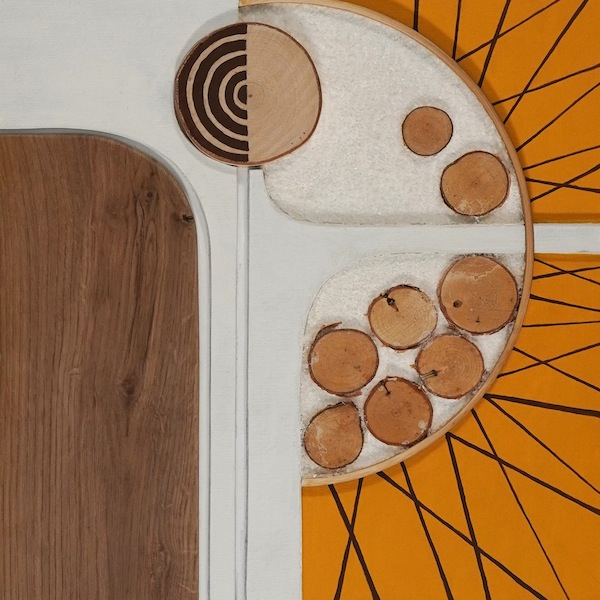
In Evelyn Finchman’s “Roots” – an abstract composition in the earthy colours of brown and beige – interconnected spirals, lines and shapes allow the viewer’s imagination to stir. Is it food? Is it a surreal terrain? A carpenter’s schematics?

“Belonging to a community is much more than interacting with our societies and being accepted by our peers,” mused Finchman. “This year, I realized how important it is to coexist within the nature that surrounds us…. There is no human life if we don’t respect all living beings on our planet and understand that we are part of the whole environment.”

image - “Roots” by Evelyn Finchmann
“Roots” by Evelyn Finchmann.

Another artist who touched on the theme of nature and its connection with humanity is Peggy Logan. Her painting “Flowers Adrift” shows single blooms, all different – a tulip, an orchid, a daffodil, a daisy – but all similarly pale and faded, bobbing on the blue background. The image seems dejected and symbolic.

“The piece of work I have created,” said Logan, “is about that sense of disconnection that exists now with friends and family with restrictions on travel, social distancing, and isolating inside. This image is about the lack of roots the flowers have as they float over the water via the internet.”

Symbolism is also the main approach of Theresa Moleski in her painting “Life In and Beyond our Bubble.” The painting is dark, almost black and white. A tree is imprisoned inside a sharply delineated bubble, striving to get free. But there is something vaguely optimistic outside the bubble, too. And the artist expressed herself in no uncertain terms in her writeup: “COVID or not, I will continue my journey as an artist!”

While most of the images in this show are serious in tone, a few offer a humorous slant on our very human follies. Danielle Haslip’s painting “First Date Red Flags” is a tongue-in-cheek exploration of dating. Its style – childlike and undeniably funny – includes a figure with lots of teeth. You see it and you know: something is gonna bite.

“Reflecting on my own personal growth, as I wait for conditions to be safer for meeting people, I thought I’d be cheeky and depict an exaggerated vision of dating, in which we can either fall prey to manipulative people, who mean us harm, or attempt to force a connection with someone who is not a good fit for us,” wrote Haslip.

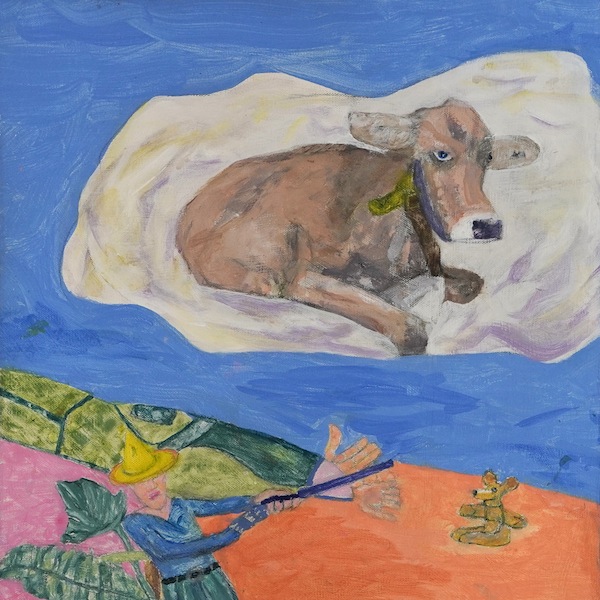
Another smile-inspiring work is Paul Leighton’s “Not Over the Moon Yet.” On the painting, a sad cow is floating on a cloud. Or is it an island? The style is two-dimensional, but the meaning is much deeper. Is the poor cow attempting to fly away from stupid humans? The artist thinks so: “My approach to the theme of longing and belonging is to use oblique humour to ponder unfathomable human global problems through the lens of the preposterous…. An individual, no matter how earnest, can’t solve all the interrelated problems of the Anthropocene or rescue a cow fleeing into the clouds,” said Leighton. “However, social pressure and citizens’ assembly can help.”

image - “Not Over the Moon Yet” by Paul Leighton
“Not Over the Moon Yet” by Paul Leighton.

And then there are paintings like Gail Rudin’s “Home is Where the Heart Is.” Folk art in style, it is heart-warming in its essence. It reminds all of us of the importance of home.

The show is on display at the gallery until April 2. To view the exhibit anytime or attend the March 23, 5 p.m., reception, visit jccgv.com/community-longing-and-belonging.

Olga Livshin is a Vancouver freelance writer. She can be reached at [email protected].

Format ImagePosted on March 19, 2021March 18, 2021Author Olga LivshinCategories Visual ArtsTags art, disability awareness, inclusion, JCC, JDAIM, Jewish Community Centre, Leamore Cohen, painting, Zack Gallery
Arts enhance inclusion

Arts enhance inclusion

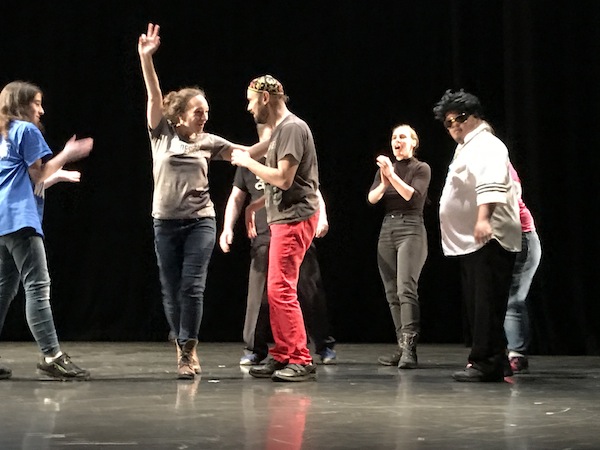
Matthew Tom-Wing, right, dressed as Elvis, was one of the participants in the 2019 Chutzpah! Festival finale. His mother, Elizabeth Tom-Wing, recalled it as a “standout moment for our community and for our son!” (photo from JCC)

February is Jewish Disability Awareness and Inclusion Month (JDAIM). It offers a wonderful time to look back at some of our community achievements in fostering inclusion at the Jewish Community Centre of Greater Vancouver; in particular, the 2019 Chutzpah! Festival’s Inclusion Project.

Mary-Louise Albert was artistic and managing director of Chutzpah! and the Rothstein Theatre for 15 years. Before she retired, she and I had many spirited conversations about the importance of creating access for local community members in all areas of Jewish communal life and at the JCC, which is the home of the festival and the theatre, and where I am the coordinator of inclusion services.

We believed that the arts are an important avenue for personal growth and skills development, and that they also bolster visibility and foster true belonging. We hoped that the JCC’s inclusion services and Chutzpah! could collaborate in some way and, through our conversations and Mary-Louise’s vision and expertise, the Chutzpah Inclusion Project crystalized.

After months of planning, in November 2019, members of the local community took to the Rothstein stage to participate in a first-ever Inclusion Project performance – an evening of dance and comedy with international inclusion advocate Pamela Schuller and professional dancers Troy Ogilvie and Rebecca Margolick. The event was the finale of the 2019 Chutzpah! Festival and a highlight of Albert’s final year with Chutzpah!

In preparation to take to the stage, participants had a yearlong introduction to theatre, including low-barrier and free classes with a specialist through the JCC’s Theatre Lab program. Participants attended many local productions through the JCC’s social club, and spent hours rehearsing and co-creating with Ogilvie, Margolick and Schuller over a series of workshops that would not have been possible without community partners and friends.

The 2019 performance received a standing ovation from the audience. The feeling of solidarity and acceptance between the audience and the performers was palpable. What was most amazing, Elizabeth Tom-Wing recalled, is that her son had the opportunity to “train and perform on stage with the professional dancers, along with his friends, and close off the three-week-long 2019 Chutzpah! Festival.” She recalled it as a “standout moment for our community and for our son!”

This project demonstrated that artists of mixed ability and skill can create a powerful and moving performance. Moreover, it reminds us that it is only through equity and action that belonging can be fostered. As diversity, equity and inclusion strategist Arthur Chan explains: “Diversity is a fact. Equity is a choice. Inclusion is an action. Belonging is the outcome.”

Leamore Cohen is inclusion services coordinator at the Jewish Community Centre of Greater Vancouver.

Format ImagePosted on February 26, 2021February 24, 2021Author Leamore CohenCategories Performing ArtsTags Chutzpah!, disability awareness, diversity, equity, inclusion, JCC, JDAIM, Mary-Louise Albert, theatre
Community milestones … Order of Canada, Indspire, SFU Gerontology, JCC Jewish Book Awards

Community milestones … Order of Canada, Indspire, SFU Gerontology, JCC Jewish Book Awards

Rabbi Dr. Yosef Wosk speaks at a Vancouver Public Library event in 2017. (photo by Cynthia Ramsay)

The Order of Canada is one of our country’s highest civilian honours. Its companions, officers and members take to heart the motto of the order: “Desiderantes meliorem patriam” (“They desire a better country”).

Created in 1967, the Order of Canada recognizes outstanding achievement, dedication to the community and service to the nation. Appointments are made by the governor general on the recommendation of the Advisory Council for the Order of Canada. This year, among the 114 new appointees, are Vancouver Jewish community members Dr. Carol Herbert and Rabbi Dr. Yosef Wosk. Each recipient will be invited to accept their insignia at a ceremony to be held at a later date.

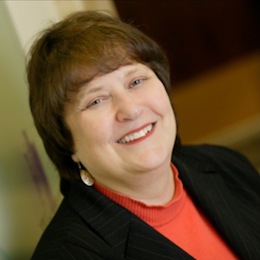
photo - Dr. Carol Herbert
Dr. Carol Herbert (photo from schulich.uwo.ca)

Herbert was appointed a Member of the Order of Canada for her contributions to the fields of clinical and academic medicine, as a family physician, medical educator, researcher and administrator. She and three colleagues were appointed.

“The appointment of Drs. B. Lynn Beattie, Joseph Connors, Carol Herbert and Roger Wong to the Order of Canada is a demonstration of their incredible commitment to the health and well-being of all Canadians,” said Dr. Dermot Kelleher, dean of the University of British Columbia’s faculty of medicine and vice-president, health, at UBC, said in a press release. “We are very proud of each of their contributions, and deeply moved by their passion for improving the lives of patients and families here in B.C., and across the nation.”

Herbert, an adjunct professor in the School of Population and Public Health, “is internationally known for her leadership in primary care research, and for her work in clinical health promotion, patient-physician decision-making, and participatory action research with Indigenous communities, focused on diabetes and on environmental effects on human health,” notes the UBC release. “She was formerly head of the department of family practice, founding head of the division of behavioural medicine and a founder of the UBC Institute of Health Promotion Research.”

This only touches on Herbert’s extensive experience. She also was dean of medicine and dentistry at Western University in London, Ont., from 1999 to 2010, was a practising family physician from 1970 to 2013, and has been involved in medical education since 1971.

Yosef Wosk, PhD, was appointed Officer of the Order of Canada for his far-reaching contributions to his community as a scholar, educator and writer, and for his generous philanthropy. BC Booklook (bcbooklook.com/2020/11/27/41941) cites the governor general: “Yosef Wosk is a Renaissance man of the 21st century. A rabbi, scholar, businessman and art collector, he is a revered educator and community activist who inspired many to become engaged in global issues and local challenges. Former director of interdisciplinary programs in continuing studies at Simon Fraser University, he founded the Philosophers’ Café and the Canadian Academy of Independent Scholars. A poet, explorer and dedicated philanthropist involved with museums, the arts, social services, publishing, nature and heritage conservation, he has endowed hundreds of libraries worldwide.”

Wosk has established more than 400 libraries, including 20 libraries in remote Himalayan villages and 37 in Jewish communities throughout the world. (See jewishindependent.ca/many-milestones-for-wosk-in-2019.) He has supported a range of local building preservation, public garden and other civic enhancement projects. He has helped fund the production of more than 250 books and videos, and has written numerous works, most recently Memories of Jewish Poland: The 1932 Photographs of Nachum Tim Gidal and the forthcoming GIDAL: The Letters of Tim Gidal and Yosef Wosk (Douglas & McIntyre, 2021). He supports several literature, writing, poetry, art and design initiatives, and is founding benefactor of the Dance Centre.

In addition to other honours, Wosk has received the Queen’s Golden and Diamond Jubilee Medals and a Mayor’s Arts Award, as well as the Order of British Columbia.

***

As part of its belief in and commitment to supporting emerging architecture practitioners, the Arthur Erickson Foundation and the Yosef Wosk Family Foundation recently announced a $110,000 donation to Indspire – Canada’s national, award-winning Indigenous registered charity – in support of Indigenous youth in Canada. The donation will fund an awards program focused on increasing Indigenous student success by growing the number of Indigenous architects and landscape architects in Canada.

Central to Arthur Erickson’s work as an architect and theorist was his belief in and commitment to education and research. Having served on the faculties of architecture at the University of Oregon and the University of British Columbia, Erickson understood the need of each generation to contribute to the training of the next. One of the ways the foundation honours Erickson’s belief is by working with donors to develop prizes and scholarships intended to reward and assist students studying architecture and landscape architecture.

“The Arthur Erickson Foundation and Yosef Wosk Family Foundation, along with Indspire, are pleased to announce the establishment of an awards program supporting Indigenous education in architecture and landscape architecture,” said Michael Prokopow, vice-president (East) Arthur Erickson Foundation. “The organizations recognize the profound importance of the shared work of decolonization and reconciliation in Canada for the transformation of society. These awards recognize the deep power of Indigenous thinking and wisdom around the making of habitation and space for well-being across generations and the vitally important stewardship of the natural world.”

Mike DeGagné, president and chief executive officer of Indspire, stated, “This new investment is a significant step in supporting First Nations, Inuit and Métis architecture and landscape architecture students to achieve their potential through education and training. They can in turn enrich their communities and create positive change in Canada. We are grateful for the support of the Arthur Erickson Foundation and the Yosef Wosk Family Foundation for investing in Indigenous achievement and education.”

***

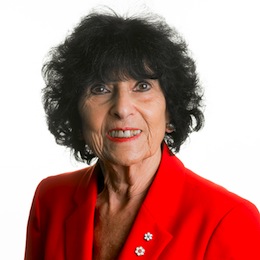
photo - Dr. Gloria Gutman
Dr. Gloria Gutman (photo from sfu.ca)

Simon Fraser University Gerontology Research Centre (GRC) founder Dr. Gloria Gutman and her team – Avantika Vashisht, Taranjot Kaur, Mojgan Karbakhsh, Ryan Churchill and Amir Moztarzadeh – received the Best Paper Award at the International Conference on Gerontechnology, held Nov. 25-27. SFUGero tweeted the news Dec. 1, noting that the paper was a “[f]easibility study of a digital screen-based calming device for managing BPSD [behavioural and psychological symptoms of dementia] during bathing in a long-term care setting.”

A brief biography for Gutman, PhD, appears on the conference website. She is president of the North American chapter of the International Society for Gerontechnology, vice-president of the International Longevity Centre-Canada, past-president of the Canadian Association on Gerontology and the International Association of Gerontology and Geriatrics. She is co-editor (with Andrew Sixsmith) of Technologies for Active Aging (Springer, 2013) and has published widely on seniors housing, long-term care, health promotion, prevention of elder abuse, and seniors and disasters. She is on the advisory of MindfulGarden Digital Health and is the principal investigator on the first feasibility clinical studies for MindfulGarden, which is a digital treatment of hyperactive dementia in long-term care setting. She established the GRC and department of gerontology at SFU and is recipient of many awards and honours, including the Order of Canada.

***

The third edition of the Western Canada Jewish Book Awards, presented by the Cherie Smith JCC Jewish Book Festival in Vancouver, took place Dec. 6. Daniella Givon, chair of the awards committee, opened the evening on Zoom and the five honours were awarded by five different presenters.

Winning the Nancy Richler Memorial Prize for Fiction was Rhea Tregebov for Rue des Rosiers, in which a young Canadian woman’s search for her own identity brings her to Paris in 1982, and face-to-face with the terror of an age-old enemy. Tregebov (Vancouver) is the author of fiction, poetry and children’s picture books. She is associate professor emerita in the University of British Columbia creative writing program.

The Pinsky Givon Family Prize for nonfiction went to Naomi K. Lewis for Tiny Lights for Travellers. When her marriage suddenly ends, and a diary documenting her beloved Opa’s escape from Nazi-occupied Netherlands in the summer of 1942 is discovered, Lewis decides to retrace his journey to freedom. Lewis (Calgary) is the author of the novel Cricket in a Fist and the short story collection I Know Who You Remind Me Of.

Ellen Schwartz was awarded the Diamond Foundation Prize for children’s and youth literature for The Princess Dolls, a story about friendship between a Jewish girl and a Japanese girl, set against the backdrop of 1942 Vancouver. Schwartz (Burnaby) is the author of 17 children’s books, including Abby’s Birds and Mr. Belinsky’s Bagels.

The Lohn Foundation Prize for poetry was given to Alex Leslie for Vancouver for Beginners. In this collection, the nostalgia of place is dissected through the mapping of a city, where readers are led past surrealist development proposals, post-apocalyptic postcards and childhood landmarks long gone. Leslie (Vancouver) is the author of two short story collections and the winner of the 2015 Dayne Ogilvie Prize for LGBTQ Emerging Writers.

The Kahn Family Foundation Prize for writing about the Holocaust was given to Olga Campbell for A Whisper Across Time, a personal and moving story of her family’s experience of the Holocaust through prose, art and poetry, creating a multi-dimensional snapshot of losses and intergenerational trauma. Campbell is a visual artist whose media include photography, sculpture, mixed media painting and digital photo collage.

The jury for the 2020 Western Canada Jewish Book Awards comprised Shula Banchik, arts and culture manager of the Calgary JCC; Judy Kornfeld, former librarian at Langara College; Els Kushner, author and librarian; Norman Ravvin, writer, critic and Concordia University professor; and Laurie Ricou, professor emeritus of English at UBC.

After short acceptance speeches and readings from the authors, Dana Camil Hewitt, director of the JCC Jewish Book Festival, concluded the evening thanking the sponsors, the judges, the awards committee and the extended virtual audience, and inviting everyone to purchase and enjoy the books.

Format ImagePosted on December 18, 2020December 16, 2020Author Community members/organizationsCategories LocalTags Alex Leslie, Arthur Erickson Foundation, Carol Herbert, Ellen Schwartz, gerontology, Gloria Gutman, Indspire, JCC, Naomi K. Lewis, Olga Campbell, Order of Canada, philanthropy, Rhea Tregebov, science, SFU, tikkun olam, Western Canada Jewish Book Awards, Yosef Wosk
Painting survivors, life

Painting survivors, life

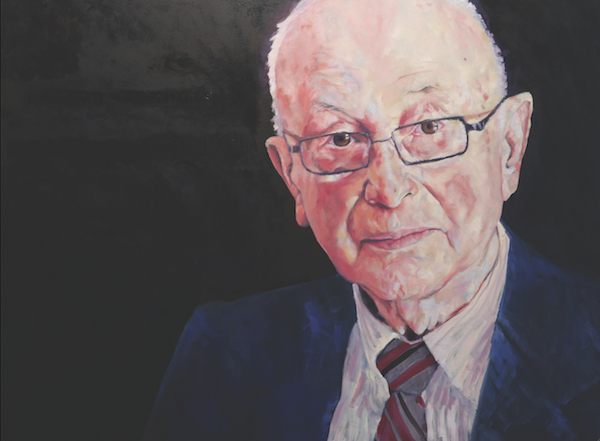
A portrait of Robbie Waisman, by artist Carol Wylie. Part of the exhibit They Didn’t Know We Were Seeds, at the Zack Gallery to Jan. 4.

Even via a wobbly Zoom-led tour, the impact of Saskatoon artist Carol Wylie’s portraits – nine of Holocaust suvivors and nine of residential school survivors – can be felt.

The title of the solo exhibit at the Zack Gallery until Jan. 4 is They Didn’t Know We Were Seeds. It is taken from the proverb: “They buried us … they didn’t know we were seeds.” And the choice of 18 portraits was deliberate.

“It was quite quick and early in the process I decided that 18 had to be the number,” said Wylie at the exhibit’s virtual opening Nov. 19, “because there’s so much darkness in the stories but there’s so much light and life in the survival… [T]here’s three of the Holocaust survivors who are involved with the March of the Living and to actually go back to the camps, to Auschwitz, and to make that walk when you were there; I can’t imagine the courage it takes. And they do it so that others are educated. That’s the rising above it and making something really powerful out of a black, dark experience.

“And I see the same thing with residential school survivors, like Gilbert [Kewistep] and like Eugene [Arcand], who spend so much of their time going around to schools and speaking in public about their experiences to make sure people are educated about that. And, again, reliving what they went through every time they tell it, I’m sure.

“So, the 18 and the connection to chai, to life, came really early in the process. It had to be 18, because that validation of life that these people represent … had to be present.”

The scale of the paintings was also chosen purposefully. “I want these portraits to take up space and to be very present and, for when you’re standing in front of them, to have them fill up your field of vision, so that you can’t wander past, uninterested and unengaged,” said Wylie.

The project started several years ago, she explained. “I saw Nate Leipciger speak at the Holocaust memorial service in Saskatoon and, it’s ridiculous, I’ve been [attending] for lots of years but, for some reason, that year, it hit me for the first time how elderly all these people are getting.”

The firsthand experience that is so powerful is soon to be lost, she said, and “I felt there was something that I had to do to help to preserve that.” And she would do it with the best tool she had, her passion and ability to create portraits.

“What I have learned over the years,” she said, “is that, when you capture the nuances of a person’s face, you really reflect who they are and much of their history and how they’re made up of that history. Even though it’s not like hearing a verbal story, it’s seeing a story in a different form.

“I started this idea to do a series of portraits of Holocaust survivors. And then, as I entered into it, little things started to pop up that were connecting the Jewish survival to the residential school experience. It started with a community seder at our local synagogue, where our rabbi, who is very forward-thinking, always has elements on the tables that recognize other groups … and, that particular year, he had made special mention of making sure that we understand – especially in Saskatchewan, where we have a really dark history of residential schools – the experience of the Indigenous people that we live with.

“And I started thinking, it’s not a parallel experience, but it’s an experience that is shared in terms of pain and suffering and then survival and rising above it…. And, because I live in Saskatchewan, this is part of the history of the land that I call home, that I’m a settler in, that this is a time of truth and reconciliation, it’s a time of trying to address these issues, so, as a personal step towards reconciliation, I can sit down, listen to the stories of some of these residential school survivors and bear witness to them and bring them in to be part of this project, so that they can converse through their portraits, as a group of survivors.”

It was only after making this decision that Wylie discovered that people like Vancouver’s Robbie Waisman – who is among those featured in the exhibit – were already meeting with residential school survivors to share ideas and experiences.

The project took about three-and-a-half years to complete. Waisman is the only Vancouver-based subject. “All the other Holocaust survivors were from Toronto, Edmonton and Saskatoon, and all the residential school survivors are from Saskatchewan,” said Wylie in an email interview with the Independent.

“I had to be really careful,” she noted at the exhibit opening. “There’s a very, very fraught history of non-Indigenous artists and non-Indigenous photographers representing Indigenous peoples and I knew I was stepping into this murky ground. All the way along, I had to keep asking myself questions about my own integrity around this, what are the reasons for why you’re doing this and does every single survivor that you talk to understand fully what this project is about and [are they] fully on board with it. At the end, I thought, if there are people who are criticizing it, that’s fine, but, I feel, after conversations I’ve had with many residential school survivors, that it’s more important that we raise this issue and more important that I make this step towards reconciliation than be fearful of doing something that maybe I shouldn’t be doing or that the art world might perceive that I shouldn’t be doing.”

When the work was completed, Arcand and Kewistep “smudged the work before it went off on its first exhibition. Then they gave me a smudge kit that I could use myself, if I wanted to, in the future. It was extremely meaningful to me; it was almost like they’d given it their stamp of approval, as well as imbuing it with these good graces and these good thoughts and this positive energy before the work went anywhere and anyone had a chance to see it.”

The exhibit has been shown in various places and will travel elsewhere after its time at the Zack.

Wylie’s general process in doing portraits is to speak with her subjects first.

“I think that, in order for the mask that we all wear in the world to protect ourselves, in order for that to drop, there needs to be time spent talking,” she said. “There’s this very strange artificial intimacy that happens when you’re sitting two feet – before COVID times – away from somebody that you’re drawing, and you’re talking and you’re looking intently at them…. So, I always wait until that couple of hours of conversation and visiting is over and then I pull out my camera.

“I need to work from photographs because I like to get a strong resemblance and I can’t have people coming back endlessly to sit for me…. But that’s when I take them, is after that time has been spent, that conversation has happened, and their mask has come down and they are open.”

The openness that is seen in the subject’s faces, stressed Wylie, “is not something that I put there, it’s something that they had. Seriously, I paint what I see… And that captures what they have, what they are, because it’s all within there, it’s all in their face.”

Given the caveat that there is something intangible about what makes a good portrait, Wylie said in an email, “I believe a portrait should bear resemblance to the subject. But, in addition, it should feel like the portrait is inhabited; like it contains the spirit of an individual. You often hear people comment about the eyes in a portrait following them. I think that’s the sensation of some element of the person, and not just their resemblance, being present. I also like to see evidence of the artist in the work in the form of brushstroke, colour choices, etc. This trace of the artist distinguishes a painted portrait from a photo.”

She described her need to create portraits as “a compulsion I’ve had since I was a child. Even then,” she said, “I drew people, made my own paper dolls. In my grad school investigations I discovered, I believe, that it’s because of a fascination I have with the mystery of consciousness, and the fact that we can never share another’s consciousness. We learn about ourselves through our interactions with others and these connections enrich our being.

“The face is a major part of how we communicate and is strongly connected to our identity,” she said. “Yet, we cannot see ourselves the way others see us, so there’s this mystery around faces. What do they hide? What do they reveal? How do you feel as ‘you’ wearing your face? How do I communicate as ‘me’ wearing my face? I am just never tired of painting a portrait, but am always excited when I begin a new one.”

The exhibit opening was hosted by gallery director Hope Forstenzer, who credited her predecessor, Linda Lando, for bringing this show in. The exhibit is open by appointment and via onlyatthej.com. A commemorative book, being prepared with Wylie’s help, is in the works, as well, said Forstenzer.

On Dec. 9, 6-8 p.m., the gallery is having a Zoom event with Waisman and Wylie, as well as Lise Kirchner from the Vancouver Holocaust Education Centre and Shelley Joseph from Reconciliation Canada. Readers interested in attending should email Forstenzer at [email protected].

Format ImagePosted on December 4, 2020December 2, 2020Author Cynthia RamsayCategories Visual ArtsTags art, Carol Wylie, Holocaust, Hope Forstenzer, JCC, portraiture, residential schools, Robbie Waisman, survivors, Zack Gallery
Gotta Sing! Gotta Dance! deadline April 1

Gotta Sing! Gotta Dance! deadline April 1

(photo from Gotta Sing! Gotta Dance!)

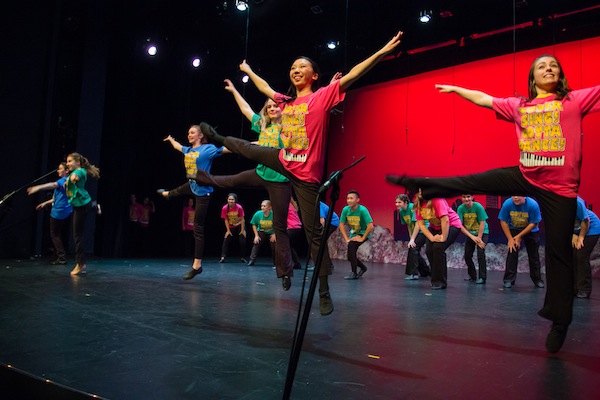
The deadline to apply for Gotta Sing! Gotta Dance! at the Jewish Community Centre of Greater Vancouver July 7-30 and Aug. 4-27 is April 1. With participants ages 9 to 19 from various parts of Canada and elsewhere in the world, director and creator of the program Perry Ehrlich will be joined this year by faculty including musical directors Wendy Bross Stuart and Diane Speirs; director Chris McGregor; choreographers Jason Franco, Keri Minty and Meghan Anderssen; acting coach Amanda Testini; and Mariana Munoz, set construction and costume co-ordination. The final production of each session will be Wild Wild West Side Story, featuring an original script and a repertoire from Broadway and movie musicals. Also being offered is the finishing school, for serious musical theatre students attending Gotta Sing! Gotta Dance!, and a boot camp dance program. Scholarships are available.

Format ImagePosted on March 13, 2020March 12, 2020Author Gotta Sing! Gotta Dance!Categories Performing ArtsTags education, JCC, Jewish Community Centre, musical theatre, Perry Ehrlich, youth
Artistic visions on belonging

Artistic visions on belonging

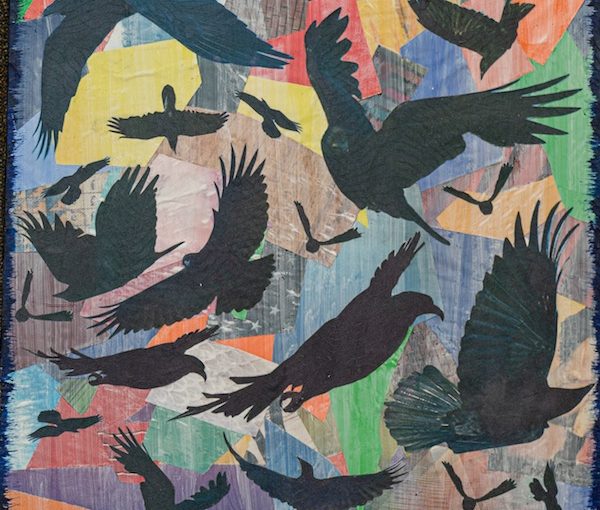
“We are Family” by Cat L’Hirondelle is now on exhibit at the Zack Gallery, as part of he group show Community Longing and Belonging, which runs to March 29.

The new group show at the Zack Gallery, Community Longing and Belonging, is the second annual exhibit in celebration of Jewish Disability Awareness, Acceptance and Inclusion Month. Organized by Jewish Community Centre of Greater Vancouver’s inclusion services and its coordinator, Leamore Cohen, the show is a silent auction. Half of the proceeds will go to the artists, and the other half will be divided between inclusion services and the gallery.

The show consists of 50 paintings by different artists. The size and shape of all the paintings are the same – small rectangles – but the contents and media used are vastly different, indicative of the artists’ various styles and training levels. Some are highly professional. Some are figurative; others abstract. But all reflect their creators’ need to belong, to be part of a community. Each painting tells a story.

One of the prevalent themes of the show is flight. Wings appear on several paintings, emphasizing the yearning for the freedom flight entails, but also for the brotherhood of other fliers. The white ornamental wings on Mikaela Zitron’s multimedia piece are bigger than the background board. They take the artist into the sky, into a joyful aerial dance, while Jamie Drie’s feathers, drifting in a sad emptiness, invoke the feeling of disconnection.

The murder of crows in Cat L’Hirondelle’s painting relates yet a different story. “I am a feminist,” said L’Hirondelle. “I was thinking about the importance of being part of a community of like-minded women. My group of longtime women friends is my family, my tribe and, like the crows, I know that they will always be there for me. Since I became disabled, I have felt more and more disassociated with the able-bodied-centric society in general. Just look at the history of people with disabilities in different societies – genocide, forced sterilizations, segregation, isolation, etc. I would love to feel that people with disabilities belong in the world. My piece is trying to impart that sense of longing to be included in general community and how crow communities seem to include everyone: the old, the disabled, the young. I have lived in the crow flight path for many years and have been watching crows’ behaviour; sometimes, I wished people were more like crows.”

image - “Leaving for Awhile” by Daniel Malenica
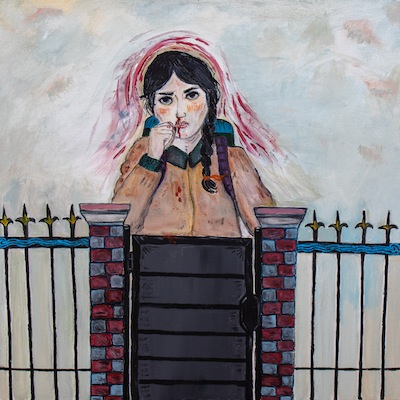
“Leaving for Awhile” by Daniel Malenica

The second recurring motif in the show is loneliness, the sense of separation. Daniel Malenica’s image is distinctive among such pictures. The woman in the painting stands behind closed garden gates. She gazes at us from the painting, and the naked longing in her eyes is painful to behold. She desperately wants to open that gate and step through, to join us, but she lacks the courage. What if the people inside reject her? So, she just lingers outside, desolate and alone, waiting for an invitation.

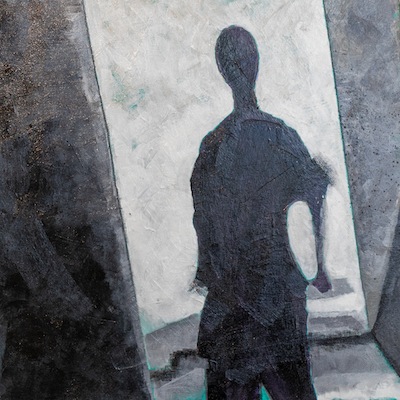
Another outstanding piece on the same theme is Estelle Liebenberg’s black and white painting “Solitude Standing.” She told the Independent, “I work primarily as a potter and a metalsmith, but I accepted the challenge to paint something for the exhibition because I’ve had wonderful times working as a substitute art instructor at the JCC. I chose the monochromatic colour palette because, at the moment, I am quite fascinated by shadows, specifically how they change the shape of objects but still remain recognizable.”

image - Estelle Liebenberg’s “Solitude Standing”
Estelle Liebenberg’s “Solitude Standing.”

Her focus for the piece was the idea of a community in general. “I’ve spent my life dealing with different communities and, I guess, for me, the lines have softened over time,” she said. “We spend so much time in our lives working on belonging, or longing to belong somewhere, to someone or something. It’s an integral part of the beauty, the joy, the frustration and the heartbreak of life. For me, this was longing and belonging as an immigrant, as an introvert, as a mother of grown children, as a single person living in a city.”

She explained the title of her painting: “It is a hat tip to a song by Suzanne Vega. For me, her words truly encapsulate the feeling of longing to belong somewhere: ‘Solitude stands in the doorway / And I’m struck once again by her black silhouette / By her long cool stare and her silence / I suddenly remember each time we’ve met.’”

Different artists explore different aspects of community and belonging, and not all the communities are small or local. For Marcie Levitt-Cooper, the community in her painting is the universe, the earth and stars encompassed by love. Esther Tennenhouse, on the other hand, contemplates the darker side of belonging.

“My piece is a photocopy from a pre-World War Two Jewish encyclopedia, Allgemeine Ensiklopedya,” Tennenhouse explained. “It was labeled in Yiddish and issued in New York in 1940, the year Germany occupied France. On first seeing this old map, I found it very poignant. The map had to fit the 16-by-16 canvas given to all participants. The format left space, and I filled it with the music of two nigguns and lyrics of six Yiddish songs.”

That colourful map with Hebrew lettering, published just before the Nazis unleashed the full horrors of the Holocaust on European Jews, made for a tragic, frightening image, despite its bright and cheery appearance.

While the exhibit includes other figurative paintings, the majority of the pictures are abstract, either simple swirls of paint or complex geometric patterns, like Daniel Wajsman’s piece – two irregular overlapping rectangles.

“I wanted to emphasize that we should bring everyone in, not leave anyone out,” he said.

Community Longing and Belonging runs to March 29.

Olga Livshin is a Vancouver freelance writer. She can be reached at [email protected].

Format ImagePosted on March 6, 2020March 4, 2020Author Olga LivshinCategories Visual ArtsTags art, Cat L’Hirondelle, Daniel Wajsman, disability awareness, Estelle Liebenberg, Esther Tennenhouse, inclusion, JCC, Jewish Community Centre, Leamore Cohen, painting

Posts pagination

Previous page Page 1 … Page 3 Page 4 Page 5 … Page 9 Next page
Proudly powered by WordPress