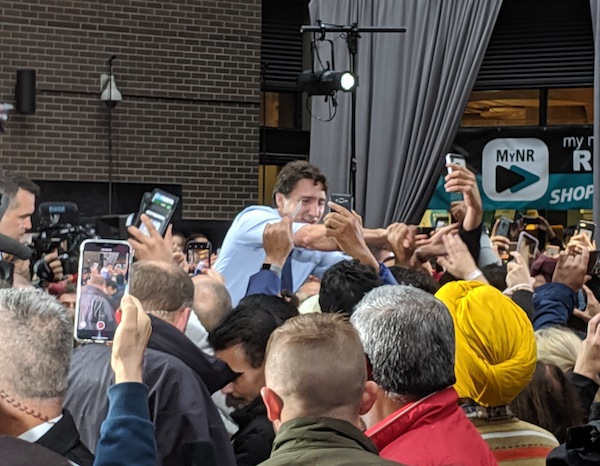
כיוון שהמפלגה של ג’סטין טרודו זכתה במרבית המושבים ברפלמנט, הוא זה שיקבל ראשון את המנדט להרכיב שוב את הממשלה החדשה. (רוני רחמני)
האם הוא עשוי בטפלון? שאלו הפרשנים באולפני החדשות לאור ניצחונו של ג’סטין טרודו – ראש הממשלה היוצא מטעם המפלגה הלברלית, בבחירות הכלליות בקנדה, שנערכו ביום שני בשבוע שעבר. זאת לאור מספר פרשות בהן נקשר שמו בשנה האחרונה. בהן: טרודו הואשם בכך שניסה להסדיר תביעה נגד חברת תשתיות הגדולה ממחוז קוויבק אס.אן.סי לוולין. להגנתו אמר ראש הממשלה כי ניסה בסך הכל למנוע פיטורי אלפי עובדים של החברה באם היא תעקור לחו”ל. כן פורסמה תמונה בה נראה טרודו מחופש לשחור עת היה מורה בבית ספר. טרודו התנצל על כך מספר פעמים. לכן העלו מספר פרשנים את הסברה שהוא יובס בבחירות הארבעים ושלושה במספר. אך לא כך אצל טרודו. אמנם המפלגה הליברלית הפסידה את הרוב בפרלמנט בבחירות, והיא ירדה ממאה שבעים ושבעה מושבים למאה חמישים ושבעה, מתוך שלוש מאות שלושים ושמונה מושבים. אך כיוון שהמפלגה של טרודו זכתה במרבית המושבים ברפלמנט, הוא זה שיקבל ראשון את המנדט להרכיב שוב את הממשלה החדשה. מדובר הפעם בממשלת מיעוט כי דרושים מאה ושבעים מושבים לממשלה הנשענת על רוב. אם יצליח טרודו לצרף לממשלתו את המפלגה הדמוקרטית החדשה מהשמאל, שנפגעה קשות בבחירות וירדה משלושים ותשעה מושבים לעשרים וארבעה, הוא יבטיח לעצמו ממשלה יציבה הנשענת על רוב ברור בן מאה ושמונים ואחד מושבים.
מפלגת השמרנים בראשות אנדרו שיר, ניהלה קמפיין מלוכלך ואישי נגד טרודו בארבעים ימי מערכת הבחירות. שיר לא התבייש להמציא סיפורים על טרודו ולטעון דברים כנגדו שלא היו ולא נבראו. ומה לא יעשו השמרנים כדי לנצח. שיר אף הגדיל לעשות וטען באחת מעצרות הבחירות האחרונות כי אם הוא ינצח בבחירות, יפעל לקיים חקירה נגד טרודו בפרשת אס.אן. סי לוולין. ציבור מאזיניו הנאמן צעק לעבר שיר:”נעל אותו”, “נעל אותו”, “נעל אותו”. זאת בדיוק כפי שצעקו תומכי המועמד לנשיאות בארה”ב דונלד טראמפ, כאשר הציע לבצע חקירה נגד הילרי קלינטון בפרשת האימיילים שנעלמו. הדימיון לא מפתיע אפוא כאשר מדובר בשמרנים. המפלגה של שיר הגדילה אמנם את כוחה משמעותית בפרלמנט לעומת הבחירות הקודמות, מתשעים וחמישה מושבים למאה עשרים ואחד מושבים, אך נכשלה נמרצות בכוונתה להרכיב את הממשלה הבאה.
המנצחת הגדולה בבחירות האחרונות היא המפלגת הבדלנים ממחוז קוויבק שהגדילה את כוחה משמעותית לעומת הבחירות הקודמות. מעשרה מושבים לשלושים ושניים מושבים. המפלגה הבדלנית הודיעה כי הורידה מסדר היום שלה את הרצון להגשים את החלום ההיסטורי ולהיפרד מקנדה. כל שהמפלגה מבקשת עתה זה הוא לדאוג לאינטרסים של המקומיים בקוויבק. ובין היתר למנוע את בניית צינור נפט במחוז להעברת נפט ממחוז אלבטרה.
לאור תוצאות הבחירות להערכת מספר פרשנים: קנדה כיום מפוצלת הרבה יותר מבעבר. לדעת חלק מהם זה מה שקורה בהרבה מדינות במערב כיום, אך בקנדה הפיצול נחשב עדיין למתון יותר. במחוז קוויבק שולטת המפלגה הבדלנית, במרכז המדינה שולטת המפלגה הליברלית ובמערב קנדה (במחוזות סיסקצ’ואן ואלבטרה) מפלגת השמרנים. הפרשנים חושבים שטרודו יהיה חייב לגלות מנהיגות אמיתית כדי לאחד את כל הכוחות תחתיו. יש המאמינים שהוא המנהיג הנכון במקום הנכון והוא יצליח לעשות זאת. מכל מקום בנאום הניצחון שלו אמר טרודו כי הוא ראש הממשלה של כל קנדה, והוא יפעל לטובת כל האזרחים בין אם בחרו בו או לא. וטוב שכך.
Vancouver Peace Poppies co-founder Teresa Gagné at the White Poppy Memorial in 2018. (photo by Diane Donaldson)
A local group is hoping to broaden the scope of Remembrance Day as more than an occasion to honour the brave men and women who have died while serving for their country. Through the distribution of white poppies, the Vancouver Peace Poppies (VPP) movement strives to extend the focus on Nov. 11 to all those who have suffered as a result of military conflicts.
Teresa Gagné, who co-founded VPP with Denis Laplante in 2008, stresses that the group intends no disrespect towards soldiers. Instead, they wish to bring more awareness to the toll warfare has on the whole population, whether it be the loss of life or other trauma experienced. Beyond representing the victims of war, civilian and military, the white poppy, according to VPP, also challenges the beliefs, values and institutions that create the view that war is unavoidable.
“I have always had respect and sympathy for veterans, who put their life, health and family on the line to serve,” Gagné said. “I believe they deserve recognition and support, but, for years, I was uncomfortable wearing a red poppy, because of the undercurrent of promotion and recruitment for present and future wars that I detect in many public events around the topic of supporting veterans. The white poppy attracts questions, and gives me a chance to explain the nuances of my support.”
A 2016 study by Alexandre Marc, a specialist in conflict and violence for the World Bank, brought to light the overwhelmingly disproportionate number of casualties among non-combatants as opposed to combatants in recent decades. According to some reports, civilians constitute 90% of wartime fatalities, a ratio that has existed since the mid-1950s.
What’s more, Marc’s research points out that global poverty is increasingly concentrated in countries affected by violence and that prolonged conflict keeps countries poor.
Gagné and Laplante have been active in the peace movement since their teens. Their 2008 launch of VPP began by distributing handmade white poppies as a way to promote discussion and a broader focus for Remembrance Day. The following year, while still a “kitchen table” operation, they imported 500 cloth poppies from Britain. VPP now sends out more than 5,000 poppies across Canada annually.
Since 2016, VPP has partnered with the B.C. Humanist Association to host Let Peace Be Their Memorial, an annual Remembrance Day wreath-laying ceremony that includes peace songs, short presentations and poetry. This year, the Multifaith Action Society is also a co-host. The event poster highlights, “The time and location of the ceremony has been chosen to avoid any appearance of competition with, or disrespect for, veteran-focused events.”
Holocaust remembrance
As in previous years, this year’s ceremony at Seaforth Peace Park on Nov. 11, 2:30 p.m., will include a special wreath laid in memory of Holocaust victims.
Two members of the Vancouver Jewish community, Marcy Cohen and Gyda Chud, are engaged in the local movement. In 2017, Cohen attended her first Let Peace Be Their Memorial and then sought to get others in the community involved.
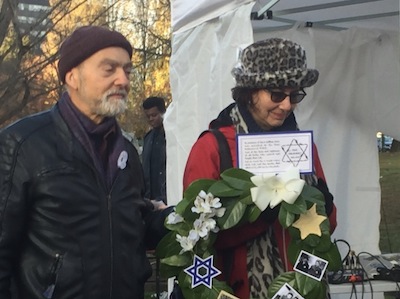
Henry Grayman and Deborah Ross-Grayman with the Holocaust wreath at the memorial last year. (photo by Diane Donaldson)
“I was far more affected emotionally than I anticipated,” said Cohen of the occasion.
After learning of the history, values and focus of VPP, Chud recently joined the committee, and seeks to profile their work in the larger Jewish community. She represented Pacific Immigrant Resource Society (PIRS), a local refugee service group, in laying the refugee wreath in 2017 and 2018.
“The memorial serves as a powerful and compelling call to action for everything we can and must do to create a more peaceful world,” said Chud.
Last year’s Holocaust wreath was laid by Henry Grayman and Deborah Ross-Grayman, both children of Holocaust survivors. Having each experienced the intergenerational effects of trauma, the couple, both therapists, are facilitators for the Second Generation Group, an organization in Vancouver comprised of children of Holocaust survivors sharing their experiences among peers.
The people laying the Holocaust wreath at this year’s Let Peace Be Their Memorial have yet to be announced.
Poppies’ history
The red poppy widely worn today first appeared in 1921 on what was then called Armistice Day. In 1926, the No More War Movement, a British pacifist organization, came up with the idea for the white poppy and, in 1933, the Co-Operative Women’s Guild in the United Kingdom sold the first white poppies as a means of remembering that women had lost husbands, sons and fathers during wartime.
The wreaths that Vancouver Peace Poppies and other groups make, a mix of white and red poppies, highlight the amount of civilian suffering. VPP also distributes white poppies in schools in an effort to teach students that wars mostly kill non-military people, pollute the environment and send the message that violence as a means to settle disputes, even for adults, is acceptable.
VPP hands out its poppies by donation to increase awareness of its cause and not as a fundraiser. Poppies cost $1.25 each, of which 95 cents goes to the Peace Pledge Union, a pacifist organization based in London, England, which, since 1934, has advocated for nonviolent solutions to global problems. A $1 or $2 donation allows VPP to provide subsidized poppies for classroom use and free poppies to disadvantaged groups.
For poppies and more information, visit peacepoppies.ca or call 604-437-4453.
Sam Margolishas written for the Globe and Mail, the National Post, UPI and MSNBC.
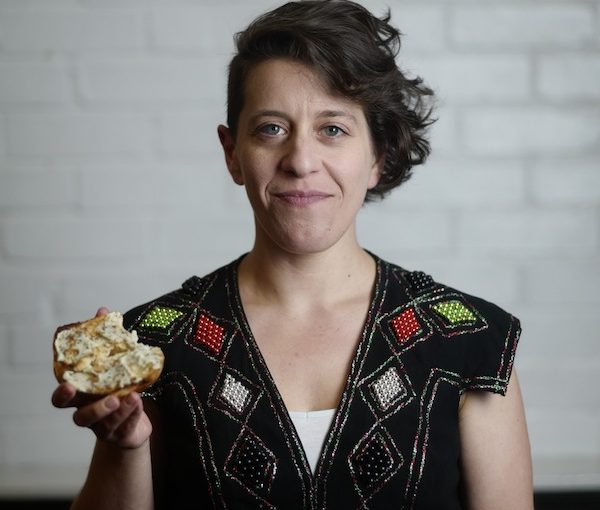
Tamara Micner performs her one-woman play Holocaust Brunch this weekend at Chutzpah! (photo by Sophie le Roux)
“In recent years,” playwright Tamara Micner told the Independent, “I feel there’s been increasing discussion about inherited trauma in indigenous communities and in other minority communities, such as Japanese- and Chinese-Canadian communities. For me, it’s been valuable to remember that, sadly, we as Jews are not alone in inheriting collective trauma. In fact, I also know white, Christian Canadians who have it, too. The tsures we carry is unique in some ways, but we’re definitely in good company.”
Micner, who now lives in London, England, will be returning home to Vancouver for a couple of weeks to perform her new one-woman show, Holocaust Brunch, at the Chutzpah! Festival. It is one of two theatre works that will see their Canadian première at this year’s festival; the other is The Diary of Anne Frank LatinX, directed by Stan Zimmerman, who is based in Los Angeles.
While The Diary of Anne Frank was mounted by Fighting Chance Productions last year (jewishindependent.ca/glimpse-of-life-in-the-annex), Zimmerman’s production features only Latinx actors. This is what makes this version of the play – written by Frances Goodrich and Albert Hackett Based and adapted by Wendy Kesselman – unique.
“I chose to use Latinx actors for the characters in the attic,” Zimmerman told the Independent, “after seeing a CNN report about a Jewish woman in L.A. who arranged to hide a Latina mom and her daughters after her husband was suddenly deported by ICE [U.S. Immigration and Customs Enforcement].
“Contrary to initial media reports – that went worldwide – we are not replacing the Nazis with ICE agents [in the play]. We are performing a word-for-word production of the script that Natalie Portman starred in on Broadway in 1997. I’m not saying the situation is exactly the same as the Second World War, but there are parallels – parallels that we can hopefully learn from. Only then can we live by Elie Wiesel’s famous phrase, ‘Never again.’”
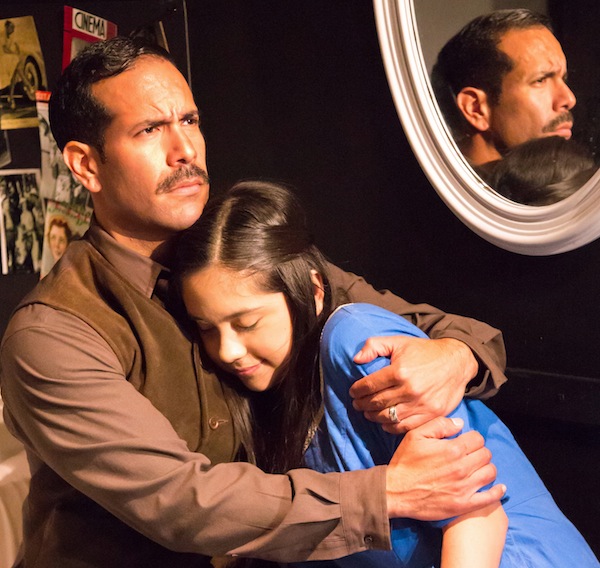
Emiliano Torres and Genesis Ochoa in The Diary of Anne Frank LatinX, which will be at Chutzpah! Nov. 6-9. (photo by Elvira Barjau)
Some Jewish community members were concerned about Zimmerman’s casting choice.
“Initially,” he said, “I had a few Jewish friends question my decision to cast Latinx actors in the play. For them, it was more about not wanting to tarnish the legacy of Anne Frank. But, when they saw that we were honouring her memory, they understood the power of this production. I took to heart the insightful words of a young Anne Frank from her diary – ‘Our lives are all different, and yet the same.’”
The concept of “different yet the same” is one of the reasons that Micner was interested in telling the stories of Bluma and Isaac Tischler, who have both passed away. Born in Poland, they “met in medical school in Tajikistan during the war, and went on to become renowned Vancouver doctors.”
“I have known the Tischler family since 1987, when their daughter Yael and I did What Do I Do When I’m Two? together at the JCC,” said Micner, referring to a program at the Jewish Community Centre of Greater Vancouver. “Our parents and grandparents have also known each other for many years.”
That said, Micner explored some of her gaps in understanding, through creating Holocaust Brunch.
“Growing up,” she said, “I felt there was a disconnect between ‘the Holocaust story’ I was taught, which focused on Western Europe and camps, and my own family’s story, which was about living in Eastern Europe (Poland) and surviving the war in the Soviet Union. The Tischlers’ story has those parallels as well, and it feels important to me to talk about a kind of Holocaust story that I haven’t seen told in wider culture, and that some non-Jews I know have never even heard.”
Micner is no stranger to writing plays based on people she knows.
“I have created shows in the past that are inspired by my own family,” she said. “Holocaust Brunch is partly about another family’s story, and started with the Tischlers offering me part of their family’s story to tell in a piece of theatre. I take that offer very seriously as an act of trust and a responsibility, as the creator and performer of the piece. We’ve had several conversations along the way about the central questions and themes of the piece as it has taken shape, and they have seen the show as it has evolved.”
One of the central aspects of the work is looking at trauma from a third-generation perspective.
“I am indeed part of the ‘third generation,’ and Holocaust Brunch explores what it’s like living as a descendant of Holocaust survivors, two generations removed from that history and trauma,” said Micner. “It’s certainly based on some of my experiences and, inevitably, incorporates aspects of other people’s experiences based on conversations I’ve been part of, books and articles I’ve read, and so on. There are many of us who are thinking and talking about these issues.”
In contrast, Zimmerman witnessed a lack of discussion and knowledge about the Holocaust and, specifically, The Diary of Anne Frank.
“I was quite shocked,” he said, “when the 15-year-old actor playing Anne told us that she did not know who Anne Frank was before auditioning for our production. As a Jew, I grew mad to learn that Anne’s diary is no longer required reading in the California school system. I decided then that it was vital to get as many student groups as possible to see this play, with this cast.”
And it hasn’t been only the cast and audiences who have learned something from the play.
“Although I was a good student at my temple’s Sunday school,” said Zimmerman, “being involved in this play opened my eyes to so many stories about the Holocaust that I never knew before. These important lessons were gained by visits to several museums and meeting many survivors and hearing their stories firsthand.”
He added, “As many of our survivors pass, it is important for us as artists to find creative ways to keep Anne’s story alive.”
One of the ways in which Micner creatively tells her story is with humour. Describing Holocaust Brunch as a “dark comedy,” Micner explained, “I think there’s a history of Ashkenazi Jews using comedy to look at hard things – the oppression we’ve suffered, displacement, antisemitism, poverty and so on. Holocaust Brunch is certainly engaging with that tradition,” she said. “I think there’s also a history of Ashkenazi humour being self-deprecating – as in, making fun of ourselves – and, one of the things I’ve been interested in, is looking at where that comes from and what it would mean for us not to be the butt of our own jokes. Holocaust Brunch is using comedy to look at communal trauma, and how we might be able to heal from that. The show also uses humour to explore stereotypes and assumptions that some non-Jews have about Jews. I think laughter helps us open up and look at hard places.”
For his part, Zimmerman would like audiences who come to see The Diary of Anne Frank LatinX “to feel like they literally stepped into the shoes of these characters – just like the actors have. Then we can all have this highly emotional and very visceral experience that can only be achieved communally with live theatre.”
Holocaust Brunch runs this weekend in the JCCGV’s Wosk Auditorium, Oct. 27, 1 p.m., and Oct. 28, 7 p.m. The Diary of Anne Frank LatinX, co-presented with Howard Blank of Point Blank Productions, is at the Rothstein Theatre Nov. 6, 8 p.m.; Nov. 7, 8 p.m.; Nov. 8, 1 p.m. and 8 p.m.; and Nov. 9, 2 p.m. For tickets to these and other Chutzpah! shows, visit chutzpahfestival.com.
On Monday, Canada and Israel each embarked on a new adventure in governance. Here at home, Justin Trudeau’s Liberal party had a surprisingly robust showing in the federal election, winning the irrefutable right to form a minority government, or to form a coalition of some description.
The Liberals’ relatively strong showing – 157 seats to Andrew Scheer’s 121; just 13 short of a majority – opens the door for a government with Jagmeet Singh’s New Democrats holding a balance of power. Just a few days before the election, polls suggested a race so tight, and with the Bloc Quebecois and NDP taking so many seats, that any configuration to reach the magic 170 number would have required not two parties, but three. That complicated scenario was averted, leaving the Liberals free to face the House with either a formal agreement with the NDP or a tacit knowledge that the now-fourth party is in no financial position to return hastily to the election battlefield.
In Israel Monday, President Reuven Rivlin called on Blue and White leader Benny Gantz to attempt to form a government after incumbent Binyamin Netanyahu failed to do so after the second inconclusive election this year. Gantz has said he hopes to form a “liberal unity government,” but that is as challenging as Netanyahu’s failed effort to coalesce a majority. He may be hoping that, if Netanyahu is indicted in the coming days, Likud under a new leader might be a viable partner – or perhaps some MKs unfettered from Netanyahu’s long years of leadership will break away and form a faction to join Gantz. Another plan has Gantz propping up Netanyahu unless and until Netanyahu is charged, at which point Gantz would stand up as prime minister, which seems a strange compromise with a tarnished leader. As usual in Israeli politics, there are a vast number of moving parts.
Multiple moving parts is less typical of Canadian politics, where our tendency toward majority governments typically sequesters any moving parts in the all-powerful Prime Minister’s Office. Not so during a minority Parliament, when individual MPs on all sides are able to wield power in ways they can only dream of in a majority scenario.
In what must be a jagged pill for the once and future prime minister, Jody Wilson-Raybould, whose testimony about Trudeau’s treatment of her was the single most detrimental arrow in Trudeau’s reelection armour, was herself reelected as an independent in Vancouver Granville. A large number of Jewish British Columbians, now, are represented in Parliament by an individual who belongs to no party. This will be fascinating to watch in many respects, not least how she pursues politics from the opposition benches as the SNC-Lavalin affair continues to percolate.
Other sidebars in the result include the scuttled effort by a leading anti-Israel figure to re-enter Parliament. Svend Robinson, who, during 25 years in Parliament, was one of Canada’s most vociferous voices against Israel, threw his hat back in the ring but came up short in Burnaby North-Seymour – being narrowly defeated by the incumbent Liberal despite this being ground zero in the battle over the Liberals’ Trans Mountain pipeline expansion.
More notably, Maxime Bernier, leader of the nascent People’s Party, lost his own seat in Quebec. His party made effectively no impact anywhere, sending the hopeful sign that messages of populist xenophobia that seem to be resonating elsewhere in the world still fall largely on deaf ears, at least electorally, here.
Canada will almost certainly have an easier time forming a government than Israel will but, in both cases, the drama plays out against the backdrop of healthy, vibrant, disputatious democratic systems. No matter what the outcomes, we should be thankful for that.
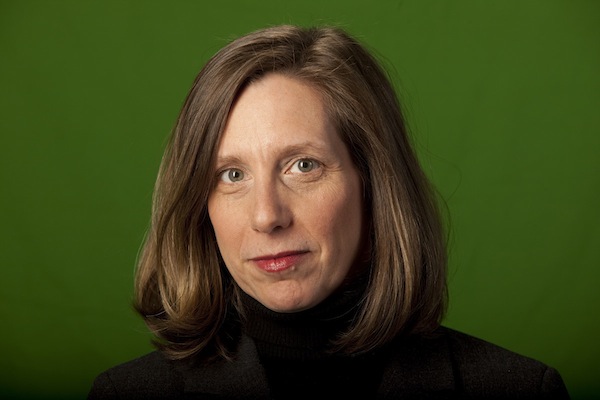
Marsha Lederman (photo by John Lehmann/Globe and Mail)
A few years ago, Marsha Lederman went with her mother, two sisters and a cousin on the adult portion of the March of the Living, which included a walk between the two main camps of the Auschwitz-Birkenau complex.
“The march from Auschwitz to Birkenau was somber and sorrowful, but it was also so empowering,” she recalled at the annual High Holidays Cemetery Service at Schara Tzedeck Cemetery in New Westminster Oct. 6. “We were marching with a statement to the world and a comforting message to the souls whose lives had ended so brutally on those grounds: ‘We are here, we are still living, we are multiplying, we remember you.’”
The family group proceeded to Radom, the town outside Warsaw where Lederman’s mother had grown up. The man who lived in the apartment where she had lived allowed them in and Lederman’s mother recounted her family’s years there.
“It was joyous,” Lederman said. “We were still on a high when we visited the memorial for the Radom Jews killed in the Holocaust. As I recall, it was in a fairly large square and seemed a little neglected. We were looking at this lonely memorial, the five of us women, when a group of, I would say, teenage boys began chanting something nearby. I don’t speak Polish, so I couldn’t understand what they were saying. But I did understand one thing: ‘Auschwitz-Birkenau.’ I don’t think they were offering their condolences.”
She reflected on the way she responded in that moment.
“We hurried away and said nothing. It was a safe thing to do, for sure. But, if that happened to me today, I would not walk away. I am done with walking away. Would I have put us in danger if I had turned around and confronted those boys? Maybe. But I know now that the real danger is in remaining silent.”
Lederman is the Vancouver-based Western arts correspondent for the Globe and Mail. Her father was born in Lodz, Poland, on erev Yom Kippur 1919. Her mother was born in Radom, Poland, in 1925. All four of their parents were killed in gas chambers at Auschwitz and Treblinka, as was Lederman’s father’s sister and little brother, and her mother’s little brother.
Lederman’s parents met in Germany after liberation and had one daughter there before moving to Canada, where they had two more daughters.
Lederman reflected on recent antisemitic incidents in North America and Europe, as well as her own encounters with antisemitism and racism, including a harrowing verbal attack on an Asian woman on the Skytrain at rush-hour, an incident in which Lederman was the only person to intervene.
“We have a duty to speak up,” she said. “We have a responsibility. This is our inheritance. I never had a bubbe or zadie to hug me or spoil me on my birthday or cook chicken soup for me. There’s nothing in my home that was theirs. I did not receive a single heirloom. But I did receive an inheritance – a duty to protect others from hate…. That is my inheritance and that is their legacy. Enough. Never again.”
She recalled being stunned during an interview with famed Vancouver photographer Fred Herzog, who died last month. Chatting after the main interview, Lederman asked the German-Canadian if he had experienced anti-German sentiment when he arrived here after the war. He launched into a discourse on the “so-called Holocaust” and said Jews died in the camps mostly because of lice and because Allied bombings prevented food from getting to them. Lederman agonized over whether to expose the admired photographer, eventually writing the story, for which she has been subjected to a range of criticism.
“Well, I have had enough,” she said. “And I’m going to fight to tell those stories and expose antisemitism and Holocaust denial and racism. I am not going to be quiet anymore. I think of all that was lost in the gas chambers; all the lives, of course, but also all the potential. With those millions of lives extinguished, what was lost with them? Poems were never written, beautiful artworks that were never painted, the cure for cancer, for Parkinson’s, the answer to the climate crisis?
“It was not just the people who were murdered that the world lost. It was all of their descendants and all of their descendants and all of that potential.… I talk about this because of what this leaves on our shoulders. I interviewed a Nisga’a poet, Jordan Abel, and he used a term to describe himself that I have adopted. He calls himself an intergenerational survivor of residential schools, which makes me an intergenerational survivor of Auschwitz. I do not take this lightly. With my parents’ survival came a hefty responsibility on me and on all of us who are descendants.”
At the service, Jack Micner, who led the ceremony and is also a member of the second generation, outlined a litany of antisemitic incidents and comments in Europe and North America in recent weeks.
“I suspect that those of our parents resting here in this cemetery would be furious to see what’s going on across the world,” he said. “We have to continue doing the type of work that VHEC [Vancouver Holocaust Education Centre] is doing in as many ways as we can think … it falls on us, because nobody’s going to do it for us.”
Rabbi Shlomo Estrin reflected on the loss of Chassidic communities during the Holocaust. Cantor Yaacov Orzech chanted El Maleh Rachamim.
Names were read of community members who have passed since the last High Holidays and a moment of silence was observed for the six million.
The Mourner’s Kaddish was recited by Jeremy Berger, a grandson of a Holocaust survivor. After the service ended, the Mourner’s Kaddish was also recited at the Holocaust Memorial in the cemetery.
The annual event is presented by the Vancouver Holocaust Education Centre with Congregation Schara Tzedeck and the Jewish War Veterans, and with support from the Jewish Community Foundation of Greater Vancouver.
On Nov. 3, the Jewish Seniors Alliance, with COSCO Health and Wellness Institute, presents Privacy and Security in the Internet Age. The JSA annual fall symposium has a different topic of particular relevance to seniors every year and this year’s topic aims to educate seniors on using the internet safely and securely.
There are numerous phone and internet scams that target seniors and separate them from their hard-earned dollars. The scammers often impersonate long-lost relatives or offer excellent returns on investment. One must also be wary of viruses and people trying to overtake emails.
COSCO provides workshops led by trained facilitators to seniors groups throughout British Columbia. In the case of the symposium, the presenter will be Floyd Smith. He will focus on personal privacy and the benefits and risks of technology. He will also explore mobile technology versus a desktop environment and provide an overview of home device systems.
The JSA motto is “Seniors Stronger Together,” while that of COSCO is “Seniors Helping Seniors.” Combining forces, it is hoped that the two organizations can both help and give strength to seniors in the Jewish community.
The symposium workshop takes place Nov. 3 at the Peretz Centre, with registration at 1:30 p.m. and the event beginning 2 p.m,; the cost to attend is $5. Refreshments will be served. Because of construction in the area, access to the Peretz’s underground parking is through the lane from 49th Avenue, the first alley west of Cambie Street. A parking attendant will be at the entrance of the lane at 49th Avenue to direct traffic to the lot, to which there is no access from 45th Avenue.
For more information or to register, contact the JSA office at 604-732-1555 or [email protected].
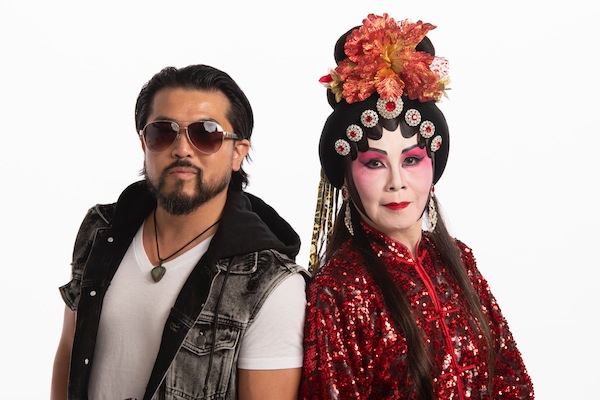
Tale of the Eastside Lantern’s Shon Wong and Rosa Cheng. (photo by David Cooper)
Among the many artists participating in this year’s Downtown Eastside Heart of the City Festival is Jewish community member Elliot Polsky. The multi-percussionist joins the Son of James Band in Tale of the Eastside Lantern, a workshop presentation of a new hybrid Chinese rock opera.
From Oct. 30 to Nov. 10, the annual Heart of the City offers 12 days of music, stories, theatre, poetry, cultural celebrations, films, dance, readings, forums, workshops, discussions, gallery exhibits, mixed media, art talks, history talks and history walks. More than 100 events are scheduled to take place at more than 40 locations throughout the Downtown Eastside. This year’s theme – “Holding the Light” – has emerged from the need of Downtown Eastside-involved artists and residents to illuminate the vitality and relevance of the Downtown Eastside community and its diverse traditions, knowledge systems, ancestral languages, cultural roots and stories.
Tale of the Eastside Lantern is one of the top festival picks: “In the streets and shops of Vancouver’s Chinatown, Jimmy wrestles with his personal demons and sets out to solve a mystery that is guarded by Chinese opera spirits of the underworld. Jimmy is led by the sounds of rock music and motivated by the oldest feeling in the world … love.” Written and composed by Shon Wong and directed by Andy Toth, the rock opera is produced by Vancouver Cantonese Opera and Son of James Band in partnership with Vancouver Moving Theatre. Performed in English and Cantonese, the workshop presentation takes place Oct. 31, 8 p.m., at CBC Studio 700. Tickets ($15) are available at the door or in advance from eastsidelantern2.eventbrite.ca.
Another top pick is Sis Ne’ Bi -Yïz: Mother Bear Speaks, written and performed by Taninli Wright (Wet’suwet’en) about her Messenger of Hope Walk – she walked 1,600 kilometres across British Columbia to give voice to First Nations children and other marginalized youth. Developed in collaboration with Laura Barron, Jason Clift, Julie McIsaac and Jessica Schacht, the play is produced by Instruments of Change. There are several performances Oct. 30-Nov. 3 at Firehall Arts Centre. For advance tickets ($20/$15), call 604-689-0926 or visit [email protected].
Written and performed by Yvonne Wallace (Lilwat) and directed by Jefferson Guzman, ūtszan (to make things better) follows the journey of a woman to reclaim her language; in the process, she uncovers indigenous knowledge, humour, strength and resilience. The play has three shows at the Firehall Oct. 31-Nov. 2, with tickets ($20/$15) available at the door and in advance.
Of special interest to the Jewish community, whose oral histories form part of Daphne Marlatt and Carole Itter’s Opening Doors: Vancouver’s East End, is the dramatization of that book, which was first published in 1979. Directed by Donna Spencer and co-produced by the Firehall and Vancouver Moving Theatre, Opening Doors has several performances Nov. 6-9 at the Firehall, with tickets $20/$15.
While there are these and other ticketed shows, most of the festival events are free to attend. For example, on Nov. 2, 11 a.m., at CRAB Park, there is a mini-landing of canoes, featuring a welcome ceremony, after which paddlers and guests journey on land to the Police Museum and the exhibition Healing Waters, an exploration of how communities heal through connecting to cultural practice. This landing, in honour of the inaugural Pulling Together canoe journey in 2001, launches a year of story gathering and history sharing in preparation for the 20th anniversary celebration of the Pulling Together Society at next year’s Heart of the City.
In Speaking in Tongues, guests Woody Morrison, David Ng, Grace Eiko Thomson and Dalannah Gail Bowen discuss mother tongues and how their interactions can give birth to hybrid languages such as Japanese Pidgin, which is unique to the West Coast of Canada. This conversation is part of Homing Pidgin, an interactive installation by Haruko Okano, and takes place on Nov. 2, 1 p.m., at Centre A (205-268 Keefer).
Meanwhile, Irreparable Harm? is by Sinister Sisters Ensemble – activists and theatre folk, young and old, First Nations and settlers, many of whom were arrested in the protests against the twinning of the Trans Mountain Pipeline. It uses videos, transcripts of the court proceedings and statements that were read in the courtroom to shine a light on the justice system. It is at Carnegie Theatre on Nov. 8, 3 p.m.
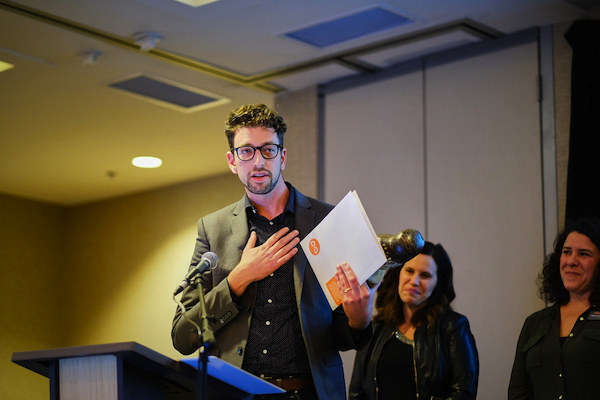
Michael Schwartz of the Jewish Museum and Archives of British Columbia accepts the Award of Merit: Excellence in Community Engagement on behalf of all the partner organizations in the Cross Cultural Strathcona Walking Tour. (photo from JMABC)
The 2019 B.C. Museums Association Awards for Outstanding Achievement were handed out on Oct. 2 at the BCMA conference gala at Courtyard by Marriott in Prince George. The awards recognize institutions and individuals who have exemplified excellence in exhibitions, community engagement and innovation within the province’s museums, galleries and cultural heritage community. This year, three Jewish community groups were honoured for their work.
The Vancouver Holocaust Education Centre received the Award of Merit: Excellence in Collections for its collections management system, which provides access to Western Canada’s largest collection of Holocaust-related artifacts, survivor testimonies, archival materials and publications (collections.vhec.org). The award recognizes recent excellence in collections best practices, which may include innovative approaches to collecting, collections management, preservation, repatriation, collections-based research, dissemination and accessibility.
The Jewish Museum and Archives of British Columbia (JMABC), along with 16 partner organizations, including the Jewish Independent, received the Award of Merit: Excellence in Community Engagement for the Cross Cultural Strathcona Walking Tour. The award recognizes a recent outstanding success in community engagement, as demonstrated by ongoing participation of new audiences, new partnerships with community organizations, and supporting needs of the community through innovative programming.
Co-led by Carmel Tanaka and Michael Schwartz (director of community engagement at the JMABC), the walking tour celebrates the history of Vancouver Downtown Eastside neighbourhoods Hogan’s Alley, Jewish Strathcona, Japantown (Powell Street) and Chinatown. The guided walking tour builds awareness of the contributions of early immigrant communities then and now. Originally conceived in celebration of Vancouver Asian Heritage Month and Canada’s Jewish Heritage Month, the first series of tours debuted in May 2019.
With the theme of education, the route began at the oldest elementary school in Vancouver, Lord Strathcona Elementary School, referred to as the “League of Nations” for its multicultural makeup. When the triangle rang at the end of the day, school continued for many children in the form of nearby programs where students learned language and cultural traditions. Tour participants learned how these diverse communities interacted with one another in their common struggles, and how they were impacted by the urban renewal of the area.
The Cross Cultural Strathcona Walking Tour Working Group comprises Association of United Ukrainian Canadians; Benny Foods Italian Market; Dr. Sun Yat-Sen Classical Chinese Garden; Musqueam Elder Larry Grant (honourary advisor to PCHC-MoM and VAHMS); Greater Vancouver Japanese Canadian Citizens Association; Heritage Vancouver Society; Hogan’s Alley Society; Jewish Independent; JMABC; Nikkei National Museum and Cultural Centre; Pacific Canada Heritage Centre Museum of Migration; Vancouver Asian Heritage Month Society’s explorASIAN; Vancouver Heritage Foundation; Vancouver Japanese Language School and Japanese Hall; Vancouver School Board; Vancouver School Board Archives and Heritage Committee; Wongs’ Benevolent Association; and Youth Collaborative for Chinatown.
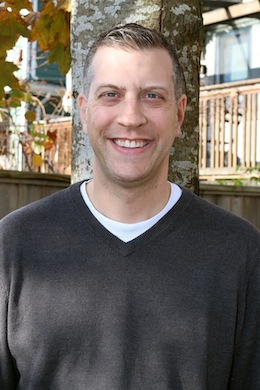
After leading the Bayit in Richmond for the last five years, Michael Sachs has stepped down as board president, to spend more time with his young family.
Michael Sachs (photo by Lianne Cohen)
Michael’s efforts and dedication have given members of the Bayit much for which to be grateful. During his tenure, Michael had a vision for how he saw the community and, as a man of action, he followed through. With a philosophy of engaging with everyone, he worked together with all of the Jewish organizations in Richmond and beyond, without ever losing focus that he was building a Bayit community.
Michael’s stepping down from the position of president doesn’t mean he won’t continue to be involved in the Bayit. As past president, he will remain on the board of directors and continue to be a part of the Bayit’s future.
Current Bayit board member Keith Liedtke will take over as the Bayit’s interim president. He shares Michael’s vision and sees the need for a strategic plan that will allow the Bayit to continue growing and filling the community’s needs.
The Bayit thanks Michael for his contributions as president and for his decision to stay on as a member of the board.
Patroling the kibbutz perimeter. (photo from Victor Neuman)
In this eight-part series, the author recounts his life in Israel around the time of the 1973 Yom Kippur War. The events and people described are real but, for reasons of privacy, the names are fictitious.
Part 5: Night Guard Duty on the Kibbutz
Lev, the banana boss, was in his early 30s and a miracle worker. He was back on the kibbutz and strolling toward me. He had talked the army into releasing him so he could save his banana fields. I was not surprised he had pulled it off. Lev was originally from the United States and a dedicated Zionist. He had long ago concluded that the only proper place for a Jew was in Israel and so he immigrated. Always determined in what he wanted, he bulldozed his way through kibbutz apprehensions to single-handedly create the banana crop as a major branch of our agricultural sector. And he was fearless to a fault.
“Fearless to a fault” may sound like a contradiction. It’s not. The right amount of fearlessness is courage. The wrong amount is stupidity. In my opinion, Lev was sometimes at the wrong end of that equation. Here’s an example.
Before the war, Lev was fed up with the theft from our banana fields and had no confidence that the village police from the nearby Arab town would take any action. The culprits were likely from the town and might even have been relatives of the cops. I had to agree with Lev – the only time I had seen any action from these police was when they drove up to the kibbutz to extort chickens for their next village wedding.
One day, Lev had six of us arm ourselves with clubs and do a stakeout in the banana fields. We had a German Shepherd named Ledie to help take down anyone we caught. Before long, two Arab teenagers appeared, checking for ripe bananas. They came toward where I was hiding. I jumped up but I had moved too early and they raced for their village. Only Lev, the dog and I were near enough to give chase. It was a farce. The teens were lean and fast. Lev smoked two packs a day. Our dog was never trained to be aggressive and was an older dog as well. So, it was the two teenagers way in front, me next, Lev a distant fourth and the dog in last place – tail wagging madly the whole time. I gave up and stopped, but Lev ran past me and yelled, “Come on!”
By the time we arrived at the village, the two thieves had vanished and our dog also had disappeared, likely returning to the kibbutz. I wanted to go back, too, but Lev wasn’t done and I couldn’t leave him on his own. Like a gunslinger minus the gun, he walked us right into the first building we came to. It was some kind of coffee house, full of locals sitting at tables sipping their drinks. All conversation and sipping ceased when we barged in. They all stared at us. I felt like I was in a bad Spaghetti Western. I was convinced Lev was going to get us killed.
Lev stomped around, demanding to know if anybody had seen the two boys. Heads were shaking. Not satisfied, he gave a description of what they looked like and the clothes they were wearing. Heads kept shaking. He then demanded that everybody keep an eye out for these banana thieves and report them to our kibbutz. To my astonishment, heads nodded. I think we had caught them by surprise and then Lev’s pure chutzpah had won the day. Walking out in one piece was a win for me, while Lev was angry at not catching anybody; surviving was not one of his concerns.
Now you know what I mean by “fearless to a fault.” And now, here was fearless-to-a-fault Lev walking up to me.
“Shalom, Victor. I’m back so I’ll be taking over the irrigation. I wanted to keep you on it, but Gidon says he needs you for guard duty. You better see him. And thanks for looking after the bananas. I expected half of them to be dead but they are all good. Nice job.”
High praise from Lev, who rarely expressed gratitude to anybody. The bananas were like children to him and I was the babysitter who, surprisingly, hadn’t murdered any.
Gidon told me I was to patrol the kibbutz from dusk to dawn for the next week at least. He gave me an ammunition belt, a flashlight and a first-aid kit with pressure bandages to patch up anybody I shot inappropriately. He also gave me Chauncy, the English guy. Chauncy was one of those hapless tourist volunteers who came to experience kibbutz life and was experiencing more than he bargained for. Though he wasn’t Jewish, he gamely agreed to be my assistant on patrol.
Our first patrol had a slow start. Chauncy begged me to let him hold the Uzi long enough to get his picture taken. I didn’t want to, but figured it would be better to get it out of his system. I removed the ammunition clip and handed him the Uzi. He gave me his camera and I took a half-dozen pictures of him, empty gun at the ready, looking steely-eyed and staring into the dark. I was thinking he was an idiot but then remembered the photos I had made Tamar take when I first got my weapon. She thought I was an idiot. Israelis would never think of getting this kind of snapshot, as Canadians wouldn’t think of getting their picture taken in their kitchen holding a spatula. Why record it? In this country, everybody has a spatula.
We walked the perimeter for about a week. Early evening was the best, as kibbutz members stopped to chat and the time went quickly. Adding to our duties was the requirement that we join others in checking cars that were coming up the driveway and searching them for bombs. I was particularly happy to intercept the village police who had come on another of their chicken runs. We made them get out of their car and stand around while we did a thorough, very slow check of their vehicle. The chicken-stealing cops were not nearly as annoyed as I had hoped. I was thinking we’d need to do a strip search next time.
As the night wore on, everybody went to sleep and it was just Chauncy and I walking the perimeter. As per Gidon’s instructions, we didn’t go to the dining hall to scrounge for food and thus take ourselves away from our rounds. We carried our lunches and ate under the security lights. I was always conscious of how dark it was beyond the reach of those lights and how impossible it would be to see anyone coming. On the other hand, Chauncy and I, walking directly under the lights, were highly visible from far away.
It became a nagging question in my mind as to how effective night guard duty was when Chauncy and I were always in plain view while the bad guys were always hidden. I confronted Gidon about it one day and his reply was, “When you are shot, it will alert the rest of the kibbutz.” I wished he had had a grin on his face, but he didn’t. I was just thankful he hadn’t ended with “Are we understanding?” We were not.
I never told Chauncy about that conversation but I think he detected my increased wariness. A certain morbidity came over me. In trying to come to terms with the possibility of death, I tried to control the fear by embracing the notion. I decided one night we would have our meal in the kibbutz cemetery. Chauncy was freaked but I put it to him that the dead were dead and gone. Also, I argued, the headstones made good back rests for eating in comfort. To pass the time, I read the Hebrew on some of the stones; the easiest part to grasp being the date of death and age of the departed. Many were in their 20s and had died in 1948, likely in the War of Independence. They were close to my age and Chauncy’s. It made me think of how endless the fighting was in this land. The dead of one war pondered by participants in another, with two other conflicts in between. We only had lunch in the cemetery that one time.
I never had to shoot anybody during my stint as night guard but I did come close once. Chauncy and I were in the area of the mechanical shop at around two in the morning when we heard noises coming from the shop and saw the lights were on. The kibbutz was generally very quiet at night. There was no shift work besides guard duty so everyone should have been in bed.
I told Chauncy to stay behind me as we entered the shop to investigate. For the first time in all my guard duty, I slid the thumb switch of my Uzi from safety to automatic.
Chauncy whispered, “Jesus!”
We got as close to the noise as we could and then I stepped around a corner with my Uzi leveled.
It was a kibbutz teenager named Uri. Apparently, Uri had a bout of insomnia and decided he might as well go to the shop and keep working on his project. He was trying to make a go-kart out of discarded tractor parts. Uri had almost gotten a permanent cure for his sleeplessness. I had almost shot a 15-year-old kid.
Victor Neumanwas born in the former Soviet Union, where his family sought refuge after fleeing Poland during the Second World War. The family immigrated to Canada in 1948 and Neuman grew up in the Greater Vancouver area. He attended the University of British Columbia and obtained a BA and MA with majors in English literature and creative writing. Between 1968 and 1974, he made two trips to Israel, one of which landed him on a kibbutz at the time of the 1973 Yom Kippur war. Upon his return to Canada, he studied Survey Technology at BCIT and went on to a career of designing highways for the Province of British Columbia and the firm of Binnie Civil Engineering Consultants. When he retired, he reconnected with his roots in creative writing and began writing scripts for Vancouver Jewish Folk Choir concerts and articles for the Jewish Independent. Neuman and his wife, Tammy, live in southeast Vancouver and enjoy the company of friends, their extensive extended family and their four sons.
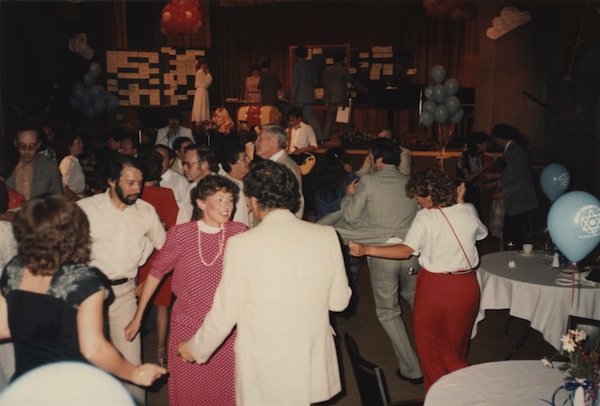
Dancing at a Jewish Community Centre party, 1984. (photo from JWB fonds, JMABC L.11733)
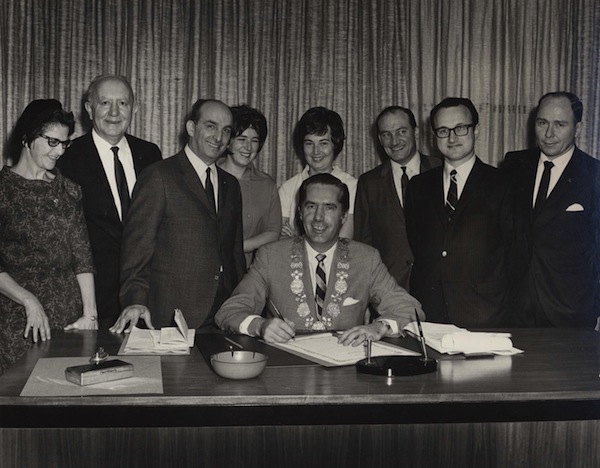
If you know someone in these photos, please help the JI fill the gaps of its predecessor’s (the Jewish Western Bulletin’s) collection at the Jewish Museum and Archives of B.C. by contacting [email protected] or 604-257-5199. To find out who has been identified in the photos, visit jewishmuseum.ca/blog.
Then-mayor of Vancouver Tom Campbell, centre, with a group of unidentified people, with the exception of Alec Jackson (third from left) and Dave Jackson (sixth from left), in 1968. (photo from JWB fonds, JMABC L.12174)