Skip to content
  • Home
  • Subscribe / donate
  • Events calendar
  • News
    • Local
    • National
    • Israel
    • World
    • עניין בחדשות
      A roundup of news in Canada and further afield, in Hebrew.
  • Opinion
    • From the JI
    • Op-Ed
  • Arts & Culture
    • Performing Arts
    • Music
    • Books
    • Visual Arts
    • TV & Film
  • Life
    • Celebrating the Holidays
    • Travel
    • The Daily Snooze
      Cartoons by Jacob Samuel
    • Mystery Photo
      Help the JI and JMABC fill in the gaps in our archives.
  • Community Links
    • Organizations, Etc.
    • Other News Sources & Blogs
    • Business Directory
  • FAQ
  • JI Chai Celebration
  • JI@88! video

Recent Posts

  • Zionism wins big in Vegas
  • Different but connected
  • Survival not passive
  • Musical celebration of Israel
  • Shoppe celebrates 25 years
  • Human “book” event
  • Reclaiming Jewish stories
  • Bema presents Perseverance
  • CSS honours Bellas z”l
  • Sheba Promise here May 7
  • Reflections from Be’eri
  • New law a desecration
  • Resilient joy in tough times
  • Rescue dog brings joy
  • Art chosen for new museum
  • Reminder of hope, resilience
  • The national food of Israel?
  • Story of Israel’s north
  • Sheltering in train stations
  • Teach critical thinking
  • Learning to bridge divides
  • Supporting Iranian community
  • Art dismantles systems
  • Beth Tikvah celebrates 50th
  • What is Jewish music?
  • Celebrate joy of music
  • Women share experiences 
  • Raising funds for Survivors
  • Call for digital literacy
  • The hidden hand of hate
  • Tarot as spiritual ritual
  • Students create fancy meal
  • Encouraging young voices
  • Rose’s Angels delivers
  • Living life to its fullest
  • Drawing on his roots

Archives

Follow @JewishIndie
image - The CJN - Visit Us Banner - 300x600 - 101625

Month: October 2019

The future requires chutzpah

The future requires chutzpah

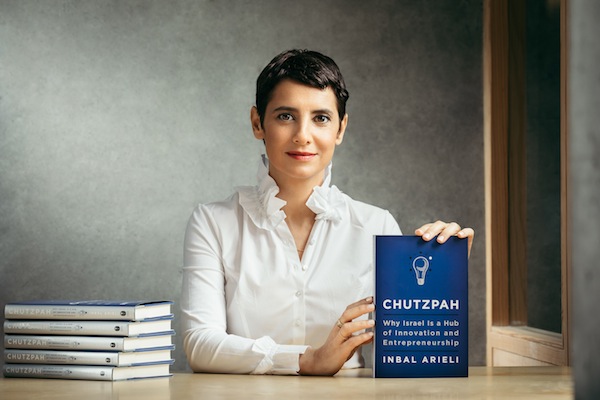
Inbal Arieli recently published the book Chutzpah: Why Israel is a Hub of Innovation and Entrepreneurship. (photo by Micha Loubaton)

Inbal Arieli has always been fascinated by what motivates and drives people, as well as what blocks their paths. “Throughout my career, which was mainly as a business executive, I always kept an eye on the human factor,” Arieli told the Independent. “And so, the businesses I started were somehow all related to that.”

Arieli, who is also a lawyer, is the owner and co-chief executive officer of Israeli start-up accelerator Synthesis. The company provides leadership assessment, as well as business training and development, in Israel, Canada and the United States.

“It is about the effect of the most critical skills that I think anyone should have today,” said Arieli about her recently published book Chutzpah: Why Israel is a Hub of Innovation and Entrepreneurship. “These are, according to the World Economic Forum, the skills which are required in the future, for anyone, regardless of your profession or future position. These are basic life skills – of critical thinking, decision-making, taking on initiative, etc., etc. There’s a long list of soft skills. The book is about these skills.

“What’s still interesting to me is, when looking at these skills, thinking about the future – the future of my kids, the future of the entrepreneurs here in Israel, the future of the job market in the world – about how can one practise these skills.

“The book shows the journey of a typical Israeli child from a very young age, as young as 3 or 4, until after military [age], young adult.”

In Chutzpah, Arieli shows how, in the five stages of childhood – infancy, childhood, adolescence, military service and then the big trip after the military – Israeli culture and society have produced principles, a framework and settings to foster these skills.

The book is not about Israel in and of itself. It is designed to help readers develop their own set of skills using the Israeli experience as an analogy.

Chutzpah (audacity), an ingrained trait, is very much nurtured in Israeli kids from a young age, said Arieli.

“From a very young age, chutzpah comes into play everywhere and anywhere,” she said. “Most of those skills, Israeli education and mindset … I think of them like muscles we all possess … only here, in Israel, we have access to the best gyms to practise these muscles.

“When you play at the playground, at age 3 or 4, the fact that you stand for your own opinion and find your own way of using the slide – an example I give in the book – that, in a sense, is a little bit of chutzpah. You don’t necessarily follow guidelines or practices. You bring your own personality [into your decisions and actions] at a very, very young age. So, it starts then, and then it fills up as we grow up here.”

Arieli sees Israeli society as being very open to giving freedom to everyone’s chutzpah – encouraging kids to exercise their chutzpah muscle, to be risk-takers, to stand out from the crowd, encouraging individualism along with a strong sense of collectivism. “Definitely, the framework that exists here, the environment, so many social structures are helping the muscles to remain developed and strong,” she said.

Chutzpah can be viewed as either negative or positive, and can be used in a positive or negative way. In Hebrew, one can differentiate between the two, depending on where the accent is placed. Arieli does not think it is important to differentiate between the two concepts of chutzpah. Rather, she contends that, just like any other muscle, the use of it needs to be calculated.

“Chutzpah is not a button you can press on or off,” she said. “It’s a mindset. In the context of innovation or entrepreneurship, I think it’s a very positive thing. And so are the other skills, ideas or principles spoken about in the book. I think it’s all a matter of finding the right balance between using them or not using them, and when to use them. What’s right for certain stages is less relevant for other stages.

“More than anything, I think it’s the combination of having these skills along with other skills is what’s optimal. But, I also think it’s very challenging to create an innovative society or an innovative team or group of people without allowing them to have a little bit of chutzpah.”

According to Arieli, just teaching kids how to work in today’s job market is a recipe for failure, as we have little knowledge of what work will even look like in their generation. The one and only thing we know for sure is that the future job market is uncertain. As such, the only way to prepare children is to equip them with the ability to be highly innovative and creative thinkers, capable of taking on initiatives by shaking things up and changing things.

“I wish for my kids that they will have as much chutzpah as possible when thinking about their future,” said Arieli. “They’ll have to reinvent themselves during their career several times and I want them to be proactive in that.”

Another trait Arieli talks about in Chutzpah is balagan (mess or chaos).

“Anyone who has visited Israel knows what I’m talking about – be it traffic, on the playground, in restaurants – everything is really chaotic here,” said Arieli. “But, that chaos, balagan, propels us toward new order, allowing us to rise every time from that balagan.”

Another factor Arieli discusses in her book is teamwork and “how Israeli society, while sometimes divided, at its core, has a galvanizing mechanism rooted in survival, through our culture … what we endured as a people and our mandatory army service … all of which unite us like no other nation on earth.”

For more information about Arieli or her book, visit inbalarieli.com.

Rebeca Kuropatwa is a Winnipeg freelance writer.

Format ImagePosted on October 11, 2019October 11, 2019Author Rebeca KuropatwaCategories BooksTags business, Chutzpah!, entrepreneurship, Inbal Arieli, Israel
הרפר : לעשות עסקים בישראל

הרפר : לעשות עסקים בישראל

תל אביב (Eurovan)

ראש ממשלת קנדה לשעבר מנסה לעשות עסקים בישראל – חלק ג’

מכל הלקוחות והפעילויות שאני מעורב בהן, אולי אין דבר טוב יותר מאשר שילוב כמה תחומי עניין שהיו לי. קודם כל הקרבה של הממשלה שלנו לישראל בזמן כהונתי, שנית העניין שלנו בטכנולוגיה וחדשנות – השקענו זמן רב בקידום תוכניות קנדיות ובנוסף, בתחום המסחר חלק מהמשימה שלי בתפקיד הייתה להרחיב את רשת המסחר של קנדה. כך מציין ראש ממשלת קנדה לשעבר, סטיבן הרפר, שביקר בישראל לאחרונה. הוא רואיין לעיתון “גלובס”. כשנכנסתי לתפקיד היו לקנדה רק חמישה הסכמי סחר, אחד מהם עם ישראל, וכשעזבתי את התפקיד כבר היו לנו חמישים ואחד הסכמים. אבל גם ההסכם עם ישראל היה מיושן וכלל רק מגוון צר של סחורות, ולכן עדכנו את ההסכם הזה.

אחד הדברים שהטרידו אותי במהלך הכהונה היה שזרם הסחר, השירותים וההשקעות בין קנדה וישראל עדיין קטן. זאת למרות המאפיינים של הכלכלה הישראלית ובפרט ההובלה הטכנולוגית שלה, ולמרות המאפיינים של הכלכלה הקנדית והעובדה ששתיהן מתקדמות ובשתיהן יש קהילה יהודית גדולה והסכמי סחר. לכן עדכנו את ההסכם למודרני יותר כדי לסייע לתקן את זה. אבל כמובן שגם חיפשנו הזדמנויות כדי להגדיל באמת את הסחר והפעילות העסקית בינינו ובמיוחד לנצל את ההתקדמות של ישראל בתחום הטכנולוגי.

אני רוצה לראות טכנולוגיה ישראלית מגיעה לקנדה ואני רוצה שקנדים ינצלו את הזדמנויות הרווח בתחום הזה. גם בישראל רוצים למצוא הזדמנויות לגדול ולהיכנס לשווקים חדשים בצפון אמריקה. דרך אגב אני חייב לציין שבזמן כהונתי עודדתי שיתוף פעולה צבאי מוגבר עם ישראל – מן הסתם מטעמים של מדיניות חוץ – אבל הדבר בנה הרבה מהגשרים הללו. שיתופי הפעולה היו יותר בצד המודיעיני, וכמובן צוותים שהחליפו ביניהם מידע ושיטות עבודה.

התוצאה הכי טובה שיכולה להיות לכל הדברים האלה היא מערכת שווקים גלובלית שבאמת משולבים זה בזה, והפריה הדדית ברחבי העולם. אם נשאיר בצד את הדמויות הספציפיות, את המדיניות ואת הממשלות, המציאות היא שזהו אזור שבו סביר שיקרה תהליך שברמה מסוימת תהיה התפצלות לשניים.

אנחנו מדברים על התחום הביטחוני, שהוא אינטרס של העולם הסיני והעולם האמריקאי, אבל אנחנו חברות חופשיות ודמוקרטיות ואנחנו יודעים עד כמה הציבור מודאג מעניינים של הפרת פרטיות ושימוש לרעה בדאטה. אפילו בהקשר של הטכנולוגיות המסחריות הקיימות – סין היא מדינת מעקב, וזה לא שהיא לא מציעה מוצרים מסחריים – אבל כל מהלך ההצטיידות של מגזר הטכנולוגיה שלה הוא לכיוון מעקב, במסגרת האינטרס של ביטחון המדינה.

לכן יש בעצם שני מודלים. אנחנו לומדים מהצבא ומהמודיעין ומהיכולות של ביטחון לאומי, ומבצעים התאמה למטרות תאגידיות מסחריות. אלה מטרות הגנתיות באופן טהור, יש להדגיש, אף פעם לא התקפיות, לחלוטין במסגרת החוק ובמסגרת מה שאנו מחשיבים הגנה נורמלית של הפרטיות. אלה שני מודלים שונים וקשה מאוד לשלב ביניהם. אנחנו רוצים לוודא שכל דבר שמפותח ייעשה במסגרת של חברה דמוקרטית וחופשית ובמסגרת של שימוש מסחרי. זה האינטרס של חברות דמוקרטיות וחופשיות כמו קנדה וכמו ישראל.

הרפר ושות’ היא חברה קטנה אך בעלת פעילות גלובלית. אנו עושים עסקים בעולם ואנו עושים עסקים גם בסין, אך אנו עושים זאת בזהירות. זה חשוב שיהיו קשרים כלכליים ומסחריים עם סין, זה טוב לעולם בטווח הארוך. אז אמנם מדובר על קשרים עסקיים, אך כאלה שנעשים למטרות שעולות בקנה אחד עם האינטרס הלאומי הרחב.

Format ImagePosted on October 10, 2019July 2, 2020Author Roni RachmaniCategories עניין בחדשותTags business, Israel, Stephen Harper, ישראל, סטיבן הרפר, עסקים
Chutzpah! hosts Bernhard

Chutzpah! hosts Bernhard

Sandra Bernhard is at the Vogue on Halloween night, as part of the Chutzpah! Festival. (photo by Brian Ziegler)

“When I was a little kid, I had three older brothers and I got a lot of attention for being cute and funny, and I’ve always had an ability to comment on situations as they unfolded in front of me,” said veteran performer Sandra Bernhard in a phone interview with the Jewish Independent. “I think that’s what kept it going all these years – I find it entirely hilarious when you’re in the middle of something and you’re able to pull it apart and bring the most humour out of it, or the most outrage, and that’s always been the most interesting part of what I do.”

Bernhard is bringing her critically acclaimed show Quick Sand to the Vogue Theatre on Oct. 31 as part of the Chutzpah! Festival, which runs Oct. 24-Nov. 24. The comedian, actor, author and radio host is known for her outspokenness. She said it’s second nature for her to say what’s on her mind. “By being funny and being a character, which I’ve always been,” she said, “that gave me the access to say things that other people wouldn’t say necessarily, or that wouldn’t be heard.”

Bernhard’s daily radio show, Sandyland, which is on SiriusXM’s Radio Andy channel (created by Andy Cohen), earned her a Gracie Award, an honour given by the Alliance for Women in Media to “recognize exemplary programming created by women, for women and about women in all facets of media and entertainment.” Bernhard also stars as Nurse Judy in the award-winning, boundary-pushing show Pose on FX Networks, about “the legends, icons and ferocious house mothers of New York’s underground ball culture, a movement that first gained notice in the 1980s.”

Bernhard has countless film and television credits, has created and performed several one-woman shows, recorded a few albums and performed with or opened for many artists. She also has written three books.

While she knew from a young age that she wanted to be a performer, it wasn’t until her late teens that the goal started to become a reality.

“I moved to L.A. in the mid-’70s, when I was 18, 19,” she said. “I became a manicurist in Beverly Hills, so I had a day gig, but I didn’t really know how I was going to jump into the waters, because I also wanted to be a singer. I really wanted to be an entertainer, the whole package.

“And then I met up with a group of friends and they thought I was hysterical and then there was this woman I met who, I did her nails and she was a cabaret singer and she would go to the open mic nights and she said, ‘You’re really funny. I know you want to sing, but put your material together and I’ll take you to these open mic nights.’ She took me to one and then I met my friend Paul Mooney and my friend Lotus Weinstock the first night I got up and they took me under their wings. And that’s how I started – I literally fell into it, because I was a natural, and then I started doing the hard work, which was getting up night after night after night to do my act, and I honed my act and the material and then, eventually, I got good at it.”

One of the reasons she remains popular and her material fresh is because she keeps working at it, “finding different ways into it. For me,” she said, “the most important thing is being as authentic as I can, year to year, day to day, because you do change, you evolve as a person, you want to peel the layers of the onion away and get deeper into your core as an artist, as a performer, and I think that’s what continues to inspire you and make you a better performer.”

Describing her style as “edgy, funny, strong, no nonsense, but funny nonsense,” she said, “I don’t feel like I have to really temper anything because you shed your skin as you go along, and certain things just don’t work anymore.”

Born in Flint, Mich., and raised in Scottsdale, Ariz., Bernhard was bat mitzvahed, but, she said, “My father, I don’t think he related to being Jewish much at all, except maybe culturally, and my grandparents – my grandfather went to shul every day but I think that was a little bit later in life. When he came over here from Russia, everybody was busy trying to make a living. And, of course, people ended up in some small towns here and there, and you didn’t always have time for your religion and your traditions.”

Nonetheless, Bernhard said, “I find a certain amount of meditative escape just going to Shabbat and hearing the music and the songs I grew up with, and I like the community. Whether it’s the High Holidays or staying for kiddush and eating a bowl of cholent, there’s something very visceral about it. It connects me with who I was as a kid and my grandparents…. There’s all that emotion, it’s vivid and visceral and it’s just a nice place to calm down and go into and have a little bit of a break from the day to day.”

Saying that she’s “thrilled to be coming back to Vancouver,” Bernhard said the Oct. 31 performance will be “a fun night.” Accompanied by the Sandyland Squad Band, she will combine music, comedy and social commentary in Quick Sand, which, she said, offers “endless amounts of room” for her to go off script.

“I’m always prepared to jump off if something happens or inspires me or the thought process, my mind, and that’s the way it’s always been for me,” she said. “But I also have very set pieces that you want to be able to fall back on and have that continuity to the show, so that you’re not standing up there just talking about a bunch of silliness. I want people to walk away having been entertained.”

For tickets to Bernhard and other Chutzpah! shows, visit chutzpahfestival.com.

Format ImagePosted on October 4, 2019October 2, 2019Author Cynthia RamsayCategories Performing ArtsTags Chutzpah!, comedy, Sandra Bernhard, social commentary
Trees bring Zack to life

Trees bring Zack to life

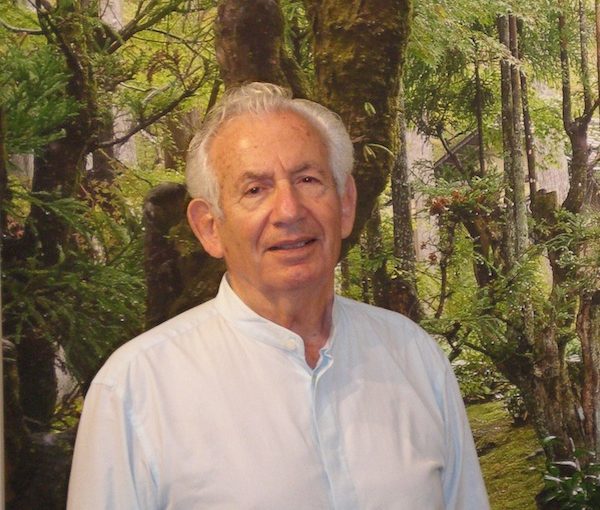
Michael Seelig is donating the proceeds from his exhibit Trees to the Zack Gallery. (photo by Olga Livshin)

Trees, Michael Seelig’s new solo photography exhibit at the Zack Gallery, opened last week. It is a fundraiser for the gallery, which is located in the Jewish Community Centre of Greater Vancouver.

Such philanthropic initiatives “are of ultimate importance to the gallery and the community, as everybody wins when the gallery is well-supported,” said Zack director Linda Lando. “We have approximately three benefits a year, and they come in different ways. Sometimes, they’re initiated by the artist, sometimes by myself or another staff member of the JCC.”

Seelig’s decision to donate all the proceeds came from the heart, and it’s not the first time. His previous show at the Zack, which was held five years ago, was also a benefit. “This is my way of contributing to the JCC,” he said in an interview with the Independent. “We have a longstanding connection to the centre. My wife was president of the JCC some time ago, and we’ve given several donations to the community over the years.”

Unlike his previous show, which focused on architectural images – Seelig was an architect before he retired – this show is all about trees. A cornucopia of greens dominates the gallery walls.

“When Linda asked me to do a show this year, I didn’t have much in mind,” he said. “I started going through my photographs, selected the best 20, and then realized that eight of them were photos of trees. Looking back, I’ve always photographed trees. Maybe I have an affinity for trees. So, I thought I’d make it the theme of this entire show.”

photo - “Garden Kyoto” by Michael Seelig
“Garden Kyoto” by Michael Seelig.

Seelig has been drawn to trees and their unique charm for a long time. “I think my love of trees comes from my childhood, when I was growing up in Israel,” he said. “Jewish people are the only ones I know who have a holiday dedicated to trees: Tu b’Shevat. During that holiday, we cherish trees, plant them, take care of them, so they can take care of us. That tradition probably influenced me from a young age to love trees and photograph them. I take photos of trees wherever I travel.”

In the Zack exhibition, there are pictures of trees from Israel and Scotland, Canada and Japan.

“There is a book I read recently,” Seelig said, “called The Hidden Life of Trees, by Peter Wohlleben. He is a German forester and writer and he knows trees. He says trees form communities. They communicate with each other and with us. It was a fascinating book, and I agree with the author; his book inspired me. Have you noticed that old stumps sprout new growth sometimes? That is because there are other trees around. Trees are life-givers; they create the air we breathe. Without trees, there would be no life on earth.… In Canada, and particularly in British Columbia, we often take trees for granted. Most of us do not pause to look at them and admire their beauty, solidity and permanence. We forget that, without trees, our planet cannot survive. This show pays homage to trees in many parts of the world.”

Seelig’s trees are all different; each one has its own shape and personality. Some are gnarled and twisted, while others stretch up in straight lines.

“I like it that they don’t talk to me,” he joked. “Trees are my models, but they’re more obedient than people when it comes to posing for a photo. I can take my time snapping pictures of trees. They are perfect photography objects. A tree just stands there. You can walk around it, see it from 360 degrees or from underneath. And every view is different. You can’t do this with a person.”

In addition to Seelig’s photographs of trees, the show includes several watercolours, most of which he painted specifically for this exhibit. Only two small works are exceptions. “When I was looking through my archives in preparation for this show, I found a small painting, created by my father in 1940. He painted a street in Haifa, and there is a tree in the image. The second painting is mine; I painted it in 2010, also in Haifa. Seventy years passed between these two paintings, but their colour schemes are surprisingly similar. And there are trees in both paintings.”

The sizes of the images on display vary greatly. While Seelig’s father’s painting would fit in a school notebook, and most of the photographs are the perfect size for a family home, a huge triptych on canvas of one of his Kyoto garden photos would enliven a hotel foyer or a corporate conference room. “I invited some designers to the show,” Seelig said. “Maybe one of them would like it.”

Seelig’s approach to photography is consistently organic. He doesn’t edit his photos with Photoshop, doesn’t even crop them.

“My pictures are exactly what I see,” he said. “And now you see them, too. There are other photographers who manipulate their photos with editing software, many of them wonderful artists, but I don’t do that. I don’t call myself an artist either, even though I use my creativity for many things in my life. I used artistic judgment for my work as an architect, before I retired. Now, I make greeting cards and wedding invitations with my photographs and my paintings. I illustrated a couple of children’s books, written by my daughter and her husband. Even making dinner for our friends is a form of art for me.”

The Trees exhibit runs until Oct. 20.

Olga Livshin is a Vancouver freelance writer. She can be reached at [email protected].

Format ImagePosted on October 4, 2019October 2, 2019Author Olga LivshinCategories Visual ArtsTags environment, Michael Seelig, painting, philanthropy, photography, trees, Zack Gallery
Status quo OK?

Status quo OK?

Israeli Prime Minister Binyamin Netanyahu places his vote on election day. (photo by Haim Zach/IGPO from Ashernet)

Unless something dramatic happens between when we write this and when you read this, the future of Israel’s government remains uncertain. To avert a third election in a year, the most viable option for a stable government would appear to be a “national unity” or “centrist coalition” involving both major parties, Likud and Blue and White.

This was the subject of face-to-face discussions between leaders and President Reuven Rivlin, but no agreement was reached. So Binyamin Netanyahu, the incumbent prime minister, has a few weeks to try to cobble something together. If he fails, Rivlin will probably call on Blue and White leader Benny Gantz to give it a go. Some bets are that, if it comes to that, there will be enough Knesset members desperate enough to avoid a return to the polls that some accommodation will be made. Perhaps the likeliest possibility is a Likud-Blue and White unity government without Netanyahu. (This scenario would become likelier if Netanyahu officially faces criminal charges in the next few days.)

Any broad coalition of this sort would lead to a degree of progress on some fronts – if far-right and religious parties are excluded, some policies and legislation that appeal to the secular majority are likely to advance – while progress on some other fronts would likely stall.

One example is the peace process – although there is, basically, no progress to stall at this point. There is great divergence in Israel over what the next steps should be vis-à-vis the Palestinians. In a broad-based coalition government, that uncertainty would define government policy, probably leading to inaction.

During the recent election, Netanyahu went further than previous leaders, promising to annex chunks of the West Bank to Israel. Gantz and the centre-left in Israel have been confounded by the reality that, while they seek a two-state solution and recognize a one-state situation as demographically unsustainable, until Israel sees a benefit to ending the occupation and can be certain that an independent Palestine in the West Bank will not be a launch pad for terror, independence will not come and the occupation will not end. Without that, no peace, no Palestine.

As a result, we will likely see more of the status quo, until some force acts to alter it. While Netanyahu’s provocative promise to annex areas would have altered the status quo for the worse, a precipitous end to the occupation that left a vacuum to be filled by those wishing to do Israel harm would likewise be a change for the worse. The tense status quo Israelis and Palestinians have now is definitely not great, especially for Palestinians, but it is better than outright war.

An old tale has the rabbi of a medieval Jewish community visiting the duke who has threatened to throw the Jews from his realm. The rabbi returns to his community and tells his people, “I convinced the duke to let us stay – if I can teach his dog to talk within five years.” The Jewish community is dumbfounded. “What a promise? It’s impossible!” The rabbi says, “Relax. I’ve got five years. The dog could die. The duke could die. I could die. Meanwhile, I bought us five years.”

The occupation, the statelessness of the Palestinian people, the recurring missile attacks from Gaza and the violence against civilians are not things we should understate or dismiss. But neither should we believe that any change is necessarily an improvement. The status quo is better than war and it is better than the dissolution of the Jewish state. The status quo is not ideal, but it may be better than currently available alternatives.

Format ImagePosted on October 4, 2019October 2, 2019Author The Editorial BoardCategories From the JITags Benny Gantz, Binyamin Netanyahu, elections, government, Israel, Israeli-Palestinian conflict, peace
Focus on online hate

Focus on online hate

Kasari Govender, British Columbia’s human rights commissioner. (photo from Wosk Centre)

Hate in British Columbia, in Canada and globally is on the rise. In 2017, there were 255 police-reported hate crimes in British Columbia, an increase of 55% from just two years earlier. In 2018, Metro Vancouver had the highest rate of hate crimes reported to police in any of Canada’s three largest metropolitan areas, most based on the victim’s ethnicity or religion, with a smaller but significant number based on sexual orientation.

These alarming statistics, and others, provided a framework and urgency for an event Sept. 12 at Simon Fraser University’s Morris J. Wosk Centre for Dialogue in downtown Vancouver. The event, titled From Hate to Hope in a Digital Age, is envisioned as the inaugural annual Simces and Rabkin Family Dialogue on Human Rights.

Contextualizing the discussion, Shauna Sylvester, executive director of the Wosk Centre for Dialogue, cited the results of a report undertaken by her organization. These indicate that one in three Canadians believes Canadian-born citizens should have greater say in government than those born outside the country. One-quarter of Canadians say we have too many protections for minorities and one in four also believes we have too many protections for religious freedom.

Keynote speaker at the forum was Kasari Govender, in just her second week on the job as British Columbia’s human rights commissioner. She is the first to hold this role in the province since that office was closed in 2002.

“In my view, there is a strong connection between hateful speech and hateful violence, both on an individual and a systemic level,” she said, citing racist manifestoes sometimes posted online by perpetrators in advance of a mass killing. She said it is necessary to trace the path from speech to violence.

A common theme of recent mass murderers is anti-immigration sentiment, sometimes emphasizing the “purity of the nation, whether that nation is Canada, New Zealand, the U.S. or another,” she said, adding that many of the attacks around the world that have been linked to white nationalism correspond to discourse in mainstream political debates over immigration and public policy.

The worst antisemitic mass murder in United States history, the attack on Tree of Life synagogue in Pittsburgh in 2018, happened while U.S. President Donald Trump and others were promoting fears of the so-called “migrant caravan” coming from Central America. Part of that conversation, Govender said, “was somehow blaming the Jews for this migrant caravan, drawing a connection in the public discourse, and then there was the shooting.”

Boris Johnson, now prime minister of the United Kingdom, compared women who wear burqas to bank robbers, which led, Govender said, to an increase in acts of hate against Muslim women in the United Kingdom.

Online hate is a particular product of technologies that have emerged in recent decades, she said. “The anonymity, reach and immediacy afforded by the internet escalates the problem beyond what we’ve seen before,” she said. “The internet is a very effective tool for fomenting hate from belief to action, from hateful words to violent actions.”

While forcing social media platforms to police hate speech might be criticized as an infringement of free expression, she said, the opposite is true. Regulating platforms to shut down violent rhetoric actually improves access to freedom of expression for many, as people of colour, women and others are being silenced online by racism and misogyny, she said.

Participants at the Wosk Centre offered a wide range of perspectives.

Evan Balgord, executive director of the Canadian Anti-Hate Network, outlined the approach his agency takes in confronting online hatred.

“Legal [action] would be our last recourse against a hate group or a hate propagandist,” he noted, saying that their first response is to “try to hold somebody socially accountable.” That means, if the person is anonymous, exposing them. If the person is not anonymous, this might mean bringing their posts to the attention of their employers, family and friends.

“Those might provide checks on their behaviour,” he said, adding, “We’re not really trying to reform people here, we’re just trying to stop the spread of hate propaganda.”

For those who do not respond to social accountability, Balgord said, Canada’s laws are insufficient. Application of the Criminal Code’s section that deals with the wilful promotion of hate and distribution of hate propaganda is unwieldy.

“We did use to have a better recourse,” he said. “It was Section 13 of the Canadian Human Rights Act. It would allow a private individual to essentially file a complaint, which would be vetted by the Canadian Human Rights Commission and, if found credible, would go to the tribunal. They could order a cease-and-desist order against that individual and up to a $5,000 fine.” If, at that point, the individual failed to comply, they would be in contravention of a court order and could face jail.

“We really want to see something like Section 13 come back,” he said.

Several speakers agreed that social media platforms need to do more policing of hate speech. Some countries have laws that force social media companies to address hate material on their platforms within certain timeframes or face serious fines.

Social media platforms, Balgord said, may already be in contravention of Canada’s existing laws against discrimination in the provision of a commercial service, because women, people of colour, LGBTQ+ people and other members of targeted groups are exposed to abuse, harassment and death threats that could drive them off the platform.

Rabbi Dr. Laura Duhan-Kaplan, director of inter-religious studies at the Vancouver School of Theology, noted that government budgets are limited but that education can take place everywhere – and that everyone is an educator. Early childhood is crucial, she said.

“What children do together, the songs they sing, the books they read, all of that becomes the building blocks of the way they think,” she said. “All of us who interact with children have an opportunity to begin to teach values of respecting difference, helping others, nonviolence.… One week of summer camp with friends on a theme of diversity, peace, public service – these are experiences that stay with teens and we really, really bring them into young adulthood in a different way.”

A speaker from the audience, a counselor and educator, noted that inequality, including economic inequality and poverty, makes people susceptible to fear and that can become a foundation for hate.

Another speaker contended that there is, in effect, no such thing as race.

“I think it’s very problematic to use the term race as if it’s a reality,” he said. “There is such a thing as racism but not really race. If you look at the majority of anthropologists, geneticists and so on, they say that we have much, much more in common with each other [than differences].… Even using terms like black and white to refer to people reinforces racism. We never call people yellow anymore, because that’s racist. We need to come up with a new language that doesn’t emphasize unreal differences and that are respectful to everybody.”

Lorene Oikawa, president of the National Association of Japanese Canadians, contended that sharing one another’s stories is an effective means to education.

“People really don’t know the stories,” she said. “For sure, there are some people who do, but they don’t know the [extent of the] harm that was done and the intergenerational trauma.”

She applied lessons of the past to current events. “In 2019, Japanese-Americans, Japanese-Canadians are horrified by some of the hateful rhetoric we’re hearing [that] could be lifted from 1942,” she said. “If people knew their history, more people would be going, ‘Wait a minute. What we did back in 1942 was wrong. Why are we saying the same things about people from [other] countries, putting people in camps, separating families, separating children from their families?’ All that stuff happened to Japanese-Americans, Japanese-Canadians and it’s being repeated today.”

She added: “We feel it’s our duty that what happened to our community must never happen to another community again.”

Clint Curle, senior advisor to the president of the Canadian Museum for Human Rights, agreed that education is pivotal.

“Is there a lesson, an experience, we can give children especially that will make them resistant to hate speech and resistant to hateful violence?” asked Curle. He compared hatred to a communicable disease.

“If this was polio, what would we do? If this was polio, we would do what we did, which is vaccinate. The way vaccinations work is you get children and you give them just enough of something close to the disease [so] that they develop an internal resistance to it, so, when they encounter the disease, there is something within them that says, no. So, when they encounter hate, they’ll know.”

With more than 1.5 million visitors to the museum since it opened five years ago, Curle said what resonates, especially with young people, is exactly what Oikawa suggested.

“The thing that seems to work best is storytelling across social boundaries,” he said.

Zena Simces, a health and social service policy consultant and a former Pacific region chair of the now-defunct Canadian Jewish Congress, conceived of the annual event with her husband, Dr. Simon Rabkin.

“We felt that we wanted to enhance an understanding of human rights in our community and to create an opportunity for dialogue on human rights issues,” Simces said. “Our aim is to select current and relevant themes each year and to invite experts and community leaders and community members to advance and generate positive action.”

Rabkin, a cardiologist, professor of medicine at the University of British Columbia and president of the medical staff at Vancouver General Hospital, added: “The dialogue this evening … is seeking to enhance our understanding and knowledge of how this increase in hate and its consequences can be addressed from legal, social media and community perspectives.”

Format ImagePosted on October 4, 2019October 2, 2019Author Pat JohnsonCategories LocalTags antisemitism, Clint Curle, dialogue, Evan Balgord, hate, human rights, internet, Kasari Govender, Laura Duhan Kaplan, law, Lorene Oikawa, racism, Simon Rabkin, Wosk Centre, Zena Simces
A frantically funny farce

A frantically funny farce

Cindy Hirschberg-Schon, left, as Maria Merelli and Tracy Labrosse as Tatiana Racón in A Comedy of Tenors, at Metro Theatre Oct. 4-19. (photo by Sophie Gardner)

Tracy LabrosseTracy Labrosse“What could possibly be better than escaping life with a frantically funny farce? A Comedy of Tenors has slamming doors, mistaken identities, ridiculous dialects and a very suggestive tongue prop. What else do you need?” said Tracy Labrosse about the upcoming production at Metro Theatre.

Set in 1936, A Comedy of Tenors centres on Henry Saunders’ efforts to put on the greatest concert that Paris has ever seen – The Three Tenors – but he will only succeed if he “can keep an amorous Italian superstar and his hot-blooded wife from causing runaway chaos.” Written by Ken Ludwig, the Metro production, which runs Oct. 4-19, is directed by Kayt Roth.

Labrosse, who works at Vancouver Talmud Torah, plays Tatiana Racón.

“I love to be challenged in each production I’m in [and] Racón has definitely been a fun challenge for me,” Labrosse told the Independent. “I tend to get the ‘girl next door’ roles, so playing a sexy Russian opera singer has certainly allowed me to tackle a type that I don’t normally get the chance to play. She’s bold, she’s vivacious, and she’s a troublemaker.”

Jewish community member Cindy Hirschberg-Schon takes on the role of Maria Merelli, the feisty wife of tenor Tito (played by Carlos Vela-Martinez).

“I tried out for both Maria and for Racón,” said Hirschberg-Schon. “I thought I’d keep the options open. But I have a lot more in common with Maria.”

She said, “Maria is her own woman – strong and independent – but she is also very loving. Maria has a lot of me in her. She and Tito have been married for 25 years and I have been married for 27 years. From their fierce love to their fierce fighting, I can relate.”

In addition to her role, Hirschberg-Schon also helped on the costume front.

“I work in fashion as a technical designer, so I know about apparel,” she explained. “I did costumes once before but, being also an actor, it would be a lot to take on. But we needed help so I stepped in…. I measured the full cast, which for me is not a big deal. I helped out when we needed a few extra eyes to find costumes in both the Metro costume closet and also the kindness of Vagabond Players [and their] closet.”

Hirschberg-Schon studied acting before changing career directions.

“I went to college for acting in Toronto for two years,” she said, “but then decided I did not want to be a waitress the rest of my life and went to fashion school. I then concentrated on career, marriage and motherhood. After 20 years, I finally decided it was time to get back to the stage, with the support of my husband and family. So, I guess I have been acting for seven years plus a few.”

“I’ve been in love with theatre ever since I was given my first speaking role in a school play at the age of 9,” said Labrosse. “I went to theatre school after high school, and have been involved in theatre consistently ever since. It’s a lifelong love affair for me.”

Labrosse said she didn’t audition for any specific role in A Comedy of Tenors. “For me,” she said, “if the story is something I’m drawn to – something that I find intriguing – then I want to be a part of it. After that, it’s up to the director. In this case, Kayt saw me as Racón, and I’m so glad she did. It’s such a fun role to play.”

Both Labrosse and Hirschberg-Schon have been in other Metro productions.

“I’ve had the pleasure of acting, producing and directing at the Metro Theatre. A Comedy of Tenors is my 10th production there,” said Labrosse. “There are so many wonderful community theatre organizations in the Lower Mainland and I think I’ve worked with most of them over the years. Some of my favourite previous productions include The 39 Steps, Steel Magnolias, Moon Over Buffalo (also a Ken Ludwig show) and Wait Until Dark.”

Among Hirschberg-Schon’s favourite roles are Evil Stepmother in the award-winning Cinderella panto with Metro Theatre and Lady Edith in Metro’s Robin Hood and Marian panto; Penny in Vagabond Players’ You Can’t Take it With You; Olga in Royal Canadian Theatre Company’s Bedfull of Foreigners; and Yenta in a Toronto production of Fiddler on the Roof.

“Growing up,” said Hirschberg-Schon, “I watched my mother, Marion Hirschberg, on the stage. She was very involved in community theatre and is still on the stage now, at 80. She taught me so much and I am in awe to see her perform. I have theatre in my blood and stage is home to me. But the biggest thrill is to share it with an audience – because theatre does not become alive until there is an audience to share it with.”

To be a part of that audience, tickets can be purchased by leaving a message at the Metro Theatre box office, 604-266-7191, or visiting tickets.metrotheatre.com. Note that A Comedy of Tenors “contains strong language and sexual references.”

Format ImagePosted on October 4, 2019October 2, 2019Author Cynthia RamsayCategories Performing ArtsTags Cindy Hirschberg-Schon, comedy, Metro Theatre, theatre, Tracy Labrosse
It’s Bobby’s birthday

It’s Bobby’s birthday

Jonathan Winsby plays birthday boy Robert in Company, which opens Oct. 11. (photo by Nicol Spinola)

For his 35th birthday, Robert (Bobby), a bachelor, has invited a group of his married friends over to celebrate. And, married or not, you can be a part of Bobby’s party by attending Raincity Theatre’s production of Company, which runs Oct. 11-26 at “Bobby’s Apartment,” 2531 Ontario St.

The immersive production of Stephen Sondheim’s Company is being produced by the same creative team that was behind last fall’s award-winning immersive production of Sweeney Todd: The Demon Barber of Fleet Street. Co-producers are Chris Adams (director), Nicol Spinola (choreographer) and Jewish community member Kat Palmer. Also part of the Company creative team was researcher Michael Groberman. And there are other Jewish connections.

“It is only notated in the script that Paul, Amy’s fiancé, is Jewish,” Adams told the Independent. “However, it is mentioned that half of Amy’s friends are Jewish, meaning a few other characters probably are, too – most notably, Larry, played by Jewish community member Warren Kimmel.”

Larry is Joanne’s third husband. Joanne has known Robert for years.

“Larry is extremely wealthy and successful,” said Kimmel. “He is probably the oldest character in the play. His parents split when he was a child but he is fascinated by his wife and very happily married.”

Just now old enough to play the character, Kimmel quipped, “I intend to make him look younger than his real age.”

Company debuted in 1970.

“This piece is all about commitment and partnership and marriage,” said Kimmel. “It was written not long after the pill was invented, which, along with other cultural changes, threw into question traditional ideas around marriage, monogamy and the way men and women in society commit to each other.”

He added, “As is usually the case, Sondheim and his collaborators have created perhaps the most incisive examination of these issues and so they resonate even today. Every song is so specific and true to life that everyone can identify and, if you haven’t had these exact thoughts yourself, you will definitely have a friend or family member who is in just such a situation. Add to that the incredible music and one hell of a cast and what you have from Raincity is another ‘must see’ piece of theatre.”

As for Raincity’s choice to produce Company, Adams said, “Oftentimes, as it goes with equity collectives, it is a group of people who find a great show and want to see it produced. In this case, not only did I know the show was great, I knew we had Jonathan Winsby to play Bobby. Having worked with Jonathan on last year’s Sweeney Todd, I knew he was more than up for the challenge of this role and I knew it was on his bucket list to play. Sondheim is popular with actor/singers because it is difficult. People want to sing it and audiences seem to want to hear it. We are blessed as well that Company comes with such a strong book and brilliant songs.”

As with Sweeney Todd, the audience will be in the thick of things, specifically, in the midst of Bobby’s birthday party. “We have a bar set up to sell drinks, you can purchase birthday cake or come early and play a song on the piano – everything a fun 1969 birthday party should have,” said Adams. “The audience will grab their purchased seating – you can buy a pillow/floor seat, a couch, a chair or a bar stool – and cozy up to enjoy the show. While there is, obviously, no audience participation, they will feel very much included in the festivities and witness this brilliant journey of a man struggling through his 35th year.”

There is limited seating at the party, however, and Adams said the run is already more than 80% sold out. “If anyone is wanting tickets,” he said, “I’d suggest they don’t wait.”

For tickets, visit raincitytheatre.com.

Format ImagePosted on October 4, 2019October 2, 2019Author Cynthia RamsayCategories Performing ArtsTags Chris Adams, Raincity, Sondheim, theatre, Warren Kimmel
Tending the banana fields in war

Tending the banana fields in war

Tamar on a visit to Canada. (photo from Victor Neuman)

In this eight-part series, the author recounts his life in Israel around the time of the 1973 Yom Kippur War. The events and people described are real but, for reasons of privacy, the names are fictitious.

Part 3: Dating, Israeli Style

After our kibbutz commander, Gidon, had given everybody their marching orders, Tamar and I went back to her flat and started hanging black plastic on all the windows. It was late afternoon. Darkness was on its way and it was going to be our first night of wartime blackout. I didn’t bother hanging plastic in the shack I was originally assigned. Days before the war, Tamar and I had begun living together at her place. I got the girl of my dreams and a room upgrade all at the same time.

As a kibbutz volunteer from abroad, I was on the lowest rung of the accommodation ladder. All such volunteers were given a room of their own but it was in a sreef (shack), which was no more than an old wooden cabin left over from the first days of the kibbutz. These were the slap-dash shacks occupied by the kibbutz founders, intended for shelter only until the kibbutz was able to get on its feet. Once crops were sold and the money was flowing, housing was built out of concrete and tile. Who got into the new units was purely a matter of seniority. You could hold the highest position in the hierarchy (kibbutz secretary) but you’d still live in a shack until it was your turn to upgrade.

Our kibbutz had around 250 members and all the members had newer homes that were on the small side, but clean, solid and agreeable. None of them had a tub. Too much of a waste of water and space. Instead, there were narrow-stall kerosene showers for those who preferred not to use the communal hot showers down the path. Tamar had one of these. You would start a kerosene fire at the base of the water tank and go away for 20 minutes while your water heated. Then you’d come back, turn off the kerosene and enjoy your three minutes of hot water. If you wanted to push it, you could leave the kerosene burner on while you showered and squeeze a couple of more minutes out of the hot water supply. There was a down side to that, however. Though the burner was screened from the shower water, things could go wrong. During one of my showers, water got into my kerosene burner. It overflowed and I had the disconcerting experience of washing my upper end while flaming drops of kerosene landed around my feet.

The evening we were hanging the black plastic, Lev, the banana boss, came by to tell me he was being called up to the war and I would have to do everything I could to maintain irrigation on my own. The rains hadn’t come yet and the bananas wouldn’t recover if an irrigation cycle was skipped. He was going to try to get an exemption from the army on the grounds that the all-important banana crop stood in danger of being devastated in his absence, but he was not sure if it would come through. It wasn’t a cop-out. It was true. Lev was a banana guru and he was single-handedly responsible for the establishment of the kibbutz’s most important cash crop. Without him, there was nobody to be the banana whisperer and make the damn things thrive the way he did. I could do irrigation on my own but, for the rest, I always looked to Lev for direction.

Irrigation was done around the clock. With several fields to supply and only enough pressure for one field at a time, I would have to be changing taps, cleaning filters and dumping fertilizer at various times of day and night. I would have to catnap between sessions and try to be awake enough to stay on top of the schedule. I told Lev I could do it and he went away satisfied. Tamar looked at me as if I was crazy to agree but she was an Israeli, she understood. Then Lev came back and told me I could use the Willis and I was much happier. The jeep would get me to the fields a lot faster than the tractor. More time to rest. More time to sleep.

But not that night. The war was edging closer to our ordinary lives and, all night long, vehicles of all kinds were coming and going. There was the noise of a truck pulling up, the sound of boots pounding past our window, loud voices giving orders, the truck driving away, then silence. The same sequence repeated over and over again.

By morning, the kibbutz wasn’t the same place. All our trucks and buses were gone and so were all the young men and some of the young women. Why not all the young women? Because, while the Israeli army gave weapons training to both sexes, there were still some traditional attitudes toward women in war. The women all knew how to handle weapons but, somehow, when push came to shove, they never ended up on the front lines or in tanks or in planes. In war – at that point in time – their duties were confined to nursing, communications and secretarial work. Most of the young women reservists, like Tamar, remained on the kibbutz, along with the older folks. With them was a ragtag bunch of hapless tourist-volunteers wishing they had picked another time to experience life on a kibbutz. And then there was me: a volunteer worker who had become a candidate for kibbutz membership. And now we were running the show.

Gidon dropped by to talk to me.

“Are you going to the fields after dark?” he asked.

“Yes, I have to change the taps.”

“Two things then. First thing. You have to sign out when you leave and sign in when you come back. Second thing. You have no weapons training, so you have to take Tamar with you as your guard. Are we understanding?”

“We are.”

Conversations with Gidon were never anything but straight to the point and businesslike. He never had much of a sense of humour at the best of times and he now had the safety of 250 people in his hands. He felt the weight of it deeply and I wasn’t about to make his job any harder.

The next night, Tamar and I signed ourselves out and headed for the fields. I drove. She sat next to me with her Uzi resting on her lap. When I got to the irrigation pipes, I got out and, in the glare of the jeep’s headlights, I cleaned the filters, dumped sacks of fertilizer into the tanks, reset the flow timers and hopped back into the vehicle. All the while, Tamar kept her weapon at the ready and scanned the shadows of the banana trees for trouble.

There was a beautiful full moon out. A lover’s moon, just for the three of us. A guy, a gal and her Uzi. This was dating, Israeli style.

(Next Time: Training Day)

(Previously: “Learning the lay of the land”; “When Afula road went quiet”)

Victor Neuman was born in the former Soviet Union, where his family sought refuge after fleeing Poland during the Second World War. The family immigrated to Canada in 1948 and Neuman grew up in the Greater Vancouver area. He attended the University of British Columbia and obtained a BA and MA with majors in English literature and creative writing. Between 1968 and 1974, he made two trips to Israel, one of which landed him on a kibbutz at the time of the 1973 Yom Kippur war. Upon his return to Canada, he studied Survey Technology at BCIT and went on to a career of designing highways for the Province of British Columbia. When he retired, he reconnected with his roots in creative writing and began writing scripts for Vancouver Jewish Folk Choir concerts and articles for the Jewish Independent. Neuman and his wife, Tammy, live in southeast Vancouver and enjoy the company of friends, their extensive extended family and their four sons.

Format ImagePosted on October 4, 2019October 11, 2019Author Victor NeumanCategories IsraelTags Diaspora Jews, history, Israel, kibbutz, memoir, Yom Kippur War
עידן השיבוש

עידן השיבוש

ראש ממשלת קנדה לשעבר סטיבן הרפר, 2011. (flickr.com)

ראש ממשלת קנדה לשעבר מנסה לעשות עסקים בישראל – חלק ב’

ראש ממשלת קנדה לשעבר סטיבן הרפר מציע לתת מענה לזרמים שהעלו את טראמפ לשלטון – חוסר הביטחון התעסוקתי והחשש מהגירה – כך שכדי לזכות בבחירות, המפלגה הרפובליקנית לא תהיה תלויה במועמדותו של כוכב טלוויזיה מגלומן. הרפר שביקר לאחרונה בישראל רואיין לעיתון “גלובס”.

הספר שכתבתי לאחרונה הוא בדיוק על כך. אנו חיים בתקופה שנקראת עידן השיבוש. בין אם זה שיבוש טכנולוגי כפי שאנו עושים כאן בקרן ובין אם זה שיבוש פוליטי רחב יותר או שינוי של ערכים חברתיים, ויש הרבה ממה להיות מודאגים, אבל אני מאמין גדול שאנו חיים בזמנים הכי טובים בהיסטוריה ואנו חיים בקנדה ובישראל שהם שניים מהמקומות שהכי טוב לחיות בהם. ועדיין אני חושב שיש כל סיבה להאמין שלמרות הלחצים, הסכנות והסיכונים לילדים שלנו, להם יהיו הרבה יותר אפשרויות וחיים הרבה יותר טובים מאשר שלנו – שהם כבר חיים טובים למדי.

היכן זה נוגע לטכנולוגיה? הרבה אנשים לא יודעים זאת אך לפני זמן רב מאוד הייתי מתכנת. החינוך הפורמלי שלי היה ככלכלן אבל לימדתי את עצמי תכנות. אחד הנושאים שעולים בשיחות על טכנולוגיה זה כל התחזיות על הדברים הנוראים שעלולים לקרות, כולל מיליונים שיאבדו את מקומות עבודתם. ביליתי זמן רב בלימוד ההיסטוריה של הכלכלה והמחשבה הכלכלית. משחר קיומה של המערכת הקפיטליסטית בסוף המאה השמונה עשרה, בכל דור ודור, כמה מהמוחות הטובים ביותר חזו שהגל הבא של הטכנולוגיה יהרוס את האנושות ויגרום לכולם לאבד את עבודתם. דרך אגב, את אחת התחזיות הללו השמיע ג’ון מיינארד קיינס, שסבר בתחילה שהמיתון הוא תוצאה של שינוי טכנולוגי, ואני יכול להמשיך עם הרשימה הזאת. כולם באיזשהו שלב טענו כך.

ההוכחה האנקדוטלית שלי לכל אותם אנשים שמודאגים מאיבוד מקומות העבודה – הביטו על כל תחומי הכלכלה, על כל המקומות בעולם שבהם החדשנות הטכנולוגית נמצאת בחזית – אלה המקומות שבהם מקומות עבודה חדשים נוצרים, ובאופן כמעט בלתי נמנע בכל המקומות הללו נוצר מחסור עצום בעובדים. היכן שאין חדשנות או שקיימת התנגדות לחדשנות – יש אבטלה עצומה. כל האפשרויות שעומדות בפנינו, גם בתחום העבודה אבל גם בתחום איכות החיים, כולן ניצבות לצד החדשנות הטכנולוגית. שם טמון העתיד – לא רק של המסחר אלא גם של הכוחות הדיפלומטיים והצבאיים.

עם זאת, האם קיים תסריט שבו הטכנולוגיה יכולה לגלוש למקומות לא רצויים? בהחלט. אבל אין סיבה שהדבר יקרה בהכרח. אין סיבה שלא להאמין שאם ננהג אפילו חצי בהגיון, אזי לא רק שהגל הבא של הטכנולוגיה יהפוך את חיינו לטובים יותר – אלא שהוא גם ייצור מיליוני מקומות עבודה חדשים שלא היו קיימים קודם לכן. אגב, וורן באפט אמר שזה שטכנולוגיה מצליחה מסחרית, לא אומר שמישהו מרוויח ממנה הרבה כסף. לכן הסיבה שחברתי לאנשים החכמים הללו מהקרן שהיא לא רק שאנחנו רוצים לרכוב על הטרנד, אלא שמשקיעים גם יוכלו לשים כסף בבנק.

הרפר מסביר איך זה משתלב עם עסקיו האחרים: אחרי שעזבתי את הפרלמנט לפני כשלוש שנים, אני וקבוצה מהסגל שלי ניסינו לחשוב מה יהיה הצעד הבא ואילו דברים נרצה לעשות. הייתי בר מזל שרבים מהבכירים שליוו אותי הצטרפו אליי במיזם הזה. מה שהחלטנו שאנו רוצים לעשות זה לשלב את הניסיון שלנו ואת רשת הקשרים הגלובלית כדי לסייע ללקוחות – לאו דווקא קנדיים – למצוא מיזמים רווחיים.

Format ImagePosted on October 2, 2019September 26, 2019Author Roni RachmaniCategories עניין בחדשותTags business, Israel, Stephen Harper, ישראל, סטיבן הרפר, עסקים

Posts pagination

Previous page Page 1 … Page 3 Page 4
Proudly powered by WordPress