Complexities of autism

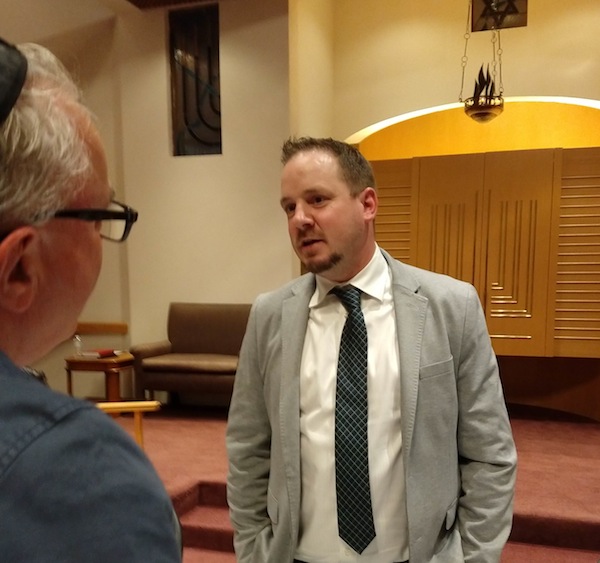
Israeli neuroscientist Dr. Ilan Dinstein was in Vancouver last month to talk about autism research. (photo by Adele Lewin)

Neuroscientist Dr. Ilan Dinstein was in Vancouver last month to share research and expand knowledge on best practices internationally. An associate professor of psychology and cognitive and brain sciences at Ben-Gurion University of the Negev (BGU), Dinstein is the director of the new National Autism Research Centre (NAC) in Israel.

David Berson, executive director of the Canadian Associates of BGU for British Columbia and Alberta, told the Independent: “CABGU was delighted to be a part of hosting Dr Ilan Dinstein in Metro Vancouver. This visit was spearheaded by Dr. Grace Iarocci, Dr. Elina Birmingham and Dr. Sam Doesburg from SFU [Simon Fraser University] and Dr. Tim Oberlander from B.C. Children’s Hospital.

“Ilan Dinstein is a true reflection of the pioneering spirit that is unique to the Negev region of Israel, where, over the past five years, clinicians from Soroka University Medical Centre and researchers from Ben-Gurion University of the Negev have organically come together to collaborate for the betterment of all of the residents with ASD [autism spectrum disorder] in the region.”

Dinstein spoke with the Independent about the new centre and the purpose of his visit to Canada.

“We started the centre five years ago, to try to understand different causes of autism,” he said. “Autism is not one disorder. There are different sub-types of autism, with different possible roots and risk factors. Some of those factors are biological or genetic; others might be environmental. For example, a premature birth might be a risk factor in the child developing autism. Or the age of the parents – a child of older parents might have a higher risk of autism diagnosis than if the same parents were younger. We at the centre are trying to discover how the combination of genetic and environmental issues affects autism development.”

According to Dinstein, one of the reasons for the creation of the centre was the way science is funded in Israel. “The funding usually comes for one specific question,” he explained, “but autism is a complex, systematic disorder and it needs many facets of study, measurement and research; it needs collaboration and sharing of information. At the centre, we are able to combine different fields of study with the clinical applications, as we work together with the Soroka medical centre.”

The scientists of the NAC study autistic patients from different multidisciplinary angles: neuroscience and cellular biology, language pathology and motor tracking, even facial features.

“The truly unique thing is that we do all our studies inside the hospital,” Dinstein said. “Parents come in with their children, usually when the children are about 3 years old and the parents and the children’s teachers notice the kids’ uncommon behavioural patterns. The diagnosis of autism usually takes four visits. During those visits, we work in collaboration with the doctors, measuring various characteristics of the child’s development to arrive at the right diagnosis.

“We also started a database of all our patients, so we have a centralized well of knowledge about how various biological, cultural and social factors might contribute to autism development.”

Of course, not all of the parents agree to have their child added to the database, but Dinstein said that their recruitment rate is about 80%.

After the diagnosis, the scientists participate in determining a personalized treatment program, based on their research. “Such a program might include teaching the children useful behavioural habits, helping them with language acquisition or providing occupational therapy,” explained Dinstein. “Some autistic kids are very agitated and certain motions, like spinning, might calm them down. Sometimes, autistic children need to learn basic skills: how to dress themselves or brush their teeth.”

Pharmaceuticals can also help children cope with autism, but Dinstein said that only about 10% of patients use medications.

At the NAC, the scientists don’t treat patients, but rather study and make recommendations, develop new technologies and new methods of dealing with the disorder. Working together with clinical professionals, they hope to contribute to a higher rate of success in treatment.

One of the most important aspects of Dinstein’s and his colleagues’ work is an annual follow-up on the patients in the database. Families are required to come back once a year after the initial diagnosis, so the service providers can see their progress, determine what worked and what didn’t, and adjust their recommendations accordingly.

“We are still in the process of enlarging this project,” said Dinstein. “We want to open other locations in Israel, make our database to cover the entire state of Israel.”

The centre’s autism research, in particular its database of patients with autism, inspired interest locally, from scientists and clinicians to families and service providers. The invitation for Dinstein to visit Vancouver came from a range of people.

“Your researchers want to create a similar database to ours, Canada-wide,” said Dinstein about his presentation at the Children’s Hospital. “I met with scientists from UBC [University of British Columbia] and SFU, even some from Victoria. I also met medical professionals, parents, some service providers and stakeholders. I see these meetings as the beginning of a close relationship between autism research in Israel and in Canada. There are similarities there, but there are differences, too. Both countries have different ethnic maps, cultural traditions and genetic variations. We all want to know how such diversity affects autism.”

Olga Livshin is a Vancouver freelance writer. She can be reached at olgagodim@gmail.com.
Compassion over hate

Tony McAleer, who helped found the organization Life After Hate, spoke at Congregation Beth Tikvah last month, along with fellow Life After Hate member Brad Galloway. (photo by Pat Johnson)

A former leader in Canada’s far-right white nationalist movements says targets of white supremacist extremism should not be expected to “hug a Nazi.” But, as difficult as it may be, seeing the humanity in everyone and finding compassion for people who lack compassion may be key to reducing the problem of racist extremism.

Tony McAleer was a member of the so-called White Aryan Resistance and his early embrace of technology and the internet helped propel that movement into the digital age. He later helped found the organization Life After Hate and now works with others who want to leave the neo-Nazi movement. He shared his personal history at Beth Tikvah synagogue, in Richmond, on Sept. 8. He has also spoken at other synagogues and venues in recent weeks.

“While we condemn the activities, while we condemn the ideology, we don’t condemn the human being,” McAleer said of his organization’s strategy. “It’s coming from that place of compassion.… The hardest thing to do in the world is to have compassion for people who don’t have compassion. We do that as harm reduction – hurt people hurt people, and we can bring them back from that place of hurt so they don’t do it anymore.”

McAleer grew up in a stable, comfortable Dunbar home, which contradicts some stereotypes, he said. He attended private Catholic school but lost respect for authority figures when he caught his father with a woman who was not McAleer’s mother.

“Can anyone remember the day when God fell off the pedestal?” he asked. His grades fell, his behaviour deteriorated and he was regularly sent to the principal’s office for canings.

“When I look back on it, I don’t think that I’ve ever felt more powerless than I did in that office time after time after time after time,” he said. “It didn’t make my grades go up. I continued to tune out.… I went from listening to Elton John and Queen to the Clash and the Sex Pistols. I was angry and the music I listened to was angry. It eventually led me down the road into the punk scene and later into the skinhead scene. And, in the skinhead scene, I found an outlet for my anger.”

Ideology is secondary, at best, as an attractant to racist groups, he said.

“What we find in the young men and women who are drawn to these movements is there’s an underlying rage, underlying vulnerability that makes the ideology so seductive,” he said. “I want to be very clear here. I’m not for a minute blaming anything I did on my childhood. Everything I did I chose to do and I take accountability for that and I always will. I work for Life After Hate, do things like this to pay back for that.”

He shares the story of his early life as an explanation, not as a justification, he said.

“What I found in the movement, what I found from being a skinhead – I found a sense of power, a sense of purpose, a sense of meaning,” McAleer said. “I got power when I felt powerless. I got attention when I felt invisible and I got brotherhood, camaraderie and acceptance when I felt unlovable.… Those are the vulnerabilities that make the ideologies so seductive. If you have those in a healthy way, the ideology doesn’t make sense to you. But, for somebody craving those things, the ideology becomes something powerful, a false seduction.”

When he was 21 years old, McAleer’s girlfriend gave birth to a baby girl.

“For the first time, I connected to another human being. Up until that point, I was completely cut off from my heart, I was completely dehumanized,” he said. “I believe that the level to which we dehumanize other human beings is a mirror reflection of how internally disconnected and dehumanized that we are.”

That began the transformation. He had a son months later and was soon a single father being assisted by his mother who, he said, “never gave up on me.”

“It’s safe to love a child,” he said. “They see the magnificence in us when we can’t see it ourselves when we look in the mirror…. The more I can connect to my humanity, the more I can connect to the rest of humanity. I couldn’t connect to the rest of humanity because I couldn’t connect to myself.”

Though he was heavily involved in antisemitism, it wasn’t about Jews, he said.

“I was projecting my crap and I had a vehicle to project it onto – the Jewish people – and that’s what I did.”

The compassion Life After Hate promotes must be accompanied by healthy boundaries and consequences, he said.

“It doesn’t mean we let people off the hook. It doesn’t mean we don’t hold people accountable,” he said. “We do hold them accountable. It’s like tough love. But we need to see the humanity, even in someone whose heart is filled with hate. I don’t think we can afford to dehumanize anybody regardless of how inhuman their behaviour. I believe that nobody is irredeemable. It’s tough work.”

Brad Galloway, who is also a member of Life After Hate, joined McAleer at the event. Also a former white supremacist, Galloway is now completing a degree in the school of criminology and criminal justice at the University of the Fraser Valley. He researches extremism and participates in interventions with members of hate groups to help them leave the movements.

Galloway too came from a middle- to upper-class home. After a fairly typical adolescence and a period of struggling to find his identity, he ran into a childhood friend who was involved in the white power movement.

“I was looking for an identity,” said Galloway. “I was looking for something to belong to, something that I can call my own. He gave me the chance. We’ll give you brotherhood, we’ll back you up, we’ll be there for you … some sort of pseudo-support network which never, never came to fruition. They never provided any of those things for me.”

photo - Brad Galloway
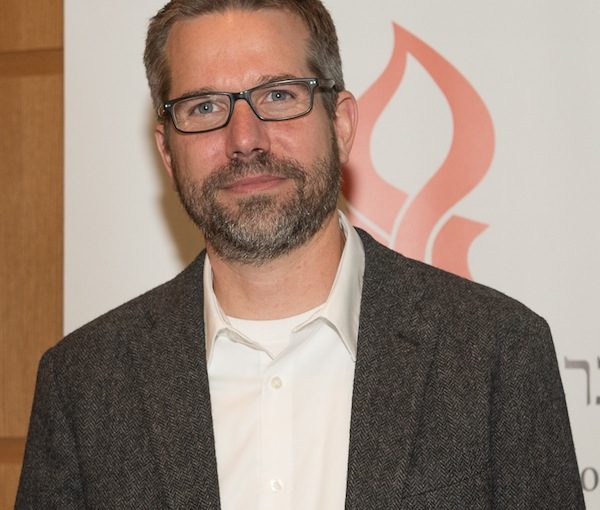
Brad Galloway (photo by Pat Johnson)

Like McAleer, it was fatherhood that made Galloway realize his extremism was putting his family at risk.

He also reflects on compassion he received from police and others during his time in the far-right.

“Why do these people care about me?” he wondered, adding that he began to recognize that individuals who were kindest to him were often members of the very cultural groups he demonized. After a gang brawl where Galloway was nearly killed, he saw compassion in action.

“I ended up in a hospital and I’m lying on the table and a doctor walks in and he’s an Orthodox Jew. I’m lying there with a swastika shirt on, blood all over me, thinking this guy should not help me. I do not deserve to be helped at all right now…. I felt like I was a terrible person and I didn’t feel I deserved this person’s time,” said Galloway. “He did not mention anything about me. He just did his job as a doctor and provided me exactly what I needed. That moment made me start to think about all these different times when minority communities had been good to me.”

Since the racist rally in Charlottesville, Va., in 2017, Life After Hate has been inundated with requests for help. About 300 new cases have opened, about half of which are people trying to leave the movement, the other half family seeking help to extricate their loved ones.

Cpl. Anthony Statham, one of two members of the RCMP’s B.C. Hate Crimes Unit also spoke, outlining the legal strategies employed to fight extremism.

McAleer’s book, The Cure for Hate: A Former White Supremacist’s Journey from Violent Extremism to Radical Compassion has just been released by Arsenal Pulp Press.

Looking for a family doctor?

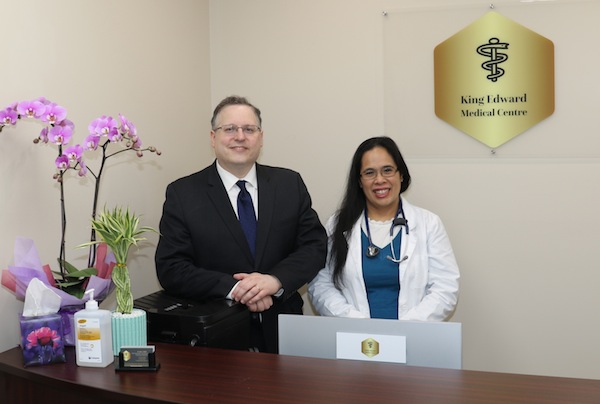
Arthur and Anna Wolak opened King Edward Medical Centre on Sept. 16. (photo from KEMC)

The King Edward Medical Centre, a full-service family practice in Vancouver offering comprehensive primary care, officially opened its doors on Sept. 16.

Located in King Edward Mall (at Oak Street), the centre was launched by physician Dr. Anna Wolak and her husband Arthur Wolak, PhD. It is open to individuals and families throughout the Greater Vancouver area.

Longstanding and active participants in the community, the Wolaks believe this is an opportune time to help those lacking a doctor.

“Given there are so many people without family doctors – and there will be more soon, as there is a slate of family doctors who will be retiring within the next few months – people will be looking for a family physician,” said Arthur Wolak, executive director of the medical centre.

Anna Wolak is a family physician and clinical assistant professor of family medicine at the University of British Columbia. Fluent in English and Filipino, her practice focuses on all ages.

She studied medicine at the University of the Philippines in Manila, the University of Texas MD Anderson Cancer Centre in Houston and the University of Adelaide in Australia. In 2007, upon completing her training in family medicine at the Royal Adelaide Hospital and the Modbury Public Hospital, also in Australia, she moved to Canada.

Before practising in Vancouver in 2009, Wolak had a large family practice in Osoyoos, and was an emergency room doctor at the South Okanagan General Hospital in Oliver.

She also has been active in medical education, having served on the planning committees of major medical conferences and programs. She spent many years as an active parent class representative at both the Jewish Community Centre of Greater Vancouver preschool and in various grades at Vancouver Talmud Torah.

In 2014, RBC selected her as one of the top 25 immigrants to the country for demonstrating “strong leadership within the medical community.”

“Despite my extensive medical background, I needed the support of an experienced businessperson to pursue this endeavour, as medical training doesn’t include business training,” she told the Independent. “My husband has the skills that I lack. Together, we decided that we could establish a medical centre in the heart of the local community that would fill a great need, as Vancouver is desperate for primary care physicians.”

An entrepreneur and writer who holds several university degrees, including a master’s in business administration, a doctorate in management and a master’s in Jewish studies, Arthur Wolak is the author of numerous articles and books on a wide range of issues, the most recent being The Development of Managerial Culture (Palgrave Macmillan) and Religion and Contemporary Management (Anthem Press).

Born and raised in Vancouver, he is also the president of CMI Chat Media, a marketing company he co-founded with his brother, Richard Wolak.

For his part, Wolak is very excited to serve as the executive director of King Edward Medical Centre, managing the many administrative aspects of the growing office. He had the idea for several years and, with their three children now all in school at Vancouver Talmud Torah, he convinced his wife that this was the time to create a place that would benefit the community.

“My father, Dr. Edward Wolak, was a physician and I was brought up with an understanding of the importance of helping people. It was a natural fit for me, even though my academic and professional background, though very broad, was not medical. Anna has the medical skills. I bring other skills to the centre,” he said.

His mother, Elizabeth Wolak, was renowned as both a music teacher and choral conductor, having established and led Jewish choirs in Vancouver for nearly 50 years. She was awarded the B.C. Community Achievement Award and the Queen Elizabeth II Diamond Jubilee Medal for her Jewish choral work in Canada.

Both his parents were Holocaust survivors from Poland.

Over the years, Arthur Wolak has been active in various Jewish organizations. He was treasurer of the Western Association of Holocaust Survivors – Families and Friends, on the advisory board of Vancouver’s Melton School of Adult Jewish Learning (an initiative of the Hebrew University) and on the planning committee of the Vancouver Jewish Film Festival. He is presently a member of the board of governors of Gratz College, the oldest independent and pluralistic college for Jewish studies in North America, situated in suburban Philadelphia.

King Edward Medical Centre is currently accepting new patients. The website is kemedical.ca.

Sam Margolis has written for the Globe and Mail, the National Post, UPI and MSNBC.

Ever consider a ghostwriter?

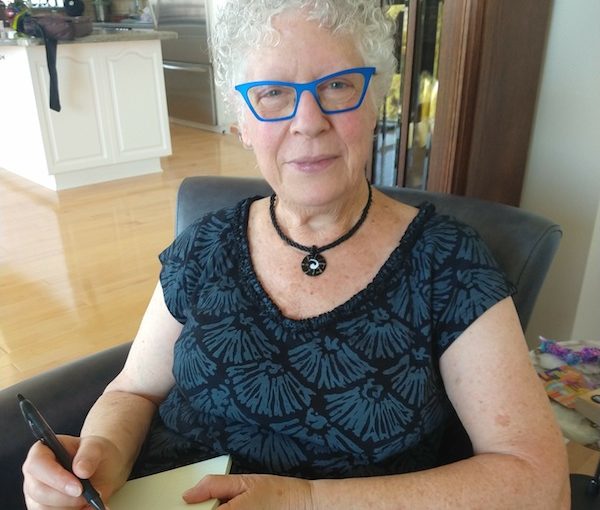
Judi Majewski can help you express what you’d like to say in writing. (photo by Pat Johnson)

Want to write your thoughts down but you’re not so good with words? Need to write a difficult letter? Want to record some memories? If you need a ghostwriter to help you express what you need to say – no matter what it is – a volunteer is ready and willing.

Judi Majewski has been offering the free service at the Isaac Waldman Jewish Public Library since the summer. She hopes readers of the Independent might know someone who can use her help.

“I thought, I know people struggle with this, so I would love to help people,” said the former public school teacher. Writing comes easy for her, she said, something she knows is not the case for everyone.

People for whom English is not a first language might benefit from her help, Majewski said, but she’s excited to help anyone.

“I think anybody, really, who wants to tell a story, who wants to record a memory, record their family history, write a eulogy. And anybody who struggles with putting things down on paper – I think there are a lot of people like that,” she said.

Publishing has never been a desire for her, she said, she just enjoys writing as a way of communicating feelings and thoughts.

“I have written the occasional difficult letter,” she said. “Sometimes your emotions are so involved and sometimes I think people can use help.”

She knows her challenge is to capture the voice of the person for whom she is writing.

“I want it to be in their voice. I think that’s going to be the interesting challenge for me, to see if I can do that, to see if it speaks for them,” she said. “That’s very important.”

Her husband told her she could make a business out of it, but she doesn’t want to go into business. She’s just happy to help, she said.

He offered some other advice, too.

“My husband says I express myself much better in the written word,” she said laughing. “Sometimes we think maybe we should just write to each other.”

To contact Majewski, visit her at the Waldman Library, in the Jewish Community Centre of Greater Vancouver, until Dec. 11, where she will be every other Wednesday, at 1:30 p.m., or email her directly at judimajewski@gmail.com.

Wonderful night of honours

Jewish Seniors Alliance’s first silent auction, which offered a selection of close to 30 items, from gift certificates from local businesses to paintings and prints. (photo by Susan Curtis)

How do you say thank you to individuals who strive to better the lives of people in the community? Jewish Seniors Alliance’s answer is an appreciation dinner, part of its annual general meeting, which comprises a tribute to three conscientious community personalities. As well, at this year’s AGM on Sept. 19, thanks were given to outgoing JSA president Ken Levitt and new co-presidents Gyda Chud and Larry Shapiro were welcomed.

Levitt’s leadership was praised by Shapiro, who noted the outgoing president’s “ever-present love of life, which inspires everyone and brings out the best in each person whom he meets.”

Chud read a poem, “Captain Ken,” written by JSA honourary life member Binny Goldman. It noted: “You listened with your ear and understood with your heart. Your experience, knowledge and judgment always saw us through successfully – you are a leader, a man above most men.”

Anne Kang, MLA for Burnaby-Deer Lake, spoke about the ongoing efforts of the B.C. government on seniors’ issues, including improved long-term care assistance and training of care workers, and the overseeing of buildings and streets, to ensure that they are accessible and safer for seniors.

Emcee Jack Altman began the honouree ceremony with a tribute to Tzvia Estrin, who was nominated by Yaffa House.

Estrin’s son Avie, who is the current president of Yaffa House, recounted the efforts of his mother and late father Aaron, who worked for 10 years to establish Yaffa House. It opened in 2001 as Western Canada’s first home dedicated to housing community members with mental illness in the context of a Jewish living environment, including kosher food. He said his mother continues full-throttle, being at Yaffa House every day, usually at 6:30 a.m. And he emphasized that “nobody could have achieved what Tzvia has attained and continues to do for the most vulnerable segment of our own community.”

Yaffa House presently oversees four homes across the city, including a newly opened women’s facility. Its mandate is to provide permanent non-transitional housing and has in-house support. It takes people off the streets and tries to keep them off the streets.

Tzvia Estrin thanked everyone and read the poem “Don’t Turn Your Back,” which emphasizes the importance of taking the time to compassionately listen to others’ needs and to help them as lovingly as one is able.

Cindy Charkow, a director of Yaffa House, noted the outstanding, much-needed service that the facility provides and stressed that, “without Tzvia, there wouldn’t be a Yaffa House.”

The second honouree, Jack Wizenberg, was recognized for his work with Tikva Housing Society, which helps lower-income Jewish people find affordable housing. He said, “Seeing Jewish individuals and families who are alone, struggling and having to rely on social insurance and the food bank to survive, touches my heart.”

Wizenberg served on the Tikva board for six years, bringing to the position his 41 years’ experience in property management, as well as a lifelong involvement in a range of Jewish organizations and causes in Calgary, Edmonton and Vancouver.

He said he felt “extremely moved” when reading a Jewish Federation of Greater Vancouver housing needs study indicating that, in 2015, 16% of the Jewish population in Greater Vancouver were living below the poverty line “and, in all likelihood, those numbers have increased over the last four years.” He emphasized that things beyond their control prevented these people from working and, in a blink of an eye, they found themselves in need and relying on social assistance to survive.

Wizenberg began his service at Tikva helping with maintenance and tenant issues at Dany Guincher House. Since the first 11-suite apartment building in Marpole was purchased in 2008, he said, Tikva has made available 18 units of mixed single and family housing in the Diamond Residences in Richmond and another 32 family townhouses will be available in the Ben and Esther Dayson Residences in Vancouver’s Fraserview area. Last year, 100 individuals were helped by the Esther Dayson Subsidy Program, which provided those in need with adequate funds to allow them to continue living in their current accommodations.

Tikva president Shelley Karrel said Wizenberg seemed to have a passion for property management and often joined the property management and/or fire-safety group when doing walkthroughs to evaluate building conditions and the need for repairs. His positions have included treasurer, building committee head and acquisitions committee head.

“He was always seeking to ensure the best for Tikva, the buildings and its tenants,” said Karrel. “He is a person who respects others, is very organized and is a great team player. We are blessed to have Jack as a board member and friend.”

Evening honouree , whose tenor singing voice has brought joy to countless individuals and organizations throughout the Jewish and general communities for more than six decades, was introduced by JSA president emeritus Serge Haber.

“We’re honouring people who love community,” said Haber. “Maurice has helped seniors so very much by enthusiastically and nobly giving his special talents, his outstanding voice to the community, and particularly to seniors. Your father, George Moses, a celebrated rabbi/cantor in Bangalore, India, would have been most proud of you. Without question, you are most deserving of this honour.”

Moses spoke of the pleasure he receives by entertaining, and especially in doing so for senior citizens, emphasizing that “our precious seniors should not be ignored and they should be entertained and respected for their countless contributions to life in the community. The only way that I can thank seniors for all they have done is through my singing. It gives me great satisfaction to see their smiling faces, their faces lighting up when I see them react to a song familiar to them.”

Moses shared some of his many religious/concert participations for seniors, including singing for 17 years at Shabbat services at Louis Brier Home and Hospital. He has sung with the Jewish Community Centre Choir, the Shiron Singers, with Elizabeth Wolak and Muriel Morris, and the Rinat Ensemble, all of which performed for seniors. He also has produced a Vision TV show, Let’s Sing Again, which featured a popular tunes sing-along aiming to revive seniors’ nostalgic memories.

He has sung and danced for the past 10 years with the seniors’ concert group Showtime, which is produced by Beryl Israel, as well as with the Vancouver Jewish Men’s Choir (VJMC), the Kol Simcha Choir (composed of members from all synagogues), at Temple Sholom services with Cantor Emeritus Arthur Guttman, at Beth Hamidrash, at Beth Tikvah Synagogue and at Chabad Richmond with Cantor Steve Levin. He is an active participant with the Choir of the Performing Arts Lodge (PAL), which stages a variety of special shows for community seniors.

Moses said his enduring love for seniors was developed by his interactions with the late Beth Israel Cantor Murray Nixon, who constantly stressed the importance of treating older people with respect.

“I am so pleased,” said Moses, “that this evening is taking place at Beth Israel, truly ‘my home away from home,’ where I served in the synagogue’s choir for 66 years under seven different cantors and six different rabbis – and with Pucky Pelman, my mentor for 45 years.”

Moses expressed appreciation to his “guest of honour,” his daughter Melissa, “who has been by my side through three bouts of cancer, making me drink lots of water, eat healthy foods, and go on long walks at the Southlands.”

He gave “a most sincere thank you” to a number of people: Arnold Selwyn, his “35-year wonderful partner in song”; Morris, a pianist with whom he has performed for 55 years; Miriam Breitman, with the Rinat Ensemble and now the PAL chorus, and PAL co-founder Bill Harvey; Binny Goldman, for her help at Louis Brier services; Stan Shear, VJMC musical director; Cantor Yaacov Orzech with the Kol Simcha Choir; and Jonathan Berkowitz of BI’s Purim Shpiel.”

He ended by singing “Let’s Sing Again” and, with Selwyn, Adon Olam.

A video on JSA’s outreach and peer support activities, produced by Cory Bretz of Heirloom Films, was screened, followed by the JSA’s first silent auction, which offered a selection of close to 30 items, from gift certificates from local businesses to paintings and prints.

The event was co-chaired by Tammi Belfer and Larry Shapiro, with committee members Tamara Frankel, Helene Rosen, Marshall and Marilyn Berger, and JSA staff Elizabeth Azeroual and Rita Propp. Catering was provided by Nava Creative Cuisine; the photographer was Susan Curtis.


Bob Markin is a longtime Jewish Seniors Alliance supporter.

Weapon training begins

During the Yom Kippur War, the author had to learn how to fire an Uzi and other weapons. (photo by Victor Neuman)

In this eight-part series, the author recounts his life in Israel around the time of the 1973 Yom Kippur War. The events and people described are real but, for reasons of privacy, the names are fictitious.

Part 4: Training Day

We were two or three days into the war and the news was chilling. Egypt had overrun the defences along the Suez Canal and was pouring into the Sinai. Syria had breached the outposts in the Golan and was within striking distance of Tiberias. We were in shock to think that, a scant six years after the pummeling of the Six Day War, these countries were able to go to war again.

I think the nation was in disbelief as well. Soldiers, in large numbers, had been sent home to observe Yom Kippur with their families. The government had effectively demobilized much of the Israel Defence Forces prior to the attack. The trust in Moshe Dayan and Golda Meir would never be the same.

At first, the response of the average Israeli was cocky. Tamar thought the attack was stupid. “We beat them in six days … now it will be five.” Then, as the news came in, the optimism vanished. Kibbutzniks came around to ask me if I was tuned in to the BBC. They didn’t trust the government to give them the truth of what was going on. It was wartime after all and, at such times, every involved government lies through its teeth. There was not much to listen to, though. Everything was so sudden that the international news services hadn’t caught up with what was going on.

Then Gidon came by. The next day, I was to receive weapons training along with three other volunteers who had just enough Hebrew to say “Halt! Who goes there? Who are you? Stop or I’ll shoot.” The basic wartime jabber.

I don’t recall ever being asked if I wanted to join the fight. As a candidate for kibbutz membership, it was a given that I would step up and do anything required to help. And so it was. This was now my home and these people were my family. Not doing everything I could was never a question in my mind. But, truth be told, to me the fighting seemed far away and unreal and I had no real sense of personal danger. More oblivious than brave might be the way to put it.

Next day, the four of us and Gidon met in a field behind the kibbutz. Gidon had set up a target that consisted of a plywood board on two metal rods that were banged into the ground. There was a rise behind the target to stop the bullets from straying. On a table to the side, he had weapons. There was an Uzi, a bipod sniper rifle and three Second World War relics. Gidon apologized for the older guns, saying they were there just to give us the hang of things and he expected we would have better weapons soon. But, first, he addressed us with a sombre face.

“As you know, our kibbutz is located on Wadi Ara. This valley connects the West Bank territories to the coast of Israel. The military tells me that, if Jordan enters the war and opens a third front, there is a good chance they will come right down Wadi Ara and we are the first Israeli settlement past the West Bank. If that happens, I am told, we have to hold out for six days without help from the army. They are fully occupied in the Golan and the Sinai and will not be able to help us until they have solved their problems over there. Are we understanding?”

“We are,” we all said, a little unenthusiastically. I was thinking, “Worst pep talk ever, Gidon!”

Then came the practice shooting and I learned stuff that no graduate in English literature needed to know.

When sniping with a rifle, lie flat with elbows well anchored. The right leg should be extended back in a line with your rifle and your body to absorb the shock of the recoil. Your left leg is splayed out to the left for stability. Don’t breathe, take aim and squeeze the trigger. Our accuracy was rough, then better. But my main recollection is the kick of those rifles. We were basically lying in fine dirt and, when the round went off, the force pushed our whole body two or three inches backwards. The movement after every shot caused a small cloud of dust to rise up around us and we had to wait a moment before we could see well enough to shoot again.

An Uzi has 32 rounds in its clip. The sliding switch by your thumb has three positions: safety, single shot and automatic. Gidon told us to forget about the first two positions. In battle, you had to be quick. You had to be in automatic mode and learn to shoot from the hip without aiming. The dumbest thing you could do was to hold the trigger down. Doing that would empty your clip in three seconds and the recoil would twist your arm and body up and to the right. Gidon taught us that we had to squeeze off short bursts of around three rounds, see where they hit and adjust accordingly.

Our shooting with the Uzi was fairly awful. Shooting from the hip is really tricky. There were puffs of dust halfway up the hill behind the target, in the dirt just metres in front of us, way off to the left and right of where we were trying to aim. I thought the safest place to be on that range was standing in front of the target.

I had a little better luck than the rest. High with the first burst. Low with the second. Then I adjusted again and hit the target with a burst that knocked the whole thing over.

That evening, Gidon marched us into one of the bomb shelters and gave us all our assigned Uzis. Then he showed us how to disassemble them. We had to disassemble and reassemble our Uzis over and over again until we could do it in a matter of seconds. We were feeling pretty good about ourselves until suddenly Gidon turned off the lights and we had to do the whole thing in pitch dark. A bomb shelter, of course, has no windows. So, when the lights are out, you might as well be spelunking in the world’s deepest cave. We eventually learned to do it using only our sense of touch.

Training ended and so did my date nights in the banana fields with Tamar. She was needed elsewhere and I was approved for carrying a weapon, so I was on my own for going out to the fields at night and dealing with the irrigation. A scary business. Alone in the dark, banana trees making the fields look like a jungle, shadows everywhere and the possibility of infiltrators from the West Bank. I felt like I never breathed until I was in the Willis, job done and heading back to the kibbutz. Back at the kibbutz, I signed in to prove I was still alive. Sometimes I even looked at my own signature to make sure.

When I returned to our flat at 2 a.m., Tamar would be fast asleep. In another world, my girlfriend would leap out of bed and throw her arms around me, overjoyed at my safe return. Tamar would half-waken and say, “Shalom, shalom sweetie,” then go back to sleep. And I understood. It wasn’t that she didn’t care about me. This was Israel. The Yom Kippur War was not their first rodeo.

(Next Time: Night Guard Duty)

(Previously: “Learning the lay of the land”; “When Afula road went quiet”; “Tending the banana fields in war”)

Victor Neuman was born in the former Soviet Union, where his family sought refuge after fleeing Poland during the Second World War. The family immigrated to Canada in 1948 and Neuman grew up in the Greater Vancouver area. He attended the University of British Columbia and obtained a BA and MA with majors in English literature and creative writing. Between 1968 and 1974, he made two trips to Israel, one of which landed him on a kibbutz at the time of the 1973 Yom Kippur war. Upon his return to Canada, he studied Survey Technology at BCIT and went on to a career of designing highways for the Province of British Columbia. When he retired, he reconnected with his roots in creative writing and began writing scripts for Vancouver Jewish Folk Choir concerts and articles for the Jewish Independent. Neuman and his wife, Tammy, live in southeast Vancouver and enjoy the company of friends, their extensive extended family and their four sons.

Help out Israeli teens

Want to make a difference in the lives of Israeli teens? Consider joining Israel Connect, a program where local volunteers connect online, one-on-one, via Zoom (a video conferencing app), with Israeli high school students who want to improve their English conversation and reading skills. The program starts at the end of October and is sponsored by Chabad Richmond. It entails a half-hour per week commitment.

“We’re looking for volunteer retirees, seniors or adults with flexible schedules. No previous tutoring experience is necessary and the curriculum is provided,” said Shelley Civkin, local coordinator of the program.

“We’re looking for Jewish adults who are fluent English speakers, have basic computer skills and own a computer with a camera,” said Civkin. Volunteers can do this from home and technical support is available if needed. Time preferences of volunteers will be coordinated beforehand and sessions take place in the morning between 7 and 11 a.m. any day from Sunday to Thursday. Volunteers will be trained in how to download and use Zoom.

“It’s a very meaningful, practical way for community members to support Israel,” said Rabbi Yechiel Baitelman of Chabad Richmond. “You’ll be doing a mitzvah, while investing in Israel and its young people. Plus, good English skills will give them an advantage in accessing post-secondary education and getting better jobs.

“English proficiency is crucial to Israeli students, since it accounts for a third of their entrance exam marks for university,” he added. “Partnering with the Israeli Ministry of Education, the Israel Connect program targets teens from disadvantaged neighbourhoods in Israel. The tutoring sessions are vital to students’ upward mobility in terms of education and jobs, which is why this program is so vital.”

“Most volunteers really enjoy helping their Israeli students and make great connections with them. It often goes beyond simply tutoring the curriculum and turns into friendship and mentorship,” said Civkin. “This kind of one-on-one tutoring makes a significant difference in their lives, both educationally and personally. It’s hard to estimate the impact of this tutoring on Israeli youth, but we know it’s significant. And it’s incredibly satisfying to know that you’re doing something concrete to help Israeli students improve their lives. Several tutors have visited their students on trips to Israel, and keep in touch beyond just the school year. Building relationships is an integral and highly satisfying part of this program.”

For more information, contact Civkin at 604-789-5806 or civie1956@gmail.com.


Basics of writing a contract

The other day, I finished the contract for an interesting project. There are half-a-dozen people involved in the project. Each of them has something to put in and is getting something out, but there is no direct relationship between one thing in and one thing out. In other words, I couldn’t say, “Mrs. Schwartz pays $100 and Mrs. Goldfarb treats her sciatica.” We were working with a pool of things being exchanged. It was more like, “Mrs. Schwartz pays $50 and provides physiotherapy equipment. Mr. Rosenblum takes $20 and provides a physiotherapy space. Mrs. Goldfarb treats Mrs. Schwartz, takes $30, and tells her other clients that she has space and equipment for physiotherapy.”

In Genesis, Chapter 9, we have the Covenant between G-d and Noah and with all of his descendants, being humankind; it also includes obligations between people. It is not set out as an item-by-item exchange, such as you pay your fare and the bus takes you along its route. It is a pool of obligations, promises and considerations among several parties, being G-d, Noah and each of the people who will descend from him.

This concept of a collection of promises was the structure I needed to put that project to paper the other day. It reinforced a basic technique in writing contracts that makes it possible to write a contract on a napkin.

A binding agreement is made by answering the questions, “Who’s doing what, and when are they doing it?”

The Torah distinguishes between the agreement (brit) and the token – or evidence – of the agreement (ot-habrit).

The agreement itself is the exchange of obligations: humankind will multiply and replenish the earth, will not murder (directly or indirectly) and will not eat meat that is still alive; G-d will provide to humankind the right and ability to hunt and eat meat, will establish the foundation of a justice system and will not flood the earth again.

The token of the agreement is the rainbow. This serves as a reminder both to G-d (verses 14 and 15) and to humankind and all creatures of the earth who can see it.

Today, we make this distinction by using a signed, written contract. The signed, written contract is evidence of the agreement between the parties. This brings us back to the napkin.

You’ll notice that, in my description of the arrangement between Mrs. Schwartz, Mrs. Goldfarb and Mr. Rosenblum, I state what each person does and expects to receive. Nothing happens without someone doing it. The only critical statement missing is the “when.” There are also a few details that would be quite helpful, such as where the money is being exchanged, what equipment is involved, the location of the therapy space, and the length of the therapy session.

In the questions “Who’s doing what, and when are they doing it?” the “what” also includes the “how” and the “where.” In this example, we could say:

“On the 15th day of Kislev, 5780, Mrs. Schwartz will put $50 in the old pickle jar behind the desk at Mr. Rosenblum’s office, which is at 12345 Oak St. She will also deliver, at the same time, an electric stimulation machine and the gel and pads needed for it. She won’t pick it up until the end of Chanukah.

“Mr. Rosenblum will take $20 of the $50 now in the pickle jar and let Mrs. Goldfarb use the therapy cubicle in his office for physiotherapy until the end of Chanukah.

“Mrs. Goldfarb will take the remaining $30 from the pickle jar and will treat Mrs. Schwartz’s sciatica for an hour on the 19th of Kislev and an hour on the 21st of Kislev.

“Mr. Rosenblum and Mrs. Schwartz will let Mrs. Goldfarb use the equipment and space for her other clients until the end of Chanukah.”

In this example, we now know who is responsible for what, when they’re going to do it, and how they’re going to do it.

There are far more details that we could put in, but this would be enough to move forward on its own if Mrs. Schwartz, Mrs. Goldfarb and Mr. Rosenblum don’t get around to writing out something more complicated.

If they expanded from a napkin to a couple of pieces of paper, they could also add in the kinds of details that lawyers argue over: what happens when things go wrong?

The first part of dealing with things going wrong is having everyone promise that it won’t. These are called, in Legalese, the representations and warranties.

Mr. Rosenblum will promise that he has an appropriate space for the therapy, including whatever licences and permits are needed. He also might promise certain details about what is an appropriate space, such as size, privacy, therapy bed, etc.

Mrs. Goldfarb will promise that she has the training, skills, certification and the valid licence required to carry out her obligations. She will also promise to do the therapy in a professional manner to the standards expected by her profession.

Mr. Rosenblum and Mrs. Goldfarb will both promise that they have the appropriate insurance.

Mrs. Schwartz will promise that she has the equipment needed for her therapy and that it works properly.

Now that we know who is going to do what, when and how they’re going to do it, and that they’ve all promised that everything is above board, we can discuss what happens if something goes wrong. Here we get into things like limitations of liability and indemnities. We also might have dispute resolution tools built right into the agreement.

If something goes wrong, no one wants to pay for someone else’s mistakes.

If Mrs. Schwartz trips on the doorstep, Mrs. Goldfarb doesn’t want to be responsible for Mr. Rosenblum not having a smooth entrance to his office.

If Mrs. Goldfarb injures Mrs. Schwartz during treatment, just because it happened in his office, Mr. Rosenblum doesn’t think he should be responsible.

If the electrical equipment causes a fire, neither Mr. Rosenblum nor Mrs. Goldfarb wants to be responsible for the damage caused by Mrs. Schwartz’s faulty machine.

Each will indemnify the others for liability arising from his or her own actions or negligence. In other words, each person promises to pay for the others’ damages for anything that is his or her own fault, whether or not it was intentional.

Dispute resolution is often overlooked because, when people are excited to enter a project together, they tend to think fights aren’t going to happen. But thinking about how to deal with an argument not only makes it easier should an argument arise, it also reduces the likelihood of the argument getting serious.

There are many flavours of dispute resolution tools, but here’s an easy one: the people involved pick an outside person whom they all trust, perhaps their rabbi, and they write in the agreement that, if they can’t resolve an argument between themselves, they’ll ask Rabbi Fogel to help them resolve it.

Remember that a good contract is a clear, written statement of a shared vision.

Jeremy Costin is a business and estates lawyer practising in Vancouver. He sits on the board of directors and the governance committee of the Vancouver Holocaust Education Centre, is a founding director of the Jewish Lawyers Association of British Columbia and is a frequent guest instructor at the Law Society of British Columbia.

Confidentiality clause issues

Typically, an insurer will bring a “standard” form of release to a mediation to be signed. (photo from pxhere.com)

Most of my cases against insurance companies settle, often at mediation. Typically, the insurer will bring a “standard” form of release to the mediation for my client to sign. If not, when the insurance company’s lawyer sends me the cheque, it will be accompanied by a form of release that my client must sign in order to receive the settlement funds. In either case, the release will always contain something not usually discussed – a confidentiality clause.

A confidentiality clause seeks to prohibit the parties to a settlement from disclosing the settlement terms, and sometimes more. Confidentiality raises numerous problems.

It is routine for the confidentiality clause to permit the settlement amount to be disclosed to tax preparers, accountants and legal or financial advisors. Not so routine, although perhaps it should be, is a carve-out that allows a client to reveal facts from the underlying claim to industry regulators.

Clients often object to confidentiality because they are frustrated and angry about what has happened to them and, specifically, what the insurance company did. Insurance companies always want confidentiality, often because of the feared perception of guilt that accompanies a settlement. That secrecy itself may be adverse to public policy and protection of the public, as it can allow wrongful conduct to continue.

As lawyer Ronald L. Burge wrote in a 2012 paper for the American Bar Association: confidentiality clauses are “bad for clients, bad for lawyers and bad for justice.”

Confidentiality prevents the public from knowing about wrongful conduct. It can also prevent regulators and government agencies from performing their duty to enforce the law and protect the public. The role of the court is to evenly administer justice to all, so that all are protected by the law. When violations are hidden by confidentiality, the legal system itself is thwarted from fulfilling one of its fundamental purposes – to protect the public from wrongful conduct.

Equally important is the fact that the legal system is funded by the public. The use of government employees, monies and buildings entitles the public to openness in all aspects of the legal process, including settlements that are achieved through use of the legal system.

Society would be better off if all settlements were public knowledge. Wrongful conduct would be exposed not just for the economic justice of the client, but for the broader societal purpose of curbing such wrongful conduct. Lawmakers and the public could see where problems exist, both in products and service suppliers, and act appropriately. Fundamentally, the settlement of a lawsuit should be a public proceeding, just as a trial is a public proceeding.

The conduct of insurance companies is governed by laws and regulations. It is likely contrary to public policy to require confidentiality of facts that may disclose the violation of laws and regulations governing the insurer’s conduct.

Moreover, the legal system does not belong to any industry, certainly not the insurance industry. It belongs to the Canadian public. Courts function best in the daylight of an open, transparent administration of justice. Otherwise, people cannot observe and understand what is going on and how the courts protect everyone by their fair administration of justice. Secrecy protects repeat offenders and harms everyone else. Openness is consistent with basic principles of the rule of law.

Secrecy in settlements also prevents lawyers from properly serving their clients. A lawyer cannot place a fair and reasonable value on a case when the lawyer cannot compare it to other known cases. It is particularly harmful to inexperienced lawyers who may be most prone to undervaluing a case. The secrecy allows insurance companies, with their vast resources, to assess a claim’s fair value, while preventing many clients from doing the same.

Finally, confidentiality does not actually promote settlement. The vast majority of cases already are settled without trial.

Governments should specifically limit the use of confidentiality clauses in the settlement of lawsuits involving wrongful conduct by insurance companies. This should be done for the protection of the public, to improve the industry and to preserve the effectiveness and integrity of our legal system.

Jan A. Fishman is a lawyer practising in Vancouver. He mainly acts for individuals who have been wrongly denied insurance benefits. He has held numerous elected and appointed positions in the legal profession and currently sits on the editorial board of Civil Jury Instructions. He also volunteers in the Jewish community and is active in his synagogue.

Mortgage industry’s future

(photo by Nick Youngson / Alpha Stock Images)

The next decade is going to see an evolution in how Canadians obtain mortgages. These shifts will transform the experience for both the mortgage professional and, more importantly, the borrower. Here’s where things are now and what I foresee.

The mortgage industry

A borrower can go to three sources to get their mortgage: account managers at banks, mortgage specialists at banks and mortgage brokers. (I use “bank” as a catchall for financial institutions, including credit unions and trust companies. Financial planners are not included because they represent such a small slice of the pie and refer files to mortgage specialists.)

Employees, particularly account managers, are a bank’s frontline team for mortgages. These salaried employees get incentives if they hit sales targets, but they are, by definition, jacks-of-all-trades. They help with a client’s routine banking needs, open investment accounts, provide general advice and also write mortgages.

Because mortgages are complex, account managers are encouraged (and often required) to send their mortgage applications to a mortgage specialist. This is good policy, because it is best to have an expert eye review something as significant as an average family’s most significant investment and the average bank’s bread-and-butter. Also, because there have rightly been many – one expert told me there was a total of 168 – new rules since the 2008 financial crisis, it has become increasingly difficult to “dabble” in mortgages.

Given these developments, a consumer would be wise to trust the most important financial transaction in their life to a professional who has expertise in a single field, rather than a generalist who is doing mortgages off the side of their desk.

Of course, every bank employs a network of mortgage specialists, with each bank investing varying amounts of resources into training. Still, a mortgage specialist is just that: a bank employee who specializes in mortgages.

Most banks’ mortgage specialists are commission-based and can make a good living from their work. But remember: bank specialists work for the bank, not for you. (They also don’t require a licence or any accreditation to write up your mortgage application.)

Mortgage brokers are independent professionals whose unique responsibility is finding the ideal financial solution for each client, not whatever rate or product their bank is pushing on any given day.

A mortgage broker is a professional who has successfully completed an educational process, passed an exam and undergone comprehensive assessments, including biannual criminal background checks. Additionally, continuing education is required to ensure that mortgage brokers remain informed of the latest developments in this ever-changing industry. Mortgage professionals at the banks, however well-intentioned or however closely they follow the business pages, have no such requirements.

It is commonly said that a mortgage broker “shops around” for the best rate. This is partly true, but there’s more. Brokers know the rates and conditions of every lender. What we do with that information is tailor each client’s need with rate and product choices, allowing them, with their mortgage broker’s guidance, to make the most informed, appropriate decision for what best suits them.

For example, a broker might recommend a more flexible mortgage product with a slightly higher-than-base rate versus a lower rate with restrictions. This is crucial because, again, everyone’s case is unique. Circumstances change. Relocation is sometimes unavoidable.

Even better: for most mortgages, a mortgage broker’s service is provided at no cost to the borrower. Brokers earn their keep from the lender that finances the borrower’s mortgage.

Where is industry headed?

Account managers at banks will continue to write mortgage applications because this remains an efficient use of the bank’s resources. The banks have been building increasingly sophisticated mortgage application platforms for their mortgage specialists and account managers to use. These easy-to-use apps are straightforward and allow their employees to quickly and efficiently pull together all of the necessary information to verify credit data and employment, assess risk and review the property, all at the click of a few buttons.

The banks built these systems so that employees with less expertise (and lower salaries) can replicate or reduce the work of more highly trained professional staff. And, since mortgage specialists are largely commission-based, it seems to me that banks will increasingly depend on salaried individuals who read from their computer screen while dealing with mortgage-seekers.

The obvious issue with an account manager reading off a screen is that, at any point in time where real advice is required, the bank employee will not have the training or experience to provide it.

There is, of course, still currently a place for bank specialists. The best of them can and do give the best service possible to their clients.

My prediction is that the mortgage specialist role will be curtailed until only a few high producers remain. Banks will probably continue to make it easier for mortgage specialists to do their jobs, allowing them to take on more files and the best will grow and the worst will drop off.

Don’t misunderstand me. There is a place for technology, obviously, in the process. In fact, mortgage brokers, by necessity, are entrepreneurial

and resourceful, and have created economies of scale, processing documentation and applications more efficiently than ever. For instance, my team and I have automated the process of 70-plus internal steps per client throughout the mortgage process, streamlining everything for ourselves so that our clients can benefit from the most comprehensive and individualized experience we can offer. This involved a lot of time up-front, but it means that our clients receive the service they want, tailor-fit to their specific needs.

My prediction for mortgage brokers is that there will be a culling of the herd, just like with mortgage specialists. A broker, and any consultant in this day and age, needs to innovate and use the newest technologies to stay relevant in the eyes of borrowers. Not just that, the brokers themselves need to know each lender’s products and how to get files approved.

Superb knowledge, a fast and efficient process, and amazing customer service will become the bare minimum in the future, and the specialists and brokers who “dabble” or aren’t 100% committed to improving their craft will get left in the dust.

Eitan Pinsky is principal of Pinsky Mortgages, a Vancouver-based mortgage broker.