Skip to content
  • Home
  • Subscribe / donate
  • Events calendar
  • News
    • Local
    • National
    • Israel
    • World
    • עניין בחדשות
      A roundup of news in Canada and further afield, in Hebrew.
  • Opinion
    • From the JI
    • Op-Ed
  • Arts & Culture
    • Performing Arts
    • Music
    • Books
    • Visual Arts
    • TV & Film
  • Life
    • Celebrating the Holidays
    • Travel
    • The Daily Snooze
      Cartoons by Jacob Samuel
    • Mystery Photo
      Help the JI and JMABC fill in the gaps in our archives.
  • Community Links
    • Organizations, Etc.
    • Other News Sources & Blogs
    • Business Directory
  • FAQ
  • JI Chai Celebration
  • JI@88! video

Recent Posts

  • המלחמות של נתניהו וטראמפ
  • Zionism wins big in Vegas
  • Different but connected
  • Survival not passive
  • Musical celebration of Israel
  • Shoppe celebrates 25 years
  • Human “book” event
  • Reclaiming Jewish stories
  • Bema presents Perseverance
  • CSS honours Bellas z”l
  • Sheba Promise here May 7
  • Reflections from Be’eri
  • New law a desecration
  • Resilient joy in tough times
  • Rescue dog brings joy
  • Art chosen for new museum
  • Reminder of hope, resilience
  • The national food of Israel?
  • Story of Israel’s north
  • Sheltering in train stations
  • Teach critical thinking
  • Learning to bridge divides
  • Supporting Iranian community
  • Art dismantles systems
  • Beth Tikvah celebrates 50th
  • What is Jewish music?
  • Celebrate joy of music
  • Women share experiences 
  • Raising funds for Survivors
  • Call for digital literacy
  • The hidden hand of hate
  • Tarot as spiritual ritual
  • Students create fancy meal
  • Encouraging young voices
  • Rose’s Angels delivers
  • Living life to its fullest

Archives

Follow @JewishIndie
image - The CJN - Visit Us Banner - 300x600 - 101625

Month: October 2019

צי’זקייק חוגג ארבעים שנות

צי’זקייק חוגג ארבעים שנות

צי’זקייק חוגג ארבעים שנות פעילות ומציין שנתיים למותם של הבעלים (רוני רחמני)

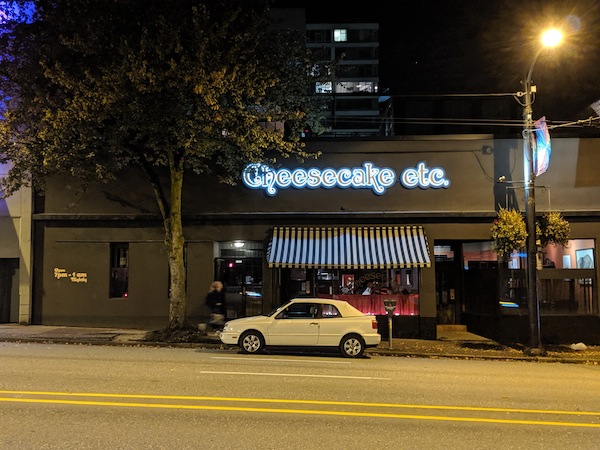
הקפה המיתולגי צ’יזקייק אצטרה יחגוג בקרוב ארבעים שנות פעילות. הקפה נמצא ברחוב גראנוויל מייד לאחר הגשר (שמחבר את העיר עם הדאון טאון), בסמוך לשדרה הרביעית.

ביום ראשון האחרון (העשרים בחודש) נערך טקס אזכרה לבעלי צי’זקייק, אדית ומייקל סימס, בבית העלמין שבפוינט רוברטס ארה”ב (שסמוכה לדלתה שבמחוז בריטיש קולומביה). באירוע שאורגן על ידי בנם יחידם של הזוג, דניאל סימס ואשתו פטרישיה, כלל חשיפת המצבה מעל הקבר. השתתפו בו בני משפחה וחברים קרובים.

אדית ומייקל סימס שמו קץ לחייהם ביחד (אדית הייתה בת 77 ומייקל היה בן 79), ב-27 בנובמבר לפני שנתיים. בחיים כמו במותם השניים תמיד היו ביחד: הם גרו ביחד מרגע שהתחתנו בשנות העשרים המוקדמות של חייהם, הם עבדו ביחד בקפה, טיילו ברחבי העולם ביחד, נפשו ביחד, נפגשו ביחד עם החוג הנרחב של החבריהם מכל קצוות עולם, שהו יחדיו באירועי משפחה שונים, הופיעו כמעט לכל אירוע ביחד, החזיקו במחשב אחד, באימייל אחד ובמכשיר סלולר אחד.

מייקל חלה בנסיעתם האחרונה של הזוג לצרפת ודרום אפריקה ולקה בשיתוק חלקי. המחלה הפריעה לו למהמשיך ולתפקיד כרגיל, הוא התקשה בהליכה ובעיקר בנגינה על פסנתר – הדבר שהכי אהב לעשות. גם אדית כבר לא הייתה בקו הבריאות ולכן הם החליטו יחדיו להיפרד מהחיים. לא במקרה הם עשו זאת בסטודיו שלהם שממוקם מאחורי בית הקפה.

דן לקח את מושכות ניהול בית הקפה לידיו והמקום ממשיך להיות מלא מדי ערב, שבעה בימים בשבוע, מזה קרוב לארבעים שנה.

רבים רבים בוונקובר ובמקומות אחרים בעולם הצטערו לשמוע על מותם הפתאמי של אדית ומקייל סימס. לא נמצא אף אחד שאמר משהו רע עליהם. רבים הגיבו על פרסום הידיעה בעיתון “הוונקובר סאן” על מותם. נכתבו דברים טובים מאוד והובע צער עמוק על הפרידה מהזוג האהוב. להלן חלק מתגובות: “אדית ומייקל היו זוג נפלא ותמיד קיבלו בברכה, באהבה ובנוחות את הלקוחות”. “כמה היו נחמדים ונדיבים”. “איזה זוג מדהים. אבידה גדולה”. “זוג כל כך נחמד, אני שבור לשמוע את החדשות הרעות”. “צ’יזקייק היה מקום נפלא לעבוד בו בגלל אדית ומייקל”. “אהבתי את האווירה והמוסיקה. מאוד מאוד עצוב”. “אני בהלם לשמוע את החדשות הנוראיות. אדית ומייקל היו זוג כל כך נחמד, נעים וחם”. “הם היו נשמות יפות, נדיבים, מתוקים וטהורים. חיו בדרכם והיו מאוד מיוחדים”.

צ’יזקייק הזכיר בית קפה בפאריז בשל האווירה הרומנטית, האורות הנמוכים, התמונות בשחור לבן, הקירות באדום והנעימות ששררה במקום. מייקל ניגן נפלא ואהב לאלתר ג’אז. אדית אהבה לשיר וקול זהב שלה הזכיר מאוד את קולה של הזמרת הצרפתית הידועה אדית פיאף.

השניים היו יהודים: אדית ילידת סקוטלנד שגדלה בטורונטו ומייקל אמריקני יליד בוסטון. הם הכירו בישראל בשנת 1961 והתאהבו במבט ראשון. לאחר שנה החליטו השניים להינשא בטורונטו. ולאחר מכן הזוג עבר לבוסטון. אחרי שנולד בנם דן הם החליטו לעבור לוונקובר, שהפכה לביתם החם במשך כארבעים השנים האחרונות.

יום אחד בשנת 1979 אדית ומייקל מצאו חנות להשכרה ברחוב גראנוויל ובמקום נפתח קפה צ’יזקייק אצטרה. לאט לאט הקפה החל להתמלא ורבים באו לשמוע את מייקל מנגן ושר עם אשתו, ונהנו לאכול עוגת גבינה ברוטב תות שדה או שוקולד. תוך תקופה קצרה צ’יזקייק הפך לשם דבר והמקום שימש לעלייה במשך שנים וגם כיום – כאמור זה קרוב לארבעים שנה.

Format ImagePosted on October 23, 2019Author Roni RachmaniCategories עניין בחדשותTags Cheesecake Etc., Daniel Sims, Edith Sims, memorial, Michael Sims, אדית סימס, דניאל סימס, טקס אזכרה, מייקל סימס, צ'יזקייק
ניסויים מוצלחים באמצעות מזל”טים

ניסויים מוצלחים באמצעות מזל”טים

נסיעה טובה: ניסויים מוצלחים להעברת משלוחים באמצעות מזל”טים בארה”ב וקנדה (Webagentur Meerbusch via Pixabay)

בחודשים האחרונים בוצעו ניסויים מוצלחים להעברת משלוחים באמצעות מזל”טים ברחבי ארצות הברית וקנדה. זאת על ידי גורמים מסחריים וממשלתיים שונים. הניסויים מתבצעים כחלק מפעילות להפוך בקרוב את השירות של השימוש במזל”טים למסחרי ורווחי. כפי שפירסמנו בעבר הרגולציה בקנדה לביצוע ניסוים באמצעות מזל”טים הרבה יותר קלה, מאשר זו שבארה”ב. זו הסיבה למשל שאמזון החליטה לבצע את הניסויים במזל”טים בצד הקנדי של הגבול, לא רחוק ממטה החברה שבעיר סיאטל שנמצאת בצד האמריקני.

בקנדה בוצע בתקופה האחרונה ניסוי מסחרי ראשון ומוצלח על ידי רשות הדואר הקנדית (קנדה פוסט), בשילוב רשת בתי המרקחת לונדון דראגס ויצרנית מקומית של רובוטים אינדרו רובוטריקס (ממחוז בריטיש קולומביה). אינדרו רובוטריקס משתפת כבר פעולה עם רשות החלל האמריקנית (נס”א), רשות החלל הקנדית ורשות התחבורה הקנדית. באמצעות מזל”ט קטן הועברו תרופות חיוניות מוונקובר איילנד לביתו של חולה בשגר באחד האייים הסמוכים – סולט ספרינג איילנד שבבריטיש קולומביה. כלי הטיס הבלתי מאוייש עבר את ששת הק”מ מעל הים באחת עשרה דקות בלבד. השותפים לפרוייקט מאמינים כי כאשר השימוש במזל”טים להעברת משלוחים יהפוך למסחרי, אחת הדרישות המיידיות מהשוק תהיה העברת תרופות וציוד רפואי חיוני, למקומות שנמצאים במרחק ממרכזי הערים.

ניסוי דומה בוצע בחודש לאחרונה בארה”ב על ידי הצבא האמריקני, בשיתוף פעולה עם המכון לטכנולוגיה של מדינת ניו ז’רזי. שני הגופים ביצעו שני ניסויים עם מזל”טים שטסו למרחק של עד קרוב לק”מ, מעל הים ליד ניו ז’רזי. כלי הטיס העבירו מנות חירום ומארזי מים לצבא האמריקני. זאת כדי לבדוק את האופציה של העברת אספקת חירום לאזורי לחימה בלתי נגישים, וכן לאזורי מוכי אסון בארה”ב.

מספר ניסויים נוספים בוצעו בארה”ב בתקופה האחרונה להטסת מזל”טים ללא ציוד בשלב זה. בקייפ רובטרס שבמדינת קליפורניה בוצעה טיסת ניסוי למשך כדקה של מטוס ללא טייס, הנחשב הגדול ביותר מסוגו כיום, בארה”ב ואולי אף בעולם כולו. משקל כלי הטייס נאמד בכחצי טון. הפרוייקט שייך לחברת הסטרט-אפ אלראוי אייר מסאן פרנסיסקו. החברה בודקת אפשרות להעביר מטענים כבדי משקל של למעלה ממאתיים ק”ג. אלראוי אייר נערכת לשתף פעולה עם חברות המישלוחים האמריקניות הגדולות בעולם: פדקס, די.אייץ’.אל ויו.פי.אס.

בניסוי בפורט וורט שבמדינת טקסס מזל”ט קטן עלה לאוויר למשך מספר דקות ונחת. פרוייקט זה של חברת בל הליקופטר טקסטרטון האמריקנית בשיתוף פעולה עם חברת המשלוחים הגדולה של יפאן – ימאטו.

ואילו אוניברסיטת פיירבנקס שבמדינת אלסקה בשיתוף פעולה עם חברת שירותי צינורות, ביצעו ניסוי ראשון באזור פוקס. הניסוי הכלל הטסת מזל”ט למרחק של למעלה משישה ק”מ. שני הגופים מעוניינים לאפשר לספק ציוד רפואי לאזור צינור הנפט טרנס אלסקה. ובמקביל לבצע מעקבים אווירים על מה שמתרחש באזור.

מזל”ט הוא כלי טיס בלתי מאויש שלא נושא עליו טייסים. הכוונה והבקרה על כלי הטיס נעשית על ידי הפעלה מרחוק. רוב המזל”טים מיועדים לשימושים צבאיים, אך יותר ויותר נעשה בהם שימוש גם ליישומים אזרחיים. כמו למשל: משטרה, אבטחה, בקרת תנועה, מחקר מדעי וצילום.

בשימושים הצבאיים מזל”טים משמשים לאיסוף מודיעין, יצירת הטעיה וכן לירות חימוש מדוייק במטרות קרקעיות. בין המדינות המחזיקות במזל”טים לתקיפות צבאיות: ארה”ב, ישראל, סין, הודו, מדינות אירופה וקנדה. האיראנים אגב הואשמו לאחרונה בכך שהם השתמשו במזל”טים להתקיף את מתקני הנפט של ערב הסעודית. המזל”טים הגיעו מאזור תימן והפציצו שני מתקני נפט סעודיים.

Format ImagePosted on October 16, 2019October 16, 2019Author Roni RachmaniCategories עניין בחדשותTags Canada, delivery drones, drones, InDro Robotics, military, United States, אינדרו רובוטריקס, ארצות הברית, מזל"טים, מזל"טים להעברת משלוחים, צבאיים, קנדה
Affordability, inclusion focus

Affordability, inclusion focus

CIJA and SUCCESS held a candidates forum Sept. 22. (photo from SUCCESS)

Pocketbook issues and cultural concerns topped the agenda at an election forum put together by the Centre for Israel and Jewish Affairs and the multicultural service organization SUCCESS.

Representatives of four federal parties convened on Sept. 22 in Chinatown to address issues ranging from housing affordability and employment to community security, immigration and inclusion.

“Affordability is the key question every party is facing right now,” said Zach Segal, Conservative candidate in Vancouver Granville. He said his party’s plan to give tax cuts to the lowest income bracket would put more money in pockets.

Don Davies, New Democratic Party incumbent in Vancouver Kingsway, noted that about half of Canadians are $200 away from insolvency and that, for every dollar an average Canadian earns, they owe $1.77. Davies said the former Conservative government eliminated funding for social housing while the Liberals promised to return it and didn’t.

“If Liberal and Conservative policies have been so beneficial to low-income Canadians, why has income inequality only grown every year for the last 30 years?” asked Davies.

Harjit Sajjan, Liberal incumbent in Vancouver South and minister of national defence in the last government, said the Liberal promise to raise the first-time homebuyers’ incentive to apply to homes priced as high as $789,000 reflects the reality of markets in high-priced cities.

The Green party’s representative, Lawrence Taylor, who is running against Davies in the Kingsway riding, said Canada’s immigration policy needs to address changes in the economy. “We will probably need more people with different skills as our economy develops into a knowledge economy,” he said.

All major federal parties are in general agreement about the number of immigrants Canada should accept, and Liberal and Conservative governments have each raised the base annual immigration numbers. Only the People’s Party of Canada, which was not included in the forum, is arguing for lower immigration.

Davies said NDP policy is that immigration should be set at one percent of population and that reuniting families should be a priority for Canada’s immigration system. Family class immigrants, who represented 40% of all new Canadians in the 1990s, have fallen to about 20%, he said.

“Family class is the single most important class of immigrants because they are coming into a supported structure,” said Davies.

Davies also criticized Canada for continuing to treat “Donald Trump’s United States” as a safe third country for refugees, “even though he’s caging children and separating parents from their kids. Yet we still regard that country as a safe third country for refugees and asylum-seekers? I don’t think so.”

The New Democrat also called for more clarity and sensitivity of language from leaders, especially those who use terms like “illegal refugees.”

“Jews that were fleeing from Germany and making their way out of there, they were not jumping any queue. They were fleeing for their lives,” said Davies. “To even use terminology that suggests that refugees that are seeking safety are, in some way, illegal or are breaking the rules is wrong and we need to change that language because language matters.”

Sajjan, who came to Canada at the age of 5, said it is crucial to ensure that new Canadians are well-supported, so that they can quickly become successful in society. He linked immigration to the economy, saying that representatives of Microsoft had told him that they invested in Vancouver operations in part because Canada’s immigration policies make skilled labour accessible.

Segal called for better credential recognition, improved language training and more private sponsorships of refugees.

On the issue of credential recognition, Davies quipped that the back seat of a taxi is the best place in Canada to have a heart attack because of the number of foreign-trained doctors driving cabs in this country.

On community security, an issue of heightened concern to Jews after recent acts of violence around the world, Sajjan called it “ridiculous” that congregants at a synagogue need security to feel safe and said that leadership is needed to stand against hatred and intolerance.

Green candidate Taylor said his party does not have a policy on the subject.

Asked about Justin Trudeau’s brownface and blackface incidents, Sajjan said it has opened a discussion Canadians should have had a long time ago. He said his father told him they didn’t address issues like this in years past because they were confronting much greater racism, including violence. In one of the few flashpoints in the forum, Sajjan then turned the issue to comments made years ago by Conservative leader Andrew Scheer condemning same-sex marriage.

Segal called Trudeau’s blackface incidents “open mockery” and dubbed attacks on Scheer and other Conservatives “character assassinations.” Response to the incidents represent “rank hypocrisy,” said Segal. “Can you imagine if Andrew Scheer was caught wearing this type of costume three times?” he asked.

Taylor, the Green candidate, said of Trudeau: “Trust has been broken and that will be difficult to mend.”

Format ImagePosted on October 11, 2019October 10, 2019Author Pat JohnsonCategories LocalTags CIJA, Don Davies, federal election, Harjit Sajjan, Lawrence Taylor, politics, SUCCESS, Zach Segal
Dancing to Beethoven

Dancing to Beethoven

ProArteDanza’s The 9th will première in Vancouver before heading home to Toronto. (photo by Alexander Antonijevic)

Ten years after its conception, ProArteDanza’s The 9th, a full-length contemporary dance performance, will have its world première in Vancouver at the Chutzpah! Festival Oct. 26-28.

“We were originally planning to première it in Toronto for November,” Roberto Campanella, co-artistic director of ProArteDanza, told the Independent in a phone interview. “We’re opening in Toronto Nov. 6, which is a week-and-a-half after Chutzpah! And then Mary-Louise [Albert] called and said, ‘How do you feel about bringing The 9th here?’ And I said, ‘Well, it would not be a bad idea for everybody involved to have that opportunity…. We love being at Chutzpah! We’ve been before, we have a longtime relationship with Mary-Louise.” (Albert is artistic managing director of Chutzpah!)

Campanella created The 9th with ProArteDanza co-artistic director Robert Glumbek in collaboration with the dancers. Inspired by Beethoven’s Ninth Symphony and performed to the score, the show has four movements and is about 70 minutes long, with no intermission.

Each dance movement was created and mounted on its own: the first, then the third, the second and, finally, the fourth, which the company performed this past June in Trois-Rivières, Que., for the festival called Dansencore. Regarding the full-length work, Campanella said “it’s one thing to put on one movement at a time separately, and we’re realizing it’s a completely different beast because we have to also layer [each movement] with the concept of a wall or, in this case, the symbol of the Berlin Wall, so it’s taking almost a different life for me and for Robert…. And it’s only eight dancers and it’s going to be incredibly physical and athletic and intense, so we also have to distribute our dancers in a way that we don’t kill them in the first movement.”

Ten years ago, Dansencore commissioned Campanella and Glumbek to create the first movement. At the time, the festival was celebrating its 15th anniversary, as well as the establishment of Trois-Rivières, with Beethoven’s Ninth, said Campanella. “The idea was that there were different choreographers allocated for the four different movements … and we put the whole thing together probably in one day or two with the live orchestra and the live choir, so it was a mega-super-project. It all came together then.

“What we decided to do, with the permission, of course, of the festival, we said, ‘Can we present out first movement only for our company, ProArteDanza?’ We were granted permission and we presented just the movement itself as part of a mixed program the year after, or the same year, here in Toronto. Then we looked at each other, Robert and I, and said, ‘Why don’t we do a long version of it? Why don’t we continue? But let’s take our time. Why don’t we continue on the same path we’re doing, a movement at a time, we present it, we look at it and see what comes out of it?’

“And then, in 2010, I was in Berlin shooting a movie and I had a few days off,” continued Campanella. “I went to the Berlin Wall, which is essentially rubble, it’s just bricks, there isn’t much, but there are these audio-visual stations, where you can put headphones on and have a look at old footage of when they were building it; it’s pretty much the history of the wall. And there was one image that still, I would say, hit the spot, which was these two families on [opposite] sides of the wall waving at each other, probably they were related to each other … and the waving at each other was different from one side of the wall and the other. And then I thought, could it be that this [image] is actually our Ninth Symphony concept? So, I talked to Robert and I said, ‘Can we explore that and see where it goes?’ And that’s when the ball started rolling for us, but always maintaining the idea that we were not going to present the whole thing until we had all the four movements done and presented.”

The timing of The 9th’s completion comes with a few coincidences, said Campanella. Most notably, the final concert date, in Toronto, is Nov. 9 and, he said, “Nov. 9, 1989, is the actual day of the fall of the Berlin Wall,” so the show will occur exactly 30 years after the wall’s fall. He also noted that ProArteDanza’s show, which is called The 9th, ends on the ninth and that, at the 1989 celebration of the fall of the Berlin Wall, Leonard Bernstein conducted the Ninth Symphony.

For Campanella, the fall of the Berlin Wall is “about freedom, it’s about brotherhood, it’s about unity and diversity, celebrating all of that.”

In addition to the challenges of portraying these concepts, Campanella said it’s been fascinating to reimagine the movements that were created in the early years.

“We look at what we did 10 years ago and we cringe,” he said. When he and Glumbek watched videos of the piece, “you should have heard us, we were thinking, ‘Who choreographed that?’”

The pair have broken through many artistic walls since then in their respective careers, said Campanella, that they decided “this is not us anymore and so we are going to revisit it, reassess it, reevaluate what we’ve done and why.”

He pointed out that the original first movement was also created by a different cast. “There is only, I think, one [dancer] left who’s done everything. So, there are things that are born with a certain cast but there is a turnover of cast, [so] it will inevitably take a different direction naturally, as well as us being different now than 10 years ago.”

Part of what’s great about dance, he said, “is that you have the ability to remount things. A painting, once it’s done, it’s done. You’re going to hang it somewhere and you’ll look at it; it’s done, it’s over. For us, we have that ability to remount and re-look at it and say, ‘Who am I now that’s going to be in this current version of it?’ So, it’s been a very fascinating process.”

Campanella said, in creating The 9th, he and Glumbek “took our time because we really wanted to respect first and foremost the score of this magnificent piece of artwork,” referring to Beethoven’s composition.

In The 9th, more than one version of the symphony is used. Of those that were not chosen, Campanella said, “some of the versions are what we think are excruciatingly slow for us. Maybe they are amazing versions for musicians, for the experts, [but] they’re not conducive to the physical movement part of it.”

For tickets to The 9th, visit chutzpahfestival.com.

Format ImagePosted on October 11, 2019October 10, 2019Author Cynthia RamsayCategories Performing ArtsTags Beethoven, Berlin Wall, choreography, Chutzpah!, classical music, dance, ProArteDanza, Roberto Campanella, Rothstein Theatre
Gotta Sing! marks 25

Gotta Sing! marks 25

Simone Osborne, left, Tiffany Rivera and Matthew Rossoff are just three of the alumni who will help Gotta Sing! Gotta Dance! celebrate on Nov. 10 at the Rothstein Theatre. (photos from the artists)

“I never thought that Gotta Sing! Gotta Dance! would be so popular and I certainly didn’t think that I would still be involved 25 years later. I love these kids and being involved!” Perry Ehrlich told the Independent.

Ehrlich created the musical theatre summer camp at the Jewish Community Centre of Greater Vancouver in 1995. Its first quarter-century will be celebrated at the Rothstein Theatre Nov. 10, with 3:30 p.m. and 7:30 p.m. shows, as part of this year’s Chutzpah! Festival.

“The two shows,” said Ehrlich, “feature opera sensation Simone Osborne, currently living in Germany, who was the youngest winner of the Metropolitan Opera theatre auditions; Matthew Rossoff, from New York and Toronto, who was dance captain for Jesus Christ Superstar on Broadway; Tiffany Rivera, a pop, jazz and soul singer; faculty members Advah Soudack, who just toured Canada in the hit play Glory, and Meghan Anderssen, star of Annie Get Your Gun and Thoroughly Modern Millie at Theatre Under the Stars); my daughter, Lisa Ehrlich Kesselman, winner of the PNE Star Discovery and National Youth Talent Search; Erik Ioannidis, star of Joseph and the Amazing Technicolor Dreamcoat [at Theatre Under the Stars]; vocalist Andrew Robb; singer and bassist Benjamin Millman; and, of course, my ShowStoppers troupe, who performed with Eric Church and Barry Manilow at Rogers Arena, with the legendary troupe Foreigner at Hard Rock Casino Theatre, [on] Canada Day at Canada Place, [and] singing the anthems for the Canucks and at the PNE.

“Everyone – and I mean everyone, including the kids who will narrate the shows – participated in Gotta Sing! Gotta Dance! in the past. And Wendy Bross Stuart will be on stage with them!”

Since Gotta Sing! Gotta Dance! began, Erhlich said “four things have changed.

“One, the kids are now older. In year one, we accepted 6-year-olds. Now, the youngest are 9 or 10 and over 70% are in high school.

“Two, the curriculum for Gotta Sing! Gotta Dance! has become more intensive each year; the levels of singing, dancing and acting is at an all-time high.

“Three, there has been a great social dynamic among the kids that has increased over the years. I hear over and over again that kids have met lifelong friends at Gotta Sing! Gotta Dance!

“And, four, I am thrilled by the number of non-Jewish kids who participate in the program and love being at the JCC. In early years, I had to explain security and what it means to be Jewish. No more.”

For tickets to the 25th anniversary tribute and other Chutzpah! shows, visit chutzpahfestival.com.

Format ImagePosted on October 11, 2019October 10, 2019Author Cynthia RamsayCategories Performing ArtsTags Chutzpah!, dance, education, Gotta Sing! Gotta Dance!, music, Perry Ehrlich, youth

Canada is not immune

Maxime Bernier’s performance at the federal leaders debate Monday night may have been unimpressive, and at times badgering, but no doubt some ears pricked up at his assertion that he is the only party leader whose position on immigration stands apart. True enough. He calls for about 150,000 immigrants annually, half the number now admitted.

The People’s Party leader was challenged at the get-go by a debate moderator who raised Bernier’s past comments about “extreme multiculturalism” and his use of the words “ghettos” and “tribes” to describe new Canadians.

Bernier will be lucky to win his own seat in Quebec and his actions in the debate probably didn’t win him a groundswell of supporters anywhere else. But the emphasis on immigration was notable. Slashing immigration in half, which could have detrimental impacts on the economy and growth of the country, would represent a huge number of people refused entry to Canada. But it’s not really about the numbers. It was the underlying message. Bernier was signaling to potential supporters that immigration is generally undesirable, with all the attendant impulses that message is intended to convey.

Hours before the debate, an Angus Reid Institute poll indicated that Canadians are split on the issue – and leaning in the direction of less immigration and tougher treatment for asylum-seekers. Forty percent of respondents said Canada takes in too many refugees, while 13% said we accept too few.

Bernier may not be the best messenger for the anti-immigration idea, but it is clear that there is a constituency in Canada for a politics that is exclusionary and plays on discriminatory tropes. All the main political parties are admirably standing firm against this impulse, for now. But it is worth keeping a close eye on this trend and reminding ourselves regularly that Canada is not immune from xenophobia.

Posted on October 11, 2019October 10, 2019Author The Editorial BoardCategories From the JITags Canada, democracy, federal election, immigration, Maxime Bernier, racism

Trump betrays Kurds

U.S. President Donald Trump stunned and confounded even his closest allies in Congress and his military advisors when he announced Monday that he would withdraw American troops that were helping safeguard Kurds who have valiantly held off ISIS and battled the blood-soaked regime of Bashar al-Assad in Syria.

Turkey’s President Recep Erdogan is threatening an incursion into Kurdish-held Syrian territory and analysts say the offensive could include massacres of Kurds, a longtime enemy. The move is a brutal betrayal of the stateless Kurdish people who have been steadfast allies of the West against the worst forces in the world today. Trump’s irrational, inhuman act could lead to mass murder of the very people who are – or were – our greatest allies in that horrific battle. His motives are opaque and suspect. He appears to be doing the bidding of Turkey, Russia and Iran and, at the same time, emboldening ISIS. Trying to understand the inner workings of his mind, in this case, as in most, is probably fruitless.

Stateless people are endangered everywhere, nowhere more than in the contentious and violent region the Kurds are condemned to live. Jews understand the perils of statelessness in a dangerous world. That was one of the lessons of the 20th century. Another lesson was to depend on no one else for survival. Repeatedly, Israel has had to defend itself alone from existential threats. The Kurdish people are in a deeply precarious position now and, in an ideal world, alternative forces would come to their aid.

Meanwhile, for those supporters of Israel who insist that moving an embassy and having a Jewish daughter make Trump a reliable friend of Jews, let this be a lesson about the capriciousness of the man’s loyalty and humanity.

Posted on October 11, 2019October 10, 2019Author The Editorial BoardCategories From the JITags conflict, ISIS, Kurds, politics, Trump, Turkey, United States

Election views diverge

The Independent spoke with people in the Jewish community to gauge attitudes as the federal election approaches. What we found was a diversity of views and a lack of consensus.

An informal focus group of residents at the Weinberg Residence raised issues of out-of-pocket expenses for medical treatments and a lack of available doctors.

“You lose your doctor, you can’t get another one,” said one senior voter.

There was not great enthusiasm for any of the party leaders. One participant said she had lost respect for Liberal leader Justin Trudeau long before the recent brownface and blackface issue emerged.

“I was disappointed in him way back when he went to India and there was this whole thing of dressing up in Indian costumes. I felt it wasn’t very statesmanlike.”

“I feel that he’s had his chance and I don’t want to vote for him because he showed us what he can do. I don’t think he’s got what it takes,” said another voter.

“I expected nothing from Trudeau and I got it,” said another.

But there was no groundswell of support for Conservative leader Andrew Scheer.

“I’m disappointed,” said one. “I haven’t heard anything that’s promising.”

Some voters said NDP leader Jagmeet Singh comes across as sincere, but one said he has a lot of repair work to do with the Jewish community after his party’s positions against Israel in the past.

Elizabeth May, the Green leader, was viewed positively, but not seen as prime minister material.

“She’s very good at her subject, but I can’t envisage her really understanding what’s going on in the economy, in foreign affairs,” one resident said.

Among more than a dozen participants, the vast majority had a positive view of their incumbent MP, Jody Wilson-Raybould.

“I think she deserves better than she’s had,” said one person, while a Conservative supporter said she wishes Wilson-Raybould was running for her party, because she’d like to vote for her.

A show of hands indicated well more than half are undecided about who to vote for.

“Everybody’s confused,” said one, to laughter all around.

* * *

Alice Sundberg, director of operations and housing development for Tikva Housing Society, would like to see the federal government get back into funding nonprofit housing.

“We think that there is a really significant role for the federal government in making rental housing more affordable,” she said. Rather than subsidies to renters, which go into the pockets of landlords and don’t create new housing, she would like to see either capital grants to reduce mortgages for nonprofit or co-op housing, thus reducing the rental costs, or ongoing operating subsidies to organizations like hers that develop new housing.

“We don’t have enough supply,” said Sundberg. “Back in the ’90s, when the federal government withdrew from funding new affordable housing, it was really the beginning of our homelessness crisis.”

Housing is also a topic for Eldad Goldfarb, executive director of the Jewish Community Centre of Greater Vancouver. The centre’s redevelopment will include at least 300 units of affordable rental housing. His team has spoken to many federal officials, including MPs, but, so far, he said, “No commitments, no confirmations, lots of good feedback and great understanding of the project, support for it, but nothing has translated into actual commitments, funding, promises, nothing of that sort.”

Support for the housing component might include financing from the Canada Mortgage and Housing Corporation, rather than grants, though he hopes for federal cash for the new JCC building. He credited the federal government for stepping up with funding for security infrastructure for communities at risk, but added there is always need for more.

* * *

The rise of hate-motivated rhetoric and violence leads some community leaders to call for more federal action and leadership.

“With the rise of antisemitism, racism and far-right extremism, particularly in the online space, the Vancouver Holocaust Education Centre would welcome a comprehensive strategy to tackle hate in all its forms,” said Nina Krieger, executive director of the VHEC.

Russ Klein, principal of King David High School, would like to hear party leaders and candidates address how they are demonstrating moral and ethical leadership that creates trust and inspires Canadians, especially young people.

“How will they work to ease a society which seems quick to feel fear and seems overly stressed and anxious?” asked Klein. “I want to know how they will support a kinder, more inclusive society that offers hope and opportunity for all but especially to young people and to the most vulnerable in our society. How will they work to maintain affordable housing, livable wages and allow people to manage a balanced lifestyle in cities like Vancouver, where young families cannot afford to live in their current community? We live in extremely concerning times globally and I want Canada to lead in decreasing world tensions – how will they do that?”

* * *

Similar broad topics arose among a handful of University of British Columbia students who met at Hillel House to discuss issues that are important to them. All agreed that there has not been enough discussion of foreign affairs and there is a lack of substantive difference between the parties on issues like immigration.

“I don’t see any candidate that has a clear foreign policy vision, even though I think Chrystia Freeland is, personally, a great minister of foreign affairs,” said Adam Yosef Dobrer, a third-year political science student who is volunteering on Zach Segal’s Conservative campaign in Vancouver Granville.

Dobrer also wants Canada to return to the Conservative policy of defunding the United Nations Relief and Works Agency for Palestine Refugees in the Near East (UNRWA), which he called the greatest obstacle to peace between Israelis and Palestinians.

“In the last four years, I found it very difficult to understand where Canada as a nation lies in foreign affairs,” said Nika Perel, a fourth-year psychology student from Ontario who plans to vote Conservative. She credited the previous Conservative government with more clarity on Israel and Palestine and on Russia and Ukraine. “Stephen Harper made it very clear that he took a position supporting Ukraine.”

Jake Reznik, a nursing student with an undergraduate degree in kinesiology who remains an undecided voter, said Canada is not adequately standing up to China over its treatment of the Muslim-minority Uygher population or its other human rights violations. He added: “There is a lot of influence that the Chinese government does have in Canada that goes under-recognized.”

Matt Perzow, an NDP supporter who plans to vote strategically for Joyce Murray, the Liberal candidate in Vancouver Quadra, to prevent a Conservative government, emphasized health care, including mental health services. Defending Canadian values like multiculturalism and care for the most vulnerable are also things he wants to see party leaders prioritize.

All the students agreed that supporting Israel is an important consideration in their vote, but also said it will not be the deciding factor.

“I wouldn’t vote for any party that I thought would jeopardize the future of the Jewish people, whether it’s in Canada, in Israel or in another place,” said Perzow. “I’m not voting for somebody because of that issue, but, if I thought that something compromised the well-being of the Jewish people, I wouldn’t support them.”

Dobrer, whose family migrated to Canada from Israel when he was an infant because of the Second Intifada, said he has a “very resonant emotional connection” to Israel “but I am a Canadian first.” He is concerned about some election candidates, including Green party MP Paul Manly, who Dobrer says has a “long and sordid history of antisemitism and 9/11 ‘trutherism’ and delving into conspiracy theories.” (After being elected in a by-election this year, Manly denied he supports 9/11 conspiracies after the CBC reported on statements he had made in 2007 and 2011.)

The students all agreed that the environment and climate change are top issues for them and their peers, but expressed nearly universal hopelessness that anything substantive would change.

“I have no doubt that it will not be addressed,” said Reznik. “I know personally I’m not going to be willing to sacrifice my own standard of living and, at the same time, I think it is tremendously insulting on my part to tell someone else that they can’t attain my standard of living that we have here.”

“A lot of people are standing up and screaming about things, but they’re not going to do anything about it,” said Perel.

A hint of hope came from Dobrer: “From the government, I’m very skeptical. But from young intellectual minds, from the not-for-profit sector, from the private sector, every day there is more and more innovation, technological advances and more intellectual capital devoted to dealing with climate change.”

Posted on October 11, 2019October 10, 2019Author Pat JohnsonCategories LocalTags Adam Yosef Dobrer, Alice Sundberg, Canada, Eldad Goldfarb, federal election, Hillel House, Jake Reznik, JCCGV, Jewish Community Centre, KDHS, King David High School, Matt Perzow, Nika Perel, Nina Krieger, politics, Russ Klein, Tikva Housing, UBC, Vancouver Holocaust Education Centre, VHEC, Weinberg Residence

Do more than vote this fall

If you could give just a few hours to build relationships and build goodwill for the Jewish community, would you do it? Now – during an election – is the best possible time to get active and engaged so that you can make a real difference. Voting is a start, but it’s not enough.

Our community makes up less than 1.1% of the population and we’re continuing to shrink. We also tend to live in urban centres. That means we have an impact at the ballot box in just 10 (three percent) of Canada’s 338 ridings. But it doesn’t have to be that way. We need to get engaged so we can work beyond just our local ridings where we vote.

CJPAC, the Canadian Jewish Political Affairs Committee, is a multi-partisan, nonprofit organization. CJPAC’s mandate is to engage our community in the political process and foster active political participation. We work hard to build relationships, especially with candidates in the other 97% of ridings. If we had a repeat of last election, where there was a turnover of at least one-third new members of Parliament, that would be a lot of new relationships to build. We can start the process early by community members volunteering and getting to know the candidates and vice versa.

In the last federal election, 70 races – that’s 20% of all races in Canada – were won or lost by less than a five percent margin. Some races were lost by only 50 votes! A few more volunteers could have made the difference from being just a candidate to becoming an MP.

Hands down, the most effective way to make a difference this election is by volunteering for the candidate or campaign of your choice. Every campaign is hungry for volunteers, and just a small amount of time can be a big help.

You can expect to go door-knocking (possibly with your candidate!), make phone calls to constituents, hand out literature in the community, put up lawn signs or even work in a polling station.

“It’s a few hours of time committed, and it really does make a difference,” said Sharon Fitch, who volunteered on an NDP campaign in Victoria.

Volunteering can be done with the whole family and high school students can even get volunteer credit in some provinces, building their resumés along the way. Jonah Presser was just 15 when he first volunteered on a Conservative campaign in Montreal.

“It’s an excellent networking opportunity, builds confidence and you never know where volunteering could lead you,” he said.

CJPAC’s team makes volunteering easy by training you on the ins and outs of campaign volunteering, connecting you with the campaign of your choice and being there for you throughout the volunteering process. You can volunteer in your local riding or in one of the other 328 ridings where there is no strong Jewish presence. Maybe that means volunteering 20 minutes away from your home or, if you have a cottage, volunteering there. We need to cover a lot of ground to build goodwill and have the biggest impact.

“CJPAC supported connecting me to whatever party I wanted and helped me navigate who to contact,” said Maddy Cooper, who volunteered on a Liberal campaign in Toronto.

Even though Election Day is Shemini Atzeret (Oct. 21), campaigns need help every day of the week and every day of the election period.

You have the power to make a difference for the candidate you support and the opportunity to ensure that they have a connection to the Jewish community. So, take the first step by signing up to volunteer at cjpac.ca/volunteer, and CJPAC will connect you with the campaign or candidate of your choice.

Regardless of how one votes, it is incumbent upon all of us to build relationships with all parties. Our community is not monolithic and that is a great strength, especially when it comes to elections. Let’s put that strength into action.

Don’t wait to get engaged in this election. The outcome is in your hands.

Joseph Paperman is the chair and Mark Waldman is the executive director of the Canadian Jewish Political Affairs Committee. This article originally appeared in the CJN.

Posted on October 11, 2019October 10, 2019Author Joseph Paperman and Mark WaldmanCategories Op-EdTags CJPAC, federal election, politics, volunteering

A dose of humility, gratitude

Between Rosh Hashanah and Yom Kippur, there were lots of opportunities for reflection and self-examination. I had a helpful reminder when I recently taught a workshop on recycling and reuse in fibre arts.

I worked as an English, writing and adult education teacher when I was in my 20s, and I’ve taught off and on ever since. Lately, I’ve mostly taught fibre arts, but I enjoy teaching in general. Often, as we moved for my husband’s academic life, I’d give up my teaching job, uproot myself and try again in the next place we lived. It was a challenging situation. A couple of moves ago, I switched over to writing, editing and design, and only occasional teaching. Now it all has to fit in around my kids’ needs as well, so I’ve taught a lot less in recent years.

My wake-up call came when I checked in at a teaching venue. About six years ago, I helped create the festival that hosted my workshop. First, the volunteer asked who I was and what I needed. I pointed to the class list and said I was teaching. The volunteers started chatting with me, “Oh,” they asked, “Do you knit?”

“Well yes,” I replied. “I write knitting patterns.”

It went from there. They had no idea who I was at all. I explained that I had been a teacher at the festival more than once. It came up that I’d written books on the subject and, if they couldn’t take my class, as they were volunteering, they could download my designs online and learn that way.

It continued when they rushed into my classroom five minutes into the workshop to hand out name tags. (They’d forgotten them.) I smiled and said we already had them. “Oh,” they responded, “someone else gave them to her!” I had to smile back and say, “I brought them myself – something I’d learned from helping to start this festival.”

We live in an age of constant social media bombardment and self-marketing. If we aren’t always in our profession’s limelight somehow, it’s possible that no one will know us; that anything we’ve accomplished is irrelevant if we’re not at the top of somebody’s Instagram or social media feed.

This encounter reminded me that, even if I’m teaching, being paid and my bio is up on the website, well, I’m a nobody like everybody else. We all put on our pants one leg at a time. We may think a lot of ourselves, and that’s well and good, but is there any reason to think that? (In my case, not really!)

From Selichot up to Yom Kippur is when we’re supposed to focus on self-examination and make apologies. We make space and time to think about when we missed the mark and how we can do more. We have to reflect on whether we have run away from our responsibilities or failed in our lives. How can we do better at keeping our promises, and go beyond?

On Yom Kippur, we read the Haftorah portion of the story of Jonah (Jonah 1:1-4:11). This is a hard story to hear and I always find myself with conflicting emotions. I mean, who thinks they can get a direct order from the Almighty and then take a boat ride in the opposite direction? Is it normal to get thrown overboard and swallowed by a whale? Not so much. (It’s a whale of a tale!)

Once Jonah gets to Nineveh, he does what he is asked to do – and the people respond. They atone. This doesn’t please Jonah either. Jonah wishes that they were punished rather than forgiven for their previous bad behaviour. He wants retribution rather than compassion.

Jonah is human, like all of us. He learns what it means, eventually, to lose everything. He is abased and despondent. It’s miserable, but he learns a lot.

After my class, which went very well, by the way, and was a lot of fun, I realized that I was pitying myself, like Jonah. I spent time thinking, I’ve lost everything, nobody’s heard of me anymore.

Avoiding the great big pity party, I resolved that I should be grateful. I’d had fun and earned money in my classroom. When others recognized me later that day, I felt grateful and tried to celebrate the connections I had made in previous years.

For me, having twins and some health challenges has meant that I’ve had to adjust my worldview. Like Jonah, I’ve had to learn that I’m just not in control. Instead of running away from Nineveh, I gave up some volunteer activities, work commitments and other things when I discovered that I couldn’t manage it. Like Jonah, I can’t blame others who flourished in the meanwhile. Jonah had to sweat it out in the heat, alone, to learn this, but here it is: we’re not in control.

Instead of feeling angry that we’re not recognized or that Nineveh wasn’t punished appropriately for its mistakes, let’s turn the story around. It’s great that there’s a divine power at work who saves Nineveh and Jonah, and teaches him (and me) important lessons about compassion. I hope I didn’t embarrass those volunteers.

A little navel-gazing helped me realize what I needed for 5780: an increased dose of humility and gratitude.

Joanne Seiff has written regularly for CBC Manitoba and various Jewish publications. She is the author of three books, including From the Outside In: Jewish Post Columns 2015-2016, a collection of essays available for digital download or as a paperback from Amazon. See more about her at joanneseiff.blogspot.com.

Posted on October 11, 2019October 10, 2019Author Joanne SeiffCategories Op-EdTags gratitude, High Holidays, Judaism, lifestyle

Posts pagination

Previous page Page 1 Page 2 Page 3 Page 4 Next page
Proudly powered by WordPress