Skip to content
  • Home
  • Subscribe / donate
  • Events calendar
  • News
    • Local
    • National
    • Israel
    • World
    • עניין בחדשות
      A roundup of news in Canada and further afield, in Hebrew.
  • Opinion
    • From the JI
    • Op-Ed
  • Arts & Culture
    • Performing Arts
    • Music
    • Books
    • Visual Arts
    • TV & Film
  • Life
    • Celebrating the Holidays
    • Travel
    • The Daily Snooze
      Cartoons by Jacob Samuel
    • Mystery Photo
      Help the JI and JMABC fill in the gaps in our archives.
  • Community Links
    • Organizations, Etc.
    • Other News Sources & Blogs
    • Business Directory
  • FAQ
  • JI Chai Celebration
  • JI@88! video

Recent Posts

  • Sharing her testimony
  • Fall fight takes leap forward
  • The balancing of rights
  • Multiple Tony n’ Tina roles
  • Stories of trauma, resilience
  • Celebrate our culture
  • A responsibility to help
  • What wellness means at JCC
  • Together in mourning
  • Downhill after Trump?
  • Birth control even easier now
  • Eco-Sisters mentorship
  • Unexpected discoveries
  • Study’s results hopeful
  • Bad behaviour affects us all
  • Thankful for the police
  • UBC needs a wake-up call
  • Recalling a shining star
  • Sleep well …
  • BGU fosters startup culture
  • Photography and glass
  • Is it the end of an era?
  • Taking life a step at a time
  • Nakba exhibit biased
  • Film festival starts next week
  • Musical with heart and soul
  • Rabbi marks 13 years
  • Keeper of VTT’s history
  • Gala fêtes Infeld’s 20th
  • Building JWest together
  • Challah Mom comes to Vancouver
  • What to do about media bias
  • Education offers hope
  • Remembrance – a moral act
  • What makes us human
  • המלחמות של נתניהו וטראמפ

Archives

Follow @JewishIndie
image - The CJN - Visit Us Banner - 300x600 - 101625

Month: June 2023

Beit HaRav Kook at 100 years

Beit HaRav Kook at 100 years

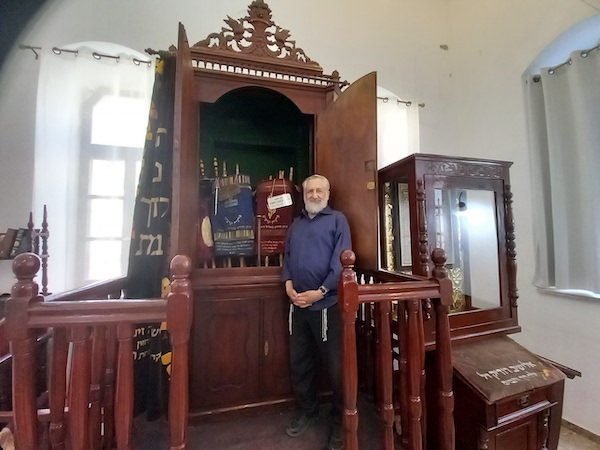
Rabbi Itzhak Marmorstein – a former spiritual leader of Vancouver’s Congregation Or Shalom – stands beside the ark in Beit HaRav Kook, where he is the gabbai (sexton). (photo by Gil Zohar)

Scores of congregants packed Beit HaRav in downtown Jerusalem June 2-3 to celebrate the centenary of the historic synagogue, yeshiva and home of Rabbi Abraham Isaac Kook (1865-1935), a seminal Zionist religious leader during the British Mandate who founded the Chief Rabbinate of Israel.

Born in Griva – then part of the Czarist Empire but today Daugavpils, Latvia – Kook arrived in Jaffa, Ottoman Palestine, on Iyar 28, 5665 (1904), where he became the city’s leading Jewish spiritual figure. The family’s private celebration became a national holiday during the 1967 Six Day War when Israel conquered the Old City of Jerusalem on the same date.

Exiled in Switzerland and then in Britain during the First World War, Kook – also known by the Hebrew acronym HaRaAYaH – played a key role in London in securing the 1917 Balfour Declaration by which Britain announced its support for the establishment of a “national home for the Jewish people” in Palestine.

Returning to the country then under British military occupation following the war, Kook served as the Ashkenazi chief rabbi of Jerusalem. Both the city’s Jewish religious leaders and Whitehall were anxious to replace the Ottoman office of hakham bashi, chief rabbi of the former Turkish empire. Thus, in 1921, Kook was appointed to the newly created position of Ashkenazi chief rabbi of the Land of Israel.

But where was a scholar of such stature to live, especially since the representatives of other religions in the holy city all had an appropriate residence?

The issue was brought up in a July 24, 1921, meeting at Government House on the Mount of Olives – today the Augusta Victoria Hospital – between Britain’s newly arrived high commissioner, Sir Herbert Samuel (1870-1963), and New York businessman Harry Fischel (1865-1948). Asked by Samuel to raise money for the project among his American peers, the philanthropist and his wife Shayna volunteered to fund the building themselves.

They identified Beit David, a one-storey kollel almshouse erected in 1873 by philanthropist David Reis. Owned by the Ashkenazi community’s Central Committee of Knesset Israel, the site was eminently suitable. The courtyard – opposite Rothschild Hospital (today Hadassah College) and near the residence of pioneering ophthalmologist Dr. Alfred Ticho and his wife, artist Anna – was located on Hadassah Street, which was renamed after Rabbi Kook following his death.
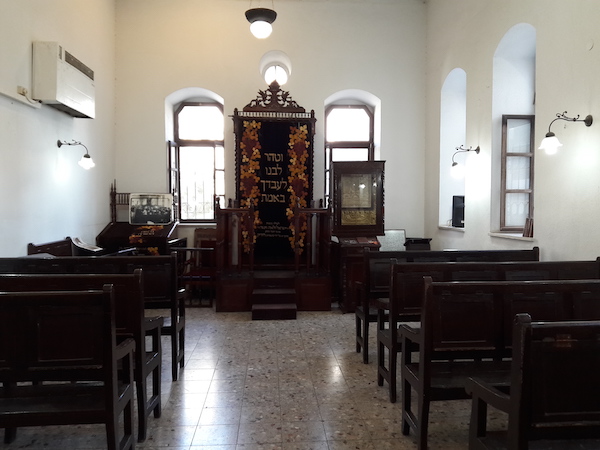
photo - The yeshiva hall and beit midrash of Beit HaRav Kook
The yeshiva hall and beit midrash of Beit HaRav Kook. (photo by Gil Zohar)

A cornerstone for the second-floor addition was laid on Aug. 15 before the Fischels departed. Work began immediately. Fischel, an architect and real estate developer in Manhattan, ensured the structure included all the latest modern conveniences. The double-height ceilings were decorated with colourful stencil patterns. Built surrounding a central courtyard, one wing included a reception area, kitchen, bathroom and three bedrooms for the Kook family. The other side included the Central Universal Yeshiva, a synagogue and the scholar’s bureau – now restored to its appearance a century ago. At Kook’s insistence, the synagogue incorporated a moveable roof to permit a sizeable sukkah.

The Kooks moved in at Hanukkah 1922, though the synagogue and yeshiva were still under construction. That spring, the Fischels again crossed the Atlantic. Docking in Alexandria, they caught the train from Egypt across the Sinai Desert to Palestine. Arriving at Lydda (Lod) on May 9, they were greeted by a delegation of rabbis. The couple insisted on being immediately escorted to Beit HaRav.

The dedication began at 3:30 p.m. on Thursday, Sivan 12, 5683 (May 27, 1923). The program – which included 33 events and speakers with a tea break – augured well for cooperation between the country’s growing Jewish community and the new imperial regime.

The many dignitaries in attendance included leading rabbis and Zionist figures. The event was a quasi-national holiday. Jerusalem was decorated with bunting in the Zionist, British and American colours. Flags flew everywhere across the city.

The orchestra of the nearby Institute for the Blind played the Star-Spangled Banner, God Save the King and Hatikvah, while the Etz Chaim Talmud Torah’s choir performed for the guests.

Among the dozens of speakers was Fischel, who addressed the assembly in Hebrew and then English: “Words fail me at this moment to express my gratitude to the Almighty for granting me this privilege of building this Beth HaRav and synagogue…. While my heart always beats for Palestine, yet my home is in America. I have, therefore, had to travel nearly 6,000 miles to participate in this holy celebration….

“The building committee has just presented me with the key of this house certifying thereby that the building is now completed. In view of the fact that this residence and synagogue are to be used for the benefit of the people of Palestine, and that Your Excellency [Samuel], is the chief executive of the land, I therefore deem it fitting and proper to present you with the key, and designate you as custodian of this combined edifice. May I ask you, please, to accept this golden key and keep it as a souvenir and memento of this occasion? I want to take this means also of publicly thanking you for the honour you have bestowed upon us. May God grant you, your administration and the people of Palestine continued security and peace.”

Turning to Kook, sitting next to him on the dais, resplendent in his Sabbath and festival fur spodek (tall, black hat), Samuel declared:

“I congratulate the Chief Rabbinate, Mr. and Mrs. Fischel and the Jewish community at large on this auspicious day. Among the many problems with which the civil administration had to deal on its establishment was the adoption of measures to place the Jewish community both on its secular and on its ecclesiastical side, upon a permanent and regular basis. The question of the organization of the secular side was not yet fully settled. But the government has been able to establish, on an electoral basis, the Chief Rabbinate and, for the first time after an interval of many centuries, a Jewish ecclesiastical authority has been founded on a permanent footing, based upon the decisions of the community itself.”

The ornately carved chair that Samuel presented to Kook on behalf of King George V remains in its place of honour on the synagogue’s eastern wall next to the aron kodesh (Torah ark).
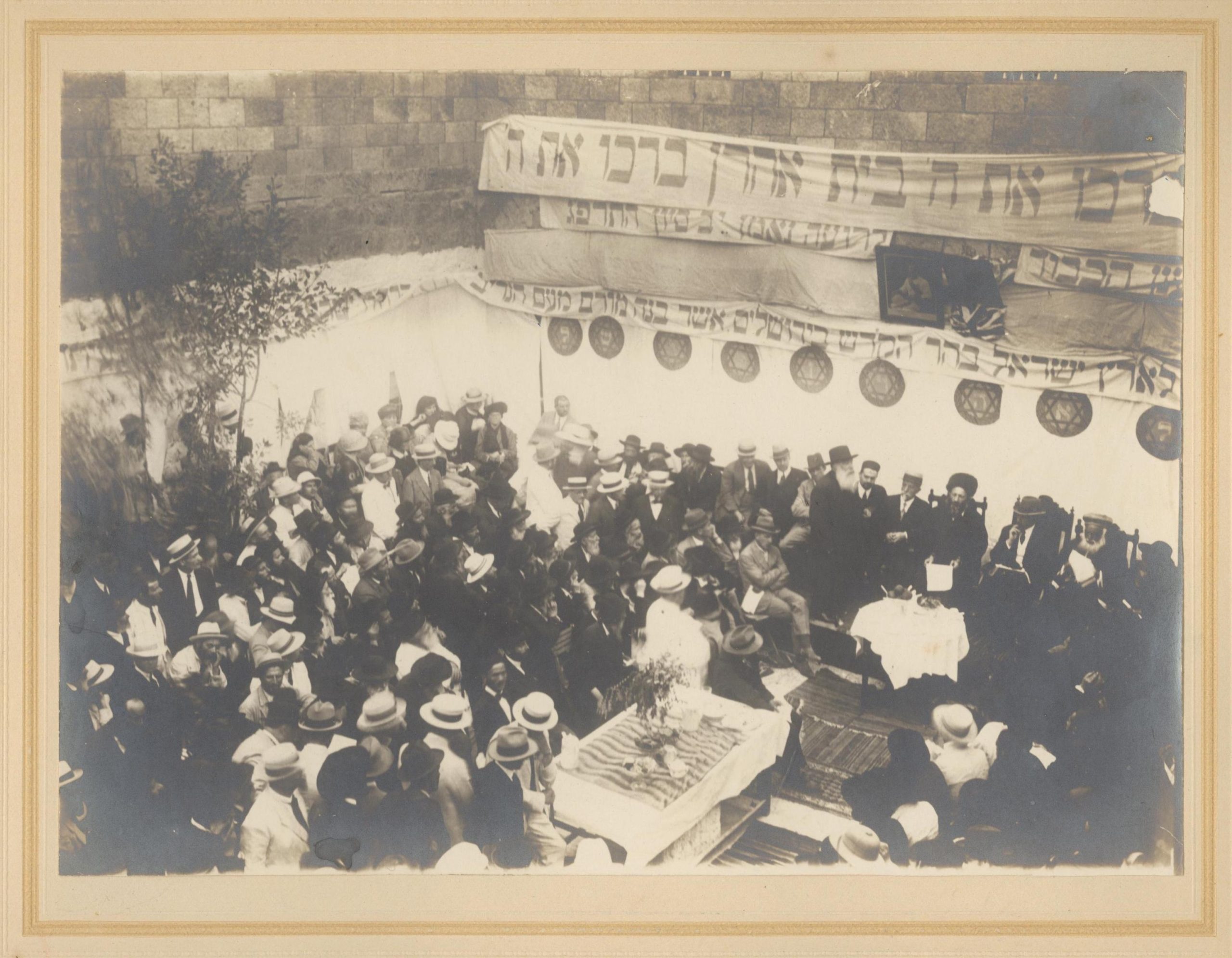
photo - The Beit HaRav dedication ceremony a century ago. Rabbi Isaac Kook, fourth from the right in the photo, is wearing the fur spodek. To his left is Harry Fischel. Herbert Samuel and Sefardi Chief Rabbi Yaakov Meir
The Beit HaRav dedication ceremony a century ago. Rabbi Isaac Kook, fourth from the right in the photo, is wearing the fur spodek. To his left is Harry Fischel. Herbert Samuel and Sefardi Chief Rabbi Yaakov Meir. (photo from Rabbi Aaron I. Reichel, esq., administrator of the Harry and Jane Fischel Foundation)

Asked about the importance of Beit HaRav, the institution’s gabbai (sexton) Rabbi Itzhak Marmorstein – also known by his nom de plume rabbanique Evan-Shayish – cited Kook’s dedication address a century ago:

“We are engaged here in declaring an elevated ideal that must proceed higher and higher. This ideal must develop and grow its activity through the gathering together of our scattered powers so that together we can proceed in the rebuilding of the ruins of Jerusalem together. This involves strengthening the physical building of the land and the nation in the material realm as the basis for the higher, holy and spiritual building of the Torah and holiness. This will illuminate the living light for the entire national renewal in all its branches.”

Kook’s funeral in 1935 was attended by an estimated 20,000 mourners. Beit HaRav continued to function as the flagship for the dati leumi (national religious) community, but a larger yeshiva was erected in Kiryat Moshe in 1964, and the old building fell into disuse.

Since 2008, Marmorstein – a Canadian-Israeli who formerly served at Congregation Or Shalom in Vancouver – has been engaged in reviving the original building. The building today operates as a neighbourhood synagogue with Sabbath services, as well as a museum.

The centre offers a class every Thursday at 9 p.m. taught by noted kabbalist Rabbi Yohai Yemini on Kook’s commentary on Rabbi Isaac Luria’s teachings. Those insights, recorded and edited in Safed between 1570 and 1572 by his disciple Haim Vital, form the basis for Lurianic kabbalah (mysticism), a system of thought Kook helped spread under which the arrival the Messiah and the ingathering of the Jews to Israel is imminent.

Gil Zohar is a writer and tour guide in Jerusalem.

Format ImagePosted on June 23, 2023June 22, 2023Author Gil ZoharCategories IsraelTags Beit HaRav, history, Israel, Itzhak Marmorstein, milestones

Quick look at Canadian Jews

As of last Friday, June 16, the population of Canada surpassed 40 million people. According to data from the 2021 Canadian census released last year, 335,295 Canadians consider themselves to be Jewish by religion, up from 329,500 in 2011.

The 2021 census also asked about ethnic or cultural origin. In this instance, the number of people choosing Jewish as their ethnic or cultural origin (or one of several) decreased from 2011 to 2021, from 309,650 to 282,015, though the number increased in British Columbia, from 31,865 in 2011 to 34,395 a decade later. This article focuses on Jews by religion.

More than half of Canadian Jews live in Ontario, home to 196,100 Jews, while an additional quarter (84,530) live in Quebec. British Columbia’s 26,845 Jews are 8% of the national Jewish population. Other provinces with significant Jewish populations are Alberta, with 11,565 Jews, and Manitoba, with 11,390. Smaller Jewish communities exist in Nova Scotia, with 2,195 Jews, Saskatchewan, with 1,105 Jews, and New Brunswick, where 1,000 people listed their religion as Jewish.

In Canada, approximately 12,000 Jews (3.6%) identify as a visible minority, including 2,615 Black Jews, 1,505 Latin American Jews, 1,270 South Asian Jews and 1,155 Chinese Jews. Those numbers in British Columbia are 1,425 overall, including 235 Latin American Jews, 200 Black Jews, 170 Chinese Jews and 150 South Asian Jews.

British Columbia is home to the fastest-growing Jewish population in Canada, adding 3,715 Jewish residents since 2011, representing 16% growth. By comparison, Canada added 5,795 Jews to the national population, growing 1.8%. Ontario’s Jewish population only grew 0.3%, while Quebec’s Jewish population declined by 0.7%, making it the only province whose Jewish population decreased over the 10-year period. Western provinces recorded more robust growth: 6% in Alberta, 2.5% in Manitoba and 17.5% in Saskatchewan.

Home to a combined three-quarters of Canada’s Jews, the metropolitan areas of Toronto and Montreal both saw a decline in their Jewish population over the past decade. Meanwhile, Metro Vancouver’s Jewish population grew from 18,730 in 2011 to 20,125 in 2021, an additional 1,395 Jews. Elsewhere in Canada, Greater Ottawa’s Jewish community expanded, as did the metropolitan areas of Winnipeg, Calgary and Edmonton.

Even though their metropolitan Jewish populations decreased over the last decade, the municipal Jewish populations of Toronto and Montreal both grew slightly, suggesting a Jewish movement away from the suburbs and towards the city. Vancouver’s municipal Jewish population also grew during the same period, from 10,350 to 11,675, allowing it to surpass both Winnipeg and Ottawa to become the third-largest Jewish municipal population in Canada. While the City of Vancouver’s share of the B.C. Jewish population decreased slightly over the past decade, from 44.7% in 2011 to 43.5% in 2021, its percentage of Greater Vancouver’s Jewish population grew from 55% to 58%. Greater Vancouver is home to 75% of British Columbia’s Jews, down from its share of 81% in 2011.

Other B.C. cities with sizable Jewish populations include Richmond, whose 2,515 Jews make it the second-largest Jewish municipality in the province, and Surrey, where 900 people reported their religion as Jewish – although both cities’ Jewish populations declined since 2011. The District of North Vancouver had 845 people reporting Jewish as their religion in 2021 and Burnaby 620, both increases from 2011; and West Vancouver had 555, which was a decrease from 665 in 2011. Beyond the Lower Mainland, Victoria’s Jewish population grew from 550 to 960, Saanich’s Jewish community increased from 555 to 750, and the Jewish population of Kelowna more than doubled, going from 215 in 2011 to 530 in 2021.

In addition to provincial, metropolitan and municipal data, the 2021 census also provided information about electoral ridings. Vancouver Granville was the electoral riding with the largest Jewish population in Vancouver (3,275), while Vancouver Quadra was a close second (3,125), although the Jewish population of both ridings decreased since 2011.

Vancouver Granville remains home to 27.5% of Vancouver’s Jews, while Vancouver Quadra is home to 26% of the city’s Jewish population. The Jewish population of four other electoral ridings – Vancouver Centre, Vancouver East, Vancouver Kingsway and Vancouver South – all increased significantly, suggesting a population shift from Vancouver’s West Side to Downtown and East Vancouver. Using these electoral ridings as an approximate guide, 54% of Vancouver’s Jews live in the West Side, 27% live in East Vancouver and 19% live in Downtown Vancouver. By comparison, 64% of Vancouver’s Jews lived in the West Side in 2011, 20% lived in East Vancouver and 16% lived Downtown.

Along with religion, the Canadian census also gave information about language. Canadians who can speak Hebrew increased from 70,695 in 2011 to 83,205 in 2021, while Canadians who can speak Yiddish decreased from 23,750 to 20,155 over the same period. More than half of Hebrew-speaking Canadians, 47,380, live in Ontario, while more than half of Yiddish-speaking Canadians, 12,825, live in Quebec. Hebrew speakers in British Columbia increased from 4,505 in 2011 to 6,995 in 2021, while Yiddish speakers in the province declined from 540 in 2011 to 480 in 2021.

While the 2011 census only provided information about languages spoken, the 2021 census also gave information about Canadians’ mother tongues. In 2021, 19,595 Canadians spoke Hebrew as their first language. Meanwhile, 12,060 Canadians spoke Yiddish as a first language. In British Columbia, 2,260 people spoke Hebrew as a mother tongue in 2021, while 215 listed Yiddish as their first language.

To find out more of the census results, including immigration and other statistics, visit www12.statcan.gc.ca/census-recensement/index-eng.cfm and click on census datasets (1981-2021).

Michael Rom is Social Sciences and Humanities Research Council postdoctoral research fellow at the University of British Columbia. He received a PhD in history from Yale University, and has also held research fellowships at the Centre for Jewish History in New York City, the University of Cape Town and the University of São Paulo. His research examines Brazilian Jewish politics during the Cold War.

Posted on June 23, 2023June 22, 2023Author Michael RomCategories NationalTags British Columbia, Canada, Canadian census, Jewish population, population

איך משיגים ויזה להגר לקנדה – חלק א

קנדה הפכה לא מכבר ליעד תיירות פופולרי. בנוסף, ישראלים רבים מבקשים לנסוע לקנדה עבור לימודים או כדי למצוא עבודה. אשרות כניסה לקנדה משתנות לפי המטרה שלשמה מעוניינים להיכנס למדינה. עבור כל מטרה המבקשים ידרשו להליך שונה כדי שרשויות ההגירה המקומיות יאפשרו למעוניינים להיכנס למדינה ולשהות בה את הזמן שהם רוצים בו

כמו מדינות רבות בעולם, גם קנדה עברה שינוי במדיניות הכניסה וההגירה אליה. המהגרים הרבים שביקשו להיכנס למדינה גרמו לרשויות ההגירה להחמיר את תנאי הסף הכניסה למדינה כדי למנוע את ההצפה של במהגרים. אם זה נשמע קצת מפחיד, אפשר להיות רגוע. זאת כיוון שבתור ישראלים המצב טוב יחסית לעומת מהגרים ממקומות אחרים בעולם

ממשלת קנדה לא דורשת מאזרחים ישראלים המעוניינים לבקר במדינה לתקופה של עד חצי שנה עבור טיול למשל, להוציא ויזה. כל אזרח ישראלי יכול להגיש בקשה באינטרנט ולקבל תוך כמה ימים אישור שמאפשר לו להיכנס לקנדה ולשהות שם עד חצי שנה. מעבר לזמן הוא יידרש להנפיק ויזה באמצעות קצין הגירה המקומי. הנה מספר דברים שחשוב

לדעת על הויזה הזו וכיצד ניתן לזרז את תהליך הקבלה שלה. כאמור, אזרחים ישראלים לא נדרשים להוציא ויזה כדי להיכנס לקנדה. האישור האמור לעיל מאפשר לשהות בקנדה חצי שנה ולא אמורה להיות בעיה להנפיק אותו. במקרים הבאים ידרשו הבאים להנפיק ויזה מוגדרת ואישור שהייה בלבד לא מספיק: ויזת תייר היא ויזה ניתנת למי שמבקש

ויזת תייר  להגיע למדינה לצורך טיול. בדרך כלל אורכה של הויזה יהיה עד שישה חודשים. מי שמבקש ויזת תייר יצטרך גם להוכיח שזו אכן מטרתו האמיתית. וזאת, כדי למנוע מקרים שבהם מהגרים יגיעו למדינה בכיסוי של תיירים. לויזה הזו יזדקקו המעוניינים להישאר בקנדה לתקופה שעולה על חצי שנה. יש לזכור שבעת הגשת הבקשה יתבקשו המעויינים לשכנע את קצין ההגירה שהמטרה שאותה הם מציגים היא המטרה שלשמה הם מעוניינים להאריך את שהותם בקנדה. כידוע חשוב מאוד לא לנסות להסתיר פרטים מקצין ההגירה כדי לא לגרום לדחיית הבקשה לקבלת הויזה. ויזת עבודה מיועדת לאזרח ישראלי שמעוניין להיכנס לקנדה כדי לעבוד בה נדרש להנפיק לעצמו ויזת עבודה. את הויזה ניתן להנפיק בשגרירות קנדה בישראל, ובמקרים רבים הויזה תהיה ספציפית, והיא תהיה מוגבלת למקום עבודה מסוים, סוג עבודה והתקופה שבה המעוניינים רשאים לעבוד במדינה. עבור כל שינוי הם יאלצו לגשת לרשויות ההגירה המקומיות להאריך את משך האשרה

למותר לציין שאין לנסות להפר את הכללים, וחובה על המבקשים לעשות שימוש בויזה בדיוק לפי המטרות שמוגדרות בה. הפרה של אחד מהכללים עלולה לגרום לביטול האשרה ולאלץ את המבקשים לצאת מקנדה עוד לפני המועד המתוכנן

כדי לקבל ויזת לימודים שמאפשרת למבקש ללמוד במוסד להשכלה גבוהה בקנדה, יש להציג מכתב שבו המוסד מקבל אותו ללימודים. כמובן שהמוסד צריך להיות מוכר על ידי ממשלת קנדה. מלבד אישור הקבלה מהמוסד, יצטרך המבקש להוכיח שהוא מסוגלים לקיים את עצמו ואת המשפחה שלו מבחינה כלכלית. יש לזכור שעל המבקשים לעזוב את קנדה מיד עם סיום הלימודים שלהם

ויזה דיפלומטית היא ויזה מונפקת עבור דיפלומטים של המדינה הזרה והיא מאפשרת להם לשהות במדינת היעד שלהם במשך כל זמן השליחות הדיפלומטית שלהם. אם ישראלי ישלח לשליחות דיפלומטית בקנדה, סביר להניח שמדינת ישראל כבר תדאג לו כך שאפשר להיות רגועים בנושא זה

Posted on June 14, 2023June 12, 2023Author Roni RachmaniCategories עניין בחדשותTags Canada, diplomatic visa, immigration, Israel, tourist visa, work visa, הגירה, ויזה דיפלומטית, ויזת עבודה, ויזת תייר, ישראל, קנדה
Prevention is ultimate goal

Prevention is ultimate goal

World Elder Abuse Awareness Day will be marked with a community-wide event hosted by Jewish Family Services, in partnership with many other agencies. (photo from nvrc.ca)

According to a World Health Organization study, half the world’s population bears a prejudice against the elderly. Jewish Family Services in Vancouver, which shares that statistic on its website, notes that roughly 17% of people over the age of 60 worldwide are victims of elder abuse. The agency also notes that about 20% of Canadians believe older people are a burden on society, and that approximately 80% of Canadian seniors report discrimination in health care.

On June 15, at 10 a.m., JFS will host a free community-wide event in recognition of World Elder Abuse Awareness Day (WEAAD) in the Jewish Community Centre of Greater Vancouver’s Wosk Auditorium. Rights Don’t Get Old: Let’s Unite Against Elder Abuse will cover what can be done to prevent – what many recent studies have shown to be – a growing problem. Featured speakers include Michael Lee, MLA for Vancouver-Langara and shadow minister for Indigenous relations and reconciliation; Isobel McKenzie, British Columbia’s seniors advocate; and Linda Youk of Seniors First BC.

“A very important element of elder abuse is that it can happen to anyone,” said Cindy McMillan, director of programs and community partnerships at JFS. “We shouldn’t make assumptions about who is at risk and who is not. Awareness that it exists, and that there are supports out there … is what June 15 is all about.”

For JFS, “a nonprofit that supports up to 1,200 seniors annually to live at home safely and with dignity, elder abuse prevention, detection and response is an essential part of support,” she said. “This year, following several years of COVID, and subsequent isolation of many older adults, I felt it was very timely to bring the community together to create more awareness around this issue.”

Elder abuse comprises varying forms of mistreatment, the most commonly reported being neglect, followed by emotional and financial abuse. Physical abuse is also prevalent, with 8.8% of abused seniors experiencing physical violence, according to data provided by JFS. Elder abuse can occur in numerous settings, including within the home, at care facilities and in the community. Most reported cases involve family members, with adult children and spouses being the most common perpetrators.

A Statistics Canada report released in 2019 stated that nearly one in five seniors had experienced some form of abuse. A report from the Office of the Seniors Advocate in British Columbia, using data from 2017 to 2021, found a 49% increase in neglect and self-neglect, an 87% increase in reported physical abuse and a 49% increase in financial abuse over that five-year period.

Neglect is often underreported, both because of a lack of awareness as to what constitutes neglect and the potential stigma associated with the admission of neglect, explained McMillan. Neglect can manifest in different ways, such as providing insufficient food and water, failing to administer medication, leaving an older adult in dirty and unsafe living conditions, and not seeking medical attention for the elderly person when it is needed.

Financial abuse, or the exploitation of older adults for monetary gain, can have serious ramifications. Despite numerous laws in place to prevent it, B.C. seniors lose an estimated $50 million annually because of financial abuse, with only one in five cases reported.

WEAAD was launched in 2006 by the International Network for the Prevention of Elder Abuse and the World Health Organization at the United Nations.

“JFS has always been involved in WEAAD, primarily through our Better at Home program, where we have partnered with different community organizations to have smaller events that promote awareness,” said McMillan. “Our involvement stems from our connection with the Marpole Community Response Network, who is at the forefront of providing information and education on elder abuse.”

Better at Home is a JFS-coordinated program, administered by the United Way, which helps seniors in Kerrisdale, Oakridge, Marpole, Southlands and Dunbar with non-medical, day-to-day tasks such as housekeeping, transportation, grocery shopping, visits and handyperson repairs. The program’s objective is to assist seniors so that they can continue to live independently in their own homes and remain connected to their communities.

This year’s June 15 event will have numerous resource tables located in the atrium of the JCC. Among the groups presenting are the Alzheimer Society of British Columbia, JQT Vancouver, Kerrisdale Oakridge Marpole Community Policing Centre, L’Chaim Adult Day Centre, ASK Friendship Society and ReAct Adult Protection Program of Vancouver Coastal Health.

In a statement to the Independent, JFS said it “was very grateful to have partners like the Jewish Federation, the JCC, the Better at Home Program and Seniors First BC coming together to put on such an important event.”

To register for Rights Don’t Get Old: Let’s Unite Against Elder Abuse, visit jfsvancouver.ca. Refreshments will be provided.

Sam Margolis has written for the Globe and Mail, the National Post, UPI and MSNBC.

Format ImagePosted on June 9, 2023June 8, 2023Author Sam MargolisCategories LocalTags abuse, awareness, Cindy McMillan, education, elder abuse, JCC, Jewish Community Centre of Greater Vancouver, Jewish Family Services, JFS, seniors, WEAAD
Tikva grows even more

Tikva grows even more

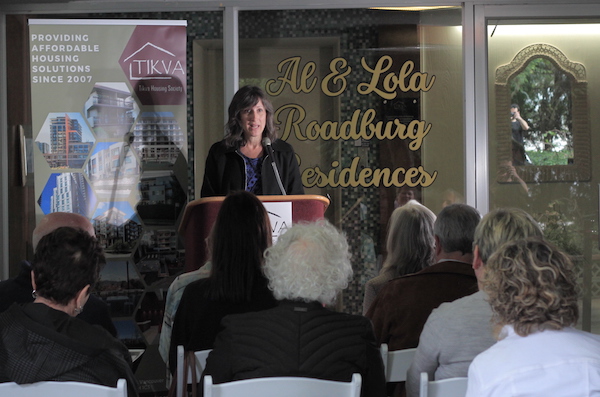
Tikva Housing Society executive director Anat Gogo speaks at the May 24 opening of the Al and Lola Roadburg Residences. (photo filmoit.com courtesy Tikva Housing)

When the Kerrisdale building she has been living in for 24 years went up for sale last year,  worried she would be cast out, like so many Vancouverites who have been “renovicted.”

She and other residents of the characteristic midcentury building on West 41st Avenue, many of whom had done no more than nod to one another in the hallways, anxiously discussed their fate, knowing that it was largely out of their hands. The tenants had experienced minimal rent increases over decades, as the elderly family owners provided minimal renovations, and the tenants enjoyed exceptionally low rents for the location.

Anxiety turned to jubilation when they learned that the building had been purchased by a nonprofit – Tikva Housing Society, the Jewish community’s agency for affordable housing.

Speaking May 24 at the official opening of the Al and Lola Roadburg Residences – Tikva’s new name for the building until then known as the Bonnie El – Bernstein said her worries for the future had begun to wear on her well-being.

“I decided to surrender, as the ruminating was truly disturbing my life,” she told the crowd. “All that was left was prayer. I asked many friends and family to pray for the best possible outcome. Lo and behold, we were given the incredible news that Bonnie El had been bought by a nonprofit organization, Tikva Housing Society. The only conclusion I can come up with is that God answers prayers.”

Throughout her life, from her early years in South Africa to her migration to Vancouver and a new beginning at Bonnie El as a single mother, Bernstein said, “I have experienced such incredible compassion, generosity and empathy from throughout the Jewish community no matter where in the world I have been. I am honoured to be part of that community and to witness firsthand what so many do day after day to help make the city a better place.”

All existing residents of the building will be grandfathered, but Tikva officials were surprised and pleased to discover that, by pure coincidence, about a quarter of the existing residents are Jewish.

And that’s not the only Jewish connection. In doing their due diligence on the building, they discovered that it was built in 1961 by the Golden and Averbach families. It didn’t take long to sleuth out more information. Local businessman and philanthropist Gary Averbach explained that Bonnie El was named after his sister, Bonnie, and her husband, Elliott Leyton.

The new Roadburg Residences, made possible by a grant from the Al Roadburg Foundation, includes four studio apartments, 13 one-bedrooms, two two-bedrooms and one three-bedroom suite. The acquisition and renovation of the building brings to 148 the number of units owned and operated by Tikva, with a further 20 opening in Burnaby this summer. Tikva also provides rent subsidies to people living in market housing or facing housing challenges, according to Anat Gogo, Tikva’s executive director. In all, 300 people, including 120 children, benefit from Tikva’s housing solutions. There remain 302 applicants on the community’s Jewish Housing Registry.

“In our mission to provide access to affordable housing solutions, we dream big,” Gogo told the audience in the spacious covered alcove outside the building’s front door. “Our staff and board are committed to tackling housing insecurity, but we can’t do it alone.”

Gogo credited support from across the community, citing, in addition to the Al Roadburg Foundation, the Jewish Federation of Greater Vancouver, Jewish Family Services and others for bringing the project to fruition.

“Rather than demolishing and building new, Tikva is preserving this 20-unit building that still has many years remaining,” she said, to applause and whoops of approval from assembled residents.

Robert Matas, director of the Al Roadburg Foundation, spoke of his longtime association with the late philanthropist and the Roadburg family’s commitment to causes in Vancouver and Israel. He acknowledged family members in the audience, including Al and Lola Roadburg’s daughter, Lorraine, and Matas’s wife, Alicia, who is a niece of Al and Lola Roadburg.

Rhonda Sacks, board chair of Tikva, thanked the staff of the organization and celebrated the exponential growth of the society and its housing units – up more than five-fold from 28 units in the last several years.

Ezra Shanken, chief executive officer of the Jewish Federation of Greater Vancouver, spoke of his family’s experience with renovictions in the city, having twice been forced from homes before purchasing their own.

Tikva board members cut the ceremonial ribbon and Rabbi Carey Brown, associate rabbi at Temple Sholom, said the blessing and affixed the mezuzah to the front doorpost of the building.

Format ImagePosted on June 9, 2023June 8, 2023Author Pat JohnsonCategories LocalTags affordable housing, Anat Gogo, Patsy Bernstein, Roadburg Foundation, Tikva

Talking about antisemitism

The administration of U.S. President Joe Biden released its National Strategy to Counter Antisemitism recently. Unveiled by First Gentleman Doug Emhoff, Jewish husband of Vice-President Kamala Harris, the strategy rests on four main pillars: to increase awareness and understanding of antisemitism, including its threat to America, and broadening appreciation of Jewish American heritage; to improve safety and security for Jewish communities; to reverse the normalization of antisemitism and counter antisemitic discrimination; and to build cross-community solidarity and collective action to counter hate.

Canadian officials at the federal and provincial levels have also convened summits on the subject and introduced a range of strategies and programs to confront the problem. This recognition at the highest levels is crucial. As antisemitism has increased in North America and Western Europe, elected officials have overwhelmingly, with some notable exceptions, said and done the right things.

In his remarks at the launch of the U.S. strategy, Emhoff called for a “whole-of-society” approach to the problem. And this short reference is vital. Governments have been grappling with the rising problem of antisemitism and some other allies, organizations, antiracism activists and commentators have addressed it, but there is not a larger societal conversation about it.

We have not seen much discussion of antisemitism beyond the Jewish community the way we have seen contemporary popular engagement with, for example, anti-Black racism, as witnessed through the Black Lives Matter movement; women’s equality, as addressed through many approaches, including #MeToo; and Indigenous issues, most recently in Canada with the Truth and Reconciliation Commission.

The arc of the moral universe is long, but it bends toward justice, as Martin Luther King Jr. said. There has been hard-won progress in the six decades since the milestones of the Black Civil Rights Movement. But, sadly, most white people only became more engaged in recent years, as outrage over police-involved shootings and similar injustices became top stories. These spurred conversations at dinner tables, in work lunchrooms, boardrooms and among friends.

We have seen similar leaps forward in awareness and discussion around issues faced by Indigenous peoples in Canada, and those exchanges have likewise taken place at the person-to-person level, involving Indigenous and non-Indigenous people, but also as importantly, between non-Indigenous people themselves.

The #MeToo movement and a greater openness to talking about violence against women and gender equality are other cornerstones of social change in the past few generations.

Perhaps no single example of progress is more stunning than attitudes toward LGBTQ+ people, which has gone from literal criminal prohibition to a level of social acceptance in less than a single average lifetime. This, too, is a result of connecting at the personal level. Legislation and leadership from elected officials, clergy, journalists and commentators and other thought leaders have been important. But the thing that has the most power to change hearts and minds is hearing personal stories from people affected and hashing out moral questions among friends.

While other forms of discrimination and bias have been confronted to varying degrees, antisemitism is on a precarious upswing, but the public dialogue has yet to begin.

There is no single explanation for why this is so, but one undeniable characteristic of antisemitism is the trope of “Jewish power.” In the simplest formulation, if Jews are powerful, why would activists and antiracism advocates devote resources to this cause? This is especially true in the context of the larger discussion on race currently taking place, which emphasizes power versus powerlessness.

There are other reasons. Canada’s Jewish community is comparatively tiny and overwhelmingly concentrated in Toronto and Montreal. People in other parts of the country might not know many Jews – and knowing members of a minority community has been shown to be the likeliest prerequisite to overcoming prejudice (though it is by no means foolproof, of course).

Another factor is that, even for non-Jews who know Jewish people, those Jews may not be comfortable opening up about discrimination and oppression they have faced. Too often, Jews have been told, implicitly or explicitly, that they are not disadvantaged but privileged, that the Jewish people’s time as the victim du jour is passed. Complicating the discussion is the chasm of miscommunication and misunderstanding between Jewish and non-Jewish Canadians on issues relating to Israel and the centrality of the cradle of Jewish peoplehood in the hearts of nearly all Jews, regardless of affiliation, ideology or other differences.

As is the case with other minority groups, it should not be left to Jewish people to fight the discrimination against them and its associated manifestations. But it is, for the most part. Jews need to be prepared to start these conversations, and this involves educating ourselves, so that we can better articulate what are often painful and vulnerable personal relationships with discrimination.

Governments and Jewish agencies are doing what they can to confront antisemitism. Ordinary people, chatting with friends and colleagues, need to help bring this work to an interpersonal level. In an environment where Jewish experiences with discrimination are often actively mocked, this is a tall order. But it is even more reason we need to share our experiences and ideas more broadly – to start more discussions.

Posted on June 9, 2023June 8, 2023Author The Editorial BoardCategories From the JITags anti-racism, antisemitism, dialogue, discrimination, education
KDHS chai celebration

KDHS chai celebration

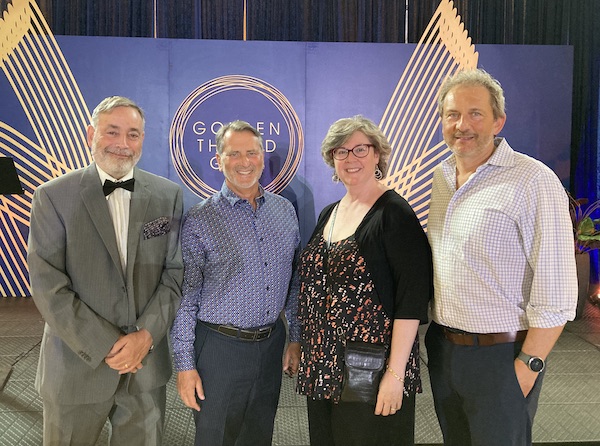
Left to right: Jeff Ross and Stephen Kaye, King David High School co-presidents in 2006, and Diane Friedman and Alain Guez, this year’s co-presidents. (photo from KDHS)

“At King David, Jewish memory and education intersect, creating a unique and powerful learning experience that prepares our students for a lifetime of meaning and purpose,” said King David High School board co-president Alain Guez in his closing remarks at the school’s Golden Thread Gala May 18.

The gala is KDHS’s primary fundraising event of the year, and more than 300 people filled the ballroom at Congregation Beth Israel, including some 50 King David alumni, to celebrate the school’s 18 years in its current building, at Willow Street and 41st Avenue. The school itself is double chai (36) years old, its origins being found in Maimonides Secondary School, which opened in September 1987.

“We would not be here today if Maimonides … had not started us on our path, our derech, to where we are now,” said head of school Russ Klein in his opening remarks.

“This evening is to celebrate what our community has built together,” he said. “The Diamond Foundation, who support so many of our community efforts, made King David possible with their generous support, belief in our importance, and their strong Jewish values.”

Rabbi Stephen Berger, head of Judaic studies at KDHS, noted that the event was taking place on erev Yom Yerushalayim. He compared Yerushalayim – “a holy place for all people, all people can worship G-d in this one place” – to KDHS, in that there are many different Jewish schools in Metro Vancouver but only one high school, and this one high school has to serve everybody across the religious and cultural spectrum. “We don’t always get it right, but it is a place where we can try, and respect and show love to everybody,” he said.

Event co-chairs Heidi Seidman and Sherri Wise said a few words about the school, as well. “It is important to note,” said Seidman, “that not one student is left behind and, when you look around the room tonight, you are all part of the village that makes that possible.”

As auctioneer, Fred Lee – who is a regular contributor to CBC, the Province, Boulevard and Vancouver Magazine – stressed this idea. He spoke about the Jewish community and the importance of the high school. He also helped raise funds that will go towards the school’s programs and students. There was a silent auction, a 50/50 draw and other opportunities to donate.

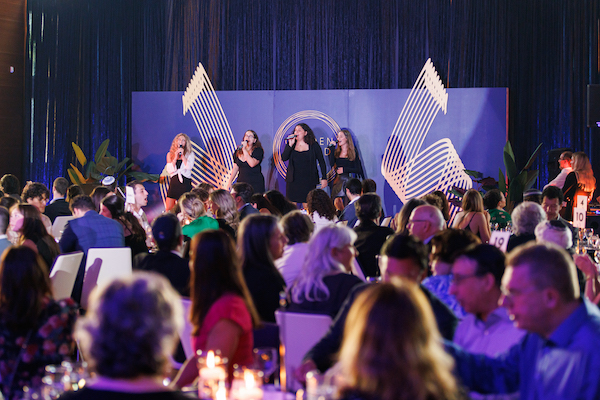
photo - Throughout the Golden Thread Gala, there were musical performances
Throughout the Golden Thread Gala, there were musical performances. (photo from KDHS)

The gala featured panelists Stephen Kaye, and Jeff Ross and Reisa Schwartzman, who were integral to the transition of the school from Maimonides to King David, and for taking the school from the portables it occupied on Baillie Street to having its own building on Willow. They were introduced in a video by their respective children, David Kaye and Zachary Ross, graduates of the inaugural KDHS Class of 2006.

Stephen Kaye came to Canada from South Africa, where there is a network of Jewish day schools called King David Schools. He described himself as “very passionate about Jewish education” and said, “The feedback we got from the community was that, if we could show enough commitment from parents to send their kids to a Jewish high school, there would be support from the community.” It was a hard sell, he said, but then the Diamonds bought the land at Willow and 41st.

Stephen and Sandy Kaye shlepped three kids from North Vancouver to King David in Vancouver, noted Klein, who emceed the panel discussion.

Ross spoke of studies showing that kids who have gone to a Jewish high school are more Jewishly knowledgeable and involved. And yet, he said that, in the beginning, there was almost a feeling that you were sacrificing your children to the experiment of a new high school, but that didn’t turn out to be the case. Ross gave Rabbi Mordechai Feuerstein, a co-founder of Maimonides, kudos for his efforts to keep the school going.

When the school was in “the shack” (portables) on Baillie Street, said Schwartzman, there were fewer than 60 kids and now there are more than 270. Back when she was helping bring KDHS into existence, she said she was confident this growth would happen, based on a survey that was conducted at Vancouver Talmud Torah, which would be the main feeder school into the high school. She was president of VTT at the time, and the survey of parents showed that about 50% of the kids from VTT would go to a Jewish high school if there were one.

Quality education was important to everyone, said Schwartzman, and one of the things the group behind KDHS did to ensure quality was to bring Perry Seidelman in as principal. Seidelman, who had some 30 years’ experience in teaching and administration at the time, had been contemplating retirement, but took on the principalship and held the position until 2008; he was succeeded by Klein.

In a video that featured Gordon and Leslie Diamond and their daughter Jill Diamond, as well as Class of 2023 students talking about how the school has positively impacted them, the Diamonds spoke of how proud they were of KDHS, its students, staff, and all the people who have given it its “personality” and contributed to its success. Calling the school “a labour of love for the Diamond Foundation,” Jill Diamond said, “And the most wonderful thing about King David is that it is teaching the Jewish values of tikkun olam, of chesed, of mitzvot and of tzedakah to the next generation of leaders of our community.”

Such has been the growth of the school that it added a modular unit last year, the building of which was funded by the Diamond Foundation. In her remarks with Guez, KDHS board co-president Diane Friedman spoke about how the addition is affectionately called the school’s “East Campus,” and thanked the foundation, as well as the donors who filled the modular with state-of-the art equipment, furniture and technology.

The evening came to a close with Klein and Seidelman. The former principal said he had worked at many schools before King David, and that he liked all of them – but he “loved King David.” He said he felt very proud as he looked around the room.

The gala also featured, under the direction of music teacher Johnny Seguin, the KDHS jazz band, who played at the cocktail reception – Luca Jeffery, Max Kimel, Jesse Millman and Nikki Wiseman – and performances throughout the night by singers Ella Ankenman, Kailey Bressler, Rachel Gerber, Mhairi Hemingson and Nikki Wiseman, with choreography credit given to Shai Rubin.

Gala committee members were Cyndi Ankenman, Dalia Bressler, Laura Feldman, Andrea Foxman, Nicole Ginsberg, Margaret Hemingson, Anna Herman, Ruth Jankelowitz, Joelly Simkin and Annie Simpson. Other volunteers were Lina Chernov, Kim Fisher, Jessica Forman, Simon Karsyente, Matilda Rosman Levsky, Melina Baum Singer, Gaenor Vaida, Jacqueline Wener and King David students Danielle Agulyansky, Eden Almog, Ali Fadida, Tamir Gini and Yuli Kabazo.

Format ImagePosted on June 9, 2023June 8, 2023Author Cynthia RamsayCategories LocalTags Alain Guez, Diamond Foundation, diamonds, Diane Friedman, Fred Lee, fundraising, Golden Thread Gala, Heidi Seidman, KDHS, King David High School, Russ Klein, Sherri Wise, Stephen Berger
UBC Chabad celebrates 10th

UBC Chabad celebrates 10th

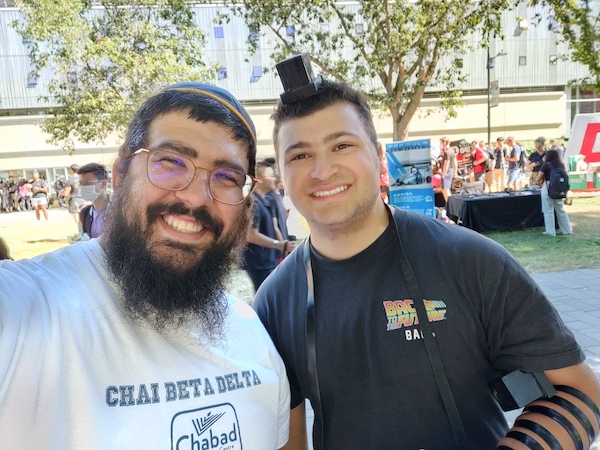
Rabbi Chalom Loeub and student Sagiv Fadida put on tefillin at the weekly Chabad booth at the UBC campus. (photo from Chabad at UBC)

This year marks a milestone, as the Chabad Jewish Student Centre at the University of British Columbia (UBC) celebrates its 10th anniversary. As part of the global Chabad on Campus movement, UBC Chabad has remained steadfast in its commitment to providing a warm and welcoming home for every Jewish student, regardless of their educational or religious background. UBC Chabad offers opportunities to build meaningful relationships with other Jewish students, deepen their connection and sense of belonging to their Jewish heritage, and strengthen their Jewish pride.

Rooted in the mystical traditions of the Hasidic revival of the late 18th century, Chabad-Lubavitch continues to try and make Judaism accessible and personally relevant to Jews worldwide. The teachings of Rabbi Menachem Mendel Schneerson, also known as the Rebbe, emphasize the importance of caring for the spiritual and material needs of all Jews, from Vancouver to Berlin to India and beyond. Inspired by his philosophy, Chabad emissaries, or shluchim, have established thousands of Chabad Houses, providing all Jews a home away from home.

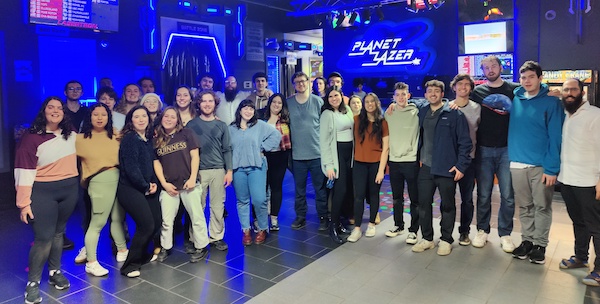
photo - Chabad on Campus students from Western Washington University, University of Washington and University of British Columbia at an annual U.S.-Canada get-together
Chabad on Campus students from Western Washington University, University of Washington and University of British Columbia at an annual U.S.-Canada get-together. (photo from Chabad at UBC)

Over the past decade, Rabbi Chalom and Esti Loeub, the shluchim at UBC Chabad, along with their five children, have supported Jewish students’ physical and spiritual needs. They have hosted many fun and meaningful events, including weekly Shabbat dinners, Lunch & Learns, interactive tabling, and Grill the Rabbi barbeques. They have led holiday programs with lavish kosher meals, hosted a monthly Jewish Women’s Circle, and led educational initiatives such as the study of the Tanya (Chabad’s foundational book), Sinai Scholars (an eight-week series on the introduction to Judaism) and a course on the Six Day War (in partnership with the Jewish Learning Institute).

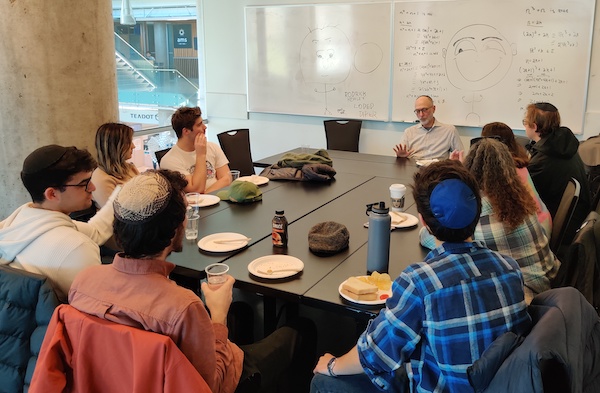
photo - One of the many weekly Lunch & Learn sessions that take place at the UBC campus
One of the many weekly Lunch & Learn sessions that take place at the UBC campus. (photo from Chabad at UBC)

However, the true measure of their impact lies in their ability to help Jewish students connect with their Jewish identity by performing mitzvot (good deeds). By encouraging students to give tzedakah (charity), wrap tefillin(phylacteries, or black leather boxes containing parchment from the Torah), light Shabbat candles, affix mezuzot (small pieces of parchment with a verse from the Torah rolled in a container) on their doorposts, and keep kosher, UBC Chabad has made a difference in the lives of countless Jewish students on campus.

“When I first came to university, I felt a distance between myself and the Jewish community,” said Gabby Tselos, president of UBC Chabad on Campus. “I always had my family and synagogue at home, but I felt like I was missing a piece of me when I came to UBC. Thankfully, in my second year, I became involved in Chabad and that has changed my whole college experience. Not only do I feel I have a Jewish family at UBC, but one that will remain with me as I continue to explore the world and my future.”

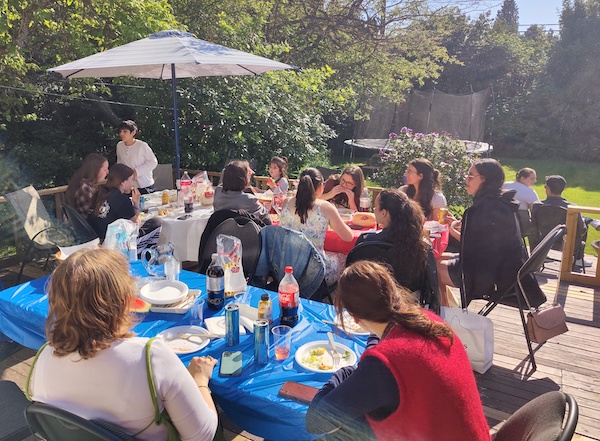
photo - A recent BBQ hosted by Chabad at UBC
A recent BBQ hosted by Chabad at UBC. (photo from Chabad at UBC)

Baruch Eckermann, outreach chair of UBC Chabad on Campus, also spoke about the positive impact Chabad has had on him.

“Chabad at UBC has helped awaken the Jew that was dormant inside my heart,” he said. “Without the love and care I received from Rabbi Chalom and Esti Loeub, I would not have become the Jewish man I am today. They work so dedicatedly for the students on campus, going far and beyond, not only in relation to religious needs, but in personal matters. They care about every Jew so much, it is beautiful to watch. All I can say to them is thank you. And please keep on doing your amazing work. We need you!”

To me, Rabbi Chalom and Rebbetzin Esti are like family. Whether on campus or at their Chabad house, they always put Jewish students’ needs first. What I love is that they genuinely see the inherent goodness in every Jewish student and believe that, by encouraging students to do more good deeds, the students will bring more blessings into the world.

For more information or to connect with the Chabad Jewish Student Centre at UBC, follow them on Instagram (@chabadubc) or visit their website, chabadubc.com.

Eitan Feiger is a student at the University of British Columbia, Class of 2024. He is vice-president and treasurer of UBC Chabad on Campus.

Format ImagePosted on June 9, 2023June 8, 2023Author Eitan FeigerCategories LocalTags Chabad, Chabad at UBC, Chalom Loeub, education, Esti Loeub, Judaism, UBC
Playfulness & laughter

Playfulness & laughter

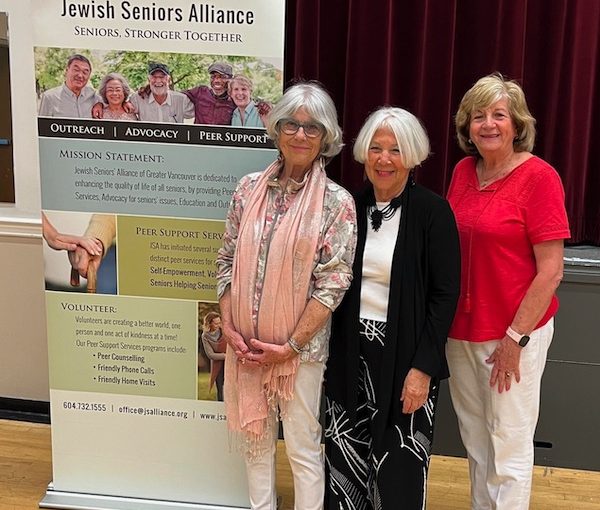
Left to right: Gyda Chud, Carol Ann Fried and Tammi Belfer at Jewish Seniors Alliance’s Spring Forum May 28. (photo from JSA)

The first in-person Jewish Seniors Alliance Spring Forum after a pandemic-imposed hiatus was held at the Peretz Centre for Secular Jewish Culture on May 28. It got people out of their seats, moving about, meeting others – and laughing.

Laughing Matters was presented by Carol Ann Fried, an energetic and inspirational speaker and consultant. She was introduced by Fran Goldberg. Tammi Belfer, president of JSA, welcomed the 40-plus people in the audience. Belfer spoke about JSA’s partnerships with other organizations, but especially with every person in the room and all its members.

Most of us who attended Laughing Matters did not expect to have to change tables, to speak to strangers, to scream at others, and then tell them they are awesome. But this is exactly what happened! The session was a whirlwind of movement, playfulness and laughter. Meeting new people is cause for celebration – to do so in the form of a game involves even more fun.

So, we played games. In one, we each took the lead and, while introducing ourselves, made announcements at our respective tables. How else would we learn that Gyda Chud’s mother would turn 100 next Saturday? Or that Naava Soudack’s daughter would be acting in Henry V at Bard on the Beach this summer?

We also imagined holding a cellphone with a photo of an important event in our lives and described it to the group. We learned about mother-of-the-bride/groom wedding dresses, about grandchildren and about trekking trips. All these exchanges were accompanied by laughter and delight.

We then switched tables and initiated a conversation with a total stranger, with the objective of finding commonalities. Some of us discovered that their tablemates grew up in the same city, same neighbourhood and went to the same school, but they had never met – how wonderful to finally do so!

At my new table, we were asked to complain. About what? My partner, whom I had only just met, complained about American politics, but then found a silver lining about the States. In turn, I complained about Israeli politics, but then described the beautiful country I grew up in. Yes, there are always two sides to each coin. We ended our encounter with a high five, exclaiming: “You are awesome!” It was a nice way to make a new acquaintance.

Throughout the entire session, Fried delighted us with her good humour and charm, her creativity of mind and spirit. Gyda Chud, past president of JSA, thanked Fried for introducing us to new people, new friends and new activities.

Tamara Frankel is a member of the board of Jewish Seniors Alliance.

Format ImagePosted on June 9, 2023June 8, 2023Author Tamara FrankelCategories LocalTags Carol Ann Fried, comedy, health, Jewish Seniors Alliance, JSA, seniors

This year’s book award winners

image - The House of Wives book coverThe fourth edition of the Western Canada Jewish Book Awards, presented by the Cherie Smith JCC Jewish Book Festival, culminated in a May 24 event at the Jewish Community Centre of Greater Vancouver at which the winners in six categories – fiction, non-fiction, memoir/biography, children and youth, poetry, and Holocaust writing – were announced.

Winning the Nancy Richler Memorial Prize for fiction was Simon Choa-Johnston for House of Daughters, a stand-alone sequel to The House of Wives. Based on the author’s family, this multi-generational family saga opens when Emanuel Belilios, a wealthy Jewish opium oligarch, suddenly leaves Hong Kong, and his junior-wife, Pearl, blames Semah, the senior-wife. Pearl kicks Semah out of the mansion where the polyamorous trio had lived and shuns everyone, including her daughter. This is a story of passions and regrets, wealth and survival, set in Eurasian Hong Kong’s high society.

image - Gidal coverIn the non-fiction category, the Pinsky Givon Family Prize went to Alan Twigg, editor of Gidal: The Unusual Friendship of Yosef Wosk and Tim Gidal, a selection of letters between Israeli Tim Gidal, a pioneer in photojournalism, and Vancouver scholar and art collector Yosef Wosk. In the late 1920s, with his handheld Leica, Gidal was able to travel in interwar Europe, capturing rare images of Polish Jews prior to the Holocaust. Wosk first encountered Gidal’s work in a magazine in 1991 – the photo “Night of the Kabbalist” captivated him. Wosk was determined to meet the photographer and eventually did. The two became close and the letters – selected by Twigg from hundreds the friends exchanged over two decades – both memorialize Gidal as an artist, scholar, historian of photography and “hero among the Jewish people,” and also capture the essence of Gidal and Wosk’s friendship.

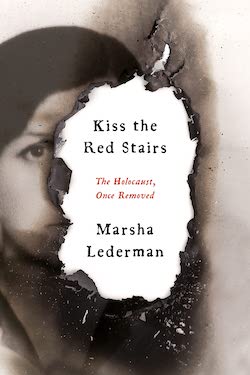
image - Kiss the Red Stairs coverThe Cindy Roadburg Memorial Prize for memoir/biography was given to Marsha Lederman for Kiss the Red Stairs: The Holocaust, Once Removed. In it, Lederman delves into her parents’ Holocaust stories in the wake of her own divorce, investigating how trauma migrates through generations. At the age of 5, Lederman asked her mother why she didn’t have any grandparents, and her mother told her the truth: the Holocaust. Decades later, her parents having died and now a mother herself, Lederman began to wonder how much history had shaped her life and started her journey into the past, to tell her family’s stories of loss and resilience.

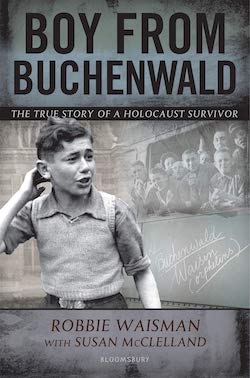
image - Boy from Buchenwald cover Boy from Buchenwald by Robbie Waisman (with Susan McClelland) took the Diamond Foundation Prize for children and youth writing. In 1945, Robbie Waisman, then Romek Wajsman, had just been liberated from Buchenwald, a concentration camp where more than 60,000 people were killed. He was starving, tortured and had no idea if his family was alive. Along with 472 other boys, these teens were dubbed “the Buchenwald Boys.” They were angry at the world for their abuse, and turned to violence: stealing, fighting and struggling for power. Few thought they would ever be able to lead functional lives again, but everything changed for Romek and the other boys when Albert Einstein and Rabbi Herschel Schacter brought them to a home for rehabilitation.

image - Watching a Man Break a Dog’s Back coverThe Betty Averbach Foundation Prize for poetry went to Tom Wayman’s Watching a Man Break a Dog’s Back: Poems for a Dark Time, which explores the question of how to live in a natural landscape that offers beauty while being consumed by industry, and in an economy that offers material benefits while denying dignity, meaning and a voice to many in order to satisfy the outsized appetites of a few. A cri de coeur from a poet who has long celebrated the voices of working people, the collection also grapples with why “anyone, in this era so profoundly lacking in grace, might want to make poems – or any kind of art.”

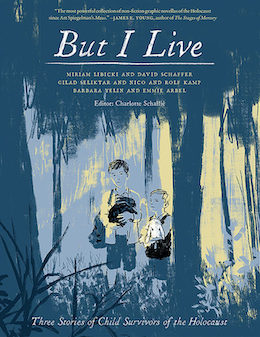
Rounding out the awards was the Kahn Family Foundation Prize for Holocaust writing, which was given to But I Live: Three Stories of Child Survivors of the Holocaust by Charlotte Schallié (editor) and illustrators Miriam Libicki, Barbara Yelin and Gilad Seliktar. But I Live is a co-creation of the novelists and four Holocaust survivors: David Schaffer, brothers Nico and Rolf Kamp, and Emmie Arbel. Schaffer and his family survived in Romania due to their refusal to obey Nazi collaborators; in the Netherlands, the Kamps were hidden by the Dutch resistance in 13 different places; and, through the story of Arbel, who survived Ravensbrück and Bergen-Belsen concentration camps, we see the lifelong trauma inflicted by the Holocaust. The book includes historical essays, a postscript from the artists and words of the survivors.

image - But I Live coverEach category in the 2023 Western Canada Jewish Book Awards was assessed by five jurors, in different configurations, from the following professionals: Linda Bonder, a retired librarian; Susanna Egan, professor emeritus of literature in English from the University of British Columbia; Dave Margoshes, who writes fiction and poetry on a farm west of Saskatoon; Norman Ravvin, a writer, teacher and critic living in Montreal; Rhea Tregebov, an author of fiction, poetry and children’s picture books, and a retired professor in the UBC Creative Writing Program; Elisabeth Kushner, a librarian and writer living in Vancouver; Karen Corrin, former head librarian of the Isaac Waldman Jewish Public Library at the JCC; Nicole Nozick, former executive director of the Vancouver Writers Fest and former director of the JCC Jewish Book Festival; and Anita Brown, who is working with the Waldman Library.

Daniella Givon, chair of the awards committee, introduced the May 24 event, sharing a bit about the awards and thanking all the sponsors and participants for the high calibre and diversity of the submissions. The winning authors then said a few words, and Dana Camil Hewitt, director of the JCC Jewish Book Festival, closed the proceedings with more thank yous, and an invitation for everyone to purchase and enjoy the books.

– Courtesy Cherie Smith JCC Jewish Book Festival

Posted on June 9, 2023June 8, 2023Author Cherie Smith JCC Jewish Book FestivalCategories BooksTags Alan Twigg, Barbara Yelin, Charlotte Schallié, David Schaffer, Emmie Arbel, fiction, Gilad Seliktar, Holocaust, Marsha Lederman, Miriam Libicki, Nico Kamp, non-fiction, photography, poetry, Robbie Waisman, Rolf Kamp, Simon Choa-Johnston, Susan McClelland, Tom Wayman, Western Canada Jewish Book Awards, writing

Posts pagination

Previous page Page 1 Page 2 Page 3 Page 4 Next page
Proudly powered by WordPress