Israel’s antiquities trade

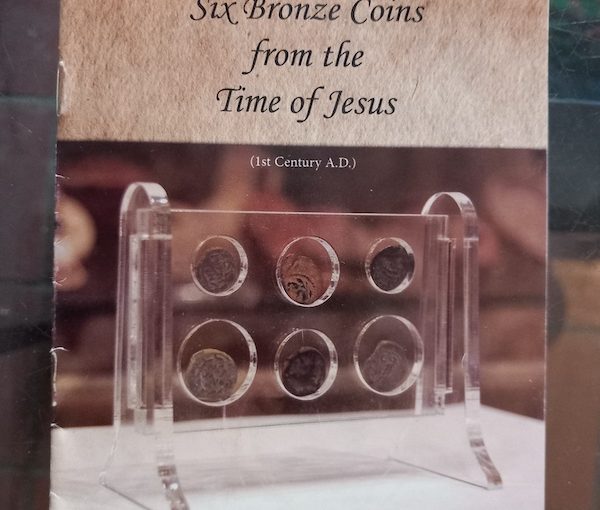
A brochure about antique coins from Zak’s Antiquities.

Israel’s central role in the global antiquities business was the subject of a Zoom lecture on May 2 sponsored by the W.F. Albright Institute of Archeological Research in Jerusalem and the Palestine Exploration Fund, headquartered in London.

Entitled The Antiquities Trade in Israel and Palestine: Same as it Ever Was?, the joint presentation featured Michael Press, a postdoctoral research fellow at the University of Agder in Kristiansand, Norway, specializing in the archeology of ancient Israel, and Morag Kersel, an associate professor of anthropology at DePaul University in Chicago, Ill., who studies the relationship between cultural heritage law, archeological sites and objects, and local interaction.

Press offered a scholarly overview of how the trade in antiquities burgeoned in the 19th century as tourism and Holy Land pilgrimage reached a mass scale, while Kersel spoke about how the quasi-licit trade functions today.

The Ottoman Empire enacted its first antiquities law in 1869, prohibiting the export of the empire’s heritage, Press noted. Yet, the first English-language Baedeker guide to Palestine and Syria, published seven years later, detailed the sum of baksheesh – a paltry few francs – needed to grease the palm of a customs officer to smuggle out a centuries-old souvenir.

The discovery in 1868 in Dhiban, Jordan, of a monumental Iron Age inscription mentioning King Mesha of Moab triggered an explosion of forgeries, continued Press. Notably, in 1873, Jerusalem antiquities dealer Moses Wilhelm Shapira (1830-1884) hoodwinked Germany into purchasing a trove of 1,800 fakes, he said.

Most pilgrims were interested in acquiring objets de piété, or items related to religion. A popular article was the widow’s mite, the least valuable coin circulating in Roman Judea, which Jesus mentioned in Mark 12:41-44 and Luke 21:1-4. The market in ancient coins included a brisk trade in forged gold and silver coins. Some pilgrims carried with them valuable numismatic items (rare coins, tokens, etc.) from Europe, which they sold in Palestine to fund their journey.

The evolving trade included Samaritan, Hebrew and Greek manuscripts, gems and seals, and ancient lachrymatories – perfume vials that widows would ostensibly fill with their tears and place in tombs as symbols of mourning for the deceased.

Press showed advertising from an American newspaper for the Phoenician (ie. Roman) glassware of Azeez Khayat (1875-1943). Born in Tyre, Lebanon, then part of Ottoman Syria, Khayat arrived at Ellis Island in 1893 and became a United States citizen five years later. Using the small collection of ancient glass he had brought with him, he became a dealer on Rector Street in Manhattan’s Little Syria. On repeated trips to his Middle East homeland, he was able to bring back thousands of artifacts – often excavated by his own workmen – and sell them in a gallery he opened first on West 11th Street and, later, at 366 5th Ave., opposite the Waldorf Astoria Hotel. Many notable U.S. museums acquired important objects through him.

The market for Holy Land antiquities – both counterfeit and real – also included pottery vessels and oil lamps, said Press.

Bringing the story to the present, Kersel said the restrictions imposed by Israel’s Antiquities Law of 1978 forbid the sale of any human-made item from before 1700 CE. However, the act grandfathered the sale of items already in the inventory of the country’s 50 or so licensed antiquities dealers, she said. Since those catalogues are often nondescript and include unclear photographs, and since the lists are rarely updated when an item is sold, there is considerable opportunity to introduce newly and illegally acquired items, Kersel explained.

Underfunded and overstretched, the Israel Antiquities Authority’s anti-theft unit does its best to monitor dealers’ illegal activities, she said. Most shops are located along the Via Dolorosa in the Old City of Jerusalem and resemble Aladdin’s cave of treasures. Those in luxury hotels are decked out with elaborate displays resembling those in prestigious museums. All provide a certificate of authenticity cum export permit with each sale, she noted.

Typical is Zak’s Antiquities, run by Zak Mishriky, located in the Old City’s Christian Quarter Road, which advertises: “Invest in biblical antiquities. Ageless, timeless & priceless.” Fine print about the source of the merchandise notes: “The majority of our ancient artifacts come to us through private collections and auctions here in Israel.”

As an archeologist, Kersel has devoted two decades to tracking how the illicit trade in unprovenanced objects extends from the ground to the consumer. In a network that extends from the United Arab Emirates through Jordan, the West Bank and Israel to the United Kingdom and the United States, shady operators, she noted, are pillaging the Middle East’s cultural artifacts. Their criminal enterprise results in the destruction of archeological sites, the desecration of ancient graves and theft from museums. Moreover, it compromises the understanding of the past, she said. Some tie the business to funding terrorism.

Kersel categorized those buying these items into four groups. The first she called explorers, some of whom volunteer on archeological excavations, who generally purchase low-cost items from a cabinet of curiosities in the Old City and do so in search of an authentic exotic cultural experience. While not condoning their behaviour, she excoriated the second group – the elite. She was particularly critical of billionaire Steve Green of Oklahoma. The evangelical Christian, whose family owns the Hobby Lobby craft store chain, used his fortune to establish the Museum of the Bible in Washington, D.C., which opened in 2017.

“There were a lot of red flags,” she said of the museum’s acquisitions. All 16 Dead Sea Scroll fragments Green purchased proved to be forgeries, she noted, explaining how the antiquities enthusiast’s agents mislabeled the thousands of artifacts he purchased. Shipping them in small batches to various American addresses, they hoped to stay below the radar. The scam was finally stopped thanks to a tip-off from a FedEx agent, she said. Some 3,450 items were seized by U.S. authorities.

Kersel was similarly harsh in discussing disgraced Wall Street financier Michael Steinhardt, who, during a period of high inflation in the 1970s, conceived that antiquities were a commodity likely to appreciate quickly. Like Green, Steinhardt sought to gain validation for his purchases – including a group of Neolithic masks perhaps looted from caves by the Dead Sea – by donating them to museums. Steinhardt was a major benefactor of the Israel Museum.

Kersel identified the third group as religious tourists. Like their 19th-century forebearers, they, too, are interested in small-scale items like the widow’s mite, or lachrymatories.

The fourth group Kersel identified comprises members of a charter, such as alumni of a university or members of a sports or social club on an organized tour, who are driven by a group psychology. If one person buys an artifact, that leads their peers to do so, too, she said. And those items must be “cheap, portable and dustable.”

Citing Nelson H.H. Graburn, a professor emeritus in sociocultural anthropology at the University of California, Berkeley, Kersel said such charter tourists will knowingly purchase a replica in order not to lose face with their fellow travelers.

“Afghanistan’s Law on the Protection of Historical and Cultural Properties (2004) strictly regulates the excavation and sale of antiquities: allowing private ownership of only registered antiquities, and prohibiting export except by the state,” said Press. The result has been to drive the business underground – would the result be any different were Israel to declare the antiquities trade illegal, revoke dealers’ licenses and nationalize their inventories?

Kersel cautioned such a radical solution would not end the trade. In an email, she wrote: “I don’t think that the demand for biblical antiquities will ever end, everyone wants something from the Holy Land, but I do think we can create better collectors, who only buy from licensed dealers and who ask about provenance, the origin stories, of the piece.”

Gil Zohar is a writer and tour guide in Jerusalem.

Tracking earth’s winds

A band of clouds above the equator, created by the rise of air within the Hadley cell and responsible for heavy rainfall in this region. (photo from Weizmann Institute)

Why do parts of earth become rainforests, whereas others turn into deserts? A new study exposes the far-reaching impact of human activity on a global airflow phenomenon that crucially affects earth’s regional climates.

In the tropics, above the equatorial rainforests and oceans, the strong solar radiation hitting earth propels a stream of warm, moist air far upward. Once reaching the upper atmosphere, this stream moves in both hemispheres toward the poles; it then descends in the subtropical regions at around 20 to 30 degrees latitude, contributing to the creation of massive deserts like the Sahara in northern Africa. From there, the stream – known as the Hadley cell – returns to the equator, where it heats up and rises again, embarking on its circular journey anew.

The two Hadley cells – the northern and the southern – circulate most of the heat and humidity across low latitudes, greatly affecting the global distribution of climate regions. When the warm, moist air rises, it cools down, allowing water vapour to condense, which leads to heavy rainfall deep in the tropics. In contrast, the streams of air that descend toward the earth in subtropical regions are accompanied by warm, dry winds that reduce rainfall. In essence, the Hadley cells determine which regions in the tropics and the subtropics will have arid deserts and which will be blessed with abundant rainfall. Israel is located on the margins of the northern Hadley cell, which contributes to the country’s semiarid climate.

Because of their huge significance, the Hadley cells are of great interest to climate scientists. However, while there is plenty of global data about rainfall and temperature, measuring airflow throughout the atmosphere is next to impossible. Adding to the quandary, the various models seeking to make sense of the Hadley cells have been found to contradict one another. Global climate models, which are used for climate projections, indicate that the northern Hadley cell has weakened over the past few decades, whereas observation-based analyses suggest the exact opposite.

An uncertainty over a system that is so essential to earth’s climate detracts from the researchers’ ability to assess how much humans have contributed to recent climate change. This, in turn, undermines the credibility of climate projections, making it ever harder to formulate policies required for dealing with the climate crisis. The latest report of the Intergovernmental Panel on Climate Change, the most important document in the field, makes a special point of this issue.

In a paper published in Nature, Dr. Rei Chemke, of the earth and planetary sciences department at the Weizmann Institute of Science, and Dr. Janni Yuval, of the Massachusetts Institute of Technology, address the uncertainty that has plagued the existing models for the past two decades. They propose an observation-based method for measuring the intensity of airflow in the Hadley cells.

To tackle the challenge, Chemke and Yuval looked for readily available data they could use to formulate a new way of measuring the cells’ intensity. After examining physics equations describing airflow, they identified a relationship between the Hadley cell intensity and a constantly monitored parameter: air pressure at sea level. They then examined observational data collected over several decades and reached the conclusion that the intensity of the northern Hadley cell has indeed been weakening – just as suggested by global climate models. Moreover, they were able to show, with more than 99% certainty, that this weakening has been the result of human activity and will likely continue.

What, then, is to be expected? Over the coming decades, the weakening of the northern Hadley cell is likely to mitigate the projected precipitation changes at low latitudes. It will act to temper both the increase of rainfall in equatorial regions and the reduction of rainfall in the subtropical regions. This tempering, however, might only reduce, but not overcome, the projected aridification and desertification of Israel.

“In our follow-up study,” said Chemke, “we will examine whether a similar weakening in the Hadley cell has happened in the past thousand years owing to natural phenomena – and that will allow us to assess how unprecedented these human-induced changes are.”

– Courtesy Weizmann Institute

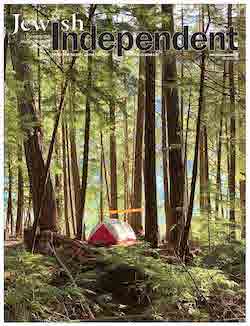
About the Summer 2023 cover

image - JI June 9/23 Summer issue coverSinging Creek Campground (photo by Ingrid Weisenbach)

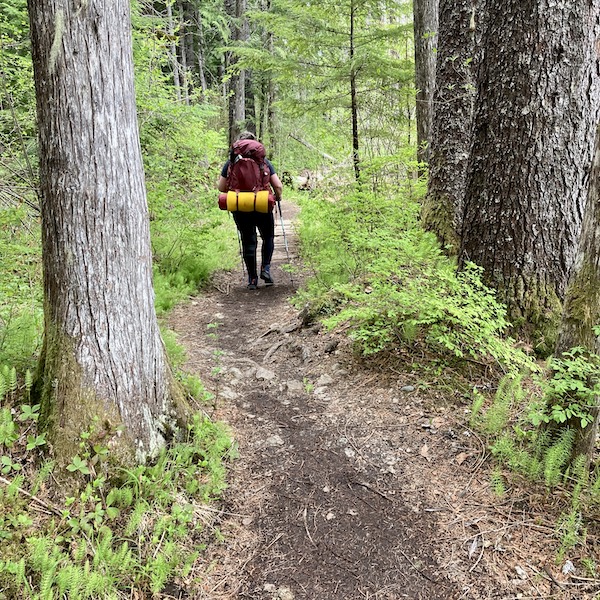
This year’s Summer issue cover was taken at Singing Creek Campground in Garibaldi Park over the May long weekend. It was a relatively easy hike to the campsite, and gorgeous, as can be seen by the images below. All the photos were taken by Ingrid Weisenbach, wife of JI publisher and editor Cynthia Ramsay, who also got to enjoy this getaway.


photo - View along the hike at Garibaldi Parkphoto - Hiking at Garibaldi Parkphoto - Cheakamus Lake

A foolproof eggplant recipe

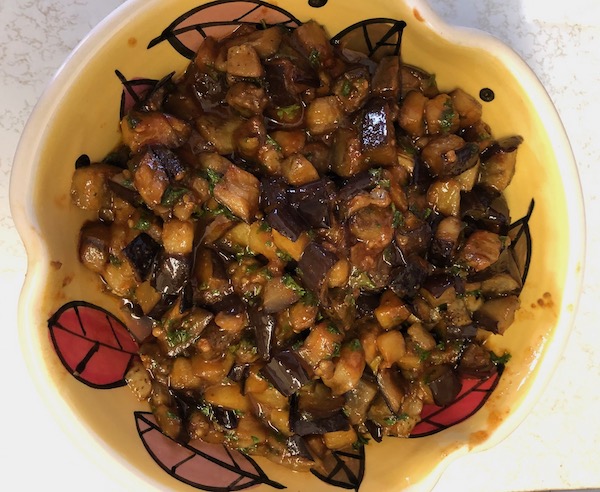
Rebbetzin Chanie’s eggplant dish is “super-easy and ridiculously yummy.” (photo by Shelley Civkin)

A recent Shabbat dinner with Rabbi Yechiel and Chanie Baitelman and a few other guests was like waking into the light after being in darkness for three years. The isolation brought on by COVID, compounded by health issues leaving us feeling vulnerable, resulted in Harvey and I spending every Shabbat and all Jewish holidays by ourselves for three long years. It was our first Shabbat “out in the open” and we couldn’t have asked for a warmer or more welcoming environment.

Observant, but not very much so, Harvey and I are used to lighting Shabbat candles, and he always reads Eishes Chayil (Woman of Valour) to me. But that’s pretty much all we do on Shabbat. So it was truly a delight to spend it with the rabbi and Chanie, their two youngest children, and a few others. The Shabbat rituals added much to the sanctity of the evening, and reminded me why we do what we do, and why Jews are G-d’s chosen people. The singing, the chatting – really, just the feeling of being “home” – all contributed to this intimate and freilach (joyous) evening. And then there was the food.

No Jewish celebration is complete without spectacular homemade food. And Chanie hit all the right notes on that count. We started out the meal with a bunch of small dishes, including the best eggplant dish I’ve ever had the pleasure of meeting. There was also baked fish, another eggplant dip, a gorgeous salad, freshly baked challah and an Israeli couscous salad. And that was just to start! Having been a guest at their home before, I knew that this was just the beginning, and that I should pace myself. Juicy, delicious Shabbos chicken followed, along with zucchini and onion quiche.

The star of the show for me, though, was Chanie’s Middle Eastern eggplant dish, which is the stuff that Jewish dreams are made of. People always say delicious food is “to die for!” but, really, the saying should be: “It’s to live for!” Naturally, I asked Chanie for the recipe and she admitted that she doesn’t really use one, which is why it tastes different every time she makes it. I tried to nail her down, as I wasn’t about to let this amazing dish get away. A couple of days later, and after a lot of question-asking and prodding, she relented and texted me the ingredients. No measurements. Just ingredients. Her directions to me were simple: “Just taste it as you go along.” Not unlike what our grandmothers did. But this is not something you say to someone like me, who’s a bit compulsive, and a stickler for a recipe. Needless to say, I was a bit flustered by the meagre directions.

Not to be daunted by a challenge though, I did what I rarely do – I winged it. With great trepidation, I might add. Chanie’s eggplant dish was so spectacular that I just knew I had to figure it out on my own, no matter how many tries it took. And, whaddaya know, I hit it out of the ballpark on the first go! And now, as humbly as possibly, I will share (to the best of my memory) the ingredients and measurements that I recall, and if it doesn’t work out … well … just try again. All measurements are approximate. As if that helps.

REBBETZIN CHANIE’S EGGPLANT
(makes enough for four as a side dish)

3 smallish eggplants, cubed and with skin on
juice of 1 lemon
1/2 tsp cumin
1/2 tsp paprika
1/2 tsp smoked paprika
2-3 cloves minced garlic
2 heaping tbsp tomato paste
2 heaping tbsp honey or date syrup (I used honey)
large handful of parsley, finely chopped
pepper to taste

Dice unpeeled eggplants into small cubes and sprinkle generously with olive oil. Don’t be afraid to use a lot of oil. Then sprinkle with salt. Bake at 375°F. until very soft, about 40 minutes. Turn it halfway through.

While the eggplant is baking, fry up minced garlic in a good amount of olive oil. Once it starts to brown, turn the heat down and add lemon juice, cumin, paprika, smoked paprika, tomato paste, honey or date syrup, and pepper. As you fry it up, taste it and adjust accordingly. There won’t be a lot of sauce but, trust me, the flavour is enough to permeate all of the eggplant.

Once the eggplant is nice and soft, mix it in with the garlic and tomato paste mixture, add the parsley, and you’re good to go. This dish is spectacular on its own, or with challah or focaccia to soak up the oil. It’s great served hot but it’s even better served cold the next day, once the flavours have had a chance to meld and marry. My husband declared it “company worthy” and hopes I’ll make it daily. Nice try, honey.

What I like about this dish is that it’s super-easy and ridiculously yummy – it’s sweet, smoky and slightly tart all at once. It’s also very oily, but that’s part of its Middle Eastern charm. You can adjust the amount you use, as eggplant tends to suck it up like a sponge. In our household though, you can never have enough olive oil.

I served this eggplant dish with steak, but it would go well with pasta, fish, rice, chicken or pretty much anything. Chanie told me that she makes up a big batch of the garlic tomato paste mixture and freezes it, so that when she’s in the mood for eggplant, all she has to do is cube the eggplant, bake it and add it to her defrosted pre-made “sauce” mixture. If I were a store or a restaurant, I’d put a money-back guarantee on this dish. Short of outrageously over-spicing it, you really can’t go wrong. I mean, it’s eggplant after all. The nightshade superstar. Enough said. Go dice your eggplant and call me when it’s done. I won’t take no for an answer. I’ll even bring the bread.

Shelley Civkin, aka the Accidental Balabusta, is a happily retired librarian and communications officer. For 17 years, she wrote a weekly book review column for the Richmond Review. She’s currently a freelance writer and volunteer.

Recipes for special moments

As my kid peered over the counter, straining to see into the mixer bowl, I had a moment that I hope I will always remember. “Egg chemistry is amazing!” I commented, as he asked what cream of tartar did and we read the label together. Then, as the mixer churned faster than I could ever do by hand, we saw soft peaks and medium peaks pass into stiff peaks. We were ready to drop globs of this air-filled sugar mixture onto the baking sheets, ready to turn egg whites into crunchy meringues.

It’s after Shavuot. There’s Winnipeg’s glorious spring all around us, as well as the remains of a delicious lemon custard pie (like key lime pie, if you’re wondering, but with lemons) in the refrigerator. Since some of the Shavuot dairy desserts use egg yolks, we were left with the practical gift of the whites and the magical meringues that followed.

I live with a science professor and twins who won their school science fair this year, but I wouldn’t call myself good at science. However, moments like these, whipping egg whites with one of my kids, make me think back to my high school chemistry teacher, Tuvia. Tuvia grew up in New York and settled on a religious kibbutz in Israel. He had an impressive beard and was probably in his 40s when he taught our Grade 11 class of North Americans, living on secular Kibbutz Beit HaShita in 1989-90. He had limited access to supplies or facilities when it came to doing experiments. I got the sense that teaching our class took time out of his regular work schedule. Even so, he captured the joy and neat magic of how basic chemistry worked.

Due to a sickness that caused a lengthy absence, I was behind in his class. I got to visit his family at their kibbutz with another classmate or two. From what I remember, I sat at his kitchen table to do make-up work. His wife offered us snacks. Kids played outside, running through the sprinklers on the well-tended paths, surrounded by flowers.

Tuvia offered us a good grounding in chemistry but also a window into what an Israeli religious kibbutz settlement looked like, simply by inviting us home to help us catch up on our schoolwork. This was something our year abroad program wasn’t offering. More than 30 years later, that memory is a valuable one. Tuvia, if you’re out there in our “connected by Jewish geography” world – thank you for being such a good teacher.

On social media at this time of year, it’s common to see lots of weddings and other celebrations. Family picnics, parties and graduations fill up many people’s schedules. My household’s not immune: this month, we’ve got a big school play, three birthdays, an end-of-year elementary school event, a milestone wedding anniversary and more. I joked with a friend that it’s like somebody pushed a “GO” button. Everybody’s running around like crazy.

Many people (likely extroverts) get a lot of joy from the big occasions. Turns out that I’m one of those people who can do without the big events. The pandemic reminded me that, if I had to avoid gathering in large groups forever, I probably wouldn’t mind. There’s a lot of pressure to “return to normal” right now, even though COVID still exists. But, even if it didn’t, I am one of those who didn’t really find “normal” large social events all that easy before.

The gift that I’ve received instead is this amazing joy in the small things every day. In sitting outside in the shade, watching one kid construct mysterious imaginary fairy worlds while the other one doggedly coaxes along things he has built, like his solar rover. I loved starting our garden, where we all dug in the earth together, tucking in our seedlings and seeds, and feeling such hopeful enthusiasm for what will grow and for the growing season’s potential.

We have lots of specific, prescribed blessings in Jewish tradition to help us find that everyday gratitude and joy. There’s the brachah (blessing) for seeing a rainbow, for a thunderstorm, or even for seeing a king. I don’t always remember the blessings at the right moment, but, in the end, I’m not sure it matters. The prompt to recognize these things, express gratitude and sense the wonder of the world is still there.

Along with making meringue magic and planting in the sunshine this past weekend, I heard some hard news, too. One friend from university, a single mom who lives far away, age 49, is facing a new diagnosis of lung cancer. Another faraway friend, dear to my heart, is soon to enter palliative care and hospice. This bad news just about derailed me. There were moments to cry. Yet, I grasped hold of the sunshine, the airy bits of sugar and egg, the time weeding and digging in the earth, and, instead of tears, two kid drawings and a note filled with love went out in the mail today to my friend entering hospice.

Very few things are as tidy as basic math or chemistry problems. Food chemistry, like making meringues, is just about the most predictable experiment I know. Those recipes are like the ritual prayers for seeing moments of wonder. To me, recipes, like their religious ritual equivalent, perhaps express a purely rote way to acknowledge wonder in the everyday. I am holding onto that recipe for wonder with both hands as I head forth through this warm season of celebration. Sometimes, a “recipe” for complete healing after surgery removes cancer or a prayer for a peaceful send off to Olam HaBa (the next world, the place some believe we go after death) is all we can do. In the meanwhile, it’s a good time to eat those crunches of sugar and air – but only after we clean the dirt from our fingernails and race through the sprinklers to another summer day.

Joanne Seiff has written regularly for CBC Manitoba and various Jewish publications. She is the author of three books, including From the Outside In: Jewish Post Columns 2015-2016, a collection of essays available for digital download or as a paperback from Amazon. Check her out on Instagram @yrnspinner or at joanneseiff.blogspot.com.

Beauty in indrawn breath

An indrawn breath. What are the things that cause your eyes to widen, that are such a surprise, good or bad, that they literally take your breath away? There may not be many things that do that to you, but they do leave an impression. I have found it important to mark them.

Myself, I prefer the happy surprises. When that person you have been dreaming about every night pops the question, that can take your breath away. Perhaps even better, someone you never dreamed of appears before your eyes, sweeps you off your feet and whisks you to a place that never existed before. Your feet rise from the ground and, amazingly, you are bodiless, and it can go on and on, even for a lifetime! Eventually, you have to breathe again, but now you are in a new world, and things have changed forever. Am I raising your expectations too high? Why not ask for the moon? It happened to me.

How about when a new life is born. Then, suddenly, there is an indrawn breath, and a cry – the world has changed forever for all those concerned. And there will be many ups and downs. Try to enjoy the ups as much as you can!

I remember coming upon an iris in a garden, the colour was blue-black. It took my breath away. The beautiful delicacy of an orchid, its shape, colours – that does it for me every time. A piece of music can pierce me to the very core and set me weeping, so that I find it almost impossible to breathe. A summer day in a vineyard, the clouds advancing to attenuate the summer heat, the blush of air on my skin from a gentle breeze as I hide in the shade of a massive tree – I hold my breath and hug myself. When I stand with my fingers brushing the weathered stone of the ancient Wall in Jerusalem, I can feel the thrum of the centuries rumbling under my skin and my body shakes uncontrollably in resonance with the events I am heir to; I feel myself gasping for air, I am transported.

Let me take you into my confidence. I am intoxicated with life, totally drunk and out of my skull. The tsunami of sensory input coursing through the coruscations of my cortex from my eyes, ears, skin, not to mention my taste buds and my gut, have me in a constant state of arousal. And I haven’t even mentioned sex. I kid you not.

The tiny tiptoeing of an insect on my skin brings me to full alert. I wonder where it thinks it is going, what it sees, feels. Will it bite, just feed on my exfoliations, or is it exploring to find a friend? As it crawls across my arm, I contemplate the feel of my muscles when they propel me down the street. I sometimes am impelled to break into a run just to experience the pump of my heart and the puff of my lungs. What a rush to be alive!

Talk about taste and what it does to my senses: the sweet and bitter of wine, the acridity of a cigar, the shock of a shot of single malt, and that’s just the stuff designed to kill brain cells. What about salt and vinegar, spiced meats and garlic, onions and, a favourite, caraway seeds?

There is no bland for me. How about a rib steak, medium rare, seared so the exterior is caramelized, adding salad with a sharp vinaigrette? How about battered cod, with French fries and lots of ketchup? Does this sound like a sensible low-cal diet for an old fogey like me? Let’s not mention desserts, enjoyed in moderation even though I am diabetic. The sight of one in a French restaurant is sometimes enough to excite me to breathlessness. I haven’t mentioned that I love a tart apple pie.

I have experienced Yellowknife at 40-below, with a wind, and the desolate airport tarmac, in scenic Mauritania, at 45˚C, the juicy humidity (with body melting like ice cream) of the Congolese jungle and the aridity (feeling like a dried-up leaf) of Darfur. I know when I am fortunate in passing my time in a temperate climate. Just being in a pleasant place is something I can never take for granted.

And, for a bit of something else, I know what it is to try to survive in the hurley-burley of a chaotic business environment. I have learned to appreciate the joys of single-tasking after being in situations where I have felt like a 10-armed paperhanger, working against time. And more? Believe me, you would not necessarily enjoy seeing your name on the front page of a newspaper or your face on the TV news. Talk again about the indrawn breath.

But it is our human relationships that top it all for me. There is nothing like the right one, or the wrong one, to get us breathing like a steam engine, testing the resistant capacities of our vascular systems. It surely takes the cake for the height of experience. When your moment arrives, and you feel that sense of communion with another person, just smiling at each other across a small space, you feel the need to pinch yourself to prove that the instant is really real. I don’t know about you, but I have to take a really big breath to try and keep calm. I feel I could burst with the ecstasy of the experience, because I can remember the misery of those other so-lonely times. Oh, yes, I can.

Welcome to Life.

Max Roytenberg is a Vancouver-based poet, writer and blogger. His book Hero in My Own Eyes: Tripping a Life Fantastic is available from Amazon and other online booksellers.