Skip to content
  • Home
  • Subscribe / donate
  • Events calendar
  • News
    • Local
    • National
    • Israel
    • World
    • עניין בחדשות
      A roundup of news in Canada and further afield, in Hebrew.
  • Opinion
    • From the JI
    • Op-Ed
  • Arts & Culture
    • Performing Arts
    • Music
    • Books
    • Visual Arts
    • TV & Film
  • Life
    • Celebrating the Holidays
    • Travel
    • The Daily Snooze
      Cartoons by Jacob Samuel
    • Mystery Photo
      Help the JI and JMABC fill in the gaps in our archives.
  • Community Links
    • Organizations, Etc.
    • Other News Sources & Blogs
    • Business Directory
  • FAQ
  • JI Chai Celebration
  • JI@88! video

Recent Posts

  • Last hostage home
  • New bill targets hate crimes
  • Concerning actions
  • Recipes not always required
  • Survivor urges vigilance
  • Seniors profoundly affected
  • Farm transforms lives
  • Musical legacy re-found
  • A range of Jewish literature
  • A concert of premieres
  • Variety telethon on Feb. 22
  • Victoria club’s many benefits
  • Avodah dedicated to helping
  • Artists explore, soar, create
  • Life’s full range of emotions
  • Community needs survey closes March 29
  • Jerusalem marathon soon
  • Historic contribution
  • Chronicle of a community
  • Late-in-life cartoonist
  • Cashflow vs growth portfolio
  • My new best friend is Red
  • ישראלים רבים ממשיכים לתמוך בטראמפ ועדיין אינם מבינים במי מדובר
  • עשרים ואחת שנים בוונקובר
  • Supporting the Iranian people
  • The power of photography
  • A good place to start
  • When boundaries have shifted
  • Guitar virtuosos play
  • Different concepts of home
  • Broadway’s Jewish storylines
  • Sesame’s breadth and depth
  • Dylan Akira Adler part of JFL festival
  • Mortality learning series
  • A new strategy to brighten up BC
  • Sharing latkes and light

Archives

Follow @JewishIndie
image - The CJN - Visit Us Banner - 300x600 - 101625

Tag: Diamond Foundation

Help with road to recovery

Help with road to recovery

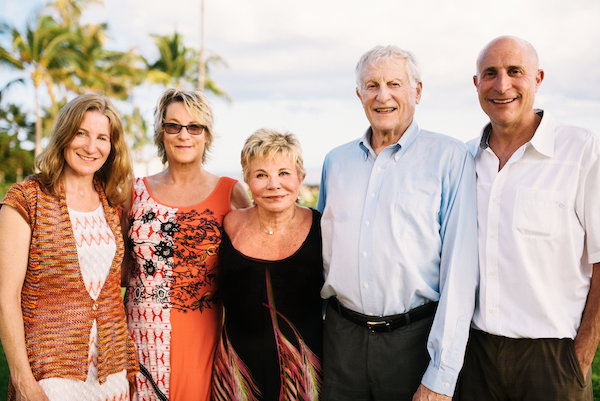
Left to right: Jill Diamond, Lauri Glotman, Leslie Diamond, Gordon Diamond and Steven Diamond, in 2014. (photo from St. Paul’s Foundation)

The Diamond family is speaking publicly about the tragic loss of Steven Diamond – a cherished father, son, brother and addictions counselor killed by fentanyl in 2016 – and honouring his life with a $20 million donation to St. Paul’s Hospital. The gift both memorializes Steven Diamond’s legacy and funds a first-in-Canada model of treatment that could transform addictions care across the country.

“We’re speaking out today for the first time because we want to save lives,” said Jill Diamond, Steven’s sister and executive director of the Diamond Foundation, when the donation was announced last week. “No matter where we turned, we never found the help that Steven needed. If he had access to the care now being developed at St. Paul’s Hospital with this new initiative, he might still be with us here today.”

One of the key factors driving substance use-related harms in British Columbia is the lack of a seamless system of care to support people with addiction. Gaps failing to connect prevention, treatment and recovery mean that people are unable to access the supports they need, when and where they need them.

The Diamond Foundation’s $20 million gift to St. Paul’s Foundation will fund development of the new Road to Recovery at St. Paul’s Hospital, a first-in-Canada model of care that aims to fill these gaps. Road to Recovery will cut weeks off waitlists and support patients to move through a full spectrum of treatment services all in one location. It will eventually house 95 beds for seamless transition between all stages of the recovery journey – from the Rapid Access Addiction Clinic through withdrawal management, in-patient recovery-focused beds, transitional housing, outpatient treatment and more. The first beds, focused on stabilization, will open in fall of 2023.

“Road to Recovery began as a vision for a full continuum of substance use care within a single setting at St. Paul’s Hospital, so that people can access the evidence-based addiction care they need, when they need it. Addiction medicine clinicians like myself know that being able to refer someone to the appropriate service and then provide follow-up care is integral to supporting their wellness, but is rarely an option,” said Dr. Seonaid Nolan, physician program director for Providence Health Care’s Addiction Program and clinician scientist with the B.C. Centre on Substance Use.

“The Road to Recovery will now make this possible,” Nolan continued. “I am so incredibly grateful to the Diamond family and foundation for their extraordinary generosity and their shared vision for a better model of substance use care. Their kindness and leadership have played a significant role in making the Road to Recovery a reality.”

The Diamond Foundation’s gift is made in honour of Steven Diamond, who is remembered as an “immeasurably giving” addictions counselor and massage therapist with a “healing touch.” While his life was punctuated with long periods of sobriety and joy, he faced a prolonged struggle with substance use disorder that saw him in and out of treatment for years.

During his most distressing moments, the Diamond family says he encountered a messy system of delays and disappointments. Finally, the 53-year-old was placed on a three-month waitlist to see a B.C. addiction psychiatrist. He was killed by fentanyl less than a week before that scheduled appointment.

“This tragedy clearly shows our healthcare system was not and is not up to the task,” said Jill Diamond. “Steven was a well-sought-after addictions counselor with expertise in the field, and family means to pay for recovery. The fact that even he couldn’t get well, despite giving his entire life’s effort, shows addiction is a disease that must be looked at medically with new models of care. That’s what today is about.”

“This donation demonstrates the power of philanthropy to drive systemic change,” said Dick Vollet, president and chief executive officer of St. Paul’s Foundation. “Despite the most difficult circumstances, the Diamond family is bravely stepping forward to help fix a broken system – and giving families hope there is a path to recovery.”

But this $20 million donation is the beginning, not the end. With the Diamond Foundation’s leadership gift in place, the provincial government has committed $60.9 million toward operating costs.

“The Road to Recovery … is crucial for the one in six people at St. Paul’s Hospital who experience substance use disorder,” said Fiona Dalton, president and chief executive officer of Providence Health Care, expressing gratitude “to the Diamonds for this generous gift. And we’re grateful to the provincial government and our healthcare partners for investing in and supporting this important initiative.”

Further, it’s hoped the Diamonds’ act of philanthropy inspires the public to donate as well.

“We want the public to take action and understand that substance use disorder is not a moral failing, nor a weakness, nor a choice,” said Jill Diamond, noting the gift is a demonstration of the family’s Jewish values. “As with tikkun olam, we hope this act of kindness helps to repair the world. As found in the Talmud: ‘Whoever saves a single life is considered to have saved the entire world.’ We have lost our beloved Steven, but we hope we can save lives and positively impact the world. This is a disease that can come for anyone – including you and those you love. While ours was not a success story, we want to rewrite history for others.”

To donate, visit helpstpauls.com.

– Courtesy St. Paul’s Foundation

Format ImagePosted on June 23, 2023June 22, 2023Author St. Paul’s FoundationCategories LocalTags Diamond Foundation, diamonds, Jill Diamond, mental health, philanthropy, Road to Recovery, St. Paul’s Hospital, Steven Diamond, substance use disorder
KDHS chai celebration

KDHS chai celebration

Left to right: Jeff Ross and Stephen Kaye, King David High School co-presidents in 2006, and Diane Friedman and Alain Guez, this year’s co-presidents. (photo from KDHS)

“At King David, Jewish memory and education intersect, creating a unique and powerful learning experience that prepares our students for a lifetime of meaning and purpose,” said King David High School board co-president Alain Guez in his closing remarks at the school’s Golden Thread Gala May 18.

The gala is KDHS’s primary fundraising event of the year, and more than 300 people filled the ballroom at Congregation Beth Israel, including some 50 King David alumni, to celebrate the school’s 18 years in its current building, at Willow Street and 41st Avenue. The school itself is double chai (36) years old, its origins being found in Maimonides Secondary School, which opened in September 1987.

“We would not be here today if Maimonides … had not started us on our path, our derech, to where we are now,” said head of school Russ Klein in his opening remarks.

“This evening is to celebrate what our community has built together,” he said. “The Diamond Foundation, who support so many of our community efforts, made King David possible with their generous support, belief in our importance, and their strong Jewish values.”

Rabbi Stephen Berger, head of Judaic studies at KDHS, noted that the event was taking place on erev Yom Yerushalayim. He compared Yerushalayim – “a holy place for all people, all people can worship G-d in this one place” – to KDHS, in that there are many different Jewish schools in Metro Vancouver but only one high school, and this one high school has to serve everybody across the religious and cultural spectrum. “We don’t always get it right, but it is a place where we can try, and respect and show love to everybody,” he said.

Event co-chairs Heidi Seidman and Sherri Wise said a few words about the school, as well. “It is important to note,” said Seidman, “that not one student is left behind and, when you look around the room tonight, you are all part of the village that makes that possible.”

As auctioneer, Fred Lee – who is a regular contributor to CBC, the Province, Boulevard and Vancouver Magazine – stressed this idea. He spoke about the Jewish community and the importance of the high school. He also helped raise funds that will go towards the school’s programs and students. There was a silent auction, a 50/50 draw and other opportunities to donate.

photo - Throughout the Golden Thread Gala, there were musical performances
Throughout the Golden Thread Gala, there were musical performances. (photo from KDHS)

The gala featured panelists Stephen Kaye, and Jeff Ross and Reisa Schwartzman, who were integral to the transition of the school from Maimonides to King David, and for taking the school from the portables it occupied on Baillie Street to having its own building on Willow. They were introduced in a video by their respective children, David Kaye and Zachary Ross, graduates of the inaugural KDHS Class of 2006.

Stephen Kaye came to Canada from South Africa, where there is a network of Jewish day schools called King David Schools. He described himself as “very passionate about Jewish education” and said, “The feedback we got from the community was that, if we could show enough commitment from parents to send their kids to a Jewish high school, there would be support from the community.” It was a hard sell, he said, but then the Diamonds bought the land at Willow and 41st.

Stephen and Sandy Kaye shlepped three kids from North Vancouver to King David in Vancouver, noted Klein, who emceed the panel discussion.

Ross spoke of studies showing that kids who have gone to a Jewish high school are more Jewishly knowledgeable and involved. And yet, he said that, in the beginning, there was almost a feeling that you were sacrificing your children to the experiment of a new high school, but that didn’t turn out to be the case. Ross gave Rabbi Mordechai Feuerstein, a co-founder of Maimonides, kudos for his efforts to keep the school going.

When the school was in “the shack” (portables) on Baillie Street, said Schwartzman, there were fewer than 60 kids and now there are more than 270. Back when she was helping bring KDHS into existence, she said she was confident this growth would happen, based on a survey that was conducted at Vancouver Talmud Torah, which would be the main feeder school into the high school. She was president of VTT at the time, and the survey of parents showed that about 50% of the kids from VTT would go to a Jewish high school if there were one.

Quality education was important to everyone, said Schwartzman, and one of the things the group behind KDHS did to ensure quality was to bring Perry Seidelman in as principal. Seidelman, who had some 30 years’ experience in teaching and administration at the time, had been contemplating retirement, but took on the principalship and held the position until 2008; he was succeeded by Klein.

In a video that featured Gordon and Leslie Diamond and their daughter Jill Diamond, as well as Class of 2023 students talking about how the school has positively impacted them, the Diamonds spoke of how proud they were of KDHS, its students, staff, and all the people who have given it its “personality” and contributed to its success. Calling the school “a labour of love for the Diamond Foundation,” Jill Diamond said, “And the most wonderful thing about King David is that it is teaching the Jewish values of tikkun olam, of chesed, of mitzvot and of tzedakah to the next generation of leaders of our community.”

Such has been the growth of the school that it added a modular unit last year, the building of which was funded by the Diamond Foundation. In her remarks with Guez, KDHS board co-president Diane Friedman spoke about how the addition is affectionately called the school’s “East Campus,” and thanked the foundation, as well as the donors who filled the modular with state-of-the art equipment, furniture and technology.

The evening came to a close with Klein and Seidelman. The former principal said he had worked at many schools before King David, and that he liked all of them – but he “loved King David.” He said he felt very proud as he looked around the room.

The gala also featured, under the direction of music teacher Johnny Seguin, the KDHS jazz band, who played at the cocktail reception – Luca Jeffery, Max Kimel, Jesse Millman and Nikki Wiseman – and performances throughout the night by singers Ella Ankenman, Kailey Bressler, Rachel Gerber, Mhairi Hemingson and Nikki Wiseman, with choreography credit given to Shai Rubin.

Gala committee members were Cyndi Ankenman, Dalia Bressler, Laura Feldman, Andrea Foxman, Nicole Ginsberg, Margaret Hemingson, Anna Herman, Ruth Jankelowitz, Joelly Simkin and Annie Simpson. Other volunteers were Lina Chernov, Kim Fisher, Jessica Forman, Simon Karsyente, Matilda Rosman Levsky, Melina Baum Singer, Gaenor Vaida, Jacqueline Wener and King David students Danielle Agulyansky, Eden Almog, Ali Fadida, Tamir Gini and Yuli Kabazo.

Format ImagePosted on June 9, 2023June 8, 2023Author Cynthia RamsayCategories LocalTags Alain Guez, Diamond Foundation, diamonds, Diane Friedman, Fred Lee, fundraising, Golden Thread Gala, Heidi Seidman, KDHS, King David High School, Russ Klein, Sherri Wise, Stephen Berger

Community milestones … Diamond Foundation, JWest, Louis Brier, Waldman Library, Boys Town, IDF & BGU

The Diamond Foundation is leading the way in contributing to JWest, with an historic $25 million gift – and community donors have matched this gift with another $25 million.

The Diamond Foundation’s matching gift is the first philanthropic contribution to the project and it is the largest donation ever made by the Diamond Foundation. Completing the match means $50 million toward the JWest capital campaign target of $125-plus million.

Alex Cristall, chair of the JWest capital campaign, had this response: “I want to thank the Diamond Foundation for this transformational gift. A project of this magnitude will not be possible without the tremendous generosity demonstrated by the Diamond Foundation, as well as philanthropic support from the community at large. It is our hope that the Diamond Foundation’s incredible community leadership will serve as inspiration, and we are now calling on others to work with our team to champion this project in an equally impactful way.”

The Diamonds’ gift will have a significant impact on the plans for JWest, providing a social, cultural, recreational and educational asset for all. This is the most extensive project in the history of the Jewish community in Western Canada and it is estimated to cost more than $400 million. Bringing it to life will require philanthropy, government funding and astute financing.

Gordon and Leslie Diamond, who are honorary JWest campaign co-chairs and members of the Diamond Foundation’s board, shared: “We are pleased to be the first family to make a significant contribution to JWest’s capital campaign. Our family has called Vancouver home for almost a century, and we have always believed in contributing whatever we can to ensure there is a bright future for our children and their children.”

The announcement builds on the $25 million funding provided in 2021 by the B.C. government.

“Mazal tov! I’m so pleased that our government’s shared mandate commitment of $25 million and a $400,000 investment in redevelopment planning has been bolstered with philanthropic support from the Diamond Foundation and community,” said Melanie Mark, Hli Haykwhl Ẃii Xsgaak, minister of tourism, arts, culture and sport. “These generous contributions underscore the importance of a renewed Jewish Community Centre to 22,590 Jews and all people living in this community. It speaks to the power of working together to shine a light on our province’s diversity and inclusion.”

The new space, once complete, will deliver a state-of-the-art community centre, expanded space for the Vancouver Holocaust Education Centre, double the current number of childcare spaces, expanded seniors’ programming, a new theatre, a relocated King David High School and two residential towers that will provide mixed-use rental housing (a portion of which will be below-market rates).

“JWest is the amalgamation of decades of work, and the fact that we saw our gift matched so quickly sends a clear signal that the community stands behind this project,” said Jill Diamond, executive director of the Diamond Foundation. “The Diamond Foundation has had a unifying focus to assist and advocate for initiatives in the Vancouver area that help improve the quality of people’s lives. The impact JWest will have on the Jewish community and the surrounding Oakridge community is undeniable.”

* * *

The Louis Brier Jewish Aged Foundation has added two new members to its board of directors: Mervyn (Merv) Louis and Michelle Karby. They join an impressive group of volunteers, who for the past decades, have donated both their time and funds to care for the elderly of the Vancouver Jewish community.

photo - Mervyn (Merv) Louis
Mervyn (Merv) Louis (photo from Louis Brier Jewish Aged Foundation)

Louis, a certified public accountant, emigrated with his family from South Africa to Canada in December 1978 and joined a small accounting firm in Vancouver. In the summer of 1979, the firm was acquired by Grant Thornton LLP. In 2016, Louis retired as a partner of Grant Thornton LLP, where he worked for 38 years, of which 33 were as a partner specializing in audit, accounting and business advisory services. Louis advised and worked with clients in many different industries, including manufacturing and distribution, real estate investments and construction, entertainment, and professional practitioners.

After his retirement from Grant Thornton LLP, Louis worked as the chief financial officer of Plotkin Health Inc. and MacroHealth Solutions Limited Partnership until retiring again, in August 2020. During these years, he successfully helped merge a U.S. partnership and a Canadian company to form the parent partnership of MacroHealth Solutions Ltd. Partnership, a medical cost management and solutions provider in North America.

Louis has been married for 46 years and has two sons. He and his wife love to travel and are particularly fond of cruises; they have toured North America, Europe, Asia, Australia and Southern Africa. Louis is an avid sports fan and, while his playing days are over, he loves watching all sports, notably hockey, golf and rugby.

photo - Michelle Karby
Michelle Karby (photo from Louis Brier Jewish Aged Foundation)

Karby is an experienced wills, estates, trusts and corporate lawyer heading up the wills and estates group at Owen Bird Law Corp. She helps clients plan, build and protect their legacies. Prior to developing her expertise in this area, Karby spent many years in and out of a courtroom honing her skills as a commercial litigator.

While born and raised in Vancouver, Karby’s adventurous spirit and love of travel translated into 18 years studying and working in places that included Montreal, Toronto, Israel, Cape Town, Melbourne and Sydney. Now settled in Vancouver with her husband and two teenage sons, Karby enjoys the beautiful natural environment, being close to her family and giving back to the community that she grew up in.

* * *

Kimberley Berger has joined Jewish Federation of Greater Vancouver as its new outreach worker in the regional communities. In particular, she will focus on White Rock, South Surrey and New Westminster.

Berger has worked in the nonprofit sector for more than 30 years, focusing on community development and family support. She has held many roles, ranging from frontline work to executive director of South Vancouver Family Place. She also dedicates time to supporting parents whose children are undergoing cancer treatment at B.C. Children’s Hospital with the West Coast Kids Cancer Foundation.

Berger believes that a strong sense of connection makes both individuals and communities more resilient. Building relationships is central to her role at Jewish Federation and in her own personal life with her family of four in East Vancouver.

* * *

This year, the Isaac Waldman Jewish Public Library raised more than $30,000 for the library. These funds will help it purchase new books and supplies for programs. Thank you to all of the Friends of the Library, and to the volunteers who helped make the fundraising a huge success.

* * *

photo - Boys Town Jerusalem ranked in the top 10% of 838 high schools examined over the 2021-22 academic year
Boys Town Jerusalem ranked in the top 10% of 838 high schools examined over the 2021-22 academic year. (photo from Boys Town)

The Israeli Ministry of Education has granted Boys Town Jerusalem an Award for Excellence. The school ranked in the top 10% of the 838 high schools examined over the 2021-22 academic year.

In releasing its findings, the Israel Ministry of Education cited Boys Town Jerusalem (BTJ) for reaching outstanding achievements in the academic and social realms, as well as for instilling crucial ethics and values. BTJ principal Yossi Cohen noted that the prize reflects the ministry’s findings of the extraordinary efforts by BTJ instructors to spur students to reach a high academic level, avoid dropout and advance to Israel Defence Forces enlistment and higher education.

This marks the third time in the past decade that Boys Town Jerusalem has been awarded the prize for excellence, and the first time in which the school has reached the top-echelon rank. The Ministry of Education Award for Excellence includes a monetary reward for teachers among the highest-scoring schools.

In saluting BTJ’s instructors, Cohen stressed the COVID-related hardships over the past two years, which have demanded exceptional efforts to keep students focused and excelling despite the increased illness, poverty and strife they face at home.

* * *

photo - Cutting the ribbon, left to right, are Ruvik Danilovitch, mayor of Beer Sheva, Israel Defence Forces Maj.-Gen. Aviv Kochavi, Ben-Gurion University president Daniel Chamovitz and Avi Jacobovitz, Gav-Yam real estate company director general
Cutting the ribbon, left to right, are Ruvik Danilovitch, mayor of Beer Sheva, Israel Defence Forces Maj.-Gen. Aviv Kochavi, Ben-Gurion University president Daniel Chamovitz and Avi Jacobovitz, Gav-Yam real estate company director general. (photo from Canadian Associates of BGU)

A ceremony dedicating the new home of the Israel Defence Forces (IDF) Communications Branch School for Software and Cyber Security was held in August at the Advanced Technologies Park (ATP) located at Ben-Gurion University of the Negev (BGU).

BGU president Prof. Daniel Chamovitz, IDF chief-of-staff Lt.-Gen. Aviv Kochavi, head of the communications branch Col. Eran Niv, Be’er Sheva Mayor Ruvik Danilovich and other officials and guests were in attendance.

The school’s new location will enable collaboration with BGU and the high-tech companies in the ATP. The school is the first of the communications branch units to move south as part of the national move to strengthen the Negev following the government decision to move the IDF south. The branch’s new main base is under construction alongside the ATP.

The move will assist in the preservation, development and empowerment of the technological human-power in the IDF while creating opportunities and a space for new collaborations in the south.

Posted on October 28, 2022October 28, 2022Author Community members/organizationsCategories Local, WorldTags Ben-Gurion University, BGU, Boys Town, development, Diamond Foundation, education, fundraiser, high-tech, IDF, Israel Defence Forces, Jewish Federation, JWest, Kimberley Berger, Louis Brier Home, Merv Louis, Michelle Karby, outreach, philanthropy, technology
StandWithUs Canada course

StandWithUs Canada course

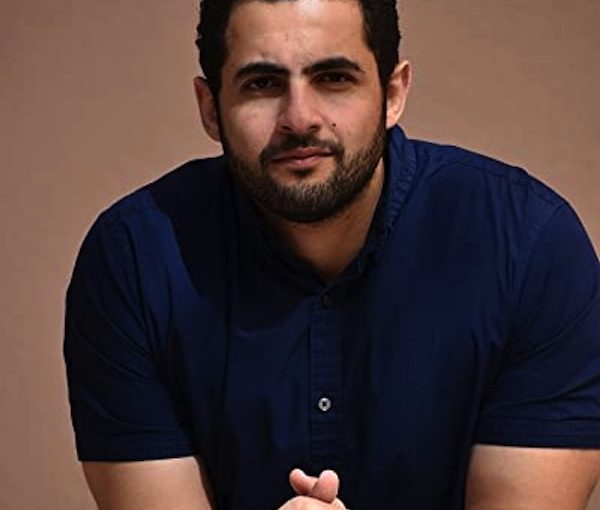
Hussein Mansour Aboubakr (PR photo)

After an almost three-year hiatus due to the pandemic, StandWithUs Canada is again holding events. On May 15, StandWithUs Canada and the Diamond Foundation are presenting the crash course Antisemitism and Anti-Zionism Today: What to Expect on Campus.

The course is a chance for high school (grades 11 and 12) and first-year university students to attend interactive sessions, hear from speakers, meet like-minded students and enjoy a free kosher dinner. Students who register and attend can also receive community service hours and a gift card.

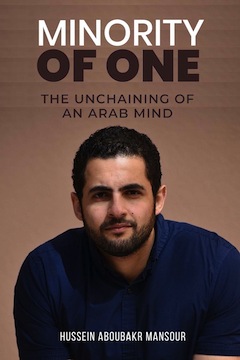
image - Minority of One book coverSpeakers include Penina Edery, high school director, StandWithUs Canada, and Aviv Attia, StandWithUs educator and Israeli speaker. Special guest speaker Hussein Mansour Aboubakr was a dissident imprisoned in his home of Cairo, Egypt, for the crime of wanting to learn more about the country and the people he was raised to hate – Israel and Jews. One of the course sessions will be Aboubakr speaking about his journey. Other sessions will include a panel of students speaking about their experiences with antisemitism and anti-Zionism in high school and university.

The Diamond Foundation is sponsoring this crash course to reach out to Vancouver high school students and their families, to help them learn the skills, get the knowledge and find out about the resources available to support Israel and fight antisemitism. Also involved in presenting the event with StandWithUs Canada are Camp Hatikvah, Masa Israel Journey, King David High School and the Jewish Federation of Greater Vancouver.

The May 15 crash course will take place at KDHS from 4 to 8 p.m. Registration is required to attend. Students can register at forms.gle/hPncontVmAC4Jfor6.

– Courtesy StandWithUs Canada

Format ImagePosted on May 6, 2022May 4, 2022Author StandWithUs CanadaCategories LocalTags anti-Zionism, antisemitism, Camp Hatikvah, Diamond Foundation, education, Hussein Mansour Aboubakr, Israel, Jewish Federation, KDHS, King David High School, Masa Israel Journey, StandWithUs
King David is set to expand

King David is set to expand

An illustration of the proposed King David High School expansion, as designed by Acton Ostry Architects Inc.

King David High School is slated for a whole new home in the redeveloped Jewish Community Centre of Greater Vancouver campus. However, that move could be eight, 10 or even a dozen years away. In the meantime, the continually growing student body needs more space – and that is why a new component is now being added, with intended completion this coming September.

Russ Klein, King David’s head of school, said the existing building, which opened in 2005, is at near-total capacity.

“Our room utilization rate is 98% for our regular classrooms,” he said. “There is zero wiggle room. Typically, a school’s utilization rate would be around 80%.”

This means that the school cannot increase course offerings, such as new Judaic studies programs or electives. The trend in secondary education is to offer a diversity of options to encourage students to explore their interests and passions. In addition, education is increasingly moving away from large group class lessons toward collaborations between pairs or small groups of students. That demands a greater number of more flexible spaces.

The new structure is a “modular unit addition,” Klein said, rejecting the term “portables.” The difference, he said, is that portables were inflexible, prefabricated buildings, while the new modular options can be adapted to whatever configuration an institution requires.

In King David’s case, it is expected to feature four classrooms, a small teachers’ work room, student changing rooms and a physical education office. In all, it will add about 3,500 square feet of space to the 40,000-square-foot school. The new building will be located at the east end of the property, adjacent the new Oakridge redevelopment, where a grassy hill now exists. Although this will result in a loss of that outdoor area, Klein said the hill is a nice place for kids to hang out in September and for a couple of months in the spring, but, for most of the year, it is not really usable space.

In addition to the changing expectations driven by educational trends, the school has been on a steady trajectory of growth. Enrolment is now at 240, up from 139 students 11 years ago.

The modular nature of the new facility slashes the time from conception to completion. It will take two or three months to prepare the site and another five or six months to construct the building. Acton Ostry, an architecture firm that has done many developments in the Jewish community, including KDHS, is leading the project.

While Klein acknowledges that the new building is a “stopgap” intended to allow the school to function adequately as they await the development of its new home in the JCC complex across the street, he adds that this is no chump-change endeavour.

“It’s an almost $3 million project,” he said. The funding is coming from the Diamond Foundation.

The Diamond Foundation – a family foundation directed by Leslie and Gordon Diamond and daughters Jill Diamond and Lori Glotman – purchased the land where the school is located and spearheaded construction of the building. The school pays rent to the foundation and then the foundation donates that money back to the school each year.

“I always think everybody should just recognize how generous the Diamonds are in everything they’re doing,” said Klein.

Examples of some of the new initiatives the space might accommodate are an expanded robotics program, as well as applied design and coding courses. Rabbi Stephen Berger, King David’s head of Judaic studies, would like to see more text-based education, where students can engage in chavruta-style learning, traditional, intense small group talmudic study, said Klein.

Comparative religions and other courses geared toward social action initiatives that inspire many students are other things Klein can envision growing thanks to the new space.

All of this is taking place as the JCC, in partnership with the Jewish Federation of Greater Vancouver and their constituent partners, proceed full-steam-ahead on the biggest capital project ever undertaken by British Columbia’s Jewish community. The two-phase redevelopment will see a 200,000-square-foot, state-of-the-art, multigenerational community centre constructed where the existing JCC parking lot is located. This will include expanded childcare, seniors’ services, arts and cultural spaces and amenities for all Vancouver residents, as well as becoming the home for more than 15 not-for-profit organizations, including a theatre and more space for the Vancouver Holocaust Education Centre.

Once that is completed, a second phase will commence on the site of the existing JCC building. This will include mixed-use rental housing, with units expected to be offered at or below market value and open to everyone. Beneath these residential floors, at street level, will be a “podium,” where the high school will be located.

Plans foresee a 60,000-square-foot school, which is a 25 to 30% increase over the existing structure – but Klein stresses those numbers don’t tell the entire story.

“The JCC is going to be built with two gymnasiums,” he said. “One of them will be dedicated to King David’s use, so we can use it whenever we want to, and then the JCC will be able to use it when we are not using it.” This is a reversal, of sorts, from the existing situation, where the high school can use the JCC’s gym when it is not otherwise occupied.

“That probably is as exciting to us as the extra learning spaces,” said Klein. “The other lovely thing for us is there going to be a small field, which is [currently] a real problem for King David.”

The field will be constructed behind the building, where the property juts out with an asymmetrical wedge at its southwest corner. The field will not be legal size, and so will not be suitable for competitive games, but will allow the school to hold practices at any time, unlike at present, where they have to rent fields, which are expensive and much in demand.

The redevelopment project has received $25 million commitments from each of the federal and British Columbia governments but a massive fundraising campaign is required to complete the project. When the school will be able to move into its new digs depends on a large number of variables.

“I’d say, best case scenario in my mind – and everyone will give you a different case – I think the best case is eight years,” said Klein. “Probably 10 to 12 is more realistic.”

Format ImagePosted on December 10, 2021December 8, 2021Author Pat JohnsonCategories LocalTags Acton Ostry, Diamond Foundation, education, KDHS, King David High School, redevelopment
xwƛ̓əpicən’s fall open house

xwƛ̓əpicən’s fall open house

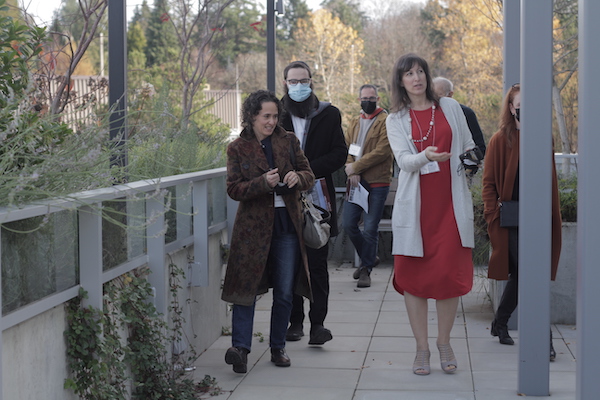
Anat Gogo, manager of programs and donor relations, Tikva Housing Society, leads a tour at the xwƛ̓əpicən (Arbutus Centre) open house Nov. 21. (photo from Tikva Housing)

Tikva Housing Society held an open house at the Arbutus Centre – xwƛ̓əpicən, pronounced “hook la’pitzen”) – on Nov. 21. The name in the Musqueam language means “Hollow,” which represents safety and warmth. Showcased last month were some of the 37 new one-bedroom and studio suites that Tikva Housing operates, providing homes to people in the Jewish community who need affordable, safe and stable housing.

The project is the result of a collaboration between the City of Vancouver, the YWCA, Association of Neighbourhood Houses and Tikva Housing. The building as a whole has 125 new units of affordable homes.

The open house, hosted by Tikva board members and staff, greeted more than 40 people, at various times, to accommodate the COVID-19 protocols. By all accounts, those who participated in the day-long event were “blown away” by the quality and attention to detail of the units, which all include washer and dryers; some are totally accessible for mobility devices such as wheelchairs. There is an amenities room for community gatherings, a central courtyard shared by all tenants and a rooftop patio.

After a process of identifying people who qualified, and then help with “move-ins” over the past two months, all the Tikva units are filled. The society is grateful to the many donors who make its work possible and especially to the Diamond Foundation, who gave Tikva the initial donation to assist with rent subsidies for new tenants, for the first five years.

For more information about Tikva Housing Society, visit tikvahousing.org.

– Courtesy Tikva Housing Society

Format ImagePosted on December 10, 2021December 8, 2021Author Tikva Housing SocietyCategories LocalTags affordable housing, Arbutus Centre, Diamond Foundation, Tikva Housing, xwƛ̓əpicən
Funds for Jewish studies

Funds for Jewish studies

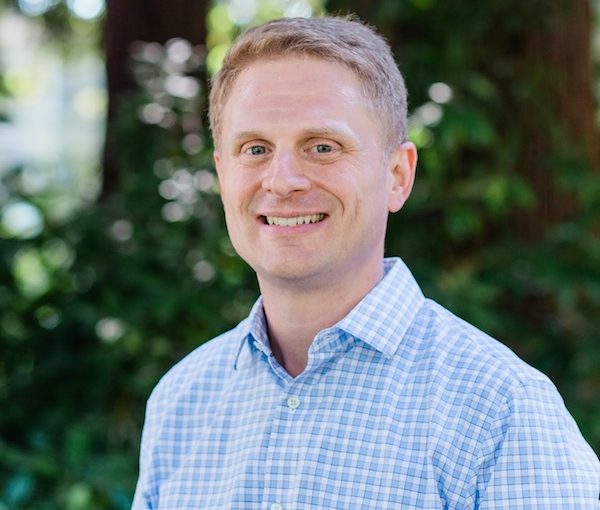
Prof. Gregg Gardner has held the Diamond Chair in Jewish Law and Ethics at the University of British Columbia since 2011. (photo from UBC Media Relations)

Gregg Gardner conveys an infectious exuberance when speaking of the $1 million donation from the Diamond Foundation to the University of British Columbia this September.

“None of this would have been possible in terms of Jewish studies at UBC without the Diamond family,” Gardner, an associate UBC professor, told the Independent. “Their sense of giving is felt not just here but throughout the broader community.”

The Diamond Foundation’s most recent gift to the school will build on achievements of the Diamond Chair in Jewish Law and Ethics at UBC to date, with a particular focus on the expansion of Jewish studies programming both in the classroom and beyond the UBC campus.

“The gift is part of a larger initiative which will really go a long way in helping to create and augment programming, assist in having students travel to Israel, bring in new speakers and assist in new research,” said Gardner, current holder of the Diamond Chair.

He plans to invite an array of speakers during the 2020 and 2021 academic years.

“The money from the Diamonds can be used to bring in authorities in various aspects of Jewish research to Vancouver. Once here, they can speak at the university as well as at synagogues, retirement homes or cultural centres in town,” he said.

Gardner also hopes the new funds can serve as a stepping stone towards such things as creating a centre for Jewish studies at UBC and, ultimately, bringing the field of Jewish research at the institution to a level commensurate with that of other universities in North America.

Students at UBC, he said, have shown a widespread interest in Jewish studies, and this interest extends well beyond their own personal background.

The Diamond Chair in Jewish Law and Ethics was established in 2001. Gardner has held the position since 2011, with his research concentrating largely on the history of Jewish thought. At UBC, his classes focus on the history of religions, together with exploring Jewish history, texts and traditions.

In 2018, he teamed up with the Hebrew University of Jerusalem to lead a group of UBC students in an archeological field school at Horvat Midras in Israel, a site that may have been developed by King Herod. There, they helped excavate a pyramid that marked a tomb from the first century and an elaborate underground system of tunnels and caves that served as hideouts for Jewish rebels against Rome in the second century.

The Diamond gift will additionally allow Gardner himself to present more lectures locally and internationally. Heretofore, he has given has public talks at Hillel BC (UBC) and academic lectures at Oxford, Cambridge and Yale universities.

Gardner has authored several academic papers and books, including The Origins of Organized Charity in Rabbinic Judaism (Cambridge University Press, 2015), which examines foundational rabbinic texts and places their discourses on giving within their historical – second- and third-century – contexts.

The Diamonds are equally enthusiastic about the results their donations have brought and will bring.

“We wanted to enhance the current chair and enable Dr. Gardner to play a pivotal role in generating sophisticated research and understanding of Jews and Judaism,” said Leslie Diamond. “He has inspired students and the community by enriching their knowledge of Judaism through his courses, public talks and events with visiting scholars.”

She added, “I am very proud with what our funding of the Jewish Chair in Ethics and Jewish Law has accomplished.”

The Diamond Foundation has long played a pivotal and prominent role in Vancouver philanthropy. Created by Jack, z’l, and Gordon Diamond in 1984, its mission is to improve the quality of life for people in the communities in which the Diamonds live and do business. It donates to organizations throughout the Greater Vancouver area, including schools, hospitals and numerous Jewish organizations. The foundation seeks investments in organizations and issues that strengthen Jewish community life throughout the city and its environs. At age 25, family members are invited to become directors of the foundation.

Jack Diamond arrived in British Columbia as a near-penniless refugee from Poland in 1927 and went on to create the province’s largest meat-packing firm, Pacific Meats. He is credited with setting up Vancouver’s first kosher butcher shop and was instrumental in building the Schara Tzedeck Synagogue, among countless other endeavours.

Sam Margolis has written for the Globe and Mail, the National Post, UPI and MSNBC.

Format ImagePosted on December 20, 2019December 18, 2019Author Sam MargolisCategories LocalTags Diamond Foundation, education, Gregg Gardner, Jewish studies, philanthropy, UBC, University of British Columbia
Proudly powered by WordPress