Skip to content
  • Home
  • Subscribe / donate
  • Events calendar
  • News
    • Local
    • National
    • Israel
    • World
    • עניין בחדשות
      A roundup of news in Canada and further afield, in Hebrew.
  • Opinion
    • From the JI
    • Op-Ed
  • Arts & Culture
    • Performing Arts
    • Music
    • Books
    • Visual Arts
    • TV & Film
  • Life
    • Celebrating the Holidays
    • Travel
    • The Daily Snooze
      Cartoons by Jacob Samuel
    • Mystery Photo
      Help the JI and JMABC fill in the gaps in our archives.
  • Community Links
    • Organizations, Etc.
    • Other News Sources & Blogs
    • Business Directory
  • FAQ
  • JI Chai Celebration
  • JI@88! video

Recent Posts

  • Last hostage home
  • New bill targets hate crimes
  • Concerning actions
  • Recipes not always required
  • Survivor urges vigilance
  • Seniors profoundly affected
  • Farm transforms lives
  • Musical legacy re-found
  • A range of Jewish literature
  • A concert of premieres
  • Variety telethon on Feb. 22
  • Victoria club’s many benefits
  • Avodah dedicated to helping
  • Artists explore, soar, create
  • Life’s full range of emotions
  • Community needs survey closes March 29
  • Jerusalem marathon soon
  • Historic contribution
  • Chronicle of a community
  • Late-in-life cartoonist
  • Cashflow vs growth portfolio
  • My new best friend is Red
  • ישראלים רבים ממשיכים לתמוך בטראמפ ועדיין אינם מבינים במי מדובר
  • עשרים ואחת שנים בוונקובר
  • Supporting the Iranian people
  • The power of photography
  • A good place to start
  • When boundaries have shifted
  • Guitar virtuosos play
  • Different concepts of home
  • Broadway’s Jewish storylines
  • Sesame’s breadth and depth
  • Dylan Akira Adler part of JFL festival
  • Mortality learning series
  • A new strategy to brighten up BC
  • Sharing latkes and light

Archives

Follow @JewishIndie
image - The CJN - Visit Us Banner - 300x600 - 101625

Category: Arts & Culture

Ominous Sounds premières

Ominous Sounds premières

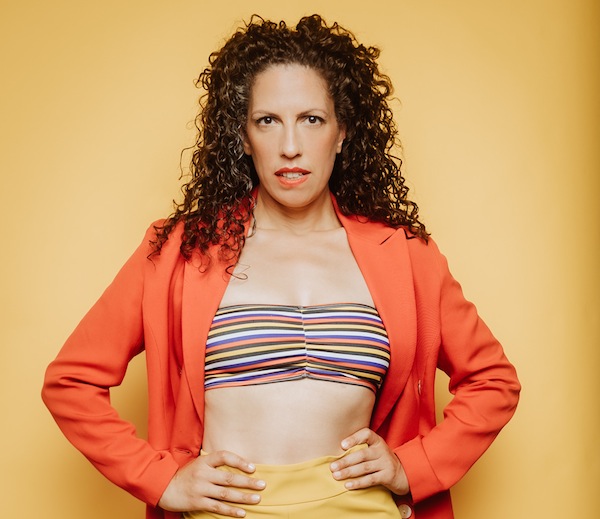
Kerry Sandomirsky co-stars in Ominous Sounds at the River Crossing by Jason Sherman, which has its world première at Performance Works March 6-13. (photo by David Cooper)

Who is permitted to tell stories? This is the main theme of Ominous Sounds at the River Crossing; or, Another F–king Dinner Party Play, playwright Jason Sherman told the Independent.

The world première of Ominous Sounds takes place March 6-13 at Performance Works on Granville Island. Not only is Sherman a member of the Jewish community, but so are cast members Alex Poch-Goldin and Kerry Sandomirsky and lighting designer Itai Erdal. The production is being staged by Touchstone Theatre, whose artistic director is Roy Surette.

Ominous Sounds is described as “a provocative and darkly comedic piece of metatheatre that dives into hot-button issues including the ethics of representation, climate responsibility, and social power in a reality marked by colossal cultural shifts and blurring meanings.”

“In exploring the central theme,” said Sherman, “characters in the play reject a number of storytelling approaches, old and new, notably the dinner party play, of which there are many fine examples, to be sure, but which one of our characters is desperate to escape from. The play keeps returning to various versions of a dinner party play, interspersing it with attempts at other forms of storytelling, before finding a synthesis in a new story.”

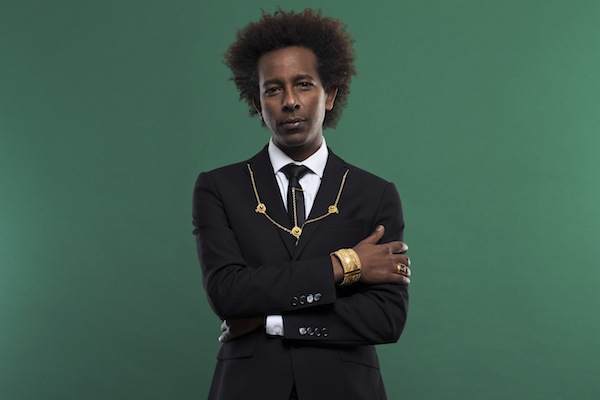
photo - Playwright Jason Sherman
Playwright Jason Sherman (PR photo)

The launching point of Ominous Sounds was a planned follow-up to Sherman’s play Patience, which Surette directed some 20 years ago. Patience is “a contemporary retelling of the story of Job; the new play was to pick up with news of the death of the earlier piece’s main character,” said Sherman. “But I found myself balking at returning to the earlier story – for reasons of both form and content – and instead incorporated some of its elements into what would become Ominous Sounds.”

Erdal described some of the considerations in lighting a play like Ominous Sounds. “In a naturalistic play,” he said, “the lighting usually wants to be invisible; it should move the story forward and set the mood and the tone for the scene but it should do all that without pulling any attention to itself…. In an abstract play, the lighting doesn’t have to be justified – it can be part of the architecture and the dramaturgy of the piece. This play is about making theatre, so it moves between the two approaches – sometimes the lighting is invisible and sometimes it can be very dramatic and noticeable.

“We have a brilliant projection designer,” he added, “and many of the locations will be done with video projection, so I will have to … work closely with the projection designer to determine which scenes will be done with lighting only and which scenes with lighting and projections. We are still very early in the process so a lot of those decisions are still being made.”

When Poch-Goldin spoke with the Independent, there had been only three days of Zoom rehearsals.

“It was a bit exhausting using that format, but very enlightening,” he said. “The writer, Jason, was part of our rehearsals and he was able to clarify things for us, which was very helpful.

“I hope people will come see the show now that things are opening up. While COVID is hovering in the background, I have to be optimistic. I want to share this play with people. I want to work with other actors without masks on and I want a sense of normalcy to prevail. I’m not nervous about having restrictions loosen and a full theatre appreciate the work.”

Sandomirsky echoed this last sentiment. “We have all been inside now for two years, many of us living on a diet of Netflix and Skip the Dishes,” she said. “This play does what theatre does best – engages in the cultural conversation of the moment in a provocative, entertaining way. It’s an opportunity to see theatre that you will keep discussing post-show. It’s an opportunity to leave your bubble and safely let a group of experienced actors delight and enrage you. You don’t need to go to New York. You can hear a script that has intelligence, humour and heart right here, on Granville Island.”

Both Poch-Goldin and Sandomirsky play more than one character.

Among Sandomirsky’s roles, she said, “is a 50-something actor trying to navigate the minefield of what stories she is and is not allowed to tell. Is her voice still relevant?”

“We start as numbered entities and then we start to play other characters in little plays along the way, but always return back to our numbered entity,” explained Poch-Goldin. “My character starts vulnerable and becomes quite strident and outspoken, longing for the good old days, when theatre was something he understood. As for the other characters I play, Peter is a bit of a wisecracking dad who is trying to be a better person and facing a lot of struggles. I also play the character of Ruben, who is someone who has passed away and comes back in a flashback to talk about his struggles, and to learn to accept himself and his failings. I love all the characters, they’re profound and reflect many things I feel about the changes in society.”

Poch-Goldin has been busy since the pandemic began. He moved to Winnipeg two years ago and has been doing a lot of TV and film, he said. For example, the première of the series The Porter started on CBC Feb. 21, and Poch-Goldin is in five of the eight episodes.

“I also just finished writing a new play called The Trial of William Shakespeare,” he said. “After three years of development, we’re finally starting to share the script after several workshops. I also have a play called The Great Shadow, about the first film studio in Canada in 1919. It’s going to première this summer at 4th Line Theatre, which is an outdoor theatre in Millbrook, Ont.”

For her part, Sandomirsky continued to teach acting for film and television at Langara’s Studio 58.

“I gathered a group of friends and directed A Midsummer Night’s Dream on Galiano Island in a field,” she said. “It was an opportunity to have experienced Bard on the Beach actors mix with local islanders and create a bit of magic on a few warm August nights.”

As well, she, her son Ben (who is in Los Angeles shooting The Mysterious Benedict Society) and her mom (who lives in Saskatchewan) “started doing nightly themed Zoom sessions to amuse ourselves and stay in contact. We’d choose a theme and then give ourselves half an hour to whump up costumes and props using only what we had at hand.” They shared photos with friends and “began to take thematic requests and covered everything from Bergman to Batman to Brueghel.”

Next for her is the play Courage Now at Firehall Theatre.  Written by Manami Hara, it’s a piece about Japanese consul Chiune Sugihara, who helped thousands of Lithuanian Jews flee Europe. “The director, Jane Heyman, is herself a descendant of a family saved by Sugihara’s actions,” said Sandomirsky.

For tickets to Ominous Sounds, visit ticketscene.ca/series/926.

Format ImagePosted on February 25, 2022February 23, 2022Author Cynthia RamsayCategories Performing ArtsTags Alex Poch-Goldin, Itai Erdal, Jason Sherman, Kerry Sandomirsky, Ominous Sounds, Performance Works, social issues, theatre, Touchstone Theatre
Diverse and innovative films

Diverse and innovative films

A still from Amanda Kinsey’s documentary Jews of the Wild West, a series of vignettes that shines a light on a noteworthy and usually overlooked history.

The Wild West, Jews in Germany and a surprisingly vivacious Israeli seniors home feature among the diverse films at the Vancouver Jewish Film Festival this year.

Somehow, we tend not to associate Jews with the legends that have built up around the development of the American West, a serious oversight that is in the crosshairs of filmmaker Amanda Kinsey’s documentary Jews of the Wild West.

The mythology of the Wild West is perhaps as much an invention of Hollywood as of history, so it is notable that the 1903 film The Great Train Robbery, which introduced the genre of the cinematic Western, featured Gilbert “Broncho Billy” Anderson – né Max Aronson.

The myth of the West was no less inspiring to Jews than to other Americans and dreamers from around the world. Perhaps one of the most famous names in the lore was Wyatt Earp. The film introduces us to Josephine Marcus, who fled her family in San Francisco to become an actress and ended up being Earp’s wife. Earp himself is buried along with the Marcus family in a Jewish cemetery.

The gold rush drew Jewish peddlers and merchants to the West Coast in the late 19th century including, most famously, Levi Strauss, who left the Lower East Side and, via Panama, arrived in San Francisco. His brothers sent dry goods from New York and Levi sold them up and down the coast. When Jacob Davis, a tailor, was asked by a woman to construct pants that her husband wouldn’t burst out of, he imagined adding rivets. He took the idea to Strauss and the rest is American clothing history. As one historian notes, it was a Jew who invented “the most American of garments.”

The rapid industrialization in the mining sector is where the Guggenheim family got its start and so, while the name is now most associated with Fifth Avenue, the finest address in New York City, their start was in the gritty West of the 19th century.

We meet Ray Frank, the first woman said to have preached from a bimah. Called the “golden girl rabbi,” she was not ordained, but was apparently a phenomenon that drew crowds to her sermons.

Many people will know that Golda (Mabovitch/Meyerson) Meir spent formative years as an immigrant from Russia in Milwaukee and then Denver. This footnote to her history is often considered curious and interesting, but in this film it integrates the Jewish experience of the 20th century and its roots in the American West with the development of the Jewish state – the opening up of another frontier, one might say.

The Hebrew Immigrant Aid Society, seeing the poverty in the Lower East Side, actively encouraged migration to the West. The film introduces families who have worked the land for generations, some of whom have maintained their Jewish identity and at least one of whom was raised Methodist. But, it suggests, the thriving Jewish community of Denver owes much to the failed farmers of the West who made their way to the nearest metropolis to salvage their livelihoods.

The documentary is really a series of vignettes and at times the shift from one story to another is confusing but, as a whole, Jews of the Wild West successfully shines a light on a noteworthy and usually overlooked history.

* * *

The festival features two German films that complement each other in interesting ways.

In Masel Tov Cocktail, a short (about 30 minutes) film, high schooler Dima (Alexander Wertmann) welcomes viewers into his life just as he is suspended for a week as a result of punching a classmate in the face during an altercation in the washroom. The “victim,” Tobi (Mateo Wansing Lorrio), had taunted the Jewish Dima, graphically play-acting a victim in a gas chamber, a performance enhanced by the austere, sterile setting of the restroom’s porcelain-tiled walls. So begins an interplay of victim and perpetrator that is just one of several provocative themes weaving through this powerful short.

Dima’s family, it turns out, heralds from the former Soviet Union, like 90% of Jews in today’s Germany. After the fall of the Soviet Union and the reunification of Germany, the German government actively encouraged migration of Jews to revitalize Jewish life in the country. This fact, like other statistics and tidbits, is flashed across the screen.

Juxtapositions pack a punch, including Dima’s switching between a baseball cap and a kippa, perhaps reflecting his complex identities, as well as the schism in the identities of post-Holocaust Jews more broadly in a society that struggles to assimilate the idea of contemporary, living Jews in the context of the blood-soaked soil of their state. A shift from colour to black-and-white also evokes the stark break between the present and the past.

But the present and the past are themselves in conflict as Dima recounts how other Germans react when they learn he is Jewish. Why does he only meet Germans whose grandparents weren’t Nazis, he wonders. Statistic: a survey indicates that 29% of Germans think their ancestors helped Jews during the Holocaust, while the screen text helpfully informs us the number was more like 0.1%.

Dima’s teacher, who can’t utter the word Jew and struggles to get the word Shoah out of her mouth, wants Dima to share his family’s Holocaust story with the class. The film’s implication is that Dima’s family was largely spared the trauma of the Holocaust, but he decides to play along because, “There’s no business like Shoah business.”

Dima’s grandfather is taken in by the AfD, the neo-fascist Alternative for Germany party, convinced that their pro-Israel and anti-Muslim rhetoric means that they are defenders of the Jewish people. In a moment that confounds the AfD campaigner (and causes the viewer to reflect), Dima drags his grandfather away from the campaigner while yelling: “Don’t let foreigners take away your antisemitism.”

The film is kooky, funny and light, while also serious, dark and thoughtful throughout.

That description applies to the similarly named feature film Love and Mazel Tov, which features Anne, a non-Jewish bookstore owner who has Munich’s largest selection of Jewish titles and who herself is more than a little obsessed with all things Jewish – including potential romantic partners.

“Some are into fat. Some are into thin. Anne is into Jews,” a friend explains. This turns out to be more than a romantic or erotic attraction, perhaps a disordered response to national and family histories.

Thinking she has found not only a Jewish boyfriend but a doctor at that, Anna (Verena Altenberger) courts Daniel (Maxim Mehmet), who in typical cinematic fashion lets her believe what she wants to believe until the inevitable mix-up explodes in a farcical emotional explosion – though not before an excruciating family dinner.

Parts of the film exist on a spectrum between cringey and hilarious. The film features (at least) two fake Jews who don this identity for extremely different reasons, inviting reflections on passing, appropriation and the fine line between veneration and fetishization.

Both of these films use humour to excavate deeply troubling concepts of identity and addressing horrors of the past. They approach these challenging themes in truly innovative and entertaining ways.

* * *

Understated comedy is key to the success of Greener Pastures, an Israeli film in which Dov, a retired postal worker, has lost his home after a “pension fiasco” involving the privatization of the postal service.

He is a curmudgeonly old square when it comes to marijuana, which the government has decided should be available to anyone 75 and over, but he sees a moneymaking opportunity. Dov (Shlomo Bar-Aba) enlists a network of seniors to order medicinal cannabis and mail it to him so he can distribute it to his “connection,” who shops it around to younger consumers. This “kosher kush,” guaranteed “Grade A government-approved stuff” sold in tahini bottles, brings Dov into conflict with a two-bit drug kingpin in a wheelchair and, of course, a snooping police officer.

There is romance and suspense in this madcap caper, but there is also the theme of elder empowerment, along with the laughs.

The Vancouver Jewish Film Festival runs online only March 3-13. For the full festival lineup and tickets, visit vjff.org.

Format ImagePosted on February 25, 2022February 23, 2022Author Pat JohnsonCategories TV & FilmTags antisemitism, comedy, culture, drama, Germany, Gold Rush, Golda Meir, Guggenheim, history, Holocaust, Ray Frank, Vancouver Jewish Film Festival, VJFF, Wild West
Tree poses quandary

Tree poses quandary

Jason Sherman wanders through an Israeli pine forest in search of his tree. (photo by John Minh Tran)

My Tree, a film by Jason Sherman on his moral dilemma over having had a tree planted in his name in a Jewish National Fund forest, screens at the Salt Spring Film Festival March 6, 7 p.m.

Sherman grew up in a Jewish home in Toronto. “Like my brothers before me, I had a bar mitzvah…. On that day of my becoming a man – at the age of 13 – I was given a number of presents,” writes Sherman in his director’s statement. “There were books of Jewish learning and culture; there was money; and there was a tree. Or rather, there was a certificate telling me that a tree had been planted in my name in Israel.”

He forgot about the certificate until about 40 years later, on his first trip to Israel.

“As I wandered the tourist sites, traipsing around religious Jerusalem, secular Tel Aviv and mystical Masada … I felt the pull of kinship and familiarity,” he writes. “But I also felt a kind of disconnect, wondering if my feelings for the place were genuine or imposed. I got to wondering what my real connection was to the land. It was then that I remembered the tree.”

After much research and metaphorical digging, he determines that the likeliest location of his tree is a conservation area called Canada Park.

“Here, I learn a disturbing new fact about my tree: it’s part of a massive forest that’s covering up the remains of an Arab village that was destroyed in 1967, its thousands of inhabitants sent on the road, never permitted to return.

“I also learn that this covering up of depopulated Arab villages is part of a pattern that stretches back to 1948, during the war that established Israeli statehood. These revelations lead me to ask a number of painful questions with people back in Canada. Did my parents know about the village beneath the forest when they donated a tree for me there? What is my responsibility for that tree?”

Sherman, who is an award-winning playwright, says his aim is not journalistic. “This is not a muckraking, finger-pointing documentary about the dark history of Israel’s tree planting program but rather a personal story … that asks its audience to confront uncomfortable historical truths, and to decide for themselves how to respond to those truths.

For tickets to My Tree, visit artspring.ca/event/salt-spring-film-festival-my-tree. For more about the film festival, which runs March 1-6, go to saltspringfilmfestival.com.

– Courtesy Salt Spring Film Festival

Posted on February 25, 2022February 23, 2022Author Salt Spring Film FestivalCategories TV & FilmTags Israeli-Arab conflict, Jason Sherman, JNF, Salt Spring Film Festival, SSFF, trees
Artwork of belonging

Artwork of belonging

Mike Levin’s “Waiting for the Train.”

Community Longing and Belonging is a community art show in celebration of Jewish Disability Awareness and Inclusion Month. It opened at the Zack Gallery on Feb. 14.

Curated by Leamore Cohen, inclusion services coordinator at the Jewish Community Centre of Greater Vancouver, the fourth annual exhibit once again considers the questions, How do we make meaning of the concept of community, the real and the imagined spaces we inhabit? What does community longing look like and what are the possibilities for belonging in an ever-changing world?

Many of the pieces on display were made by artists from JCC Art Hive, a free and low-barrier program for artists with diverse needs. The collection comprises the work of diverse artists, with different levels of experience, perspective, faith and social location.

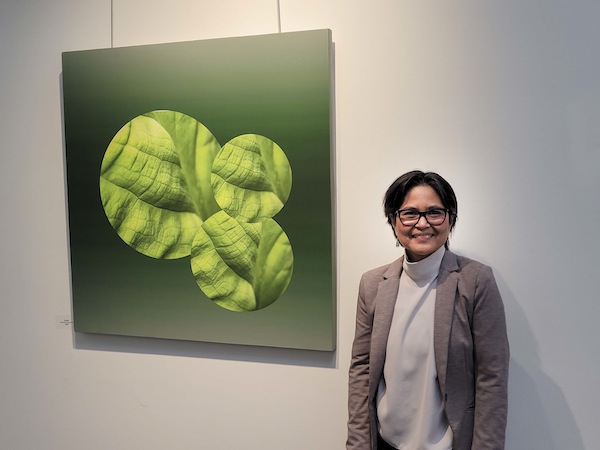
One of those featured is award-winning artist and writer Sandra Yuen, who is a member of Kickstart Disability Arts and Culture. Her piece, “Exploded,” is based on the prose of Derrick Bauman, an artist and writer, and influenced by pop art, Roy Lichtenstein, and graphic design. In her artist’s statement, Yuen writes, “As a person with schizophrenia, I wanted to express the fractured mind, the cut edges, the shattering of my life experience because of mental illness. However, this rendition is more a poetic image versus the cruel reality of living in madness, paranoia, hysteria and anger. The colours are sweet, the black lines clean and sharp, creating a mythological or romanticized view of insanity. I try to whitewash my life, sanitize the pain out of it, deny the diagnosis, but the illness remains, the weakness, the flaws, the humanity.”

photo - “Exploded” by Sandra Yuen
“Exploded” by Sandra Yuen

Mike Levin’s “Waiting for the Train” is about being shrouded in darkness, yet feeling the abundance of sunshine not far away. It is a metaphor for the continued longing for COVID to end so that we can get back to normal living.

Levin’s paintings are often abstractions of nature or city life that conform to structure of composition. They are amalgamations conjured from his imagination, photos he has taken and memories of his experience of exploring.

Growing up in Calgary, Levin has practised art from a young age, and also plays clarinet and saxophone. He attended the University of Calgary’s fine arts and urban studies programs and, after moving to Vancouver, completed his bachelor’s degree in fine arts at Emily Carr University of Art + Design in 2020.

For the past 20 years, Levin has lived with schizo-affective disorder, which he controls through medication and being active in the arts and mental health communities. He has taught drawing and painting at Vancouver General Hospital, the Art Studios, Gallery Gachet and privately within the community; he also works part-time in carpentry. His art has been sold in Canada and the United States to more than 70 private collectors.

Mark Li is a Vancouver-based visual artist whose narrative-focused work creates a whimsical world filled with colour and imagination, as his untitled work in this exhibit shows. Every painting is a tale of friendship and acts of kindness: a bear might be best friends with a cat; a T-Rex smiles with shy humour and sweetness at the viewer; a lady bug and a cat might go dancing in the sunlight; a simple walk in the park with a friend and his dog is a delightful adventure – anything could happen and they could meet anyone.

photo - “Untitled” by Mark Li
“Untitled” by Mark Li

Rickie Sugars’ “Like Minded” is an example of his unique style of painting in abstract cubism expressionism, using bold colours and black outlines.

A seasoned professional artist, Sugars had his first gallery showing, and sold his first painting, at the age of 17. Since then, he has displayed and sold his art in several galleries and art shows throughout British Columbia.

Sugars is a classical animation graduate from Vancouver Film School. He started creating animated characters well before graduation, resulting in a partnership in an animation company that went on for many years. Continuing his artistic path, he began tattooing in 2004 and has his own tattoo shop. He also designs sculptures created from broken toys.

A few years ago, during an attempt to assist a woman who was being attacked, Sugars received a traumatic brain injury. He had to re-learn everything, including how to talk – however, it did not stop his artistic endeavours. Today, you will find Sugars painting on canvass (or any surface, really), crafting stickers, postcards, wall murals, sand and wood sculptures, and interior/exterior commissioned graffiti.

“My artwork is influenced by media, fads, plus social, political and cultural issues,” he writes in his artist statement. He wants viewers “to look past the obvious, to treasure and celebrate the unique, the unconventional, the familiar: and to be nonjudgmental. Respect others and support them for who they are. Find the beauty in broken toys, an old door, a broken guitar – take time to look more carefully at things around you and you’ll discover beauty in unusual places.”

Another of the artists contributing to the Community Longing and Belonging exhibit is Adrianne Fitch.

Born in Kew Gardens, Queens, N.Y., Fitch studied English and writing at Pennsylvania State University and has traveled all over the world, including living and studying in Israel. She has lived in Vancouver since 2008 and pursues a number of other art forms. She is also a writer and desktop publisher.

“Having lived with a hearing disability and also struggled with depression all my life,” she writes, “I definitely know what it means to feel isolated. As hearing loss is invisible, people frequently make assumptions about me (e.g. they think I’m stupid, stoned or purposely ignoring them). As I did not begin learning ASL until adulthood, I occupy that grey area between the hearing and deaf worlds. I miss a great deal of communication, both spoken and signed, and have often felt as though I don’t belong anywhere.

“That’s why this art show’s theme, Community Longing and Belonging, is so significant and meaningful to me. Indeed, I have always longed for community and belonging. The Jewish community, with its wonderful heritage and incredible diversity, is very precious to me. In creating these three ceramic menorahs, I have tried to express this diversity, as well as my love for the Jewish people.”

Community Longing and Belonging is at the Zack Gallery until March 17. There is a virtual meet-and-greet with the artists on March 2. Visit jccgv.com/art-and-culture/gallery or email Cohen, [email protected], for more information.

– Courtesy Jewish Community Centre of Greater Vancouver

Format ImagePosted on February 25, 2022February 23, 2022Author Jewish Community Centre of Greater VancouverCategories Visual ArtsTags Adrianne Fitch, art, disability awareness, diversity, graphics, inclusion, JDAIM, Leamore Cohen, Mark Li, Mike Levin, painting, Rickie Sugars, Sandra Yuen, sculpture, Zack Gallery
MONOVA’s new space

MONOVA’s new space

Housed in the lobby of the Museum of North Vancouver, visitors can once more hop on Streetcar #153, which carried passengers along the Lonsdale Line from 1912 to 1946. (photo by Cynthia Ramsay)

This story took me a long time to write. Everything I read about the Museum of North Vancouver (MONOVA) set me off on another path of exploration. I’ve watched (really) old home movies, looked at countless archival photos, perused online exhibits – all of this after I was treated in December to a tour of the museum’s beautiful new space at 115 West Esplanade. Such is the seemingly never-ending amount of wonder the museum offers.

Days after the official opening on Dec. 4, curator Barbara Hilden walked me through the exhibits. I arrived early and had time to buy a few things in the gift shop – there are some excellent books, clothing, toys and other merchandise for sale. I also walked through the restored electric Streetcar #153, which carried passengers up and down the Lonsdale Line from 1912 to 1946, and admired Squamish (Sḵwx̱wú7mesh) artist Wade Baker’s cedar carving of Sch’ich’iyuy (the Two Sisters).

“The red cedar Sch’ich’iyuy panel is based on the ancient Sḵwx̱wú7mesh Sister’s Mountain Transformer legend,” says Baker on MONOVA’s website. “The twins were raised from childhood to be leaders for their people. They asked their father, the siyam, the chief, to bring peace to the warring tribes along the coast. He could not refuse their request and fires were lit all along the coast to signal a great welcoming feast to bring peace. For their efforts, the twins were immortalized in the mountain peaks you see today that watch over us.”

photo - The museum’s lobby features a cedar carving of Sch’ich’iyuy (the Two Sisters) by Squamish carver Wade Baker
The museum’s lobby features a cedar carving of Sch’ich’iyuy (the Two Sisters) by Squamish carver Wade Baker. (photo by Alison Boulier)

Beyond the museum lobby is a sparse area and a space for activities, a moveable wall separating the two. Visitors then walk through a corridor with images of trees on the walls, their branches continuing onto the ceiling. The Indigenous Welcome Circle, which highlights Squamish and Tsleil-Waututh (Səl̓ílwətaɬ) stories and items, is the anchor of the room. There is the notable presence and prominence of Indigenous involvement in the displays and, the day before the new museum’s opening, there was a memorandum-of-understanding signing ceremony that included members of the Tsleil-Waututh and Squamish nations.

“The MOUs affirm our commitment to working with Tsleil-Waututh and Squamish nations as equal partners,” Hilden told the Independent in an email interview after the tour. “MONOVA formed the Indigenous Advisory Committee several years ago to inform our programming, collecting, curatorial and operational activities. We rely on IVAC members to direct our strategic priorities in these areas and others, and to liaise with the nations. These needs do not diminish with opening our new location; on the contrary, their importance only increases. IVAC will continue to exist and we anticipate it growing larger and more robust as we look to incorporate Indigenous ways of knowing throughout the institution.”

Exhibits in the new permanent gallery include the Indigenous Welcome Circle, as well as themed displays – on sports, women in wartime, shipbuilding on the North Shore, and more. Interactive children’s displays help young visitors understand, for example, how to load a cargo ship and what various animals eat and what their poop looks like (this was a particularly fun exhibit, I must admit). An interactive map takes people through the history of the North Shore by water, trail, rail and road. Panels on one of the walls take us from the late 1700s to the present day with several photos and brief descriptions of notable events, good and bad, listed chronologically. There is a section – Truth and Reconciliation – dedicated to residential school survivors.

The museum’s first feature exhibition is called You Are Here @ The Shipyards. “It discusses the changing nature of North Vancouver’s lower Lonsdale area, from Indigenous settlement to working shipyards to contemporary tourist destination,” explained Hilden. “The exhibition features historic objects, archival photos and film … [and] will open in the spring of 2022 and run for one year. In the future, it’s anticipated that our calendar will be a mix of internally curated and traveling exhibitions.”

The North Vancouver Museum opened in 1972 in the old Pacific Great Eastern Historic Railway Station and moved to Presentation House in 1976, where it remained until last year. With the new location, came the new name, MONOVA.

“It’s taken more than 50 years, a multitude of meaningful discussions with community members and Indigenous leaders, countless volunteer hours, and painstaking research to amass a collection of more than 9,000 artifacts, but, after 20 years of planning, finally, the Museum of North Vancouver is ready to welcome the public,” reads the press release announcing the December opening.

photo - Squamish Nation partnered with architect Moshe Safdie in the 1990s and proposed building a twin span next to the original, congested Lion’s Gate Bridge, but rehabilitation work of the existing bridge was undertaken instead. This model is currently on display at MONOVA
Squamish Nation partnered with architect Moshe Safdie in the 1990s and proposed building a twin span next to the original, congested Lion’s Gate Bridge, but rehabilitation work of the existing bridge was undertaken instead. This model is currently on display at MONOVA. (photo by Cynthia Ramsay)

In addition to the exhibits and activities that take place at 115 West Esplanade, there are many online exhibits. Archivist Dr. Jessica Bushey noted that two – Walter Draycott’s Great War Chronicle, and Climbing to the Clouds: A People’s History of B.C. Mountaineering – were created by the North Vancouver Museum and Archives, all departments working together.

“These were very large endeavours, taking nearly a year to create and involving consultants and partners,” said Bushey. “More recently, the archives team has focused on creating online exhibitions drawing upon archival materials that provide virtual access to the collections and offer a companion to on-site exhibitions at the archives building in Lynn Valley. These are smaller in scale, but strong in their interactivity and showcasing of archival photographs, moving images and oral histories.”

Currently, there is no specific Jewish connection in any of the material on display, but the museum is actively seeking additions to its collection.

“At the moment,” said Hilden, “we have materials exhibited from North Vancouver’s Ismaili, Iranian and Japanese communities. All the exhibits in our long-term gallery are designed to be flexible and changed out regularly, so we do anticipate updating and rotating these stories as more communities become aware of MONOVA and our desire to represent all North Shore stories.”

She said, “We would be thrilled to hear of more Jewish connections. We currently have very few tangible objects in our collection that would help us tell these stories, and I’d love to hear from members of North Van’s Jewish community.”

“The archives of North Vancouver is very interested in acquiring donations of archival materials from the Jewish community working, residing and thriving in the city and district of North Vancouver,” agreed Bushey, also noting the archives’ current lack of these materials.

“We have one file on Samuel Davis Schultz, who was a judge and alderman in North Vancouver and founded the honour roll of North Vancouver High School in 1912, a photograph of S. Schultz and a 2014 copy of the special issue of the Western States Jewish History quarterly journal, which focuses on the Davies and Schultz families. Lastly, we have the photographs from a City of North Vancouver 2000 millennium project on Diversity on the North Shore, which included the Jewish community and led to the publication From Far and Wide: Cultural Diversity in North Vancouver,” said Bushey.

“If anyone has archival records (e.g., correspondence, photographs, albums, diaries, home movies, business records etc.) they would like to donate,” she added, “they can email the archives with the particulars and we will get in touch.”

“MONOVA considers donations that have a close connection to the community of North Vancouver,” said Hilden. “The artifacts don’t need to be extremely old or extremely valuable to be considered. Sometimes, the most thought-provoking pieces are those that tell quotidian stories of everyday life. (Of course, the old and valuable belongings are welcome also!) We care for everything in our collection and, when we make the decision to acquire a piece, we commit to preserving, conserving and making it available for generations to come.”

To connect with the museum or archives, visit monova.ca.

Format ImagePosted on February 25, 2022February 23, 2022Author Cynthia RamsayCategories Arts & CultureTags archives, history, MONOVA, museums, North Vancouver, Squamish Nation, Tsleil-Waututh
Podcasts a vital part of CJN

Podcasts a vital part of CJN

Ellin Bessner in the field reporting, October 2021, for her podcast, called The CJN Daily. (photo from Ellin Bessner)

Ellin Bessner is the host of The CJN Daily, one of several new podcasts featured on thecjn.ca, the Canadian Jewish News’ recently revamped website.

A veteran journalist, Bessner caught the reporting bug early in life.

“I have been a journalist since I was 10 years old – even though I didn’t know I was at the time. I was like the fictional character Harriet the Spy, writing notes about my parents’ friends,” she said of her first recollections as an aspiring member of the press.

These days, she hunts around for and discovers stories throughout the country that others might miss – all with the objective of depicting “what Jewish Canada ‘sounds’ like.”

“I read a lot, I scour the internet. There are literally stories everywhere. I don’t have enough time or enough podcasts to do [them all],” Bessner said, as The CJN Daily nears its first anniversary.

Bessner has broadcast stories on people as diverse as Rabbi Yehuda Sarna, the Montreal-born chief rabbi of the United Arab Emirates; Ashley Waxman Bakshi, a Canadian Israeli social media influencer; and Rabbi Arnold Noteh Glogauer, the first Canadian Jewish chaplain to set sail with the Royal Canadian Navy.

She also attempts to present all sides of contentious issues. During the February blockades in Ottawa, for example, she interviewed Jews who were involved in counter-protests against the truckers and two Jews (both vaccinated) who supported the convoy.

The CJN Daily has done several British Columbia stories, as well. To date, the show has aired a discussion with Aaron Levy, an Abbotsford disc jockey broadcasting about the November floods; a dispatch from a Jewish woman in Kamloops on her experience this summer in the path of British Columbia’s largest wildfire; an interview with Bernard Pinsky on security at the Jewish Community Centre of Greater Vancouver; a talk with environmental activist Seth Klein after COP26, the climate change conference in Glasgow; reflections on high school graduation from King David High School’s Class of 2021; a look at the number of people converting to Judaism in Kelowna; and a report about Jews in Kamloops and their reaction to the discovery of hundreds of Indigenous child graves in their community.

“British Columbia really had a terrible year,” said Bessner. “You had drought, forest fires, smoke, Indigenous issues … security issues and hunger. There is room for a B.C. story every single day. I really try to do as many as I can.”

CJN reinvents itself

In April 2020, a month into the pandemic, the CJN closed for the second time. The first time, in 2013, it returned after several months. This latest closure ended in December 2020, with a new CJN that is mainly a digital periodical.

“They chose to close after the Pesach issue in 2020. There was no revenue coming in and they decided to shut down,” explained Bessner. “A few months later, everyone thought that was CJN’s demise. Other websites came in to fill the gap. Meanwhile, those associated with CJN had decided to pivot to digital.

“It was a good opportunity to do that while everyone was at home and Zooming,” she said. “They re-launched digitally on Facebook only and got rid of the old website. Eventually, more money came in. The CJN doesn’t have the same look as before. We are doing it in a more modern way. These are the times and we have to be with the times.”

That said, for those who want to have a more traditional copy of the paper, the CJN still offers a printable weekly digest of stories every Friday (available on its website) and The CJ Magazine, a quarterly that will have its first issue later this year.

image - The CJN Daily logoAs for The CJN Daily, its start last spring did not go off according to script, Bessner recalled. “The podcast was launched on May 3, right when the Mount Meron tragedy occurred on Lag b’Omer,” she said. “All our planned interviews on Jewish Heritage Month were rescheduled. And then Israel had a war.”

The CJN Daily provides Monday to Thursday updates on the Canadian Jewish scene, from coast to coast to coast. The show can be heard on Spotify, Apple and other podcast platforms, as well as on the CJN website. There are also extended versions of Bessner’s interviews on the CJN’s YouTube channel.

Other podcasts on the CJN roster include Bonjour Chai, a weekly current affairs show; Yehupetzville, a look at Jewish life across Canada; Rivush, interviews with Jews of Colour hosted by Rivka Campbell; Menschwarmers, “the world’s most popular Jewish sports podcast”; and A Few of My Favourite Jews, with comedian Laura Leibow.

Bessner has worked for the Canadian Press, CTV News, CBC News and JazzFM. As a correspondent, she has reported from across Canada, Europe and Africa. As a professor, she has taught journalism at Ryerson University, Seneca College and, most recently, at Centennial College.

She is the author of Double Threat: Canadian Jews, the Military and World War II (2018) and a contributor to Northern Lights: A Canadian Jewish History (2020). In 2019, thanks to her efforts, Veterans Affairs Canada created a section on its website recognizing the contributions of Jewish men and women who served in the Canadian military during the Second World War.

Sam Margolis has written for the Globe and Mail, the National Post, UPI and MSNBC.

Format ImagePosted on February 25, 2022February 23, 2022Author Sam MargolisCategories Arts & CultureTags Canadian Jewish News, CJN, Ellin Bessner, journalism, newspapers, podcasts, Second World War
Freedom found in art

Freedom found in art

Riva Lehrer, author of Golem Girl, recently spoke on the topic Art Celebrating JDAIM (Jewish Disability Awareness, Acceptance and Inclusion Month). (photo from JBF)

Artist, writer and curator Riva Lehrer spoke at this month’s Cherie Smith JCC Jewish Book Festival on the topic Art Celebrating JDAIM (Jewish Disability Awareness, Acceptance and Inclusion Month). Lehrer’s work focuses on issues of “physical identity and the socially challenged body.”

In the Feb. 7 Zoom talk from her home in Chicago, Lehrer discussed her 2020 illustrated memoir, Golem Girl,and her life as an artist born with disabilities into a world determined to “fix” her. Later in life, she found freedom through the flourishing disability arts movement.

Lehrer was born in 1958 with spina bifida. Throughout her early years, the message she received from those around her was that she was broken and would never have a job, a romantic relationship, or an independent life.

The memoir is comprised of two parts. The first deals with growing up in a time when people with disabilities were supposed to be hidden away from the rest of the world. The second looks at reaching adulthood after being raised to think that she was a mistake.

“I grew up thinking I was always wrong and always needed to be fixed, not just from medical professionals, but from everyone in society, who treated me like something to stare at or feel pity for. A lot of the book is taking that apart and addressing why people are stigmatized,” she said.

During Lehrer’s youth in Cincinnati, most children with a condition like hers were institutionalized. There was not a lot of modeling as to how to parent a child with disabilities. Lehrer, however, does credit her mother, who had worked as a medical researcher, for being much less fearful of the situation than an average parent might have been and for refusing the inclination to have her institutionalized.

Lehrer attended a school for children with impairments. “When you are surrounded with others like you, you are just a kid. You stop thinking you are different,” she recalled. The downside, however, was that kids at the time were not encouraged to imagine what they could be as far as a career, and high schools and colleges were not obligated to admit people with disabilities.

“The force of the message that I was a mistake was pretty powerful. By the time I was 12, I knew I was going to live in a body like this forever,” she said.

A resulting feeling of self-loathing persisted until her mid-30s, when novelist and disability rights activist Susan Nussbaum invited her to meet with a group of artists in Cincinnati. Lehrer reluctantly agreed to go and found it a life-changing experience.

“The sight of a lot of disabled people who were not hiding, and who were also funny and bright, gave me a way to understand my life and not just endure it,” she said.

The group showed Lehrer that disability is an opportunity for creativity and resistance. Finding inspiration and empowerment from people in the group, Lehrer asked them if she could paint their portraits. Even though she worked in portraiture, she “was very aware that she never saw images of people with disabilities ever, in museums or classes, only in telethons. It was never anything good.”

image - Golem Girl book coverNowadays, she said, her main interest is how people deal with and survive stigmatization. These are at the forefront of the 65 images contained in her book. Among the works she shared at the talk were a charcoal portrait of Nomy Lamm, an amputee musician, political activist and director of Sins Invalid in the Bay Area; a charcoal image of Mat Fraser, a British actor, writer and performance artist who was a regular cast member in American Horror Story: Freak Show television series; and a painting of Liz Carr, a British comedian, broadcaster and international disability rights activist.

“There is such a story behind each of these people,” Lehrer reflected.

As for the title, Golem Girl, Lehrer revealed a lifelong fascination with monsters. “One of the things monsters do is that they break boundaries,” she said. “Dead and moving, animal, person, person and machine, there is always something that violates a boundary. I was thinking how much this is like disability, that people don’t understand the disabled body. They think it is not human in some way. It is treated like it is alien.”

Lehrer is a faculty member of the School of the Art Institute of Chicago, and an instructor in medical humanities at Northwestern University.

The discussion was moderated by book festival director Dana Camil Hewitt.

Sam Margolis has written for the Globe and Mail, the National Post, UPI and MSNBC.

Format ImagePosted on February 25, 2022February 23, 2022Author Sam MargolisCategories BooksTags art, disability awareness, Golem Girl, JCC Jewish Book Festival, Riva Lehrer, stigma
Shira Choir focus of lecture

Shira Choir focus of lecture

Reverend Hazan Daniel Benlolo (photo from Kolot Mayim)

“To repair the often-shattered world, I cannot think of a better way than to give a voice to those less heard,” said Reverend Hazan Daniel Benlolo, leader of the Montreal Shira Choir, a vocal ensemble comprised exclusively of people with physical and intellectual challenges.

Benlolo was speaking at a Feb. 13 lecture co-hosted by Montreal’s Spanish and Portuguese Synagogue and Victoria’s Kolot Mayim Reform Temple during Jewish Disability Awareness and Inclusion Month, or JDAIM.

Born in Morocco, Benlolo settled with his family in Canada in the 1970s and became the cantor of Montreal’s Spanish and Portuguese Synagogue at the age of 17. He is also a rabbi and an artist who, among other things, designs ketubot (Jewish marriage contracts). Despite his many hats, Benlolo’s true passion, as evidenced throughout his talk, is to provide a stage for those who have seldom been listened to, accepted or appreciated in the community.

While working in Ottawa in 2002, he helped lead the Tamir Neshama Choir, which toured throughout Canada, the United States and Israel.

“It really inspired me and opened my eyes to a new life that I never explored before. To be able to spend time with people of special abilities made my life that much better in so many different ways,” Benlolo said of his Ottawa experience, for which he received a Governor General’s Caring Canadian Award in 2013.

The move back to Montreal came a few years ago. There, Benlolo and his wife Muriel Suissa founded the Shira Choir in 2019, with the assistance of Federation CJA and the Jewish Community Foundation of Montreal. The choir, made up of singers from many cultural backgrounds, performs a wide range of music, from liturgical to Broadway and pop.

Not long after the choir’s formation, the pandemic struck in early 2020. Nevertheless, Benlolo has managed to keep the music playing through Zoom rehearsals and socially distanced visits with choir members.

Benlolo stressed that, too often, people with special needs come in and out of our lives, without our taking the time to engage with them. His simple request to the Zoom audience was “to take the time,” as “it could make a world of difference.”

“They teach me more than I could ever teach them,” is the view Benlolo expresses regularly, saying there is no way to place a value on these relationships.

He emphasized the importance of not patronizing anyone in the choir. That is, audiences should give them a standing ovation only because members of the choir deserved one for the quality of their singing, not for the act of performing itself.

“They have hopes and aspirations. Some are going to fulfil them, some are not,” asserted Benlolo.

The future for the choir, he declared, is to continue to spread love, positivity, inclusion and the sense of community, but not tolerance, a word to which he has a particular aversion. “I don’t want to tolerate you, I want to love you. I want to count you in the community as a full member,” he said.

“We want to continue building from here,” he added. “It can only come to fruition if everyone puts in some effort. Just a little bit of an effort, the results will be so satisfactory, both for the individual and the community, [and] we will learn some new things, we will learn a way of life, that for so long has been hidden.”

Benlolo’s talk covered the recently premièred documentary Just As I Am, which can be viewed on CBC Gem (gem.cbc.ca/media/absolutely-canadian/s21e26). The film, a profile of the adults with special needs in the choir, explores the universal language of music and its ability to transform lives.

Benlolo also presented two short videos, both available on YouTube, showing members of the Shira Choir singing Ed Sheeran’s “Perfect” and Leonard Cohen’s “Hallelujah.”

In his concluding remarks, Benlolo urged the audience to not look upon those who are differently abled as “different” in a pejorative sense. “Different is great,” he said. “Different is beautiful. There is so much untapped talent out there that I am always in search of these people who are hidden gems.”

The Spanish and Portuguese Synagogue in Montreal is the oldest in Canada, tracing its history back to 1760, when the first Jewish settlers arrived in Quebec, making it as old as the province itself.

Now in its 14th year, JDAIM is a unified effort among Jewish organizations and communities throughout the world to build awareness and foster inclusion of people with disabilities and those who love them.

Benlolo’s presentation was the fifth in Kolot Mayim’s six-part series on the theme of Building Bridges: Celebrating Diversity in Jewish Life. The final session in the series features Indigenous artist Patricia June Vickers and Rabbi Adam Cutler of Adath Israel Congregation in Toronto, which is co-sponsoring the event. The topic on March 20, 11 a.m., is An Indigenous and Jewish Dialogue on Truth and Reconciliation. To register, visit kolotmayimreformtemple.com.

Sam Margolis has written for the Globe and Mail, the National Post, UPI and MSNBC.

Format ImagePosted on February 25, 2022February 23, 2022Author Sam MargolisCategories MusicTags Building Bridges, choral singing, Daniel Benlolo, JDAIM, Kolot Mayim, Montreal, music, Shira Choir, Spanish and Portuguese Synagogue
Stepping back from abyss

Stepping back from abyss

Daniel Sokatch, New Israel Fund chief, urges openness to narratives of both peoples. (photo from JCC Jewish Book Festival)

The experiences of Jews and Arabs in the area between the Jordan and the Mediterranean are complex and both peoples deserve to have their stories understood, according to a leading voice of progressive Zionism.

Daniel Sokatch was the keynote speaker at the closing event of the 2022 Cherie Smith JCC Jewish Book Festival Feb. 10. Sokatch is chief executive officer of the New Israel Fund, a U.S.-based nonprofit funding Israeli civil and human rights organizations and initiatives, which also engages in reconciliation and conflict resolution efforts between Israelis and Palestinians. He shared reflections from his new book Can We Talk About Israel? A Guide for the Curious, Confused and Conflicted, which was illustrated by Christopher Noxon.

“Over my years of service at NIF as the chief executive officer – I’ve been there for over 13 years now – I witnessed personally the discourse about Israel become more heated, more vituperative, more emotional and less fact-based,” Sokatch said. He wrote the book to give average people “a GPS to the conflict that would help them negotiate their own relationship to this complex issue.”

Israel was at the edge of an abyss before the new eight-party coalition government was sworn in last year, Sokatch said.

“This government is a Frankenstein’s monster made up of parties of the right, centre, left and Arab community that shouldn’t work but does work because enough people from all parties, except for the hard right-wing parties, knew that Benjamin Netanyahu was leading Israel over a cliff,” he said. “That was my editorial opinion but it is also the rationale for this government.”

A chunk of the Israeli public realized that Netanyahu was moving Israel toward neo-authoritarianism and a “democracy recession,” said Sokatch. This was exemplified, in part, by moves to abrogate the country’s balance between its Jewish and its democratic identities, he said.

image - Can We Talk About Israel? book cover“Israel passed a series of laws – most of them, I think it’s important to note, passed only barely – that really reduce the standing of Arab citizens of Israel to something that looked a lot more like second-class citizenry,” said Sokatch. “The worst of these laws was something called the Nation-State Law.… The Nation-State Law essentially said to Arab-Israeli citizens, you may have the right to vote but only Jewish citizens of the state have the right to what the law says is ‘self-determination.’… It stripped Arabic of its official language status…. The only reason you do things like that is if you want to throw red meat to your base and make a statement to the minority about where they stand. Anyone who has been to Israel recently – and by recently I mean at any point during its entire existence as a state – knows that the Jewish character of Israel is under no threat. In that sense, the alarm raised by Netanyahu and that Nation-State Law was like [former U.S. president Donald] Trump’s Muslim ban. It was a draconian solution for a problem that doesn’t actually exist.”

Reuven Rivlin, who was president of Israel at the time, acknowledged that he was obligated to sign the bill into law, but promised to sign in Arabic, which he did as a symbol of protest.

Sokatch addressed the recent Amnesty International report that accuses Israel of operating an apartheid system. He said that any honest and fair-minded left-wing observer who traveled the length and breadth of Israel would recognize that the apartheid label does not fit. But, he added, any honest and fair-minded right-wing observer who traveled the length and breadth of the West Bank would see things that could legitimately justify the terminology.

“I happen to think that the Amnesty report is deeply flawed,” he said. But, on the flip side: “To dismiss it all as antisemitism is to, like an ostrich, stick your head in the ground and ignore the reality of the problem.”

If Jews worldwide are held responsible for Israel’s actions, that is antisemitic, he said. Likewise, if Israel is depicted as a tentacled monster controlling the world, or if Jews are depicted as clannish, disloyal and the embodiment of “cosmic evil,” these are examples of antisemitism. The hostage-taking at a Texas synagogue in January is another example.

“Why did the guy go to a synagogue, instead of a church or McDonald’s or wherever?” Sokatch asked. “He went to the synagogue because he thought the Jews could get him what he wanted. He thought that we were so powerful in the United States that we could pick up the phone and tell Joe Biden to let the person he wanted let out of jail let out of jail. When criticism of Israel engages in those tropes, you can bet your life it’s antisemitism.”

But these examples of bias should not blind people to the legitimate criticisms being leveled against Israel, he warned. He hopes his book will open up more dialogue.

“Too often, I think, we are afraid to talk about the hard things,” he said. “What is the role of Israel’s Arab citizenry? What is the relationship between the U.S. and Israeli Jewish communities, the two largest Jewish communities in the history of the world? What is the deal with the settlements? Is Israel an apartheid state? What is the boycott, divestment and sanctions movement? I didn’t want to shy away from those things. But I also felt strongly that, in order to have an intelligent conversation about them, or to hold informed opinions about them, you have to know what you’re talking about.”

The first half of his book is mostly straightforward history, he said, with his analysis in the second half. He encourages a more fluent understanding of the narratives of both peoples.

“These are two peoples, Israelis and Palestinians, Jews and Arabs, who have been victims of the world, of each other and of themselves,” said Sokatch. “I felt that it was important to hold both of their stories with compassion and curiosity and concern, and to acknowledge that both parties have legitimate claims to this little place between the Mediterranean Sea and the Jordan River. Both of these peoples have real histories of trauma and persecution and both of them have stories that help them understand who they are and where they are in the world and their connection to this place, and I wanted to tell those stories rather than just one of the stories.”

Sokatch appeared virtually in conversation with Dana Camil Hewitt, director of the book festival. Rikki Jacobson, chair of the festival committee, welcomed the audience and thanked the speaker.

Format ImagePosted on February 25, 2022February 23, 2022Author Pat JohnsonCategories BooksTags Amnesty International, Daniel Sokatch, democracy, Israel, JCC Jewish Book Festival, New Israel Fund, NIF, Palestine
Festival opener wows

Festival opener wows

A still of one of the humorous (and relatable) moments in Image of Victory, which is part of this year’s Vancouver Jewish Film Festival.

The Vancouver Jewish Film Festival opening night film is the epic Image of Victory, directed by Avi Nesher. It’s not with grandiosity that the movie leaves its mark, though there is some of that, but rather with the quiet moments of humanity it so movingly depicts.

Sombre piano music over which one can hear missiles flying, bombs exploding, wind blowing are heard as the initial credits are shown, modest white lettering on a black background, nothing showy. “There are moments when you try to make sense of your life,” begins the narrator, as black-and-white footage of a shot-out building appears, then a jeep, soldiers with rifles pointed, tanks. “You wonder if you made good use of the time God gave you on this earth. You seek someone to compare yourself to. Someone you think truly lived.”

For Egyptian journalist and filmmaker Mohamed Hassanein Heikal, that person is Mira Ben-Ari, though he doesn’t know her name or anything about her at the time. It is the image of her from decades ago that he cannot forget – battle-worn, staring down the Egyptian forces, she smiles, she takes out a gun and shoots. Cut to an older Hassanein, in his study, depressed and angry, watching the TV news about Israel and Egypt’s peace agreement, after decades of war. Was all the fighting and all the death it caused in vain? He blames himself for not having the courage to expose Egypt’s president as a traitor for making the peace deal. He idealizes Mira’s bravery and purpose, thinks back to when he was 24, and fearless – when he was assigned to document Egypt’s military operations against the soon-to-be-reestablished Jewish homeland.

Inspired by the Battle of Nitzanim in June 1948, in which the kibbutz was destroyed by Egypt, Image of Victory imagines what it might have been like on both sides of that conflict. Both Mira and Hassanein are based on real people, as are other characters in the film, and this movie is about a near-mythological event. The voiceover, the black-and-white footage, the fancy costumes of New Year’s Eve revellers in Cairo, idealistic kibbutzniks, zealous army commanders. Any one of these elements could have slipped into a larger-than-life portrayal, but director Avi Nesher shows restraint – and a valiant attempt at balance that has an air of realism, though the kibbutzniks are admittedly more developed entities.

The majority of the film takes place in chronological order, six months out from the battle. When we first see the kibbutzniks working the dusty land, they are doing so under occasional fire from the Egyptian farmers who were displaced after their landlord sold said land to the Jews. The rules of engagement are fascinating. After one altercation, the Egyptians yell to the kibbutzniks that they are all done on their side, and the Jews cease their fire so that both sides can safely collect their wounded and dead.

In the midst of the tension, life goes on in the kibbutz – there are broken hearts and newly starting relationships, there is joyous singing, dancing and piano playing, there is hard labour, there is frolicking on the beach. But underlying all the apparent normality is the hyper-reality of mortality, both because many of the residents and their recently arrived Haganah protectors are Holocaust survivors, as well as the threat of Egyptian attack. As one young soldier tells Mira, “You’d think it’s paradise if being here wasn’t risking death.”

After a brutal attack on a truck carrying supplies to the kibbutz, the Egyptian commander doesn’t want Hassanein to film the emptying of the truck of its supplies because it looks like they’re stealing. Perception is Hassanein’s constant battle – what he is being told to film and what he really wants to film. For example, during a lull in the fighting, he makes a film about two Arab villagers falling in love, which is trashed by the producer who hired him. People don’t want to watch that, yells the producer, they want war.

After the Egyptian forces are repelled by the newly declared state of Israel, Hassanein is ordered to film an Egyptian victory, so that King Farouk can save face. The enormity of the Egyptian army descends on Nitzanim, which Israel’s leaders – for ideological reasons encapsulated by the character of (real-life) commander Abba Kovner – have abandoned.

While the kibbutz’s children (including Mira’s young son) and some of the adults were evacuated or assigned to other defence tasks, the rest of the residents and soldiers were left to fend for themselves, vastly outnumbered. The real-life outcome is known: more than 30 kibbutz members and soldiers were killed, more than 100 taken prisoner. What Nesher’s film offers is an idea of the ambitions, the loves, the fears, and more, of some of those who were at the ground level, caught in a situation not entirely of their making.

The acting is phenomenal – adeptly showing the interplay of diverse characters, with their own senses of humour, their own past traumas, their own desires, their own measures of victory. The characters are more than stereotypes and the stories more nuanced than the ones we most often hear. Nesher wants us to be skeptical of national mythologies and of the media that help propel these misleading views, yet respectful of one another’s narratives, as complicated as they may be and no matter how divergent they may be from our own. It’s perhaps an impossible ask, but some ideals are worth dying for – or are they?

Image of Victory director Avi Nesher and producer Ehud Bleiberg participate in a live Q&A on March 6, 11 a.m. The Vancouver Jewish Film Festival runs March 3-13. For tickets: vjff.org.

Format ImagePosted on February 11, 2022February 10, 2022Author Cynthia RamsayCategories TV & FilmTags Avi Nesher, Egypt, film, history, Image of Victory, Israel, Mira Ben-Ari, Mohamed Hassanein Heikal, Nitzanim, politics, Vancouver Jewish Film Festival, VJFF

Posts pagination

Previous page Page 1 … Page 45 Page 46 Page 47 … Page 161 Next page
Proudly powered by WordPress