Skip to content

  • Home
  • Subscribe / donate
  • Events calendar
  • News
    • Local
    • National
    • Israel
    • World
    • עניין בחדשות
      A roundup of news in Canada and further afield, in Hebrew.
  • Opinion
    • From the JI
    • Op-Ed
  • Arts & Culture
    • Performing Arts
    • Music
    • Books
    • Visual Arts
    • TV & Film
  • Life
    • Celebrating the Holidays
    • Travel
    • The Daily Snooze
      Cartoons by Jacob Samuel
    • Mystery Photo
      Help the JI and JMABC fill in the gaps in our archives.
  • Community Links
    • Organizations, Etc.
    • Other News Sources & Blogs
    • Business Directory
  • FAQ
  • JI Chai Celebration
  • JI@88! video
image - Weizmann Canada Physics Tournament 2025
image - The CJN - Visit Us Banner - 300x600 - 101625

Recent Posts

  • מדוע עזבתי את ישראל ואינני חושב לחזור ארצה
  • OJC hosts Oct. 7 memorial
  • A journey beyond self
  • Antisemitism a problem
  • Young man is missed
  • Orr action sparks complaint
  • Prison sentence for hate
  • Etgar Keret comes to Vancouver
  • New fall lecture series
  • Series explores music
  • Doc on Zapiro screens Nov. 6
  • Joy of shared existence
  • Community milestones … October 2025
  • MAID vs Jewish values
  • Cheshvan a great month, too
  • Bull, bear or bubble?
  • From the archives … a coin, etc.
  • מדוע האנטישמיות הולכת וגואה בעולם
  • New bio gives Vrba his due
  • Joy brighter than ever
  • When approaches differ
  • New leadership at the JCCV
  • Find the funny in you
  • Human rights in sports
  • Granirer returns to Carnegie
  • A last solidarity cycle
  • Grammar insight on holidays
  • Deciphering “oy”
  • From the archives … social life
  • Canada recognizes Palestine
  • Harper speaks at local event 
  • Working with “the enemy”
  • More unenforced laws?
  • CHW expands helping efforts
  • Seeking middle ground
  • Impacts of oppression

Archives

Follow @JewishIndie

Category: Arts & Culture

A journey beyond self

A journey beyond self

“The Valley of the Shadow” by Michal Tkachenko.

Songs of Deliverance, a solo exhibit by Michal Tkachenko, opened last month at the Zack Gallery and is on display until Nov. 10. While its title is inspired by the lyrics of a Bethel Music song – “You unravel me, with a melody / You surround me with a song / Of deliverance, from my enemies / Till all my fears are gone” – its focus derives from three psalms.

“I really wanted to have a subject for the exhibition that would bind communities together and so I came to rest on the psalms, which span both Judaism and Christianity, but are also used in secular society as a means to reach out to a greater being beyond ourselves,” Tkachenko told the Independent. “For me, this is a huge departure from previous work in both subject and vulnerability. It is my most honest work so far and, as the exhibition falls on the two-year anniversary of everything I saw with my spirit, I feel myself rising from the anguish and am ready to speak about my experience now, to move towards creating what I saw was possible.”

Lacking the exact words to describe it, Tkachenko said she had a near-death, or mystical, experience two years ago, and she was in that state for more than a week.

“It instantly changed my entire outlook on life and death and it completely changed me,” she said. “I was so excited about it until I began to realize how isolated it made me and how those I reached out to didn’t always have a helpful response. I quickly spiraled into the dark night of the soul and have been traveling that road…. Two very deep things came to rest in me during this time. The first was a deep longing in my spirit for something greater than myself, to draw and stay extremely close to God. The second was a deep grief that all that I had seen with my spirit, particularly an unseen solid force of love that is everywhere and how we are meant to love and be vulnerable with each other as our primary purpose in life, were things I could not make happen however hard I tried.”

Psalm 23 – “As I walk through the valley of the shadow of death, I will fear no evil” – was with Tkachenko throughout this two-year period. “For me,” she said, “it was a psalm about my journey and how, in the midst of the darkness, God was always with me and more vivid than I had ever experienced outside of that extraordinary week.”

photo - Michal Tkachenko’s solo exhibit, Songs of Deliverance, is at the Zack Gallery until Nov. 10
Michal Tkachenko’s solo exhibit, Songs of Deliverance, is at the Zack Gallery until Nov. 10. (photo by Andrea Lee)

As she approached the one-year anniversary of that week, Tkachenko asked two people to write her a blessing, as she made a vow to God and shaved her head. “One of the blessings,” she said, “included Psalm 63 and it reflected my own deep longing for God, ‘I thirst for you, my whole being longs for you, in a dry parched land where there is no water.’… My hair that I shaved off is part of the exhibition in an aged box that is meant to suggest a holy relic of the past, when people had more vivid experiences with God.

“Psalm 139 is such a beautiful expression of God’s love and absolutely full of beautiful imagery as an artist,” she continued. “It is a psalm that has also kept me company on my two-year journey and moves me every time I read it. 

“For this psalm,” she said, “I made a pile of sketches of different verses and the images that came to me. Of those, I chose seven to do larger pieces on mylar. In many of the pieces, the spirit of God is represented by the white negative space. In ‘You Hem Me in Behind and Before, You Lay Your Hand Upon Me,’ the image of a human is abstracted in a long, dark column down the centre of the page, but the figure is not the focus. Instead, the white empty space is the representation of God hemming that figure in from ‘behind and before.’”

Songs of Deliverance marks Tkachenko’s return to drawing and painting after this two-year period, during which she spent a lot of time writing. “My goal is to make short, layered videos using these writings,” she said.

She also took a break from painting during COVID, making art out of dollhouses that people were getting rid of in the decluttering that took place then. In these dollhouses, she created COVID lockdown scenes in miniature.

“My interest is not held by one medium or one style alone, although I do have a style that often emerges naturally,” she said. “The older I get, the less interested I am in creating what I think others will like or want to buy and more about what I want to say and what I am excited about making and expressing through the medium that seems best suited to that particular message.”

Tkachenko was born in Victoria but grew up in Vancouver. Her dad, an architectural technician, builder and musician, was a Ukrainian immigrant to Canada after the Second World War, while her mom, a teacher, music teacher and musician, was a second-generation Canadian with a Scottish/British background.

“My parents were part of the hippy movement in the ’60s and ’70s and, when I was young, we lived in communal housing,” said Tkachenko, who is the oldest of four sisters.

“Growing up in a big creative household, there were always guests and cooking parties (Ukrainian food), live music and all sorts of art projects going on,” she said. “My parents didn’t push the academics as much because they wanted to make sure we found what gave us excitement and joy and they invested in building our self-esteem instead.”

That said, Tkachenko has a bachelor’s and a master’s in fine arts. For her schooling, she has lived in Vancouver, Victoria, Calgary, Toronto, Florence and London (England). She has lived and volunteered in Haiti, Kenya, Malawi and Liberia, among other places. She has studios in both Vancouver and Manchester, as she, her husband and kids travel between Canada and the United Kingdom.

Despite knowing from a young age that she was going to be an artist, it took time for Tkachenko to recognize her skill and justify making art – “I considered it a luxury item, when the poor existed in the world,” she said.

“My hippy parents had driven us down to Mexico a number of times when my sister and I were young children (we are the oldest two) and we had been taken to the slums to understand how most of the world lived and how, despite our modest life in Canada, we were rich compared to rest of the world. It had made a huge and lasting impression on me as a child.”

At 18, she moved to Haiti to volunteer for a year, she said, “but before the year was out, I was in a life-altering car accident in which a friend died, my skull was shattered and my face smashed in on one side. I was flown back to Canada for reconstructive surgery and to recover.”

She volunteered for a spell in Kenya a few years later, but then finally decided to follow her calling in art.

Tkachenko works out of Parker Studios in Vancouver. She is also on the advisory committee for the DTES Small Arts Grant. “Being on this committee and working out of Carnegie [Community Centre] in the Downtown Eastside joins two things I value – the arts and working among the less fortunate,” she said.

Tkachenko’s husband is Jewish on his mother’s side – “her parents fled Czechoslovakia and Germany for the UK during WWII,” Tkachenko shared.

“Although they purposefully lost a lot of their Jewish heritage during the shift for safety reasons, my kids and I have become interested in it,” she said. “I came from a very open faith background because my parents were hippies that were part of the Jesus People Movement. They always encouraged us to find our own way to God and faith and, as a result, the people I am drawn to with my spirit are varied, from Jewish to Muslim, from Buddhist to Eastern Awakenings. The value of community does go beyond a single group [an idea she explores in one of The Journey series videos she is currently working on] and the more open and loving we become with each other, the more we can appreciate the differences that we each were gifted. And the more we see the bigger picture and what we all have in common.” 

Format ImagePosted on October 24, 2025October 23, 2025Author Cynthia RamsayCategories Visual ArtsTags Michal Tkachenko, painting, psalms, spirituality, Zack Gallery
Etgar Keret comes to Vancouver

Etgar Keret comes to Vancouver

(PR photos)

Israeli author and filmmaker Etgar Keret will be at the Rothstein Theatre Oct. 30, 7 p.m., in conversation with author and columnist Marsha Lederman. The JCC Jewish Book Festival event is sponsored by the Ronald S. Roadburg Foundation.

Keret, who also teaches creative writing at Ben-Gurion University of the Negev, is known for writing short stories that are lean and accessible in style, but whimsical, surrealist and darkly funny in subject. His work explores life’s smallest, most unremarkable interactions in ways that are profound and unusual, and his seventh story collection, Autocorrect: Stories (translated by Jessica Cohen and Sondra Silverston), is no different – it is vast in reach yet grounded in the bewildering absurdity of modern life. Books will be available for purchase at the Oct. 30 event and the author will be signing. For tickets ($36), go to jccgv.com/jewish-book-festival.

– Courtesy Cherie Smith JCC Jewish Book Festival

Format ImagePosted on October 24, 2025October 23, 2025Author JCC Jewish Book FestivalCategories BooksTags Etgar Keret, short stories, speakers

Doc on Zapiro screens Nov. 6

The South African Film Festival, which takes place Nov. 6-17, is primarily a streaming festival, but there are a few in-person cinematic experiences, including a screening of The Showerhead on Nov. 6, 6:30 p.m., at SFU Goldcorp Centre for the Arts.

image - The Showerhead film posterThe Showerhead is a feature-length documentary that examines the work of political cartoonist Jonathan Shapiro, aka Zapiro, tracing his journey from anti-apartheid activist and struggle artist to “conscience of the nation” and champion of freedom of expression in democratic South Africa.

The documentary delves into the origins, relevance and impact of an iconic feature in Zapiro’s work that gives the film its title: the plumbing hardware fixed to the head of Jacob Zuma, the former president of South Africa. Through Zapiro’s cartoons, the film explores Zuma’s scandal-ridden rise to power, his turbulent presidency and eventual downfall.

Zapiro’s cartoons also capture a range of critical issues that have plagued South Africa in the post-Mandela era: failures of leadership during the AIDS pandemic, corruption, chauvinism, cronyism, self-enrichment, subversion of the constitution and the rule of law, and escalating threats to freedom of expression.

For tickets to The Showerhead, go to southafricanfilmfest.com.

– Courtesy South African Film Festival

Posted on October 24, 2025October 23, 2025Author South African Film FestivalCategories TV & FilmTags cartoons, documentaries, history, politics, South Africa, South African Film Festival, The Showerhead
Joy of shared existence

Joy of shared existence

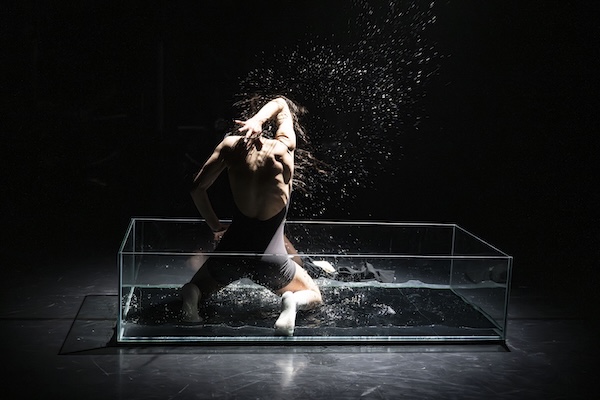
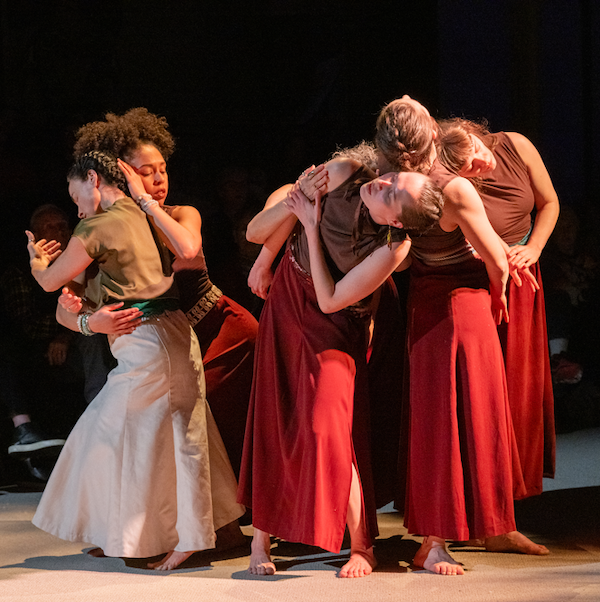
Omer Backley-Astrachan and Jana Castillo present the North American premiere of their work Common Place on Nov. 20, as part of this year’s Chutzpah! Festival. (photo by Wendell Levi Teodoro)

Intoxicating, moving, compelling, exhilarating – these are just some of the words that have been used to describe Common Place by Australian dancers and choreographers Omer Backley-Astrachan and Jana Castillo, which premiered in March at Riverside Theatres in Sydney. The work will have its North American premiere on Nov. 20, 7:30 p.m., at the Rothstein Theatre, as part of this year’s Chutzpah! Festival.

Common Place is described as “a physical exploration of belonging and togetherness, delving into shared action, collaboration and transcendent synchronization.” It is the first work that Backley-Astrachan and Castillo have created together.

In an interview with The Scoop arts review website, Backley-Astrachan explained, “We started by not knowing what the work was going to be about. We just danced together and, through that process, found the essence of what it means to find common ground.

“Jana and I could have spent time talking about our histories and our backgrounds,” he said. “Instead, we just created the work with movement at the centre and tried to find moments where we clicked together.”

He pointed out the title of the piece also invokes that which is commonplace, or ordinary.

“We tried to find a sense of exhilaration or a profound experience through very simple, very commonplace beginnings,” he told The Scoop. “So, rather than trying to create something complicated and highly technical, we took on a sensibility, almost inspired by folk, where it is something that anyone could do.”

“What we tried to avoid is creating the story first and then moulding ourselves into a preexisting narrative,” Backley-Astrachan told the Independent. “Instead, we wanted to stay curious and let the story unfold through the meeting between the bodies. It was important to us not to obey structured archetypes, rather to allow our shared physicality to weave the drama and the intimacy.”

“Common Place, for me, is the coming together of two people,” said Castillo. “It’s feeling the ease, frustration and joy of a shared existence. The audience could be witnessing a single day of a relationship, or a lifetime of reflection.”

The dancers met at a colleague’s birthday party, Backley-Astrachan said. “Jana flipped me off from across the room, giving me the finger, which obviously caught my attention – little did I know about Jana’s Tourette’s at the time. Jana immediately explained and apologized, which turned into the funniest and most endearing friendship.”

The two share a philosophy of movement and artistic practice. When Backley-Astrachan saw Castillo perform live with the Australian company Force Majeure, he said he “vowed to work with this incredible dancer, which came true.”

“Jana and I are both the same age and have had similar career journeys, which led us to a similar idea of what we are looking for in dance and dance-making – a sense of maturity, an interest in truth-making through physical storytelling,” he explained. “Working with a like-minded collaborator is non-negotiable. It’s about being able to commit wholly to the process without getting distracted by ambition.”

The creation of Common Place took a few years. The need to get the work stage-ready by its March premiere helped drive its completion. 

“But I know that, if we had more time, we would probably continue to change and evolve the work, so it’s good we were limited,” acknowledged Backley-Astrachan. “That said, we made sure the work follows an emotional structure that makes tonal sense and goes through the full life cycle during the duration of the work. That said, choreography is a living thing that starts and ends again and again every time we do it.”

“This piece was quite unique because we had a lot of space in between development phases to allow the qualities of the movement to be digested into the body,” Castillo said. “It became clear very early on – this piece is about a relationship between two people. The premise of the work was to bring our whole selves. So, naturally, our outside experiences influenced what we brought into the space. We weren’t dictated by a creative brief, which can be terrifying as a creator because there are too many options. Just like in a relationship, you figure it out, but it takes time. You learn … when to rein it in and when to trust and let go.”

“I truly believe in the ability of dance and physical language to transcend an ordinary sense of meaning,” said Backley-Astrachan. “I have had the pleasure of being left speechless at the end of works by [Israeli choreographer] Ohad Naharin – his work changed my life in a deep way. I try in my own work to allow a certain state where several, sometimes opposing, forces can be true at the same time. Dance as a medium can give space for interpretation and, within that, there is also clarity and detail.”

In addition to the Nov. 20 performance, Backley-Astrachan and Castillo will lead a masterclass for dancers on Nov. 21, at 10 a.m.

This year’s Chutzpah! Festival runs Nov. 12-23, opening with Modi at the Vogue Theatre, where Chutzpah! is the community partner of MRG Live for the comedian’s Pause for Laughter Tour, and closing with the Golden Thread Septet’s Yiddish Songs of Social Change at the Rothstein Theatre.

Most single tickets for Chutzpah! are offered at a pay-what-you-will price, with the levels at $18, $36, $52 and $70 (+ gst/sc). I’m Not a Comedian … I’m Lenny Bruce is $40 (students/seniors), $54 (general) and $72 (VIP) (+gst/sc). ChutzPacks are also available: see four different regular-price shows of your choice for $136. Tickets for Modi can be purchased through admitone.com/events. All tickets can be purchased at chutzpahfestival.com or 604-257-5145. 

Format ImagePosted on October 24, 2025October 23, 2025Author Cynthia RamsayCategories Performing ArtsTags choreography, Chutzpah! Festival, Common Place, dance, Jana Castillo, Omer Backley-Astrachan
New bio gives Vrba his due

New bio gives Vrba his due

Rudolf Vrba, left, and author Alan Twigg at the University of British Columbia in 2001. Twigg’s new book on Vrba, Holocaust Hero: The Life & Times of Rudolf Vrba, breaks much new ground. (photo by Beverly Cramp)

Celebrated German factory owner Oskar Schindler is estimated to have saved the lives of about 1,200 Jews during the Holocaust. Carl Lutz, a Swiss vice-consul in Budapest, is credited with organizing protective documents and “safe houses” that helped between 50,000 and 62,000 Jews survive. Raoul Wallenberg, a Swedish envoy in Budapest issued passports and sheltered people in buildings, saving somewhere between 20,000 and more than 30,000 Jews. Chiune Sugihara, a Japanese consul in Kaunas, Lithuania, wrote thousands of transit visas, enabling about 6,000 Jews to escape via the Soviet Union and Japan, some of whom came to Canada and settled in Vancouver.

But few outside certain circles know of Rudolf Vrba. The late University of British Columbia professor of pharmacology escaped from Auschwitz and alerted the world to what was happening there. Estimates of the number of Jews saved by Vrba’s report vary, but a consensus among historians worldwide suggests he helped halt the mass deportation of more than 200,000 of Hungary’s Jews to Auschwitz. The late eminent historian Sir Martin Gilbert said of Vrba: “No other single act in the Second World War saved so many Jews from the fate that Hitler and the SS had determined for them.”

And yet, Vrba’s name remains largely unknown. This is not a coincidence. After the war, especially in Israel, there was a deliberate effort to downplay Vrba’s perspective of events. 

image - Holocaust Hero book coverA new book – the first of a meticulous two-volume assessment of Vrba’s life – has just been released by Vancouver author Alan Twigg. It goes great lengths to broadening awareness of Vrba’s heroism and correcting the many misconceptions around his legacy. In the process, Holocaust Hero: The Life & Times of Rudolf Vrba breaks much new ground. 

Coincidental to the release of this publication, a monument to Vrba’s memory is to be unveiled later this month at Schara Tzedeck Cemetery, righting what many locals see as an unjust historic oversight. 

While Vrba wrote his own memoirs, somewhat incredibly, Twigg’s book is the first real Vrba biography. 

“There’s never been an in-depth biography of Rudolf Vrba,” said Twigg, who deliberately did not replicate the contents of Vrba’s own 1963 book, written with Alan Bestic, titled I Cannot Forgive and re-released in the 1980s as Escape from Auschwitz. “I tried to concentrate on information that was not available anywhere.”

While this first volume is an eye-opener for those who know nothing of Vrba, it contains bombshells and fascinating depth even for those who have read Vrba’s book or who otherwise know something about his story. And Twigg promises more to come in the next volume.

“The really revealing material is going to be in Volume Two,” Twigg told the Independent. “That volume will be almost entirely original material and it will show the evolution of Rudi’s character.”

Those who know of Vrba are aware of his daring escape. But that was, in many ways, the beginning of his historic story. He joined the Partisans and was a decorated war hero. He was an extraordinary intellectual, a difficult personality, had a dark humour many people didn’t understand, and carried anger throughout his life.

“I think it’s so important if you’re writing a biography to get across his character, not just the events of his life,” said Twigg. The participation of Vrba’s widow, Robin, was invaluable and the book includes extended transcriptions of Twigg’s engaging conversations with her.

Rudolf Vrba was originally a false name that came on the forged papers given to Walter Rosenberg soon after he filed his report and then joined the Czechoslovakian resistance after his escape from Auschwitz.

Born in Slovakia, Rosenberg/Vrba was transported to Auschwitz in June 1942. He steadfastly viewed the plunder of Jewish assets – not antisemitism as its own accelerant – as the motive for the Holocaust.

Vrba is said to have had a near-photographic memory, which allowed him to store away data that would change the course of history. It is believed that he greeted almost every train arriving at Auschwitz for 10 months, mentally noting estimated numbers and places of origin.

Eventually, he gained the coveted job of registrar of Birkenau’s quarantine camp, allowing him unusual access to additional information and limited freedom of movement. He learned that plans were afoot to liquidate the last remaining large population of European Jews – the 800,000 in Hungary – whose destruction would be streamlined by the construction of a new rail line to expedite transportation to the crematoria.

Vrba connected with Alfréd Wetzler, another Slovakian Jew who was registrar of the morgue.

On April 7, 1944, Vrba and Wetzler hid in a woodpile, still on the Birkenau site but outside the barbed wire prisoner encampment. Gasoline-soaked tobacco threw search dogs off their scent. They hid there for three days and nights as search parties worked 24/7 to find the escapees. After the intensive search was called off, they made their move.

The pair made an 11-day trek by foot through Poland to the border with Slovakia, where they connected with the Jewish community. 

“Their feet were bloodied and misshapen,” Twigg reports. “A doctor was summoned. The malnourished pair recovered and soon cooperated with Jewish Council officials to produce an anonymous report that would be so detailed and emotionless that it could not not be believed.”

The Vrba-Wetzler Report, as it became known, was the first to have any significant reverberations, apparently because of the mathematical tallies and objective, scientific-like writing. 

With the report, pressure came down on Admiral Miklós Horthy, the Hungarian leader viewed by most as a Nazi collaborationist, to halt the deportations of Hungarian Jews to Auschwitz. By 1944, the tide had begun to turn against the Nazis and so it was not moral considerations, Twigg suggests, that turned Horthy against the deportations, but the fear of war crimes charges after the war. Regardless of Horthy’s motivations, it was this impact of the Vrba-Wetzler Report that is believed to have saved at least 100,000 and as many as 200,000 lives.

The deportations did not end permanently, though. And here Vrba’s history is inescapably tied up with that of another Rudolf – Rudolf (Rezső) Kasztner, one of the most polarizing figures in Holocaust history.

“A controversy persists to this day as to the extent prominent Jewish and Zionist leaders should be held accountable for a myriad of failures to adequately inform Jews about the lethal dangers of boarding the trains,” Twigg writes. “For the rest of his days, Vrba would chiefly lay the blame for the failure to adequately inform approximately 800,000 Jews in Hungary about the Holocaust on Kasztner, the Zionist leader from northern Transylvania.”

Kasztner was the first non-Slovakian official to see the Vrba-Wetzler Report and a harsh dispute rages still around what happened next.

In meetings among the leadership of Hungarian Jewry, it was apparently Kasztner who pressed for an approach in which, rather than alerting the Jewish population, the leadership would keep the information to themselves and negotiate directly with Adolf Eichmann for favourable terms that made it possible for Kasztner and other senior Jewish figures to save themselves and a number of others.

Kasztner (and those sympathetic to his narrative) would have seen some logic in the fact that the Nazi war effort was foundering and the Germans desperately needed goods and money, something Kasztner and his associates believed they could access through Jewish channels internationally. With the Soviets approaching from the east, they may have thought they could buy time and save more than their limited numbers.

Eventually, Kasztner negotiated with Eichmann that a trainload of about 1,684 Jews, many or most of Kasztner’s own choosing, would set off for Switzerland. It is estimated that the passage for each passenger had been “bought” from Eichmann for about $1,000. 

The passengers did not go directly to Switzerland, though, but were rerouted to Bergen-Belsen. Unlike the other Hungarian Jews arriving at the concentration camps, however, these 1,600 or so were kept separate and eventually did make it to Switzerland, in two transports, later in the year.

In the meantime, 400,000 Hungarian Jews were sent to Auschwitz, where almost all of them were murdered. 

The title of Vrba’s book, I Cannot Forgive, is assumed to refer to the Nazis. Twigg, among others, believes it is simultaneously a reference to Kasztner and his coterie of Jewish leaders.

Vrba was openly critical of the Jewish leadership, particularly those in Hungary and especially Kasztner, who by this time had risen to a moderately senior post in the Israeli government, along with other Hungarian Jewish leaders who were senior or mid-level figures in the governing party, Mapai. To some extent, put simply, the Hungarian Jews who had negotiated with Eichmann and who Vrba blamed for preventing his report from saving exponentially more Jewish lives, became integrated into the nascent elite of the new Jewish state. It was decidedly not in their interests to have the provocative professor, now halfway around the world in Vancouver, obtain any wider audience for his book.

Ruth Linn, an Israeli scholar of moral psychology and Holocaust memory at the University of Haifa, has Vancouver connections and stumbled onto Vrba’s story a couple of decades ago. She could not understand why his name was almost completely unknown in Israel. She spearheaded the first publication of the Vrba-Wetzler Report in Hebrew, in 1998, and, in 2004, wrote Escaping Auschwitz: A Culture of Forgetting, which examined why Vrba’s account had been marginalized in Israel and how politics and memory shaped Holocaust historiography.

Capturing the dichotomy of the debate around Kasztner’s role in the Hungarian Holocaust, Twigg juxtaposes two quotes. An Israeli judge, Benjamin Halevi, said of Kasztner, “He didn’t sell his soul to the devil; he was the devil.” Canadian author and publisher Anna Porter, who has written about the subject, said, “If you’re in hell, who do you negotiate with but the devil?”

A 1955 libel trial instigated by Kasztner proved his undoing. Ostensibly a case against Malkiel Gruenwald, who publicized the wartime actions of Kasztner, the trial turned into an examination of the facts of the case. Halevi, the judge who deemed Kasztner the devil himself, ruled that, by saving a chosen few, Kasztner had sacrificed the majority of Hungarian Jews. More than two years later, Israel’s Supreme Court overturned the judgment, but Kasztner did not live to see his legal redemption. He was assassinated outside his home in March 1957.

Twigg came to the Vrba story more by happenstance than design. Twigg edited BC Bookworld, a newspaper about books and authors, for more than three decades. 

“I used to keep track of all the books of British Columbia and I had categories,” he said. He could cross-reference, for example, all books on Japanese-Canadians or forestry. 

Based on this knowledge, in 2022, Twigg wrote Out of Hiding: Holocaust Literature of British Columbia. (See jewishindependent.ca/a-roadmap-to-remembering.) Its largest, though still necessarily brief, section is on Vrba. However, this was inadequate for Twigg, who decided to expand the project – first as a comprehensive website (rudolfvrba.com) – now as this book.

Not directly related to Holocaust Hero but timely, if profoundly overdue, an ad hoc group of friends and admirers of Vrba will erect the world’s only monument to him on Sunday, Oct. 26, beginning with a ceremony in the chapel at Schara Tzedeck Cemetery at 2 p.m. The program will feature reflections on Vrba’s life, legacy and enduring impact from Dr. Robert Krell, Dr. Joseph Ragaz and Prof. Chris Friedrichs, and will conclude with the dedication of the memorial monument. 

Format ImagePosted on October 10, 2025October 8, 2025Author Pat JohnsonCategories BooksTags Alan Twigg, history, Holocaust, Rudolf Vrba, Vrba-Wetzler Report
Joy brighter than ever

Joy brighter than ever

Gila Münster, left, Yan Simon and Sarah Freia bring 8 Gays of Channukah: The Musical to the Chutzpah! Festival Nov. 13. (photo by Jamie Marshalls)

At this year’s Chutzpah! Festival, which runs Nov. 12-23, Jewish drag queen entertainer Gila Münster presents the Western Canadian debut of 8 Gays of Channukah: The Musical.

Calling Chutzpah! “one of the city’s most beloved celebrations of music, theatre and culture,” Münster wrote in a recent Facebook post: “What began in Toronto as the largest annual queer Jewish event in Canada is now coming West, bringing music, comedy and unapologetic queer Jewish joy to the stage.

“And it couldn’t come at a more important time,” she adds. “As antisemitism and anti-LGBTQ backlash continue to rise across North America, spaces that celebrate and centre our communities are not just entertainment – they are acts of resilience, visibility and solidarity. This show is about more than laughter: it’s about lighting the menorah together in defiance of hate and letting our joy shine brighter than ever.”

8 Gays of Channukah takes place Nov. 13, 7:30 p.m., at the Rothstein Theatre. “Eight stories are brought to life by the show’s creators, Gila Münster, Sarah Freia and Yan Simon, who reimagine holiday traditions with camp, sparkle and pride,” reads the Chutzpah! blurb. Local artist Joylyn Secunda opens the event with an excerpt from their show, The Routine, and there is a holiday shuk (market) during intermission and after the performances. People can pick up some gifts – made by local artisans – for the holidays.

First performed in December 2019, 8 Gays of Channukah started out as a variety show, said Münster. Last year, it evolved into a full-length musical created by Münster, Freia and Simon, and directed by Hershel Blatt.

“Now, 8 Gays of Channukah: The Musical is a 90-minute theatrical extravaganza with original songs, storytelling and dazzling costumes by queer Jewish designer Dan Dwir of House of Dwir,” said Münster. “The premise is that the three of us – Yan, Sarah and I – find ourselves on stage without a plan. We decide to share our experiences as queer Jewish people, but, as tensions rise, our bickering begins to twist the message. Over the course of the show, we learn how to coexist despite our differences and discover how much we truly share.

“The stories we tell touch on everything from coming out, to losing a loved one, to first crushes – and, of course, the joys and challenges of being an intersectional minority.”

It was from one of those challenges that 8 Gays of Channukah came into existence.

“In 2019, I was an undergrad at York University, getting ready to perform a drag show for the school’s 2SLGBTQIA+ affinity club,” Münster said. “Two days before the show, I got a voicemail from the club’s coordinator saying the event was canceled and I was banned from the club. The reason? I had mentioned that I was planning to go on Birthright to Israel that summer, and some members said it made them uncomfortable.

“I wasn’t given a chance to explain why that reaction was antisemitic, or even to defend myself. It was devastating. I felt erased – like there was no room for me to be both queer and Jewish.

“But I didn’t want to give up,” she said. “I reached out to Hillel Ontario and started a campus group called Rainbow Jews, a space where queer Jewish students of all stripes could show up fully as themselves. At our very first meeting, people asked me if I could put together a holiday party for queer Jews. That’s when the idea hit me: 8 Gays of Channukah. It started as a scrappy variety show with eight local queer Jewish performers – and now, seven years later, it’s grown into a tradition I’m so proud of.”

Over the years, singers, instrumentalists, comedians, dancers, burlesque and visual artists have participated. “Some highlights include legendary performers like 78-year-old drag queen Fontaine and Jamaican-Jewish comic Tamara Shevon, alongside rising stars such as dancing diva Josie and punk rock princess Alissa Brink,” said Münster. “In recent years, the show has found a kind of ‘core cast.’ Yan Simon – a Russian-Israeli singer-songwriter now based in Ottawa – first performed with us in 2019 and has been part of every show since 2023. Sarah Freia – an actress, singer and poet splitting her time between Toronto and London [England] – also joined, in 2023, and has been with us ever since. Together, we’ve built on the variety show tradition while adding our own creative chemistry into the mix.”

With Münster in Kingston, Ont., Simon in Ottawa and Freia in Toronto and London, the building of the musical required tenacity – hours in transit for in-person rehearsals and hours more in digital meetings, including with director Blatt, who traveled back and forth from New York.

“Because the show is rooted in personal storytelling, we had to really learn how to listen to each other and trust each other’s artistic instincts,” said Münster. “We were also lucky to have amazing rehearsal assistants, Olivia Daniels and Jesse Levy, who helped us shape the movement on stage.

“When we premiered the musical in December 2024, it was both thrilling and terrifying. We’d spent a year and $25,000 developing an entirely new format with all original material and we knew our loyal audience was counting on us to deliver. Of course, there were a few inevitable hiccups, but the energy in the theatre was electric. One moment I’ll never forget was after the show, when the non-Jewish partner of a Jewish audience member told us that, for the first time, he truly understood how antisemitism feels. That conversation reminded me that every person in the audience will connect to the show in their own way – and that’s the real magic of it.”

Münster’s first drag performance was at an event organized by the Centre for Israel and Jewish Affairs for Pride. Called Jew-Paul’s Drag Race, it was hosted by drag legend Divine Darlin’, said Münster.

“I had spent weeks putting together my outfit, inspired by the Wicked Witch of the West. On the day of, it took me three hours to do my makeup, and then my friend Diana drove me to the Drink, where the show was happening. She practically had to drag me up the stairs – I was so nervous.

“The first song I ever performed in drag was Carrie Underwood’s ‘Blown Away’ – a nod to The Wizard of Oz – followed by Netta Barzilai’s ‘Toy,’ which had just won Eurovision 2018. The crowd went wild for that second number, and, in that moment, I realized there might be a space for me to bring my queer, Jewish and Israeli identities together on stage,” said Münster, who ended up winning the competition. 

“From that night on, I was hooked,” she said.

Some JI readers will know Münster from her having been one of JQT Vancouver’s Hanukkah Hotties in 2022. She’s also on JQT’s Wall of Artists.

“I first connected with JQT’s founder and executive director, Carmel Tanaka, about four years ago,” explained Münster. “She found me online, and we bonded quickly over our intersectional identities.

“Looking back at the Hanukkah Hotties video … always makes me laugh,” she said, “because it takes me right back to the era of ‘Zoom drag.’ That meant getting into full glam, setting up lights and lip syncing in my living room – all to a silent, invisible audience on the other side of the screen. It was bizarre, a little lonely, and yet so wonderfully camp at the same time.”

Drag isn’t just an art form for Münster, but her business.

“It’s helped me pay my way through law school and beyond,” she said. “Having signature events that only I can deliver – especially those built around original music that doesn’t exist anywhere else – sets me apart from entertainers who focus mainly on lip syncing to existing tracks.

“Alongside 8 Gays of Channukah, another one of my signature offerings is Drag Queen Story Time. I’m proud to be the only drag performer officially approved as a vendor for the Toronto District School Board.”

Münster is also adept at cross-stitching, and sells her creations and other artwork on Etsy.

“My mom first taught me to cross-stitch when I was a kid, but I really picked it back up during the pandemic lockdowns,” she said, adding that “stitching became both a way to connect with people when we couldn’t leave our homes and a way to pass time that actually felt productive.”

Münster, Freia and Simon are excited to bring 8 Gays of Channukah: The Musical to Vancouver. “More than anything,” said Münster, “we hope the show helps build bridges between queer, Jewish and allied communities – especially in this moment of deep polarization.”

For the full Chutzpah! lineup and tickets to all the shows, go to chutzpahfestival.com or call 604-257-5145. 

Format ImagePosted on October 10, 2025October 8, 2025Author Cynthia RamsayCategories Performing ArtsTags 8 Gays of Channukah, business, Chutzpah!, Gila Münster, LGBTQ+, musicals, Sarah Freia, Yan Simon

Granirer returns to Carnegie

From Oct.31 to Nov. 8, the Heart of the City Festival features more than 100 events – music, stories, poetry, theatre, ceremony, film, dance, readings, workshops, discussions, art talks, history walks and more – all rooted in Vancouver’s Downtown Eastside (DTES). Among the performers is award-winning counselor and stand-up comic David Granirer, founder of Stand Up for Mental Health, which teaches stand-up comedy to people with mental illness as a way of building confidence and fighting stigma. 

photo - Counselor and stand-up comic David Granirer will perform, with other comedians from Stand Up for Mental Health, on Nov. 5, as part of the Dowtown Eastside Heart of the City Festival
Counselor and stand-up comic David Granirer will perform, with other comedians from Stand Up for Mental Health, on Nov. 5, as part of the Dowtown Eastside Heart of the City Festival. (photo from Heart of the City Festival)

On Nov. 5, 4 p.m., at Carnegie Community Centre’s theatre, Granirer, with comedians from Stand Up for Mental Health, will look at the lighter side of taking meds, seeing counselors, getting diagnosed and surviving the mental health system.

The festival kicks off on Oct. 31 at Carnegie’s theatre with a Halloween event. Dress in costume, walk the red carpet, enter the costume contest to win a prize, and gear up for disco-ball dancing with DJ Maxi and crew spinning tunes. Hosted by Lance Lim of the Pigeon Den Art Collective, there will be masquerade magic and community fun for friends and families alike, refreshments provided.

Some other highlights in the upcoming festival are:

• Gerardo Avila’s theatrical performance Spirit Encounters celebrates Día de Muertos and features shadow puppetry, comedy, flamenco and Mexican dancing and music.

• Indigenous Cultural Exhibition with dancing, drumming and community, featuring Two-Spirit grass dancer Larissa Healey and Powwow dancer Pavel Desjarlais.

• Finding My Own Voice, a new folk opera work-in-progress presentation by Beverly Dobrinsky.

• Theatre in the Raw presents staged readings of two award-winning plays from their Biennial One-Act Playwriting Contest.

For more about this year’s festival, visit heartofthecityfestival.com. 

– Courtesy Heart of the City Festival

Posted on October 10, 2025October 8, 2025Author Heart of the City FestivalCategories Performing ArtsTags comedy, David Granirer, festivals, Heart of the City, Stand Up for Mental Health, stand-up

Seeking middle ground

At the local launch for her new book, October 7th: Searching for the Humanitarian Middle, Globe & Mail columnist Marsha Lederman admitted she’s “not doing great.”  

“A lot of us in this room can say that,” she said in her opening remarks at the Jewish Community Centre of Greater Vancouver Sept. 18. “It’s been another terrible week with terrible news.” 

Lederman was the Western arts correspondent for the Globe for 15 years, before moving to the opinion section in 2022. Her memoir, Kiss the Red Stairs: The Holocaust, Once Removed, was published that same year. (See jewishindependent.ca/a-story-of-two-families.)

image - October 7th book coverOn Oct. 9, 2023, Lederman began writing columns on the aftermath of the Oct. 7 massacre in Israel and the tide of antisemitism that followed it. When an editor suggested she publish a book containing a full year of those columns, together with other material she’d written on Jewish identity, she began working on October 7th.

The process of collecting material for the book was emotionally wrenching, said Lederman, a child of Holocaust survivors whose intergenerational trauma was triggered by the Hamas attack. 

“It was really hard to relive those early days, rereading the columns and remembering what was happening in the world at that time. When I read through older articles I’d written about my Jewish identity, I was shocked at how many times that subject matter had come up and the extent to which they foreshadowed what would happen in the war.”

When she filed that first column on Oct. 9, Lederman said she wrote it in a haze of shock, emotion, upset and fear. “I knew it wasn’t what had just happened, but what would happen next: retaliation, that it would be terrible for Palestinians, and that there would be anti-Israel sentiment. But I could never have predicted that all things would have exploded the way they have and that it would still be there, almost two years later.”

Describing herself as a “progressive Zionist,” Lederman said she believes the state of Israel has a right to exist but is “strongly against the war and the occupation. I’m horrified by what some of the settlers are doing in the West Bank, but I love Israel and Israelis – though not the ones in power right now. I don’t blindly approve of everything Israel does and part of my caring for Israel is what has led me to speak out.”

In an hour-long talk moderated by Kathryn Gretsinger, a journalist and associate professor at the University of British Columbia, Lederman discussed her hope for a two-state solution, her annoyance at how people speaking out in favour of Palestinians have been branded antisemitic, and the threats she has received in response to her columns.

“My trauma is nothing compared to what people in the war zone are experiencing, but it’s still a horrible experience,” she said.

Prior to Oct. 7, Lederman said she saw herself as a journalist who happened to be Jewish. After Oct. 7, as she began writing about the attack and subsequent war, she said she put herself on the page, explaining her Jewish background. When she wrote about plastic surgery recently, the Globe received a letter to the editor stating, “how dare Lederman write about that when children are dying in Gaza!”

The book’s subtitle, Searching for the Humanitarian Middle, deals with the quandary of holding several feelings simultaneously: concern for Israel and the Israeli soldiers, as well as Palestinians who are being killed.

“I believe the humanitarian middle is essential, and there are a lot of caring people who want to see an end to this war. The numbers are terrible: 60,000 Gazans have been killed in this war,” she said, citing numbers released by the Hamas-controlled Ministry of Health. 

“That’s appalling to me,” she continued. “Hostages are still underground and antisemitism has reached a level that’s shocking, even to me, as a pessimistic catastrophizer. The word genocide carries so much weight for us as Jewish people. Israel was born out of the ashes of the worst genocide we have known. So, for Israel to be accused of that very crime is heartbreaking.” 

Asked what her solution to the war would be, Lederman said a ceasefire deal is the way to go. “I believe what we’re seeing from Israel is an over-

reaction and I would urge the government of Israel to consider a two-state solution. I believe that’s the answer.”

She said, “My heart aches for the hostages and their families, and for all the people in Gaza. When I think about the intergenerational trauma from this time, it’s shattering. I feel a responsibility to write about this as a Jewish person, a journalist, a mother, as someone who cares about other human beings, and as a child of Holocaust survivors, but I’m feeling the weight of the world in my fingers.” 

Lauren Kramer, an award-winning writer and editor, lives in Richmond.

Posted on September 26, 2025September 24, 2025Author Lauren KramerCategories BooksTags Globe & Mail, intergenerational trauma, Israel-Hamas war, journalism, Marsha Lederman, Oct. 7, politics
Impacts of oppression

Impacts of oppression

Franz was shot in Prague, including near Franz Kafka’s birthplace. (still from film)

Troubled father-son relationships, both literally and metaphorically, are themes of Franz and Orphan, the former a biopic with some quirks and the latter a more old-school period piece. The two movies are part of this year’s Vancouver International Film Festival, which runs Oct. 2-12.

Director Agnieszka Holland’s Franz is an imaginative film that flits between the “present,” Franz Kafka’s adult years, until his death, at age 40, in 1924, and some formative childhood moments (mostly highlighting his domineering and dismissive father), while also jumping into the future, where tour guides at various institutions and parks tell modern-day tourists all about the influential writer. 

In one of these future moments, we learn that the ratio of words written by Kafka and those written by others about him is approximately one to 10 million. Some of these millions of words were written by Kafka’s friend and literary executor, novelist Max Brod, who rescued much of Kafka’s work. Brod’s Franz Kafka: A Biography is apparently a primary source of what we know about Kafka’s life, and he is featured in Holland’s film.

While Idan Weiss, who plays the tortured writer (and insurance lawyer) has gotten kudos from other reviewers for his performance, Peter Kurth, who plays Hermann Kafka, Franz’s father, stands out even more. Kurth plays stubborn and unlikeable well, but also shows Hermann’s vulnerability and how he uses meanness to cover it up.

Franz Kafka was born in Prague, in 1883, and he is witness to world-changing events, including the First World War and the subsequent collapse of the Austro-Hungarian Empire. Kafka was drafted, but his employers successfully argued that he was an indispensable worker – according to the movie, they did so at Hermann’s behest. The creation of Czechoslovakia and several other independent states after the war is not an explicit aspect of Franz, but the oppressiveness of the empire (the fatherland, in the metaphor) comes out in Kafka’s depictions of bureaucracy, alienation, anxiety, etc. While Franz doesn’t add any new knowledge to what’s known about Kafka, his upbringing (harsh on many levels), writing (most of it published after his death), love life (engaged for a period, then involved with a married woman), religion (not an observant or believing Jew) and illness (tuberculosis), but it might bring a new generation to his ideas, which remain important.

As Holland told Variety: “the dehumanization of society, the despisal of [certain groups of people] and alienation are once again becoming the main communicative tools,” but, not wanting to “give an interpretation like that,” she said, “Kafka has been interpreted in so many ways, as is shown in the film, but when you compare what he wrote with what was written about him they are poles apart. So, we didn’t want to reinterpret Kafka; we wanted to make him alive.”

And Franz is a success in those terms. It is entertaining and thought-provoking, though sometimes the thoughts are about odd creative choices. There is a lot of male nudity and it’s not always clear why. For example, in one scene at a sanitorium, naked men, some wearing animal head masks, engage in a game of tug-o-war.

László Nemes’s Orphan, which takes place in Hungary, is a more linear and literal form of storytelling, also focusing on a time of upheaval and oppression. While most of the film takes place in 1957 – a year after the Soviet Union crushed the people’s revolt against the country’s communist government – the young Jewish protagonist, Andor (played by a brooding Bojtorján Barábas), was put into an orphanage during the Second World War. We witness his mother and a reluctant Andor reunited after the Holocaust. Her “saviour” was a non-Jew, Berend (played by Grégory Gadebois with nuance), who Andor absolutely hates. 

photo - Bojtorján Barábas and Grégory Gadebois in Orphan
Bojtorján Barábas and Grégory Gadebois in Orphan. (photo © Mostra internazionale d’arte cinematografica­)

Andor cannot forgive his mother for giving up on the possibility of his father’s survival, even years after the war, and, when Berend claims that Andor is actually his biological son (and Andor’s mother never clarifies), Andor’s anger is barely containable and the tension mounts to a climatic Ferris wheel ride. While Berend is an abusive brute, he also seems to genuinely want Andor’s filial affection. Andor and Berend not only represent son and (possible) father, but Hungary’s desire for freedom from its Soviet oppression. 

Orphan is slow-paced, capturing the heaviness of the period, the incapacitating fear and oppression of 1957 Hungary. Twelve-year-old Andor doesn’t go to school, roams the streets, amuses himself at home, seems bored silly at times, and has nowhere positive to channel his frustrations and his feelings of abandonment.

While Franz and Orphan are two very different movies, they cover overlapping themes that are sadly all too relevant. Franz screens Oct. 7 and 11, and Orphan plays Oct. 2 and 4.

For tickets to either film and the entire festival line-up, go to viff.org. 

Format ImagePosted on September 26, 2025September 24, 2025Author Cynthia RamsayCategories TV & FilmTags Agnieszka Holland, Franz, history, László Nemes, movies, Orphan, Vancouver International Film Festival, VIFF
Flawed drama popular

Flawed drama popular

A scene from Annemarie Jacir’s Palestine 36, which screens at the Vancouver International Film Festival Oct. 9-10. (still from film)

Bethlehem-born filmmaker Annemarie Jacir’s historical epic Palestine 36 had its world premiere Sept. 5 at the Toronto International Film Festival. It screens at the Vancouver International Film Festival Oct. 9-10.

While Jacir is an accomplished filmmaker and spokesperson for her people, her flawed drama is unlikely to bring clarity to events then – or now.

Shot in Israel, the West Bank and Jordan, and incorporating colourized archival footage from the 1930s, Palestine 36 tells the story of the Arab Revolt against the British Mandate from 1936 to 1939 through the eyes of Yusuf, played by Karim Daoud Ananya. Other stars include Jeremy Irons, Hiam Abbass and Liam Cunningham.

Depicted in Palestine 36 are characters like British High Commissioner Sir Arthur Wauchope and anti-insurgency experts Maj.-Gen. Orde Wingate and Sir Charles Tegart. Alas, they are all depicted as cartoon characters protecting Britain’s imperial interests even as they violently suppress the revolt and implement the emergency measures acts still used in Israel today. While Wingate was a Bible-quoting, onion-chomping eccentric, Jacir’s depiction of his behaviour and absurd haircut are egregious.

What struck this reviewer most was the lack of nuance about Arab society in 1930s Palestine. (At the time, Jews called themselves Palestinians while Arabs avoided that name.)  The country’s foremost leader in the years before the bloody revolt, Hajj Amin al-Husseini, does not appear in the film. Nor does rebel leader Fawzi al-Qawukji. Both escaped the British dragnet and made their way to Iraq, where they staged a pro-Nazi coup in 1941, then fled to Berlin during the war. Their bitter rivalry is well documented.

Since neither man graced Jacir’s film, there was no need to explain the clan divisions, mutual contempt and assassinations that characterized Palestine and prevented the country’s Arabs from uniting. A militant Muslim triumphalist and genocidaire, al-Husseini aimed to destroy Palestine’s Sunday People once he had dealt with the Saturday People. Perhaps surprisingly, given that Jacir is Christian, this detail was omitted. Instead, the film falsely gives the impression that, rather than being marginalized, her co-religionists fought alongside their Muslim neighbours as equals.

The natural hero of Izz ad-din al-Qassam is also missing from Palestine 36. A teacher from Syria who bravely faced the British soldiers and their bloodhounds until hunted down in the Galilee, al-Qassam’s name graces the missiles today’s Gaza terrorists lob at Israel.

Typical of Jacir’s striving for accurate details while omitting the big picture, she depicts British customs officers in Jaffa Port uncovering a barrel of smuggled Mauser rifles, but fails to mention the guns’ German source. Indeed, there’s the rub of this movie – while correctly pursuing the policy that the enemy of my enemy is my friend, the Palestinians’ alliance with Nazi Germany and Fascist Italy is not part of the story.

Judging from the 10-minute standing ovation at Roy Thompson Hall, such a huge omission is unlikely to spoil the impact of Palestine 36 in Vancouver and elsewhere. In Pallywood – and the rest of the film industry, for that matter – facts can’t stand in the way of  a good story. Indeed, Zionist mega-hits like Exodus and Cast A Giant Shadow are both kitsch films with a huge impact. Palestine 36 is likely to join them. 

Format ImagePosted on September 26, 2025September 24, 2025Author Gil ZoharCategories TV & FilmTags Annemarie Jacir, history, Palestine, Vancouver International Film Festival, VIFF

Posts pagination

Page 1 Page 2 … Page 158 Next page
Proudly powered by WordPress