Skip to content

  • Home
  • Subscribe / donate
  • Events calendar
  • News
    • Local
    • National
    • Israel
    • World
    • עניין בחדשות
      A roundup of news in Canada and further afield, in Hebrew.
  • Opinion
    • From the JI
    • Op-Ed
  • Arts & Culture
    • Performing Arts
    • Music
    • Books
    • Visual Arts
    • TV & Film
  • Life
    • Celebrating the Holidays
    • Travel
    • The Daily Snooze
      Cartoons by Jacob Samuel
    • Mystery Photo
      Help the JI and JMABC fill in the gaps in our archives.
  • Community Links
    • Organizations, Etc.
    • Other News Sources & Blogs
    • Business Directory
  • FAQ
  • JI Chai Celebration
  • JI@88! video
image - Weizmann Canada Physics Tournament 2025
image - The CJN - Visit Us Banner - 300x600 - 101625

Recent Posts

  • Vrba monument is unveiled
  • Music to build bridges
  • A better future possible
  • Anne Frank exhibit on now
  • Human rights in sport
  • Telling the story of an icon
  • Crawl bigger than ever
  • JCC Maccabi in Toronto
  • A way to meet fellow Jews
  • Time to include
  • Add Jewish joy to the mix
  • Reminder of humanity’s light
  • From the archives … editorials
  • Year-round holiday recipes
  • מדוע עזבתי את ישראל ואינני חושב לחזור ארצה
  • OJC hosts Oct. 7 memorial
  • A journey beyond self
  • Antisemitism a problem
  • Young man is missed
  • Orr action sparks complaint
  • Prison sentence for hate
  • Etgar Keret comes to Vancouver
  • New fall lecture series
  • Series explores music
  • Doc on Zapiro screens Nov. 6
  • Joy of shared existence
  • Community milestones … October 2025
  • MAID vs Jewish values
  • Cheshvan a great month, too
  • Bull, bear or bubble?
  • From the archives … a coin, etc.
  • מדוע האנטישמיות הולכת וגואה בעולם
  • New bio gives Vrba his due
  • Joy brighter than ever
  • When approaches differ
  • New leadership at the JCCV

Archives

Follow @JewishIndie

Tag: cookbooks

Unique meals for Passover

Unique meals for Passover

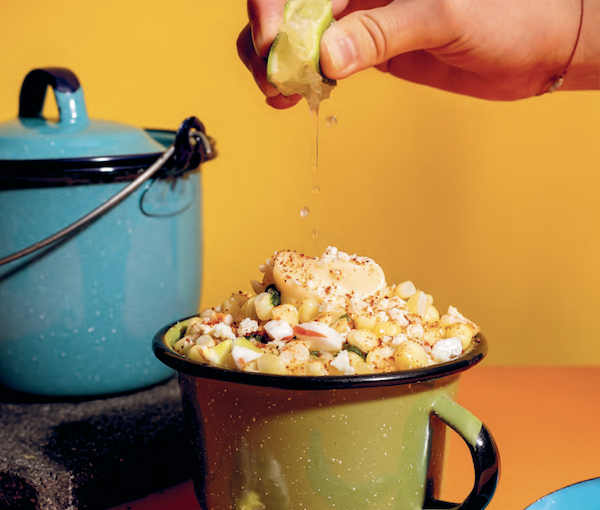
Ilan Rabchinskey’s photograph of Tamarind Street Corn Cups in Sabor Judío: The Jewish Mexican Cookbook inspired me to make them. (photo by Ilan Rabchinskey)

Since reviewing Sabor Judío: The Jewish Mexican Cookbook by Ilan Stavans and Margaret E. Boyle for the Independent’s Hanukkah issue, I’ve tried several more recipes. And I’ve really enjoyed everything. So much so, that I pulled out the cookbook to try some Passover meals, and found some foods I would never have thought to make.

Stavans and Boyle have a section on Passover (Pésaj) in which they discuss some of the Mexican Jewish traditions. For example, some families incorporate Mexican history into the seder discussions, and the bitter herbs on the seder plate can include a variety chiles. They list 12 seder favourites, but, throughout the cookbook, they point out which dishes – like Stuffed Artichoke Hearts – are considered essential components of the Passover meal by some.

photo - Snapper Ceviche con Maror, from Sabor Judío: The Jewish Mexican Cookbook by Ilan Stavans and Margaret E. Boyle
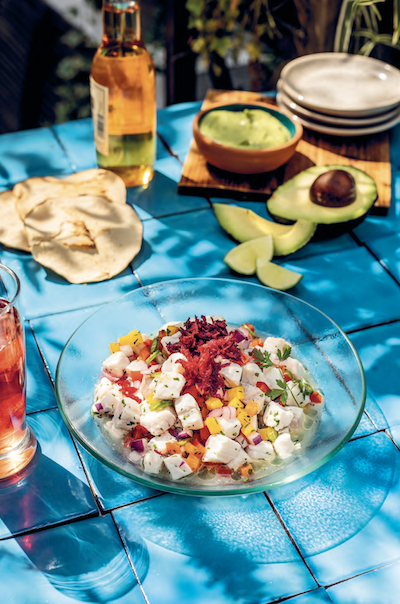
Snapper Ceviche con Maror, from Sabor Judío: The Jewish Mexican Cookbook by Ilan Stavans and Margaret E. Boyle. (photo by Ilan Rabchinskey)

Of the seder favourites, I made Snapper Ceviche con Maror, Tamarind Street Corn Cups, Apricot Almond Charoset Truffles and Tahini Brownies. The photos by Ilan Rabchinskey drew me into the corn cups, as I’m not a huge corn fan and might not have made them otherwise. I will do so again, however – they were easy, and they were a very tasty break from the ordinary. The snapper ceviche, too, will be a repeat, and the brownies were some of the best I’ve tasted, not too sweet, and very light, almost fluffy, but moist –   I broke up a chocolate bar instead of using chocolate chips, which worked really well, and the sea salt on the top tasted so good. While the truffles were also delicious, they tasted more familiar, and were very date forward – I might try to mix up the date-apricot balance when I make them again.

The Jewish connections were obvious for some of these recipes, not so much for others. The snapper is served with a dollop of horseradish: “The use of maror, or horseradish, in this recipe was an invention during a Passover seder in Mexico City, creating a savoury contrast among the fish, the jalapeño and the horseradish,” write Stavans and Boyle.

The Jewish link to the corn cups is that the tamarind-flavoured hard candies the recipe calls for – Tamalitoz – were created by Jack Bessudo, who is of Mexican Jewish descent, and his husband, Declan Simmons. Since Tamalitoz are not available here, I bought another tamarind-flavoured candy from a local Mexican store and it worked quite well.

The brownies recipe comes from Israeli immigrants to Mexico, who shared with the cookbook writers that “tahini is also infused into their adaptations of mole, the sesame flavour substituting for more common varieties that rely on peanut or almond.”

Chag sameach!

SNAPPER CEVICHE CON MAROR
(serves 6; prep time 25 min plus chilling)

3/4 cup fresh lime
1/4 cup fresh lemon juice
1 small jalapeño chile, seeds removed, finely chopped
1 small red bell pepper, seeds removed, finely chopped (about 1/2 cup)
1 small yellow bell pepper, seeds  removed, finely chopped (about 1/2 cup)
1/2 small red onion, thinly sliced
1 small garlic clove, minced, grated, or pushed through a press
1/8 tsp ground cumin
1/2 tsp kosher salt
1 pound red snapper fillets, skin removed
2 tbsp finely chopped fresh cilantro
1 tsp extra-virgin olive oil
prepared horseradish, for topping (optional)

1. In a large bowl, stir together the lime juice, lemon juice, jalapeño chile, red and yellow bell peppers, red onion, garlic, cumin and salt.

2 . Using a sharp knife or kitchen shears, cut the fish fillets into 1/2-inch pieces and add to the citrus mixture, stirring to combine. Cover the bowl and refrigerate for 30 minutes.

3. Just before serving, stir in the cilantro and oil. Serve immediately, dolloped with horseradish, if desired.

TAMARIND STREET CORN CUPS
(serves 4; prep time 40 min)

for the corn
3 tbsp unsalted butter
1/2 large white onion, finely chopped
2 medium garlic cloves, peeled and finely chopped
1/2 serrano chile, seeds removed, if desired, and finely chopped
1 1/4 tsp kosher salt, plus more as needed
2 fresh epazote leaves (whole) or 1 tsp dried oregano
5 cups fresh corn kernels (from about 10 cobs of corn, or use frozen corn kernels)
2 1/2 cups water
1/4 cup mayonnaise

for serving
crumbled Cotija cheese
crushed chile piquin or red pepper flakes
crushed Tamalitoz candies,  tamarind flavour
fresh lime juice

1. Melt the butter in a large frying pan set over medium heat. Add the onion and garlic and cook, stirring occasionally, until soft and translucent, about 5 minutes.

2. Add the serrano chile, salt and epazote leaves (or oregano), followed by the corn kernels and the water. (The water should barely cover the mixture.) Raise the heat to high and bring to a boil, then lower the heat to medium and cook, stirring occasionally, until the corn is tender and the liquid has almost completely evaporated, 30-35 minutes. Taste and add more salt, if needed.

3. Remove from the heat and discard the epazote. Add the mayonnaise and stir to combine.

4. Divide the corn mixture into four tall cups. Top with the Cotija cheese, chile piquin and crushed tamarind candies, to taste. Drizzle each cup with a little lime juice just before serving.

TAHINI BROWNIES
(serves 6; prep time 15 min, baking time 22 min)

3 tbsp almond flour
1/4 cup cocoa powder
1/2 tsp kosher salt
1/4 cup extra-virgin olive oil
1/2 cup well-stirred tahini
4 ounces baking chocolate, roughly chopped
2 large eggs
1/2 cup granulated sugar
1 tsp vanilla extract
1/2 cup chocolate chips
flaky sea salt, for sprinkling

1. Heat the oven to 350˚F and lightly grease an 8-by-8-inch dish. In a small bowl, whisk together the almond flour, cocoa powder and kosher salt and set aside.

2. Combine the oil, tahini and chopped baking chocolate in a small saucepan set over medium-low heat and cook, stirring often, until the chocolate is melted and the mixture is smooth. Remove from the heat and let cool slightly.

3. Meanwhile, in a large bowl, vigorously whisk together the eggs and sugar until frothy, 3-5 minutes. Whisk in the vanilla, followed by the cooled chocolate mixture.

4. Add the dry ingredients to the chocolate mixture and stir to combine, then fold in the chocolate chips. 

5. Transfer the batter to the prepared pan, smoothing the top, then sprinkle lightly with flaky sea salt. Bake until a tester inserted in the centre comes out clean, 18-22 minutes. Remove from the oven and place the pan on a wire rack to cool. Serve warm or at room temperature. 

APRICOT ALMOND CHAROSET TRUFFLES
(makes about 3 dozen; prep time 15 min plus chilling)

2 cups pitted and chopped medjool dates
1 cup chopped dried apricots
1 cup golden raisins
1 cup roasted salted almonds
1 tbsp honey
3 tbsp sweet red wine (or grape juice)

1. Working in batches, add the dates, apricots, raisins, almonds and honey to a food processor and pulse until a textured paste forms. Transfer the mixture to a bowl and stir in the wine, 1 tablespoon at a time.

2. Scoop out tablespoons of the mixture and, using lightly moistened hands, roll them into balls. Place the truffles on a baking sheet or large plate lined with parchment paper as you go.

3. Refrigerate the truffles (uncovered is fine) for 2 hours, then transfer to a container with a lid and continue to refrigerate until needed. Serve chilled or at room temperature. 

Format ImagePosted on March 28, 2025October 12, 2025Author Cynthia RamsayCategories Celebrating the HolidaysTags cookbooks, cooking, food, Mexico, Passover, recipes, Sabor Judío
Jewish Mexican food excites

Jewish Mexican food excites

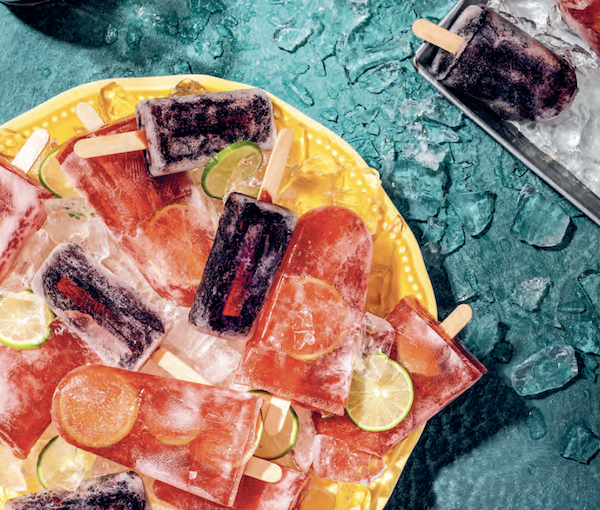
Paletas can be made in many flavours. Sabor Judío includes a recipe that uses Manischewitz wine. (photo by Ilan Rabchinskey)

The minute I saw the cover, I wanted to try some of the recipes in Sabor Judío: The Jewish Mexican Cookbook by Ilan Stavans and Margaret E. Boyle. Not only did I learn how to make some very tasty food, but I learned a bit about the Jewish community in Mexico and its history.

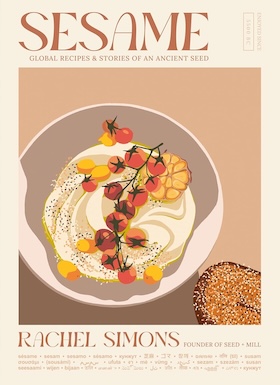
image - Sabor Judío cookbook coverPublished by the University of North Carolina Press, with hunger-inducing colour photographs by Ilan Rabchinskey, and written by two Jewish Mexican scholars (now living in the United States), Sabor Judío was a cultural experience for me, never having been to Mexico before and only ever having made a basic burrito at home. Of course, I’ve eaten at many Mexican restaurants over the years, but Sabor Judío features recipes you won’t necessarily find in a restaurant here in Vancouver, or even in Canada, though local Jewish community members with Mexican roots might make some of these dishes at home.

There were two very important inspirations for Sabor Judío.

One was Stavans’ grandmother, Bobe Miriam, whose recipe book, written in a mix of Yiddish and Spanish, was started in the 1920s, after she immigrated to Mexico from Poland. It evolved over decades, as she figured out what worked and what didn’t, and as ingredients changed. The notebook “wasn’t just about cooking; it was also a time capsule that chronicled, through dishes, the Jewish family’s process of assimilation into Mexico and the way La Comunidad, as the Jewish Mexican community is known, showcases its personality to the world.”

The other was Boyle’s great-grandmother, Baba Malka, also a Polish immigrant to Mexico: “While Baba Malka was still actively cooking, her children, grandchildren and great-grandchildren took turns observing and documenting her work in the kitchen in Mexico City, filling the notebook’s pages with notes and adaptations in Spanish, Hebrew and English as the family generations expanded across Mexico and into the United States.”

The recipes in Sabor Judío are “dishes collected from grandmothers and other beloved home cooks, professional chefs and bakers, and a variety of historical sources,” writes cookbook author Leah Koenig in the preface. Even she came across ingredients she had never used before. “I learned the hard way that nopales (cactus paddles) should always be handled wearing gloves, lest the prickly spines leave your hands stinging for the rest of the day.”

The recipe for Cactus Tomato Salad does include a note about the proper handling of cactus leaves. But, not sure of where I could buy cactus here, I inadvertently saved myself the trouble of removing the spines, boiling the cactus and cutting it into 1/4-inch pieces by buying a jar of cactus that was already prepared in that way. This substantially eased the process of making this salad, which was very good, though I’m sure fresh cactus would have made it even better.

I chose what to make from Sabor Judío by looking at what the cookbook authors recommended as a festive Hanukkah meal, which includes the Cactus Tomato Salad. I had already singled out the Falafel Taquitos because I liked the idea of mixing Mexican and Middle Eastern flavours. In the end, there was a bit of a disconnect for me between the taste of the falafel centre and that of the corn tortilla shell. In eating leftovers the next day, I greatly enhanced the enjoyment of this dish by adding some fresh-cut tomatoes and cucumber.

I also had already eyed Agua de Horchata because of the first sentence in its description, which says that the rice-milk drink – which is believed to have 11th-century North African origins – “accompanies a good Mexican Jewish meal.” I was very pleased with how it turned out. I will definitely make it again.

The Latkes con Mole were as labour-intensive (grating potatoes and onion) and delicious as other latkes I’ve had, and I would happily swap out my usual apple sauce every so often for mole and crumbled queso fresco, even though it takes a lot of time to make mole.

I tried a second fried item, it being for Hanukkah and all, and the Sor Juana’s Ricotta Buñuelos were so good, if that’s a thing. The anise really made them pop, and I ate way too many.

Lastly, knowing how much I like paletas, I couldn’t resist making the frozen treats using Manischewitz. The wine most definitely tastes better frozen, after being steeped in cinnamon, cloves and orange.

There are other Hanukkah – Janucá – meals, as well as suggested menus for other Jewish holidays. In total, there are about 100 recipes in Sabor Judío, including desserts. One thing you’ll learn from this cookbook is that the Canadian and Mexican concepts of breakfast, lunch and dinner differ somewhat. You’ll learn some Spanish, some history and more. You’ll be introduced to some new-to-you ingredients and ways to combine those ingredients.

As Stavans and Boyle wish readers at the end of their book’s introduction, perfectly capturing the fusions taking place throughout it: “¡Buen provecho! Mit a gutn apetit! Kome kon gana!” Enjoy your meal(s).

FALAFEL TAQUITOS
(serves 6; prep takes 30 minutes plus overnight soaking and a 30-minute chilling time; 20 minutes to bake)

for the taquitos:
1/2 lb dried chickpeas, soaked overnight in water, then rinsed and drained
1/2 medium yellow onion, roughly chopped
2 tbsp fresh parsley, roughly chopped
2 tbsp cilantro, roughly chopped
2 medium garlic cloves, roughly chopped
1 tsp kosher salt, plus more as needed
1 tsp ground cumin
1/2 tsp ground coriander
1/8 tsp cayenne
vegetable oil, for brushing
12 (6-inch) corn tortillas

for the tahini sauce:
1/2 cup well-stirred tahini
1/4 cup fresh lemon juice
1/4 cup cold water

1. Add the chickpeas to a food processor bowl along with the onion, parsley, cilantro, garlic, salt, cumin, coriander and cayenne. Pulse, scraping down the sides of the bowl as needed until a textured paste forms. Taste and add more salt, if needed. Transfer to a bowl and refrigerate the mixture for 30 minutes.

2. Heat the oven to 400˚F and brush a 9-by-13-inch baking dish with about 1 tablespoon of oil. Lay one tortilla on a flat surface and place a scant 1/4 cup of the filling along one edge, nudging it into a line. Roll up the tortilla tightly and place it seam-side down in the prepared backing dish. Repeat the process with the remaining tortillas and filling.

3. Brush the tops of the tortillas with more oil and bake until crispy and golden, 15-20 minutes. Meanwhile, whisk together the tahini, lemon juice and water. Serve the taquitos hot, drizzled with tahini sauce.

AGUA DE HORCHATA
(serves 8-10; prep takes 10 minutes, plus overnight soaking and a 4-hour chilling time)

2 cups long-grain white rice, rinsed well and drained
1 cinnamon stick
6 cups room-temperature water, divided, plus more as needed
3/4 cup granulated sugar
2 cups whole milk
2 tsp vanilla extract
ice, for serving (optional)

1. Place the rice and cinnamon stick in a large glass bowl and add 4 cups of the water. Cover the bowl and let the mixture soak overnight at room temperature (at least 8 hours).

2. Pour the soaked rice mixture into a high-powered blender along with the sugar and blend until smooth. (You can tear the cinnamon stick into smaller pieces to facilitate its blending.) Pour the mixture through a fine mesh sieve into a large wide-mouth pitcher, stirring and pressing the mixture with a spoon, if needed, to help the liquid pass through the sieve. (Discard any remaining solids.)

3. Whisk in the milk, the remaining 2 cups of water, and vanilla. Cover the pitcher and chill the horchata in the refrigerator until cold, at least 4 hours. (The mixture will continue to thicken as it chills.)

4. Just before serving, stir the horchata well and pour into glasses (over ice, if desired). If the horchata gets too thick, you can thin it with a little more water.

SOR JUANA’S RICOTTA BUÑUELOS
(makes 10-15 fritters; prep takes 40 minutes, plus 1-hour resting time; 30 minutes to cook)

1 cup ricotta cheese
6 egg yolks
1/4 cup granulated sugar, plus more for serving
2 1/2 tsp ground anise
3 cups all-purpose flour, plus more for rolling
1 1/2 tsp baking powder
vegetable oil, for frying
jam, for serving

1. Combine the ricotta, egg yolks, sugar and ground anise in the bowl of a stand mixer and beat on low until combined. Whisk together the flour and baking powder in a medium-sized bowl.

2. Add the flour mixture to the ricotta mixture in stages, beating on low and scraping down the sides of the bowl as necessary, until a thick and sticky dough forms. Cover the mixing bowl and let rest at room temperature for 1 hour. 

3. On a large, floured work surface using a floured rolling pin, roll out the dough to a 1/8-inch thickness. Use a sharp knife and a plate or bowl with a 4-to-5-inch diameter to cut out circles. Gather the scraps and repeat the rolling and cutting process, if desired.

4. Heat 1/4 inch of oil in a medium frying pan set over medium heat until it reaches 350˚F on a digital thermometer, and line a large baking sheet with paper towels. Working with one circle of dough at a time, slip it into the hot oil and fry, turning once, until puffed and golden, 30 to 60 seconds per side.

5. Transfer the fritters to the paper towels to drain and cool slightly. Serve warm, sprinkled with more sugar or dolloped with jam.

PALETAS MANISCHEWITZ
(makes 6; prep takes 40 minutes; freeze 5 hours)

1 (750-ml) bottle Manischewitz sweet red wine
3 wide strips orange peel
4 whole cloves
1 cinnamon stick
2 cups water
thinly sliced limes and tangerines (optional)

1. Add the wine, orange peel, cloves and cinnamon stick to a medium saucepan set over medium-high heat. Bring the mixture to a boil, then lower the heat to medium and cook, stirring occasionally, until the liquid reduces to 1 cup, 30-35 minutes. Remove from the heat and let cool, then strain out and discard the spices and orange peel.

2. Stir the water into the strained wine syrup, then divide the mixture evenly among 6 paleta or flat popsicle molds. If desired, add a slice of lime or tangerine into each mold. Freeze until solid, at least 5 hours. 

Posted on December 13, 2024December 11, 2024Author Cynthia RamsayCategories Books, Celebrating the HolidaysTags baking, cookbooks, cooking, falafel, Hanukkah, history, horchata, Jewish Mexican food, paletas, Sabor Judío

The Yom Kippur break fast

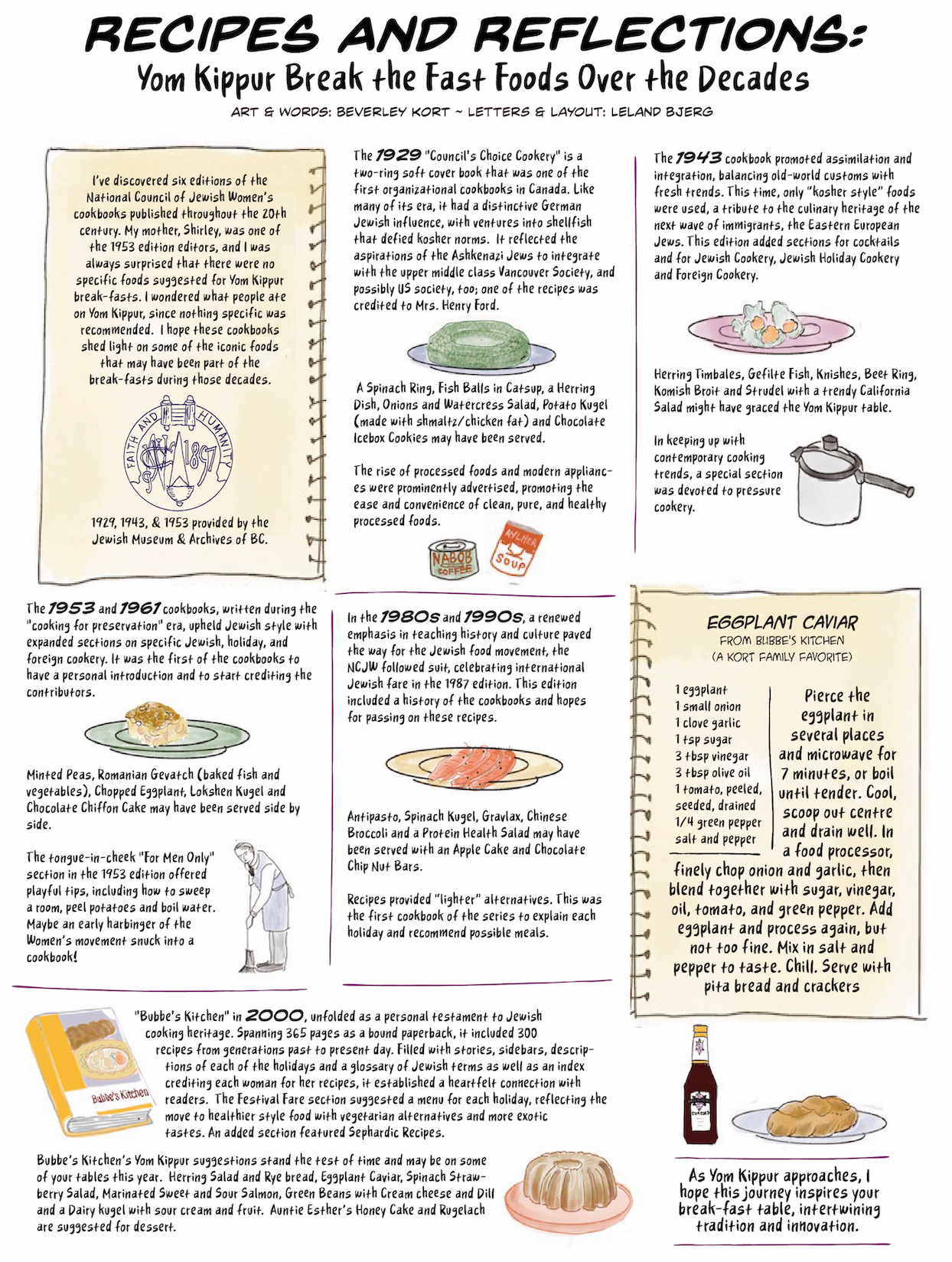
image - Yom Kippur break fast foods by Beverley Kort & Leland Berg looking at NCJW cookbooks

Posted on September 1, 2023August 30, 2023Author Beverley Kort & Leland BergCategories Celebrating the HolidaysTags cookbooks, graphic art, National Council of Jewish Women, NCJW, Yom Kippur
Comfort food for dark times

Comfort food for dark times

If the thought of cooking one more boring meal is just too daunting, Google your heart out – there are gazillions of cookbooks out there.

The days are short and dark and all I seem to want to do right now is stuff my face with comfort food. Some days that manifests as peanut butter and banana sandwiches, and some days it looks like pot roast and mashed potatoes. I rarely crave a salad or a stick of celery in this chilly, wet weather. Mind you, I have been tempted (and given into) a huge piece of pumpkin pie. That’s a daily serving of vegetables, right? I’m all about the carbs at the moment. Plus, peanut butter makes my coat nice and shiny. Or so says hubby Harvey.

Like a bear, I’m looking to bulk up for my winter hibernation. Although, when you think about it, we’ve been living through almost a two-year hibernation. It’s called COVID-19. I don’t know anyone who hasn’t found some comfort in over-indulging during this pandemic. Whether the target of our ill-placed attention is food, booze or online shopping, we’ve all been guilty of overdoing it in some way or other. Oh, I forgot to include Netflix, Prime Video and Crave. I do crave my Crave. I don’t know how many hours of my life I’ve given over to this pap. Not that I’m bragging. Actually, I’m kind of embarrassed by it, but, in a way, it’s keeping me sane because it lets me focus on something other than COVID. But enough about the C-word.

My guilty pleasure is doughy, savoury foods, packed with calories. That’s where the Perogy Toss comes in. I got this recipe decades ago from the catering company at Richmond City Hall’s cafeteria, where I often ate lunch during my working days. The recipe is still a winner. Add a salad and you’ve got dinner. Add a glass or two of wine and you’ve got a date.

PEROGY TOSS

1-kg package frozen potato perogies
4 tbsp sundried tomato oil (or olive oil)
3/4 cup minced onion
1 tbsp minced garlic
2 tbsp minced black olives
12 tbsp (3/4 cup) minced and drained sundried tomatoes
4 tbsp minced capers
1 1/2-oz (14-gram) package fresh basil, chopped
light sour cream

Boil salted water in a large pot. Add frozen perogies and boil for four to five minutes (or whatever the directions say). Drain well. Rinse with hot water and drain again. Return perogies to the pot.

In a frying pan, heat the sundried tomato oil (or olive oil) until hot. Add onion and garlic and sauté until onion is soft and golden. Add olives, sundried tomatoes and capers. Stir.

When heated through, add to the cooked perogies in the pot. Heat on low for about one minute, tossing to fully coat the perogies. Add the basil and serve at once. Put sour cream on top, if desired – and who wouldn’t desire that?

Just in case this recipe doesn’t give you your year’s allotment of salt, here’s another one that will not only satisfy your craving for savoury, but holds its own as an appetizer served with pita or crackers. Some of you might be put off by the weird orange shade of this dip, but I’m sure you’ll get past that. If you’re a lazy cook like me, you’ll be happy to know that the only kitchen appliance you’ll need is a food processor.

RED PEPPER & FETA DIP

3 red bell peppers
6 oz feta cheese
2 tbsp olive oil
2 tbsp pine nuts

Cut in half and seed three red bell peppers. Place on a broiling pan, skin side up, and broil until skin is charred and blistered, turning over several times. This is what creates that smoky flavour.

Remove the skin from the peppers – some say sealing them in a brown paper bag while they’re cooling for five to 10 minutes creates steam and makes them easier to peel.

Once peeled, put the peppers in a food processor and add the feta cheese, olive oil and pine nuts. Blend till it’s nice and smooth.

Chill before serving. (I mean the dip, but you could also chill yourself with a glass or two of your favourite alcoholic beverage and a bag of chips.)

Serve with pita wedges or crackers. And don’t even think of substituting a different kind of nut. It’s just wrong. It’s got to be pine nuts.

I’ve made this dip for company loads of times and everyone likes it. It’s one of those go-to, quick-as-can-be appies that’s pretty much foolproof. Of course, your guests have to have a taste for feta cheese and pine nuts, but don’t most of us? (Maybe have an EpiPen ready just in case.) It’s definitely got a bit of an unusual flavour, but in a good way. It’s worth a try, if only to expand your repertoire … says the woman who ate the same California roll and agedashi tofu three or four times a week when she was single. However, I’ve since seen the error of my ways.

As you can tell, I’m all about the easy. And, if it tastes good too, score a win. I’ve never been one to fuss about food because it all gets eaten in a matter of minutes anyway, so why bother? I know, I know. What kind of an attitude is that for an accidental balabusta? But, like Popeye said, “I yam what I yam.”

As time wears on with this pandemic, I’m going to need to get more creative with my culinary adventures. I’ve fallen into the chicken, fish, meat, repeat, habit, and it’s getting old. I sure miss going out to restaurants on a regular basis. With the majority of us Canadians being doubly vaccinated, I think we’re moving in the right direction with this pandemic and, hopefully, it won’t be long before we embark on our “new normal.” G-d-willing, it will be an even better, more beautiful “normal.”

In the meantime, if the thought of cooking one more boring meal is just too daunting, get out your mother’s 1970s National Council of Jewish Women cookbook, Google your heart out or visit a bookstore near you, and tackle some new recipes. You might just discover your new favourites. Or maybe try a recipe swap with your close friends. You never know what tricks they might have up their sleeves. Caveat: choose friends whose culinary realm most resembles yours; otherwise, you may find yourself spending hours in the kitchen making some exotic breakfast, when all you really wanted was a new recipe for French toast.

Wishing you well in your hibernation. Don’t forget to turn the heat down, suspend newspaper delivery and stock up on toilet paper. I know, I know – newspaper? (Present company excepted, of course, and the JI is taking the month off, as well.)

Shelley Civkin aka the Accidental Balabusta is a happily retired librarian and communications officer. For 17 years, she wrote a weekly book review column for the Richmond Review. She’s currently a freelance writer and volunteer.

Format ImagePosted on December 17, 2021December 16, 2021Author Shelley CivkinCategories LifeTags Accidental Balabusta, comfort food, cookbooks, cooking, COVID, entertaining, pandemic
Recipes from the world over

Recipes from the world over

Cookbook author Joan Nathan, left, with journalist Sybil Kaplan. (photo from Barry A. Kaplan)

Before I review King Solomon’s Table: A Culinary Exploration of Jewish Cooking around the World by Joan Nathan (Knopf, 2017), I have to admit, I am prejudiced. I have known Joan for around 40 years, and every cookbook she writes is great. When she was in Israel recently, she agreed to appear at my English-speaking chapter of Hadassah Israel for a fundraiser. The program included my interviewing her, and her remarks are at the end of this article, after the recipes.

In King Solomon’s Table, Joan traces, through recipes and stories, the journey of many of the dishes that Jews eat, the people she has met over the years and the places she has visited. Alice Waters, well-known chef, food activist, owner and founder of Chez Panisse Restaurant in Berkeley and cookbook author, writes in the foreword: “Joan has become the most important preservationist of Jewish food traditions, researching and honouring the rich heritage that has connected people for millennia.”

photo - Sri Lankan Breakfast Buns are among the global fare in King Solomon’s Table. For the recipe, visit joannathan.com
Sri Lankan Breakfast Buns are among the global fare in King Solomon’s Table.  (photo from joannathan.com)

Joan’s introduction is an amazing history of the roots of Jewish food. This is followed by “The Pantry,” a discussion of spices and other items. Then there are the chapters and recipes. Every recipe has a story, and there are 171 recipes in 12 chapters. One can find recipes from Azerbaijan, Brazil, Bulgaria, Denmark, Ethiopia, France, Georgia, Germany, Hungary, India, Iraq, Israel, Italy, Kurdistan, Libya, Lithuania, Mexico, North Africa, Persia, Poland, Rhodes, Romania, Russia, Siberia, Sicily, Sri Lanka, Syria, Turkey, the United States, Uzbekistan and Yemen.

The variety is vast, from Hungarian Apple Pancakes to Sri Lankan Breakfast Buns, from French Buttery Olive Biscuits to Greek Eggplant Salad to Uzbek Noodle Soup. There are all sorts of breads, and recipes using couscous and different types of pasta. There are 15 vegetable recipes, 15 fish recipes, 10 recipes for poultry and 14 meat recipes. And, of course, there are recipes for sweets – 23 of them, including Sephardic Almond Brittle, Israeli Quince Babka and Brazilian Cashew Nut Strudel.

Scattered throughout the book are essays and, after the acknowledgments is a bibliography and index.

When Joan guest blogged for the Jewish Book Council, soon after the publication of the cookbook, she wrote: “One of the ideas that I have wrestled with throughout my career is the question of what is ‘Jewish food.’ Working on my latest cookbook, King Solomon’s Table: A Culinary Exploration of Jewish Cooking around the World, has at last answered that question for me.”

Here are a few of the recipes from this book.

SMOKY SHAKSHUKA
The name shakshuka comes from an Arabic and Hebrew word meaning “all mixed up.” It is said the dish was made in North Africa, when the women were busy with a lover and then made a quick meal for their husbands; it was born in the mid-16th century. This recipe makes eight servings.

4 red bell peppers
1 (1 pound) eggplant
2 tbsp olive oil
3 lamb, beef or chicken chorizo, sliced in rounds (optional)
5 chopped garlic cloves
12 chopped tomatoes or 28-ounce can chopped tomatoes
1 tbsp smoked Spanish paprika
2 tsp salt or to taste
1/4 tsp black pepper or to taste
1 tbsp sugar or to taste
1 bunch chopped cilantro
8 large eggs
crumbled Bulgarian feta cheese

1. Preheat the oven to 450°F and line a jelly roll pan with parchment paper. Cook the peppers and eggplant, pricking them first with a fork, turning occasionally with tongs until slightly soft and blackened, about 20 minutes.

2. Heat the oil in a pot over medium heat. Add peppers and fry about three minutes then add chorizo, if using, and garlic and cook six to seven minutes, stirring occasionally. Add tomatoes and simmer, uncovered, over medium-low heat for 30 minutes, stirring occasionally.

3. When the mixture is thickened, add the smoked paprika, salt, pepper, sugar, eggplant and all but three tablespoons of the cilantro. Stir to combine, Add seasonings to taste and add a little water if the mixture is too thick.

4. With the back of a spoon, make eight shallow wells in the shakshuka. Gently crack the eggs into the wells, cover the pot and poach over medium-low heat for five to 10 minutes until egg whites are set. Serve sprinkled with remaining cilantro and, if you like, Bulgarian feta cheese.

PICKLED HERRING SPREAD
(6-8 servings)

2 tbsp chopped red onion
1 tbsp almonds
1/2 Granny Smith or other tart apple, peeled and cored
1 large peeled hard-boiled egg
1 12-ounce jar marinated herring tidbits
1 tbsp fresh chopped dill

1. Pulse onion and almonds in food processor. Then add apple and egg to combine.

2. Pour off sauce and onions from marinated herring and add to food processor to chop. Place mixture in serving dish and sprinkle with dill to garnish.

LEEK AND MEAT PATTIES
The original 100-year-old recipe from Macedonia was a holiday staple for Balkan Jews, which Joan tampered with a bit. This recipe makes 12 patties.

1 1/4 cup olive oil
6-8 chopped leeks
2 1/4 tsp kosher salt
1/2 tsp black pepper
2 pounds chopped lamb, beef or boiled potatoes
3 large eggs
1 tsp cinnamon
1/2 tsp allspice
1/2 cup chopped parsley
1/2 cup matzah meal

1. Preheat oven to 425°F and rub a rimmed baking sheet with oil. Toss leeks with more oil, one teaspoon salt and pepper. Spread leeks in single layer and roast, tossing frequently until golden brown and crisp at edges, about 20 minutes. Cool.

2. Chop leeks and mix with meat or boiled potatoes, eggs, cinnamon, allspice, parsley, matzah meal and salt. Form into 12 patties. Heat a frying pan with a thin film of oil. Fry the patties until golden brown on each side, making sure they cook through. If using potatoes instead of meat, add a little Parmesan cheese for extra flavour.

***

An Interview with Joan Nathan in Jerusalem, June 15, 2017

SK: How did you decide to continue in food writing after you left Israel in the 1970s?

JN: We moved to the Boston area and I met with an editor at the Boston Globe. He asked me to write about food. I also had a scholarship to the Kennedy School at Harvard to do a master’s in public administration. I also met Dov Noy, z”l, the world’s renowned Jewish folklorist, who said, I’ll help you if you decide to write a cookbook, because he knew a lot about ethnic groups.

[At some point,] I told Julia Child’s editor I wanted to write a cookbook, but my father wanted me to go to Schocken Publishers.

[Schocken published The Jewish Holiday Kitchen in 1979, An American Folklife Cookbook in 1985, The Children’s Jewish Holiday Kitchen in 1988, The Jewish Holiday Baker in 1997 and Joan Nathan’s Jewish Holiday Cookbook in 2004. Knopf published Jewish Cooking in America in 1994, The Foods of Israel Today in 2001, The New American Cooking in 2005, and Quiches, Kugels and Couscous: My Search for Jewish Cooking in France in 2010.]

SK: How long does it take you to write a cookbook?

JN: King Solomon’s Table took six years. On a trip to India, I saw a sign, “Since the time of Solomon,” and got the idea, although the [part of the title] … about my journeys everywhere was my editor’s idea.

SK: How did you acquire the recipes?

JN: I sent out to all the “tribes.”

[Joan digressed here to say that the three essentials for Jewish food are the dietary laws; that Jews went out to look, for example, for spices; and how Jews’ food is influenced by the food of the country in which they’re living.]

SK: Who does the various elements of a cookbook?

JN: I have people help me in testing and I do my research. In the process of putting together a book, professional photographs are essential today. For King Solomon’s Table, I knew where I would go in the world…. I would plan trips for 10 days and, when I returned, I got the material typed quickly. The whole book comes together with the introduction. Each of my books is like a big term paper.

Sybil Kaplan is a journalist, lecturer, book reviewer and food writer in Jerusalem. She created and leads the weekly English-language Shuk Walks in Machane Yehuda, she has compiled and edited nine kosher cookbooks, and is the author of Witness to History: Ten Years as a Woman Journalist in Israel.

Format ImagePosted on December 1, 2017November 30, 2017Author Sybil KaplanCategories Books, LifeTags cookbooks, Joan Nathan, recipes
Delicious and new recipes

Delicious and new recipes

Naomi Nachman’s Fudgy Chocolate Bundt Cake with Coffee Glaze is gluten-free. (photo by Miriam Pascal)

What? Another cookbook for Pesach? Yes. And a welcome one – Perfect for Pesach: Passover Recipes You’ll Want to Make All Year by Naomi Nachman (Artscroll/Shaar Press, 2017).

“As a chef specializing in Passover, I wanted to provide home cooks with delicious recipes that bring something new to the table,” Nachman explains in the press material. “Some of the recipes in this book reflect my years of catering Pesach dinners and others are brand new to reflect today’s kosher cooking styles. All my recipes use fresh, simple and delicious combinations of ingredients that you can get all year long and create interesting meal choices.”

Nachman, who lives with her family on Long Island, N.Y., grew up in Australia. She served Long Island’s Five Towns through her personal chef business, the Aussie Gourmet. She led a culinary arts program at a Poconos camp for seven summers and, currently, she is director of the Culinary Arts Recreational Program for VIP Ram Destinations’ Pesach holiday in Florida. She also hosts a weekly show on the Nachum Segal Network and writes a monthly column for Mishpacha magazine.

She certainly has the credentials! And what variety in this book.

book cover - Perfect for Pesach: Passover Recipes You’ll Want to Make All Year by Naomi NachmanPerfect for Pesach features more than 125 recipes, with mouth-watering photography by kosher blogger and cookbook author Miriam Pascal.
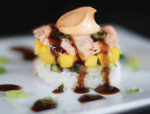
There are appetizers, such as Hush Puppy Potato Knishes and Southwestern Chicken Egg Rolls; dips and salads, including Chimichurri Coleslaw and Kale and Roasted Butternut Squash Salad; soups such as Kitchen Sink Vegetable Soup and Kale, Apple and Sausage Soup; fish dishes like Red Snapper en Papillote and Sweet and Sour Tilapia; poultry choices like White Wine and Herb Roasted Turkey Roll and Hawaiian Pargiyot; meat recipes such as Coffee Infused Chili and Maple Glazed Rack of Ribs; dairy recipes such as Quinoa Granola Parfait and Oozy Fried Mozzarella; side dishes like Cauliflower Fried “Rice” and Broccoli Kishka Kugel; and desserts including Pomegranate Pistachio Semifreddo and Mini Lemon Curd Trifles.

In her introduction, Nachman writes that her intention is to present “recipes that are easy to make with ingredients that are generally easily accessible from your local supermarket or online.” She highly recommends using fresh lemons and limes, fresh herbs, fresh spices, and a variety of oils.

Each recipe includes cook’s tip, ideas for year-round serving, an author’s comment and, my favourite, method steps that are numbered. The press release says all the recipes are gluten-free.

Don’t bother to look around for a house gift if you are going to a seder at a friend or relative’s home. Perfect for Passover is the perfect gift – all year round.

Here are just two of Nachman’s recipes.

ZUCCHINI KUGEL
pareve, 8-10 servings

6 medium zucchini, grated with peel
1 grated onion
4 beaten eggs
1 1/2 cups matzah meal
1 tbsp baking powder
3/4 cup oil
1 tbsp kosher salt
1/4 tsp ground black pepper

  1. Preheat oven to 350°F. Prepare a nine-by-13-inch baking pan.
  2. Add all ingredients to a large bowl; stir well to combine.
  3. Pour into prepared pan. Bake, uncovered, for 90 minutes, until lightly browned and centre is firm.

FUDGY CHOCOLATE BUNDT CAKE WITH COFFEE GLAZE
pareve, freezer-friendly

2 1/2 cups almond flour
1 cup cocoa powder
1/2 cup potato starch
1 tbsp instant coffee granules
1 1/2 tsp baking powder
1/2 tsp kosher salt
1 1/2 cups sugar
1/2 cup oil
1 tbsp imitation vanilla extract
6 eggs

  1. Preheat oven to 350°F. Grease a Bundt pan well; set aside.
  2. In a small bowl, whisk together almond flour, cocoa powder, potato starch, coffee, baking powder and salt. Set aside.
  3. In a separate bowl, whisk together sugar, oil, vanilla and eggs. Add dry ingredients; stir to combine.
  4. Pour batter into Bundt pan; bake 40-45 minutes, until toothpick inserted into the centre comes out clean. Set aside to cool completely in the pan. Remove from pan; glaze with coffee glaze, below.

Coffee glaze:
1 cup powdered sugar
1 tbsp brewed coffee
1 tsp oil

  1. In a small bowl, whisk together all ingredients to form a glaze. If the glaze is too thick to pour, add water, a half teaspoon at a time, until desired texture is reached.
  2. Pour glaze over cooled cake.

Sybil Kaplan is a journalist, lecturer, book reviewer and food writer in Jerusalem. She created and leads the weekly English-language Shuk Walks in Machaneh Yehudah, she has compiled and edited nine kosher cookbooks, and is the author of Witness to History: Ten Years as a Woman Journalist in Israel.

Format ImagePosted on March 31, 2017March 31, 2017Author Sybil KaplanCategories Celebrating the HolidaysTags baking, cakes, cookbooks, food, Naomi Nachman, Passover
Celebrate sweetness

Celebrate sweetness

The High Holidays are all about family and friends coming together and sharing a meal. Kosher Taste: Plan. Prepare. Plate (Feldheim, 2016) by Toronto-based Amy Stopnicki offers home cooks a new formula for kosher cooking, with more than 100 recipes and photos.

In Kosher Taste, Stopnicki has taken her best innovations from years of experience and combined them with her passion for creating balanced and beautiful meals.

book cover - Kosher Taste“I love to cook and I love to entertain. The warmth and beauty of sharing a beautifully set Shabbos or holiday table with friends and family is my passion and joy,” she explained. “The satisfaction I feel when family and guests dig in for seconds, or when kids enjoy a new dish, this makes all the effort of planning and preparing worthwhile. My goal with Kosher Taste is to share this joy, this passion, with home cooks who are looking to experience delicious new tastes and flavors to share with their families.”

Every recipe offers an easy-to-follow formula. Plan: tips for preparing ingredients ahead of time. Prepare: simple instructions and a step-by-step guide help any level of home cook recreate Stopnicki’s recipes. Plate: making what you have prepared look beautiful when served and what you can serve it with.

Recipes include squash zucchini soup, mango salad with raspberry vinaigrette, broccoli kugel, grilled fennel with balsamic reduction, stuffed mushrooms, salmon pad thai, wasabi tuna steaks, maple-glazed turkey breast, spinach pesto stuffed chicken, skirt steak in rum sauce, simple savory brisket, chocolate-dipped hamantashen and pumpkin pie brulée.

Here are some recipes to try for the New Year.

QUINOA SCHNITZEL
status: meat, serves 6-8

Plan: This recipe can also be baked on cookie sheets. Lightly cover the cookie sheet with oil and coat the top of each schnitzel with non-stick cooking spray. Bake at 350°F for approximately 10 minutes on each side. Quinoa flakes are a great gluten-free alternative. They are light and healthy and easy to work with and can be found in most health food stores.

8 chicken breasts
2-2 1/2 cups dried quinoa flakes
1 tsp salt
1/2 tsp paprika
1/2 tsp garlic powder
1/2 tsp pepper
2 eggs
1/2 cup cornstarch or potato starch
canola (or safflower) oil for frying

Prepare:
1. Slice chicken breasts horizontally and pound to flatten.
2. In a shallow bowl, combine quinoa flakes, salt, paprika, garlic powder and pepper.
3. In another shallow bowl, lightly beat eggs.
4. Pour the starch on a plate.
5. In a large skillet, heat oil over a high temperature for frying.
6. Lightly dip each piece of chicken in starch, egg, and finally the quinoa mixture.
7. Fry each piece of chicken, turning when necessary. You will know it’s cooked when all sides are golden.

Plate: There are endless debates on how one serves and eats schnitzel: with noodles, or salad, or even in a sandwich. Stopnicki’s favorite is Israeli-style with hummus, Israeli salad and basmati rice.

APPLE CINNAMON STREUSEL MUFFINS
status: pareve, makes 18 muffins

Plan: This sweet treat is a great muffin to have for the kids as an after-school snack. Double the recipe and freeze them so you can take them out as needed. They thaw in 10 minutes or so.

2 eggs
1 tbsp vanilla extract
1 cup sugar
1/2 cup canola oil
2 cups flour
1 tbsp cinnamon
2 tbsp baking powder
1/2 cup applesauce
1 cup water
2 gala apples, peeled and finely diced

Streusel topping
3 tbsp margarine
1 cup flour
1/2 cup brown sugar
1/2 tsp cinnamon

Prepare:
1. Preheat oven to 350°F.
2. In a large mixing bowl, cream eggs, vanilla, sugar and oil until mixture is light.
3. Add dry ingredients, applesauce, water and apples and combine well.
4. Pour batter into paper-lined muffin tins, filling them 2⁄3 of the way.
5. Meanwhile, combine all streusel ingredients until they achieve a sand-like consistency.
6.Pour one tablespoon of streusel mixture on top of each unbaked muffin.
7. Bake for 20-30 minutes or until the tops are slightly golden.

Plate: Enjoy these alone or with a hot cup of tea.

Format ImagePosted on September 23, 2016September 21, 2016Author Trina Kaye OrganizationCategories Celebrating the HolidaysTags cookbooks, kosher, Rosh Hashanah
Proudly powered by WordPress