
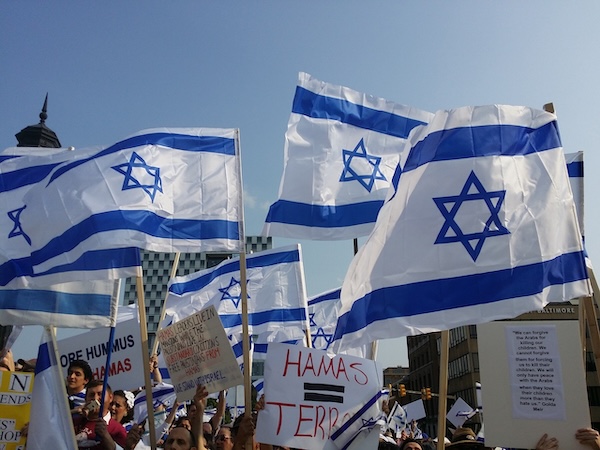

Dr. Gloria Gutman thought interviewees would have refused to place themselves in situations where they might be targeted or victimized, like rallies or Jewish events, but that wasn’t the case. “People felt more comfortable and secure when they were actively part of the Jewish community,” she said. (internet photo)
There’s been lots in the media about Jewish students feeling intimidated, but we tend not to think about older people,” Dr. Gloria Gutman told the Jewish Independent about a recent study she conducted with Dr. Sharon Avidor on the experiences of older Canadians since the Oct. 7, 2023, Hamas terror attack on Israel. “We really want to raise awareness of older people among service providers and the general community, and let them know that the impact is really on all of our community.”
Gutman, a lifelong Vancouverite, is vice-president of the International Society for Gerontology, director emerita of the Gerontology Research Centre at Simon Fraser University and professor emerita of SFU’s department of gerontology. Wondering how older members of the Canadian Jewish community were coping in the aftermath of Oct. 7, she reached out to the local Jewish community in summer 2024 for help in recruiting participants for the study she conducted with Avidor, a psychologist in the faculty of social and community sciences at Israel’s Ruppin Academic Centre. Their findings were published in the Canadian Journal on Aging last fall, with the title, “I No Longer Can Say ‘Never Again.’”
Avidor and Gutman interviewed 15 older adults, including Holocaust survivors and Russian immigrants to Canada, and 11 service providers. Respondents were not just deeply affected by the Oct. 7 attack and the ensuing Israel-Hamas war, but experienced the public discourse as anti-Israel and at times antisemitic, upending their sense of safety and belonging.
The study found that Holocaust survivors and their offspring, older Russian emigres to Vancouver and LGBTQ+ Jewish seniors were more impacted. Almost everyone interviewed felt a deep connection with Israel, and personally affected by Oct. 7. Many felt isolated from non-Jews in their communities and were shocked at the lack of support they encountered outside of the Jewish community, as well as by the extent of misinformation proliferating about Israel. Given their experiences of antisemitism and discrimination, many were frustrated by the notion that Jews were considered a part of the white majority.
Interviewees were apprehensive about publicly displaying their Jewish identity and felt deeply offended by the anti-Israel vitriol expressed in pro-Palestinian demonstrations. They felt a strong need to connect with others in the Jewish community, as connecting with like-minded people provided solace at a time when their social circle was shrinking to almost exclusively Jewish friends.
Prior to the study, Gutman thought interviewees would have refused to place themselves in situations where they might be targeted or victimized, like rallies or Jewish events, but that wasn’t the case. “People felt more comfortable and secure when they were actively part of the Jewish community, and some who had not previously been involved came out of the woodwork after Oct. 7, getting comfort from engaging in community-based events,” she said.
Many of the LGBTQ+ respondents were in a somewhat different situation, alienated from LGBTQ+ groups because of “belligerent, negative, and even hateful comments about Israel, sometimes personally aimed towards them because of their Jewish backgrounds,” notes the study, while also not feeling comfortable attending events with an unequivocal pro-Israel view. Thus, Avidor and Gutman write, many in the LGBTQ+ community “were given to experiences of loneliness and isolation.”
Holocaust survivors said they were retraumatized by Oct. 7 and what has followed – the study’s title comes from a survivor who used to end her talks in schools with “never again,” but told Avidor and Gutman, “My recent talks are that I no longer can say never again.”
Emigres from the former Soviet Union felt especially vulnerable. One of the service providers for members of this group described why this was the case: “Because they came, you know, after Holocaust, after everything they’ve been through in Soviet Union, it was terrible. It was terrible. Antisemitism was terrible. And I know my parents went through all this too: wouldn’t be able to be accepted to a university or a good job because of their last name. So they all have these previous traumas and experiences.”
Some of the seniors had robust coping abilities because they had overcome immense struggles in the past. “We heard things like, ‘we’ve lived through this before and will live through it again,’” Gutman said.
Her hope is that this research will raise awareness of the impacts of Oct. 7 on Jewish older adults, particularly among service providers.
“Ours is one of the few studies, to our knowledge, to explore the effects of antisemitism among older adults, often a less vocal and less salient group in society,” she said. “The Oct. 7 attack, the Israel-Hamas war and perceived antisemitism and anti-Israeli rhetoric, have had profound effects on Jewish older adults living in Canada, and this must be recognized and given appropriate attention.”
Lauren Kramer, an award-winning writer and editor, lives in Richmond.



