Skip to content
  • Home
  • Subscribe / donate
  • Events calendar
  • News
    • Local
    • National
    • Israel
    • World
    • עניין בחדשות
      A roundup of news in Canada and further afield, in Hebrew.
  • Opinion
    • From the JI
    • Op-Ed
  • Arts & Culture
    • Performing Arts
    • Music
    • Books
    • Visual Arts
    • TV & Film
  • Life
    • Celebrating the Holidays
    • Travel
    • The Daily Snooze
      Cartoons by Jacob Samuel
    • Mystery Photo
      Help the JI and JMABC fill in the gaps in our archives.
  • Community Links
    • Organizations, Etc.
    • Other News Sources & Blogs
    • Business Directory
  • FAQ
  • JI Chai Celebration
  • JI@88! video

Recent Posts

  • Sharing her testimony
  • Fall fight takes leap forward
  • The balancing of rights
  • Multiple Tony n’ Tina roles
  • Stories of trauma, resilience
  • Celebrate our culture
  • A responsibility to help
  • What wellness means at JCC
  • Together in mourning
  • Downhill after Trump?
  • Birth control even easier now
  • Eco-Sisters mentorship
  • Unexpected discoveries
  • Study’s results hopeful
  • Bad behaviour affects us all
  • Thankful for the police
  • UBC needs a wake-up call
  • Recalling a shining star
  • Sleep well …
  • BGU fosters startup culture
  • Photography and glass
  • Is it the end of an era?
  • Taking life a step at a time
  • Nakba exhibit biased
  • Film festival starts next week
  • Musical with heart and soul
  • Rabbi marks 13 years
  • Keeper of VTT’s history
  • Gala fêtes Infeld’s 20th
  • Building JWest together
  • Challah Mom comes to Vancouver
  • What to do about media bias
  • Education offers hope
  • Remembrance – a moral act
  • What makes us human
  • המלחמות של נתניהו וטראמפ

Archives

Follow @JewishIndie
image - The CJN - Visit Us Banner - 300x600 - 101625

Byline: Cynthia Ramsay

Ari’s Theme opens VIFF

Ari’s Theme opens VIFF

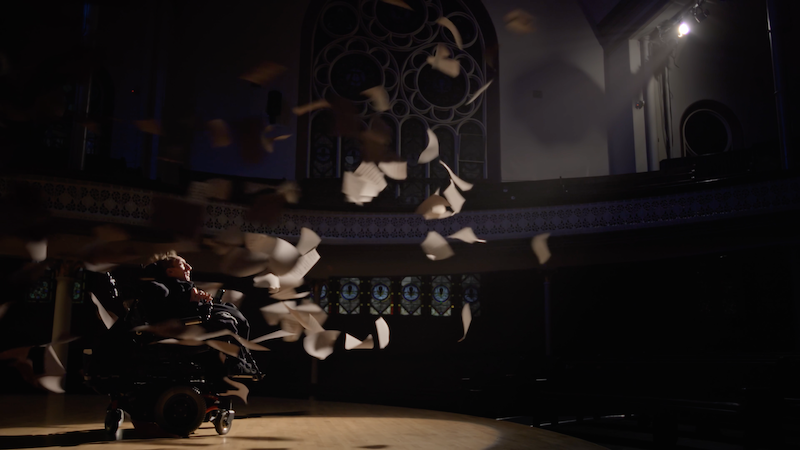
Ari Kinarthy’s nightmare before the live recording session. (screenshot from Salazar Film)

The 43rd Vancouver International Film Festival (VIFF) officially opens Sept. 26 with the screening of Ari’s Theme, a TELUS original feature documentary about local composer Ari Kinarthy by local filmmakers Jeff Lee Petry and Nathan Drillot, who run Salazar Film.

Jewish Independent readers will be familiar with all three creatives, who will attend both VIFF screenings, ready to answer audience questions, as well as participate in a panel discussion.

Sam Margolis first wrote about Victoria Jewish community member Kinarthy in 2020 – Kinarthy, 30 years old at the time, had released two albums, won an international music competition and was looking for people who might want original music for a project they were working on.

“I create all my music entirely with the computer,” he told the Independent. “Sometimes, I will have access to a guitar player or singer but normally the music will be all done by the samples I use. I usually start with just piano and sometimes will write out a score. I think of a melody and/or harmony and continue from there. I love making themes.”

Kinarthy uses a special computer system to record his music, as he has spinal muscular atrophy type 2, a symptom of which is worsening muscle weakness.

When Margolis interviewed Kinarthy a second time for the Independent, it was because Ari’s Theme was about to première at Toronto’s Hot Docs Film Festival. In the article, which was published in April, the filmmakers share that the documentary was inspired by the first JI article.

“We hired Vaka Street Casting to help find us subjects for potential documentaries. They found the JI article while searching for individuals with unique stories,” Drillot told the Independent in an interview last week.

Drillot said the number one factor he and Petry look for in possible documentary subjects is that the individual has a unique perspective – “You’ve got to be an outside the box thinker,” he said, “which Ari most definitely is.”

“As we learned more about Ari’s story, we thought about how interesting it would be to work with a composer like Ari, who has a very particular life experience, and ask him to compose music about the most impactful moments, dreams and experiences of his life and let us create cinematic scenes around them,” Petry told the Independent in April.

It was hard to imagine just how Petry and Drillot would create those scenes and how Kinarthy would not only choose the times in his life to highlight, but be able to compose the music to accompany those emotional times. We learn in the film that Kinarthy doesn’t just want to write any song – he wants to leave a legacy, to make an impact on the world, so that his life will have been, in his words, “worth it.”
screenshot - Ari Kinarthy in a recording session with musicians at the Alix Goolden Performance Hal
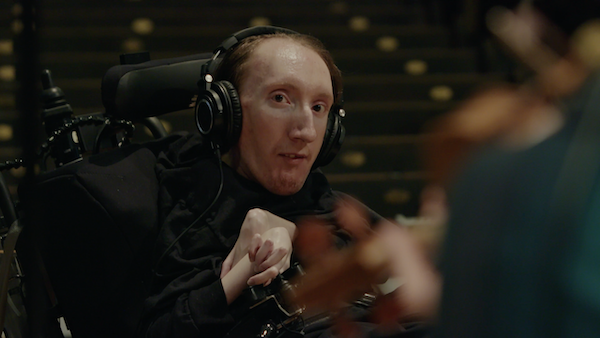
Ari Kinarthy in a recording session with musicians at the Alix Goolden Performance Hall. (screenshot from Salazar Film)

Kinarthy’s honesty with his feelings, fears and ambitions, is remarkable. He undergoes a transformation during the film. His physical challenges and the dangers to his health if he gets sick have led to him being isolated for much of his life, relying on a few key caregivers and his parents. He is mentally strong, though, and this is made clear as he questions the walls he has built to protect himself and as he lives seemingly at peace with his limitations, while also knowing what he is capable of beyond them. That he allows the filmmakers – and us – to see just how vulnerable he is, is proof of his sheer strength.

“Watching Ari go through the process of making the film was incredibly rewarding,” said Drillot. “He overcame a lot of creative obstacles and consistently impressed the whole filmmaking team with his drive, determination and creativity. Personally seeing him watch the footage in the movie theatre was the most impactful. It’s a very unique experience to sit in a movie theatre and see your life reflected back at you. I really have a lot of respect for Ari for trusting the process and for constantly rising to the occasion.”

Kinarthy opens himself up creatively in ways even he may have thought not possible. We see him working with fellow musicians Allan Slade and Johannes Winkler, who provide feedback and guidance, and help him translate his vision into reality. It is in these scenes that we witness both Kinarthy’s confidence and anxiety, and the filmmakers capture it incredibly well, unobtrusively filming the men creating together, with other shots of Kinarthy talking about the process. There is an especially powerful scene, where Kinarthy sits alone in the Alix Goolden Performance Hall, on stage, as pages of music swirl madly about him.

Ari’s Theme uses such special effects, as well as animation and reenactments, to help tell Kinarthy’s story. There are home videos of Kinarthy and his family, and it is so moving to hear him talk about his family – describing his sister as a drum, driving him to enjoy himself; his dad as a cello, supporting from the background; and his mom as a piano, providing the strong underlying cords binding the family together. “And then there was me. I was a flute,” he says. “A little sound that would come in and out. I wasn’t integral to the song, but I added something unique. I often miss that version of myself, when life was expanding, free of concern and anxiety. As I’ve gotten older, these memories have become more and more important to me.”

In the film, Kinarthy questions whether other people will be interested in his memories. Anyone who sees the documentary will likely respond with a resounding, yes! Not only interested in the memories, but inspired by the man who shared them and the man who created their impressive soundtrack. 

Passages of that soundtrack will be performed live at the opening event by members of the Vancouver Symphony Orchestra. For tickets to either screening of Ari’s Theme (Sept. 26 or 28) and any other VIFF offerings, visit viff.org. The festival runs to Oct. 6. 

Format ImagePosted on September 20, 2024September 18, 2024Author Cynthia RamsayCategories TV & FilmTags Ari Kinarthy, documentary, Jeff Petry, music, Nathan Drillot, Salazar Film, Sam Margolis, Vancouver International Film Festival, VIFF
Building on a legacy of hope

Building on a legacy of hope

Dr. Oheneba Boachie, left, and Dr. Rick Hodes, centre, with patients. The JDC spine program in Ethiopia is seeing patients full-time and has evaluated more than 5,000 patients with spine deformities. (photo from Gary Segal)

The two previous Bring Back Hope events “were vital to getting us to where we are now,” Dr. Rick Hodes, American Jewish Joint Distribution Committee (JDC) medical director for Ethiopia, told the Independent. “They raised interest in our work and the financial gifts we received allowed us to expand, to operate on hundreds more patients, and to become the most important spine centre in the entire country of 120 million.”

Bring Back Hope III will take place Oct. 22 at the JW Marriott Parq Vancouver. The event, which was conceived by local businessman and philanthropist Gary Segal, will honour Hodes and raise funds to secure Hodes’ legacy by establishing a dedicated spine centre in Ethiopia and training doctors and medical staff.

Segal met Hodes on a Jewish Federation of Greater Vancouver/ JDC trip to Ethiopia in 2007. From Hodes, Segal learned about Tesfaye Anagaw, then a teenager, who had an extreme deformity in his spine that could not be operated on in Africa. Segal managed to get Anagaw the life-saving surgery he needed at Vancouver General Hospital in 2009. The experience inspired Segal to help others in similar circumstances by supporting Hodes’ work. Segal launched the Bring Back Hope Initiative (BBH) in 2012.

It wasn’t intended to be annual event, Segal told the Independent. “As a new cause with its somewhat unique origin, it took some time and thoughtful analysis to deploy the funds in a strategic manner – not just to fund the immediate and ongoing need for life-saving spine deformity surgeries, but also to increase training and capacity within Ethiopia. In addition to BBH working with JDC, the newly established BBH partnership with the UBC Branch for Global Surgical Care was unfolding methodically.

“As a result, the appropriate timing for BBH II just naturally turned out to be a five-year anniversary of the initial launch. With the similarly inspiring and even larger amount of funds raised at BBH II, I would say that, around three years later, the rumblings of a BBH III 10-year anniversary event began running through my head, only to be derailed by a couple of unforeseen ‘best laid plans of mice and men going awry’ events: COVID, followed by an outbreak of civil unrest and war in Ethiopia. So, here we are.”

One of the prominent aspects of Hodes’ work, which has been highlighted at previous BBH events, is the interfaith cooperation.

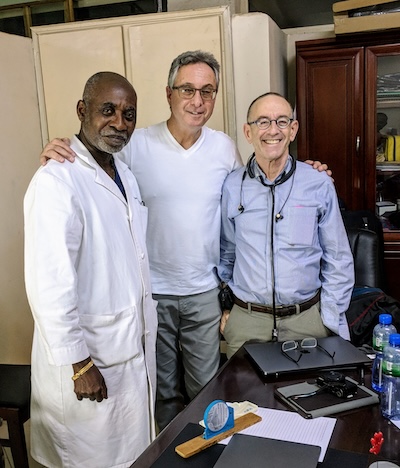
“It is not exactly a revelation to say that extremism, especially of political and religious beliefs, has historically led to much discord in the world,” said Segal. “In stark contrast, underpinning these BBH events, you have this remarkable story – rare humanitarian Jewish physician Dr. Rick Hodes, partnering with devout Baptist Ghanian-born spine surgeon Dr. [Oheneba] Boachie, working with the Catholic nuns of Mother Teresa mission in Addis Ababa, saving Muslim and Christian children. What an uplifting and powerful example of what interfaith cooperation can achieve.”

photo - From left to right: Dr. Oheneba Boachie, Gary Segal and Dr. Rick Hodes in the clinic office in Addis Ababa, Ethiopia
From left to right: Dr. Oheneba Boachie, Gary Segal and Dr. Rick Hodes in the clinic office in Addis Ababa, Ethiopia. (photo from Gary Segal)

An important development since the first BBH event is that the Ethiopian Ministry of Health has recognized the importance of the spine program.

Boachie and Hodes have been working together for almost 20 years, having met in 2005.

“In spring of 2006, we sent five patients and one staff person to Accra, Ghana. At the same time, Dr. Boachie and his team arrived from New York, and they operated on our patients and many others,” said Hodes. “The Ethiopian government was not making spine a priority, but now that we are seeing patients full-time and have evaluated well over 5,000 patients with spine deformities, they realize that this is a major cause of disability. They now are in favour of a national spine centre and are working with us to get this done. Their endorsement has shown us, and our donors, that we have ‘buy-in’ from the Ethiopian government.”

While the majority of surgeries took place in Ethiopia this year, Hodes said, “We also send patients to FOCOS Hospital in Ghana and Ganga Hospital in India for traction and for surgery. 

“We are sending Ethiopian surgeons to India for training, as well. Over the years, the majority of our difficult surgeries have been performed in Ghana, often preceded by months of ambulatory traction. Having our own centre will allow us to provide better care and to be in control of the process and the facility.”

Currently, they operate in a government hospital as well as in a private Christian hospital, said Hodes, “but we believe that a full-time, 100%-spine centre would provide better care to Ethiopians suffering from spine issues.

“I am the main doctor in the clinic, but, in the end, this must be a program run by Ethiopians for Ethiopians,” he stressed. “A national spine centre will allow this to happen. This means having a dedicated facility, as well as fully trained Ethiopian physicians, nurses, physical therapists and others to be able to evaluate, treat, operate on and rehabilitate our patients. It is a great opportunity to provide great care to our patients, and I would love to find an Ethiopian doctor to direct it.”

Hodes was in Vancouver more than once this summer, talking about his hopes for the spine program.

“I was here,” he said, “meeting people, speaking about my work and trying to interest people in our activities in Ethiopia, which involve identifying patients, evaluating and treating them, choosing people for surgery, coordinating care and arranging surgeries – and following them afterwards for years,” as care needs don’t end after the surgery is complete.

“The Dr. Rick Hodes/JDC spine program – over the last 20 years, part of JDC’s tikkun olam non-sectarian work – has not only saved and transformed countless lives, but has also served as an inspiring example and message to both the Jewish and non-Jewish world,” said Segal, who has been on the JDC board since 2012.

Hodes has been recognized for his work in various ways. Most recently, he was given the 2024 Walter P. Blount Award by the Scoliosis Research Society, whose membership “includes over 1,000 of the world’s leading spine surgeons, researchers, physician assistants and orthotists who are involved in research and treatment of spinal deformities.” The award honours “an individual who has provided outstanding service for those with spinal deformities, through their generous actions out of a sense of service to larger social and professional goals.” 

Segal and others have called Hodes “tireless” in his humanitarian work.

“I am surrounded by suffering, and it is my challenge to deal with this daily, to provide compassionate care and to raise funds for all of this,” Hodes told the Independent. “I realize that I can only help a small percent of the people who seek my care, and have to deal with that. I am motivated by my goal of helping people for whom there is no other alternative. It’s not easy. I lose sleep over this. It is never-ending.”

Hodes will return to Vancouver for BBB III. Also attending, said Segal, will be “Tesfaye, with his wife and son (whom I can’t wait to meet for the first time); two other patients whose lives were transformed through the Dr. Rick Hodes/JDC spine program; some JDC professionals from the USA, Israel and Ethiopia; and a senior Ministry of Health individual. There is also a special entertainment surprise with its own unique story and link to the evening.”

For tickets to BBH III, visit bringbackhope.com. 

Format ImagePosted on September 20, 2024September 18, 2024Author Cynthia RamsayCategories LocalTags American Jewish Joint Distribution Committee, BBH, Bring Back Hope, Ethiopia, fundraising, Gary Segal, humanitarian aid, JDC, philanthropy, Rick Hodes, spine surgery
Unique in style, rich in culture

Unique in style, rich in culture

Kommuna Lux (photo by Maria Dmytrenko)

[Editor’s Note: Due to unforeseen circumstances related to flight restrictions, the Chutzpah! Festival must postpone Yamma Ensemble’s performances to March. However, the festival has found a vibrant alternative for Nov. 5: Itamar Erez Trio and special guests. Click here for more.]

Original music that honours the culture and traditions of its creators. Unique songs that you’d have to travel thousands of kilometres to see and hear live. Or, you could buy tickets to Chutzpah! The Lisa Nemetz Festival of International Jewish Performing Arts, which runs Nov. 1-10.

Kommuna Lux from Ukraine brings its unique “Odesa Gangsta Folk” – which they describe as “thrilling klezmer music and common gangster folk songs from their hometown, all with a dose of rocket fuel” – to Vancouver to open the festival Nov. 2, 7 p.m., at the Pearl. The event is presented in partnership with Caravan World Rhythms. The group will also travel to Victoria, for a Nov. 1 show at the Edelweiss Club.

Kommuna Lux’s music is specific to their part of the world, Volodymyr Gitin (clarinet) told the Independent. 

“What I like most about this style is the special energy that charges both us and our listeners,” he said. “But I also really like how diverse our music is, because it includes almost everything related to the cultural heritage of Odesa.”

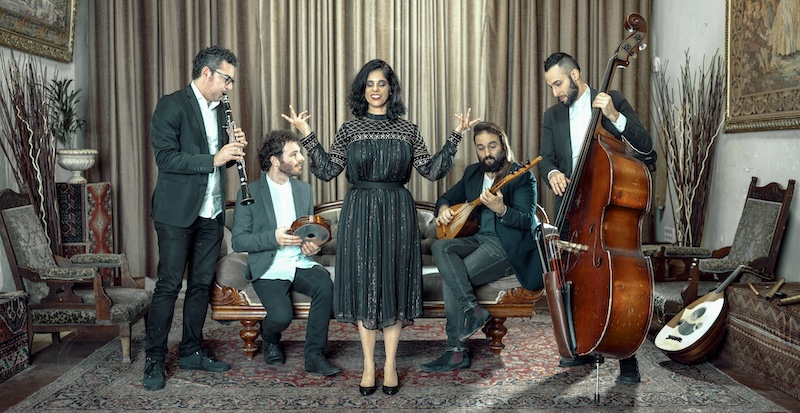
Similarly, Yamma Ensemble from Israel brings its unique heritage-rich music to Chutzpah! – on Nov. 5, 7 p.m., at Rothstein Theatre. They also give an intergenerational matinee performance Nov. 4, geared to school and seniors groups, in which they will “include as many explanations as possible about the ancient musical instruments, about the Jewish communities around the world, about the songs,” lead vocalist Talya G.A Solan told the Independent.

“We wish to celebrate and enjoy the richness and the immense beauty of the Jewish culture and our origins,” she said. “We mainly bring out the mix of Jewish cultures, the mix of our different backgrounds and the fact that we came together into an organic and whole music ensemble…. So, in our music, you can hear the music of Spanish Jews from Thessaloniki and Spanish Jews from Turkey, the singing of psalms by the Jews in Iraq and the singing of religious poems from Yemen.”

photo - Yamma Ensemble
Yamma Ensemble (photo by Zohar Ron)

On the group’s website, they note that Yamma means “toward the sea” in Hebrew and “mother” in Arabic.

“The connection between Hebrew and Arabic is not only a connection between two very similar Semitic languages, but also a connection between the countries of origin of the Jews who lived in Arab countries and their descendants, who were born here and grew up in Israel,” explained Solan. “Our musical heritage, like our origins, is connected to the Jewish communities in the Middle East who immigrated to Israel with the language they spoke, the Arabic language in its many dialects (Yemeni, Iraqi, Moroccan, etc.). They came to Israel and had to speak the local language – Hebrew.”

Hebrew is a central element of the ensemble’s repertoire, directly tied to the members’ identity as Israeli musicians.

“Hebrew is our mother tongue, the language we were born into and the language in which we dream and communicate,” said Solan. “It is an ancient, gorgeous and special language that became extinct and was revived in the 20th century. We try to perform mostly in Hebrew. We mix between our own original creations (always Hebrew) and traditional music (Sephardic, Yemenite).

“There is no Israeli music group that performs out of Israel and has been active for a long time [mainly] performing Hebrew music,” she continued. “This fact is odd and crazy, since Hebrew is the spoken language in Israel, but none of the Israeli musicians active abroad focus on this magnetizing and beautiful ancient language.

“One of the reasons that Yamma Ensemble’s YouTube channel is the most viewed channel of Hebrew music for foreign audiences,” she said, is “the accessibility of Hebrew for foreign audiences who do not speak it. We translate all the songs, so people can watch them with English translation. We receive daily messages from all over the world from people who write us that they learn Hebrew with the songs, that they get closer to their Judaism through the songs. It feels like a serious task that we didn’t ask to take on, and it happened naturally.”

Yamma Ensemble has four albums – Yamma (2011), Basket Full of Stars (2017), Rose of the Winds (2020) and To Awaken Love (2023) – the last of which comprises entirely original music, inspired by traditional sounds, said Solan.

The group is working on an album of psalms. Their performance of Psalm 104 is “the most viewed Jewish chant on YouTube, [in the] category of live and traditional music,” she said. “It has already passed 10 million views! So, we need to record this psalms album.”

However, to produce a recording is an expensive undertaking, and that’s one thing when the music will have a relatively large market. For music “that is not commercial and does not carry profits or compensation, there must be a budgetary basis or significant support,” said Solan. People who are interested may support the psalms project via the ensemble’s website, yammaensemble.com.

Coincidentally, Kommuna Lux’s original name also has to do with the financial side of the music business. 

“Dengi Vpered means ‘Money Forward’ or ‘Cash in Advance,’” explained Gitin. “This name appeared before I was in the group. One day, the guys didn’t get paid for a performance and, since then, they started taking money in advance. At the same time, they named the group that way, with a bit of Odesa humour, and also so that it would be immediately clear how they do business.

“After six incredible years of being together, it so happened that our vocalist decided to go his own way and we needed to figure out how and with whom to continue our journey. Also, for various reasons, we felt that it was necessary to change the name…. So, first we found [singer] Bagrat [Tsurkan], who quickly became a valuable member of our team, and then the name itself came along, which resonated with us very much.

“Kommuna Lux has several meanings,” he said. “One of them is ‘the Commune,’ which is united by the common idea of bringing light and joy to people. But ‘Kommuna’ can also mean a communal apartment in which several families live. In such apartments, there is a shared kitchen and sometimes a bathroom, and people need to agree with each other to live in peace and harmony. And ‘Lux’ in this case has another meaning, as a sign of the quality of how we look and sound on stage, the quality of the luxury level.”

Gitin joined the band, which has one album to date (OdesaFM), in 2014.

“I was attracted by the idea of reviving Odesa songs and Jewish folklore in a new, modern way,” he said. “Everything was created and performed with great enthusiasm and a desire to share positive emotions with people. We felt that we were doing something special.”

And they do something extra special in some of their performances – they raise money for Ukrainians affected by the ongoing war with Russia. 

“Mostly, we collect money for 110 Brigade, they always need different vehicles for different goals,” said Gitin. “Also, during our last tour, we [participated in a] joint initiative of Rotary E-Club of Ukraine to buy beds for burn victims, for a hospital in the city of Kramatorsk in Donetsk region.

“Our whole life is connected with our home and we feel that every Ukrainian joined to help our people,” he said. “So, our reasons are the same, we can’t just watch, we feel that we should do what we can.”

He added, “Music is very important, especially in such periods, because, through it, it is possible to express the whole spectrum of feelings. Music can raise the spirit, unite everyone around a common idea, and also help people experience deep feelings, especially when they lose loved ones.”

Rounding out the musical offerings at Chutzpah! this year is New Orleans multi-instrumentalist Mark Rubin, “offering Southern Americana from a Jewish, socially conscious point-of-view.” Jacob Samuel headlines a comedy night hosted by Kyle Berger, and Jeremy Goldstein’s Truth to Power Café includes stories from Vancouverites in response to the question, “Who has power over you and what do you want to say to them?” A dance double bill features Fortress (Rebecca Margolick and Livona Ellis) and About Time (Ne.Sans Opera & Dance, Idan Cohen). Canadian Yiddishist Michael Wex brings The Last Night at the Cabaret Yitesh (di letste nakht baym yitesh) to the festival, and the Vancouver Jewish Film Festival and Chutzpah! co-present the screening of Gimpel the Fool Returns to Poland by Nephesh Theatre artistic director Howard Rypp, which “follows the show’s journey throughout different towns of Poland, while tracing [Gimpel writer Isaac Bashevis] Singer’s escape from the Holocaust, finally finding refuge in the USA.” 

For tickets to any of the festival events, visit chutzpahfestival.com or call 604-257-5145.

New this year for the Chutzpah! Festival: Jewish Community Centre of Greater Vancouver members receive discounted ticket prices and concession purchases at the theatre. Select Student/Senior/JCC Member tickets and ChutzPacks and bring your membership card to the theatre.

Format ImagePosted on September 20, 2024October 24, 2024Author Cynthia RamsayCategories MusicTags Arabic, arts, Chutzpah! Festival, culture, Hebrew, Israel, Kommuna Lux, Odesa Gangsta Folk, psalms, Talya G.A Solan, Ukraine, Volodymyr Gitin, Yamma Ensemble

About the 2024 Rosh Hashanah cover

I came across this Rosh Hashanah greeting card in the 2017 Forward article “The Curious History of Rosh Hashanah Cards in Yiddish” by Rami Neudorfer. The image was copyrighted by the Hebrew Publishing Company, New York, 1909, and the high-resolution version we used for the cover comes from the postcard collection of Prof. Shalom Sabar (emeritus) of the Hebrew University of Jerusalem.

image - JI Rosh Hashanah 2024 cover“The card depicts two eagles in the sky: under the Imperial Eagle of the Russian coat of arms, a group of impoverished, traditionally dressed Russian Jews, carrying their meagre belongings, line Europe’s shore, gazing with hope across the ocean,” wrote Neudorfer. “Waiting for them are their Americanized relatives, whose outstretched arms simultaneously beckon and welcome them to their new home. Above them, an American eagle clutches a banner with a line from Psalms: ‘Shelter us in the shadow of Your wings.’”

Not only did Prof. Sabar provide the image for the cover but he offered further explanation of the card’s meaning. The verse quoted is partially based on Psalms 57:2; the fuller quote is taken from Psalms 17:8 – “Hide me in the shadow of Your wings.” In the illustration, the quote is changed to be in the plural: “Hide us in the shadow of Your wings.” And it appears in this form in the Ashkenazi siddur, where it is part of the Hashkivenu prayer, said Sabar. The full text can be found at sefaria.org.il/sheets/29587?lang=bi, where they translate the phrase as “and cradle us in the shadow of your wings.”

The message of a passage to freedom is not only enhanced by the Psalms quote, but also that the birds depicted are eagles, Sabar added. This is a reference to the liberation of the Jews from Egypt, he said, as in Exodus 19:4 – “You have seen what I did to the Egyptians, and [how] I bore you on eagles’ wings, and I brought you to Me.”

Posted on September 20, 2024September 18, 2024Author Cynthia RamsayCategories Celebrating the HolidaysTags antisemitism, eagles, Exodus, freedom, greeting cards, Hebrew Bible, Hebrew Publishing Company, Hebrew University, history, immigration, Jewish Forward, pogroms, Rami Neudorfer, Rosh Hashanah, Russia, Shalom Sabar, symbolism, United States
The first of many Shabbats

The first of many Shabbats

Faith Kramer’s Roasted Salmon with Citrus-honey Sauce. (photo by Clara Rice)

Somehow, I missed the cookbook 52 Shabbats: Friday Night Dinners Inspired by a Global Jewish Kitchen by Faith Kramer when it was published by the Collective Book Studio in 2021. Well, I now have a copy and, in an ideal world, my next year of 52 Shabbat dinners would all be cooked à la Kramer. Instead, it’ll probably take me several years to make all the special meals in this informative, well-laid-out, easy-to-follow cookbook – but at least I’ve gotten a head start.

In this last month of the Jewish year 5784, I made two of Kramer’s main dishes, a salad dressing and a dessert. Each recipe is prefaced with a blurb containing more information about the dish. Many recipes have suggestions of what to serve together (starter, main, dessert, etc.) to elevate the meal for Shabbat, as well as suggested variations and what can be made in advance. Kramer also provides explanations of lesser-known ingredients.

52 Shabbats begins with some discussion of different Jewish traditions around Shabbat and various Jewish communities’ ways of cooking food and the ingredients they use. Kramer gives a brief overview of Jewish dietary laws and shares her preferences for the common ingredients she uses throughout. The book is divided into the four seasons, plus chapters on side dishes and accompaniments, desserts, and fundamentals (sauces, etc.). There are additional resources listed near the end, as well as measurement conversions.

I chose the recipes to make from the fall section, focusing on Rosh Hashanah. I made a carrot and lentil main because, as Kramer writes: “Carrots are symbolic in Judaism of asking for prosperity and for our blessings to multiply. Combined with the sweetness of silan [date syrup] … or honey, they make an edible wish for a Happy New Year at Rosh Hashanah.” I also made a fish main, because fish is another symbol of Rosh Hashanah, with the hope that we be the head and not the tail, ie. a leader rather than a follower.

Kramer recommended mini cheesecakes as the dessert for both of these mains, so I made those as well. I also made the Lemon, Za’atar and Garlic Dressing for a green salad, but much preferred the dressing as a marinade for blanched green beans. For space reasons, I’ve not included the recipe intros or the “make it in advance” suggestions, nor have I included the dressing recipe. The three recipes here will hopefully inspire you to get a copy of the cookbook, and perhaps start some new Shabbat traditions this year.

SWEET-AND-TART SILAN-ROASTED CARROTS WITH LENTILS
(serves 4 as a main, 8 as a side)

for the lentils:
1 cup green or brown lentils
3 cups vegetable broth
1/4 tsp ground black pepper
1/4 tsp ground cumin
1/4 tsp paprika
1/2 cup chopped fennel or celery
1/2 cup chopped onion
1 tsp minced garlic
1 tsp minced jalapeño, optional
1/4 tsp salt, plus more if desired 

for the carrots:
2 tbsp olive oil, plus more for baking sheet
1 cup silan, honey or agave syrup
1/4 cup water
2 tbsp fresh lemon juice
1/4 tsp ground cumin
1/4 tsp ground cardamom
1/4 tsp cayenne pepper or paprika
1/8 tsp ground cloves
1 lb multicoloured carrots, peeled (cut large carrots into thirds)
1 tsp coarse sea salt
2 tbsp tahini
2 tbsp chopped fresh mint or flat-leaf parsley

In a large saucepan, stir together the lentils, vegetable broth, black pepper, cumin and paprika and bring to a simmer over medium heat. Stir in the fennel, onion, garlic and jalapeño (if using) and return to a simmer. Cover and cook, lowering the heat as needed to maintain a gentle simmer, until the lentils are tender and the liquid is absorbed, 15 to 20 minutes. Add the salt and stir well. Taste and adjust the seasoning, if desired. Remove from the heat, drain any excess liquid, and set aside while you make the carrots. 

Preheat the oven to 450°F. Line a rimmed baking sheet with parchment paper or aluminum foil. Grease the parchment paper with olive oil. 

In a wide, flat dish, whisk together the silan, water, olive oil, lemon juice, cumin, cardamom, cayenne and cloves. Add the carrots and toss until evenly coated.

Place the carrots in a single layer on the prepared baking sheet. Set aside any left-over silan mixture. 

Lower the oven temperature to 400°F. Roast the carrots for 40 to 50 minutes, or until tender and browned, tossing in the pan juices every 10 to 15 minutes.

Reheat the lentils, if desired, or keep them at room temperature. Add any leftover silan mixture to the lentils and stir to combine. Transfer the lentils to a large serving dish and top with the roasted carrots. Sprinkle with the coarse salt, drizzle with the tahini and garnish with the fresh mint.

ROAST SALMON WITH CITRUS-HONEY SAUCE
(serves 4-6 as a main, 8-10 as a starter)

1/3 cup fresh orange juice
1/2 cup light-coloured honey
1/2 tsp dried mint
1/4 tsp salt
1/4 tsp cayenne pepper or paprika
1/4 tsp ground black pepper
1/2 to 1 tsp Sichuan peppercorns, lightly crushed, optional
vegetable oil for baking sheet
1 1/2 to 2 lbs salmon fillet
6 tbsp thinly sliced green onions

In a small bowl, mix together the orange juice, honey, mint, salt, cayenne, black pepper and crushed Sichuan peppercorns (if using) to make a marinade. Set aside half of the marinade to use later for the sauce.

photo - Faith Kramer’s Roasted Salmon with Citrus-honey Sauce
(photo by Clara Rice)

Grease a rimmed baking sheet with oil. Place the salmon, skin side down, in the pan and brush the top of the salmon with some of the marinade. Let sit for at least 30 minutes or up to 60 minutes, brushing often with the marinade. 

Preheat the oven to 350°F. 

While the fish is marinating, pour the reserved marinade into a small saucepan over medium heat and bring to a boil. Lower the heat to low and simmer, uncovered, stirring occasionally, until the liquid is reduced by two-thirds, 15 to 20 minutes. Taste, and adjust the salt and other seasonings, if desired. Set the sauce aside.

Brush or spoon the remaining marinade over the salmon. Roast for 15 to 20 minutes, basting with the pan juices after 10 minutes, until the salmon is cooked to the desired doneness. For fully cooked fish, it should read 145°F when an instant-read thermometer is placed in the thickest part of the fillet. The flesh should be opaque all the way through but still be very moist. 

Transfer the salmon to a platter and spoon the sauce over the fish. Sprinkle with green onions and serve warm, at room temperature, or chilled.

MANGO AND CARDAMOM MINI CHEESECAKES
(makes 24 individual cheesecakes)

24 ginger snaps, lemon snaps or wafers, or vanilla wafers
1 1/2 cup fresh or defrosted frozen mango chunks, divided
3 (8-ounce) packages regular or light cream cheese, at room temperature
3 large eggs, beaten
1 cup sugar
1/2 tsp ground cardamom
1/4 tsp salt
1/4 tsp ground ginger
1 1/2 tsp vanilla extract
1 tsp fresh lemon juice

Preheat the oven to 375°F. Line two 12-cup cupcake pans with paper or foil liners. (If you don’t have enough tins, use foil cupcake liners on a baking sheet.)

Put a cookie in the bottom of each liner. Break cookies to fit and cover the bottom of the liner, if necessary.

In a blender, purée 3/4 cup of mango chunks until smooth. Set aside.

Cut the cream cheese into 1-inch chunks. In a large bowl, combine the eggs, sugar, cardamom, salt, ginger, vanilla extract and lemon juice and beat with an electric hand or stand mixer until light and lemony in colour, 1 to 2 minutes. Add the cream cheese chunks in 3 batches, incorporating each batch before adding the next. Beat on medium-high speed until totally smooth, 3 to 4 minutes. 

Fill each cupcake liner two-thirds full. Place 1 teaspoon of the mango purée in the centre of each cake. Using a knife, swirl the purée through the batter to create a marbleized look. 

Bake for 20 minutes, or until the centres of the cheesecakes are a bit loose and jiggly, puffed up and pale in colour. Turn off the oven, open the oven door and leave the cheesecakes there for 30 minutes. Transfer the cheesecakes to a wire rack and let cool. (The tops of the cakes will collapse.) Place the cheesecakes in the refrigerator until chilled. 

To serve, remove the cheesecakes from the liners, if desired. Chop the remaining 3/4 cup of mango and spoon it onto the cheesecakes. Serve cold or cool. 

Format ImagePosted on September 20, 2024September 18, 2024Author Cynthia RamsayCategories Books, Celebrating the HolidaysTags 52 Shabbats, baking, carrots, cheesecake, cooking, Faith Kramer, Jewish holidays, Rosh Hashanah, salmon
Tournament expands

Tournament expands

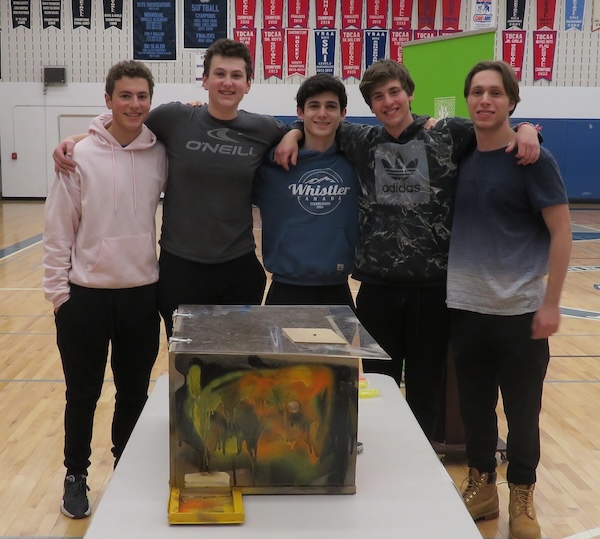
Weizmann Institute’s International Physics Tournament – the “Safe-Cracking Tournament” – is open to students in grades 11 and 12. (photo from Weizmann Canada)

Registration is now open for the Weizmann Institute’s International Physics Tournament. New this year – teams from Western Canada will be able to compete. A Zoom information session is scheduled for Sept. 23.

“Each spring, for the past 29 years, teams of highly talented high school students from around the world arrive at the Davidson Institute of Science Education, the educational arm of the Weizmann Institute of Science in Israel, to take part in the international physics tournament, commonly known as the ‘Safe-Cracking Tournament,’” Morgan Leibner, annual and education programs officer at Weizmann Canada, told the Independent.

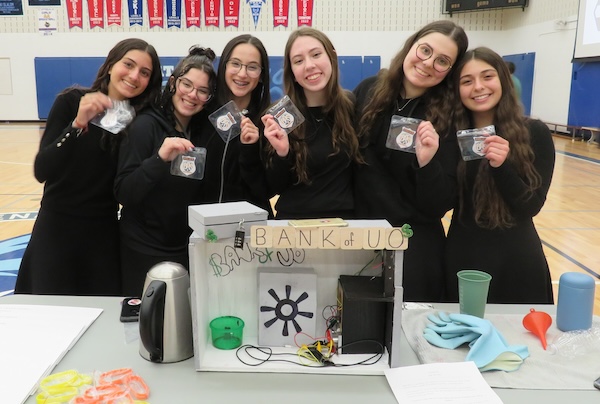
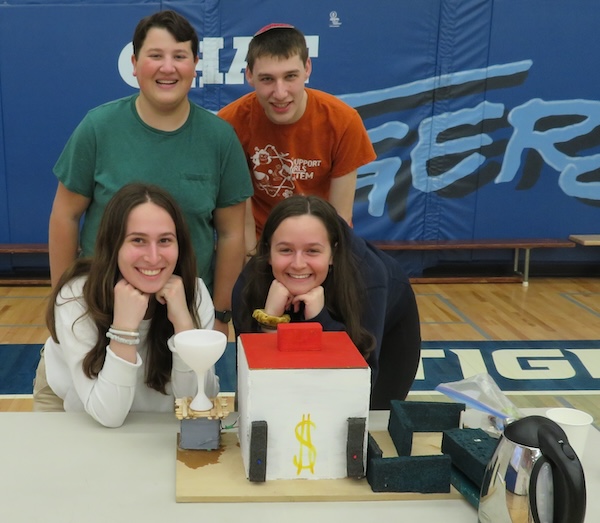
In the competition, teams of high school students (grades 11 and 12) design and build a safe that has a locking mechanism based on principles of physics. “Teams are challenged to put their knowledge to the test, where they break into each other’s safes by solving the physics riddles,” explained Leibner.

“Throughout the tournament, participants gain experience in building systems that they invent,” she said. “It is a unique opportunity for students to put physical principles and their imagination into practice – it is a totally different, enjoyable, exciting and encouraging way of learning physics and collaboration, with the goal of competing internationally at the finals.”

While the finals take place in Israel – or online, as they did this year because of the war – there are semi-finals in Canada. They’ve usually taken place in Montreal, with school teams from Montreal and Toronto competing.

“This year, our goal is to expand the program to include a West Coast tournament, which will take place in Vancouver,” said Leibner. “We anticipate teams participating from Vancouver, Calgary and Winnipeg. One winning team will be selected from the West Coast and a second team will be selected from the East Coast to represent Canada at the finals in Israel.”

The registration deadline is Oct. 9 and, once accepted, “teams are required to check in with Weizmann Canada staff every one to two weeks to discuss their work, as well as their challenges and successes,” Leibner said. There are various milestones teams must meet by certain dates, with the semi-finals taking place in Montreal and Vancouver in early February, and the finals at the institute March 23-27, situation permitting.

photo - Teams of three to five compete regionally for a chance to reach the finals in Israel.
Teams of three to five compete regionally for a chance to reach the finals in Israel. (photo from Weizmann Canada)

“The finals have been conducted virtually when circumstances make it unsafe for students to travel to the institute,” said Leibner. “In that case, students submit a video of their safe to the judges, explaining the locking mechanism and the physics principles required to open the safe successfully. The students’ videos are judged on roughly the same criteria and a winner is announced at a virtual Zoom session.”

The 2024 virtual closing ceremony can be watched at youtube.com/watch?v=InI8CDoDqDk.

Weizmann Institute of Science has hosted various versions of the high school physics tournament since 1973. “In fact, the winner of the first-ever physics tournament is Dan Gelbart – a notable Canada-based engineer and inventor. He won the tournament at the age of 16 with an original motor he designed and built himself using spare materials, some even sourced from his mother’s kitchen!” said Leibner.

Gelbart, who was born in Germany and raised in Israel, has lived in Canada since the 1970s. Based in Vancouver, he co-founded Creo, a local printing technology company that was bought by Eastman Kodak Co. in 2005, and he has co-founded several other companies. According to a profile on the Weizmann Institute’s website, Gelbart has registered some 145 patents. He also has volunteered as an adjunct professor at the University of British Columbia and has a YouTube channel – the most recent video, which was posted a couple of years ago, is a tour of his workshop and its instruments.

Typically, the physics tournament attracts between 200 and 300 participants a year, from Israel, Canada and other countries.

“The international tournament offers students an incredible opportunity to meet similarly scientific-minded youths from across the world,” said Leibner. “The tournament also offers a teacher development conference for the physics teachers accompanying teams to the tournament.”

photo - “The international tournament offers students an incredible opportunity to meet similarly scientific-minded youths from across the world,” according to Morgan Leibner, annual and education programs officer at Weizmann Canada
“The international tournament offers students an incredible opportunity to meet similarly scientific-minded youths from across the world,” according to Morgan Leibner, annual and education programs officer at Weizmann Canada. (photo from Weizmann Canada)

Participants work in teams of three to five students and their local teacher/mentor – who is the one who must submit the team’s registration – coordinates with the tournament’s physics consultant throughout the process. The team’s safe is judged on its quality and complexity; team members’ level of understanding of the physics concepts being employed is key, as are the esthetics and originality of the safe they build.

“Local mentors are past participants of the physics tournament themselves,” said Leibner. “They have firsthand knowledge of the competition, what is required to build the safe, and what it is like to compete in the tournament. They have also participated in other educational opportunities at Weizmann Institute in Israel and have experienced living on campus and working with the community of scientists. Our mentors have a deep love and appreciation for science and an understanding that promoting STEM in education is incredibly important.”

For information on the tournament and to submit an application, visit weizmann.ca/physics.

Format ImagePosted on September 13, 2024September 11, 2024Author Cynthia RamsayCategories LocalTags competition, education, high school, Israel, Morgan Leibner, physics, safe-cracking, science, STEM, Weizmann Institute
Family hopes to save lives

Family hopes to save lives

At the Sept. 26 event Bridging Hope, which takes place at King David High School, Noah Bogdonov, left, and his parents, David Bogdonov and Elana Epstein, will speak about their family’s experience with addiction. (photo from Bogdonov-Epsteins)

“We want to share our experience, strength and hope with addiction,” said David Bogdonov about what he and his wife, Elana Epstein, and their son, Noah Bogdonov, will talk about on Sept. 26 at Bridging Hope: Science and Testimonial in the Fight Against Addiction.

The Independent spoke with the Bogdonov-Epsteins recently, to get to know them a bit before the event, which is being presented by Canadian Friends of the Hebrew University of Jerusalem, King David High School and Vancouver Talmud Torah.

David is an engineer and works for a company that builds waterparks, while Elana, who has a social work background, has been a yoga teacher for about 20 years and a wellness/spiritual coach for about 15 years. “Currently, I am supporting a ton of moms in the addiction community,” she said.

The couple has three sons. “Boys R Us” quipped David. “Noah is the firstborn, at 28 years old; Tal is our second, at 24; and Benjamin is our youngest, at 22.”

It was in October 2022 that they became sure that Noah was struggling with addiction. “Before that,” said Elana, “about three or four months before the ‘awakened moment,’ we knew that he had been struggling but he was telling us he had gotten it under control, not to worry, then it went downhill, crashing very fast.

“He started in high school – not unlike the vast majority of kids in high school – using weed and alcohol,” she said. “We didn’t like it, but we assumed it was part of his teenage years and that he would grow out of it and come to his own realization of how to find balance in life and, sadly, that never happened.”

Initially, it was Noah’s friends who tried to help.

“They held an informal intervention and asked him to get it under control,” said David. “That was in May of ’22, and that’s when we became aware of it, but he pulled the wool over our eyes and convinced us that he had it all under control. That’s when we started to make sense of all the red flags we had seen for a long time.”

Months later, when David and Elana were in Whistler, Noah was slower than usual to respond to a text message. “I woke up one morning and said that we need to go home, something is not right. He was staying at my brother’s apartment, who was away, and we knew. I said, we need to go, and we went, and we found him, and he was in dire straits,” said Elana. “But, he said, ‘I don’t want to live like this anymore.’ We asked, ‘Does that mean treatment?’ He said, ‘Yeah.’ We got the ball rolling, and he went right in, no hesitation, no more denial. He was ready, we were ready, and that was the beginning of the rest of his life.”

It’s been almost two years since Noah has been in treatment. He spent about 100 days at the Last Door Addiction Recovery Treatment Centre, in New Westminster, then was in transition housing, where he had a relapse that lasted two months, said David. It’s been 16 months since Noah’s relapse.

“David and I never stopped going to the weekly meetings, doing our own work,” said Elana, even while Noah was relapsing. The Last Door has family group meetings, which they’ve been attending regularly since Noah was two weeks into treatment, said David, calling their participation in the group a “very key element” of their own recovery.

Noah is working at Maintain Recovery, a sober living house, which he manages. “It’s a common story for many recovering addicts to get immersed in the life of recovery,” said David. “They often start to work in the organizations and so on. It’s part of what keeps them clean and keeps them on the path, which is really wonderful to watch.”

David and Elana are being so open about their family’s experiences because, said David, “We take quite seriously that part of the overdose crisis is caused by the stigma surrounding drug addition and we subscribe to the notion that addiction is a disease and should be treated like any other disease. You don’t shame someone for having cancer, you shouldn’t shame someone for having the disease of addiction. So, we are both passionate about that.”

“For me,” added Elana, “it goes beyond the stigma…. I really feel like if there were more language, more community, more education, more connection around this, you know, if I had had someone … approach me and say, listen, this is what addiction looks like, your son seems to be starting down a path that gets worse before it gets better…. In Noah’s life, we had no knowledge of addiction, we did not know what it looked like, we were totally blindsided,” she said.

“We don’t have trauma, there was no story he was hiding and trying to make peace with,” added Elana. “He was a boy who got caught up in using recreational drugs, like everyone else, [but] he was the one who was the addict who couldn’t stop. The moment when, with Noah’s permission, it became clear that we had a role to play in our community, where there’s a lot of shame and we don’t talk about it, so the kid dies. That’s not, on my watch, ever going to happen. If I can touch one family’s life because of our story, I will continue to do this till the day I die.”

Bridging Hope takes place at King David High School. Discussing the science of addiction will be Dr. Yaron Finkelstein, a professor of pediatrics, pharmacology and toxicology at the University of Toronto and a staff physician at the Hospital for Sick Children (known as SickKids); Dr. Yonatan Kupchik, senior lecturer and director, department of medical neurobiology, Institute for Medical Research Israel-Canada (IMRIC), Centre for Addiction Research (ICARe), the Hebrew University of Jerusalem; and Dr. Rami Yaka, head of HU’s School of Pharmacy. For tickets to the event ($18), visit register.cfhu.org/bridginghope. 

Format ImagePosted on September 13, 2024September 11, 2024Author Cynthia RamsayCategories LocalTags addiction, awareness, Bridging Hope, Canadian Friends of the Hebrew University, CFHU, David Bogdonov, Elana Epstein, health care, KDHS, King David High School, mental health, Noah Bogdonov, science, Vancouver Talmud Torah, VTT
CHW’s new year begins

CHW’s new year begins

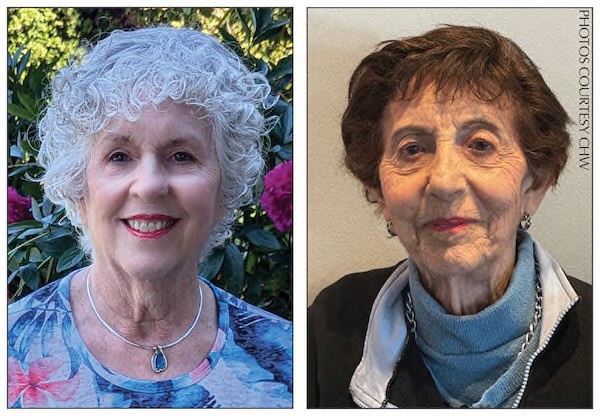
CHW Vancouver Centre’s opening luncheon on Sept. 22 honours longtime members and contributors Bev Corber, left, and Dolly Jampolsky. (photos from CHW)

This year’s CHW Vancouver Centre opening luncheon on Sept. 22 will honour Bev Corber, a past CHW Vancouver Centre president, and recognize the volunteer efforts of Dolly Jampolsky.

“I have had the pleasure of knowing both women for a long time,” CHW Vancouver Centre president Toby Rubin told the Independent. “During Bev’s tenure as CHW Vancouver Centre president, I ran the annual campaign, and I have worked on other committees with her. I am excited for her to finally be recognized for all she has done and continues to do to support CHW and all its projects.

“Dolly is the Energizer bunny in my opinion,” continued Rubin. “At the age of 90, she continues to be our number one volunteer for both obtaining silent auction items and canvassing – no one seems to be able to say no to Dolly. Both Bev and Dolly exemplify strong women and are role models for myself and the rest of the community.”

Rubin has been a supporter of CHW for more than 30 years, Corber has been a member of CHW for almost 40 years, while Jampolsky joined the group more than 60 years ago.

“I had just moved to Vancouver and was seeking friendship and community,” Jampolsky said. “It was also very important for me to do something in support of Israel. CHW seemed to be a good choice.

“Early on, I was very involved with the bazaar. I recall that I would reach out to the better hotels in the city and ask for donations of linens. I also did the pickups of these donations. One time, I was at a very exclusive hotel in downtown Vancouver and I loaded up the elevator with a huge donation of linens. I stepped inside and pushed the button to go down and I got stuck.  I was there inside the elevator for one or maybe two hours; no phones at the time. All I could do was press the emergency button and wait and wait.”

Stephanie Rusen, immediate past president of CHW Vancouver Centre, recalled Jampolsky’s involvement with the Hadassah Bazaar, including that her chapter had the clothing booth, then moved to linens.

“After the bazaar,” said Rusen, “Dolly switched to Pro-Am [golf tournament] and the silent auction. She has continued with the silent auction, expanding it to the Aviva Games Day and then to the openings. For a number of years, she sold the entertainment books.”

According to Rusen, “Dolly said that I was the one to get her calling donors, first for annual campaign, then end-of-year, and finally SOS. Give her a list of 20 names to call and a day later she wants more names. Three years ago, when she asked for yet another list, I only had one with 100 names and told her to call just the first 20. She called them all!”

Corber also joined CHW after moving to Vancouver and, in her decades with the organization, she has contributed in many capacities, including helping create CHW’s Legacy Circle, which allows donors of varying incomes “to create a philanthropic legacy for a cause they care deeply about.” She was active in the Hadassah Bazaar, has served as chapter and centre president, been convenor of multiple fundraisers and events, and participated in different committees, among other things. In 2021, she completed her role as CHW Vancouver Centre’s immediate past president.

“Over the years, I have made lasting friendships with women of all ages,” she said. “I value the opportunity to work with others to support our projects in Israel. With each additional commitment I have made to the organization, I have found that I have been amply rewarded for my efforts. I have particularly enjoyed the opportunity to make a difference (tikkun olam) while connecting to others in the Jewish community.”

For Jampolsky, CHW has met all the goals she had when joining.

“I was able to form many wonderful and lasting friendships that I still treasure to this day and to fulfil the promise I made to myself to support my community and Israel,” she said. “Joining CHW gave me the satisfaction that I could lend my time, energy and creativity to support Israel and set an example for my friends, my community, my children and grandchildren.”

One of the reasons Rubin was attracted to CHW was that it was a women’s organization, “bringing together like-minded women and supporting causes close to women’s hearts.

“It is an organization whose projects in Israel are not only about things that are important to all women – helping at-risk children, empowering women and providing vital health care – but also supports our local community here in Canada,” she said. “CHW looks at what the current needs are, finds the gaps in support and fills them. I am proud to stand strong with CHW and all it does to proudly support Israel and Canada.”

Rubin, who is beginning her third year as CHW Vancouver Centre president, writes on the CHW website: “Since coming in as CHW Vancouver Centre president in the fall of 2022, we have held an almost sold out Games Day, heard World WIZO chairperson Anita Friedman and cookbook author Adeena Sussman, have held SOS (Starting Over Safely) Walks, surpassed expectations on our campaigns, and we continue to try and grow the under-40 chapter.”

She also notes that there have been some tough times, notably Oct. 7. 

“I think Oct. 7 has done the complete opposite of what Hamas and other terror groups thought – it has brought Jewish people together, not pulled them apart,” Rubin told the Independent. “I have found that people want to be together more than ever and are not afraid to attend meetings/events at the JCC, shuls or public places. We are always showing people how CHW is not the same organization it was when our grandmothers were involved and, since Oct. 7, more people are looking to belong to a community like CHW.”

In addition to honouring Corber and Jampolsky, the CHW opening will feature remarks and a Q&A livestreamed with Idit Shamir, consul general of Israel in Toronto and Western Canada. CHW chief executive officer Lisa Colt-Kotler will talk about her recent trip to Israel, where she visited CHW projects and bore witness to the atrocities of Oct. 7. Proceeds from the luncheon will benefit CHW partner Michal Sela Forum (MSF).

“MSF uses technology and innovation to improve the lives of victims of domestic abuse and helps them and their children take back their lives,” explained Rubin. “MSF is about keeping at-risk women safe in their homes instead of relying on shelters. The safety programs, like Michal Sela Canines, also allows women to return to their daily lives without fear of violence – this is so important. Also, everything MSF does, creates and establishes are things their CEO, Lili Ben Ami, wants to share with the world!”

For tickets to the Sept. 22, 11 a.m., opening lunch at Richmond Country Club, go to chw.ca/luncheon. 

Format ImagePosted on August 23, 2024August 22, 2024Author Cynthia RamsayCategories LocalTags Bev Corber, Canadian Hadassah-WIZO, CHW, Dolly Jampolsky, Stephanie Rusen, tikkun olam, Toby Rubin, women

The science behind addiction

Every year, more Canadian teenagers die by suicide than by all medical diseases combined, including cancer, diabetes, asthma and infections.

Dr. Yaron Finkelstein, a professor of pediatrics, pharmacology and toxicology at the University of Toronto and a staff physician at the Hospital for Sick Children (known as SickKids), shared this fact with the Jewish Independent in advance of Bridging Hope: Science and Testimonial in the Fight Against Addiction. Presented by Canadian Friends of the Hebrew University of Jerusalem, King David High School (KDHS) and Vancouver Talmud Torah (VTT), the Sept. 26 event at KDHS will also feature Dr. Yonatan Kupchik, senior lecturer, department of medical neurobiology, the Hebrew University of Jerusalem (HU), and Dr. Rami Yaka, head of the School of Pharmacy at HU, discussing the science of addiction. The testimonial part of the gathering will be shared by members of the Epstein-Bogdonov family. In this issue of the Independent, we talk to the doctors. Next issue, we will meet Elana Epstein and David Bogdonov, who, with their son, Noah Bogdonov, will speak in September about their family’s experience with addiction.

“Drug overdose, led by the opioids crisis, is an immense public health problem in BC, Canada and globally,” Finkelstein said. “Effectively addressing the loss of so many people for overdose daily, a largely preventable condition, must be a national priority. Indeed, youths are also highly affected, and we see them in the emergency departments, in clinics and, sadly, on the streets. Further, some youths use overdose as a common means of self-harm and suicide attempt.”

Finkelstein added that “most medications administered to children, particularly in hospitals (up to 85% in some acute care settings) have not been properly studied and approved in this population. Rather, we ‘borrow’ them from our experience in adults, scale the dose down to the child’s weight and hope to achieve the same effects and outcomes. However, we know this is not always the case, sometimes the outcomes are unwarranted, and I have personally noticed that repeatedly over the years. The goal of my research program is to work hard and close this knowledge gap – find the safest and most effective medications for children, and tailor their dosing regimens to the pediatric needs.”  

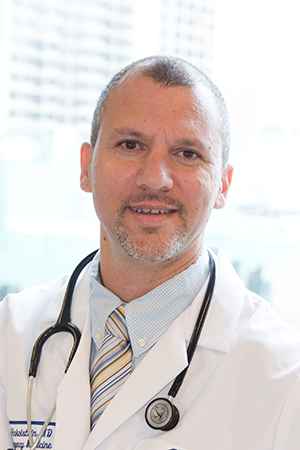
photo - Dr. Yaron Finkelstein
Dr. Yaron Finkelstein (photo from Sickkids website)

At Bridging Hope, Finkelstein will discuss “the impacts of cannabis legalization on pediatric poisonings – trends and severity (for example, many do not appreciate that edible cannabis products can kill a child) – and on mental health, including addiction and the risk of developing schizophrenia in youths and adults.”

Canada became the second country to legalize cannabis for recreational use in 2018, he said. “This ‘natural experiment’ has led to numerous unanticipated outcomes, many have negative impacts on public health, and particularly on children.”

Finkelstein’s main research is centred on pediatric therapeutics in acute-care settings, with the long-term goal of optimizing drug safety.

“During my clinical clerkship in medical school, my passion to help children grew tremendously, and I was inspired by my mentors,” he shared. “Children have immense resilience, and their recovery is often fast and remarkable, and provides hope. I was always fascinated by the mechanistic actions of drugs on the human body, and combining those passions felt natural.”

“From the early beginning of my studies, I was thrilled to understand how the brain functions,” said Yaka, who not just heads HU’s School of Pharmacy but conducts research as well. “The brain reward circuitry is the most important system in any living creature, since it is responsible for our survival and reproduction, therefore, our existence. My main research is focused on synaptic function in health and disease.”

photo - Dr. Rami Yaka
Dr. Rami Yaka (photo from HU website)

Yaka joined the School of Pharmacy in 2003 and has served in many capacities. “Since I feel that the School of Pharmacy is like my second home and I really care about its future, and since I have all the necessary experience to take this mission, I volunteered to head the school,” he said. “Maintaining the right balance between the administrative duties and the research (my main cause of being here) is challenging. I work harder and try to pay the same attention to both tasks without reducing any effort for either.”

On Sept. 26, Yaka will talk about “‘out of the box’ research to battle drug addiction.”

“Since addiction to drugs, screens, food, etc., is very common and spreads all over the world very easily, this subject is very popular among laypeople,” he said. “Therefore, for me, it’s easy to adopt lay language to explain in simple words what the problem is and what we can do to avoid having it. I think that a huge part of the problem is the lack of knowledge among users (mainly young) about the adverse effects and negative impact that drugs have on the brain.”

With respect to educating youth and engaging them more broadly in science, Kupchik sees his role as a principal investigator at a leading university as “not only to generate new knowledge that may lead the world forward but also to plant the seeds for the next generation of principal investigators.”

“In Israel,” said Kupchik, “there are several programs that select the top high school students in the country and expose them to academia at their early age. This is excellent, but … there are many excellent students that we may be missing as a society just because they live in underprivileged places. Therefore, we try in the lab to specifically target those populations of students, and we do it in various ways. For example … [we] started an initiative that invites local high school students to scientific conferences taking place in their vicinity. For many students, this is the first interaction with science and many of them reported later that it induced interest in the scientific world. We also invite high school students to our laboratory and provide an interactive experience in which they learn about the brain and how scientific research is performed.”

photo - Dr. Yonatan Kupchik
Dr. Yonatan Kupchik (photo from HU website)

What most intrigues Kupchik about neurobiology “is how a biological organ, composed of billions of neurons that communicate with each other, generates such complex phenomena as behaviour, emotion, thoughts, etc.” His lab at HU researches the changes occurring in single neurons or in brain circuits in drug addiction or obesity. Among other things, they are currently collaborating with two neighbouring labs.

“One is with the laboratory of Dr. Shai Sabbah, an expert in the neurobiology of light processing in the eye. It is known that exposure to light can affect mood and the neural activity in brain areas related to emotions. We are investigating in this collaboration whether light exposure could also affect drug-seeking behaviour.

“Another collaboration is with the laboratory of Dr. Danny Ben-Zvi, an endocrinologist and expert of the bariatric surgery. As bariatric surgery decreases the craving for rewarding foods, we are now investigating together whether the bariatric surgery drives permanent changes in the reward system of the brain and whether it could affect the craving for other, non-food, rewards.”

Kupchik said, “We believe that there are many similarities between behaviours that may reflect addiction, such as drug dependence, overeating, gambling, hoarding, computer gaming, social media use and so on, and hope that understanding the neurobiological mechanisms in one kind of addiction could hint about the mechanisms of other addictions. We chose to focus on drug addiction and on obesity both because these are two main global health challenges that remain unsolved and because these are conditions that can be modeled in laboratory animals.”

At King David High School, Kupchik “will try to show some of the permanent changes we found that occur in the reward system after using cocaine, and after withdrawal.”

For tickets ($18) to Bridging Hope, visit register.cfhu.org/bridginghope. 

Posted on August 23, 2024August 22, 2024Author Cynthia RamsayCategories LocalTags addiction, Bridging Hope, Canadian Friends of the Hebrew University, CFHU, disease, Hebrew University, KDHS, King David High School, Rami Yaka, science, SickKids, Vancouver Talmud Torah, VTT, Yaron Finkelstein, Yonatan Kupchik
Education a main focus

Education a main focus

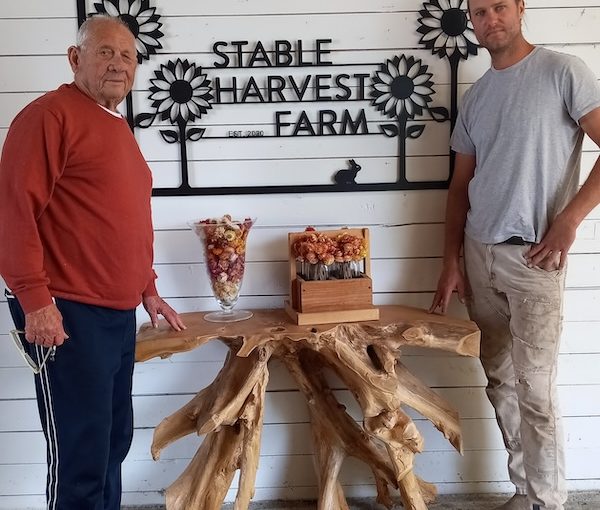
Syd Belzberg, left, founder of Stable Harvest Farm in Langley, and farm manager Kristjan Johannson. (photo by Cynthia Ramsay)

The Jewish Independent visited Syd Belzberg at Stable Harvest Farm in Langley last week, taking a tour of the 65-acre property with Belzberg and farm manager Kristjan Johannson. Much has happened since the JI last visited, in 2021, just a year after the reimagined farm opened.

The land had laid empty for many years, having previously been a horse farm. An organic produce farm for the past four years, its focus is education. (See jewishindependent.ca/hands-on-learning-at-farm.)

About 100 students a day visit from late April to the end of June, then again from the first week of September to the end of October. 

“We’ve got it down to a science,” said Johannson. “About an hour-and-a-half a session, two hours. They come in, they get a welcome speech. We have picnic tables up in the main season. We do a 12-station immersive tour, partnered with BC Agriculture in the Classroom [Foundation], so it’s all specific to the curriculum of the province.”

There are elementary and intermediate student groups who do the sessions. Participants receive workbooks and, every six or seven minutes, a cowbell rings and they move to the next station, where another agriculturalist meets them. University students lead the programs.

The farm also runs harvest projects for the kids. “Radishes were a big hit this year,” said Johannson. There were six beds of radishes planted and harvested.

Over the summer, it’s camp, church and other groups that come to the farm, said Belzberg, and they have different reasons for doing so: perhaps to see the bees, or the butterflies. “This summer, we kept the amount of guests down because we are developing and changing so many things,” he said.

The growing process begins indoors. “We’re able to push the season in that way,” said Johannson. “We start all our plants indoors in the nursery tunnel and that way we get a 30- to 60-day head start, and then it allows us, in a short season, to get two crops of most produce.”

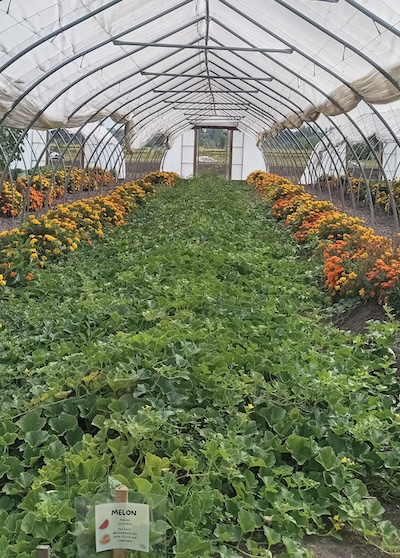
photo - Rows of produce are planted alongside rows of flowers, so that the flowers take the brunt of the bug activity
Rows of produce are planted alongside rows of flowers, so that the flowers take the brunt of the bug activity. (photo by Cynthia Ramsay)

In addition to the planting beds, there are gardens. Belzberg’s friend David Bogoch, another member of the Jewish community, started the Biblical Garden, as well as a couple of other flower beds, which Bogoch maintains with the Stable Harvest Farm team.

“Rabbis normally spend 20 to 30 minutes in here,” said Belzberg of the Biblical Garden, which features four of the seven plants the Hebrew Bible uses to describe the land of Israel – wheat, barley, figs and grapes. “We can’t grow dates, pomegranates or olives, but we’re working on pomegranates and olives!” said Johannson, referring to a greenhouse that’s under construction. 

Johannson also noted that there was a “very happy, healthy ‘Tree of Knowledge,’” an apple tree, but though the “Fujis are looking very good,” the fruit is not quite ready for harvesting. 

Vancouver Talmud Torah probably brings the most kids to the farm, said Belzberg. Grade 3 students, for example, may come in and plant vegetables in spring and then they come back in the fall, as Grade 4s, to harvest what they planted.

When students participate in an education tour, they leave with something the farm produces. That might be honey from one of the 30 hives on the farm (1,500 pounds of honey was extracted a few weeks ago by 40 to 50 volunteers) or bee-forage bookmarks with seeds embedded in them.

“You take the bee off [the bookmark] and plant it in the ground and they [still] have our bookmark with all our information on it,” explained Johannson. “Basically, you have a bunch of kids guerrilla gardening, chucking paper and pouring water on it and having plants that turn into bee forage. Then, they also get popcorn from us or they get sunflower seeds, so, if you’ve got a garden at home, you can plant the corn and plant the sunflowers. If you don’t, you can eat the sunflower seeds and pop the corn.”

Johannson and Belzberg have been working together since the retrofit in 2020, when the farm was converted from housing horses to growing produce.

“We do lots of cover crops and set-asides,” said Johannson, standing next to a field (block) that is lying fallow for a year. “That’s how we build fertility here organically. There are three different types of clover … and all this clover fixes nitrogen from the atmosphere in the ground and then all of this down here will be our organic matter for the next season. We’ll do that on rotation. There are five blocks, so this block here was a cover crop last year.”

Farm heritage chickens and Nigerian Dwarf goats, as well as other animals that pass through or unofficially make their home somewhere on the farm, help keep the soil healthy. “They’ll end up eating all this down and then pooping it [around],” explained Johannson.

We drove past some wheat, which is grown especially for Lubavitch BC’s Model Matzah Bakery.

“Originally, we would just supply the wheat and they would do their thing,” said Belzberg. “In the last year, we changed it…. Everything here was planted by the kids in May. They’re coming back Sept. 8 to harvest it. Then we will store it for them and, at Pesach time, they’ll use it … [in] making the matzah with the bakery, so they’ve got the full cycle.”

For the Lubavitch BC program, some of the wheat harvested by the kids in September won’t be put through a thresher, but rather, in the weeks before Pesach, at the Matzah Bakery, the kids will learn how to remove the grain from the chaff by hand. They’ll put the grain in a stone mill and grind it into flour. “For the sake of expedience, we already have the dough ready,” noted Johannson. “And the kids grab it, it goes onto some sheets and then goes into a pizza oven. They are so good, very efficient,” he said of Lubavitch BC. “They’re the same as our [education] project out here, you’re in and out in an hour and 15.”

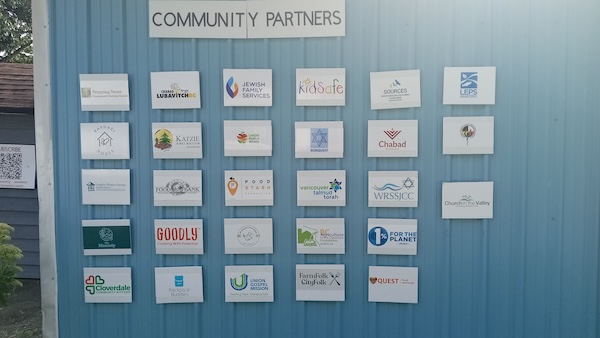
photo - Stable Harvest Farm has Jewish and non-Jewish community partners
Stable Harvest Farm has Jewish and non-Jewish community partners. (photo by Cynthia Ramsay)

Stopping at several “tunnels,” in which there are rows of flowers alternating with produce – melons, tomatoes, cucumbers, etc. – Johannson picked some treats for the Jewish Independent while talking about the layout.

The flowers are good for pollinators, but also attract the aphids and other bugs, he said. “We come through when they’re all pest-affected, we bag [the flowers] up and remove the pests out of the game.”

There have been challenges over the years – notably, in 2021, both the heat dome and the atmospheric river – and there have been some less successful crops. Johannson pointed to a field of Phacelia. “It’s still going to flower, but … it was too hot when they went in. A lot of the time, with vegetables, with life, with people, if you don’t have a good start to things, things don’t end up well.” The area will become a different cover crop next year, he said.

And there have been other learning opportunities. “This we called the Coyote Area,” said Belzberg as we passed another part of the property. “But we had to change it about a month ago because we had a group of kids out and they were afraid to come [see it]. Now it’s called Beaver Park.”

Belzberg would like to see even more school groups come to the farm, and he’d like to see multiple events happening at one time. In progress are many significant initiatives, from planting more trees (for birds and shade), to grooming an area of the farm for scavenger hunts and orienteering, to building a nature-based playground, to creating an overnight camping section, to adding a picnic area, and to converting what used to be a riding arena into a place where kids can come and do educational projects when it’s raining.

The education aspect of the farm gives Belzberg the greatest satisfaction and enjoyment, he said. “That’s my passion.”

While all the activities at the farm are at no cost to visiting groups, busing kids out to Langley can be expensive, so the farm takes some of their programs to the schools themselves. Belzberg gave Talmud Torah as an example: a program held at the school can reach 500 kids in one or two days, he said.

As well, Belzberg and his team are trying to get funding for a program that would help schools with the cost of busing. “We’re looking to be able to subsidize some or all of that cost,” he said.

As to what Belzberg gets from all these efforts?

“It’s a work of love,” he said. “It’s coming out here, developing it and seeing it grow and become more beautiful [and], mostly, when you get the kids out here.” 

Format ImagePosted on August 23, 2024August 23, 2024Author Cynthia RamsayCategories LocalTags agricultural goods, education, environment, farming, Kristjan Johannson, Lubavitch BC, organic, Passover, Stable Harvest Farm, Syd Belzberg, Vancouver Talmud Torah, VTT

Posts pagination

Previous page Page 1 … Page 13 Page 14 Page 15 … Page 85 Next page
Proudly powered by WordPress