Skip to content
  • Home
  • Subscribe / donate
  • Events calendar
  • News
    • Local
    • National
    • Israel
    • World
    • עניין בחדשות
      A roundup of news in Canada and further afield, in Hebrew.
  • Opinion
    • From the JI
    • Op-Ed
  • Arts & Culture
    • Performing Arts
    • Music
    • Books
    • Visual Arts
    • TV & Film
  • Life
    • Celebrating the Holidays
    • Travel
    • The Daily Snooze
      Cartoons by Jacob Samuel
    • Mystery Photo
      Help the JI and JMABC fill in the gaps in our archives.
  • Community Links
    • Organizations, Etc.
    • Other News Sources & Blogs
    • Business Directory
  • FAQ
  • JI Chai Celebration
  • JI@88! video

Recent Posts

  • Sharing her testimony
  • Fall fight takes leap forward
  • The balancing of rights
  • Multiple Tony n’ Tina roles
  • Stories of trauma, resilience
  • Celebrate our culture
  • A responsibility to help
  • What wellness means at JCC
  • Together in mourning
  • Downhill after Trump?
  • Birth control even easier now
  • Eco-Sisters mentorship
  • Unexpected discoveries
  • Study’s results hopeful
  • Bad behaviour affects us all
  • Thankful for the police
  • UBC needs a wake-up call
  • Recalling a shining star
  • Sleep well …
  • BGU fosters startup culture
  • Photography and glass
  • Is it the end of an era?
  • Taking life a step at a time
  • Nakba exhibit biased
  • Film festival starts next week
  • Musical with heart and soul
  • Rabbi marks 13 years
  • Keeper of VTT’s history
  • Gala fêtes Infeld’s 20th
  • Building JWest together
  • Challah Mom comes to Vancouver
  • What to do about media bias
  • Education offers hope
  • Remembrance – a moral act
  • What makes us human
  • המלחמות של נתניהו וטראמפ

Archives

Follow @JewishIndie
image - The CJN - Visit Us Banner - 300x600 - 101625

Images

Superstein plays at jazz fest

Superstein plays at jazz fest

Andrea Superstein performs July 4 from Pyatt Hall during this year’s TD Vancouver International Jazz Festival, which starts June 25. (photo from Wendy D Photography)

Vancouver vocalist, composer and arranger Andrea Superstein has a new song out. It’s cheerful, upbeat. And she will perform “Every Little Step,” which was released in March, live for the first time at this year’s TD Vancouver International Jazz Festival, which starts June 25 and runs to July 4.

“‘Every Little Step’ was my saving grace during the pandemic,” Superstein told the Independent. “I wrote it at a time when I was feeling really overwhelmed by the uncertainty that living through a pandemic brings. I was emotionally exhausted from listening to the daily press conferences and I just needed something good. I received a Digital Originals grant from the Canada Council for the Arts and that was the impetus.

“The song was inspired by the beautiful landscapes of B.C., which I experienced on a family camping trip to Nelson,” she explained. “We live in such a beautiful place and being able to spend so much time in nature really saved me during the pandemic. In a way, it’s my homage to B.C.”

Of course, Superstein couldn’t meet in-person with musicians to workshop the composition, so, she said, “I had this crazy idea to reach out to musicians across Canada (some of whom I’d worked with before and others who to this day I still haven’t met in person) to write, arrange, record and make a music video completely in isolation. It was wild! We didn’t have one rehearsal – we didn’t even have a group Zoom meeting. Elizabeth Shepherd and I wrote and arranged the song together over Zoom and we communicated some ideas to each specific player and they self-recorded (audio and video) from their home studios. And we made a super-fun music video for it, as well.

“The more I think about it, I can’t even believe what we accomplished. I love the song so much! The vibe is a super feel good ’90s groove but, symbolically, it was so meaningful because, despite all being trapped at home, we found a way to be together in this weird virtual way. It was transformative for me.”

On the video, Superstein and Shepherd’s song is performed by them, with Superstein on vocals, Shepherd on keys, Carlie Howell on bass, Isaac Neto on guitar, Colin Kingsmore on drums and Liam MacDonald on percussion. For the jazz festival performance, Superstein will be joined by Chris Gestrin (keys), Nino DiPasquale (drums) and Jodi Proznick (bass).

“I’m so happy to be playing with them,” said Superstein. “They each offer such a unique perspective to the music and they’re all wonderful humans!”

The show is on July 4, 7 p.m., at Pyatt Hall and will be streamed on Coastal Jazz & Blues Society’s YouTube channel, she said. “Regarding a possible audience,” she added, “the festival is closely monitoring all provincial health orders and will make a decision on indoor audiences after the next provincial health update on June 15.”

Superstein is looking forward to being able to perform live again.

“I miss that special relationship that is forged during live performance,” she said. “There is something truly magical about collectively experiencing a moment in time that can never be recreated. That being said, I am blown away by the digital innovation that has emerged during the last year-and-a-half to keep the arts alive, and I attended some amazing concerts and theatre this year.

“As for me, it’s been relatively quiet on the performance front. I did a livestream concert through Or Shalom’s Light in Winter series in early 2021, which was so incredible. Other than a few other small things, I’ve been keeping it pretty low key, slowly working away at composing new music and taking my time with life.”

Playing at the jazz festival, she said, “I think it will be an incredible way to give momentum to many of the creative ideas I’ve been sitting with these past two years and a great chance for music lovers to reconnect, seeing as it’s been some time since my last performance.”

The last time that the Independent interviewed Superstein was in January 2020, just before the pandemic hit in full force. Among other things, she spoke about her then-new album, Worlds Apart, which she had described to CBC as having the themes of “the pain of being in a one-sided relationship, the loneliness of technology, and positivity in times of destruction.”

“As an artist, I like to observe life and then transform those observations into stories. I think this was helpful for me at the beginning of the pandemic because my curiosity was heightened, there was so much unknown,” she explained. “I found that to be both scary and exhilarating. I was also trying to figure out how to homeschool a 5-year-old while teaching full-time online without completely unraveling. So, creativity, flexibility and leaning in helped me survive most of 2020. Those are definitely skills that I use a lot as an artist. Truthfully, though, I don’t think anything could have prepared us for the pandemic.”

In addition to the new song “Every Little Step,” Superstein has started working on a new album, which she is hoping to release in late 2022.

“It’s a huge undertaking,” she shared, “with lots of moving parts, culminating in a multimedia performance. It will showcase collaborations with Elizabeth Shepherd, whom I treasure, and my dear friend Ayelet Rose Gottlieb (who you have featured before), among others. There’s also upcoming opportunities for non-musicians to be involved in the process, so people can stay in touch with me over social media if they want to know when and where that’s happening.”

As for her upcoming performance, she said, “In terms of what people can expect from the show, we’ll be doing some brand-new arrangements and compositions, a few gems from Worlds Apart, as well as a few old favourites. Like a true Superstein show, I’m going to take the audience on a sonic journey, whether that’s direct from Pyatt Hall or from their living rooms, it’s going to be a celebration!

For tickets ($11) to Superstein’s July 4 concert or any of the jazz festival’s more than 100 virtual events, visit coastaljazz.ca. There will be performances by local artists, as well as streams from New York, Chicago, Philadelphia, Amsterdam and Paris; free online workshops; club performances; and a continued partnership with North Shore Jazz. All streams will be available until midnight on July 6.

Format ImagePosted on June 11, 2021June 10, 2021Author Cynthia RamsayCategories MusicTags Andrea Superstein, Coastal Jazz, jazz, music
Dancing online and onstage

Dancing online and onstage

For this year’s Dancing on the Edge, Alexis Fletcher and Ted Littlemore perform together in a work created and directed by Vanessa Goodman. (photo by Sylvain Senez)

This year’s Dancing on the Edge contemporary dance festival features a lineup of online and onstage live performances, including Tuning, a new duet created and directed by Jewish community member Vanessa Goodman. And Tara Cheyenne Performance is among the artists who will be presenting films (details TBA).

During its July 8-17 run, the festival will present more than 30 shows, with artists from across Canada. On offer will be some specially curated digital programming with recorded performances, premières of dance films, dance discussions, outdoor live performances in the Firehall Arts Centre’s courtyard, for very limited audiences with safety precautions in place, and theatre performances with limited capacity, if permitted, in the centre.

photo - Ted Littlemore
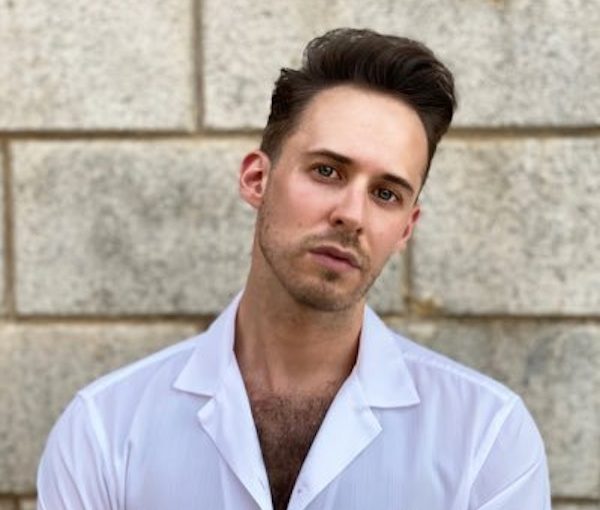
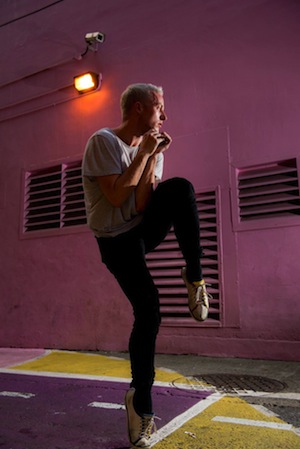
Ted Littlemore (photo by Wendy D Photography)

Commissioned by dance artist Alexis Fletcher, Tuning will be performed by Fletcher, artist in residence at Ballet BC, and Ted Littlemore, aka Mila Dramatic in the drag community. The new work focuses on how people tune to one another. In Tuning, the performers create a live sonic and physical atmosphere using their voices to amplify the conversations of the body.

Festival producer Donna Spencer also announced seven DOTE-commissioned projects, which will première at this year’s festival. Companies/choreographers presenting commissioned works include Ouro Collective, Raven Spirit Dance, Billy Marchenski, Immigrant Lessons, Generous Mess, Rob Kitsos and Meredith Kalaman. “We were thrilled to have offered this incentive, knowing that these commissions have enabled artists to keep creating new work during this challenging time for all,” said Spencer.

Keep an eye on dancingontheedge.org for performance and ticket updates.

– Courtesy Dancing on the Edge

Format ImagePosted on June 11, 2021June 10, 2021Author Dancing on the EdgeCategories Performing ArtsTags dance, Donna Spencer, DOTE, Firehall Arts Centre, Tara Cheyenne, Vanessa Goodman
Herzog joined Mosaic

Herzog joined Mosaic

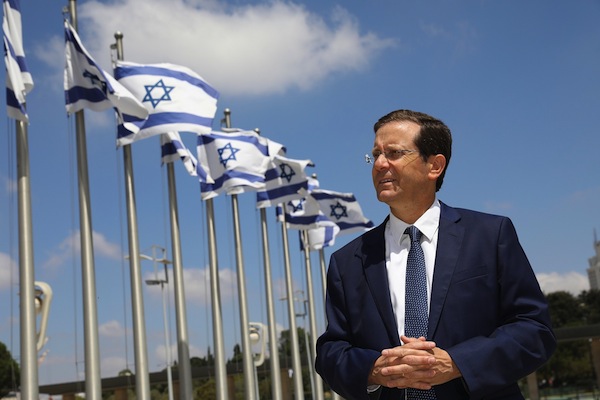
Israeli President-elect Isaac “Bougie” Herzog outside the Knesset. (PR photo)

There was a palpable sense of community, both on a local and an international level, at Schara Tzedeck’s Mosaic 2021: Building a Stronger Jewish Future virtual event May 27.

Rabbi Andrew Rosenblatt and synagogue president Jonathon Leipsic led the festivities through a pre-recorded video in which they drove around town, spoke about the current state of affairs and introduced such guests as the singer Shulem, Rabbi Naftali Schiff and Prof. Lara Aknin of Simon Fraser University.

Israeli President-elect Isaac “Bougie” Herzog was the featured guest. He was voted the 11th president of Israel on June 2, less than a week after addressing the Schara Tzedeck audience. He is the son of former Israeli president Chaim Herzog and the grandson of Rabbi Yitzhak HaLevi Herzog, the first chief rabbi of Ireland and Ashkenazi chief rabbi of Israel from 1936 to 1959.

“I have a huge respect for the Jewish community in Vancouver and for your congregation. It is a thriving, successful and beautiful community. Community is at the heart of Jewish life,” said Herzog, who is also chair of the Jewish Agency for Israel (JAFI). During the pandemic, JAFI has come to the aid, through interest-free loans, of more than 75 Jewish communities around the world that were on the verge of collapsing.

Herzog highlighted the role of religious organizations and spiritual leaders as crucial to post-pandemic life. Also central to community life, he said, is the financial ability to sustain institutions, such as community centres, as well as to involve younger people in leadership positions.

The most important role of JIFA is to create a sense of “connecting” within the Jewish world, said Herzog. Since the creation of Israel, it has welcomed more than four million olim, immigrants. Even during COVID-19, 21,000 olim from 45 countries arrived in Israel.

“Connecting” also involves bringing around 100,000 young people to Israel every year on various programs, sending emissaries to Jewish communities abroad and partnering with Diaspora communities.

“The whole idea is to get to know each other, to respect each other, to understand the pluralistic nature of Jewish life abroad, to understand what it is to be a Jew abroad and the questions of identity that are faced by young people outside Israel,” said Herzog.

He stressed the importance of having young people visit Israel. It is also imperative, he said, to “bring the truth”; that is, to counter false information about Israel.

Herzog, who has ties to Canada, once visited the University of British Columbia to meet with its leadership. In such meetings, his objective is to make sure “the true picture of Israel is told. You can criticize Israeli policy just like you criticize Canadian policy – that has nothing to do with the inherent right to the Jewish people for their own self-determination.” In general, he noted, “Once people know the facts, they have a stronger affinity with one another.”

He concluded, “I believe there is something metaphysical in being Jewish. That is, we feel an affinity – a Jew from Vancouver and myself could land together anywhere and bond immediately, because we feel like brothers and sisters.”

Herzog has family in Toronto. His uncle, Yaacov Herzog, was the Israeli ambassador to Canada from 1960 to 1963 and, while here, participated in a well-known debate with British historian Arnold J. Toynbee.

Shulem Lemmer, better known as Shulem, was the first guest to appear during the Mosaic evening, and he led the audience from his home in New Jersey through a couple of Jewish standards. Shulem was the first Charedi Jew to sign a contract with a leading music label, Universal Music Group, under its Decca Gold imprint, in 2018.

London-based Schiff, the founder and chief executive officer of Jewish Futures, spoke about the GIFT (Give It Forward Today) initiative, which he started in 2004. It was designed to spark a culture of giving between individuals and communal organizations, and it provides volunteering opportunities for young people.

Aknin, whose research interests include prosocial behaviour, happiness, social relationships, altruism, money, social mobility and inequality, rounded out the event.

Sam Margolis has written for the Globe and Mail, the National Post, UPI and MSNBC.

Format ImagePosted on June 11, 2021June 10, 2021Author Sam MargolisCategories LocalTags Bougie, Diaspora, Isaac Herzog, Israel, JAFI, Jewish Agency, Mosaic, politics, Schara Tzedeck
CHW’s Brunch with Bakan

CHW’s Brunch with Bakan

Joel Bakan spoke at a CHW Vancouver Book Club event May 30. (photo from thecorporation.com)

The Canadian Hadassah-WIZO (CHW) Vancouver Book Club hosted a far-reaching 90-minute discussion with author, filmmaker, musician and University of British Columbia law professor Joel Bakan on May 30. Moderating the event, entitled Brunch with Bakan, was Toronto-based writer (and former Vancouverite) Adam Elliot Segal.

Bakan’s widely acclaimed 2004 book The Corporation: The Pathological Pursuit of Profit and Power explored the formation and behaviours of modern-day industrial behemoths. It was later turned into an award-winning film. His new book, The New Corporation: How “Good” Corporations are Bad for Democracy, released in 2020, also has a film attached to it – The New Corporation: The Unfortunately Necessary Sequel, which Bakan co-directed with Jennifer Abbott.

In the CHW event, Bakan shared tidbits about his upbringing, first in East Lansing, Mich., then moving to Vancouver at age 11. “I was a very young draft dodger,” he recalled, as his parents decided to move north at the height of the Vietnam War.

“Family and Judaism have been two of the pillars of my life,” he said, recounting how much of his current activism could be traced to his immigrant grandparents.

“Jewish people, by virtue of their history, understand persecution, they understand injustice. They haven’t had a choice but to understand injustice. Injustice has always been in their face. It’s no coincidence that Jewish people were leaders in the civil rights, labour and other movements,” said Bakan.

“Jewish people have always had an activist sensibility and I think it’s rooted, not only in that history, but in the ethics of the religion – chief among them is tikkun olam, that we have a duty to repair the world, which is very much a duty I take seriously,” he added.

In his recent book, which moderator Segal called a “tour de force” and “meticulously researched,” Bakan tackles such subjects as deregulation, the aviation industry and what he describes as the destructive dependence on technology. In it, he interviews not only influential legal and economic scholars but also references pop culture to explain more difficult concepts.

“I wanted the book to be readable,” he said. “I am an academic by trade, but I am a writer. I want the reader to feel pulled into a story. In all my writing for a popular audience, I try to get away from the academic notion of laying out the facts and instead lull the reader in by telling some good stories. And, once I have the reader, I try to engage them with some more analytical or informational kinds of things.”

Segal asked about Bakan’s Trump-era trip to the World Economic Forum in Davos, Switzerland, for the recent Corporation documentary project. It turned out to be a coup of sorts for a film crew to be allowed access to the normally secretive meetings of the world’s political and corporate elites in the Swiss Alps.

In this work, Bakan discusses the concept of corporate social responsibility, which, he contends, cannot do nearly enough to combat rising global social and environmental threats. He distinguishes between individuals at the top of corporations and the corporations themselves.

An example of this approach is Lord John Browne, the former chief executive officer of British Petroleum, whom Bakan portrays as a very cultured man and one of the “good guys,” who tried to get his firm to be at the forefront of corporate responsibility. However, the problem is that even the most benign, well-intentioned CEOs are hamstrung by their fiduciary and legal responsibilities to their shareholders, according to Bakan.

“A CEO can go a certain distance in trying to do a better job in terms of social or environmental responsibility, but you can’t go further in that direction in terms of what will be profitable,” said Bakan. “It’s great if corporations try to be a little better, but let us not be deluded into believing that they can go far enough to get us out of the mess we are in, be it the social mess or the environmental mess.”

The conversation turned to sports and the recent failed attempt by Europe’s top soccer clubs to form the Super League. The common thread with other societal issue is the goal of corporations or capitalism to commoditize everything, whether it be water, utilities, education or entertainment. In the case of the Super League, the vested corporate interests behind the initiative were trying to increase profits by “taking the local out of sports.”

“If you put the Toronto Maple Leafs in Dubai, they would make more money,” said Bakan. “The Super League stopped because the people and governments rose up.”

The discussion ended on an uplifting note for the future. Bakan advocated extolling the virtues that our societies value, such as democracy, freedom and equality, to create a world “in which people can flourish, where they can thrive, where they can be free, not just of government restrictions but ill health, hunger and poverty, where they can live lives of meaning and purpose in which their material needs are met.”

The past 40 years have seen corporations as drivers of policy rather than as tools, argues Bakan. “We need to understand that our democracy is what matters and its capacity to serve human flourishing and planetary survival. When we think about our policies, they need to be aimed at how we can use markets and corporations towards those ends – not how they can use us to serve markets and corporations.”

The film version of The New Corporation is available on several streaming services in Canada. As well, the CHW talk is available for anyone who donates $18 to CHW, for which a full tax receipt also will be provided. Visit chw.ca/thenewcorporation to register, or call the CHW Vancouver office at 604-257-5160. CHW supports programs and services for children and women, in healthcare and education, in Israel and Canada.

Sam Margolis has written for the Globe and Mail, the National Post, UPI and MSNBC.

Format ImagePosted on June 11, 2021June 10, 2021Author Sam MargolisCategories LocalTags business, Canada, Canadian Hadassah-WIZO, children, CHW, CHW Vancouver, corporations, democracy, healthcare, Israel, Joel Bakan, politics, women
Pride trumps bigotry

Pride trumps bigotry

Writer Ben M. Freeman (PR photo)

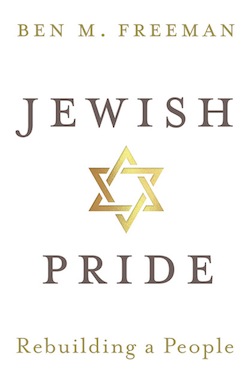
Antisemitism is not a Jewish problem, writes Ben M. Freeman in his new book Jewish Pride. “It is a non-Jewish problem that has an impact upon Jews.”

Freeman is a young Scottish Jew whose book projects some of the lessons of his coming out as a gay man onto the experiences of Jews dealing with the internalizing of others’ expectations and prejudices. He speaks of “passing,” of how a member of some minority groups can identify as a member of the majority.

“There are those who describe the ability of some LGBTQ+ people and some Jews to pass as a ‘privilege,’” he writes. “However, from my experience, this is a specific form of oppression itself.”

Freeman insists that the book is not about antisemitism, but rather its opposite: Jewish pride. But, perhaps by necessity, antisemitism plays a big role.

“Our journey is not about fighting antisemitism. That is the non-Jewish world’s journey,” he writes. “The Jewish journey is one of self-discovery, self-acceptance and self-love – in the name of collective pride.”

In the same way that antisemites have gone some distance to characterize who and what Jews are, anti-Zionists have stolen the word Zionism and redefined it to their perverse definitions, he suggests.

Above all, the fact that so many of the perpetrators of antisemitism are unfamiliar with its history is precisely the reason people can exhibit antisemitism while claiming – often haughtily – to be free of it.

“Due to a lack of education about both the conflict and Jewish history, most people are not armed with the knowledge to understand the connection between anti-Zionist rhetoric and historical antisemitism,” he argues. For example, the recurring libel that Israelis harvest organs from unsuspecting victims is a modern variation on the ancient blood libel – but people ignorant of that catastrophic history do not see their complicity as they perpetuate outlandish allegations. Likewise, the depiction of Israel as a unique embodiment of evil in the world mirrors the ancient projection on Jewish people of society’s fears and false narratives of evildoing.

He discusses how the International Holocaust Remembrance Alliance’s Working Definition of Antisemitism has led to a whole new wave of arguments around what is and is not anti-Jewish bigotry.

The British sociologist David Hirsh created the “Livingstone Formulation,” named after the former mayor of London, Ken Livingstone. It encapsulates the pretzel logic in which expressions of concern about antisemitism are met with a refusal to engage and a counter-accusation that the charge of antisemitism is made up as a conspiracy to silence legitimate criticism of Israel, as a “weaponization of antisemitism for political ends.”

This was in clear view during the spate of overt antisemitism that engulfed the Labour Party in the U.K. under the leadership of Jeremy Corbyn. Concerns about rampant Jew-baiting and unconcealed antisemitism were, Freeman writes, routinely dismissed as a “smear campaign against Jeremy.” It was, in short, bullies crying that they are being bullied.

image - Jewish Pride book coverFreeman points out the core problem for Jews in the evolving interpretations of hierarchical discrimination.

“There is a view of racism that suggests it is prejudice plus power, which implies that only those in positions of power over others can be racist,” he writes. “This definition leads to the notion that most forms of racism and prejudice are ‘punching down’ and that only marginalized groups with less or no power are being oppressed. While this experience is true for certain communities, this specific definition of racism, combined with exaggerated antisemitic perceptions of Jewish power and privilege, can be particularly dangerous for Jews. It thus lends to the erasure of the Jewish experience and of antisemitism as a legitimate form of prejudice. It can also allow those on the left – and some marginalized groups – to actively target us as representatives of elite power structures.”

Freeman’s core message is that Jews, like LGBTQ+ people, need to overcome the negative programming with which they are bombarded by the larger world.

“Jewish people have been in a dysfunctional relationship with the non-Jewish world for over 2,000 years,” he writes. “To be accepted, we have tried, over and over again, to change who we are.… In our thousands of years of history, has this sacrifice ever worked? No…. This cycle has to stop. The way to stop this abusive, destructive and exhausting cycle is to turn to ourselves for that acceptance and love.”

One might have hoped that a book on this subject would glance at the remarkable reversal of homophobia in most parts of the Western world in recent years, how that progress was achieved and how the lessons from that experience might be repurposed to fight antisemitism. But that, perhaps, is a future tome for Freeman or someone else to undertake.

Format ImagePosted on June 11, 2021June 10, 2021Author Pat JohnsonCategories BooksTags anti-Zionist, antisemitism, Ben M. Freeman, Israel, Judaism, LGBTQ+, racism, Zionist
About the (back) cover

About the (back) cover

image - 2021 Summer issue back coverphoto - Hummingbird in gardenA hummingbird recently paid a visit to my garden while I was enjoying a coffee outside. I wanted this photo to be the one on the back cover of the Summer issue, but, taken with my phone, it just wasn’t a high-enough resolution. So, I went back to a photo I took last spring for that year’s Summer issue but didn’t use because it felt too cheerful at that point in the pandemic. Now, however, with vaccinations well underway and restrictions soon to start easing in the province, a little colour doesn’t seem out of place.

Format ImagePosted on June 11, 2021June 11, 2021Author Cynthia RamsayCategories From the JITags birds, flowers, photography, summer
שרידי 215 ילדים נמצאו בבית ספר

שרידי 215 ילדים נמצאו בבית ספר

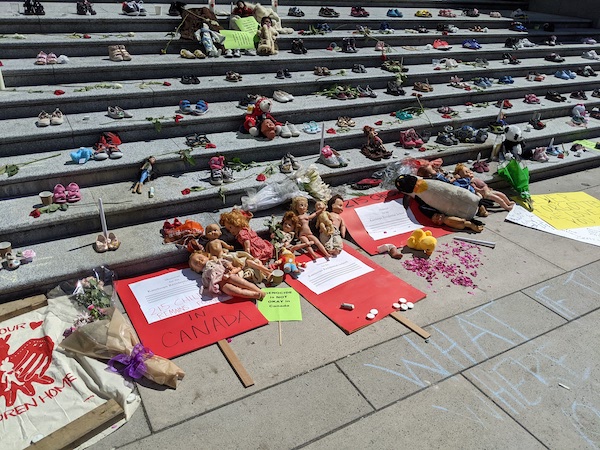
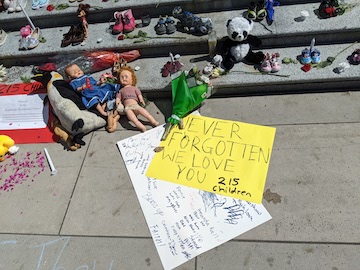
בובות ונעליים לזכר הקורבנות במדרגות שליד הגלריה לאמנות בוונקובר
(רוני רחמני)

שרידיהם של 215 ילדים, חלקם היו בגיל שלוש בלבד, נמצאו בפרובינציית בריטיש קולומביה, במקום שבו ניצב בעבר בית ספר גדול. במוסד זה קובצו בני קהילות האינדיאנים שהופרדו בכוח ממשפחותיהם ברחבי המדינה – במטרה להטמיע אותם באוכלוסייה הקנדית הכללית. ההודעה על מציאת השרידים זכתה לפרסומים נרחבים בכל העולם, אחרי שהם התגלו לפני כשבועיים בסיוע מכ”ם חודר-קרקע. מומחים אומרים כי גופות נוספות עשויות להימצא, משום שבאותו האזור נותרו שטחים נוספים שהיו שייכים לבית הספר ושטרם נערך בהם חיפוש.

התגלית הקשה שנחשפה היא עדות לזוועות שחוללו ממשלת קנדה והכנסייה הקתולית לעשרות אלפי תלמידים, שהשתייכו לקהילות האינדיאנים מאז המאה ה-19 ועד לשנות ה-70 של המאה העשרים. למעלה מ-150 אלף ילדים שהשתייכו לקהילות האלה נדרשו באותן שנים לעזוב את משפחותיהם ולעבור ללמוד בפנימיות נוצריות במימון המדינה הקנדית. זאת, כחלק מתוכנית שנועדה להטמיע אותם בחברה הכללית. הילדים אולצו להמיר את דתם לנצרות, לא הותר להם לדבר בשפת אבותיהם, ורבים מהם ספגו מכות והתעללויות מילוליות ופיזיות, בכלל זה התעללויות מיניות מצד מורים. לפי טענות עד 6,000 מהילדים מתו בבתי הספר האלה.

בית הספר שבאדמתו נמצאו השרידים שהוכרזו לפני כשבועיים שוכן ליד העיר קמלופס שבקולומביה הבריטית, והוא היה הגדול מבין 139 בתי הספר המיוחדים שהוקמו בשלהי המאה ה-19 לצורך הטמעת בני האינדיאנים. בכל זמן נתון שהו בו עד 500 תלמידים. הוא הופעל על-ידי הכנסייה הקתולית בשם ממשלת קנדה מ-1890 ועד שנסגר ב-1969.

פרסום הפרשה עורר תגובות נרגשות במערכת הפוליטית הקנדית. ראש ממשלת קנדה, ג’סטין טרודו, מסר כי הגילוי, שאותו הגדיר “מטריד”, שובר את לבו: “זו תזכורת כואבת לפרק אפל ומביש בתולדות ארצנו”, אמר טרודו. ראש ממשלת בריטיש קולומביה, ג’ון הורגן, הצהיר כי הוא “נחרד ושבור לב” בעקבות הגילוי של שרידי הגופות, וכינה זאת “טרגדיה בממדים שאי-אפשר לדמיין”. הוא אמר כי הגילוי הזה מדגיש את האלימות וההשלכות הקשות של הפנימיות שבהן שוכנו בני האינדיאנים.

ממשלת קנדה כבר התנצלה כבר באופן רשמי בשנת 2008 על הסבל הקשה שחוו בני האינדיאנים בבתי הספר המיוחדים שהמדינה הקימה לצורך הטמעתם, והודתה כי ההתעללויות הפיזיות והמיניות בבתי הספר מהסוג הזה היו תופעה נפוצה. רבים מהתלמידים לשעבר העידו כי הוכו רק משום שדיברו את שפת אבותיהם, ורבים מהם גם איבדו קשר עם הוריהם והתנתקו ממנהגיהם. מנהיגי קהילות האינדיאנים טענו לאורך השנים כי מסורת ההתעללויות והבידוד של הילדים האלה, היא הסיבה הראשית לשיעורים הגבוהים של עוני, אלימות, התאבדויות והתמכרויות לאלכוהול ולסמים בקהילותיהם.

בדוח מיוחד שפורסם לפני יותר מחמש שנים על ידי ועדת האמת והפיוס, נקבע כי לפחות 3,200 ילדים מתו כשהם סובלים מהתעללות והזנחה. לא ברור אם הילדים ששרידיהם נמצאו כעת נמנים עם הילדים שמותם כבר תועד. או שקרוב לוודאי שמציאת שדירי הילדים פירושה המעשי הוא שמספר המתים הרשמי גדול ממה שהיה ידוע עד כה. הטכנולוגיות החדישות שפותחו בשנים האחרונות מסייעות כעת בחיפושים אחרי קורבנות נוספים, ומנהלי החיפושים האלה מקווים שהתשובות שיעלו בהם יעזרו למשפחות לסגור מעגל.

ממשלת קנדה כבר הסכימה בעבר לפצות את התלמידים של קהילות האינדיאנים שהופרדו ממשפחותיהם, על השנים שבהן אולצו לשהות בפנימיות האפלות. לאחר שוועדת האמת והפיוס הגדירה את מה שעברו התלמידים האינדיאנים רצח עם תרבותי, החליטה הממשלה להקציב לפיצוי הילדים והמשפחות שלהם קרוב לשני מיליארד דולר.

Format ImagePosted on June 10, 2021Author Roni RachmaniCategories עניין בחדשותTags British Columbia, First Nations, Indigenous children, Kamloops, residential schools, Truth and Reconciliation Commission, בריטיש קולומביה, ועדת האמת והפיוס, ילדים, פנימיות נוצריות, קהילות האינדיאנים
Bias in Mideast reporting

Bias in Mideast reporting

Israeli Arab journalist Khaled Abu Toameh knows firsthand that foreign correspondents routinely send back reports that are wildly prejudicial against Israel. He spoke to HonestReporting Canada cofounder and chairman Jonas Prince in an April 25 webinar. (screenshot)

Western reporters “parachute” into Israel and routinely send back reports that are wildly biased against Israel, while ignoring panoramic human rights violations and corruption in the Palestinian territories. This is the firsthand observation of an Arab Israeli journalist with decades of experience shepherding foreign reporters around the region.

Khaled Abu Toameh is a senior distinguished fellow at the Gatestone Institute. For almost two decades, he has been a reporter on Palestinian affairs for the Jerusalem Post. He spoke to a Canadian audience April 25, in a webinar presented by HonestReporting Canada, an organization promoting fairness and accuracy in Canadian media coverage of Israel and the Middle East. He was interviewed by the organization’s cofounder and chairman, Jonas Prince.

“It’s not about being pro-Israel or pro-Palestine,” Toameh said. “It’s about telling the truth. Being able to … portray a balanced picture to your readers.”

Toameh has worked with hundreds of international reporters and journalists, helping guide them around the complexities of the conflict between Israelis and Palestinians. But, he said, complexity is not something for which many journalists are looking.

“I would say that most of them, the majority, they look at this conflict as a conflict between good guys and bad guys,” he said. “The good guys are the poor Palestinians and the bad guys are Israel…. Some of them come to this part of the world already with this perception and it’s like, Khaled, please don’t confuse us with the facts.”

Many of these journalists wake up in the morning and search for any story that reflects negatively on Israel, he said.

“Why is it that many of these journalists turn a blind eye to corruption in the Palestinian Authority, to lack of freedom of speech under the Palestinian Authority in the West Bank and under Hamas in Gaza? These are questions that we need to ask,” he said.

If, during the Oslo process, Western media had more broadly reported the misuse of billions in foreign aid to Palestine, Toameh said, Western governments might have been pressured to hold Yasser Arafat and other leaders to account.

“Only a few journalists did,” he said. “Yasser Arafat got away with the corruption. He deprived his people of the international aid. That played into the hands of Hamas and look where we are now. It’s a total mess.”

Toameh said some foreign reporters tell him that they are afraid.

“We can’t report [about Palestinian corruption] because we need to go back to Ramallah, we need to go back to Gaza, it’s dangerous,” Toameh paraphrased. “I tell them, excuse me, if anyone should be afraid, it’s me, the local Arab journalist who is living here. You guys have embassies, you have consulates, you have your own governments that will protect you. Secondly, why are you going to cover a conflict if you’re going to allow yourselves to be intimidated by one party? You will never be able to do your job. You need to quit journalism and go find yourself another job.”

He added: “Ironically, some of these journalists sometimes tell me, we can’t report anything that reflects negatively on the PLO, Hamas, because it’s not like Israel, it’s not a democracy.”

Other, less physical, fears also inhibit balanced reporting, Toameh said.

“Some of the foreign journalists are afraid that, if they report positive stories about Israel, they will be accused of working for the Jewish lobby or they will be accused of being Zionist agents or they will be accused of being anti-Palestinian or propagandists,” he said. “That’s how it is. That’s the last thing they want. But there are many good stories out here. There is no shortage of good stories. The question we always need to ask ourselves is, who wakes up in the morning and decides what the story is? Who sets the agenda?”

Some of the reporters, whom Toameh calls “parachute journalists,” arrive preprogrammed with false information.

“I’ve met other journalists who have asked me to take them to see the mass graves in Jenin where Jews massacred thousands of Palestinians in 2002,” he said, referring to a false report of a mass killing, a lie that remains today, unaltered, on the website of the BBC. “You can’t send someone who is covering sports in France to do stories over here. It doesn’t work like that.”

Palestinian society does not have the tradition of press freedom or civil criticism that democracies enjoy, he said. Journalists in Palestine operate under very different constraints than those in Israel or the West.

“I don’t think there’s anything unusual about reporting about corruption, for example, in the Palestinian Authority,” he said. “Why is that considered a taboo? Why is it that, when an Arab writes about Arab corruption, he becomes a Zionist agent? While, if a Jew writes about the corruption of the Israeli government, he’s praised as a liberal, as progressive and things like that? I can understand where it comes from, because I come from a culture – the Arab culture, the Muslim culture, the Palestinian culture, if you want – where criticism of the government and the president and the prime minister, or of your people, is considered an act of treason.”

While Palestinian and overseas media may shy away from reporting Palestinian corruption, ordinary Palestinians are fully aware of the situation, Toameh said. Protests during a short-lived “Palestinian Spring” were crushed by Hamas in Gaza and the Palestinian Authority in the West Bank. And Palestinians know there could be repercussions for any complaints.

“Not only are people afraid of being arrested or killed or harassed by these two governments – the Palestinian Authority and Hamas – they’re also afraid of losing their jobs,” he said. “The Palestinian Authority is the largest employer in the West Bank and people are worried. They don’t want to lose their jobs. They don’t want their relatives to be deprived of jobs, so that’s one of the reasons you don’t see this intifada or uprising against bad government.”

Toameh has been lionized as a hero for the work he does. But he dismisses the accolades.

“There is nothing heroic about telling the truth,” he said. “I don’t understand. Since when are people awarded for telling the truth, for not lying?”

Not everyone admires Toameh’s work, of course. Since he began uncovering Palestinian corruption for the Post, in 2002, foreign outlets that used to employ his expertise have abandoned him.

“I lost 95% of my work with the international media,” he said. “Why? Because I dared to challenge the narrative that says, in this conflict, the Israelis are the bad guys and the Palestinians are the good people and we don’t want to hear anything [different]…. I don’t fit into the category of journalists who are known for their severe criticism of Israel and who are ready to give the Palestinians a pass on everything. In that sense, I consider myself to be more pro-Palestinian than many of them. Being pro-Palestinian does not mean that you spew hatred against Israel. Being pro-Palestinian, for me, is when you demand reform, democracy, good government for the Palestinians … when you criticize Palestinian leaders for arresting journalists, for arresting social media users, for skimming the money of their own people. That’s what is really pro-Palestinian.”

Toameh was speaking before the latest conflagration between Hamas and Israel. But the long-range possibility of people remains dependent on the whims of two Palestinian factions.

“The Palestinian Authority, in public, say we support the two-state solution,” Toameh summarized. “But they are also saying, Israel must give us 100% of what Israel took in 1967, which means give me all of East Jerusalem, give me all of the West Bank, give me all of Gaza and then we will talk about the right of return for the Palestinian refugees and other issues. But give me 100% and there will be a deal.

“Hamas, on the other hand, have their own vision. They haven’t changed. I’ve been following Hamas from Day One. I was actually sitting in Gaza at the press conference when Hamas was established in 1988 and I give them credit for being very honest, very consistent and very clear about their strategy and it’s very simple. They say: listen folks, this land, all of it, from the Mediterranean Sea to the Jordan River is wakf land, land that belongs to the Muslim trust. No non-Muslim is entitled to any part of it. We want to replace Israel with an Islamic state and, if there are some Jews who would like to live as a minority under our new Islamic state, they are welcome. Otherwise, all of you get out of here or we will kill you and destroy you. These are the two visions that we have so far.”

Mike Fegelman, executive director of HonestReporting Canada, told the audience that, since its founding 17 years ago, the organization has inspired 2,500 corrections, retractions and apologies in different Canadian media outlets and has an overall success rate of 80%.

Format ImagePosted on May 28, 2021May 27, 2021Author Pat JohnsonCategories IsraelTags free speech, Hamas, HonestReporting, Israeli-Palestinian conflict, Jonas Prince, journalism, Khaled Abu Toameh, Middle East, Mike Fegelman, Palestinian Authority, politics, terrorism, violence
Crackin’ Out online exhibit

Crackin’ Out online exhibit

A still from the documentary Crackin’ Out: The Ronnie Tessler Rodeo Collection, showing photographer Ronnie Tessler. The documentary was directed by Sarah Genge and produced by the Jewish Museum and Archives of British Columbia.

The Jewish Museum and Archives of British Columbia is currently hosting Crackin’ Out, an online exhibit of photographs of rural Western Canadian rodeo from 1976 to 1980 by Ronnie Tessler, along with a short documentary by director Sarah Genge. In rodeo, the term “crackin’ out” means “the beginning of the new season, breaking out of the chute, or even breaking out new chaps.”

“These explosive words epitomize for me the spirit of rodeo and the cowboy way of life,” Tessler explained.

The idea to shoot the images began as a “fun photo expedition” to Williams Lake Rodeo in 1976 by four friends who were members of a photography group, the Vancouver Image Exhibition Workshop, which is known for bringing in acclaimed guest artists.

The group worked together for a year and, with the permission of the Canadian Cowboys Association, produced an exhibit at the Finals Rodeo in Edmonton in 1977. Tessler worked independently for the next two years, documenting life at rodeos throughout the west, from British Columbia to Manitoba and into the northwest corner of the United States. Aspiring for objectivity, she realized it was not attainable.

“I wanted to know more about the cowboys, what went on behind the chutes and on the road and what motivated them to take on the challenges they did unsupported by a team or steady income,” Tessler said.

The exhibit takes the viewer not only to the action, the cowboys riding – and falling – but also to the personal and the life surrounding the event: the preparations, the traditions, the camaraderie and the love. The photos evoke an emblematic sense of a particular era in Western Canadian life.

Grouped into three chapters – “Before the Rodeo,” “The Rodeo” and “After the Rodeo” – each photograph is accompanied by stories, observations and explanations from Tessler that encapsulate the feeling that existed the moment each image was taken.

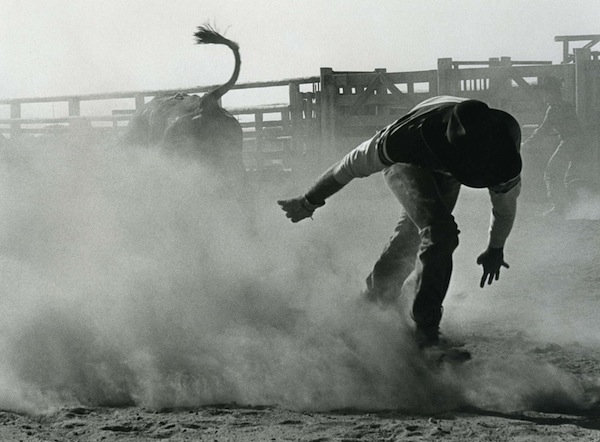
photo - A novice rider at the John Quintana Bull-riding School in Oregon, 1978. Photo taken by Ronnie Tessler. Part of the Crackin’ Out online exhibit
A novice rider at the John Quintana Bull-riding School in Oregon, 1978. Photo taken by Ronnie Tessler. Part of the Crackin’ Out online exhibit.

These images are what photographer Henri Cartier-Bresson, who is referred to in the exhibit, called “the decisive moment.” Or, as scholar John Suler, also quoted in the exhibit, described as “the moment when the visual and psychological elements of people in a real-life scene spontaneously and briefly come together in perfect resonance to express the essence of that situation.”

Rodeo was the first large, thematic body of work that Tessler did. Every project she undertook, she said, began when she “noticed themes coming out on my contact sheets and felt there was something I wanted to pursue. Each took about three years.”

Tessler’s Crackin’ Out was followed by her next major work, Israeli Suite, which was photographed over several visits to Israel. There was no similarity between these bodies of work and her last large project was different still – Jewish life in the West Kootenays.

As for the Jewish connections to the rodeo exhibit, Tessler observed, “I didn’t meet another Jew the entire time and did not encounter or make use of any specific Jewish values while doing the work. Many cowboys knew I was Jewish, and one asked what I was doing photographing a bull-riding school instead of watching Shoah on TV every night. I did enjoy the uniqueness of being an urban, Jewish woman with a family ‘goin’ down the road,’ putting myself on the line to record another way of life.”

Genge’s documentary Crackin’ Out: The Ronnie Tessler Rodeo Collection is part of the exhibit. It expands on the legacy of Tessler’s photography by exploring a multitude of perspectives on rodeo from such people as a stock contractor, a curator, a child of rodeo, a cowboy, an artist and a professor, as well as the archives intern who processed the collection.

“One photograph does not illustrate one idea. By speaking with eight different people, my aim was to bring their collection of voices together to elucidate an ever-shifting narrative of an image,” Genge said. “This film offers a brief glance at some of the distinct and disparate angles that create a multifaceted and, at times, conflicted understanding of Western Canadian rodeo.

“I endeavoured with this film to present aspects of rodeo frequently left untold, specifically its importance to Indigenous people, women and LGBTQ+ communities. It should be noted that, much like Tessler’s inherent presence in capturing these photographs, my subjectivity in curating them is unavoidable,” she added. “I am an unreliable witness who, six months ago, had never set foot at a rodeo, so my bias as an outsider is present throughout.”

The exhibit, which can be found at jewishmuseum.ca/exhibit/crackin-out, also features an hour-long video of its April 21 launch, which includes discussions with Tessler and Genge.

Sam Margolis has written for the Globe and Mail, the National Post, UPI and MSNBC.

Format ImagePosted on May 28, 2021May 27, 2021Author Sam MargolisCategories Visual ArtsTags art, cowboys, documentary, film, Jewish museum, JMABC, photography, rodeo, Ronnie Tessler, Sarah Genge
CIJA calls on feds to act now

CIJA calls on feds to act now

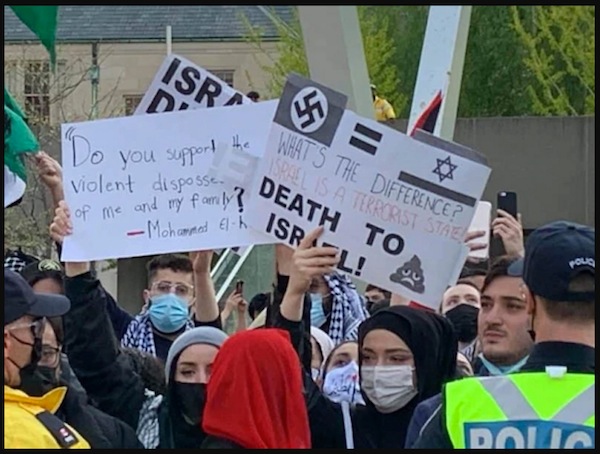
Signs shown at a recent rally in support of Palestine. (screenshot from cija.ca)

The Centre for Israel and Jewish Affairs is calling on the federal government to expand supports for Jewish communal security after a surge of antisemitic violence and vandalism in Canada, and to launch an emergency summit on antisemitism.

Shimon Koffler Fogel, CIJA’s chief executive officer, made the request in a meeting with senior staff from the prime minister’s office and Liberal cabinet ministers and members of Parliament May 20. Later that day, he spoke at a virtual event billed as a national Canadian Jewish community briefing, called Learn, Mobilize, Act: Keep the Conflict Out of Canada.

“We are calling on the prime minister to convene an emergency summit on antisemitism that will include the political leadership at both the provincial and municipal levels, a true all-of-government effort, and establish a comprehensive program to combat Jew-hatred, the oldest and most enduring hate the world has ever experienced,” he said.

CIJA also wants a complementary program to the Security Infrastructure Program, “that enhances the capacity of our community to take ownership of our own security.”

He spoke just hours after Israel announced a ceasefire in its most recent battle with Hamas.

“As we express hope for a durable ceasefire to take hold and an end to the conflict there, we are painfully aware that the battle has moved to our country, to our communities from coast to coast,” Fogel said. “It’s been frightening but we dare not cower and hide. It’s been disturbing, but we dare not be intimidated from asserting our identity, who we are and what we are, and in doing so with pride…. Our adversaries seek not only to erase our ties to the land and history of Israel, they seek to erase the presence of Jews altogether.”

He lauded the additional attention to racial justice that has emerged in recent years. “But, along with the good of that movement has come a contaminated strain that reduces everything to a simple equation of the oppressed and the oppressor, and Jews have been declared the poster child of the oppressors, so they must be rejected and vilified,” said Fogel.

Joel Reitman, co-chair of CIJA, opened the event.

“Over the past two weeks, we have watched with shock as our fellow Jews in Israel have been subjected to attack at the hands of Hamas, a terrorist organization bent on the destruction and the obliteration of the Jewish state of Israel and the murder of Israelis,” said Reitman. “Our sorrow and compassion is extended also to Hamas victims in Gaza, where Hamas has embedded its terrorist infrastructure within densely populated areas, deliberately putting the people of Gaza in harm’s way and where one-third of Hamas missiles have fallen, taking many innocent lives.

“Our outrage has deepened as the violence on our television screens has spilled over into violence and threats of violence directed against the Jews in our streets, in our communities, online and in our places of business, our schools and our houses of worship,” continued Reitman. “Never has it been more clear that Jewish people, whether we live in Canada or in Israel, must stand as one. Never has it been more clear that the ancient hatred of antisemitism does not distinguish between a Jew in Tel Aviv at or a Jew in Toronto. We are all targets…. We will not be intimidated. We will not be discouraged. We will call out the perpetrators of violence and we will call on our many friends to stand with us and we will act together. Together with our fellow Canadians right across this country, we say, enough. We know where antisemitism leads if left unchecked. We know what must be done to stop it. And, together, stop it we will.”

Naomi Rosenfeld, executive director of the Atlantic Jewish Council, said it has been a scary few weeks to be a Jew.

“With all this hatred and fear,” she said, “I hope that we all remember three things. One, it has never been more apparent why we need Israel and why we need a strong Jewish state. Two, if any of you have been going through any of the things that I’ve mentioned, please know that you are not alone. We stand together, a community here to support one another through each of these events. And, finally, as a national Canadian Jewish community, we must remain strong and resilient. We will not cower to fear and we will not hide our true identities and who we are.”

Dr. Gil Troy, professor of history at McGill University and an author of several books on Zionism, spoke of being a parent of two members of the Israel Defence Forces and the betrayal he felt to read a letter signed by 180 rabbinical students comparing the racial reckoning in the United States in recent years directly to the Israeli-Palestinian conflict.

“We’re told again and again, especially by my friends in the United States, too many of my Jewish friends in the United States, that this is a racial issue between the white Israelis, the white privileged Israelis, and the brown Palestinians,” said Troy. “And we are told that the cause of this latest conflict is Israeli provocations.… We all know that the underlying cause of this is the refusal of Hamas, the refusal of Islamic Jihad, the refusal of the so-called moderate Palestinian Authority to accept the fact, 73 years after the establishment of the state of Israel, that the state of Israel exists.”

Jeff Rosenthal, the other co-chair of CIJA, asserted that “Jews and only Jews have the right to define what constitutes antisemitism.” He said, “We’ve always known that there is no distinction between anti-Zionism and antisemitism. Our lived experiences and the experiences of our forefathers and ancestors confer a unique alertness to this threat.”

He called on viewers to mobilize and directed people to the Action Centre on the website cija.ca.


Format ImagePosted on May 28, 2021May 27, 2021Author Pat JohnsonCategories NationalTags anti-Zionism, antisemitism, Atlantic Jewish Council, Centre for Israel and Jewish Affairs, CIJA, Gil Troy, Jew-hatred, Joel Reitman, McGill, Naomi Rosenfeld, politics, security, Shimon Koffler Fogel, violence

Posts pagination

Previous page Page 1 … Page 142 Page 143 Page 144 … Page 492 Next page
Proudly powered by WordPress