Skip to content
  • Home
  • Subscribe / donate
  • Events calendar
  • News
    • Local
    • National
    • Israel
    • World
    • עניין בחדשות
      A roundup of news in Canada and further afield, in Hebrew.
  • Opinion
    • From the JI
    • Op-Ed
  • Arts & Culture
    • Performing Arts
    • Music
    • Books
    • Visual Arts
    • TV & Film
  • Life
    • Celebrating the Holidays
    • Travel
    • The Daily Snooze
      Cartoons by Jacob Samuel
    • Mystery Photo
      Help the JI and JMABC fill in the gaps in our archives.
  • Community Links
    • Organizations, Etc.
    • Other News Sources & Blogs
    • Business Directory
  • FAQ
  • JI Chai Celebration
  • JI@88! video

Recent Posts

  • האלימות בישראל מורגשת בהרבה מגזרים
  • טראמפ עוזר דווקא לנושא הפלסטיני
  • New rabbi settles into post
  • A light for the nations
  • Killed for being Jewish 
  • The complexities of identity
  • Jews in time of trauma
  • What should governments do?
  • Annie will warm your heart
  • Best of the film fest online
  • Guitar Night at Massey
  • Partners in the telling of stories
  • Four Peretz pillars honoured
  • History as a foundation
  • Music can comfort us
  • New chapter for JFS
  • The value(s) of Jewish camp
  • Chance led to great decision
  • From the JI archives … camp
  • עשרים ואחת שנים להגעתי לונקובר
  • Eby touts government record
  • Keep lighting candles
  • Facing a complex situation
  • Unique interview show a hit
  • See Annie at Gateway
  • Explorations of light
  • Help with the legal aspects
  • Stories create impact
  • Different faiths gather
  • Advocating for girls’ rights
  • An oral song tradition
  • Genealogy tools and tips
  • Jew-hatred is centuries old
  • Aiding medical research
  • Connecting Jews to Judaism
  • Beacon of light in heart of city

Archives

Follow @JewishIndie
image - The CJN - Visit Us Banner - 300x600 - 101625

Tag: Jew-hatred

Jew-hatred is centuries old

Jew-hatred is centuries old

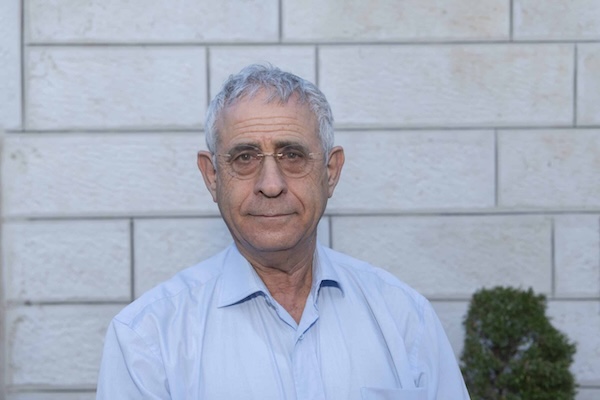
Bar-Ilan University’s Dr. Mordechai Kedar spoke in Vancouver Nov. 17 at Temple Sholom on root causes of Jew-hatred. (from idsf.org.il)

The Enlightenment of the 18th century carried hopes for Jews that their long history of persecution would end, but the ideas of that period carried the seeds of a new form of Jew-hatred. Communism was intended to erase class and national differences, which might have eliminated discrimination toward Jews, but this ideology too carried a poisonous element. Zionism was intended as the answer to systemic discrimination against Jews. It too, though, merely sparked a variation on the ancient bigotry.

In a survey spanning centuries, one of Israel’s leading scholars of the Middle East explained the seemingly limitless justifications for Jew-hatred in Christian and Islamic civilizations.

Dr. Mordechai Kedar spoke in Vancouver Nov. 17 at Temple Sholom on root causes of Jew-hatred. Kedar is a senior lecturer in Arabic and Middle Eastern studies at Bar-Ilan University, where he has taught for more than 30 years. Kedar served for 25 years in Israeli military intelligence, specializing in Syria and regional Arab affairs.

Kedar said he prefers the term “Jew-hatred” to antisemitism because it subverts the rhetorical claim that Arabs, who are semitic, can therefore not be antisemites. 

“We don’t find anti-Jewish sentiments in India, in China, Japan and Korea,” said Kedar. “One reason is the religion. Both Christianity and Islam are religions which are derivatives of Judaism. Therefore, in order to establish their validity and their legitimacy, they must undermine the validity and the legitimacy of Judaism.”

Another reason, he said, is that there have historically been few or no Jews in those places. In addition to being theological, Kedar argues, Jew-hatred has been a xenophobic reaction to the “other.” In the absence of Jews in India or Japan, this role was filled by other others.

Traits of Jews themselves also spark antisemitism, he said. Illiteracy in Jewish communities has been almost nonexistent, said Kedar, and this has created jealousy. More recently, the disproportionate number of Jewish Nobel Prize recipients may be a point of pride for Jews, but it can serve as a red flag for those seeking reasons for resentment. Jewish success in a range of fields spurs bitterness among some who are less successful or struggle to compete.

The historical trajectory of Jew-hatred is long and winding. 

“Two hundred years ago, more or less, some countries, especially after the Enlightenment in Europe, started to give emancipation to Jews,” said Kedar. “Instead of erasing the differences between Jews and others, [this freedom] actually increased the hatred because now the Jew, the ‘other,’ invades our circles, he becomes a lawyer, he becomes an accountant, he competes with us in our court.”

When Jews in Germany abandoned traditional distinctive clothing choices, this caused a backlash among non-Jews.

“This is frightening for them because, all of a sudden, the Jew looks like us,” Kedar summarized. “Is he like me or not? All of a sudden, he wants to look like a German, sound like a German, act like a German.”

With the French Revolution, and gaining steam after 1848, the Age of Nationalism was another turning point. The collapse of empires, notably the Austro-Hungarian Empire, where as many as one-third of Europe’s Jews lived, brought unanticipated challenges for Jews. As Hungarians, Romanians and others gained both national sovereignty and greater ethnic identity, Jews were again isolated as outsiders.

“If we are Romanians, we are Christians,” Kedar said. “We speak Romanian.… We dance to the same music. We eat the same food. Who doesn’t? The Jew. He eats different food. He speaks a different language. So, he’s not one of us.”

Socialism and communism were meant to erase the differences between peoples, Kedar said, including the very concept of separate nationalities. 

“And who is leading this erasing of nationalism? The Jew Trotsky and Lenin, with his [Jewish] roots,” said Kedar. The Jew is blamed when nationalism is ascendant and when communism is pushing nationalism to the margin, he noted.

Envy and othering even undermined Zionism, which was conceived as the ultimate answer to the inescapable antisemitism experienced by the stateless Jew.

“The Zionist movement was another reason to hate the Jew,” Kedar said. “Let’s imagine that we have a little town in Romania with problems of employment, problems of poverty, problems of alcoholism as well. The Jews are starting this new theology of Zionism, to leave the country and to go to eretz Israel. ‘What, you’re going to leave us and go to a better place? We hate you.’”

Kedar spoke extensively about Islamic theological and political antisemitism, which he described as like a “layer cake.”

“Judaism was canceled 2,000 years ago by Christianity,” he said. “And Christianity was canceled 14 centuries ago by Islam. So, Judaism was canceled twice.… Since Judaism is null and void, why do we need a Jewish state if there is no Jewish religion?”

Another layer rests on the Islamic concept of dar al-Islam, the domain of Islam, he said, which holds that no land controlled by Muslims must ever fall into the hands of the infidel.

Under the Ottomans, he said, eretz Israel was under Islamic rule and should forever remain so because, “according to the belief, according to Sharia, any land in the world has only a one-way ticket to enter the House of Islam, not to get out.”

A third layer is a widespread rejection of Jews as a people or as a nation. By reducing Jews to a religious group, he said, this idea subordinates Jewish identity to national affiliation, so a Jewish Canadian is Canadian first and that is their nation. This argument succeeds in justifying dozens of Muslim states while rejecting one Jewish state based on the premise that these are not Muslim states, but Turkish, Uzbeki or other states that happen to share a religion.

A fourth layer, said Kedar, is that some Islamic thought denies Jewish connections to the land and maintains that the people who today call themselves Jews are descended from central Asian Khazars who converted to the Jewish religion.

These concepts negate a core intention of Zionism, which was to resolve the problems created by Jewish statelessness. Muslim opposition to Israel, founded on these layers of theological justification, and Western opposition to Israel, mainly taking the form of political criticisms that extend into existential rejection, have prevented the Jewish state from serving the role Zionism intended, which was in part to make Jews a people like any other. 

Rabbi Dan Moskovitz welcomed Kedar, who is associated with the right-wing in Israel, and said his congregation is a “big tent.”

“I did hear from some of you here,” said Moskovitz, “or in the community, [asking] why is Temple Sholom hosting Dr. Kedar?… As the senior rabbi of this congregation, it is my intention and mission to bring in voices, within the boundaries of the tent of the Jewish people, that represent the spectrum of Jewish thought. I tell my children all the time, you only learn when you listen to people that you don’t already agree with.”

Aron Csaplaros, BC regional manager for B’nai Brith Canada, which co-sponsored the event, introduced Kedar. He also highlighted his organization’s most recent audit of antisemitic incidents, noting they recorded 6,219 incidents of hate against the Jewish community in Canada in 2024. 

“That’s the highest number we’ve ever recorded in the more than 40 years that we’ve been tracking this data,” he said. “That comes out to an average of 17 antisemitic incidents every single day.” 

Incidents range from online harassment, threatening behaviour and vandalism targeting Jewish institutions to direct attacks against Jewish individuals, Csaplaros said. 

“It is hostility directed at people simply because they’re Jewish,” he said. “Many in our community feel less safe today than at any point in their lifetimes. Parents hesitate sending their kids to school. University students are increasingly targeted and isolated. And Jewish Canadians who have always lived openly and proudly now find themselves looking over their shoulders or questioning whether this is still the country that can offer the sense of security that they once felt.” 

Format ImagePosted on December 5, 2025December 3, 2025Author Pat JohnsonCategories LocalTags antisemitism, Aron Csaplaros, Bar-Ilan University, B’nai Brith Canada, Dan Moskovitz, history, Jew-hatred, Mordechai Kedar, speakers, Temple Sholom

The fight for democracy

The following remarks were delivered at the Israel hostages rally at Vancouver Art Gallery on Sept. 15, which is also the International Day of Democracy.

In recognition of the International Day of Democracy, I will talk about how antisemitism is harming and potentially destroying democracy. This talk will be based mainly on a report by Amy Spitalnick, just published in the United States. Fair warning, this talk will be heavy, but, in my view, important to understand. 

Antisemitism is a form of religious, racial and ethnic prejudice against Jews. But, unlike other such prejudices, antisemitism also operates as a conspiracy theory that lies about Jewish power and influence. And, because it functions as a conspiracy theory, antisemitism poses a threat far beyond the Jewish community. It fuels other forms of hate and extremism, including against other communities and against democratic institutions that are depicted as pawns of Jewish control. 

Antisemitism – like other conspiracy theories – increases at times of social or political anxiety, as people look for a source to blame for what’s wrong with society and with their lives. 

Enemies of democracy, such as Iran and Russia, use antisemitism to undermine trust in democracies and make them seem like failed states. The “conspiracy myth” that Jews control certain sectors of society, such as banks, media or elections, is the cornerstone of antisemitism, and anyone who accepts this myth loses faith in  democracy. If Jews control elections, judges and finance, people say to themselves, how can I, as a non-Jew, live up to my potential? My failings are caused by evil forces beyond my control. 

Casting Jews as all-powerful naturally fuels hatred of Jews. But it also explains what extremists believe – that other communities, like People of Colour, non-Christians, LGBTQ+, are incapable of success except through unfair or illegal ways. And so, belief in this powerful Jewish control group causes distrust in democratic institutions and values.

When neo-Nazis came to Charlottesville, Va., in 2017, they chanted “Jews will not replace us,” showing that they believed in the “Great Replacement” conspiracy theory.  Once hidden in the dark corners of the internet, this conspiracy theory says that there is a deliberate Jewish effort to replace the white population with immigrants and People of Colour. This conspiracy theory has directly inspired many mass killings targeting not only Jewish people (Pittsburgh and Poway), but also Hispanic people (El Paso), Black people (Buffalo), Muslims (New Zealand and London, Ont.) and other communities. 

Versions of this conspiracy theory have become increasingly mainstreamed, courtesy of influencers, elected officials, candidates and foreign powers in our social media. They use it to advance their own political goals – and, at the same time, they embolden violent extremists. In the Jan. 6, 2021, attack on the US Congress, when many insurrectionists carried white supremacist symbols in their efforts to overturn the 2020 US election results, they included false claims of undocumented immigrants stealing the election. Only recently, we heard in the presidential debate about immigrants eating their neighbours’ pets from a man who wants to be president. 

Recent polling shows that belief in conspiracy theories is among the best predictors of antisemitism. And a recent US survey found that highly antisemitic Americans are significantly more likely to support political violence and other forms of anti-democratic extremism. So, what to do? 

First of all, we need to fight like hell! We need to call out conspiracy theories against Jews and any other identifiable group every time we encounter them. We need to educate ourselves about what antisemitism means by knowing the International Holocaust Remembrance Alliance definition and its examples, and we must call out antisemitism and other forms or racism when we see it. 

We should fight against antisemitism but also against all other forms of racism, including Islamophobia, misogyny, sexual-preference bigotry and other forms of hate and violence; and we should work to advance inclusive, multi-ethnic democracy. The safety and fates of all minority communities and, eventually, all supporters of democracy, are bound together. Jews historically thrive in free, democratic states, and don’t do so well in autocracies, even if autocratic rule might at first seem attractive. 

I know this won’t be easy. Many Jews, including me, have felt abandoned and isolated by those who have remained conspicuously silent, or worse, fallen for anti-Israel and antisemitic lies. This crisis since Oct. 7 exposed the lack of understanding of antisemitism in so many parts of society, including how antisemitism is present in conversations related to Israel. Fundamentally, there is a lack of recognition that Jewish safety, including in Israel, is deeply linked to the safety of all communities in all democracies. We need to change that. 

But, while we need to work tirelessly to save ourselves and combat antisemitism, we alone, without allies, cannot stop antisemitism. We need to recognize that antisemitism is one part, granted a big part, of the assault on democracy that affects everyone. 

If we accept what we need to do as I’ve outlined today, it means having open and difficult conversations with others who think they can save democracy without fighting antisemitism. We need to show them that they are wrong. Let’s start today. 

Bernard Pinsky, KC, is chair of the Ronald S. Roadburg Foundation.

Posted on October 11, 2024October 10, 2024Author Bernard PinskyCategories Op-EdTags antisemitism, Canada, democracy, Israel, Jew-hatred, racism

Antisemitism allowed?

An ongoing controversy in Canada’s largest school district took a more bizarre turn this week.

Last spring, the student equity advisor of the Toronto District School Board compiled and released a compendious assemblage he called “resources to educators.” The materials, issued via email by Javier Davila, were a hodgepodge of anti-Israel propaganda, and included outright antisemitic content and the glorification of suicide bombings.

The “resources,” for example, claim that Palestinians “have been legitimately resisting racism, colonization, and genocide since the 1920s to the present day by any means necessary: general strikes, demonstrations, armed struggle, and martyrdom operations (called ‘suicide bombing’ by Zionists).” Davila’s materials also included a link to the website of the Popular Front for the Liberation of Palestine, a group that is banned in Canada. Bibliographical recommendations include children’s books that characterize Israelis as thieves and murderers.

The materials Davila distributed are intended to guide teachers in educating students about the Arab-Israeli conflict. They were not vetted by senior officials in the school board and, when controversy ensued, Davila was put on leave but then reinstated. Despite the absence of even a slap on the wrist, he moderated a panel in June with the tagline “How can we educate about Palestine if we can’t even say it?”

Not only is Davila free to “say” Palestine, he is also, evidently, free to distribute whatever material he chooses to Toronto teachers. Which brings us to this week.

Alexandra Lulka is a Toronto school trustee who is Jewish and represents a heavily Jewish district of the city.

“I was outraged to discover that some of this material justifies suicide bombings and other forms of terrorism,” she wrote on social media during the conflict in the spring between Israel and Hamas in Gaza. “This is reprehensible. These materials were provided by an employee from the TDSB equity department, the very department that should be countering antisemitism and violence, not fanning the flames.”

The school board’s integrity commissioner investigated Davila’s materials and found they did indeed contain antisemitic content and promote terrorism – and then called for Lulka to be censured because, the commissioner’s investigation declares, it was the purview of the school board, not Lulka, to determine whether the content was unacceptable. The commissioner went further, condemning Lulka for not pointing out positive aspects of Davila’s “resources.”

The Centre for Israel and Jewish Affairs criticized this part of the situation in particular.

“It is astonishingly unreasonable to compel a Jewish trustee calling out Jew-hatred to also highlight positive elements in the resources. The recommendation to censure her for not doing so is misguided and must be rejected,” said CIJA’s vice-president Noah Shack in a statement. “Punishing Trustee Lulka is contrary to the values of an educational institution purporting to engender learning and mutual respect.”

Friends of the Simon Wiesenthal Centre also drew a contrast between what should have happened and what did happen.

“This outrageous process against TDSB Trustee Alexandra Lulka is just the latest manifestation of the institutional antisemitism afflicting the TDSB,” said Jaime Kirzner-Roberts, the centre’s director of policy. “Not only is the investigation and its findings unjust, but it’s ridiculous that the person who calls out a transgression is being punished but the person responsible for the transgression was not.”

We are familiar, by now, with antisemitism being downgraded by the very people who are appointed (or self-appointed) to monitor and combat racism and bigotry. The Toronto case, which presumably will have been decided Wednesday (after the Independent goes to press), is a step beyond. It threatens to condemn the very people who stand up against antisemitism, even as a perpetrator of what the integrity commissioner acknowledges was anti-Jewish racism gets off scot-free.

This outcome is problematic, not only for the potential danger it presents to Jewish students in Canada’s largest school district. It encourages teachers to miseducate students on a sensitive and complex international issue with very real consequences for intercultural harmony here at home.

Editorial Note: After the Jewish Independent went to press, the TDSB voted to not censure Lulka. For the full story, see thecjn.ca/news/alexandra-lulka-tdsb.

Posted on December 10, 2021December 10, 2021Author The Editorial BoardCategories From the JITags Alexandra Lulka, antisemitism, Centre for Israel and Jewish Affairs, CIJA, Friends of Simon Wiesenthal Centre, FSW, Israeli-Palestinian conflict, Javier Davila, Jew-hatred, politics, TDSB, Toronto, Toronto District School Board

Antisemitism unleashed

As Israel announced a ceasefire in its latest conflagration with Hamas in Gaza, the world sifted through the entrails to declare victors. In reality, neither “side” has won. Both “sides” have lost a great deal. There are, of course, implications for domestic politics on both sides, with Israeli Prime Minister Binyamin Netanyahu apparently benefitting politically from the conflict and Hamas achieving their goal of seizing the Palestinian narrative from the Palestinian Authority. These factors aside, this conflict was avoidable and, when civilians die, it is morally dubious to discuss “winners.” We are deeply distressed by this latest round of hostilities and the loss of life and security experienced by all the people of Israel and Palestine.

We also note, once again, that the conflict between Israel and its neighbours seems to attract global interest that eclipses any other issue on earth – demonstrated, among other things, by the litany of United Nations General Assembly resolutions that single out the Jewish state while ignoring or giving short shrift to victimized populations everywhere else on the planet. Indeed, the overseas reactions to the events in Israel and Palestine over recent weeks are illuminating, as “pro-Palestinian” activists have taken to the streets in cities around the world, in large numbers.

Not unrelated, in recent days, there has been a horrific spike in antisemitic incidents around the world, including in Canada. Identifiably Jewish people, businesses and institutions have been attacked. Pro-Israeli demonstrators in Toronto have been physically assaulted, and rocks have been thrown at them in Montreal; there have been reports of people seeking out Jews to harass in cities across our country. Jews walking in New York City and dining in Los Angeles have been assaulted, synagogues have been defaced in Chicago, Skokie and Tucson.

Then there are those like the BBC journalist who posted “Hitler was right” or the CNN contributor who posted “the world today needs a Hitler.” Members of groups who invaded a pro-Israel rally in Chicago a few days ago chanted, “Kill the Jews.” The Anti-Defamation League said there were more than 17,000 tweets using variations of the phrase “Hitler was right.”

There is a phrase that Israel’s critics repeat like a mantra: anti-Zionism is not antisemitism. This supposed tautology, uttered as though the speakers can make something true simply through repetition, has always been problematic. Some anti-Zionism is absolutely and undeniably antisemitic, such as when it veers into blood libels, Holocaust analogies and stereotypical representations of Jews and power. Part of the reason that a large number of people are able to spout such words is that they lack knowledge or understanding of the expressions and permutations of antisemitism in previous eras and don’t have the self-awareness to see the bigotry they are obliviously replicating. That’s to say nothing of their complete lack of any awareness or knowledge of Jewish history, cultural and religious traditions, scholarship, heritage or epistemology.

Are these people anti-Zionists? Who knows. Are they “pro-Palestinian”? Well, if scaring Jews is pro-Palestinian, then sure. But there is no doubt about the other part. This is antisemitism, in its most recognizable form.

In the past days, we have seen more overt Jew-hatred and incitement to harm and kill Jews, from more sources, than most of us have seen in our lifetimes. Not criticism of Israel, mind you. Outright, murderous Jew-hatred. A number of Canadian Jewish leaders have said this time feels different.

Here is the bigger problem: while far too many people are screaming, tweeting or otherwise expressing explicitly antisemitic hatred, far more appear to be sitting on the sidelines, somehow convinced that there are complexities around the subject.

There are deep complexities in Israel-Palestine, yes. But, when Jewish people and institutions are targeted around the world because of a conflagration in Israel and Gaza, that conflict is not a cause; it’s an excuse.

Good people of the world should be coming to the aid of Jewish people. In a conflict with a genocidal terrorist entity that launches thousands of rockets at civilians, the world should stand with Israel, too, but let’s leave that aside for today. Some political leaders, religious figures and others have expressed disgust with the antisemitism and expressed solidarity with Jewish people. But we should be seeing a global grassroots uprising in defence of Jews – and we’re not.

We hope that the ceasefire between Israel and Hamas holds. We hope for a return to negotiations that will result in a just two-state solution with Israelis and Palestinians in their own respective homelands. We hope, as always, for lasting peace. And we should all commit to doing our part to end the occupation and secure a democratic Jewish homeland. But, in the aftermath of this latest “round” in the conflict, we have learned another lesson. There are many people in the world who look at explicit calls for the murder of Jews, the annihilation of Israel, assaults on individuals and institutions and conclude there are better things to devote their energies to fighting.

Of course, there are well-informed critics of Israel who are not motivated by anti-Jewish animus. But these people – whatever their numbers are – seem untroubled to be part of a larger movement that is absolutely fueled by the worst impulses. They have, almost to a person, chosen to welcome support for their cause whatever hateful strings are attached.

Recent events have shown how easy it is still – despite all our advances in the area of human rights – for so many people to slide right into antisemitism, whether from anti-Zionism or other perhaps not even conscious feelings about Jews.

Posted on May 28, 2021May 27, 2021Author The Editorial BoardCategories From the JITags anti-Zionism, antisemitism, human rights, Israeli-Palestinian conflict, Jew-hatred, terrorism
CIJA calls on feds to act now

CIJA calls on feds to act now

Signs shown at a recent rally in support of Palestine. (screenshot from cija.ca)

The Centre for Israel and Jewish Affairs is calling on the federal government to expand supports for Jewish communal security after a surge of antisemitic violence and vandalism in Canada, and to launch an emergency summit on antisemitism.

Shimon Koffler Fogel, CIJA’s chief executive officer, made the request in a meeting with senior staff from the prime minister’s office and Liberal cabinet ministers and members of Parliament May 20. Later that day, he spoke at a virtual event billed as a national Canadian Jewish community briefing, called Learn, Mobilize, Act: Keep the Conflict Out of Canada.

“We are calling on the prime minister to convene an emergency summit on antisemitism that will include the political leadership at both the provincial and municipal levels, a true all-of-government effort, and establish a comprehensive program to combat Jew-hatred, the oldest and most enduring hate the world has ever experienced,” he said.

CIJA also wants a complementary program to the Security Infrastructure Program, “that enhances the capacity of our community to take ownership of our own security.”

He spoke just hours after Israel announced a ceasefire in its most recent battle with Hamas.

“As we express hope for a durable ceasefire to take hold and an end to the conflict there, we are painfully aware that the battle has moved to our country, to our communities from coast to coast,” Fogel said. “It’s been frightening but we dare not cower and hide. It’s been disturbing, but we dare not be intimidated from asserting our identity, who we are and what we are, and in doing so with pride…. Our adversaries seek not only to erase our ties to the land and history of Israel, they seek to erase the presence of Jews altogether.”

He lauded the additional attention to racial justice that has emerged in recent years. “But, along with the good of that movement has come a contaminated strain that reduces everything to a simple equation of the oppressed and the oppressor, and Jews have been declared the poster child of the oppressors, so they must be rejected and vilified,” said Fogel.

Joel Reitman, co-chair of CIJA, opened the event.

“Over the past two weeks, we have watched with shock as our fellow Jews in Israel have been subjected to attack at the hands of Hamas, a terrorist organization bent on the destruction and the obliteration of the Jewish state of Israel and the murder of Israelis,” said Reitman. “Our sorrow and compassion is extended also to Hamas victims in Gaza, where Hamas has embedded its terrorist infrastructure within densely populated areas, deliberately putting the people of Gaza in harm’s way and where one-third of Hamas missiles have fallen, taking many innocent lives.

“Our outrage has deepened as the violence on our television screens has spilled over into violence and threats of violence directed against the Jews in our streets, in our communities, online and in our places of business, our schools and our houses of worship,” continued Reitman. “Never has it been more clear that Jewish people, whether we live in Canada or in Israel, must stand as one. Never has it been more clear that the ancient hatred of antisemitism does not distinguish between a Jew in Tel Aviv at or a Jew in Toronto. We are all targets…. We will not be intimidated. We will not be discouraged. We will call out the perpetrators of violence and we will call on our many friends to stand with us and we will act together. Together with our fellow Canadians right across this country, we say, enough. We know where antisemitism leads if left unchecked. We know what must be done to stop it. And, together, stop it we will.”

Naomi Rosenfeld, executive director of the Atlantic Jewish Council, said it has been a scary few weeks to be a Jew.

“With all this hatred and fear,” she said, “I hope that we all remember three things. One, it has never been more apparent why we need Israel and why we need a strong Jewish state. Two, if any of you have been going through any of the things that I’ve mentioned, please know that you are not alone. We stand together, a community here to support one another through each of these events. And, finally, as a national Canadian Jewish community, we must remain strong and resilient. We will not cower to fear and we will not hide our true identities and who we are.”

Dr. Gil Troy, professor of history at McGill University and an author of several books on Zionism, spoke of being a parent of two members of the Israel Defence Forces and the betrayal he felt to read a letter signed by 180 rabbinical students comparing the racial reckoning in the United States in recent years directly to the Israeli-Palestinian conflict.

“We’re told again and again, especially by my friends in the United States, too many of my Jewish friends in the United States, that this is a racial issue between the white Israelis, the white privileged Israelis, and the brown Palestinians,” said Troy. “And we are told that the cause of this latest conflict is Israeli provocations.… We all know that the underlying cause of this is the refusal of Hamas, the refusal of Islamic Jihad, the refusal of the so-called moderate Palestinian Authority to accept the fact, 73 years after the establishment of the state of Israel, that the state of Israel exists.”

Jeff Rosenthal, the other co-chair of CIJA, asserted that “Jews and only Jews have the right to define what constitutes antisemitism.” He said, “We’ve always known that there is no distinction between anti-Zionism and antisemitism. Our lived experiences and the experiences of our forefathers and ancestors confer a unique alertness to this threat.”

He called on viewers to mobilize and directed people to the Action Centre on the website cija.ca.


Format ImagePosted on May 28, 2021May 27, 2021Author Pat JohnsonCategories NationalTags anti-Zionism, antisemitism, Atlantic Jewish Council, Centre for Israel and Jewish Affairs, CIJA, Gil Troy, Jew-hatred, Joel Reitman, McGill, Naomi Rosenfeld, politics, security, Shimon Koffler Fogel, violence
Proudly powered by WordPress