Skip to content
  • Home
  • Subscribe / donate
  • Events calendar
  • Business Directory
  • FAQ
  • News
    • Local
    • National
    • Israel
    • World
    • עניין בחדשות
      A roundup of news in Canada and further afield, in Hebrew.
  • Opinion
    • From the JI
    • Op-Ed
  • Arts & Culture
    • Performing Arts
    • Music
    • Books
    • Visual Arts
    • TV & Film
  • Life
    • Celebrating the Holidays
    • Travel
    • The Daily Snooze
      Cartoons by Jacob Samuel
    • Mystery Photo
      Help the JI and JMABC fill in the gaps in our archives.
  • Community Links
    • Organizations, Etc.
    • Other News Sources & Blogs
  • JI Chai Celebration
  • JI@88! video

Recent Posts

  • SFU honours Gloria Gutman
  • Lifting people’s spirits
  • Wedding a ray of light
  • Indigeneity and Zionism
  • Rule of law broken: councilor
  • Football and its roles
  • The burden of defence
  • Fish Café returns after fire
  • All right in what goes wrong
  • Nuns & mermaids at TUTS
  • Camp offers holiday retreat
  • Students and mentors inspire
  • Once-in-a-lifetime trip
  • 100 dancers, one heart
  • Money for the sciences
  • What “Jewish food” means
  • Have a cookie, schnitzel too
  • Federation now across BC
  • Israel fighting for its existence
  • Deal strengthens Iran
  • Patriotic belonging diminishes
  • A campaign to engage
  • Upstanders’ first live event
  • Responding to Carney
  • Having your own home
  • Music a family tradition
  • Musical to warm heart
  • Community milestones … June 2026
  • Sharing her passion for Israel
  • Or Shalom reopens its doors
  • JFS from past to future
  • Need holistic approach
  • Sharing stories, advice
  • Journalist shares fears
  • Skills to live together
  • Road to independence

Archives

Follow @JewishIndie
image - CJN box ad Rockowers 2026

Tag: mental health

Adding health supports

Adding health supports

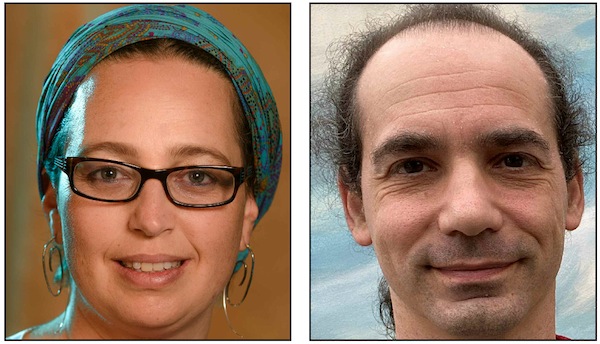
Matti Feigelstock, left, and Alisa Farina (photos from Jewish Federation)

The Jewish Federation of Greater Vancouver is expanding its efforts to address the mental health needs of younger members of the community by forming a partnership with Project L’Chaim, and hiring a new child, youth and young adult mental health worker.

According to Shelley Rivkin, vice-president of local and global engagement at Federation, the partnership with Project L’Chaim, an organization helping adolescents and young adults through life’s challenges, stems from identifying the importance of raising awareness of mental health issues confronting youth and providing professional development for frontline workers.

To this point, stigma has long contributed to people not feeling safe in discussing the mental health issues faced in the community openly; many families, consequently, have felt very alone in their struggle to find the necessary services and supports.

However, as Rivkin explained, “The pandemic universalized and destigmatized mental health issues. More people started talking openly about the anxiety and depression they or their children were experiencing, as well as the challenges they experienced in finding the help they needed. Over the past two-and-a-half years, we heard from schools, camps, Hillel and youth workers in our various organizations that there was a need for an experienced child and youth mental health practitioner who had a visibility in the community and would be able to immediately support, whether it was crisis intervention or short-term counseling, and could be a resource to parents and families, as well as other professionals.”

For her part, Matti Feigelstock, Project L’Chaim’s coordinator, is able to promote teen mental health in the Greater Vancouver community “by bringing programming, training and curricula to the teens and teen-facing adults in our community, as well as mental health professionals.” Through both Zoom and in-person events, she aims to bring more awareness and remove the stigma of mental illness. She also wants to provide adults with the tools to be there for the teens in their care.

“Our curricula for middle and high schoolers provide students with the ‘why’ to live, helping them find their purpose and build resilience to face life challenges,” Feigelstock told the Independent.

Project L’Chaim has a lot planned for the upcoming year. “We have a full calendar of virtual training planned for parents, educators and clinicians on topics from anxiety in children to talking about substance abuse,” Feigelstock said. “We also are looking forward to hosting a mental health day in collaboration with all of the local Jewish organizations, along with an awareness campaign to promote the role every individual has in mental health. Additionally, we are working with the local schools to teach our course, the Happiness Hack, to students, ensuring the conversation continues in and out of the classroom.”

Feigelstock, who has been at the helm of Project L’Chaim since May, has been involved with community service work at several local nonprofit organizations over the past 19 years. She is currently co-executive director of the Mamatefet Community Society, a charity that supports expectant and new mothers. For the past year, she has been a therapist focusing on women and youth at Elevate Therapy.

Project L’Chaim was started through a grant from the Diamond Foundation in memory of the late Steven Diamond. It serves as the Vancouver branch of the Wellness Institute.

“Our partnership with Project L’Chaim creates opportunities for parents and family members, youth workers, teachers and other frontline workers to access opportunities to hear and learn from renowned youth professionals,” Rivkin said. “Project L’Chaim’s connections to the Wellness Institute open up significant educational opportunities for the community. Their excellent publications are also available throughout the community and provide critical information in an accessible manner.”

* * *

In August, Jewish Federation welcomed Alisa Farina to the newly created position of community child, youth and young adult mental health worker.

Rivkin explained Federation realizes that young people who are struggling with their mental health are very resistant to seeking help through formal routes. By establishing a mental health outreach position, a person who can meet them in venues they are comfortable in, Federation hopes to create an environment in which more youth will seek help.

“We know that parents and family members struggle to navigate the mental health system and access the resources they need. This position will support and supplement the existing programs and services already available and diversify the supports available in the community. We want to make sure that parents and family members who are impacted by these issues feel supported and able to overcome the fear and despair they experience as they search for the right programs and resources to help their children,” Rivkin said.

Farina will provide direct support to children, youth and young adults struggling with mild or moderate mental health issues, such as anxiety and depression. She also will provide assistance and advocacy to parents and families as they navigate mental health systems, including consulting with school counselors and other professionals. She has worked for the Burnaby School district for 29 years, the last 10 of which she focused on work with high-risk youth and their families.

“When children or young people experience vulnerable mental health, it affects the individual, family and our community,” Farina said. “Our approach will be to stand with young people and walk beside families by providing direct one-to-one support, family support, advocacy and mental health system navigation in a judgment-free, low-barrier and equitable way. We want to foster resilience and mental well-being in our young people.”

For more information, visit wellnessinstitute.org or jewishvancouver.com.

Sam Margolis has written for the Globe and Mail, the National Post, UPI and MSNBC.

Format ImagePosted on September 16, 2022September 14, 2022Author Sam MargolisCategories LocalTags Alisa Farina, health, Jewish Federation, Matti Feigelstock, mental health, Project L’Chaim, Shelley Rivkin, Wellness Institute

Drescher opens Federation campaign

Fran Drescher, best known for the TV show The Nanny, among other comedic roles, enraptured audience members at the Jewish Federation annual campaign launch Sept. 8. She offered deeply vulnerable descriptions of being raped and of surviving cancer, and the related mental health impacts these life-altering events sparked.

The presentation was the centrepoint of an evening dedicated to the topic of mental wellness. Actor, neuroscientist and Jeopardy host Mayim Bialik joined live from Los Angeles along with her partner and podcast cohost Jonathan Cohen. Their podcast, Mayim Bialik’s Breakdown, is focused on myths and misunderstandings about mental health and emotional well-being. They were interviewed by Globe and Mail reporter Marsha Lederman.

A panel of local experts completed the evening. Alisa Farina, Federation’s new child and youth mental health worker, Danya Rogen, a social worker who specializes in mood disorders, Dr. Annie Simpson, a clinical psychologist focused on childhood anxiety, and Tanja Demajo, chief executive officer of Jewish Family Services, shared reflections with Dr. Sandy Penn Whitehouse, a pediatrician and clinical associate professor at the University of British Columbia and medical director at B.C. Children’s Hospital.

Lana Marks Pulver, chair of the campaign, opened the event. Candace Kwinter, chair of the Federation board, introduced a video on mental wellness. Sue Hector, chair of women’s philanthropy, introduced Drescher. Federation chief executive officer Ezra Shanken closed the event. King David High School Vocal Ensemble led the Canadian and Israeli national anthems.

Posted on September 16, 2022September 14, 2022Author Pat JohnsonCategories LocalTags annual campaign, Fran Drescher, Jewish Federation, mental health
Talking about mental health

Talking about mental health

Jonathan Cohen and Mayim Bialik, co-hosts of the podcast Mayim Bialik’s Breakdown, help launch the Jewish Federation of Greater Vancouver’s annual campaign on Sept. 8. (PR photo)

Television viewers watched Mayim Bialik grow up, most notably as the character Blossom Russo on the series Blossom, and in a string of other TV and movie roles, including playing the child version of Bette Midler’s character in Beaches. More recently, Bialik has been nominated four times for an Emmy Award for her role in The Big Bang Theory and it was announced last month that she and Ken Jennings will jointly fill the late Alex Trebek’s shoes as hosts of the game show Jeopardy.

But, when Bialik speaks to a Vancouver audience Sept. 8, she will not be acting or holding the cards with all the answers. She will be opening up about an issue that is close to her own experience: mental health.

Bialik is one of three headliners at the opening event of the Jewish Federation of Greater Vancouver’s annual campaign. She will be beamed in live from Los Angeles, along with her podcast partner Jonathan Cohen. They co-host Mayim Bialik’s Breakdown, which is described as “a quirky, informative and interactive podcast breaking down the myths and misunderstandings about mental health and emotional well-being.” While the pair will join from Los Angeles, live on stage at Congregation Beth Israel will be Fran Drescher.

Best known for her titular role in the 1990s sitcom The Nanny, Drescher is also an accomplished producer and author who has won several awards in the health field. Only recently, she has begun to open up about the traumas and major health issues she experienced earlier in her life, including those she says she never adequately dealt with at the time. At the campaign launch, she will reflect on how important mental health issues are to overall well-being.

In a recent interview with the Independent, Bialik and Cohen shared some of their vision and a little of what audiences can expect when they speak. Mental wellness is a core theme of the opening event, in part because these issues have become more pervasive due to stress, uncertainty and isolation caused by the pandemic. Bialik has been open about her own experiences with these challenges.

“I think one of the things about mental health is, depending on what you’re dealing with, there can be a lot of isolation,” Bialik said. “Talking about it, and being part of challenging the stigma, I think, makes you feel less alone. I definitely feel less alone. A lot of my fears around my challenges have definitely gotten less. I have less fear about talking openly about it. I think that’s really made an impact on me.”

On the podcast, she and Cohen discuss their personal experiences, welcome experts and also introduce a buzzy crowd of celebrities like Sarah Silverman, Dustin Hoffman, Margaret Cho and Howie Mandel. Topics include managing anxiety, overcoming trauma, alternative medicine, body positivity, grief and gratitude.

A lot of the time, Bialik said, people tell her and Cohen that the show raises questions viewers didn’t know they needed to ask, or that they didn’t have the ability to express to their medical professional – or maybe they do not have access to professional care.

“We are not doctors of that sort, we’re not looking to make diagnoses,” she said. “But, in sharing our experience, a lot of people are hearing their stories and that’s been really, really very powerful. We’ve had some incredible interactions with some of our fans. One of the reasons that we do a lot of giveaways and things like that is it creates a sense of community and it lets people know that we are real people behind our microphones.”

They hope to hear from audience members in Vancouver.

“We really want to have an interactive component to the evening because, for us, we are very interested in other people’s stories and we really enjoy that part of our podcast,” said Bialik. “So we’re excited to bring that to an audience live and be able to share, and also hear what other people want to share. We are also quite funny together – we think so, but other people have told us that as well – so it will be a way for us to show how we use our humour to interact and especially discuss difficult things like mental health.”

In addition to the podcast, the pair have pitched a few TV pilots, which have yet to get picked up, but they have more up their sleeves.

“It’s been a very fun partnership and we have lots of ideas of ways we’d like to change the world,” she said.

“We also both like to explain things,” said Cohen, “which sometimes makes us compete for airtime, but usually results in a further understanding of something.”

They both balked jokingly when asked if they were drawn together by their “nerdy” pursuits. Bialik is a neuroscientist and Cohen’s expertise is artificial intelligence.

“Neuroscientists and people in AI are the new superstars,” said Cohen.

“It’s not really nerdy,” Bialik insisted with a laugh.

But seriously, she continued: “Really, when we started talking again and connecting again, [that] was when we started realizing how much we had in common in terms of our interest in science and mind and body.”

Bialik is tough to pigeonhole. A mother, a scientist, an actor, an author, a game show host, a proud Jew, a vocal Zionist – she doesn’t feel a need to choose between her complex identities.

“I don’t know if it was ever really a question of settling for just one,” she said. “I’m a mother and I think that is the role I most enjoy personally. In terms of professional activities, I really did enjoy being a scientist and the knowledge that I acquired does not go away just because I’m not a full-time scientist. I do love advocating for causes that are important for me. I love writing. I do love writing. I guess it’s hard to pick just one.”

Hosting Jeopardy is a very different kind of job than being an actor, she acknowledged.

“I obviously have to be myself, but I have producers and judges talking in my ear the whole time, so it’s a big division of attention and that can be hard,” she said. “It’s a lot of really difficult words to pronounce, which I do get to practise a little bit that morning before we tape each set of episodes, but [it’s] very, very different and you have to be ready for anything because anything really does and can happen at Jeopardy.”

As one of Hollywood’s most visible Zionists, Bialik has been a lightning rod for anti-Zionism and antisemitism. But that’s not new, she said.

“The fact is, I’ve been dealing with antisemitism and anti-Zionism for decades in my professional presence,” Bialik said. “I will say that the climate of North America has definitely shifted.… [But] for me, it’s always been an issue. It’s one I was raised to know about and be aware of. I think I’m more touched, as many of us are, by the increase in antisemitic acts, and violent acts especially, against Jews. As someone who has been going to Israel and continues to go to Israel – I’ve been probably a dozen times – that’s always something on my radar. There’s definitely been more of this kind of hatred and activity and specifically targeting me. But it’s also been something that I’ve always had to think about.”

The Thursday, Sept. 8, Federation annual campaign launch at Beth Israel starts at 7:30 p.m. Tickets, $18, are at jewishvancouver.ca.

Format ImagePosted on August 19, 2022August 18, 2022Author Pat JohnsonCategories LocalTags annual campaign, Jewish Federation, Jonathan Cohen, Mayim Bialik, mental health, philanthropy, podcasts
Segal valued Yaffa’s work

Segal valued Yaffa’s work

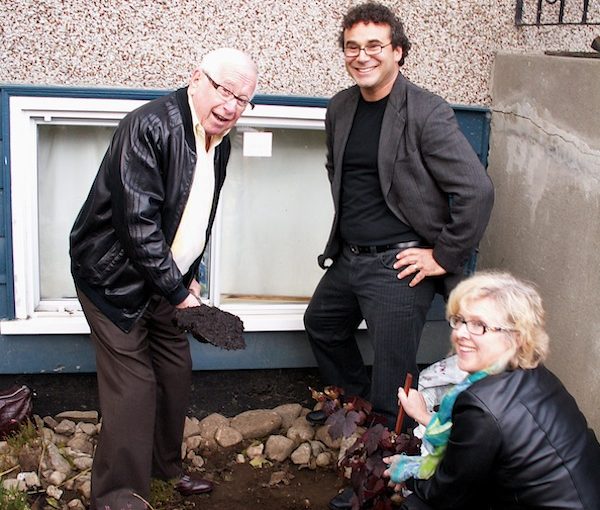
Joseph Segal plants a fruit tree with Yaffa Housing president Avie Estrin and Tracy Penner, back in 2010. Says Estrin: “Like a tree bears fruit only when properly nurtured and cared for, so too must we take responsibility and care for the most fragile and vulnerable amongst us, if we are to be healthy and fruitful as a community.” (photo by Susan J. Katz)

Until the final hours of his life, Joseph Segal was continuing a life of philanthropic engagement. On the weekend before his passing, the 97-year-old Segal had a meeting with Avie Estrin, president of Vancouver Yaffa Housing Society, of which the Segal family are leading supporters.

According to Estrin, in that meeting, Segal “reiterated his commitment towards helping bring Yaffa House the profile and community support he understood was so necessary and deserving.”

Vancouver Yaffa Housing Society group homes provide food, shelter, programming and on-premises support, within the context of Jewish traditions, culture and practice, for up to 18 Jewish adults struggling with mental illness. Segal’s backing of the organization goes back to the beginning.

“Joe was always a great supporter of Yaffa, right from the early days when my father Aaron Estrin (z’l) met with him in 1999 to discuss a capital campaign to raise the money to build the very first Yaffa House,” Avie Estrin said. “Even after his death, Joseph Segal was true to his word. Rabbi [Andrew] Rosenblatt’s eulogy reminded us of this in Joe Segal’s final wishes: that the Jewish community recognize Yaffa Housing Society’s work, and donate to our cause. While we have lost a great friend and supporter in the passing of Joseph Segal, he will always be remembered as the catalyst for our first house, and a champion for our mission.”

Segal’s support helped Yaffa through its entire history, not least in recent years, when the pandemic added hurdles to the delivery of service.

“Because kosher meal provision is so central to maintaining the Jewish aspect of our home, it was a terrible blow to our operations when we suddenly lost our arrangement with the Louis Brier Home and Hospital in January 2022, after 20 years’ cooperation,” Estrin said. “Fortunately, we were able to cobble together a new arrangement whereby JFS’s [Jewish Family Services’] Kitchen provides two wonderful meals per week. Café 41, along with L’Chaim Adult Day Centre, have been generously preparing subsidized meals the rest of the week. Our small band of volunteers pick up the meals from these different meal providers and bring them to Yaffa House every day. It goes without saying, we can always use more volunteers.”

The organization is also seeking new board members, including a treasurer.

Yaffa Housing has a permanent contract with Vancouver Coastal Health to provide funding to staff the facility part-time, said Estrin. “But we still depend on donations and community support to supplement this. Frankly, it’s not enough. Jewish Federation has been indirectly contributing to Yaffa House’s staffing the last several years but it’s very difficult to plan into the future without knowing for sure those funds are going to be there the year after next.”

Yaffa has no paid staff other than a 20-hour-a-week in-house mental health support worker.

“We have no budget for an operations manager, executive director, or weekend or evening staff,” said Estrin. “In the end, it comes down to our volunteer board to pick up the slack, but it’s wearing. As Yaffa has grown and matured over the last two decades, so too has our board. In fact, one of Yaffa’s original founding board members still actively serves on our executive – my mother, Tzvia Estrin, I am very proud to say. But the old guard can’t forever sustain Yaffa’s daily operations and a paid management is long overdue.”

Estrin said the organization is vital for the community.

“Yaffa is unique in so far as it represents the only dedicated Jewish mental health group home in Canada, west of Toronto. Over the course of more than 20 years developing our in-house supportive model, we’ve attracted interest and attention across the country as well as internationally…. Despite this, Jews in Vancouver remain largely unaware of the essential service the Vancouver Yaffa Housing Society provides our community. Despite the more recent public awareness, mental health has historically taken a backseat relative to other more mainstream community health concerns. The sad reality is that unless mental illness has somehow touched you personally, it’s simply not on people’s radar. This speaks to why, after so many years, Yaffa House remains virtually the only option for Jewish families struggling with this issue.”

To donate, volunteer or learn more, visit yaffahouse.org.

Format ImagePosted on June 24, 2022June 22, 2022Author Pat JohnsonCategories LocalTags Avie Estrin, Joe Segal, Joseph Segal, mental health, Yaffa House, Yaffa Housing

Opportunity to be healthier

There’s been much discussion about mental health, physical health and well-being as it relates to the pandemic. This can only be a good thing. It shines a light on something we should all think more about. For example, asking: “How are you doing? How are your family members and friends doing? Do they need support? Are they sad, isolated, lonely or not feeling well?” and actually hearing the responses.

Yet, once we start raising these questions about well-being, we have to acknowledge that we just don’t have the bandwidth or the social and medical infrastructure to deal with the outcomes. Many times, no one has cared, asked or listened when someone has spoken up and said things weren’t OK. It might be new for some to acknowledge that we’re not always “fine” and that there’s often not much professional help available either. (Just look at wait times to get mental health or addictions support.)

Our household had a great weekend recently. The weather was outstanding, warm and sunny, with highs of 20 to 23°C. We had outdoor experiences, with low-risk social experiences. We participated in a friendly neighbourhood cleanup and a big picnic with soccer and badminton. My kids gave me handmade art for Mother’s Day, with notes they wrote themselves. There was time for lots of good food, walks, playing and even some household cleaning. All four of us commented on Sunday night that we’d done so much, eaten well, and had so much fun.

I had so many feelings about this. I, too, loved the sunshine and the weekend’s events. I also felt physically well and energetic, capable of celebrating it all. That said, being absolutely prepared ahead of time, with lists of what we needed for each outing, a schedule, and carefully pre-organized and prepared meals was a lot of emotional labour. Like moms everywhere through the pandemic, I’ve shouldered much of this. When I woke up Monday morning, I was really tired.

The kids went to school. My partner settled down to his online meeting. I threw together food in two slow cookers for dinner and went to my desk – to work and to process my intense feelings. I knew I’d been starved for company. Seeing people outdoors, even strangers, with smiles and an intention to socialize and get to know us, was gratifying. Also, breaking out of our normal cold weather weekend pandemic routine was both fabulous and more work. Choosing to go out and chat with strangers – it was all good but also alien. That strange mix of feelings led me to think harder.

Working, I opened a fascinating listserv email about an informal comparison between Modern Hebrew, Yemenite Hebrew and Samaritan Hebrew. A Canadian engineer named Bahador Alast hosts YouTube interviews for a wide variety of languages in which he explores language, linguistics and culture. In this video, an Israeli speaker of Modern Hebrew, a Samaritan Israeli and a Yemenite Israeli all take apart informal sentences, a sentence of poetry, a sentence from the Torah (and liturgy) and another from the Mishnah (part of the Talmud). They easily code switch between their dialects of origin (Samaritan/Yemenite), Modern Hebrew, English and Arabic. They discuss the origins of their community’s pronunciations and conversational styles, their relationship to other Semitic languages and Modern Hebrew. With focus, they do all this in less than 20 minutes. It’s also done in such a friendly, open way that the moderator, Alast, who does this with many different cultures and languages, mostly sits and listens to the magic unfold.

This content stretched me intellectually, especially my auditory capacity, since I hadn’t heard these differences explained and formalized before. I loved this rare learning moment and the very specific linguistic context and comparison.

My personal realization about the weekend’s events and warmth and my Monday morning exhaustion was that context matters. The reason why it was all so fun was that we came into the weekend prepared. Also, all felt well rested and ready for lots of activity. Since the pandemic started, there has been acknowledgement of women’s household burdens with the cancellation of “regular” activities, but context matters. I had mostly the same burdens pre-pandemic and the normal run of activities made life overwhelmingly busy. The break in obligations allowed me to see the emotional labour in getting everything ready. I now sometimes can get my spouse to take on some of the load. Sometimes, we restructure things or do less.

The pandemic forced us to hit pause in many ways. Hopefully, it’s also opened up moments to make positive changes. People have always asked each other how we were, but did everyone listen to the responses? No. Many of us didn’t even have the time to listen to ourselves. Our own health and well-being can sometimes be hard to figure out. We need that quiet space to contextualize our experience. “Does this hip hurt more than it used to?” a physio might ask. However, if we don’t stop to think about what hurts or to discuss our feelings, experiences and needs, we cannot possibly contextualize them, either.

Judaism teaches us that we’re obligated to one another, in families, communities and society. Yet, if we aren’t listening to one another, we can’t help one another. Whether it’s speaking a common language with dialects or providing one another with mental health and other supports, we cannot lift one another up if we’re not listening or trying. We need to be self-aware to listen to our own bodies, minds and feelings. Then we can listen to and help others, too.

We may have a lot of health issues ahead, from long-COVID, health concerns left undiagnosed and mental health struggles. We have an obligation to recognize that we don’t have the social and medical infrastructure we need to manage it all. It’s up to us to start bridging the gaps. Listening to one another, offering context and support, is a first step. It’s an important opportunity to make things better.

Joanne Seiff has written regularly for CBC Manitoba and various Jewish publications. She is the author of three books, including From the Outside In: Jewish Post Columns 2015-2016, a collection of essays available for digital download or as a paperback from Amazon. Check her out on Instagram @yrnspinner or at joanneseiff.blogspot.com.

Posted on May 20, 2022May 19, 2022Author Joanne SeiffCategories Op-EdTags COVID, health, Judaism, lifestyle, mental health, pandemic
Chance to meet local artists

Chance to meet local artists

“At Rest” by Dov Glock, mixed media. Glock is one of several Jewish artists participating in this year’s West of Main Art Walk. (from artistsinourmidst.com)

The West of Main Art Walk Preview Exhibition and Sale kicks off at the Roundhouse Community Centre May 18-19. The West of Main Art Walk itself welcomes guests into artists’ studios May 28-29. Among the artists participating are many from the Jewish community, including Michael Abelman, Olga Campbell, Dov Glock, Pnina Granirer and Lauren Morris.

The preview – which is open for visitors 10 a.m. to 9 p.m. both days – features a reception at the Roundhouse on May 19, 7-9 p.m. Preview visitors will be able to buy the work of some of the 80 local artists taking part. There will be paintings, ceramics, jewelry, textiles and photography, as well as free art demos.

Artwork will also be for sale on the walk, which includes studios from Point Grey to Main Street, and from Granville Island to 41st Avenue over the May 28-29 weekend. Dozens more artists are showing their works all under one roof in larger hubs like Aberthau Mansion, Art at Knox and Pacific Arts Market. There, you’ll also find art demonstrations and more. At Lord Byng Mini School for the Arts, you’ll discover young emerging artists.

Also part of the month’s events is the annual (since 2018) Art for All Fundraiser. More than 70 artworks have been donated – and all are on sale for $50 each. Proceeds will go to the art program at Coast Mental Health. Its resource centre’s art room opened in 2000, and is a place where clients discover their creative potential while developing new ways of expressing emotions, healing pain and growing their self-esteem and self-awareness. Supported by volunteers – including clients and professional artists and art instructors – who give their time, feedback and encouragement, clients are able to work in a number of media, including paint and sculpture; supplies are provided. An annual art show brings together the artists, other resource centre members and Coast clients, family and friends and the general public to celebrate their work and their journey towards recovery.

Granirer, who was a co-founder of the very first open studios walk in Vancouver in 1993, is doing something a little different from the main event. On May 18, 7 p.m., at the Roundhouse, she is launching her poetry-art memoir, Garden of Words. (For more on the book, see jewishindependent.ca/poetry-and-painting-flourish.) Some of the paintings featured in the book will be exhibited and the books will be available during the whole time of the preview and at Granirer’s studio during the walk weekend.

photo - Pnina Granirer in her studio
Pnina Granirer in her studio. (photo from Pnina Granirer)

During the walk, Granirer is inviting people to her studio, where she will be offering her works for 50% off, with proceeds being donated to Stand up for Mental Health, which has helped people suffering from mental health issues to do away with stigma all over Canada, the United States and Australia.

Artists will be opening their studios from 11 a.m. to 6 p.m. on May 28 and 29. This is a unique opportunity to meet the artists, enjoy the art and ask questions. More information and the interactive online map can be found at artistsinourmidst.com.

– Courtesy Artists in Our Midst and Pnina Granirer

Format ImagePosted on May 6, 2022May 4, 2022Author Artists in Our Midst & Pnina GranirerCategories Visual ArtsTags art, Artists in Our Midst, Coast Mental Health, Dov Glock, jewelry, Lauren Morris, mental health, Michael Abelman, Olga Campbell, painting, photography, Pnina Granirer, poetry, sculpture, tikkun olam, West of Main Art Walk
Comedy and mental health

Comedy and mental health

David Granirer (photo from David Granirer)

Vancouver counselor and comic David Granirer has been standing up for mental health, literally, for nearly two decades. His brainchild, Stand Up for Mental Health, is a program that has helped hundreds of people on the road towards addressing and recovering from all sorts of psychological disorders by taking to the stage and performing comedy before live audiences.

The concept came to Granirer after observing his students during a stand-up comedy clinic he taught at Langara College in the early 2000s. While the course had nothing to do with mental health, Granirer noticed that some students experienced psychological benefits by the end of the semester.

“So, in 2004, I thought, why not put this in a package for people who wanted to do comedy but also wanted that life-changing experience? And, since I work in mental health and have a mental illness, this was the natural place to start,” said Granirer, who, in addition to advocating for destigmatizing mental illness, speaks openly about his own experience with depression.

“I’ve had students overcome long-standing depressions and phobias, not to mention increasing their confidence and self-esteem. There’s something incredibly empowering about telling a roomful of people exactly who you are and having them laugh and cheer,” he added.

The idea, which was seeded in Vancouver’s Oakridge neighbourhood, has blossomed to a program that Granirer has run in 50 cities throughout Canada, the United States and Australia – in partnership with mental health organizations in each area.

Granirer has trained nearly 700 comics since Stand Up for Mental Health’s inception. In that time, there have been more than 500 shows for a range of audiences, including mental health organizations, government departments, corporations, universities, correctional facilities and the military. He even created a show for the United States Secret Service in Washington, D.C., in May 2021.

In Vancouver, the Stand Up for Mental Health course is six months long. Classes start by teaching participants how to write stand-up routines; then they spend the next part of the classes working on their acts. Each week, participants write some jokes and bring them in to try in front of the class. Most of the acts are about their mental health experiences.

Classmates do a lot brainstorming together to hone the routines. At the halfway point, each student does a five-minute set. Afterwards, the prospective comics develop a completely new set for their graduation show at the end of the program.

In terms of therapeutic benefits, Granirer said doing comedy builds a comic’s confidence and self-esteem, enabling many to tackle other challenges in their lives successfully. It also helps get rid of the shame many feel about having a mental illness.

“People transform their past trauma into great comedy material,” he said. “In therapy we call that a cognitive shift. All the bad things they’ve been through now make a great act. Instead of feeling ashamed, they now feel proud of what they’ve been able to survive.”

Granirer emphasized that, while much can be explored in the process, the humour has to be clean, and there are taboo elements, such as homophobia, racism and antisemitism, which are off limits.

When the pandemic started last year, Granirer shifted to online classes and shows on Zoom. In 2021, Stand Up for Mental Health has done about 25 virtual shows for organizations across North America. Recently, live classes have resumed.

“The pandemic has also got in the way of my traveling to other cities where I’ve trained groups,” Granirer said. “I just finished training a group in Culpeper, Va., and had to emcee the show virtually instead of in person.”

Granirer has been the recipient of numerous accolades over the years. Among the honours decorating his mantel are an Award of Excellence from the National Council for Behavioural Health, a Life Unlimited Award presented by the Depression Bipolar Support Alliance, a Rotary Shine On Award in Australia for special achievement in mental health, and a Meritorious Service Medal from the Governor General of Canada.

His work for Stand Up for Mental Health has been featured in media throughout the world, including, of course, the Jewish Independent, and also in The Passionate Eye documentary Cracking Up. Granirer is the author of the book The Happy Neurotic: How Fear and Angst Can Lead to Happiness and Success.

The new year promises a busy start for Stand Up for Mental Health. On Jan. 12, Granirer and his team of comics are organizing “an evening of stigma busting comedy” called Speaking of Normal. The Zoom event will be hosted by TSN personality Michael Landsberg. To attend, visit wellnessinstitute.org/speakingofnormal.

The next Stand Up for Mental Health Vancouver class starts on Jan. 25 and is currently recruiting students. Classes are Tuesdays from 10:45 a.m. to 1:45 p.m. More information can be found at standupformentalhealth.com or by emailing Granirer at [email protected].

As far as being able to participate, Granirer stressed, “there are no prerequisites, no auditions, and no one needs to have any comedy experience. All they need is a desire to do stand-up comedy.”

He strongly encouraged his fellow Jewish community members to take part.

Sam Margolis has written for the Globe and Mail, the National Post, UPI and MSNBC.
Format ImagePosted on December 17, 2021December 16, 2021Author Sam MargolisCategories Performing ArtsTags comedy, David Granirer, education, mental health, Stand Up for Mental Health, standup
COVID-free camp summers

COVID-free camp summers

Camp Miriam offered both day and overnight camping experiences this past summer. (photo from Camp Miriam)

Camp Miriam is celebrating that, for the past two summers, its youth leadership has pulled out all the stops to provide programming for hundreds of campers despite the challenges of the pandemic.

“Coming into June of this year, we were all set to hold Kaytana [day camp] again in Vancouver and Victoria because at that time the provincial health restrictions did not allow overnight camp,” said Leah Levi, the camp’s registrar. “Then, in early June, the health orders changed and we learned that there was the potential to go back to our site on Gabriola Island.”

At that point, the camp – and especially its youth leaders who are responsible for everything from programming to logistics – had a decision to make. Would they continue with the plan they had been working on for months and hold six weeks of day camp, or would they try to quickly pivot and add overnight camp to the program?

“Honestly, if it had been up to the adults on the camp committee, I think we would have stuck with our original plan. The logistics of organizing overnight camp on Gabriola, with only a few weeks’ notice and at a campsite that had been empty for over a year was really overwhelming,” said committee chair Trilby Smith. “Camp needed to be cleaned from top to bottom, there were ferries to book, cooks, medics and lifeguards to hire, food to order and so, so many more details.”

But the young leaders knew that, as great as day camp is, overnight camp was what their campers needed after 18 months of pandemic living. However, they didn’t want to disappoint parents who had already planned for day camp. In the end, they voted to host two weeks of day camp in both Vancouver and Victoria – and three weeks of overnight camp on Gabriola.

The camp committee and many Miriam alumni supported the decision and volunteered hundreds of hours to help get the campsite in shape and assist in all kinds of other ways. In addition, Miriam’s donor community also rushed to help support Jewish camping in 2021.

In the end, 271 kids and 70 youth staff got to experience a COVID-free 73rd summer of “Miriam magic,” in a summer when the magic was needed possibly more than ever.

The effects of the pandemic on youth mental health have been well documented. The Canadian Mental Health Association notes, “Social isolation, removal from school and daily routines, as well as isolation and loss associated with illness are some of the top stressors children are facing.”

This fact was not lost on Miriam’s youth leaders, who reported that both campers and staff arrived at camp this past summer with greater mental health challenges than they had seen in previous years. However, they also saw that, after just 10 days of unplugged, in-person experiences in an inclusive environment, there was a noticeable change for the better in the mood of many campers.

“It was like someone released a pressure valve,” said camp director Marina Levy. “As the campers made friends, processed events going on in the world through our educational programming, and got to just be kids without the constant distraction from their phones and screens, we saw many of them settle and become less anxious.”

Parents noticed a change in their kids, too. One parent who responded to Miriam’s post-summer survey said, “My kid was soooooo excited that there was a sleepover camp this year. It felt like an oasis of near normality in an otherwise dystopian year. She came back so much more relaxed, with strong connections to the kids in their kvutzah [group].”

According to Project L’Chaim’s fall edition of Self-Care for Caregivers, it’s not surprising that camp would provide a balm to its campers and staff. Many of the suggestions offered by mental health experts in the booklet are embedded into Camp Miriam’s programming. For example, Miriam campers are immersed in nature and enjoy daily “forest showers” under the fir and cedar trees on the Gabriola site. They also receive a healthy dose of spirituality and mindfulness, especially through Shabbat and Havdalah traditions.

Finally, the experts say that feeling like you’re a part of something larger than yourself and forming meaningful social connections are keys to good mental health. Above all else, Camp Miriam prides itself on its focus on inclusion, community and tikkun olam – all of which contribute to many campers reporting that they have made lifelong friends at camp and that they feel more comfortable being themselves at Miriam than they do anywhere else in their lives.

Levy knows the respite of camp will not solve all the pandemic-related mental health challenges facing youth, but she believes it’s a start. “And, hopefully, next summer will be even more normal,” she said.

Apparently, many families are hoping the same. Miriam’s registration, which just opened last month, is already almost full. Anyone hoping to register their children for Camp Miriam’s 2022 session can get more details at campmiriam.org. To learn more about Miriam’s 2021 summer, the camp’s newly released annual report is also available on the website.

Vancouver-based writer Kelley Korbin is a Camp Miriam alum and Camp Committee member.

Format ImagePosted on December 10, 2021December 8, 2021Author Kelley KorbinCategories LocalTags Camp Miriam, COVID, kids, Leah Levi, Marina Levy, mental health, summer camp, Trilby Smith, youth
BGU studies health tweets

BGU studies health tweets

Dr. Odeya Cohen (photo by Dani Machlis/BGU) and Dr. Rami Puzis (photo courtesy)

Ben-Gurion University of the Negev (BGU) researchers discovered patterns of significantly decreased joy, increased sadness, fear and disgust among healthcare professionals (HCP) in the largest social media study to track emotional changes and discourse during the COVID-19 pandemic.

In the study, a multidisciplinary BGU team analyzed more than 53,000 HCP tweets from followers of several hundred Twitter accounts of healthcare organizations and common HCP points of interest. The most significant topics HCPs discussed during the pandemic were COVID-19 information, public health and social values, medical studies, as well as daily life and food. Approximately 44% of their discourse was about professional topics during the entire 2020 year.

The research indicates data-driven approaches for analyzing social media networks are helpful as a method for exploring professional health insights during both routine clinical situations and emergencies. The study will be published in the Journal of Medical Internet Research. A preprint is already available online. It was funded by the BGU Coronavirus Taskforce and by an Israeli Ministry of Science and Technology coronavirus research grant.

“Our findings, which track increasing sadness and decreasing joy, should be a warning to health organizations of the importance of better mental health support to help HCPs cope with the emotional consequences of the pandemic,” say Dr. Rami Puzis of BGU’s software and information systems engineering department (SISE) and Dr. Odeya Cohen of the department of nursing. “Most interestingly, HCP tweets expressed greater levels of fear just prior to pandemic waves in 2020. This indicates that many HCPs, beyond those working in epidemiology, observed, and were adequately qualified to anticipate pandemic development.”

Puzis goes on to say, “This suggests that decision-makers could benefit from investing additional resources into listening to the broader HCP community to track and anticipate bottom-up pathways for developing health crises.”

– Courtesy Canadian Associates of Ben-Gurion University of the Negev

Format ImagePosted on August 27, 2021August 25, 2021Author CABGUCategories IsraelTags Ben-Gurion University, COVID-19, healthcare, Israel, mental health, Odeya Cohen, Rami Puzis, science, Twitter

Pushing for more oversight

Members of the Jewish community, as well as members of various professional organizations, are calling on the government of British Columbia to do more to regulate practising therapists and counselors in the province.

According to the Federation of Associations of Counseling Therapists in British Columbia (FACTBC), which is at the forefront of the campaign for this change, there is currently no regulatory body for counseling therapists in the province and, therefore, there are no regulatory standards for the work that counseling therapists do.

As it stands, they claim, someone can call themselves a mental health professional in British Columbia without having the checks that exist elsewhere in Canada. This, FACTBC points out, differs significantly from Ontario, Quebec and Alberta, which have all established regulatory bodies to oversee who can become a mental health professional. And, they add, the remaining provinces have done more than British Columbia when it comes to the consideration of implementing regulation.

A member of the Jewish community recently came to the Independent with her story. In her attempts to remove a social worker from her mother’s life, she encountered what she believes were numerous inadequacies within the present system regarding the protection of the public’s interest and confidence.

“When we seek the help of doctors and nurses, there is a protected title that tells us the person is qualified and safe and that there is a professional regulator to back up this promise,” she said. “Regulation protects people from harm. I cannot change the events of the past, but I can take from that experience and do what I can to ensure that all our citizens are protected, moving forward.

“I knew,” she added, “and had confirmed by other counselors and social workers that what this registrant was doing was in violation of their professional code. I saw my mother become further isolated from friends and family, while her health continued to decline both mentally and physically, while in this registrant’s care.”

The community member filed a complaint with the B.C. College of Social Workers (BCCSW). “Through this experience, I saw firsthand the lack of transparency in the complaint and discipline process that gives social workers the ability to enter negotiated complaint resolution agreements (CRAs) in exchange for keeping matters confidential. How can the public have confidence in regulators if the public is not aware of actions taken by regulators to protect them?” she wondered.

The community member then did what many who lack the financial means could not: she filed a civil claim against the social worker. She was not looking for money, she told the Independent; rather, she was looking for accountability and safety.

In the end, the woman and her family received an apology from the registrant and a promise to not repeat the following conduct: failing to differentiate between professional and personal boundaries; creating a situation of dependence with clients; and failing to limit their practice within the parameters of their competence.

“The college, in their inquiry decision, acknowledged that the time the registrant spent with my mother and the amount the registrant billed were not reasonable. I am not sure I will ever be able to fully reconcile with the events that occurred over a three-year span at the hands of a social worker, who was a friend at the time, and [that] I helped facilitate the introduction to my vulnerable, senior mother,” the woman said.

“To help with my own personal healing,” she added, “I elected to join FACTBC’s stakeholder table. I hope to lend my voice to ensure social workers, counseling therapists and emergency medical assistants who deal with our most vulnerable citizens are recognized as health professionals and regulated under the Health Professions Act.”

For Shelley Karrel of Jewish Addiction Community Services (JACS) Vancouver, the importance of regulation for counselors in British Columbia cannot be overstated. “For counselors working in the area of addiction and recovery, it is critical to know the importance of assessment, understanding the various stages of addiction, being able to identify the options available for treatment and recovery,” she said.

Karrel explained that understanding co-morbidity – i.e., the presence of one or more additional conditions – of mental health issues with addiction requires psychotherapists and counselors to have the proper training and education to know how to help clients deal with their various challenges.

“Having counseling fall under a regulated body will give clients the assurance they are dealing with qualified professionals who have to meet professional standards of practice, ongoing continuing education and clinical supervision,” she stated.

According to Glen Grigg, a Vancouver clinical counselor and the chair of FACTBC, “proper regulation will prevent consumers from harm. A consumer should not have to guess whether the therapist is equipped to deliver the services they promise. Moreover, when harm is done, it is important to know that a registrant’s college has the power to bring restoration and remediation when harm has occurred.”

FACTBC, which is comprised of 14 professional organizations that represent 6,000 mental health professionals in the province, is asking for safety and accountability. On professional title, it recommends one legislative authority and one coherent and fair process that prevents harm and has the power to act accordingly when harm has been done.

The B.C. government has said that it will first implement modernization of the health professions regulatory system – a step that FACTBC enthusiastically supports – and then give attention to the mental health system.

To Grigg, “this response comes down to saying, in effect, ‘despite the opioid crisis and mental health fallout from the pandemic, we can defer this issue.’ When pressed for what is intended after a new regulatory process is put into place, timeline unknown, the response is that government will ‘recommend’ that professions, such as counseling therapy and social work, become a ‘priority.’ A recommendation to a yet-to-be created bureaucracy falls far short of commitment and action.”

Grigg added, “FACTBC has been advocating for public protection where counseling therapy is concerned for more than 20 years and have heard, over and over, variations on the theme, ‘Yes, of course, we are going to protect the public, but later, at a time we’re not prepared to specify.’”

FACTBC does give the province credit for creating a Ministry of Mental Health and Addictions – a huge step forward, in their view, as was the $5 million the province put towards increasing mental health services. What the government needs to do to follow up on this momentum is to regulate counseling therapy, they assert.

At present there is no way of accurately ascertaining how many practising counselors there are in British Columbia. However, Grigg cites what Ontario discovered. In that province, in the time since they implemented statutory regulation on counseling therapists, they found that half the people providing services did not have any form of registration or certification.

“That’s dangerous,” said Grigg. “And we suspect that the situation in B.C. is similar but, because there is no central authority, even the scale of the problem is guesswork.”

He stressed, “It’s easy to see why this is so crucial. Suppose you were sick or injured and went to your local clinic or emergency department and discovered that it was up to you to figure out whether the people working there really were nurses and doctors, and whether they were qualified to provide care? That’s what people looking for counseling services are up against every day in B.C. There is no single title, like doctor or nurse or dentist or pharmacist, that identifies qualified and accountable counseling therapists.”

Sam Margolis has written for the Globe and Mail, the National Post, UPI and MSNBC.

Posted on May 28, 2021May 27, 2021Author Sam MargolisCategories LocalTags British Columbia, counseling, FACTBC, Glen Grigg, government, healthcare, JACS Vancouver, law, mental health, regulation, Shelley Karrel, therapy

Posts pagination

Previous page Page 1 … Page 4 Page 5 Page 6 … Page 10 Next page
Proudly powered by WordPress