Skip to content
  • Home
  • Subscribe / donate
  • Events calendar
  • Business Directory
  • FAQ
  • News
    • Local
    • National
    • Israel
    • World
    • עניין בחדשות
      A roundup of news in Canada and further afield, in Hebrew.
  • Opinion
    • From the JI
    • Op-Ed
  • Arts & Culture
    • Performing Arts
    • Music
    • Books
    • Visual Arts
    • TV & Film
  • Life
    • Celebrating the Holidays
    • Travel
    • The Daily Snooze
      Cartoons by Jacob Samuel
    • Mystery Photo
      Help the JI and JMABC fill in the gaps in our archives.
  • Community Links
    • Organizations, Etc.
    • Other News Sources & Blogs
  • JI Chai Celebration
  • JI@88! video

Recent Posts

  • SFU honours Gloria Gutman
  • Lifting people’s spirits
  • Wedding a ray of light
  • Indigeneity and Zionism
  • Rule of law broken: councilor
  • Football and its roles
  • The burden of defence
  • Fish Café returns after fire
  • All right in what goes wrong
  • Nuns & mermaids at TUTS
  • Camp offers holiday retreat
  • Students and mentors inspire
  • Once-in-a-lifetime trip
  • 100 dancers, one heart
  • Money for the sciences
  • What “Jewish food” means
  • Have a cookie, schnitzel too
  • Federation now across BC
  • Israel fighting for its existence
  • Deal strengthens Iran
  • Patriotic belonging diminishes
  • A campaign to engage
  • Upstanders’ first live event
  • Responding to Carney
  • Having your own home
  • Music a family tradition
  • Musical to warm heart
  • Community milestones … June 2026
  • Sharing her passion for Israel
  • Or Shalom reopens its doors
  • JFS from past to future
  • Need holistic approach
  • Sharing stories, advice
  • Journalist shares fears
  • Skills to live together
  • Road to independence

Archives

Follow @JewishIndie
image - CJN box ad Rockowers 2026

Tag: mental health

Dementia care is self-care

Dementia care is self-care

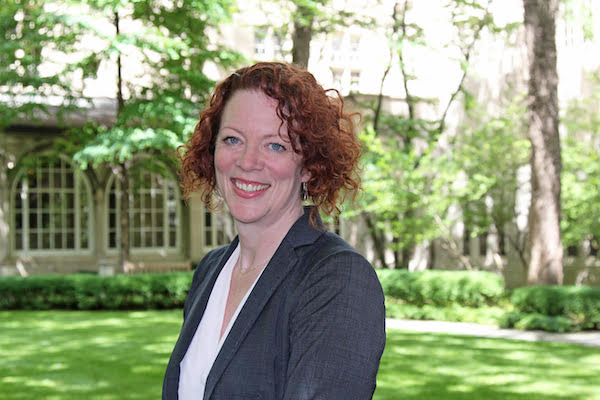
Karen Tyrell, founder of Personalized Dementia Solutions, spoke recently at an online event hosted by Beth Tikvah and the Kehila Society. (photo from dementiasolutions.ca)

To care for people with dementia, caregivers must first ensure they care for themselves. That was a message from Karen Tyrell, an expert with 25 years’ experience assisting people with dementia and those who care for them.

May is caregiver awareness month and Tyrell, who founded Personalized Dementia Solutions, was speaking at an online event May 19, sponsored by Beth Tikvah Synagogue and the Kehila Society of Richmond. Tyrell, who is also author of Cracking the

Dementia Code: Creative Solutions to Cope with Changed Behaviours, teaches people how to deal with dementia in loved ones through one-on-one and group consultation.

Common symptoms of dementia include impairment of memory and thinking, judgment and communication problems and personality changes.

Tyrell noted that the stress caused by caregiving for a person with dementia can result in physical and emotional health issues, some of which themselves can exacerbate the causes that bring on dementia. So, it can become a cycle in families.

She offered a range of strategies, such as breathing exercises, for caregivers dealing with stress. She also emphasized the need to share your concerns with others before they evolve into a crisis.

“As soon as you notice your stress levels are starting to climb and you’re having a hard time to breathe because of what you’re going through, please reach out, tell someone,” she said. “Reach out to your community, reach out to your doctor, reach out to a counselor, reach out to the Alzheimer’s Society in the community that you’re in. Reach out to someone to tell them, because, when you talk about it, then others will give you suggestions on what you can do.”

She urged caregivers to accept help when offered.

“Please don’t think that you’re going to be fine or that you’re going to be an inconvenience to others,” she said. “You need that help. Nobody can handle caring for someone with progressive dementia all by themselves. It’s not humanly possible from the beginning to the end.”

Another tip is to have realistic expectations.

“If you are thinking, I can do this all on my own because I’m the wife and this is my duty, in some ways, I would tell you, that’s great. You’re doing great,” Tyrell said. “But is it realistic that you can do this all on your own?”

Setting boundaries is another key.

“It’s hard to say no to people, but, when you’re setting boundaries for what you will and will not do, and say no to certain things, then you’re going to take better care of yourself,” she explained. For example, some people accept that they can continue to care for their loved one at home until, for example, the person becomes incontinent more than once a day, or until the person with dementia is no longer able to go to their twice-a-week adult day program, giving the caregiver a short respite.

An inability to get proper sleep is a dangerous cycle, Tyrell warned. Exhaustion on the part of the caregiver is a recipe for disaster. Melatonin for the caregiver or the person with dementia could help, or a paid worker to sleep on the couch for a limited period in case they are needed, she said. If possible, the caregiver might get away for a couple of days or the loved one could go into a few days of respite care.

Developing negative emotions and responses is understandable, she added, but finding ways to be positive is critical.

“Try to find some of the positives of your situation,” she said. “One fellow said him and his dad never got along all of their life, they had a really rocky relationship, but when he started to develop dementia, his personality changed and they became best friends. He looked at the positive: ‘It’s not fun to see my dad go through this but I found something good in this.’”

Laughter is a medicine, she added. Remaining social – even via the computer if the pandemic makes in-person socializing difficult – and having laughs with friends can go a long way to keeping a caregiver healthy.

Meditation, yoga, prayer, relaxing exercises or activities are also important tools.

“Exercise is proven to help us burn adrenaline,” she said. “So, when you’re stressed, go for a walk, try to burn off some of that adrenaline. Move that body. Walking is a great exercise.

“Eating healthy is helpful,” she added. Dark green vegetables and all sorts of berries, but especially blueberries, have antioxidants that help slow the aging process.

The presentation is available for viewing at btikvah.ca.

Format ImagePosted on May 28, 2021May 27, 2021Author Pat JohnsonCategories LocalTags Beth Tikvah, caregiver, dementia, healthcare, Karen Tyrell, Kehila Society, mental health, Personalized Dementia Solutions, respite care

Why is night different?

It was the first night of Passover and I was feeling miserable. By now, I recognize the ache. It’s the one I get when I am thousands of miles away from my family.

Away from the days of being young and just naturally assuming there would be a seder night with family. Away from old familiar melodies and reminders. I remembered when my mum would say a prayer in a funny British accent, or how we would all be tapping our hands vigorously on the table while singing. I’d be sitting with siblings and cousins, playing games with the matzah, sneaking a sip or three of heavily sweetened kosher red wine and counting down the time until we could eat.

Forty years ago, after leaving Israel, I moved to London, where there were always relatives to fill that gap. However, back in the younger days, my Jewish identity took something of a back seat. As a teen in Israel, I always wondered why I wasn’t allowed to join my friends at the beach on Shabbat. As a child, we were raised as Orthodox Jews but, when we immigrated to Israel, some of the traditions, sadly fell by the wayside.

Vancouver eventually became my permanent home and, initially, I’d always worry where I would be spending the Jewish holidays. Frequently, friends and kind strangers invited us to their homes. It only seemed to deepen the family longing pangs.

When I became a parent, my husband and I began to host our own celebrations and seders and we always included strangers and synagogue friends. Fortunately, when my oldest son was 3, we became friends with another family. They knew some family-less people and it wasn’t long before we all celebrated the Jewish holidays together, a tradition which has continued – until recently.

When the pandemic began and social distancing became necessary, holiday gatherings were cancelled. Zooming on our phones became the norm. It was different. Something of a novelty.

A few days before Pesach this year, I glanced at the secular calendar, which indicated Sunday as the eve of Pesach, so I arranged for our kids and partners to come Sunday night. It wasn’t until mid-afternoon Saturday that I realized I had goofed and Pesach commenced that night. By 4 p.m., the sadness had crept in. My sister had phoned from Israel and filled me in on the lovely seder she had attended.

My brother had sent photos. All the well-wishers had phoned and sent greetings.

For the first time in many years, my husband and I would be all alone and unprepared. There was little motivation to do anything. We ordered an Indian (vegan) meal to be delivered. I forced myself to light the festival candles and mutter some prayers. Then, the phone rang for the first time in hours.

It was a good friend. She sounded excited. Although she had hosted many a seder elsewhere, she was holding her first with her daughter in Vancouver, rather than attending an organization’s or other event via Zoom.

“You must come over and see my table! It’s so beautiful! Even just for a few minutes,” she said.

I begged off because we would be seeing our infant grandson the following afternoon and just couldn’t take the chance. Besides, our delivery would be arriving any minute. “Cancel it! We have lots of food here!”

I would have dearly loved to have dropped everything and gone to her house. I recalled how, some 20 years earlier, she and her daughter had attended our seder. We settled on a FaceTime call and sang the Shehecheyanu blessing together.

A knock at the door; our food had arrived. We said goodbye. But my friend’s enthusiasm was infectious. Her phone call, when I so needed to be remembered, reminded me that we weren’t, in fact, alone in the world.

We pulled out Haggadot and some of the seder plate preparations for the following day. Miraculously, there was enough kosher wine to get us to the third glass of wine and the spilling of the wine for the 10 plagues. My husband and I took turns reading while the candles flickered.

Unlike most of our past seders, it was quiet and peaceful.

This year, I really asked myself: “Why is this night different?”

The answer could be lengthy but I do know that, on this particular night, there was a little soul intervention.

Jenny Wright is a writer, music therapist, children’s musician and recording artist.

Posted on May 28, 2021May 27, 2021Author Jenny WrightCategories Celebrating the HolidaysTags coronavirus, COVID-19, family, mental health, Passover, seder

Where I’ve been this year

After listening to Dr. Betsy Stone during a community workshop called A Year of Upheaval: What has Trauma Done to our Bodies and our Brains?, I decided to take her advice and tell my story. According to Stone, “Healing requires storytelling … we tell our stories so we’ll understand our experience differently.”

The past 15 months have been a journey for all of us. Some more than others, but no one has not “traveled” during the pandemic. And, by travel, I mean change. Whether we’re brave enough (honest enough?) to admit it or not, we have all been transformed. Call it trauma, call it what you like. It’s all a matter of semantics. Not everyone is as vocal as I am, or as filled with anxiety about COVID, but no one comes out of this horrible shindig unscathed.

Whether your resilience lies in emotional strength or a feeling of invincibility, or whether you’re firmly entrenched in that big river in Egypt (denial), we all cope in our own ways. There is no one right way through this. You can’t go over it, you can’t go under it – you can only go through it. Putting our experience into words brings new life to it, new insights. Speaking it makes it even more real and, maybe, just maybe, easier to cope with.

So, where have I been this year? I wish I could answer that with geographic precision. What comes to mind is: home. And, occasionally, the pharmacy and grocery store, as well as walks close to home. While I hate to say that the pandemic has been my world, it’s hard to escape the reality of that pronouncement. I fully admit my obsession with the pandemic, my fear and my single-minded focus on how to stay healthy. I won’t apologize for it, or feel less-than. It is what it is.

That doesn’t mean to say that my fear has prevented me from seeing silver linings during this unparalleled time. There has definitely been more than one “there-must-be-a-pony” moment. The most important one being that my nephew and his wife had a baby boy near the start of the pandemic. It doesn’t get any better than that. In random order after that, I have thrown myself into the deep end of the pool with Torah classes and other religious learning. Next on my list is that I started on a life-changing medical treatment that makes my life much easier. I have made new friends and acquaintances through the numerous Zoom classes I attend nearly every day. I am exercising 100% more than I did pre-pandemic. I might sleep less, but my brain has expanded. In the good way. And that’s just the beginning.

All this is by way of saying that, while I wouldn’t award COVID first place in a popularity contest, it has had its bright spots. It has impacted my perspective on all things, in a way that nothing else has, to that degree. When I think about what’s important now, my pre-COVID list is almost laughable. I, like many others, have embraced the basics: health and safety, family, faith and trust.

When I think of the trajectory of this past 15 months, it’s hard to articulate. Or, more to the point, what our reactions have been. Have I learned to be more trusting, or more suspicious? Have I expanded my capacity for compassion, or have I become more selfish? Have I anchored my experiences in religious belief, or have I trusted in science? Have I given in to my fears, or have I conquered them? While I’ve always tended to lean towards the black and white, there really are no absolutes right now. There are, however, firm yeses and hard no’s. I am reconsidering everything I once was certain about. The $64,000 question is whether I will be able to integrate what I’ve learned and turn it into something positive when all this is over. Or, better yet, before all this is over. The jury is still out. But I’m hopeful.

I have become exponentially more grateful for the simple things: my devoted husband who is my perfect companion in life; that I have a loving and lovely family; that I have never had to worry about where my next meal will come from; that I live in a part of the world that has great doctors, easy access to medical care and all the outdoor green spaces you could ever ask for; and that I have mentors and friends. I could go on ad infinitum.

Too often, I see the clouds instead of the blue sky that’s right behind it. I see impediments where there don’t have to be any. Positivity is a steep learning curve for me. It’s funny that I used to consider myself an optimist. Since the pandemic, I’ve come to see how maybe-not-true that is. Not that I’m proud of it, it’s just the current reality. But I’m trying pointedly to turn that around. There are days where I see hope staring me in the face everywhere. Literally everywhere. Other days, it’s just fog and darkness. I know I’m hardly unique in this.

So, in truth, I have been lots of places this year. Mostly in my head. But some real places, too. Like a certain street in Shaughnessy that’s filled with huge trees, beautiful homes and no people walking about. A place where it’s safe for me to take off my face mask for a block or two. Until I see someone. I have also been to a place of sheer, unnamable joy, seeing my tiny great-nephew on WhatsApp video. I have discovered flowers I never knew existed, in areas I’d never walked before (despite being a native Vancouverite). I have traveled via Zoom to other countries, for learning and sometimes for pleasure. But pleasures that don’t involve a beach or a buffet. And I travel constantly in my dreams.

Every day of this pandemic, I have learned something. About myself, about others, about faith. That’s got to count for something, right? When we all heal from what Stone calls this “trauma,” we’re definitely going to come out of it changed. Whether that change is positive or negative, or a combination of both, is up to us entirely. My commitment to myself is that I’m going to try and lay the groundwork for an improved Shelley. A less anxious, more trusting, deliberately positive Shelley.

I guarantee you’ll still recognize me, though. I’ll be the one still wearing a facemask a year from now. Or maybe not.

Shelley Civkin is a happily retired librarian and communications officer. For 17 years, she wrote a weekly book review column for the Richmond Review. She’s currently a freelance writer and volunteer.

Posted on May 7, 2021May 7, 2021Author Shelley CivkinCategories Op-EdTags Betsy Stone, coronavirus, COVID-19, health, mental health, resilience, self-improvement

Working through emotions

The experiential feeling of shame is defined as a painful emotion caused by feeling like you have done something wrong or disgraceful. Shame is a popular trope and is associated with the concept of “Jewish guilt.” However, on the ground and in my practice with tweens, adolescents and adult women, shame carries with it strong painful emotions and regret(s). Shame is a common reaction to anxiety, depression and mental and emotional stress.

For the therapeutic clients who work with me, shame is expressed as all-consuming. In the context of emotional and mental stresses that are relational or situational, common expressions of shame arise of feeling broken, defective and disconnected. My general aim is to acknowledge the power of shame and their particular relationship to it by also normalizing the emotion and experiences with it. As a therapist, I use various creative-, expressive-, psychosocial-, embodied-, feminist-, narrative- and mindfulness-based psychotherapies to work a way inside, through and outside of the burdens my clients are holding. For the purpose of this article, I will focus on mindfulness psychotherapy.

Experiences of anxiety, depression, grief, relationship and family struggles often result in individuals being programmed and aware of the value of, or favouring of, one part of their experience over another – for some, it is intellectual or cognitive abilities; others are guided by emotions; others by physical signals. More and more we are realizing the importance of recognizing and listening to all of our responses as a way to heal and grow. A mindful approach to psychotherapy helps you identify and integrate all of these parts of yourself. Brain science validates this notion and suggests that, by attending to your thought patterns, emotional reactions and sensory experiences, you can change patterns of thinking, feeling and moving in the world. Even complicated mental and emotional health experiences paired with the weight of shame can be tackled using mindfulness as a key component in therapy and applying it in day-to-day life.

Mindfulness practice offers hope for changing unwanted or destructive reactions, belief systems and behaviours that seem fixed or difficult to mobilize. For example, if you have a negative self-view, by noticing the story you tell yourself and considering it a pattern of thinking versus a truth, there is room to reevaluate and create a more accurate description of yourself. And, when you have a more accurate and accepting view of yourself, you are more likely to trust yourself and live more freely. This work is not easy and it is important to proceed gently and in the care of a trusted mental health professional.

I will share a short mindfulness practice that you can do at home. Mindfulness connects one’s mind to one’s body and one’s breath. I like carrying out this mindfulness exercise with my individual therapeutic clients and in group therapy because it serves as a reminder to connect to one’s body and to breathe through it. Through this mindfulness practice, that I call “body scan,” one can gain both emotional and physical clarity and start a naming and eventual cleansing of emotions that do not serve including shame.

Body scan

Find a place you can sit comfortably, quietly and undisturbed and set a gentle timer for five to 10 minutes. Be kind with yourself and start slowly, with five minutes. The more you practise, the easier a longer mindfulness practice will be.

During the body scan exercise, you will pay close attention to the physical sensations throughout your body. The goal is not to change or relax your body and mind, but instead to notice and become more aware of your body, your mind and your breath.

Begin by paying attention to the sensations in your feet. Notice any sensations such as warmth, coolness, pressure, pain or a breeze moving over your skin. Slowly move up your body – to your calves, thighs, pelvis, stomach, chest, back, shoulders, arms, hands, fingers, neck and, finally, your head. Spend some time on each of these body parts, just noticing the sensations. Remember to breathe as fully as you can, in through your mouth, exhaling through your nose. Your breaths are like gentle and ongoing waves.

After you travel your body, begin to move back down, through each part, until you reach your feet again. Remember to move slowly, and just pay attention, breathing and noticing.

Dr. Abby Wener Herlin holds a doctorate degree from the University of British Columbia. She is the founder of Threads Education and Counselling and works with tweens, adolescents and adults. She carries out themed social justice and creative arts and writing workshops for students, teachers and schools. She is available for therapeutic sessions and contemplative writing workshops. She can be reached at [email protected] or via threadseducation.com.

Posted on May 7, 2021May 7, 2021Author Dr. Abby Wener HerlinCategories Op-EdTags anxiety, depression, grief, health, meditiation, mental health, mindfulness, psychotherapy, shame
COVID and other challenges

COVID and other challenges

Dr. Judith Moskowitz (photo from Judith Moskowitz)

Anxiety and stress can be debilitating even in the most normal of times, but, with COVID-19 and all that it encompasses, we have all been presented with a whole other level of challenges.

In this context, the Jewish Independent connected with Dr. Judith Moskowitz, a professor of medical social sciences at Northwestern University Feinberg School of Medicine, in Chicago. She is also the director of research for Northwestern’s Osher Centre for Integrative Medicine. Trained as a social psychologist, with expertise in stress and coping with emotions, Moskowitz started her career in the early 1990s, helping men caring for their partners suffering from AIDS.

“Before there were more effective treatments available, it was essentially a terminal illness,” she said. “Caring for a loved one with AIDS was really one of the most stressful events a human could experience.”

Initially, she said, “We’d ask them, ‘What is stressful about this?’ Then, we’d help them cope with it, really focusing in on the negative part the whole experience and, shortly after the start of the study, the participants started saying, ‘You’re not asking us about the good things in our lives’ … which surprised us, because we’re coming at it from a very much stress and coping way.

“So, we listened to them and started then asking, ‘OK, tell us something positive that happened in the last week.’ And, almost in every single interview, even if their partner had just died, they could talk about something positive … often something small … having to do with something else going on in their lives not necessarily directly related to their care-giving.”

This new perspective helped direct Moskowitz onto a path looking at the positive things within stressful life events, allowing positive emotions to be expressed along with the negative.

“This isn’t about pretending things aren’t happening,” she stressed. “Rather, it’s about knowing that, even when times are really dark and you may be experiencing a lot of negative emotions and a lot of stress – maybe even depression or anxiety – you also have the ability to experience positive emotions as well. So, if you can experience the positive alongside those negative emotions, you’ll be able to cope better.”

Moskowitz and her team put together a program that includes eight to 10 skills, depending on the target group, toward helping participants increase their daily experience of positive emotions – stopping to notice, savour and capitalize on those good aspects.

“When things are stressful, it can be hard to see the positive things going on,” said Moskowitz. “We help people realize there’s usually something positive happening … you just have to be able to notice it.

“Things might be really horrific, but your dog is sitting next to you, really loves you, and it’s very sweet. So, just taking a moment and petting your dog, and then maybe telling someone about it – that would be noticing something positive in your life and savouring or capitalizing on it,” she explained. “We’ve been able to show that people who learn these skills and then practise them have better emotional well-being. They’re less likely to be depressed. In some samples, we were seeing some physical health effects. So, through clinical trials, we showed that the program seems to be helpful.”

When COVID first hit, Moskowitz was inundated with questions about how to cope better with stresses associated with the pandemic. The bottom line is that these skills transcend any particular stressor and can help no matter what the situation.

“For COVID, my advice is the same as it is for coping with breast cancer, diabetes, depression, or being a high school student,” said Moskowitz. “Learn these skills, try them out, see which work for you and, then, keep doing them. It’s like a physical activity, something you need to keep on doing. You can’t just do it once … similar to gratitude, noticing the good things, being thankful … it doesn’t work for you to just be grateful once and then be done with it. You need to take it up as a habit, and that can help you cope with COVID-19 or adapt with whatever kind of life stress you’re facing.”

Moskowitz also teaches the importance of doing acts of kindness. The idea is that, when you do something nice for someone else, it helps you feel better, too. Such an act can be as simple as paying for the coffee of the person in line behind you. Or looking someone in the eye and thanking them, making them feel appreciated and seen. And there are many types of acts that can be done without the receiver knowing the kindness came from you, if you’d rather remain anonymous.

“Doing these acts helps you feel better in a situation where you might think, I’m suffering here, I’m having a really hard time … but, knowing you can do something to help someone else can help your own well-being,” said Moskowitz.

Another skill she pointed to is “positive reappraisal.” When something stressful happens, take a moment to reframe it or think about it in a way that makes it seem not so bad or even like it’s positive thing – find the good in it.

“Sometimes, it takes the form of actually learning something about yourself – like you find that you are stronger than you’d thought you were,” said Moskowitz. “My favourite positive reappraisal is, ‘Well, that could have been worse! It’s bad, but it could have been worse.’

“An extreme example of this happened when we were doing some work with a gun-violence prevention group here in Chicago, teaching them these skills. They work with young men who are at high risk of either being victims or perpetrators of gun violence. The people they work with often are involved in a shooting. [The group members] will talk about it and will say, ‘One of our clients was shot and is in the hospital, but he’s alive.’ Having one of your clients shot is pretty bad and very stressful, but they’re able to say, ‘You know what? It could have been worse. He could have died, but he’s still alive.’ So, that’s a very vivid example of positive reappraisal.”

Moskowitz stressed that there is no one technique that works better than all others. She said, with regard to various anxiety- and stress-reducing methods, it is very much a matter of what fits best for each individual in a particular circumstance.

For more information visit moskowitzlab.com.

Rebeca Kuropatwa is a Winnipeg freelance writer.

Format ImagePosted on May 7, 2021May 7, 2021Author Rebeca KuropatwaCategories WorldTags anxiety, coronavirus, COVID-19, health, Judith Moskowitz, mental health, positive reappraisal, stress
COVID’s impacts on mental health

COVID’s impacts on mental health

(image from bastamanography)

Purim 2020, which took place in early March, brought with it added significance. For some, it represented the last time they gathered in a Jewish setting in person, outside the home. For others, it was the first “live” service to be canceled as a result of SARS-CoV-2. In the days that ensued, lives changed as the perils of the coronavirus became apparent. School, work and religious services all moved online; personal contact with friends and family became exceedingly limited; travel, for most people, ceased.

Among the societal issues compounded by the pandemic have been increased isolation, drug dependence, and food and job insecurity. Underlying these problems has been COVID-19’s effect on mental health, including within the local Jewish community. As a result, numerous groups have stepped up their efforts to help the most vulnerable, and all those who have been impacted by the pandemic. During the past weeks, as the first anniversary of COVID-19 came and went, the Jewish Independent spoke with several people at the forefront of handling the Greater Vancouver Jewish community’s response.

At Jewish Family Services (jfsvancouver.ca), efforts to tackle mental health issues have widened, as more people have been seeking the agency’s support. Early on, JFS opened a crisis line that runs seven days a week, from 9 a.m. to 9 p.m. (604-588-5719 or [email protected], with the promise to respond within 24 hours).

“People are struggling, without a concrete end to the restrictions, and so demand for emotional support and learning different coping skills has surged. Our crisis line is always there for people who need immediate help and, for many community members, this is the easy way to connect with a counselor. If someone wants to remain anonymous, that is absolutely an option, we do not require a caller to identify themselves,” JFS chief executive officer Tanja Demajo told the Independent.

From its launch at the start of the pandemic to August 2020, the JFS Community Crisis Line received 955 calls, serving 494 individuals. Case workers spent 2,052 hours on the line. Additionally, 166 individuals accessed free programs offered by the JFS mental health and wellness team via telehealth and video conference – a 40% increase compared to pre-COVID times.

“Many are struggling with the added role of being a caregiver in the pandemic context, as well as dealing with their own emotions, so our workshops and support groups provide a community where people are able to vent, talk and support one another. We also connect people with friendly callers. These services have been a lifeline for many of our clients,” Demajo said.

A report released by the JFS client advisory committee last summer highlighted many ongoing concerns. One alarming quote from a client cited in the report reads, “COVID-19 has been depressing and frightening for me. My anxiety has been through the roof and I’ve had an increased number of panic attacks and migraines. My chronic health conditions have increased in severity and I have new ones. My nightmares and terrors have also increased.”

Prior to the pandemic, some JFS clients were already battling with mental health issues, often severe, which have been aggravated by the need to now cope with unaccustomed fears and anxieties. Some people, according to JFS, have refused to go outside, whether it be to the grocery store or outside for a walk. This problem is often felt by seniors, who, like everyone, need exercise and who confront serious health conditions such as heart disease, diabetes and high blood pressure.

Many housebound JFS clients depended on family and friends visiting for social and emotional connection before COVID hit and have been feeling deeply alone since the pandemic began. Irritability and anger are rising. Senior clients who were used to spending significant time with their grandchildren are missing them desperately. “I miss hugging my grandchildren,” is a common refrain.

Since mid-May of last year, there have been weekly depression and anxiety support group meetings with JFS’s mental health outreach therapist, Kevin Campbell. Run on Zoom, the 90-minute sessions teach coping skills and allow a safe place to talk and share. The group focuses on cognitive behavioural therapy and mindfulness techniques. JFS also has an active seniors caregivers support group led by Lily Shalev.

Not all COVID-19 developments in connection to mental health are grim, JFS notes. Due to technological developments, some of those experiencing isolation are able to access telehealth, work from home, get home deliveries and view a variety of educational and cultural offerings online, including many synagogue activities.

Jewish Addiction Community Services Vancouver (jacsvancouver.com), an organization that helps community members navigate the troubles of various substance abuse issues, has held one-on-one meetings on Zoom ever since COVID started.

“Clients seem to like this kind of individual counseling better, as it allows for greater intimacy, even though it is on Zoom,” said Shelley Karrel, manager of counseling and community education at JACS. “What people liked most about the group meeting was the getting together physically.”

To help those who would prefer to meet in person, Karrel has arranged for one-on-one socially distant coffee meetings. “What JACS has done is to make ourselves more available to someone when they want to talk, and to be able to schedule a meeting fairly quickly. As a registered clinical counselor, I am able to offer clients tools and exercises for managing their symptoms and for exploring the root causes when the issues of anxiety and depression are evident. Some of my clients are finding AA meetings helpful online. And, like with our clients, some are not using that medium for the same reason – it’s not personal enough.”

For ongoing support, JACS has a monthly email that lists many resources for people, if they want to reach out for specific help. JACS is also beginning a new program, Sustaining Recovery, that offers additional support in the form of a structured plan to help someone develop goals and be able to keep track of their progress. This plan, JACS finds, is very useful in creating accountability and support.

Inclusion services at the Jewish Community Centre of Greater Vancouver (jccgv.com/inclusion) continues to provide a number of targeted social and recreational programs intended to engage, educate and provide meaningful lifelong learning opportunities, as well as engage individuals with diverse needs. The programs are rooted in Jewish values and the principles of social connection, community building and belonging.

“Social isolation is a prevalent issue for individuals with diverse abilities [and] this reality was exacerbated by the COVID-19 shutdown,” explained Leamore Cohen, coordinator of inclusion services. “These communities have been particularly impacted by the loneliness, uncertainty and economic hardships caused by the global pandemic, leaving these individuals at higher risk for numerous health challenges. The work we do in the inclusion services department creates the needed awareness of the individuals we support. But, now more than ever, community members are looking to us for routine and engagement at a time when they are most vulnerable.”

As people have settled into life with COVID-19, “these individuals continue to be shut in and vulnerable to mental health challenges,” she added. “In response, we offer a hybrid of virtual and in-person programming throughout the week that is both accessible and safe. In-person programs adhere to best COVID practices, and our virtual offerings allow for those who are unable to attend in person to access programming and community virtually.”

The Bagel Social Club, for example, met weekly in pre-COVID times as a means to increase avenues for integration, self-reliance and wellness. The program has shifted to weekly social clubs over Zoom and a weekly Relax and Just Breathe class, which includes gentle stretching, breathing exercises and visualizations.

As the lockdown took effect last year, Jewish Federation of Greater Vancouver (jewishvancouver.com) began convening multiple stakeholder groups to determine the pandemic’s impact on many aspects of Jewish communal life. A common thread during these discussions involved concerns about the impacts of increased social isolation on seniors, families and youth. Federation also hosted several webinars on mental health for community members, related to the impacts of COVID-19.

“Through this work, we were able to identify a number of key initiatives that we could support both financially and organizationally,” said Shelley Rivkin, vice-president of global and local engagement at Federation. “These include over $170,000 in emergency funds to Jewish Family Services, part of which was used to support the emergency care line; funds for Jewish Seniors Alliance to expand their peer support program; and the organization of several webinars with community psychologists directed toward young adults, families and teens.

“The Jewish Community Foundation, Federation’s endowment program, has also supported a number of projects to enable community agencies to undertake mental health initiatives,” she added. “Support for mental health issues for both agency employees and leaders was also identified as a priority for the community recovery task force when they launched their first grant round. It will continue to be highlighted as we move into the next grant round.”

Last December, youth workers voiced concern about the mental well-being of youth and young adults. Consequently, Federation hosted a roundtable with key leaders to ascertain how community members in this age range are faring, especially when faced with so many disappointments and cancellations over the past year. Based on these conversations and others, Federation will be collaborating with these agencies to develop a community mental health strategy for children and youth.

Sam Margolis has written for the Globe and Mail, the National Post, UPI and MSNBC.

Format ImagePosted on April 23, 2021April 22, 2021Author Sam MargolisCategories LocalTags addiction, coronavirus, COVID-19, inclusion, JACS Vancouver, JCC, Jewish Community Foundation, Jewish Family Services, Jewish Federation, JFS, Leamore Cohen, mental health, Shelley Karrel, Shelley Rivkin, Tanja Demajo, youth

Inclusion matters – always

I was talking to my mother on the phone when she told me about one of her committee projects. At her congregation in Virginia, there’s an outdoor space, in the woods. It’s used as a learning environment and sanctuary, with play space, too.

While it may be a charming and rustic foray into nature, it’s also something else. It’s inaccessible to those with disabilities. My mom described how a group home brought some of its residents to an outdoor service, only to discover that, in fact, the residents couldn’t attend, because they use wheelchairs. The trails, filled with rocks and tree roots, are too difficult for those wheelchairs to navigate.

My mom is on the “inclusion committee” at her synagogue. In part, she joined because she cares about everybody at her congregation. She wants to practise “audacious hospitality” and “radical inclusion.” The other part is more personal. My nephew uses a wheelchair. Of course, she wants to help him have a full and meaningful Jewish experience.

These bumpy trails are a physical barrier to inclusion. Our Jewish communities are full of physical barriers. These can be things like having only one staircase as an access point into a building – and no ramp. It can mean having no accessible bathroom, or no place for a mom to breastfeed. It could be lacking a way to invite a person in a wheelchair onto the pulpit, because there’s no ramp, or even no handrail for those who might not be stable on their feet.

Physical barriers aren’t just stairs, of course. What about large-print prayer books or documents that work with text-to-speech software for those who have visual impairments? What about an amplification system, sign-language interpreter or closed captioning for those with an audio disability?

Even beyond this, there are those whose differing abilities aren’t visible. Is there a quiet room available and unlocked for those who have sensory challenges? Many might need a break from loud music at a bar mitzvah or during a raucous Simchat Torah celebration. Is there a way that those who have mental health challenges or intellectual disabilities can be offered support if they need it while at a synagogue event?

February is Jewish Disability Awareness and Inclusion Month, or JDAIM. If this were a committee meeting, this is when, inevitably, someone would speak out. “Whoa,” this person might say. “We’re just a small congregation with limited funds. We simply can’t do all this. We can’t be all things for all people.”

This is the second barrier to break down. It’s an attitudinal barrier. When someone’s attitude gets in the way of helping practise radical inclusion, it stops us from meeting every Jewish person’s needs in the community. This attitude adjustment is necessary when, for example:

  • a baby starts to fuss and a parent works to quiet the baby and feed him,
  • a nonverbal person makes noises during services,
  • a person needs to stand or sit during services because of pain or disability when everyone else is doing the opposite,
  • a person who cannot hear turns to her spouse to ask, “What page are we on?” in that loud voice.

The list could be a mile long. I’ve seen somebody cast a fish-eye at every one of these people. Given how many of us struggle with disabilities, well, let’s just say it’s high time for a change in attitude.

To the person who says, “We’re a small congregation, we can’t do all this,” be ready to stand up and say, “Did you ever wonder why it’s such a small shul? This is why. This attitude. This inability to try and include everybody and to work to meet their needs.”

It doesn’t cost a lot to build a portable ramp for the bima (pulpit). Sometimes, funds can be raised in creative ways to fix physical barriers. What’s harder? Working to change our conscious and unconscious attitudes about disability and inclusion.

Disability will affect all of us or our loved ones at some point in our lives. Please, don’t wait until you break your leg to acknowledge this. It’s really important to bring JDAIM up, but it shouldn’t be a once-a-year discussion.

In the portion Yitro, which we read in synagogues at the beginning of February this year, G-d speaks to Moses and to all the people at once. They all hear the Ten Commandments together in Exodus 20:1-14. Rabbi Ana Bonnheim’s commentary on this portion uses the phrase “radical inclusion.” Moses prepares the people to hear from the Almighty, and they all receive this revelation together – each in his or her own way. Rabbi Bonnheim reminds us that inclusivity, this frequent repetition of “ha-am”, “the people,” is essential to Jewish tradition.

On Shavuot, when we gather again to hear the Ten Commandments, everyone is supposed to be there. If we want a Jewish gathering where everyone physically can be there, it’s time to start an inclusion committee, if your community doesn’t have one. If you already have that committee, remember the public relations campaign that must accompany any initiatives, so that attitudinal barriers change as well as physical ones. The truth is that, even if everyone can physically be present, if your community projects a bad attitude, those with disabilities won’t want to be there.

As for me, I received a “save the date” card for my nephew’s bar mitzvah recently. I cannot wait to see him, using his assistive speaking device, leading the service. Of course, there’s a closed border and a pandemic in the way, too, but their congregation works so hard to include everyone that I know that, in the worst-case scenario, I’ll be there virtually, through livestreaming. Jewish celebrations, like every other kind of Jewish gathering, are for all of us. That’s why inclusion matters.

Joanne Seiff has written regularly for CBC Manitoba and various Jewish publications. She is the author of three books, including From the Outside In: Jewish Post Columns 2015-2016, a collection of essays available for digital download or as a paperback from Amazon. Check her out on Instagram @yrnspinner or at joanneseiff.blogspot.com.


Posted on February 26, 2021February 24, 2021Author Joanne SeiffCategories Op-EdTags disability awareness, inclusion, JDAIM, Judaism, mental health, Torah

Journey of the Soul

Starting in February, a few B.C. Chabads are offering Journey of the Soul: A Fresh Look at Life, Death and the Rest – In Peace, a six-session online Zoom course from the Rohr Jewish Learning Institute (JLI) that answers the question, What happens when we die?

“Participants will embark on a journey that will enlighten them and put them at ease with the topics of life and the afterlife. Practical and powerful, thoughtful and relatable, Journey of the Soul teaches a Jewish perspective on life, that begins before birth and lasts well after a person’s passing,” said Rabbi Yechiel Baitelman, director of Chabad Richmond and a local JLI instructor.

“Death is both mysterious and inevitable,” added Baitelman. “Understanding death as a continuation of life reveals the holiness of life, while putting everything in a dramatically new context. The soul is on one long journey that is greater than each particular chapter.”

According to Baitelman, Journey of the Soul considers what happens to the soul at birth and again at death. It ponders whether there is a better place after this one; whether our loved ones continue to connect with us; the Jewish understanding of reincarnation; and how to relate to an afterlife even if we’re not spiritual. Journey of the Soul is designed to appeal to people at all levels of knowledge, including those without any prior experience or background in Jewish learning. It is open to the public.

Doctors and most mental health professionals can earn CME or continuing education credit by attending the course – visit myjli.com/continuingeducation for more information and a complete accreditation statement.

“The discounted cost of $40 per person takes into account COVID-19, and the fact that so many people have faced illness, job loss, reduced incomes and other challenges. While this is far below the regular price of the course, we ask you to please consider adding a donation of any size to help defray the course costs, if you are able to,” added Baitelman about the fees to attend the Chabad Richmond series. “And feel free to try the first class for free with no commitment.”

Chabad Richmond offers Journey of the Soul starting either Feb. 3 or 4, 7:30 p.m., and running weekly until March 10 or 11, respectively (chabadrichmond.com or 604-277-6427). The course is also being offered by Lubavitch BC Feb. 2-March 9, 7:30 p.m., with Rabbi Dovid Rosenfeld (lubavitchbc.com or 604-266-1313); and Feb. 3-March 10, 7 p.m., with Rabbi Meir Kaplan (chabadvi.org or 250-744-2770). The series cost varies.

Posted on January 29, 2021January 27, 2021Author Chabad RichmondCategories LocalTags Chabad, death, education, health, Judaism, lifestyle, mental health, philosophy
Making safe, inclusive space

Making safe, inclusive space

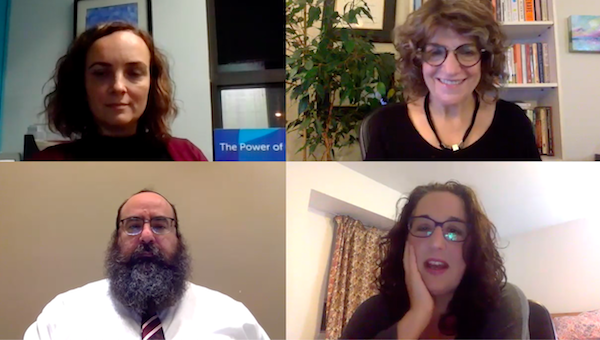
Clockwise from the top left: Tanja Demajo, Shelley Karrel, Amanda Haymond Malul and Rabbi Yechiel Baitelman participate in a JACS Vancouver panel discussion Oct. 15.

“When someone comes through the door and says, ‘I’m an addict. I’m a recovering addict,’ do they feel judged or do they feel accepted? Do they feel that we are putting them in a box, giving them a label?” asked Rabbi Yechiel Baitelman in a recent community discussion. “We have to identify the illness, there’s no question about that. But, is that the only way to view a human being? I think to respect every human being for their humanity, that’s what people are really craving – respect and love.”

Baitelman, director of Chabad Richmond, was one of three panelists on the topic Building Safe and Inclusive Spaces for Those Affected by Addiction and Mental Illness. He was joined by Tanja Demajo, chief executive officer of Jewish Family Services (JFS), and Amanda Haymond Malul, a community member in recovery, in the Oct. 15 event presented by Jewish Addiction Community Services (JACS) Vancouver. JACS Vancouver’s Shelley Karrel moderated the conversation.

Haymond Malul would like to see more community discussions on addiction and people being taught acceptance. She spoke of the need to “have support from the religious leaders of the community, from every single agency in the community, to start talking about it – make it acceptable, educate.” (See jewishindependent.ca/help-repair-the-world.)

And we need to ensure that what we are teaching is in line with our actions, said Demajo. “If we talk to children about acceptance, but we don’t actually practise that, that’s creating double standards where we talk about certain things, but that’s not what people experience,” she said. This could be damaging, she said, to people who “really need that support and want to trust.”

We must see each member of the community as a human being, said Baitelman. Love is important, but, he said, “Love is on my terms, respect is on your terms. If I love you, it’s more a reflection of who I am. But, if I respect you, it’s more of a reflection of how I see you, what you are about – and I think that’s really important. Respect the humanity. If you can love them, that’s even greater. But respect is more fundamental.”

When Karrel asked panelists for tangible ways in which people could be more accepting and inclusive, with love and respect, Demajo said agencies are overwhelmed with the number of people needing support. She said it is up to each of us to connect on a personal level with others, accepting that it will take time for them to trust us enough to share.

“You have to build a relationship, and a relationship is not built overnight,” said Demajo. “I had a client who I often think of, a person who spent a number of years [in the] Downtown Eastside being homeless, not having pretty much anything in his life…. He would come to see me … and we would speak about books, because he was a huge reader and I love reading. It took him six months until he really started talking about things that were going on in his life and what he actually needed, and we started working from there. Now, he has a regular life. He has a home. He brought his family back. He is working. So, things are in a place that he wanted … a number of years ago. Recovery is a process of being vulnerable and, so, if social services don’t have the time to invest in people, I think we are setting ourselves up for a really huge failure.”

All panelists agreed that having a drop-in centre with people who understand is absolutely essential and that, while professional support would be ideal, it is not essential. To be kind, respectful and loving, you do not need to be a professional, they said.

While there are recovery clubs in the general community, Haymond Malul said it would be great if there were also one in the Jewish community – “having a safe place for people to come and be able to drop in, and know that this is the Hillel House of Recovery,” she said.

However, having a community place might inhibit some people from coming out, due to fear of being exposed, warned Demajo. “The other piece is that I do feel that what Amanda has done tonight, speaking of her own experience and being in the community, and [talking about] some of the things that were helpful for her, is important to start with; having those opportunities to open up the conversation – not just for me, in a professional role, but from a personal place – because that is where the relationship happens. I do believe that is the core of whatever we come up with – the core is the relationship.”

Each of us is deserving of respect, regardless of our achievements, successes, failures or addictions, stressed Baitelman. “The fact that you were created by G-d makes you worthy of the highest form of respect and no judgment,” he said.

“Why would I not be involved with somebody who’s in recovery?” asked the rabbi. “After all, these people are accountable. They’re working on character development and are improving certain areas of their lives that they have the courage to acknowledge need to be corrected. They’re actively making amends with people around them. They are working on a conscious relationship with G-d rather than on other forms of success that society often judges success by. This is really an achievement.

“How many of us would like to change even one iota of our character, and people in recovery have changed more than one iota. They have made an incredible change, which is so admirable and should command respect. I think that’s part of the attitude that should be helpful in the broader community, and how we act with people, and the stigma.”

Karrel closed the discussion by giving a brief synopsis of JACS and its services. “We are working to diminish the stigma of addiction,” she told the Independent after the event. “Let’s keep this conversation going so we all feel we belong in our community.”

Rebeca Kuropatwa is a Winnipeg freelance writer.

Format ImagePosted on December 4, 2020December 2, 2020Author Rebeca KuropatwaCategories LocalTags addiction, Amanda Haymond Malul, Chabad Richmond, inclusion, JACS Vancouver, Jewish Family Services, JFS, mental health, recovery, Shelley Karrel, Tanja Demajo, Yechiel Baitelman
Benefits to writing memoir

Benefits to writing memoir

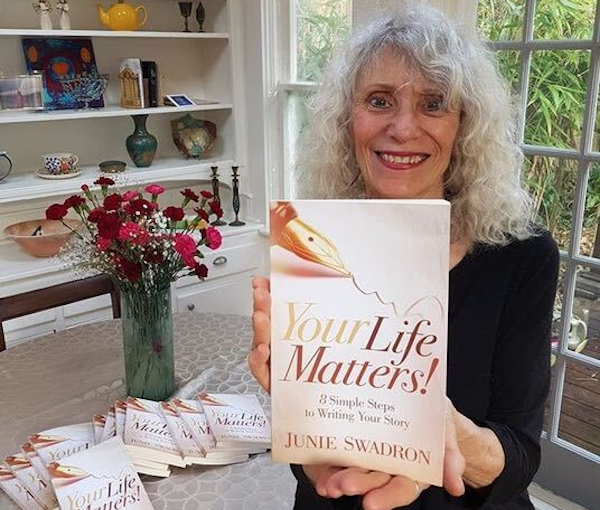
Junie Swadron recently released her latest book. (photo from Junie Swadron)

The Nov. 3 release of Junie Swadron’s most recent book, Your Life Matters! 8 Simple Steps to Writing Your Story, could not have arrived on the shelves of booksellers at a more opportune time. The pandemic has presented an occasion for self-reflection, and a chance to place memories and contemplations onto paper and computer.

Swadron, a Victoria-based psychotherapist, author and writing coach, hopes the book will aid prospective memoirists in writing their story, breaking through blocks with confidence and freeing them from what may have been a painful past. Hard lessons of life can become the greatest gift, she says, and writers can inspire others with the wisdom they have gained.

“In my 30 years practising psychotherapy, the most common theme among clients – whether they be CEOs of large companies or art students – is low self-esteem. Most people don’t value what they have achieved and don’t know how to recognize the good in themselves, to varying degrees,” Swadron, who is Jewish, told the Independent.

“This is a book for people to look at their lives and see the value, the beauty and the contributions they have made. And then to write their life stories from an empowered place, from a place of feeling strong, tall and proud. Not in an egoistic way, but in a way that they can say, ‘Hey, look how far I’ve come. Or, wow, I did that!’”

The challenge of writing a memoir can be daunting, the book notes, even for a professional with years of experience in their chosen field or an individual with a unique point of view. In Your Life Matters, Swadron attempts to guide the reader towards a focus on common themes – while remaining honest and truthful to the past – and the recording of meaningful experiences with certainty and ease. She also shares some of the factors that have helped her become a more assured writer and demonstrates how someone could apply these insights to their own memoir.

The book, too, provides therapeutic exercises for writers to use when drafting their stories. A memoir, Swadron said, can be a useful tool for an individual to work through difficult experiences and reframe their trauma. Your Life Matters lists steps to record the significance of life’s major events and influences. According to Swadron, memoir writing then becomes a memorable and achievable goal.

“The book is for anyone who wants to recount their life journey, whether they be a senior or an entrepreneur, and take the time to understand more about themselves throughout the process and transform pain from the past. What sets me apart from other writing coaches is being a psychotherapist. Not only do I know how to teach people how to write books, I get them to dive deep into their story and come out the other side stronger, as a result of them knowing who they are,” she explained.

“Say a person found a weight loss program and it’s really successful,” Swadron posited. “They got into it in the first place because they needed to lose weight. They lost 200 pounds, kept it off, and they need to not only write the story of how they did that but who they were as someone struggling with a food addiction. And who they have become since they have achieved their maximum goal of what is healthy for them. They need to put themselves in the story for others to be able to relate to whatever it is they are passionate about because they have found a solution and can assist others going through a similar struggle to find their way with more ease and grace.”

She cites her operating principle as “your soul meets you on the page and something shifts. You begin to stand taller. Then, one day, you notice your voice on the page has become your voice in the world.”

Swadron has three previous titles to her credit: Colouring Your Dreams Come True, a colouring book for people of all ages, Re-Write Your Life and Write Where You Are. Additionally, she has penned a piece for the stage, Madness, Masks and Miracles, a play to dispel myths and stigmas about mental illness. Last year, she founded the Academy for Creative and Healing Arts (ACHA) for people with mental health challenges.

Beyond her books, Swadron provides workshops, online courses and meetings throughout the year – all of which are currently taking place on Zoom – to help people with their writing. These include an author mentorship program, a class on creativity during COVID-19 and a Sunday morning “sacred” writing circle. For more information, visit her website, junieswadron.com.

Sam Margolis has written for the Globe and Mail, the National Post, UPI and MSNBC.

Format ImagePosted on December 4, 2020December 2, 2020Author Sam MargolisCategories BooksTags education, Junie Swadron, memoir, mental health, self-help, Victoria, writing

Posts pagination

Previous page Page 1 … Page 5 Page 6 Page 7 … Page 10 Next page
Proudly powered by WordPress