Skip to content
  • Home
  • Subscribe / donate
  • Events calendar
  • Business Directory
  • FAQ
  • News
    • Local
    • National
    • Israel
    • World
    • עניין בחדשות
      A roundup of news in Canada and further afield, in Hebrew.
  • Opinion
    • From the JI
    • Op-Ed
  • Arts & Culture
    • Performing Arts
    • Music
    • Books
    • Visual Arts
    • TV & Film
  • Life
    • Celebrating the Holidays
    • Travel
    • The Daily Snooze
      Cartoons by Jacob Samuel
    • Mystery Photo
      Help the JI and JMABC fill in the gaps in our archives.
  • Community Links
    • Organizations, Etc.
    • Other News Sources & Blogs
  • JI Chai Celebration
  • JI@88! video

Recent Posts

  • SFU honours Gloria Gutman
  • Lifting people’s spirits
  • Wedding a ray of light
  • Indigeneity and Zionism
  • Rule of law broken: councilor
  • Football and its roles
  • The burden of defence
  • Fish Café returns after fire
  • All right in what goes wrong
  • Nuns & mermaids at TUTS
  • Camp offers holiday retreat
  • Students and mentors inspire
  • Once-in-a-lifetime trip
  • 100 dancers, one heart
  • Money for the sciences
  • What “Jewish food” means
  • Have a cookie, schnitzel too
  • Federation now across BC
  • Israel fighting for its existence
  • Deal strengthens Iran
  • Patriotic belonging diminishes
  • A campaign to engage
  • Upstanders’ first live event
  • Responding to Carney
  • Having your own home
  • Music a family tradition
  • Musical to warm heart
  • Community milestones … June 2026
  • Sharing her passion for Israel
  • Or Shalom reopens its doors
  • JFS from past to future
  • Need holistic approach
  • Sharing stories, advice
  • Journalist shares fears
  • Skills to live together
  • Road to independence

Archives

Follow @JewishIndie
image - CJN box ad Rockowers 2026

Tag: mental health

Nominations open for Courage

Nominations open for Courage

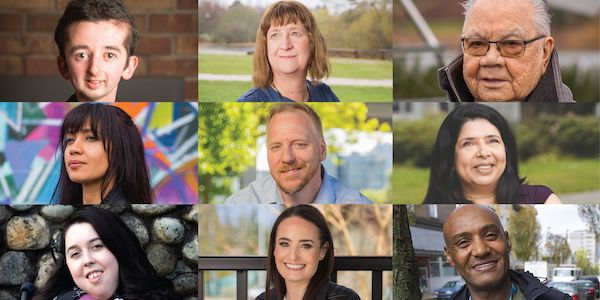
Past recipients of a Courage to Come Back Award. (image from Coast Mental Health)

Nominations are open for the 2024 Courage to Come Back Awards, presented by Wheaton Precious Metals.

The purpose of the awards is to pay tribute to those who have overcome overwhelming challenges and now give back to their community. They are the hidden everyday heroes that deserve to be recognized and celebrated for their contributions to our communities.

This recognition goes a long way to encouraging these individuals to continue their efforts to inspire those around them. It also gives them a platform to further promote the causes or issues that are important to them.

They are our role models.

People like Rachel Goldman, who has faced a lifetime of chronic illness and pain with great courage and strength. She is an accomplished TV and radio producer, and has always volunteered within her community. Goldman hopes that, by sharing her story, her struggle can be a force for hope for others. (See jewishindependent.ca/beautiful-life-despite-illness.)

People like Dr. Barney Jr. Williams, a residential school survivor and person recovering from alcoholism. Williams has made it his life’s mission to help others overcome alcoholism and addiction.

Like Alex Sangha, who is gay, lives with a mental illness, and is from a South Asian community where stigma persists. Today, he has become an inspirational creator of safe spaces for the LGBTQ+ community.

Or Jodi Gray, a transwoman who overcame poverty, abuse, suicidal ideation and depression. She changed the narrative to create better solutions and systems of care.

The Courage to Come Back Awards not only recognize the lives of five remarkable people, but ensure that Coast Mental Health can continue to provide compassionate, meaningful support for anyone with the courage to come back from mental illness.

Coast Mental Health is one of the largest providers of community-based services for people living with mental illness in British Columbia. Each year, it provides essential services to 5,000 clients so they can find a meaningful place in their communities – a place to live, a place to connect and a place to work. To find out more about the programs and services offered, visit coastmentalhealth.com.

The Courage to Come Back Awards are given in five categories: addiction, medical, mental health, physical rehabilitation and youth. Award recipients will be recognized in person in front of more than 1,400 people at the Vancouver Convention Centre on May 23, 2024. They will receive media coverage and their stories will be shared on social media.

“As chair of the Courage to Come Back Awards, reading through the hundreds of nominations we receive every year is a moment I look forward to with great anticipation,” said Lorne Segal, president of Kingswood Properties Ltd. “All of them are true journeys of bravery, resilience and strength in the face of adversity. I am grateful to those that have the courage to share their stories with us.”

The deadline for nominations is Friday, Jan. 19, 2024. To nominate someone and find out more about the process, visit couragetocomeback.ca/nominations.

– Courtesy Coast Mental Health
Posted on October 27, 2023October 26, 2023Author Coast Mental HealthCategories LocalTags Courage to Come Back, Lorne Segal, mental health, Rachel Goldman

Monica Lewinsky at BI

Monica Lewinsky may have been the first person in history to experience international cyberbullying. Lewinsky was an intern in the White House during President Bill Clinton’s administration and her relationship with the U.S. president led to worldwide notoriety – contributing to the impeachment of the chief executive.

Lewinsky’s experiences took place before the dawn of social media, but her experience of being publicly judged and condemned was exacerbated by the then-new technology of the internet. Today, with almost every young person now on some form of social media platform, the potential for victimization or harassment exists everywhere.

The lessons of how decisions in early life can have long-lasting impacts – as well as considering how the #MeToo movement might invite a reconsideration of Lewinsky’s role in those events – are among the reasons Congregation Beth Israel will welcome Lewinsky to Vancouver for an evening that includes Selichot services Sept. 9.

“We were trying to think about someone who would be appropriate for Selichot, which is really the kickoff to the High Holiday season,” said Beth Israel’s Rabbi Jonathan Infeld. “We wanted someone who would be addressing key High Holiday concepts, such as personal renewal, dealing with personal choices made throughout one’s life, but especially at a young age, the effect of those choices on one’s life. Also, very à propos to today, someone who is still dealing with body image and life image, dealing with online harassment and dealing especially, again in the modern period, with gender power-related issues.”

photo - Monica Lewinsky will touch upon several topics when she speaks at Beth Israel on Sept. 9
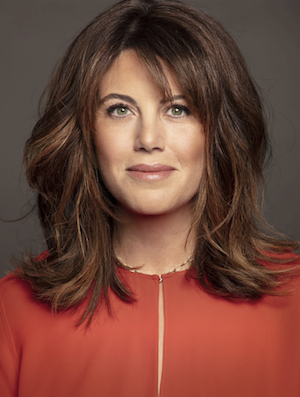
Monica Lewinsky will touch upon several topics when she speaks at Beth Israel on Sept. 9. (photo from chartwellspeakers.com)

Lewinsky has been speaking on these topics for several years. And this will not be her first time speaking about them to Vancouver audiences, as she did a TED Talk here in 2015, where she told the audience she was subjected to “global humiliation” by “mobs of virtual stone throwers.”

“In 1998, I lost my reputation and my dignity. I lost almost everything,” she said at the time. “I almost lost my life.”

Lewinsky’s presentation here is presented by RBC Global Assets Management PH&N Institutional in addition to Beth Israel, King David High School and Hillel.

Beth Israel invited King David and Hillel to participate because of the relevance to younger audiences of the issue of cyberbullying and how decisions and actions at a young age can change one’s life, said the rabbi. He noted that some younger people might not know of Lewinsky’s experience, while people his age recall it vividly.

Infeld dismissed the idea that Lewinsky’s visit might be controversial.

“Our goal is not to deal with the political issues,” he said. “Our goal is to deal with the personal growth and harassment and mental health issues. Obviously, everyone has their own view of the political issues involved, but the intention here is really not to deal with Democrats versus Republicans or anything like that but really to deal with how one’s experiences as a 20-something-year-old, and the decisions that a person makes at that point, can affect one’s life…. She speaks openly about suicide ideation at one point and how did she overcome that, how is she alive today, to be able to speak, and how does this affect our young people today, who are also making challenging decisions that affect their lives potentially forever, like we all did.”

Infeld also wonders how Lewinsky would have been portrayed, and how different the perceptions might have been, had the events taken place today, when the #MeToo movement and other social changes have given us a different perspective on workplace and gender power dynamics.

“Had this played out in the 2020s and not in the 1990s, what would the storyline look like?” he asked. “I think that may have changed in a very significant way – what the gender and power dynamic looks like in terms of how people would perceive who has responsibility for what took place.”

Tickets to the event were made available first to Beth Israel members, King David families and Hillel students. Tickets were opened to general audiences on Aug. 15. The 8:30 p.m. fireside chat between Infeld and Lewinsky is free and will be followed by musical Selichot services, led by Debby Fenson and Harley Rothstein. People who donate or pledge $90 or more to Beth Israel’s High Holidays campaign are invited to a 7 p.m. seudah shlishit dinner with Lewinsky. Selichot services will be livestreamed but Lewinsky’s presentation will not be. Information and tickets are available at bethisraelvan.ca.

Posted on August 18, 2023August 17, 2023Author Pat JohnsonCategories LocalTags #MeToo, Beth Israel, mental health, Monica Lewinsky, personal growth, Selichot

Pill-popping for peace?

Antisemitism, dubbed “the longest hatred,” has seemed impervious to challenge. It is a social problem that shifts to meet demand, allowing perpetrators to tailor it to fit their “need.” What if there were a pill you could prescribe to “cure” a person of antisemitism? There may be.

It seems almost like an April Fool’s joke or a Purim spoof, but the timing isn’t quite right. Rob Eshman, senior contributing editor to the Forward, published a piece last weekend suggesting there may indeed be a pharmaceutical answer to this age-old problem.

MDMA, the understandably needed short form for the drug methylenedioxymethamphetamine – aka “Ecstasy” or “Molly” – has been popular for some time, primarily with people who enjoy what the U.S. National Institutes of Health calls its effects of “sympathomimetic arousal, sensual enhancement, feelings of euphoria, and emotional closeness to others.”

Like most good things, of course, this drug comes with a wide range of unwelcome side effects. But the trade-offs have been deemed worthy enough that the drug has been used in Israel since 2019 to combat post-traumatic stress disorder, Eshman writes, and the U.S. Food and Drug Administration is expected to approve it for some uses in the next couple of years.

Israel’s use of MDMA for PTSD is far from the only Jewish connection the author found. The drug was first synthesized more than a century ago by Alexander Shulgin, a California pharmacologist whose Jewish family fled Russia, and who has been called “the zeyde of psychedelics.”

Last month, science journalist Rachel Nuwer (also Jewish) published the book I Feel Love: MDMA and the Search for Connection in a Fractured World, in which she shares the story of a white supremacist who was integral to the 2017 hate rally in Charlottesville, Va. After treatment with MDMA, the individual renounced his racist orientation and declared “Love is the most important thing.”

If there is a chance that an ingestible element (currently a banned substance in Canada, the United States and most places) could address a major scourge of civilization – not just antisemitism but all forms of hatred – do we not owe it to ourselves to allocate resources to investigating the pros (and cons)?

A variety of research is ongoing, of course, including an annual Jewish Psychedelic Summit, where medical, religious, psychology and other experts discuss psychedelics and Judaism. (It’s a virtual affair, so one can only imagine the hospitality suites if it were in-person.)

The application of plant medicines and synthetic drugs to combat what we generally deem a social problem may seem dubious – and researchers say it probably wouldn’t work if the recipient isn’t predisposed to change. However, the idea may not be as outrageous as it sounds. We recently ran an article about the late psychotherapist Dr. Theodore Isaac Rubin, whose landmark 1990 book Anti-Semitism: A Disease of the Mindposited that bias against Jews could in many instances be considered a mental disorder. We have long accepted, welcomed even, pharmaceutical responses to treatable mental issues. Why not this one?

Of course, anything that changes brain chemistry or neurobiology should be approached with immense care – more care, for example, than we have demonstrated in wildly embracing over the past several decades the new technologies that have been shown to shorten our attention spans and alter the functioning of our brains, as we discussed in this space last issue.

At the same time, we would be foolish to ignore the potential for something that could ameliorate some of the worst characteristics of the human experience. Think back at the horrors that might have been alleviated had we been able to slip a “love potion” into the water glasses of history’s most evil figures.

Some experts, Eshman explains, are looking into the role MDMA could play in addressing the Israeli-Palestinian conflict. While we work on other avenues for the changes needed to bring more love and justice to the challenges inherent in that conflict, if there is a glimmer of hope that a chemical solution exists for some of the most destructive features of our species, we would be fools to dismiss it.

Posted on July 21, 2023July 20, 2023Author The Editorial BoardCategories From the JITags Alexander Shulgin, Israeli-Palestinian conflict, MDMA, mental health, methylenedioxymethamphetamine, psychedelics, PTSD, Rachel Nuwer, Rob Eshman, science, Theodore Isaac Rubin

A life of light and of shade

The quality of our lives seems to contain alternating waves of good and bad, hard and soft, light and shade. If we are lucky enough to appreciate that this is the nature of existence, we can bear much better with the shady parts of our lives. We can have faith that, whatever challenges we are facing, no matter how painful, the good times will roll around again. And the good times can be so good, so full of richness, pleasure, joy, lightness and brightness, that they are worth the price we may ultimately have to pay for the good fortune we have the luck to be earning.

The dilemma is that sometimes we do not realize that what we are passing through are the bright times, the good times, the best times. That often comes only with retrospection.

I remember that I left home at the age of 18 to spend a year of work and study in Israel. I did not think to ask for the permission of my parents, I just made my plans and informed them of those plans. I never thought to do otherwise, and I was never questioned. I saved up the money I needed from the odd jobs I performed as I wended my way through my high school years. I applied for the assignment, gathered my pennies and off I went, traveling across the globe.

I was a part of a group, but I felt very much alone. I remember that, being alone, on the ship sailing across the ocean, my mind brimming full of speculations about the nature of the world. I wrote incessantly about that on every scrap of paper I could find.

I have some of those scraps in a file I have kept to this day. So much of it, seems to me today, to be a load of nonsense. The gist of it was that I was a solitary sailor afloat on the sea of life and that life was incredibly sweet. I was full of wants. I wanted to find a true companion. I wanted a country of my own. I wanted to save the world. I was going to do it all myself if I had to. At the time, I could read it all in the palm of my hand, and it was all going to happen. I was totally free from obligations, except those that I chose to lay upon myself – and included in those was responsibility for creating the perfect world. All of us are heroes in our own eyes, and we have to try as hard as we can to live up to that image of ourselves.

How was that not the most superlative moment of my life to that date? I had not the merest clue as to the nature of the importance of those moments in my existence. I was unconsciously writing an agenda for my life.

I am no different from others, and all of you have had those moments in your lives, those moments whose importance is only appreciated by you with the passage of time and the gleanings of experience.

I remember holding a child of mine in my arms, and feeling like I would burst with joy. I remember when I was leaving my first job, hearing that my superiors were frantic about who they could find to fill the hole I was leaving. I remember when I realized that I had succeeded in resolving a dilemma that would yield years of success at a seemingly impossible task that I had taken on. I remember the instant when I recaptured the love of my heart after 50 long years of disappointment when I had not found the companionship I longed for. I remember the moments when I began to understand what elements of my behaviour prevented my Bride from feeling the depth of my love for her. All these events, which cast other parts of my life in the shade where they belonged, I could only truly appreciate in retrospect. The thrill they yield when I recall them I relive over and over again. So it must be for so many of you, when you recall your own experiences.

Surely there are lessons to be learned by sentient beings from these experiences. Don’t they help us, when we find ourselves in periods when there is shade all around us, know that the moments we hope for and will cherish all the days of our lives will surely arrive for us if we carry on? Just as day follows night, won’t our turn at good fortune arrive if we put in the necessary effort to survive what may seem to us to be the worst of times, and if we are lucky enough to have the good health and fortune to do so? Isn’t that the secret, that we try, and try again, to confront the challenges we face, and we never, never, give up?

Max Roytenberg is a Vancouver-based poet, writer and blogger. His book Hero in My Own Eyes: Tripping a Life Fantastic is available from Amazon and other online booksellers.

Posted on July 7, 2023July 6, 2023Author Max RoytenbergCategories Op-EdTags aging, gratitude, lifestyle, memoir, memory, mental health
Help with road to recovery

Help with road to recovery

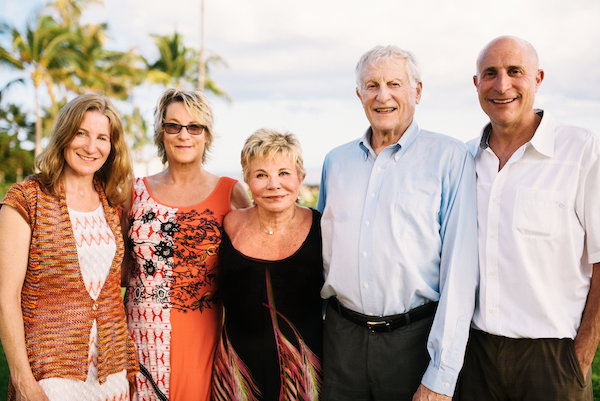
Left to right: Jill Diamond, Lauri Glotman, Leslie Diamond, Gordon Diamond and Steven Diamond, in 2014. (photo from St. Paul’s Foundation)

The Diamond family is speaking publicly about the tragic loss of Steven Diamond – a cherished father, son, brother and addictions counselor killed by fentanyl in 2016 – and honouring his life with a $20 million donation to St. Paul’s Hospital. The gift both memorializes Steven Diamond’s legacy and funds a first-in-Canada model of treatment that could transform addictions care across the country.

“We’re speaking out today for the first time because we want to save lives,” said Jill Diamond, Steven’s sister and executive director of the Diamond Foundation, when the donation was announced last week. “No matter where we turned, we never found the help that Steven needed. If he had access to the care now being developed at St. Paul’s Hospital with this new initiative, he might still be with us here today.”

One of the key factors driving substance use-related harms in British Columbia is the lack of a seamless system of care to support people with addiction. Gaps failing to connect prevention, treatment and recovery mean that people are unable to access the supports they need, when and where they need them.

The Diamond Foundation’s $20 million gift to St. Paul’s Foundation will fund development of the new Road to Recovery at St. Paul’s Hospital, a first-in-Canada model of care that aims to fill these gaps. Road to Recovery will cut weeks off waitlists and support patients to move through a full spectrum of treatment services all in one location. It will eventually house 95 beds for seamless transition between all stages of the recovery journey – from the Rapid Access Addiction Clinic through withdrawal management, in-patient recovery-focused beds, transitional housing, outpatient treatment and more. The first beds, focused on stabilization, will open in fall of 2023.

“Road to Recovery began as a vision for a full continuum of substance use care within a single setting at St. Paul’s Hospital, so that people can access the evidence-based addiction care they need, when they need it. Addiction medicine clinicians like myself know that being able to refer someone to the appropriate service and then provide follow-up care is integral to supporting their wellness, but is rarely an option,” said Dr. Seonaid Nolan, physician program director for Providence Health Care’s Addiction Program and clinician scientist with the B.C. Centre on Substance Use.

“The Road to Recovery will now make this possible,” Nolan continued. “I am so incredibly grateful to the Diamond family and foundation for their extraordinary generosity and their shared vision for a better model of substance use care. Their kindness and leadership have played a significant role in making the Road to Recovery a reality.”

The Diamond Foundation’s gift is made in honour of Steven Diamond, who is remembered as an “immeasurably giving” addictions counselor and massage therapist with a “healing touch.” While his life was punctuated with long periods of sobriety and joy, he faced a prolonged struggle with substance use disorder that saw him in and out of treatment for years.

During his most distressing moments, the Diamond family says he encountered a messy system of delays and disappointments. Finally, the 53-year-old was placed on a three-month waitlist to see a B.C. addiction psychiatrist. He was killed by fentanyl less than a week before that scheduled appointment.

“This tragedy clearly shows our healthcare system was not and is not up to the task,” said Jill Diamond. “Steven was a well-sought-after addictions counselor with expertise in the field, and family means to pay for recovery. The fact that even he couldn’t get well, despite giving his entire life’s effort, shows addiction is a disease that must be looked at medically with new models of care. That’s what today is about.”

“This donation demonstrates the power of philanthropy to drive systemic change,” said Dick Vollet, president and chief executive officer of St. Paul’s Foundation. “Despite the most difficult circumstances, the Diamond family is bravely stepping forward to help fix a broken system – and giving families hope there is a path to recovery.”

But this $20 million donation is the beginning, not the end. With the Diamond Foundation’s leadership gift in place, the provincial government has committed $60.9 million toward operating costs.

“The Road to Recovery … is crucial for the one in six people at St. Paul’s Hospital who experience substance use disorder,” said Fiona Dalton, president and chief executive officer of Providence Health Care, expressing gratitude “to the Diamonds for this generous gift. And we’re grateful to the provincial government and our healthcare partners for investing in and supporting this important initiative.”

Further, it’s hoped the Diamonds’ act of philanthropy inspires the public to donate as well.

“We want the public to take action and understand that substance use disorder is not a moral failing, nor a weakness, nor a choice,” said Jill Diamond, noting the gift is a demonstration of the family’s Jewish values. “As with tikkun olam, we hope this act of kindness helps to repair the world. As found in the Talmud: ‘Whoever saves a single life is considered to have saved the entire world.’ We have lost our beloved Steven, but we hope we can save lives and positively impact the world. This is a disease that can come for anyone – including you and those you love. While ours was not a success story, we want to rewrite history for others.”

To donate, visit helpstpauls.com.

– Courtesy St. Paul’s Foundation

Format ImagePosted on June 23, 2023June 22, 2023Author St. Paul’s FoundationCategories LocalTags Diamond Foundation, diamonds, Jill Diamond, mental health, philanthropy, Road to Recovery, St. Paul’s Hospital, Steven Diamond, substance use disorder
Celebrating 30th year

Celebrating 30th year

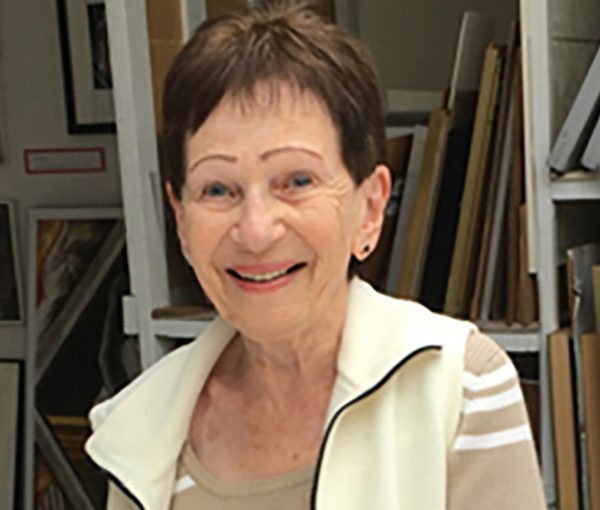
This year’s West of Main Art Walk will be event founder Pnina Granirer’s last open studio. (photo from Pnina Granirer)

In European cities such as Paris, art has been blooming for centuries and is an essential component of life and culture. Unfortunately, in the relatively young city of Vancouver, art was barely noticed in the early ’90s.

While living in Paris in 1992, I discovered an amazing number of galleries and museums and spent every free moment gorging myself on a wealth of art. One of the most exciting happenings occurred in the spring, when an unusual event burst onto the city: Le Génie de la Bastille. All around the arrondissement (neighbourhood) of the Bastille, hundreds of artists opened their studios to the public for an entire week. A large exhibition at the City Hall was launched and maps were handed out to the public, showing the location of each studio. Every day, map in hand, I would go up and down the ubiquitous five-floor buildings in the area, soaking in the opportunity of seeing the great variety of works and talking to the artists.

Too soon, I was back in Vancouver, still thinking with much pleasure about that wonderful week in Paris. Getting together with my artist friend, Anne Adams, who passed away in 2007, I described to her the exciting days spent visiting the artists’ studios in the City of Lights, when a sudden thought occurred to me. Anne, I said, what if we tried doing this here? Are any artists living in our neighbourhood, who might be interested?

Anne was as excited at the idea as I was, and we approached the now-defunct local Courier newspaper, which was very supportive and published an article with a call to artists. We did not have to wait long for the telephone to start ringing. To our delight, we discovered a good number of artists living in Point Grey, Kitsilano and Dunbar/Kerrisdale who wanted to participate.

A small group of us got together to plan the event. We needed a venue to have an opening exhibition, followed by a weekend when the artists would open their studios and their homes to the public. This had never been done before in Vancouver!

The West Point Grey Community Centre at Aberthau offered its space and the first exhibition opened in 1993. Word spread like wildfire. We were inundated with calls from artists who wanted to join. This will be too much for one weekend, I thought, let’s keep it small and limit the number of studios to no more than 20, so that everyone’s work could be seen.

I had the idea to hold the Art Walk over three weeks, one week for each neighbourhood. There was a lot of work to do, all of it voluntary. This was a time without the internet, so we used a “telephone tree” and the mail. Anne was an excellent organizer. I was quite idealistic at that time and suggested that we do not ask for any grants or taxpayers’ money, although donations from businesses and private donors were welcome. We would prove that artists had initiative and could do such an event by themselves – and it worked! We proved that artists were capable of contributing and enriching their communities by sharing their art and creativity.

We needed a name that would represent us. After sifting through many names, we decided to call ourselves Artists in our Midst, as we were all artists living in the midst of our community. By two years later, our idea had caught on and spread all over the city and the Lower Mainland, and we are all culturally richer for it.

Over the 30 years since we began, much has changed, including the name, which is now West of Main Art Walk. We are now back to only one weekend, but many new artists have joined us. Everyone is invited to visit us the last weekend in May, enjoy the art and perhaps take some home to live with.

As for myself, all of my works will be offered at 50% discount. And I will repeat last year’s idea of a fundraising sale to benefit Stand Up for Mental Health, founded by my son, David, the recipient of a Governor General Meritorious Service Medal. He teaches stand-up comedy to people with mental illness, as a way of building confidence and fighting public stigma and has been invited to work all across Canada, the United States and Australia.

This will be my last open studio and sale. Hope to see you!

West of Main Art Walk features more than 50 participating artists, including many Jewish community members, who invite visitors to their studios May 27-28, 11 a.m.-5 p.m. For the studio map and more information, visit artistsinourmidst.com.

Format ImagePosted on May 12, 2023May 11, 2023Author Pnina GranirerCategories Visual ArtsTags art, Artists in Our Midst, mental health, West of Main Art Walk
Get ready to laugh it up

Get ready to laugh it up

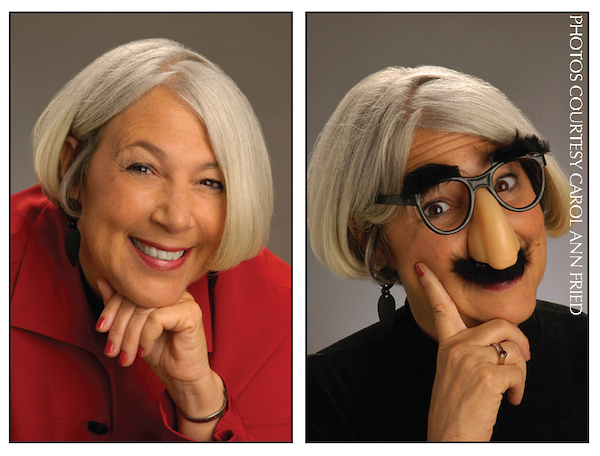
Carol Ann Fried as herself, and as Groucho Marx. Fried presents the program Laughing Matters at the May 28 Jewish Seniors Alliance Spring Forum. (photos from Carol Ann Fried)

Carol Ann Fried helps people find their “joy spot.” When she brings her interactive presentation to the Jewish Seniors Alliance Spring Forum May 28, she promises: “My goal is it’s going to be the most fun meeting they’ve ever attended.”

Fried is a Halifax-raised, Montreal-educated, Vancouver woman whose Friedom Training and Coaching Services include keynote speeches, workshops and meeting facilitation. She is also chief executive officer of Playfair Canada, which offers noncompetitive adult play experiences, especially to first-year students on Canadian campuses.

The joy spot is found in many ways, but it always involves connecting people with one another, she told the Independent.

“I do it by getting people to interact in creative and fun ways, toward some kind of end, if it’s a theme or team-building or fun at work or fun at home,” she said. “This can happen in various ways, but the way I do it is to get people up moving, usually, interacting with each other, talking with each other, doing some kind of activity.”

Typically, she does this with businesses, organizations and teams. In her program with the Jewish Seniors Alliance, laughter will be a core objective.

While members of the JSA may be longtime friends or acquaintances, Fried promises that, by attending her program, “They are going to get to know each other in new ways. They are going to make new connections, they are going to laugh. There will be laughter.”

After growing up in Halifax and studying at Dalhousie University, Fried got a master’s degree in counseling at McGill University in Montreal and eventually made her way west. She has served on the board of Or Shalom synagogue and is currently the chair of the membership committee.

If she has one piece of advice for people – attending her program or not – it is “Be courageous.”

That can mean something as simple as being willing to play.

“In our world, people somehow have the idea that play is for children and that we have to get serious when we get taller,” Fried said. “The idea of it is pooh-poohed by a lot of people. But my work is about getting them to do it before I tell them what they’re going to do.”

In corporate settings, she calls this “Managing to have fun.”

“I love jazzing up meetings,” she said.

Fried also has an affinity for doing programs with food.

“You can do a lot of things around food – Jewish people and food,” she said. “You can have a bag and in the bag are a variety of implements that are anything but cutlery. One of them could be the egg beater, the carrot peeler, a salt spoon, the things that you find in that drawer where you throw everything. People pull a ribbon and they have to eat their whole meal with that one thing. There are no forks, knives or spoons in there. It’s super-fun and it would be great for one of these family meals where you’re worried about how people are going to get along.”

Another idea is a “backwards meal” – spoiler alert: it’s eating dessert first.

“I really believe that shared laughter and play are essential to a healthy lifestyle,” said Fried. “When we are playful, all sorts of good things happen in our body, all those horrible hormones decrease and all the good ones increase. It affects morale, it affects creativity, all very positively. They’re going to experience each other in different ways than they otherwise would or that they are used to or that they have at other times.”

JSA’s Spring Forum takes place May 28, 2 p.m., at the Peretz Centre. Fried’s program is titled Laughing Matters. Call 604-732-1555 or email [email protected] for more information.

Format ImagePosted on May 12, 2023May 11, 2023Author Pat JohnsonCategories Performing ArtsTags Carol Ann Fried, healthcare, Jewish Seniors Alliance, JSA, mental health, seniors, wellness
Mental health concerns

Mental health concerns

Smartphones, even if you hug them, won’t hug back. It’s not revelatory, but an effective allegory to understand what’s missing with screen interactions.

Though screens replaced direct, in-person human interactions during the pandemic, by necessity, it only worsened a problem that still exists: the less real the contact, the worse the depression and loneliness.

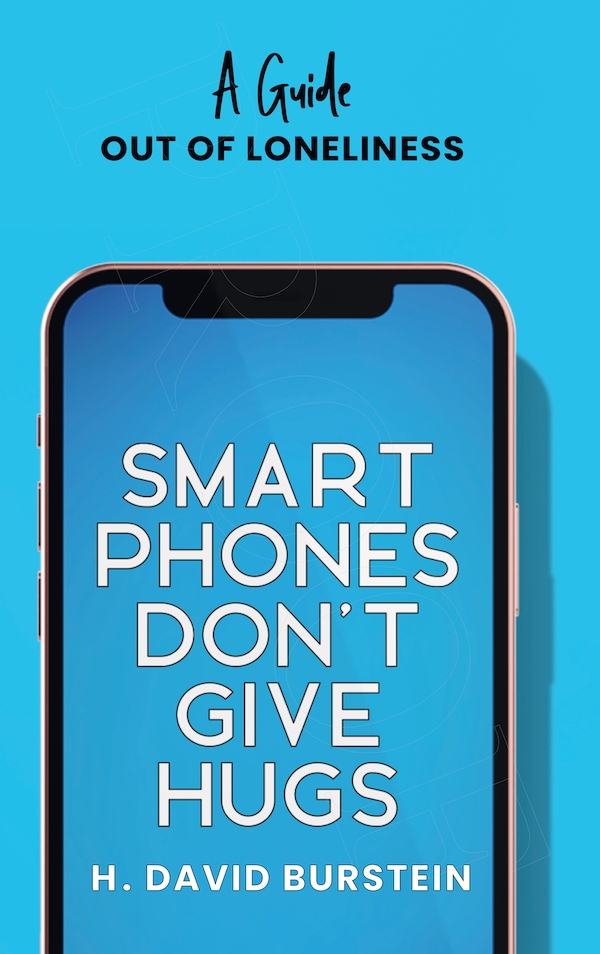
Toronto author Dr. H. David Burstein draws this correlation in his first book, Smart Phones Don’t Give Hugs: A Guide Out of Loneliness (Talk+Tell, 2022). The book takes an in-depth look at loneliness and depression, its modern causes and how it might be alleviated.

“Humans are social creatures who have a need to connect and cooperate with others, with the purpose of being part of something bigger than themselves,” said Burstein. “We want to be needed and to know we are loved.”

image - Smart Phones Don’t Give Hugs book cover

More than two years of gathering socially via a screen have led people to lose the ability to really connect with one another in an organic off-the-web way, he said.

“Maybe we are so enchanted by the social aspect of technology that we have forgotten what it was like to shake hands or bump fists, as opposed to like, comment and subscribe. We have forgotten how to foster lasting human connections,” he said. This, he believes, has contributed to the general worsening of people’s mental health.

A Statistics Canada survey on mental health over the course of the pandemic, which was released in September 2021, found that one in four Canadians reported depression, up over the previous year from one in five. Toronto’s Centre for Addiction and Mental Health (CAMH) showed in surveys last year that loneliness and depression spiked during the pandemic and continue to be a growing problem.

In addition to his own findings, Burstein corrals some of the wisdom available from various Jewish sources, including Dennis Prager, author of The Rational Bible; Rabbi David Wolpe of Temple Sinai in Los Angeles; Abraham Isaac Kook, former chief rabbi of Israel; Rabbi Noah Weinberg, Aish HaTorah founder; and Rabbi Harold Kushner, author of When Bad Things Happen to Good People, who died only recently, on April 27.

One of Burstein’s tips is to pay attention to the signs your body is giving you.

“Just like when we’re thirsty, we drink; when we’re hungry, we eat; our emotions are not to be ignored. If we’re lonely, we need to be with people,” he said.

But an obstacle for many people is understanding that there’s a problem.

“It is difficult for people to admit being lonely because they think it means that they feel like a loser,” he said. “But I have also learned that when we are challenged, there are three ways we can react. One is to confront, second to retreat, third to ignore. My tendency had been to respond instinctively with the last two, but this time I decided to lean into the subject. It is a heavy subject requiring a lot of self-reflection, so I had to pace myself. I wrote the book for my own clarity, and to help others as well.”

Included in those “others” are his three teenage children. He is increasingly worried about their well-being, given the amount of time they spend on screens. Though quick to point out that there are benefits to screen time, moderation is key, said Burstein, and the quality of consumption is important, too.

Through the process of writing, Burstein became more aware of what, in his own life, needed work.

“I take my personal relationships more seriously,” he said. “I still worry about what tech is doing to us.”

Jonathan Wasserlauf is a freelance writer, and a political science major and law student based in Montreal.

Format ImagePosted on May 12, 2023May 11, 2023Author Jonathan WasserlaufCategories BooksTags David Burstein, mental health, screen time, smartphones, youth

Emotional support vital

On Nov. 30, as part of the Fraser Health Virtual Geriatric Educational Session entitled The Importance of Emotional Support for Seniors, Grace Hann, Jewish Seniors Alliance peer support services supervisor and trainer of volunteers, made a presentation that featured recorded remarks from JSA president emeritus Serge Haber.

Haber pointed out in his remarks how life changes for many older seniors once they retire. They often cease to be valued and become invisible, he said. The JSA’s Peer Support Services (PSS) program has trained seniors to provide emotional support to other seniors – active and reflective listening, encouraging the senior to talk about their issues and finding solutions on their own, but with support.

When Haber took the training course, he learned how crucial the PSS program is for the well-being of seniors. The support provided helps them deal with tremendous changes in their lives, such as loss of family, loss of position in society and health issues. Haber argued that these needs are not usually recognized. The gains made by the clients of PSS, he said, are phenomenal.

Hann pointed out that the training and volunteering also helps the seniors who become volunteers.

The second half of the presentation consisted of an explanation by Hann of the training process and a description of the PSS program, as well as other JSA activities, including education and advocacy. Charles Leibovitch, PSS coordinator and the social worker for the program, spoke about Haber’s passion for the work they are doing and how his passion has inspired many of the staff and the volunteers.

Older seniors can remain alone at home longer, if they would like to, as a result of the government’s Better at Home program. However, there is little in emotional support offered; it is not just a gap in this area, but a chasm.

Alvarez thanked everyone and mentioned the summit Fraser Health is planning in June for further discussion of these topics.

Shanie Levin is a Jewish Seniors Alliance Life Governor. She is also on the editorial committee of Senior Line magazine.

Posted on December 23, 2022December 22, 2022Author Shanie LevinCategories LocalTags Charles Leibovitch, Grace Hann, Jewish Seniors Alliance, JSA, mental health, peer support, seniors, Serge Haber

Dealing with addiction

Rabbi Allan Finkel of Winnipeg’s Temple Shalom spoke about addiction in the Jewish community and Jewish-based recovery during a Nov. 6 Zoom presentation organized by Kolot Mayim Reform Temple in Victoria.

The talk was the first of Kolot Mayim’s 2022/23 lecture series entitled Hineini: Answering the Call to Heal the World. It widened the definition of addictions to go beyond those that are substance-based to include dozens that are behavioural. Finkel also explored new research on the causes of addiction, particularly childhood trauma.

“My name is Allan and I am an addict,” he began. “This was a huge hineini, when I first said ‘here I am.’ This was my declaration 13 years ago. At that time, hineini meant here I am at the bottom of a drug addiction, I am broken and I am open to an unknown path that might lead to recovery.”

That path, starting at Narcotics Anonymous, would take him on a spiritual journey, reconnecting him with his Judaism and leading him to become a rabbi.

For his rabbinical program, Finkel wrote his thesis on addictions in the Jewish community. “I was curious to know what we might learn as rabbis, and how we can carry our journey forward in terms of serving our congregations,” he said. “It is a mental health issue, and there wasn’t very much known about it…. And there are certain issues, particularly within the Jewish community, that made it a topic that I wanted to explore.”

Finkel discussed a 1962 study of the Jewish community in the United States that tried to find out what percentage of the Jewish community was addicted to drugs and/or alcohol. The answer was zero, compared to a 10% addiction rate in the overall population. Clearly, the study indicated a denial within the Jewish community that Jews can also be addicts. A 1995 study in the United Kingdom produced similar results.

Beginning in the early 2000s, research began to demonstrate that, to understand addictions, one needed to look beyond substances and towards behavioural addictions, which can encompass many areas: shopping, food, internet and gambling, among them. More recently: cellphone use, online gaming and video gaming.

From this standpoint, the number of people demonstrating addictive behaviour reaches 47%, according to studies Finkel cited, though he suggested the number is likely far higher. A commonality among people with addictive behaviours is the inability to stop, no matter what harm it does to those around them and to themselves.

Returning to the denial of addiction in the Jewish community, Finkel proposed that one cause is the long-standing fear of shame, which could be triggered by an admission of a problem at a synagogue, Jewish school or other institution. Looking at areas of the Torah, such as the story of Noah, he explained, one sees that “the Jewish denial of addiction is social and cultural, it is not religious in orientation.”

Within the past decade, there has been a broader consensus within Jewish institutions that addiction is not a moral failing, but instead can be caused by the same factors that result in other mood and psychological disorders.

Using the work of Vancouver physician Dr. Gabor Maté, Finkel noted that all addictive behaviour can be traced to something that happened when a person was very young. “Not everyone who was traumatized becomes an addict, but every addict was traumatized.”

One conclusion Finkel draws is the need to destigmatize the word “addiction.” He stressed that an addiction, as stated in the American Psychiatric Association’s 2013 manual on mental disorders, is a means of coping no different from any other mental health disease.

A second takeaway is that adults and not children bear much of the responsibility for addictions; in other words, no child ever dreams of becoming an addict. Children do not have the rational skills to take on and cope in a non-destructive way with trauma that happens to them.

Further, Finkel argued that real recovery is not simply about stopping addictive behaviour, but about going back to one’s past and taking care of the fears and resentments of childhood, as well as the habits that build up over a lifetime.

Finkel told the audience that it has been more than 10 years after his last relapse. He said the rewards of recovery have been immense and have brought incredible relationships with his children, himself and life.

Finkel is an outspoken advocate for interfaith engagement and for the building of strong bridges and partnerships across all denominations within the Jewish community. He currently chairs the Winnipeg Council of Rabbis.

A video of Finkel’s lecture is posted at kolotmayimreformtemple.com.

Sam Margolis has written for the Globe and Mail, the National Post, UPI and MSNBC.

*******

Some resources

Rabbi Allan Finkel provided this list of resources for those experiencing addiction and those close to them:

  • Crisis and suicide line: 1-800-784-2433
  • Jewish Addiction Community Service (JACS) Vancouver 778-882-2994
  • Mental health support: 310-6789 (no area code required)
  • Umbrella Society: support, outreach, recovery, counseling, groups, harm reduction and education, umbrellasociety.ca
  • Our Jewish Recovery: Facebook group, with 16 active Jewish recovery meetings and classes, virtual retreats, individual and group coaching, led by Rabbi Ilan Glazer
  • Rabbi Mark Borovitz, Finding Recovery and Yourself in Torah: A Daily Spiritual Path to Wholeness
  • Rabbi Kerry Olitzky and Dr. Stuart Copans, Twelve Jewish Steps to Recovery, and other of Olitzky’s books, including with co-authors
  • Rabbi Paul Steinberg, Recovery and Jewish Spirituality: Reclaiming Hope, Courage and Wholeness
  • Rabbi Shais Taub, God of our Understanding: Jewish Spirituality and Recovery

– SM

Posted on November 25, 2022November 23, 2022Author Sam MargolisCategories LocalTags addictions, Allan Finkel, health, Kolot Mayim, mental health

Posts pagination

Previous page Page 1 … Page 3 Page 4 Page 5 … Page 10 Next page
Proudly powered by WordPress