On Feb. 16, Congregation Beth Israel welcomed the first of four renowned Jewish scholars in a made-for-Zoom series, The BI Scholars. Canadian-born Dr. Henry Abramson, dean of Touro College in New York and a specialist in Jewish thought and history, kicked off the series with a talk entitled Becoming the People of the Byte: The Internet, Talmud and the Future of the Jewish People.
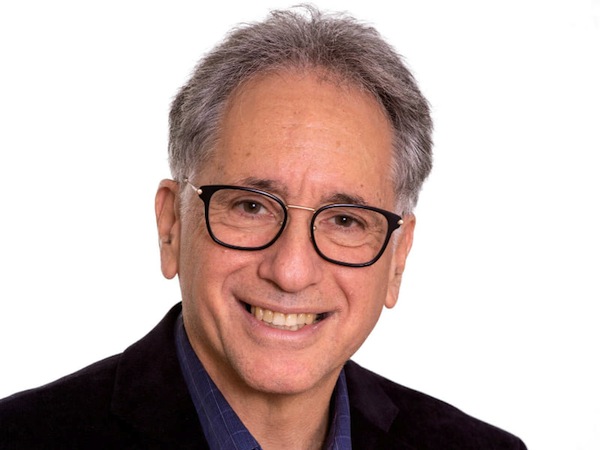
Dr. Henry Abramson launched The BI Scholars series on Feb. 16. (photo from Beth Israel)
His discourse looked at how Jews, over time, and to this day, use and relate to new information technology, and how it changes our modes of learning and disseminating texts. Abramson explained that Jews are generally early adopters of technology, beginning in the second century CE when, under the guidance of Judah Ha-Nasi, we moved from an oral tradition to the documentation of the Mishna in manuscript form, a big change that encountered significant resistance along the way. This was followed by the era of the printing press and, now, digital technology.
These communications technologies allow for significant democratization, and Abramson pointed out the value of the internet in that learning is available to all, whereas “treasured texts were previously not accessible to 50% of the Jewish community – namely, women.”
However, technology also presents dangers in terms of knowing the authenticity and authority of texts. It is our job, said Abramson, “to discover what we can trust and what we can discard.”
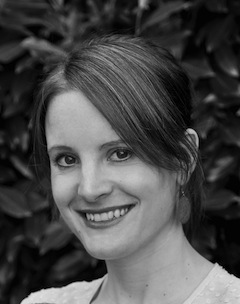
One of the female scholars about whom Abramson speaks is Ilana Kurshan, who has completed a remarkable feat of Talmud study – finishing the whole Talmud in seven-and-half years, Daf Yomi, a page a day. Kurshan will speak at the March 9 instalment of the Zoom series about her award-winning memoir If All the Seas Were Ink, which takes readers on a guided tour of the Talmud, while detailing her personal stories of love, loss, marriage and motherhood.
It is, indeed, one of the most unique Talmud commentaries ever written, as she explains: “The memoir is secondary. The way I happened to write this commentary on the Talmud is through my life.”
During her years studying the Talmud, Kurshan, a rabbi’s daughter from Long Island, N.Y., came to discover the terminology to understand her own daily experiences. “Talmud speaks to the human dimension of experience and, in many ways, that does not change,” she said. According to Kurshan, you cannot divorce the human experience from one’s own experience. “Just as the Talmud is a commentary on life, my life became a commentary on Talmud.”
On April 20, Dr. Benjamin Gampel, the Dina and Eli Field Family Chair in Jewish History at the Jewish Theological Seminary, will speak on the topic Riots, Inquisitions and Expulsions, and the Emergence of the Sephardic Diaspora. Gempel is a specialist in medieval and early modern Jewish history.
The series ends with Yuri Vedenyapin from McGill University, whose topic is The Adventures of a Yiddish Teacher. An actor and a singer-songwriter, his areas of academic interest include Yiddish language and culture.
So enthralled am I by the sheer volume and calibre of free online Jewish learning opportunities since the start of the pandemic, that I sometimes forget that the people who do the teaching do it as their livelihood, not as a hobby. Therein lies the problem.
We, the students, the partakers of all manner and sorts of online classes and lectures during COVID, gobble up the learning as though it’s candy, or fine wine. We sit in front of our laptops, tablets and smartphones and act for all the world as though we deserve this high level of education. It should rain down upon us. We’re Jews. We’re the People of the Book. We’re entitled. Teach us!
Make no mistake: we are blessed to be the recipients of this stratospheric level of dedication, and we should not and cannot take it for granted.
But, sometimes, we forget.
We forget that the rabbi or rebbetzin or Jewish scholar or educator who is teaching us needs to feed their family and pay their bills. We forget that we need to support them just like they support us. Too often, we blithely go on learning from week to week, month to month, blissfully ignoring this reality. Yet, we expect a paycheque. Or a pension check, if we’re lucky. Why shouldn’t they?
Zoom classes have become as common as dust since the beginning of the pandemic. Every Jewish religious and/or spiritual organization I can think of is offering Zoom classes weekly, if not daily. They have filled the gaping holes that once were our thriving, healthy, “normal” lives. These same Jewish organizations recognize the desperate need for some kind of normalization, some sort of lifesaver for people to hang onto. In the absence of our daily routines of work, socializing and gathering together as a community, there is little left to celebrate, never mind sustain us. Local synagogues have leaped into the abyss to lift us all up, or those of us who needed lifting, anyway. They have rallied together to create curricula, offer Torah classes, general Jewish study courses, podcasts, livestream videos and so much more. Not only because it’s the source of their livelihood, but because they feel our desperate need, the soul’s yearning for Jewish learning.
There is enormous comfort in seeing others – even if only virtually – and knowing that we are studying Jewish topics together, learning as a community. The overwhelming isolation felt by so many people right now is beyond description. The personal losses, the devastating repercussions from COVID-19 can’t be counted. Our lives have been turned upside down in every way imaginable. And then some. But learning offers hope.
Sure, everyone copes differently with the pandemic, but anybody who says they haven’t been affected by it is just plain lying. Being the adaptable creatures that we are, we take comfort (or relief) where we can find it. For some, it’s food, or alcohol, or Netflix. For others, it’s learning. And, for others still, it must be Jewish learning. Something draws us – something draws me – to our heritage, our history, our Judaism. And, suddenly, we are home.
Myriad times, sitting in front of my computer during or after a Zoom class, usually given by a rabbi, I find myself weeping. Partly as a release from all the stress and anxiety I’m feeling right now; but mostly from a deep sense of gratitude. Gratitude that we, as a community of Jews, haven’t been forgotten. That, amid the detritus of COVID, our faith leaders have intuitively known that we need help, that we can’t do this on our own. So they step up to the plate, full of enthusiasm and inspiration, and they fill us up. Not only do the classes inform us and expand our brains, but they benefit us by keeping us moving forward in a meaningful, purposeful way.
So, why am I writing all this? To remind each and every one of us, myself included, that we should be menschen and pay the favour forward. Pay it, literally, to every rabbi and rebbetzin and Jewish scholar or other educator who shares not only their time, but their wisdom, to help us get through this pandemic in the most meaningful way they know how. Make a donation. Show you care. Make as many donations as you’re able. Big or small, the act is a sign of appreciation. A sign that we value the learning. A sign that we know little, and yearn to know more. A sign that we appreciate their caring, knowing that they will do anything in their power to help. And G-d knows we need it right now. So, whatever we do, we shouldn’t forget to support those who support us.
It would be the century’s grossest understatement to say that I’ve learned a lot during the pandemic. Sure, I’ve learned immeasurable things about human nature and caring and compassion. But I’ve also expanded my Jewish learning a hundred-fold, maybe a thousand-fold. The pandemic has given me the time. But those doing the teaching have given me the inspiration, the foundation, the thirst for more. Instead of being overcome with hopelessness, I’m filled with hope. I see a pattern to life, a way out of this. That is no small thing. We need to pay it forward. Or pay it back. Either one will do.
If there’s a global sense of helplessness pervading much of what we do these days, we can counteract that by not only feeling grateful, but showing it. It could be construed as crass to say that we should pay for our Zoom classes and livestream lectures and podcasts. So be it. Call me crass. It wouldn’t be the first time. Just get out that credit card and do the right thing.
Shelley Civkinis a happily retired librarian and communications officer. For 17 years, she wrote a weekly book review column for the Richmond Review. She’s currently a freelance writer and volunteer.
Plans are for Jewish Family Services to open a food centre in the Mount Pleasant neighbourhood this year. (photo from jewishvancouver.com)
The Tu b’Shevat More Than a Bag of Food program – a day of giving, of cooking and of education on food security in the age of COVID-19 – concluded with a panel discussion on the importance of good food, supply chain challenges, and the ensuing impacts and issues facing the Vancouver Jewish community.
The Jan. 28 program was presented by Congregation Beth Israel and Jewish Family Services (JFS), and the discussion event featured Mara Shnay, founding member and chair of the JFS client advisory committee; Cindy McMillan, director of programs and community partnerships with JFS; Dr. Eleanor Boyle, an educator and writer on food and health; Krystine McInnes, chief executive officer of Grown Here Farms, a company that supplies more than 1.5 million families with produce in Western Canada; and Dr. Tammara Soma, assistant professor at the School of Resource and Environmental Management at Simon Fraser University.
Moderator Bernard Pinsky began by highlighting the connection of the Jewish community and providing food. “Feeding the needy is an act of chesed,” he said.
“For people who are food insecure, it is not about having enough for food,” explained Shnay. “It is about not having enough money for anything – to buy a new pair of shoes, to replace a phone, to go to the dentist or to take one’s kids to the movies, and it is about living in that kind of poverty. In Vancouver, housing security is inextricably linked to food security. The income of many JFS clients is less than their rent,” she emphasized.
COVID-19 has exacerbated the circumstances of many JFS clients, particularly seniors, who are at higher risk of contracting the disease and, therefore, should refrain from using public transport or going to stores. Consequently, shopping has become increasingly expensive for them.
McMillan said the food needs within the Jewish community more than doubled in the past year, with children comprising 20% of those seeking food services. The number of Jewish families and seniors living in poverty has been rising for several years in the Lower Mainland, well before the pandemic started, she added.
To help combat the challenge, JFS will open an as-yet-unnamed food centre in the Mount Pleasant neighbourhood in the spring of 2021. “There will be a community kitchen, a place for social gathering, opportunities for general food knowledge, cooking classes, meals and a warehouse with increased storage for dry goods and perishables,” said McMillan.
The centre will also have a market-style food pantry for people to choose their food according to their customs and cultures, and the offerings will extend to outlying communities in the Greater Vancouver area through a pop-up van. The centre’s emphasis will be on supplying healthy food in a dignified manner to those in need, she explained.
Boyle spoke of food security in a wider sense – “We have food security when everyone is confident they can put adequate, healthy food on the table,” she stated.
There are systemic problems in Canada, she pointed out, as the country exports half the food it produces. “Food is treated like any other consumer good, like cars or shoes. It is run largely by private industry and, for business, social good is not a priority, profit is,” Boyle argued.
She advised involving government in the food industry, as is done in other sectors, such as education, transportation and health. More money, she suggested, should go to those who have trouble buying food, perhaps in the form of guaranteed income. The federal government could also pay farmers to grow certain amounts of healthy foods, like lentils, which would be available at below-market rates to everyone. This would in turn enhance food security and health for everyone with no stigma attached to buying this food; rich and poor would be paying the same price at the grocery checkout, said Boyle.
“There needs to be a shift from big agriculture to a more diversified local system,” she continued. “We created these current systems, and they should work for us. Change can happen. We will need to face down climate change and make food systems more sustainable,” she said, urging support for local food that is sustainably produced, as well as for people to waste less food and to eat a more plant-based diet.
McInnes elaborated on Boyle’s points by listing a number of problems in the supply chain, the agriculture and retail sectors, and government policy. “We are in a game in which corporate interests win and farmers lose, and consumers don’t understand that they are playing the card of the unwitting party that made it all happen,” she claimed.
Reeling off some concerning figures, McInnes reported that 85% of the space in grocery stores is controlled by four or five companies, that retail mark-up of local produce is 150% to 200% on average and that 92% of Canadian farmers do not have a succession plan.
Soma, meanwhile, spoke of food as spirituality and food as a right. She questioned, from an ethical perspective, the policies of big agriculture, which, for example, kills male chicks because they cannot produce eggs.
“Food as a right is not a secular concept, it is an act of spiritual justice to promote equity,” said Soma. “Food is a means of building relationships and a means of showing that you care and love someone.”
She added, “Without food security, we will not have peace and we will not have unity. The further the distance between the food and the one who eats it, the more the waste. There is a loss of connection.”
To watch the food security panel discussion or the Hilit Nurick and Rabbi Stephen Berger cooking session that took place earlier on Jan. 28 (and to download their red lentil soup recipe), visit bethisraelvan.ca/event/tubishvat5781.
Sam Margolis has written for the Globe and Mail, the National Post, UPI and MSNBC.
As I went through my undergraduate and graduate school years, I cobbled together several different part-time jobs. One of my favourites was teaching Jewish music at weekend religious schools. This time of year, Tu b’Shevat (aka the New Year of Trees), songs were part of the lesson plan. Often, the kids I taught were just learning Hebrew for the first time, so I taught in English, too. One of my all-time hits was “The Garden Song,” which started with “Inch by inch, row by row, I’m gonna make this garden grow. All it takes is a rake and a hoe and a piece of fertile ground.” My second chart-topper was “Inchworm, inchworm, measuring the marigolds, won’t you stop and try to see how beautiful they are?”
Now, as I write this, I feel transported to a warm, sunny day in my garden, which is good, because it was -30°C with the windchill when I walked my dog in Winnipeg this morning! It’s good to be in touch with both the long-term hopes and dreams of summer and the realities of where we are. Holding that paradox, of both frostbite weather and sunny heat at once, is a great metaphor for where many of us are these days.
As a dual U.S.-Canadian citizen, I’ve been in knots over the unrest “down south” and the U.S. presidential transition. As well, I’m worried about the pandemic and about how poorly vaccine roll out has gone so far in Manitoba, and in Canada overall. I’m both thrilled to hear that all my children’s grandparents have gotten their first vaccine shot in the States, and also so sad to know that our local “adopted” Manitoba grandparents, both over 80, have no idea when they’ll get theirs.
Many people who have been sick with COVID-19 have struggled with challenging effects afterwards, including significant mental health issues. The anxiety and mortality struggles are pretty serious concerns for many of us, even if we haven’t gotten sick. One way my household has succeeded in coping is in burrowing in at home – into learning, good books, art and other DIY projects, building Lego and cooking. Everyone here, from age 9 and up, has kept busy with work and learning. We try to keep positive things in mind as much as we can.
I’ve been thinking about all of this, as I’ve considered what my plans are for the next days, months and even the year. In early January, I celebrated a birthday and the one-year anniversary of starting to study Daf Yomi, a page of Talmud a day. I am proud of finding the time to do this, however brief and poor my attention span may be sometimes. While I struggled with finding good (quick) resources for study, I found an Instagram page, posted by a rabbi, which seemed to summarize each page of study.
Hurray! I thought, I can review this in a glance while I help my kids with remote school lessons. Of course, anything that is in my Instagram feed has to then be kid-safe. Imagine my surprise when my account dumped two Daf Yomi posts with very scary images at me. One showed a person with a plastic bag over her head, struggling to breathe. The other showed someone’s hands, coated and dripping with blood.
Normally, I would simply unfollow this kind of thing without comment. However, these posts about Talmud were written by a rabbi, so I messaged her. “Hey!” I said, “I am so pleased to be doing Daf Yomi. I followed your posts, but I have to unfollow. These images on Tractate Pesachim 57 & 59 are too graphic. I don’t want my kids to see them.”
I got a response that left me, well, reminded that rabbis are just people, and that some of them may miss the mark at times. It was a “sorry to offend” kind of message. She indicated that she was a visual learner, that these posts were meant for those over 18 and that, to her, these seemed essential as an artist/interpreter, and she was guessing others felt the same. While she congratulated me on taking on Talmud study, I was also “othered,” as she, an artist, felt that dedicated followers would prefer this gory imagery in their social media feed.
I was disappointed. Although I am way past age 18, I am choosing, over and over, to focus on what I can gain positively from the talmudic text, even during a hard time. The talmudic rabbis, in parsing what had happened in Temple sacrifice, were trying to understand ritual events that had occurred a long time before. It was a disruptive period in history. Things weren’t stable. In fact, they weren’t actually doing sacrifices or actively harming people who didn’t observe properly. They were ironing out Jewish law for centuries to come, by confronting the past and figuring out the future through discussion, debate and study.
They did this by examining one small thing at a time. Much like the “Inchworm” song, Jewish rabbinic tradition teaches us to examine what is in front of us and to find solutions to challenges. I am distraught when I have to “hold” overwhelming images of rioting in the U.S. Capitol, the pandemic illness and deaths, and even a gory Instagram feed in my mind. Instead, I’m choosing a different path. It’s one that focuses on the next kids’ snack and meal, the next dog walk, and the next time I pick up the warm handknit mitts from the radiator as I face a cold morning outside. Inch by inch, row by row, we will get to sunny days in the garden ahead.
Sometimes, we do best when we embrace the ritual of “one thing at a time.” It’s one wintertime walk and, even, to knit each stitch as it presents itself on the needle to make more mittens. We’ve got a lot on our plate these days. Even so, we must eat only one bite at a time. It’s a metaphor and a paradox that the talmudic rabbis knew well. It might be a cliché but, for us, it also works.
Joanne Seiffhas written regularly for CBC Manitoba and various Jewish publications. She is the author of three books, including From the Outside In: Jewish Post Columns 2015-2016, a collection of essays available for digital download or as a paperback from Amazon. Check her out on Instagram @yrnspinner or at joanneseiff.blogspot.com.
Jack Zipes gives the lecture Resurrecting Dead Fairy Tales on Facebook Feb. 17. (photo from MISCELLANEOUS Productions)
Some fairy tales are timeless in that they still have lessons to impart. For example, The Pied Piper, a story dating back to the Middle Ages, “is a tale of plague, greed, betrayal, conformity/confinement with allusions to child abuse,” explained Elaine Carol, co-founder and artistic director of MISCELLANEOUS Productions.
MISCELLANEOUS’s Plague project will have participating youth, along with professional artists, interpreting the Brothers Grimm’s The Pied Piper “from an intersectional, anti-racist, anti-oppression, queer feminist perspective.” In preparation, Carol told the Independent, “we have been reading our way through the mountain of brilliant writing by Jack Zipes, asking him many questions – even our film editor of Resurrecting Dead Fairy Tales is now reading two of his hundred or more published books.”
In Yussuf the Ostrich, political caricaturist Emery Kelen tells the story of a young ostrich who helps defeat the Nazis in northern Africa during the Second World War.
Zipes’ recorded Facebook Watch talk, Resurrecting Dead Fairy Tales, will be streamed Feb. 17, followed by a live Q&A with Zipes. Some of the lecture will be part of the documentary being created about the youth-centred theatre project, which will include various workshops and an eventual stage production at the Scotiabank Dance Centre in 2022.
“I have also been working with young professional artists Tiffany Yang, who was a youth in our Monsters production, national and international tours, and Julia Farry, our production assistant/outreach worker,” said Carol. “Tiffany has translated four indigenous Taiwanese folk tales that are stories of plague – mostly in coastal communities, including animal wonder tales of fantastical fishes and other fascinating narratives. Julia has translated three Japanese folk tales focusing on plagues. There are many plague stories that we still hope to collect, including the facts of disease spread by European settlers to the Indigenous people of Turtle Island, as research materials for our project-in-development.
“We are currently collecting these tales to bring to our youth cast after it is deemed safe to work with them in person,” Carol continued, “as we will be using theatre, hip hop/streetdance, contemporary dance, marimba and world music, urban music, performance art, etc., to co-create a new play. This play will be used as a vehicle for the youth to discuss their own experiences of living in a world pandemic.”
Zipes’ lecture was filmed in Minneapolis by MISCELLANEOUS Productions’ professionals. The professor emeritus of German and comparative literature at the University of Minnesota is an expert on folklore and fairy tales. He is a storyteller himself and the founder of the publishing house Little Mole and Honey Bear.
“My parents and grandmother always told me tales of different kinds,” Zipes told the Independent. “When I began studying for a PhD at Columbia University, I wrote my dissertation on ‘The Great Refusal: Studies of the German and American Romantics in the 19th Century.’ My interest in fairy tales grew as I realized that these imaginary tales hold more truth than the so-called realistic future. And I also was angered by Bruno Bettelheim’s book about fairy tales in which he imposed a Freudian interpretation on readers. Since then, I have been trying to reveal how relevant fairy tales are to our lives.”
One of the fairy tales Jack Zipes has resurrected is Keedle, The Great, first published in 1940.
The examples given in the lecture’s press release are from two books Zipes has translated and published: “For example, in Yussuf the Ostrich, well-known political caricaturist Emery Kelen tells the story of a young ostrich who helps defeat the Nazis in northern Africa during World War II. In Keedle, The Great, first published in 1940, Deirdre and William Conselman Jr. sought to give Americans hope that the world can overcome dictatorships. To the authors, the title character Keedle represented more than Hitler, but all dictators then and now.”
Zipes said, “I don’t think that my being Jewish accounts for my interest in fairy tales. My Jewishness makes me a bit meshuggah, and this is why I try to think out of the box and have developed a storytelling program for children without sanitizing the fairy tales. The best of folk and fairy tales have never been sanitized, and I use tales to tell so that children will be enabled to tell their own miraculous tales.”
“My Jewishness is complex,” said Carol, “because I am mixed-race Sephardic-Romani and Ashkenazi. One of one million reasons I love Jack Zipes and think his work is crucial is his lucid critique of the Disneyfication of fairy tales and folklore.”
Resurrecting Dead Fairy Tales starts at 5pm on Feb. 17 and is intended for older youth and adult audiences. On the day and time, click here for link to watch.
Ben-Gurion University’s Prof. Amir Sagi, left, and Dr. Amit Savaia have found a way to use shrimp to fight a deadly parasitic disease in Nigeria. (photo from BGU)
This year, Ben-Gurion University of the Negev plans to launch a new school that will specialize in climate change research, mitigation and environmental sustainability. It will also offer a graduate program with a cross-section of specialties.
BGU’s three campuses house an enrolment of 20,000 students and a faculty of 4,000. Its areas of expertise range far and wide, and, among other things, the university has become known as a go-to place for figuring out how to address one of the 21st century’s biggest threats: climate change.
For BGU president Daniel Chamovitz, the university’s growing reputation isn’t that much of a surprise. “Because what have we been doing in the last 60 years?” he asked rhetorically. “We have been learning how to survive – not to survive, how to thrive in the desert.”
Prof. Daniel Chamovitz, president of Ben-Gurion University. (photo from BGU)
Chamovitz’s own expertise is in genetics and plant biology. Originally from Aliquippa, Pa., he is most recently known for his studies in plant development and for his book What a Plant Knows: A Field Guide to the Senses, which has been published in 18 languages.
The realization that the university already has a strong foothold in environmental and sustainability research, Chamovitz said, is what led to its new mandate to become the world’s authority on climate change and sustainability.
A long history
For Prime Minister David Ben-Gurion, the Negev was always Israel’s greatest untapped resource. It was the place, he predicted, that the Jewish homeland would sow their greatest accomplishments. A desert that spans more than 60% of the country’s land mass, the Negev would hold the answers to Israel’s most pressing problems of the day: how to grow enough food to feed a nation, generate sufficient energy to power cities and harness enough water to turn brown deserts green.
But building a sustainable nation, he warned, one that could benefit from a desert that receives less than 200 millimetres of rainfall per year wouldn’t be simple. “It is incumbent upon Israel’s scientists to reveal the secrets of nature that are unique to our land,” he said. The Negev, he insisted, was the perfect environment for an institute of study that could solve the world’s most basic – and challenging – problems of existence.
Ben-Gurion’s visionary thinking was the catalyst for many of Israel’s earliest environmental accomplishments, including desalination and energy generation using seawater, steps that would be critical to Israel’s much-needed water technology. Both projects were developed in the 1960s, at a research facility in the town of Be’er Sheva, a Bedouin settlement at the northern tip of the Negev. The institute that gave rise to these early innovations would eventually become BGU.
BGU’s new school
Two years ago, when he was hired as president of BGU, Chamovitz told the Jewish Independent he had conducted a “bottom-up” assessment of all of the departments and their areas of specialization. He wanted to know what their strengths and weaknesses were.
“[We] identified over 150 researchers dealing with various issues of sustainability and climate change,” Chamovitz said. “And, in every discipline. Not only in our institutes of water, energy and desert agriculture – that’s the low-lying fruit – but also in engineering and in civil engineering, where we develop energy-efficient building material and methods.
“It was clear to everyone that the field of sustainability and climate change was what sets Ben-Gurion University apart from every other university in Israel.”
That brand-name recognition helped secure a new partnership with Royal Bank of Canada, which is sponsoring the new school’s first graduate fellowship program. The investment by RBC will fund two fellowship positions for students specializing in climate change or sustainability-related research and, in doing so, help launch the program.
This isn’t the first time that RBC has partnered with the university. In 2018, RBC and BGU entered into a cybersecurity partnership, in which the bank invested $2 million toward research programs in BGU’s department of software and information systems engineering.
In this case, the partnership aligns with RBC’s own long-term sustainability goals and its Tech for Nature program, which it launched in 2019.
Martin Thibodeau serves as the president of Royal Bank of Canada’s British Columbia region. (photo from Royal Bank of Canada)
“The research being conducted also aligns with RBC’s interests as we recognize that innovative technologies offer immense potential to help solve environmental challenges,” Martin Thibodeau, B.C. regional president, RBC Royal Bank, told the Independent. “The most pressing environmental concerns of our time are negatively impacting the planet at a rate that often outpaces the solutions designed to address them. RBC is leveraging its capabilities in technologies such as artificial intelligence and blockchain, as well as its convening power, to build solutions and the type of multi-partner coalitions needed to address and solve our shared environmental challenges.
“Our commitments align with the United Nations Sustainable Development Goals and, through our partnerships, we aim to develop multi-sector, multi-partner solutions to achieve progress on these challenging issues. We’re both proud and excited to partner with BGU through CABGU to address these important issues,” Thibodeau said.
“We are in awe of the grassroots contributions that RBC makes to our Jewish community and the positive role that RBC plays and has played in strengthening so many local community organizations in British Columbia and across Canada,” said David Berson, executive director of the B.C. & Alberta chapter of the Canadian Associates of Ben-Gurion University, which worked as a liaison with RBC and BGU to secure the partnership.
“[We] are incredibly excited that corporations such as RBC see the importance of partnering with Ben-Gurion University, [and] that their investment [will] pay back to society tenfold,” Chamovitz said. He likened RBC’s partnership to an educator who invests in students’ goals, which, in time, benefit generations to come.
A new learning model
Climate change is a multidisciplinary problem, said Chamovitz, one that takes the expertise of not only hydrologists, biologists and engineers, but geneticists, geologists, legal experts and others. Education, therefore, must be tailored to meet the broad range of knowledge required to understand climate change. That doesn’t mean graduate students won’t specialize in their research and their studies, Chamovitz said, but they will be expected to have a multidisciplinary background that connects with the challenges of creating a sustainable world and addressing climate change.
Microbial eco-genomics deals with the study of relationship between organisms, including microbes and their environment. (photo from BGU)
“The one requirement would be their willingness to work interdisciplinarily and to take courses in other fields. Otherwise, they don’t need the school,” said Chamovitz. “They could just go into the school of engineering [for example] or school of ecology. And, you know, for some people, that’s the better track.”
Chamovitz said it’s companies like RBC that are making this new branch of education possible, adding that the university has seen an increase in inquiries from companies and communities across the world that are attempting to address climate change challenges. Last year, for example, a company located in Chennai, India, reached out to see if BGU could assist in building a local agricultural research institute. Chamovitz said the institute’s future researchers will be trained first at BGU before returning home to Chennai to begin their new jobs. The university has also struck up a three-way partnership with the city of Dubai, in the United Arab Emirates, and Arizona State University, in Tempe, Ariz., to address issues relating to global warming in Dubai.
“We have similar collaborations in western China, which are also in arid places. And we are really excited about developing relationships in Canada,” said Chamovitz, who recently visited Vancouver to meet the presidents of Simon Fraser University and the University of British Columbia, which both offer studies in climate change and sustainability.
The two Israeli RBC fellowship students have already been selected. Shir Eisenstein will be doing a master’s in material engineering, looking for new materials that help harness sustainable, renewable energy. Nadina Levitt, who is also pursuing a master’s, will be enrolled in the department of geography and environmental studies and studying sustainability models for smart cities. Both students demonstrated a key requirement for upper-level studies when it comes to BGU’s approach to this new specialization: innovation.
“One of the problems in higher education is this need for prerequisites,” Chamovitz noted. “What we are looking for is not prerequisites, but ingenuity.”
The university is expected to complete the formalization process and approval for the new school of sustainability and climate change in February and be open for enrolment this October.
Jan Lee’s articles, op-eds and blog posts have been published in B’nai B’rith Magazine, Voices of Conservative and Masorti Judaism, Times of Israel and Baltimore Jewish Times, as well as a number of business, environmental and travel publications. Her blog can be found at multiculturaljew.polestarpassages.com.
Starting in February, a few B.C. Chabads are offering Journey of the Soul: A Fresh Look at Life, Death and the Rest – In Peace, a six-session online Zoom course from the Rohr Jewish Learning Institute (JLI) that answers the question, What happens when we die?
“Participants will embark on a journey that will enlighten them and put them at ease with the topics of life and the afterlife. Practical and powerful, thoughtful and relatable, Journey of the Soul teaches a Jewish perspective on life, that begins before birth and lasts well after a person’s passing,” said Rabbi Yechiel Baitelman, director of Chabad Richmond and a local JLI instructor.
“Death is both mysterious and inevitable,” added Baitelman. “Understanding death as a continuation of life reveals the holiness of life, while putting everything in a dramatically new context. The soul is on one long journey that is greater than each particular chapter.”
According to Baitelman, Journey of the Soul considers what happens to the soul at birth and again at death. It ponders whether there is a better place after this one; whether our loved ones continue to connect with us; the Jewish understanding of reincarnation; and how to relate to an afterlife even if we’re not spiritual. Journey of the Soul is designed to appeal to people at all levels of knowledge, including those without any prior experience or background in Jewish learning. It is open to the public.
Doctors and most mental health professionals can earn CME or continuing education credit by attending the course – visit myjli.com/continuingeducation for more information and a complete accreditation statement.
“The discounted cost of $40 per person takes into account COVID-19, and the fact that so many people have faced illness, job loss, reduced incomes and other challenges. While this is far below the regular price of the course, we ask you to please consider adding a donation of any size to help defray the course costs, if you are able to,” added Baitelman about the fees to attend the Chabad Richmond series. “And feel free to try the first class for free with no commitment.”
Chabad Richmond offers Journey of the Soul starting either Feb. 3 or 4, 7:30 p.m., and running weekly until March 10 or 11, respectively (chabadrichmond.com or 604-277-6427). The course is also being offered by Lubavitch BC Feb. 2-March 9, 7:30 p.m., with Rabbi Dovid Rosenfeld (lubavitchbc.com or 604-266-1313); and Feb. 3-March 10, 7 p.m., with Rabbi Meir Kaplan (chabadvi.org or 250-744-2770). The series cost varies.
As the winter blues threaten to sink in, and COVID continues to be a part of life, Canadian Associates of Ben-Gurion University of the Negev (CABGU) has been looking for ways to keep people engaged through a series of virtual events. Each event seeks to offer insights, share research and encourage discussion about varied topics.
For the art lover, A Virtual Art Tour, scheduled for Feb. 7, 8:30 a.m., offers participants a guided stroll through one of the few public art collections in Israel’s Negev Desert. “Ben-Gurion University is home to one of southern Israel’s most dynamic and innovative fine arts collections,” said Maayan Amir, the collection’s curator and senior lecturer in the department of art. “Many of the pieces featured in the collection can be found scattered throughout the Be’er Sheva campus, enlivening the landscape while complementing it as well.”
On the medical front, questions have been raised during the pandemic about ethical decision-making. How do medical personnel make life and death decisions? What type of protocol is followed and how should the vaccine be distributed? Three top doctors from Israel and Canada will participate in a moderated discussion on Feb. 10, 4:30 p.m., sponsored by the Dr. Edward Feldman Memorial Fund. The event is a collaborative initiative between CABGU and the Israel Medical Association. Among the speakers are Dr. Yoram Singer, director of the Negev Home Palliative Care Unit at Ben-Gurion University; Dr. Sandy Buchman, medical director of the Freeman Centre for Advancement of Palliative Care at North York General Hospital; and Dr. Elliott Malamet, lecturer on Jewish ethics and philosophy at Hebrew University.
CABGU also offers monthly lunchtime webinars on STEM-related topics called Webinar Wednesdays. Coming up on Feb. 3, 9 a.m., BGU professor and president Daniel Chamovitz will be joined by Sigal Abramovich from the university’s department of earth and environmental sciences for a discussion about the impact that climate change is having on the environment. Research from BGU that looks at the role cannabis can play in supporting people with autism will be the focal point of a webinar on March 3, 9 a.m.
Register for any of these webinars at bengurion.ca.
A scene from the documentary Martha, in which director Daniel Schubert is given a more appropriate shirt by his grandmother, Martha Katz. (Courtesy NFB)
Two very different scenes in the National Film Board of Canada’s short documentary film Martha – which will be released on International Holocaust Remembrance Day, Jan. 27 – combine to highlight the joy and pain that is life. Directed and co-written by Daniel Schubert, a grandson of the film’s subject, Martha Katz, there is a funny and relatable interaction where his grandmother questions his choice of shirt for the filming and provides him with a more appropriate one. This lighthearted exchange contrasts with the heart-wrenching tour that Katz takes with her grandson through the Holocaust Museum LA.
Born in Berehove, Czechoslovakia, Katz is 14 years old when she’s taken to the ghetto, then to Auschwitz. Both of her parents and two of her brothers were murdered in the Holocaust; she, along with two other brothers and two sisters, survived the concentration camps. She speaks, with emotions near the surface, about some of her experiences. The documentary is a mix of seemingly spontaneous moments, while other parts are scripted reenactments or prepared questions being asked and answered.
“My original idea for the documentary,” Schubert told the Independent, “was to track Martha and her two sisters’ incredible journey together through the ghettos and, eventually, Auschwitz. After Auschwitz, they were even forced to work at a German bomb factory together in Allendorf, manufacturing the bombs. The fact that Martha and her two sisters managed to stay together and survive through all of the horrors of the concentration camps, to me, was a miracle. I thought that would make an amazing documentary.
“But, as we developed it at the NFB, we realized that a more traditional cinéma vérité documentary could be a viable way to tell her story, too. I did not know many of the facts beforehand, so many of the things she told me in the film came as a surprise. My grandmother and I have a warm and loving relationship and I thought, why not show that on screen as I find out all of these amazing things?
“The other thing about my grandmother,” added Schubert, “is she’s hilarious. She’s the classic Jewish grandmother and I wanted that to come across. I wanted this to also be a real picture of a grandmother and her grandson and how we naturally interact.
“We also decided that in between these cinéma vérité moments would be cinematic vignettes narrated by my grandmother herself. There were many more amazing things she went through, but, due to time constraints, I picked those stories.”
One of the stories is how, after the war, in Vienna, his grandmother met and married Bill Katz, who had been in a labour camp. The couple went to Winnipeg, with $200 they had saved up. They had two children – Jack and Sharon – and struggled financially. It was his grandmother who suggested they go into business for themselves. She went to night school, then saw an ad for a grocery store for sale – she bought it, learning on the job. There are some wonderful photos and video in this part of the film.
Martha Katz saw an ad for a grocery store for sale – she bought it, learning on the job. (photo from NFB)
It was her goal in life for her two children to have whatever they wanted and she talks about her happiness at having had them. “We had to have a life again,” she says, stressing that this doesn’t mean she doesn’t think about the Holocaust all the time, because she does – “I hope it should never happen again. That’s all.”
“Bringing her to the museum was a bit of a tough decision, but she encouraged us to go,” said Schubert. “The intention was to see whether there was anything new that she and I could both learn about the atrocities committed. And, as it turned out in the film, there was; specifically, about the excruciating length of time the gas chamber took, in some cases, to exterminate those poor victims trapped inside, including my great-grandmother and her young son. Suffice to say, it took way longer than expected, and neither of us knew how long they may have had to suffer inside.”
It was for health reasons that Katz, who is now 90 years old, moved to Los Angeles.
“My grandmother suffered from chronic bronchitis since the war and, because of Winnipeg’s frigid winters, the doctors advised her to move somewhere warmer, or else her life could be at risk,” explained Schubert. “My grandfather’s brother lived in Los Angeles, so they helped them get settled there. They came to Winnipeg from Europe in 1948 and moved to Los Angeles in 1964.”
The 22-minute documentary is dedicated to the memory of Katz’s older sister, Rose Benovich. The statement at the film’s end notes: “Her courage in Auschwitz is the reason I am alive today.”
The Vancouver Jewish Food Bank is now distributing more than 10,000 kilograms of food every month. (photo from BI and JFS)
According to the Community Food Centres Canada report Beyond Hunger: The Hidden Impacts of Food Insecurity in Canada, “Even before COVID-19, nearly 4.5 million Canadians struggled to put good food on the table for themselves and their families. In the first two months of the pandemic, that number grew by 39%, affecting one in seven people.”
Demand on the Vancouver Jewish Food Bank has almost doubled since the start of COVID-19. The organization is now distributing more than 10,000 kilograms of food every month; supporting seniors, families and individuals. While some of us have been impacted by food scarcity during COVID-19, those most in need live in a state of constant worry about where their next meal will come from.
The 1996 World Food Summit defined food security as: “when all people, at all times, have physical and economic access to sufficient, safe and nutritious food to meet their dietary needs and food preferences for an active and healthy life.” To this end, Jewish Family Services and Congregation Beth Israel are hosting More Than a Bag of Food on Jan. 28, bringing organizations and people together for a Tu b’Shevat program on food security in our community and beyond.
Vancouver Talmud Torah and Richmond Jewish Day School students are raising awareness about the food bank and reaching out to recipients. King David High School is hosting a cooking demonstration with Hilit Nurick and Rabbi Stephen Berger at 4 p.m. on Jan. 28, which will feature local ingredients and discuss the need for healthy food for everyone. Hillel BC is running an online quiz, with prizes, and a deep dive into information around food security.
At 7:30 p.m. on the 28th, there will be a Zoom panel including Dr. Tammara Soma, assistant professor, School of Resource and Environmental Management, Simon Fraser University; Dr. Eleanor Boyle, educator and author; Krystine McInnes, director and chief executive officer of Grown Here Farms; Mara Shnay, chair of the JFS client advisory committee; and Cindy McMillan, director of programs and community partnerships at JFS. Lawyer Bernard Pinsky will moderate the discussion.
“This is an important conversation,” said McInnes. “The stakes are very high. The pandemic has thrown into sharp relief just how vulnerable we are, given the way our society is organized. ”
Food systems produce and deliver based on historic demand. With the advent of COVID-19, the system has been stretched, leading to empty grocery shelves and desperate food banks. International supply chains are no longer reliable, with Russia and Vietnam limiting the sale of wheat and rice outside of their countries. Canadian food production plants have been hard hit by pandemic outbreaks and the lack of international workers. This is particularly problematic when food production is concentrated at large facilities; for example, two plants in Alberta provide 70% of Canadian beef.
“We are going to talk about initiatives from local to global,” said Boyle, “and panelists will let audience members know about some of the creative approaches to food security that are being taken at the Jewish Food Bank, as well as what’s going on around the world to try to shift agriculture and diets toward being better for climate and public health.”