The Talmud’s advice, support

We have relatives who live in Surfside, Fla., where a high-rise collapsed. Many people are still missing or have died. Although the area around Miami is urban, the town of Surfside is small and close-knit, with fewer than 6,000 residents and a fairly large Jewish population. When we contacted my husband’s first cousin and his family, he told us how their beloved community centre, where they swim and gather every day for afterschool activities and camp, was the reunification centre. He described his job sorting out the kosher and non-kosher food donations for everyone. What stood out most was his comment, “This is all very personal for us.”

There’s little we can do from Canada other than pray and offer moral and financial support. This crisis, where our cousin’s friends, and their children’s friends, are among the injured, lost and missing, is on our minds.

I continue to study my Daf Yomi (a page of Talmud a day) but, I’ll admit, there are times where I study the text and then say, “Well, I’ve done that,” but nothing in particular speaks to me. It’s sometimes a chore. It’s the equivalent of when, in pre-pandemic days, I might organize everything to get the whole family to synagogue for services. By the time I’d gotten everyone fed, dressed up, out the door and through the service without major misbehaviour, I’d count it a big success – even though the prayer part was largely “dialing it in” for me. That is, I hardly had a chance to feel engaged in the prayer, singing or learning. (I’d guess many parents know what I’m talking about here!)

Meanwhile, here on the prairies, it is ridiculously hot now. I’m cruising through Tractate Yoma 83a close to midnight, when the temperature is just cool enough in my non-air-conditioned house to concentrate, and I read this: “… with regard to one upon whom a rockslide fell, and there is uncertainty whether he is there under the debris or whether he is not there; and there is uncertainty whether he is still alive or whether he is dead; and there is uncertainty whether the person under the debris is a gentile or whether he is a Jew, one clears the pile from atop him. One may perform any action necessary to rescue him from beneath the debris. If they found him alive after beginning to clear the debris, they continue to clear the pile until they can extricate him. And if they found him dead, they should leave him, since one may not desecrate Shabbat to preserve the dignity of the dead.” (Yoma 83a)

I gasped. Of course, the rabbis knew the trauma of a rockslide or a building collapse. What they described made me feel even prouder, knowing that the Israeli rescue team was in Surfside. Those Israelis got off the airplane, set up camp at the site and went to work. The search only stopped on Shabbat afternoon so they could start to set up demolition, a week after the collapse, as the building is unstable, and Hurricane Elsa is coming.

In a very raw situation, I could see ancient texts working through some of the awful issues Surfside rescuers have faced.

Oddly, this section of Talmud covered a lot that seemed personal. There is a whole part on how to help a pregnant person with her cravings, even on Yom Kippur. The notion of eating being absolutely necessary to nurture a life (hers and the fetus) was clear to the rabbis and, even on Yom Kippur, one must help a sick or pregnant person to eat if it’s necessary for health. As someone who has been pregnant with twins, I found this powerful and insightful.

Just before this part, in Yoma 82a, there’s a discussion about helping kids learn to fast for Yom Kippur. The rabbis’ advice was clear – help younger kids, a few years before, to wait a bit before meals, or to practise missing a single meal, in preparation for getting ready to fast at age 12 or 13.

I grew up in an actively Jewish Reform family, but I never knew of a family member studying Talmud. I was struck by how this common-sense Jewish teaching was passed down so exactly. When I read it in the text, I was literally seeing how my parents taught me about fasting on Yom Kippur. I first introduced “skipping snack” on Yom Kippur to my twins, as a stepping stone on the way to trying to miss a meal later on. We were following the Babylonian Talmud’s playbook here, even if we hadn’t read it ourselves.

Also part of this discussion is the concept of bulmos, which sounds a little connected to modern food disorders. In Tractate Yoma, bulmos means a person is desperate for food and must eat. As in, they might go blind if they don’t manage to raise their blood sugar. What is this ailment? Maybe a serious drop in blood sugar, or someone who has diabetes, or someone suffering from starvation. In these cases, the person must eat. All normal conventions about paying for food or kashrut are cast aside to help a person regain their health.

In times of stress, like heatwaves, rockslides or building collapses and illness, or even happier (but still stressful) moments like pregnancy or childrearing, we sometimes feel all alone. We struggle with things that are deeply personal. I was surprised at the timing of studying these pages of Talmud. Perhaps it was just a coincidence, because Daf Yomi operates on a seven-and-a-half year cycle. Even so, it was also deeply reassuring to feel less alone while thinking about big issues like health, how we are raising our kids, and the huge loss of life in Surfside.

There’s no sugar-coating it: we must, as adults, face difficult things. However, studying these wise Jewish leaders’ opinions and experiences with those same issues offers some companionship, even across a divide of 2,000 years.

Joanne Seiff has written regularly for CBC Manitoba and various Jewish publications. She is the author of three books, including From the Outside In: Jewish Post Columns 2015-2016, a collection of essays available for digital download or as a paperback from Amazon. Check her out on Instagram @yrnspinner or at joanneseiff.blogspot.com.
The need to support caregivers

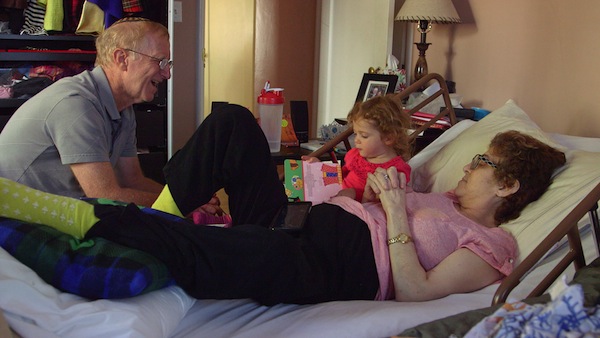
Rick Tash is the primary caregiver of his wife, Bambi Fass, who is dying of cancer. (still)

A new short film by Dr. Jessica Zitter and Kevin Gordon gives an intimate look at the toll involved in caring for a loved one at the end stages of their life.

Zitter happened upon palliative care, she said, before “anyone even knew how to spell the word ‘palliative,’” after she had “finally realized I’d been feeling a lot of burning walls of stress in the way that I had been practising medicine.”

A physician in Northern California, Zitter said, “I’d been treating patients like objects on a conveyor belt, instead of as people, and then began to practise, for the next two decades, palliative care and critical care at the same time, providing me with a strange vantage point within the world of medicine.

“I was inspired to write and share stories about what’s going on in hospitals, and about how we’re treating the seriously ill among us … and I also continue practising medicine.”

Zitter at first opted to educate the public via books, but then she encountered the power of film. “I realized, all these messages I’m trying to get across to people – about medical culture and about what we want to think about differently – they’d lend themselves so well to film, to show the experience of the patient. If a picture is worth 1,000 words, I realized that a movie is worth much more than 1,000 pictures.”

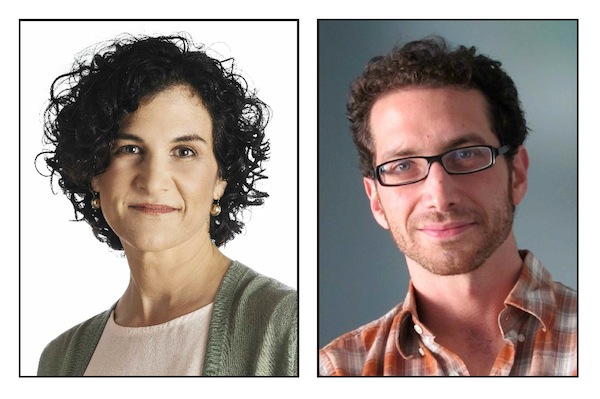
photos - Dr. Jessica Zitter and Kevin Gordon are directors of the short film Caregiver: A Love Story
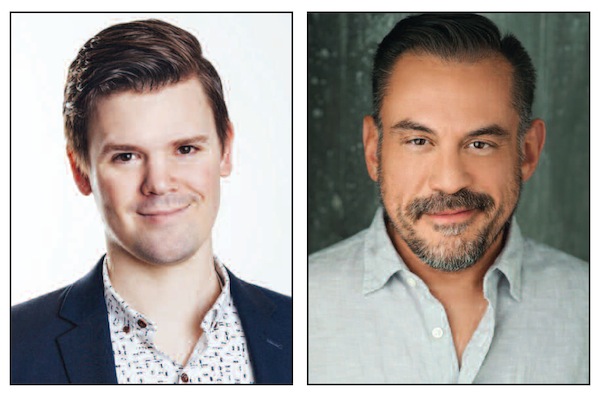
Dr. Jessica Zitter and Kevin Gordon are directors of the short film Caregiver: A Love Story. (photos from Jessica Zitter)

In the 24-minute Caregiver: A Love Story, the audience meets a woman Zitter met at synagogue, Bambi Fass, and Fass’s husband, Rick Tash. Fass was dying of cancer and Zitter offered palliative care, but was refused, until Fass’s condition became dire.

“She called me and she was extremely sick and had deteriorated,” Zitter told the Independent. “She said she needed help and, that day, we got her into hospice care. She was so, so sick and in so much pain and suffering. That day, her life turned around for the better. All of a sudden, she was living again.”

That is when Zitter asked Fass if she would be willing to be filmed. “She replied, ‘I want to help someone else … if you want to write about me or anything.’ She knew about my book. That’s when we got a film crew. I thought the film would be about her, an amazing woman. What I didn’t realize then is that it would actually end up being about her husband as the main focus. I thought he was just going to be the guy who opens the door for the hospital, but he ended up being a central character.”

Fass had sat a few rows in front of Zitter at their synagogue. “She had a long braid of hair,” recalled Zitter. “I’d always see it from behind. I didn’t know her really, but I did wonder…. She was very, very sick…. I knew she was, because she had brain metastasis. She was vivacious and funny. She was staring her death in the face and she still had a sense of humour. She was a hero, a really fascinating character.”

It took almost two years to put the movie together and to fully grasp the importance of sharing it with the world.

“I never realized – the invisible public health crisis, family caregiver burden – how much this story needed to be told,” said Zitter. “The original intention I had for this film was to show how, once you make the right decision, everything will be OK…. I then realized how naïve that message was. It’s not that easy. You can make decisions that feel like they’re going to be the right choice for the patients, but will it be the right choice for the family as a whole? We have to be much more holistic when we think about our patients. It really needs to include our families as well.

“Even in a loving, caring and organized community like ours, we aren’t necessarily focusing on and supporting the family caregivers among us,” said Zitter. “And there are a lot of family caregivers – rising numbers – with very little support. An organized community has been unable to attend to this man [Tash] who is deteriorating in front of our eyes, because they don’t know what to do with him. We’re not primed to think about caregiver burden as an urgent task.”

Zitter found that her synagogue had no committee to assist family caregivers, and her hospital community was also not paying attention to caregivers.

“They’re an invisible workforce that we don’t pay attention to,” said Zitter. “We don’t attend to them, we don’t think about them, we don’t identify them, we don’t include them in the conversation. But they’re a huge part of our workforce … and we’re just ignoring them.”

Zitter’s hope is that people from various communities, including synagogues, churches and mosques, will watch this movie and then establish a workshop for family caregivers and identify ways to support caregivers. To that end, she has created a keynote message and an hour-long program to raise awareness of this crisis and do something about it.

“The best place to start is at caregiveralovestory.com,” she said. “You can go on the website and see public screenings that are coming up and other ways to watch the film yourself, whether bringing it to your organization or watching it privately.”

Currently, Zitter is working on a film about deathbed spirituality and prayer, as well as on a movie about Ethan Sisser, a Jewish Buddhist.

“Ethan was an amazing, amazing guy,” said Zitter. “He died about two or three months ago. He has a community following on social media. A lot of young people were just so moved by the way he viewed his death and the bravery and beauty of his final days…. We’re making a film about him, which will be beautiful and, hopefully, you’ll see that soon.”

Rebeca Kuropatwa is a Winnipeg freelance writer.

Local kids join in the Chidon

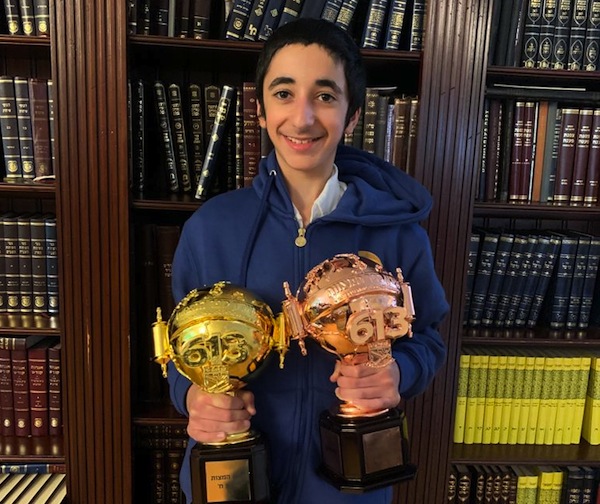
Levi Bitton (photo from Vancouver Tzivos Hashem)

The International Chidon boasts 5,000 participants from around the world and, this year, there were eight participants from Vancouver: Levi Bitton (Grade 8); Liba Baitelman (Grade 4); Yanki Baitelman (Grade 6); Menucha Prinsloo (Grade 8); Shoshana Prinsloo (Grade 5); Yonatan Prinsloo (Grade 7); Miriam Ora Yeshayahu (Grade 6); and Dovber Zhornitsky (Grade 6).

Tzivos Hashem is an international educational program for Jewish children ages 3-13, founded in 1980 by the Lubavitcher Rebbe, Menachem Mendel Schneerson. It focuses on teaching kids about kindness, good deeds and refining their character to become better people and more effective influencers in our community. The program’s goal is to increase Jewish identity and provide children with inspiring and immersive Chassidic Jewish learning through fun, informal activities.

The Vancouver chapter of Tzivos Hashem was established in 2017 as part of Lubavitch BC’s outreach activities and now has approximately 45 children registered in the Sunday morning program. The biggest event of the year and the most highly anticipated part of the program is the Chidon, usually held during a Shabbaton in New York, but virtual this year because of COVID. This event highlights the advanced knowledge and understanding of all 613 mitzvot (commandments) of the Torah, as codified by Maimonides. Kids from around the world compete, and this year’s Chidon took place on May 23. Each of the Metro Vancouver students won a plaque (indicating a grade of more than 80% on the final test) and Levi had the distinction of winning a gold trophy for his grade. He was tested on the fifth book of the Torah, and had the highest mark internationally.

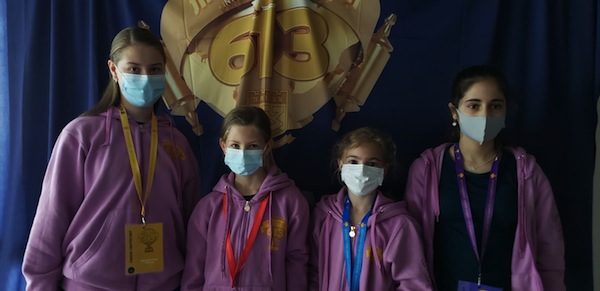
photo - Left to right: Menucha Prinsloo, Shoshana Prinsloo, Liba Baitelman and Miriam Ora Yeshayahu
Left to right: Menucha Prinsloo, Shoshana Prinsloo, Liba Baitelman and Miriam Ora Yeshayahu. (photo from Vancouver Tzivos Hashem)

Riki Oirechman, principal of Tzivos Hashem Vancouver and the local Chidon coordinator, said: “The most important thing is that the kids gain a lot of knowledge. By learning the 613 mitzvot in depth, they gain a deep appreciation and understanding of all the mitzvot, resulting in an increased excitement for, and commitment to, fulfilling them. They work super hard and really commit themselves to fulfilling the Rebbe’s direction and vision.”

Oirechman explained that all the kids in the program study and complete the five books of Torah and master the 613 mitzvot over five years. The Tzivos Hashem program uses the Yahadus curriculum created by the Living Lessons Foundation in memory of Sarah Rohr. It’s a series of textbooks explaining each mitzvah, its source in the Torah and its details.

To participate in the Chidon, students must pass multiple tests. If a child gets a 70% average, they are eligible to join the Chidon Shabbaton. The child with the highest mark in their class gets to represent their class and school at the Chidon competition. On the weekend of the Chidon, the international participants take the final test, which includes everything they learned during the year. Winners receive certificates, plaques, medals and trophies.

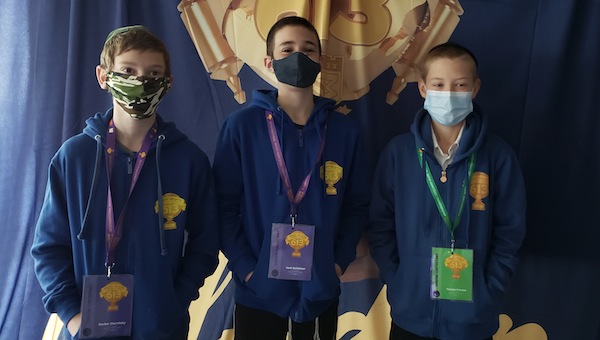
photo - Left to right: Dovber Zhornitsky, Yanki Baitelman and Yonatan Prinsloo
Left to right: Dovber Zhornitsky, Yanki Baitelman and Yonatan Prinsloo. (photo from Vancouver Tzivos Hashem)

“The Chidon includes not only the incredible game show competition, but also an exciting award ceremony. This year, over 100,000 people watched from around the world,” said Oirechman. The Chidon started in 2014 with 54 finalists and eight staff and has grown to 2,414 finalists and 375 staff this year.

Local supporters of the program include founders of the Vancouver Tzivos Hashem chapter, Rabbi Shmulik Yeshayahu of the Kollel and Rabbi Dovid Rosenfeld of Chabad Lubavitch of BC, as well as a grant from the Jewish Federation of Greater Vancouver and local community donors.

For more information about the Vancouver Tzivos Hashem program, email tzivoshashemvancouver@gmail.com or visit lubavitchbc.com/tzivoshashem.

Shelley Civkin is a happily retired librarian and communications officer. For 17 years, she wrote a weekly book review column for the Richmond Review. She’s currently a freelance writer and volunteer, including with Chabad Richmond.

Writing story of the moment

(photo from flickr.com/photos/lukas_photo)

“Identity is a narrative of the self – it’s a story we tell about the self in order to know who we are.” (Stuart Hall)

In our day-to-day lives, we are always telling stories. We tell these stories to one another and in our own minds. A story is anything that we communicate to ourselves. Stories are how we create and communicate content, understanding and relevance between random events and details. I engage with stories through my therapeutic practice, Threads Education and Counselling, by way of narrative therapy.

When you sit down and reflect upon the story that you have been living lately, or what I like to call your “story of the moment,” you begin to shed a mindful light on how you are feeling and experience an embodied sense of knowing.

Ask yourself: what is the story that you have been living lately? The lived stories are often multifaceted; can be contradictory and not linear. Is it a story, to name some possibilities, that includes struggle, hope, perseverance, love, anger, disappointment, grief, overcoming, expansion, growth, steadiness, survival or rapid change? How would you describe your “story of the moment”? What is sitting heavy inside? What are you preoccupied with and why?

It is important to explore your “story of the moment” and start in this place in order to gain insights. We gain insights relationally, through getting inside the stories where they are living and contemplating them. Describe your story in five to seven sentences. Some people like to narrate their stories aloud, others like to write or type them out in a contemplative writing practice through which I guide them.

Once the story is expressed, ask yourself if this is the story you want to be living right now. Explore the reasons why and the reasons why not. This allows a jumping off point into expanding on the “story of the moment” and looking at outside and institutional influences (family, school, work, relationships, location, age, gender, race, class, religion, health) that impact the stories we live. As a trained witness and narrative therapist, it is my job to ask questions of how circumstances, events and your particular social locations are colouring the stories that you are living and breathing inside and alongside.

In my practice, we would then explore if you need to make some significant changes in your life in order to change the story; if there is a way you can shift perspectives to understand your current story in another way; or if there is a new story that you can tell and inhabit in place of the story you have been living inside of and are speaking about.

Mindfulness grounding techniques, thematic prompts and the possibility of expressive art techniques help round out and fully access the complexities of the stories inside.

Here is an exercise I do to explore the narratives of our lives. I ask my clients to create a self-portrait. Many choose to draw themselves, while others stick with words and create rich descriptors based on self-reflection of who and how they are today. This prompt allows the “story of the moment” to appear from the corner of the heart of mind, untangle from the mess in a drawer and reveal itself so that it can be expressed and understood.

Therapeutic letter writing

A letter is a form of written communication addressed to someone that expresses meaningful messages. In the context of counseling, letter writing has a long history and, in the 2007 book Stories as Equipment for Living: Last Talks and Tales of Barbara Myerhoff, Myerhoff writes about how we can be “nourished by the stories being fed back to ourselves” in the genre of a therapeutic letter. Specifically, in the narrative context, therapeutic letters are used with the purpose of creating double story development, where the listener provides an acknowledgement of the problem as well as rich descriptions of alternative stories that were hidden within the dominant “problem” story.

The therapeutic letter, and the practice and process of writing, offers a tangible and layered documented expression of the complex, beautiful, layered and innovative ways in which the people I work with are responding to the problems in their lives. The letters serve to connect them with the many stories that are circulating around them and permeating inside their mind, as well as embodied within them. Simply, therapeutic letters work in tandem with the therapeutic session to connect them with the stories of their lives. Some people I work with actively respond to the letters I send them, with a response in the form of a returned letter, or a poem, drawing or conversation.

Crafting a therapeutic letter demands that the health practitioner carefully and mindfully reflects on the therapeutic conversational sessions that just concluded. For me, letter writing provides me the crucial opportunity and space to critically reflect on my practices and facilitates further growth and insight on how I can craft more expansive questions, as well as opportunities for the people I work with to engage with their stories with me alongside as an active, trained witness.

Letter writing within narrative therapeutic practice enables a deepening of the work of revising an individual’s relationships with the central issues, preoccupations and problems that inform, colour and get entangled up and inside their selves, bodies and lives. Letters are a tangible product that both allows for and demonstrates active listening and validation. It is an evolving and emergent practice, grounded in the contradictory, the complex, the fluid. It has the ability to hold and express multiple stories of the moment that we all hold, carry and live out in our lives.

Dr. Abby Wener Herlin is a feminist narrative therapist who works with tweens and adults, and a social emotional learning/social justice educator. Her website is threadseducation.com. These discussions of narrative therapy were originally posted at health-local.com/author/dr-abby-herlin.

Six Jewish musical journeys

Amber Woods and Gary Cohen are the musical duo Kouskous. They were among the speakers in the six-part Journeys in Jewish Music series. (photo from Kouskous)

In ordinary times, the Victoria Jewish Community Choir meets in person at the synagogue building of Congregation Emanu-El. Unable to do so during the pandemic, the choir has instead been offering Zoom presentations on a diverse array of Jewish music.

Throughout the spring, the six-part Journeys in Jewish Music series, funded by the Jewish Federation of Victoria and Vancouver Island, has brought in an audience from around the world. It has featured talks on biblical cantillation by Vancouver’s Moshe Denburg; the songs of Sefarad, with Prof. Judith Cohen of the University of Toronto; Chassidic meditative melodies (niggunim) with Emanu-El’s Rabbi Matt Ponak; and Sing a New Song to G-d: New Prayer Compositions, with Rabbi Hanna Tiferet Siegel, who lives on Hornby Island. The last event in the series, which takes place June 20, will see Denburg return, to speak on the topic The Way of the Klezmer: Klezmer and Yiddish Song.

The Jewish Independent attended the May 23 musical voyage, which was guided by Gary Cohen and Amber Woods, who form the Victoria-based duo Kouskous. It explored Mizrahi music and how it differs from other Jewish musical styles. To demonstrate this, Cohen and Woods took the liturgical song “Lecha Dodi” and sang it with Ashkenazi, Sephardi and Mizrahi interpretations.

“In general, we see the Mizrahi world being divided into three major geographical blocks: North Africa, Turkey and the Middle Eastern (Arabic) countries,” said Cohen.

Following their expulsion from Spain in 1492, Sephardi Jews migrated to many countries in Europe, as well as going to North Africa, Greece, Turkey and Middle Eastern/Arabic countries. “Wherever Jews went, they blended their own musical traditions with those of the countries to which they moved. For example, the Sephardim combined their own musical style with Moroccan rhythms, Arabic instrumentation and Middle Eastern vocal expressions,” he explained.

“The Sephardim in Turkey and Greece often incorporate odd-metered rhythms such as 7/8, 9/8 in their music. In addition to traditional Arabic instruments, Greek instruments like the bouzouki were commonly used,” Cohen said.

Sephardi musicians who moved to Middle Eastern/Arabic countries were heavily influenced by Arabic musical styles, including “a wide melodic range, as well as vocal and instrumental embellishments,” he said. “Lyrics were often in Arabic, Hebrew or Judeo-Arabic.”

Throughout the presentation, Cohen and Woods performed some musical selections – including a few hot and spicy numbers – from the aforementioned genres for the assembled Zoom audience.

Carol Sokoloff, who co-directs the Victoria Jewish Community Choir with Kenny Seidman, is the person who came up with the idea for the lecture series.

“It has been so well-received it seems natural to repeat it and I hope to do that in the fall, going deeper into many of the subjects, as well as exploring new territory, such as Jewish composers of popular songs, Jewish women’s music, the music of the hidden Jews of Spain and Portugal, cantorial traditions and more,” Sokoloff told the Independent.

“Jewish music has so many flavours and is so rich and varied we have only begun to scratch the surface. Through our conversations, we are learning about other people with knowledge to share and, so far, everyone has been very generous in their enthusiasm for this series,” she said.

The shift from live venues to Zoom since the start of the pandemic has allowed the choir to expand its audience outside of Victoria.

“The series has been wonderful in that people who never knew about the Victoria Jewish Community Choir are now aware of us,” said Sokoloff, “and I believe that, when we finally can meet again to sing together, we shall likely attract many new members or new audiences for our performances and concerts. So, the series has allowed the choir to weather this challenging period and likely emerge stronger than ever! I think it has also generally increased interest in Jewish music in our region as well – all very happy outcomes.”

In non-pandemic times, the choir sings a variety of Jewish music: Psalms and prayers in Hebrew and Aramaic, niggunim, Yiddish songs, Sephardi music in Judeo-Spanish, Israeli songs, Broadway tunes, Yemenite music and contemporary compositions. For more information or to support the choir, send an email to jewishmusictalks@gmail.com or visit their Facebook page, where you can also learn how to receive the link for the June 20, 7:30 p.m., talk.

Sam Margolis has written for the Globe and Mail, the National Post, UPI and MSNBC.

Gala raises more than $350K

Entrepreneur and venture capitalist Leonard Brody spoke with King David head of school Russ Klein about soccer, history, business, education and the pandemic at the Golden Threads Gala on May 13. (PR photo)

Entrepreneur Leonard Brody was the featured speaker at King David High School’s Golden Threads Gala on May 13, which attracted 600-plus viewers. The event raised more than $350,000 for the school from community donors in both live (via video stream) and silent auctions.

Hailed in the financial media for his innovative approach to thinking about management, Brody, who helped found the news site NowPublic, is an award-winning entrepreneur, venture capitalist and two-time Emmy Award nominee. He has raised hundreds of millions of dollars in start-up capital, taken a company to a $6 billion market capitalization at its initial public offering, and been involved in several other companies. Brody is also the co-author of two bestselling books, Innovation Nation: Canadian Leadership from Jurassic Park to Java and Everything I Needed to Know About Business … I Learned from a Canadian.

Before introducing Brody, King David head of school Russ Klein read through the speaker’s extensive curriculum vitae, calling it “one of the most impressive bios I have ever read.” The first question of the wide-ranging interview, though, had to do with Brody’s forays into owning professional sports teams.

“It sounds more glamorous than it is,” said Brody, who has been involved with European soccer clubs for almost 20 years and co-owner of the Coventry City Football Club for 10. “Coventry has arguably been one of the most challenging turnarounds in English football and we got promoted last season into the Championship League, and it looks like we will stay there next season. This is a big accomplishment for us. It’s been fun.”

Upon hearing of this success, Klein suggested Brody consider assisting the Vancouver Canucks, but then turned to more serious matters, asking about what Brody calls “pushing the reset button.”

Brody discussed historical cycles, beginning at the start of the Industrial Revolution, in about 1760. During several periods since then, something has triggered a reset, whether it be disease or war. Each of these cycles, said Brody, including our present circumstance, creates a “forced reality” and the question becomes “what is the behaviour that is going to stick?” It is a question “everyone on the planet is thinking about.”

The conversation then veered to the concept of “successful failure” in terms of what companies promise to the market and what they deliver. In Brody’s view, many sectors are “grossly over-promising” and “half-delivering” on their products. If a company can only attain half of its promise, it is, in Brody’s view, ahead of the market as a whole. Using the example of Tesla, he cited the company’s history of “overshooting a mark, creating a vision and taking customers with it” towards a higher-end goal.

On Klein’s question of whether post-secondary education is still necessary, Brody responded, “If you want to create a generation of profit-centric, money-hungry idiots, then, yes, you can avoid university.” However, he added, if you want to create a society of good citizens with critical thinking skills and the ability to be independent adults, then university education is still essential.

Brody himself holds a bachelor of arts (honours) from Queen’s University and a law degree from Osgoode Hall at York University; he is a graduate of the Private Equity Program at the Harvard Business School.

The last discussion point was the pandemic, which Brody deemed “one of the most well-managed human traumas ever.” While not discounting the tragedy inflicted on those who have fallen victim to the disease, Brody stated that we should emerge from this stage with “an unprecedented economic growth pattern.”

Currently, Brody is writing a new book in partnership with Forbes magazine, entitled The Great Re:Write, based on the successful documentary series he and Forbes produced – which has had an audience of more than seven million in the past year.

The Golden Thread Gala: Connecting Generations celebrated the community that nurtures King David High School, inspires the next generation of leaders, and was rooted in the appreciation of Jewish values and traditions. The inaugural gala highlighted a story of success told through generations, with education as the “golden thread weaving our past to our Jewish future.”

Live auction items included a “be head of the school day” for one lucky student, a set of Forevermark Black Label earrings, dinner with Russ and Deborah Klein, and a Nuevo Vallarta vacation package. Meanwhile, dozens of items, from paintings to cosmetics, weekend getaways to vintage B.C. wines, were available in the silent auction.

Emceeing the event was comedian Ivan Decker, a frequent guest on TV talk shows around North America, on Netflix and on CBC’s The Debaters. Media executive Howard Blank, past president and chair of Variety British Columbia and vice-president of the B.C. Entertainment Hall of Fame, was the auctioneer.

Sam Margolis has written for the Globe and Mail, the National Post, UPI and MSNBC.

HIPPY fêtes trailblazer

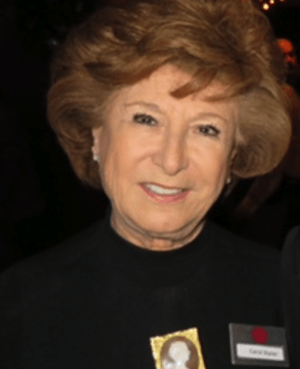
Carol Slater (photo from mothersmattercentre.ca)

Carol Slater, a former vice-president of National Council of Jewish Women of Canada, was presented with the first-ever Trailblazers Award for helping bring to Canada an innovative Israeli-founded education program that empowers mothers of preschool children.

The award, presented by the Mothers Matter Centre, was part of a virtual event May 5. (See jewishindependent.ca/mothers-importance.)

Slater was one of a small group of people who brought the program Home Instruction for Parents of Preschool Youngsters (HIPPY) to Canada two decades ago. The initiative, which has taken off in countries worldwide, began out of the Britannia Community Centre and Britannia Community Secondary School, in East Vancouver. The national headquarters of the program remains in Vancouver, under the auspices of the Mothers Matter Centre. HIPPY Canada changed its name in 2017 to the Mothers Matter Centre to reflect the fact that they deliver a range of programs, although HIPPY remains the core of the organization.

Slater spoke with the Independent recently, along with Wazi Dlamini-Kapenda, a Vancouverite who was the first HIPPY director in Canada and remains head of the national program.

HIPPY was started in 1969 at the Hebrew University of Jerusalem by the late Dr. Avima Lombard.

“When the first wave of African immigrants came to Israel and spoke no Hebrew, [Lombard] realized the disconnect between the children and the parents,” Slater said. “The parents didn’t know what was expected of the children, or of the parents.”

Slater and Dlamini-Kapenda take pride in the relative simplicity of the HIPPY structure. A new program is developed when a community identifies HIPPY as a program that would be of benefit to mothers and children. The community then approaches the Mothers Matter Centre to help with starting it up. In other cases, MMC approaches the community to let them know about the program and support them in implementing it, providing seed funding to get it off the ground, said Dlamini-Kapenda. The community can start with a minimum of two to four home visitors, depending on the size of the community, then each visitor recruits 10 to 12 families. The home visitor drops in on each family every week for at least an hour during the school year, and teaches the mother the week’s activities using the HIPPY curriculum. The lessons are taught using role-play, in which the home visitor and the mother take turns being the teacher (mother) and the student (child), practising the lesson before the mother teaches the week’s lessons to their preschooler.

“The basis of this program is that all parents want the best for their children, all parents want their children to succeed and to enter school ready to learn,” said Dlamini-Kapenda. “The parents themselves can play a role in this in building capacity within the home. Instead of parents relying on sending their children to preschool, which some parents couldn’t afford, we could go into the home, which is actually important because the home is where success begins. We all know that.”

“One of the very critical things,” Slater said, “is giving the parent the confidence that she can go to [her child’s] school because what has very often happened in immigrant situations is that the mother may not speak the language very well and, if she doesn’t go to school, she doesn’t follow her child and if she doesn’t follow her child, her child can fall behind and she doesn’t know about it. One of the most important things is the empowerment of the parent to understand that she is the first teacher of her children. It’s a fantastic concept when you think of it. So simple.”

The program is offered free to mothers and all supplies are provided, although almost everything that the mother will need to do activities can be found in the home. The families targeted for the HIPPY program are those with low literacy or deemed “at risk.” Special emphasis is given to immigrant and refugee communities and Indigenous populations. HIPPY has separate streams for multicultural and Indigenous families, recognizing different approaches to learning. Home visitors will usually be recruited from within the linguistic communities they serve.

Slater’s award recognizes her work in getting HIPPY off the ground in 2001.

“Carol was very instrumental in getting the funding and knocking on doors and talking to every person in a position to be able to get us the first funding to run the first four or five years of the program here in Canada,” said Dlamini-Kapenda. “I don’t know, without Carol, how far we would have gone.”

Dr. Debbie Bell, founding director of Simon Fraser University’s community education program, was working on developing strategies to create access to education for low-literacy communities. Slater and Bell connected after Slater happened upon a brochure about the nascent program. Slater, who has lived in Israel, Vancouver and, now, Montreal, saw it as an ideal fit for National Council of Jewish Women.

Seizing the moment, Slater beat the bushes for financing. Bell was emphatic that they should not launch HIPPY without a budget for several years of programming because that would be unfair to participating families. Slater went to Ottawa and, with the help of several key figures, obtained funding from the federal health ministry to get HIPPY up and running.

She credits Dr. Hedy Fry, member of Parliament for Vancouver-Centre, as an early supporter.

“She was so excited about the program,” Slater recalled. “She met Debbie and myself and we used to meet in her office. She sat me at a desk, she gave me a list of all the cabinet ministers and their secretaries and their private phone numbers. I just sat there and I phoned.”

An assistant to Allan Rock, who was then minister of health, was equally supportive. Slater left the meeting with a commitment for $250,000, which jumpstarted HIPPY Canada.

Slater also credits late Vancouver philanthropist Jack Diamond and the Diamond Foundation for crucial support that got the program started. The Vancouver Foundation also committed to four years of funding, something they had never done before, said Dlamini-Kapenda, who was then hired as the first HIPPY coordinator in Canada.

At the awards ceremony earlier this month, Canada’s chief public health officer, Dr. Theresa Tam, and Dr. Cindy Blackstock, a Gitxsan activist for child welfare and a professor in McGill University’s School of Social Work, received the Because Mothers Matter Award for their noteworthy professional accomplishments while giving back to their community. Two HIPPY mothers with extraordinary stories, Nusrat Awan and Jessica Seegerts, were also honoured.

KDHS honours grandparents

Ivan Decker, left, and Leonard Brody are among the presenters at King David High School’s Golden Thread Gala May 13. (PR photos)

On May 13, King David High School is honouring its “grandparents,” people who have particularly supported the school over the years, in a variety of ways. With the theme “education is the golden thread weaving our past to our Jewish future,” the virtual Golden Thread Gala “celebrates the community that nurtures King David High School, inspires the next generation of leaders and is rooted in the appreciation of Jewish values and traditions.”

The Diamond Foundation is being recognized as an “honorary grandparent,” while the “grandparents” being paid tribute are Gary Averbach, Shirley Barnett, Beth and Leon Bogner, Sylvia Cristall, Marie Doduck, Rose Marie Glassman, Dr. Arthur and Arlene Hayes, Dr. Simon and Rosalind Jacobson, Evelyn Kahn, Tamar Khalifa, Dr. Robert and Marilyn Krell, Lana and Mendy Landa, Norman and Sandra Miller, Norman and Lola Pawer, Dan and Trudy Pekarsky, Yvette Porte, Lyle Pullan, Arnold and Anita Silber, and David and Elaine Youngson. Dr. Robert and Elke Mermelstein are being celebrated as “adopted grandparents.”

“We can never fully show the Diamond Foundation the gratitude they deserve, so we named the foundation as honorary grandparents,” explained gala co-chairs Jacci Sandler, Chana Charach and Margaret Hemingson in an email interview. “Gordon, Leslie, Jill and Lauri have made our school possible. They are foundational, literally and figuratively, for King David’s existence and success. They have not only provided the building in which we live, learn and play but also have provided ongoing support and funding for the Judaic studies program to ensure the ongoing success of the school.

“Over the years, King David has been blessed by the ongoing support we receive from our grandparents,” they continued. “Whether it’s giving of their wisdom, time or financial support, they are always there for us. This gala recognizes them all! All of our grandparents deserve thanks for instilling Jewish values in their children that they are passing on to our students.”

The 19 grandparent families’ philanthropy has ensured that a Jewish education is accessible for every child, said the co-chairs. “The reality is that, without their generous support, we would not be able to provide a Jewish education to every child. It is a time to show our appreciation and thank every one of our grandparents for continuing the golden thread that binds our past to our future.”

Regarding the Mermelsteins, the co-chairs said, “They are passionate about Jewish education and have adopted all of us at King David as their grandchildren. They are integral members of our King David family and provide ongoing positive input and generous support so all students can attend and be proud King David Lions.”

In Judaism, l’dor v’dor (from generation to generation) is an enduring idea, said the co-chairs. “The passing of knowledge to future generations provides both legacy and a story. Each generation passes down wisdom, ancient traditions, rituals and customs. Jewish education values and honours this transmission of knowledge, literacy and skills…. Our grandparents’ colourful tapestry of experiences enrich the lives of students every day.”

The gala program “includes comedy, inspiration, musical performances by King David students and alumni, plus silent and live auctions with incredible items,” said the co-chairs.

Comedian Ivan Decker – who has appeared at the Montreal Just for Laughs Festival and has various TV and radio appearances, including his own comedy special on CTV and Netflix – will emcee the gala. KDHS head of school Russ Klein will interview entrepreneur, venture capitalist, author and media commentator Leonard Brody, co-founder and executive chair of Creative Labs, about “disruption, innovation, and their effects on our world and children.” And entertainment and media executive Howard Blank will act as the evening’s auctioneer. The online silent auction is currently open and will close during the gala. “Items include workout sessions, cooking classes, handbags, beauty and relaxation products, power tools, wine and so much more!” said the co-chairs.

The inaugural Golden Thread Gala was originally scheduled for May 2020, but it was postponed due to COVID-19. “We witnessed so many families in our community that suddenly found themselves being impacted by the pandemic, financially as well as emotionally,” said Sandler, Charach and Hemingson. “This event is so important as it is King David’s major fundraiser and friendraiser. All funds raised will directly impact our students and enable the school to achieve its vision of ‘empowering Jewish minds and engaging Jewish hearts’ by enhancing our fundamental curriculum, educational excellence and vibrant Jewish life programming.”

With respect to the effects of the pandemic, Klein said, “King David has experienced, as a family, the same challenges that individual families have had and yet the students and staff have been so positive and resilient. We have had full-time school all year and, although we have had to adjust our schedule a little, there has been no loss of learning. I feel for the students, though, in that so many of our wonderful experiential programs are on hold. Our Grade 8 Israel trip is now two years behind, our Los Angeles Holocaust studies trip is a year behind, and our school-wide retreats are not happening. And, of course, the students cannot play competitive sports against other schools, which is a big loss for many of our students.”

But, there have been bright spots, too, he added. “Our parent-teacher meetings were better attended and even more personal, and we have been able to reach out more frequently and invite parents to meet via Zoom. Assembly presentations have also been better, as the smaller in-class environment makes more student engagement and participation possible. In sports, we have been very active within the school grade cohorts and added non-competitive co-ed activities like volleyball and soccer, and the students have really loved the fun and camaraderie with each other and their teachers. No doubt, we will be keeping some things that we have learned but all of us cannot wait to get back to having the meaningful ‘extra’ experiences that make school life and learning so very enjoyable.”

Tickets to the Golden Thread Gala start at $36 for entry, with increasingly more benefits at each level. For tickets, more information about the event and access to the auction, visit goldenthreadgala.com. The pre-show starts at 7 p.m. on May 13, and the main event at 7:30 p.m.

New exhibit at Uvic

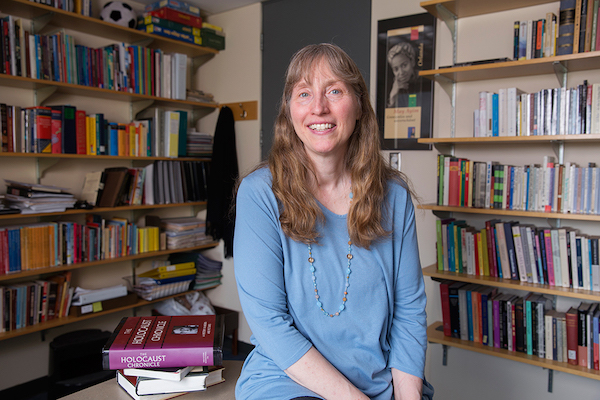
Dr. Helga Thorson of the University of Victoria. (photo from uvic.ca)

The University of Victoria unveiled its Stories of the Holocaust: Local Memory and Transmission exhibit – a project that was part of a combined undergraduate and graduate seminar on Holocaust and memory studies – during an online launch on April 15.

The exhibit is the result of a collaborative effort. Ten community members, comprising Holocaust survivors and descendants of survivors, from Vancouver, Victoria and Salt Spring Island, were paired with 10 UVic students to present wide-ranging and diverse stories from the Shoah in a context both personal and relevant to future Holocaust education.

“Students worked one-on-one with a community partner to figure out the best way to tell each story. This, as they discovered, was no easy task,” said UVic professor Dr. Helga Thorson, the course’s instructor. The students had to learn new technological skills, go over an extensive reading list and develop interpersonal skills, which included “relationship-building and the ethical dilemmas that come into play when telling somebody’s story that is not your own.”

“The engagement and involvement of the 10 students, who took the class assignment seriously, will go a long way in helping us remember the Shoah and the story passed on by their community partner,” said Thorson. “Remembering the past also helps us reflect on the present and what this means for us in today’s world as we continue to grapple with antisemitism, racism and other forms of violence, hatred and injustice.”

Ireland Good, one of the students involved in the project, thanked the Jewish community members for “their courage and their trust in us to tell their stories and to create this exhibit. I have thoroughly enjoyed this experience,” said Good, “even with its low moments, as I am sure it is with all the other students.”

The stories represent varied experiences, including having hid in order to survive and having been sent to a Soviet gulag. They come from Hinda Avery, Lillian Boraks-Nemetz, Rudolf Deman, Ilserl Fränkel, Julius Maslovat, Micha Menczer, Isa Milman, Fred Preuss, Claire Sicherman and Hester Waas.

Maslovat was the youngest prisoner ever at Buchenwald, and he is the subject of a recent film, Why Am I Here?: A Child’s Journey Through the Holocaust. The day of the launch, April 15, had a special significance for Maslovat, as it marked the 76th anniversary of his liberation from Bergen-Belsen. He was just under 3 years old at the time.

“My story did not come to me in a neat package. There were people who knew parts of it and contributed. Other parts I had to dig out of archives in Israel, Germany, Sweden, Britain, Poland, U.S. and Finland. I have tried to tell my story by putting together the pieces like a jigsaw puzzle. This time, I have included material I have not spoken about before,” said Maslovat, explaining his contribution to the archive.

“Despite what people may think about Holocaust survivors writing their memoir or speaking about their experience, we are not navel-gazing,” said writer Boraks-Nemetz, who escaped from the Warsaw Ghetto and lived in hiding. “We who have stared into the abyss of the atrocity that was the Shoah can never erase it from our memories. When I speak about my experience, I always think of the survivors and the victims, of the injustice wrought by a madman who destroyed lives – lives of children, of my little 5-year-old sister, who was brutally murdered for being a Jewish child … of the 1.5 million children who needlessly died.”

Boraks-Nemetz continues to explore the personal and broader impacts of the Holocaust through recent works, the novel Mouth of Truth and a collection of poetry, Out of the Dark.

Dr. Richard Kool is the son of Waas, who hid in the Netherlands during the war. He spoke of the importance of conveying the story to future generations. “I’ve really understood that, as Hester’s child and the oldest of my siblings, I have a responsibility as a carrier of a message that helps me keep looking forward towards recipients, towards recipients who have more life in front of them than behind, recipients who may not even be alive yet,” he said.

“We, the survivors and their children, must look forward and consider the powerful message for future individuals and generations,” he added. “Messages that say, ‘Don’t wallow in despair, worry and victimhood, but act, now, to do what you can with the tools at your disposal and the people around you to help co-create a fairer, healthier, more just, more peaceful community and society.’”

To view the exhibit, go to omekas.library.uvic.ca.

Sam Margolis has written for the Globe and Mail, the National Post, UPI and MSNBC.

Torah class marks 10 years

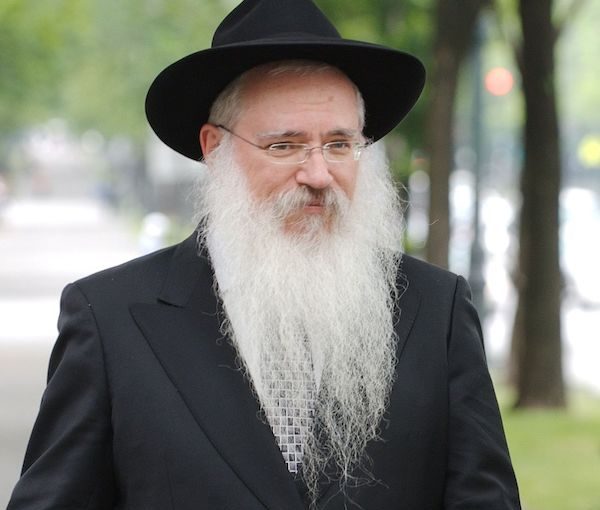
Rabbi Manis Friedman is the keynote speaker at Chabad Richmond’s celebration on June 1. (photo from Wikipedia)

On June 1, Chabad Richmond will mark 10 years of the weekly Torah studies class. A special event celebrating the past and launching the future will feature guest speaker Rabbi Manis Friedman, a renowned lecturer, counselor and author of several books and many articles. The topic is The Top 10 Reasons to Study Torah.

Starting in 2011 as a small group that met with Rabbi Yechiel Baitelman to discuss the weekly parashah (Torah portion), this assembly of retirees has grown to more than 20 people weekly.

“While not exclusively the domain of the retired, these weekly morning Torah classes mainly attract seniors,” said Baitelman. “Not only are local Richmond and Vancouver folks attending, but participants from Alberta and Quebec are joining virtually as well. During the pandemic, with more people working from home, we have some younger participants, too. Everyone is welcome.”

When the pandemic struck last year, Baitelman recognized the need for the continuity of Torah studies and immediately started offering classes via Zoom. These weekly classes have provided learning, but, more importantly, inspiration.

Richmond resident and longtime Chabad attendee Grace Jampolsky approached Baitelman back in 2011 and asked if he would offer a weekly Torah class. She gathered a few friends, and so began the 10-year tradition that is now a foundational part of the participants’ lives. The weekly class is a program of the Rohr Jewish Learning Institute of Richmond.

Acknowledging Chabad Richmond’s accomplishments to date, Baitelman said, “It’s all about celebrating our past learning and looking forward to growth and continued learning for the future. The continuity of weekly Torah study over 10 years is a real milestone. It represents thousands of hours spent studying the Torah portion of the week together, interactively, as a community of learners.”

As the participants attest, the classes have had a positive impact on expanding their Jewishness.

“If you were to ask me what the goals of the Torah classes are, I’d say it’s two-pronged goal – to increase class attendance and to share a love of Torah with our community,” said Baitelman.

Speaking with a few of the initial attendees, it became apparent that it’s not just the content of the classes that resonates with people, it’s Baitelman’s approach to teaching.

Ralph and Gina Blasbalg are two of the original members and, when asked how the classes have impacted their lives, Ralph Blasbalg said: “It’s always something to look forward to, especially when we’re cocooning during the pandemic. We don’t go out very much because we’re very vulnerable. The Torah lessons, the talks, the spirited wisdom of our rabbi – we are so lucky to have this rabbi in our community. Rabbi Baitelman is such a mensch, he’s just a wonderful human being.”

When asked how it’s enriched their lives, he added: “First of all, the knowledge that we are gaining, the knowledge about Torah, the knowledge about our community and the responsibilities that each one of us has to share and pay forward to the community. And the benefit that it gives to us, meaning that we have a sense of belonging, and we realize how our ancestors lived and how faith supported them through even worse times. We just have a pandemic – they had pogroms and illness and suppression and oppression … and, still, this faith, this Yiddishkeit, the manner of living by the Torah rules – the manual of life – is so important to us, for me, it’s definitely giving me that.”

Former participant Stevie Steiner said: “I was one of the first people in the group … and I attended for several years. I loved that class. It gave my life more meaning and purpose. If I went to the class tired, by the time it was over, I found myself so uplifted, or thoughtful. It made me look at things very differently, and very positively. Rabbi Baitelman always saw the glass half full, rather than half empty. It made quite a difference in my life actually. Rabbi Baitelman is a wonderful man and excellent teacher. He’s got a talent for getting the lesson across. The material was always very relevant. The rabbi was a very positive influence.”

Regular participant Maria Hughes said: “The weekly Torah classes have had a big effect on me. I’m from Russia, where there were no Torah classes, no nothing. I just knew I was Jewish because it was in my past, but I was discriminated against everywhere there. I went to live in Israel, but didn’t go to synagogue because I felt like an outsider and we didn’t know Hebrew. When I came to live in Richmond and started attending Chabad Richmond, I really started learning about Judaism and started feeling more and more proud of being Jewish…. It was like the puzzle came together. I started studying more and loving it. So I started talking to my daughter (who lives in Israel) about it a lot and we had different discussions. She was not religious at all … but, slowly, my daughter started keeping Shabbat and I think my influence was a big part of it. My talking about Judaism had a big effect on her. It affected not just me, but also my daughter and grandchildren. It affected a whole generation.”

Ezra Shanken, chief executive officer of the Jewish Federation of Greater Vancouver; Rabbi Efraim Mintz, executive director of the Rohr Jewish Learning Institute; and Sheldon Kuchinsky, board member of Chabad Richmond, will be present to offer greetings at the celebration of the class’s 10 years.

Guest speaker Friedman is the dean of Bais Chana Institute of Jewish Studies, the world’s first yeshiva exclusively for women. He hosts his own cable TV series, Torah Forum with Manis Friedman, which is syndicated throughout North America.

The event takes place at 7 p.m. on June 1 via Zoom at chabadrichmond.com/celebrate. Register online using the link, or call 604-277-6427. Everyone is welcome.

Shelley Civkin is a happily retired librarian and communications officer. For 17 years, she wrote a weekly book review column for the Richmond Review. She’s currently a freelance writer and volunteer, including at Chabad Richmond.