Skip to content
  • Home
  • Subscribe / donate
  • Events calendar
  • News
    • Local
    • National
    • Israel
    • World
    • עניין בחדשות
      A roundup of news in Canada and further afield, in Hebrew.
  • Opinion
    • From the JI
    • Op-Ed
  • Arts & Culture
    • Performing Arts
    • Music
    • Books
    • Visual Arts
    • TV & Film
  • Life
    • Celebrating the Holidays
    • Travel
    • The Daily Snooze
      Cartoons by Jacob Samuel
    • Mystery Photo
      Help the JI and JMABC fill in the gaps in our archives.
  • Community Links
    • Organizations, Etc.
    • Other News Sources & Blogs
    • Business Directory
  • FAQ
  • JI Chai Celebration
  • JI@88! video

Recent Posts

  • Sharing her testimony
  • Fall fight takes leap forward
  • The balancing of rights
  • Multiple Tony n’ Tina roles
  • Stories of trauma, resilience
  • Celebrate our culture
  • A responsibility to help
  • What wellness means at JCC
  • Together in mourning
  • Downhill after Trump?
  • Birth control even easier now
  • Eco-Sisters mentorship
  • Unexpected discoveries
  • Study’s results hopeful
  • Bad behaviour affects us all
  • Thankful for the police
  • UBC needs a wake-up call
  • Recalling a shining star
  • Sleep well …
  • BGU fosters startup culture
  • Photography and glass
  • Is it the end of an era?
  • Taking life a step at a time
  • Nakba exhibit biased
  • Film festival starts next week
  • Musical with heart and soul
  • Rabbi marks 13 years
  • Keeper of VTT’s history
  • Gala fêtes Infeld’s 20th
  • Building JWest together
  • Challah Mom comes to Vancouver
  • What to do about media bias
  • Education offers hope
  • Remembrance – a moral act
  • What makes us human
  • המלחמות של נתניהו וטראמפ

Archives

Follow @JewishIndie
image - The CJN - Visit Us Banner - 300x600 - 101625

Category: News

Jew-hatred is centuries old

Jew-hatred is centuries old

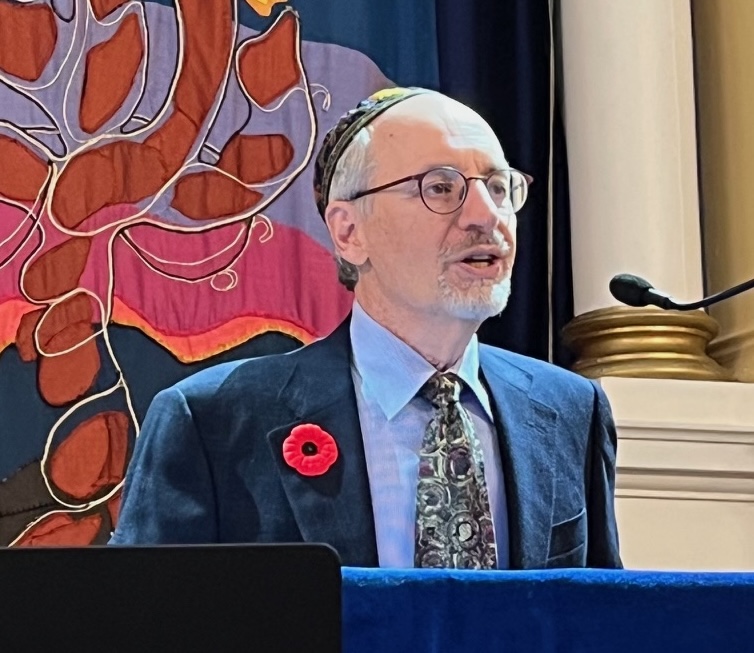
Bar-Ilan University’s Dr. Mordechai Kedar spoke in Vancouver Nov. 17 at Temple Sholom on root causes of Jew-hatred. (from idsf.org.il)

The Enlightenment of the 18th century carried hopes for Jews that their long history of persecution would end, but the ideas of that period carried the seeds of a new form of Jew-hatred. Communism was intended to erase class and national differences, which might have eliminated discrimination toward Jews, but this ideology too carried a poisonous element. Zionism was intended as the answer to systemic discrimination against Jews. It too, though, merely sparked a variation on the ancient bigotry.

In a survey spanning centuries, one of Israel’s leading scholars of the Middle East explained the seemingly limitless justifications for Jew-hatred in Christian and Islamic civilizations.

Dr. Mordechai Kedar spoke in Vancouver Nov. 17 at Temple Sholom on root causes of Jew-hatred. Kedar is a senior lecturer in Arabic and Middle Eastern studies at Bar-Ilan University, where he has taught for more than 30 years. Kedar served for 25 years in Israeli military intelligence, specializing in Syria and regional Arab affairs.

Kedar said he prefers the term “Jew-hatred” to antisemitism because it subverts the rhetorical claim that Arabs, who are semitic, can therefore not be antisemites. 

“We don’t find anti-Jewish sentiments in India, in China, Japan and Korea,” said Kedar. “One reason is the religion. Both Christianity and Islam are religions which are derivatives of Judaism. Therefore, in order to establish their validity and their legitimacy, they must undermine the validity and the legitimacy of Judaism.”

Another reason, he said, is that there have historically been few or no Jews in those places. In addition to being theological, Kedar argues, Jew-hatred has been a xenophobic reaction to the “other.” In the absence of Jews in India or Japan, this role was filled by other others.

Traits of Jews themselves also spark antisemitism, he said. Illiteracy in Jewish communities has been almost nonexistent, said Kedar, and this has created jealousy. More recently, the disproportionate number of Jewish Nobel Prize recipients may be a point of pride for Jews, but it can serve as a red flag for those seeking reasons for resentment. Jewish success in a range of fields spurs bitterness among some who are less successful or struggle to compete.

The historical trajectory of Jew-hatred is long and winding. 

“Two hundred years ago, more or less, some countries, especially after the Enlightenment in Europe, started to give emancipation to Jews,” said Kedar. “Instead of erasing the differences between Jews and others, [this freedom] actually increased the hatred because now the Jew, the ‘other,’ invades our circles, he becomes a lawyer, he becomes an accountant, he competes with us in our court.”

When Jews in Germany abandoned traditional distinctive clothing choices, this caused a backlash among non-Jews.

“This is frightening for them because, all of a sudden, the Jew looks like us,” Kedar summarized. “Is he like me or not? All of a sudden, he wants to look like a German, sound like a German, act like a German.”

With the French Revolution, and gaining steam after 1848, the Age of Nationalism was another turning point. The collapse of empires, notably the Austro-Hungarian Empire, where as many as one-third of Europe’s Jews lived, brought unanticipated challenges for Jews. As Hungarians, Romanians and others gained both national sovereignty and greater ethnic identity, Jews were again isolated as outsiders.

“If we are Romanians, we are Christians,” Kedar said. “We speak Romanian.… We dance to the same music. We eat the same food. Who doesn’t? The Jew. He eats different food. He speaks a different language. So, he’s not one of us.”

Socialism and communism were meant to erase the differences between peoples, Kedar said, including the very concept of separate nationalities. 

“And who is leading this erasing of nationalism? The Jew Trotsky and Lenin, with his [Jewish] roots,” said Kedar. The Jew is blamed when nationalism is ascendant and when communism is pushing nationalism to the margin, he noted.

Envy and othering even undermined Zionism, which was conceived as the ultimate answer to the inescapable antisemitism experienced by the stateless Jew.

“The Zionist movement was another reason to hate the Jew,” Kedar said. “Let’s imagine that we have a little town in Romania with problems of employment, problems of poverty, problems of alcoholism as well. The Jews are starting this new theology of Zionism, to leave the country and to go to eretz Israel. ‘What, you’re going to leave us and go to a better place? We hate you.’”

Kedar spoke extensively about Islamic theological and political antisemitism, which he described as like a “layer cake.”

“Judaism was canceled 2,000 years ago by Christianity,” he said. “And Christianity was canceled 14 centuries ago by Islam. So, Judaism was canceled twice.… Since Judaism is null and void, why do we need a Jewish state if there is no Jewish religion?”

Another layer rests on the Islamic concept of dar al-Islam, the domain of Islam, he said, which holds that no land controlled by Muslims must ever fall into the hands of the infidel.

Under the Ottomans, he said, eretz Israel was under Islamic rule and should forever remain so because, “according to the belief, according to Sharia, any land in the world has only a one-way ticket to enter the House of Islam, not to get out.”

A third layer is a widespread rejection of Jews as a people or as a nation. By reducing Jews to a religious group, he said, this idea subordinates Jewish identity to national affiliation, so a Jewish Canadian is Canadian first and that is their nation. This argument succeeds in justifying dozens of Muslim states while rejecting one Jewish state based on the premise that these are not Muslim states, but Turkish, Uzbeki or other states that happen to share a religion.

A fourth layer, said Kedar, is that some Islamic thought denies Jewish connections to the land and maintains that the people who today call themselves Jews are descended from central Asian Khazars who converted to the Jewish religion.

These concepts negate a core intention of Zionism, which was to resolve the problems created by Jewish statelessness. Muslim opposition to Israel, founded on these layers of theological justification, and Western opposition to Israel, mainly taking the form of political criticisms that extend into existential rejection, have prevented the Jewish state from serving the role Zionism intended, which was in part to make Jews a people like any other. 

Rabbi Dan Moskovitz welcomed Kedar, who is associated with the right-wing in Israel, and said his congregation is a “big tent.”

“I did hear from some of you here,” said Moskovitz, “or in the community, [asking] why is Temple Sholom hosting Dr. Kedar?… As the senior rabbi of this congregation, it is my intention and mission to bring in voices, within the boundaries of the tent of the Jewish people, that represent the spectrum of Jewish thought. I tell my children all the time, you only learn when you listen to people that you don’t already agree with.”

Aron Csaplaros, BC regional manager for B’nai Brith Canada, which co-sponsored the event, introduced Kedar. He also highlighted his organization’s most recent audit of antisemitic incidents, noting they recorded 6,219 incidents of hate against the Jewish community in Canada in 2024. 

“That’s the highest number we’ve ever recorded in the more than 40 years that we’ve been tracking this data,” he said. “That comes out to an average of 17 antisemitic incidents every single day.” 

Incidents range from online harassment, threatening behaviour and vandalism targeting Jewish institutions to direct attacks against Jewish individuals, Csaplaros said. 

“It is hostility directed at people simply because they’re Jewish,” he said. “Many in our community feel less safe today than at any point in their lifetimes. Parents hesitate sending their kids to school. University students are increasingly targeted and isolated. And Jewish Canadians who have always lived openly and proudly now find themselves looking over their shoulders or questioning whether this is still the country that can offer the sense of security that they once felt.” 
Format ImagePosted on December 5, 2025December 3, 2025Author Pat JohnsonCategories LocalTags antisemitism, Aron Csaplaros, Bar-Ilan University, B’nai Brith Canada, Dan Moskovitz, history, Jew-hatred, Mordechai Kedar, speakers, Temple Sholom

Aiding medical research

When Ariel Louwrier speaks about StressMarq Biosciences – the Victoria-based company he founded that specializes in the development and commercialization of high-quality bioreagents – in terms a layperson would understand, he draws an analogy to another era.

“If you think of drug discovery as a gold rush, we make the picks and shovels,” Louwrier said.

photo - Ariel Louwrier, founder of StressMarq Biosciences
Ariel Louwrier, founder of StressMarq Biosciences. (photo from StressMarq)

The company’s start during the 2008 financial crisis may not have been the most opportune time to launch an enterprise. Yet, Louwrier was able to secure a small amount of funding from the United Kingdom, which he used to invest in a variety of licences to make certain tools – at the time, antibodies specific to cancer research.

One of the hurdles he had to confront at the time was a strong Canadian dollar. For a company that exports its product and generally charges customers in US dollars, this posed challenges to the bottom line, until currency rates began to normalize after 2012.

“We were very draconian in terms of our spending, because the company was still very much in start-up mode,” he said. “I didn’t take a salary for the first three or four years, which helped the company. Of course, it didn’t help me.”

Eventually, around 2015, StressMarq considered developing a different type of product. Whereas it had once made antibodies, it decided to start making proteins instead. It moved into the neurodegenerative disease research space, as opposed to cancer, which, Louwrier noted, is a crowded area with companies from the United States, Europe and Asia vying against one another, making for a lot of products in the market. 

“The genesis of it was literally a friend of a friend that asked us to try to make something, a very specific product. It’s unusual for people to undertake strange projects for free in this world,” Louwrier said. “I’d always felt that it was an interesting and useful thing to allocate about 10% of our time and money into doing exactly that, because you never know what’s going to come out in the end. We were asked and tasked specifically to make a particular protein aggregate – those are proteins that come together and they form, literally, an aggregate.”

The artificial protein aggregates that StressMarq makes are comparable in many ways – though not always the same – to what forms in the human brain as neurodegenerative diseases progress, whether it’s Parkinson’s, Alzheimer’s or ALS. They are all different proteins, but the process is roughly the same.

“For us, the task has always been to try to make something that is as biologically relevant as possible for the researchers because they use that material to create the model,” Louwrier said. “The model is essentially a version of the diseased brain, but in a much more simplistic form. Then, researchers can proceed and do their work on the model. They’ll have drug candidates. They may have different treatment regimes, as well. But they work on an artificial model, and we produce the products for them.”

The timing for StressMarq to move into a different arena was good. Dollars were beginning to pour into research for neurodegenerative diseases, such as Alzheimer’s and Parkinson’s, including money from the National Institutes of Health in Washington, DC, the largest public funder of biomedical research in the world.

“We’ve ended up in a position where it makes sense to try to find, not necessarily cures, but treatments that can extend the time period for patients whilst they still have the vast majority of what you think of as typical cognitive abilities,” Louwrier said.

Continuing growth

Beginning in a 150-square-foot office on Douglas Street in Victoria, Louwrier hired his first employee in 2008 and produced a small array of products. These days, StressMarq employs 27 people, in 9,000 square feet allocated through six different suites in a building in Victoria’s Oaklands neighbourhood.

By Louwrier’s account, StressMarq is likely the largest biotechnology company from a laboratory perspective in the city and certainly the largest that is private.

“There’s no government funds, there’s no venture capital funds in here. It’s a completely self-defined and self-financing business,” he said.

StressMarq was not shaken by the pandemic because it was one of the entities governments wanted to keep open, even though it was not involved with COVID-related research.

This year, in a turbulent economic situation, with tariffs often changing, StressMarq has not been impacted for the most part, aside from a couple of minor exceptions. Louwrier said StressMarq’s customers have not been affected by the macroeconomic volatility, or the furloughs that occurred during the US government shutdown.

As the industry space and its technologies become more mainstream, Louwrier envisages a bright future for the firm, and he suspects the company will long outlast him when he decides to retire – whenever that may be. 

Sam Margolis has written for the Globe and Mail, the National Post, UPI and MSNBC.

Posted on December 5, 2025December 3, 2025Author Sam MargolisCategories LocalTags Ariel Louwrier, bioscience, business, medical research, neurodegenerative diseases, StressMarq, technology, Victoria
Connecting Jews to Judaism

Connecting Jews to Judaism

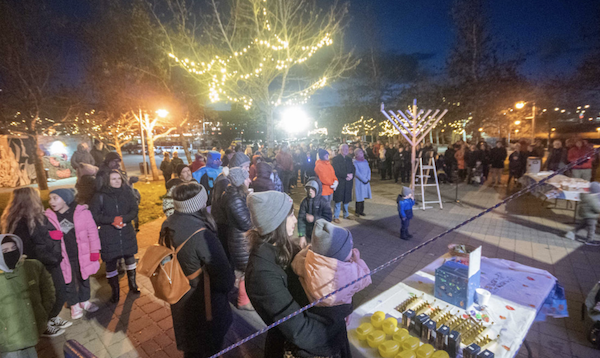
Chabad of Nanaimo’s annual Hanukkah menorah lighting gathering is one of its most publicly visible events. Last year, it was held in Maffeo Sutton Park. (© Norm Wolf)

When Rabbi Bentzi Shemtov and his wife Blumie established Chabad Nanaimo and Central Vancouver Island in 2015, there was no Orthodox organizational presence in Nanaimo. Their arrival ignited a spark of Yiddishkeit that has helped Jews in the area make a deeper connection to their Jewish roots.

Rabbi Shemtov’s path to the Island led him through various places. Growing up in Toledo, Ohio, he attended yeshivah in Detroit, studied in Israel for two years, spent time in Chicago, and then moved back to Detroit. Eventually, he ended up in New York, where he finished his rabbinical studies and married Blumie, who is the sister of Rabbi Meir Kaplan – Kaplan, with his wife Chanie, established Chabad of Vancouver Island in Victoria. Before the Shemtovs settled in Nanaimo, Rabbi Shemtov gained experience running services and teaching classes in places all over the world, including St. Thomas, Colombia, Moscow and Uruguay. 

Chabad of Nanaimo and Central Vancouver Island was established with the encouragement of Rabbi Kaplan. Prior to 2015, Kaplan would travel from Victoria to Nanaimo and the Cowichan Valley (Ladysmith, Parksville, Qualicum Beach) on Sukkot with the Sukkah Mobile and for the public lighting of a Hanukkah menorah in Nanaimo. On these journeys, he would speak to Jews residing in these areas, and he saw the need for a Chabad House in the region.

“Rabbi Kaplan called me up and told me that he was visiting Nanaimo for 10 years and he was doing a menorah lighting and the population was growing and he was getting requests for more Yiddishkeit here and asked if I could check it out,” Shemtov told the Independent. So, they came to Victoria for Pesach and spent it with the Kaplans. “And then, after Pesach, we came up here to visit with some of the families and then we decided to move here,” he said.

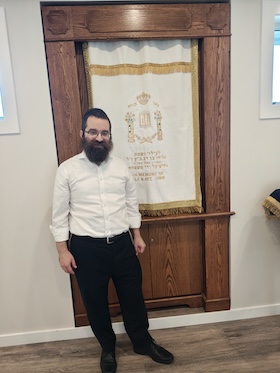
photo - Rabbi Bentzi Shemtov at Chabad Nanaimo and Central Vancouver Island, which he and his wife Blumie established in 2015
Rabbi Bentzi Shemtov at Chabad Nanaimo and Central Vancouver Island, which he and his wife Blumie established in 2015. (photo by David J. Litvak)

Shemtov said he thought Nanaimo was a beautiful place and, by being there, he and his wife could serve a need in the community, though he admits they didn’t really know how many Jews resided in the area at the time.

“We did a women’s circle a couple of weeks later and there were about 28 women who came, many who may have met before but didn’t realize they had common Jewish ancestry,” he said.

Events and classes have been added over time. Today, Chabad of Nanaimo offers programming both at and away from its physical space. It commemorates all the Jewish holidays, offers weekly Shabbat services, has a Hebrew school that meets twice a month, a teen event that’s held twice a month, a camp in the summer, a Jewish woman’s circle and weekly classes for adults. The best-attended events, according to Shemtov, are holiday-related, including Rosh Hashanah and Passover dinners, the Megillah readings on Purim, Shavuot services, and the Hanukkah gathering. For special events, Jews come from all over Vancouver Island and the surrounding area, including Cormorant, Hornby and Galiano islands.

According to Shemtov, Chabad of Nanaimo is strategically located in northern Nanaimo and not downtown.

“We wanted to be as close as possible to the northern communities of Lantzville, Nanoose Bay, Parksville and Qualicum Beach because a lot of retired Jews live there and north Nanaimo is right in the middle.”

There are a lot of young families, as well, who don’t live in the downtown core, or even the city, he said. 

Chabad is not the only Jewish organization in town. The Central Vancouver Island Jewish Community Society preceded them, and they still hold monthly discussions and a yearly Hanukkah party. The society was founded by Dr. Phillip Lipsey, a Montrealer who moved to Parksville, and Arlene Ackerman, a former Torontonian.

“They have been here for a long time and have kept the Jewish community here together … because they wanted to make sure there was a Jewish community for the kids growing up here,” said Shemtov.

While the two groups serve different constituencies, Shemtov said, “There is overlap between our two groups and I have a great relationship with the organizers, and I learn every week with them.” 

The presence of Chabad, though, has helped Jews in the region deepen their connection to Judaism, with some community members now lighting Shabbat candles regularly, keeping kosher, attending Shabbat and holiday services, and planning lifecycle events like bar mitzvahs for their children. The synagogue’s first bar mitzvah will take place Dec. 6.

One older member of the community was even inspired to have a brit milah (circumcision) later in life after connecting with Chabad of Nanaimo, said the rabbi. Another member, who attends services infrequently, told Shemtov that Chabad is the only place in the city he feels at home in – he’s “grateful we are here because it gives him a sense of comfort knowing that there’s a Jewish presence in town, especially after Oct. 7,” said Shemtov.

One of the most publicly visible events Chabad of Nanaimo hosts is its annual Hanukkah menorah lighting, which last year was held in Maffeo Sutton Park, drawing more than 200 people. For information about this year’s event on Dec. 14, people can check out Chabad’s website. It is open to Jews and non-Jews alike and provides an opportunity for non-Jews to show their support for the Jewish community of Nanaimo and celebrate shared values, said Shemtov. Usually, local elected officials attend, from all levels of government.

“It was the Rebbe who pioneered the idea of the public menorah lightings, which encountered opposition from Jews initially who were afraid to publicly express their Judaism,” said Shemtov. “Today, everyone does it and they have no reservations about it, and they feel good about publicly expressing their Judaism and are proud to show that they are Jewish.”

Shemtov said Hanukkah is “an exciting time for the Jewish community of Nanaimo and the holiday is all about bringing light to the darkness and acknowledging our right to be good people out in public. 

“It also gives a sense of pride for the Jewish community in Nanaimo to celebrate their Judaism in public by lighting a menorah with our non-Jewish friends and supporters” he said. “The message of Hanukkah is that we should always focus on increasing the light, which is the vision of the Rebbe, who loved every Jew and wanted to make sure that no Jew will be left behind, which are values that Chabad represents.” 

For more information about Chabad of Nanaimo, visit jewishnanaimo.com. 

David J. Litvak is a prairie refugee from the North End of Winnipeg who is a freelance writer and publicist, and a mashgiach at Louis Brier Home and Hospital. His articles have been published in the Forward, Globe and Mail and Seattle Post-Intelligencer. His website is cascadiapublicity.com.

Format ImagePosted on December 5, 2025December 3, 2025Author David J. LitvakCategories LocalTags Bentzi Shemtov, Chabad Nanaimo and Central Vancouver Island, Chabad of Nanaimo, Hanukkah, Jewish life, Judaism
An emotional reunion

An emotional reunion

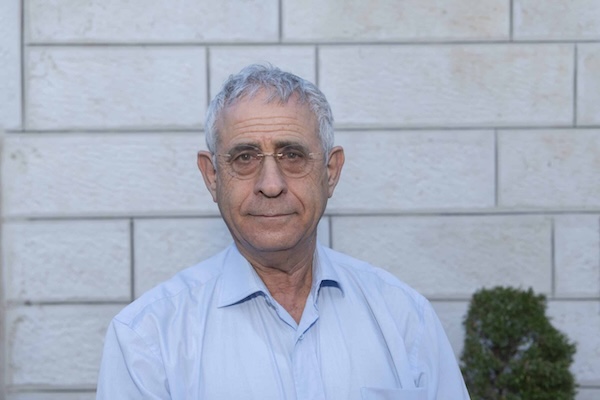
Randy Wolfe, left, with Aharon Botzer, co-founder of Livnot U’Lehibanot. (photo from Livnot U’Lehibanot)

Reuven (Randy) Wolfe of Winnipeg recently returned to Tzfat, Israel, to reconnect with the founders of Livnot U’Lehibanot and with the place where his Jewish journey began.

Wolfe first arrived in Tzfat in 1981, as a young participant in Livnot’s third-ever program. Now, 44 years later, he and his wife, Beverly Werbuk, walked once again through the same stone alleyways, into the same historic buildings and back into the same spirit that once transformed Wolfe’s life.

“I remember everything,” he shared. “The formula still works: no show, no pretending, just truth, action, open hearts and good people.”

Since that formative experience, Wolfe has built a full life in Canada – family, community and career – yet the spark that was lit in Tzfat has never faded.

“Coming back to Livnot,” he said, “felt like coming home.”

For more than four decades, Livnot U’Lehibanot, founded by Aharon and Miriam Botzer, has guided thousands of young Jews from around the world to connect with their roots through hands-on volunteering, learning and community, including the rebuilding of homes along Israel’s borders.

“The walls may have changed,” Reuven smiled, “but the spirit – that same spirit – is still alive. It continues to build the Jewish people, in Israel and throughout the diaspora.” 

– Courtesy Livnot U’Lehibanot

Format ImagePosted on December 5, 2025December 4, 2025Author Livnot U’LehibanotCategories Israel, NationalTags Israel, Judaism, Livnot U’Lehibanot, Randy Wolfe

תגובתי לכתבה על ישראלים שרצו להגר לקנדה ולא קיבלו אותם עם שטיח אדום

הכתבה

אכן יש אנטישמיות בקנדה כמו במרבית המדינות בעולם לאור מה שישראל עשתה בעזה. לפני כניסת צה”ל לעזה (לאחר השבעה באוקטובר) טענתי שהפעולה הצבאית שם תגרום נזק אדיר לישראל. זה כולל גם את הישראלים והיהודים בעולם. לישראלים בארץ לא היה אכפת כלל ממה שצה”ל עשה בעזה ונעשו דברים חמורים ביותר וחפים מפשע נהרגו. למרות השבעה באוקטובר זה לא היה צריך לקרות. עכשיו כאמור רואים את המחיר

מי שמתלונן שקר קנדה הוא טיפש מטופש. הרי ידוע שקנדה היא מדינה קרה והרבה יותר קרה מישראל. הישראלים ברובם לא יכולים לסבול קור ואין להם אפוא מה לחפש בקנדה

“ישראלים רבים שהיגרו חשבו שמחכים להם פה עם שטיח אדום”. באמת? למה? זו מחשבה אווילית המתאימה לישראלי הצפוי שחושב שכל העולם מתנהל סביבו, שכולם צריכים לקבלו בחום ואהבה? האם מישהו המתין לי בנחיתתי בוונקובר עם שטיח אדום והתחיל להחמיא ולדאוג לי? כל מה שעשיתי היה בזכותי בלבד, ללא עזרה של חבר או בן משפחה. אם הייתי ממתין לשטיחים אדומים בוודאי שהייתי נכשל כאן. האם לבנו של אחי ואשתו המתין מישהו בנחיתתם בארה”ב? הם עשו שיעורי בית כנדרש, לפחות לאישה הייתה עבודה מראש, הם ידעו מה צריך ללמוד וכיצד להתקדם מקצועית, ללא שום “ישראליות” שיכולה רק להזיק

“ישראלים רבים לא מבינים שהם מהגרים” – נכון מאוד. הם לא מבינים שבקנדה כמו כל מדינה מערבית, אין מפעילים קשרים אישיים, לא מפתיעים בביקורים לא מתוכננים, לא “קופצים” לפגישה עם מנהל סניף הבנק ללא תיאום מראש, ולא נתונים לך שום חשיבות כיוון שהגעת בישראל – על מה ולמה

כל מי שהיגר לקנדה (ובכלל לכל מדינה אחרת) עליו לדעת מראש מה כולל תהליך ההגירה, הדרישות המדויקות, הניירת הנכונה, ומה צריך להציג בפני השלטונות. כמובן צריך לדעת פחות או יותר כמה זמן זה יקח. אני למשל ידעתי שכדי לקבל את האזרחות הקנדית עלי לשהות בקנדה במשך שלוש שנים. ולכן לא עזבתי את המדינה באותה עת למעט פעם אחת לעשרה ימים, ולכן נאלצתי להמתין לאזרחות שלוש שנים+עשרה ימים. אם זה לא היה מתאים לי הייתי עוזב. מה שמתלונן שלא יהגר

אכן צריך “ניסיון קנדי” בכל עבודה רצינית. זה ידוע מראש ומי שאינו יודע זאת הוא פשוט לא רציני. ומה עושים: אפשר להיות עצמאי, להתחיל לעבוד כשכיר בעבודה פשוטה ולהתקדם, להשלים לימודים בקנדה ועוד

אכן קנדה יקרה מאוד אך לא יותר מישראל. הכל מתייקר בכל מקום בעולם ומי שיש לו בעייה אם זה שלא יהגר למדינה מערבית

נכון בתקופת הרפר היה טוב יותר לישראלים לעומת כיום. המלחמה של ישראל בעזה כאמור גרמה נזק איום לישראל שהיא כיום אחת המדינות השנואות בעולם. ולכן גם ישראלים ויהודים בעולם משלמים מחיר כבד. זה נורא ואיום אך בישראל לא מבינים זאת. כמובן שמי שמדבר עברית ברחוב ומסתובב עם סמלים יהודים וישראלים נמצא בסכנה גדולה יותר

לישראלים קשה לפצח את התרבות הקנדית או בעצם כל תרבות שהיא לא ישראלית. הישראלים לא מבינים שבמערב לא אוהבים את ההתנהגות הישראלית, השחצנות, הוולגריות, הבלתי אמצעיות, הספונטניות ללא גבול, להתקשר בטלפון לאחרים בכל שעה, וכאמור לפגוש אחרים כולל חברים ללא תכנון מראש

בסיכומו של דבר: מי שרוצה להגר לקנדה או לכל מדינה אחרת במערב מוטל עליו לעשות שיעורי בית רציניים ביותר. מי שרוצה להתנהג כישראלי מצוי במערב עדיף שלא יהגר

Posted on November 26, 2025November 13, 2025Author Roni RachmaniCategories עניין בחדשותTags Canada, immigration, Oct. 7, קנדה, שבעה באוקטובר, תהליך הגירה
Lessons in Mamdani’s win

Lessons in Mamdani’s win

Zohran Mamdani, the new mayor of New York City, was a controversial candidate who won, in part, because of a campaign focused on local concerns, and not global politics. (photo by Kara McCurdy / commons.wikimedia.org)

New York City just elected as mayor Zohran Mamadani, an anti-Zionist who has been dogged by accusations of antisemitism. Recent civic elections in Canada, on the other hand, had brighter news for Jewish and pro-Israel observers, according to Emile Scheffel, managing director of CJPAC, the Canadian Jewish Political Affairs Committee.

Scheffel presented an online briefing Nov. 14 on how Mamdani won, what it means and how Canadian voters in several cities sent somewhat different messages. 

During his campaign, Mamdani responded emotionally to accusations that he is antisemitic. In the end, according to exit polls, he received votes from about one in three Jewish New Yorkers and was endorsed by numerous prominent Jewish individuals, as well as organizations like Jewish Voice for Peace Action, the political arm of the anti-Zionist group Jewish Voice for Peace.

“When you have this kind of a movement running cover for Mr. Mamdani, it became relatively easy for him to skate past those or to push through those allegations of antisemitism,” Scheffel said. “I don’t know what’s in Mr. Mamdani’s heart. I don’t genuinely know exactly what he believes. But I’m a firm believer that you can tell a lot about a person’s character from the people with whom they choose to associate.”

Scheffel noted a controversy in which Mamdani was photographed with Imam Siraj Wahhaj, who the US justice system calls an unindicted co-conspirator in the 1993 Al-Qaeda bombing attack on the World Trade Centre in New York City. Mamdani later chose not to distance himself from the imam.

Another controversy that dogged Mamdani was his hesitation to condemn the slogan “Globalize the intifada.”

“He repeatedly refused to condemn that language,” said Scheffel. “I want to again be fair by acknowledging that there are different interpretations of what ‘Globalize the intifada’ means, depending on the context. But I am a believer … that there is a great deal of evidence that ‘Globalize the intifada’ is first and foremost a call for violence against Jews and against Jewish institutions and individuals.

“But here’s the catch,” said Scheffel. 

Prior to the mayoral election, Scheffel “did a pretty deep dive” on Mamdani’s website, looking for keywords like “Israel,” “Palestine” and “Gaza.”

He found nothing, because the Mamdani website and the campaign’s broader messaging was laser-focused on the core theme of affordability and lowering the cost of living for working-class New Yorkers.

Scheffel shared statistics about housing costs and other expenses in New York City.

“You can start,” he said, “to understand how he built a coalition of people who are primarily motivated not by Mamdani’s views on the Middle East, not by his relationship or lack thereof with members of the Jewish community, but by what he promised to do for the future of New York City and the people living there.”

In contrast, Scheffel, who has extensive background in political communications and issues management, skewered the website and messaging of Mamdani’s prime opponent, former New York governor Andrew Cuomo. He said Cuomo’s campaign website was filled with mixed messages and meaningless jargon.

“If I can’t figure out what the candidate is trying to tell me, how would I trust them to have a clear vision or a reasonable plan to tackle the issues that are facing me and that are facing the city?” he asked. “Mamdani, whatever you think about him, ran an extremely effective campaign that’s in line with all the best practices we would recommend to a candidate running for any office anywhere.”

While many Jews have been tuned in to politics in the largest American city, they may have overlooked other elections closer to home.

Municipalities in Quebec voted on Nov. 2. In Montreal, which Scheffel noted has been home to some of this country’s most worrying incidents of antisemitism, and in some other communities, activists tried to make the Israeli-Palestinian conflict an election issue by asking candidates to sign a so-called “anti-apartheid pledge” and commit to cutting ties with the state of Israel.

The eventual winner of the election, Soraya Martinez Ferrada, Montreal’s new mayor, refused to sign the pledge and was accused by opponents of complicity in genocide. In addition to her victory, her party won a majority of seats on city council, after a campaign in which they pledged to take seriously law enforcement and public safety, including a crackdown on protesters that Scheffel said include extremist elements that make Montrealers unsafe.

“That was a vision that ultimately proved to be compelling and appealing to the largest number of Montrealers,” he said. 

A few days earlier, on Oct. 20, Calgary also elected a new civic government.

The incumbent had declined to attend the annual menorah lighting ceremony at Calgary City Hall, claiming it was too pro-Israel and too political, said Scheffel, who lives in the city. 

“She was rejected by 80% of voters,” he said. “She became the first mayor in 45 years in Calgary not to win a second term. That happened not because she didn’t show up to a menorah lighting or because she made every effort, frankly, to isolate the Jewish community at a time when the Jewish community needed support from elected leaders. She lost – and she lost in such a crushing fashion – because voters believed that she had failed to tackle the everyday quality-of-life, cost-of-living issues that are facing people here in Calgary.”

Jeromy Farkas, the new mayor, won narrowly, with the incumbent mayor placing third.

Scheffel made the case that none of these campaigns pivoted on issues of foreign affairs but were determined mostly by voters who wanted potholes filled and cities to run efficiently. He then made a case for engagement in the political process, noting that many of the elections turned on very small vote counts. Farkas, for example, won the Calgary mayor’s race by fewer than 400 votes after a recount. 

CJPAC engages Jewish Canadians in the political process and encourages them to build strong relationships between the Jewish community and elected officials across parties, said Scheffel. Close races like some recent municipal elections, he said, underscore the impact an individual can have in the process by volunteering as little as two hours of their time to a campaign. 

Format ImagePosted on November 21, 2025November 20, 2025Author Pat JohnsonCategories WorldTags Canadian Jewish Political Affairs Committee, CJPAC, democracy, elections, Emile Scheffel, Jeromy Farkas, Soraya Martinez Ferrada, Zohran Mamadani
Plenty of hopefulness

Plenty of hopefulness

Avi Benlolo of the Abraham Global Peace Initiative was in Vancouver Nov. 5 to screen the AGPI’s new film, Heart of Courage, about Jewish resilience in the wake of the Oct. 7, 2023, terror attacks. (photo by Pat Johnson)

Against a “tsunami” of anti-Israel and antisemitic content online and in the broader society, Jews and pro-Israel voices need to do a better job getting their message out, according to Avi Benlolo.

Benlolo is founding chair and chief executive officer of the Abraham Global Peace Initiative (AGPI), whose mandate is to study and research international human rights, fundamental freedoms, democracy, global peace and civil society in Canada, Israel and around the world. He was previously founding president and CEO of Friends of Simon Wiesenthal Centre and writes weekly in the 

National Post. He was in Vancouver screening AGPI’s new 40-minute film, Heart of Courage and spoke with Rabbi Jonathan Infeld at Congregation Beth Israel Nov. 5. He was introduced by Diane Friedman, the congregation’s adult program director. 

The film features a soldier playing John Lennon’s “Imagine” on a piano in Tel Aviv’s Hostages Square.

“His music becomes his voice, a testament to the resilience of his spirit and the strength of his people,” the narrator intones. “His teary eyes remain wide open, reflecting the weight of his generation’s struggle. He plays for a world he longs to see, a world of peace. In that moment, his dreams reach beyond the darkness, yet his resolve remains unshaken. This soldier is part of a chain, a line of defenders stretching back through history, each bound by an unyielding commitment to Israel’s survival.”

Produced prior to the ceasefire, the film includes Benlolo interviewing people at the weekly rallies that drew hundreds of thousands of people in Tel Aviv, many of them family members of hostages. Some have risen to prominence as voices for those held in Gaza and their relatives.

Benlolo visits an art installation that serves as a memorial monument adjacent to the Ministry of Foreign Affairs’ building in Jerusalem. The work, titled “Memory Pomegranate 7.10.2023,” is a sculpture of a pomegranate with multi-coloured glass and ceramics, visual shards and fragments that metaphorically reference broken lives, trauma and loss, but together form a hopeful whole, emphasizing life, resilience and collective memory. The artwork integrates electronic tags that allow a smartphone or other device to access digital content to learn more about the events of 10/7 and the people and communities affected.

Sharing stories of non-Jews who saved lives on 10/7, the film declares, “In Israel, heroism knows no bounds of religion, ethnicity or background. On Oct. 7, amid the chaos, countless stories emerged of Muslims, Druze, Christians and Bedouins risking everything to protect their fellow citizens.” 

After the screening, Benlolo and Infeld spoke of the hurdles to getting the message out.

Benlolo, who has worked extensively in multicultural and interfaith sectors, plans to screen Heart of Courage for diverse audiences, as his organization has done with previous films.

The biggest challenge, Benlolo said, may be reaching younger audiences, for whom anti-Israel activism has become “cool.”

“We have to go to them and get to them through the technology that exists today,” he said. “Social media in particular.”

This presents its own challenges, he noted, as there is a “tsunami” of anti-Israel and antisemitic content.

The silver lining of this era, according to Benlolo, is a new generation of engaged Jewish young people.

“What we all saw as a result of Oct. 7 was Jewish youth for the first time ever walking proudly with Magen Davids around their necks, fighting back, distancing themselves from people who have rejected them and reject the state of Israel,” he said.

While the film paints a picture of a unified Israeli society, Benlolo acknowledged divisions, rifts that will likely be exacerbated in next year’s national elections. 

One of the most visible points of discord is the debate over Haredi conscription. Benlolo is unequivocal on this topic. Asked by Infeld what he would say to the Haredi community, Benlolo said, “What’s wrong with you? I mean, honestly.… To not participate in defending the country and to insist that others do it for you, I think, is wrong.”

Benlolo also pulled no punches on issues closer to home. He said Canada’s government is “pretty much siding with Hamas” and other leaders, such as Toronto’s mayor, are “emboldening the other side.” This inspires violent people to act out, he said, citing a vicious attack on Jewish students near Toronto Metropolitan University earlier that day.

“What gives them permission to do that?” Benlolo asked. “It’s the environment that feeds it. It’s the political leadership that allows it. That is the central problem.” 

Responding to a question from Infeld on the future of Jewish life in Canada, Benlolo noted that Jewish schools and other institutions in parts of Europe are protected by armed guards and he warned that North American Jews may find themselves “in a much more defensive posture.”

“I can’t promise you that there’s going to be a good future here in Canada,” he said. “But, in Israel, at least, we have an ability to wear the uniform and protect ourselves, and that’s an important distinction. It doesn’t mean Israel is 100% safe, as we all know, it doesn’t mean that’s an easy life, but at least it’s a place where we can stand up for ourselves.”

He has plenty of hopefulness for Israel.

“I think that the next chapter for Israel is an optimistic one,” he said, suggesting that more countries will normalize relations with Israel and join the Abraham Accords. He suggests also that Israel’s economy will skyrocket, in part because of all the technology developed as a result of the war. He also predicts continued increasing levels of aliyah. 

Format ImagePosted on November 21, 2025November 20, 2025Author Pat JohnsonCategories NationalTags Abraham Global Peace Initiative, AGPI, antisemitism, Avi Benlolo, Beth Israel, Heart of Courage, Israel, Jonathan Infeld, Oct. 7
Lessons from past for today

Lessons from past for today

At the Kristallnacht commemoration in Victoria on Nov. 6, Congregation Emanu-El’s Rabbi Elisha Herb led a community pledge of mutual respect and support, joined by local politicians, faith leaders and law enforcement. (photo by Penny Tennenhouse)

“Hate has no boundaries and needs to be resisted wherever and against whomever it is found. This is necessary to protect our whole society. The history of the Shoah teaches us the dangers of complacency,” said Micha Menczer in his opening remarks at the Nov. 6 commemoration in Victoria of Kristallnacht, the Night of Broken Glass.

Menczer is a founding member of the Victoria Shoah Project, which held the community’s commemoration at Congregation Emanu-El. The project is a group of Holocaust survivors and their descendants, as well as educators and other individuals, dedicated to Holocaust remembrance and education.

photo - Micha Menczer
Micha Menczer, a founding member of the Victoria Shoah Project, gave the opening remarks at the Nov. 6 commemoration in Victoria of Kristallnacht. (photo by Penny Tennenhouse)

After Menczer spoke about the increase in hate crimes in Canada – of which Jews are often the target – Kristin Semmens, a history professor at the University of Victoria, spoke about Kristallnacht, the organized anti-Jewish riots in Germany and Austria on Nov. 9-10, 1938. The violence sent a clear message to Jews that they were not welcome in Germany, said Semmens, noting that, although Jews had already faced extreme persecution, no one foresaw what would come. 

“Even after November 1938, even after the destruction and horror and humiliation and fear, even after the shattered storefronts, the burning synagogues, the mass arrests, the physical assaults and murders, few could have imagined how much worse things could get,” she said.

Semmens stressed that, while people came on Nov. 6 to commemorate what happened in the past, it is also fundamentally important to act in the present, to differentiate among people when it comes to basic human rights today.

“We cannot turn a deaf ear or a blind eye to defamation and demonization,” she said. “We must find the courage to challenge the wrongs we see in our society. And, as the events leading to Kristallnacht reveal, we must beware of the beginnings.”

Nina Krieger, British Columbia’s solicitor general and minister for public safety, was the keynote speaker. Due to inclement weather that evening, she spoke from the Lower Mainland via Zoom.

“How can we, today, fathom six million lives cut short solely because they were Jewish?” asked Krieger, who, before entering politics, was the executive director of the Vancouver Holocaust Education Centre (VHEC).

“Sadly, as we gather to remember events of 87 years ago, our historical imagination, I think, is less challenged than we thought. With the recent Manchester synagogue attack and the graffiti scrawled on this congregation, the echoes of the past are particularly and painfully resonant.”

In August, antisemitic graffiti was painted at the entrance of Congregation Emanu-El. According to a September post by the synagogue, Victoria police have since found the suspected perpetrator, who “has been charged on two counts: mischief relating to religious property and wilful promotion of hatred.”

Krieger noted that, during the pandemic in Canada, contingents within the anti-vaccination movement borrowed symbols from the Holocaust, such as yellow stars and photos of Anne Frank, to portray their feelings of being marginalized and victimized for the requirement to carry proof of vaccination. She said a commitment to history and memory is the necessary antidote to such Holocaust distortion and trivialization, “which we are seeing with increasing frequency as the Holocaust transitions from lived to mediated memory.” 

She pointed to the VHEC’s use of primary sources when engaging with the 25,000 young people the centre educates each year. “Fragments of the Shoah – artifacts, photographs, documents – provide tangible entry points into the past and to individual human experiences during an event that might otherwise be an abstraction of numbers,” said Krieger, who reminded the audience that, in a time of rising antisemitism, the Holocaust may not simply be a lesson but a warning, “an inescapable fact that speaks to what is possible.”

Remembrance of the Shoah, she said, “provides an opportunity to wrestle with fundamental questions about the fragility of democracy and our responsibility as citizens today.”

Music performed by Kvell’s Angels, a local klezmer group, and the Capriccio Vocal Ensemble of Victoria, conducted by Adam Jonathan Con, was interspersed between speakers at the commemoration.

Politicians, leaders from other faith groups and members of the Victoria Police Department rose at the end of the ceremony to recite a pledge of mutual respect and support.

In the program notes to the commemoration, the organizers drew attention to the events that transpired in Germany 87 years ago, when at least 91 Jews were killed and 30,000 Jewish men were forced into concentration camps, Jewish homes and institutions were ransacked, businesses destroyed and synagogues burned. It was, the notes read, “a reflection of the inability of ‘polite society’ – of Jews and non-Jews – to comprehend that the institutions at the very heart of civil society (the police, uniformed people, political representatives) would be at the very core of this violence inflicted on the Jews of Germany and Austria, or contribute … to its devastating effect.”

The commemoration was sponsored by Congregation Emanu-El and the Jewish Federation of Victoria and Vancouver Island.

Sam Margolis has written for the Globe and Mail, the National Post, UPI and MSNBC.

Format ImagePosted on November 21, 2025November 20, 2025Author Sam MargolisCategories LocalTags antisemitism, Emanu-El, history, Holocaust, Jewish Federation of Victoria and Vancouver Island, Kristallnacht, Kristin Semmens, Micha Menczer, Nina Krieger, remembrance, Shoah, Victoria Shoah Project
Rebuilding a life after Shoah

Rebuilding a life after Shoah

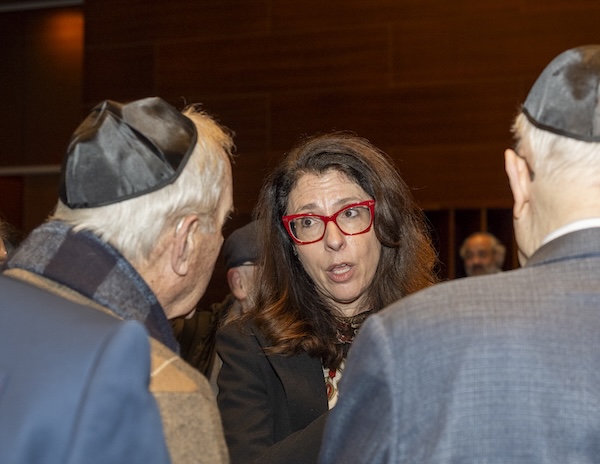
Prof. Robin Judd, author of Between Two Worlds: Jewish War Brides After the Holocaust, speaks with community members at the Kristallnacht commemoration in Vancouver Nov. 9. (photo by Sova Photography)

The history of war brides – generally British or European women who married Allied military men – is widely known and has been explored by historians and social scientists. Between 1944 and 1948, about 65,000 dependents came to Canada as spouses or intended spouses of military personnel. 

Speaking at Vancouver’s annual Kristallnacht commemorative event Nov. 9 at Congregation Beth Israel, Prof. Robin Judd discussed an almost unknown subset of this phenomenon: Holocaust survivors who met Allied soldiers in displaced persons’ camps after the war and went on to marry them.

Judd is associate professor of history at Ohio State University and immediate past president of the Association for Jewish Studies, the largest international society for scholars of Jewish studies. Her award-winning book Between Two Worlds: Jewish War Brides After the Holocaust explores the harrowing task of rebuilding a life in the wake of the Holocaust. 

Many Jewish survivors, as well as community and religious leaders, viewed marriage between Jewish women and military personnel as a way for the survivors to move forward after extraordinary trauma, said Judd, whose academic interest in the subject stems from family history.

“My grandmother was a war bride,” Judd said. “She was a survivor. She and my father survived the war in hiding. My biological grandfather died at liberation, and my grandmother married an American soldier after the war, who then adopted my father.”

Her grandmother spoke little about her experiences during or immediately after the war, though Judd knew the rough outline of her past. Only when Judd began research into the subject did she learn that her grandmother’s experience was not as unique as Judd had assumed.

The individual stories of these war brides, and their efforts to integrate, offer lessons around survival in the aftermath of trauma, as well as larger issues concerning marriage, immigration and citizenship, she said. 

Judd focused on a few couples, including Isaac and Leesha (neé Leisje Bornstijn) Rose, and Sala (neé Solarcz) and Abe Bonder.

Sala survived in the Warsaw Ghetto for more than a year, before deportation to a ghetto outside Lublin, then to Majdanek and a series of other camps. She was liberated during a death march in April 1945.

At Rosh Hashanah services at a DP camp in Hanover, she met Abe, a mechanic in the Royal Canadian Air Force. Until then, Judd said, Sala had avoided the Canadian and British soldiers overseeing the DP camp because she said they made her feel like a monkey in the zoo.

“But Abe came to her and started to speak to her in a very quiet Yiddish,” Judd recounted. “It was his questioning, his real interest in understanding who she was and what she had experienced that made her want to seek a second encounter with him.”

Many of the war brides found themselves at the whims of their new extended families, subsumed into existing structures that were foreign and unfamiliar. Often, they arrived in the new country and did not have homes of their own but lived with their husbands’ families, sometimes with multiple generations in the same home.

Leesha arrived in Ottawa and moved in with fiancé Isaac and her soon-to-be mother-in-law, with whom she had limited language skills to communicate. The groom’s mother took it upon herself to plan the wedding. 

“Leesha and other war brides are often talking about how, in these moments, whether it was the marriage or it was having their first child, or it was their first child’s bar or bat mitzvah, or their first child’s wedding, how they so desperately missed those murdered family members at that time,” Judd said.

Newcomers were sometimes judged unfairly, as if their healthy appearance diminished the perception of their suffering. A newspaper article described Leesha as “a good-natured chubby little girl.”

“There was this notion that these women looked almost too healthy,” said Judd, “That the trauma was almost not written sufficiently enough on her body.”

Associations and networks existed for the newcomers to connect with others from similar backgrounds, including Jewish war bride clubs and synagogue-affiliated groups. 

The war bride experiences Judd studies are diverse and include sad but also happy memories, she said, from the difficulties of reconstruction and recovery to stories of resilience and rebuilding.

Prof. Chris Friedrichs, a scholar of German history who taught at the University of British Columbia from 1973 until his retirement in 2018, contextualized Judd’s presentation, as well as Kristallnacht and the larger history of the Holocaust. 

Kristallnacht sent a message to the world, he said. But the world did not listen.

“This horrific Night of Broken Glass was front page news all over the world, but not for long,” he recounted. “Much else was going on in the world at that time and, within a few days, Kristallnacht was forgotten. In fact, the world learned nothing from Kristallnacht. But the Nazis learned a lot. They realized that whatever they might do to the Jews, there would be no consequences. And thus, once Hitler’s war started in 1939, within Germany itself and in every country the Germans conquered under cover of war, a relentless program to exterminate the Jews began to be carried out by beatings, by shootings, by starvation and by gas.”

Hannah Marazzi, executive director of the Vancouver Holocaust Education Centre (VHEC), which presented the event in partnership with Beth Israel and the Jewish Federation of Greater Vancouver, called Kristallnacht “a defining moment in which the shadow of hatred quite literally burst into flame.” 

Dr. Abby Wener Herlin, associate director of programs and community relations for the VHEC, introduced Holocaust survivors, who lit candles of remembrance. 

“Tonight, as we are about to light candles … we vow never to forget the lives of the women, men and children who are symbolized by these flames,” she said. “May the memory of their lives inspire us to live so that we may help to ensure that their memories live on.”

Beth Israel’s Rabbi Jonathan Infeld thanked the speaker and reflected on his family’s experience.

“My father left the DP camp and moved to Pittsburgh,” Infeld said. At a party at the Jewish community centre specifically to make shidduchim, marriage matches, for Holocaust survivors, he met the woman who would become his wife and the rabbi’s mother.

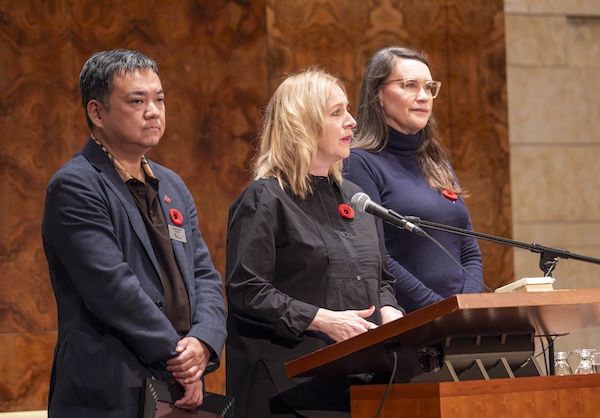
photo - Vancouver Deputy Mayor Sarah Kirby-Yung, centre, and councilors Lenny Zhou and Lucy Maloney at the Nov. 9 Kristallnacht commemoration
Vancouver Deputy Mayor Sarah Kirby-Yung, centre, and councilors Lenny Zhou and Lucy Maloney at the Nov. 9 Kristallnacht commemoration. (photo by Sova Photography)

Cantor Yaakov Orzech chanted El Moleh Rachamim, the memorial prayer.

Taleeb Noormohamed, member of Parliament for Vancouver Granville, warned of the dangers of ignoring the lessons of history.

“If we don’t take the lesson that remembrance requires us to take, we end up with a quiet normalization of what that night represented,” he said. “This is a fight that we all take on. We take on with responsibility, we take on with conviction, and we take it on to honour all of you who survived and all of you that have relatives and friends and loved ones that didn’t. So, we say, may their memory be a blessing and, indeed, may it be, but may it also be a reminder to all of us that the work that is to be done is for all of us.”

Terry Yung, member of the BC Legislature for Vancouver-Yaletown and a retired senior officer with the Vancouver Police Department, told the audience the future depends on education.

“We cannot arrest ourselves out of hate, we cannot,” he said. “We have to educate people in this world of darkness.”

Sarah Kirby-Yung, deputy mayor of Vancouver, and fellow city councilors Lenny Zhou and Lucy Maloney read a proclamation from the city. 

Posted on November 21, 2025November 20, 2025Author Pat JohnsonCategories LocalTags Beth Israel, Chris Friedrichs, Hannah Marazzi, history, Holocaust, Jonathan Infeld, Kristallnacht, Robin Judd, Sarah Kirby-Yung, Shoah, Taleeb Noormohamed, Terry Yung, Vancouver Holocaust Education Centre, VHEC, war brides
Explore Jewish music 

Explore Jewish music 

On Dec. 3, Rabbi Deborah Sacks Mintz will speak on Harnessing the Potential of Our Comfort Songs, as part of Kolot Mayim Reform Temple’s Building Bridges Speakers Series. (photo from Hadar Institute)

Kolot Mayim Reform Temple’s annual six-part series of free lectures – the Building Bridges Speaker Series – returned earlier this month with the Nov. 2 talk by Dr. Lori Şen of Shenandoah University on Classical Echoes in Ladino: Sephardic Songs Reimagined. It continues Dec. 3, with Rabbi Deborah Sacks Mintz of the Hadar Institute speaking on the topic Harnessing the Potential of Our Comfort Songs.

The Building Bridges Speaker Series’ theme for 2025/26 is Kolot Zemirot: The Many Voices of Jewish Music. In the wake of the dramatic rise in antisemitism following the events of Oct. 7, 2023, it is more important than ever to celebrate and amplify the rich tapestry of Jewish culture, history and heritage. This series of lectures will explore the role of music in shaping and sustaining Jewish identity across generations and around the world, delving into the diverse expressions of Jewish music – its history, traditions, and its cultural, religious and secular aspects. Music has always been a source of strength, resilience and hope for the Jewish people, and this series will highlight its power to unite communities and inspire pride in our shared heritage.

An educator, practitioner, composer, vocalist, multi-instrumentalist and facilitator of Jewish communal music, Sacks Mintz will explore, on Dec. 3, how Jews use the internal strength we source from singing our own anchor songs to serve our communities in times of disruption. For Sacks Mintz, the power of communal music ignites spiritual creativity, fosters participation and deepens connections within Jewish life. 

Historian and lecturer David Benkof, “the Broadway Maven,” will speak in person in Victoria on Jan. 11, with hybrid access for a wider audience. His presentation will dig into Jewish creators, characters and themes that have shaped – and continue to shape – the world of Broadway, revealing how musical theatre reflects and influences Jewish identity.

A leading voice in the study of contemporary Israeli music, ethnomusicologist, Dr. Naomi Cohn-Zentner of Bar-Ilan University observes that Israeli songs about the war and the army have always been about a hope for peace, and this was even more the case after Oct. 7. Her Feb. 8 talk – called Music and War: An Optimistic View – will examine how Israeli musicians have responded to the tragedy, offering an exploration of music’s role in processing grief, inspiring resilience and connecting community in times of crisis. 

On March 8, Dr. Joshua Jacobson, author, composer, scholar and founder and director of the Zamir Chorale of Boston, will speak on Jewish Music: What’s That? One of the world’s leading authorities on Jewish music, Jacobson will share his expertise in the history and ongoing evolution of Jewish music. His presentation will invite listeners to consider what we mean by Jewish music and how musical expression is a rich part of our identity. 

Toronto author and biographer Michael Posner wraps up the 2025/26 series on April 12 with the lecture Hallelujah and Beyond: Leonard Cohen’s Torah of Song. Posner will explore Cohen’s Jewish heritage, philosophy and musical legacy and how Judaism influenced the singer-songwriter’s lyrics, philosophy and life.

The Jewish Independent will feature coverage of the lectures in future issues, including Şen’s Nov. 2 lecture, which can be viewed on Kolot Mayim’s website.

Kolot Mayim, from the Hebrew “Voices of the Water,” is Victoria’s Reform Jewish Congregation. The Building Bridges lecture series is partially supported by the Jewish Federation of Victoria and Vancouver Island and donations are gratefully accepted, with tax receipts available for contributions over $25.

The webinars are free and mostly occur monthly mostly on select Sundays (with the exception of Sacks Mintz’s), at 11 a.m., on Zoom. Pre-registration is required via kolotmayimreformtemple.com. 

– Courtesy Kolot Mayim Reform Temple

Format ImagePosted on November 21, 2025November 20, 2025Author Kolot Mayim Reform TempleCategories LocalTags education, Kolot Mayim, music, speakers

Posts pagination

Previous page Page 1 … Page 12 Page 13 Page 14 … Page 326 Next page
Proudly powered by WordPress