
Skip to content
  • Home
  • Subscribe / donate
  • Events calendar
  • News
    • Local
    • National
    • Israel
    • World
    • עניין בחדשות
      A roundup of news in Canada and further afield, in Hebrew.
  • Opinion
    • From the JI
    • Op-Ed
  • Arts & Culture
    • Performing Arts
    • Music
    • Books
    • Visual Arts
    • TV & Film
  • Life
    • Celebrating the Holidays
    • Travel
    • The Daily Snooze
      Cartoons by Jacob Samuel
    • Mystery Photo
      Help the JI and JMABC fill in the gaps in our archives.
  • Community Links
    • Organizations, Etc.
    • Other News Sources & Blogs
    • Business Directory
  • FAQ
  • JI Chai Celebration
  • JI@88! video

Recent Posts

  • עשרים ואחת שנים בוונקובר
  • Supporting the Iranian people
  • The power of photography
  • A good place to start
  • When boundaries have shifted
  • Guitar virtuosos play
  • Different concepts of home
  • Broadway’s Jewish storylines
  • Sesame’s breadth and depth
  • Dylan Akira Adler part of JFL festival
  • Mortality learning series
  • A new strategy to brighten up BC
  • Sharing latkes and light
  • Johnson awarded for human rights work
  • Cherished tradition ensured … Silber Family Agam Menorah
  • Nothing as lovely as a tree
  • Camp welcomes new director
  • Popular family camp expands
  • A life-changing experience
  • Benefits of being a counselor
  • Camper to counselor
  • האלימות בישראל מורגשת בהרבה מגזרים
  • טראמפ עוזר דווקא לנושא הפלסטיני
  • New rabbi settles into post
  • A light for the nations
  • Killed for being Jewish 
  • The complexities of identity
  • Jews in time of trauma
  • What should governments do?
  • Annie will warm your heart
  • Best of the film fest online
  • Guitar Night at Massey
  • Partners in the telling of stories
  • Four Peretz pillars honoured
  • History as a foundation
  • Music can comfort us

Archives

Follow @JewishIndie
image - The CJN - Visit Us Banner - 300x600 - 101625

Tag: Kristin Semmens

Lessons from past for today

Lessons from past for today

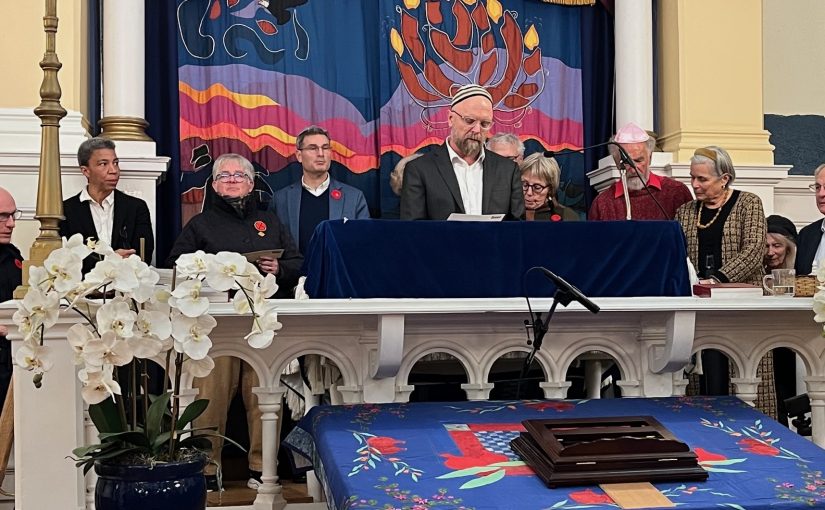
At the Kristallnacht commemoration in Victoria on Nov. 6, Congregation Emanu-El’s Rabbi Elisha Herb led a community pledge of mutual respect and support, joined by local politicians, faith leaders and law enforcement. (photo by Penny Tennenhouse)

“Hate has no boundaries and needs to be resisted wherever and against whomever it is found. This is necessary to protect our whole society. The history of the Shoah teaches us the dangers of complacency,” said Micha Menczer in his opening remarks at the Nov. 6 commemoration in Victoria of Kristallnacht, the Night of Broken Glass.

Menczer is a founding member of the Victoria Shoah Project, which held the community’s commemoration at Congregation Emanu-El. The project is a group of Holocaust survivors and their descendants, as well as educators and other individuals, dedicated to Holocaust remembrance and education.
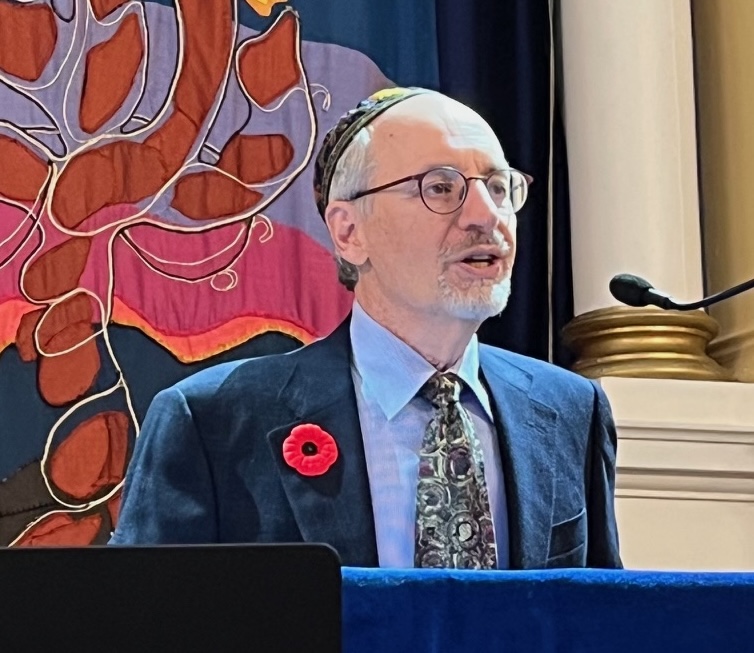
photo - Micha Menczer
Micha Menczer, a founding member of the Victoria Shoah Project, gave the opening remarks at the Nov. 6 commemoration in Victoria of Kristallnacht. (photo by Penny Tennenhouse)

After Menczer spoke about the increase in hate crimes in Canada – of which Jews are often the target – Kristin Semmens, a history professor at the University of Victoria, spoke about Kristallnacht, the organized anti-Jewish riots in Germany and Austria on Nov. 9-10, 1938. The violence sent a clear message to Jews that they were not welcome in Germany, said Semmens, noting that, although Jews had already faced extreme persecution, no one foresaw what would come. 

“Even after November 1938, even after the destruction and horror and humiliation and fear, even after the shattered storefronts, the burning synagogues, the mass arrests, the physical assaults and murders, few could have imagined how much worse things could get,” she said.

Semmens stressed that, while people came on Nov. 6 to commemorate what happened in the past, it is also fundamentally important to act in the present, to differentiate among people when it comes to basic human rights today.

“We cannot turn a deaf ear or a blind eye to defamation and demonization,” she said. “We must find the courage to challenge the wrongs we see in our society. And, as the events leading to Kristallnacht reveal, we must beware of the beginnings.”

Nina Krieger, British Columbia’s solicitor general and minister for public safety, was the keynote speaker. Due to inclement weather that evening, she spoke from the Lower Mainland via Zoom.

“How can we, today, fathom six million lives cut short solely because they were Jewish?” asked Krieger, who, before entering politics, was the executive director of the Vancouver Holocaust Education Centre (VHEC).

“Sadly, as we gather to remember events of 87 years ago, our historical imagination, I think, is less challenged than we thought. With the recent Manchester synagogue attack and the graffiti scrawled on this congregation, the echoes of the past are particularly and painfully resonant.”

In August, antisemitic graffiti was painted at the entrance of Congregation Emanu-El. According to a September post by the synagogue, Victoria police have since found the suspected perpetrator, who “has been charged on two counts: mischief relating to religious property and wilful promotion of hatred.”

Krieger noted that, during the pandemic in Canada, contingents within the anti-vaccination movement borrowed symbols from the Holocaust, such as yellow stars and photos of Anne Frank, to portray their feelings of being marginalized and victimized for the requirement to carry proof of vaccination. She said a commitment to history and memory is the necessary antidote to such Holocaust distortion and trivialization, “which we are seeing with increasing frequency as the Holocaust transitions from lived to mediated memory.” 

She pointed to the VHEC’s use of primary sources when engaging with the 25,000 young people the centre educates each year. “Fragments of the Shoah – artifacts, photographs, documents – provide tangible entry points into the past and to individual human experiences during an event that might otherwise be an abstraction of numbers,” said Krieger, who reminded the audience that, in a time of rising antisemitism, the Holocaust may not simply be a lesson but a warning, “an inescapable fact that speaks to what is possible.”

Remembrance of the Shoah, she said, “provides an opportunity to wrestle with fundamental questions about the fragility of democracy and our responsibility as citizens today.”

Music performed by Kvell’s Angels, a local klezmer group, and the Capriccio Vocal Ensemble of Victoria, conducted by Adam Jonathan Con, was interspersed between speakers at the commemoration.

Politicians, leaders from other faith groups and members of the Victoria Police Department rose at the end of the ceremony to recite a pledge of mutual respect and support.

In the program notes to the commemoration, the organizers drew attention to the events that transpired in Germany 87 years ago, when at least 91 Jews were killed and 30,000 Jewish men were forced into concentration camps, Jewish homes and institutions were ransacked, businesses destroyed and synagogues burned. It was, the notes read, “a reflection of the inability of ‘polite society’ – of Jews and non-Jews – to comprehend that the institutions at the very heart of civil society (the police, uniformed people, political representatives) would be at the very core of this violence inflicted on the Jews of Germany and Austria, or contribute … to its devastating effect.”

The commemoration was sponsored by Congregation Emanu-El and the Jewish Federation of Victoria and Vancouver Island.

Sam Margolis has written for the Globe and Mail, the National Post, UPI and MSNBC.
Format ImagePosted on November 21, 2025November 20, 2025Author Sam MargolisCategories LocalTags antisemitism, Emanu-El, history, Holocaust, Jewish Federation of Victoria and Vancouver Island, Kristallnacht, Kristin Semmens, Micha Menczer, Nina Krieger, remembrance, Shoah, Victoria Shoah Project
Our obligation to remember

Our obligation to remember

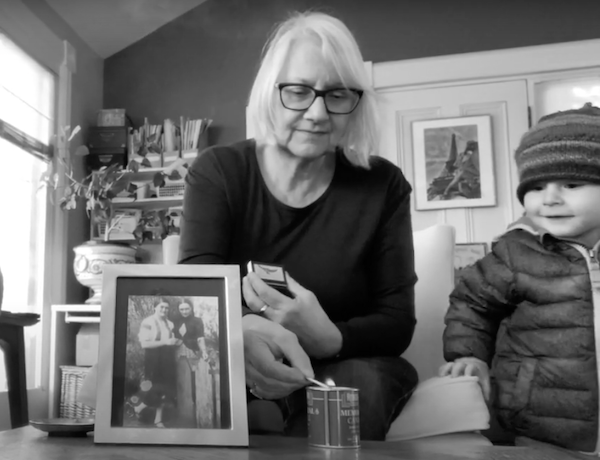
Isa Milman, a member of the Second Generation, lights a candle of remembrance at the Victoria Shoah Project’s Kristallnacht commemoration Nov. 9, accompanied by grandson Isaac Phelan. (screenshot)

In a Kristallnacht commemoration no less poignant because it was held virtually, speakers emphasized the responsibility to remember.

“Why do we keep remembering?” asked Isa Milman, a Victoria writer and artist who is the daughter of Holocaust survivors. “Why does it matter? Isn’t it time to let go, to move on, to stop looking back and turn instead to the present and the future?

“We believe that the lessons of the Shoah, the Hebrew term for the Holocaust, are more important than ever,” she said. “We must speak out against injustice wherever we find it and as soon as we find it.”

Milman was speaking Nov. 9, the 83rd anniversary of Kristallnacht, at the commemoration organized by the Victoria Shoah Project. It was the second annual such event held virtually in the city of Victoria, because of the pandemic.

“Every day, I am filled with grief when I think of my murdered family, shot into pits,” said Milman, “and my 2-year-old cousin Mordecai, who was buried alive because a bullet would be wasted on him.”

As she leaned in to light a candle of remembrance for family members, Isaac Phelan, Milman’s grandson, six days shy of his second birthday, ambled to his grandmother’s side.

“But here I am appearing before you, throbbing with life despite everything,” said Milman. “Tonight, we are reminded of our moral imperative to remember, to speak out and join together in the strength of community to protect everyone from harm, wherever and however it arises. That is the lesson of the Shoah we must never forget.”

Rabbi Lynn Greenhough of Victoria’s Kolot Mayim Reform Temple spoke of the precedents that allowed an event like Kristallnacht to occur.

“Kristallnacht reminds us every year that those buildings, those synagogues, those shops that burned across Germany were what was seen above ground,” she said. “Underneath that same ground were seams of hatred and fear of ‘those people,’ those ‘not Christians,’ that existed and smouldered for centuries and for generations. Hitler was not an anomaly.

“Tonight, we remember,” she went on. “And, tomorrow, we continue to do the work of bringing greater peace and greater justice into this world. We stand for our place in this world as Jews, as Israel, to ensure those underground seams of hatred never burst through the ground again.”

Congregation Emanu-El’s Rabbi Harry Brechner said he misses the power of having religious, ethnic and communal leaders stand with him on the bimah on the anniversary of Kristallnacht, something that has not been possible since the beginning of the pandemic.

“Kristallnacht is really about the entire city coming together to say: not here. I think that we are in a time now where so many injustices of our past are coming up, not just in Kamloops but all around us…. And, really, for us to really talk about reconciliation, we do need to face really difficult truths,” said Brechner.

Highlighting the theme of this year’s commemoration – “Communities standing together” – Richard Kool spoke of an encounter, when he was a young adult, with a figure who may have been the Prophet Elijah. Kool lent the man a copy of The Atlantic magazine and, when the man returned it, it included a handwritten note with a surah (chapter) from the Koran, in Arabic, and, in Hebrew, the words of Leviticus 19:33-34, which is a directive about the treatment of sojourners in your midst, because “for sojourners were you in the land of Egypt.”

Dr. Kristin Semmens, an assistant teaching professor in the department of history at the University of Victoria, noted that it was her sixth year participating in the commemoration, but the first time she shared her personal motivations.

“The Nazis sent my maternal grandfather, a 17-year-old Ukrainian boy, to be a forced labourer on a farm in Austria during the war,” she said. “He never saw his family again. My maternal grandmother was an ethnic German growing up in the former Yugoslavia. She fled the advancing Red Army to end up on that same farm. She also never saw her village again.”

Semmens’ mother was born in 1949, in a refugee camp for displaced Germans.

“My family’s experiences were, of course, nothing like the suffering of the Jews of Europe during the Shoah,” she said. “I mention them now only to tell you why I became an historian. I wanted to know more about that time. And I did learn more. As an historian of Nazi Germany and the Holocaust, I know more than I ever wanted to about how awful human beings can be to one another. Every year, I stand before you and recount the events that are themselves horrific, but which only preceded far worse horrors to come. This year, given our world’s current challenges, I want to do something different. I want to highlight those who stood up to the Nazis at each stage, no matter in how small a way. I must stress at the outset they were exceedingly few. One of the most upsetting outcomes of my research is endless evidence about how ordinary Germans not only passively accepted but also often enthusiastically supported Hitler’s persecution of other Germans.”

In response to the 1935 Nuremberg Laws, there was precious little opposition. A rare exception, she said, was Carl Friedrich Goerdeler, the mayor of Leipzig, who expressed outright criticism of the laws. In 1944, he would be executed for his part in the plot to kill Hitler.

She also cited Otto Wels, chairman of the Social Democratic Party, who spoke out in parliament, but who soon had to flee the country as the Nazis cracked down on their opponents.

“The regime imposed a boycott on Jewish-owned stores, businesses and practices. Brown-shirted Stormtroopers and Hitler Youth stood outside, refusing customers entry. Many ordinary Germans obliged and even openly jeered the humiliated shop owners,” Semmens said. “Others, though, bypassed the … sentries and went shopping. They apologized to Jewish business owners. They brought flowers to their Jewish doctors to express compassion. That they rejected injustices directed at individual Jews was encouraging, yet it must be said that they almost never openly criticized the Third Reich’s newly realized systemic racism.”

While the murder of almost 100 Jews, the arrest of 30,000 more and the destruction of hundreds of synagogues and thousands of Jewish-owned businesses over that one night is widely known, she said, extensive damage to private residences is less well remembered. Semmens spoke of survivor testimonies of the night.

“They recalled spilled ink on paintings, rugs and tablecloths, and that blankets were cut with glass shards. Many dwellings were now uninhabitable,” she said. “Though such wanton damage and public violence upset many Germans, there were almost no cases of open opposition to Kristallnacht – but some defied the Nazis’ intentions in other ways. They denounced assailants, vandals and thieves to the police – not surprisingly, to no avail. Others assisted Jewish Germans directly by providing food, shelter and loans of household objects to replace those destroyed or stolen. They warned Jewish neighbours about impending arrests and even, albeit infrequently, hid them from the Gestapo. Some brave police officers and firefighters protected synagogues and doused their flames against the Nazis’ orders to refrain.”

Despite these anecdotes, important and uplifting as they may be, Semmens said, “Far, far too many merely stood by.”

She said, “It is easier to turn a deaf ear or a blind eye to discrimination and defamation – yet we must find courage to challenge the wrongs of our society.”

Format ImagePosted on November 19, 2021November 18, 2021Author Pat JohnsonCategories LocalTags commemoration, Harry Brechner, Holocaust, Isa Milman, Kristallnacht, Kristin Semmens, Lynn Greenhough, memorial, Richard Kool, Shoah, Victoria Shoah Project
Proudly powered by WordPress