
Skip to content
  • Home
  • Subscribe / donate
  • Events calendar
  • News
    • Local
    • National
    • Israel
    • World
    • עניין בחדשות
      A roundup of news in Canada and further afield, in Hebrew.
  • Opinion
    • From the JI
    • Op-Ed
  • Arts & Culture
    • Performing Arts
    • Music
    • Books
    • Visual Arts
    • TV & Film
  • Life
    • Celebrating the Holidays
    • Travel
    • The Daily Snooze
      Cartoons by Jacob Samuel
    • Mystery Photo
      Help the JI and JMABC fill in the gaps in our archives.
  • Community Links
    • Organizations, Etc.
    • Other News Sources & Blogs
    • Business Directory
  • FAQ
  • JI Chai Celebration
  • JI@88! video

Recent Posts

  • On war and antisemitism
  • Jews shine in Canucks colours
  • Moment of opportunity
  • Shooting response
  • BC budget fails seniors
  • Ritual is what makes life holy
  • Dogs help war veterans live again
  • Remain vital and outspoken
  • An urgent play to see
  • Pop-up exhibit popular
  • An invite to join JWest
  • Successful campaign
  • Next-gen orthotic wins
  • Tapping into their creativity
  • The holidays à la JACS
  • Garden City of Tel Aviv
  • Sanctuary garden benefits
  • Gardening in Eden …
  • האנטישמיות גואה ביוון
  • Hateful messages intensify
  • Creating entrepreneurs
  • Wrong choice to host Piker
  • Attack on Jewish kids
  • Multiple benefits of a break
  • Dialing up the perfect thriller
  • Empowerment & more
  • Songs in war of peace
  • Successful trip to Cuba 
  • Tackling antizionism head on
  • Thinking of leaving Canada?
  • Kindness as a matter of fact
  • Personal stories, vital lessons
  • Connecting generations
  • Vancouver to Vienna
  • Recipes a form of resistance
  • Community milestones … February 2026

Archives

Follow @JewishIndie
image - The CJN - Visit Us Banner - 300x600 - 101625

Tag: Avi Benlolo

Plenty of hopefulness

Plenty of hopefulness

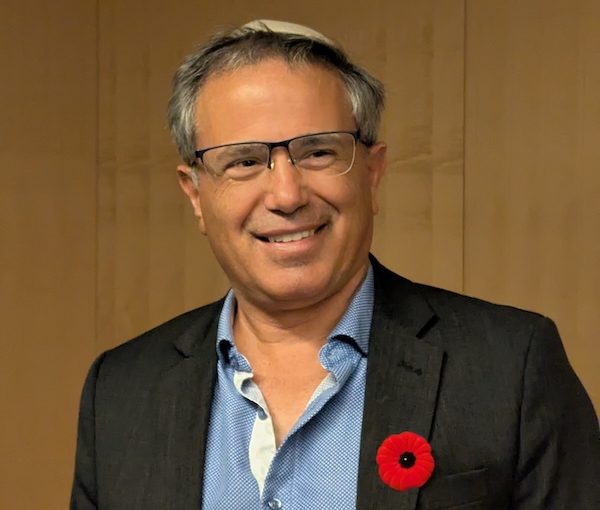
Avi Benlolo of the Abraham Global Peace Initiative was in Vancouver Nov. 5 to screen the AGPI’s new film, Heart of Courage, about Jewish resilience in the wake of the Oct. 7, 2023, terror attacks. (photo by Pat Johnson)

Against a “tsunami” of anti-Israel and antisemitic content online and in the broader society, Jews and pro-Israel voices need to do a better job getting their message out, according to Avi Benlolo.

Benlolo is founding chair and chief executive officer of the Abraham Global Peace Initiative (AGPI), whose mandate is to study and research international human rights, fundamental freedoms, democracy, global peace and civil society in Canada, Israel and around the world. He was previously founding president and CEO of Friends of Simon Wiesenthal Centre and writes weekly in the 

National Post. He was in Vancouver screening AGPI’s new 40-minute film, Heart of Courage and spoke with Rabbi Jonathan Infeld at Congregation Beth Israel Nov. 5. He was introduced by Diane Friedman, the congregation’s adult program director. 

The film features a soldier playing John Lennon’s “Imagine” on a piano in Tel Aviv’s Hostages Square.

“His music becomes his voice, a testament to the resilience of his spirit and the strength of his people,” the narrator intones. “His teary eyes remain wide open, reflecting the weight of his generation’s struggle. He plays for a world he longs to see, a world of peace. In that moment, his dreams reach beyond the darkness, yet his resolve remains unshaken. This soldier is part of a chain, a line of defenders stretching back through history, each bound by an unyielding commitment to Israel’s survival.”

Produced prior to the ceasefire, the film includes Benlolo interviewing people at the weekly rallies that drew hundreds of thousands of people in Tel Aviv, many of them family members of hostages. Some have risen to prominence as voices for those held in Gaza and their relatives.

Benlolo visits an art installation that serves as a memorial monument adjacent to the Ministry of Foreign Affairs’ building in Jerusalem. The work, titled “Memory Pomegranate 7.10.2023,” is a sculpture of a pomegranate with multi-coloured glass and ceramics, visual shards and fragments that metaphorically reference broken lives, trauma and loss, but together form a hopeful whole, emphasizing life, resilience and collective memory. The artwork integrates electronic tags that allow a smartphone or other device to access digital content to learn more about the events of 10/7 and the people and communities affected.

Sharing stories of non-Jews who saved lives on 10/7, the film declares, “In Israel, heroism knows no bounds of religion, ethnicity or background. On Oct. 7, amid the chaos, countless stories emerged of Muslims, Druze, Christians and Bedouins risking everything to protect their fellow citizens.” 

After the screening, Benlolo and Infeld spoke of the hurdles to getting the message out.

Benlolo, who has worked extensively in multicultural and interfaith sectors, plans to screen Heart of Courage for diverse audiences, as his organization has done with previous films.

The biggest challenge, Benlolo said, may be reaching younger audiences, for whom anti-Israel activism has become “cool.”

“We have to go to them and get to them through the technology that exists today,” he said. “Social media in particular.”

This presents its own challenges, he noted, as there is a “tsunami” of anti-Israel and antisemitic content.

The silver lining of this era, according to Benlolo, is a new generation of engaged Jewish young people.

“What we all saw as a result of Oct. 7 was Jewish youth for the first time ever walking proudly with Magen Davids around their necks, fighting back, distancing themselves from people who have rejected them and reject the state of Israel,” he said.

While the film paints a picture of a unified Israeli society, Benlolo acknowledged divisions, rifts that will likely be exacerbated in next year’s national elections. 

One of the most visible points of discord is the debate over Haredi conscription. Benlolo is unequivocal on this topic. Asked by Infeld what he would say to the Haredi community, Benlolo said, “What’s wrong with you? I mean, honestly.… To not participate in defending the country and to insist that others do it for you, I think, is wrong.”

Benlolo also pulled no punches on issues closer to home. He said Canada’s government is “pretty much siding with Hamas” and other leaders, such as Toronto’s mayor, are “emboldening the other side.” This inspires violent people to act out, he said, citing a vicious attack on Jewish students near Toronto Metropolitan University earlier that day.

“What gives them permission to do that?” Benlolo asked. “It’s the environment that feeds it. It’s the political leadership that allows it. That is the central problem.” 

Responding to a question from Infeld on the future of Jewish life in Canada, Benlolo noted that Jewish schools and other institutions in parts of Europe are protected by armed guards and he warned that North American Jews may find themselves “in a much more defensive posture.”

“I can’t promise you that there’s going to be a good future here in Canada,” he said. “But, in Israel, at least, we have an ability to wear the uniform and protect ourselves, and that’s an important distinction. It doesn’t mean Israel is 100% safe, as we all know, it doesn’t mean that’s an easy life, but at least it’s a place where we can stand up for ourselves.”

He has plenty of hopefulness for Israel.

“I think that the next chapter for Israel is an optimistic one,” he said, suggesting that more countries will normalize relations with Israel and join the Abraham Accords. He suggests also that Israel’s economy will skyrocket, in part because of all the technology developed as a result of the war. He also predicts continued increasing levels of aliyah. 
Format ImagePosted on November 21, 2025November 20, 2025Author Pat JohnsonCategories NationalTags Abraham Global Peace Initiative, AGPI, antisemitism, Avi Benlolo, Beth Israel, Heart of Courage, Israel, Jonathan Infeld, Oct. 7
Peace is breaking out

Peace is breaking out

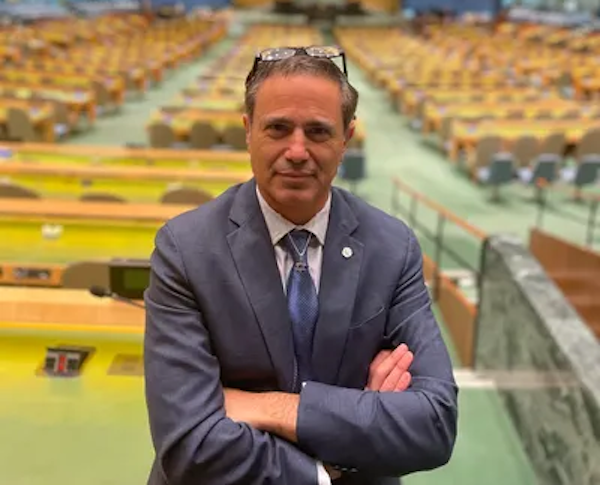
Avi Benlolo will screen a film at Beth Israel on Feb. 13. (PR photo)

There is a fundamental disconnect between what is happening in the Middle East and what observers in Europe and North America perceive, according to Avi Benlolo, founder and chairman of the Abraham Global Peace Initiative. He aims to close that gap, and will be in Vancouver next month to bring his message – and a new documentary film – to West Coast audiences.

“Peace is unfolding in the Middle East,” Benlolo told the Independent. “The Abraham Accords have completely revolutionized Israel’s relationship with some of the neighbouring countries like the [United Arab Emirates], Bahrain, Morocco and so on. This new development hasn’t yet registered here in the West.”

On university campuses and in the social movements of Europe and North America, he said, the narrative remains mired in the decades-old conflict and tired rhetoric of “apartheid,” “colonization” and BDS, the movement to boycott, divest from and sanction the state of Israel.

“The truth of the matter is that that rhetoric isn’t rhetoric in the Middle East,” Benlolo said. “In the Middle East, BDS is nonexistent. You now have trade in the billions of dollars between Israel and its Arab neighbours, so clearly BDS has lost.”

The film that Benlolo produced and directed, The Future of Israel and its Defenders, approaches the issues through the lenses of experts, military strategists, entrepreneurial leaders, journalists and current and former political leaders.

“The message I’m trying to transmit,” he said, “is one really of hope for change.… If we are reinforcing that message that this is happening, that will help build on the peace process.”

A growing global realization of Mideast peace will also help reduce antisemitism and empower Jews, especially young people, everywhere, Benlolo hopes.

The film will be screened, and Benlolo will participate in a question-and-answer session, at Congregation Beth Israel Feb. 13, 7 p.m., in a celebration of Israel’s 75th birthday.

Benlolo founded the Abraham Global Peace Initiative after many years of working in the Jewish communal sector, including as chief executive officer of Friends of Simon Wiesenthal Centre for Holocaust Studies. AGPI became a registered charity in late 2021.

While there are many Jewish and Zionist organizations in Canada, Benlolo said his is unique.

“There is no voice for Canadian Jews internationally,” he said. “We are taking the Canadian voice global and working with the United Nations, working with the [European Union], working with multiple leaders around the world. Antisemitism and defamation of Israel is a transnational phenomenon. The swastika that you see painted on a school wall is not just localized, it’s being motivated globally.

“We are also saying, we as Canadians can stand up for ourselves,” Benlolo continued. “Canada itself is an incredible brand globally…. What AGPI is doing is optimizing the Canadian brand and we’re doing it very successfully. Every two minutes – I’m not exaggerating – there is a subscriber onto our website from somewhere on the planet, Italy, Brazil. Every two minutes. That’s because people love the Canadian brand, they love everything that we are saying, so we can be, as Canadians, an international voice with quite tremendous strength.”

While Benlolo is hoping that the Abraham Accords mute some of the condemnation Israel experiences on the world stage, defending Israel’s rights internationally may be entering a new phase, he said. The old tropes are being replaced with the phrase “Israel’s most right-wing government ever,” including in mainstream media sources.

“It’s a challenge, I’m not going to kid you,” said Benlolo. “The thing is, the media is never a fan of Israel, particularly here in Canada, outside of the National Post and maybe the Jewish [community] media. They are using any opportunity to grab hold and to make Israel look bad. They love it.”

The characterization of Israel’s new government clouds the reality, he argued. Israelis who voted for right-wing parties did so mainly on security grounds, he said, because they are deeply concerned about terrorism.

“That has driven them to move to the right,” he said, adding that Israeli society in general “is fairly secular, is not right-wing and is very pro-human rights.” He noted that the new Knesset features the country’s first openly gay speaker.

“Just because you’ve got this government right now that’s made up of a coalition doesn’t mean that it represents Israeli society and it doesn’t mean that it’s everybody in Israel that believes in this. That needs to be articulated as well,” said Benlolo. “Finally, we’re going to put pressure to bear as a Jewish community and friends of Israel, we’re going to continue to pressure Israel to make sure that it stays the course and stays true to tikkun olam.”

More details, and tickets for the event, which is presented by Beth Israel and the Jewish Federation of Greater Vancouver, are available at bethisrael.ca.

Format ImagePosted on January 27, 2023January 26, 2023Author Pat JohnsonCategories LocalTags Abraham Accords, Abraham Global Peace Initiative, Avi Benlolo, Beth Israel, Israel, Jewish Federation, Middle East, peace

UNESCO finally runs “Holy Land” exhibit

Canadian participants in a meeting earlier this month with French President François Hollande came away impressed with the French leader’s sincerity and determination to address the terrorism and antisemitism that has France’s Jews on edge.

Avi Benlolo, president and chief executive officer of the Friends of the Simon Wiesenthal Centre, and Member of Parliament and former justice minister Irwin Cotler said Hollande was empathetic to the concerns of the country’s Jews and was forthright in discussing the threat posed by French-born jihadists returning from Syria.

“Hollande spoke about the barbaric attack on the Jewish museum in Belgium” and about the protection of Jewish schools, synagogues and other community buildings, Cotler said in a telephone interview from Jerusalem.

Cotler and Benlolo were part of a 20-member delegation assembled by the Los Angeles-based

Simon Wiesenthal Centre, which met with Hollande prior to officially inaugurating an historic exhibition at UNESCO’s Paris offices. The exhibit, mounted by historian Robert Wistrich, is titled, People, Book, Land: The 3,500-Year Relationship of the Jewish People to the Holy Land.

The exhibit was sponsored by the Simon Wiesenthal Centre along with the governments of Canada, Israel, the United States and Montenegro, and it launched this month after pressure from Arab countries forced its cancellation in January.

Benlolo said the reception by French officials and Hollande at the Élysée Palace was warm and welcoming. The delegates were anxious to express their concerns about the attack on the Jewish Museum in Brussels by a French gunman, who killed four people.

“Hollande believes there are more than 1,000 French nationals who went to fight in Syria and joined radical groups,” Benlolo said. Three hundred remain. Many came back and he’s concerned about their radicalization and if they will take action against the Jewish community.

Mehdi Nemmouche, the man accused in the Brussels attack, is believed to have spent 2013 fighting with Islamic radicals in Syria.

Hollande assured the delegates that he is working closely with intelligence and security services to track returning jihadists and to ensure the safety of the country’s Jews.

“I believe Hollande was very sincere,” Benlolo said. “The Jewish community received substantial grants to secure their schools and synagogues,” he added.

Cotler, who has visited France three times in the last six months, said, “People spoke well of Hollande and his genuineness, his commitment to combat antisemitism, to bring perpetrators of antisemitism to justice and his appreciation of jihadist acts as threatening to French Jews and France alike. He took the position that it’s a joint struggle, a part of the protection of French democracy and all of France.”

During the meeting, Rabbi Marvin Hier, dean and founder of the Wiesenthal Centre, told the president, “We meet at a pivotal time in history, when the Jewish community and France’s democratic values are under unprecedented attack by the forces of extremism both from the far right and from extreme Islamist purveyors of religious intolerance and murder.”

He applauded Hollande and his predecessor, president Nicolas Sarkozy, for denouncing an earlier terrorist attack in Toulouse that claimed the life of a rabbi and four children, but he lamented the failure of Muslim religious leaders to condemn the attacks.

Meanwhile, Cotler was effusive in his description of the Wistrich exhibit, which he called “historic.”

“It is a remarkable dramatization of history and heritage, of people, book, land, memory and state,” said Cotler.

In 24 panels, the exhibit traces Jewish history back to the patriarch Abraham, through Moses, King David and all the way through to the struggle for Soviet Jewry, the birth of Zionism and the reconstitution of the state of Israel.

The nine-day exhibit had been scheduled to open last January. Pressure from 22 Arab countries, who argued it would prejudice the peace process, prompted UNESCO to cancel it.

Responding to that decision, Hier stated, “It is ironic that, while the Arab League was trying to kill this exhibition and all the attention was focused on Paris, the UN headquarters in New York [was] hosting an exhibit entitled, Palestine, based entirely on the Arab narrative, which was not criticized as an interference with Secretary [John] Kerry’s mission.”

Following public criticism from Canadian Foreign Minister John Baird and U.S. envoy Samantha Power, the exhibit was rescheduled to open early this month, but with the name Israel removed from the title and replaced with “Holy Land.” UNESCO also required the removal of an image of the Dead Sea Scrolls, which had been part of the initial exhibit prepared by Wistrich, a professor of European and Jewish history at the Hebrew University in Jerusalem.

– For more national Jewish news, visit cjnews.com.

Posted on June 27, 2014June 25, 2014Author Paul Lungen CJNCategories WorldTags Avi Benlolo, Francois Hollande, Irwin Cotler, Marvin Hier, Robert Wistrich, Simon Wiesenthal Centre, UNESCO
Proudly powered by WordPress